Civil Liberties, Civil Rights, Criminalizing Dissent, Human Rights, Political Prisoner, Prison Industry, U.S. Militarism, Violations of U.S. and International Law, War Resister
Podcast: Play in new window | Download
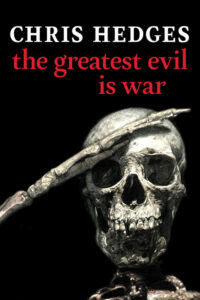
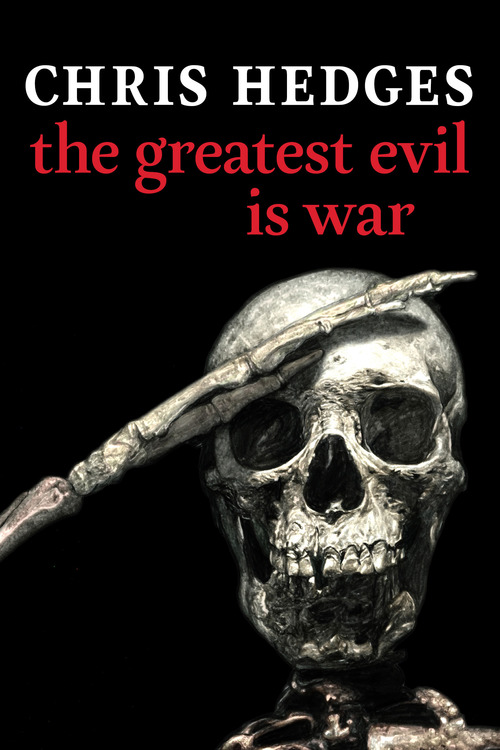
The Greatest Evil is War
United States has been at war almost continuously over the last 80 years. Chris Hedges has titled his latest book, The Greatest Evil is War. He is our guest today. What is the driving force behind this nearly a century of war? Who is responsible? What are the institutions in United States that carry it on? What is to be done about it?
What forces in our country can stop the slaughter and the constant waste of resources that is consuming us and threatening us with the possibility of nuclear war, which would wipe out all life on our planet. Today we will explore the economic, institutional, and ideological underpinnings of the American war machine. We will talk about the military industrial complex about which Eisenhower warned us. We will talk about its handmaidens, the media, Congress, the universities and the think tanks which advocate for war.
We will talk about the political consequences of permanent war and the fascist direction America is increasingly going in. Most profoundly we will talk about capitalism and fascism from which it springs. And finally we will talk about the social forces necessary to stop and reverse war.
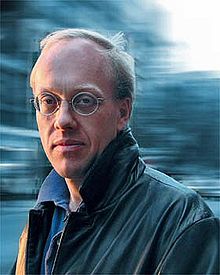
Guest – Chris Hedges spent two decades as a foreign correspondent, 15 of them with The New York Times, covering conflicts in Central America, the Middle East, Africa and the former Yugoslavia. He learned overseas that the evils of empire are the external expression of white supremacy, just as mass incarceration, which he describes as the civil rights issue of our age, is the most brutal internal expression of white supremacy. Prisons , he writes, are the modern iteration of slave plantations. Hedges is the author of 14 books, The winner of a Pulitzer Prize for journalism, a graduate of Harvard Divinity school, and an ordained Presbyterian minister. chrishedges.substack.com
—-
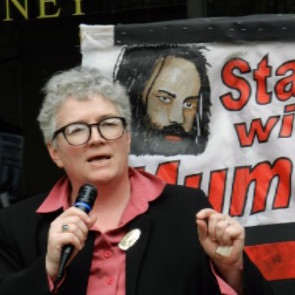
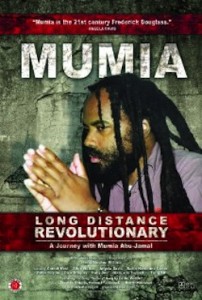
American political prisoner Mumia Abu-Jamal has served 40 years Is Pennsylvania’s harshest prisons-16 of them on death row -for the murder of a Philadelphia police officer which he did not commit
The judge who convicted him was overheard promising“I’m going to help fry the N-word“.
Mumia is an important figure in African-American history. Before his conviction he was a nationally broadcast award winning radio journalist and the head of the Philadelphia Association of Black journalists. He reported on the murderous racial violence of the Philadelphia police department and it’s notorious Police Chief and then Mayor Frank Rizzo.
He had been a member of the Philadelphia chapter of the Black Panther Party. While in prison Mumia has written 13 books and had a weekly radio show “ Live from Death Row“. He holds a masters degree and is working on a PhD in history.
On October 26, 2022 Mumia’s attorneys appeared in court in an effort to get him a new trial. His defense petition included newly discovered evidence that had been buried in the prosecutor’s files. This evidence documented a key witness receiving promises of money for their testimony and evidence of favorable treatment of another in a criminal case. The petition also documented the unconstitutional practice of striking Black jurors during Mumia’s original trial.
Judge Lucretia Clemons preliminarily denied his constitutional right to present this information. She is likely to finalize this ruling on his upcoming court date in Philadelphia on December 9, 2022.
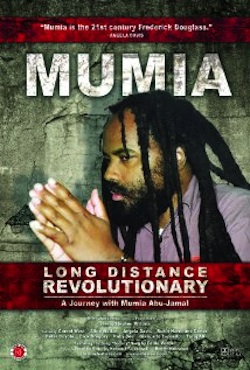
Guest – Noelle Hanrahan is the director of Prison Radio, a multimedia production studio that brings to the public the voices of incarcerated women, men and children. She seeks to honor the agency and humanity of prisoners by bringing their uncensored essays into mainstream discourse. She has produced over 3,500 multimedia recordings from over 100 prison radio correspondents, including the critically acclaimed work of Mumia Abu-Jamal. In 1995, she brought out of prison his first book, Live From Death Row (Harper Perennial), which became a best seller. In 2013, she co-produced the theatrically released feature documentary Mumia: Long Distance Revolutionary (Street Legal Cinema/First Run Features). She received her BA in Gender, Race and Class in the 19th and 20th Centuries from Stanford University, and an MA in Criminal Justice from Boston University. She also holds private investigator licenses in Pennsylvania and Rhode Island.

————————————–
Censorship, Civil Liberties, Civil Rights, Political Prisoner, Prison Industry, Racist Police Violence, Torture
Podcast: Play in new window | Download
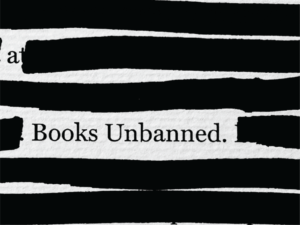
Books Unbanned
Authoritarian institutions and regimes ban books. They tell people what they can and cannot read. The Catholic Church once banned the book by mathematician Johannes Kepler which demonstrated that the earth travels around the sun and not vice versa.
Many of us know about the bonfires of banned books by the “degenerate Jews” Sigmund Freud and Karl Marx that the Fascist Hitler regime lit with a frenzy.
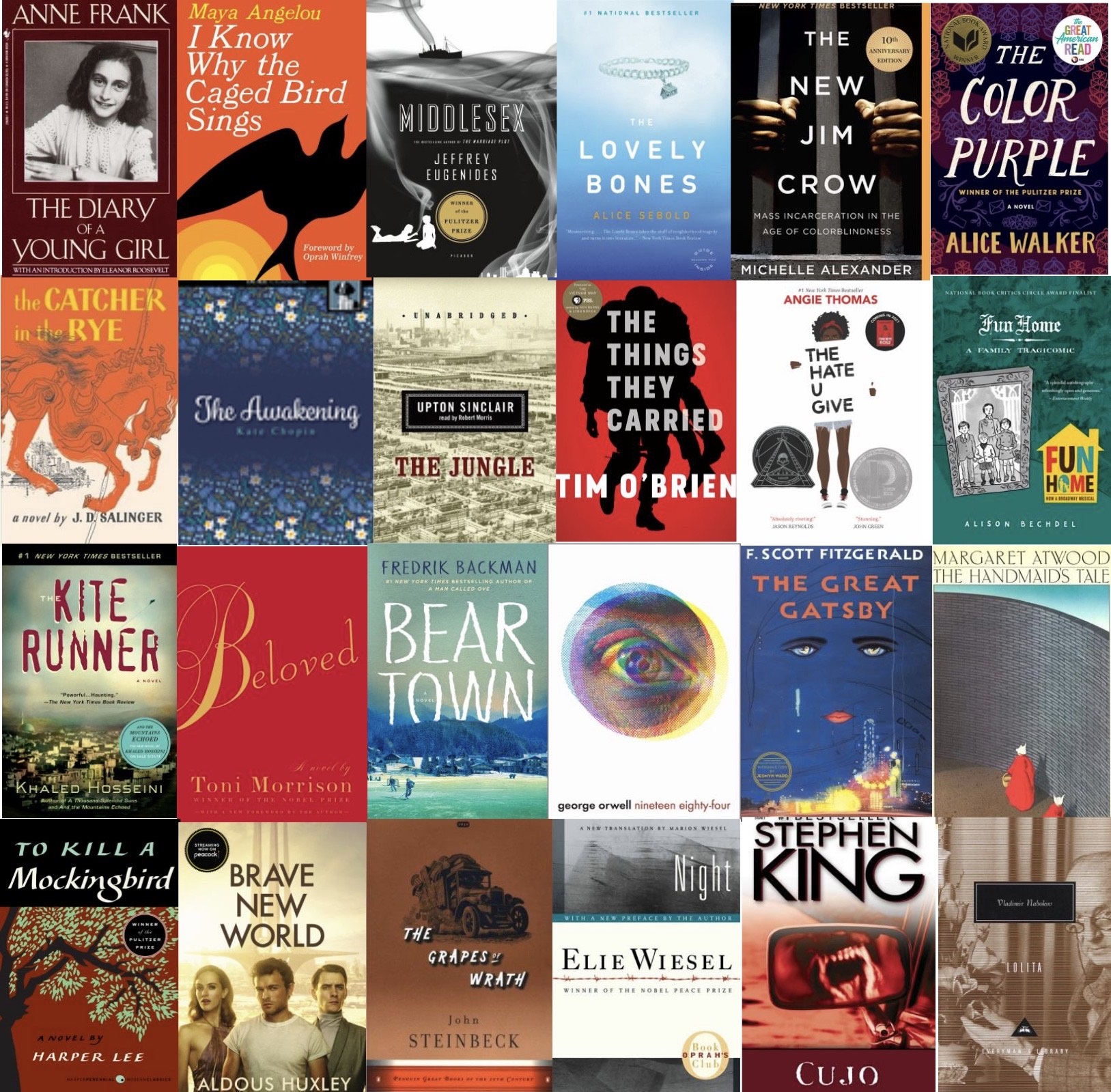
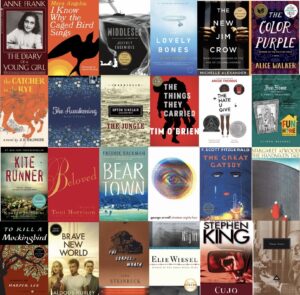
Can this happen in America? It has already started. Many state legislatures have moved to ban books. Some 250 titles have been put on a list of books that cannot be assigned to grade schoolers and highschoolers including such classics in the American canon as “To Kill a Mockingbird”’ and even “ Catcher in the Rye”
The censors don’t want to encourage free spirits. They don’t like criticism. For them the ideal citizen does not think for himself or herself, keeps her mouth shut, and goes along.
The Brooklyn public library is fighting for the rights of teenagers and young adults to read what they like, discover themselves, and form their own opinions. The library launched a campaign called “Books Unbanned” in response to the increasingly coordinated and effective effort to remove books from shelves which tackle a wide range of topics.
There were 1597 individual book challenges last year, the highest of 20 years since the American Library Association has been keeping track.
The Brooklyn public library is the sixth largest in the country. It started defending the right to read last April by giving free library cards to young people in every state in the union. So far 5100 cards have been given out. 52,000 e-books or audiobooks have been checked out. The books that are most frequently challenged are those on sexuality and those on racism.
Guest – Nick Higgins, Chief Librarian at Brooklyn Public Library, leading the development of transformative library services and spaces for the borough’s residents at 61 sites. Along with providing traditional programs and experiences for Brooklynites, Nick and his team have expanded the Library’s reach by creating unique programs for older adults, individuals and families impacted by the justice system, immigrants, and people experiencing homelessness. Nick holds a BA in Literature from Hunter College and a MLS from the Pratt Institute. Booksunbanned@bklynlibrary.org
—-
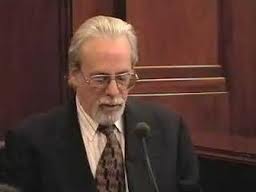
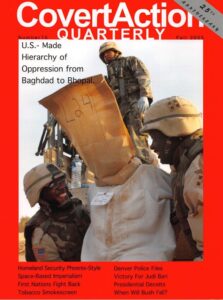
Law and Disorder hosts Heidi Boghosian and Michael Smith remember New York City Attorney and publisher Bill Schaap.
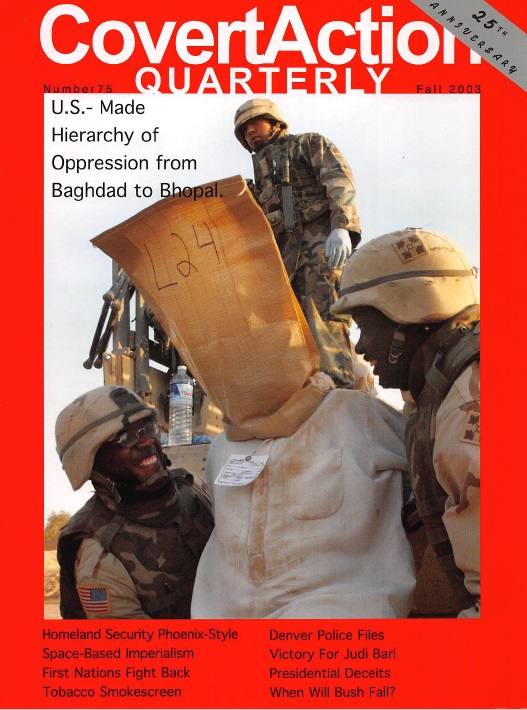
Bill Schaap died in his home on February 25th after a long illness. He was 75. After graduating from the University of Chicago Law school in 1964 Schaap worked for the Center for Constitutional Rights on its project in Japan representing antiwar GIs during the Vietnam war. For 20 years he and his companion the late Ellen Ray lived in Washington DC and published and wrote for the magazine “Covert Action Quarterly” which exposed the crimes of the CIA. In its early years they named CIA agents, until a naming names act was passed by Congress making the exposure of agents a crime. In the early 80s they moved to New York City and founded Sheridan Square Press. They published books about the CIA by former CIA agents. Most prominently they published New Orleans district attorney Jim Garrison’s book “On the Trail of the Assassins” showing CIA involvement in the Kennedy assassination. The book became a New York Times bestseller and was the basis for the Oliver Stone movie “JFK”. In the early 90s they founded the Institute For Media Analysis and began publishing the magazine “Lies of Our Times”, a magazine of media criticism. Bill Schaap was a recognized expert in government propaganda and wrote and spoke widely and frequently on the topic.
—-
Lawyers You’ll Like: Attorney Bill Schaap
Attorney William Schaap graduated from the University of Chicago Law School in 1964 and has been a practicing lawyer since. Bill specialized in military law and practiced in Asia and Europe. He later became the editor in chief of the Military Law Reporter in Washington for a number of years. In the 70’s and 80’s he was a staff counsel of the Center for Constitutional Rights in New York City. In the late 80s, he was an adjunct professor at John J. College of Criminal Justice of the City University of New York where he taught courses on propaganda and disinformation.
Attorney William Schaap:
- One of first cases at this big Wall Street firm, they had some outside counsel working on it, one of whom was David Lubel, and Dave Lubel who had I think been a recruiter for the Communist Party in his youth, was always good at spotting somebody who was always worth recruiting and he started to tell me there was this convention of this lawyers group.
- It was this 1967 Lawyers Guild Convention in New York. He dragged me to one event, I met Bill Kunstler, I met Arthur Kinoy, I met Victor Rabbinowitz. I’d been on Wall Street for a year or two, I said I didn’t know there were lawyers like this.
- I joined the same day and met Bernadine Dorhn and a few weeks she called me and said we need your help.
- She said you gotta defend a bunch of Columbia students. The next thing I knew the riot started at Columbia and she said you have to go down there and defend them.
- I signed up to be staff counsel on the National Lawyers Guild Military Law Project in Okinawa, Japan.
- When you work overseas in that kind of a climate with the military you learn a lot fast about American imperialism.
- Once you learn that, you learn about the CIA.
- That led us to originally working on Counter Spy magazine and then on Covert Action Magazine.
- The original purpose was to expose the CIA. We worked with Lou Wolf who is an expert in uncovering CIA agents in US embassies, not through any classified documents but because if you knew how to read the paperwork and State Department things, you could tell who are the “ringers.”
- We were so successful that Congress passed a law against us.
- Our goal was to make these people ineffective because the only way most CIA could work, particularly the ones that were assigned to an embassy was to have to pretend to be something else.
- They were all third assistant political secretaries and those were all phony things. Their job was to finagle their way into various community organizations in whatever foreign capital they were posted to recruit people to turn against their own countries and become traitors to their own countries, to become spies for the U.S.
- We thought if we identified these people, it might make their job a little bit harder, which it did.
- Of course, the problem with that is the government said we were trying to get them killed which we weren’t trying to do and nobody we did expose ever did get killed.
- He (Philip Agee) had been an adviser to Counter Spy. Counter Spy folded when Welch got killed, cause the pressure was too much and started Covert Action Quarterly.
- He was not the person discovering who the under cover people were, Lou Wolf was doing that.
- Phil wrote articles for us in every issue and we worked very closely with him.
- Once you start exposing these things, they really don’t have any defense.
- They tried to catch us in something phony. We would get tips that would turn out to be CIA trying to get us to print some story that wasn’t true so they could then discredit us.
- We had more interference from the government when we were doing military law work, before Covert Action Quarterly.
- They would plant bugs in our attic in Okinawa, things like that.
- The Intelligence Identity Protection Act has 2 parts. One makes it a crime for someone in the government who has classified information to reveal someone’s identity. The second part makes it a crime to reveal the identity of someone you did not learn from classified information or you position. (But if you were in the business of exposing these people . . .)
- Regarding his newsletter The Lies of Our Times – It was in the 90s, from 1990 to 1995 I think. To a certain extent, the abuses we were crying about got a little bit less over time because that’s sometimes the helpful result of that kind of exposure.
- We were just tired of people thinking that if it was in the New York Times it must be true.
- The fact is that those people lie all the time.
- I think we’ve gotten to a point where people recognize that the government lies to them and that there’s an awful lot that goes on that they don’t know.
Guest – Attorney William Schaap graduated from the University of Chicago Law School in 1964 and has been a practicing lawyer since. Bill specialized in military law and practiced in Asia and Europe. He later became the editor in chief of the Military Law Reporter in Washington for a number of years. In the 70’s and 80’s he was a staff counsel of the Center for Constitutional Rights in New York City. In the late 80s, he was an adjunct professor at John J. College of Criminal Justice of the City University of New York where he taught courses on propaganda and disinformation.
In addition to being a practicing lawyer, Bill was a journalist, publisher and a writer specializing in intelligence as it relates to media. He was the co-publisher of a magazine called the Covert Action Quarterly for more than 20 years. He also published a magazine on propaganda and disinformation titled Lies Of Our Times. Attorney Bill Schapp has written numerous articles and edited many books on the topic of media and intelligence.
—————————-
Civil Liberties, Civil Rights, Human Rights, Political Prisoner, Prison Industry, Surveillance, Violations of U.S. and International Law, War Resister, Whistleblowers
Podcast: Play in new window | Download
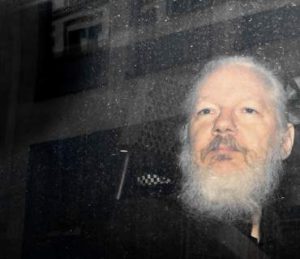

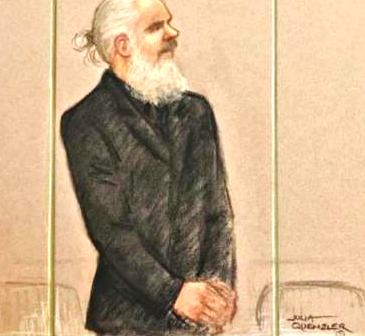
Can A Lawsuit Against The CIA Affect U.S. Extradition Attempt of Julian Assange?
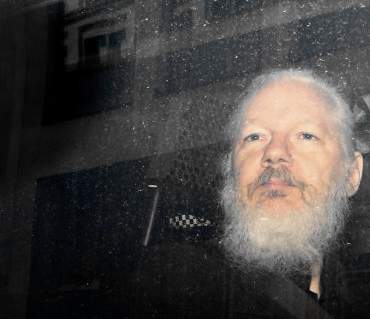
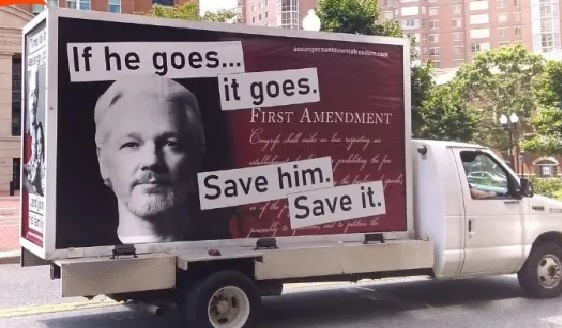
In August 2022, a group of U.S. citizen attorneys and journalists sued the CIA and its former director Mike Pompeo. They alleged that the CIA, during Pompeo’s tenure, spied on them during meetings with Julian Assange at the Ecuadorian Embassy in London. The WikiLeaks founder sheltered there for 7 years in an effort to avoid extradition to the United States.. Assange is charged with 17 counts under the Espionage Act for revealing evidence of U.S. war crimes. If convicted, he faces 175 years in prison.
The lawsuit says that the CIA violated the privacy rights of those journalists and lawyers. Plaintiffs include journalists Charles Glass and John Goetz, and New York City attorneys Margaret Kunstler and Deborah Hrbek, who have represented Assange. The suit seeks compensatory and punitive damages for the plaintiffs for the violations of their rights. It also seeks the removal of any information held by the CIA which was collected from them during their visits to see Assange and prevention of the release of any this information to a third party.
The CIA, as listeners may know, is prohibited from collecting intelligence on U.S. citizens, although several lawmakers have alleged that the agency maintains a secret repository of Americans’ communications data. Richard Roth, the lead attorney in this case, had this to say: “The United States Constitution shields American citizens from U.S. government overreach even when the activities take place in a foreign embassy in a foreign country.”
Journalists and lawyers visiting Assange were required to surrender their electronic devices to Undercover Global before each visit. U.C. Global is a private security company which was providing security to the embassy. The lawsuit alleged that the company copied that information and handed it over to the CIA.
In early November, Deborah Hrbek and our own Marjorie Cohn discussed the lawsuit and the case against Assange, in a program sponsored by the First Unitarian Society of Milwaukee. For our show today, we’re delighted to bring you their remarks and answers to several audience questions. Deborah Hrbek starts off the event. In addition to being a member of the Assange defense team, her law practice focuses on entertainment and small business law. Marjorie is a member of the national advisory board of Assange Defense.
Hosted by Attorney Heidi Boghosian
—————————————–
Civil Liberties, Civil Rights, Human Rights, Political Prisoner, Prison Industry, Surveillance, Violations of U.S. and International Law, Whistleblowers
Podcast: Play in new window | Download
Lawsuit Against CIA Filed By Journalists and Lawyers For Alleged Spying During Assange Visits
Journalist Julian Assange, co-founder of WikiLeaks, is in a London prison fighting extradition to the United States. Donald Trump’s CIA director Mike Pompeo was angered by the 2017 WikiLeaks revelation of the CIA’s “Vault 7” program (whereby the CIA was able to tap into people’s cell phones and smart TVs, turning them into listening devices). The Trump administration filed an indictment against Assange which takes aim at him and WikiLeaks for their 2010 exposure of U.S. war crimes in Iraq, Afghanistan and Guantanamo Bay.
The Biden administration is pursuing Assange’s extradition and prosecution. If he is extradited, tried and convicted, Assange could receive 175 years in prison.
When Assange was living in the Ecuadorian embassy in London under a grant of asylum, the CIA hired UC Global, a private security company, to spy on Assange and his visitors and turn over images from the cellphones and laptops of lawyers, journalists and doctors to the CIA.
On August 15, some of the lawyers and journalists who visited Assange sued the CIA and Pompeo in US District Court for violation of their Fourth Amendment rights. They are requesting money damages, an injunction to prevent the CIA from revealing their private communications, and the purging of CIA files of this information.
The lawsuit against the CIA was filed by The Roth Law Firm in New York City.
Guest Attorney Richard Roth, the lead lawyer who represents the plaintiffs. Highly regarded for his successful and creative representation, Roth’s clients include celebrities, nationally recognized artists, singers, actors, songwriters and Hall of Fame and all-star athletes, directors, producers and professional sports organizations. Roth worked in the U.S. Attorney’s office and interned for a judge on the Second Circuit Court of Appeal. The recipient of numerous awards, Roth is a frequent media commentator .
—-
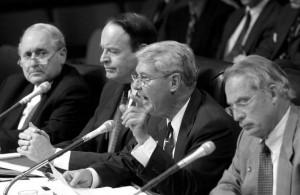

Intelligence Matters: The CIA, the FBI, Saudi Arabia, and the Failure of America’s War on Terror
September 11 will mark the 21st anniversary of the terrorist attack on the World Trade Center and the Pentagon by 19 hijackers. They provided a pretext for the US’s 20-year war in Afghanistan and its subsequent invasion of Iraq, an illegal US war of aggression which was based on a lie that Iraq had weapons of mass destruction. That war killed more than 1 million people.
Today we rebroadcast the Law And Disorder interview we did with retired Florida Senator, the courageous Bob Graham. Graham did more than anyone to expose the connection between the horrific criminal attacks and the complicity of the Saudi government.
The Kingdom of Saudi Arabia has been a US ally in the Middle East for decades. Twenty-one years ago, Saudi officials gave financial, logistical, and other support to the 9/11 hijackers. Fifteen of the 19 men were Saudis.
This explosive history was documented in 2002 in the 28-page final section of the report of The Joint Commission of Inquiry of the Senate and the House, which Senator Graham chaired. These 28 pages were hidden and not declassified and released until July 15, 2016. They were released because of the efforts of Senator Graham and the families of the 9/11 victims. By blocking the release of these pages, Senator Graham states, the US government sent a message to the Saudi government that “they can do anything.”
Graham’s prediction was borne out by the 2018 assassination of the journalist and Saudi citizen Jamal Khashoggi who was murdered and dismembered in the Saudi Arabian embassy in Turkey, by order of Saudi Prince Mohammed bin Salman.
Nevertheless, last month, President Joe Biden traveled to Saudi Arabia to meet with Mohammed bin Salman and greeted him not with a customary handshake but with a collegial fist bump. This occurred despite Biden’s earlier declaration that “Khashoggi was in fact murdered and dismembered and I believe at the order of this crown prince.” Oil and arm sales are the reasons why the United States continues to embrace Saudi Arabia as a close ally. Saudi Arabia has the second largest supply of reserve oil in the world. The US needs it now because of Russia’s war in Ukraine. According to the US State Department statement of May 11, 2022, “Saudi Arabia is the United States‘ largest foreign military sales (FMS) customer with more than $100 billion in FMS cases.”
Law and Disorder co-hosts Heidi Boghosian and Michael Smith interviewed Senator Bob Graham before the missing 28 pages of the 9/11 report were finally released. These pages confirmed Senator Graham‘s belief that the hijackers could not have pulled off the operation alone. It reveals that the hijackers were part of a support network involving the Saudi monarchy and government which helped plan, pay for, and execute the complicated 9/11 plot.
Senator Graham has written the book “Intelligence Matters: the CIA, the FBI, Saudi Arabia, and the Failure of America’s war on Terror.” It provides a candid insight into US and Saudi relations.
Guest – Senator Bob Graham is the former two-term governor of Florida and served for 18 years in the US Senate in addition to 12 years in the Florida Legislature for a total of 38 years of public service. As governor and senator, Graham was a centrist, committed to bringing his colleagues together behind programs that serve the broader public interest. He was recognized by the people of Florida when he received an 83% approval rating as he concluded eight years as governor. Bob Graham retired from public service in January 2005.
—————————————-
Civil Liberties, Civil Rights, Criminalizing Dissent, Political Prisoner, Prison Industry, Racist Police Violence
Podcast: Play in new window | Download
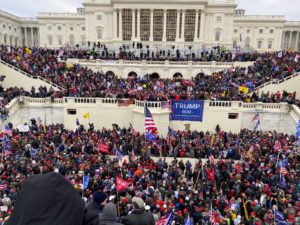
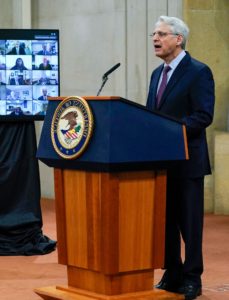
January 6 Committee Has Provided Sufficient Evidence for Garland to Indict Trump
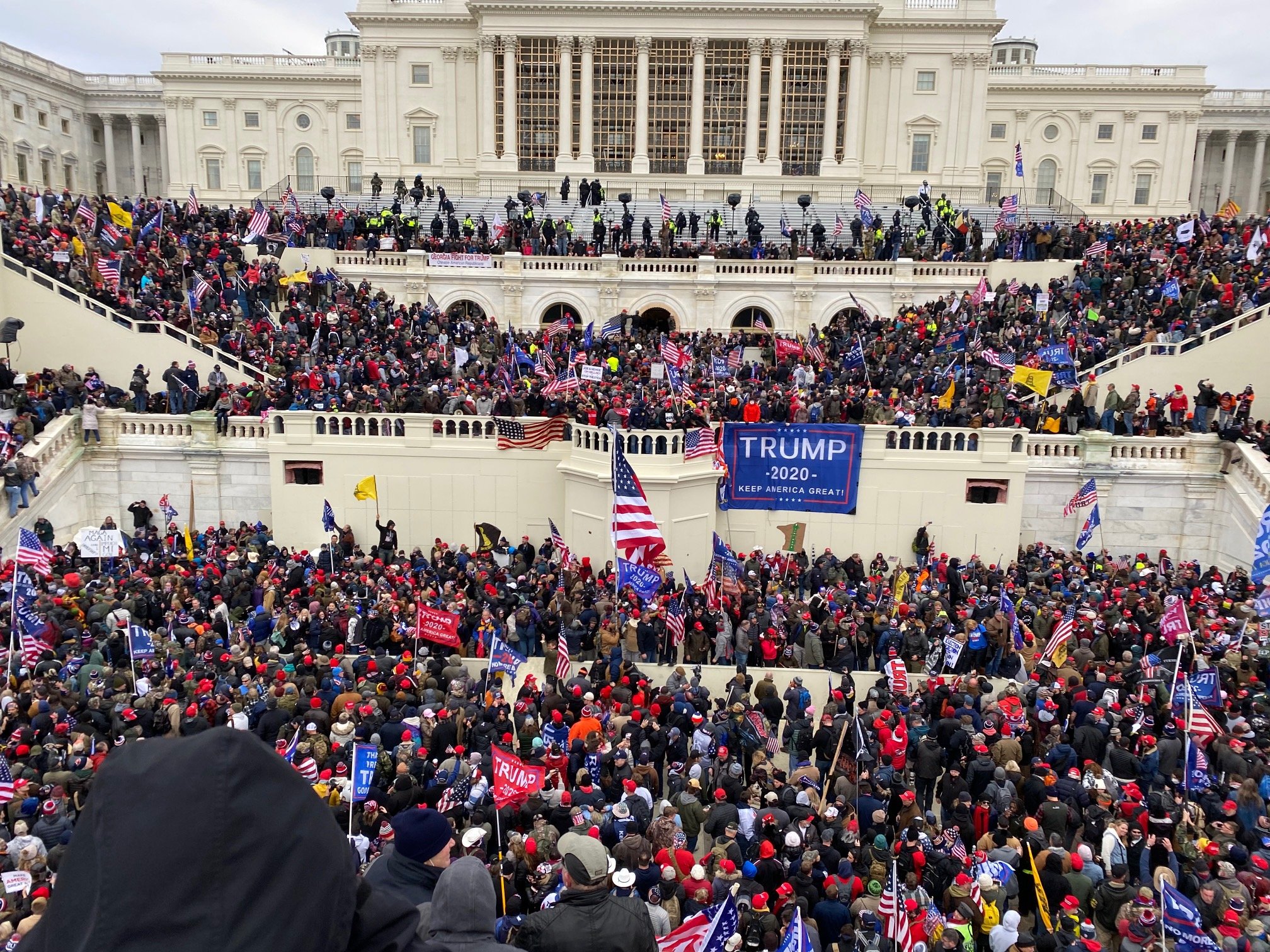
During the course of eight public hearings, the House of Representatives Select Committee to Investigate the January 6 Attack presented overwhelming evidence of former President Donald `Trump’s guilt of at least 2 federal crimes and crimes in the state of Georgia. Although it has been more than 2 years since Trump initiated his wide-ranging conspiracy to overturn the results of the 2020 presidential election, Attorney General Merrick Garland still has not indicted the ex-president.
Through the testimony primarily of Trump loyalists, the Committee demonstrated that Trump was the fulcrum of a multipronged conspiracy to fraudulently declare himself the winner of the election. The Committee has provided Garland with more than enough evidence to indict Trump. But will Garland bring charges against Trump?
Guest – Marjorie Cohn, is a former criminal defense attorney, professor emerita at Thomas Jefferson School of Law and past president of the National Lawyers Guild. She has published several books and writes a regular column for Truthout. Her most recent piece is titled, “January 6 Committee Has Provided Sufficient Evidence for Garland to Indict Trump.”
—-
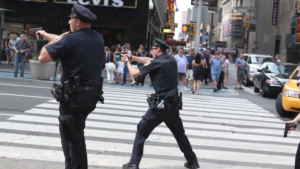
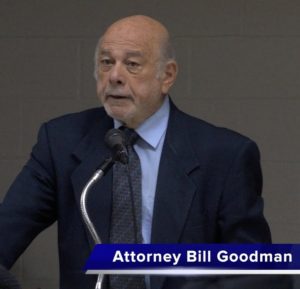
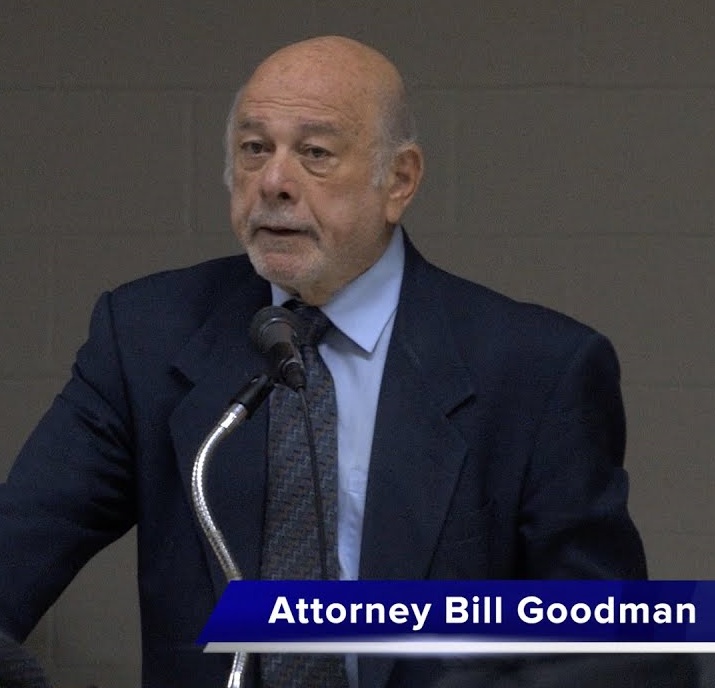
Lawyers You’ll Like: Attorney Bill Goodman
Bill Goodman, the son of Ernie Goodman, who was one of the founding members of the National Lawyers Guild, is a legend in his own right. A past national president of the NLG, one of the founding officers of the NLG National Police Accountability Project, the former Legal Director of the Center for Constitutional Rights, and a founding board member of the Sugar Law Center for Economic and Social Justice, Bill was also a partner in the first racially integrated law firm in the United States. He is currently a partner in the Detroit civil rights firm, Goodman Hurwitz & James, where he continues to work tirelessly for the rights of victims of government and corporate abuse. Bill is also an adjunct professor of law at Wayne State Law School, where he teaches Constitutional Litigation. Bill has successfully litigated numerous police and government misconduct cases as well as other high-profile cases on behalf of prisoners, toxic tort victims, the wrongfully convicted and victims of racism, always in the pursuit of constitutional, social and economic justice.
Host Attorney Julie Hurwitz: Bill is also my law partner in Goodman Hurwitz & James and a former long-term partner in life – we’ve known each other a long time! We’ll discuss two cases that have been brought to confront the unconstitutional and inhumane conduct of individual police officers, but more importantly, the historically unconstitutional and inhumane ways in which police departments institutionally tolerate, promote and reward such behavior by their officers.
Hosted By Attorneys Marjorie Cohn and Julie Hurwitz
——————————————
Civil Liberties, Civil Rights, Climate Change, Human Rights, Political Prisoner, Prison Industry, U.S. Militarism
Podcast: Play in new window | Download
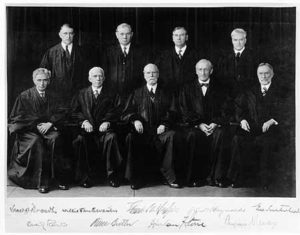
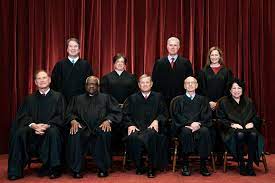
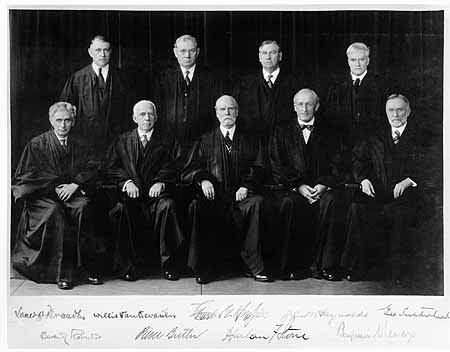
Far Right Supreme Court Decisions Not Seen Since 1931
During its last term, the Supreme Court demonstrated that it is the most right-wing court since 1931. In cases involving reproductive rights, entanglement of church and state, the right to carry guns, and the ability of congressionally-mandated administrative agencies to regulate climate change, the high court’s conservative members handed down reactionary rulings. The court has agreed to hear a case next term that could radically change our electoral system.
Guest – Stephen Rohde is an author and social justice advocate who practiced civil rights and constitutional law for more than 45 years, including representing two men on California’s death row. He is the former chair of the ACLU Foundation of Southern California and former national chair of Bend the Arc, a Jewish Partnership for Justice. He is also a board member of Death Penalty Focus.
—-
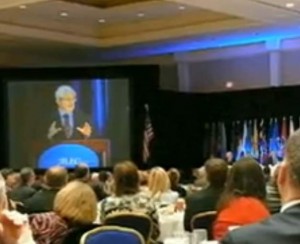
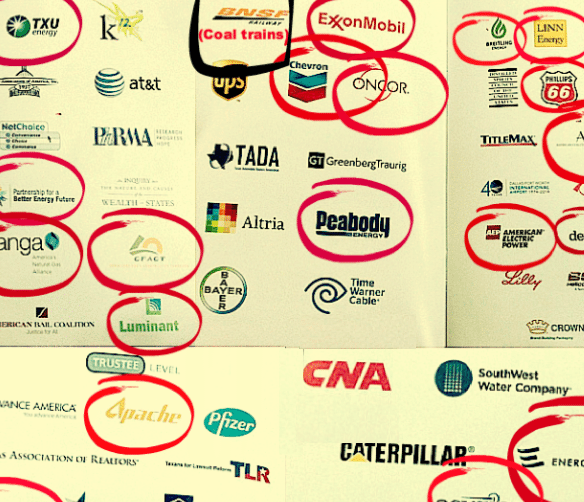
ALEC: Five Decades of Government Influence
The United States underwent a “public interest” revolution in the 1960s and early 1970s. In the first half of the ’60s, Congress passed precedent-setting environmental laws, including the Clean Air Act, the Clean Water Act, and the Water Quality Act. And in just three years, from 1969 to 1972, the federal government adopted a raft of new environmental, public health, workplace and consumer protections and established new agencies to administer them, including the Environmental Protection Agency and the Occupational Safety and Health Administration.
That revolution sparked a counterrevolution that is still reverberating today. Wealthy conservatives, corporations and libertarian foundations poured money into new think tanks and advocacy groups, including the Heritage Foundation and Charles Koch’s Cato Institute. A less-well-known group, the American Legislative Exchange Council, was founded around the same time. It goes by its acronym, ALEC.
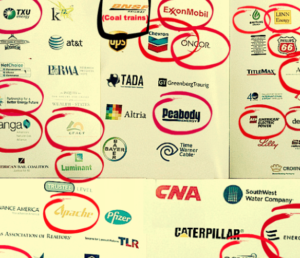
Unlike Heritage and Cato, ALEC—a network of nearly 300 corporations, trade groups, law firms, and libertarian foundations—operates at the state level. The group provides state legislators with a variety of ready-made bills that, among other things, roll back voting rights, thwart efforts to address climate change, and bolster corporate profits.
State lawmakers introduced nearly 2,900 bills based on ALEC’s recommendations from 2010 through 2018, according to an investigation by USA Today, the Arizona Republic and the Center for Public Integrity. More than 600 of them became law.
Lately ALEC has been coaching state legislators on how to spin the recent Supreme Court decision overturning Roe v. Wade. ALEC has also been working behind the scenes to amplify the false GOP narrative on voter fraud. Writer Elliott Negin has been following ALEC off and on for the last decade, and he recently posted an essay that explains in detail how ALEC turns disinformation into law. We are fortunate to have Elliott as our guest today.
Guest – Elliott Negin is a senior writer at the Union of Concerned Scientists, a national science advocacy organization. Prior to joining UCS in 2007, he was the Washington communications director for the Natural Resource Defense Council, a former news editor at National Public Radio, the managing editor of American Journalism Review, and the editor of Nuclear Times and Public Citizen magazines.
—————————————————