Law and Disorder Radio

Archive for the 'political prisoner' Category


Law and Disorder May 12, 2012


Updates:

——

Scapegoat: The Chino Hills Murders and The Framing of Kevin Cooper

Scapegoat: The Chino Hills Murders and The Framing of Kevin Cooper is the title of Patrick O’Connor’s new book. This is an important document chronicling Kevin Cooper’s  controversial conviction and death sentence in 1985.  When O’Connor committed to writing the book, he poured over thousands of case documents from trial transcripts, grisly autopsy photos, appeals and judicial rulings. He then began interviewing those involved in the trial and appeals. The picture began to take shape, a familiar one. The prosecution and the police withheld and destroyed evidence that would have exonerated Kevin Cooper from the brutal murders of the Ryen Family and their guest.

J. Patrick O’Connor:

  • In 2008, the Mumia book that I wrote was coming out and I was in the San Francisco Bay area with (attorney) Jeff Mackler of the Mobilization to Free Mumia.
  • We had about 15 venues that we went to all over the bay area. Invariably, supporters of Kevin Cooper would come to these events and afterwards would take me aside and say you got to write a book about Kevin Cooper.
  • His case is a lot different than Mumia’s but there are a lot of similarities.
  • Once I started reading the transcripts of this trial, I could see there were a lot of things wrong with this case.
  • It took me about 2 and half years from the start to the publication of the book.
  • There was a terrible, in Chino Hills, this is Arabian horse country. This family named the Ryens, they live on a hilltop house with a very big spread, about 15 Arabians. San Bernadino-45 miles east of Los Angeles.
  • In this area, most of the people were either raising horses or grazing cattle. This family was a mom and dad and they were both chiropractors. 41 year old chiropractors, and they had a 10 year old daughter named Jessica and an 8 and a half year old son named Josh.
  • A friend of Josh’s 11 year old Christopher Hughs, spent the night.
  • Around midnight that night, the home was breached. The master bedroom. The family was assaulted with an axe, or a hatchet, I think 2 knives, and an ice pick.
  • It was an incredible fight, these people didn’t stand in line and say I’m next.
  • The father Doug was 6’1″ 190lbs, a former Marine, an MP in the Marines and could take care of himself. The mother 5’8″ very strong, she was the one that could train the horses, these enormous horses that she could control.
  • Both of them kept loaded weapons in the bedroom. The idea that one perpetrator could use 4 weapons to perpetrate this attack is kind of fecitious on its face.
  • What put Kevin Cooper in the crosshairs is 3 miles from Chino Hills is Chino which is home to the California Institute for Men, where every felon in Southern California is sent for classification.
  • Cooper was sent there for 2 burglaries in LA. Escapes and holes up in Chino Hills for the next 2 days, in a house located 125 yards from the Ryen’s house.
  • Josh who had survived, told the deputy sheriff through a hand squeeze method that it was 3 white men.  They put out APBs for 3 white guys.
  • When they discern Kevin Cooper’s prints are all over that hide out house, they discard that information and start planning evidence that would implicate Cooper and making big lies about stuff that would implicate him.
  • He would have been the only African-American in the community.
  • They contaminated the crime scene, there are 2 bathrooms in this house, the cops used one of the bathrooms that had blood in the sink.
  • They don’t type the blood properly, they put blood from all different parts of the room in the same bag.
  • So, there’s no way to track the motions of who died, what was the order of death?
  • They took the walls out, they carted out all the furniture, put it on the front yard. Then they moved it to a warehouse where the air conditioner broke. It went to 120 degrees, they lose all the blood evidence in the warehouse.
  • The night of the murders, Cooper left after 9pm to hitchhike to Mexico. Cooper sees his mugshot on TV, he goes on the lamb.  Cooper is got and convicted, he gets the gas chamber.
  • He came with 3 hours and 45 minutes of being executed because of a moratorium. Kevin Cooper is fifth in line, this moratorium will end in 2013.
  • They had to have the complicity of numerous people inside the sheriff’s department and a very willing DA’s office to perpetrate this fraud on Cooper.

Guest – J.Patrick O’Connor, editor of Crimemagazine.com and the author of The Framing of Mumia Abu-Jamal (2008). He has previously worked as a reporter for UPI, editor of Cincinnati Magazine, associate editor of TV Guide, and editor and publisher of the Kansas City New Times.

——–


Homeland Security Documents Show Massive Nationwide Monitoring of Occupy Movement

Last month we gave Mara Verheyden-Hilliard and Carl Messinio of the Partnership for Civil Justice the Law and Disorder Tip Of The Hat Award for creative use of FOIA.  The documents obtained by the Department of Homeland Security show a massive nationwide monitoring, surveillance and information sharing between DHS and local authorities.  But its only the tip of the iceberg. The documents are heavily redacted and don’t show the full scale of coordination. “These documents show not only intense government monitoring and coordination in response to the Occupy Movement, but reveal a glimpse into the interior of a vast, tentacled, national intelligence and domestic spying network that the U.S. government operates against its own people,” says Mara Verheyden-Hilliard, she’s the Executive Director of the PCJF.

Attorney Mara Verheyden-Hilliard:

  • We filed a series of FOIA requests and demands in November of last year when it was clear the Occupy movement was being subjected to a coordinated assault.
  • We wanted to expose and uncover the role of the federal government working hand in hand with local police and municipalities to shut down this movement. A movement that is inspiring people all over the country and is a force for social change.
  • What we have is the tip of a very carefully submerged iceberg.
  • What we’ve seen is massive surveillance, coordination, monitoring of peaceful protesters all over the country by the federal government.
  • There is monitoring that’s gone on from Washington DC, to Atlanta, to Detroit, to Dallas, that there is an intense focus going all the way up to high ranking members of the administration.
  • We know that with the creation of the fusion centers and the suspicious reporting activity, the vertical integration of law enforcement and intelligence operatives in the US, that coming from a federal level, from the Department of Homeland Security, with billions of dollars. There is in place where all of the hundreds and thousands of law enforcement officers . . local is almost deputized, where they’re collecting information and feeding data.
  • It’s critical that the people of the United States see this. The way for this to be stopped is to uncover it and expose it.  We see time and again the FBI creating its own terrorist plots, in many times as PR to justify their oppressive apparatus.
  • One of the defining features of the Obama Administration is the fact that it took on this apparatus put in place by the Bush Administration and not only didn’t take it apart, they have deepened it.
  • There is really a structure now in the United States that has the US government spying and collecting data on its own citizens.
  • We have regulation that has been put into place under the Obama Administration where there is growing use of military support for domestic civilian authorities which is very concerning.
  • We can see that the real spark for social change is people getting together for collective action.
  • What we want to accomplish is to keep the streets, sidewalks and parkland open for grassroots democracy and social change and people need the ability to come out and come together and in order to do that without fear that they’re going to be beaten . . or mass arrested.
  • National Special Security Events: The Secret Service and Federal Government becomes the lead coordinating arm and local police work under that umbrella. In Tampa and Charlotte you can see they’re enacting these very repressive ordinances that facially look unconstitutional.
  • The ordinances are trying to stop people from doing things are permitted, that are lawful.
  • There is growing effort to take public space out from under our feet and one way of doing that is to say that there’s going to be an effort to restore the grass, and we fought this battle back in 2004 at the RNC in New York when we came to challenge the effort of New York City to ban mass assembly on the Great Lawn of Central Park.
  • A lot of this effort is to make people feel alone and suffer in silence.

Guest – Mara Verheyden-Hilliard, co-chair of the Guild’s national Mass Defense Committee. Co-founder of the Partnership for Civil Justice Fund in Washington, DC, she recently secured $13.7 million for about 700 of the 2000 IMF/World Bank protesters in Becker, et al. v. District of Columbia, et al., while also winning pledges from the District to improve police training about First Amendment issues. She won $8.25 million for approximately 400 class members in Barham, et al. v. Ramsey, et al. (alleging false arrest at the 2002 IMF/World Bank protests). She served as lead counsel in Mills, et al v. District of Columbia (obtaining a ruling that D.C.’s seizure and interrogation police checkpoint program was unconstitutional); in Bolger, et al. v. District of Columbia (involving targeting of political activists and false arrest by law enforcement based on political affiliation); and in National Council of Arab Americans, et al. v. City of New York, et al. (successfully challenging the city’s efforts to discriminatorily restrict mass assembly in Central Park’s Great Lawn stemming from the 2004 RNC protests.)

———————————————————————

Share

Law and Disorder March 26, 2012


Updates:

  • Bradley Manning Update: Michael Ratner – We Have A Secret Trial Going On Right Now
  • Park Slope Food Co-op Vote
  • Len Weinglass Remembrance

—-

Leonard Weinglass TV Interview: Cuba 2004

We hear excerpts of an interview with attorney Leonard Weinglass and Miguel Alvarez, adviser on international and political affairs to Ricardo Alarcon, president of Cuba’s National Assembly.  In this interview Len Weinglass discusses his early career representing the first African-American mayor of Newark, New Jersey, Daniel Ellsberg and the Pentagon Paper, plus  crucial turning points that shaped his life story as a people’s lawyer.

———

Occupying Wall Street: The Inside Story Of An Action That Changed America – Writers For The 99%

A collective of writers for the 99 percent have created a very interesting new book for OR Books, distributed by Haymarket Books. They’ve employed a  unique writing method to chronicle the many details within the movement of Occupying Wall Street. A team of nearly 60 writers with rotating membership, collaborated on the describing the intricate structures and daily life of the movement such as running the general assembly, how the security and medical center operate and then the stories of the activists involved.

Colin Robinson:

  • We were supportive of what was going on down in Zuccotti and I thought we should do a book about this too.
  • Beginning of October I went down to the trash cans outside my apartment and pulled an old Budweiser carton out of the trash and cut it into the shape of a book cover and wrote on it with a Sharpie, “Occupying Wall Street, By Writers With the 99%.
  • I photographed it with my iPhone at home, and sent it out with a press release, and New York Magazine picked it up saying Occupy Wall Street has a book and it then went everywhere.
  • The journalists were calling me up saying, who are the writers for the 99 percent?
  • So then I had to get some volunteers. We went down to Zuccotti and talked to some of the facilitators down there. They said you should just come to a General Assembly and we’ll put it on the agenda.
  • Tell the GA about the book, get some volunteers and you’ll be fine.
  • So we went down on a Wednesday night, in early October. I was not feeling comfortable about this.
  • I was a little nervous about speaking at the GA to try and get permission to publish the book.
  • They suggested to go to and Education and Empowerment Meeting Committee at 60 Wall Street and take it up there and ask for volunteers there.
  • The following week we went the meeting and the response at that point was not very encouraging.
  • People were suspicious of who we were. Whether this book was going to be seen as the official book of Occupy Wall Street, which we were saying it wasn’t but they thought it would be.  And that it was going to develop an analysis that they didn’t agree with.
  • No, we were saying its going to be descriptive, it’s not analytical. A lot of the twinkling was out flat, some of it was down. In the end, some guy stood up in the back and said I don’t think we should support this.
  • We got blocked, he crossed his arms in front of chest. If this goes through, I’m walking out. We felt really wounded by it.
  • But afterward some people from the committee came up and said we feel badly about the way you were treated, we’ll volunteer to help.  We started meeting weekly at 60 Wall Street and the meetings got bigger and bigger.
  • We came up with a structure, chapter by chapter. There were 2 themes in the book, one was a chronological account of the action. The day the occupation started on September 17.
  • The drilling down of the daily detail for what life is like in the square. We’ve got sections in the book of how the kitchen worked, how the library worked, how the general assembly worked.
  • I thought at first, what I would do would be to interview the people who are volunteering to write, pick the ones who could write well, and as kindly as possible tell the ones who couldn’t write they couldn’t be part of it.
  • I soon realized that was not is the spirit of Occupy Wall Street.
  • We were trying to reproduce the book in a way that reflected the values of Occupy Wall Street that meant it was produced in a very democratic, horizontal fashion. Anyone who wanted to participate could.
  • We came up with a chapter structure, we sent people out into the square and we did about 200 interviews in the square. We allocated the interviews to each chapter and we tried to find 3 or 4 people to write each chapter.
  • The whole book was written by 60 people in 2 weeks. This book absorbed the ethos of Occupy Wall Street.
  • If you repress a little bit of it, its going to spring up somewhere else.

Guest – Colin Robinson,  former Publisher, Verso Press and The New Press, and Scribner senior editor; John Oakes, former Grove Press Editor and founder of 4 Walls, 8 Windows and ORBooks.  He’s written for magazines and newspapers including the New York Times and the London Guardian.

——————————————————

Share

Law and Disorder March 5, 2012


Updates:

——-

Judge Dismisses Lawsuit Filed Over Boycott of Israeli Goods

Last month, a judge in Olympia, Washington dismissed a lawsuit tailored to force the Olympia Food Co-op to rescind its boycott of Israeli goods. The judge ruled that the lawsuit brought by opponents of the boycott violated a Washington State law designed to prevent abusive lawsuits which are aimed at suppressing lawful public participation. Interestingly, an investigation by ElectronicIntifada had unearthed that the lawsuit against individuals with the Olympia Food Co-op Board was also planned in collusion with a national anti-Palestinian organization called StandWithUs that was working with the Israeli government. Lawyers with the Center for Constitutional Rights argued that the lawsuit qualified as a SLAPP, that stands for – - Strategic Litigation Against Public Participation.  SLAPPs are lawsuits that target the constitutional rights of free speech and petition in connection with an issue of public concern.

Attorney Maria LaHood:

  • The Olympia Food Co-op is a non-profit in Olympia Washington, that not only makes good food accessible to people, but also encourages economic and social justice in other ways.
  • So it has a long history of doing social justice work, including adopting boycotts.
  • The board decided to boycott Israeli goods in 2010 by consensus. A few months after that there was a co-op election. Three of the five plaintiffs who ended up bringing the lawsuit, members of the co-op, the co-op has about 22 thousand members. They ran for the election opposing the boycott and they lost.
  • They ran for the board on an anti-boycott agenda and not voted in by the members.
  • The board decided to boycott Israeli goods and divest from any Israel investment.
  • One Israeli product: Gluten free ice cream cones,
  • Obviously it had symbolic significance so that the five plaintiffs decided to send a letter to the board promising litigation that would be complicated, burdensome and expensive if the board didn’t end the boycott.
  • CCR got involved and CCR cooperating council to represent the board members and decided to file an anti-SLAP motion as well as a motion to dismiss.
  • Plaintiffs were also seeking discovery which of course they had promised. They started out serving 200 pages of discovery on all 16 defendants and trying to depose all 16 defendants. After we file the anti-SLAPP motion which actually stays discovery, they sought to depose three of the defendants as well as additional document requests.
  • We challenged that discovery request.
  • Olympia, Washington, is where Evergreen College and that’s also where Rachel Corrie is from.
  • Stand With Us is basically an anti-BDS organization.
  • The lawsuit against the co-op board members was actually identified by Stand With Us as one of its projects months before the case was even filed.
  • Stand With Us also produced and posted online an anti-BDS video with four of the five plaintiffs in the case.
  • They described themselves as an international organization ensuring Israel’s side of the story is told.
  • They also have apparently connections as well to the Israeli government.
  • The hearing was last Thursday, there was a great turn out, they had to move us to a bigger court room.
  • The judge ruled that this lawsuit did challenge public participation so it did fall under the anti-SLAPP statute.
  • Boycotts are constitutionally protected under the first amendment.
  • This kind of suit is exactly what this statute was meant to address.
  • We argued that the board under the bylaws has the authority to adopt any policy essentially it wants, that promotes the co-opts mission.
  • He (the judge) did say that it was a nationally recognized movement.
  • The victory here sends a message that you cannot sue to chill free speech issues.

Guest – Senior staff attorney Maria LaHood, who specializes in international human rights litigation, seeking to hold government officials and corporations accountable for torture, extrajudicial killings, and war crimes abroad. Her cases have included Arar v. Ashcroft, against U.S. officials for sending Canadian citizen Maher Arar to Syria where he was tortured and detained for a year; Al-Aulaqi v. Obama, to prevent the “targeted killing” of a U.S. citizen in violation of constitutional and international law;  Matar v. Dichter, against an Israeli official responsible for a “targeted killing” that killed 15 Palestinians; Belhas v. Ya’alon, against a former Israeli official responsible for the 1996 shelling of a United Nations compound in Qana, Lebanon, that killed over 100 civilians; Corrie v. Caterpillar, on behalf of Palestinians killed and injured in home demolitions, and Rachel Corrie, a U.S. human rights defender who was killed trying to protect a home from being demolished; and Wiwa v. Royal Dutch/Shell, for the torture, detention and execution of Ken Saro-Wiwa and other human rights activists and protestors in Nigeria. After graduating from the University of Michigan Law School in 1995, Maria advocated on behalf of affordable housing and civil rights in the San Francisco Bay Area.

—————————————————————————–

Share

Law and Disorder January 30, 2012


Updates:

  • Michael Smith visits political prisoner David Gilbert and discusses David’s book Love and Struggle.
  • Genocide Bill Angers Turks – It Was Genocide Radio Documentary by Heidi Boghosian
  • Supreme Court: GPS Tracking Device Illegal
  • Lizzy Ratner Co-hosts Beyond the Pale on WBAI

Tariq Ali: Turning Points in the History of Imperialism

Today we’re joined by internationally renowned writer and activist Tariq Ali. Tariq is visiting from London where he is editor of the New Left Review.

A writer and filmmaker, Tariq has written more than 2 dozen books on world history and politics, including The Duel: Pakistan on the Flight Path of American Power, The Obama Syndrome and On History. We talk specifically about several turning points in global history, the Occupy movement and US elections. .

Tariq Ali:

  • The think the first World War was crucial but it wasn’t the war itself it was the consequences of that war. Here you had huge empires.
  • The Russian revolution challenged capitalism frontally and its leaders said we want Europe to be with us, on our own we can’t do it. We need the Germans, we need a German revolution. That frightened the capitalist class globally.
  • Woodrow Wilson, decided that the time had come to intervene. 22 countries came to intervene.
  • This intervention made it impossible for the early infant Soviet Union to achieve what it wanted to achieve.
  • The Second World War was an effort by the German ruling class to get its share of the world market in countries.
  • The US helped rebuild Japan and Germany. They helped build France and Britain by the Marshal Plan and that has never been done by a big imperial power before.
  • They managed to get the Soviet Union to implode by having an arms race. The Russians fell into their trap and decided to go for the arms race, had they not history might have been different.
  • I hope the Chinese do not fall into the same trap, threatened by Obama’s puny little bases in Australia.
  • People, early settlers in the United States got land totally free and they took it and that created the belief in the American psyche of private property.
  • The Soviet Union imploded because the people lost faith in the system.
  • The entire elite in the United States and Western Europe is wedded to the Washington consensus that emerged after the collapse of communism. The center piece of this consensus was a system which believed in market forces. I refer to it as market fundamentalism.
  • We are confronting the extremism of the center and the result of this is no alternatives exist within mainstream politics. The effect that this is having is hollowing out democracy itself.
  • Occupy: What we need is for these movements to call an assembly nationally and discuss a charter of demands for progressive America which need only be ten demands but something around which people can rally. I think its a movement that should be created bearing what the needs of ordinary people are.
  • In order to understand the laws of motion of capital, you have to read Marx. It’s true capitalism has become much much more complex. Zombie capitalism, or fictitious capitalism, where money is used to make more money.
  • It’s not money that’s creating productive goods.
  • I had written a book on South American because I got very engaged in the Venezuela-Boliverian struggle and got to know Chavez very well.
  • If Americans had access to Cuban medicine, the pharmaceutical companies would collapse, they would never let it happen.

Guest – Tariq Ali, writer, journalist and film-maker, born in Lahore and educated at Oxford University. He writes regularly for a range of publications including The Guardian and The London Review of Books.  He has written more than a dozen books including non-fiction as well as scripts for both stage and screen.

———————————

Share

Law and Disorder January 16, 2012


Update:

  • Michael Smith: Newt Gingrich Attacks Capitalism

Occupy Wall Street Parody Papers Spark Legal Action From Big Newspapers

Occupy Wall Street Newspapers such as The Occupied Wall Street Journal or The Occupied Chicago Tribune have prompted lawyers to take Occupy protesters to court. In Chicago, a law firm is attempting to prevent the OWS movement from using The Occupied Chicago Tribune.  We’re joined today by attorney Michael Deutsch with the People’s Law Office who has been involved with this issue in Chicago.

Attorney Michael Deutsch:

  • The Chicago Tribune contacted some of the OWS people and threatened to shut down their website and facebook page and to go into federal court and sue them for trademark infringement.
  • They said the word “Chicago Tribune” is a trademark that belongs solely to the Chicago Tribune and no one else can use it for any purpose or any way.
  • Even if they do sue them I think the publicity not be good for the tribune and good for the occupy people.
  • There is the Lanham Trademark Act that protects them from people appropriating them.
  • There’s also this Dilution Act which prevents people from using or diluting their trademark by using it some unnecessary or dismissive way.
  • When the people of Occupy were first contacted they were fearful of being sued by the Chicago Tribune.
  • They offered to change it to the Occupy Chicago Times but they turned it down and said you can’t use any name that references a newspaper.
  • With Peter Weiss’s help we realized this is a classic parody case, that’s basic First Amendment rights.
  • The law isn’t that clear but the courts usually balance whether there will confusion of the name against First Amendment rights.
  • In their masthead they’re now saying they’re not affiliated with the Chicago Tribune Corporation.
  • Their website is still up, facebook is still up, they haven’t gone to court, so maybe they realize for us its a win / win situation.
  • If we go to court we’re going to win on the legal grounds, plus we’re going to get a lot of publicity.

Guest - Attorney Michael Deutsch, partner with the Peoples Law Office.

—–

Inside the CIA Black Site in Bucharest

Reporters for German network ARD’s Panorama news magazine and the Associated Press have pieced together key details surrounding the CIA’s operation of a black site in Bucharest, Romania. AP’s Adam Goldman and Matt Apuzzo write:
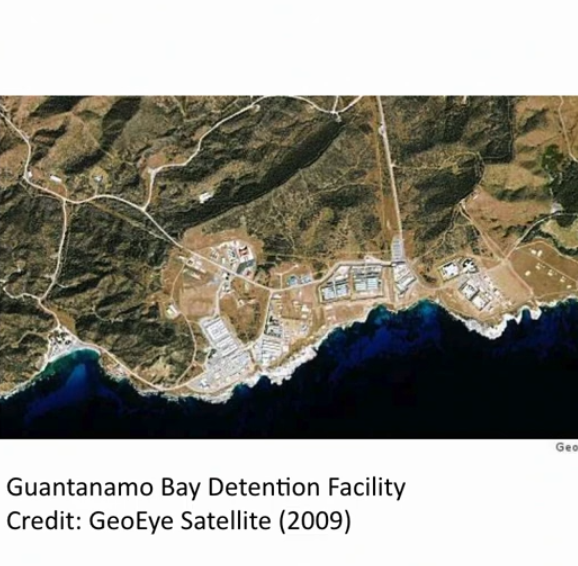
In northern Bucharest, in a busy residential neighborhood minutes from the center of Romania’s capital city, is a secret that the Romanian government has tried for years to protect. For years, the CIA used a government building — codenamed Bright Light — as a makeshift prison for its most valuable detainees. There, it held Al-Qaida operatives Khalid Sheik Mohammad, the mastermind of 9/11, and others in a basement prison until 2006, the year some were sent to Guantánamo Bay, according to former U.S. intelligence officials familiar with the location and inner workings of the prison.

John Goetz:

  • We’ve had a description of the CIA site, which is where one of the secret prisons were located.
  • We had a description from some that worked there.
  • The prison we’re talking about was used by the CIA in 2004 / 2005.
  • The CIA secret prison was held in a Romanian government organization which gets called either ORNSS or NSA.
  • It’s an organization that is used to get Romania up to speed on NATO classification rules.
  • It’s a building that has a big NATO flag on top of it.
  • In the back section of the building is where the secret prison was located.
  • What I understand is that in Poland, when Bush came over, right after  the beginning of the Iraq War.
  • When they didn’t find weapons of mass destruction, he was there in May and early June 2003.
  • We know that Al-Nashiri in his various times in CIA prisons, that his family members, I believe his mother was threatened with rape. He was water boarded, a drill was used on him.
  • There was a mock execution, things like that. We’re not exactly sure what happened in Poland and Bucharest.
  • There’s a little known site in Bosnia, that was used in days and weeks, right after 9-11.
  • In Bagram, there’s a military prison there and there’s a CIA prison.
  • I do know that in Africa there are prisons that run under a new model, where the state runs the prison and is quarterbacked, is the expression that’s used by the CIA who asks questions through others.
  • It makes it easier to deny.  Many people think . . .oh, the secret prison story is over.
  • The facts are that outside of flight logs and some locations of prisons, no one really knows what happens inside these places.
  • No one knows how they were run, no one knows perimeter security, how food was brought in, it remains a real black box in American history.

Guest – John Goetz, reporter with the German network ARD’s Panorama news magazine.

—–

70th Anniversary of the First Smith Act Prosecution: Proto-Thought Crime Legislation

This year marks the 70th anniversary of the first Smith Act trial of revolutionaries accused of wanting to overthrow the government. The law was intended to destroy the 100,000-strong American Communist Party however, the Smith Act was first used against the much smaller, revolutionary rival to the Communist Party, the Socialist Workers Party.  Our returning guest, author and activist Joe Allen writes about this 70th anniversary.  The Alien Registration Act of 1940 is also known as the Smith Act after its sponsor Rep. Howard Smith of Virginia, a Democrat and leader of the anti-labor bloc in the House of Representatives. The Smith Act became the legal weapon against critics of the government and stipulates that:

Whoever organizes or helps or attempts to organize any society, group or assembly of persons who teach, advocate, or encourage the overthrow or destruction of any such government by force or violence; or becomes or is a member of, or affiliates with, any such society, group or assembly of persons, knowing the purposes thereof–

Shall be fined under this title or imprisoned not more than 20 years, or both, and shall be ineligible for employment by the United States or any department or agency thereof, for the five years next following his conviction.

Joe Allen:

  • For many people in the United States, the defense of civil liberties, has always been an important and constant feature of our history and most of that time the defense of civil liberties has not been primarily against vigilantism, or rogue elements of the government or corrupt public officials. While that’s an important part of that, it has always been dealing with the actual laws that have been attempting to undermine civil liberties most of the time they’ve been federal laws.
  • You can go back to the Alien Sedition Act of the Adams Administration, the Espionage Act of WWI. They were always used against opponents of the government and not spies as they were sold to people.
  • James Canon was one of the most important figures in American Socialist history, his life traverse the history of the American far left.
  • He began in the IWW. The radical militant trade union that organized the most oppressed sector of American workers.
  • He was a founding member and later a national chair of the American Communist Party.  Like many Wobblies and members of the Communist Party he was very concerned of the civil liberties of radicals and trade union organizers and was the head organizer of International Labor Defense in the 1920s.
  • Canon developing a criticism of and his descent within the American Communist Party as the ILD moved away from its original mission and Canon himself to begin along with a number of significant figures of the American Communist Party and other people who sided with Trotsky in the dispute with Stalin over not only the Soviet Union also the International Communist Movement. He was the founder of early American Trotskyism in the 1920s and 1930s.
  • It was the broad layer of people who were ultimately indicted under the Smith Act in 1941 primarily for advocating the overthrow of the United States government.
  • Smith Act – Proto-Thought Crime Legislation
  • It’s also in a sense a response to a dispute inside the labor movement.
  • The first that a prosecutor tries to do is get a jury that is predisposed of the prosecution and not the defense.
  • That’s one of the great travesties of the Smith Act, not only can you be indicted by the things you do but by the things you say.
  • In that sense it really is a thought-control crime.
  • The most important part of the Smith Act in this country is it effectively destroyed the left in this country during the late 1940s and the early 1950s.

Guest – Joe Allen, a frequent contributor to the International Socialist Review and a long-standing activist, based in Chicago.

——————————————

Share

Law and Disorder December 19, 2011


Updates:

—-

Appeal Denied In Holy Land Foundation Case

Last week, the Fifth Circuit dismissed the appeal for the Holy Land Foundation case. This decision affirmed the conviction of Ghassan Elashi, the co-founder of the Holy Land Foundation for Relief and Development. As many listeners may know, the Holy Land Foundation was considered the largest Muslim charity in the United States before the Bush administration shut it down after the September 11 attacks. In May 2009, a federal judge in Dallas handed down sentences ranging from 15 to 65 years in prison to five of the charity’s founders and former fundraisers. Over a year before, a federal jury returned guilty verdicts on all 108 counts against the Foundation and the five former officers on charges of providing material support to Hamas after the U.S. government designated it a foreign terrorist organization in 1995. During that trial, the prosecution used unrelated video of suicide bombers to emotionally sway the jury.

Ghassan Elashi was then sentenced to 65 years in prison for giving material support in the form of humanitarian aid to Zakat committees – Palestinian charities in the West Bank and Gaza, that prosecutors were alleging were fronts for Hamas. Ghassan is being held in the Communications Management Unit in Marion, Illinois.

Noor Elashi:

  • One of the arguments the defense lawyers made is that USAID, which is a government agency sent money to the same exact Zakat Committees which are these distribution centers in Palestine that the Holy Land Foundation sent charity to.
  • That was their main charge, they were charged with giving material support in the form of humanitarian aid to Zakat Committees which the prosecutors were claiming were fronts for Hamas.
  • In their appeal, one of their main arguments is that these Zakat Committees received money from many NGOs including an American agency.
  • Another argument in the appeal was for the first time in US history, an expert witness who was an Israeli intelligence officer who testified under a fake name was allowed to testify under a pseudonym.
  • My father recently had a phone call ban, because he put his name on a yoga mat, and it was considered destruction of government property.
  • Our defense attorneys are not going to quit. They will ask the entire panel of appellate judges to re-hear the case, if that is denied, they’ll take the case to the Supreme Court.
  • The foreign policy and politics of this country have been very favorable to Israel.
  • FreedomToGive.com

Guest – Noor Elashithe daughter of Holy Land Foundation prisoner Ghassan Elashi. She is a writer based in Dallas, Texas. After receiving a Bachelor’s degree in journalism from the University of North Texas, she worked for the Fort Worth Star-Telegram. In July 2008, she won the 3rd place Mayborn Literary Nonfiction Award for her manuscript titled “Displaced,” which she plans to expand into a memoir about the displacement of three generations of Palestinians: her grandmother, father, and herself. She can be reached at noorelashi@gmail.com.

—–

Event In Philadelphia Marks 30 Years of  Mumia Abu-Jamal’s Incarceration

On December 7, the Philadelphia District Attorney’s Office announced that it will not seek another death sentence for Mumia Abu-Jamal. Under Pennsylvania law, Mr. Abu-Jamal will now be sentenced to life imprisonment without the possibility of parole in the Philadelphia County Court of Common Pleas.   The National Lawyers Guild commented that while there is overwhelming doubt about what the state claims to be the facts in this case, even those allegations never supported a capital charge. That it has taken three decades to remove death from the table is astonishing.

The Guild has long maintained that Mr. Abu-Jamal is entitled to a new and fair trial. Procedural irregularities plagued his case from the outset, including blatant constitutional violations, from the judge allowing the prosecution to admit evidence of his affiliation with the Black Panther Party, in violation of the Supreme Court case Dawson v. Delaware, to the use of a faulty sentencing form that misled jurors during the penalty phase, in violation of the Supreme Court case Mills v. Maryland.

A great deal of relevant evidence has never been reviewed by any court, much less presented to a jury. This evidence includes several photographs of the crime scene which impeach the testimony of a police officer who was a key eyewitness and proof that another individual was present, and fled, the scene of the shooting.

Mr. Abu-Jamal was charged at a time when, it was later revealed, there was extensive corruption within the Philadelphia Police Department. In 1995, then-District Attorney Lynne Abraham promised the city that she would dismiss any case in which there was evidence of police perjury or purposeful misreporting of facts. Given the history of police misconduct in Philadelphia when Abu-Jamal was arrested, and the specific instances of police perjury in his case, the National Lawyers Guild has urged current District Attorney Seth Williams to act on his predecessor’s unfulfilled pledge.

Two days after the DA’s announcement, and commemorating International Human Rights Day, a free forum was held at the National Constitution Center in Philadelphia to mark the 30th anniversary of Mumia Abu-Jamal’s incarceration, justice.  Twelve-hundred Mumia supporters met to reinvigorate the movement for justice for Abu-Jamal and to say no to life in prison for the political prisoner. “Because for 30 years Abu-Jamal has been unconstitutionally imprisoned in death row torture, justice for Mumia will not be served by life imprisonment, but by freedom,” said Dr. Johanna Fernandez, professor of history at Baruch College of the City University of New York and a co-producer of the forum. Fernandez wrote and produced a documentary, which debuted at the Constitution Center in 2010 on Abu-Jamal’s case. “Justice on Trial: The Case of Mumia Abu-Jamal,” examines evidence pointing to Abu-Jamal’s innocence and exposes the inequities of the American justice system.

Speakers: 

The December 9 forum was co-sponsored by Educators for Mumia Abu-Jamal, the National Lawyers Guild and International Family and Friends of Mumia Abu-Jamal.

———————————

Share

Law and Disorder September 12, 2011


Updates:

The State of Perpetual War

Since September 11, 2001 the US global war on terror has reached beyond Afghanistan and Iraq.  The US constructed the largest embassy ever in Baghdad to control the resources of Iraq.  Meanwhile strikes against Pakistan, Yemen, and Somalia, led an air war against Libya without any Congressional authorization continue as pointed out by author Anthony Arnove.  In his article titled  The 10th Anniversary of 9/11 Arnove describes US foreign policy of preventive war and how the US continues to  use drone strikes against Pakistan, Yemen and Somalia.  Now other countries are adopting the preventive war idea to fight (quote) terrorism. Today, the Obama Adminstration has gone beyond the Bush policies as trillions are spent on perpetual war while schools, health care and social needs crumble.

Anthony Arnove:

  • 911 was seized upon by the Bush Administration as an opportunity.  Condoleezza Rice specifically used the word opportunity to describe the geo-political shifts that she saw occurring in the wake of 9-11.
  • We’ve seen the invasion of Iraq, the invasion of Afghanistan, covert operations and Arab bombardment of dozens of countries. There’s an estimate now that this year the US will be operating in 120 countries in some capacity through use of commandos.
  • You’ve seen increased troop levels in Afghanistan so that even with the current so called draw down of the troops in Afghanistan, even with the reductions that are currently being undertaken, we’re still going to be ahead of the number of troops that were in Afghanistan at the end of the Bush Administration.
  • Withdrawal, the word no longer has any meaning. It actually means slight reduction of troops after they’ve been increased.
  • There are 46 thousand active duty troops in Iraq. The claim is that those 46 thousand will leave at the end of 2011 after an agreement reached under pressure from social movements in Iraq.
  • Then you look at the military installations that scatter the country, they’re not going to walk away from that easily.
  • In Afghanistan, they’re literally talking about dates as far as 2024 in terms of troops on the ground involved in a number of capacities.
  • I think Libya is truly an opportunistic action by the United States concerned its losing control in the middle east. You’ve had uprisings and revolutions that have toppled governments aligned with the United States.
  • The US has been so contemptuous of the freedoms of people around the world. So contemptuous of democracy, so contemptuous of people fighting for self determination.
  • So contemptuous of nationalist movements that would have put resources into the control of the people.
  • The actions of the Bush Administration and now Obama have only made us more hated, and made the world more dangerous.
  • They claim they’re making the world more safe, and protecting us. The reality is the opposite.
  • At least Barack Obama will be more responsive to social movements, we’ll be able to pressure him. It is clear that is not the case, there has been a demobilizing of sections of the anti-war movement who define the political horizons as the debate between the Republicans and Democrats.
  • The anti-war movement has been silenced.
  • The people who most vociferously supported invading Iraq, claimed there would be weapons of mass destruction, all of those things we now know to be lies, those people are regularly asked to be commentators on Iraq and Afghanistan.
  • Yet the people who got it right, saying this is what will happen if we invade, those people are never heard from.
  • The gap between what the elite are doing and what they are saying, and what is in their interest and the interest of ordinary people has never been wider.
  • On October 6, 2011, a number organizations have called for demonstrations in Washington DC and solidarity actions in other cities.  On October 15 actions have been called for by the United National Anti-War Coalition.  NationalPeaceConference.org

Guest – Editor and writer Anthony Arnove. He is best known for his books on Iraq and the Iraq War. Arnove is the author of the book Iraq: The Logic of Withdrawal, published in hardcover by the New Press and in paperback by Haymarket Books. Arnove toured the country promoting the book in spring 2006 as part of the New Press’ “End the War Tour”.

Arnove is also the editor of Iraq Under Siege, published by South End Press, the co-editor with Howard Zinn of Voices of a People’s History of the United States, published by Seven Stories Press, and the editor of The Essential Noam Chomsky, published by the New Press. He writes frequently for left-wing publications; he is a featured author at ZNet, a columnist for Socialist Worker, and on the editorial board of the International Socialist Review.


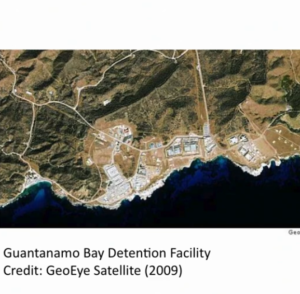
The Guantanamo Syndrome

Attorney Michael Ratner:

  • Pinochet’s Operation Condor was to round up opponents all over the world to torture and imprison them. This is now an American Operation Condor.
  • AUMF and Military Order #1 allow the administration to use drones around the world. This is the key piece of legislation. Out of the AUMF came military order # 1, November 13, 2001. The president can arrest anybody, they can be kept anywhere, American citizen or not.
  • From there flows the Guantanamo Syndrome. Habeas Corpus, a person who’s the prisoner of the executive can go to court and say put the executive on the defensive. Why am I being held? You have to have a legal basis.
  • After many years of litigation representing this incommunicado people at Guantanamo, we ended up representing their parents or relatives, because we couldn’t represent them, the Supreme Court finally said, it’s a Constitutional right to go to court to test your detention. They said that about the people in Guantanamo in particular, they didn’t say that about the people in Baghram or other places.
  • Once we won that right, the Bush Administration and the Obama Administration went into court and completely opposed that right having any meaning.  It is really an unrecognizable world from what we had ten years ago.

—-

Audio Collage

  • Surveillance State: The 51st State
  • Targeting Muslims Since 9-11

——————————————————————


Share

Law and Disorder August 22, 2011


Updates:


Cruel Solitary Confinement In Pennsylvania Prisons

Earlier this year the National Lawyers Guild called on Superintendent Louis Folino to support the Program Review Board’s recommendation to release Russell Maroon Shoatz into the general prison population at SCI Greene in Waynesburg, Pennsylvania.

Jerome Coffey, a political prisoner currently being held in Pennsylvania’s SCI Forrest.  Jerome’s social work while in prison include sending clothes to villages in Uganda and to women prisoners in the Philippines. That work has labeled him an instigator and he’s been placed in solitary confinement for more than 5 and a half years.

Bret Grote:

  • The Human Rights Coalition was founded by state prisoners at the State Correctional Institution in Greene, Pennsylvania in 2000. The Pittsburgh chapter where I work was founded in 2006-2007.
  • The main mission of the Human Rights Coalition was to bring the voices of the most excluded from criminal, legal, criminal justice discussions, namely those of prisoners, their family members and effected communities.
  • We base our work in building relationships with prisoners and to bring support and advocacy to those most impacted by the prison system and that has led us straight into solitary confinements where people’s lives are being micro-managed down to the most minute details.
  • The justifications for solitary confinement shift from to another, it used to be based on escapes.  Now that Russell Maroon Shoatz is approaching his 70th birthday, they’re claiming its because of his past efforts of organizing hunger strikes, and they cite an incident where he was forced to defend himself against another prisoner.
  • In Maroon’s case he met with a prisoner mental health staff person because there was some movement towards releasing him from solitary confinement that ended up being blocked.
  • This staff person told him there was an allegation that he tried to organize an armed prison uprising in the 80′s. This has been following him around for over 25 years in his file, but he has not been able to challenge this because he was not informed of this at all.
  • He is not represented by legal counsel. He is ripe for representation under the 8th amendment clause of cruel and unusual punishment.
  • The prison authorities typical treatment for somebody who is the restrictive housing unit is a cursory interview at the cell, maybe once every 30 days with a staff worker, which is to say they’re not really giving them effective mental health treatment.
  • You spend 23 hours in the cell, maybe 24 if the guards don’t take you to yard or shower.
  • The things that one may witness on the whole are constant screaming, banging, and yelling and crying and cursing and talking to one’s self by prisoners who are psychologically disturbed.  According to the figures up to 2500 or 3000 prisoners can be in solitary confinement on any given day in Pennsylvania. The total prisoner population in Pennsylvania is 52 thousand.
  • We are constantly looking for serious and committed civil and human rights lawyers to work with us. We have a massive body of evidence.  The solitary confinement system is an invisible system inside of a larger invisible system of the prisons.

Guest – Bret Grote, law student and volunteer with the Human Rights Coalition, an organization bringing the voices of the most excluded from criminal, legal, criminal justice discussions, namely those of prisoners, their family members and effected communities.  The HRC works to build relationships with prisoners and  bring support and advocacy to those most impacted by the prison system.
——

Andre Jacobs

Andre Jacobs is another Pennsylvania state prisoner in solitary confinement. Andre, a 27 year-old jailhouse lawyer, has been held in retaliatory solitary confinement for more than 8 years. In 2009, Andre was awarded 185 thousand dollars in a case against the Pennsylvania Department of Corrections, an action that has resulted in his being singled him out for abuse within the prison system. In January of this year, he was physically abused, issued death threats and denied medical treatment.

Liz Springer:

  • It’s been rough, there had been days where I thought he wasn’t going to make it. I thought I was going to get a call saying he was dead. I send him inspiration cards, and support him, send him some Bible verses to keep him strong.
  • There have been times he said to me, I can’t do it no longer, I can’t do it.
  • They were beatin’ him in the court room. They said he had an attitude and when he was leaving the court room, I witnessed them beating him, and I said, “I love you Andre.” He turned around and said “I love you too.”
  • They started beating him because they said he wasn’t supposed to speak to me.
  • He lost that case because the guards got on the stand and said he hurt one of the guard’s wrist.
  • He ended up with 18 years because of that. Lately he has a little hope.
  • He was strapped to a chair for 12 hours not being able to move anything but his head. Didn’t eat, had to go the bathroom and he just went.

Guest – Liz Springer, activist and the grandmother of Andre Jacobs.
———


Russell Maroon Shoatz

As many listeners may know, former Black Panther Russell Shoatz has been in prison since 1972, and the past 21 of those years has been spent in solitary confinement.  He’s 67, his spirit unbroken and in addition to his record of good conduct, members of the Pennsylvania Prison Society who visit Mr. Shoatz regularly attest to his peaceful disposition.  Earlier this year the National Lawyers Guild called on Superintendent Louis Folino to support the Program Review Board’s recommendation to release Russell Maroon Shoatz into the general prison population at SCI Greene in Waynesburg, Pennsylvania. His daughter Theresa Shoatz joins us talk more about his advocacy work and life as a political prisoner.

Theresa Shoatz:

  • The solitary confinement has had the worst effect on us. Within the 39 years we was able to have contact visits.
  • The unit he’s in now, there’s no contact, you’re behind a glass when you visit.
  • He’s had grandchildren since that time, and he hasn’t touched the grandchildren either. Our family is dedicated to visiting him, every 3 months.
  • Russell Shoatz being known throughout the country.  I notice now, his conversations are laid back, he’s not as upbeat as he used to be.
  • He keeps stressing almost on our weekly calls, you gotta get me outta here.
  • They told me Daddy’s a leader, I said no, he’s a grandfather.  The Panthers didn’t say we want to battle the police. They said, we want to educate our youth, we want to feed them, we want to take control of our community. When it became war, and the Panthers were under attack, they said we got to protect ourselves.
  • That’s what happened, and of course, Daddy’s a political prisoner. He took a stand and stood on the front line for his people and his community.
  • I had a little attitude with him, I said why would you leave us, this was some years ago. He said,  (I did it for my people. How could I allow you to be raised in that type of system?) It hit me like a ton of bricks.
  • The guards, they called themselves the “wolfpack” when you’d see them comin, they would roll one pants leg all the up to the knee.
  • I went to Governor’s office, the Governor of Pennsylvania. I was on trains, back and forth.
  • It’s the same thing, when our people get in the streets and march, you really can’t do one march.
  • At SCI Greene, over 20 young men in their 20′s hung themselves there (lynching) within a short time of solitary confinement.
  • Daddy was constantly yelling to the guys, what to do. They come in strollin. Strollin down the solitary unit.
  • This prison bubble is going to burst. There are people fighting on all levels, this prison bubble is going to burst.
  • It’s going to end, we’re going to make sure of that.

Guest – Theresa Shoatz, daughter of political prisoner Russell Shoatz and activist with the Human Rights Coalition.

————————————————————

Share

Law and Disorder June 20, 2011


Updates:

——–


FBI to Expand Domestic Surveillance Powers

On many of our shows, we’ve discussed the broad over reaching powers and underhanded tactics the FBI use when targeting environmental or pro-Palestine activists, Mosques and Muslim-Americans.  Now, new expanded FBI guidelines would allow agents easier access to search commercial or law enforcement databases, conduct lie detector tests, search people’s trash and conduct physical surveillance. Read: Anything Goes: The New FBI Guidelines

Though the guidelines are still under review, they would allow agents further access into people’s lives without suspicion of wrongdoing. The guidelines will be part of a new edition of the FBI manual, the Domestic Investigations and Operations Guide.  Civil libertarians criticize the guidelines in light of recent cases such as the Fort Dix Five, the Newburgh Four and Yassin Aref in Albany, where the FBI is accused of entrapping people by infiltrating poor or specific ethnic and religious communities. Michael Ratner’s Forthcoming Book:  Hell No, Your Right To Dissent

Attorney Mike German:

  • The government is saying they have unfettered authority to look into your private life without any justification, and they’re claiming they don’t need any factual basis to suspect you of wrongdoing.
  • National Security Letters were initially a tool to go after KGB spies, it was expanded to international terrorists. What the Patriot Act did is expand it to anyone who’s relevant to an investigation of spies or terrorists.
  • The fact that the government had no reason to suspect you was no longer relevant if they could use this tool.
  • That was originally set to sunset in 2005. Inspector General audit on the FBI’s use of this tool. There were five IG reports, that found the FBI were using these tools against people two or three times removed from the person of the investigation.
  • Phone records, bank records, credit history and they gag the bank or place from telling you.
  • IG audit found between 2003 and 2006 there were over 200 thousand National Security Letters.
  • Its the FBI manual, the Domestic Investigations and Operations Guide, the FBI’s internal policy. Their internal authority created by the Department of Justice.
  • These were initially designed to curb the abuse. As an FBI agent for 16 years, I found it useful to focus on the people doing bad things, not straying from that and focusing on people saying things I didn’t like, or doing things I didn’t think were right but wasn’t illegal.
  • The outgoing administration in 2008 had radically altered the guidelines. People who are completely innocent and not suspected of doing anything wrong can come under suspicion and investigation under these assessments.
  • The 2008 guidelines allowed the FBI to map communities based on race and ethnicity and track racial and ethnic behavior and facilities.
  • Under these new guidelines 2011, an FBI agent would be allowed to search private databases, data aggregaters, that pull together all sorts of information based on marketing, state and local law enforcement information – includes if you’ve also been a victim of crime or witness to a criminal act.  No factual predicate required.
  • It doesn’t require attorney general approval to open an assessment.  There’s no necessity to identify what federal crime they think you’re violating.
  • The tools include physical surveillance, they can stand outside your house, follow you around 24/7. They can get an informant to start engaging you in a false pretense, and your friends or neighbors.
  • They can interview your neighbors, they can interview your employer.
  • When you become a subject of investigation you get on the terrorist watch list.
  • The scary thing the Inspector General revealed, is that these (abuses) were all under the 2002 guidelines.  He said where he found violations, under the 2008, this would all be perfectly legitimate.
  • We at the ACLU are not just seeing the abuse with the FBI but within state and local law enforcement. You can visit www.aclu.org/spyfiles we’ve documented spying and obstruction of first amendment activity in 31 states and the District of Columbia.
  • It was predictable because these laws were put in place to prevent exactly that, because that’s what the state and local police and the FBI were doing in the absence of rules.
  • It’s not surprising when you take those rules away, they go into political spying mode.
  • It’s very frustrating, because so much of what’s happening is happening is secret.
  • Scott Crow: He found under a FOIA request, the FBI had gone to the IRS to find some small tax violation that they could put him in jail for. Because they suspected him of something, yet they had years of investigation and found no wrong doing.
  • Mike German’s book – Thinking Like A Terrorist, it’s a look at what terrorists are trying to accomplish, that is to coerce the government into taking measures that actually take away the government’s legitimacy.
  • Past Law and Disorder interview with Attorney Mike German.

Guest -  ACLU attorney and former FBI agent, Mike German, German develops policy positions and proactive strategies on pending legislation and executive branch actions concerning domestic surveillance, data mining, freedom to travel, medical and financial privacy, national ID cards, whistleblower protection, military commissions and law enforcement conduct. German currently serves as an adjunct professor for Law Enforcement and Terrorism at the National Defense University and is a Senior Fellow with GlobalSecurity.org. German graduated from the Northwestern University Law School , and graduated cum laude from Wake Forest University with a B.A. in Philosophy. A sixteen-year veteran of federal law enforcement, German served as a special agent with the Federal Bureau of Investigation, where he specialized in domestic terrorism and covert operations. As an undercover agent, German twice infiltrated extremist groups using constitutionally sound law enforcement techniques. These operations successfully prevented terrorist attacks by winning criminal convictions against terrorists.

——————————————————————–

Share

Law and Disorder May 9, 2011


Updates:

—-

Guantánamo Leaks Must Be Met By Release of Obama Task Force Assessments

The 759 Guantanamo files that were classified “secret” cover nearly every inmate since the camp opened in 2002. The documents obtained by the New York Times and the Guardian last month, reveal how children, the elderly and mentally ill were wrongfully held. The documents also reveal that many prisoners were sent to Guantanamo for nearly nothing or to be interrogated. What did these documents reveal?

Attorney Shane Kadidal:

  • These stories started on Monday morning, because administration officials gave out a briefing saying that the nickname of Osama’s couriers was given out by one of the detainees.
  • Assuming information taken from Khalid Sheikh Mohammed
  • We do know it took eight months from the time they identified this compound to the point they decided to strike at it.  I think its clear, they relied on a whole slew of information from a variety of sources.
  • We already know the true name of the courier, which is more important than a nickname came from agents on the ground and electronic surveillance.
  • 172 detainees, 90 cleared from release, 2/3 of those from Yemen have been indefinitely suspended for repatriation because of the “underwear bomber.”
  • The problem is so much of (media) attention is focused on the ones that will never be released.
  • WikiLeaks – 2400 pages of documents almost all risk assessments of about 740 detainees who’ve been to Guantanamo
  • They represent the Defense Departments best case for detaining someone.
  • You have these long analysis of very shady facts, not detailing where allegations are coming from.
  • If you look at the documents as a whole, it shows that most of the detainees were held on flimsy, unreliable information.
  • The documents show that people were interrogated in GTMO about nothing to do with terrorist attacks in the United States. You had Samuel Hodge interrogated about the inner workings of Al-Jazzera
  • Everyone ended up with the categorization of high or medium risk
  • When you see a leak of this magnitude, the only corrective is to release more information and that’s what we’ve called for at CCR.
  • The government quickly emailed us – They said consistent with the security clearances you signed on for, you have to treat this information as classified (leaked documents) even though its been scattered to the winds on every newspaper on Earth.

Guest – Attorney Shane Kadidal, senior managing attorney of the Guantánamo Global Justice Initiative at the Center for Constitutional Rights in New York City. He is a graduate of the Yale Law School and a former law clerk to Judge Kermit Lipez of the United States Court of Appeals for the First Circuit. In his eight years at the Center, he has worked on a number of significant cases in the wake of 9/11, including the Center’s challenges to the detention of prisoners at Guantánamo Bay (among them torture victim Mohammed al Qahtani and former CIA ghost detainee Majid Khan), which have twice reached the Supreme Court, and several cases arising out of the post-9/11 domestic immigration sweeps.

——-

Green Is The New Red: An Insiders Account of A Social Movement Under Siege

We welcome Will Potter award-winning independent journalist and now the leading authority on “eco-terrorism.” He’s the author of the new book ,Green Is the New Red: An Insider’s Account of a Social Movement Under Siege, and it reveals a complex environmental movement emerging amid police state pressure. As we’ve reported here on Law and Disorder, environmental activism have been labeled terrorism under certain interpretation of the Patriot Act, essentially criminalizing dissent and chilling free speech in this country at a critical time.  Our guest was an FBI target for merely leafleting against animal testing, and he was threatened to be put on the domestic terrorist watch list if didn’t comply with FBI demands. We talk more about that, the environmentalist movements and his new book.

Will Potter:

  • My background is in mainstream newspapers. As I was working as a reporter at the Chicago Tribune, about 9 months after 9/11. I was covering breaking news, blood and guts.
  • I decided to go out leafleting on a campaign I became aware of against a controversial animal testing company.
  • Couple weeks later the FBI knocks on my door telling me I need to become a government informant and help infiltrate animal rights and environmental groups and if I didn’t they’d put me on the domestic terrorist list.
  • It scared the tar out of me. I wish I could say it didn’t.
  • Afterward it really lit a fire under me to figure out what was going on.
  • One of the reasons I started the website was because of this new law being considered called the Animal Enterprise Terrorism Act.
  • What I decided to do with the book is tell the personal stories of the people involved.
  • I followed Daniel McGowan a few days before his sentence to how he ended up in this facility, his own journey as an activist. Daniel was convicted of serious crimes, two arsonists that didn’t harm anyone and he was labeled a terrorist.
  • The book looks at the wide range of activity being labeled “eco-terrorism”
  • The FBI has labeled the environmental and animal rights movement the number one domestic terrorism threat.
  • These corporate campaigns were pushed for so long through the courts, politicians, and the press that over time they began to dovetail with government policy.
  • The Animal Enterprise Terrorism Act is so broad it can even wrap up non-violent civil disobedience as terrorism, only if its directed at what is called animal enterprises.
  • The real power of this is fear.
  • The activists who are really effective and pushing the boundary are the ones being labeled eco-terrorists.
  • I recently wrote about 3 bills that are under consideration for the Huffington Post. What Is Big Ag Trying To Hide.

Guest – Will Potter,  award-winning independent journalist based in Washington, D.C., who focuses on “eco-terrorism,” the animal rights and environmental movements, and civil liberties post-9/11. Will’s work has appeared in publications including the Chicago Tribune, the Huffington Post, and the Vermont Law Review, and he has testified before the U.S. Congress about his reporting. He is the author of Green Is The New Red: An insider’s account of a social movement under siege forthcoming from City Lights Books.

Share
Home Page | Stations | Hosts | Listening Library | Contact Us     © 2012 Law and Disorder

Powered by WordPress.
Website design by Canton Becker.
Header Photo: Jim Snapper
Entries (RSS) and Comments (RSS).