Artificial Intelligence, Civil Liberties, Civil Rights, Freedom Of Speech, Human Rights, Right To Dissent, Surveillance
Podcast: Play in new window | Download
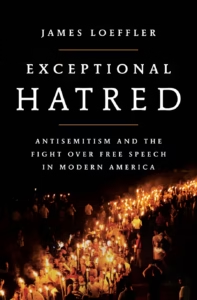
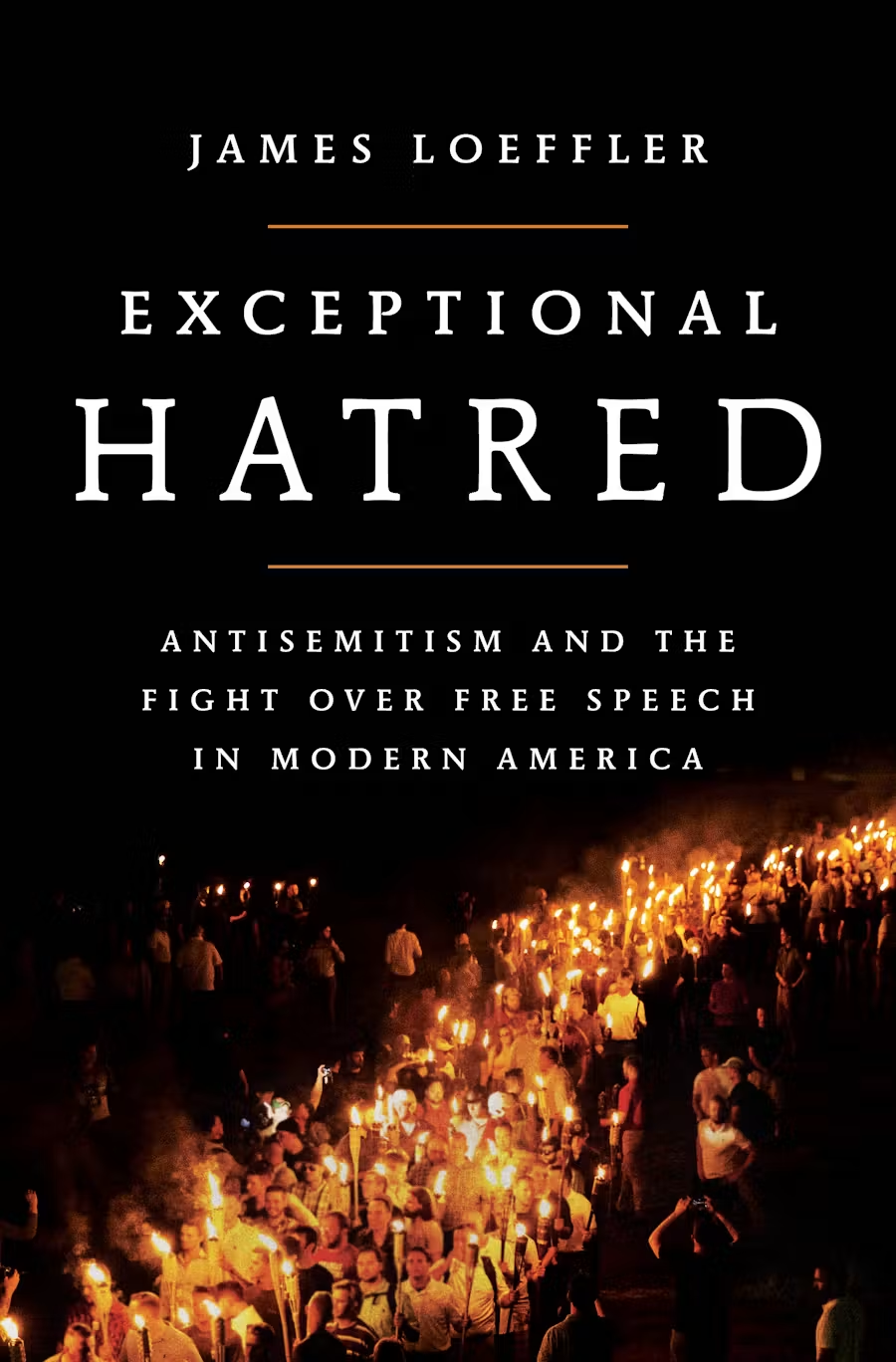
Exceptional Hatred: Antisemitism And The Fight Over Free Speech In Modern America
Today in America, “we proclaim our commitment to fighting hatred while applying it selectively. We champion free speech until confronted with speech we despise – and minimize the claims of those wounded by words.” American democracy “stands at a precipice, besieged by authoritarian politics, resurgent nativism, and populist demagoguery. These forces, once relegated to history, now threaten our pluralistic society and its defining commitments to freedom and equality.” Those chilling words are from the brand new book Exceptional Hatred: Antisemitism And The Fight Over Free Speech In Modern America by James Loeffler.
Guest – Professor James Loeffler is the Felix Posen Professor of Modern Jewish History at Johns Hopkins University, and Kogod Senior Research Fellow at the Shalom Hartman Institute of North America. He writes widely on modern Jewish history from antisemitism to Zionism, with a focus on the overlooked ties between the Jewish past and the global present in politics, law, and culture. His writing has appeared in The Atlantic, The New York Times, The Washington Post, The Wall Street Journal, and The New Republic.
—-
Digital Privacy Laws Lag Far Behind Evolving Modern Communication
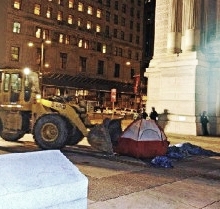
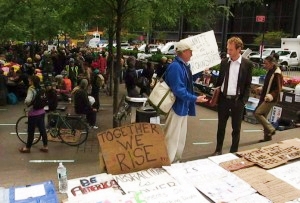
The 15th anniversary of Occupy Wall Street has just passed, when protesters occupied Zuccotti Park NYC and sparked a global movement. Occupy also attracted significant government surveillance. Documents later obtained through FOIA showed that the Department of Homeland Security monitored the movement and circulated intelligence to the private sector about Occupy activists and protests. That history raises a question that goes well beyond protest movements: How do lawyers protect confidential communications in a world where so much of their work is digital? Confidentiality handle information that can affect a client’s freedom, finances, safety, and legal strategy. Yet many lawyers aren’t trained to think about the technology they use in terms of protecting that confidentiality.
Guest – Jonathan Stribling-Uss, is a New York City lawyer and digital security consultant. He founded and directs Constitutional Communications, an organization that supports non-profits specializing in information security for professionals and civil society groups. Jonathan previously served as a Mozilla and Ford Foundation Media and Democracy Fund Technologist Fellow at the New York Civil Liberties Union. He has trained hundreds of attorneys in cybersecurity and ethics through organizations including the New York County Lawyers Association and the American Bar Association. https://privacytools.io/

————-
Civil Liberties, Civil Rights, Criminalizing Dissent, Right To Dissent, Supreme Court
Podcast: Play in new window | Download
Thank you for your generous support of Law and Disorder and your donation is appreciated!
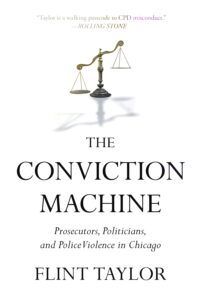

The Conviction Machine: Prosecutors, Politicians and Police Violence in Chicago
The comedian Lenny Bruce used to joke that Chicago was so corrupt. It was thrilling. He had no idea. Bruce was referring to run of the mill bribery of a traffic cop or a police officer taking your floor mats in lieu of a ticket or a pay off from a local bar owner. The corruption in Chicago ran much deeper. It went from the prosecutors who were actually in the police station, listening to the screams of men being tortured, before they went and took a signed confession from them.
It was the commander of a whole section of police who learned how to torture people from a tour of duty in Vietnam. He brought back an electric machine that they had actually used in Vietnam Vietnamese. This machine was used on Black people in Chicago. Three hundred people were convicted on the basis of tortured confessions. The corruption ran all the way up to the mayor’s office. Mayor Richard J Daily knew about it and said nothing.
It was only the work of a few attorneys like Flint Taylor and the community, the Black Panther party, and activists and progressive politicians who exposed it. Their victory included reparations, The torture of people in police stations on the west side and southside of Chicago is now taught to eighth grade and 10th graders in the public schools.
“In the halls of justice the only justice is in the halls“ said H. Rap Brown, the leader of the Student Nonviolent Coordinating Committee (SNCC)
Guest – Flint Taylor, a founding member of Chicago’s Peoples Law Office. He represented the families of slain Black Panther leaders Fred Hampton and Mark Clark. He continues to represent many survivors of police torture and wrongful convictions. Attorney Taylor is co-counsel in the Malcolm X assassination case and is the award-winning author of the historical memoir “The Torture Machine“. Flint’s book is a captivating account of the most corrupt and blood soaked chapter In Chicago law-enforcement history.
—-


U.S. Supreme Court Decisions Resetting Precedent Part 2
Back we go to review of more cases from the recent term of the U.S. Supreme Court. We start with the birthright citizen case. Then we take up cases dealing with immigration and executive power, as well as other major cases. We also look at what many have described as corruption among the Justices.
Guest – Ellen Yaroshefsky is the Howard Lichtenstein Distinguished Professor of Legal Ethics, Maurice A. Deane School of Law, at Hofstra University. She is a leading educator and expert in ethics law and serves as an expert witness and advisor to lawyers and law firms. Prof. Yaroshefsky is a former Commissioner on the New York State Joint Commission on Public Ethics. She has previously worked at the Center for Constitutional Rights and has been in private practice. And Prof. Yaroshefsky has received numerous awards, including the New York State Bar Association’s honor for Outstanding Contribution in Criminal Law Education.
—————
Civil Liberties, Civil Rights, Cuba, Freedom Of Speech, Gaza, genocide, Right To Dissent
Podcast: Play in new window | Download
We Need Your Help and Support
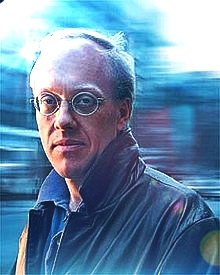

Cuba: The Capital of 21st Century Communism
On July 20th, Secretary of State Marco Rubio and the State Department released a 100-page McCarthyite propaganda report. It is a document that seeks to serve as the ideological justification for an escalating assault on Cuba, the Cuba solidarity movement and all political dissent on the left. The report casts a wide net of unfounded accusations, maliciously painting over 40 left-leaning social movement organizations and individuals as purported Cuban “front groups” while employing guilt-by-association tactics to smear even elected officials such as New York Mayor Zohran Mamdani and Los Angeles Mayor Karen Bass.
Among the organizations cited is the National Lawyers Guild, an association of attorneys, law students and legal workers, of which all of the hosts here on Law and Disorder are members. It goes so far as to cite reports from the long-discredited House Un-American Activities Committee, reviving Cold War conspiracy theories from the 1950s and repackaging them for the present.
As our guest today writes, “These accusations are not meant to be rational. They, like the charges that our elections are manipulated, are transparent excuses to go after institutions and individuals that are seen as threatening Trump and the Republican Party’s absolute grip on power.”
Guest – Chris Hedges is a Pulitzer Prize winning journalist and author, and the former Middle East correspondent for the New York Times. Among his more than a dozen books are American Fascism: The Christian Right and the War on America; The Greatest Evil Is War; and A Genocide Foretold: Reporting on Survival and Resistance in Occupied Palestine. Chris Hedges is also one of the contributors to the book titled From the Flag to the Cross: Fascism American Style, a book composed of summaries of interviews with guests here on the Law and Disorder radio show, and available for purchase at O/R Books.
—-
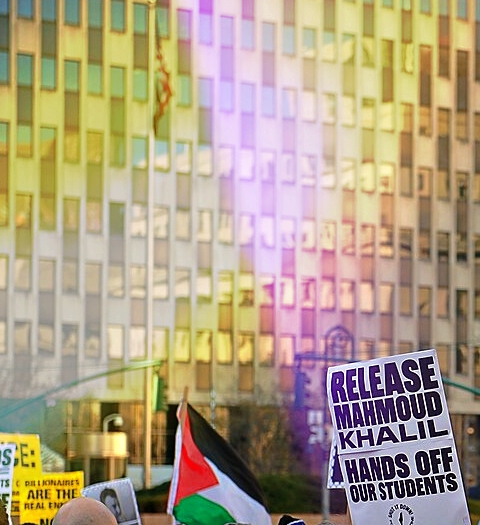
Khalil v Trump
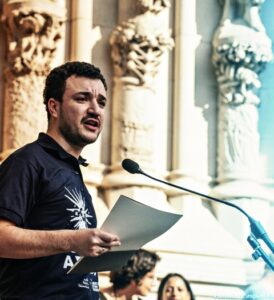
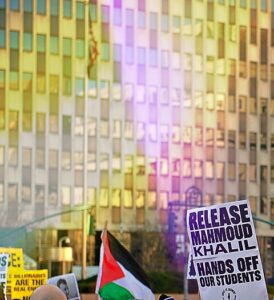
Mahmood Khalil, a recent Columbia University graduate and legal permanent resident has sued senior Trump administration officials and private anti-Palestinian groups for conspiring to target, detain, and attempt to deport him because of his identity and his advocacy for Palestinian rights. He is represented by the Center for Constitutional Rights and the law firm of Beldock, Levine and Hoffman.
The lawsuit argues that government officials and private actors, including the Heritage Foundation, Betar and Canary Mission violated the Ku Klux Klan Act of 1871 and the US Constitution when they coordinated to suppress political speech and support of Palestinian rights through the weaponization of immigration enforcement and baseless, pretrial accusations of terrorism and antisemitism.
Mahmoud‘s arrest, detention, and attempted deportation were part of a broader strategy to criminalized solidarity, chill speech and make an example of those who speak out against the subjugation of Palestinians. This case is about more than one person or one freedom movement. Is about whether government power can be weaponized by private actors to target human rights defenders and strip people of their constitutional rights.
Guest – New York attorney Adina Marx-Arpadi is a justice fellow at the Center for Constitutional Rights ( CCR). She graduated.CUNY law school and worked at Bronx Defenders.
—————————–
Civil Liberties, Civil Rights, police accountability, Right To Dissent, Surveillance
Podcast: Play in new window | Download
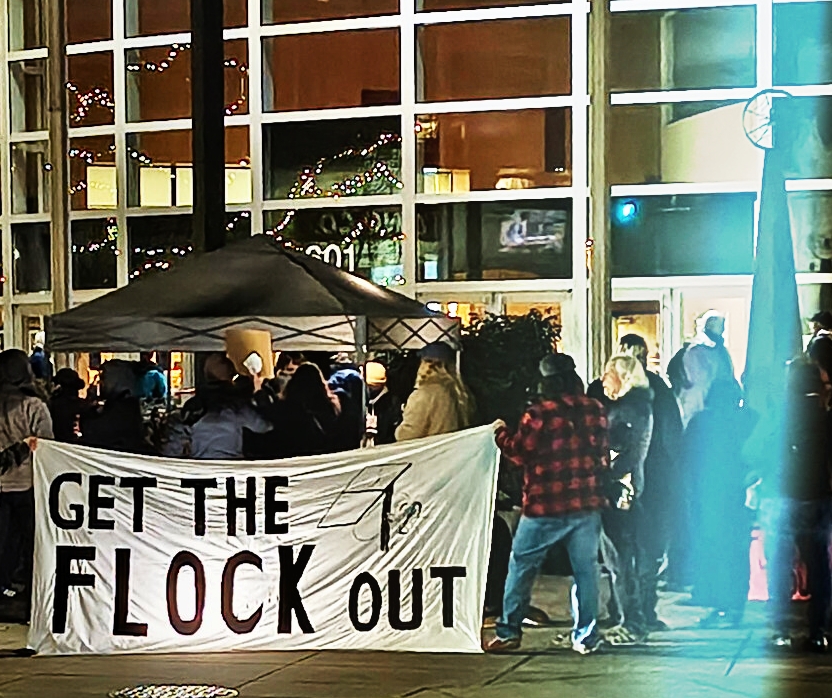
Cities Cancel Flock Camera Agreements After Brazen Privacy Breaches
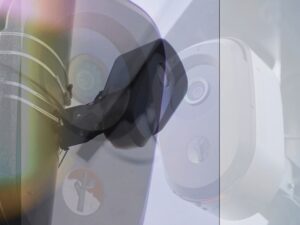
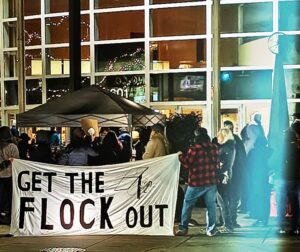
In 2025, something shifted in the long, largely one-sided battle over surveillance technology in American cities. The Atlanta-based company Flock Safety sells AI-powered license plate readers, or ALPRs, to thousands of police departments. Last year, they started losing. At least two dozen cities and counties cancelled, rejected, or terminated Flock contracts after local communities organized and said no.
In Austin, more than 30 community groups formed a coalition that forced the city to cancel its contract. The city government of Cambridge, Massachusetts, terminated its agreement after catching Flock installing cameras without permission. In Evanston, Illinois, an audit revealed that cameras were quietly feeding data to federal immigration enforcement. The pattern is the same: surveillance sold as a public safety tool is covertly repurposed in ways communities never approved. At the center of this movement is Fight for the Future—the primary digital rights nonprofit running the Flock Out campaign opposing Flock’s80,000+ AI-powered ALPRs.
Guest – Reem Suleiman, Senior Campaign Director at Fight for the Future. She previously served as the U.S. advocacy lead for the Mozilla Foundation, and was an original member of the Oakland Privacy Advisory Commission, working to safeguard civil liberties against surveillance technology. FlockOut.org
—-

Prairieland Texas Case Update
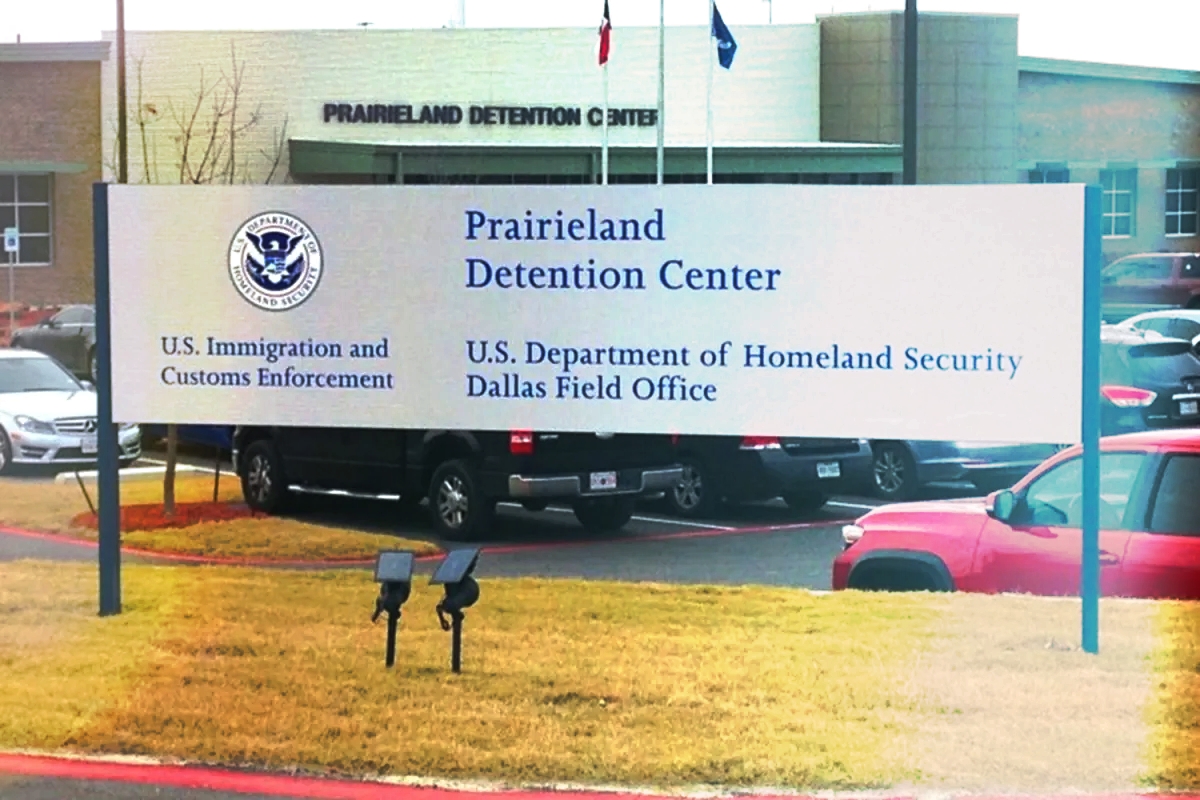
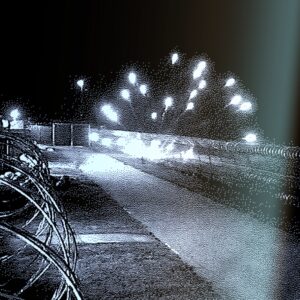
The Prairieland cases have been grinding through both state and federal courts since a noise demonstration nearly one year ago. The demo was in solidarity with detainees at the Prairieland ICE Detention Center in Alvarado, Texas, in early July 2025. It ended when an Alvarado Police Department officer arrived on the scene and became involved in a gunfire exchange. He allegedly sustained minor injuries—though the prosecution has withheld his medical records. What followed has become the nation’s first federal “Antifa” trial, with 22 defendants now facing a combination of state and federal charges, most of them held on bonds as high as $15 million.
In recent weeks, there have been new developments on multiple fronts: a third indictment of defendant Dario Sanchez over allegations that he removed people from group text chats, the quiet indictment of three additional defendants that defense teams say went unannounced, and an approaching trial date that has already been delayed twice. Today we’ll get an update on the cases and what the road ahead looks like for the Prairieland defendants.
Guest – Xavier de Janon is a criminal defense attorney and the Mass Defense Director at the National Lawyers Guild, where he provides protest defense and support for the right to dissent. Based in North Carolina, Xavier also represents individuals in politically motivated cases across the South.
—————————
Civil Liberties, Civil Rights, Freedom Of Speech, Gaza, genocide, Human Rights, NSA Spying, Right To Dissent, U.S. Militarism, Violations of U.S. and International Law, War Resister
Podcast: Play in new window | Download
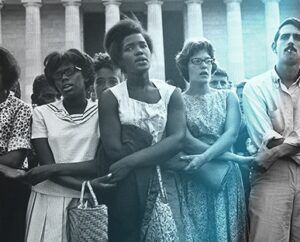
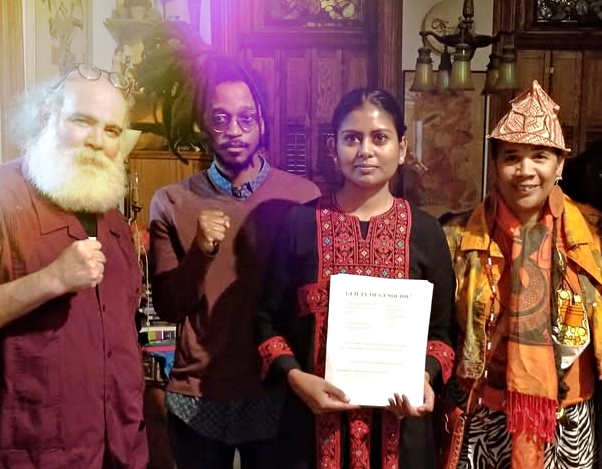
Guilty of Genocide
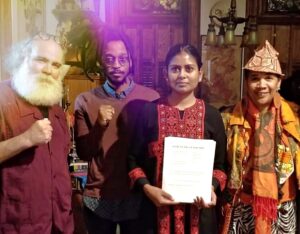
For decades, activists in the United States have argued that racial violence, political repression, and systemic inequality are not simply domestic issues. They’re also violations of international human rights law. A new collection, Guilty of Genocide, revisits that argument through the lens of the 2021 International Tribunal on U.S. Human Rights Abuses Against Black, Brown, and Indigenous Peoples. The book gathers testimony, legal analysis, poetry, artwork, and organizing documents from a landmark people’s tribunal convened by the Spirit of Mandela Coalition.
After hearing testimony on policing, incarceration, political prisoners, environmental racism, and colonialism, an international panel of jurists delivered a sweeping verdict finding the United States guilty of multiple human rights abuses.
Guest – Matt Meyer an internationally recognized peace educator, author, and activist. He was nominated for the 2026 Nobel Peace Prize alongside the International Peace Research Association in recognition of his lifelong commitment to nonviolence and global peace education. Author of more than a dozen books, including Guns and Gandhi in Africa, Matt has played a major role in building international peace studies and justice networks across Africa, Latin America, Asia, Europe, and North America.
—-
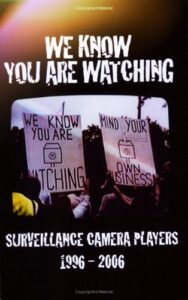
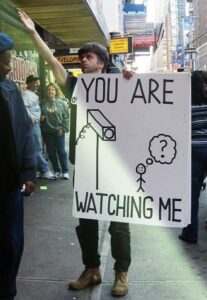
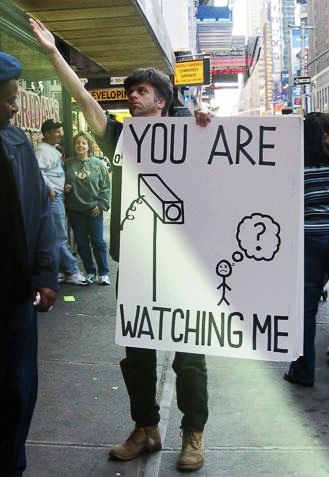
A Look Back At The Inception Of New York City’s Panopticon
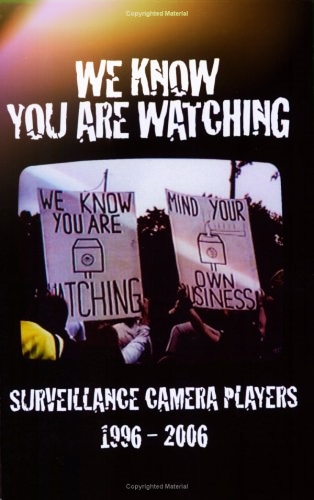
When Law and Disorder first interviewed privacy activist Bill Brown in 2005, the landscape of surveillance in New York City — and across the United States — was already alarming. Bill was warning us about hundreds of NYPD cameras going up in Brooklyn, federal Homeland Security dollars flooding into local surveillance infrastructure, and the proposed “ring of steel” around lower Manhattan modeled on London’s vast camera network. What seemed like a dire warning then looks almost quaint today.
In the years since, mass surveillance has expanded in ways that would have been difficult to imagine. Amazon’s RING doorbell cameras, now installed on tens of millions of private homes, have become a vast, crowd-sourced surveillance network — with police departments across the country routinely requesting footage from residents, sometimes without a warrant. Meanwhile, a newer and perhaps even more insidious technology has taken hold: FLOCK Safety cameras, license plate readers now deployed in thousands of communities, logging the movements of ordinary Americans going about their daily lives and making that data available to law enforcement across jurisdictions. Add to this the explosion of facial recognition technology, social media monitoring, and AI-driven predictive policing tools, and the surveillance state Bill Brown cautioned us about has arrived in full force.
But Americans are pushing back. Civil liberties organizations including the ACLU have won outright bans on government use of facial recognition in cities including San Francisco, Boston, and Portland. Community organizers have successfully blocked FLOCK camera contracts in several cities after exposing how the data is shared and retained. And a growing movement of digital rights advocates, tenant organizations, and privacy activists continues to fight surveillance expansion at the local, state, and federal level — carrying on exactly the kind of work Bill Brown was urging listeners to take up all those years ago.
Since 2006, New York City’s surveillance infrastructure has evolved from a fragmented network of video cameras. It’s now an integrated, intelligence-driven system powered by the Domain Awareness System (DAS) and advanced biometric tools. The NYPD’s intelligence and counterterrorism budget quadrupled from $83 million in 2006 to $349 million in 2021, enabling the deployment of technologies originally designed for counterterrorism to monitor routine street crime and protests. These include facial recognition software, license plate readers, and mobile X-ray vans.
The scale of physical surveillance has expanded dramatically. By 2021, Amnesty International estimated more than 15,000 police cameras in Manhattan, the Bronx, and Brooklyn alone, up from roughly 2,400 visible cameras in Manhattan in 1998. This network is further augmented by cellphone surveillance tools like Stingray trackers and cell tower dumps. Those allow police to identify individuals at protests or public gatherings without warrants.
This evolution has created a surveillance state that disproportionately impacts communities of color. There’s a well-documented correlation between surveillance density and higher rates of stop-and-frisk incidents in minority neighborhoods. Police maintain that these tools are essential for solving crimes and preventing attacks — but the lack of public oversight and the use of data scraped from social media have intensified debates over privacy rights and racial bias in policing.
————-
Civil Liberties, Civil Rights, Criminalizing Dissent, Gaza, genocide, Right To Dissent, U.S. Militarism, Whistleblowers
Podcast: Play in new window | Download
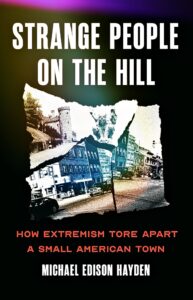
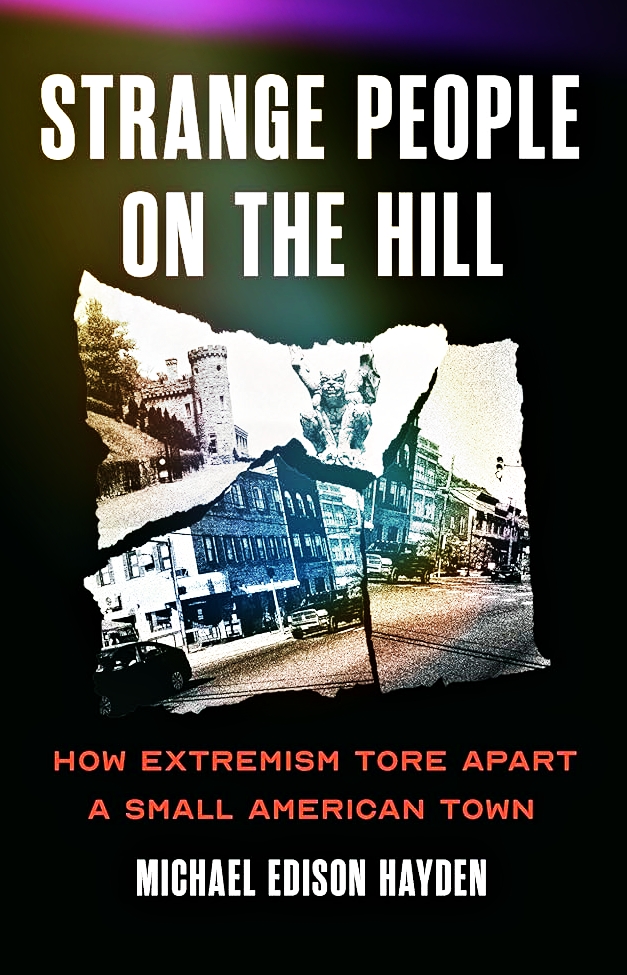
Strange People on the Hill: How Extremism Tore Apart a Small Town
Investigative reporter Michael Edison Hayden has spent years on the front lines documenting extremism in America. In his new book, Strange People on the Hill: How Extremism Tore Apart a Small Town, Hayden tells the story of a quiet West Virginia town thrust into turmoil when a white nationalist organization moves its headquarters to a nearby 19th century castle.
At the center of the story are the neighbors who suddenly find their community reshaped by a VDARE, a group promoting conspiracy theories like the so-called “great replacement.” Hayden’s book provides a close look at how extremism is lived, contested, and resisted in real communities. As he embeds with locals, the line between observer and participant begins to blur, with personal and professional consequences. Our conversation comes as the Southern Poverty Law Center faces 11 federal fraud charges, including wire fraud and conspiracy. To money launder. The Justice Department alleges the SPLC secretly paid over $3 million dollars to informants tied to white supremacist groups like the KKK and Aryan Nations—while telling donors the funds were being used to fight those groups. The SPLC denies wrongdoing, saying the informant program was used to monitor threats.
Guest – Michael Hayden has worked as a politics writer for Newsweek and covered crime for VICE. His work has been featured in the New York Times, Foreign Policy, ABC News, and the Wall Street Journal, among others. He co-hosts the podcast Posting Though It, and is a three-time grantee of the Pulitzer Center on Crisis Reporting.
—-

Defending Rights And Dissent
Donald Trump’s wholesale attack on the American democracy, in general, and on freedom of speech and the right to dissent, in particular has reached epidemic proportions. We could literally spend the next half hour simply listing all of the unconstitutional Executive Orders he has issued and the unlawful steps his co-conspirators have taken to implement his dangerous policies of punishing free speech, muzzling the free press, and destroying academic freedom.
Resistance to Trump and his MAGA ideology has been widespread. More than 700 lawsuits have been filed against the Trump administration in his second term, resulting in over 150 TROs, preliminary injunctions, and final judgments against the administration. And the response from the American people has been equally admirable, with a series of nationwide – indeed worldwide – protests, culminating in No Kings Day on March 28, with 3300 events in all 50 states, with an unprecedented 8 million people participating, making it the largest single day of protest in American history.
The resistance has been driven by scores of large and small pro-democracy organizations across the country. One of those is Defending Rights & Dissent, a national civil liberties organization that defends the American people’s right to know and freedom to act through grassroots mobilization, public education, policy expertise, and advocacy journalism.
Guest – Nathan Fuller is Communications Manager for Defending Rights & Dissent and former Executive Director of the Courage Foundation, a whistleblower and journalist defense organization, where he campaigned on behalf of Edward Snowden, Chelsea Manning, Daniel Hale, Lauri Love, and several others. Nathan also led Assange Defense, the U.S. campaign to free WikiLeaks publisher Julian Assange, who was released from prison in 2024. Previously, Nathan was the courtroom reporter and press liaison for the Chelsea Manning Support Network, covering Manning’s entire court-martial in Fort Meade. Youtube Channel
——————————–