Civil Liberties, Civil Rights, Criminalizing Dissent, Right To Dissent, Supreme Court
Podcast: Play in new window | Download
Thank you for your generous support of Law and Disorder and your donation is appreciated!
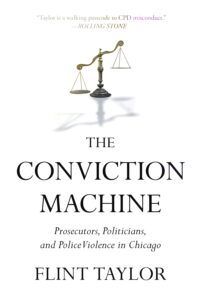

The Conviction Machine: Prosecutors, Politicians and Police Violence in Chicago
The comedian Lenny Bruce used to joke that Chicago was so corrupt. It was thrilling. He had no idea. Bruce was referring to run of the mill bribery of a traffic cop or a police officer taking your floor mats in lieu of a ticket or a pay off from a local bar owner. The corruption in Chicago ran much deeper. It went from the prosecutors who were actually in the police station, listening to the screams of men being tortured, before they went and took a signed confession from them.
It was the commander of a whole section of police who learned how to torture people from a tour of duty in Vietnam. He brought back an electric machine that they had actually used in Vietnam Vietnamese. This machine was used on Black people in Chicago. Three hundred people were convicted on the basis of tortured confessions. The corruption ran all the way up to the mayor’s office. Mayor Richard J Daily knew about it and said nothing.
It was only the work of a few attorneys like Flint Taylor and the community, the Black Panther party, and activists and progressive politicians who exposed it. Their victory included reparations, The torture of people in police stations on the west side and southside of Chicago is now taught to eighth grade and 10th graders in the public schools.
“In the halls of justice the only justice is in the halls“ said H. Rap Brown, the leader of the Student Nonviolent Coordinating Committee (SNCC)
Guest – Flint Taylor, a founding member of Chicago’s Peoples Law Office. He represented the families of slain Black Panther leaders Fred Hampton and Mark Clark. He continues to represent many survivors of police torture and wrongful convictions. Attorney Taylor is co-counsel in the Malcolm X assassination case and is the award-winning author of the historical memoir “The Torture Machine“. Flint’s book is a captivating account of the most corrupt and blood soaked chapter In Chicago law-enforcement history.
—-

U.S. Supreme Court Decisions Resetting Precedent Part 2
Back we go to review of more cases from the recent term of the U.S. Supreme Court. We start with the birthright citizen case. Then we take up cases dealing with immigration and executive power, as well as other major cases. We also look at what many have described as corruption among the Justices.
Guest – Ellen Yaroshefsky is the Howard Lichtenstein Distinguished Professor of Legal Ethics, Maurice A. Deane School of Law, at Hofstra University. She is a leading educator and expert in ethics law and serves as an expert witness and advisor to lawyers and law firms. Prof. Yaroshefsky is a former Commissioner on the New York State Joint Commission on Public Ethics. She has previously worked at the Center for Constitutional Rights and has been in private practice. And Prof. Yaroshefsky has received numerous awards, including the New York State Bar Association’s honor for Outstanding Contribution in Criminal Law Education.

—————
Civil Liberties, Civil Rights, Supreme Court
Podcast: Play in new window | Download
Support Law and Disorder here. We very much appreciate the support so far!

Reviewing Key SCOTUS and Lower Court Cases
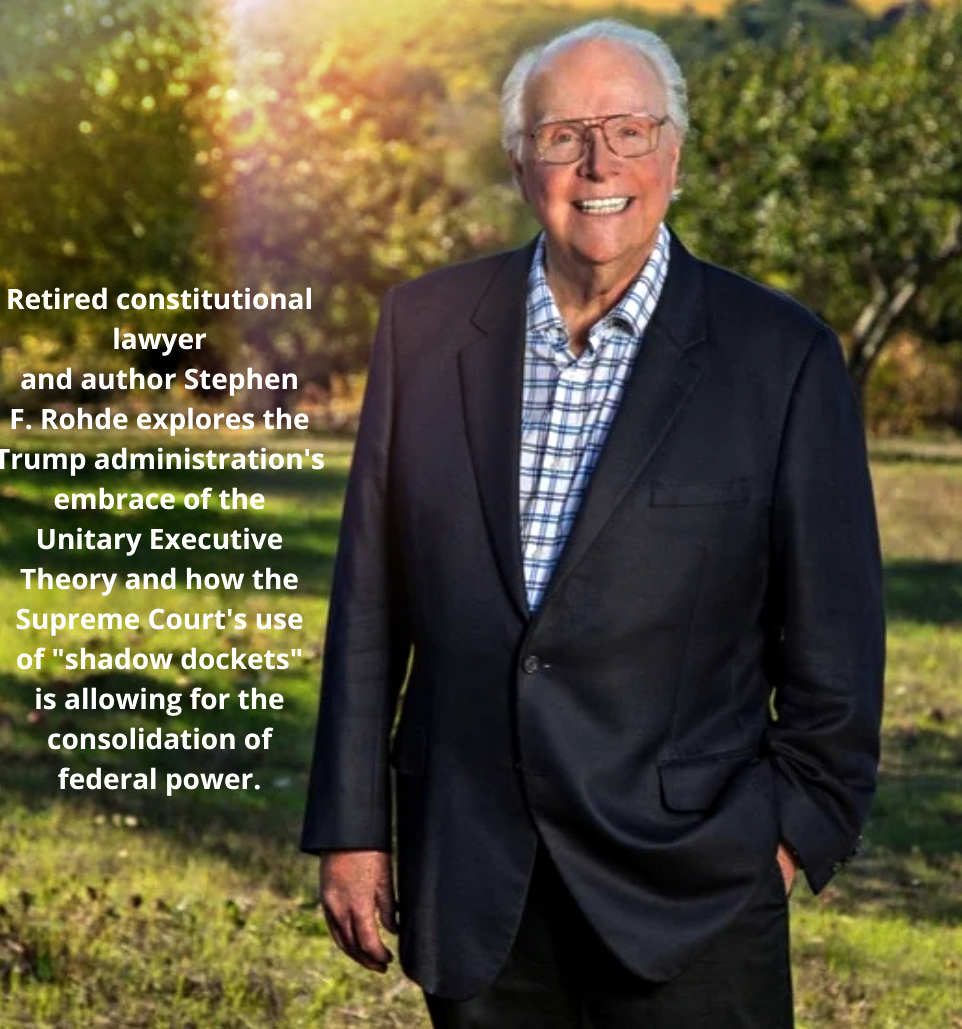
Last month co-host Stephen Rohde reviewed the conservative legal doctrine known as the Unitary Executive Theory as the US Supreme Court ended its term further entrenching the reactionary Republican agenda. As legal battles mount across every tier of the judiciary, basic constitutional rights continue to be tested in the courtroom. We’ll highlight key cases that impact immigration, voting rights, freedom of speech and freedom of press.
Guest – Stephen Rohde is the author of two books and numerous articles and book reviews on constitutional law and history. He is the former president of the ACLU Foundation of Southern California and is a special Advisor on Free Speech and the First Amendment for the Muslim Public Affairs Council. He is host of the new podcast Speaking Freely produced by MS Studios and is available on Spotify and I Heart radio and other streaming platforms. Steve Rohde is also, of course, one of the co-hosts here on the Law and Disorder radio show.
—-

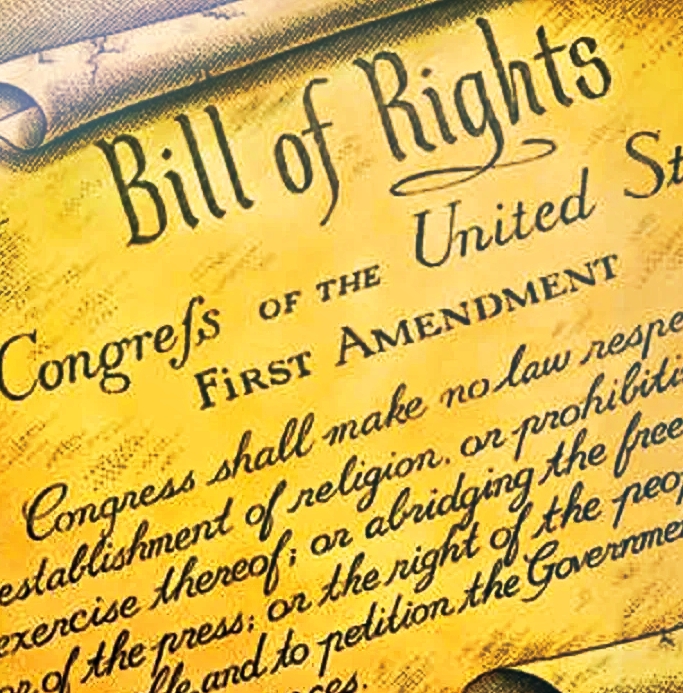
Defending Attacks Against First Amendment Rights
We are living through one of the most dangerous government attacks on freedom of speech and freedom of the press in American history. Trump has issued more than forty executive orders, fact sheets, and presidential memorandum, along with scores of enforcement actions dutifully issued by the obedient federal officials he has appointed, that abridge the First Amendment rights of millions of Americans and foreign visitors.
Here’s a sampling of what Trump has done: He has retaliated against law firms for their advocacy and representation of specific clients; terminated billions of dollars in federal funding to universities in an effort to alter their ideological cultures and control their core academic operations; conditioned federal research and other funding on the agreement not to practice or promote “diversity, equity, and inclusion” or “gender ideology” and to teach only “patriotic” curricula in K-12 schools; arrested, detained, and subjected to deportation international students and foreign scholars based on their viewpoints and political activism, and revoking the visas of foreign nationals based on political expression; retaliated against the press by excluding specific media outlets from White House events based on their viewpoints and reporting; threatened to revoke broadcast licenses based on networks’ editorial decisions; restricted reporters’ access to unclassified defense-related information held by the Pentagon; sued newspapers and publishers for defamation, consumer fraud, and “election interference”; scrubbed historical, scientific, and other data from federal agency websites; ordered the removal of “anti-American” displays in national museums;
Interview referenced on Medialite
Guest – Floyd Abrams, one of the most prominent First Amendment lawyers in America.
————————
Civil Liberties, Civil Rights, Human Rights, Supreme Court
Podcast: Play in new window | Download

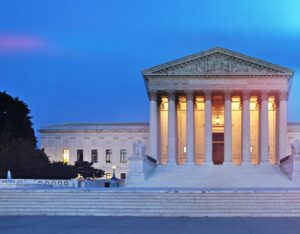
Transgender Community Legal Protection, LGBTQ Rights and SCOTUS
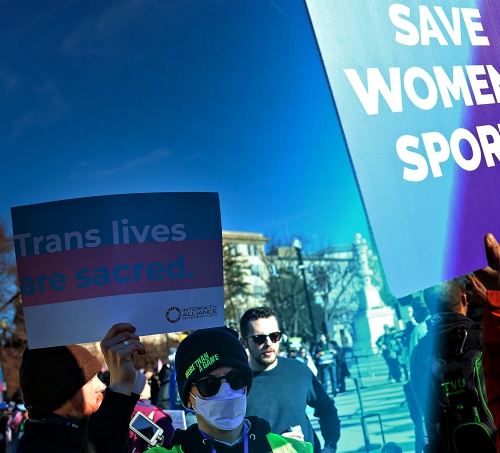
The transgender community is the whipping boy of the Republican Party. Conservatives never miss a chance to try to inflame voters with scary stories about transgender people invading public bathrooms and women’s sports. Transphobia has now reached the US Supreme Court which has handed down a series of regressive decisions seriously impairing trans rights.To help us understand what’s going on and how decent people can stand in solidarity with the transgender community, we’re delighted to be joined by Shannon Minter, who is Vice President and Legal Director at the National Center for LGBTQ Rights, where he has led the legal team’s impact litigation, legislative, and public policy efforts for nearly 30 years.
Currently, he is leading litigation challenging a range of anti-transgender executive orders and federal policies. Shannon is one of the nation’s foremost experts on conversion therapy, helping to draft and pass legislation in states to protect LGBTQ youth and support survivors.An appointee to President Obama’s Commission on White House Fellowships, Shannon was one of the most senior transgender appointees in the Obama administration. He was named to the 2026 TIME100 and has received ABA’s Stonewall Award and several other important recognitions.
—-

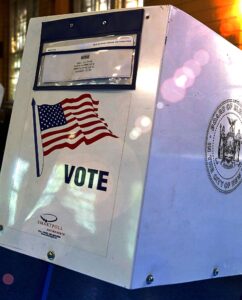
Agents Of Hope: Rebuilding American Democracy
We are 10 weeks away from one of the most momentous Midterm Elections in the history of the United States, which could well spell the future of the American democracy. If the Democrats do not win control of Congress, President Donald Trump will have clear sailing to continue to expand his fascist regime by killing citizens and non-citizens, dismantling cherished American institutions, and violating the US Constitution.
The question facing every one of us is what are We the People going to do about it. What are we going to do deny the MAGA movement control of the House and Senate and governorships and state legislatures, and what are we going to do over the next 2 years, 4 years, 8 years and beyond to take back and rebuild our democracy.
To help us chart that path, we are very fortunate to be joined today on Law and Disorder by Heather Booth. Heather Booth is one of the country’s leading strategists on progressive issue campaigns and elections. She began organizing in the civil rights and women’s movements of the 1960s. She started JANE, an underground abortion service in 1965, before Roe v Wade was decided.
Heather has been involved in and managed a wide range of political campaigns and was the Training Director of the Democratic National Committee. In 2000, she was the Director of the NAACP National Voter Fund, which helped to increase African American election turnout. In 2008, she was the director of the Health Care Campaign for the AFL-CIO. In 2009, she directed the campaign to pass President Barack Obama’s first budget. In 2010 she was the founding director of Americans for Financial Reform, fighting to regulate the financial industry. She was the national coordinator for the coalition around marriage equality and a strategic advisor to the Alliance for Citizenship. She was the field director for the 2017 campaign to stop the tax giveaways to millionaires and billionaires and won the Consumer Financial Protection Bureau and the Dodd/Frank Bill. She directed Progressive and Seniors Outreach for the Biden/Harris campaign.
Currently, Heather Booth is a member of the consulting firm Democracy Partners, she is national outreach director of Battleground Alliance, organizing in about 40 marginal congressional districts, and she is President of the Midwest Academy, training social change leaders and organizers. Best of all she is the sister of Dave Tobis, one of my dearest friends and classmates at Paul D. Schreiber High School in Port Washington, Long Island.
—————–
Civil Liberties, Civil Rights, Executive Branch Law Breaking, Supreme Court, worker's rights
Podcast: Play in new window | Download

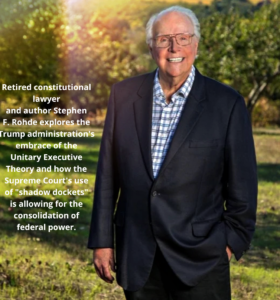
Unitary Executive Theory
The US Supreme Court just ended a momentous term further entrenching the reactionary Republican agenda. Our sometimes consideration of relevant court cases and other legal developments, today includes a review of the conservative legal doctrine known as the Unitary Executive Theory, now favored by the conservative majority on the Supreme Court, and the conservative doctrine of Originalism. We’ll also look at a new opinion poll of Americans showing that at least half of Americans disapprove of the job the Supreme Court is doing.
Guest – Stephen Rohde is the author of two books and numerous articles and book reviews on constitutional law and history. He is the former president of the ACLU Foundation of Southern California and is a special Advisor on Free Speech and the First Amendment for the Muslim Public Affairs Council. He is host of the new podcast Speaking Freely produced by MS Studios and is available on Spotify and I Heart radio and other streaming platforms. Steve Rohde is also, of course, one of the co-hosts here on the Law and Disorder radio show.
—-
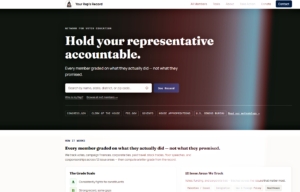
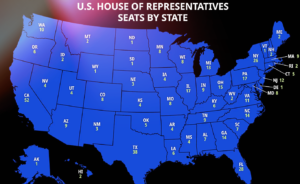
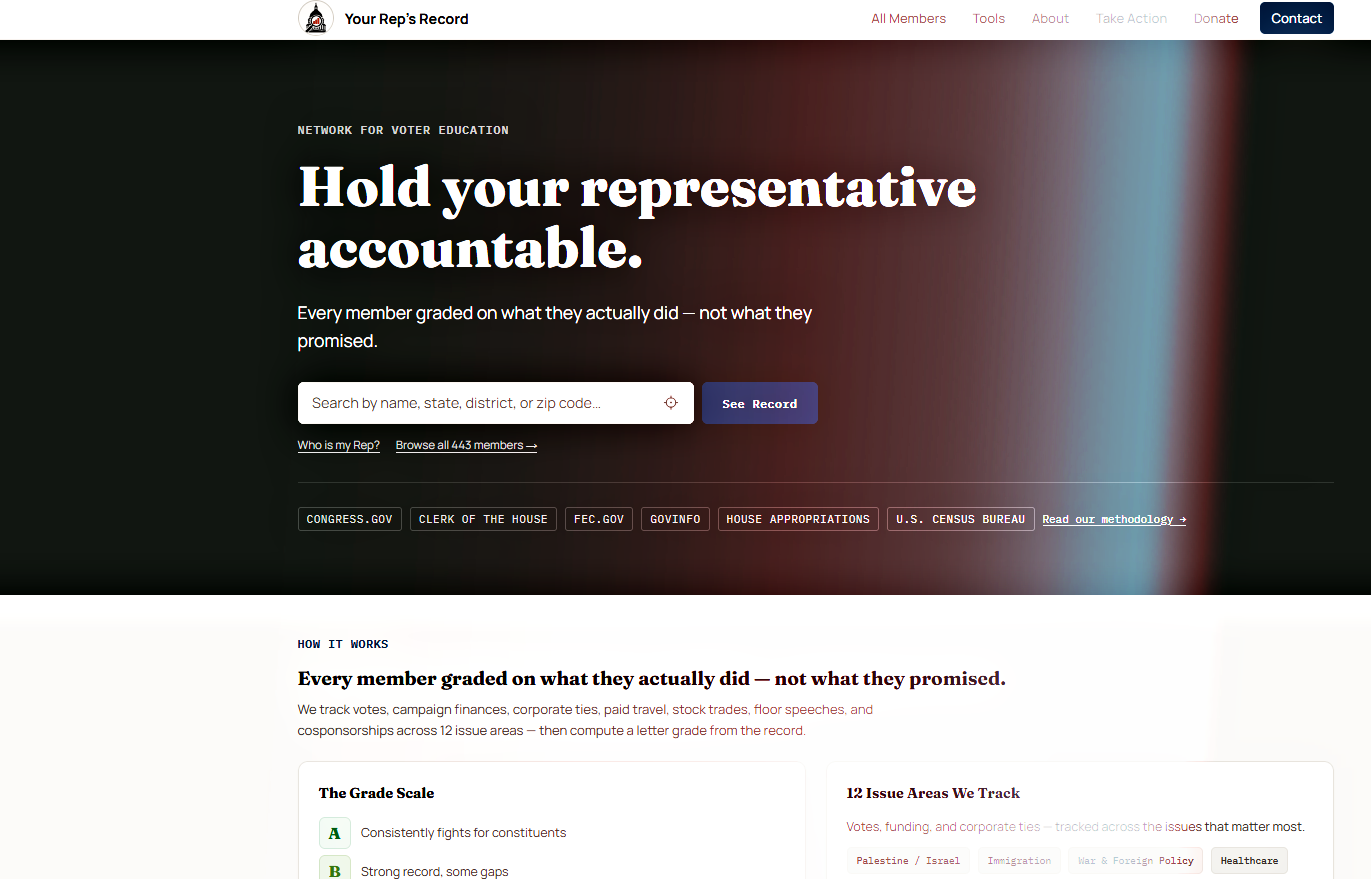
Hold Your Representative Accountable
A dozen years ago, two professors from prestigious universities, Martin Gillens and Benjamin Gage conducted a study of decision-making in our government. Their conclusion was a bombshell destroying as it did the myth that America is a majoritarian democracy. Their conclusion, in the most widely cited quote from their study, was that “the preferences of the average American appear to have only a minuscule, nearly 0 statistically, non-significant impact on public policy.”
So who decides the policies of the government? Not us. It is the economic leaders, the business interests and the organized lobbies that call the shots. The American people by and large are way to the left of their government. However, they are ignorant of the true record of the Congress people who claim to represent them. What can be done about this?
Guest – Felice Gelman is a long time movement activist and part of The Network For Voter Education, a non-partisan effort that has created an Internet tool called yourreprecord.org which people can use to look up the true record of members of Congress.
————————-
Civil Liberties, Civil Rights, Economics, Supreme Court, worker's rights
Podcast: Play in new window | Download
Economic Impact of Billionaires and Trillionaires
When Donald Trump came back to resume the office of presidency a year and a half ago the kind of government we were living under was unclear. It was a government where billionaires dominated our mass media, corporations, universities, courts, and government. Was this oligarchy authoritarianism or was it fascism American style? Last month, the media treated us to the spectacle of Elon Musk becoming the world‘s first trillionaire. One trillion is 1000 billion dollars. One billion is 1000 million dollars. The amount of money $1 trillion represents is difficult to even imagine. It would take a man working 52 weeks a year for $25 an hour 19.23 million years to make $1 trillion. The impact on a democratic society of having a trillionaire and over 1000 billionaires is transformative and a spectacle that has affected all of our lives.
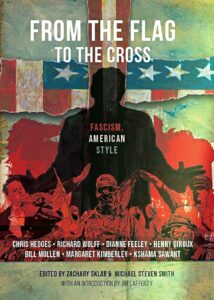
Guest – Professor Henry Giroux – last year Law annd Disorder interviewed seven significant thinkers about the topic of American fascism. We put together a book on the topic titled From The Flag To The Cross: Fascism American Style.. Professor Henry Giroux was one of the seven contributors to the Law and Disorder book He wrote about the transformation of education. Henry Giroux currently holds the McMaster University Chair for scholarship and the public Interest. His most recent book co-authored with Anthony DiMaggio is titled Fascism on Trial: Education and the Possibility of Democracy. Professor Giroux frequently writes for the LA Progressive and has recently authored an article on Elon Musk becoming a trillionaire.
—-
U.S. Supreme Court Decisions Resetting Precedent Part 2
Back we go to review of more cases from the recent term of the U.S. Supreme Court. We start with the birthright citizen case. Then we take up cases dealing with immigration and executive power, as well as other major cases. We also look at what many have described as corruption among the Justices.
Guest – Ellen Yaroshefsky is the Howard Lichtenstein Distinguished Professor of Legal Ethics, Maurice A. Deane School of Law, at Hofstra University. She is a leading educator and expert in ethics law and serves as an expert witness and advisor to lawyers and law firms. Prof. Yaroshefsky is a former Commissioner on the New York State Joint Commission on Public Ethics. She has previously worked at the Center for Constitutional Rights and has been in private practice. And Prof. Yaroshefsky has received numerous awards, including the New York State Bar Association’s honor for Outstanding Contribution in Criminal Law Education.
———————-
Civil Liberties, Civil Rights, Criminalizing Dissent, Supreme Court
Podcast: Play in new window | Download
U.S. Supreme Court Decisions July 2026
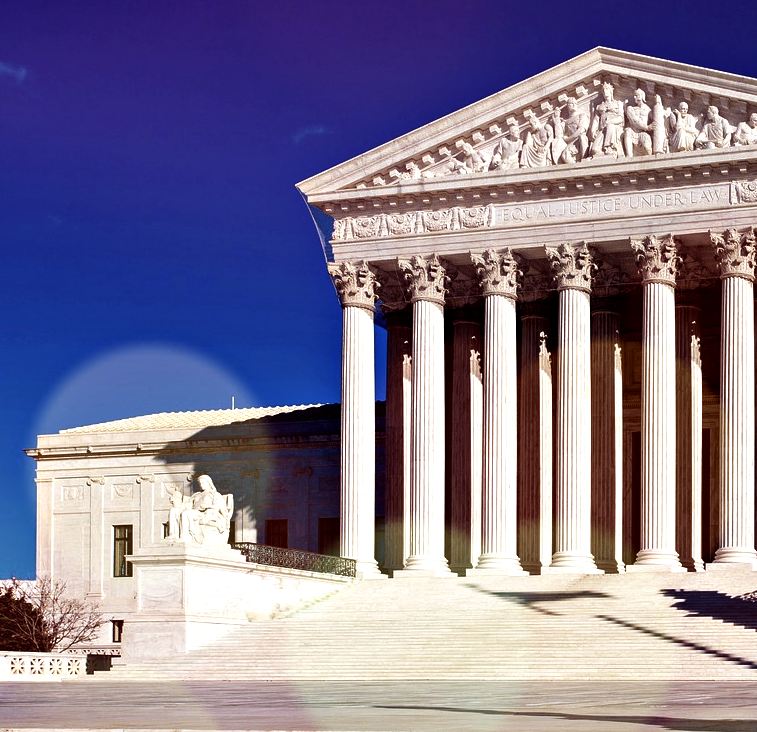
Last week, the US Supreme Court ended its 2025-2026 Term with a barrage of long-awaiting blockbuster decisions altering the entire structure of the American government and seriously undermining the crucial separation of powers between Congress, the President, and the courts. The Supreme Court, which is dominated by a conservative super-majority of Republican justices – including 3 justices appointed by Donald Trump – confronted such important issues as Birthright citizenship; whether the President can fire the heads of independent agencies, such as the Federal Trade Commission and the Federal Reserve; whether states can count mail-in ballots that arrive after Election Day; whether states can ban concealed weapons on private property; and whether Trump can expel hundreds of thousands of migrants and turn others away at the southern border.
To help us understand what the Roberts Court is up to and what it means for our constitutional democracy, we’ve invited Law and Disorder co-host Steve Rohde to switch seats and serve as our guest today.
Guest – Stephen Rohde is a journalist, lecturer and political activist. For almost 50 years, he practiced civil rights, civil liberties, and intellectual property law and has won significant First Amendment victories in state and federal appellate courts.Steve is past chair of the ACLU Foundation of Southern California and Chair Emeritus of Bend the Arc, a Jewish Partnership for Justice. He is a founder and current chair of Interfaith Communities United for Justice and Peace; and a member of the Board of Directors of Death Penalty Focus. He is the Special Advisor on Free Speech and the First Amendment for the Muslim Public Affairs Council.Steve is the author of the books American Words of Freedom: The Words That Define Our Nation and Freedom of Assembly and numerous articles and book reviews on civil liberties and constitutional history. He is co-author of Foundations of Freedom published by the Constitutional Rights Foundation.In addition to being a co-host of Law and Disorder Radio, Steve is also the host of a10 episode podcast called Speaking Freely: A First Amendment Podcast exploring the most important Supreme Court cases in the area of free speech and free press. It is produced by Ms Studios and is streaming online at Spotify, Apple, and I Heart Radio.
—-
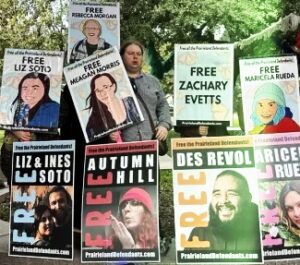

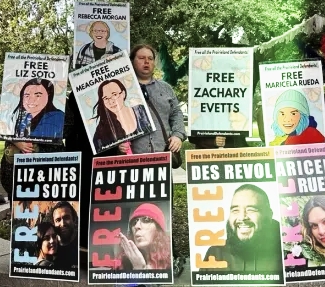
Draconian Sentencing Of Prairieland Nine Case
We look at a staggering display of judicial overreach coming out of a federal courtroom in Texas. On June 23 and July 1, 15 individuals were handed prison sentences totaling centuries. That followed a July 2025 demonstration outside the Praireland Detention Center. Among those condemned to spend the rest of her natural life behind bars is Maricela Rueda. She received a 70-year sentence. Her husband, Daniel Rolando Sanchez-Estrada, wasn’t even present at the protest. Yet, he was sentenced to 30 years.
The core of the conspiracy charge against Daniel ties directly into Maricela’s sentence. It centers on a recorded jailhouse phone call. The government alleged Maricela asked her husband to move items from her house and car. Surveillance footage also showed Daniel dropping off a cardboard box, though that was prior to his call with Mariela. Inside that box? Not weapons. Not explosives. Just politically charged, constitutionally protected independent pamphlets and zines, all belonging to Mr. Sanchez himself.
Joining us to dissect this draconian sentencing is Sufia Khalid. Sufia is the Deputy Director of the National Security Criminal Defense Center at the Muslim Legal Fund of America. There, she represents defendants in federal national security prosecutions nationwide. She took on Maricela’s case for sentencing and currently represents her on appeal. Sufia has exclusively worked on national security prosecutions and appeals, FBI Counterrorism investigations, and terrorism sentencing and their associated constitutional issues for 8 years
Guest – Sufia Khalid is the Deputy Director of the National Security Criminal Defense Center at the Muslim Legal Fund of America. There, she serves as Senior Staff Attorney, representing defendants in federal national security cases. She currently represents Maricela Rueda in the “Praireland Nine” case. Before joining the MLFA, Khalid worked with the United Nations, including the Khmer Rouge Tribunal in Cambodia and the UN Development Programme in New York.
————————