Civil Liberties, Civil Rights, Freedom Of Speech
Podcast: Play in new window | Download
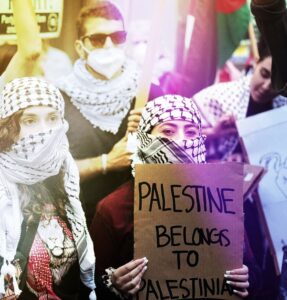
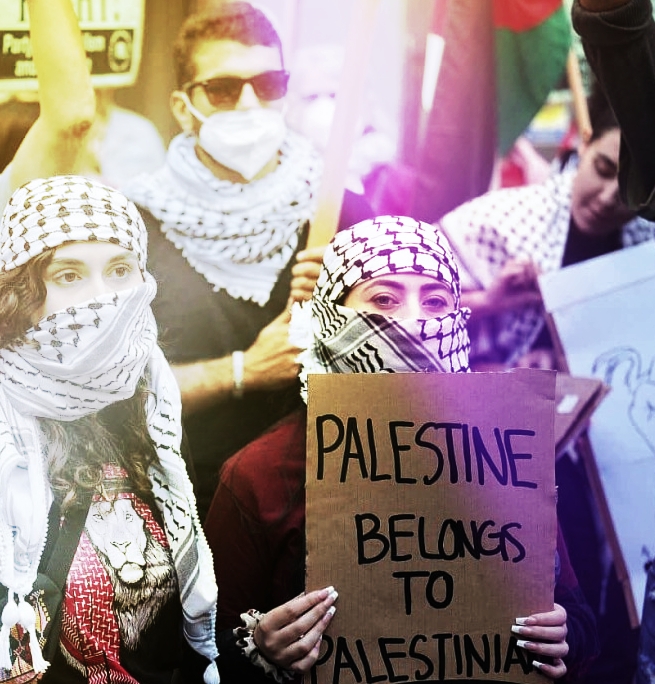
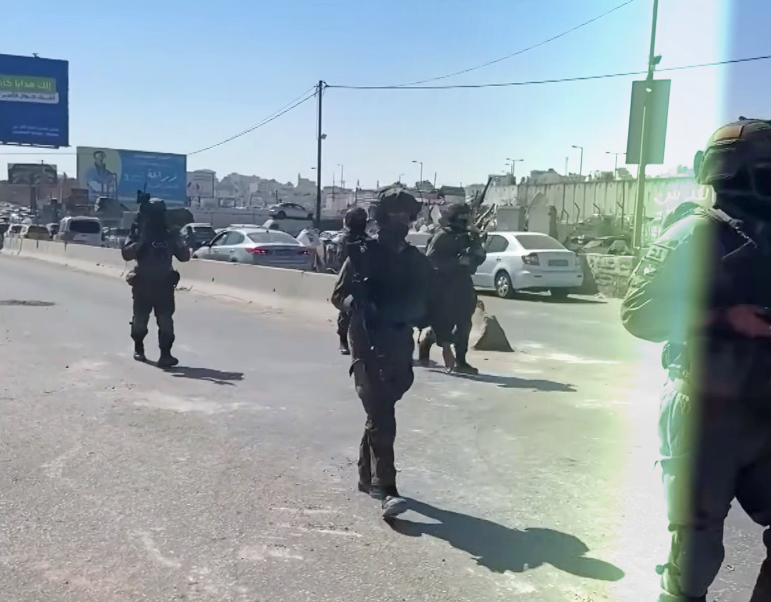
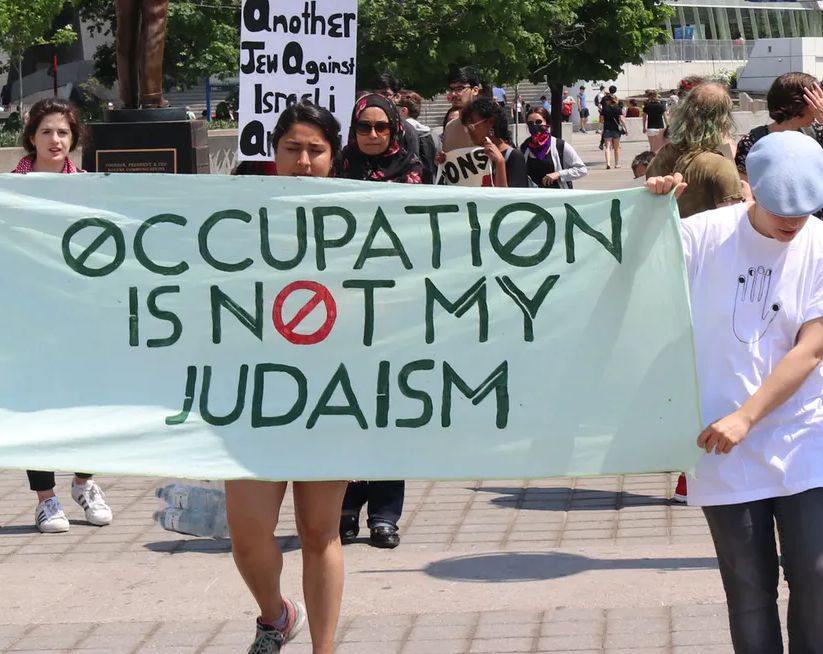
The FACE Act Cited As Religious Protection Against Protesters Of Israeli Land Sale In Palestine
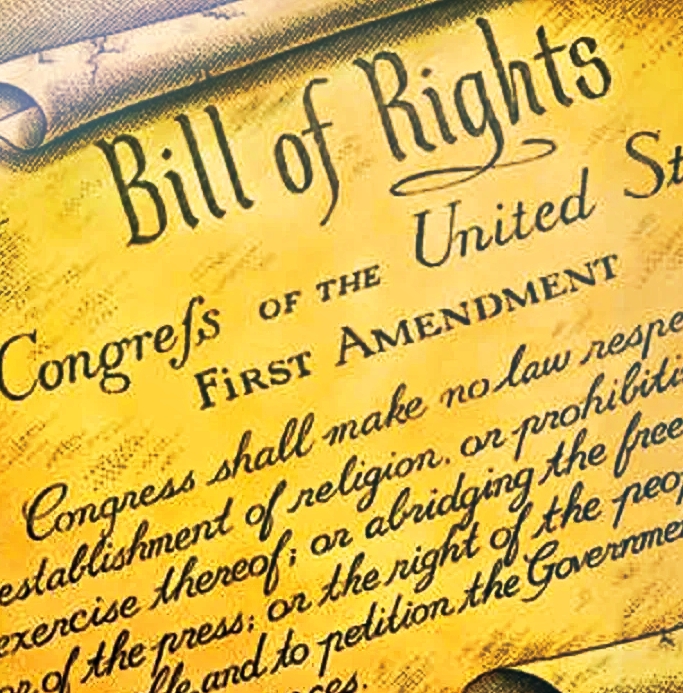
Passed in 1994 in response to violent and obstructive protests at reproductive-health clinics, the federal FACE Act (Freedom of Access to Clinic Entrances Act) also protects people exercising their First Amendment right to religious freedom at places of worship. The law has now become the latest battleground over protest and free speech.
The government has claimed that the Party for Socialism and Liberation New Jersey, or PSL-NJ, published a social media post calling for a public protest against a real estate event involving the sale of property in an Israeli settlement in the occupied West Bank. The Trump Administration’s Justice Department filed a federal lawsuit under the FACE Act, arguing that the protest violated the law’s protections for religious worship. Their argument was an unusual one.
Guest – Attorney Mara Verheyden-Hilliard, Executive Director of the Partnership for Civil Justice Fund and the Center for Protest Law and Litigation in Washington DC. In addition to serving as counsel for PSL-NJ in this case, Mara has spent decades defending protesters and political movements against government surveillance, repression and unconstitutional restrictions on speech.
—-

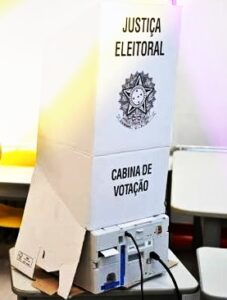
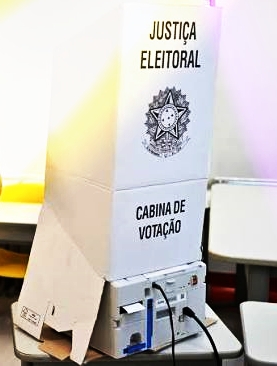
Geopolitical Shift In Balance As Brazil Elections Underway
We go south, to Brazil. Following its first-round presidential election on October 4th, incumbent President Luiz Inácio Lula da Silva and challenger Flávio Bolsonaro—son of former president Jair Bolsonaro—are officially heading to a runoff. It is an incredibly tight race, with Bolsonaro securing approximately 47% against Lula’s 45% of the vote.
Against this electoral backdrop, relations between Brazil and the US remain fraught with tension. Remember—they’re the two largest democracies in the Western Hemisphere, so mounting friction with Washington continues to open up key diplomatic and economic opportunities for Brazil with China. What does this runoff and geopolitical shift mean for the future of Latin American democracy, global trade, and Washington’s influence in the region?
Guest – James N. Green, Professor Green is Emeritus Professor of Brazilian History and Culture at Brown University, where he was also director of the Brazil Initiative. He’s spent decades studying Brazil’s political and social transformations—from the military dictatorship years to today’s high-stakes election.

———————
Civil Liberties, Civil Rights, Gaza, genocide, Iran, Targeting Muslims, U.S. Militarism, Violations of U.S. and International Law, War Resister
Podcast: Play in new window | Download
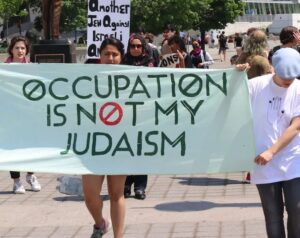
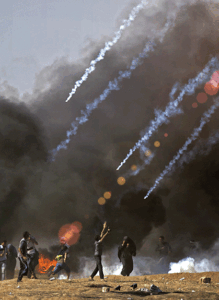
Younger Generations Of Jewish People No Longer Identifying With Israel
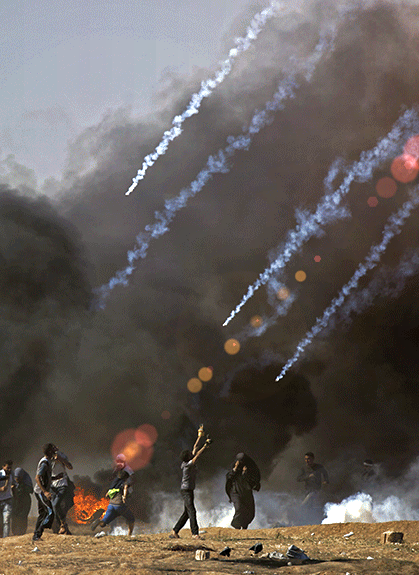
Phil Weiss started Mondoweiss 20 years ago to provide a critique of Zionism and the suppression of Palestinians, which in those days was very much minority view. Today, Mondoweiss is widely read and respected for accurate reporting. Things have changed. A great number of Jews no longer identify with Israel. This is especially true of young people. Israel, because of its continuous genocide against the Palestine people in Gaza, it’s ethnic cleansing in the West Bank, it’s bombing of Lebanon and its partnership with the United States in its disastrous illegal war against Iran has become the most detested country on the planet.
Guest – Philip Weiss, was a successful professional journalist 20 years ago before he launched Mondoweiss. He had contributed articles to places like the New York Times magazine. He grew up in a family of six children, the son of a microbiology professor at the University of Pennsylvania. He attended Harvard and started off as a crime reporter in Philadelphia.
—-
Wages of War In Iran and Gaza
Tuning in to international news today is more confusing than ever… with political alliances shifting daily, and the Trump administration provoking new challenges to peace, decency and world order. With the barrage of “breaking news” headlines perpetuating chaos on the mainstream news, we can forget to take some time to breathe, and critically think about the history of how we got to this moment, and how we might use that wisdom to avoid the doomsday scenarios that some believe to be inevitable.
With that purpose in mind we will focus today on the U.S. war with Iran and its impact throughout the Middle East. How far will the war spread? When will the war end? Will the increased flow of Mid-East oil help bring about an end to the Iran war?
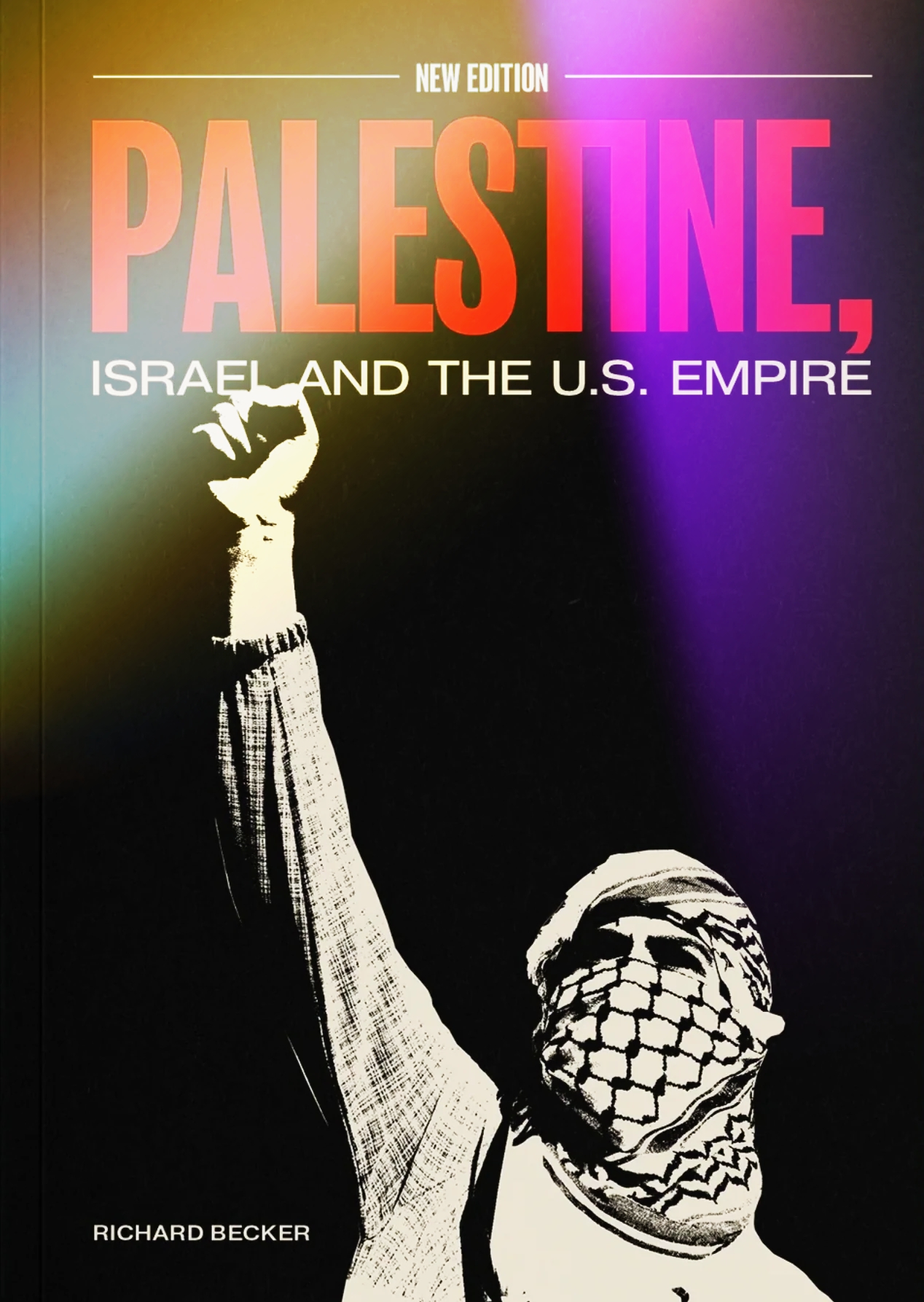
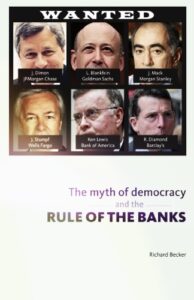
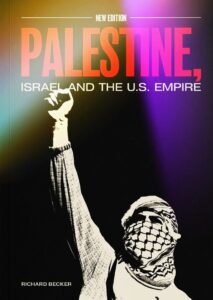
Guest – Richard Becker is an expert on history and U.S. policy in the Middle East. Mr. Becker is the Western Regional Coordinator of the ANSWER Coalition. He is the author of numerous political writings, including his book, Palestine, Israel, and the U.S. Empire and his book, The Myth of Democracy and the Rule of the Banks. Mr. Becker is also a leader in the Party for Socialism and Liberation. LiberationNews BreakthroughNews
—————–
Artificial Intelligence, Civil Liberties, Civil Rights, Freedom Of Speech, Human Rights, Right To Dissent, Surveillance
Podcast: Play in new window | Download
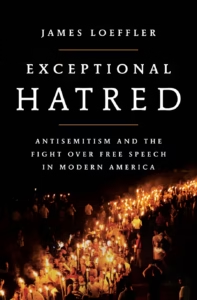
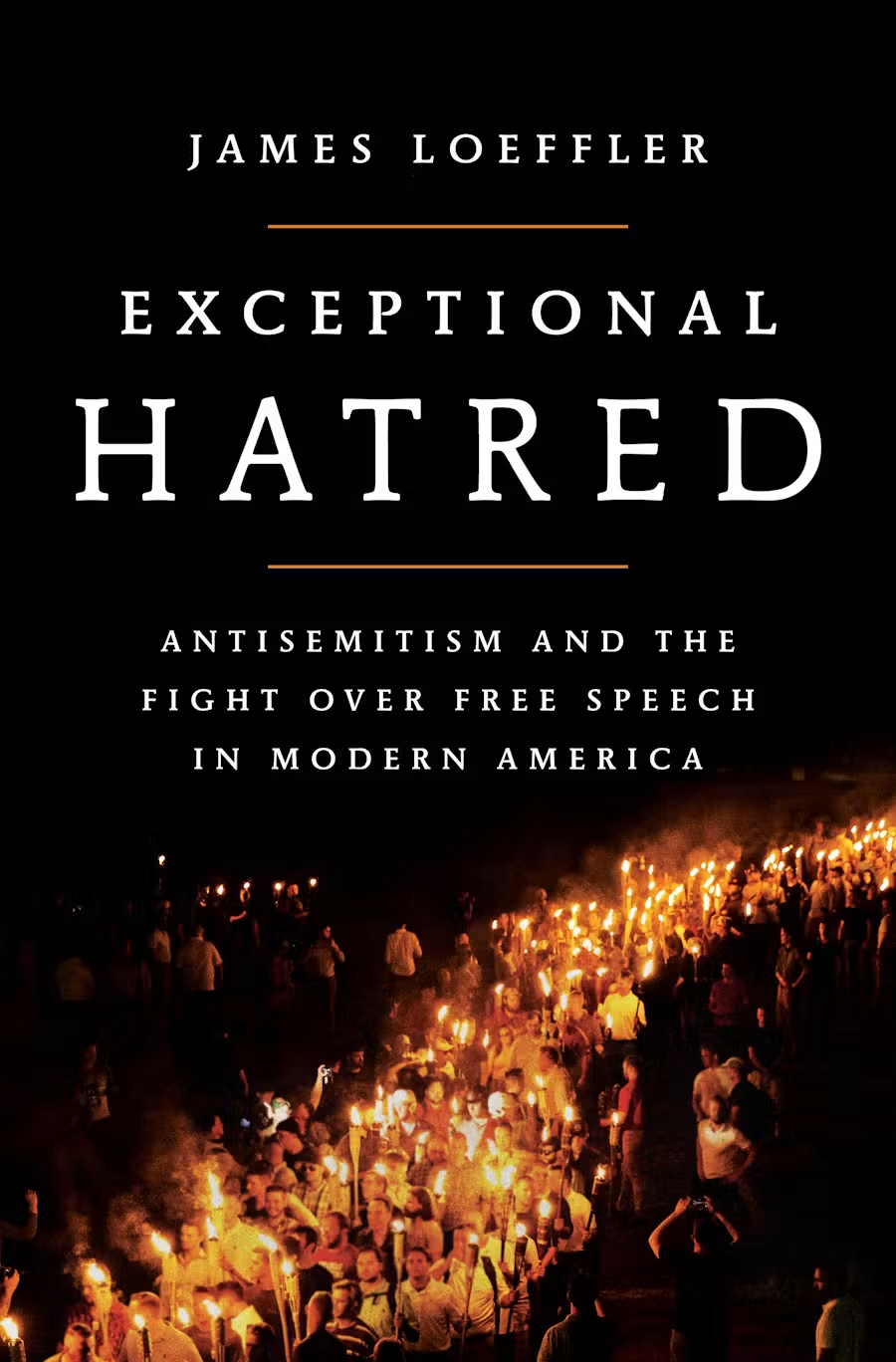
Exceptional Hatred: Antisemitism And The Fight Over Free Speech In Modern America
Today in America, “we proclaim our commitment to fighting hatred while applying it selectively. We champion free speech until confronted with speech we despise – and minimize the claims of those wounded by words.” American democracy “stands at a precipice, besieged by authoritarian politics, resurgent nativism, and populist demagoguery. These forces, once relegated to history, now threaten our pluralistic society and its defining commitments to freedom and equality.” Those chilling words are from the brand new book Exceptional Hatred: Antisemitism And The Fight Over Free Speech In Modern America by James Loeffler.
Guest – Professor James Loeffler is the Felix Posen Professor of Modern Jewish History at Johns Hopkins University, and Kogod Senior Research Fellow at the Shalom Hartman Institute of North America. He writes widely on modern Jewish history from antisemitism to Zionism, with a focus on the overlooked ties between the Jewish past and the global present in politics, law, and culture. His writing has appeared in The Atlantic, The New York Times, The Washington Post, The Wall Street Journal, and The New Republic.
—-
Digital Privacy Laws Lag Far Behind Evolving Modern Communication
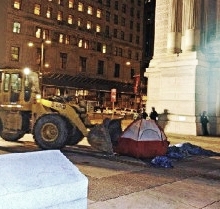
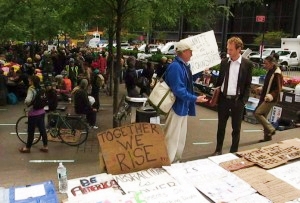
The 15th anniversary of Occupy Wall Street has just passed, when protesters occupied Zuccotti Park NYC and sparked a global movement. Occupy also attracted significant government surveillance. Documents later obtained through FOIA showed that the Department of Homeland Security monitored the movement and circulated intelligence to the private sector about Occupy activists and protests. That history raises a question that goes well beyond protest movements: How do lawyers protect confidential communications in a world where so much of their work is digital? Confidentiality handle information that can affect a client’s freedom, finances, safety, and legal strategy. Yet many lawyers aren’t trained to think about the technology they use in terms of protecting that confidentiality.
Guest – Jonathan Stribling-Uss, is a New York City lawyer and digital security consultant. He founded and directs Constitutional Communications, an organization that supports non-profits specializing in information security for professionals and civil society groups. Jonathan previously served as a Mozilla and Ford Foundation Media and Democracy Fund Technologist Fellow at the New York Civil Liberties Union. He has trained hundreds of attorneys in cybersecurity and ethics through organizations including the New York County Lawyers Association and the American Bar Association. https://privacytools.io/
————-
Civil Liberties, Civil Rights, Criminalizing Dissent, Right To Dissent, Supreme Court
Podcast: Play in new window | Download
Thank you for your generous support of Law and Disorder and your donation is appreciated!
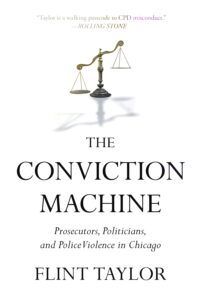
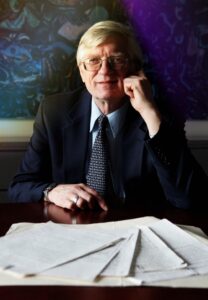
The Conviction Machine: Prosecutors, Politicians and Police Violence in Chicago
The comedian Lenny Bruce used to joke that Chicago was so corrupt. It was thrilling. He had no idea. Bruce was referring to run of the mill bribery of a traffic cop or a police officer taking your floor mats in lieu of a ticket or a pay off from a local bar owner. The corruption in Chicago ran much deeper. It went from the prosecutors who were actually in the police station, listening to the screams of men being tortured, before they went and took a signed confession from them.
It was the commander of a whole section of police who learned how to torture people from a tour of duty in Vietnam. He brought back an electric machine that they had actually used in Vietnam Vietnamese. This machine was used on Black people in Chicago. Three hundred people were convicted on the basis of tortured confessions. The corruption ran all the way up to the mayor’s office. Mayor Richard J Daily knew about it and said nothing.
It was only the work of a few attorneys like Flint Taylor and the community, the Black Panther party, and activists and progressive politicians who exposed it. Their victory included reparations, The torture of people in police stations on the west side and southside of Chicago is now taught to eighth grade and 10th graders in the public schools.
“In the halls of justice the only justice is in the halls“ said H. Rap Brown, the leader of the Student Nonviolent Coordinating Committee (SNCC)
Guest – Flint Taylor, a founding member of Chicago’s Peoples Law Office. He represented the families of slain Black Panther leaders Fred Hampton and Mark Clark. He continues to represent many survivors of police torture and wrongful convictions. Attorney Taylor is co-counsel in the Malcolm X assassination case and is the award-winning author of the historical memoir “The Torture Machine“. Flint’s book is a captivating account of the most corrupt and blood soaked chapter In Chicago law-enforcement history.
—-
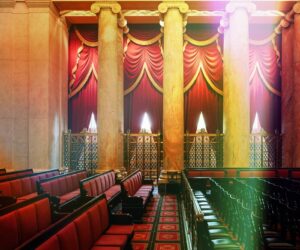
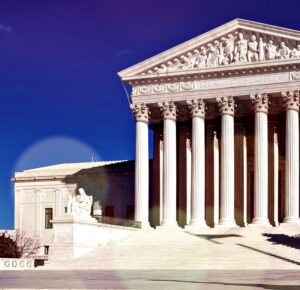
U.S. Supreme Court Decisions Resetting Precedent Part 2
Back we go to review of more cases from the recent term of the U.S. Supreme Court. We start with the birthright citizen case. Then we take up cases dealing with immigration and executive power, as well as other major cases. We also look at what many have described as corruption among the Justices.
Guest – Ellen Yaroshefsky is the Howard Lichtenstein Distinguished Professor of Legal Ethics, Maurice A. Deane School of Law, at Hofstra University. She is a leading educator and expert in ethics law and serves as an expert witness and advisor to lawyers and law firms. Prof. Yaroshefsky is a former Commissioner on the New York State Joint Commission on Public Ethics. She has previously worked at the Center for Constitutional Rights and has been in private practice. And Prof. Yaroshefsky has received numerous awards, including the New York State Bar Association’s honor for Outstanding Contribution in Criminal Law Education.
—————
Civil Liberties, Civil Rights, Supreme Court
Podcast: Play in new window | Download
Support Law and Disorder here. We very much appreciate the support so far!

Reviewing Key SCOTUS and Lower Court Cases
Last month co-host Stephen Rohde reviewed the conservative legal doctrine known as the Unitary Executive Theory as the US Supreme Court ended its term further entrenching the reactionary Republican agenda. As legal battles mount across every tier of the judiciary, basic constitutional rights continue to be tested in the courtroom. We’ll highlight key cases that impact immigration, voting rights, freedom of speech and freedom of press.
Guest – Stephen Rohde is the author of two books and numerous articles and book reviews on constitutional law and history. He is the former president of the ACLU Foundation of Southern California and is a special Advisor on Free Speech and the First Amendment for the Muslim Public Affairs Council. He is host of the new podcast Speaking Freely produced by MS Studios and is available on Spotify and I Heart radio and other streaming platforms. Steve Rohde is also, of course, one of the co-hosts here on the Law and Disorder radio show.
—-
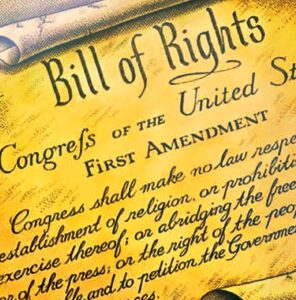
Defending Attacks Against First Amendment Rights
We are living through one of the most dangerous government attacks on freedom of speech and freedom of the press in American history. Trump has issued more than forty executive orders, fact sheets, and presidential memorandum, along with scores of enforcement actions dutifully issued by the obedient federal officials he has appointed, that abridge the First Amendment rights of millions of Americans and foreign visitors.
Here’s a sampling of what Trump has done: He has retaliated against law firms for their advocacy and representation of specific clients; terminated billions of dollars in federal funding to universities in an effort to alter their ideological cultures and control their core academic operations; conditioned federal research and other funding on the agreement not to practice or promote “diversity, equity, and inclusion” or “gender ideology” and to teach only “patriotic” curricula in K-12 schools; arrested, detained, and subjected to deportation international students and foreign scholars based on their viewpoints and political activism, and revoking the visas of foreign nationals based on political expression; retaliated against the press by excluding specific media outlets from White House events based on their viewpoints and reporting; threatened to revoke broadcast licenses based on networks’ editorial decisions; restricted reporters’ access to unclassified defense-related information held by the Pentagon; sued newspapers and publishers for defamation, consumer fraud, and “election interference”; scrubbed historical, scientific, and other data from federal agency websites; ordered the removal of “anti-American” displays in national museums;
Interview referenced on Medialite
Guest – Floyd Abrams, one of the most prominent First Amendment lawyers in America.
————————
Civil Liberties, Civil Rights, Criminalizing Dissent, Cuba, Gaza, genocide, Human Rights, U.S. Militarism, War Resister
Podcast: Play in new window | Download
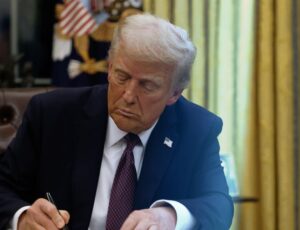
Analysis Of A Transformation
Our country is going through a great transformation. We are no longer the constitutional democracy we once were. Its reported that Elon Musk, the world‘s first trillionaire, gave Trump and his MAGA organization $200 million in the last election. Miriam Adelson, the widow of a casino magnate gave another $100 million. Trump bragged about her ready access to the White House. Musk took a wrecking ball to federal jobs. Other institutions such as law firms, the Supreme Court,universities, and Congress have been transformed. Extraordinarily no one in Congress is able to say “the king has no clothes“. The media facilitate all of this.
Guest – Ann Wright is a retired colonel in the army having served 29 years in it and the reserves . She then became a diplomat and was posted in many countries around the world. In 2003 she quit over the lies the government told to manipulate the American people into supporting a war on Iraq. She then co-wrote the book with Susan Dixon titled “Dissent : Voices of Conscience : Government Insiders Speak Out Against the War in Iraq. It includes a forward by Daniel Ellsberg. Ann Wright has been active since then as a the leader of the anti-war group Code Pink and a leader of Veterans for Peace. She is was on numerous flotillas that sailed across the Mediterranean to bring help to the Palestinians and publicize their plight. VoicesOfConscience.
—-
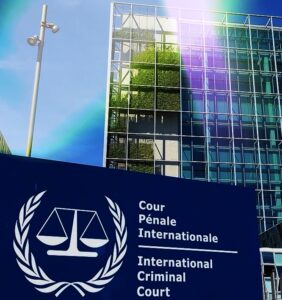
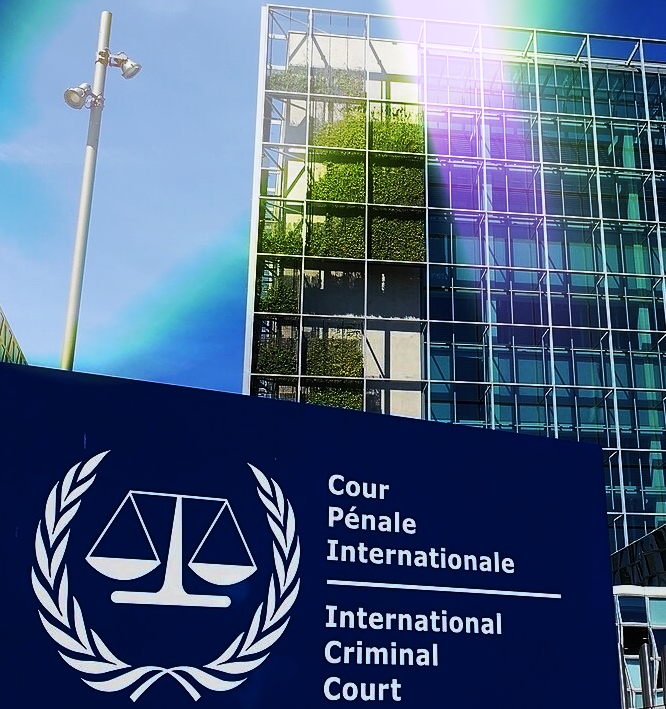
We Will Dismantle The ICC Brick By Brick
The United States has long endeavored to undermine the work of the International Criminal Court (ICC). Although it is not a party to the Rome Statute, the U.S. has consistently attacked the ICC. In 2003, Congress passed, and then-President George W. Bush signed, the American Service-Members’ Protection Act, known as “The Hague Invasion Act.” It says that if a national of the U.S. or its ally (which includes Israel) is detained by the ICC in The Hague, Netherlands, the U.S. military can use armed force to extricate them.
The Bush administration effectively blackmailed 100 countries that were parties to the Rome Statute by forcing them to sign bilateral immunity agreements in which they promised not to turn over U.S. persons to the ICC, or the United States would withhold foreign aid from them. In November 2024, after an investigation lasting more than three years, the ICC issued arrest warrants for Israeli Prime Minister Benjamin Netanyahu and former Defense Minister Yoav Gallant. They stand charged with the war crimes of starvation as a form of warfare, and intentional attacks on civilians; and the crimes against humanity of murder, persecution, and other inhumane acts.
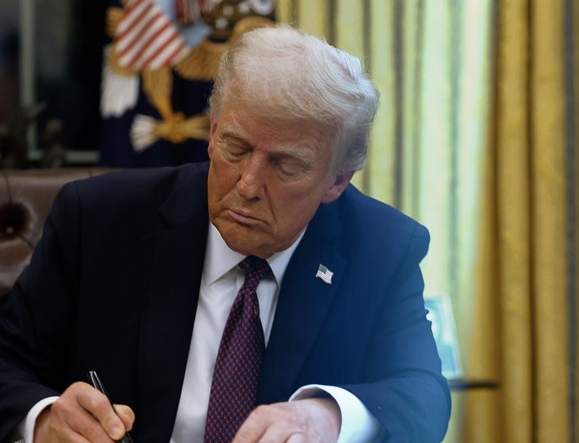
Donald Trump has taken the U.S. assault on the ICC to a new level with punishing sanctions against those who seek to hold accountable individuals who commit the most heinous crimes. In February, Trump issued an executive order that has led to the sanctioning of nine of the ICC’s 18 judges and three ICC prosecutors. Sanctions include frozen or closed bank accounts, rejection of financial transactions, denial of access to digital services, and travel bans.
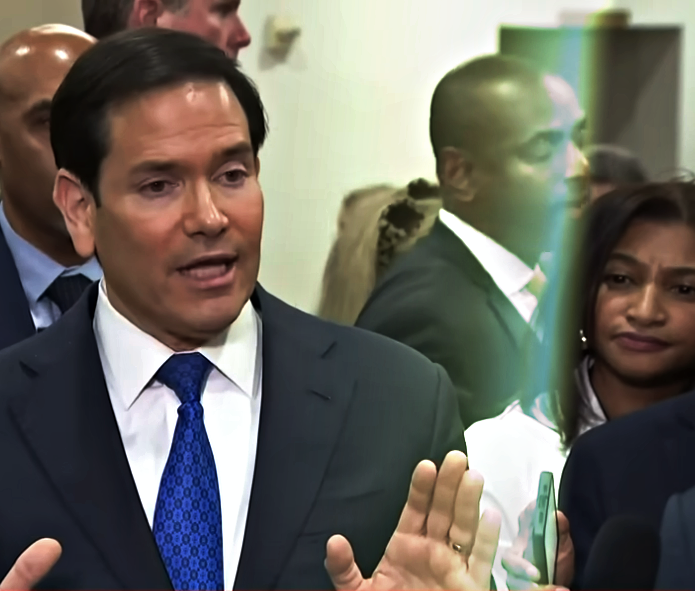
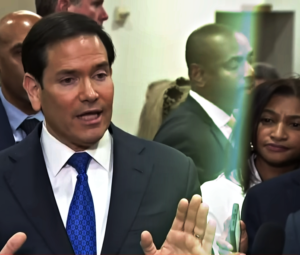
In July, Secretary of State Marco Rubio vowed to “dismantle” the International Criminal Court. He accused the ICC of “waging a war against our country, not with bullets or missiles,” but with “the force of so-called international law.” In an article in Wall Street Journal, Rubio wrote that “we will dismantle the ICC – brick by brick, if necessary.”
Now four prominent human rights organizations have filed a lawsuit in the U.S. District Court for the Southern District of New York, alleging that Trump’s executive order violates the U.S. Constitution, federal statutes, and international law.
Guest – Marjorie Cohn, a former host on Law and Disorder is professor emerita at Thomas Jefferson School of Law, dean of the People’s Academy of International Law, and past president of the National Lawyers Guild. She sits on the national advisory board of Veterans For Peace, she is a member of the bureau of the International Association of Democratic Lawyers, and serves as the U.S. representative to the continental advisory council of the Association of American Jurists. Her books include Drones and Targeted Killing: Legal, Moral, and Geopolitical Issues. She writes a regular column for Truthout, including a recent one entitled, Trump Sanctioned ICC Officials to Shield Israeli Leaders. Rights Groups Sued.
————–