Law and Disorder Radio

Archive for the 'Prosecution of the Bush Administration' Category


Law and Disorder January 9, 2012


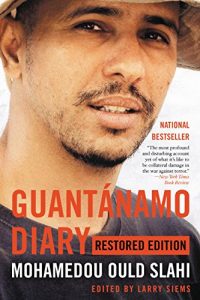
Ten Year Anniversary of Guantanamo Bay Prison

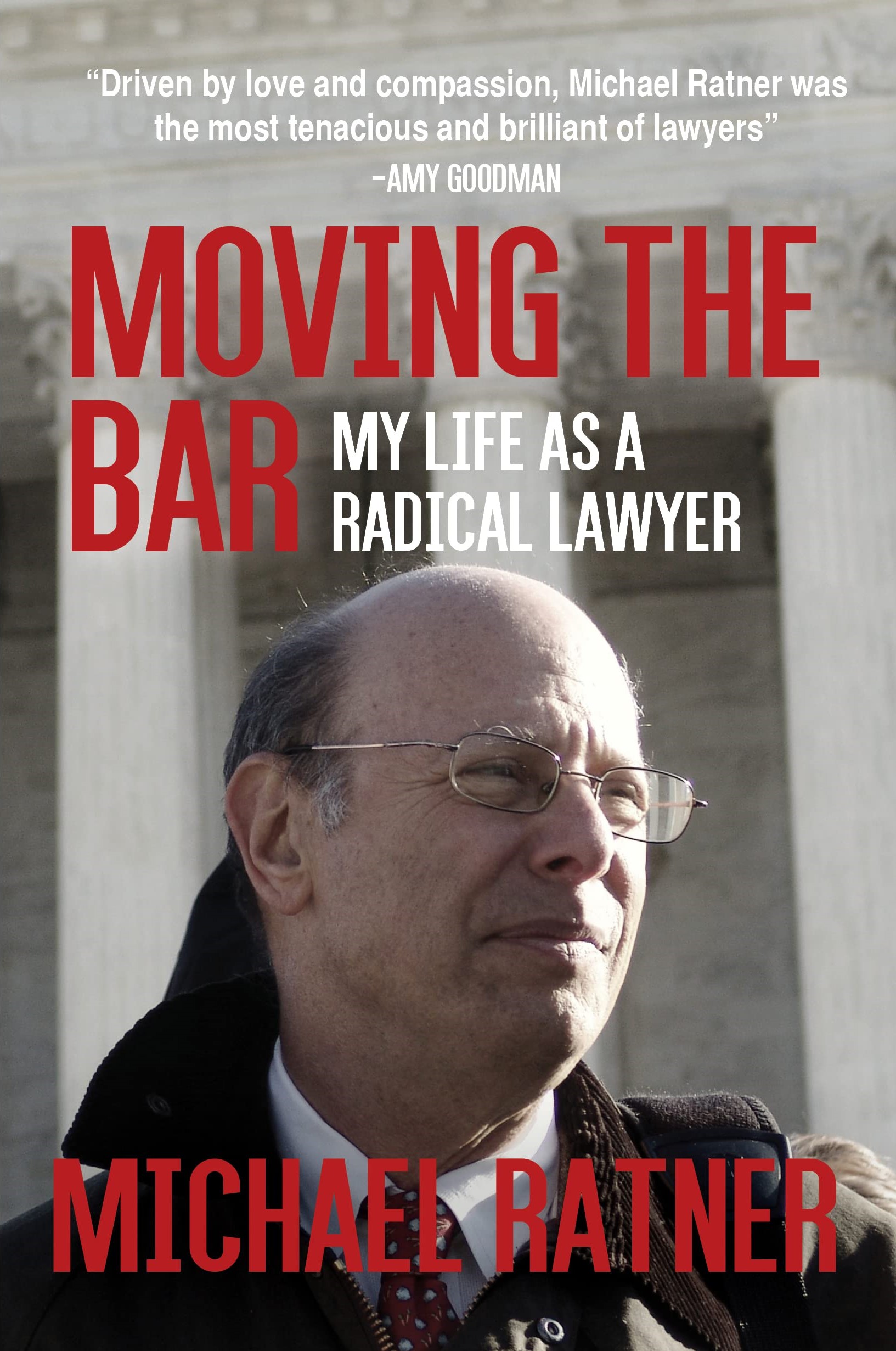
Co-host Michael Ratner and president emeritus of the Center for Constitutional Rights gives listeners an overview of the habeas corpus legal battles to close Guantanamo Bay prison and an in depth look at the corrosive effect the offshore prison has had on civil rights, and the U.S. Constitution. Despite the fact that the U.S. government has itself cleared more than half of these men for release, and despite President Obama’s promise on his second day in office to close Guantánamo within a year, it has been almost twelve months since anyone has been released.

This is the longest period of time that has elapsed since the prison’s opening without a single person being set free.The Obama administration has also extended some of the worst aspects of the Guantánamo system by continuing indefinite detentions without charge or trial, employing illegitimate military commissions to try some suspects, and blocking accountability for torture.

—-

International People’s Tribunal on “War Crimes and Other Violations of International Law

International People’s Tribunal on “War Crimes and Other Violations of International Law” to be held on January 14, 2012 at 12 pm at Columbia Law School.  The event will provide an excellent opportunity for students interested in  gaining an understanding the theory and the practical application of international law in the real world.

Attorney Roger Wareham:

  • The genesis of the tribunal began during the intervention in Libya.
  • Back in May the December 12th movement always has a celebration of Malcolm X’s birthday, May 19.
  • This is part an ongoing campaign to re-colonize the African continent.
  • Libya was important to that for a number reasons. Libya has some of the best crude oil in the world that requires the least amount of production in terms of transforming it into gasoline.
  • Col. Gaddafi stood for the proposition that there would be a United States of Africa.
  • Libya had the highest standard of living on the African continent.
  • What we hope to come out of this is fashion a petition to take before the International Criminal Court.
  • The plan is we’ll going to take at least a 400 people strong delegation to the Hague in June to present a petition to the prosecutor, requesting they prosecute the heads of NATO, Britain, Canada, Italy, for war crimes.
  • Saturday January 14, 2012 / Columbia University Law School / 435 West 116th Street / 718-398-1766 / iptribunal2012@gmail.com

Guest – Roger Wareham, lawyer and political activist of over four decades. He is a member of the December 12th Movement, an organization of African people which organizes in the Black and Latino community around human rights violations, particularly police terror. Wareham is also the International Secretary-General of the International Association Against Torture (AICT), a non-governmental organization that has consultative status before the United Nations.

—-


Cornell and The Technion of Israel To Build Campus On Governor’s Island

As many listeners may know, Cornell University is joining with Technion-Israel Institute of Technology in a plan to build a campus in New York City.  Critics however, point out Technion’s involvement with the Israeli Defense Force in the development of repressive technology that would further perpetuate crimes against Palestinians. Through cooperative research with Israeli defense companies such as Elbit, Rafael, McGill and Concordia, Technion is involved in asymmetrical robotic warfare with faceless human targets who can be killed by remote control.

To talk more about this, we’re joined today by David Klein,  a professor at California State University in Northridge and a member of the Organizing Committee of the U.S. Campaign for the Academic and Cultural Boycott of Israel.

Professor David Klein:

  • It is a collaboration between Cornell University and Technion which is like Israel’s MIT.
  • There’s a 350 million dollar grant from a philanthropist, which has been supplemented with 100 million dollars in public money.
  • I’m a member of the Organizing Committee of the U.S. Campaign for the Academic and Cultural Boycott of Israel. 
  • The demands that we have are ending the occupation and colonization all Arab lands and dismantling the apartheid wall.
  • Recognizing the fundamental rights of Arab / Palestinian citizens of Israel to full equality.
  • Respecting and promoting the rights of Palestinian refugees to return to their homes and property as stipulated in UN resolution 194.
  • Technion is deeply complicit with Israel’s military and provides the military with technology to carry out ethnic cleansing of Palestinians.
  • Participants in a joint military and university program for science students, who will later be integrated into the Army’s research and development units, wear uniforms throughout their years of study.
  • It’s particularly strong in developing robotic weapons systems, which include aerial drones, and unmanned combat vehicle technology.
  • I think Bloomberg is supportive of the apartheid system in Israel. He wouldn’t view this as a problem like much of the rest of the world does.
  • The crime of apartheid is an international crime against humanity.
  • In addition to aerial drones, Technion makes the Black D9 Bulldozer, it makes the Stealth UVA Drone, which is a drone that can fly almost 3000km without refueling.
  • It’s making something called the Dragonfly UVA mini-drone, which is a tiny drone with a 9 inch wingspan. It can fly into people’s bedroom windows and kill em.
  • Technion is involved in asymmetrical robotic warfare with faceless human targets who can be killed by remote control.
  • Israel is arguably the most racist country at this time, due to the apartheid system that it has.

Guest – David Klein, member of the Organizing Committee of the U.S. Campaign for the Academic and Cultural Boycott of Israel (www.usacbi.org), and is a professor of mathematics at California State University, Northridge (CSUN).  He received  his Ph.D. in Applied Mathematics from Cornell University. His professional interests include mathematical physics, climate science, and mathematics education in the public schools.  He is the faculty advisor for the campus student groups, Students for Justice in Palestine and the CSUN Green Party.  David Klein’s website

——

CCR Lawsuit: Stop and Frisk NYC

Last year, a federal judge rejected a move by the City of New York to stop a lawsuit filed by the Center for Constitutional Rights challenging the New York City Police Department’s Stop and Frisk policy. Judge Shir Scheindlin pointed out the seriousness of numerous claims that the NYPD disproportionately and illegally targeting communities of color.   In 2009 New York City, a record 576,394 people were stopped, 84 percent of whom were Black and Latino residents — although they comprise only about 26 percent and 27 percent of New York City’s total population respectively. The year 2009 was not an anomaly. Ten years of raw data obtained by court order from the New York City Police Department (NYPD) show that stop-and-frisks result in a minimal yield of weapons and contraband.

Attorney Darius Charney:

  • Stop and Frisk is a city wide epidemic.  We’ve gone from 90 thousand in 2002 to 700 thousand this year. They’re stopping 2000 people a day, primarily young males of color but also females of color.
  • There are really know criteria as far as we can tell. There are guidelines that have been laid out by the courts in the last forty years. The police don’t follow those guidelines. They’re suppose to reasonable suspicion of criminal activity.
  • They’re stopping people for what’s called “furtive movements” whatever that means.
  • The other one is “high crime neighborhood.” The court had ruled that this is unconstitional, you can’t use the basis of a high crime neighborhood to stop and search them.
  • Yet again, the police are doing that hundreds of thousands of times a year.
  • The two allegations we made is that the NYPD has a widespread policy and practice of stopping and frisking New Yorkers without reasonable suspicion which violates the fourth Amendment of the Constitution and then on the basis of race which violates the Equal Protection clause of the 14th Amendment of the Constitution.
  • The blacker or browner that neighborhood is, the more stops that are going to be done in that neighborhood.
  • The other part is the weapon recovery rate, the police department justifies this program by saying, we’re trying to get guns off the street.
  • Last year in 2010, they stopped over 600 thousand people. The number of guns recovered in those 600 thousand stops was 1200 guns.
  • Relief sought in class action suit: Outside independent oversight of the police department.

Guest -  Darius Charney,  senior staff attorney in the Racial Justice/Government Misconduct Docket.  He is currently lead counsel on Floyd v. City of New York, a federal civil rights class action lawsuit challenging the New York Police Department’s unconstitutional and racially discriminatory stop-and-frisk practices, and Vulcan Society Inc. v. the City of New York, a Title VII class action lawsuit on behalf of African-American applicants to the New York City Fire Department which challenges the racially discriminatory hiring practices of the FDNY.

——————————————-

Share

Law and Disorder October 10, 2011


Updates:

Saul Landau – Will the Real Terrorist Please Stand Up

We welcome back internationally known scholar and film maker, Saul Landau. We talk with Saul about his recent article, A Judge Grants Dubious Probation and his film, Will the Real Terrorist Please Stand Up? In his article, Saul writes about the release of Cuban Five member Rene Gonzalez who was released on parole in Miami for 3 years. Miami isn’t a good place for an admitted Cuban agent, Saul writes, and he’s a man who infiltrated the anti-Castro Brothers to the Rescue; his life would be in danger from Cuban exile terrorist groups.  Earlier this year, Gonzalez had asked the court to allow him to return to Cuba where his family lives.  As many listeners may remember the Cuban Five are five Cuban men who are in U.S. prison, serving four life sentences and 75 years collectively after being wrongly convicted in U.S. federal court. They were accused of committing espionage conspiracy against the United States.

Saul Landau:

  • The classification of terrorist fall into 3 categories.  The good, the bad and the crazy.
  • The good terrorists are freedom fighters. Those are people still walking around Miami because they’ve directed their violence against Cuba, who is a bad guy.
  • Then there are the bad terrorists and of course they’re all Muslims. Then there are the other terrorists who are neither good or bad, simply crazy like the guy who did the Oklahoma City bombing and this Norwegian guy who did this massacre.
  • The idea in the film “Will The Real Terrorist Please Stand Up” is that people don’t know what the Cuban Revolution was and they don’t much about US policy. Ironically, Cuba is now showing this film in their high schools having found out their own students are ignorant about their own history.
  • Cuba had very little recourse over terrorism for decades, other than to infiltrate the groups that were planning violence against Cuba and try therefore to impede their terrorist actions.
  • The Cuban Five were looking for information that would help them stop bombings in Cuba.
  • They were spying on Cuban exile groups that were based in south Florida.
  • When the Soviets went away in 1991, Cuba had very little recourse in terms of economic survival other than tourism. As she began to get her tourism revved up, so to did the Cuban exiles in Miami start to level their guns; deterring tourists from going.
  • Posada Carriles: We have interviews of him in the film, and of course he denies he did any of it in the New York Times.
  • He gets honored, he got the keys to Hialeah, Florida for doing things he denies he has done. If he hasn’t done all these things, why would they honor him?
  • Posada Carriles and Orlando Bosch hired two Venezuelans to plant bombs in an airplane bathroom, which would go off after the two bombers left the plane.
  • The Venezuelans confessed they were hired by Posada and Orlando. The Venezuelan police arrested them. They both got out for weird reasons. Posada escaped with the help of a 50 thousand dollar bribe to the warden of the prison.
  • When Posada got out he went to work for Col. Oliver North. His next job was financed by the Cuban American National Foundation, which was the heart of the anti-Castro lobby. Orlando Bosch died after getting honored at the University of Miami.  Orlando Bosch was pardoned by George HW Bush.
  • Rene Gonzales: Essentially she’s put a bulls eye on his chest.
  • After the United States assassinates a U.S. citizen abroad because it is said he planning terrorist acts against the United States. Under that precedent would Cuba not have the same right to send assassins into Miami and gun a whole bunch of people who are Cuban citizens in the United States who are plotting against Cuba?
  • People can screen the film at CinemaLibreStudio.com

Guest – Saul Landau, a senior fellow at the Institute for Policy Studies at the Berkeley Graduate School of Journalism, has produced more than 40 films in his career, most concerned with human rights. His latest documents 50 years of US-Cuba relations in which violent Cuban exiles–backed by the CIA–tried to dislodge Cuba’s government, and of five Cuban spies, now in US prisons, who tried to stop this US-sponsored terrorism.

——-

Occupy Wall Street: Liberty Square, New York City

We go now to hear a wide range of voices from One Liberty Plaza at the Occupy Wall Street encampment.  During these interviews, the Occupy Wall Street movement remained a collective with people of many political persuasions.  In this early period of  austerity measures, they call themselves the 99% that will no longer tolerate the greed and corruption of the 1% and claim they’re using the revolutionary Arab Spring strategy to achieve results and encourage the use of nonviolence and civil disobedience.

Our own Heidi Boghosian spoke with activists, union workers, a lawyer and many more about where the movement is going, the support for it and a focus on demands such as pushing for the redistribution of wealth from the top 1 percent of Americans.


Share

Law and Disorder April 4, 2011


Updates:

——

In Memory of Attorney Leonard Weinglass

Hosts remember one of the great civil rights attorneys, Leonard Weinglass from his early years as a lawyer in the Air Force to his big cases.  Michael Smith shares a great anecdote. Len vigorously defended a black soldier and upset the Air Force brass. They sent him to Iceland for 2 years. Much later in the late fifties,  he moved to Newark, NJ, set up a one man office and represented black people in police abuse cases.

The remarkable and heroic progressive lawyer Len Weinglass died on March 23.  Among his cases were the Chicago 8, the Ellsberg case and the Cuban 5.   He was our close comrade and will be missed by his friends and all those seeking a better world. – Michael Ratner.

——–

A Poem for Len Weinglass by Linda Backiel

Almost Ready

“I have everything almost ready for the spring,”

you said. Brush cut, brambles cleared, new trees

planted. A lop-sided smile flit across your silver

stubble beard, a late winter field momentarily lit

by a break in a fleet of migrating clouds.

click for more

——–

Universal Jurisdiction: Attorney Wolfgang Kaleck

Co-host Michael Ratner interviews attorney Wolfgang Kaleck, German civil rights attorney and General Secretary for the European Center for Constitutional and Human Rights. They discuss the effectiveness of Universal Jurisdiction cases. The cases that helped international human rights prosecutions.  Specifically the cases in Argentina against corporations that profited from dictatorships and human rights abuses and how Argentina can be used as a model to bring cases against other powerful leaders or corporations.  Optimism overcomes cynicism, Wolfgang says its not easy, it’s work bringing cases against the powerful of the world.

Attorney Wolfgang Kaleck:

  • I have the privilege to work on behalf of Germans and Argentinian victims of the Dirty War between 1976 and 1983 in Argentina.
  • The Argentinian cases and the Chilean cases were the most important phase in universal jurisdiction.
  • We filed cases in Germany, Italy and France.
  • The idea to file Argentinian and Chilean cases in European courts was not to try Argentinians and Chileans in Europe but to impose accountability in Chile and Argentina.
  • That’s what people call the Pinochet Effect.
  • In 2005 and 2006 when the amnesty laws were abolished. If you go to Buenos Aries now you will observe military junta tribes from Monday to Friday and you will police officers, military leaders, torturers, guards.
  • At this point, special prosecutors and parts of the civil society are demanding an investigation and prosecution into crimes committed by corporations who aided and abetted the dictatorship, or who profited from the dictatorship.
  • The history in Argentina, 30 thousand people disappeared, 100 thousand were tortured.
  • The human rights movement in Argentina was so strong, that they maintained a certain presence, a certain public attention.
  • For us, Argentina is like the blue print. They inspired the human rights movement not only in Europe
  • I filed a case at Mercy Dispense because in Buenos Aires, 15 trade unionists were disappeared. We filed the criminal case in Germany against a German-Argentinian manager who had duel citizenship which allowed us to bring the case in Germany. Then we filed a case in the US, an alien tort claims which is still pending. We filed a case in Argentina which is still pending.
  • One line is to blame the torturers and the torturer leaders, we want to talk about why these human rights violations have been committed. Why the Argentinian military took the decision to oppress their populations and our explanation is that they wanted to install a political and economic system which needed the extermination of the trade unionists.
  • Actually to demand accountability and do these investigations is trauma work. Society that hasn’t dealt with its past has some problems in the present. Argentina is worth studying as an example.
  • Universal Jurisdiction is showing its limits. So far it was very difficult to bring cases against the powerful of the world.
  • The suspicion that the criminal justice system is just another tool of the powerful against the powerless,
  • We have to try to bring cases against the powerful, Russian, China, the US, or Sri Lanka or Israel, who all undertake actions to avoid prosecution.
  • We are very optimistic that some investigation will be carried out in Spain but some people are over-pessimistic, because even now, we achieved that several former US officials, or from the CIA or from the Army, or politicians can’t travel anymore, without running the risk to be arrested.
  • We achieved something, I’m also not satisfied from it but still its more than we thought possible.
  • President Bush wanted to go to Switzerland.
  • It’s always an argument against those cynical people who say nothing is possible. Yes there is, something is possible. We do have to struggle to maintain this, the whole international criminal justice system is at stake.

Guest – Attorney Wolfgang Kaleck, a German civil rights attorney. He is also the General Secretary for the European Center for Constitutional and Human Rights. On November 14, 2006, Kaleck sought criminal prosecution charges in German court against a number of US officials and military personnel in connection with alleged human rights abuses at the prison facilities at Abu Gharib and Guantanamo Bay on behalf of eleven plaintiffs. Approximately 30 human rights activists and organizations participated as co-plaintiffs

Share

Law and Disorder May 10, 2010


Updates:

—-

noaa

Update on BP Oil Disaster in the Gulf of Mexico

There are reports that nearly 200 thousand gallons of crude oil is spilling into the Gulf of Mexico each day as engineers work to cap the well head. Meanwhile an oil dispersant is deployed on the water surface to break up the oil slick before it reaches sensitive estuaries and shoreline.  On the edge of what human engineering can accomplish, BP says it would use a giant, 100-ton dome-like device placed over the wellhead that might collect oil gushing out of the well.

Jackie Savitz:

  • 200 thousand gallons per day, possibly 10 times more than that. It’s been gushing for almost 2 weeks.
  • May take another week to stop, not guaranteed. Back up plan could take months.
  • Gulf of Mexico: rich area biologically, a lot of our shellfish come from there. Many of the species that make their home in the Gulf are endangered, such as sea turtles, North Atlantic Right Whale, Bluefin Tuna, Snapper, Grouper
  • In many cases, these animals are using the Gulf as a nursery. We may never fully know the impacts on populations of these animals. Fishing ban.
  • Why do they let companies like BP drill in these dangerous circumstances that can pose these types of impacts without a plan?  The public was convinced on offshore drilling by 3 myths. 1. Lower the price of gas at pump. 2 Energy Independence. 3. Drilling was safe.
  • Why would we let these companies gamble with our lifestyle with no actual return.
  • We’re looking at a potential reset moment. Politicians respond to public sentiment.
  • We’re working toward a ban on exploratory drilling. This was an exploratory well.

Guest – Jackie Savitz,  Senior Campaign Director for Oceana’s Pollution Campaigns. Savitz has shaped and led campaigns and projects dealing with global warming pollution from ships, mercury contamination of fish, and cruise ship pollution among other issues.  Savitz has a background in marine biology and environmental toxicology combined with more than fifteen years of policy analysis experience through which she has developed expertise on a variety of pollution issues involving toxic contamination, water pollution and air pollution

————

fingerprint ice

ICE Media Spin / Immigration Law Movement

Center for Constitutional Rights staff attorney, Sunita Patel joins us today to give an update on the recent six-page internal memo from United States Immigration and Customs Enforcement (ICE) that was leaked to the press. The memo was a response to civil rights groups Uncovering the Truth on ICE and Police Collaboration, but specifically aiming at their campaign of week long rallies in 14 cities. The week of advocacy was launched on Tuesday in conjunction with a FOIA lawsuit filed in the Southern District of New York by the National Day Laborer Organizing Network, the Center for Constitutional Rights  and the Immigration Justice Clinic of Benjamin Cardozo School of Law to demand records relating to the Secure Communities program.

Sunita Patel:

  • ICE launches media offensive against community organizations. Exposed:  DHS plans to publish Op Eds by the head of ICE.
  • DHS interface with local law enforcement – incentives to racial profile to determine status that could lead to:  Non citizens to stay in jail even if there is police misconduct or unlawful arrest
  • We want more information so communities can make reasonable decisions.
  • FOIA lawsuit requests information on “Secure Communities” Program, a finger printing system operating inside jails. To be deployed to all jails in US by 2013.
  • We want to stop these collaborations with local law enforcements, they make the community less safe and less secure.

Guest – Sunita Patel, Center for Constitutional Rights  Staff Attorney, she is involved with racial profiling, immigrant rights and other human rights litigation. Prior to her position at CCR, she held a Soros Justice Fellowship at The Legal Aid Society, Immigration Law Unit in New York where she represented immigrant detainees in removal proceedings and worked with criminal justice and human rights groups to create independent community oversight for detention operations through public accountability boards

———————

mondo and ed2 JFKfelt2

Omaha Two / Black Panthers

We talk today with Claus Walischewski, a representative of Amnesty International in Germany. Claus has been working with Amnesty International following and investigating the case of 2 former Black Panthers Ed Poindexter and Mondo we Langa (David Rice). The case is known as the Omaha 2. Amnesty International has found that the two men were unjustly convicted of murder and have been in prison since the 1970s. Amnesty has called for a retrial or release for these men.

Claus Walischewski:

  • We don’t call them political prisoners because in the US you can have a fair trial.
  • They were both Black Panthers in Omaha in the 1970s.
  • The police answered a 9/11 call and went to a vacant building, there was a bomb in a suitcase, the police picked it up, it detonated, and the policeman was killed.  The police thought it was the Black Panthers.
  • Information that the FBI were working COINTELPRO in Omaha during this time.
  • An individual named Dwayne Peak was arrested for the crime, and named the two Black Panthers.
  • When he saw the 2 men and was asked if they were involved, he said “no.”
  • The 9/11 call was not Dwayne Peak’s voice, it’s the voice of a much older man, not a 15 year old.
  • Analysis has shown it’s not the same voice, still no re-trial. Caught and arrested in 1970, Poindexter 62, Mondo 67.  I’ve visted them 10 years ago, they’re both very educated, no threat to anybody.

Guest – Claus Walischewski, a representative of Amnesty International

—————————————————

Share

Law and Disorder March 1, 2010


Updates:

peoplevbush vince-charlotte1

People v Bush, Charlotte Dennett

Today we talk with former Vermont Attorney General Candidate Charlotte Dennett. Listeners may remember Charlotte ran for office of Attorney General on the platform that if elected she would immediately undertake the prosecution of George W. Bush for the unnecessary deaths of Vermont soldiers in Iraq. The strategy was to establish jurisdiction in the cases for Attorneys General in each state as outlined in The Prosecution of George W. Bush for Murder, written by former prosecutor Vincent Bugliosi. Charlotte Dennett didn’t get the votes to become Vermont’s new attorney general.  Now, a year later Charlotte describes from an inside perspective the “accountability movement” in her new book titled The People v. Bush.  Is impeachment or prosecution still off the table?

Charlotte Dennett:

  • If we don’t act on them now, then the impunity will get worse, we have to clamour for Cheney’s prosecution. We’ve got to keep the pressure on the department of justice. We know that the Spanish prosecutors have done that.
  • I’ve come to realize that Obama’s mantra that we have to move forward and not look backward is really translated into: Don’t Prosecute.
  • Brennan who was involved with crafting torture policy is playing a role advising Obama not to prosecute.
  • It’s up to the accountability movement to step forward.  There are going to be major events on March 20th, the anniversary of the war on Iraq.
  • In my book the People v. Bush, I’ve got 10 pages in the appendix of all the different resources that people can turn to, to pressure Congress, sign petitions.
  • The first half of the book is about my campaign for attorney general in Vermont, where I pledged to prosecute Bush for murder.   I also lay out the evidence of how we can still do this, we can still do this by the way.
  • I became hooked on accountability, this is a struggle for democracy and the soul of our nation.
  • The book also looks at how the Obama Administration deals with the crimes of its predecessors.
  • I have to tell you Michael Ratner, you were one of the first people to start raising the alarms (Obama Administration). My book shows the gradual shock and disillusionment of his supporters.
  • People are upset that John Yoo, is doing talk shows, he showed up on John Stewart recently (OUCH)
  • Regarding Sen. Leahy of Vermont: I tracked his effort to put together a truth commission and not prosecution.  There were 37 towns in Vermont, that in their town meetings, voted for impeachment.

Guest – Charlotte Dennett, is an author and attorney who resides in Cambridge Vermont. She and her husband, Gerard Colby, have lived in Vermont since 1984. Charlotte has been practicing law since 1997, representing injured Vermonters in negligence, medical malpractice and wrongful death cases, as well as civil rights litigation and family law, and has argued before the Vermont Supreme Court.

——-

billquigleyhosts11

Lawyers You’ll Like: Center For Constitutional Rights Legal Director,  Bill Quiqley

This week, CCR Legal Director Bill Quigley joined Law and Disorder hosts during a marathon 3 hour fund raiser for Pacifica’s WBAI. Bill talked about his trip to Gaza during Operation Cast Lead, his recent trip to Haiti and his death penalty work in Louisiana.

Bill Quigley:

  • I went to Gaza with activist Audrey Stewart and Kathy Kelly, an International Peace Activist.
  • We went over there, a year ago January, while the bombing was still going on.  We were on the Egyptian side of the border where we could see the bombing of Gaza
  • There were constant drones going over head, they had aerial balloons that were doing surveillance. It was sort of like a sociopath beating a baby. There was no defense, there was no anti-aircraft, people were literally sitting ducks.
  • In my life, it compared to a time when one of my clients was being executed, in death row in Louisiana.  To see the apparatus of the state, move into action, very calm, step by step.
  • Then with full force and the respect of state behind it, pull on a switch and my client was no more. (at that time) It was a surprise that anyone in the U.S. would support the Palestinians.
  • Death Penalty: there really is a community of deathy penalty advocates who train themselves how to communicate with juries.  It is trending in the right direction by it still continues as a terrible tool, that the state has an opportunity to use when they choose to.
  • Stop and frisk case update: New York is fighting this every step of the way. The term they use to justify this is: Furtive activity
  • Culture of Intimidation: If young men don’t look at them the way they want to be looked at, if people don’t recognize their presence with the kind of respect that the police department thinks that they’re entitled to by the mere fact that they’re wearing a uniform and carrying a weapon.
  • It is something that clearly could stop if the message was sent from the top.
  • But clearly something has a green light from the top to engage in this. Authoritarian order that inconsistent with law and order, with the constitution.
  • Endemic: If you have a society that values violence, the violence we institute around the world, the way we support Israel, the way they deal with Palestine.  If we value deep racism, then what else what would we expect from a police or a military. The police and military are tools of a violent and racist regime.
  • Part of our job is to re-educate police officers. We are going to be engaged in this activity over again, in every city in the country in varying degrees.  The root problem is that we have a racist and violent criminal justice system, education system, a racist and marginalizing housing system, employment system.
  • Most people don’t have the educational opportunities to know what’s going on with Haiti, Gaza, Iraq and even within our own country.  Haiti: You could travel for miles and see no indication that international community even cared about what happened in Haiti.  Most people were under a sheet or a blanket, could break some of the sun.

Guest – Bill Quigley. Bill is the Legal Director for the Center for Constitutional Rights, a national legal and educational organization dedicated to advancing and defending the rights guaranteed by the United States Constitution and the Universal Declaration of Human Rights. Bill joined CCR on sabbatical from his position as law professor and Director of the Law Clinic and the Gillis Long Poverty Law Center at Loyola University New Orleans. He has been an active public interest lawyer since 1977.

———————————————-

Share

Law and Disorder October 12, 2009


Host Updates:


twitterlogo elliotmadison

Elliot Madison: Activist Arrested for Using Twitter To Communicate With G20 Protesters.

Elliot Madison, a social worker and activist was arrested in Pittsburgh last month during the G20 Summit and was charged with hindering apprehension or prosecution, criminal use of a communication facility and possession of instruments of crime. The Pennsylvania State Police say he was found in a hotel room with police scanners and computers while using the social networking site Twitter to communicate police movements to protesters. Madison recently said “They arrested me for doing the same thing everybody else was doing, which was perfectly legal,” he said. “It was crucial for people to have the information we were sending.” Madison’s laywer Martin Stolar told the New York Times   “He and a friend were part of a communications network among people protesting the G-20,” Mr. Madison’s lawyer, Martin Stolar, said. “There’s absolutely nothing that he’s done that should subject him to any criminal liability.”

Attorney Martin Stolar:

  • It seems it would be helping out the police in a way. They’re saying disperse, don’t go here, don’t go there.
  • They selected him for some reason amid all the various people posting things on twitter boards
  • They got a search warrant for his hotel room, rousted he and a colleague who was there, arrested Elliot and he was held on a 30 thousand dollar bail.
  • Unfortunately, agents of the FBI, and the Joint Terrorism Task Force, showed up at his home in Queens, with a search warrant issued by a Federal Court in Brooklyn, seeking evidence of violating the federal anti-rioting laws. (H.Rap Brown Act) Think about the Chicago 8.
  • They spent 16 hours  searching his home, grabbing everything in sight, it was terribly unclear what would violate this law.  So they took pictures of Lenin, his writings, computers, material from producing a documentary film.
  • The warrants seemed properly issued, until I can see the affidavits that underlie the warrant.
  • I whipped up some legal papers to show cause and a motion under Federal rules of criminal procedure 41G. A motion for the return of property illegally seized.
  • He is accused of posting stuff that is publicly available, that is a police scanner that is posted on the internet, such as a police order to disperse.
  • That information is passed on through the Twitter board and that constitutes the crime that he is charged with.
  • Law enforcement is targeting those who provide support for lawful demonstrations.
  • This case is a first in Pennsylvania and a real stretch in criminal law to penalize what is essentially speech
  • In New York, there is potentially a separate investigation in which Elliot is a target
  • The so-called Green Revolution in Iran, the demonstrators were using Twitter, in exactly the same way the folks in the G20 used it. When the oppressive government came down on the Iranian students using Twitter, the US State Dept said, wait a minute there are free speech issues here.

Guest – Attorney Martin Stolar, president of the New York chapter of the National Lawyers Guild.

———

joe sullivan juvenile

Supreme Court To Argue Life Without Parole Cases For Children

The Supreme Court will address whether it’s constitutional to sentence a child to be imprisoned for life without parole for an offense committed during adolescence. There will be two main cases the Supreme Court will argue.  One is the case involving Joe Sullivan. Joe, at the time, was a mentally disabled 13 year old child living in a home where he was physically and sexually abused. He was convinced to participate in a burglary of a home. The elderly home owner was sexually abused, though she didn’t see her attacker. Joe was tried in an adult court, found guilty and sentenced to life in prison without the possibility of parole.  He was fourteen when he was sent to an adult prison, there he was abused and later diagnosed with MS.  That is a summary of one of the cases.

Professor Stephen Harper:

  • 2400 Kids in jail serving life sentences without parole in the US. 120 of those kids didn’t commit homicides.
  • The United States is the only country in the world that sentences children to life, without the possibility of parole
  • Part of this sentencing of kids was an accident, they were getting tougher on adults in the early 80s and 90s.
  • There should be an opportunity, Sullivan’s lawyer argued that at some point they could be granted parole
  • Florida is the number one state that puts children in prison for life without the possibility of parole

Guest – Stephen Harper, Adjunct professor of  Juvenile Justice University of Miami school of Law.

———————–

Policestaredown riotpolice2

National Lawyers Guild Observes Improper Use of Force by Law Enforcement at the G-20

Many listeners have probably seen the videos of the G20 protesters going up against hundreds of riot police. Some of the most compelling footage were of reckless use of LRAD, the sonic weapons, and the surge of riot police onto the University of  Pittsburgh campus. Many students who were not protesting were rounded up, knocked down, tear gassed and beaten by police. We reported last month on the blatant violations of first amendment rights as local police engaged in patterns of harassment on activists such as the group Seeds for Peace. Today we hear first hand accounts of police abuse from our own Heidi Boghosian who was at the marches and demonstrations as a legal observer and we’ll be joined by attorney Joel Kupferman, who was also at the also a legal observer with National Lawyers Guild at the G20 Summit.     Read Heidi’s G20 Blog Entry Here

Heidi Boghosian / Joel Kupferman

  • LRAD Sonic Weapons combined with order to disperse.  You had to cover your ears, some stayed still, paralyzed.  We think it’s illegal, it’s and invasion, it’s a weapon.
  • One of the legal angles, we’re looking into is the fifth amendment, where we charged Christine Todd Whitman after 9/11 for violating our fifth amendment rights of bodily integrity and in this case, that sound pierced that bodily integrity.
  • The manufacturer of the device (LRAD) filed in their SEC filings of Sept 2008 that the device is capable of sufficient acoustic output to cause damage to human hearing or human health, expressing concern that the  misuse could lead to lawsuits.
  • Private security police forces were employed. They went up the hill, onto the campus and students were just coming out of their dorms, hearing this noise, the helicopters, they didn’t know whether they should stay in their buildings. They started to arrest people who didn’t know what was going on.
  • This is the highest police per protester ratio I’ve ever seen, definitely a radicalizing experience for these students, definitely no cause for arrests. Wantonly arresting people in a violent fashion.
  • When we spoke to shop owners downtown, there was a hatred, I’ve never seen before. The sympathy came from the neighborhoods of color, it was a climate of fear, they were basically saying, you can’t assemble.
  • It almost seemed like it was a police convention. The Pittsburgh Police Department wore military fatigues.  I saw more Canine Units there then any other demonstration.

Guest – Attorney Joel Kupferman, National Lawyers Guild Legal Observer /New York Environmental Law and Justice Project

————————————————

Share

Law and Disorder October 5, 2009


al-kidd ashcroftbush

Lawsuit Brought Against Former US Attorney General John Ashcroft

Last month, a major decision written by a federal judge gives a lawsuit standing that was brought against former US Attorney General John Ashcroft for the illegal and unconstitutional detention of American Muslims. The lawsuit was brought by Abdullah al-Kidd, an American citizen and African American who had coverted to Islam.  In 2003 Al-Kidd was arrested, and detained under abusive conditions without evidence that he did anything wrong. The lawsuit points at the way John Ashcroft abused the material witness statute to “preventively detain” American Muslims.  Ashcroft uses the statute as a pretext to arrest American Muslims without sufficient evidence to establish probable cause. This suit will be a key lawsuit when President Obama presents a proposal for a “preventive detention system.”

Lee Gelernt:

  • Federal Appeals court recognized the abuse of the material witness statute under Ashcroft.
  • Material witness statute, rarely used, limited purpose before 9/11.  If the witness would not testify and needed testimony, they would arrest witness get testimony then release person.
  • If its taking too long, get the person’s deposition, because you simply cannot hold a witness for a long time, because they’re completely innocent.
  • After 9/11 the government used the material witness statute on Muslim men who were suspicious and no probable cause. Probable cause is the bedrock of this country. Mere suspicion is not enough.
  • It turned out that dozens and dozens of men were arrested as mere witnesses, held for months under the most harsh conditions. They have to be unwilling to be a witness, you don’t simply arrest a witness, obstensibly.
  • Abdullah al-Kidd, born in Kansas, spent some time in Los Angeles, and mostly in Seattle. African American born in the United States. His father is a supervisor at the Chino Correctional Institute in California. His mother has done work for IBM for the last thirty years.
  • He was a football player, went to University of Idaho on a football scholarship. Right before 9/11 he converted to Islam, and started working for charitable organizations. After 9/11 he was under surveillance, then arrested, held for 16 days under the very abusive conditions. Restricted for 14 months.
  • FBI agents went to magistrate saying Al-Kidd had a one-way ticket to Saudi Arabia, it turns out after spending time in detention, that it was a round-trip coach ticket.
  • The agents also did not tell the magistrate that he cooperated with the FBI and a native born citizen.
  • Lawsuit is against Attorney General in a personal capacity and two FBI agents who submitted an affadavit, the United States and 3 Wardens. Settled lawsuit against the 3 wardens.
  • FBI Director Mueller, went before Congress to report on the recent successes of the terrorism fight. The first person Mueller mentions is Kalik Sheikh Mohammed, the second person is Abdullah al-Kidd.
  • Bedrock principle: You’re innocent unless the government has probable cause (objective reasonable belief) not law enforcement acting under suspicion. In other countries, people can be arrested on suspicion.

Guest – ACLU Attorney Lee Gelernt, the Deputy Director of the Immigrants’ Rights Project. He has litigated many cases including the Detroit Free Press v. Ashcroft and North Jersey Media Group v. Ashcroft, which involved challenges to the government’s post-September 11 policy of holding secret deportation hearings.

———

fbimuslims barackobamafbi

FOIA Lawsuit to Make Public the FBI’s Domestic Investigative Operational Guidelines

Last month, a Muslim civil rights group filed a lawsuit against the FBI’s refusal to make public its surveillance guidelines of civic and religious organizations in connection with criminal investigations. The group Muslim Advocates, a national legal and educational organization filed a Freedom of Information Act suit against the Department of Justice. The lawsuit is seeking the text of the Domestic Investigative Operational Guidelines. The quote DIOGs which went into effect last December are practical manual interpreting revised surveillance guidelines. The interesting part of this story is that civil rights groups including Muslim Advocates were shown drafts of the FBI surveillance guidelines but were not given a copy.

Farhana Khera:

  • Agent are provocateurs sent into mosques. Muslim Americans should not have to look over their shoulders while they’re praying.
  • Suspicion based on not wrongdoing and criminality, but religion. What concerns us is the set of guidelines issued during the waning days of the Bush Administration, that further and potentially expand FBI powers.
  • We were able to see those guidelines in a meeting with the FBI, but not keep a copy of the guidelines. Those guidelines went into effect 1-2 weeks after that meeting.
  • We sought formal channels to get a copy of those guidelines then filed a FOIA request.
  • It’s been almost a year later, and we still have not got a copy of the guidelines.
  • We would hope that the FBI would be working in consistence with the President’s committment to greater transparency
  • The FBI said our request is under review and may be redacting or blacking out sections of the guidelines.
  • We think the public has a right to know how the powers of the FBI have been expanded and are wielded in our name.  What we saw in the draft guidelines were “gathering data about racial and ethnic communities”  Geo-mapping of communities.
  • Changes made to FBI guidelines under former Attorney General Ashcroft allow line agent FBI to make decisions based on limited evidence of criminality. One example, a prominent Pakistani physician made pro-democracy comments for Pakistan in a US newspaper. Days later he was visited by the FBI who wanted to ask him general political questions about Pakistan and Pakistani leaders.
  • Check out Muslim Advocates “Got Rights?” Video.

Guest – Farhana Khera, first Executive Director of Muslim Advocates and the National Association of Muslim Lawyers (NAML). Prior to joining Muslim Advocates and NAML in 2005, Ms. Khera was Counsel to the U.S. Senate Judiciary Committee, Subcommittee on the Constitution, Civil Rights, and Property Rights. In the Senate, she worked for six years directly for Senator Russell D. Feingold (D_WI), the Chairman of the Constitution Subcommittee. Ms. Khera focused substantially on the USA PATRIOT Act, racial and religious profiling, and other civil liberties issues raised by the government’s anti_terrorism policies since September 11, 2001. She was the Senator’s lead staff member in developing anti_racial profiling legislation and organizing subcommittee hearings on racial profiling.

Share

Law and Disorder September 28, 2009


Updates:

militaryg20 LRAD

G20 Protest Permit Lawsuits : First Amendment Rights Challenge – Jules Lobel

G20 lawsuits filed to allow for peaceful demonstration challenged critical First Amendment rights.  The right to demonstrate.  Lawsuits filed on behalf of 6 activist groups including Code Pink, requested permits, such as permits to use public parks. The lawsuit brought against the city of Pittsburgh and the US Secret Service states protesters will engage in peaceful, constitutionally protected expressive activities.  Jules Lobel, professor of law at the University of Pittsburgh had said to the Pittsburgh Post-Gazette,    “When you have reports of huge numbers of police coming in, it suggests they plan to cordon off much of Pittsburgh and prevent meaningful protest.”

Jules Lobel:

  • Oppressive environment in Pittsburgh once G20 was announced.
  • Heavy police presence, roads are closed, 4 to 5 thousand police from out of Pittsburgh
  • Classified as a National Security event, meaning the US Secret Service controls what’s going to happen
  • Protest groups sent in applications for permits in July and August. The city, either did not respond or stall granted peaceful permits. Groups with long histories of non-violent protests, artists, ecumenical groups, environmental groups that wanted to set up a sustainability fair.
  • Code Pink wanted to set up a tent city in the major park of downtown Pittsburgh. Bail Out The People
  • We went to court because for a long time, the city would not give these groups a permit.
  • In the lawsuit, we demanded that the city give a permit to the groups they’ve been negotiating with and allow the groups to use the park downtown for its protests.
  • As soon as we filed suit the city negotiated much more reasonably, but still refused to grant Code Pink their permit to use the downtown park two days before G20. The court could not find a compelling reason why Code Pink could not use the park, and were granted a permit and had a wonderful tent city in the park.
  • Its always a fight now to get permits, and the courts usually win when they defer to the invocation of  national security.
  • We also asked for overnight camping, far away from the convention center, again, no security concerns.
  • The group feeds demonstrators, they grow organic food, they run a bus on organic fuel, an environmentally safe and sound operation. Here’s what happened:
  • Police were suspicious, the first thing they did was give them a ticket and impounded their bus for parking the bus more than 12 inches from the curb. They got the bus back, paying 220.00.
  • Some industrial artists rented out their lot to the group and allowed buses (which had kitchens in them) to park there. The next day 20 police in full riot gear, broke into the place and demanded to search without a warrant
  • The artist who owns the lot after arguing with police, finally allowed the police to search, they found nothing.
  • Then they sent out building inspectors to where the people were staying and threatened the artists to get rid of these people or face a 1000.00 a day fine. (These are people who are coming to give out free food)
  • They then went to a black community, found an abandoned school and the owner said you can stay here.
  • Before they could pull their buses in, a police and many police cars, stopped them and searched everyone and the buses again. Giving citations for parking wheel up on curb, and saying they needed a bus driver to drive commercial vehicle (their bus)
  • They pressured the owner of the abandoned school, and finally they had to move again. They found a church, the police followed them there. The police tried to get the pastor to evict them, but he wouldn’t.
  • A lawsuit was brought for pattern of harassment and the judge said you can sue for damages  after the G20 Summit.

Guest – Jules Lobel, Vice President of the Center for Constitutional Rights and Professor of Law at the University of Pittsburgh. Through the U.S. Center for Constitutional Rights, Jules Lobel has litigated important issues regarding the application of international law in the U.S. courts. In the late 1980′s, he advised the Nicaraguan government on the development of its first democratic constitution, and has also advised the Burundi government on constitutional law issues.

domesticworkermarch domesticworkerbillofrights

The New Domestic Order: Domestic Workers Unite

Domestic workers in New York City are pushing for the passage of their own “Bill of Rights” style protection. Most domestic workers are under paid in the United States, and now for many its especially difficult to make ends meet.  New York’s domestic workers are calling for their own government bailout. The growing movement is made up mostly of women,  it’s multi-ethnic, from countries such as the Philipines, Barbados, Trindad, Jamaica and Nepal.  Some workers were abuse, others have been let go from their jobs without notice or proper compensation.  The ranks of domestic-worker activists are filled with globalization’s refugees writes Lizzy Ratner, correspondent with the Nation Magazine.

EVENT:  Damayan Migrant Workers Association is organizing a workshop on unemployment benefits. October 3, (1-4PM) Held at 53-22 Roosevelt Avenue, Woodside, Queens.

Lizzy Ratner / Linda Abad:

  • Linda Abad: Member of the Damayan Migrant Workers Association working with Domestic Workers Alliance and Domestic Workers United campaigning for the passage of the New York Bill of Rights.
  • New York Bill of Rights, fair labor standards, recognition, and win respect and dignity for the work force for women and some men who work in the homes of American families.
  • There are 200 thousand domestic workers in New York City and about 15 percent are Filipino domestic workers like me.  I’m a part-time housekeeper for a couple on the West Side
  • I was a government employee in the Philippines, I had a home and 2 children. Income was too low to support family. My first job in the U.S. I worked for a family with 3 children in a big house. I started at 7AM and ended at 9PM. It was a big home, I had to take care of children, cook meals. I was getting 225.00 a week.
  • When you’re working in the privacy of homes, you do not have a network, organization.
  • Domestic Workers Bill of Rights, passed the assembly now, not the Senate.
  • Most domestic workers don’t know that under New York law, after working 44 hours, you get time and a half
  • Nine out of 10 domestic workers do not get health insurance, we really need it. We’re exposed to sick children, hazardous cleaning chemicals.
  • The inclusion bill in the New York State assembly does not have health coverage. Many domestic workers work off the books. Domestic Workers United large group of Caribbean and Latina domestic workers.
  • Lizzy Ratner: I was lucky enough to accompany (as a journalist) a large, large group of domestic workers and allies to Albany in Spring 2008.  What I saw inspired me and much of what I learned horrified me. This was the fourth year of pushing for the Domestic Workers Bill of Rights.  If you want rights for domestic workers, you have to organize and begin to change the laws.
  • There was a sense of rebellious exuberance, defiance. Led by women, by women of color, by immigrants, documented and undocumented. Domestic workers have organized in California, Texas, Seattle, Miami, Maryland and New York
  • The United States has come a long way in creating a civilized country, but somehow it’s difficult for lawmakers to see the righteousness of giving dignity and fair standard to this labor force.
  • September 29, another trip to Albany to put pressure on the New York State Senate

Guest – Lizzy Ratner,  journalist/correspondent with the Nation Magazine. Linda Abad,  domestic worker and organizer for the Damayan Migrant Workers Association.

——————————————————————–

Share

Law and Disorder September 7, 2009


Updates:

  • States increase opposition to money making traffic cameras: lawsuits.

——–

AlfredMcCoy aquestionoftorture1 arrestcheneysrt

Alfred McCoy: CIA OIG Report PDF

Last month, marked the release of the CIA’s Office of Inspector General report investigating the use of “enhanced interrogation techniques” against detainees. The nearly fifty percent redacted report focused on incidents which exceeded the torture guidelines written in the Office of Legal Counsel torture memos.    In the report, waterboarding a detainee 183 times was noted with only a concern, and highlighted abuses include faking the execution of a detainee by (quote) “contractors” without training and pointing an unloaded gun to a prisoners head.  This report was not released with John Yoo’s torture memos. A move which could’ve helped prosecute torture architects such as Yoo and other Office of Legal Counsel lawyers who violated their professional ethical duties when they wrote memos claiming the administration’s proposed torture techniques were legal.  Hear Al McCoy speak at Left Forum

Al McCoy:

  • The chronology is important, the report is an investigation into excesses.
  • The report also looks at the period ranging from 12 to 18 months when the alternative methods were authorized by President Bush  – “enhanced interrogation techniques”
  • For the first time in the history of the CIA, they were authorized to operate their own prisons, the so-called 8 black sites that operated from Thailand to Lithuania
  • (Inspector General investigators) They opened up these secret sites and started collecting these detainees before they had clear guidelines and supervision
  • Torture is seductive, erotic  to the human mind, a process of which we know very little.
  • Under US law section 23.40 of the Federal Code, psychological torture is legalized, there are only 4 things you can’t do under US law.  One of them is death threats and death threats against a third party
  • One of those hapless field agents that went over the top will take the fall. Yet, we know former Defense secretary authorized extraordinary techniques and his directions went down through the chain of command, it got all the way down to Abu Ghraib (prison photos link), where those soldiers were actually complying with those directives.
  • The directives were illegal. You should be prosecuting the person who gave those orders at the top of the chain of command.
  • In this case instead of having bad apples in military parlance, we’re going to have “rogue agents.”
  • The stages of a country ruling with impunity -  we’re not talking about a change of regime and then a tribunal, this is assuming continuity of government. (Clinton/Bush/Obama)
  • It was necessary for our security: Dick Cheney’s latest argument – “so what, it made us safe.”
  • We may have done these crimes but we now need to pull together and develop ourselves as a nation.
  • The CIA had two distinguished cognitive scientists at Cornell University medical center in New York City, Doctors Henkel and Wolf. Ultimately they found the most devasting mode of torture is forced standing.
  • Stand for hours motionless, sometimes days at a time, fluids flow to the legs, kidneys shut down, hallucinations begin, it’s incredibly painful.
  • What they found back in the 1950s is you can make people do forced confessions, but its not very good in extracting objective information.
  • Colin Powell’s former military aid, charged that Cheney in particular ordered this torture and extracted the false information – specifically with Ibn al-Shaykh al-Libi a prisoner whose false confession was used to link Saddam Hussein and Al-Queda.
  • The best we can hope for is a Congressional Review, perhaps a Senate inquiry into the Bush years, that would look at the origin of the policy, the full nature of the policy, and whether or not it worked, not only gains but the costs. A serious, sober politically objective honest inquiry, apart from the prosecutions that may come from the Special prosecutor.  Check out Progress Report’s – Accountability
  • Within the American Psychological Association, these are not medical practicioners, they don’t take the Hippocratic Oath. It’s one branch of the medical community, the psychologists.

Guest – Professor of history at the University of Wisconsin-Madison.  Author of “A Question of Torture: CIA Interrogation, From the Cold War to the War on Terror” and also “The Politics of Heroin: CIA Complicity in the Global Drug Trade.

———————————–

chamber of commerce EFCA-ad

Labor Law Reform: Employee Free Choice Act

The Employee Free Choice Act is a proposed legislative bill that would speed up the process for employees to form a union.  Under current labor law, workers can select union representation either through an election or something called card check, – a majority sign up.  The US National Labor Relations Board will only certify a union as the exclusive representative of employees only if it is selected by a secret ballot NLRB election or if the employer agrees to a card check process.  The catch is, that companies can refuse to bargain with a union chosen by a card check process even if 100 percent of employees want the union.  Right now, the choice to use an election process or majority sign up is controlled by the companies.

The Employee Free Choice Act would change this process and take away employers’ ability to decide whether to use only the card check process or secret ballot election.  This would make it much quicker process for employees who needed to form a union.  This labor reform law has not been proposed without a fight, nearly 200 million is funding a misinformation campaign back by groups such as the Chamber of Commerce. Read Abby’s Public Eye article here.

Abby Scher:

  • In the fifties, unions represented a third of the labor force, now they represent 12 percent.
  • Employers have a lot of time to beat back the union.  The Center for Responsive Politics found that the Chamber of Commerce spent 400 thousand dollars a day in opposition.
  • The chamber of commerce is the largest lobby group in the country
  • You can hear the rhetoric in their misinformation campaign. ..“EFCA is unAmerican, it takes away the secret ballot, unionists are thugs that will coerce workers into giving up their individual rights.”
  • It’s harsh rhetoric from what you would consider a main stream group
  • The national right to work committee since the fifties has flipped the script.
  • Two phone calls have gotten attention, Bank of America and Citigroup . . .the center for Union Facts,  – Rick Berman and Bernie Marcus talking about how EFCA would destroy capitalism and tried to motivate people on the call to give to Republican candidates
  • Chamber of Commerce front group – Alliance to Save Main Street Jobs. In the misinformation campaign, the chamber of commerce is saying that EFCA will hurt small businesses, because everyone loves small businesses.
  • They retained this woman to do a study about how EFCA would destroy 600 thousand jobs. This woman’s specialty is intellectual property, this is not her background, she is a gun for hire.
  • It (her research) was easily debunked but you still hear people citing that study.
  • Surprisingly, unions are growing. Big businesses are the threat against small businesses, not unions.
  • I encourage everyone to subscribe to the AFL-CIO blog
  • Unions help workers bargain for better wages, people have money to spend, buying power, quality of life.

Guest – Abby Scher, Editorial Director of the Public Eye. Check out Abby Scher on Making Contact’s Radio Feature

———————————————————-

Share

Law and Disorder August 31, 2009


redacted1 secretprison1

CIA OIG Report PDF

Attorney General Eric Holder appoints special Justice Department prosecutor John Durham to conduct a preliminary investigation into whether federal laws were violated in connection with the interrogation of certain detainees in U.S. custody.  In this lively first half hour discussion, hosts Michael Ratner, Heidi Boghosian and Michael Smith discuss and detail why the investigation does not go after higher-ups within the US torture program, how tortured confessions are used to support war and that interrogators did not act alone.

  • CIA OIG Report (PDF): Released because of requests by the ACLU / CCR / Amnesty International / Physicans For Human Rights
  • Office of Legal Counsel Torture Memo Authors Should Be Prosecuted.
  • Sham and Diversions: Special Prosecutor not “independent”
  • 500 Year Setback: Doctors evaluating limits of torture
  • Doctors, lawyers, officials, CIA, government agents involved.
  • Torture report also reveal Cheney lies that intel was extracted from torture.
  • CIA OIG Report Press Release
  • Like a rat through a maze  trying to find their way around the language

———

Photo by Jake Ratner Photo by Jake Ratner

Jacob Ratner:  Bolivia Debrief (photos courtesy of Jake Ratner)

We are very pleased to have with us Jake Ratner, our own Michael Ratner’s son, that is fresh off the plane from Bolivia.  Jake is entering his final year at the University of Pennsylvania and shares with us some of his experiences from his three month stay with a Bolivian family.  Experiences include, the Aymara indigenous culture, economics and socialism among the  classes of people in Bolivia and comparisons to Cuban culture.

Jake Ratner:

  • Working at a Bolivian Womens Prison
  • Working with NGO helping women’s prison, teaching workshops, replacing faulty lighting etc
  • San Pedro’s Mens Prison in La Paz: The prison is self functioning, the prisoners run small businesses and pay rent for their cells.
  • That kind of autonomy was also in the women’s prison.
  • When you go into the prison it’s like a small Bolivian village, there’s a fountain, kids running around.
  • The spirit of rebellion is completely related to their culture, a culture of collective reasoning and resistance to the imposing power.
  • Many women in prisons acted as drug mules. Drug laws in Bolivia, similar to Rockefeller drug laws in New York.
  • El Alto, one of the poorest cities in Bolivia, extreme poverty. No plumbing. The eat a lot of freeze dried potatoes.
  • Former Bolivian president Gonzalo Sánchez de Lozada Sánchez Bustamante made back room deals with Bolivia’s natural gas resources.  Bolivians took to the streets, many were killed. A lawsuit is pending.
  • El Alto, Bolivia is a “city” of roughly 800 thousand people that sits on a plateau above La Paz. It has been growing at an exponential rate and will soon supersede the population of La Paz
  • Bolivia Social Security system:  Bonos – payments to lower income families.

Guest – Jake Ratner, son of co-host Michael Ratner.  He is in his last year at the University of Pennsylvania. Jake has traveled to and studied in Cuba.  Check out Jake’s Flickr page here.

———-

Lawyer in Bolivia working on case - photo by Jake bolivia photo by Jake Ratner

————————————————-

Share
Home Page | Stations | Hosts | Listening Library | Contact Us     © 2012 Law and Disorder

Powered by WordPress.
Website design by Canton Becker.
Header Photo: Jim Snapper
Entries (RSS) and Comments (RSS).