Law and Disorder Radio

Archive for the 'Truth to Power' Category


Law and Disorder June 17, 2013


NSA11 booz-allen-hamilton-office-dayton-oh

Hosts Discussion On Snowden and Manning Cases.

Attorney Michael Ratner:

  • There’s a lot of support out there for what Snowden revealed.
  • This big program of massive surveillance against all of us, internet surveillance, cyber wars, there’s a tremendous amount of support for him. Editorials in the times basically saying it’s not treason.
  • NYTimes:  Snowden not nearly as reckless as Bradley Manning (same position as Faiza Patel at Brennan Center)
  • Protecting Snowden and throwing Bradley Manning and the war crimes he revealed, under the bus.
  • This whole claim that it was a data dump by Bradley Manning that he went into the documents and dumped everything not knowing what was in them is false. I know its false from sitting at the trial.
  • I heard Bradley Manning testify as why he did each set of documents. The Iraq war logs, the Afghanistan war logs, the collateral murder video, the State Department cables.
  • In each case he came with a moral and political reason for doing them.
  • The fact that people are still accusing Bradley Manning of a data dump is outrageous and actually the prosecutors position.
  • Snowden did something really important, we’ve all known or suspected we’re under massive surveillance. We now have it confirmed and its as bad or worse as we could imagine. It’s every phone call we make, everyone, every single phone call in this United States. It’s a surveillance program against us.
  • What Bradley Manning revealed was the U.S. committing war crimes against others.
  • I think its easier for American people to hear, “we’re being surveilled than to care about the fact that America is committing war crimes all over the world” because that actually goes to the heart of an imperialist country.
  • Cypherpunks predicted exactly what happened: Surveillance is now cheap. You get decent quality storage of all German telephone calls on a certain type of computer for 30 million Euros including administrative overhead for pure storage.

—-
Attorney Heidi Boghosian:

  • It really does away with the standards of reasonable suspicion or probable cause to open an investigation.
  • It’s saying that we’ll open an investigation and this will be on information that hasn’t even happened.
  • Stored Data: The government has access to that. There’s data out there that you can never really get rid of. Corporate intelligence firms or military contractors working with the government comprise about 70 percent what’s given to the intelligence budget.
  • The government has to hire out contractors because they’re the only ones able to use this sophisticated technology.  The data that is collected, stored and resold, contains a high rate of inaccuracy.


Attorney Michael Smith:

  • Booze Allen which is the private contractor that Snowden worked for is part of the Carlyle Group.
  • The Carlyle group is a private equity firm that’s worth a 158 billion dollars. The ruling class in this country own a chunk of the Carlyle Group.
  • Clapper who’s know the head of national intelligence used to be a big executive with Booze Allan.
  • The head of Booze Allan used to be one of the main guys at the National Security Agency.
  • Privatizing Intelligence, the private sector has a duty to its share holders.

—————–
Pardon Ed Snowden
Pardon or Free Bradley Manning
https://petitions.whitehouse.gov/petitions

democracy william-blum-washington-post2

America’s Deadliest Export: Democracy

The United States war machine has been on auto pilot for the past 65 years says our guest William Blum he’s author of the recently published America’s Deadliest Export: Democracy – The Truth About U.S. Foreign Policy and Everything Else.  This provocative book exposes the true motives of America’s foreign policy and outlines steps to take action.

William Blum:

  • All this while I was looking to find reasons for it, to explain this weird record.
  • What I was left with to believe that it’s world domination that the U.S. wants for various reasons.
  • Once you understand that, many things become clearer, much less confusing.
  • We’re dealing with a lifetime of indoctrination. It starts in kindergarten. People like you and I have a long battle on our hands to overcome this.
  • We’re subjected to the indoctrination means well and its the most honorable and liberal government in the world.
  • It’s reinforced in high school and college, on television, in the print media,  it’s a major task for the likes of you and I to overcome this upbringing.
  • It’s amazing the number of Americans that have seen through this upbringing despite this upbringing.
  • I think the main to understand with this man called Barack Obama, is that there’s nothing that he strongly believes in except being President of the United States.
  • The man doesn’t have any core beliefs. He’s not anti-empire, he’s not pro-empire, he likes being President.
  • He’ll do and say whatever it takes to remain in that office. In my opinion, in Europe he’d be regarded as center-right.
  • Look at the atrocities we carry out.
  • Samantha Power is the author of a book on humanitarian intervention. Obama appointing these two women with that philosophy shows that he supports that philosophy. We have to assume they’re believers in humanitarian intervention.

Guest – William Blum, has been a freelance journalist in the United States, Europe and South America.  His stay in Chile in 1972-3, writing about the Allende government’s “socialist experiment” and its tragic overthrow in a CIA-designed coup, instilled in him a personal involvement and an even more heightened interest in what his government was doing in various parts of the world. In the mid-1970’s, he worked in London with former CIA officer Philip Agee and his associates on their project of exposing CIA personnel and their misdeeds. His book on U.S. foreign policy, Killing Hope: U.S. Military and CIA Interventions Since World War II, first published in 1995 and updated since, has received international acclaim.

dirtywars1 photo credit - Jay L. Clendenin / Los Angeles Times)

Dirty Wars: The World Is A Battlefield

The new documentary “Dirty Wars: The World Is A Battlefield” is an unique look into the covert wars brought by the United States. The film follows investigative reporter Jeremy Scahill into Afghanistan, Somalia and Yemen and analyzes expanded US drone warfare and the foreign policy that has allowed this destruction to take place. The film’s director Rick Rowley and Scahill went into these covert war zones to speak with families about the what they’ve seen and bring those stories back.  As we’ve reported on Law and Disorder, the Obama Administration has continued to normalize the Bush Administration policies by empowering the Joint Special Operations Command and the use of drones.

Rick Rowley:

  • The film is about the global covert war on terror.
  • Jeremy and I have war reporters for over a decade. I became a war reporter because I thought the global war on terror was the most important story of our generation – killed hundreds of thousands of people cost untold billions yet most of it was unfolding in the shadows.
  • Around the world today there are dozens of wars being fought in our name but without our knowledge and meaningful oversight.
  • When we started shooting this film we thought it was a film just about Afghanistan. What we were seeing is the covert war in Afghanistan was eclipsing the covert war.
  • More Afghans are killed and captured by covert units than by the entire 100 thousand strong NATO force that’s there.
  • So we began to film to see what was up behind that.
  • This is a unit that initially amounted to a few hundred guys who’s supposed to the most high level strategic missions, hostage rescue missions. If a nuclear weapon is stolen from the Ukraine they’d go and recapture it. That’s what they’re supposed to do.
  • They’re doing 15-20 raids a night across Afghanistan, thousands of raids a year, going after mid level Taliban field commanders.
  • The entire war is being fought by this clandestine group that wasn’t really built for this operation.
  • We started to trace where JSOC was operating, that brought us to Yemen, and Somalia. Under the AQNX order, JSOC was authorized to operate in 26 countries clandestinely. Now under Obama 78 countries.
  • I was staggered by the massive scale of this, the wholesale assassination machine.
  • Current kill lists: It’s a permanent cycle of violence that’s being managed around the world.
  • We interview Ron Weiden from the Senate Intelligence Committee. He’s a guy who’s trying to push for more disclosure and transparency in the Senate, but the entire time there’s a lawyer an aide inside the office who has to keep stopping him.
  • There are secret interpretations of laws that exist on the books but would be shocking to the American people if they knew about them.
  • We knocked on so many doors of night raids in Afghanistan, families shared stories with us of the most painful time in their life.
  • They think that if the American people could only hear their story and their story were proven to be true, that somehow it would matter and make a difference.
  • When we started this film 3 years ago, WBAI was talking about drones and kill lists, but it took until 6 months ago for that to work its way to editorial page of the Times and the Post.
  • I’ve been a war reporter for more than a decade.
  • Jeremy got on camera a number of whistle-blowers who are former operators or parts of JSOC, CIA people who are saying these kinds of discussion about blow back are happening inside their institutions.
  • A lot of them talk about this as “mowing the lawn” the jihadists, insurgency will rise up and you go and chop it off but the grass will rise again.
  • That’s permanently managing a level of acceptable chaos and violence. This war remains secret for a reason, that if everyone knew about it there would be a popular outrage.

Guest – Rick Rowley, is a director and cinematographer. Over the course of fifteen years, Richard Rowley, co-founder of Big Noise Films, has made multiple award-winning documentary features including Fourth World War and This Is What Democracy Looks Like. His shorts and news reports are also regularly featured on and commissioned by leading outlets including Al Jazeera, BBC, CBC, CNN International, Democracy Now!, and PBS. Rowley is a co-founder of the Independent Media Center. Rowley has been a Pulitzer Fellow, Rockefeller Fellow, a Jerome Foundation Fellow, and a Sundance Documentary Film Program Fellow.

———————————————————-

Share

Law and Disorder May 27, 2013


Updates:

  • FDNY Lawsuit Update
  • Guatemalan Genocide Verdict Overturned

——

Julian_Assange_in_EcuadorianEmb Manning_Billboard2
We Steal Secrets: The Story of Wikileaks -  Michael Ratner

Our own Michael Ratner delivers a critical review of the film documentary “We Steal Secrets: The Story of Wikileaks” by director Alex Gibney. The annotated transcript, reveals errors, rank speculation and a focus on personality that detracts from the important revelations by Manning and published by WikiLeaks. Bradley Manning’s 12-week trial commences on Monday (3 June) and the film may have been released to take advantage of that date.  Manning may face life in prison and could potentially face the death penalty. Julian Assange remains in the Ecuadorian embassy legitimately fearful that extradition to Sweden is a one way ticket to the US and potential for life in prison.

Attorney Michael Ratner, attorney in the US for Julian Assange and Wikileaks:

  • (The film) does a great disservice to Bradley Manning and Julian Assange.
  • I think it trivializes the incredible courage that both of them had as well as what was revealed by the documents.
  • Julian Assange declined an interview by Alex Gibney and no one currently associated with Wikileaks participated in the film. This may explain in part Gibney’s poor treatment of Julian Assange.
  • What grabs you immediately is the title, “We Steal Secrets: The Story of Wikileaks.” Wikileaks is a publisher. Yet the title implies that the story of Wikileaks is the story of it stealing secrets.
  • That implication plays into the government’s theory that somehow Wikileaks and Julian Assange are co-conspirators with Bradley Manning in taking secrets. The film does so in other places as well.
  • A second criticism is that part of the film focuses on Bradley Manning’s psychological problems and implies that those are the basis for Manning’s revelation of documents.
  • Gibney has said as much in interviews given after the film: “I think it raises big issues about who whistleblowers are, because they are alienated people who don’t get along with people around them, which motivates them to do what they do.”
  • In fact, Manning gave an incredibly moving political explanation for each leak of documents; an explanation not covered in any detail in the film.
  • Third, Gibney claims Wikileaks is dead. Nothing could be more of fable.
  • Since December 2011 Wikileaks has released the SpyFiles, the Stratfor emails dubbed the GIFiles, the Syria Files and in April 2013 both Cablegate and 1.7 million Kissinger Cables in an easily searchable Plus Public Library of US Diplomacy.
  • Fourth, somehow, Gibney claims there are no charges filed against Julian Assange. How does he know that? It’s a secret Grand Jury, and if there’s an indictment, it’s going to be a sealed indictment because an indictment is not made public when a person is not in custody. In fact, there is significant, irrefutable evidence of an on going investigation and its likely there is a sealed indictment.
  • Gibney diminishes the risk to Julian Assange if he were sent to the United States because he wants to claim that Assange is in the embassy to avoid going to Sweden to answer questions about sexual misconduct allegations. But it does not work. Were Sweden to guarantee Assange would not be sent to US he would go there to answer questions.
  • Assange has also offered to answer those questions in the embassy–Sweden has refused. In the end, the problem is the United States–Gibney, in his effort to demean Assange, needs to play down the huge risk he faces in the US.

Law and Disorder Co-host Attorney Michael Ratner,  President Emeritus of the Center for Constitutional Rights (CCR), a non-profit human rights litigation organization based in New York City and president of the European Center for Constitutional and Human Rights (ECCHR) based in Berlin. Ratner and CCR are currently the attorneys in the United States for publishers Julian Assange and Wikileaks. He was co-counsel in representing the Guantanamo Bay detainees in the United States Supreme Court, where, in June 2004, the court decided his clients have the right to test the legality of their detentions in court. Ratner is also a past president of the National Lawyers Guild and the author of numerous books and articles, including the books The Trial of Donald Rumsfeld: A Prosecution by Book, Against War with Iraq and Guantanamo: What the World Should Know, as well as a textbook on international human rights.

——-

israeliprison1 israeliprison1232a
Palestinian Prisoners Legal Support: Addameer

On the 17th of April, hundreds of Palestinians filled the streets in the West Bank in protest to mark Palestinian Prisoners Day. Right now there nearly 5000 Palestinian security prisoners in Israeli jails, 14 of them are women. More than half have been convicted, 33 percent have not been sentenced and 3 percent are being held in administrative detention.  235 of Palestinian prisoners are minors ranging in age from 14 to 18.  As many listeners may know, Palestinian activists are often targeted and detained. In prison, tactics are used such as solitary confinement and forbidding family contact.

Attorney Sahar Francis:

  • Currently there are still 4900 Palestinians inside Israeli prisons. Most of them are adults. There are 236 minors under age 18. 14 women and 14 Parliamentarians.
  • The majority of them I would say were arrested because of political activism and being involved in the peaceful struggle, and resistance especially in the last couple of years against the wall, the checkpoints, the settlements, land confiscation, house demolition all these practices of the occupation.
  • Including Jerusalem residents, they would be arrested inside Israel but they could be subjected to 2 different legal systems. The Israeli legal system or the military system that applies just to the Occupied Territories.
  • Settlers are not subjected to the military court system that is imposed on the Palestinians in the Occupied Territories.
  • It’s violation of International Law to move them to prisons inside Israel.  This is what Israel was doing since 1995.
  • They moved the prisoners from prisons inside the Occupied Territories to prisons inside Israel and this is a violation for the 4th Geneva Convention Act actually.
  • The number of Palestinian prisoners decreased compared to previous years, 2005, 2006.
  • Since 1967 til today more than 750 thousand Palestinians were arrested. It’s almost hitting every Palestinian house. It’s estimated to be about 40 percent of the Palestinian men population that were at least once incarcerated in their life.
  • In the 7 years of Oslo, Israel kept 1500 political prisoners.
  • Now I can say that the majority of the prisoners would be sentenced for periods less than 10 years.
  • There’s around 430 of them sentenced for life.
  • We still have cases of families where they have 4 sons or 5 sons in the same time in prison.
  • In some cases they (the sons) would be distributed in all prisons, in north, south of Israel and the mother would be traveling all the way trying to visit them.
  • The women prisoners number was much higher we used to have 120 female prisoners.
  • Most of them involved in political activism, mainly supporting their brothers or husbands in their political activism or in stop cases involved in trying to stop soldiers.
  • Addamer was established in 1991 by ex Palestinian political prisoners and lawyers who were aiming to give legal support for free to Palestinian prisoners in military court system.
  • Our focus is on political arrests. We have 8 members in Addamer. We are members of the Israeli Bar Association and members of the Palestinian Bar Association.
  • Most of the cases in military court would end in plea bargain without exhausting the system because neither the system or the lawyers don’t have much trust in the system.
  • You could end up being interrogated in the detention centers inside Israel and they will decide whether to transfer the case for the civil prosecution or the military prosecution.
  • You can have a person 90 days before charging them (military system) Civil system it’s 35 days.
  • Law In These Parts – Film Documentary.
  • Regarding torture and terms such as enhanced interrogation techniques : In our place its called moderate physical pressure.
  • We can’t sue them because the prosecutors claim out of necessity we used the torture.
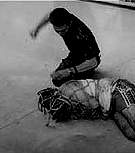
  • Seeing the photos of Abu-Ghraib with this sack on the detainee’s heads, this was used in the Palestinians case since the early years of the occupation.
  • This is the method that was used to prevent them from breathing, from sleeping, and they were tied to these kindergarten small chairs with the sack on their head, with playing music 24 hours a day. Then after in this position for 2 weeks, the interrogator shake you.
  • We’re promoting Boycott Divest and Sanction.

Guest – Sahar Francis, human rights lawyer and director of the Palestinian NGO Addamer.  (Arabic for conscience) Prisoners Support and Human Rights Association is a Palestinian non-governmental, civil institution which focuses on human rights issues. Established in 1992 by a group of activists interested in human rights, the center offers support to Palestinian prisoners, advocates the rights of political prisoners, and works to end torture through monitoring, legal procedures and solidarity campaigns.It’s an organization offering legal services to political prisoners under Israeli occupation and represents prisoners in Israeli military and civil courts.

————————————————————–

Share

Law and Disorder May 13, 2013


Updates:

——-

move-78-85_html_48fc8b0f MOVE3

MOVE Bombing: 28th Anniversary

This week marks the 28th anniversary of an armed police mission in Philadelphia that ended in a helicopter bombing of the headquarters of the group known as MOVE. The fire commissioner in that city allowed a fire to rage unabated at 6221 Osage Avenue in West Philadelphia, killing six adults and five children, destroying 65 homes and leaving more than 200 people homeless. Despite two Grand Jury investigations, and a commission finding that top officials were grossly negligent, no one from city government was ever criminally charged. A recent film called Let the Fire Burn, chronicles the events leading up to the conflagration.

Ramona Africa:

  • The government, through the media had mislead people to believe that what happened in May of 1985 was because of complaints from neighbors which is absolutely not true.
  • What happened on May 13, 1985 happened because of our unrelenting fight for the release of our innocent sisters and brothers known as the MOVE 9 who were arrested in August 1978.
  • After years of abuse, physical abuse, judicial abuse by this system, MOVE babies being killed through miscarriage and a 3 week old baby being trampled to death by police, after countless unprovoked beatings of MOVE men and women, children, even pregnant women, MOVE people took a stand and said listen, we are uncompromisingly opposed to violence, we’re a peaceful people. We’re not stupid and we’re not masochistic or suicidal.
  • We do believe in self defense which is the law, the law of life. There is not a species on this Earth that doesn’t defend itself, when threatened, when attacked.
  • When MOVE took that stand, the government became enraged.
  • They alleged housing code violations, and they wanted MOVE to move out of the home based on housing code violations.
  • MOVE people wouldn’t go along with that. A judge gave MOVE people til August 1 to get out.
  • On August 2, 1985, a judge issued warrants on any MOVE people he knew of including people he knew were not in the house.
  • After the warrants were issued, hundreds and hundreds of cops were sent out to our home.
  • They shot thousands of bullets into that house. The fire department used deluge hoses to flood our home.
  • The officer that was killed was standing on street level while everybody including the police acknowledged that all MOVE people were in the basement of our home.
  • This policeman was shot from a bullet traveling on a downward angle.
  • Hours after I was arrested on August 17, the city sent a demolition team out and completely demolished MOVE’s home which was the scene of the crime.
  • The MOVE 9 trial was a bench trial, not a jury trial.
  • They did it to silence our righteous protest and our unrelenting fight for the release of our family the MOVE 9.
  • They came out to our home on Mother’s Day, May 12 1985, with warrants they obtained on May 11.
  • The Fire Department as in 1978 was their first mode of attack.
  • They came out there to kill, that’s the bottom line.
  • When their ten thousand rounds of bullets didn’t kill us, the water hoses, the tear gas didn’t do the job, they concocted a bomb made from powerful military explosives, C4.
  • They got the C4 from the federal government, from the FBI.
  • The state police helicopter flew over our home without any warning, and two Philadelphia Police bomb squad police officers dropped that bomb on the roof our home. It ignited a fire. They made a conscious decision not to put the fire out.

Guest – Ramona Africa, the sole adult survivor of the 1985 police bombing of the home occupied by members of the MOVE organization. Email Ramona – onamovelleja (at) gmail.com

——–

AssataBillboard2

Assata Shakur Placed On FBI Terror List

Last week, the FBI placed Assata Shakur on its Most Wanted Terrorists list, while the state of New Jersey raised the bounty on her head to 2 million dollars. These actions fall on the 40th anniversary of the 1973 shoot out in in which police allege Shakur killed a police officer during a traffic stop on the New Jersey turnpike.  Assata also known as JoAnne Deborah Byron is an African American activist was a member of the Black Panther Party and the Black Liberation Army.    Assata Shakur: Understanding the politics behind the FBI’s new attack.

Eugene Puryear:

  • I think why a 65 year old grandmother has been put on the FBI terrorist list is a reflection of the United States government’s fear of that which opposes it.
  • Assata Shakur was part of the 60s movements . . . a movement that the Nixon administration attempted to criminalize, to say that political dissent and political opposition to the US government and its imperial moves around the world.
  • She does fit the profile of what the US government has been trying to perpetuate for the last 30 years, in a sense an extension of COINTELPRO.
  • One person’s terrorist is another person’s freedom fighter.
  • Assata Shakur, her actions and beliefs is certainly not something that is beyond the pale but the US government view her as a terrorist.
  • By placing her on this terrorist list, it’s a way of criminalizing dissent.
  • Assata’s trial was moved several times, it was placed in counties that were mostly wealthy, mostly white where pre-trial publicity around the case had biased people in a major way against Assata Shakur.
  • When the government wants to put someone away and they know they don’t have the evidence they want to do everything possible to both manipulate the venue and also bring in people whose predisposition will make them more likely to believe the government’s version of events.
  • Assata was in a position to be put in prison for the rest of her life in these human-breaking conditions.
  • The day before this happened, the US government refused to remove Cuba from the state sponsors of terrorism list. This is used in part for keeping Cuba on that list.
  • Also to give a chilling effect to progressive movements in the United States.
  • The US seems to be redefining what are terrorist actions and what its responses are.
  • The lock down of Boston, the reclassification of Assata Shakur, the issuing of the drone memo of what eminence actually means.
  • The US is attempting to create enough ambiguity in the statutes.

Guest – Eugene Puryear, Eugene is a writer and on the editorial board of the Liberation,  Newspaper of the Party for Socialism and Liberations.

—–

CIW_Wendys NE_wendys_3

CIW – Fair Food Program: Wendy’s

Last year Trader Joe’s and the Coalition of Immokalee Workers signed an agreement that formalized the ways in which Trader Joe’s support the CIW’s Fair Food Program, a hard won victory.. Since then efforts have turned to companies such as Publix supermarkets in Florida and the Wendy’s fast food chain. Recently, Fair Food activists across the country visited their local Wendy’s to deliver a message: It’s time to join the rest of the fast-food industry and support the Fair Food Program.

Emilio Faustino:
Translator Joe Parker:

  • We’re farm workers who come from the town Immokalee, Florida that’s based in the Southwestern part of the state. Our community is a farm worker community and for many years we faced a number of different kinds of exploitation, poverty, wage theft, physical and verbal abuse as well as sexual harassment of many women working in the fields.
  • We began our campaign focused on the big corporate buyers of the produce that we pick back in 2001 in an effort to improve wages and working conditions in the fields, we began with Taco Bell and from there had campaigns with McDonald’s, Burger King, until as you said 11 other companies came to the table to dialogue with farm workers and work to improving those wages and working conditions in their supply chains.
  • We’re here in New York focused on Wendy’s fast food chain. For a number of years the coalition has been sending letters to the fast food chain asking them to join the Fair Food program. We launched a public campaign with them earlier this year but thus far they have ignored us.
  • We want Wendy’s to do what most of these corporations have done, that’s pay one penny more for each tomato that they buy.
  • We’re here for the Wendy’s shareholder action, and we’re going to be organizing an protest on Saturday, May 18, at 2PM at Union Square to send a message to company’s investors that this is something that farmworkers in Wendy’s supply chain really deserve. There will also be a number of actions taking place that day all over the country in a number of communities standing together with the CIW.
  • Contact: www.ciw-online.org, email: workers@ciw-online.org, 239-657-8311

Guest – Emelio Faustino, farm worker, CIW activist living in Florida. He is among other workers picking tomatoes by hand for 10-12 hours per day, while getting paid 50 cents per bin, or about 200 to 283 dollars per week.

Guest – Joe Parker, CIW spokesman and translator.

—————————————————–

Share

Law and Disorder April 29, 2013


Updates:

federalistsociety michael-danielle federalistAd

The Federalist Society: How Conservatives Took the Law Back from Liberals

Has the Department of Justice been taken over by a conservative organization little known to the average citizen? In the recently published book titled The Federalist Society: How Conservatives Took the Law Back from Liberals authored by attorney Michael Avery and Danielle McLaughlin track the movements of a small group of conservative law students and their influence. The Federalist Society has lawyer chapters in every major city in the United States and student chapters in every accredited law school. Members include economic conservatives, social conservatives, Christian conservatives, and libertarians. They all differ with each other on significant issues, but cooperate in advancing a broad conservative agenda.

Attorney Michael Avery:

  • I saw how much power and influence the Federalist Society had during the years George W. Bush was president and at the same time I realized most people don’t know very much about them.
  • They remained under the radar, I thought it was important to tell their story.
  • They came along just at the right time for them, it was really kind of a perfect storm for them. Ronald Reagan was in the White House, you had a general renaissance of conservative thought that was promoted by people like Bill Buckley in the National Review, you had resistance to school integration and forced bussing. So there was a backlash waiting to happen against some of the things that happened in the law.
  • It’s very important to recognize the role Ed Meese played. First he was counselor to the president then he was attorney general, later he became a principle figure at the Heritage Society.
  • Many people are open members of the Federalist Society, others not so much but through a variety of sources I think we’re very confident that the people in that appendix either are members or very close to the society and sometimes I call that list the 100 most powerful people in the country and most of them you never heard of.
  • About half the members that George W. Bush appointed to the Federal Court of Appeals were members of the Federalist Society.
  • This battle over whether the government is able regulate private property has been one of the principle ideological battles of American Constitutional law since the end of the 19th century.
  • They argue that property rights are a natural right that everybody is entitled to.
  • It’s better to tolerate disagreement than to try to be 100 percent correct all the time.

Attorney Danielle McLaughlin:

  • The substantive areas of law that we’re seeing this test cases brought in are very much reflective of the core values of the society. Those are notions of small government in particular small federal government. The idea that the state exists to preserve freedom.
  • Many are involved in public interest law firms who go out and find plaintiffs and challenge regulation at the state level and in many cases have been successful in challenging laws in opposition to their world view all the way up to the Supreme Court.
  • They really worked this very large network that they developed.
  • Olen Foundation says here’s some money go out and build an institution.
  • The Federalist Society today is not handicapped by having to report back or meet short term goals. The conservative funders believed in long term institution building.
  • There are Federalist Society student groups on the campus of every single accredited and some unaccredited law schools. There are lawyer chapters in every single major city. There are affiliated Federalist Society groups outside the country.

Guest – Civil rights lawyer Michael Avery,  professor at Suffolk University Law School and former president of the National Lawyers Guild from 2003 to 2006.

Guest – Co-author and attorney Danielle McLauglin, member of the Litigation and Dispute resolution group.

—–

stalinist tariq

The Stalinist Legacy: Its Impact on Twentieth Century World Politics

We go now to hear a presentation by internationally acclaimed Pakistani writer and film maker Tariq Ali during a New York City book launch of his new book The Stalinist Legacy: Its Impact on Twentieth Century World Politics. Karl Marx’s often quoted observation “History weighs like a nightmare on the brain of the living” is so true. Even 20 years after the Soviet Union’s collapse, activists are still confronted by the legacy of Stalinism at the same time capitalism has failed millions of working people in the United States and across the world.

————–

Share

Law and Disorder April 22, 2013


Pete-Seeger-to-Lynne-a Lynne-Stewart-graphic-Rashid-Johnson-web

Please Sign Petition To Help Lynne Stewart

Long time literary agent Francis Goldin has for years visited inmates on death row.  She’s recently returned from visiting Lynne Stewart in the Carswell Medical Facility in Texas. She joins hosts to talk about her visit.

Francis Goldin:

  • We were there for 4 days and most of the time we were in the prison with her.
  • If we kissed more than once, or hugged more than once she would be fined.
  • That’s how they become correctional by denying kissing and hugging and loving.
  • We were only there for about 70 hours, we didn’t have enough time to talk.
  • The day we left, all the plans were changed, no more 4 day visits, only Saturday and Sunday. The inmates were heart broken.
  • The breast cancer has moved to her lungs. The reason she has it in her lungs is because they didn’t treat her when they should have.
  • It’s tremendously important to go to LynneStewart.org and sign on for this release.
  • When you sign on, email every person on your list whether its 10 or 500.
  • It’s really important that we send a million signatures.
  • I visited Maroon for 27 years, every 3 months. I was there for 2 whole days.
  •  Lynne Stewart Compassionate Release Petition
  • Please Also Write to: Charles E Samuels Jr. / Federal Bureau of Prisons /
  • 320 1st Street Northwest / Washington DC 20534

Guest – Francis Goldin, has worked in publishing for 63 years, as an agent and as editor-in-chief of a children’s publishing company; she founded the Frances Goldin Literary Agency and sold her first book in 1977. Authored by Black anthropologist Betty Lou Valentine and titled Hustling and Other Hard Work, the book continued to receive royalties for 32 years. Among her clients are Barbara Kingsolver, who she has represented for all of her 14 books, Mumia Abu-Jamal, Dorothy Allison, Frances Fox Piven, Martin Duberman, iconic feminists including Charlotte Bunch and Esther Newton, more.

——–

maroon_the_implacable theresashoatz2

Maroon The Implacable

We welcome back Teresa Shoatz, daughter of political prisoner Russell Maroon Shoatz who has spent 39 years in the US prison system. As many listeners may know, Russell Shoatz has been held under intense lock down spending no more than one hour a day outside of his cell for the past 21 of those years. He was locked up in 1972 for his activity as a member of the Black Liberation Army.

Meanwhile, Theresa Shoatz is on book tour promoting her father’s book titled Maroon The Implacable. We catch up with her in Chicago while on tour. Maroon The Implacable is the first published collection of his accumulated written works analyzing the prison system, imperialism, the drug war. He also writes with great insight about the Maroon communities throughout America. Newer essays examine current political movements including eco-feminism and matriarchy

Theresa Shoatz:

  • Maroon had been told that he would die at SCI Greene. For him to be free from prison in general, would be when I would say we have won.
  • We’ve been fortunate to have Bret Grote, assistant to the legal team. Dan Kovalic and we just got a major commitment from a big law firm.
  • Maroon has been writing since the eighties. In the nineties, some anarchists took his writings and put them in a zine, and took them throughout the United States and into Canada. They were used for education.
  • So you get Maroon’s span from the eighties, to the present day.
  • His view now on women is so incredible because he stressed how important women are to the movement throughout the sixties and the seventies.
  • At that time he didn’t recognize how important the women were. The women, I would say are really the back bone of any community.
  • On his second escape we was returned to prison an inmate said to him, they had a hell of a manhunt on you, you were chased down like a “Maroon.”
  • He didn’t know anything about the Maroons. He dug in deep about their history and how they came about.
  • The Maroons were slaves who had escaped from plantations, some went deep into the woods and joined with Native Americans and some poor whites who were totally against this slave thing.
  • His digging into the history of the Maroons, he also involved me and my siblings. They were so awesome because they were fighting off attacks, also in the Caribbean areas, even into Mexico.
  • Maroon has endured such torture, just outrageous treatment. Twenty plus years of no-contact visits. The impact of this really does control mindsets.
  • Maroon doesn’t have computers nor has he seen one up close. He does everything long hand, and through snail-mail.
  • Right now, I’m at the University of Texas. I’m presently with the dean and a professor in a writing class.
  • If they haven’t heard of him, they want to know more.
  • We have to step over what this government has thrown at us.
  • They have more a hand on these youth than some these youths own parents.
  • When you can punch right through that wall that’s candy coated reality system that our youth are mixed up in, its not only uplifting for me but for them.

Guest – Theresa Shoatz,  a Philadelphia-based prison justice activist and the daughter of Russell “Maroon” Shoatz.

——-

shadowlives2 hungerstrk

Shadow Lives: How the War on Terror in England Became a War on Women and Children

It’s obvious and yet an unfortunate reality, war, prisoners of war and the prison industrial complex tear apart families. Very seldom are the voices of family members heard that were left behind by the tragedies of war.  In the book Shadow Lives: How the War on Terror in England Became a War on Women and Children, author Victoria Brittain brings the reader close to these individuals who’s lives were capsized by war. They’re usually socially invisible and their civil liberties are often trampled by the state under the guise of the “war on terror.”

Victoria Brittain:

  • I got involved way back when people began disappearing and they were described as the worst of the worst by Donald Rumsfeld and George Bush. Some of those people came from Britain and we didn’t know anything about them.
  • A friend of mine had a project to do verbatim plays about the families, and he asked me to be the person to interview the families to try to find out who these people were and what had brought them together in Guantanamo Bay.
  • I find complete confusion. Nobody in the families knew anything about why their son or their brother had ended up in Guantanamo Bay. In the course of that I got to know some of the families.
  • I was particularly curious about one family that didn’ t want to cooperate in the play which was a Palestinian woman with five children, living alone and not speaking much English.
  • I wrote to her about the play and told her how ashamed I was of my country from the research that I’ve done.
  • We became close friends. Through her and her children, I met other women.
  • Over these past ten years its been a rich experience, and sobering experience about injustice.
  • I think she was suppressing the agony and loneliness and fear that she was in, course she was so desperate to have her children approach something of a normal life.
  • It was only when other people began to come back to Britain from Guantanamo, that we began to get a picture the conditions in which people were.
  • Her husband had gone off to west Africa with 3 or 4 other men to try and start a peanut business. This was his idea as a refugee Palestinian in Britain. He wanted to find a way of making a life for his family.
  • When she found out he was taken from Afghanistan to Guantanamo, she was completely, . . there was no explanation.
  • There was absolutely no recourse for her for a long time.
  • It’s so sad, the Obama administration, he said he was going to close Guantanamo, here we are years down the road, these innocent people are still there and in the last 3 months, these people have become so desperate, because Congress is blocking them from getting out.
  • Again and again, every legal victory from CCR has been overturned by a higher court.
  • For these men, they really feel they’re at the end of the road.
  • The horror of this has been so well laid out by so many lawyers. I find it astounding that there isn’t an uproar in Congress.
  • Thank goodness Sami-Al-Arien is no longer in prison, but he’s under house arrest.
  • Most of their friends turned away from them.
  • He spent about five years in about a dozen maximum security prisons.
  • FreeSamiAlArian
  • The British and American intelligences work so closely together.

Guest – Victoria Brittain has lived and worked as a journalist in Washington, Nairobi, Saigon and London. She worked at the Guardian for 20 years and is the author of Death of Dignity: Angola’s Civil War, and Enemy Combatant.

———————————————————————————

Share

Law and Disorder April 15, 2013


SCIGreene russell1

Political Prisoner Russell Maroon Shoatz Update

We welcome back Bret Grote, a member of Russell Maroon Shoatz’s legal team. Political prisoner Russell Maroon Shoatz who has spent 39 years in the US prison system. As many listeners may know, Russell Shoatz has been held under intense lock down spending no more than one hour a day outside of his cell for the past 21 of those years. He was locked up in 1972 for his activity as a member of the Black Liberation Army.  Bret gives us an update in recent developments of the case.

Bret Grote:

  • Almost 2 weeks ago, I went to SCI Greene with a member of the legal team and Maroon’s son, Russell Shoatz III, and when we went into the visitor’s lobby we were informed that he was no longer there.
  • After 18 years at SCI Greene which has the largest restrictive housing units which is the solitary confinement units, he had been transferred to SCI Mahanoy which is where Mumia Abu-Jamal is currently located in the general prison population.
  • He was transferred there Thursday March 28, 2013, we put in calls the next day to inquire what was going on.
  • We actually know this move is in response to the growing pressure campaign that is being waged. The growing support around the country and the legal team having increasing visits.
  • The legal team is Dan Kovalic who represented Maroon in his due process based challenge in solitary confinement in the late 90s. There are also 2 attorneys from a large international litigation firm.
  • There’s Dustin McDaniel, who along with myself has formed an organization called the Abolitionist Law Center and five students working on his case.
  • There was a letter sent to Secretary Wetzel’s office stating that if he’s not released into the general prison population within 30 days a civil action will be filed.
  • The major one is the 8th Amendment on prohibition of cruel and unusual punishment. The law on solitary confinement is not very good but its also emerging in response to the 30 year emergence of this type of supermax style long term lock down as an affirmative policy of prison management.
  • The basic rule of law is that solitary confinement is not unconstitutional per say, but there needs to be a fact specific inquiry into conditions of confinement and also the degree of harm that is imposed upon the prisoner.
  • The prison officials need to demonstrate indifference to the deprivation of basic human needs.
  • There are some other grounds that are being put forward to challenge solitary confinement. One of these is happening in the state of New York right now, where the NYCLU has begun representing an individual who was bringing a case pro se.
  • Duration is one of the considerations that’s supposed to be taken into account by the court.
  • The Supreme Court has been clear that the duration of deprivation is very significant for constitutional purposes.
  • Maroon escaped from prison twice. After solitary confinement he was released in the general prison population at the state correctional institution in Pittsburgh in 1982.
  • At this point Maroon had made a political decision. He had become part of the Pennsylvania Association of Lifers. This was a group approved by the prison authorities. After Maroon became involved and other lifers became involved to take more active role in their interest, more than 100 people began attending meetings there.
  • They put him in solitary confinement based on participation in unauthorized meetings even though all the meeting spaces had to be opened by staff.
  • Since 1989 he’s had only one disciplinary infraction while in the prison.
  • Covering the vent in his cell, it was blowing cold air – SCI Greene.
  • Maroon was constantly engaging all the other prisoners in educational seminars, studying lessons on geography, on history on working with people to transform their criminal consciousness into community oriented activist consciousness.

Guest – Bret Grote, member of the Russell Maroon Shoatz legal team and member of the Abolitionist Law Center.
—–

MAP3-draft-v1 morning_after_pill_process_large

Court Orders FDA to Remove All Restrictions on the Morning-After Pill

After a multi-year grassroots campaign and an equally long lawsuit, the morning after pill will finally be available to females of all ages on the pharmacy shelf, without a prescription or point of sale or age restriction. This is thanks to a recent federal court reversal of decisions from the FDA and DHHS, under both the Bush and Obama Administrations.  The US now joins at least 63 other countries including the UK, Denmark, France and Ghana in making the morning after pill available without a prescription.

Attorney Andrea Costello:

  • The case was originally file in 2005 and this was after the FDA had really stalled out and delayed for years in its decision making in whether to put the morning after pill over the counter.
  • Originally the morning after pill was prescription only and had to show identification in order to get it.
  • In 2005, the government made a decision to make Plan B available for women over 18.
  • Under President Bush, decisions were made by high level officials within the FDA to deny access to the morning after pill to women and girls. That was really an effort to appease the administration’s constituents.
  • It was based on anti-birth control politics and not science.
  • In 2011 for the first time in history, we saw Health and Human Services under the Obama Administration overruling a decision by the FDA when the FDA decided it wanted to put the morning after pill over the counter without an age restriction.
  • The lawsuit has always asked for unrestricted access to the morning after pill and all forms of the morning after pill meaning emergency contraception for all women and girls in the United States regardless of age without any restriction on how its sold.
  • In the history of our country no one has ever had to show their identification in order to get birth control.
  • I think of this victory as building on the pioneering work of our feminist sisters in the National Lawyers Guild that I’ve had the opportunity and honor to work with.
  • Catherine Roraback and Rhonda Copeland, Carol Sobel, Mara Verheyden-Hilliard
  • We will be looking forward to seeing it in the grocery stores in 30 days.

Guest – Attorney Andrea Costello, Partnership for Civil Justice Fund Senior Staff Attorney representing the NWL Plaintiffs.

armeniadeathmarch NYTimes-Armenian-Gen

It Was Genocide: Armenian Survivor Stories

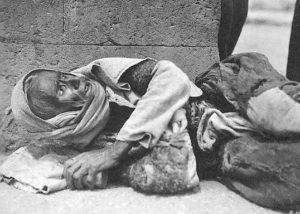
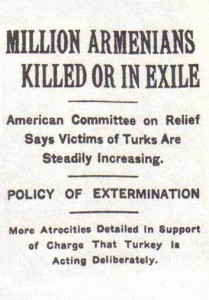
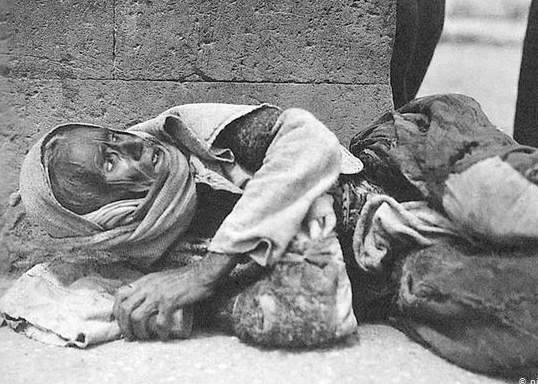
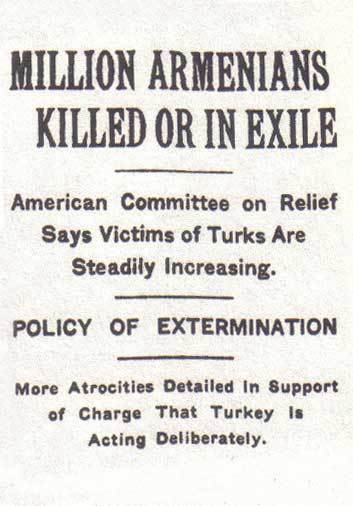
99 years ago this month marks the beginning of the systematic implementation of a plan to exterminate the Armenian race. Carried out by the Young Turk government of the Ottoman Empire, over half of the Armenians living in the Empire were killed.

To commemorate this, the first genocide of the 20th century, Law and Disorder co-host Heidi Boghosian and producer Geoff Brady present part of the 90-minute program titled, It Was Genocide: Armenian Survivor Stories.

We wish to thank WBAI for their commitment to recognizing the Armenian genocide, and are grateful to the following individuals for opening their hearts and sharing the difficult memories of the past: Jennie Garabedian, Harry Mazadorian, Roxy Garabedian, Lucy Simonian, Roxie Maljanian, Mary Abrahamian, John Maljanian, Agnes Karanian, Ruth Swisher, and Artie Shahverdian.

For stations that want to air full 90 minute documentary

————————————-

Share

Law and Disorder April 1, 2013


Updates:

  • MOMA Suggested Donation Lawsuit

—-

el-igloo1 che-havana

Michael Smith and Dennis James Discuss Cuba Trip

Co-host Michael Smith and attorney Dennis James recently returned from Cuba on a trip led by the Center for Cuban Studies. Dennis is a civil rights lawyer formerly of Detroit and former Executive Director of the National Lawyers Guild.  The trip was undertaken to appreciate the fundamental changes now going on in Cuban law with respect to travel, home, car and business ownership. The discussion leads into the possibilities of an economic rejuvenation in Cuba.

Attorney Dennis James:

  • The people of Cuba had a strong identification with the revolution they made.
  • Cuba is theirs and nobody else is going to tell them how to run it.
  • They have a lot of complaints about shortages, but they’re very appreciative of the basic needs of life that are provided for.
  • The Cuban government did a thorough and multi-level canvassing of the population through its national assembly and committees for the defense of the revolution.
  • Talking to the people on the street, they remember this process that went on.
  • The government watches which enterprises make sense, which ones are succeeding.
  • The ones that are succeeding and paying taxes, employing people are encouraged.
  • Book: The Man Who Loved Dogs
  • Book: Cuba, What Everyone Needs To Know – Julia Sweig
  • There’s a colony of people in Melia Cuba that practice what they call naive art.
  • I think its naive in the sense that it’s self taught.
  • They do wonderful paintings, these are doctors, lawyers, bakers, bus driver, cops, sugar mill workers.
  • Their work is encouraged, given exhibits in Havana.
  • Sandy Levinson – The Center for Cuban Studies.
  • We’re not talking about the flag waving, hammer and sickle brandishing socialist realism of China and Russia, we’re talking about wonderful expressions of culture.

Guest – Dennis James, a civil rights lawyer formerly of Detroit and former Executive Director of the National Lawyers Guild.
——–

gaymarriageline SupremeCourtJustices

Supreme Court On Gay Marriage

Last week the Supreme Court heard oral arguments on two historic cases that could establish the constitutional right for gay marriage. The first case, Hollingsworth v. Perry is a challenge to California’s voter-approved ban of same-sex unions in 2008. Six months after the California Supreme Court endorsed gay marriage, voters passed Proposition 8 which amended the state’s constitution to only recognize marriages between a man and a woman. Lower courts had declared the gay marriage ban to be unconstitutional.  The second case the Supreme Court heard was a challenge to the 1996 Defense of Marriage Act. This act bars married gay couples from receiving federal marriage benefits such as Social Security and family medical leave.

Professor Katherine Franke:

  • On the Prop 8 case, I would certainly question the issue of standing which the court is from their argument also taking quite seriously.
  • It’s actually an incredibly important issue in civil rights law where groups of people want to assert an interest in an overarching public issue like the right to marry.
  • I’m of the view that this should never have been brought.
  • The movement lawyers really argued for Boise and Olsen not to bring the case. Boise and Olsen lobbied quite hard to keep the movement lawyers out of the case.
  • When the law gets out ahead, and the lawyers get out ahead of the movement that support them, often we do more damage than good when we get to the Supreme Court too soon.
  • We have movement lawyers in the lesbian and gay community and of course they don’t all agree with each other, its a complicated movement. But there was a sense that they were going to go state by state, and build legal consensus around the issue of marriage rights and around a set of arguments that weren’t going to hurt gay and lesbian people who didn’t marry.
  • Boise and Olsen thought they would do a better job raising the issue of marriage than the movement lawyers have. They’re carrying a brief for marriage, not a community who have a diverse set of interests, marriage being only one of them.
  • DOMA, the Defense of Marriage Act is a law that unfortunately President Clinton signed in 1996. It was basically a homophobic cry from the Congress to limit on the federal level any definition of a marriage to between a man and a woman.
  • If you’re a federal employee, if you’re married you can put your spouse and dependent children on you health insurance.
  • If you’re not married, you can’t.
  • Edie Windsor is the plaintiff in the DOMA case but when her partner of many many years past away, Edie inherited under the will, her partner’s property they jointly owned together. Under federal tax law it says if they were strangers to one another, so Edie had to pay about 360 thousand dollars in inheritance taxes for the property she had owned with her partner.
  • There was a coalition of large corporations that filed a brief and said actually
  • The political alignment on this issue has really shifted at a rapid pace in the last year.
  • I direct our center on gender and sexuality law.
  • I’m actually now teaching for the first time a class on the law of occupation so we’re looking at Iraq and Palestine and the United States, Puerto Rico and Hawaii. To understand whether the law can be a force for good when military force is like the Israelis or like the Americans occupying other sovereign states.
  • We’ve got a really great new project engaging tradition and thinking about arguments based in tradition, that have been used traditionally to undermine sexually based justice claims.
  • Those issues come up in the marriage context all over the place.

Guest – Professor Katherine Franke,  the Isidor and Seville Sulzbacher Professor of Law; Director, Center for Gender and Sexuality Law at Columbia Law School.

—————————————————————–


Share

Law and Disorder March 25, 2013


Updates:

  • New York Times Continues To Deceive About Iraq War

ccrfloyd1

New York City Stop and Frisk Trial Begins

Here on Law and Disorder, we’ve been covering the stop and frisk case known as Floyd v City of New York and the New York Police Department. This is a federal class action lawsuit challenging New York City Police Departments’ practice of stopping and frisking hundreds of thousands of New Yorkers each year. Some five million within the last few years. The high majority of which are Latino and African American. It’s taken the Center for Constitutional Rights along with its allies united with a group called Communities United for Police Reform many years to bring this case to trial.  It’s an historic moment for challenging these practices in New York and a precedent that will hopefully lead to ending this practice, not only here in New York but throughout the country.  The trial began last week in federal court in Manhattan. It will last some 4 to 6 weeks.

Annette Dickerson:

  • In order to be legal the stops need to be based on reasonable suspicion of criminal activity and we’re challenging the city’s use of these illegal stops.
  • They violate the 14 Amendment guarantee of equal protection because they are racially discriminatory.
  • 87 percent of those stopped are black and Latino.
  • The NYPD commissioner seemed to have dug in his heels deeper, as has the mayor in defending the program.
  • There is no empirical data that “stop and frisk” has a role in reducing crime.
  • It severely damages relationships between the police and the community.
  • This is an historic moment in the lifelong struggle of members of the community and organizations like CCR. Our first case against the police department was Daniels which was filed in 1999 in the aftermath of the shooting of Amadou Diallo.
  • David Floyd was actually helping someone who was locked out of their apartment, he had an extra set of keys.
  • In 2011 685 thousand people stopped.
  • There are many other people in the community who are stopped including members of the LGBT community, the immigrant community, people who are homeless, women.
  • There is a presumption of criminality.
  • On the first day of trial, the courtroom was packed, as was the overflow room.

Guest – Annette Warren-Dickerson,  the Director of Education and Outreach at the Center for Constitutional Rights (CCR), is responsible for overseeing the development of CCR’s political and public education strategies as a companion to CCR’s litigation. Annette served as the Statewide Coordinator of the New York Campaign for Telephone Justice, which successfully ended the high collect call rates for the families of those incarcerated in New York State prisons.

—-

5nycpride0603 021603cuban5

Cuban Five Case Update: Free The Cuban Five – Columbia University 2013

Fourteen years ago, the Cuban Five were convicted on conspiracy to commit espionage at some time in the future.  Recently, prominent First Amendment attorney Martin Garbus joined the case of the Cuban Five. He’s help expose how US government paid journalists in Miami who received hundreds and thousands of dollars of payments from the office of Cuba broadcasting. A fact unknown to the defense at the time of the trial. As listeners may know, those paid reporters covered the case in an almost hysterical and prejudicial fashion. This month, Martin Garbus and many others will be discussing the case of the Cuban Five during an event held at Columbia University March 29.

Attorney Martin Garbus:

  • During the time the jury was deliberating, the television media bombarded the Miami area with pictures of the jurors. The judge barred any pictures of the jurors going out because she didn’t want the jurors intimidated by a public awareness of who they were.
  • Because she was concerned pressure would be put on them.
  • Unknown to the judge and defense lawyers at the time, the channels each day repeatedly showed the faces of the jurors, sometimes identifying them so that the entire community knew who they were.
  • And they presented very slanted interpretations of the case.
  • Television misuse: we found it not only for the time the jurors were deliberating but we’ve now traced it throughout the entire trial.
  • Where are now is we’ve submitted our papers and the judge is sitting on it.
  • Radio Marti was made to beam into Havana, it can most anything it wants. What happened hear is that Radio Marti beamed into the entire Miami area. You have a 38 million dollar budget beaming into Miami endless stories. Then you have the US government through Radio Marti and various democracy projects also paying the print media to write propaganda. Each one of these articles are a violation of the law.
  • On March 29, at the Roone Arledge Auditorium, Lerner Hall, Columbia University, 116th Street and Broadway in Manhattan.
  • Martin Garbus, Lead Attorney for the Cuban Five
    Ambassador Rodolfo Reyes, Cuban Ambassador to the United Nations
    Ambassador Julio Escalona, Venezuelan Deputy Ambassador to the United Nations
    Luis Rosa, Puerto Rican independence fighter, political prisoner for 19 years
    Imani Brown, Columbia University Caribbean Students Association

Guest – Attorney Martin Garbus, one of the country’s leading trial lawyers. He has appeared before the United States Supreme Court and the highest state and federal courts in the nation. Time Magazine has named him “legendary . . . one of the best trial lawyers in the country.” He’s also known as the most prominent First Amendment lawyer.

Four-clients-after-Burge-indictment emanuel_police_ap_img

Racism, Torture, and Impunity in Chicago

Here on Law and Disorder, we continue to follow up on the Chicago torture cases and since the conviction and sentencing of former Chicago Police Commander Jon Burge in 2011, the Chicago criminal courts have become a model in seeking justice for crimes of torture. Last year we discussed with our guest attorney Flint Taylor how the city’s new administration will handle the hundreds of ongoing torture cases of African American men. The question is answered in Flint Taylor’s recently published article in the The Nation titled Racism, Torture and Impunity in Chicago.

In the article, Flint writes “Chicago City Council and Mayor Rahm Emanuel signed off on a settlement for another torture survivor, Michael Tillman, who was exonerated in 2010. It was the perfect chance for the mayor to apologize on behalf of the city to the African-American community that helped elect him. He chose not to do so. Instead, picking up where the Daley administration left off, the mayor has continued to fund Burge’s defense, paying private lawyers a total of $3.8 million to date in the Cannon and Kitchen cases alone.”

Attorney Flint Taylor:

  • In the civil rights cases we are seeking the testimony of Richard Daley, the former mayor and former states attorney to question him in detail of his long standing and central role of the police torture scandal here in Chicago.
  • Evidence was brought directly to Daley through the Chicago Police Superintendent of the torture of a specific man by the use of electric shock, bagging, beating and burning to get a confession.
  • Daley decided not to investigate Jon Burge, not to prosecute Jon Burge and as a result of that over 75 African American men were tortured, gave confessions, many of them went to death row.
  • At this point we’ve tried to negotiate with his lawyers (Daley) they are paid for by the tax payer. We moved in court to compel him to testify.
  • It took a long time, very hard struggle by community groups, lawyers activists and of course the families of the victims themselves.
  • The media (local) is interested when the name Daley comes up.
  • The called the box that they electrocuted them with the “n*****” box.
  • We see the attacks on the genitals again and again.
  • It’s a remarkable racist conspiracy. We’re using the Civil Rights Act that was used during Reconstruction, right after the Civil War, which is called the Anti Klu Klux Klan Act.
  • We’re trying to get a statute passed in Congress to make torture a Federal crime.

Guest – G. Flint Taylor, a graduate of Brown University and Northwestern Law School, is a  founding partner of the People’s Law Office in Chicago, an office which has been dedicated to litigating civil rights, police violence, government misconduct, and death penalty cases for more than 40 years.

—-

Maliw2 map_africa_mali

French-led Invasion of Mali, Africa

The Obama Administration has recently stepped up US military deployment within the French led military offensive to force out Islamist rebels in Mali, Africa. The U.S. Reaper drones are helping to provide targeting information for French aerial attacks. Those countries publicly supporting France include Canada, Belgium, Denmark and Germany. Meanwhile, human rights groups call for independent investigations into civilian deaths in Mali.

Ernie Harsch:

  • The stakes are not so much Mali. Some of the insurgent forces, some have local grievances, like the Tuareg in Northern Mali.
  • Others consider themselves Jihadists. They also target, US, French and other European in the region and elsewhere in the world.
  • Whatever happens in Mali, could have wider implications. The situation in Mali is quite serious. There are lots of risks.
  • Mali, Africa is a former French colony and after decolonization the French were active in intervening into the former colonies of Africa.
  • There was a popular upsurge in the 90s, (in Mali) that regime was ousted by a military coup. That leader of the coup quickly transitioned to an elected leader of a civilian government.
  • In Mali in particular you also had a series of rebellions in the North by an ethnic group called the Tuareg.
  • The basic issues never got resolved. You didn’t have development up in the North, you didn’t have autonomy which is what they were pressing for.
  • What happened in 2011, we had the Arab Spring, in like many periods of revolution or popular upsurge, old coercive states may collapse and you have opportunities for popular action but you also have other people who come in because states are fragmented.
  • Some of the fighters that had been with Gaddafi, they were from Mali, and they had been Tuareg.
  • Now its sort of dragging down into a protracted guerrilla phase.
  • To be clear, the French intervention has gotten political backing from the African Union and from the economic community group, the Economic Community of West African States or ECOWAS.
  • The French PR justification has worked fairly well.
  • This is open terrain, this is semi-desert area. With air power and heavy equipment you can push far and very quickly. You can take cities and towns. The Islamists, there’s a few thousand. They’ve pulled back up into the mountains. They know the terrain better than the French actually.
  • The chance of French mounting losses is there.
  • Since 2005, the US has spent 1 billion dollars for counter-terror operations in the region.
  • This isn’t all military by any means. A lot of it has to do with training local African military forces in counter-terrorism operations and coordinate and logistics support.
  • Also, basically propaganda.
  • They do humanitarian actions to curry favor with local populations.
  • This isn’t well known, but the US has air bases all across Africa.
  • Sometimes they’re simply a hangar operated in secret at some African military or civilian air base.
  • They’re (U.S. Government) setting up an airbase in Niger, that’s openly acknowledged.
  • They started out with surveillance drones in Somalia but then they used a few strikes against Islamists leaders there in Somalia.
  • Everything is going to be framed in the language of the war on terror. That’s the justification. That’s a real concern for the US authorities.
  • Also material resource interests. Not so much gold, but Mali does have gold in the northwest.
  • Things that are very vital to the Western dominated global economy.
  • There is a rivalry that’s developed with China, it’s not been terribly direct at the moment.
  • It’s blowback.

Guest – Ernie Harsch, a 40 year journalist who has made numerous trips to Africa. He’s a former editor of the magazine Africa Renewal. He joins us today to discuss the conflicts in Mali and the big picture regarding the seizure of natural resources in Africa.

————————————————————————-

Share

Law and Disorder March 18, 2013


Updates:

insurg1 insurg2
The Search for Colonel James Steele: US Special Forces Veterans Links General Petraeus With Torture In Iraq

A 15-month investigation and documentary film by the Guardian and BBC Arabic James Steele: America’s Mystery Man In Iraq has revealed how  US colonel James Steele, a veteran of American proxy wars in El Salvador and Nicaragua, played a key role in training and overseeing US-funded special police commandos who ran a network of torture centers in Iraq. Steele and another special forces veteran retired Colonel James Coffman reported directly to General David Petraeus. Petraeus as listeners may know was tasked with organizing Iraqi security services.

Patrick Farrelly:

  • The projections that they made about being welcome in Iraq were just not true.
  • It looked like the insurgency at that point in 2004 was just getting off the ground.
  • This is where they turned to General Petraeus, I know he’s seen in the think tanks in Washington as the scholar warrior.
  • Rumsfeld called upon him to go back into Iraq and to organize a pretty massive police force in Iraq.
  • He hooked up with 2 people there, Colonel James Coffman and Colonel James Steele.
  • Mill Group is essentially a bunch of military advisers who are training the Salvadorian security forces to fight the guerrillas.
  • Colonel James Steele was the guy in charge of the American advisers who were training these people and also directing these forces.
  • Counter-insurgency force went from 400 to 17 thousand.
  • What the United States needs really badly is intelligence, they need to know who the insurgence are and where they can get them.
  • That’s Steele’s expertise, having these guys on the ground, they draw in thousands of people and basically torture them for information.
  • It’s Steele’s job to collate that information so that they can then hand it over to the US military. The US can then go after the insurgence informed for the first time.
  • Part of the Wikileaks discovery, in terms of the war-logs which was released by Bradley Manning to wikileaks, shows this entire pattern of US soldiers coming across these detention centers,
  • - they’re giving consistent reports of seeing torture of seeing abuse.
  • Frontline: The Gangs Of Iraq.
  • It’s a production line. These young men come in, these people were hung up on ceilings, nails pulled out with pliers, it was water boarding.
  • They turned the city library (in Iraq) into a torture center.
  • It became this interrogation and torture mill, that no doubt produced a lot of information.
  • For empire, people like James Steele are very very important.
  • Empires tend to roam into other people’s countries, and you know.
  • Where did the sectarian civil war come from? Who played a part in bringing this about?
  • James Steele, lives in Texas, at one point he was Vice President of Enron.
  • The public is not really aware of what’s being done in the name of US taxpayers in foreign lands.
  • I think its clear that the Sunni community is completely disenfranchised. I think its still in a state of terror.

Guest – Patrick Farelly, a TV, radio and print journalist who has worked in the US and Ireland. Farrelly was producer of Michael Moore’s Emmy award-winning NBC/BBC2 series TV Nation and later Bravo/Channel 4 co-production Awful Truth. He was the founding editor of the New York based weekly newspaper Irish Voice and has also been features editor of the New York Post. He has also worked for HBO, Discovery, PBS and Irish broadcasters RTE and TG4.

————–

Share

Law and Disorder March 11, 2013


Updates:

—-

portugalausterity GREECE-DEBT-FINANCE-LABOUR-STRIKE-EUROPE

Sequester As A Form Of Austerity In The United States

We welcome Economics Professor and radio host Rick Wolff back on the show to discuss the current billion dollar cuts known as the sequester. The sequester is a massive reduction in US military and domestic spending of up to 85 billion dollars. This is a massive austerity policy that will send ripple effects throughout the US economy. Meanwhile, our guest Professor Rick Wolff points to corporations continuing to use cheap labor that is substituted for “costly” workers in the US and Europe. Professor Rick Wolff has exposed the flawed system of modern capitalism for many years, he joins us today to discuss the new austerity, called sequester as the inequalities of wealth continue to widen. Rick Wolff and Bill Moyers Interview.

Professor Rick Wolff:

  • We’ve had basically the same story for most of the last five years. This crisis technically started in the last quarter of 2007.
  • If you are an employer, at least a big one, and if you are an owner of shares of stock, you’ve now come back, its taken six years to do it, you’ve now recovered where you were.
  • No one predicted a crisis of this depth.
  • They are a tiny portion of the American people, those employers and those share holders.
  • The unemployment rate before this began averaged under five percent.
  • At the worst moment of this crisis in 2009, 2010, unemployment hit 10 percent. Where are we today? Barely under 8 percent.
  • Every single family in the United States on average has a person in it, that is going through this process (unemployment) and is therefore becoming a burden to the rest of the family.
  • This is a stock market that seems to believe that it doesn’t have to worry about where the mass of people are, doesn’t have to worry about their diminished purchasing power.
  • The United States is pursuing an austerity policy.
  • Austerity is a very simple idea, it has 2 parts. You raise taxes on average (income) people. Part 2 is you cut government spending throughout the economy.
  • That’s what they’ve been doing in Greece for the last 3 years. That’s what they’ve been doing in England and France, and Portugal and Italy and on and on and on.
  • . . and we’re doing it too.
  • Austerity has been agreed to by Republicans and Democrats alike. There is no debate in this country at least as far as the 2 parties are concerned about austerity.
  • The only disagreement Republicans and Democrats have is about what tax increases and cutbacks are going to be done.
  • This crazy behavior in which people who can’t agree, punish themselves by not agreeing by agreeing to do something they couldn’t agree to do.
  • Fiscal Cliff: All couples that earn more than 450 thousand dollars a year, that was the cut off. Anybody earning less than 450 thousand is 99 percent of our people, were not affected by this “tax the rich” only those above 450. Here’s what happened to them, instead of the 35 percent rate they paid in 2012 under the deal that was struck it was raised to 39.6 percent.
  • No rich person in that category will do anything but laugh all the way to the bank, that this was called an attack on the rich.
  • You’re not taxing the rich, not even close.
  • Payroll tax increase to 6.2 percent. Social Security tax.
  • Sequester: All it meant was if the government didn’t reach an agreement, the way they did it the last minute for taxes, these automatic cuts that were automatically written in 2011 when this whole thing was set up,
  • would kick in. Well they failed to reach an agreement, and this sequester went into effect on March 1.
  • You should be aware that at any time, Congress can make an agreement which supercedes all of this.
  • The military does not want or need a good bit of the spending geared up to be given to it.
  • It’s not the military that wants it, its the Congressional representation from the companies with the military contracts who want it. So we have this bizarre display, we’ve had it for years, in which the military gives testimony, we don’t need this program.
  • The Congress men and women sit their and listen and vote it in anyway. They want the jobs and prospects of the defense contractors who are funding their political campaigns to be protected.
  • If you raise payroll taxes which they did, you are damaging the economy in a straight forward, obvious way.
  • With more people unemployed, they don’t earn and income, they don’t pay an income tax.
  • This is the policy that was followed in Greece, they’ve been collapsing ever since.
  • Last weekend was the largest demonstrations in Lisbon, in the history of Portugal.
  • Nobody on Wall Street knows what’s going to happen 3 months from now.
  • We are not going to escape the turmoil, Occupy was the first sign of that.

Guest -  Richard D. Wolff is Professor of Economics Emeritus, University of Massachusetts, Amherst where he taught economics from 1973 to 2008. He is currently a Visiting Professor in the Graduate Program in International Affairs of the New School University, New York City. He also teaches classes regularly at the Brecht Forum in Manhattan.

—————————————————————-

Share
Home Page | Stations | Hosts | Listening Library | Contact Us     © 2013 Law and Disorder

Powered by WordPress.
Website design by Canton Becker.
Header Photo: Jim Snapper
Entries (RSS) and Comments (RSS).