Academic Freedom, Civil Liberties, Criminalizing Dissent, Human Rights, Surveillance, Truth to Power
Podcast: Play in new window | Download

Trump Election Fraud Investigation
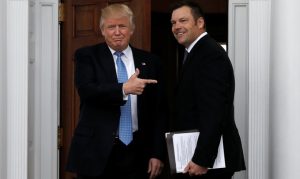
Donald Trump lost last November’s election by some 3 million of the popular vote. Subsequently, he falsely asserted that between 3 and 5 million votes were cast illegally. Then in May of this year, by executive order, Trump established The Election Integrity Commission. The nominal head of the commission is Vice President Mike Pence, but the functioning head is Kris Kobach, the Kansas Secretary of State who has a long history of successful voter suppression. He is running for governor on this record. Kobach was recently fined by a federal magistrate for “making patently misleading representations to the court” and “abusing the judicial process” when he lied to the judge about the content of certain papers that he shared with Trump concerning voter suppression.
Kobach is helping Trump lay the groundwork for a national voter suppression effort. His commission wrote to the 50 Secretaries of State in the U.S. asking for private information on the voters in their states. Forty-four of the 50 Secretaries of State have told Kobach that they will give him a little or no information. A leading resister, Virginia Governor Terry McAuliffe said “at best this committee was set up as a pretext to validate Donald Trump’s alternative election facts, and at worst is a tool to commit large scale voter suppression.”
Guest – Eliza Carney is the senior editor at The American Prospect. She wrote an article about Kris Kobach titled The Limits of Lying and Cheating in the June 29 issue.
—-

Offense Strategy For Left
The election of Donald Trump has greatly emboldened the forces on the right. We have seen lynchings, stabbings and even murder. The acquittal of murderous cops is almost routine. Deportations number in the tens of thousands. A number of left-wing professors have been suppressed. Right wing provocateurs and racist speakers have appeared on campuses. Fascists have a attempted to organize rallies in major cities.
Hard core groups such as the Klan, racist skinheads and outright fascist organizations like Richard Spencer’s National Policy Institute have been growing and so have militia organizations. The Republican Party, the congressional freedom caucus, fundamentalist, FOXNews aficionados, and neocons have also seen their strength and numbers and influence increase.
How do we fight this? Should we ask the government for help? Should we confront the right? Do we need a mass movement? Do we have to present a political alternative to provide real answers to real problems?
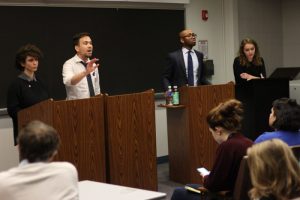
Guest – Jon Kurinsky is a Chicago activist, he recently gave a speech on the topic of fighting the right at the Socialism 2017 conference in Chicago which had a record attendance of more than 2000 people.
————————————
CIA Sponsored Terror, Civil Liberties, Criminalizing Dissent, Human Rights, Political Prisoner, Surveillance, Targeting Muslims, Truth to Power, War Resister
Podcast: Play in new window | Download
This is Not Populism : John Bellamy Foster
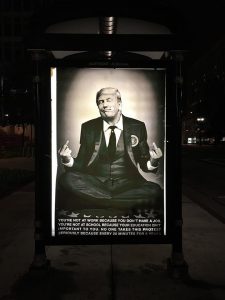
Is Trump a neofascist? Thoughtful analysts on the left like Cornell West, Noam Chomsky, and Judith Butler think he is. But mainstream liberal commentators refuse to associate the Trump phenomena with fascism. They call him a right wing populist. What is neofascism? Right wing Populism? Does it really matter what Trump is called? The great German playwright and political thinker who lived in Germany during Hitler’s reign, Berthold Brecht, asked in 1935: “How can anyone tell the truth about fascism, unless he’s willing to speak out against capitalism, which brings it fourth?” We speak today with John Bellamy Foster, the editor of the venerable magazine “Monthly Review”. He wrote the lead article in the current June 2017 issue titled “This Is Not Populism.”
Guest – John Bellamy Foster is editor of Monthly Review and professor of sociology at the University of Oregon. He has written widely on political economy and has established a reputation as a major environmental sociologist. He is the author of Marx’s Ecology: Materialism and Nature (2000), The Great Financial Crisis: Causes and Consequences (with Fred Magdoff, 2009), The Ecological Rift: Capitalism’s War on the Earth (with Brett Clark and Richard York, 2010), and The Theory of Monopoly Capitalism: An Elaboration of Marxian Political Economy (New Edition, 2014), among many others.
—-

Crossing Hitler: The Man Who Put the Nazis on the Witness Stand
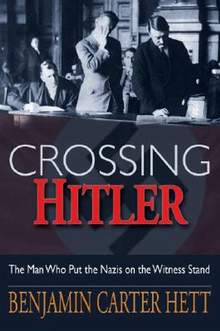
Author Benjamin Hett outlines the fascinating and tragic story of a young lawyer Hans Litten in his recent book Crossing Hitler: The Man Who Put the Nazis on the Witness Stand. Before the Nazis rose to power in the early 1930s, they incited calculated violence among the working class in German taverns. Four Nazi stormtroopers were charged with firing randomly into a dance hall where a communist hiking club were holding a party. Three young men were wounded. Hans Litton was the advocate for the 3 men.
Hans Litten called Hitler to the witness stand to show that the Nazi party was a violent party, and by cross examining Hitler he tried to prove that. Litten forced Hitler to contradict himself, reducing him to humiliating rage that revealed his true intention. At that time, Hitler wanted to be a legal party in Germany and of course you couldn’t be a party that was extra-constitutional and legal but at the same time he didn’t want to disappoint the base of his party which was this violent working class aspect. Two years later, the Nazi Party rose to power.
What came after the Reichstag Fire was the arrest of about 5 thousand people across Germany who the Nazis have identified as opponents or potential opponents. Hans Litten was among them and sent to a concentration camp. Author Benjamin Hett describes a powerful narrative of Hans facing torture yet still telling stories and teaching art to other prisoners.
Hans Litten was born in 1903 in Halle in Central Germany, his father was a law professor and Jewish but converted to German evangelical (Lutheran).
Guest – Benjamin Hett, author of Crossing Hitler: The Man Who Put the Nazis on the Witness Stand. Hett is a former trial lawyer, and now Associate Professor of History at Hunter College.
————————————————–
CIA Sponsored Terror, Civil Liberties, Criminalizing Dissent, Habeas Corpus, Human Rights, NSA Spying, Political Prisoner, Surveillance, Targeting Muslims, Truth to Power
Podcast: Play in new window | Download
This is Not Populism : John Bellamy Foster
Is Trump a neofascist? Thoughtful analysts on the left like Cornell West, Noam Chomsky, and Judith Butler think he is. But mainstream liberal commentators refuse to associate the Trump phenomena with fascism. They call him a right wing populist. What is neofascism? Right wing Populism? Does it really matter what Trump is called? The great German playwright and political thinker who lived in Germany during Hitler’s reign, Berthold Brecht, asked in 1935: “How can anyone tell the truth about fascism, unless he’s willing to speak out against capitalism, which brings it fourth?” We speak today with John Bellamy Foster, the editor of the venerable magazine “Monthly Review”. He wrote the lead article in the current June 2017 issue titled “This Is Not Populism.”
Guest – John Bellamy Foster is editor of Monthly Review and professor of sociology at the University of Oregon. He has written widely on political economy and has established a reputation as a major environmental sociologist. He is the author of Marx’s Ecology: Materialism and Nature (2000), The Great Financial Crisis: Causes and Consequences (with Fred Magdoff, 2009), The Ecological Rift: Capitalism’s War on the Earth (with Brett Clark and Richard York, 2010), and The Theory of Monopoly Capitalism: An Elaboration of Marxian Political Economy (New Edition, 2014), among many others.
—-
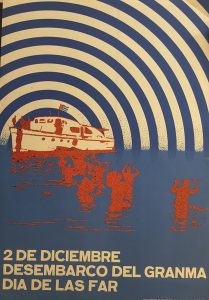
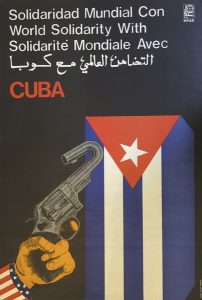
US Normalization of Relations With Cuba Reversed
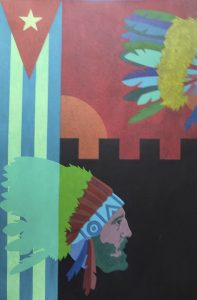
On June 15th President Donald Trump traveled to Miami to condemn Cuba for gross human rights violations while he signed an executive order aimed at reversing the process of normalization of relations between Cuba and the United States that has been going on since December 2014.
Trump spoke to a dwindling base of hardened reactionaries in Miami. He accused Cuba of “spreading violence and instability “as justification to increase restrictions on the travel of Americans to Cuba and to double down on the blockade by eliminating any business dealings with Cuban state run enterprises administered by the Cuban military.
Now, for an American citizen to go to the small island 90 miles from Florida they must go in a group with a minder and report everywhere they travel and with whom they meet.
Since the success in 1959 of the Cuban revolution the United States government has been trying to reverse it and restore capitalist property relations on the island of 11 million people.
The Cuban revolution truly was a revolution and not in the Madison Avenue sense. It was not superficial but profoundly fundamental. The 99%; poor peasants, city workers, and intellectuals overthrew the 1%; the super rich, the large landowners, the owners of the utilities in mines, and their American partners – the United States and trained and supplied army and the police. The 99% took back their own country and the 1% largely move to Miami. 50,000 Cubans died in their struggle.
From then until now the policy and practice of the United States government has been to take Cuba back, change the regime, and re-introduce capitalist property relations by any means necessary.
At first, US backed terrorist torched sugar crops because land was taken from the rich and redistributed to the peasants. The US supported the assassination of teachers during the hugely successful literacy drive. The CIA introduced dengue fever and swine flu killing children and livestock awake. They supported a full-scale military invasion in 1962 known as the Bay of Pigs. It failed. The US initially succeeded and isolating Cuba politically, diplomatically, and economically.
Latin American and Caribbean governments were overthrown by the CIA if they didn’t go along with this policy. Only Mexico held out. But this tactic didn’t work. Cuba overcame the isolation. The US itself became isolated for its hostility. Then in 2014 the organization of American states told the United States that unless it allowed Cuba to re-join the United States itself was unwelcome.
So the USA, led by President Obama, changed tactics, but not its goal to restore capitalism to Cuba. In July 2015 Cuba was recognized. Embassies were opened in Havana in Washington. Trade and travel restrictions were eased.
Guest – Sandra Levinson, President and Executive Director of the Center for Cuban Studies. She was one of the Center’s founders in 1972. In 1991 Levinson spearheaded a lawsuit against the U.S. Treasury Department which resulted in legalizing the importation of original Cuban art. She is currently directing works at the Cuban Art Space, which she founded in 1999, to properly house and archive the thousands of posters, photographs and artworks which the Center has collected in the past 42 years.
Contact the Center for Cuban Studies at 212.242.0559.
———————————————————————————————
Academic Freedom, CIA Sponsored Terror, Civil Liberties, Climate Change, Criminalizing Dissent, Crony Capitalism, FBI Intrusion, Habeas Corpus, Human Rights, Iraq War, Military Tribunal, NSA Spying, Political Prisoner, Supreme Court, Surveillance, Truth to Power
Podcast: Play in new window | Download
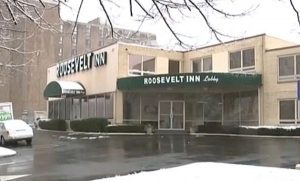

Sex Trafficking Lawsuit Against Philadelphia Motel
Prosecutors have dubbed a Northeast Philadelphia motel the city’s “epicenter of human trafficking.” Recently, a lawsuit was brought against the Roosevelt Motel for the pimping of a teenage girl in one of its rooms for a period of two years. It’s the first lawsuit under a 2014 state law permitting victims of sex traffickers to sue hotels and motels where abuse occurs. The suit was filed on behalf of a 17-year-old girl known as M.B., who was sold into sexual slavery at the Northeast Philadelphia motel at age 14. The lawsuit alleges that she was prohibited from leaving and was forced to commit sex acts with approximately 1,000 men. The hotel is known by the District Attorney as the site of most trafficking investigation. The National Human Trafficking Hotline says that 7.5 thousand human trafficking cases were reported in 2016, including 151 in Pennsylvania and 193 in New Jersey. Almost three-quarters of those involve sex trafficking and nearly a third of sex-trafficking cases occurred in hotels and motels.
Guest – Attorney Nadeem Bezar of the law firm Kline & Specter in Philadelphia. His practice concentrates on medical negligence, catastrophic personal injury, and cases involving child abuse and human trafficking, sexual assault and Title IX violations on college and university campuses.
—-

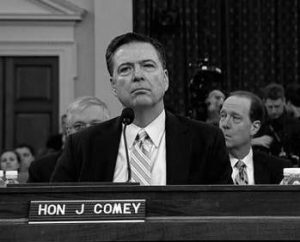
Whistle-blower Protections: FBI Director James Comey
Nearly 20 million television viewers tuned in to hear former FBI Director James Comey testify before Congress on June 8, and explain that he recorded his conversations with President Trump because he did not trust him. Despite the Trump administration’s assertions to the contrary, most legal experts say that former FBI Director James Comey’s sharing the memos about his interactions with Donald Trump is perfectly legal. Several whistleblower attorneys are among those asserting that Comey’s handing over memos to a friend to be leaked to the press violated no laws. The information, they say, was neither classified nor secret as a matter of a federal law. And Comey revealed a matter of public interest and had a right to expose these facts anonymously.
Guest – Louis Clark, Executive Director and Chief Executive Officer of the Government Accountability Project in Washington, DC. The G.A.P. is the nation’s leading whistleblower protection and advocacy organization. It litigates whistleblower cases, helps expose wrongdoing to the public, and promotes government and corporate accountability. For four decades, GAP has assisted more than 6,000 whistleblowers.
—-


Politics, Influence And Journalism: Attorney Dave Saldana
For many, the word Watergate is synonymous with political corruption. The scandal was revealed when five burglars were caught by Washington police in the Democratic National Committee’s office on Jun 17, 1972, and ended with the resignation of President Nixon in 1974. Richard Nixon was the first American president who felt compelled to resign because of the severity of the situation. The role of the press was critical in the episode, beginning with the Washington Post’s front page reporting. At first, the role of the television—with the notable exception of CBS, was scant.
The credit of responsible reporting goes largely to Washington Post editor Katherine Graham, and the Co-editor, Ben Bradlee as well as reporters Woodward and Bernstein. They covered the story at great threat to their lives and their families. The president and his staff in the White House made every possible effort to resist and downgrade the true news stories of the reporters. The Nixon staff had threatened the journalists with verbal attacks. It also created the Washington Star to counter the Washington Post and anti-government reporting. Nixon also sought the help of Federal Communication Commission to ban two TV channels in Florida. The presidential administration had devised such plans that the government officials began to avoid meeting Woodward and Bernstein.
Guest – Attorney Dave Saldana is an award-winning journalist and attorney, and longtime member of the National Lawyers Guild.
——————————————————-
CIA Sponsored Terror, Civil Liberties, Criminalizing Dissent, Gaza, Habeas Corpus, Human Rights, NSA Spying, Political Prisoner, Surveillance, Targeting Muslims, Truth to Power, War Resister
Podcast: Play in new window | Download
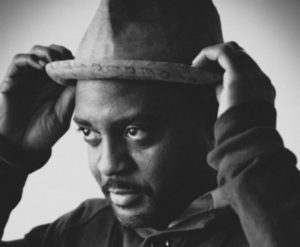
Reginald Dwayne Betts: Bastards of the Reagan Era
Toni Morrison said, “All of that art-for-art’s-sake stuff is BS. Are you really telling me that Shakespeare and Aeschylus weren’t writing about kings? All good art is political! There is none that isn’t. And the ones that try hard not to be political are political by saying, ‘We love the status quo.’ We’ve just dirtied the word ‘politics,’ made it sound like it’s unpatriotic or something.” “That all started in the period of state art, when you had the communists and fascists running around doing this poster stuff, and the reaction was ‘No, no, no; there’s only aesthetics.’ My point is that is has to be both: beautiful and political at the same time. I’m not interested in art that is not in the world. And it’s not just the narrative, it’s not just the story; it’s the language and the structure and what’s going on behind it. Anybody can make up a story.”
Guest – Reginald Dwayne Betts, an award-winning poet. An honors student and class treasurer in high school, at age 16 he and a friend carjacked a man who had fallen asleep in his car. Betts was charged as an adult and spent more than eight years in prison, where he completed high school and began reading and writing poetry. Betts’s first collection of poems, Shahid Reads His Own Palm won the Beatrice Hawley Award, and his memoir, A Question of Freedom: A Memoir of Learning, Survival, and Coming of Age in Prison, received the 2010 NAACP Image Award. He’s had a Soros Fellowship, a Radcliffe Fellowship and a Ruth Lilly Fellowship. In addition to attending Yale Law school, Betts was appointed by President Obama to the Coordinating Council of the Office of Juvenile Justice and Delinquency Prevention.
—
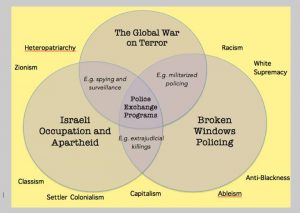

Jewish Voice For Peace: Deadly Exchange: Ending US–Israel Police Partnerships, Reclaiming Safety
Like the United States, where it’s colonists settled upon, displaced, and controlled the Native American population Israel is also a settler colonialism state. It drove 750,000 Palestinians out when it was just established in 1948 and seized control of the land on the West Bank of the Jordan River and Gaza in 1967 and has militarily occupied and controlled the Palestinian population of nearly 2,000,000 there since. Israel’s settler colonialism experience has provided it with valuable lessons and skills ripe for export to other state powers confronted with challenges of control. Despite the United Nations Security Council condemning Israel it has continued it’s illegal defiant and hostile commitment to expansion.
How does it get away with this? Jeff Halpern in his book “War Against the People” has written that “of the 157 countries with which Israel has diplomatic relations virtually all the agreements and protocols Israel has signed with them contain military and security components.” The government of the United States and Israel have exchange programs that bring together American police, including the New York City police, ICE, the Border Patrol, and the FBI on the US side and soldiers, police and border agents from Israel. We talk with Ari Wohlfeiler one of the leaders of Jewish Voice for Peace. JVP has recently launched a campaign called “Deadly Exchange: Ending US – Israel Police Partnerships, Reclaiming Safety.” JVP has over 200 online supporters and over 60 chapters.
Guest – Ari Wohlfeiler, Deputy Director of JVP. He’s from Oakland, CA and before coming to JVP, he was the Development Director at Critical Resistance, and has worked extensively with grassroots organizations fighting the prison industrial complex.
—————————————
Criminalizing Dissent, FBI Intrusion, Human Rights, NSA Spying, Political Prisoner, Prison Industry, Torture, Truth to Power, War Resister
Podcast: Play in new window | Download

Silk Road, Kingpin Charge and Ross Ulbricht
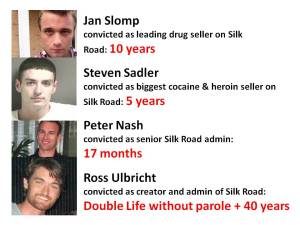
In 2015 a jury found that then 29-year-old Ross Ulbricht had created and run an anonymous digital black market for drugs called Silk Road. The case was a high profile one, and Ulbricht had come to be known by some as the face of the Dark Web. He was convicted on seven charges—including a “kingpin” charge—and Judge Katherine Forrest imposed two life sentences and 40 years without possibility of parole. Prosecutors had not even sought such a long sentence.
In a 2016 appeal, defense attorneys outlined a litany of improprieties and abuses in the investigation and trial. Perhaps most serious was that the court procluded information about two corrupt federal agents investigating Silk Road who are now both serving prison sentences for corruption.
The defense team maintains that the convictions for Ulbricht should be vacated and that a new trial should be ordered or that he receive re-sentencing before a different judge.
A new book by Nick Bilton called “American Kingpin: The Epic Hunt for the Criminal Mastermind Behind Silk Road” has received glowing reviews but presents what the Ulbricht family, his legal team, and supporters describe as a fictionalized version of the government’s narrative of the case, It is said that in many instances the author relied on claims that were not charged in trial.
Guest – Ross’s mother, Lyn Ulbricht. Lyn is working to help her son and directs those who want to learn more about her son’s case to the site Free Ross Ulbricht.
—-

Williams v. Pennsylvania: Mumia Abu-Jamal
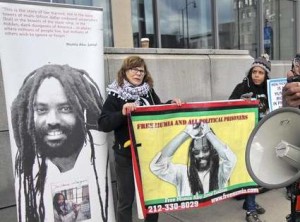
In 2016 the Supreme Court in Williams v. Pennsylvania held that a prosecutor involved in seeking the death penalty should recuse himself if asked to judge an appeal in the capital case. Two months later, Mumia Abu-Jamal filed an appeal based on that decision, calling into direct question the validity of his criminal conviction, and the denial of his appeals. Ronald Castille, the same prosecutor in the Williams case, was a senior district attorney while Mumia’s case was being tried. He was also the District Attorney of Philadelphia during Mumia’s direct appeals. While serving on the Pennsylvania Supreme Court Castille rejected a recusal motion filed by Mumia’s defense.
On April 24, Mumia’s 63rd birthday, his lawyers were back in court arguing that a Motion for Discovery should be granted to determine the particulars of Castille’s personal involvement in Mumia’s prosecution and appeals.
Judge Leon Tucker ruled in favor of Mumia’s demand for discover and for the DA’s files. The records must be turned over to Mumia’s attorneys by May 30, 2017.
Guest – Attorney Judy Ritter, Professor of Law and Director of the Criminal Defense Clinic at Widener’s Delaware campus. She argued in 2011 before the Third Circuit that the instructions given to the sentencing jurors were unconstitutional. The so-called Mills claim argument succeeded and Mumia, as our listeners know, no longer faces a sentence of death.
—-

Anatomy of Innocence: Testimonies of the Wrongfully Convicted
Capital punishment has made news headlines over the past few months, as the state of Arkansas rushed to execute six men in a span of several days. For many years, the issue of state sanctioned killings has not received much attention. News of exonerations of innocent men and women are rare.
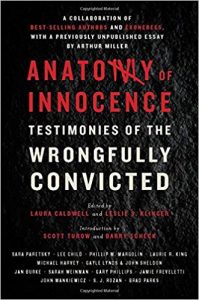
A new book, Anatomy of Innocence: Testimonies of the Wrongfully Convicted, presents the true stories of 15 exonerees who were wrongfully convicted and thrown into the complex criminal justice system before being among the few to be exonerated.
Edited by Leslie Klinger and Laura Caldwell, the book is unusual in that each exoneree is paired with a high-profile mystery and thriller writer (including Lee Child, Sara Paretsky, Laurie King, Brad Parks and others) to present their narratives. Barry Scheck of the Innocence Project and author Scott Turow also provide commentary.
The book also includes a letter from playwright Arthur Miller, believed to be the first and only unpublished piece since his death. Kirkus Reviews called the compilation “a unique collection of 15 wrongful conviction sagas bound to shake faith in the American criminal justice system.”
Guest – Attorney and author Leslie Klinger, co-editor of Anatomy of Innocence and widely considered to be one of the world’s foremost authorities on Sherlock Holmes, Dracula, H. P. Lovecraft, and 19th-century genre fiction.
——————————————