
Podcast: Play in new window | Download
The First Amendment v. Trump 2.0 Policies And Actions
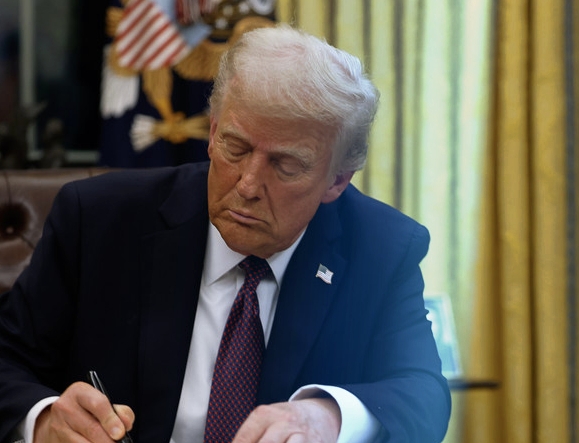
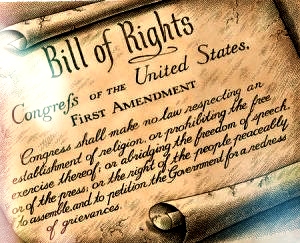
A prominent expert on the First Amendment recently wrote that “Trump 2.0 policies and actions have had broad censorious and chilling effects” that represent “the greatest governmental threat to the First Amendment since the McCarthy Era of the 1950s.”
Trump and his cohorts have violated or threatened to violate the First Amendment by:
- Indicting government officials based on their criticism of the President or expression of disfavored ideas
- Terminating billions of dollars in federal funding to universities on ideological grounds to control their core academic operations; conditioning federal research on the agreement not to promote “diversity, equity, and inclusion” or “gender ideology” and to teach only “patriotic” curricula in K-12 schools;
- Arresting and detaining international students and foreign scholars based on their viewpoints and political activism, and revoking visas of foreign nationals based on political expression;
- Retaliating against the press by excluding specific media outlets from White House events based on their viewpoints and reporting;
- Threatening to revoke broadcast licenses based on networks’ editorial decisions;
- Restricting reporters’ access to unclassified defense-related information held by the Pentagon;
- Defunding libraries and public broadcasters;
- Scrubbing historical, scientific, and other data from federal agency websites;
- Ordering the removal of “anti-American” displays in national museums;
- Directing the Attorney General to prosecute individuals who burn the U.S. flag because that form of protest is “uniquely offensive and provocative” and communicates “contempt, hostility, and violence against our Nation;”
To help us access the threat that Donald Trump poses to the First Amendment and in particular, freedom of the press, we are joined by a lawyer who has been defending the First Amendment his entire career.
Guest – David McCraw serves as the senior newsroom lawyer for The New York Times. He has been at The Times for more than two decades and currently holds the position of Senior Vice President and Deputy General Counsel. His team provides legal counsel to Times journalists on libel, leak investigations, subpoenas for sources, access to information, and the law of newsgathering. He is the author of the book “Truth in Our Times: Inside the Fight for Press Freedom in the Age of Alternative Facts,” a first-person account of the legal battles that helped shape The Times’s coverage of Donald Trump, Harvey Weinstein, national security, and the rise of political partisanship in America.
He is a visiting professor at Harvard Law School, where he annually teaches a one-semester course on press law. He is a graduate of the University of Illinois, Cornell University, and Albany Law School.
—-

Prominent Freedom of Press Cases Follow Up
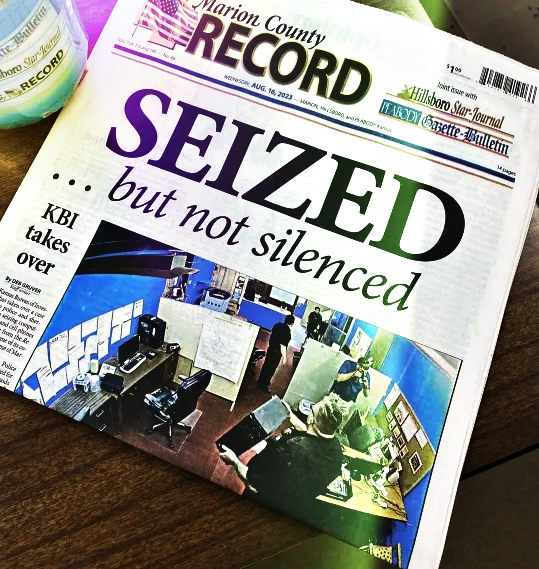
In May 2023, FBI agents raided the Florida home of independent journalist Tim Burke, seizing computers, hard drives, cellphones and notebooks. Burke had obtained unaired Fox News footage, including outtakes of Tucker Carlson interviewing Ye, the rapper formerly known as Kanye West, in which Ye made antisemitic remarks. Burke says he accessed the footage using login credentials that were publicly available. Prosecutors say he had no permission to use them. Three months later, police raided the offices of the Marion County Record, a small weekly newspaper in Kansas, along with the homes of its publisher and a city councilwoman. The paper’s 98-year-old co-owner, Joan Meyer, died the day after the raid.
Both investigations involved journalists gathering information and reporting on matters of public interest. Yet both brought extraordinary law enforcement power down on the press. Burke was charged in 2024 by the Biden Justice Department with 14 felonies. After a federal judge later dismissed seven wiretapping counts, the Trump Justice Department appealed, then dropped that appeal in September. Last month, a grand jury returned a new indictment charging Burke with 13 felony counts. He has also sued the government over secret searches of his Google and Twitter accounts. His criminal case is still moving toward trial.
In Kansas, reporter Phyllis Zorn reached a settlement in her lawsuit against the city of Marion, three years to the day after the raid. The city will pay her $850,000; the county had already paid her $600,000. The police investigation centered on Zorn’s lookup of a local businessman’s driving record on a publicly accessible state website. Police characterized it as identity theft. freedom.press/newsletters pressfreedomtracker.us
Guest – Caitlin Vogus, senior adviser for advocacy at the Freedom of the Press Foundation. She previously served at the Center for Democracy & Technology, the Reporters Committee for Freedom of the Press, and the Federal Communications Commission.

——————