Last month, in the Maher Arar case, the Federal Court of Appeals ruled a 2-1 majority refusing to hold US authorities accountable for complicity in torture abroad. As Law and Disorder listeners may remember, Maher Arar, a Canadian citizen, traveling back to Canada, was picked up at JFK airport in 2002, detained in solitary confinement for 2 weeks by the US government then deported to Syria where he was interrogated and tortured. Cases involving diplomatic assurances in North America.
Last year, a Canadian commission of inquiry cleared Arar of any links to terrorism and he was given a 10.5 million dollar settlement. Since then, the United States refused to clear his name and now this majority decision rules that his constitutional claims can not be heard in federal court for two reasons. The first reason was based on national security, the second because Mr. Arar, a dual citizen of Canada and Syria, does not have constitutional, due process rights.
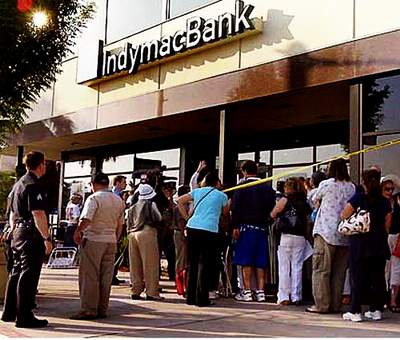
To many, the recent economic downturn could be a rough patch to a full collapse as a financial crisis hits the nation’s markets; add in that the United States is nine months into a significant acceleration in expected energy and food price increases. The distressful interaction is known as a “scissors crisis” among economists. We’ll also discuss the economic sub-genres, such as Military Keynesianism, GWOT spending, and housing markets. This, while Californians made a run on IndymacBank, the biggest bank crisis since 1984. Indymac was started by three former high level people from Countrywide.
Quote: “Even though Iraq is a bad idea, the value of the US military to this country is rising not falling.”
Max Fraad Wolff , freelance researcher, strategist, and writer in the areas of international finance and macroeconomics. Max’s work can be seen at the Huffington Post, The AsiaTimes, Prudent Bear, SeekingAlpha and many other outlets.
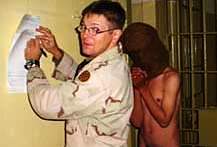
Four former Abu Ghraib detainees are suing two U.S. military contractor corporations and three individual contractors. The four were wrongly imprisoned, tortured and later released without charge. According to the complaints, the defendants abused detainees physically and mentally and then destroyed documents, videos and photographs; prevented the reporting of the torture and abuse to the International Committee of the Red Cross. They actually hid detainees and other prisoners from the Red Cross; and misled non-conspiring military and government officials about the state of affairs at the Iraq prisons.
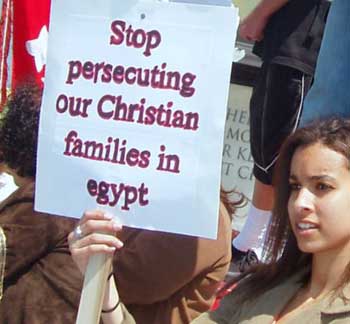
The American Civil Liberties Union and ACLU of Pennsylvania challenged the government’s efforts to deport an Egyptian torture victim of Sameh Khouzam. The government claims to be relying on unreviewable “diplomatic assurances” from Egypt that it will not torture him upon his return. Last January, in the first decision of its kind, a federal district court sided with the ACLU and ordered the government to stop the deportation of Sameh Khouzam based on such secret and unreliable promises and release him under conditions of supervision.
However, the Bush administration appealed this ruling, claiming that the executive branch has unfettered authority to deport Khouzam and to detain him indefinitely pending his legal proceedings. Khouzam, a Christian who came to the United States in 1998 fleeing religious persecution in Egypt and a charge of murder, was granted protection from deportation under the Convention Against Torture (CAT) in 2004. This after a federal appeals court found that he would likely be tortured if sent back to Egypt.
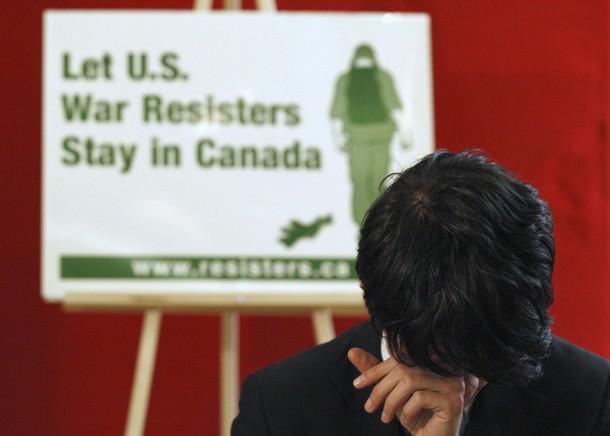
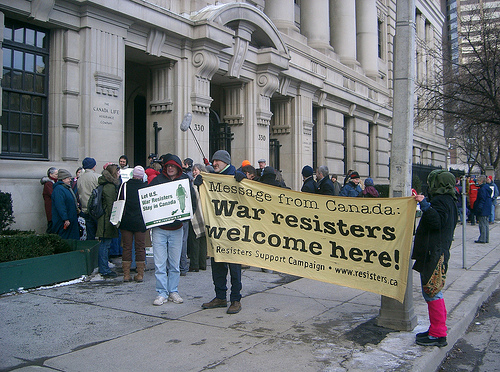
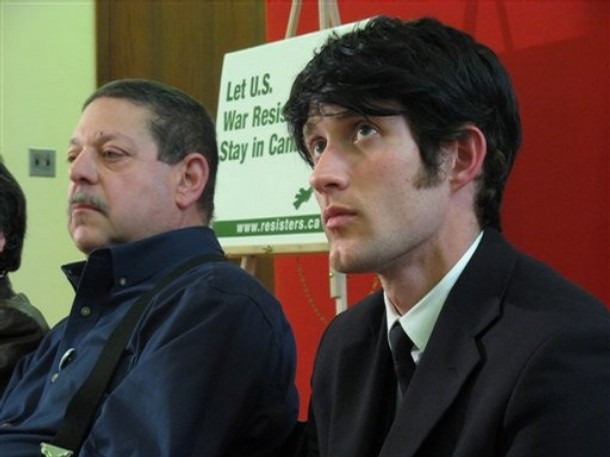
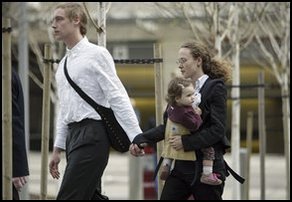
Josh Key moved to Canada during a 2 week leave from the Army. On July 4th, 2008, Joshua Key won a Federal Court appeal thus forcing the Refugee board to re-examine his asylum claim of conscientious objector and Iraq war veteran. The court ruled that Key had been forced to systematically violate the Geneva Conventions as part of his military service in Iraq and that such misconduct amounts to a legitimate refugee claim.
In another case, former National Guard soldier Corey Glass of Fairmount Indiana is facing deportation from Canada. He was recently told that his application to stay in Canada for “humanitarian and compassionate†reasons has been rejected. This, as Pentagon officials suggest he has been discharged and the U.S. Army is not seeking to persecute Glass. But Glass’ lawyer, Alyssa Manning of Parkdale Legal Community Services, says the reports are untrue. Manning says quote “He would be a felon, he’d be criminally inadmissible to Canada; he’d potentially be imprisoned as well as subjected to non-traditional punishment such as ‘hazing’ (within the military)
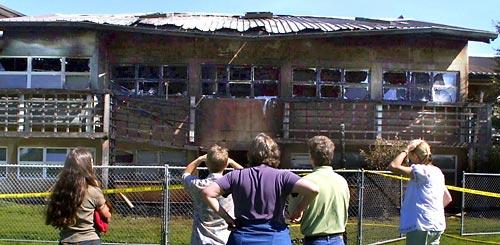
Briana Waters, 32 was sentenced to six years in federal prison and ordered to pay $6 million in restitution by U.S. District Court Judge Franklin Burgess, who also declined her lawyer’s request that Waters be released on her own recognizance pending appeal. Here on Law and Disorder we’ve discussed how (since December 2005) environmental activists in the United States have been targeted and handed unusually harsh prison sentences. It’s been called Green Scare.
Briana was accused of acting as a lookout in the conspiracy to set fire to the University of Washington’s Center for Urban Horticulture in 2001. This, despite evidence presented by the defense that she was 60 miles away at the time of the arson. Others claimed responsibility for the fire. How the Government Targets Eco-Activists. Listen to NLG event.
Federal “conspiracy law†is often used by prosecutors to take down drug dealers, the same legal approach is used to charge environmental protesters. Once the judge accepts the charge of conspiracy, here-say is admissible making conspiracy and very easy to prove in court.
Taking Back The Right To Dissent: The Case of the Bangor Six
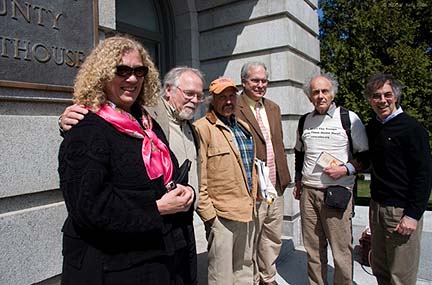
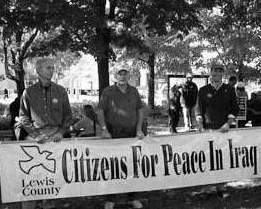
Recently, jurors in the Case of the ‘Bangor Six’ brought back a decisive verdict of ‘not guilty.’ The six veterans for peace, anti war protesters were arrested in March of last year after refusing to leave the federal building where their senator, Republican Susan Collins has her office. The six activists were among 12 that say they were protesting Bush’s proposal to increase troops in Iraq to support a military strategy known s the surge and also urged Collins to vote against continued funding for the war. Collins did not vote against funding for the war and did not meet with activists. Six of the activists were later arrested. (Collins Watch)
During this trial, the jury was allowed by the judge to decide whether the defendants believed that they were not guilty in making a conscious choice to break Maine law because they thought international law was being violated. The jurors decided unanimously that the protesters did believe they had the ‘license and privilege’ to act as they did, in rendering the ‘not guilty’ verdict.
Guest – Bar Harbor attorney Lynne Williams, also with Maine Lawyers for Democracy a group of 65 Maine lawyers, calling for the impeachment of President Bush and Vice President Cheney.
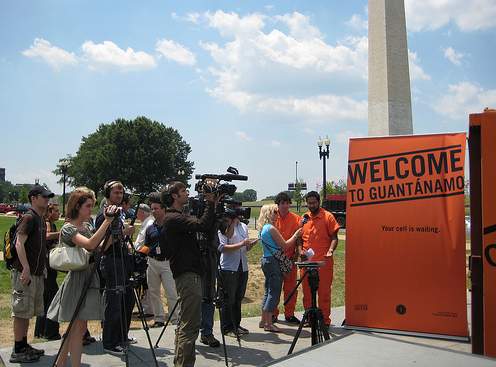
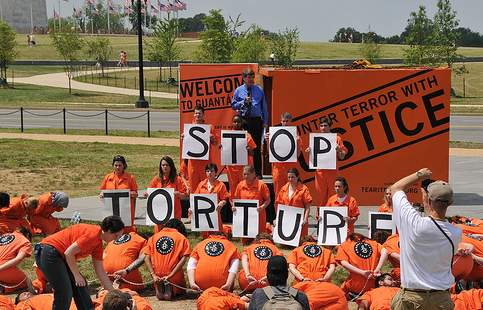
This past week, Amnesty International USA hauled a life size Guantanamo cell replica to the National mall in Washington DC. Activists and tourists gathered to experience the bleakness of being held in such confinement without hope. The cell replica visited the nation’s capital as a U.S. House Judiciary Subcommittee heard testimony on harsh interrogation techniques from Vice President Dick Cheney’s chief of staff David Addington and former U.S. Justice Department lawyer John Yoo.
We listen to voices of tourists, activists and James Yee, former US Army chaplain, who ministered to Muslim detainees held at Guantánamo Bay Naval base. Yee as listeners may know, was the subject to an intense investigation by the United States. A special thank you to Karen Miller for gathering the audio for this segment.
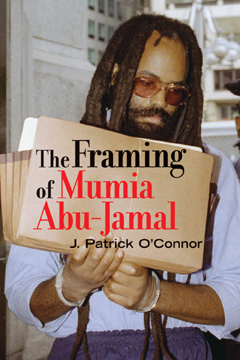
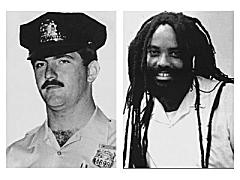
J.Patrick O’Connor delivers a powerful interview for the full program. O’Connor lays out the case based on his in-depth research that Mumia Abu Jamal was framed. O’Connor argues that the former black panther journalist did not shoot Philadelphia police officer Daniel Faulkner. The real shooter says O’Connor, was Kenneth Freeman a business partner of Mumia’s brother. Freeman, was found dead in 1985, bound and cuffed in a Philadelphia parking lot after a massive police raid on the counter-culture group MOVE.
One review writes: “In this account of the trial of controversial death row inmate Mumia Abu-Jamal, O’Connor, editor and publisher of crimemagazine.com, clearly lays out his case that Abu-Jamal should receive at least a new trial, if not complete exoneration. O’Connor asserts that Abu-Jamal was framed for the 1981 murder of police officer Daniel Faulkner because of a vendetta by Philadelphia mayor Frank Rizzo and the police due to Abu-Jamal’s defense, as a journalist, of the group MOVE.
Review excerpt by Linn Washington Jr : Carefully citing trial proceedings, O’Connor book lists odious instances of wrongdoing by police prosecutors – accomplished with judicial complicity.
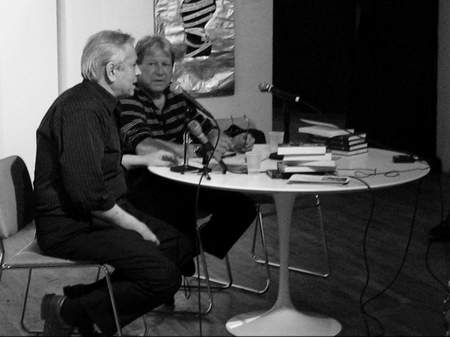
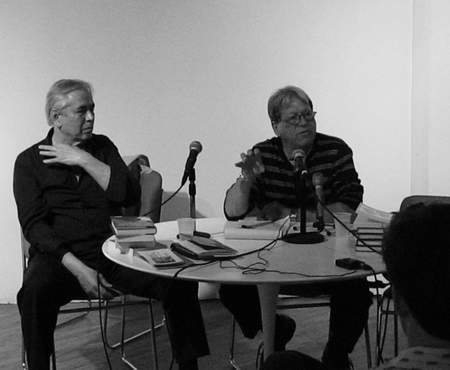
“From the beginning of this case, it was corrupt. It was a railroad job,” O’Connor said recently during a reading/book signing at a small venue on Baltimore Ave in West Philadelphia sponsored by the organization, Journalists for Abu-Jamal. “I wrote the book to show not only that Mumia did not kill Officer Faulkner but to show how and why they framed Mumia,” said O’Connor who lived in the Philadelphia area at the time of the brutal December 1981 crime at the heart of this controversial case.
Guest – J. Patrick O’Connor, editor and publisher of Crime Magazine. He has worked as a reporter for UPI, editor of Cincinnati Magazine, associate editor of TV Guide, and editor and publisher of the Kansas City New Times.
We hear excerpts from speeches at the Brecht Forum by our own Michael Smith and Citizen Soldier’s Tod Ensign. The anti-war soldier panel started with Michael Smith describing his work defending anti-war GI’s at Ft. Jackson, South Carolina and the formation of the GI Civil Liberties Defense Committee.
Anti-war GI’s were pivotal to the movement’s success. The growing protests from within the U.S. military today echo the Vietnam War soldiers experience. The panel discusses the role of anti-war GI organizing in the anti-war movements from 1917 to 1968 and to the present.
There are several significant events surrounding the US policy on torture taking place this week. Already last week, the US Senate Committee on Armed Services held hearings on the origins of aggressive interrogation techniques. Among the events this week is the fifth session of the United Nations Committee against Torture, Subcommittee on Prevention of Torture and Other Cruel, Inhuman or Degrading Treatment or Punishment in Geneva.
Amnesty International releases a report on torture and unfair trials in Tunisia’s war on terror, Amnesty International’s Guantanamo prison cell replica opens to the public in Washington, DC, through Sunday, June 29 and there is also the World Day in Support of Victims of Torture.