Civil Liberties, Guantanamo, Habeas Corpus, Human Rights, Targeting Muslims, Truth to Power
Podcast: Play in new window | Download
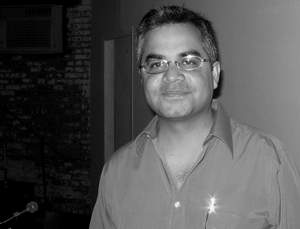
Imperialism in the American Century.
Recently recorded at the Brecht Forum, Viveck Chibbers, professor of sociology at NYU and the author of Locked in Place: State-Building and Late Industrialization in India.
His speech is titled Imperialism in the American Century. Viveck describes what “progressives can expect in the near future in terms of basic principles of justice. Viveck also references how the (PNAC) Project for the New American Century draft is shaping foreign policy.
—
- Co-hosts Heidi Boghosian and Michael Smith discuss the recent news – The military is accusing two attorneys for Guantanamo detainees of smuggling underwear to their clients. Michael and Heidi also read the two letters detailing the dispute. Read Shane Kadidal’s blog post here: Underwear Gnomes Infest Guantanamo
—

Michael Ratner’s letter published in the New York Times Oct. 10, 2007 – Torture and the Shame of a Nation. Responding to this New York Times Editorial: On Torture and American Values.To the Editor:“On Torture and American Values†lets Congress off the hook too easily regarding the torture and secret detention program. As with the Iraq war, many Republicans and Democrats were and still are willing to be misled (or claim to have been so) rather than appear to be perceived as weak on terrorism. Sadly, Congress by its actions and inactions is the handmaiden of the torture program. Despite the publicly revealed memos authorizing torture and the testimony of its widespread use, Congress, even under the Democrats, has yet to hold even one hearing regarding the responsibility of high administration officials. Perhaps had it done so, the administration would not have felt emboldened to continue the program.Instead, Congress affirmatively aided the torture program. Examples abound: removing habeas corpus from detainees and failing in its restoration (habeas is key to protecting against torture — lawyers and courts have access to detainees); granting amnesty to officials who may have violated the torture and war crimes provisions of our law; allowing a defense for future abusers if they relied upon legal advice; authorizing the president to redefine cruel, inhuman and degrading treatment; and permitting the use of evidence derived from torture and coercion.Now with the nomination of a new attorney general, Congress again has an opportunity to make its voice heard: no attorney general who does not clearly and unequivocally repudiate the new torture memos and the secret sites at which torture is carried out should even be considered for the job. Michael Ratner, President of the Center for Constitutional Rights
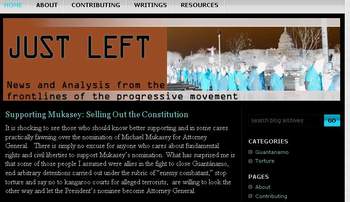
Read Michael Ratner’s Recent Blog Here
Civil Liberties, Human Rights, Targeting Muslims, Truth to Power
Podcast: Play in new window | Download
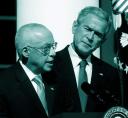
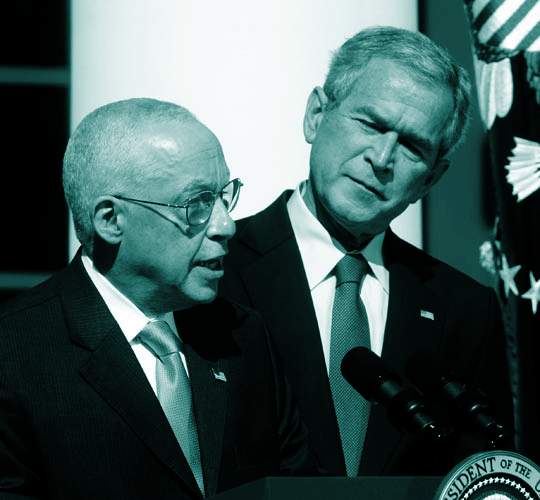
US Attorney General Nominee Judge Michael Mukasey
Are we the only ones who are ready to retch at the constant stream of praise for the president’s choice for attorney general? asks attorney Shane Kadidal in his latest Huffington Post blog Mukasey Will Suck (And He Hates Us) Shane goes on to list how US attorney general nominee Judge Michael Mukasey wrongly describes the role of the Center for Constitutional Rights defending Guantanamo detainees and other mis-characterizations.

Guest – Shane Kadidal, staff attorney at the Center for Constitutional Rights and has been at CCR since 2001. He works on the Center’s major case on the illegal NSA domestic spying program, CCR v. Bush, as well as the Center’s Patriot Act case, and testified before Congress this past spring on the material witness statute. He also works on Turkmen v. Ashcroft, representing people swept up on immigration charges after 9/11 and unlawfully detained and abused; with the Vulcan Society of Black Firefighters challenging discriminatory hiring policies of the New York City Fire Department; and with the Sikh Coalition against religious discrimination by New York’s Transit Authority, among other cases.
Guest – attorney Jesse Berman. Berman was an attorney for Osama Awadallah, a US citizen, Palestinian and Muslim. Awadallah was a student at a San Diego college when he was arrested as a material witness shortly after 9/11. Berman describes how federal Judge Mukasey responded to an attorney claiming Awadallah had been beaten while in jail. Mukasey says “he looks fine to me.”
—–

Center For Constitutional Rights Caterpillar Case Dismissed
Recently the Ninth Circuit Court of Appeals dismissed the Center for Constitutional Rights’ case charging Caterpillar, Inc with aiding and abetting war crimes. Caterpillar is the company that provided bulldozers to Israel knowing that would be used to demolish homes and endanger civilians in the Occupied Palestinian Territory.
The case, Corrie, et al. v. Caterpillar Inc. was brought by the parents of Rachel Corrie and four Palestinian families whose family members were killed or injured when Caterpillar bulldozers demolished their homes. Corrie, a 23-year-old American peace activist and student at Evergreen State College in Olympia, Washington, was killed March 2003, in the Gaza Strip by a Caterpillar D9 bulldozer while protecting a home from illegal demolition. [Click here to download the Decision] from a three-judge panel of the Court of Appeals found that it did not have jurisdiction to decide the case because Caterpillar’s bulldozers were ultimately paid for with money from the United States. For years, Caterpillar has had notice that the IDF was using its D9 bulldozers for human rights violations; despite this, the company has continued to provide them to the Israeli government.
Guest – Maria LaHood, senior attorney at the Center for Constitutional Rights.
—
The Sugar Law Center for Economic and Social Justice
Today on Law and Disorder we talk with the Executive Director and Legal Director of the Sugar Law Center for Economic and Social Justice. They’re a national, non-profit organization, that provides legal support and advocacy for working people and their communities.

Basically holding corporations and goverments accountable to their legal and moral responsibilities regarding illegal and abusive working conditions. Recently the Sugar Law Center has handled cases involving Wal-Mart and Wackenhut, the private prison corporation.

Guest – Tova Perlmutter, Executive Director of the Sugar Law Center.
Civil Liberties, Death Penalty, Guantanamo, Habeas Corpus, Human Rights, Iraq War, Torture, Truth to Power
Podcast: Play in new window | Download
Law and Disorder Update
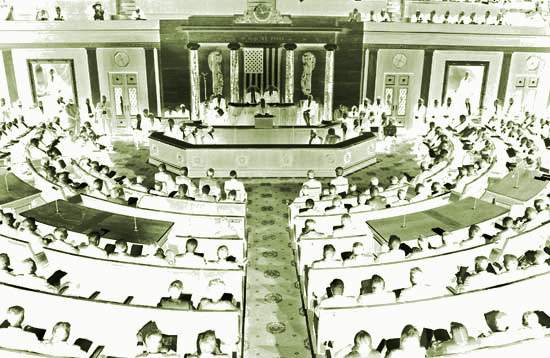
Co-hosts Michael Ratner and Heidi Boghosian discuss recent key votes in Congress on the Iraq war, warrant-less electronic surveillance and lethal injection.

Enemy Combatant Doctrine
In a recent essay A System of Wholesale Denial of Rights published in the Monthly Review, Research Professor of Law, Michael Tigar describes how the term enemy combatant was created through the rulings in the anti-terrorist case Padilla v. Rumsfeld and the implications for civil liberties and human rights in the United States. Implications that support a system whereby the president can lock up anyone he chooses and never have to explain why to a court.
The Bush Administration has taken the language from those in favor of slavery and oppression of Native Americans. Instead of prisoner, instead defendant, instead of person they create a category of enemy combatant. (Non-People – Invoking the characterization of someone not entitled to claim justice.) Tigar says this is a tactic of repressive governments. Tigar says, the term enemy combatant doesn’t exist in the Constitution or within International Law, therefore enemy combatants have no rights, are denied access to courts and fall under military regime.
Michael Tigar in his article points out the historic parallels such as the Dred Scott case, Japanese internment and the Cherokee Nation. Frederick Douglas and several anti-slavery people thought that it would be possible to make an argument that slavery so violated the norms of the constitution that it had to be illegal everywhere. The Cherokee Nation, says Tigar was classified as “subject people.” Subject People is not found in Article 3 in the Constitution. Therefore, “subject people” are not entitled to sue in federal courts.

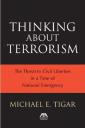
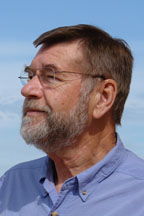
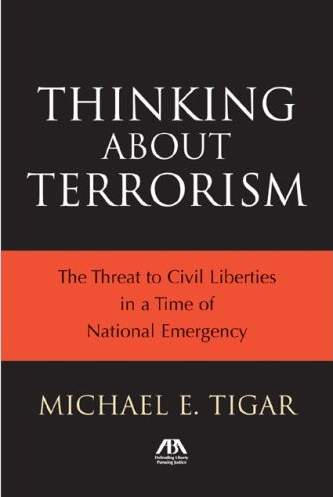
Michael Tigar is a Research Professor of Law at Washington College of Law at American University in Washington, D.C., where he teaches Federal Courts, International Human Rights, and Criminal Law. Tigar argued seven cases in front of the US Supreme court, he’s represented many controversial clients since then such as Angela Davis, Terry Nichols, Lynne Stewart and members of the Chicago Seven. He is the author of the recent book, Thinking About Terrorism: The Threat To Civil Liberties in a Time Of National Emergency.
—
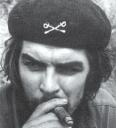
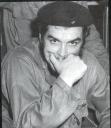
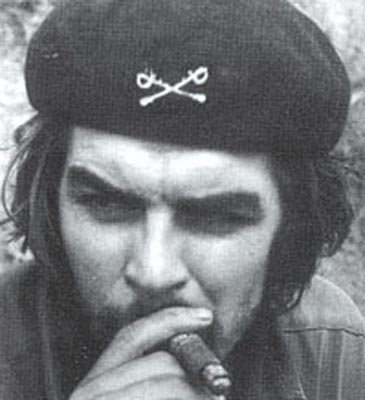
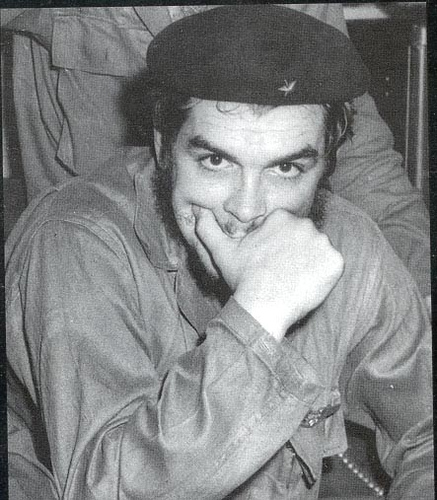
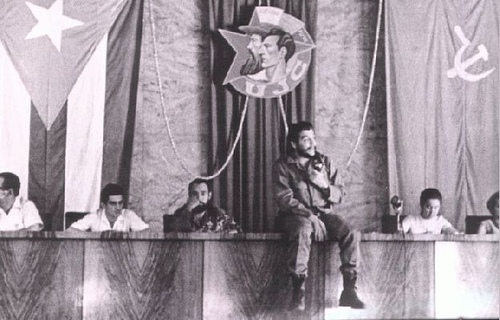
40th Anniversary of Ernesto Guevara de la Serna Murder
We mark the 40th anniversary of Che Guevara’s murder. He was captured in Bolivia during a military operation supported by the CIA and the U.S. Army Special Forces. Guevara was summarily executed by the Bolivian Army in the town of La Higuera near Vallegrande on October 9, 1967.
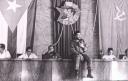
Guest – author and professor John Tito Gerassi, about Che Guevara’s influence. Gerassi describes how he was poisoned by the CIA while dining with Fidel Castro and about his guerilla training with Che.
Gerassi currently teaches at Queens College of the City University of New York. Gerassi, born in France in 1931, is the author many books including the Great Fear in Latin America and The Premature Antifascists, the only authorized biography of Jean Paul Sarte.
Che photos by redredpei – flickr
Civil Liberties, Human Rights, Truth to Power
Podcast: Play in new window | Download
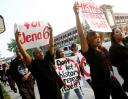

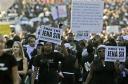
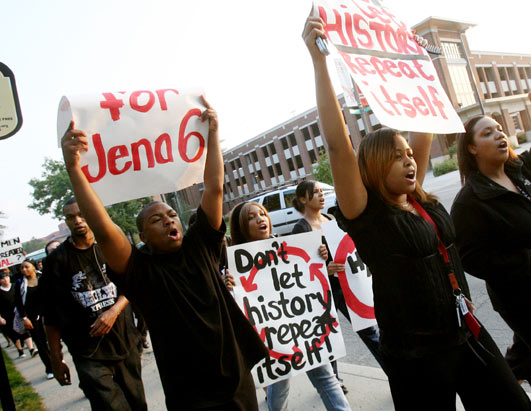
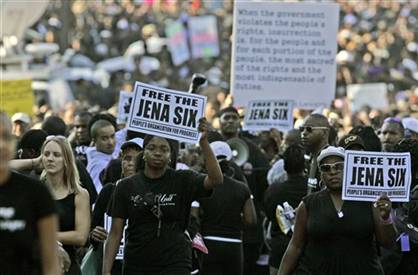
Jena 6 Update
Today on Law and Disorder co-host Heidi Boghosian debriefs Eugene Puryear, Howard University student and key national political organizer for the Jena 6. They discuss the denying of a request to release Mychal Bell whose arrest in the beating of a white classmate sparked last week’s civil rights protest in Louisiana.
Defense lawyers also have complained that Judge J.P. Mauffray Jr. set a high bail for Bell — $90,000 — prior to his conviction in the Barker beating. Mauffray had cited Bell’s criminal record, which included juvenile arrests for battery and damage to property, in setting the bail.
Nearly 60 thousand protestors demonstrated in Jena, Louisiana, a town with the population of 3000. It was called the largest civil rights rallies in the South since the 1960’s. The protest was scheduled around the sentencing of Mychal Bell who was convicted by an all white jury.

The incidents began when three black high school students decided to sit under a shade tree in the school yard where usually white students sat. The next day three nooses were found hanging from the tree. Though the culprits who hung the nooses were discovered and recommended for expulsion by the principal, the school board chose to reduce their expulsions to a three-day, in-school suspension. After the entire black student body protested peacefully by sitting under the tree, Jena District Attorney Reed Walters informed the school in an assembly that he could take away the lives of the black students with a stroke of his pen.
In the following months several incidents occurred, including threats and acts of violence against black students to which DA Walters did not respond. However, after a white student was beaten up by black students in December, Walters charged six black students with second-degree attempted murder and conspiracy to commit murder. The white student was treated at the hospital, released that same day, and was seen at a social function that very night. Mychal Bell, originally charged with attempted murder for allegedly beating up a white student, was later charged with and convicted of aggravated second-degree battery and conspiracy to commit aggravated battery. The 3rd Circuit Court of Appeals recently vacated Bell’s conviction, stating that Bell should never have been tried in an adult court because the alleged offense occurred when Bell was a minor. The Jena prosecutor has reportedly vowed to appeal the 3rd Circuit’s ruling.
The other five teens, Robert Bailey, Theo Shaw, Carwin Jones, Bryant Purvis and an unidentified juvenile, face charges ranging from aggravated second-degree battery to attempted second-degree murder. Most of the boys spent months in jail before being able to raise tens of thousands of dollars for bail. Bell was never able to raise the money to make bail, and remains in jail even after the overturning of his conviction. Related – Racism in Louisiana – BBC / FBI Probes Anti-Jena 6 Web Page
Guest – Eugene Puryear, Howard University student and key national political organizer for the Jena 6
Call for National Action Tuesday October 2, at 5pm/Justice Dept in Washington DC.
—

Cuban Five Oral Arguments Update
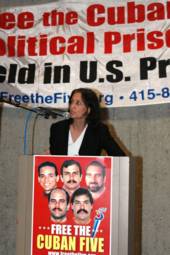
A three-judge panel at the Eleventh Circuit Court of Appeals in Atlanta heard oral arguments earlier this month relating to the case of the Cuban Five. This is the third time in two years the Eleventh Circuit has heard appeals in the case of Gerardo Hernandez, Ramon Labanino, Antonio Guerrero, Fernando Gonzalez, and Rene Gonzalez, who are serving a collective four life sentences and 75 years in prison.
Law and Disorder co-host Heidi Boghosian spoke at the rally and was at the hearing. “The court was filled with international observers jammed the court to observe both US government and defense attorneys deliver their arguments. Observers came from many countries including Belgium, Brazil, Canada, Ecuador, England, Germany, Italy, Spain, and Ukraine.”
We an excerpt from an interview on KPFK’s The Lawyer’s Guild Radio Show hosted by Jim Lafferty. In this interview Jim Lafferty talks with Len Weinglass, civil rights lawyer and defense attorney for Antonio Guerrero.
—
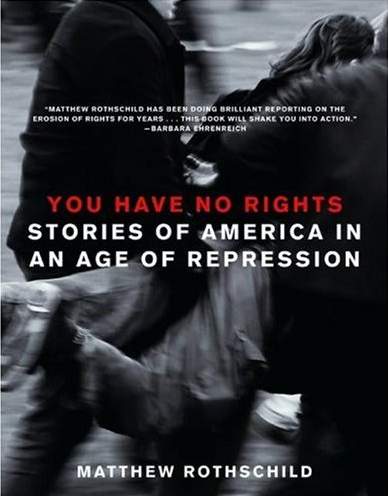

You Have No Rights; Stories of America in an Age of Repression
In his recently published book, You Have No Rights; Stories of America in an Age of Repression, author Matthew Rothschild, cites dozens of personal stories that outline the big picture of repression in the United States. Hired goon squads of young republicans shout down protesters with chants of USA – USA – USA!! Remember the lawyer who was arrested at a local mall for wearing a “Give Peace A Chance†t-shirt? As Rothschild points out in his new book, the first, fourth, fifth, sixth and eighth amendments are under siege and very little is being done to protect them.
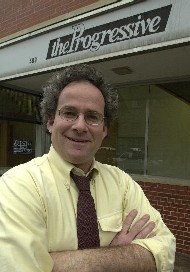
Guest – Matthew Rothschild author of You Have No Rights and editor of the Progressive Magazine since 1993. Previously the editor of Multinational Monitor, a magazine founded by Ralph Nader, he is the host of Progressive Radio.
—–
Michael Ratner’s Update on the nomination of Michael Mukasey for Attorney General.
It is shocking to see those who should know better supporting and in some cases practically fawning over the nomination of Michael Mukasey for Attorney General. There is simply no excuse for anyone who cares about fundamental rights and civil liberties to support Mukasey’s nomination. Read More
Censorship, Targeting Muslims, Truth to Power
Podcast: Play in new window | Download


Lawyer’s Committee on Nuclear Policy
After the 2001 attacks on the United States, attention has been drawn to marginalize nuclear weapons and increase global cooperation on the control and non-proliferation of nuclear weapons and nuclear material. As of 2006, there are estimated to be at least 25,000 nuclear weapons held by at least eight countries, 96 percent of them in the possession of the United States and Russia
Rather than intensifying such efforts, the U.S. has adopted a policy of elevating the role of nuclear weapons in its overall military strategy. John Burroughs, Executive Director of the Lawyers’ Committee on Nuclear Policy, claims that this will reduce U.S. and global security, not increase it.
Guest – Dr. John Burroughs, adjunct professor of law at Rutgers Law School and serves as Executive Director for the Lawyer’s Committee on Nuclear Policy. The LCNP was instrumental in bringing the landmark case before the International Court of Justice in 1995 that resulted in the advisory opinion of 1996, which stated that the threat or use of nuclear weapons is illegal.

He is co-editor of Rule of Power or Rule of Law? An Assessment of U.S. Policies and Actions Regarding Security-Related Treaties, Apex Press, 2003. He has published articles in the Bulletin of the Atomic Scientists and the World Policy Journal, most recently co-authoring “Arms Control Abandoned: The Case of Biological Weapons.”
—

University of Michigan Press Halts Distribution of Joel Kovel’s book: Overcoming Zionism, Then Later Resumes Distribution.
Co-hosts Michael Smith and Michael Ratner talk with Joel Kovel about the efforts of the University of Michigan Press to halt and then resume distribution of his book. Read article here: Michigan Resumes Distribution of Anti-Israel Book.
Excerpt from: A Book On Hold
Late last month, the blog, Dissident Veteran for Peace — printed what it says is an e-mail from Pochoda, the press director, to Kovel, explaining why distribution was halted. Pochoda declined to comment on the e-mail, but Kovel said it was accurate. The e-mail reads: “Because it is a distributed title for Pluto Press, no one at UMP had read Overcoming Zionism prior to the Stand/With/Us diatribe. I and others read it after that assault, and had fully expected to gear up for, at least, a free speech defense. Though I had no trouble with the one-state solution your book proposes nor with a Zionist critique, per se … I (and faculty members I asked to read the book, as well) were apalled [sic] by your reckless, viscious [sic], and unmodulated attack on Zionism and all Zionists.”
Related reading – Campus Watch
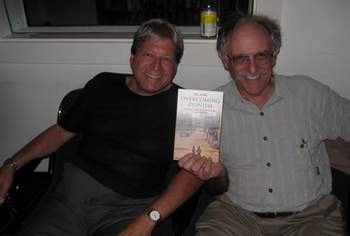
Excerpt from Michael Smith’s review of Overcoming Zionism.
How did Kovel, a Jew from Brooklyn, the oldest son of Ukrainian immigrants who did well – moving with Joel to “the purgatory of Baldwin, Long Island†– come to this radical critique and equally radical solution? Joel graduated from Yale and became a successful psychiatrist. He taught at medical school before switching careers and taking a social science professorship at Bard, where for a time he held the Alger Hiss chair. He is still there, the only Marxist on the faculty. This book is not going to further his career.
“What kind of Jew am I?†he asks, and answers “a very bad one.†More accurately, he defines himself as what Isaac Deutscher called “a non-Jewish Jew.†Not that he is not spiritual; he writes of reaching for the infinite. But he is not religious. Being part of a sect is too narrowing and confining. He identifies with the Jewish heretics who transcended Jewry, but who are nonetheless part of the Jewish tradition – he lists Spinoza, Marx, Freud, Proust, Einstein, Kafka, Wittgenstein, and Luxemburg – and for whom “the true glory†of being Jewish is to live “on the margin and across boundaries.â€