Civil Liberties, RFID, Surveillance, Truth to Power
Podcast: Play in new window | Download

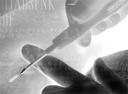

Implanting RFID chips into the flesh of 200 Alzheimer’s Patients
We will be bringing you updates here on Law and Disorder on the intrusiveness of RFID technology. RFID stands for Radio Frequency Identification. Some are passive and can be read with scanners up to 3 feet or more. Others broadcast a specific signal. In the past we’ve discussed how big companies plan to embed the so called Spychip into clothes, credit cards, shoes and human flesh, all in the name of convenience, safety and commerce. The breach of civil liberties is staggering. Now, however, the move to inject and track human beings with RFID chips is becoming a reality.
It sounds like a scene from Steven Spielberg’s futuristic film Minority Report, but a plan is under way right now to inject chips into 200 elderly Alzheimer’s patients in Florida. The producers of the chip say implantation should always be voluntary, but many question the ethics of conducting research on medically impaired.

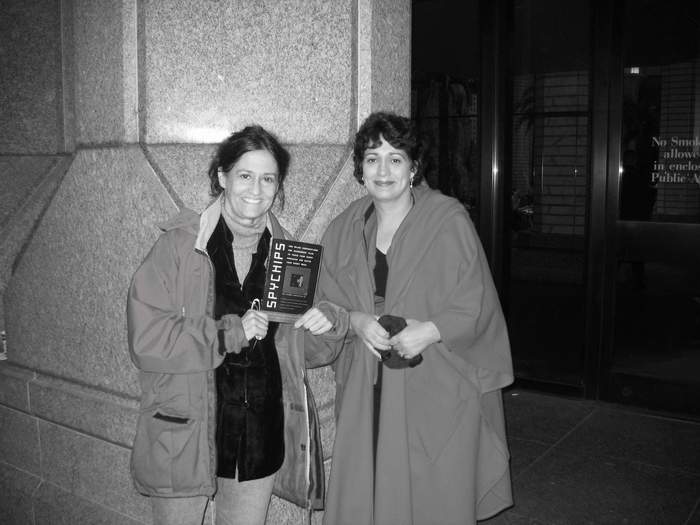
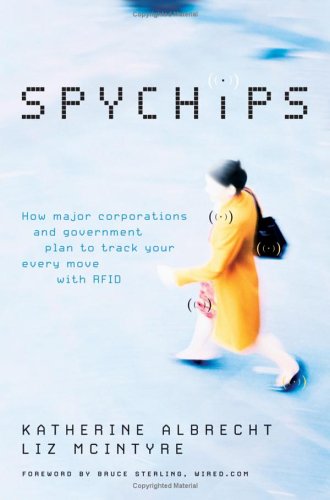
Guest – Liz McIntyre, co-author of the book Spychips: How Major Corporations and Government Plan to Track your Every Move with RFID. She is an expert on this new technology that has literally hundreds of patent applications pending approval for a wide range of uses. Listeners – Take Action!
——————————

John Ehrenberg : Left Forum 2007 – Bush and Company’s War on Civil Liberties and What it Means For Our Future
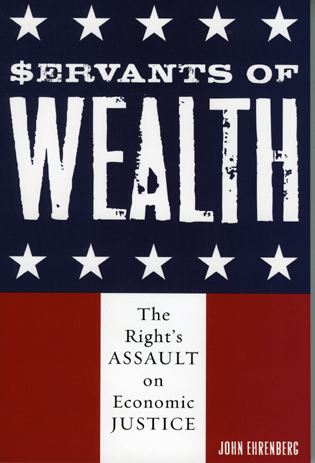
We listen to a speech by political scientist John Ehrenberg. He spoke at the Left Forum this year on a panel titled, Bush and Company’s War on Civil Liberties and What it Means For Our Future. John Ehrenberg is the author of the recent book “Servants of Wealth: The Right’s Assault on Economic Justice.â€

This is his third book where critically analyzes the rise of an ideologically coherent “right.” He dissects their themes of military weakness, moral decay, racial anxiety, and hostility to social welfare to reveal their central organizing objective of protecting wealth and assaulting equality.
Civil Liberties, Prison Industry, Truth to Power
Podcast: Play in new window | Download

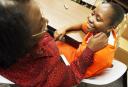
The Shaquanda Cotton Story
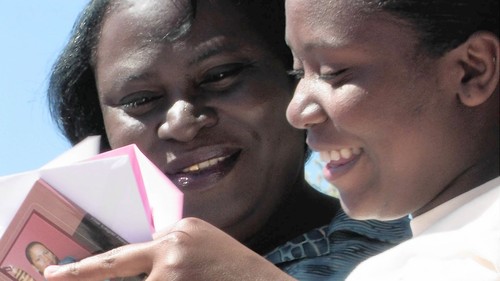
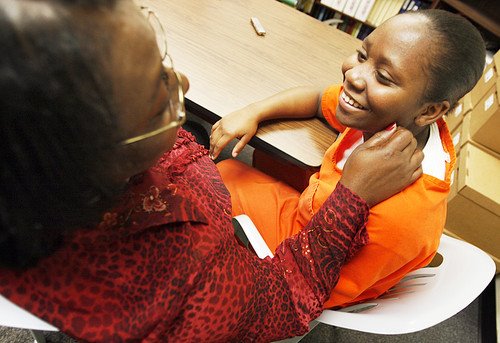
Last year in Paris, Texas a 14-year-old black freshman shoved a hall monitor at Paris High School in a dispute over entering the building before the school day had officially begun. Shaquanda Cotton was sentenced to 7 years in prison. She had no prior arrest record, and the hall monitor was not seriously injured. Just three months earlier, another Texas teenager of the same age was sentenced to probation for burning down her family’s house. She was white.
Joining us on Law and Disorder to discuss this case and the issue of juvenile justice in Texas on Law and Disorder is Will Harrell. Will is a former NVP and Director of the National Police Accountability Project of the National Lawyers Guild. He’s currently the Executive Director of the Texas ACLU and co-chair of the Texas Coalition Advocating Justice for Juveniles. He’s a primary advocate advancing an omnibus bill in the Texas legislature to reform the Texas Youth Commission. He was also appointed to a panel which is currently reviewing cases where a kid’s length of stay was extended in TYC and making recommendations regarding release. He successfully advocated for Shaquanda Cotton’s release.
Guest – Will Harrell, Executive Director of the Texas ACLU – Update : Will Harrell was recently named Ombudsman for the Texas Youth Commission.

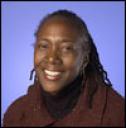
Left Forum 2007: Deborah Small
The panel is titled, Prisons, Prisoners and Political Prisoners and chaired by our own Michael Smith. Deborah Small is the founder of Break the Chains. An organization that seeks to build a national movement within communities of color against punitive drug policies.
—-

Brecht Forum: Joel Kovel, author of Overcoming Zionism
We go now to hear an excerpt from a speech given by author Joel Kovel. He spoke at the Brecht Forum recently about the release of his new book Overcoming Zionism: Creating a Single Democratic State in Israel/Palestine, published by Pluto Press.
Civil Liberties, Climate Change, Supreme Court, Truth to Power
Podcast: Play in new window | Download


Heidi Boghosian Returns From Cuba
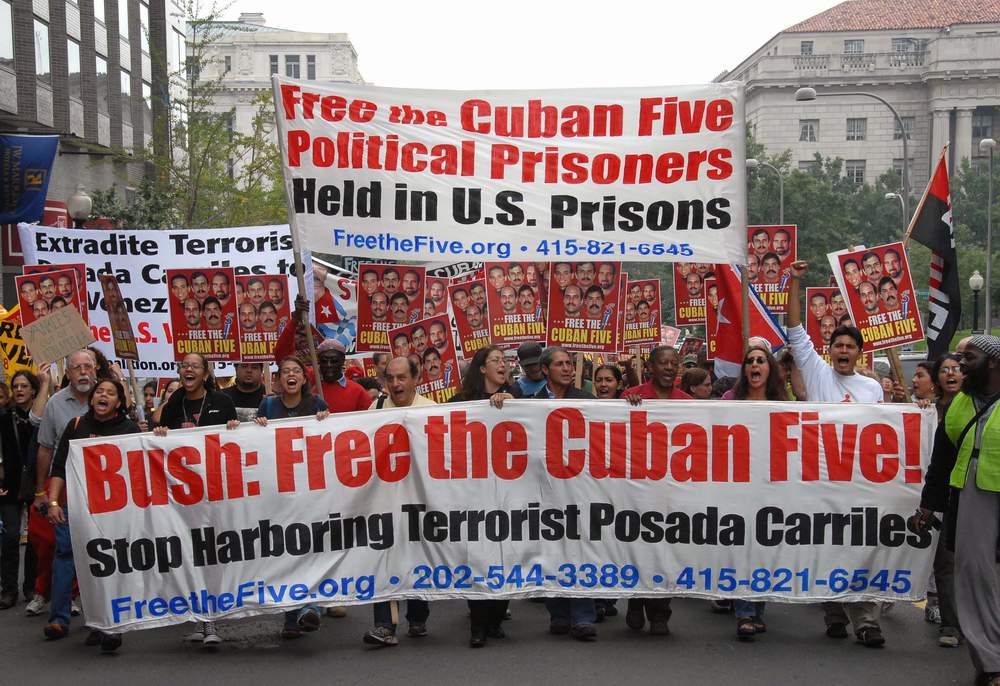
Co-host Michael Smith talks with our own Heidi Boghosian about her recent trip to Cuba and involvement with the defense of the Cuban Five. Heidi will be writing about her meetings with those in Cuba also working on the defense and support of the Cuban Five. An effort to counter the media blackout on this important story. Michael and Heidi also mention the recent news about the release of alleged terrorist Posada Carriles.
Cuban Five background: Five courageous men who uncovered information about plans by anti-Cuban terrorists to commit acts of violence against that island nation. After the Cuban government turned over voluminous documentation of such plans, the five were indicted and tried in Miami on unfounded charges of conspiracy to commit espionage all without one page of evidence to corroborate such charges. The Cuban Five have been imprisoned for 8 years in maximum security facilities spread out across the United States. They’re in such remote locations that even visits from their attorneys are difficult.
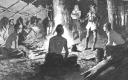

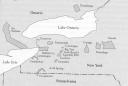
The Iroquois Confederacy
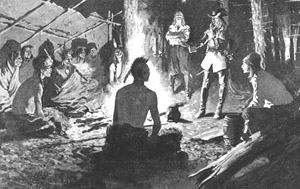
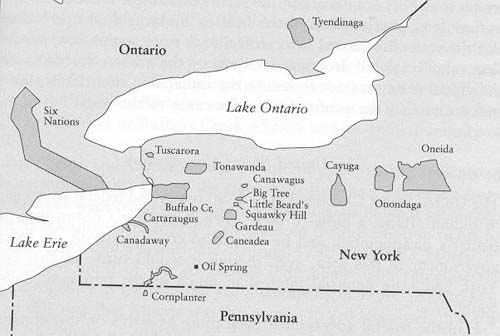
In the National Lawyers Guild quarterly magazine, Guild member Cynthia Feathers and her sister Susan, put together a collaborative work describing how the system of the Great Law within the Iroquois Confederacy is a blueprint of the current two houses of US government. The Feathers sisters describe that between 1000 and 1450, the Cayuga, Mohawk, Oneida, Onondaga, and Seneca Nations came together to become the Iroquois Confederacy, and in the early 18th century they were joined by the Tuscaroras.
If the two houses agreed, the Onondaga would implement the unanimous decision, unless they disagreed with the decision and referred the matter back to the Council. Sound familiar? By 1988, the 100th U.S. Congress passed a concurrent resolution acknowledging the contribution of the Six Nations of the Iroquois Confederacy to the development of the U.S. government.
Guest – Robert Odawi Porter, Professor of Law at Syracuse University and director of the Center for Indigenous Law, Governance & Citizenship.
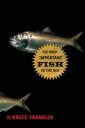

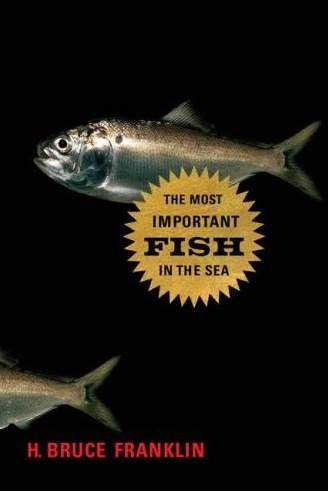
The Most Important Fish in the Sea: Menhaden in America.
Here on Law and Disorder we have focused a lot of attention to civil liberties and human rights. Today we’re going to look at pending ecological catastrophe from over-fishing. We have with us author and professor Bruce Franklin, author of many books including The Most Important Fish in the Sea: Menhaden in America. In this Island Press publication, Franklin details how critical this fish is to the survival marine ecosystems.
The Menhaden, a tiny silvery fish is the basic link in the web of food chains for many other fish, mammals and seabirds. The Menhaden also filter the waters of the Atlantic and Gulf coasts, playing an essential dual role in marine ecology perhaps unmatched anywhere on the planet. As their numbers have plummeted from overfishing, their disappearance has caused toxic algae blooms and dead zones that have begun to choke our bays and seas.
Guest – Author H.Bruce Franklin tells us about how the Omega Protein Company is over-fishing this important fish.
———————————————–
Uncategorized
Sunday April 1st: I am delighted to be back home in England, with my
family. After over four years in Guantánamo Bay, my nightmare is finally at
an end.
As happy as I am to be home though, leaving my best friend Jamil El-Banna
behind in Guantánamo Bay makes my freedom bittersweet. Jamil was arrested
with me in the Gambia on exactly the same unfounded allegations, yet he is
still a prisoner. He is the father of five young children, the eldest of
whom is ten. He has never seen his youngest daughter who is nearly five
years old. He too should be released and reunited with his family.
I also feel great sorrow for the other nine British residents who remain
prisoners in Guantánamo Bay. Some are now on hunger strike protesting
against their extended solitary confinement. The extreme isolation they are
going through is one of the most profoundly difficult things to endure. I
know that all too well.
The hopelessness you feel in Guantánamo can hardly be described. You are
asked the same questions hundreds of times. Allegations are made against
you that are laughably untrue, but you have no chance to prove them wrong.
There is no trial, no fair legal process. I was alleged to have
participated in terrorist training in Bosnia and Afghanistan. I’ve never
been to Bosnia and the only time I visited Afghanistan was thanks to the
hospitality of the CIA in an underground prison – the Dark Prison – outside
Kabul.
But now, finally, I am back home.
I want to thank everyone who campaigned tirelessly for both me and Jamil
during this long saga of misery, suffering and injustice, a saga in which
Jamil still finds himself enmeshed. My overwhelming feelings of gratitude
and thanks extend to an extremely large number of people. I would love to
mention them all by name, but that would make this statement among the
longest on the record. However, there are individuals whose names are
imprinted in my mind and heart whom I cannot but mention today.
I would like to start with thanking my family, who have suffered greatly
with me throughout. The late Mark Jennings, a person whom I wished very
much to meet and thank in person but it was not to be, and his wife Celia
to whom I extend my hand in friendship for a lifetime. My British lawyer
Gareth Peirce whom I consider to be the best in her field, together with
Irene Nembhard and all those at Birnberg Peirce who were on this case
helping us from day one. My American lawyer Brent Mickum who got on this
case very early on, despite the overwhelming difficulties, restrictions and
complexities imposed by the American regime. Clive Stafford Smith and
Zachary Katznelson whose visits to Guantánamo were a lifeline for me and
meant so much, and of course all those with them at Reprieve. My MP Edward
Davey, who took on what seemed to be an impossible mission, facing high
walls of bureaucracy and doors that refused to be opened. It was a task
very few people would have volunteered to take on. Sarah Teather, my best
friend Jamil’s MP, who is continuing to push for Jamil’s release and his
long-overdue reunion with his wife and children. Victoria Brittain, a name
I will always remember and to whom both Jamil and I feel extremely
indebted.
I would like to thank Amnesty International and all those there whose good
work through out the world is a blooming flower of hope. I sincerely
believe that without Amnesty’s immediate intervention in our case during
those extremely difficult first days after our arrest in The Gambia, we
probably would have been goners. I have to also thank all the other
humanitarian groups who have stood up against the injustices in Guantánamo
Bay and other places, who have kept the pressure on the U.S. government,
and helped as much as possible under these difficult circumstances. All the
good people in this country and elsewhere who have supported us in various
ways, including the many many who have written letters to both me and Jamil
in support and solidarity. Among these, I should mention especially the
young boys and girls whose words were most heart-warming – and whose
hand-writing was much nicer and more legible than mine! My friends in the
UK of all backgrounds who have tolerated me and my many shortcomings for
years, starting from a long time before Guantánamo Bay, and whose memories
I had on replay throughout my imprisonment. My friends at Guantánamo Bay
who were my family, and meant everything to me, in that strange and wearied
land.
I couldn’t but feel happiness, though together with a great deal of
embarrassment, when I read my name in debate transcripts and speeches in
Parliament. I thank the MPs for their interest and concern in what took
place and continues to take place in Guantánamo Bay. Staying on the
political side but a bit further away from home, I would like to thank the
European Parliament for keeping things a bit more sane than would have
been.
I want to thank the officials at the British Embassy in Washington, D.C.,
who worked extremely hard to secure my release, together with all the
extremely nice and welcoming guys who brought me back home aboard the
really lavish flight (no expense spared). You made me feel comfortable and
welcomed. I thank you for that.
Finally I would like to express my gratitude to the media. This experience
made me understand better your role in making the wheel of life turn.
Please don’t make me bite my tongue!
I ask that you please allow me some time with my family to come to terms
with the horrific experience I have had. But, I hope everyone who believes
in justice and the rule of law will join with me to work for the release of
Jamil and the other British residents. They have been unjustly imprisoned
for over 4 years without charge or trial. They too should come home.
Thank you.
Civil Liberties, Guantanamo, Military Tribunal, Supreme Court, Targeting Muslims, Torture, Truth to Power
Podcast: Play in new window | Download


Why Did Pulitzer Ignore Juan Gonzalez’s Reporting on Air Quality at Ground Zero?
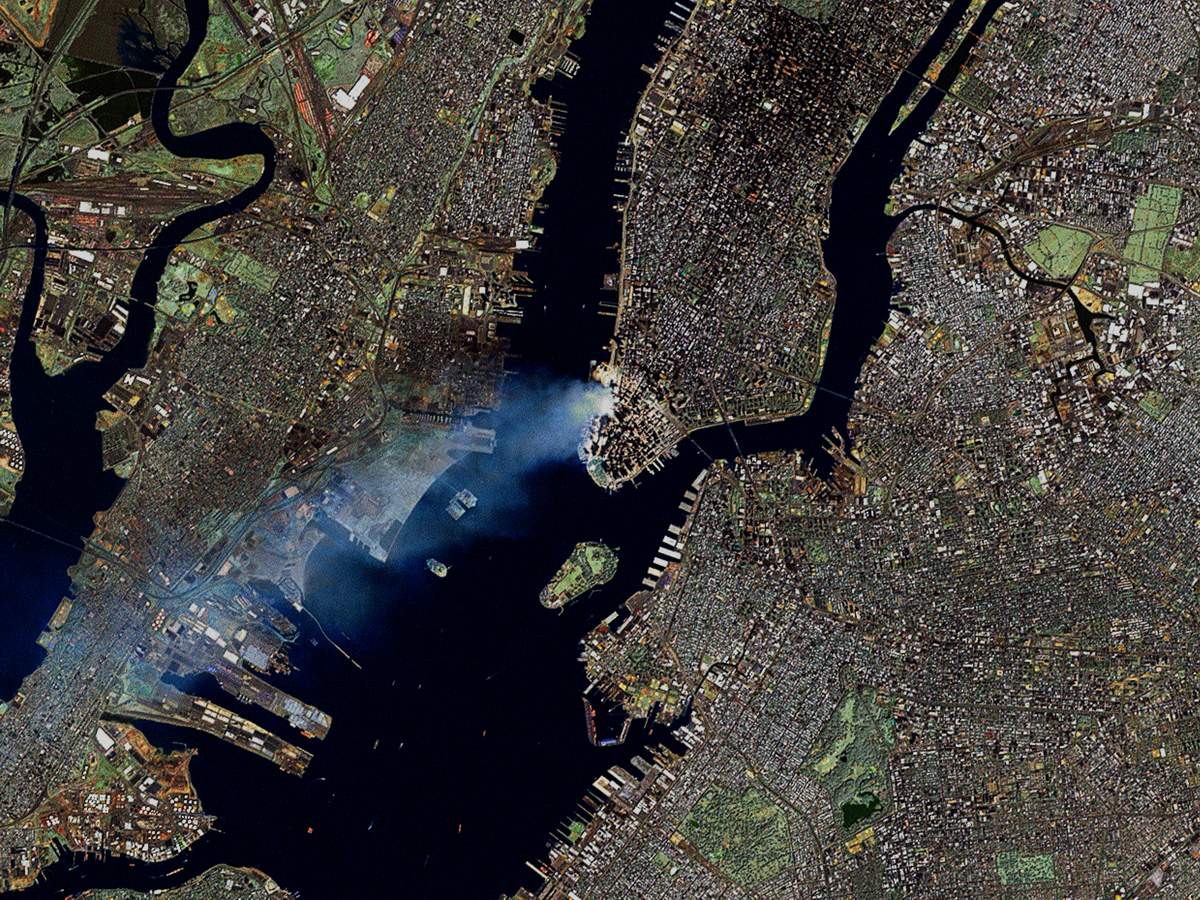
Co-hosts Michael Ratner and Michael Smith commend the valuable investigative journalism by columnist and Democracy Now cohost, Juan Gonzalez. Gonzalez had written extensively about the air quality at Ground Zero after September 11th. Read more here. Here is an archive of Juan Gonzalez’s columns.
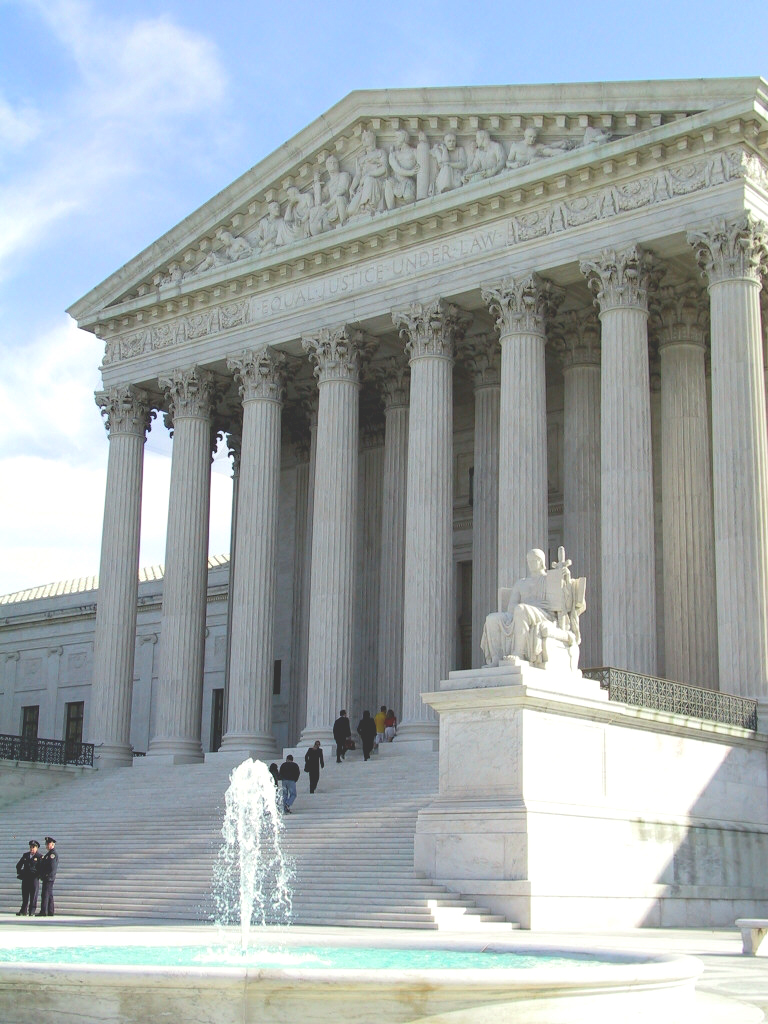
Co-hosts also discuss Supreme Court partial birth abortion ruling (PDF) and Michael Ratner‘s trip to Paris and the follow up on the case brought against former US Secretary of Defense Donald Rumsfeld in Germany.
—-

Drug Provision of the Higher Education Act
A coalition of groups including criminal justice, drug treatment, health organizations are seeking to repeal the Drug Provision of the Higher Education Act. It’s a 1998 law that delays or denies federal financial aid to people convicted of state or federal drug offenses. Since the law took effect in 2000, 200 thousand students have been denied financial aid. According to the Department of Education, that’s one in every 400 students rejected who apply for federal aid.
As a result, these young students, having already been punished for their offenses are now dropping out of school or reducing courses. Today, there are more than 300 organizations working to overturn this law.
Guest – David Borden, Executive Director of the Drug Reform Coordination Network. David’s been very active lately in lobbying to repeal the Drug Provision of the Higher Education Act (also known as the “Aid Elimination Penalty)
—-
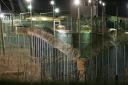

Amnesty Report on Guantanamo Bay Prison Conditions
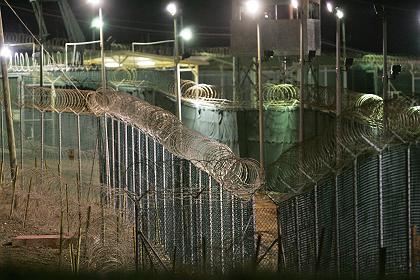
Earlier this month, Amnesty International released a report detailing the horrid prisoner conditions at Guantanamo Bay, Cuba. The report includes descriptions such as extreme isolation, sensory deprivation, solitary confinement 22 hours a day, and 24 hour lighting. Eighty per cent of the approximately 385 men currently held at Guantánamo are in isolation. Amnesty International also reports that the cells have no windows to the outside or access to natural light or fresh air.
Amnesty International is also calling on the government to allow independent health care professionals into Guantánamo to examine detainees in private and to allow visits by independent human right organizations and UN human rights experts.
Co-host and Amnesty International Director of the USA program, Dalia Hashad reads an excerpt from Bisher al-Rawi’s moving letter to free Guantanamo prisoners.
Guest – Shane Kadidal, an attorney with the Center for Constitutional Rights.
—-