Afghanistan War, CIA Sponsored Terror, Civil Liberties, Supreme Court, Truth to Power
Podcast: Play in new window | Download
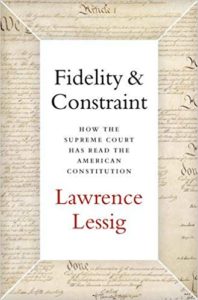
Fidelity and Constraint: How the Supreme Court Has Read the American Constitution
The U.S. Constitution is the oldest written constitution in the world. Interpreters of the Constitution are faced with the challenge of how, over time, to read a document that’s not only old but also inflexible.
In his new book Fidelity & Constraint, by Oxford University Press, Lawrence Lessig, one of the nation’s leading legal minds, explains that a fundamental approaches to interpreting the constitution is a process he calls translation. In fact, some of the most significant shifts in constitutional doctrine are products of the evolution of the translation process over time. In each new era, judges understand their translations as instances of “interpretive fidelity,” framed within each new temporal context.
Throughout American history, there has been a second fidelity in addition to interpretive fidelity: what Lessig calls “fidelity to role.”
In each of the cycles of translation the role of the judge — the ultimate translator – has also evolved. Old ways of interpreting the text now become illegitimate because they don’t match up with the judge’s perceived role.
When that conflict occurs, the practice of judges within our tradition has been to follow the guidance of a fidelity to role. Ultimately, Lessig not only shows us how important the concept of translation is to constitutional interpretation, but also exposes the institutional limits on this practice.
The first work of both constitutional and foundational theory by one of America’s leading legal minds, Fidelity & Constraint maps strategies that both help judges understand the fundamental conflict at the heart of interpretation whenever it arises and work around the limits it inevitably creates.
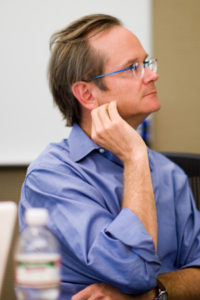
Guest – Lawrence Lessig is the Roy L. Furman Professor of Law and Leadership at Harvard Law School. Prior to rejoining the Harvard faculty, Lessig was a professor at Stanford Law School, where he founded the school’s Center for Internet and Society, and at the University of Chicago. He clerked for Judge Richard Posner on the 7th Circuit Court of Appeals and Justice Antonin Scalia on the United States Supreme Court. Lessig serves on the Board of the AXA Research Fund, and on the advisory boards of Creative Commons and the Sunlight Foundation.
—-
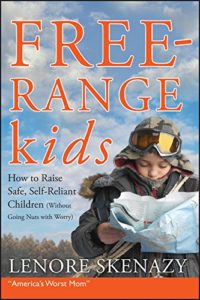
Free Range Kids
You may have heard about the shaming of parents who let their son or daughter walk to school by themselves, or ride public transportation alone. They’re often ridiculed on social media and cast as neglectful. But in some instances, the consequences have gone beyond public shaming.
In 2015 parents in Silver Spring, Maryland made national headlines they were investigated for child neglect for letting their children, ages 6 and 10, walk home from a park by themselves.
In another case Lenore Skenazy, a former New York Daily News columnist was called America’s worst mom after writing a column in 2008 about why she let her 9-year-old son ride the subway by himself.
Last year, Utah passed a law making it not a crime for parents to let their children play in a park without supervision or walk home alone from school. This is hopeful news for our guest Lenore Skenazy who has been advocating for so-called free range parenting laws for many years.
Under the law, neglect does not include allowing a child, whose basic needs are met and who is of sufficient age and maturity to avoid harm or unreasonable risk of harm, to engage in independent activities such as going to and from school by walking, running or bicycling, going to nearby stores or recreational facilities and playing outside.
A recent U.S. Census showed that 7 million of the nation’s 38 million children between the ages of 5 and 14 are left home alone on a regular basis, while the average time spent alone is six hours per week. Only a few states legislate an age under which kids may not be home alone.
Guest – Lenore Skenazy – New York City columnist-turned-reality TV show host got that title after letting her 9-year-old son take the subway, alone. In response to the enormous media blowback, she founded the book and blog, “Free-Range Kids,” which launched the anti-helicopter parenting movement. She has lectured internationally, including talks at Microsoft Headquarters and the Sydney Opera House, and has written for everyone from The Wall Street Journal to Mad Magazine. Yep. The Mad Magazine. And she’s a graduate of Yale.
———————
———————
CIA Sponsored Terror, Civil Liberties, Human Rights
Podcast: Play in new window | Download
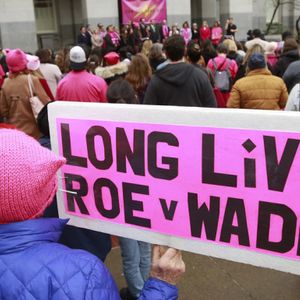
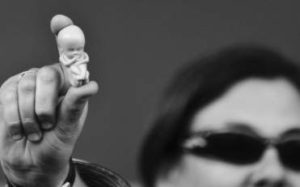
Roe v Wade And Recent State Abortion Legislation
In 1973 in the famous Roe versus Wade case the US Supreme Court ruled that a woman’s right to obtain an abortion was protected under the US Constitution.
The core holding in Roe, which remains the law today, is that the government may not prohibit a woman from obtaining an abortion prior to fetal viability and may do so after viability as long as abortion may be available to protect a woman’s life and health.
A woman’s right to make childbearing decisions is in essential part of women’s overall equality. Recent legislation in Ohio bans abortion as early as six weeks into a pregnancy, before many women even know they are pregnant. Kentucky and Mississippi have similar laws and 10 other states are considering them.
Will the Supreme Court take the Ohio case as an opportunity and use it to overturn the 45-year-old Roe versus Wade decision?
Guest – Dr. Vicki Breitbart in the last 40 years, Dr. Breitbart has worked as an educator, researcher, and activist, dedicated to sexual and reproductive justice. Presently, she is an Associate Professor at NYU Silver School of Social Work. Previously, she served as the Director of the graduate program in Health Advocacy at Sarah Lawrence College and has taught at Columbia and CUNY Schools of Public Health. She worked at Planned Parenthood of New York City for over 15 years in various roles including Senior Vice President and Director of the Clinician Training Initiative.
Guest – Lizzy Watson is a staff attorney at the ACLU’s Reproductive Freedom Project at the ACLU’s national office in New York. She litigates cases to defend the right to abortion and contraception for all people regardless of race, ethnicity, economic status, gender identity, or geographic location. Prior to joining the ACLU she provided legal services to low income individuals at the Homeless Action Center in Berkeley, CA.
—-


Recent United States Aggression Toward Cuba
The United States of America has ratcheted up its ongoing 60 year effort to overthrow the elected government of Cuba and restore an American dominated corporate capitalism to the island. This effort was relaxed a bit under the Obama Administration. That all has changed, dollar remittances from Cubans living in the U.S. to their relatives in Cuba have been drastically cut. Travel to Cuba by Americans which has been considerable is virtually banned.
The Helms-Burton Act of 1996 which was meant to strangle the Cuban economy wasn’t fully enforced until recently. Under the guidance of the ultra-right wing National Security Adviser John Bolton. A 23 year old dormant version of the Helms Burton Act has been invoked. It now allows Cubans who live in America to sue the government of Cuba in American courts to get back their estates, businesses and property holdings which were legally nationalized under the 1959 revolution.
This new aggression is meant to cause such severe hardship to the Cuban people that they will be willing to allow their government to be overthrown.
Guest – Walter Lippmann, editor of the Cuba News Yahoo News Group.
————-
————-
CIA Sponsored Terror, Climate Change, Guantanamo, Habeas Corpus, Human Rights, Political Prisoner, Prison Industry, War Resister
Podcast: Play in new window | Download
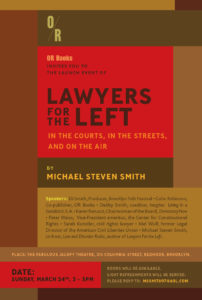
Lawyers For The Left: In The Courts, In the Streets And On The Air
Lawyers For The Left: In The Courts, In the Streets And On The Air is the title of the just published book by our own Michael Steven Smith. It profiles the some of the nation’s most effective agents of social change. Michael discusses how he came to write this book and previews several of the lawyers profiled therein.
As Chris Hedges quotes “The lawyers in this book valiantly fought the erosion of justice and assault on the court system.”
Portside Review by Bill Ayers:
Now open Michael Steven Smith’s smart and compelling Lawyers for the Left, and you’ll find yourself plunged into the contradictions and swirling through the vortex where that question—what is the law?—is on everyone’s mind all the time. It takes on a unique urgency and a fresh vitality as it’s debated case by case and issue by issue by these committed advocates battling against a system they see as deeply and unfairly stacked against their clients—Black freedom fighters, Puerto Rican independistas, Indigenous and immigrant rights activists, women warriors, anti-war militants, water defenders, dissidents and radicals. None of the lawyers you’ll meet here holds fast to the traditional view that the law is simply a civilized mechanism for resolving disputes in an intelligent and reasoned way. They agree, rather, that any honest analysis of the law begins elsewhere, noting that in all times and in all places, the law is constructed in the service of whatever social/economic system created it. In other words, the law is a mechanism of control that works to protect and perpetuate existing social relations.
—-

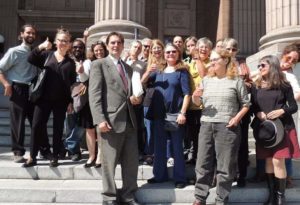
Necessity Defense Upheld In Climate Change Case
In a rare and heartening victory for climate change activists, a Washington state appeals court recently overturned the conviction of a man who employed the so-called necessity defense.
Activist Ken Ward said he had no alternative but to break into a pipeline facility to save the planet from global warming. While several lawyers and clients have presented this strategy in court, it is rarely allowed to proceed.
That’s because in most courts, including federal appeals courts, protesters are unable to meet the threshold burden of showing their actions were in reaction to an imminent threat, like fire chief Steve McQueen blowing up a skyscraper’s water tank to put out a fire in the film The Towering Inferno.
But in his April 8 decision, Judge David Mann ruled that Ward, quote, “reasonably believed the crimes he committed were necessary to minimize the harms that he perceived.”
Last year, Law and Disorder reported on how a Boston prosecutor reduced charges against 13 pipeline protesters who planned to mount a necessity defense, eliminating the possibility of a trial. Even so, West Roxbury Judge Mary Ann Driscoll still found them not guilty for reason of necessity.
In the Washington case, the Court of Appeals reversed the burglary conviction of Ken Ward, saying the trial court judge had violated his Sixth Amendment rights by refusing to allow him to present a “necessity defense” to the jury.
Guest – Ted Hamilton, co-founder and staff attorney of the Climate Defense Center. Ted has studied comparative literature and philosophy at Cornell and Yale, and written about books, politics, and climate change for a variety of publications. During law school he focused on protest defense and growing the climate movement through involvement in the Harvard divestment campaign and internships with the Civil Liberties Defense Center and Climate Disobedience Center.
Civil Liberties, Criminalizing Dissent, Human Rights, Human Trafficking, Political Prisoner, War Resister
Podcast: Play in new window | Download
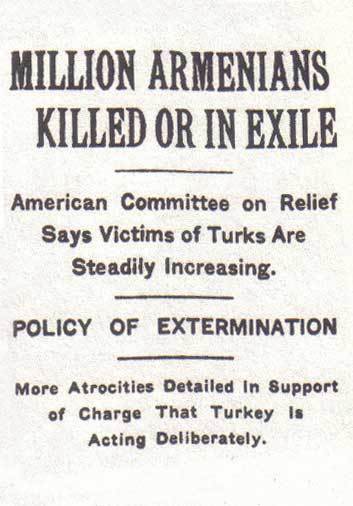
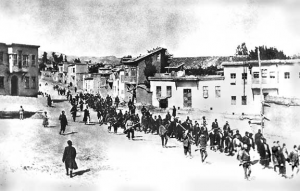
Speaking In Turkish: Denying the Armenian Genocide
Around the world, April 24 marks the observance of the Armenian Genocide. On that day in 1915 the Interior Minister of the Ottoman Empire ordered the arrest and hangings of Armenian intellectuals and community leaders in Constantinople. It was the beginning of a systematic and well-documented plan to eliminate the Armenians, who were Christian, and who had been under Ottoman rule and treated as second class citizens since the 15th century.
The unspeakable and gruesome nature of the killings—beheadings of groups of babies, dismemberments, mass burnings, mass drownings, use of toxic gas, lethal injections of morphine or injections with the blood of typhoid fever patients—render oral histories particularly difficult for survivors of the victims.
Why did this happen? Despite being deemed inferior to Turkish Muslims, the Armenian community had attained a prestigious position in the Ottoman Empire and the central authorities there grew apprehensive of their power and longing for a homeland. The concerted plan of deportation and extermination was effected, in large part, because World War I demanded the involvement and concern of potential allied countries. As the writer Grigoris Balakian wrote, the war provided the Turkish government “their sole opportunity, one unprecedented” to exploit the chaos of war in order to carry out their extermination plan.
As Armenians escaped to several countries, including the United States, a number came to New Britain, Connecticut in 1892 to work in the factories of what was then known as the hardware capital of the world. By 1940 nearly 3,000 Armenians lived there in a tight-knit community.
Pope Frances calls it a duty not to forget “the senseless slaughter” of an estimated one and a half million Armenians by the Ottoman Turks from 1915 to 1923. “Concealing or denying evil is like allowing a wound to keep bleeding without bandaging it,” the Pope said just two weeks before the 100th anniversary of the systematic implementation of a plan to exterminate the Armenian race.
Special thanks to Jennie Garabedian, Arthur Sheverdian, Ruth Swisher, Harry Mazadoorian, and Roxie Maljanian. Produced and written by Heidi Boghosian and Geoff Brady.
———————
———————
Censorship, CIA Sponsored Terror, Civil Liberties, Criminalizing Dissent, Human Rights, Human Trafficking, Iraq War, Political Prisoner, Prison Industry, Surveillance, Truth to Power
Podcast: Play in new window | Download
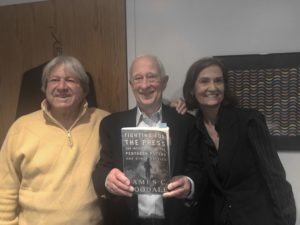
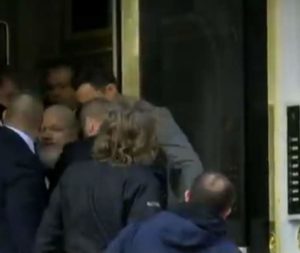
Attorney James Goodale On Julian Assange Arrest
Last week, at the behest of the U.S. government, police entered the Ecuadorian Embassy and arrested Julian Assange on charges of espionage. This case promises to threaten the First Amendment rights of all journalists. We’re honored to have one of the nation’s foremost authorities on First Amendment law, Attorney James Goodale. In the April edition of the Atlantic, he wrote an article titled, Why Julian Assange deserves First Amendment Protection.
Listeners may recall that last fall, a court filing inadvertently suggested that the Justice Department had indicted WikiLeaks founder Julian Assange. The Wall Street Journal, the New York Times, and other outlets reported soon after that Assange had likely been secretly indicted for conspiring with his sources to publish classified government material and hacked documents belonging to the Democratic National Committee, among other things.
Assange started WikiLeaks in 2006 to provide a place for newsworthy information to be confidentially released. The site came gained prominence when Assange obtained thousands of classified documents relating to the Iraq War from US Army soldier Chelsea (born Bradley) Manning.
Guest – Attorney James C. Goodale has represented The New York Times in four of its cases to go to the Supreme Court: the Pentagon Papers case (The New York Times Co. v. The U.S.), The New York Times Co. v. Sullivan (libel), Branzburg v. Hayes (see below) and The New York Times Co. v. Tasini, (digital rights). He developed the argument that the Espionage Act does not apply to publishers or the press.
In a 6-3 decision, the Supreme Court ruled the U.S. Government could not stop the Times from publishing the Pentagon Papers, holding that prior restraints were barred by the First Amendment unless the publication “will surely result in direct, immediate, and irreparable damage to our Nation or its people.” He became known as the “father of the reporter’s privilege.” A prolific writer, he has written two books on the First Amendment, The New York Times v. The U.S. and All About Cable, and approximately 200 articles, particularly on the role of the press in the Information Revolution.
—-
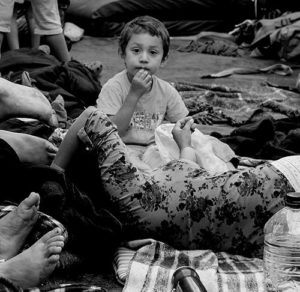
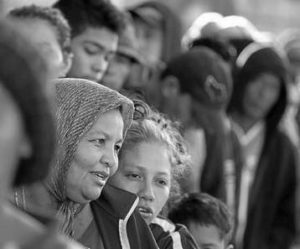
Al Otro Lado and the Border Crisis
United States President Donald Trump said that we have a “crisis” on the border. He called it an “infestation” and said that “These aren’t people. These are animals.” Last week he fired Kirstjen Nielsen who as the head of the Department for Homeland Security pursued the most aggressive enforcement strategy of any secretary in the history of the organization. Nielsen and the Trump administration has separated children from their parents and instituted an illegal turn back policy using tactics to restrict the numbers of asylum-seekers who want to access the asylum process at points of entry like Tijuana and El Paso.
Tactics used by the administration include lies, intimidating coercion, verbal abuse, physical force, out right denial of access, unreasonable delay, threats, and family separation. The Center for Constitution Rights is currently representing Al Otro Lado, a legal and human rights organization that helps migrants at the border. They are challenging the U S. Customs and Border Patrol on its turnaround policy in a pending lawsuit.
Last month CCR’s chairwoman of the board and Columbia Law Professor Katherine Franke met six students in Tijuana Mexico, across the border from San Diego, California, to advise migrants on what they will face in the hands of US legal authorities.
- Al Otro Lado provides essential legal support to migrants to prepare them for the asylum process in the U.S. You can support here.
- Santa Fe Dreamers also provides free legal support to immigrants, with a particular focus on transgender immigrants.
- Please visit this site if you are interested in contributing to the parole/bail fund for detainees.
- If you are interested in serving as a sponsor for an asylum seeker.
- This video offers a very good portrait of the situation at Chaparral where La Lista is maintained and asylum seekers wait for their number to be called.
Guest – Attorney Katherine Franke, is the Sulzbacher Professor of Law, Gender, and Sexuality Studies at Columbia University, where she also directs the Center for Gender and Sexuality Law and is the faculty director of the Law, Rights, and Religion Project (Formerly the Public Rights/Private Conscience Project). She is a member of the Executive Committee for the Institute for Research on Women, Gender and Sexuality, and the Center for Palestine Studies. She is among the nation’s leading scholars writing on law, religion and rights, drawing from feminist, queer, and critical race theory.
——————
——————