Censorship, Civil Liberties, Civil Rights, Freedom Of Speech, Human Rights, Supreme Court
Podcast: Play in new window | Download

The First Amendment Heavily Tested Under Trump Administration
The First Amendment is being tested in many arenas not only in response to various Executive Orders which Donald Trump has issued in his second term, but also in state legislatures which are experimenting with how far the government can go in restricting freedom of speech.
In Free Speech Coalition v. Paxton, the US Supreme Court upheld a Texas law requiring age verification for access to Internet porn sites. In 2024, Mississippi enacted House Bill 1126 after a Mississippi teen became the victim of sextortion on Instagram and died by suicide. That law requires young people to obtain their parents’ consent before they can create social-media accounts. On August 13, the US Supreme Court issued a brief unsigned order allowing that law to go forward despite a lower court injunction.
Meanwhile, South Park is savagely ridiculing Donald Trump, CBS capitulated when Trump sued them over a 60 Minutes segment, and a conservative federal appeals court struck down an injunction for an on-campus drag show. There’s a lot going on when it comes to free speech.
Guest – Robert Corn Revere has been a First Amendment litigator for more than four decades. He is Chief Counsel for the Foundation for Individual Rights and Expression or FIRE. He is the author of The Mind of the Censor and the Eye of the Beholder: The First Amendment and the Censor’s Dilemma, which explores how free expression became a part of America’s identity. FIRE filed an amicus brief in support of Net Choice in one of the cases we’re discussing today.
—-
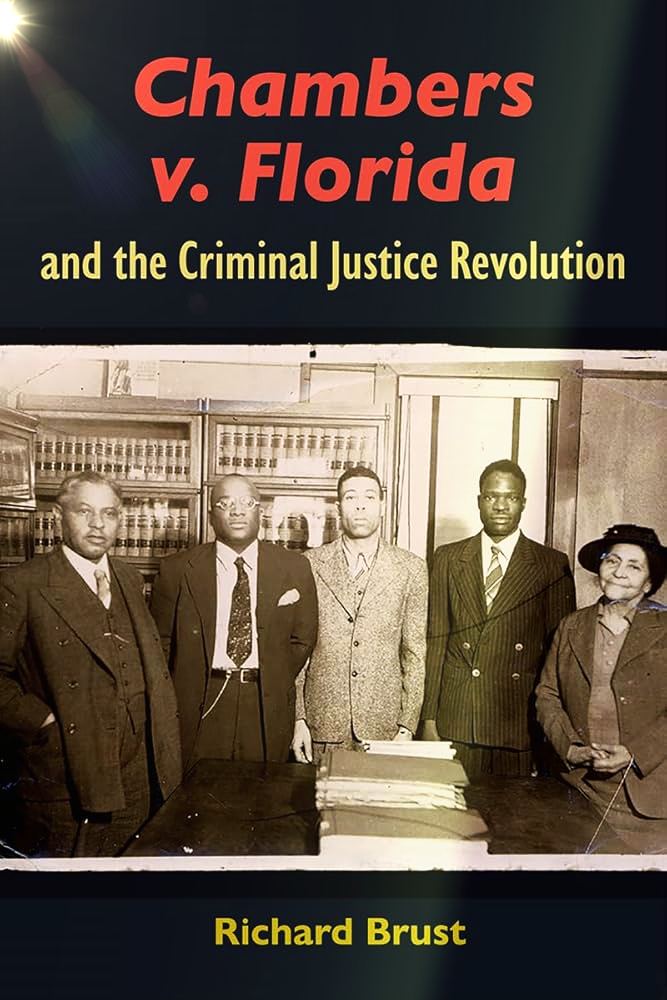
Chambers v. Florida and the Criminal Justice Revolution
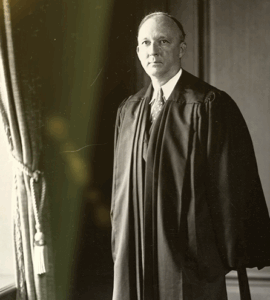
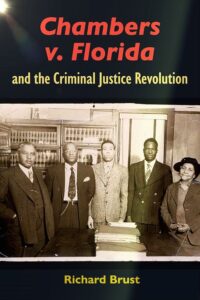
In 1933, four young Black farm workers in Pompano, Florida, were arrested for the murder of a white shopkeeper. With no lawyers and no meaningful due process, for a week they were held, beaten, threatened with lynching, and ultimately forced to sign confessions. Their convictions and death sentences seemed almost certain in the Jim Crow South. But 7 years later, the U.S. Supreme Court reversed those verdicts in a unanimous ruling, declaring that confessions obtained under psychological coercion rendered them involuntary and violated the 14th Amendment.
In Chambers v. Florida and the Criminal Justice Revolution, author Richard Brust vividly revisits this often-overlooked case. Chambers opened the door to the Warren Court’s criminal procedure revolution, laying the foundation for decisions such as Miranda v. Arizona. The book also highlights the lawyers and communities behind the case. Jacksonville attorney Simuel McGill, one of Florida’s few Black lawyers, kept the appeals alive until the case reached Washington.
Guest – Richard Brust is a journalist and historian whose work focuses on law, politics, and American history. He was a longtime editor for the American Bar Association’s ABA Journal and has written extensively about the courts and the evolution of U.S. legal culture.

——————————-
Academic Freedom, Censorship, Civil Liberties, Civil Rights, Criminalizing Dissent, Freedom Of Speech, Supreme Court
Podcast: Play in new window | Download
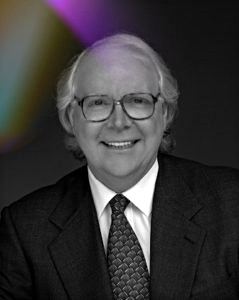
Stephen Rohde: Checks, Balances And Separation Of Powers
This half-hour, we continue our ongoing effort to understand in real time, the upheavals taking place within our US government, as well as the blitz of attacks on the rule of law – and that includes attacks on judges, lawyers, academics, students, and virtually anyone else who is critical of the Trump Administration’s policies and actions.
Today, we’ll be particularly focused on recent Supreme Court decisions that have paved the way for Trump to dismantle the Department of Education and numerous government agencies. The decisions also Limit the public’s ability to challenge government overreach and have led to swift deportations to countries in which detainees have no prior connection. We’ll also follow-up on the critically important case on First Amendment and academic freedom, American Association of University Professors v, Rubio, which is in trial right now in Boston.
Guest – Stephen Rohde is a legal scholar, writer, lecturer and political activist, who practiced civil rights and civil liberties law for over 50 years. He’s past chair of the ACLU Foundation of Southern California and past national chair of Bend the Arc, a Jewish Partnership for Justice. He’s also a co-founder and chair of Interfaith Communities United for Justice and Peace, and a Special Advisor on Free Speech and the First Amendment for the Muslim Public Affairs Council. He hosts the podcast, Speaking Freely.
—-
The MAGA Ideology and the Trump Regime
As V.I. Lenin observed, “There are times in history when nothing happens for decades and other times when decades happen within days” He should know. He was the leader of the Russian revolution which overthrew the feudal Tsar and changed the history of the 20th century. We are living in a time when history is unfolding very rapidly. Trump and his coterie of the upper 1/10 of 1 percent aligned with the mostly lower middle class MAGA movement have taken huge steps upending and overturning the kind of democracy, however, limited by race and class, that we have lived with since gaining independence from England 250 years ago.
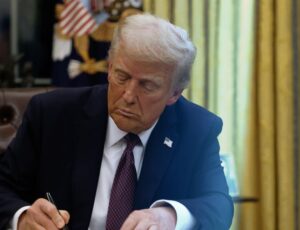
We are experiencing the transition to a new absolutist executive. Trump and the ideologues who have shaped his MAGA movement is a president who acts on the premise that whatever he does is lawful. He claimed full power to close down departments like the Department of Education, impound congressionally authorized spending, deport people without due process, while ignoring the courts. This is what he calls “a unitary executive.”
The classic definition of fascism is that it is one of the political forms that capitalism may assume in its monopoly imperial phase. It has a material foundation in a tenuous alliance between sectors of the extremely rich monopoly capitalists and a mobilized lower middle class. The key to fascist rule is the privatization of large parts of the government on behalf of the monopoly class. This ideology now in ensconced in the White House.
The right wing is opposed to environmental governance, they don’t believe in climate change. They are against open borders, universal healthcare and green energy. Those who advocate for these beneficial movements are called “cultural Marxists.” They refer in a derogatory way to all contemporary progressive political causes. They call it woke. They use the term as it means to belittle all social justice struggles against racism and inequality, Its most common usage is as a racist dog whistle.
These fascists want to secure their rule by getting control of the entire cultural apparatus of society, a process that the Nazis, the German fascists of their time,called “bringing it into line.” The current attack on universities is the most recent example.
Guest – John Bellamy Foster is professor emeritus of sociology at the University of Oregon. He is a prominent scholar on ecology and the author of many books, including Trump in the White House: Tragedy and Farce. Professor Foster is the editor of the venerable socialist magazine “Monthly Review“ and the author of the article The MAGA Ideology and the Trump Regime in its recent May 2025 issue.
——————-
Academic Freedom, Censorship, Freedom Of Speech, Gaza, genocide, Human Rights, Targeting Muslims
Podcast: Play in new window | Download
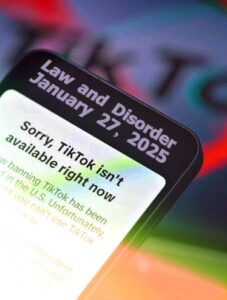
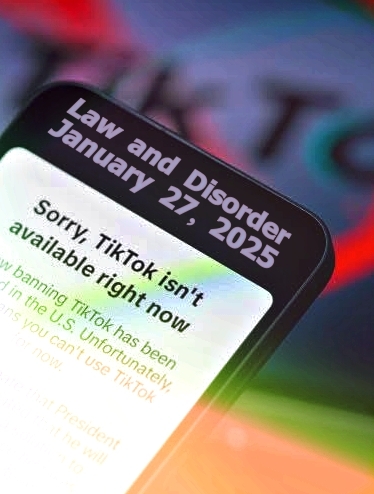
The First Amendment And TikTok
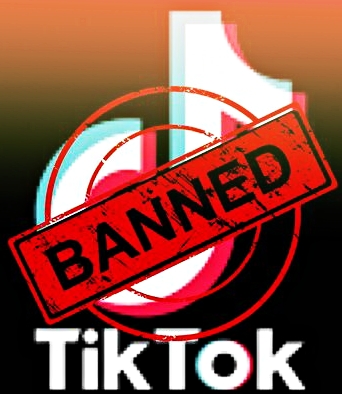
On January 17, for the first time in modern American history, a unanimous US Supreme Court upheld a sweeping prior restraint on free speech imposed by Congress banning over 170 million users in the United States from having access to the popular social media platform TikTok that the Court itself admitted “allows users to create, publish, view, share, and interact with short videos overlaid with audio and text.” In 2023 alone, U. S. TikTok users uploaded more than 5.5 billion videos, which were in turn viewed more than 13 trillion times around the world. The avoid the ban, the law requires TikTok’s parent company, the China-based ByteDance, to divest its ownership.
From January 18 to 19, the ban was in effect for about 12 hours until Donald Trump tweeted that as President he would grant a stay of execution, pending a potential sale of TikTok. It was only 12 hours some may say, but it is estimated that during that time the ban blocked 6,750,000 videos that would have been viewed over 178,000,000 times worldwide. The ban is easily the most extensive act of censorship in human history.
Shortly after he was sworn in, Trump signed an Executive Order purporting to suspend the ban for 75 days. Serious questions have been raised whether Trump’s order is legal and enforceable. And despite his order, Apple and Google have still not reinstated TikTok at their stores preventing new subscribers from accessing TikTok.
Meanwhile, the First Amendment rights of 170 million TikTok users hang in the balance.
Guest – Ramya Krishnan is a senior staff attorney at the Knight First Amendment Institute at Columbia University and a lecturer in law at Columbia Law School. Her litigation focuses on issues related to government transparency, protest, privacy, and social media. Ramya co-authored the Knight Institute’s amicus brief in TikTok. v. Garland, one of the lawsuits challenging the constitutionality of the TikTok ban which resulted in the Supreme Court’s decision. Read Amicus Brief
—-

Federal Court Rejects Attempt To Remove Ethnic Studies Curriculum
As Israel’s war in Gaza and the West Bank rages on, the free speech battles here in the United States continue with Congress, state legislatures and college administrators trying to silence pro-Palestinian protests by conflating criticism of Israel with the odious epithet of “antisemitism.” Pro-Palestinian groups are being banned, students are being disciplined, and faculty members are being suspended and fired.
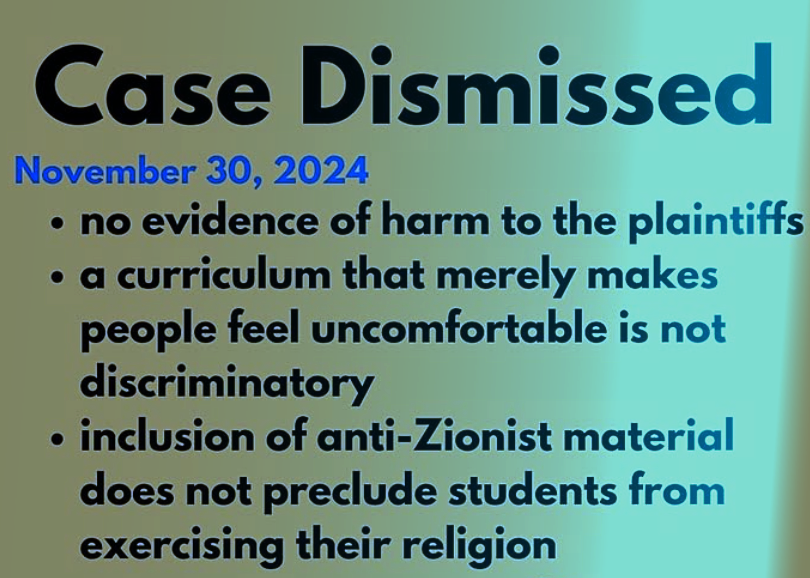
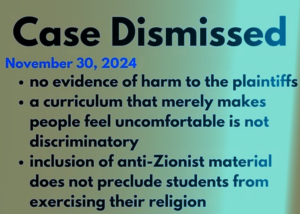
But last November, there was some hopeful news when a federal court rejected attempts by Jewish parents and teachers to remove an ethnic studies curriculum from the Los Angeles Unified School District that they had labelled “antisemitic” and “anti-Zionist.”
On November 30, 2024, in a 49-page ruling, U.S. District Judge Fernando M. Olguin wrote that a system of education “which discovers truth out of a multitude of tongues” must allow teachers and their students “to explore difficult and conflicting ideas.” He added that “we must be careful not to curb intellectual freedom by imposing dogmatic restrictions that chill teachers from adopting the pedagogical methods they believe are most effective,”
The ruling represents a welcome rebuke to the efforts of Republican state legislators and conservative parent groups to try to restrict the teaching of comprehensive American history in public schools, to ban books that examine that history as well as racism, sexism, and LGBTQ issues, and to eliminate programs that seek to ensure diversity, equity, and inclusion in American education.
In 2022, a group calling itself “Concerned Jewish Parents and Teachers of Los Angeles,” comprised of what the lawsuit calls Jewish, Zionist teachers and parents of students sued the Los Angeles Unified School District; United Teachers of Los Angeles; its president Cecily Myart-Cruz; the Liberated Ethnic Studies Model Curriculum Consortium; Theresa Montaño, the Consortium’s secretary; and Guadalupe Carrasco, its co-founder.
To discuss the important free speech and academic freedom issues involved in this case, we’ve invited the lawyer who represented the ethnic studies curriculum, Ms Montano and Ms Carrasco.
Guest – Mark Kleiman is a former activist and organizer and a long-time civil rights and human rights attorney. With extensive experience in whistleblower protection, he has brought cases that exposed massive fraud against public programs and has forced drug companies, nursing home chains, and defense contractors to repay hundreds of millions of dollars. Since 2019 he has devoted thousands of hours to defending activists, scholars, and students who have been attacked for their defense of Palestinian human rights.
————————-
Censorship, Civil Liberties, Civil Rights, Freedom Of Speech, Human Rights
Podcast: Play in new window | Download
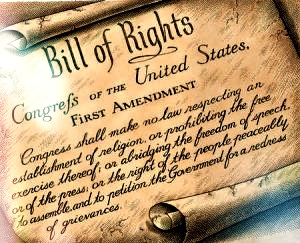
Book Banning, Censorship And Freedom Of Speech
Americans have a love-hate relationship with freedom of speech: They love to protect their own free speech and they hate to protect the free speech of those they disagree with. The First Amendment to the US Constitution was intended to protect freedom of speech and freedom of the press, yet throughout American history, governments at all levels have censored speech and tried to muzzle the press.
The anti-censorship group PEN America, in a survey of the 2022-23 school year, found that “freedom to read is under assault in the United States — particularly in public schools — curtailing students’ freedom to explore words, ideas, and books.” Authors whose books are targeted are most frequently female, people of color, and/or LGBTQ+ individuals.
According to the American Library Association, the number of titles targeted for censorship surged 65 percent in 2023 compared to 2022, reaching the highest levels it has ever documented. According to Deborah Caldwell-Stone, director of ALA’s Office for Intellectual Freedom, “Each demand to ban a book is a demand to deny each person’s constitutionally protected right to choose and read books that raise important issues and lift up the voices of those who are often silenced.”
Guest – Robert Corn-Revere is Chief Counsel for the Foundation for Individual Rights and Expression, known as “FIRE.” He has practiced First Amendment law for 40 years. From 1989 to 1994, Corn-Revere served as legal advisor and later chief counsel to the Chairman of the Federal Communications Commission.
Corn-Revere is a prominent writer, thinker, and advocate on free expression issues and is regularly listed as a leading First Amendment and media lawyer by various national publications. He co-authored the three-volume treatise, “Modern Communication Law.” In 2021, Cambridge University Press published his book, “The Mind of the Censor and the Eye of the Beholder: The First Amendment and the Censor’s Dilemma,” which explores how free expression became a part of America’s identity. I reviewed “The Mind of the Censor” for Los Angeles Review of Books and called it an “entertaining, enlightening, and timely book.”
Another form of censorship – Report: Record Number of Journalists Killed in Gaza by Stephen Rohde
—-
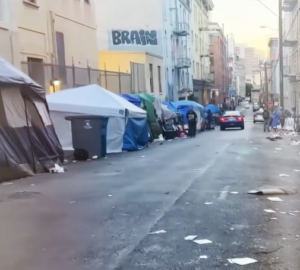
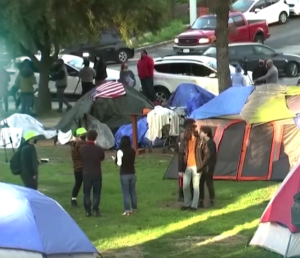
Disappeared: Criminalizing The Unhoused
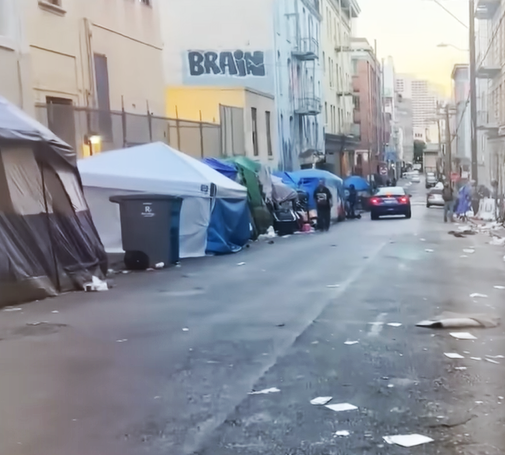
Late this June, the U.S. Supreme Court ruled that cities can punish people for sleeping in public places. In a 6-3 decision along ideological lines, the Court overturned lower court rulings that held it is cruel and unusual punishment under the Eighth Amendment to penalize people for sleeping outside if they had nowhere else to go. This ruling now allows localities the right to dismantle encampments of tents and cardboard coverings, even when there is no locally available housing or shelter.
Human Rights Watch has condemned this ruling and released a comprehensive report titled, You Have to Move! The Cruel and Ineffective Criminalization of Unhoused People in Los Angeles. The report documents the experiences of persons living on the streets, in vehicles, in temporary shelters, and in parks as they struggle to survive. In Los Angeles alone, tens-of-thousands of people are living in the streets, with death rates among the unhoused population reaching alarming levels. Governor Gavin Newsom, a supporter of the Court’s decision, has urged all local jurisdictions in California to destroy unhoused encampments. Several cities in the state have already begun doing so.
Western Regional Advocacy Project
The lack of housing is a national crisis, and this ruling raises the risk of increased use of such punitive tactics not only in Los Angeles but across the entire country.
Guest – John Raphling, Senior Researcher in the U.S. Program of Human Rights Watch and author of the report we’ve mentioned. Before joining Human Rights Watch, John spent years as a Deputy Public Defender in Los Angeles. He has represented political and community activists targeted for their activism, and homeless people prosecuted for crimes related to their status. John is also a member of the National Lawyers Guild.
———————————–
Censorship, Civil Liberties, Civil Rights, Criminalizing Dissent, genocide, U.S. Militarism, War Resister
Podcast: Play in new window | Download
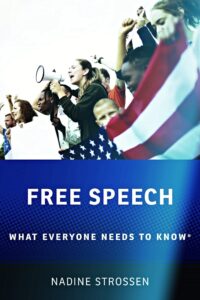

Free Speech: Protest Testing The Limits Of Protection
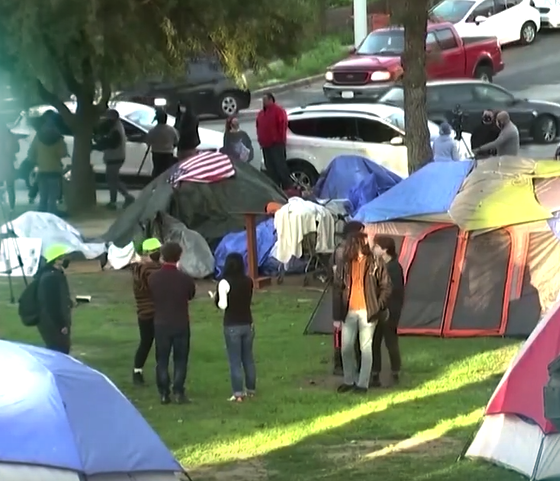
As controversy rages over protests, encampments, and arrests at hundreds of college campuses around the country, in reaction to the war in the Middle East, free speech is once again at the forefront of national debate. Time and again in American history, the nation has been gripped by the complex question of whether certain speech is or is not protected by the First Amendment. Recently, college presidents have been under fire for failing to protect free speech or for going too far in tolerating free speech. Some have been forced to resign and others have called in the police. Students have been attacked; others have been suspended; student political organizations have been banned. What’s going on and where does the First Amendment fit into all this?
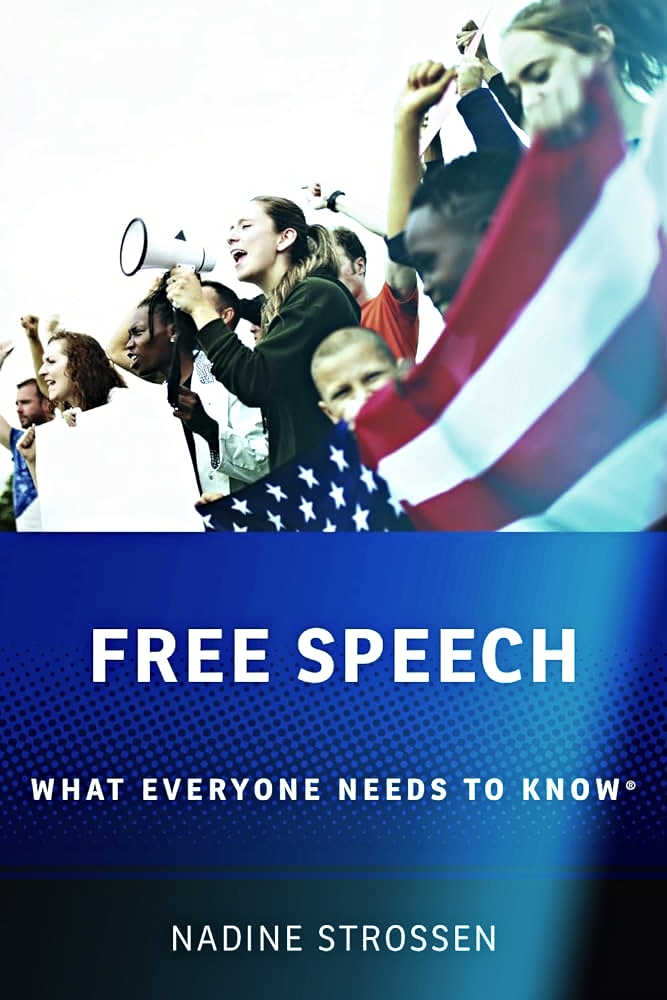
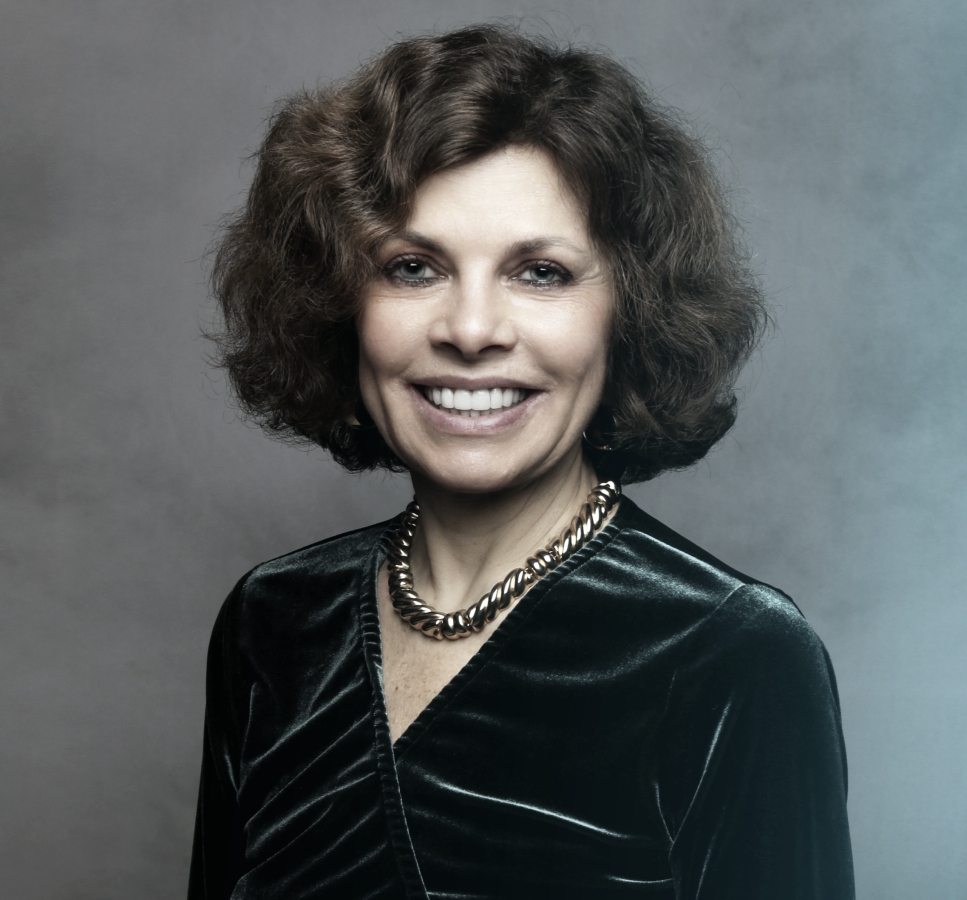
Guest – Nadine Strossen, a leading expert on constitutional law and the First Amendment. Nadine Strossen is Professor of Law Emerita at New York Law School and served as President of the American Civil Liberties Union from 1991 until 2008. She is a Senior Fellow with the Foundation for Individual Rights and Education and is on the advisory boards of the ACLU, Academic Freedom Alliance, Heterodox Academy, National Coalition Against Censorship, and the University of Austin. The National Law Journal has named Strossen one of America’s “100 Most Influential Lawyers,” and in 2023, the National Coalition Against Censorship selected her for its Judy Blume Lifetime Achievement Award for Free Speech.
She is the author of HATE: Why We Should Resist It with Free Speech, Not Censorship (2018) and Free Speech: What Everyone Needs to Know® (2023). Her book Defending Pornography: Free Speech, Sex, and the Fight for Women’s Rights was named a New York Times “notable book” of 1995, and was republished this year as part of the New York University Press “Classic” series.
——————————–
Censorship, Civil Liberties, Civil Rights, FBI Intrusion, Gaza, Supreme Court
Podcast: Play in new window | Download

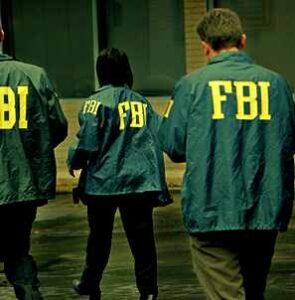
Sealed Search Warrant After Raiding Journalist’s Home Leaves News Gatherers Timid
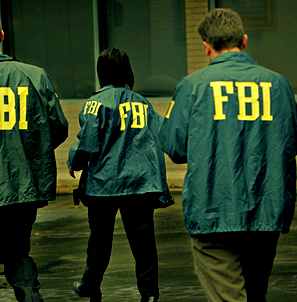
At 6 a.m. on May 8, seven FBI agents with guns drawn raided the home newsroom of Florida journalist Tim Burke. For nearly 10 hours, they seized computers, phones, video equipment and other devices. The raid came on the heels of Burke’s obtaining outtakes of Tucker Carlson’s interview with Ye (formerly known as Kanye West). In those outtakes, Ye made antisemitic and other offensive remarks. The FBI investigation involves alleged violations of the Computer Fraud and Abuse Act, or CFAA.
It is not clear why prosecutors believe Burke, who runs the media company Burke Communications, broke the law. That’s because the government successfully fought to keep the affidavit supporting the search warrant sealed from public view. As listeners may recall, the CFAA is the federal law that prohibits unauthorized access to a computer. Burke has said he got the outtakes from websites where Fox News uploaded unencrypted live streams to URLs that anyone could access, using publicly accessible login credentials.
In response to the raid, more than 50 organizations sent a letter to the Department of Justice in October demanding transparency about the government’s basis for believing that Burke’s newsgathering broke the law. Florida’s First Amendment Foundation and the ACLU took the lead on the letter, with the Committee to Protect Journalists, Reporters Without Borders, PEN America, the Electronic Frontier Foundation and the Society of Professional Journalists, among others, also signing on.
Guest – Seth Stern, Advocacy Director at the Freedom of the Press Foundation (FPF). Prior to joining FPF, Seth practiced media and First Amendment law in Chicago for more than a decade. Before that, he worked as a reporter and editor in the Chicago and Atlanta areas.
—-
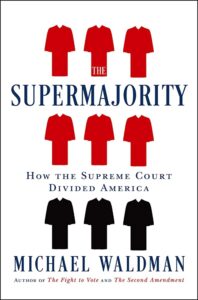
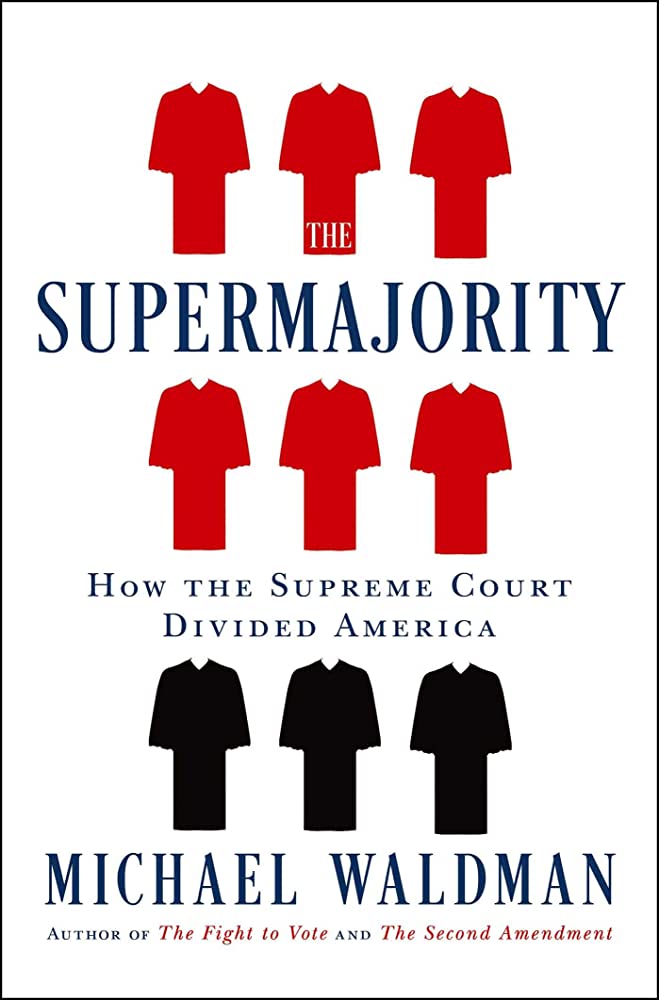
The SuperMajority : How the Supreme Court Divided America,
In late June 2022, a package of Supreme Court decisions drastically altered the nation’s legal landscape and divided the nation. It took just three days to roll back some of the most consequential gains for civil rights, voting, the separation of church and state, a woman’s right to choose, and more.
In his new book The SuperMajority : How the Supreme Court Divided America, Michael Waldman offers an in-depth analysis of the 2022 key rulings and the radical ways in which they were crafted. He provides historical context for how the Supreme Court has amassed power far beyond what the Framers intended, and how the current supermajority ascended to the high court. Waldman also points to previous Courts (on both the right and the left) that overreached and describes their consequences for the country. Significantly, he writes that the seizure of so much power by a few members of the Court, and their energetic wielding of it, poses a crisis for U.S. democracy.
A backlash against the Court is underway. Rather than seeking a supermajority of their own, Waldman writes that, “Liberals must fall out of love with the Supreme Court.” He recommends reform measures to curb the Court’s power while applying other pressure points – such as in the court of public opinion.
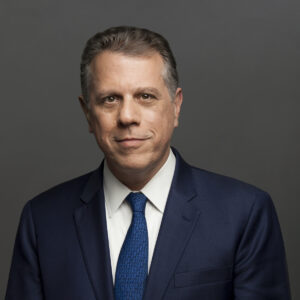
Guest – Michael Waldman is the president and CEO of the Brennan Center for Justice at NYU Law School, a nonpartisan law and policy institute. An expert on the Constitution and the courts, Waldman served on President Joe Biden’s commission on the Supreme Court. He is the author of The Fight to Vote and The Second Amendment: A Biography. Waldman was director of speechwriting during the Clinton administration. Sign up for newsletter – Briefing
Hosted by attorneys Heidi Boghosian and Marjorie Cohn
———————————–