Censorship, Civil Liberties, Criminalizing Dissent, Human Rights, Political Prisoner, Prison Industry, Surveillance, Targeting Muslims, Truth to Power, Uncategorized, War Resister
Podcast: Play in new window | Download

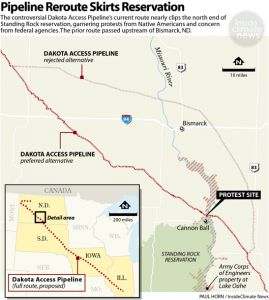
DAPL Pipeline Dispatch # 9
The Standing Rock Sioux Indian tribe of North Dakota and their many allies won a tremendous victory on December 4 2016. They got the oil pipeline stopped, at least for now. It was being built by the Energy Transfer Partners through their sacred lands, without their consultation, in violation of the Treaty of Fort Laramie, and it was planned to be constructed beneath the Missouri River. A Department of the Army announcement stated that it would seek an alternative route for the 1100 mile $3.7 billion project. A break in the pipeline would’ve polluted the drinking water for up to 15 million people. What accounted for this historic victory? What social forces were involved? What is the legal and financial status of the project?
Water Protectors Legal Collective – NLG
Guest – National Lawyers Guild Attorney Jeff Haas, recently returned from living at the North Dakota encampment with thousands of Native Americans and climate change activists who gathered in solidarity with the Standing Rock Indian tribe in North Dakota to protest the pipeline construction. Jeff Haas was a founding partner of the Peoples Law Office in Chicago. He victoriously represented the family of Fred Hampton, the chairman of the Chicago Black Panther Party and proved that Hampton was assassinated by the FBI and Chicago Police Department. He’s also author of the book The Assassination of Fred Hampton.
Sacred Stone Camp Legal Defense – Lawyers wanting to support the Sacred Stone Camp, contact Attorney Robin Martinez – robin.martinez@martinezlaw.net
—-
Professor WatchList
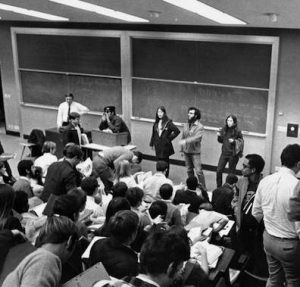
In the weeks following the presidential election we’ve heard rumblings in the news about a variety of watch lists. Recently a student organization called Turning Point launched a website called Professor Watchlist. It publishes the names, locations and alleged offenses of liberal academics, with the mission to “expose and document college professors who discriminate against conservative students, promote anti-American values and advance leftist propaganda in the classroom.” Offenses may include: using swear words or asserting that racism exists. Members of the public are invited to submit tips.
Guest – Rebecca Schuman, a columnist for Slate and author of Schadenfreude, A Love Story and Kafka and Wittgenstein. Her recent article in Slate, Oh Good, A Professor Watch List, outlines a number of concerns about this development.
—-
Poet Raymond Nat Turner Black Listed
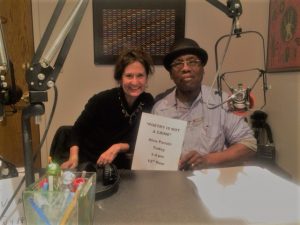
We welcome back to Law and Disorder political poet . Turner is the poet in residence of the internet site and radio show Black Agenda Report. He and others have come under attack by an outfit called PropOrNot, a shabby group that created a blacklist that include more than “200 outlets, from the right-wing Drudge Report and Russian government-funded Russia Today, to Wikileaks and an array of marginal conspiracy and far-right sites. The blacklist also includes some of the flagship publications of the progressive left, including Truthdig, Counterpunch, Truthout, Naked Capitalism, and the Black Agenda Report, a leftist African-American opinion hub that is critical of the liberal black political establishment.”
Guest – Raymond Nat Turner, currently Poet-in-Residence at Black Agenda Report, Turner has been the opening act for such people as James Baldwin, Cynthia McKinney, radical sportswriter Dave Zirin and Congresswoman Barbara Lee after her lone vote against attacking Afghanistan.
Censorship, Civil Liberties, Human Rights, Prison Industry, Truth to Power, War Resister
Podcast: Play in new window | Download
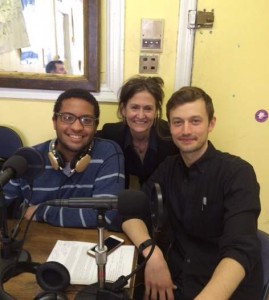
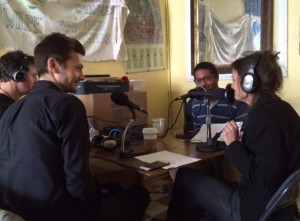
Urban Word: NYC
Spoken word—it’s the oral art of word play, intonation and inflection. From hip-hop, to poetry slams, to prose monologues, it came into popularity in the 1970s around the time Gil Scott-Heron recorded “The Revolution Will Not Be Televised.” Speeches by Dr. Martin Luther King, Junior, Booker T. Washington and others in the civil rights movement incorporated elements of oration. In the 1980s, spoken word poetry competitions emerged. In New York, the Nuyorican Poets Cafe on East Third Street was founded in 1973, and is one of the country’s oldest venues for spoken word poetry.
Spoken word is also engaging thousands of young people across the country in expressing themselves and developing leadership skills. One of the nation’s top rated literary arts programs is the nonprofit organization Urban Word NYC, which has ranked among the top 5 slam poetry teams in the nation for each of the past 11 years. They showcase the voices of New York City youth by providing platforms for leadership and teaching critical literacy skills through uncensored writing, college prep and performance opportunities. They’re getting ready for the 18th Annual NYC Teen Poetry Grand Slam on April 16 at the Apollo Theater.
Guests – Urban Word’s chief operating officer Adam Falkner, and Willy Luperon, a young poet and program alum who is currently serving as the organization’s media coordinator.
—-
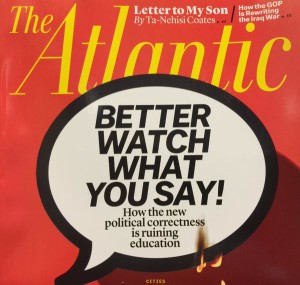
Coddling Of The American Mind: Attorney Greg Lukianoff
Coddling of the American Mind is the title of an article in the recent Atlantic Magazine by attorney Greg Lukianoff and Jonathan Haidt. It examines a particular movement arising that’s been described as “undirected” and driven largely by students that essentially scrubs campuses clean of words, ideas, and subjects that might cause discomfort or give offense. Law and Disorder hosts also take a look at the legal cases being brought by students.
Guest – Greg Lukianoff, President and CEO of FIRE, The Foundation for Individual Rights in Education. He’s the author of Unlearning Liberty: Campus Censorship and the End of American Debate and Freedom From Speech and has published articles in The Wall Street Journal, The Washington Post, The New York Times, The Los Angeles Times, TIME, The Boston Globe, Forbes, the New York Post, U.S. News & World Report, The Stanford Technology Law Review, The Chronicle of Higher Education, Reason, CNET, The Daily Caller, Congressional Quarterly, The Charleston Law Review, and numerous other publications. He is a blogger for The Huffington Post and Ricochet.com.
Censorship, CIA Sponsored Terror, Civil Liberties, Criminalizing Dissent, Crony Capitalism, FBI Intrusion, Gaza, Human Rights, NSA Spying, Political Prisoner, Prosecution of the Bush Administration, Surveillance, Targeting Muslims, Truth to Power
Podcast: Play in new window | Download
Updates:
—-
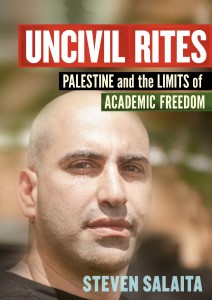
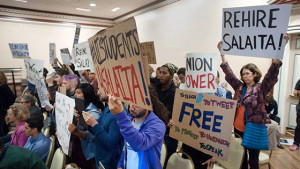
Steven Salaita Hired by American University of Beirut
In what we can view as a major victory for supporters of Palestinian human rights fired Professor Steven Salaita has been hired at the American University in Beirut in the American Studies Department. The American Association of University Professors calls Steven Salaita’s firing one of the significant violations of academic freedom in this decade. Nationwide over 5000 academics pledged to boycott the university resulting in the cancellation of dozens of scheduled talks and conferences at the University of Illinois. The University of Illinois’ action was part of a broader campus crackdown on Palestinian human rights activism that threatens both the foundational role of the university as a place of critical thinking and debate and the ability to advocate for Palestinian rights.
Guest – Professor Steven Salaita, former associate professor of English at Virginia Tech. He is the author of six books and writes frequently about Arab Americans, Palestine, Indigenous Peoples, and decolonization. His current book project is entitled Images of Arabs and Muslims in the Age of Obama.Steven grew up in Bluefield, Virginia, to a mother from Nicaragua (by way of Palestine) and a father from Madaba, Jordan. Books by Salaita, his upcoming book is titled Uncivil Rights and The Limits Of Academic Freedom by Haymarket Press.
—-
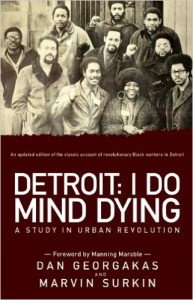
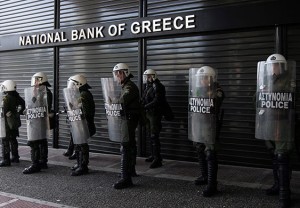
Greece Economic Crisis 2015 Update
Earlier this year we spoke with regular columnist for the National Herald Dan Georgakas about the historic election as the people of Greece voted in the anti-austerity party of Syriza, led by Alexis Tsipiras winning a 149 seats of the 300 seat Parliament. Today, the economic and political state in Greece is in a tremendous state of flux. Will Greece leave the EU and the Eurozone? Will its debt be written down and restructured?
Guest – Dan Georgakas, regular columnist for the National Herald, the leading Greek American weekly newspapero co-author of Detroit: I Do Mind Dying and coeditor of Solidarity Forever: An Oral History of the IWW. He was a frequent contributor to now defunct Journal of the Hellenic Diaspora and the Journal of Modern Hellenism. Dan has taught at NYU, CUNY, Van Arsdale Labor College, Columbia University and University of Oklahoma.
—————————————-
Censorship, CIA Sponsored Terror, Civil Liberties, Criminalizing Dissent, FBI Intrusion, Green Scare, Human Rights, NSA Spying, Political Prisoner, Supreme Court, Surveillance, Truth to Power, War Resister
Podcast: Play in new window | Download
Folk Music, Labor Movements and Radical Politics
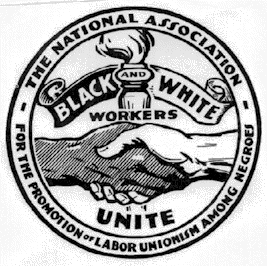
Especially in times of revolution or crisis, the role of music has been a defining element in telling the stories of labor movements, against the war in Vietnam and civil rights. Folk musician Eli Smith gave a presentation at the Left Forum this year on satirical songs of the IWW including the work of Joe Hill and many others. The early works of Pete Seeger, Woody Guthrie are a great place to start along with the lesser known work of John L. Handcox, and the Southern Tenant Farmers Union. It was the first racially integrated union in the South that used indigenous folk music to fight for the rights of sharecroppers.
Guest – Eli Smith, a banjo player, writer, researcher and promoter of folk music living in New York City. Eli is a Smithsonian Folkways recording artist and produces two folk festivals annually, the Brooklyn Folk Festival in the Spring and Washington Square Park Folk Festival in the Fall. He has appeared as a guest on terrestrial radio stations such as WBAI, WNYC, WKCR and WDST in New York and KPFA, KPFK and KUCI in California. Eli has presented panels and discussions on folk music at the Left Forum conference at Cooper Union and at the Podcamp podcasting conference in New York City. He has performed and recorded with his old time string band The Down Hill Strugglers, Peter Stampfel, John Cohen and Sam Shepard. The Down Hill Strugglers were recently featured on the soundtrack album to the Coen Brothers’ film “Inside Llewyn Davis,” which was produced by T Bone Burnett.
———
Terrorization of Dissent: Corporate Repression, Legal Corruption, and the Animal Enterprise Terrorism Act
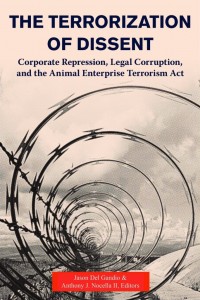
Terrorization of Dissent: Corporate Repression, Legal Corruption, and the Animal Enterprise Terrorism Act is a collection of essays by lawyers, scholars and activists that includes interviews with those who suffered from the AETA’s conspiracy provisions. Editors Jason Del Gandio and Anthony Nocella have compiled essential information to document how the Animal Enterprise Terrorism Act is a clear violation of the First Amendment. Specifically, the book documents how corporations and the U.S. Government conspire under this law to prosecute animal rights activists and acts of civil disobedience involving environmental issues under the specter of terrorism. Right now, according to Nocella and Del Gandio, corporate profit determines what can or can’t be done to animals and the environment.
Anthony Nocella:
- The importance of this act has really shaped how the government looks at one of the larger movements in the United States.
- The animal advocacy, animal rights, animal liberation movements have been demonized and stigmatized as terrorists, through the media and the government through this particular act.
- What are the effects of this law? Who influenced this act to be pushed into law? It wasn’t really government.
- There were main organizations that pushed this law into effect. The Animal Enterprise Protection Coalition, The Animal Legislative Exchange Council (ALEC) The Center for Consumer Freedom.
- Any logical CEO of a corporation will say I don’t want anything to threaten my product.
- That product in the case of animals is any where from circuses to sea world, to clothing, from leather to fur, to also eating.
- We can do away with circuses and fur and a lot of different clothing, but one thing we can’t live without is food.
- We have to look at the real conflict and that’s between food.
- Do we want people to have a plant based diet or an animal based diet?
- There are hundreds of billions of dollars protecting that paradigm of people eating meat, fish and chicken.
- If anyone threatens that industry, under the Animal Enterprise Terrorism Act, you’re deemed a terrorist.
- To wash away all the rhetoric that is what this law is specifically speaking about. That’s why it was expanded from the Animal Enterprise Protection Act to the Animal Enterprise Terrorism Act.
- CCR Condemns Terrorism Indictment for Activists Freeing Mink from Fur Farms
- The point is – regarding the book, law schools, political science departments, think tanks, need a text that comes from a variety of viewpoints specifically looking at the Animal Enterprise Terrorism Act.
- I think we have understand the difference between how corporations are influencing laws and literally writing the bills into laws and into effect, while political repression is really law enforcement and senators influencing laws.
- We’re not criminalizing activists like we did in the 70s and 80s, now we’re labeling them as terrorists.
- National Weekend of the Animal Enterprise Terrorism Act – Sept 5-6-7, 2014
- Website – The Institute For Critical Animal Studies
Guest – Anthony Nocella II, Ph.D., an intersectional academic-activist, is Senior Fellow of the Dispute Resolution Institute at the Hamline Law School, co-founder and Director of the Institute for Critical Animal Studies, and editor of the Peace Studies Journal. He has published more than sixteen books including Terrorists or Freedom Fighters?: Reflections on the Liberation of Animals (2004), Call to Compassion: Religious Perspectives on Animal Advocacy (2011), and Defining Critical Animal Studies: An Intersectional Social Justice Approach for Liberation (2014).
————————————————————————————-
Censorship, Civil Liberties, Criminalizing Dissent, FBI Intrusion, Human Rights, Truth to Power
Podcast: Play in new window | Download
Updates:
Private Prison Corporation To Have Its Name on Florida Atlantic Football Stadium
—
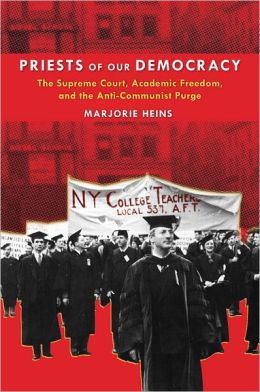
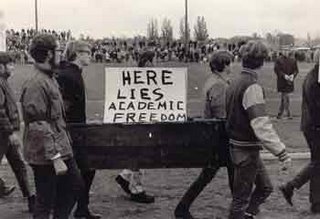
Priests of Our Democracy, The Supreme Court, Academic Freedom, and the Anti-Communist Purge
Priests of Our Democracy, The Supreme Court, Academic Freedom, and the Anti-Communist Purge is the title of the recently published book by attorney Marjorie Heins. The book examines a very dark period in academic freedom within New York City’s municipal colleges. In the early 1940s, faculty, students and staff were the target of massive investigations into their political beliefs and associations. They hauled before tribunals of the New York State legislature, dozens were stripped of their careers.
Author Marjorie Heinz shows historically, that academic freedom is nothing to take for granted and is always on shaky ground despite being protected by the First Amendment. The backlash of controversy against Students for Justice in Palestine sponsoring a Boycott Divest Sanction event at Brooklyn College is recent example. This is a book for anyone working in education to understand the court battles that tried to preserve a right protected by the Constitution.
Attorney Marjorie Heins:
- Boards of Trustees which are dominated by corporate executives don’t like these new scholars in the field of social science who are also activists.
- It’s really an attempt of political purge of this national figure.
- The burgeoning forces of academic freedom rally round him, they see the danger.
- In those early days the main attacks on the activist professors really were on activities outside the classroom in support of labor organizing.
- A bunch of professors get together from around the country and form the AAUP, American Association of University Professors. They for the first time issue a declaration of principles on academic freedom.
- The first is freedom in the classroom. The second is freedom is your research and scholarship to pursue learning where it may lead, which means overturning conventional wisdom.
- The third is what they call extramural speech, outside the walls. That was the main target of repression in that period.
- We have to get all these leftists out of the school system because they’re going to indoctrinate the tender minds of our youth with Marxist ideas.
- Harry Keyishian starts the book, he’s one of the wonderful characters I discovered as I was working on it. The Keyishian v. Board of Regents case, 1967 Supreme Court case is famous among First Amendment lawyers because it reversed prior not so good decisions, strikes down the so called Feinberg law which had been passed in 1949 and upheld by the Supreme Court.
- Feinberg law creates a very sweeping program of loyalty investigations for teachers in the public schools.
- 1952 is the height of the witch-hunt at Queens College in New York City when the Senate Internal Security Sub-committee comes to town.
- The Senate Internal Security Sub-committee starts summoning teachers at city colleges.
- “Would you tell Pablo Picasso that he wasn’t qualified to teach art?”
- It’s obscene to see college administrators running around scared like keystone cops he said.
- Some of these investigations were very broad. What books they read, what magazines they subscribed to, did you have Paul Robeson records in your home?
- It’s not until the Keyishian case in 1967 that the Supreme Court says this whole system of loyalty investigations violates the First Amendment and the due process provisions of the Constitution.
- Marjorie Heins Book Events:
- Revolution Books March 5 is sponsored by the New York Civil Liberties Union – 7PM
- Harvard Bookstore, Cambridge, MA, Friday March 15, 3 pm.
- Talking Leaves Bookstore, Buffalo, NY, Sat. March 23, 5 pm.
- Politics & Prose Bookstore, Washington, DC, Sat. June 15, 1 pm.
Guest – Marjorie Heins, a civil liberties lawyer, writer, and teacher, and the founding director of the Free Expression Policy Project. Her previous book, Not in Front of the Children, won the American Library Association’s 2002 Eli Oboler Award for best published work in the field of intellectual freedom. Other books include Sex, Sin, and Blasphemy: A Guide to America’s Censorship Wars; Cutting the Mustard: Affirmative Action and the Nature of Excellence; and Strictly Ghetto Property: The Story of Los Siete de la Raza. She is a graduate of Harvard Law School.
———
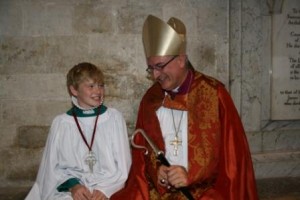
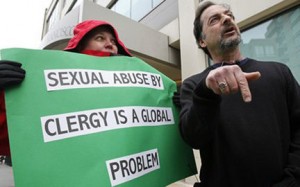
Encore Interview: New Vatican Rules On Handling Priest Sexual Abuse Cases
Earlier this year, the Vatican had revised its laws making it easier to discipline sex abuser priests. The new internal of the Vatican will use faster judicial procedures instead of full ecclesiastical trials. Critics of the revisions, say the Vatican merely tweaked the process and the new rules don’t hold bishops accountable for abuse by priests on their watch or require that they report the sexual abuse to the authorities. In the same report was the inclusion that attempting to ordain women as priests was comparable to heresy, apostasy and pedophilia. To many it was a comparison meant to resist any suggestion that pedophilia can be addressed by ending the requirement of celibacy.
Barbara Blaine:
- SNAP is now a worldwide movement of survivors. We invite supporters join us, we have approximately 10 thousand survivors. Some are spouses and family members but most are survivors; survivors of sexual abuse by priests or other clergy members. Sometimes by religious brothers, by nuns, deacons even bishops.
- We grew in 2002 and 2003 as the headlines were exploding of abuse by priests.
- We have support group meetings in the United States in about 65 different cities. We were extremely naive, not to mention wounded trying to figure out how to make it from day to day. Its empowering for us if we can protect someone who is 12 or 13 from being abused.
- Some documents was released in 2009 in Ireland. Those were the result of government investigations into the allegations of priests and other religious figures sexually abusing children. Victims across Europe, in Germany and Belgium, Austria, Netherlands, England began speaking out and reporting their abuse. In Ireland at the end of 2009, four bishops were resigning their positions.
- From our perspective, what comes out of the Vatican is a lot of lofty words and empty promises. If you look for concrete action, you’ll see very little if any. We as victims are devout Catholics and its really incredible for us to comprehend that someone in the position of authority in the church would not want us to be protected.
- It was heartbreaking and devastating to learn the policy of the church officials is to protect the predators and their assets and their reputations, not the children.
- They’re accountable to no one and its okay for them to continue and commit these crimes.
- The vast majority of victims still do not report. More than 5 thousand priests have been identified are sexual offenders who have abused children between 1950 and 2008.
- 5 percent of priests abusing children. When someone rapes a child they get fired, in the church they get promoted. SNAPnetwork.org / bishopaccountability.org
–
Attorney Pam Spees:
- We joined a conversation with SNAP looking for ways to insure accountability for what’s going on.
- Is there a legal framework that gets at the widespread nature of this. There’s one book out that discusses the 2000 year old paper trail of sexual abuse in the church.
- You’ll hear things like a cardinal or a pope attempt to make an apology. They’re sorry for what happened to these folks. It didn’t just happen.
- It shows the lack of attention and lack of awareness of the gravity of what’s going on and a prioritization of the church protecting itself and its power, rather than insuring the protection of the kids in the church and others who are vulnerable to abuse by priests.
- It also looks like an attempt to decentralize the responsibility. There are key legal experts who have discussed this as crimes against humanity.
- These are acts that are committed as a widespread or systematic assault or attack on the civilian population.
- When you’re talking about the massive sustained harm that is being caused here and the lack of awareness and acknowledgment. . it’s really astonishing.
- The International Criminal Court is a possible venue that has jurisdiction on crimes against humanity.
- The Church can’t be trusted to police itself.
Guest – Pam Spees, senior staff attorney in the international human rights program at the Center for Constitutional Rights. She has a background in international criminal and human rights law with a gender focus, as well as criminal trial practice
Guest – Barbara Blaine, founder of SNAP, Survivors Network of those Abused by Priests, the nation’s oldest and largest self-help organization for victims of clergy sexual abuse.
————————————————————
Censorship, Civil Liberties, Criminalizing Dissent, Gaza, Human Rights, Targeting Muslims, Truth to Power
Podcast: Play in new window | Download
Updates:
——–
Gaza Freedom March Report Back Speeches
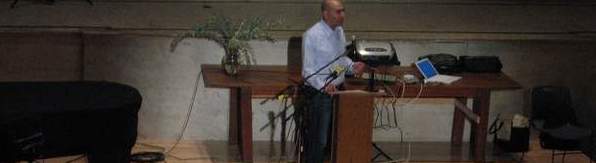
We hear strong speeches detailing the experience at the Gaza Freedom March by Ali Abunimah, co-founder of the Electronic Intifada and author of One Country: A Bold Proposal to End the Israeli-Palestinian Conflict and our own co-host Michael Ratner, president of the Center for Constitutional Rights. As many listeners know, hundreds of activists with the Gaza Freedom Marchers returned from Israel, Palestine and Egypt from the largest international mobilization of people in solidarity. The Egyptian authorities refused to allow the 1,365 participants from 43 countries to enter the Gaza Strip, but later 100 people were let in to Gaza.
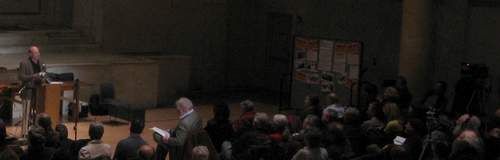
Michael Ratner’s Article: From Hebron to Yad Vashem: Jewish Sorrow Justifying the Sorrow of Others
Gaza Freedom March Commitments Include:
- Palestinian Self-Determination
- Ending the Occupation
- Equal Rights for All within historic Palestine
- The full Right of Return for Palestinian refugees
From: Waging Nonviolence blog. The Egyptian government didn’t let most of the over 1,300 protesters from around the world into Gaza for the planned march, but those at Judson said that they witnessed a new stage in the emergence of a global movement, facilitated by the Internet, that may well be poised to end the international support that makes Israel’s policies possible. The lynchpin of the movement, the Cairo Declaration of the Gaza Freedom March, was drafted by would-be marchers while they waited in Egypt.
—-
Faculty for Israeli-Palestinian Peace
In the wake of Gaza Siege earlier this year, many groups such as Code Pink have brought delegations of people to Israel to visit and bring support to Palestinian refugees and families. Today we talk with Joel Bitar, he’s a student who traveled to Israel with the group Faculty for Israeli-Palestinian Peace. The group is an international network of academics and students supporting a complete end to the illegal Israeli occupation of lands seized in 1967. Last summer, Joel was among many who visited Israeli universities, the Israeli settlements in the West Bank, and stayed with Palestinian families. These delegations call on the international academic community to take a stand in supporting the end to occupation in Gaza and the West Bank.
Joel Bitar:
- Most of my life I tried to hide my Palestinian identity and this trip was all about confronting and realizing who I am. For so long, especially after 9/11 it wasn’t respectable to be an Arab in America.
- I was kind of ashamed of my Dad’s history and culture for a long time. This trip was about inner healing and understanding where I came from.
- I went to the West Bank for a month and a half.
- It’s all about fitting in and surviving, being a confrontational force in a culture is something I didn’t have the courage to do unfortunately. My family has been apolitical. Doing activism around this (Gaza) has been unifying for my family.
- It’s enabled us to confront all the awful aspects of American culture and society.
- What happened in Gaza, shook me, woke me up. I’ve been doing a lot of investigating about the conflict, it seemed so mystical and mysterious. I read a couple books, it’s really not that complicated, it’s very simple. Palestine Peace Not Apartheid – Jimmy Carter / The Israel Lobby and US Foreign Policy.
- I learned about Norman Finkelstein and conflict between him and Alan Dershwitz.
- Simple in terms of the law. The law is very clear. You can’t acquire territory by force. Something you learn when you’re growing up, don’t bully people, don’t take their stuff.
- We visited numerous hot spots of the occupation, we went to Hebron, which is under vicious occupation by Israeli soldiers.
- 8 Meter high concrete slabs in many places. 85 percent of the wall runs on Palestinian land.
- Duel road systems and duel license plates.
- My Palestinian family pay taxes but don’t get the benefits of the taxes, they’re living in an imposed ghetto.
- They don’t have access to water 24/7 like every other Jew in the settlement. There’s garbage everywhere.
- We’ve been doing a lot of work with the Gaza Freedom March, with the anti-war movement at Hunter.
- A lot of the Jews who do an iota of research at Hunter know that what Israel did was awful. Breaking The Silence Report
Guest: Joel Bitar, a Hunter College student who traveled to Israel with the group Faculty for Israeli-Palestinian Peace. The group is an international network of academics and students supporting a complete end to the illegal Israeli occupation of lands seized in 1967. Joel is active with the Hunter College Campus Anti-War Network.
———————————————————————