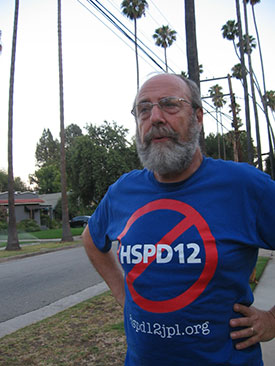
Last year, twenty-eight senior scientists and engineers at Jet Propulsion Laboratory challenged the United States government and the California Institute of Technology in a lawsuit claiming that NASA’s new background investigations were unconstitutional. The scientists include members of the Mars Rover program are fighting Homeland Security Presidential Directive 12 or (HSPD-12). This directive requires all federal employees and contractors to “voluntarily” sign a form allowing the government the right to investigate them “without limit” for two years- even if they leave government work during that time. NASA and Caltech employees were told, non-compliance will result in immediate termination.
In the interview Bob Nelson describes the drama in a Ninth Circuit Court decision: the Ninth Circuit Court of Appeals issued a temporary injunction at 4:40pm. The same day around 5pm, JPL managers were approaching the several hundred JPL employees who were non-compliant and reading them an order saying if you don’t comply by Monday, we will advertise your job. You have until 5pm today to decide.
A few minutes before 5pm Bob Nelson brought in a faxed copy of the order by the Ninth Circuit Court judge and told JPL managers that what they’ve done may be illegal, if you have a problem, consult your lawyer. The Ninth Circuit ruled that NASA and the DOJ were out of order and that Caltech was in the wrong for serving as an enforcer.
The lawsuit caused a lot of interest within Caltech alumni who then wrote to the board of trustees and later began to fund the lawsuit. Nelson says, “You can fight the system of a completely entrenched bureacracy that constantly rewrites the rule in their favor.”
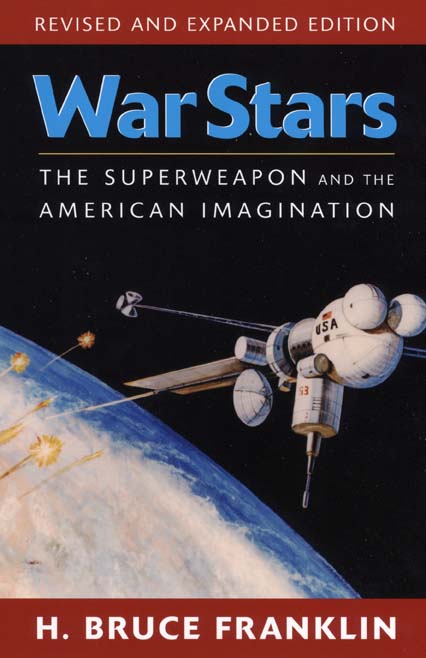
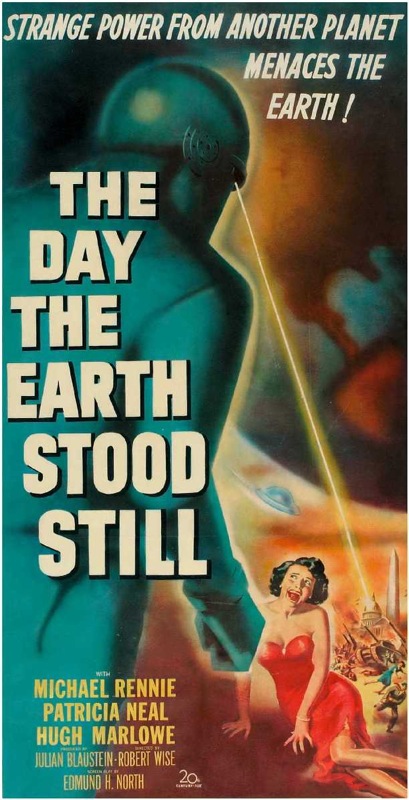
Today we welcome cultural historian H Bruce Franklin, author of many books including The Most Important Fish In The Sea and one we will talk with him today titled War Stars: The Superweapon and The American Imagination. One review writes “this book reveals how and why the American quest for the ultimate defensive weapon, guaranteed to end all war and bring universal triumph to American ideals has led to the creation of forces increasingly capable of automated global annihilation.”
“How did we get to a place where we built weapons capable of destroying our own society, human civilization, possibly exterminating the human species, while always thinking that we’re making ourselves more secure, bringing global peace, bringing democracy to the world?”
Franklin explores the influences of the collective imagination in movies, novels and stories from obscure pre-World War I fiction to modern classics such as Slaughterhouse Five and Dr. Strangelove. War Stars interweaves culture, science, technology and history to demonstrate how the American consciousness shapes ingenious new superweapons while creating its antithesis in art.
Guest – Bruce Franklin, American cultural historian who has authored or edited nineteen books on a range of subjects. As of 2008, he is the John Cotton Dana Professor of English and American Studies at Rutgers University in Newark, New Jersey. He first attained prominence as a Melville scholar and has served as president of the Melville Society. His award-winning books and teaching on science fiction played a major role in establishing academic study of the genre. His books on American prison literature have been said to open an entirely new field of study. His most recent work has focused on relations between the marine environment and American cultural history.
We hear excerpts from speeches at the Brecht Forum by our own Michael Smith and Citizen Soldier’s Tod Ensign. The anti-war soldier panel started with Michael Smith describing his work defending anti-war GI’s at Ft. Jackson, South Carolina and the formation of the GI Civil Liberties Defense Committee.
Anti-war GI’s were pivotal to the movement’s success. The growing protests from within the U.S. military today echo the Vietnam War soldiers experience. The panel discusses the role of anti-war GI organizing in the anti-war movements from 1917 to 1968 and to the present.
There are several significant events surrounding the US policy on torture taking place this week. Already last week, the US Senate Committee on Armed Services held hearings on the origins of aggressive interrogation techniques. Among the events this week is the fifth session of the United Nations Committee against Torture, Subcommittee on Prevention of Torture and Other Cruel, Inhuman or Degrading Treatment or Punishment in Geneva.
Amnesty International releases a report on torture and unfair trials in Tunisia’s war on terror, Amnesty International’s Guantanamo prison cell replica opens to the public in Washington, DC, through Sunday, June 29 and there is also the World Day in Support of Victims of Torture.
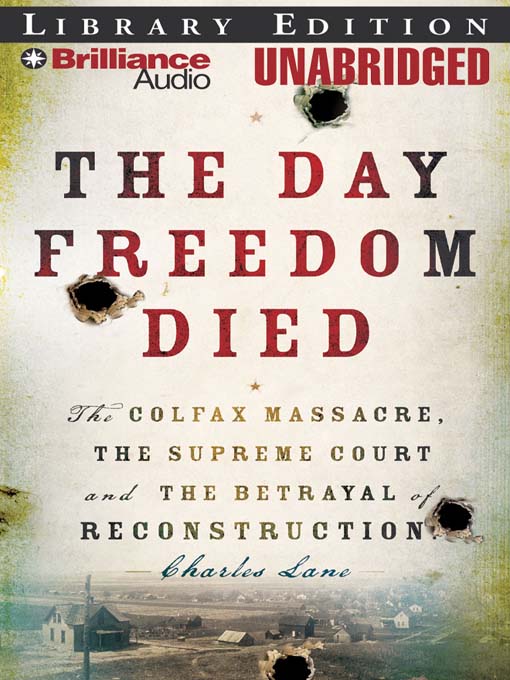
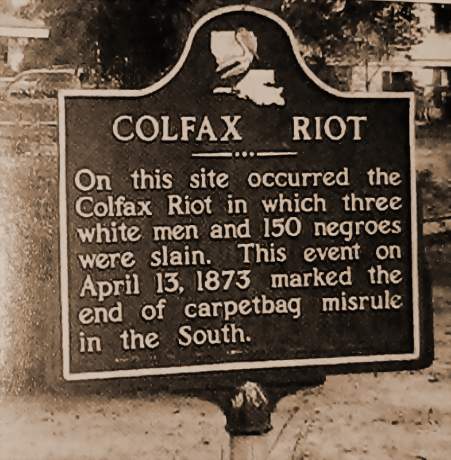
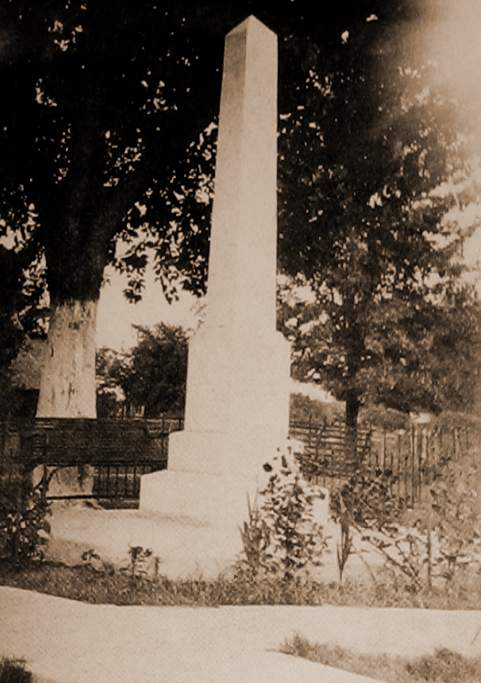
It was April 13, 1873 in Louisiana when a small army of white ex-Confederate soldiers enraged by freedmen asserting their new rights killed more than 60 African Americans who had occupied a courthouse. Today we talk with author and journalist Charles Lane. His recent book is titled The Day Freedom Died: The Colfax Massacre, the Supreme Court, and the Betrayal of Reconstruction. In the book, Lane uncovers a nearly forgotten historic post civil war massacre of African American men in Colfax, Louisiana and a white lawyer’s epic battle to bring the perpetrators to justice. Reviews call Lane’s book an electrifying piece of historical detective work that captures a gallery of characters from presidents to townspeople and re-creates the bloody days of Reconstruction. Lane discovered the Colfax Massacre case while covering the Supreme Court for The Washington Post.
Today we’re delighted to have Ann Ginger on the program, she’s a lawyer, teacher, writer, and political activist. She is the founder and the executive director of the Meiklejohn Civil Liberties, a think tank for human rights in Berkeley California. Here on Law and Disorder we’ve examine the practices and laws that have crippled civil and human rights in this country and now we take a look at ways law students and legal workers can bring them back.
Guest – Ann Ginger. Ann is Executive Director of Meiklejohn Civil Liberties Institute, a center for peace law and human rights, with archives of historic cases. Founded in 1965, the Institute answers queries of clients and lawyers and trains interns to prepare reports on U.S. compliance with human rights treaties for submission to U.N. committees.
Ann learned early to use the law and history to work for peace and human rights, coming from an Irish Catholic, English Quaker, Russian Jewish, Midwestern newspaper family. As a lawyer, she won a civil liberties case in the U.S. Supreme Court. After her testimony as an expert witness on international law that applies in the U.S., a jury acquitted nuclear weapons protesters in Utah. She is now teaching Peace Law and Human Rights at San Francisco State University and long served on the Peace and Justice Commission that administers the Nuclear Free Zone Ordinance in Berkeley.
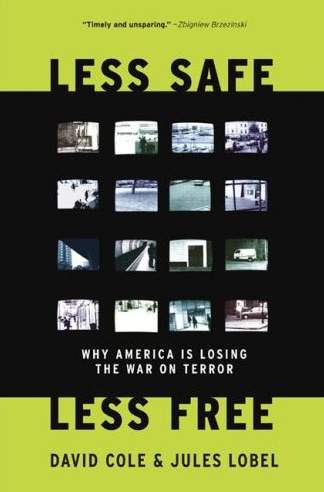
Leading constitutional scholars David Cole and Jules Lobel have published a critique of the Bush administration’s post 9-11 policies. It’s called “Less Safe, Less Free: Why America is Losing the War on Terror.”
They point out how less than one-tenth of the detainees in Guantanamo Bay have been found to have links to Al Qaeda or the Taliban. Not one of the 80,000 Arab and Muslim men who underwent Special Registration has been convicted of terrorism-related crimes. Meanwhile, the department of homeland security continues to spend tens of millions installing surveillance camera systems in and throughout US cities.
One review of “Less Safe, Less Free: Why America is Losing the War on Terror.” writes – – “ At home and abroad, the administration has cut corners on fundamental commitments of the rule of law in the name of preventing future attacks—from “water-boarding†detainees, to disappearing suspects into secret CIA prisons, to attacking Iraq against the wishes of the UN Security Council and most of the world when it posed no imminent threat of attacking us.â€
A Question of Impeachment is the title for the Culture Project’s ongoing event series this month and into December. Authors, actors and luminaries gather to explore and debate the case for impeachment of President Bush and Vice President Cheney.
Guests – Olivia Greer, Culture Project Producer and and Allan Buchman, Creative Director at the Culture Project.
Co-hosts Michael Ratner and Michael Smith discuss how Judge Michael Mukasey claims he’s unfamiliar with “water boarding” as a form of torture.
Echoing Michael Mukasey, his friend and associate who likely will soon be the next attorney general, Republican presidential front-runner Rudolph Giuliani claimed Wednesday that he doesn’t know whether waterboarding is torture. Read more by Joe Conason
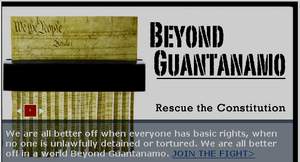
Michael Smith and Heidi Boghosian speak with CCR attorney Jen Nessel about the launch of Beyond Guantanamo Rescue the Constitution Campaign. Find out more here – CCRJustice.org
A recent Amnesty International study on the sexual violence against indigenous women in the United States exposes a disturbing trend in human rights abuse. The reasons why indigenous women are at particular risk of sexual violence are complex. According to the report, more than one in three Native American and Alaska Native women are survivors of rape. Most of the abused women have not followed through in their cases to seek justice because of a general inaction within the tribal government authority and its chronic under-resourced law enforcement agencies which should protect indigenous women. As one support worker said, “Women don’t report because it doesn’t make a difference. Why report when you are just going to be re-victimized?” Too many times, as the Amnesty Report identifies, those responsible for the violence are able to get away with it.
Guest – Michael Heflin, the Amnesty International USA Campaign Director.
Here on Law and Disorder we continue to look at the issue of Iraq war resisters and conscientious objectors. We’ve interviewed war resistors – their families and discussed conscientious objection. We also look at how legislation has changed for soldiers applying for CO status.
Since the Vietnam War more than 170,000 men were officially recognized as conscientious objectors. But, in 1971 the Supreme Court refused to allow objection to a particular war, a decision affecting thousands of objectors to the Vietnam War. Some 50,000–100,000 men are estimated to have left the United States to avoid being drafted. Now, the US military is all-volunteer. We talk with Citizen Soldiers’ Tod Ensign about what’s changed for Conscientious Objectors since the Vietnam War and compare what it means to be a CO in today’s United States military.
After the 2001 attacks on the United States, attention has been drawn to marginalize nuclear weapons and increase global cooperation on the control and non-proliferation of nuclear weapons and nuclear material. As of 2006, there are estimated to be at least 25,000 nuclear weapons held by at least eight countries, 96 percent of them in the possession of the United States and Russia
Rather than intensifying such efforts, the U.S. has adopted a policy of elevating the role of nuclear weapons in its overall military strategy. John Burroughs, Executive Director of the Lawyers’ Committee on Nuclear Policy, claims that this will reduce U.S. and global security, not increase it.
Guest – Dr. John Burroughs, adjunct professor of law at Rutgers Law School and serves as Executive Director for the Lawyer’s Committee on Nuclear Policy. The LCNP was instrumental in bringing the landmark case before the International Court of Justice in 1995 that resulted in the advisory opinion of 1996, which stated that the threat or use of nuclear weapons is illegal.
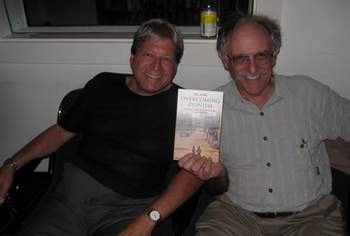
Late last month, the blog, Dissident Veteran for Peace — printed what it says is an e-mail from Pochoda, the press director, to Kovel, explaining why distribution was halted. Pochoda declined to comment on the e-mail, but Kovel said it was accurate. The e-mail reads: “Because it is a distributed title for Pluto Press, no one at UMP had read Overcoming Zionism prior to the Stand/With/Us diatribe. I and others read it after that assault, and had fully expected to gear up for, at least, a free speech defense. Though I had no trouble with the one-state solution your book proposes nor with a Zionist critique, per se … I (and faculty members I asked to read the book, as well) were apalled [sic] by your reckless, viscious [sic], and unmodulated attack on Zionism and all Zionists.”
How did Kovel, a Jew from Brooklyn, the oldest son of Ukrainian immigrants who did well – moving with Joel to “the purgatory of Baldwin, Long Island†– come to this radical critique and equally radical solution? Joel graduated from Yale and became a successful psychiatrist. He taught at medical school before switching careers and taking a social science professorship at Bard, where for a time he held the Alger Hiss chair. He is still there, the only Marxist on the faculty. This book is not going to further his career.
“What kind of Jew am I?†he asks, and answers “a very bad one.†More accurately, he defines himself as what Isaac Deutscher called “a non-Jewish Jew.†Not that he is not spiritual; he writes of reaching for the infinite. But he is not religious. Being part of a sect is too narrowing and confining. He identifies with the Jewish heretics who transcended Jewry, but who are nonetheless part of the Jewish tradition – he lists Spinoza, Marx, Freud, Proust, Einstein, Kafka, Wittgenstein, and Luxemburg – and for whom “the true glory†of being Jewish is to live “on the margin and across boundaries.â€