CIA Sponsored Terror, Civil Liberties, Criminalizing Dissent, FBI Intrusion, Habeas Corpus, Human Rights, Political Prisoner, Prison Industry, Supreme Court, Surveillance, Torture, War Resister
Podcast: Play in new window | Download
Updates:
—-

Lynne Stewart: Compassionate Release Decision
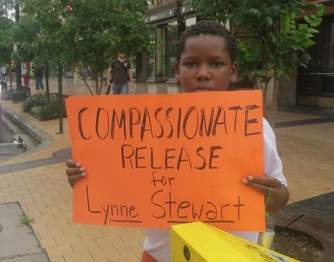
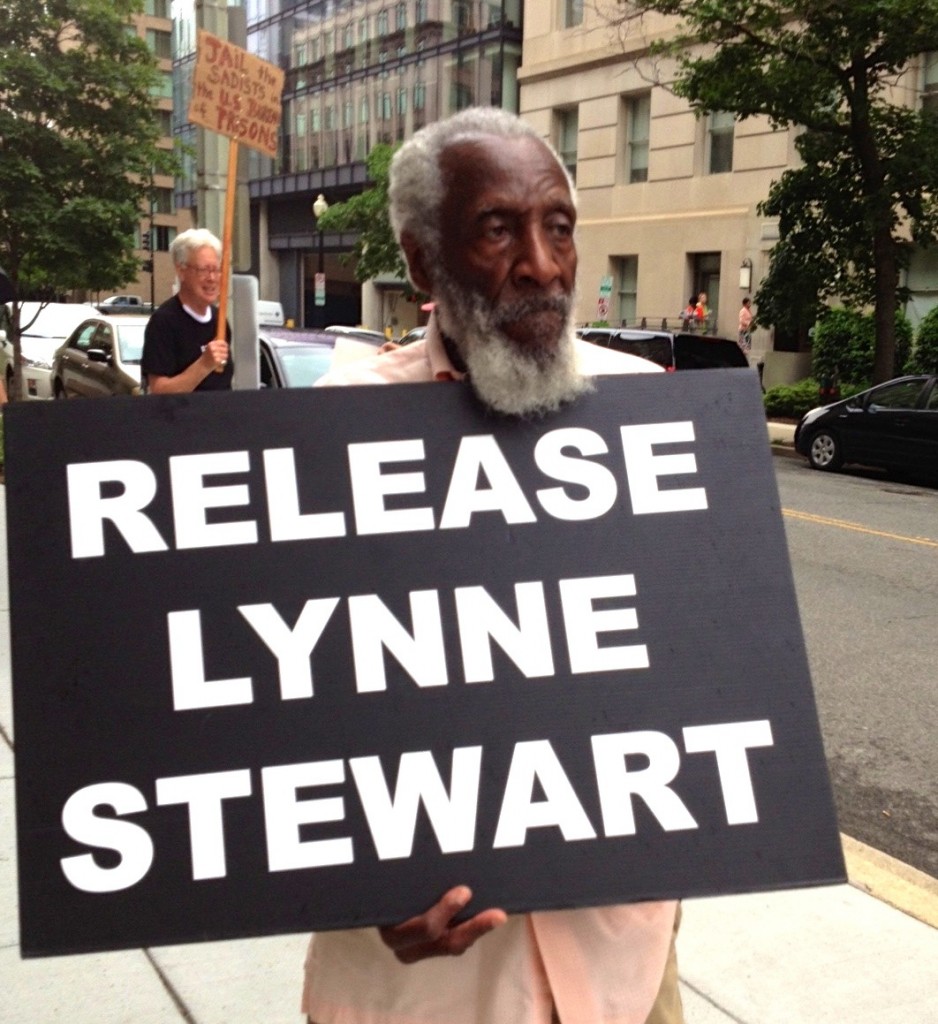
Last week Federal District Court Judge Koetl in New York stated he couldn’t consider Lynne Stewart’s request for compassionate release because by law the request needs to come from the Federal Bureau of Prisons. Judge Koetl also pointed out that the Bureau of Prisons didn’t properly consider Lynne’s medical evidence by saying her condition was improving. Meanwhile, Lynne’s doctors have given her a prognosis of 24 to 18 months to live.
Attorney Jill Shellow Levine:
- One of the things his opinion makes clear (Judge Koetl) is that the Bureau of Prisons under the statute makes a motion, he will swiftly and compassionately view the motion.
- Our application would have required him to think outside the box. I think he’s reluctant to do that at least now.
- You can continue your letter writing campaign to the director of the Bureau of Prisons in Washington DC. You can contact your Congress people both on the Senate side and the House side and urge them to get involved and to make known to the director that this is important to them.
- Those are probably the things that count the most.
- Please call to push for Lynne’s release from prison.
- U.S. Bureau of Prisons Director Charles E. Samuels – 202-307-3198 Ext. 3
- U.S. Attorney General Eric Holder – 202-514-2001
- President Barack Obama – 202-456-1111
- Please Write to: Charles E Samuels Jr. / Federal Bureau of Prisons / 320 1st Street Northwest / Washington DC 20534
Guest – Attorney Jill Shellow-Levine, Lynne’s attorney and National Lawyers Guild member.
—–
One Nation Under Surveillance Campaign: Partnership For Civil Justice Fund
In the wake of leaks about the National Security Agency’s massive surveillance program, many ask what legal steps to stem the pervasive breach of civil liberties. We’ll talk with attorney Carl Messineo from the Partnership for Civil Justice Fund about their campaign One Nation Under Surveillance. Years before 9/11 the Partnership was engaged in litigation and advocacy about the ways in which the government and corporations spy on individuals.
The FOIA request reads in part: “The people of the United States have an urgent need for disclosure of the requested information regarding what appears to be the largest covert surveillance program directed against them in U.S. history. The U.S. government and its agencies that are carrying out these unprecedented surveillance programs are not entitled to hide these programs from the public.”
Attorney Carl Messineo:
- One Nation Under Surveillance campaign is a composite of multiple programs that the PCJF has undertaken to challenge and to fight against the surveillance state.
- The program includes public records demands, FOIA requests, lawsuits, litigation as well as campaign and advocacy.
- We’ve been looking at the issue of anti-terror authorities and surveillance authorities being misused to target law abiding people in the United States and in particular those engaged in political activity, well before even 9/11.
- These anti-terror and surveillance authorities, while they were pumped up dramatically after 9/11 were actually being utilized to disrupt, to monitor, surveil, peaceful, political activists even before that catastrophic event occurred.
- The monitoring is done at the behest of private corporations and that’s revealed most clearly in the public records disclosure that we have secured as related to the Occupy Movement.
- Those documents reveal corporations working hand in glove with law enforcement to surveil, to counter, to disrupt the political messaging that this grassroots peaceful movement had.
- This is a movement that came about because of tremendous economic insecurity. People are one pay check away from not being able to meet their basic needs.
- The Wall Street corporations sit in the command centers of law enforcement, so that they have free access to the same flow of information.
- What Manning and Snowden have revealed to us is really a clarion call to action.
- What the NSA does intercept comprehensively, gmail communications, telephone logs of all of our communications.
- Who is that targeting? It’s targeting the law abiding person in the United States. Think about it for a second. What competent terrorist is going to be relying on gmail or google in order to conspire or plan?
- The “undernet” is not being captured. The virtual private networks.
- It completely eliminates the concept of privacy. The privacy implications are staggering. It’s all been done secretly, with secret courts in the United States.
- Senators who had knowledge of this information, and critical of the programs did not possess the First Amendment right to bring or focus attention to these details by citing specifics because they were under gag orders.
- We certainly know the surveillance complex is massive. Edward Snowden didn’t access the top secret documents that he did by working at the NSA. He had to work as a private contractor at Booz Allen.There’s a huge profit incentive. The use of permanent war. There must be a declaration of war in order for emergency powers that are ancillary to those powers to come into effect.
- There needs to be public debate before there is war. But a new concept was developed under the Bush Administration and is perpetuated under the current.
- The notion that there is a permanent state of undeclared war.
- Anti-crime and anti-terror authorities have been used by the government as tools.
- This is a predominant threat of having these tools of social and political control out there and systematically deployed so that the government and the corporations with who they work hand and hand, can anticipate, can know and can suppress and disrupt, democratic action. The lifeblood of a democracy.
- The government governs only by consent and that’s part of the violation here of all of this secrecy.
- A new debate is starting across this county of how do we seize control over these technologies.
- What we’re doing at the Partnership for Civil Justice Fund is a combination of activism and litigation.
- The government has operated in secret because it fears the public’s reaction.
- We have filed public records demands with the NSA, the FBI, the CIA, with other defense and military entities because that’s who is doing this. It’s coming out of the military.
- Our requests demand disclosure to the public, what are the record keeping systems, what are the safeguards, what are the rules, what are the authorities?
Guest – Attorney Carl Messineo, legal director and co-founder of the Partnership for Civil Justice Fund.
———

The Struggle Continues: Seeking Compensation for Vietnamese Agent Orange Victims, 52 Years On
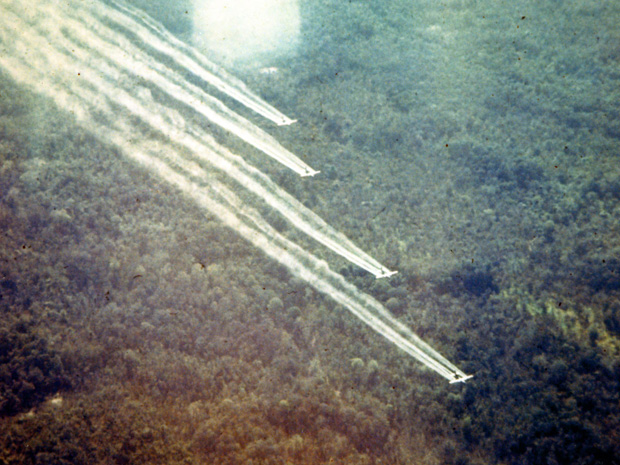
The long term damage left by Agent Orange upon millions of Vietnamese, and the many thousands of U.S. soldiers has yet to be properly accounted and compensated for. Agent Orange’s long term damage set upon the ecosystems of Vietnam 52 years later include long term poisoning of soil and ground water, and near permanent destruction of mangrove forests. Chemical companies such as Monsanto and Dow have profited from defoliant chemical and has paid very little to settle veteran’s lawsuits for Agent Orange related illnesses. Meanwhile, second and third generation of Vietnamese civilians are seriously effected by Agent Orange exposure.
Attorney Marjorie Cohn:
- Studies show that between 2 million 4 hundred thousand and 4 million 8 hundred thousand Vietnamese and tens of thousands of Americans were exposed to Agent Orange during the spraying of Vietnam from 1961 to 1971.
- The Department of Veterans Affairs recognizes certain illnesses and diseases as being associated with the use of Agent Orange. Lists diseases. . .
- During the Nixon Administration there was a promise, in 1973 as part of the Peace Accords that were signed in Paris. The Nixon Administration promised to contribute 3 billion dollars toward reconstruction and healing the wounds of war and that money has not been forthcoming.
- The chemical companies, Dow and Monsanto paid a pittance to settle a lawsuit to compensate unintended victims for Agent Orange related illnesses.
- The intended victims, the Vietnamese sued the chemical companies in U.S. Federal Court and were unsuccessful. But the lawsuit spawned to hold the United States accountable for using these dangerous chemicals.
- HR 2519, The Victims of Agent Orange Relief Act of 2013. It would provide medical and rehabilitative compensation to Vietnamese victims of Agent Orange and medical services for children of U.S. Vietnam veterans and Vietnamese Americans who have been born with these same diseases and birth defects.
- It would also remediate or clean up hot spots which have been contaminated by dioxin.
- Dioxin is the culprit in Agent Orange. Dioxin the most toxic chemical known to science.
- The US government and the chemical companies did know about it (harmful effects) and they covered up a report and it wasn’t until the late sixties that they stopped spraying Agent Orange because of the negative publicity.
- Now it falls to the Peace Accords in 1973.
- Vietnam Agent Orange Relief and Responsibility Campaign. I would urge everyone to make sure your Congress person is a co-sponsor of HR 2519. The Victims of Agent Orange Relief Act of 2013.
- Obama who was 14 at the time of the Vietnam War, has come out with a campaign to which looks to rewrite the history of the Vietnam War in a way that actually lies about what the U.S. did in Vietnam.
Guest – Attorney Marjorie Cohn, professor at Thomas Jefferson School of Law and on the board of the Vietnam Agent Orange Relief and Responsibility Campaign. Her latest article The Struggle Continues: Seeking Compensation for Vietnamese Agent Orange Victims, 52 Years On, details a strategy for compensating victims of the Agent Orange chemical.
—————————————————————-
CIA Sponsored Terror, Civil Liberties, Supreme Court, Targeting Muslims, Truth to Power, War Resister
Podcast: Play in new window | Download
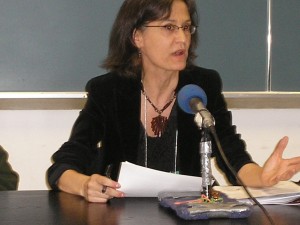
Law and Disorder Co-host and Executive Director of the National Lawyers Guild, Heidi Boghosian Recently Published “Spying on Democracy: Government Surveillance, Corporate Power and Public Resistance.”
—-

Israel-Palestine Peace Talks
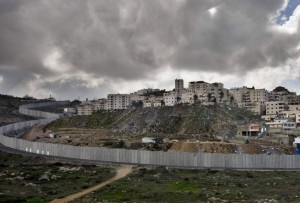
Could the timing of the recent Israel-Palestine peace talks be related to the crisis erupting across the Middle East region? The escalating war in Syria and the massive coup in Egypt have reflected US strategic failures. Now, the U.S. led effort to re-start 22 year old peace talks with Israel and Palestine has again raised suspicion of again benefiting the side of Israel.
Interestingly, former U.S. ambassador to Israel and former deputy research director of AIPAC, the pro-Israel lobby, Martin Indyk will be acting as the U.S. envoy in the negotiations. The stated goals of these new peace talks according to our guest Phyllis Bennis, director at the Project Institute for Policy Studies will not end the occupation, or the siege of Gaza, or the decades of dispossession and exile of Palestinian refugees but only current tension and dispute.
Phyllis Bennis:
- 1947 is when the British really threw up their hands and said we don’t want to be the official colonial power in historic Palestine any more so we’re going to turn it over to the UN.
- At the end of November in 1947, the UN decided to divide Palestine and make two states.
- It started out incredibly unfair because what they decided to do is give 55 percent of the land to become a quote Jewish state but that was a time when the Jews amounted to 30 percent of the population.
- The Palestinians who were 70 percent of the population were supposed to get what was to become a state only 45 percent.
- The war that broke out that was as much against the British as it was against the Palestinians and what were to become the Israelis but were at the time Zionist militia, the war led to the expulsion, many at gun point of 750 thousand who were driven into exile, off their land. At the end of the war, the Palestinians were left with only 22 percent.
- The Israelis controlled 78 percent of historic Palestine and all of western Jerusalem. Jerusalem was supposed to be separate under international law, it was called corpus separatum, that was to be governed internationally and not governed by either of these states.
- That’s what led up to the period from 1948 and 1967. Jordan took over administering the West Bank, and East Jerusalem – and Egypt took over administering the Gaza Strip.
- In 1967, war breaks out, what became known as the Six Day War. The Egyptian Air Force is the first target of the Israeli military.
- The Israeli military was really good, they had gotten their arms mainly from France and Czechoslovakia. It’s interesting because in that period from 1948 and 1967, the U.S. supported Israel but it wasn’t the kind of special relationship we see now.
- At the end of 6 days, they now controlled 100 percent of historic Palestine. They now had been occupying what had been left to the Palestinians after 1948, which meant the West Bank, the Gaza Strip and East Jerusalem.
- We can look back at this particular process, it goes back 22 years to Madrid Conference of 1991.
- I was at Madrid, I was really young, Netanyahu, was the spokesperson for the delegation. I went head to head with him at a press conference in Madrid.
- That led to the Oslo process, and what we have now. We’ve had the “road map” we’ve had the Anapolis meetings, we had the Y-River Accord.
- In 1967, the US is desperate for allies it can rely on, against the Soviet Union, against the anti-colonial movements that are springing up across Africa.
- Here’s Israel that just trounced 6 Arab armies and the Pentagon looked at that and said, we could do business with these people.
- So the Pentagon starts to build this relationship with Israel that goes beyond joint training. Soon you have the beginning of the interlocking connection between the Israeli military, military producers, war profiteers, military corporations and that gives rise to the whole new influence to the long standing pro-Israel lobby.
- At the end of the cold war, the value of Israel begins to be a liability. That’s when you see some changes in US policy.
- Then you have 9/11 and the global war on terror and Israel is a great strategic ally again. It’s an asset again, not a liability anymore.
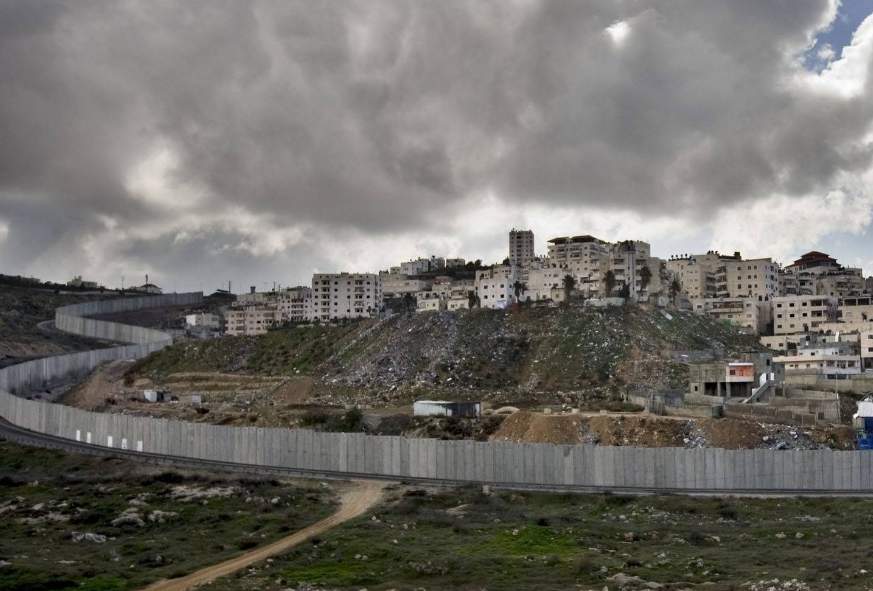
- This idea of land swap is the code word that the U.S. and Israel have been using for the last 7 or 8 years. That is based on the idea that Israel will keep all its major settlement blocs – about 80 percent of the current 600 plus thousand illegal Israeli settlers that are living in illegal Jews-only settlements in the occupied West Bank, and the occupied East Jerusalem.
- About 80 percent of the settlers would stay, all the major settlement blocs. These are cities of 40-50 thousand people with shopping centers and swimming pools and colleges and industrial zones, with industrial waste going down the hill into Palestinian villages at the bottom.
- Israel will all of those, Israel will keep all the major water aquifers of the West Bank, and they will call that “land swap” because in return they will give Palestine a few acres of desert land, abutting Gaza or some other land that’s not developed.
- The Coalition of the US Campaign To End the Israeli Occupation. EndtheOccupation.org
- The BDS movement. Boycott, Divest and Sanction which is aimed at stopping Israel’s violation of international law. If it doesn’t there will be consequences that we as a civil society can bring in stop buying settlement produced goods. In Europe, the BDS movement has pressured enough countries that the European Union has now issued new guidelines calling to an end of any European Union funding of any institutions or individuals in the occupied territories.
Guest – Phyllis Bennis, directs the New Internationalism Project at IPS. She is also a fellow of the Transnational Institute in Amsterdam. She has been a writer, analyst, and activist on Middle East and UN issues for many years. In 2001 she helped found and remains on the steering committee of the U.S. Campaign to End Israeli Occupation. She works closely with the United for Peace and Justice anti-war coalition, co-chairs the UN-based International Coordinating Network on Palestine, and since 2002 has played an active role in the growing global peace movement. She continues to serve as an adviser to several top UN officials on Middle East and UN democratization issues.
—–
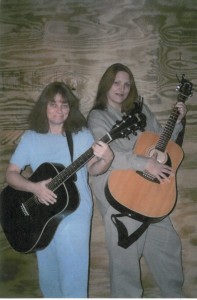
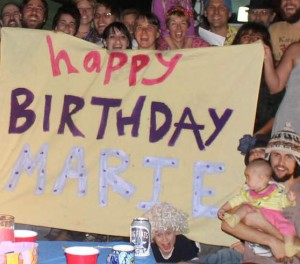
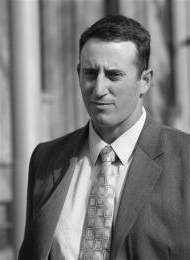
Green Scare Crackdown and Monsanto Political Prisoner Marie Mason
Long time activist in environmental and labor movements Marie Mason continues to serve out a harsh 22 year prison sentence based on her involvement in two attacks of property damage and arson. Marie Mason is considered an eco-terrorist and is serving the longest sentence of any convicted animal rights or environmental militant. In one of the attacks, Mason and her husband Ambrose set fire to a Michigan State University building, targeting a Monsanto funded office in charge of a genetically modified crop research program to create moth resistant crops for Africa. Marie Mason was later set up by her husband who recorded their conversation that led to her conviction. As we continue to report, since 9/11, environmental radicals have been labeled terrorists, and charged with overly long sentences. This is part of what’s known as the “Green Scare” campaigns that seek to put a chill on dissent.
Peter Werbe:
- Marie Mason was an environmental activist from the Detroit area.
- In January 2000 she committed a number of acts the government considered illegal. They were eco-sabotage. Frustrated by her lack of ability, her and others to mobilize great numbers of people to defend the environment against things like genetically modified organisms.
- She and her husband at the time entered a research lab at Michigan State University and set fire to these records. Arson under the law. She also damaged logging equipment in an area where they were doing clear-cutting.
- When you get these “frankenstein” genes into the environment, there’s no longer a debate. When you clear cut an old growth forest, that’s the end of debate as well.
- She was desperate. She actually escaped apprehension until her husband who actually became estranged from her was caught in another matter and ratted her out in 2007.
- She was brought to trial. He actually wore a wire taping her and going around the country, making 140 other recordings of environmental activists but was only able to ensnare her.
- She was tried for these acts in Federal Court, and found guilty. She pled guilty. The judge gave her 22 years.
- She is now the longest serving prisoner of this nature. (Federal Terrorism Enhancement Law) No one was ever injured in any of these.
- There are these Catholic peace activists who regularly go down to Tennessee to protest against nuclear facilities there and previously they were convicted under misdemeanors. They are now facing up to 15 years in prison on federal charges.
- Marie Mason appealed her sentence saying it was disproportionate to other federal guidelines for sentencing. Unfortunately, the right-wing Bush appointed judge wrote the sentencing guidelines so she didn’t get anywhere with the Circuit Court of Appeals.
- She was sent to a federal woman’s facility in Minnesota where she did good work. She was a model prisoner, but one day about two and a half years ago – in the middle of the night she was taken to administrative segregation. The hole. Held there for a couple of months and suddenly in the middle of the night in chains, taken in a small plane and took off. She said she thought she was going to Guantanamo or something like that.
- She wound up in the Special Administrative Unit in Carswell Federal Medical Center. Lynne Stewart is in Carswell but she’s in the general population. Women are sent there with medical difficulties but its a horror show.
- She was told she was moved because she was recruiting for the Earth Liberation Front, that she maintained a connection via email that was provided by the prison.
- They don’t want to restrict her communications, they want to see who is writing her.
- She has written extensively for the Fifth Estate Magazine.
- Marie’s support is worldwide. SupportMarieMason.org
Guest – Peter Alexander Werbe, American radio talk show host and a progressive political activist. His home is Detroit, where he has become a fixture spinning discs and hosting Nightcall Sunday nights on Detroit’s WRIF 101.1 FM. Peter Werbe’s tenure, having commenced in 1970 has resulted in 2 popular radio programs: Nightcall and The Peter Werbe Show. He currently hosts a Mon-Fri classic (webstream) rock show Deep Trax on WCSX. He is also a staff member of Fifth Estate magazine.
—–
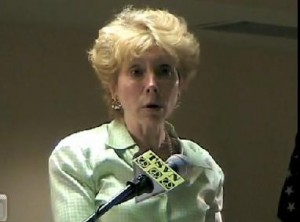
Left Forum 2013: Dr. Harriet Fraad
We hear an excerpt of a presentation from Harriet Fraad is a hypnotherapist & psychotherapist in Manhattan. She writes regularly for Truthout, Tikkun and The Journal of Psychohistory. Her blog with Richard D. Wolff, Economy and Psychology appears at HarrietFraad.com and RDWolff.com. Her latest book is Bringing It All Back Home ed. Graham Cussano. Her article on Emotional and Sexual Life in a Socialist America written with Tess Fraad Wolff will appear in the book Imagine A Socialist America- (Harper Collins 2013). This panel explores what Socialism could look like in the United States.
———————————————
CIA Sponsored Terror, Civil Liberties, Criminalizing Dissent, Human Rights, Military Tribunal, Political Prisoner, Prison Industry, Surveillance, Torture, Truth to Power
Podcast: Play in new window | Download
Updates:
—–
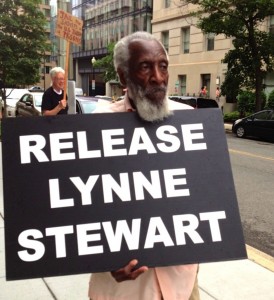
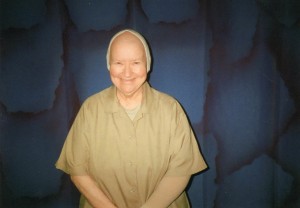
Lynne Stewart: Continued Support For Compassionate Release From Prison
As many listeners know, political prisoner, attorney, activist and friend attorney Lynne Stewart was denied compassionate release on the grounds that her health is improving. Not only is that untrue, it’s cynical. Cancer has spread to her lungs as Lynne is held in isolation. Her white blood cell count is so low that she is at risk of generalized infection. Lynne was convicted on charges related to materially aiding terrorism, related to her representation of Omar Abdel Rahman. Her original 2 year sentence was increased to 10 years after the government pressured the trial judge to reconsider his sentencing decision.
Please call to push for Lynne’s release from prison.
- U.S. Bureau of Prisons Director Charles E. Samuels – 202-307-3198 Ext. 3
- U.S. Attorney General Eric Holder – 202-514-2001
- President Barack Obama – 202-456-1111
Guest – Ralph Poynter, Lynne’s husband and an activist.
——–
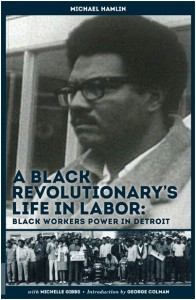
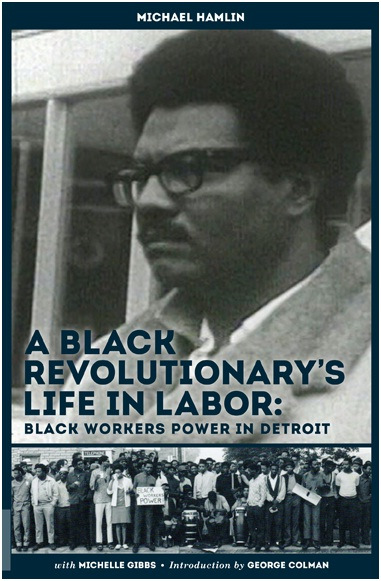
Michael Hamlin: Black Workers In Detroit
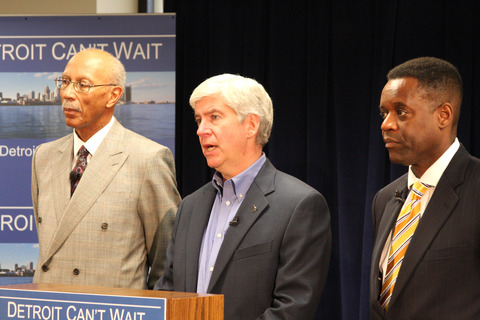
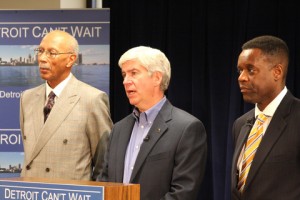
Last month, our guest, retired auto worker and activist Dianne Feeley discussed the plans of emergency manager of Detroit, Kevyn Orr that would wipe out the pensions and health benefits of all current and retired city workers. Nine billion in worker benefits are in the cross hairs of this plan that would impoverish 20 thousand retirees on fixed incomes. There are only 10 thousand city employees left in Detroit who’ve had their pay cut by 10 percent, and now their medical care. This has since made international news. Today we look at the history of workers in Detroit from the perspective of black workers and how what’s happening now can fit into the broader pattern of oppression.
Mike Hamlin:
- Well, I came here from sharecropping country in Mississippi. We landed in a suburb of Detroit that was segregated.
- My father was run out of Mississippi, just ahead of the sheriff. His sister lived out here. We lived in a project, 2 bedroom apartment. There were 8 of us in this 2 bedroom apartment. The people looked out and cared for each other. My mother was only 15 years older than me, so we grew up together.
- It was a peaceful community, sometimes interrupted by weekend drinking, arguing and spouse abuse.
- At that time we were so completely repressed and segregated. Those of us in the south were prepared for that because in the south you had to learn to keep your place.
- We’d submit and we played the game. Go to school or go to the factory.
- Most of my friends quit school and went into the factory. My father advised me to do the same but I wouldn’t.
- The factories at that time were hiring and he eventually got into Ford.
- Most of the workers there either worked at Ford or Great Lakes Steel.
- The typical pattern was they moved to the north got a job in the plant, bought a new car, I’m sure that created a lot -of angst.
- He used to be quite a cotton picker. The Ford job was like play to him. He worked a lot of overtime-kinda typical.
- The situation with the bankruptcy is kind of a culmination.
- If you know black history. . . there’s a history of destroying black communities that are prosperous.
- You look at Tulsa, Rosewood.
- There has always been bitter hatred in Michigan throughout on part of blacks toward whites.
- The racial aspect of this bankruptcy should not underplayed or underestimated.
- People outside of Detroit have been tearing it down since the 50s.
- There’s joy in Mudville now that Detroit is bankrupt.
- Quicken Loans gives his employees incentives to move into downtown lofts and apartment complexes.
- Detroit is going to prosper again.
- The population is changing. It was 85 percent black. It hasn’t been counted recently.
Guest – Mike Hamlin, co-founder of the Dodge Revolutionary Union Movement and the League of Revolutionary Black Workers. For 35 years, Hamlin worked as a social worker and addiction therapist. He is currently a professor of Africana Studies at Wayne State University.
——
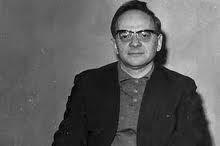

Remembering Journalist and Author, Henri Alleg
In November of 2007, we were fortunate to interview French-Algerian journalist Henri Alleg. Henri passed away last week. He was 91. We talked with him about his book, The Question, a moving account of his arrest and torture at the hands of French paratroopers during the Algerian War of Independence. The book became a bestseller and created major public debate in France. Jean-Paul Sartre wrote the preface that remains a relevant commentary on the moral and political effects of torture on the both the victim and perpetrator. The book was eventually banned by the authorities.
Professor Marnia Lazreg:
- I had worked on the issue of torture during the Algerian War 1954-62.
- I read Henri Alleg’s The Question. It really struck a chord with me.
- There were times in my research and writing where I lost complete faith in humanity or the notion of humanism.
- I lived in the Arab area in the city where I was going to high school and in the mornings I would see hundreds of men in line at the unemployment office.
- I read The Question and I realized he was speaking to me.
- He was tortured mercilessly, and he didn’t talk, he didn’t crack.
- He was the also the first French intellectual who blew the whistle on the hypocrisy of the colonial military establishment which was spreading this news that they were in Algeria to save this country.
- What Alleg wanted to do was show in a very powerful manner that France had not changed from the Middle Ages.
- In fact, France was engaging in the same practices 9 years after it fought fascism, Nazism in Europe.
- He was writing about what happened to him while it was still fresh in his mind. Memories become jumbled, the suffering is so intense.
- He was writing on cigarette paper and he had it smuggled out of the prison. It showed something about Alleg’s personality. He was not going to be muzzled, or silenced. He was going to continue to resist.
- What he said couldn’t be denied because he bore the signs of torture in his own flesh.
- Sarte asked how could such young men exhibit the same kind of hatred toward the Algerians and those that supported the Algerians.
- Alleg asked me to have dinner at his home. We had a marvelous dinner. With him I did not have to explain the premises of my views or my opinion.
- We never met before but I could talk to him and he could understand what I was talking about.
- We live in an age where humanism is a bad word. Anti-humanism is very well established in academic institutions.
- To me, Alleg represented perhaps one of the last figures of the humanist era. It was an era also when you had people who fought for what is human. What is worth dying for . . preserving that basic fundamental human dignity which characterizes all human beings regardless of their race, nationality.
Guest – Marnia Lazreg is professor of sociology at Hunter College and the Graduate Center of the City University of New York. Her books include Torture and the Twilight of Empire; From Algiers to Baghdad and The Eloquence of Silence: Algerian Women in Question.
Past Law and Disorder Interview with Henri Alleg
Past Law and Disorder Interview with Marnia Lazreg
———————————————————
Afghanistan War, CIA Sponsored Terror, Civil Liberties, Criminalizing Dissent, Extraordinary Rendition, FBI Intrusion, Habeas Corpus, Human Rights, Military Tribunal, Political Prisoner, Prison Industry, Surveillance, Targeting Muslims, Torture, Truth to Power, War Resister
Podcast: Play in new window | Download
Updates:
- Michael Ratner: Bradley Manning’s Defense Makes Case To Dismiss Aiding The Enemy Charge
- Freedom of the Press Foundation For Transcripts
- Update: Judge Upholds Aiding The Enemy Charge in Bradley Manning Trial
—
NLG Obtains $1.17M, OPD Reforms for Occupy Oakland Protesters and Journalists
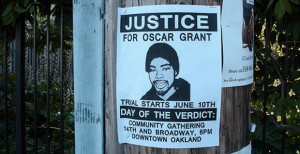
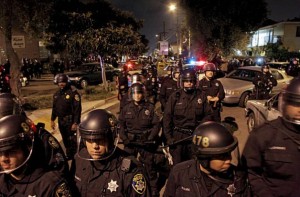
In recent weeks, attorneys from the National Lawyers Guild achieved two significant victories for the rights of protesters faced with police brutality and unlawful repression. The first came when the city of Oakland settled a class action lawsuit for more than 1 million dollars. The second victory occurred in early July when Oakland City Council approved a settlement for 1.17 million in another lawsuit arising from police actions at protests. As part of these settlements, the Oakland Police Department is now legally obligated to follow a crowd control policy. This policy which already existed but lacked enforcement outlines limits on police department officer’s use of force and the ability to make mass arrests in protest situations.
Attorney Rachel Lederman:
- The first case has to do with the demonstration that had occurred on the day Johannes Mesterly was sentenced for the death of Oscar Grant. That’s the BART officer who shot Oscar Grant in the back as he was restrained facedown on the subway platform.
- There’s a movie out about the last day in the life of Oscar Grant called Fruitvale Station that I would highly recommend seeing it’s playing all over the country now.
- The death of Oscar Grant sparked a large number of demonstrations. November 5, 2010 was the date that Mesterly was sentenced and he was given a very minimal sentence of involuntary man slaughter of 2 years, 11 months with time served.
- There was a demonstration planned for that evening it was actually a very small demonstration. OPD had planned to not allow a march after dark.
- There was a rally that was permitted in downtown Oakland and then about 200 people started marching in the direction of Fruitvale Bart where the shooting had occurred. As soon as the march started the police began to set up for mass arrest.
- When a police line would be erected in front of the march people would naturally turn another direction. This went on for a while, where the march was re-routed.
- Eventually the OPD herded people to a residential area where they didn’t intend to go. The police announced it was a crime scene and began arresting everyone.
- The Oakland City Police have been under consent decree since January 2003 mandating reform process.
- We’ve had this crowd control policy in place but basically every single provision of the crowd control policy was violated in the Occupy Oakland incident and the Oscar Grant incident.
- We brought those cases to try to enforce the crowd control policy. A lot has changed in the last six months.
- There’s also been a new shake up of command (OCP) there’s a new acting chief.
Guest – Rachel Lederman, a California based National Lawyers Guild attorney who worked on both cases. Rachel first got involved in police misconduct civil rights cases as a result of her criminal defense work with political demonstrators. In 1989, Dennis Cunningham and Rachel Lederman successfully sued the San Francisco Police to obtain justice for AIDS activists who had been brutalized and unlawfully detained in what became known as the “Castro Sweep”.
—–

Surveillance Blowback: The Making of the U.S. Surveillance State, 1898-2020
What is the history and context of surveillance in the United States? Last week Scott Horton explained how the Foreign Intelligence Surveillance Act court devolved into a panel of judges making decisions in secret that influence federal law. Returning guest Alfred McCoy traces the US surveillance apparatus back to the late 1800s and brings us up to understanding the context of leaked NSA documents by whistle-blower Ed Snowden. In his latest article titled Surveillance Blowback: the Making of the U.S. Surveillance State 1898-2020, Al McCoy, Professor of History at the University of Wisconsin-Madison details the surveillance timeline beginning with the US occupation of the Philipines and makes the connection to US imperialism abroad and apathy at home.
Professor Alfred McCoy:
- Four years ago I published a book called Policing America’s Empire which started in the Philipines and started the history of US domestic surveillance through what I call surveillance blowback.
- It’s the trajectory of history that allows you to see this.
- In the late 19th century America had what I call our first information regime which was really a brilliant synergy of discoveries.
- Thomas Edison’s quadruplex telegraph, Remington’s typewriter allowed the transmission around the world, across the nation, absolutely accurately at 40 words a minute.
- The Gamewell Corporation for a half century during the 19th century was the world leader in the development of police telegraph and telephone communication – those police boxes that used to be on the streets of every American city.
- The Gamewell Corporation had 900 of these boxes in operation and collectively they sent 41 million messages in the year 1900.
- When we intervened in the Philippines we were suddenly faced with this massive insurgency, this guerrilla underground. We smashed the regular military formations but we couldn’t break the insurgency.
- The US military in order to pacify that country created the first field intelligence unit in its 100 year history.
- They appointed an obscure medical doctor Captain Ralph Van Deman to be the head of the division of military information.
- He decided he would map the entire Filipino political elite.
- William Howard Taft passed very draconian sedition and libel legislation and created a powerful colonial secret police called the Philipines constabulary. It took about 10 years to accomplish. 1898-1907
- We had to track down the politicians (Philipines) we had to manipulate them.
- 10 years after that process, the US joined WWI. April 1917.
- The United States was the only army on either side of the battlefield that didn’t have an intelligence service with any description.
- We turn now to Colonel Van Deman who applied his Philippines experience to developing a very elaborate counter-intelligence apparatus inside the United States.
- Mr and Mrs Van Deman ran a private intelligence service that had Army file clerks and regular FBI liason officers dropping by.
- And from their home they compiled files on 250 thousand suspected subversives.
- They divided the world. Basically, North America, Latin America became the purview of the FBI for counter-intelligence the rest of the world became purview of US military intelligence and of course the CIA and then NSA.
- That division of the word remain in effect until December 2011.
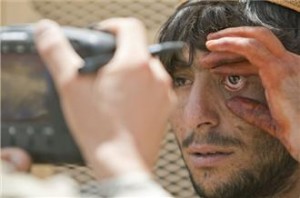
- 3 million Afghani iris scans and fingerprints are housed in a main frame computer in West Virginia.
- So, we developed then, this very efficient system of surveillance and digital monitoring overseas.
- During the war on terror we now know the Bush Administration beginning October 2001 authorized the NSA to start massive capping of all digital communications.
- In March of this year, it was 97 billion emails that were tapped by the NSA.
- This began migrating home very very quickly.
- When Obama came even though he criticized this illegal wiretapping, when he came in, instead of cutting it back like the Republicans did in the 1920s, he decided to build upon it.
- What he’s building upon it for is to build an architecture for the exercise of global power through a significant edge or advantage for information control and information warfare.
- Obama wants to cut back on the appropriations for the big behemoths, the heavy tanks, the big ships and he wants to shift us into an agile form of information warfare and global information control.
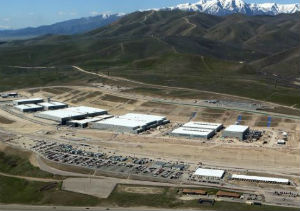
- The NSA is spending 1. 6 Billion dollars for the world’s biggest data farm in Bluffdale, Utah.
- The National Geo-spatial Intelligence Agency has a nearly 2 billion dollar headquarters with 16 thousand employees in DC.
- The Obama Administration has launched a new generation of light low cost, very agile satellites that can be remotely controlled from the ground, serving ground force commanders.
- The Obama Administration is also building an armada of 99 Global Hawk drones with 24 hour flight capacity. These are surveillance drones with a 100 mile ambit for sucking audio communications.
- With the combination of drones sucking up the local two way radio – cell phone communication with the tapping of the fiber optic cables within the US by the NSA, and internationally by the Five Eyes Coalition, Canad Australia, New Zealand and Britain, means that the NSA will have a total global surveillance system for the first time in human history.
Guest – Alfred McCoy, Professor of History at the University of Wisconsin-Madison. His recent book, Policing America’s Empire: The United States, the Philippines, and the Rise of the Surveillance State (2009), draws together these two strands in his research–covert operations and Philippine political history–to explore the role of police, information, and scandal in the shaping both the modern Philippine state and the U.S. internal security apparatus. In 2011, the Association for Asian Studies awarded Policing America’s Empire the George McT. Kahin Prize, describing the work as “a passionate, elegantly written book.” He’s also the author of “Torture and Impunity: The U.S. Doctrine of Coercive Interrogation.” Al is also the author of “A Question of Torture: CIA Interrogation, From the Cold War to the War on Terror” and “The Politics of Heroin: CIA Complicity in the Global Drug Trade. The first edition of his book, published in 1972 as The Politics of Heroin in Southeast Asia, sparked controversy, but is now regarded as the “classic work” about Asian drug trafficking.
—————————————————
CIA Sponsored Terror, Civil Liberties, Crony Capitalism, Guantanamo, Habeas Corpus, Human Rights, Military Tribunal, Political Prisoner, Prison Industry, Prosecution of the Bush Administration, Supreme Court, Surveillance, Targeting Muslims, Torture
Podcast: Play in new window | Download
Updates:
- Prisoner’s Hunger Strike: Pelican Bay Prison, Guantanamo Bay Prison, Palestinians In Israeli Prisons
- CCR Lawsuit – Pelican Bay Prisoner Class Action
- 20 Plus Palestinians On Hunger Strike In Israeli Prisons Demand Better Conditions For Pelican Bay Prisoners
- Federal Judge Gladys Kessler Says the President Is The One To Stop Force Feeding and Release Cleared Guantanamo Bay Detainees
- Bradley Manning Trial: Important Proceedings During Defense Case At Ft Meade, Maryland
—-
Secret Federal FISA Court Advocate of National Security State
Here on Law and Disorder we’ve discussed the process of the US government expanding its power to get wiretapping permission from the Foreign Intelligence Surveillance Court or FISA court. This is under a provision called section 215 of the Patriot Act which if listeners might recall was set to expire in 2009. It did not. We discussed how the FISA court will be accessed by what’s called Lone Wolf Authority or National Security Letter Authority whereby the FBI can write a letter to the court without suspicion of terrorism and get bank, telephone and internet records.
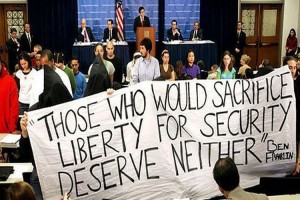
The 11-member FISA Court has been central to allowing a massive surveillance state to exist by granting US agencies such as the NSA access to private telecommunication data. Today, the FISA court essentially operates as an advocate for the national security state. It’s judicial oversight now parallels the Supreme Court. But more troubling, these FISA Court Justices operate in complete secrecy and base their decisions from hearing only one side the argument, the US government’s.
Attorney Scott Horton:
- The Nixon Administration attempted to use “intelligence gathering” as a justification. Congress reacted to that by saying we’re not going to agree that the government has the right to wiretap people in the United States on the grounds of intelligence gathering. We’re going to require this judicial check, so Congress created this special court the FISA court.
- The court has been around for a long time, but its become a far more significant entity doing much more work after 9/11.
- It has 11 judges. The judges are selected by the Chief Justice of the Supreme Court, John Roberts.
- The judges are picked from courts all around the country.
- It’s not a secret court in that we know that it exists. It IS a secret court in that it operates in secret.
- Literally, the public doesn’t know what papers are filed with it and doesn’t know about its decision.
- That’s a highly controversial matter because decisions by federal courts constitute law.
- This means that this court is manufacturing secret law that the people don’t know about.
- We don’t know the jurisprudence of this court, we don’t know its decisions, we don’t know the full rationale for all its decisions because most of them have been secret.
- It is very aggressively expanding the power and authority of the NSA in surveillance areas.
- This is a court picked by Roberts who share his attitude. Out of 11 judges we have 10 Republican appointees. It’s very well known that Roberts in making appointments here looks very closely to select only judges who reflect his attitudes about the national security state.
- It is a cherry picked court. A movement conservative perspective which is quite hostile to civil liberties.
- The court has become an advocate for national intelligence services.
- It really puts the whole institution of the court under a cloud right now.
- If you want to disperse that cloud you would make sure those judges are representatives of the country.
- The legal reasoning and interpretation of statutes that should be there for people to see and know and understand and criticize.
- Telecoms: Here they are service providers dealing with consumers, lying to their clients and allowing the government free access to all this information.
- That is a criminal act under various statutes of states including New Jersey and Maine. That have rules that say they may not allow governments, investigators access to this information other than pursuant to a government subpoena or court order.
- This court is sweeping away core rights and making a joke out of the 4th Amendment.
- Whistle-blower damage control strategy: A program to deflect attention from the disclosures themselves.
- There is a move afoot to take this out on the American service providers who cooperate with the NSA, Verizon, AT&T. . .Google and so forth.
Guest – Scott Horton, human rights lawyer and contributing editor to Harper’s Magazine. Scott’s column – No Comment. He graduated Texas Law School in Austin with a JD and was a partner in a large New York law firm, Patterson Belknap Webb & Tyler.
—-


Left Forum 2013: Ron Reosti
Capitalists are not necessary to run firms, nor to run macro-economies and investment says Ron Reosti in his presentation at the Left Forum Panel titled Imagine Living In A Socialist USA, Part 2: Making The American Socialist Revolution.
Speaker – Ron Reosti, his Italian parents imparted to him a working-class identity, a sense of social justice, a belief in the possibility of social change, a commitment to democracy, and a hatred of the undemocratic ruling class. He embraced socialism in his early teens, during the McCarthy era, and has remained committed to that vision. He practices law and is part of the radical community in Detroit.
———————————————-
CIA Sponsored Terror, Civil Liberties, Habeas Corpus, Human Rights, Political Prisoner, Targeting Muslims, Truth to Power, War Resister
Podcast: Play in new window | Download
Updates:
—-

White-washing Human Rights Abuses and Suppressing a Popular Revolution
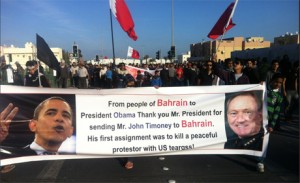
Two years since the Arab-Spring demonstrations erupted in Bahrain, human rights abuses continue to this day. In 2011, an independent report exposes these abuses that compelled the Kingdom of Bahrain to hire former NYPD police chief John Timoney to white was acts of political repression. Who is John Timoney and why was he outsourced to Bahrain? We ask legal worker and journalist Kris Hermes who recently penned the article John Timoney and Kingdom of Bahrain: White-washing Human Rights Abuses and Suppressing a Popular Revolution.
Kris Hermes:
- Shortly after the Arab Spring began in 2011, Bahrain followed in the footsteps of Tunisia and Egypt by demonstrating against the ruling monarchy that’s been in power for more than 200 years.
- Those protests were met with intense repression by King Hamad.
- The protests made of the Shiite population who argue they’ve been systematically discriminated against in employment, housing, education.
- The ministry of interior hired John Timoney as well as John Yates who is from the UK.from Britains metropolitan police department.
- John Timoney started with a long career in the New York City Police Department, he was probably most well known for his handling of the Tomkins Square Park riots in 1988.
- Regardless of what he did to clean up the Philadelphia Police Department, his handling of the Republican National Convention protests were abysmal. He came down very hard on protesters in 2000, essentially establishing a new form of policing in the United States that for the most part was intolerant of political demonstrations.
- He became the police chief of Miami in 2002 and oversaw one of the most violent police reactions in modern history. He not only used what he learned in Philadelphia, conducting preemptive raids, using infiltration and heavy surveillance, brutalizing protesters on the street, and wrongfully arresting hundreds of people.
- In Miami he used a whole panaply of weapons against protesters, including tear gas, pepper spray, rubber and wooden bullets, bean bag rounds, tasers and electric shields.
- He gained a reputation both in Philly and Miami.
- He’s been in Bahrain for a year and a half now and has a two year contract and its just about up.
- That’s the reason why the article was done, an assessment on how Timoney has done in Bahrain in terms of his crown control measures.
- Andrews International: Part of a security apparatus that is increasingly private in terms of policing and security personnel that are deployed around the world.
- It allows the US to expand its militia around the world as well.
- The death toll of political demonstrators has only increased since Timoney arrived on the scene. One of his favorite tools to suppress demonstrations in the United States is tear gas.
- Things are pretty dire for political dissidents in Bahrain.
Guest – Kris Hermes, activist who provides legal support work on cases involving political dissidents.
—-

Egyptian President Mohamed Morsi Ousted Following Days of Massive Largest Anti-Government Protest
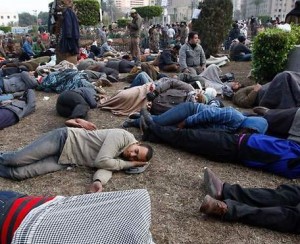
Last week, democratically elected President Mohamed Morsi was ousted following historic demonstrations by Egyptian protesters. Morsi and his advisors have been held under house arrest in the Egyptian Republican Guard Club, the highest Brotherhood leader, Mohammed Badie, and some associates of his have been arrested. Protesters accused Morsi of supporting Obama’s anti-Syrian agenda, ignoring critical economic problems and betraying his support for Palestinians. However, what are the some of the economic issues involved that led up to these massive protests?
Omar el-Shafei:
- We’re going through a real historic process. At least you had 20 million people in the streets expressing their anger in different Egyptian cities.
- This is a continuation of the process that started in January 2011, not just Egyptian but an Arab phenomenon.
- I think its a complete anger, bitterness and disillusionment of the rule of the Muslim Brotherhood.
- We have to remember that the Muslim Brotherhood has been the largest opposition force during the last decade of the Mubarack dictatorship.
- After one year in power they managed to alienate everybody. They were essentially ruling as a continuation of the old regime, and pro-imperialist foreign policy.
- The dominant image of the Arab Spring is purely political, middle class, youthful mobilization aiming at democratizing despotic regimes.
- The Mubarack dictatorship for years and sometimes decades have applied neoliberal economic policy that tremendously increased class divide, so the social element of this revolution was vital.
- In the case of Egypt, the revolution in 2011 came after five years of the biggest wave of workers struggle in the history of the country, since the 1940s.
- The continuation of the revolution is in large part of the worker mobilization. After the revolution we didn’t have independent trade unions, they incorporated by the state.
- More like the agent of the state against the liberal movement.
- Since then we’ve witnessed an emergence of thousands of trade unions and they are playing an important part in the revolution in social demands.
- The message from below even when it is apparently limited demands it has the potential of raising people’s confidence and enhance a process of self radicalization that can link these demands to a wider vision of transformation in society.
- What happened in Turkey a few weeks ago and Brazil more recently has very much has inspired the Egyptian struggle.
- What we are witnessing is a huge mobilization against the Muslim Brotherhood. The military prefer to remain in the background.
- We are in a prolonged revolutionary process and I think that the people are learning from their own experience.
Guest – Omar el-Shafei, political activist, and independent researcher currently living in NYC. He is a doctoral candidate of International Law at Paris VII University in France. Omar is a founding member of the “Committee of Solidarity with the Struggle of the Egyptian People” in Paris, France, and author of “Workers, Trade Unions, and the State in Egypt, 1984-1989,” Cairo Papers in Social Science, American University in Cairo Press (Volume 18, Monograph 2, Summer 1995).
———————————————————————