Afghanistan War, CIA Sponsored Terror, Civil Liberties, Criminalizing Dissent, Gaza, Habeas Corpus, Human Rights, Military Tribunal, Political Prisoner, Surveillance, Targeting Muslims, War Resister
Podcast: Play in new window | Download
Updates:
- Jeremy Hammond Case Update: Currently In MCA
- Julian Assange Update: Ecuador Embassy, London
- Bradley Manning Hearing at Fort Meade – November 27-December 22
- National Security State Eats Its Own? General Petraeus Scandal Analysis
- Israel Bombing Gaza: Operation Pillar of Cloud. Timeline
- CCR Files Complaint Against the UN Committee Against Torture: Canada Directly Violates Convention Against Torture
- UN Vote On Cuba Embargo: Israel Is Among Major Investors In Cuba
—
National Lawyers Guild 75 Years
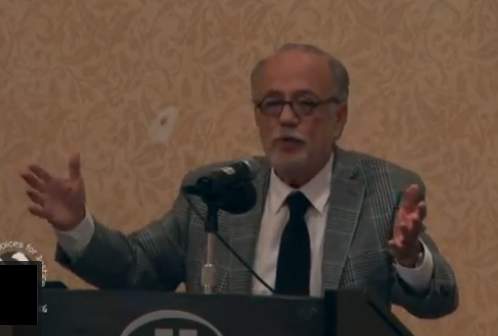
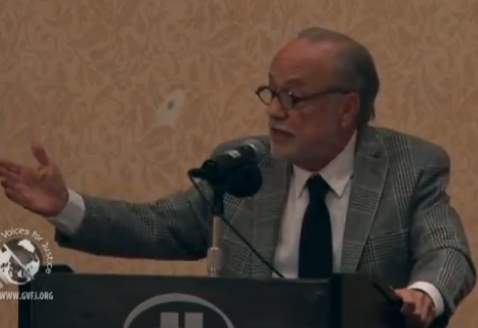
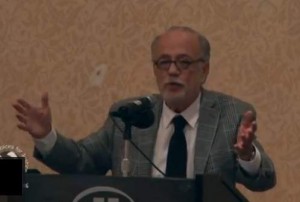
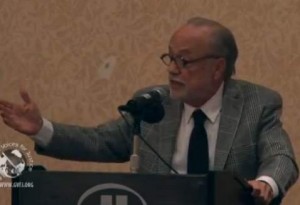
Hundreds of National Lawyers Guild members and allies gathered to celebrate the organization’s 75th anniversary at the Law for the People convention in Pasadena, California. We hear excerpts from speeches from the National Lawyers Guild Convention by Attorney Jim Lafferty The 2012 Law for the People Award was given to Jim Lafferty.
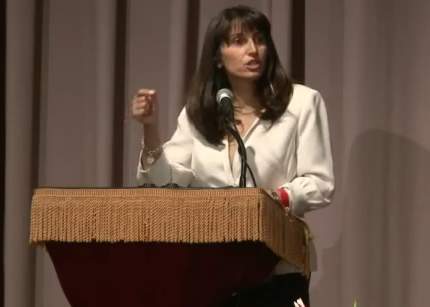
Scholar and activist Angela Davis delivered the keynote address and among the convention honorees will be Margaret Burnham, a professor of civil rights law who, as a young lawyer, helped secure Davis’s 1972 acquittal on high-profile charges.
Founded in 1937, the National Lawyers Guild is the oldest and largest public interest/human rights bar association in the United States. Its headquarters are in New York City and it has members in every state.
Jim Lafferty, Executive director of the National Lawyers Guild in Los Angeles and host of The Lawyers Guild Show on Pacifica’s KPFK 90. 7 FM.
————————————
Afghanistan War, CIA Sponsored Terror, Civil Liberties, Criminalizing Dissent, Gaza, Habeas Corpus, Human Rights, Surveillance, Targeting Muslims, Torture, Truth to Power
Podcast: Play in new window | Download
Updates:
- Hosts Update On Hurricane Sandy
- Obama Re-election: What Does It Mean For Basic Civil Rights? Drones, Guantanamo, Military Commissions, Warrantless Wiretapping.
- PLO and CCR Victory – Muhammad Salah
- Holy Land Case Update – Supreme Court Refuses To Review Sixth Amendment Right
—-

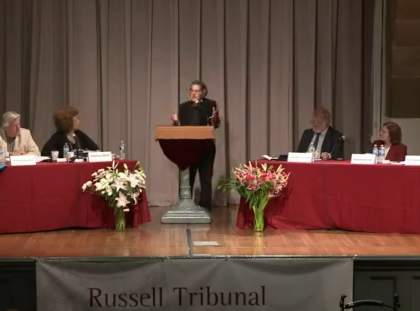
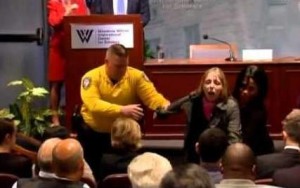
Russell Tribunal on Palestine: Attorney Diana Butto
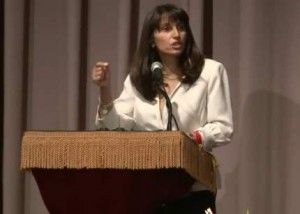
The final session of the Tribunal focused on the responsibility of the United States of America and the United Nations regarding the Israeli breaches of international law towards Palestine and Palestinians. There is now a situation in which Israel has achieved a status of immunity and impunity, facilitated by the US, despite its complete disregard for the norms and standards of international law. We hear an excerpt of a speech by Human Rights Attorney Diana Butto at the Russell Tribunal on Palestine.
Diana Buttu is a Palestinian–Canadian lawyer and former spokesperson with the Palestine Liberation Organization.
She is best known for her work as a legal adviser and negotiator on peace negotiations between Israeli and Palestinian organizations. Buttu was born in Canada to Palestinian parents. She began her work as a negotiator in 2000, shortly after the outbreak of the Second Palestinian Intifada, as a spokesperson for the Negotiations Support Unit of the Palestine Liberation Organization.
—-
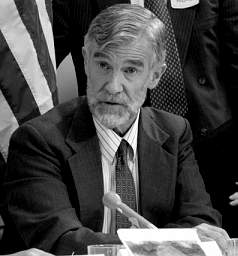
The Moral Challenge of ‘Kill Lists’ by Ray McGovern
The Obama Administration has conducted hundreds of drone strikes in several countries, killing civilians and a US citizen. Critics point out that as the Obama Administration assassinates its’ suspects, it also avoids the legal complications of detention. In last week’s New York Times, authors Jo Becker and Scott Shane expose the priest-like role of counter terrorist adviser John Brennan as he provides Mr. Obama with the moral justification for extrajudicial murder. The framing of John Brennan’s role of priestly adviser caught Ray McGovern’s attention. His recent article The Moral Challenge of Kill Lists, dissects the New York Times story.
Ray McGovern:
- There has been a geometric increase in the number of drone strikes against Pakistan and of course Somalia and Yemen.
- London based bureau for investigative journalism estimates that about 830 civilians including women and children may have been killed by drone attacks in Pakistan. 138 in Yemen, and 57 in Somalia. It’s incredibly naive to think that this helps in any way in the war on terrorism.
- This wonderfully insightful and dangerous New York Times article a week ago talked about the conundrum of aligning these activities with US legal and moral principles. Conundrum? That’s an impossibility.
- The Fifth Amendment prevents this sort of thing if you take the interpretation we’ve always had.
- As the New York Times article mentions 1 out of 30 assassinations that are known about just one escaped assassination and was brought before a court. It’s much easier to kill them.
- If you wanted to learn about al-Qaeda, don’t you think Osama Bin Laden could’ve told us some stuff about al-Qaeda?
- Any military aged male in the area of a “bad guy” is fair game.
- Maybe I can draw from my own experience in the CIA, I know about lists. I know that when there was a coup attempt in Indonesia in 1965, that there were lists given to the Indonesian authorities of communists. How many communists on that list? A million. How many were killed, were murdered? 500 thousand plus. How many were put in prison? The other 500 thousand.
- The drones are really accurate but the target information is notoriously inaccurate.
- I love Fordham and I hate to see the administration and the very wealthy trustees who have lots of money to give to Fordham, determine who comes in to give the commencement address.
- I think that you have to have some kind of personal involvement with innocent suffering. I think that you have to have some sense of the injustice others suffer to let your heart be touched by this direct experience.
- Obama’s fallen in with a rough crowd.
- I was attracted to getting outside of my Catholic walls. There’s a small church down in Washington DC called the Church of the Savior.
- I found out they were doing wonderful things like preventing housing from being gentrified so poor people can still live there. Healthcare, jobs, addictions, a hospice for people to sick to be on the street.
- There’s been one major change for the good in this country. That is Occupy.
- When you look for proof that Occupy has incredible potential, look no farther than what the president and the top senators thought necessary to inject into the NDAA on New Year’s Eve, which allows them to use the US Army of all things to wrap us all up without charge, without court proceedings.
Guest – Raymond L. McGovern, retired CIA officer turned political activist. McGovern was a Federal employee under seven U.S. presidents in the past 27 years. Ray’s opinion pieces have appeared in many leading newspapers here and abroad. His website writings are posted first on consortiumnews.com, and are usually carried on other websites as well. He has debated at the Oxford Forum and appeared on Charlie Rose, The Newshour, CNN, and numerous other TV & radio programs and documentaries. Ray has lectured to a wide variety of audiences here and abroad. Ray studied theology and philosophy (as well as his major, Russian) at Fordham University, from which he holds two degrees. He also holds a Certificate in Theological Studies from Georgetown University. A Catholic, Mr. McGovern has been worshipping for over a decade with the ecumenical Church of the Saviour and teaching at its Servant Leadership School. He was co-director of the school from 1998 to 2004. Ray came from his native New York to Washington in the early Sixties as an Army infantry/intelligence officer and then served as a CIA analyst from the administration of John F. Kennedy to that of George H. W. Bush. Ray’s duties included chairing National Intelligence Estimates and preparing the President’s Daily Brief, which he briefed one-on-one to President Ronald Reagan’s most senior national security advisers from 1981 to 1985.
Afghanistan War, CIA Sponsored Terror, Civil Liberties, Criminalizing Dissent, Gaza, Human Rights
Podcast: Play in new window | Download

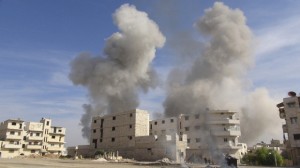
Crisis In Syria Update: Black Agenda Report
Thousands of Syrians have died in the escalating conflict between forces loyal to President Bashar al-Assad and those that oppose his leadership. The vicious internal power struggles have forced tens of thousands of Syrian refugees into other countries including Turkey. This conflict could represent a threat to world peace according to UN based human rights groups.
Glen Ford:
- We have to see a global system that’s in crisis that has clearly decided that International Law, a body of international law that the United States had so much do with erecting after World War II.
- That body of International Law is no longer useful or tolerable to US empire.
- There is no international legitimacy as to what’s happening in Syria, which has now become a US model.
- It can gather in an ad hoc way any volunteer group of nations and pretend there is international legitimacy to the aggression that they mount.
- This time its against Syria, they’ve enlisted. They’re making a war, the NATO countries and gulf kingdoms against Syria.
- There is no concept here of inalienable rights of nations to run their own internal affairs.
- I believe the US saw the Arab Spring as a existential crisis.
- If they cannot achieve cleanly, the kind of regime change that they hope to achieve they do not hesitate to resort to the imposition of chaos.
- We’ve seen that in Africa for the last 50 years. That which we can’t directly control, we will through into chaos.
- They will be satisfied with years and years of chaos, and social disintegration and great loss of life.
- Muslim fundamentalism behaves very much like a nationalism.
- These jihadis have done the US a great service and they do know it.
- Despite the global financial crisis, and we’re still suffering from it unless we are banks, we do not have a political crisis.
- You only have a political crisis when there is effective resistance.
- When you have effective resistance then you have a conversation that is hostile to the order.
- Romney and Obama, there are no fundamental differences between these two people.
- We have these little dust ups off to the side made to look like arguments. The Republicans didn’t want modest taxes on the rich. That is all that separates them.
- Black America has historically been the point constituency for change in the United States.
- It is only with the passing on of this black president we’re going to see such a movement.
- The advent of a black in the White House has totally neutralized the black politic. It has short circuited our instinctive reactions to travesties wrought by power.
Guest – Glen Ford, founder of the Black Agenda Report and many other media forums. Ford was a founding member of the Washington chapter of the National Association of Black Journalists (NABJ); executive board member of the National Alliance of Third World Journalists (NATWJ); media specialist for the National Minority Purchasing Council; and has spoken at scores of colleges and universities.
—-
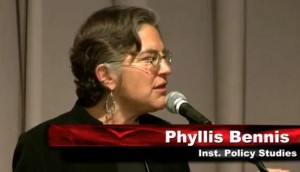
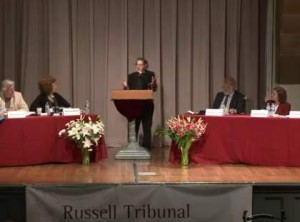
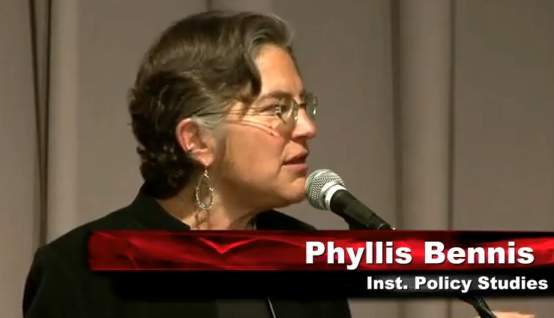
Russell Tribunal on Palestine: Phyllis Bennis
The final session of the Tribunal focused on the responsibility of the United States of America and the United Nations regarding the Israeli breaches of international law towards Palestine and Palestinians. There is now a situation in which Israel has achieved a status of immunity and impunity, facilitated by the US, despite its complete disregard for the norms and standards of international law. We hear an excerpt of a speech by Phyllis Bennis at the Russell Tribunal on Palestine.
Speaker – Phyllis Bennis, director of the New Internationalism Project at the Institute For Policy Studies. She is also a fellow of the Transnational Institute in Amsterdam. She has been a writer, analyst, and activist on Middle East and UN issues for many years. In 2001 she helped found and remains on the steering committee of the U.S. Campaign to End Israeli Occupation. She works closely with the United for Peace and Justice anti-war coalition, co-chairs the UN-based International Coordinating Network on Palestine, and since 2002 has played an active role in the growing global peace movement. She continues to serve as an adviser to several top UN officials on Middle East and UN democratization issues.
————–
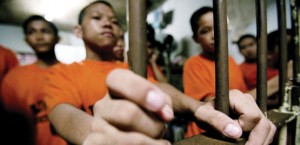

Locking Away Children For Life Without Parole
The United States is the only country in the world that sentences children to life, without the possibility of parole. Last month, the US Supreme Court revisited the question of whether juveniles convicted of murder should be given mandatory life sentences without the possibility of parole. The Supreme Court had once ruled against imposing death sentences on juveniles and imposing life sentences on youth who aren’t convicted of murder. Currently, 2500 kids in jail are serving life sentences without parole in the US. 371 of those individuals are in Michigan prisons. Our next guest has been working on a lawsuit on behalf of 9 Michigan individuals who were sentenced to life in prison for crimes committed when they were minors and who are being denied the possibility of parole.
Attorney Deborah LaBelle:
- The concept that we’ve been talking about that these are children both under international law and US law for civil matters, children are different from adults.
- The Supreme Court seemed to readily grasp that, they weren’t speaking about juveniles or teenagers or young adults, they spoke continuously on what to do about children who are involved in homicide crime.
- The court had two cases in front of them, both involving 14 year olds, one in which the 14 did not commit a homicide, but convicted of either felony murder or aiding and abetting.
- That juvenile got mandatory life without possibility of parole, because the child was sentenced as an adult, the other case, the 14 year old actually committed the homicide.
- There is a handful of states, Michigan and I think 8 others who treat 17 year olds always as adults for all purposes in the criminal justice system.
- Under the 38 states, there’s a whole range, some you can only get life without parole, if you’re 16 and up, some allow it for 15, some states allow it for a child of any age, Michigan is one of them.
- One of the justices talked about that. Is there an age in which we would all share a collective cringe. What about a 5 year old, what about a 10 year old.
- The frontal lobe area of the brain that really addresses impulse control and long term consequences, and control issues of risk management, is developing through adolescence.
- People draw the age at different points, some say not til 19, some not til 23 as you say.
- There’s a bright line in civil law that’s been drawn in civil law that youth have a maturity that they can vote, when they can decide to leave school, when they can drink in some places, when they can drive.
- There are these bright lines.
- Every other country who has signed on to the conventions of the rights of the child which prohibits putting children in prison for life without possibility of parole explicitly has recognized that this practice is banned.
- The only other country that hasn’t signed on is Somalia and they don’t quite have a government right now to do that.
- We stand alone in not adhering to that convention on the rights of the child as well as we stand alone on approving this sentence.
- We have over 2500 youth who are serving of life without any possibility of parole. About 70 percent are children of color. A third of them, did not commit homicides.
- No one is arguing that there might not be circumstances, that a state couldn’t decide upon review that child couldn’t be released. What the argument is, you can’t keep them in there without any hope. You have to give them an opportunity to demonstrate upon maturation that they have been rehabilitated and they aren’t a threat to public safety.
- We should think of putting children in places where we can nurture, council and believe in their rehabilitation and give them a second chance.
- I read transcript after transcript of judges saying, – listen I don’t want to do this to this 14 or 16 year old, but I don’t have any choice. What is the value of putting a child away with no hope. It’s certainly not a public safety issue, because that can be addressed by the state by having parole or review hearings.
Guest – Attorney Deborah LaBelle, an attorney with the ACLU of Michigan’s Juvenile Life Without Parole Initiative.
—————————————–
Afghanistan War, CIA Sponsored Terror, Civil Liberties, Criminalizing Dissent, Extraordinary Rendition, FBI Intrusion, Guantanamo, Habeas Corpus, Human Rights, Political Prisoner, Prison Industry, Prosecution of the Bush Administration, Supreme Court, Targeting Muslims, Torture
Podcast: Play in new window | Download
Updates:
——
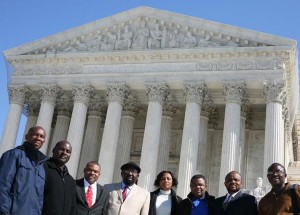
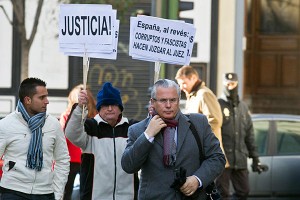
Universal Jurisdiction: Kiobel v. Royal Dutch Shell / Bush 6 Case In Spain
This week the US Supreme Court will decide if corporations could be held liable in U.S. courts for violations of international human rights law in the land mark case Kiobel v. Royal Dutch Petroleum. The case was brought by families of seven Nigerians who were executed by a former military government for protesting Shell’s exploration and development and is pushing to hold corporations accountable for human rights violations. The Supreme Court will also consider how the Alien Tort Statute Claim can be used the Kiobel case. A one sentence law that goes back to 1789 when the first judiciary act was brought in the United States. We’ve discussed this statute with several past guests including attorneys Peter Weiss and Rhonda Copeland who were instrumental in beginning the first cases in which human rights violations, taking place in other countries could actually be litigated in the United States.
We also discuss the recent amicus filing by a group of international human rights organizations and experts before the Spanish Supreme Court. The brief asks the Spanish Supreme Court to overturn a decision not to pursue a criminal case against six former officials from the Bush administration for their role in directing and implementing a systematic torture program. Past shows with Katherine Gallagher.
Attorney Katherine Gallagher:
- The Kiobel case has been in US courts since 2004.
- The claims were brought in the Southern District of New York, under a law from 1789, known as the Alien Tort Statute.
- This law allows non-US citizens to come into a US federal court and assert violations of the Laws of Nations or International Law.
- A recent precedence for this is Citizens United, what happened was that the Second Circuit ruled that corporations could not be held liable for these egregious human rights violations under the Alien Tort Statute.
- The question of corporate liability went up to the Supreme Court first.
- We had 2 judges from a 3 bunch panel in the Second Circuit suddenly come out in the fall of 2009 and say there is no corporate liability. That is the question that went up to the Supreme Court.
- Four other circuits had look at this question and they said of course corporations can be held as liable as an individual, a natural person.
- The Alien Tort Statute allows for a civil suit and civil liability rather than criminal liability.
- The key case from 1980 that CCR brought, the case of Filartiga, this case which the Supreme Court affirmed in 2004 as being on solid legal basis, claims by a Paraguayan, against a Paraguayan for actions that occurred in Paraguay.
- So its very strange that the Supreme Court was asking in a very broad fashion whether the ATS could apply to actions that occurred in another country. That is what the bulk of the cases brought under the ATS have been about.
- Some of the cases where the ATS is used are for some of the most serious violations. Cases of war crimes, crimes against humanity, torture, not your run of the mill case.
- What the justices seem to coalesce around was the issue of whether there’s an alternate forum. If the claims against Shell could have been brought in the UK or in the Netherlands, maybe they don’t need to be brought in the US.
- We’ve seen a trend in the last 20 years of other countries adopting stronger laws that allow for redress, and accountability, so we don’t have to be the world’s policeman.
- There have been 2 cases that percolated up in the last 4 years in Spain.
- The first is a widespread investigation of the torture program then Judge Balthazar Garzon. This is a case looking at torture in Guantanamo, and potentially in Iraq and Afghanistan, looking at the whole U.S. torture program. That case was brought on by 4 named plaintiffs.
- That case is very wide ranging, and willing to go up the chain of command as far as the evidence leads.
- There is a second case that was brought against specific U.S. individuals. They’re known as the Bush 6, including, Jay Bybee, John Yu, David Addington, Alberto Gonzalez. Six men who served as lawyers and argued to have essentially created both the legal structure that enabled the torture program, providing arguements for immunity and protecting participants of the torture program from accountability.
- Spain has a long and proud history of upholding International Law. Spain is where we had the case against Augusto Pinochet in the late 90s.
- We’ll be doing this as long as we need. We need to have accountability, its really critical.
Guest – Katherine Gallagher, Senior Staff Attorney at the Center for Constitutional Rights (CCR), where she focuses on holding individuals, including US and foreign government officials, and corporations, including private military contractors, accountable for serious human rights violations. Among the cases she has worked, or is working, on are international accountability efforts for U.S. officials involved in torture (Spain, Switzerland, Canada); ICC Vatican Officials Prosecution; Arar v. Ashcroft, Corrie v. Caterpillar, Matar v. Dichter, Saleh v. Titan, Al-Quraishi v. Nakhla and L-3, Estate of Atban v. Blackwater.
—————————————————————————————————
CIA Sponsored Terror, Civil Liberties, Guantanamo, Habeas Corpus, Human Rights, Political Prisoner, Prison Industry, Targeting Muslims, Torture, Truth to Power
Podcast: Play in new window | Download
Updates:
- US Refuses To Extradite Former Bolivian President
- Jose Padilla Re-Sentencing
- Ward Churchill Case Update – Are University Board of Regents Immune?
- Armenia Protests Extradition of Axe Murderer
——

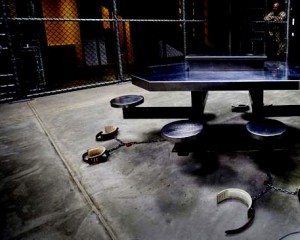

Department of Defense Declassifies Report on Alleged Drugging of Detainees
Hosts discuss a recently declassified report on alleged drugging of Guantanamo detainees with Attorney Shane Kadidal.
Guest – Attorney Shane Kadidal, senior managing attorney of the Guantánamo Global Justice Initiative at the Center for Constitutional Rights in New York City. He is a graduate of the Yale Law School and a former law clerk to Judge Kermit Lipez of the United States Court of Appeals for the First Circuit. In his eight years at the Center, he has worked on a number of significant cases in the wake of 9/11, including the Center’s challenges to the detention of prisoners at Guantánamo Bay (among them torture victim Mohammed al Qahtani and former CIA ghost detainee Majid Khan), which have twice reached the Supreme Court, and several cases arising out of the post-9/11 domestic immigration sweeps.
——
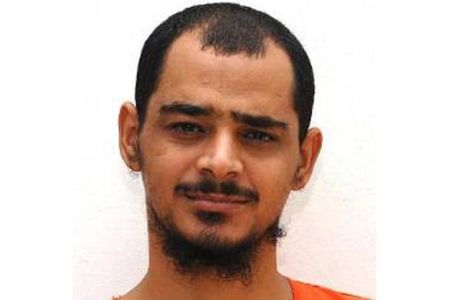
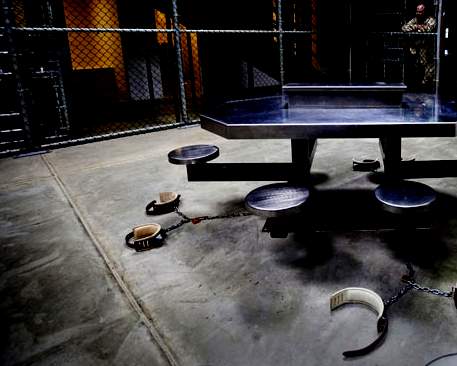
Adnan Latif – the Face of Indefinite Detention – Dies at Guantánamo
A prisoner held at Guantanamo Bay Naval Base since 2002 died last week. Adnan Farhan Abdul Latif was a 32 year old from Yemen who was allegedly suicidal and mentally ill. Latif won a U.S. court order for his release but it was overturned on appeal. In 2009, President Obama imposed a moratorium on Guantanamo prisoners from Yemen after a Yemeni trained Nigerian was found with a bomb in his underwear on a Detroit bound plane in 2009. Latif is the ninth prisoner to die at Guantanamo Bay prison.
Attorney David Remes:
- We decided to put out a statement by the lawyers. We wanted to call his family but the government said let the ICRC do it.
- He was approved in 2004, he was approved in 2007, and approved in 2009 for transfer out of Guantanamo.
- Adnan filed a habeas corpus petitions in 2004. In 2008 those cases began to move forward, Adnan was among them. He won his habeas case. The whole case against him hinged on an intelligence report that the district court judge said was unreliable. The case was appealed by the Obama Administration.
- He was a very sweet man, he was small, he was thin.
- He was very sensitive and a fine poet. He felt everything more keenly, perhaps more keenly than any of the other detainees.
- He felt that his spirit was being crushed. That he was always being roughed up by the guards. He was on long hunger strikes, he was held in isolation for the majority of his time in Guantanamo.
- He was mentally very fragile.
- At one point in my representation of him in 2009, he slit his wrists as I was speaking with him . . by chipping formica from under the table and cutting into his vein let the blood drip into a little cup and then threw his blood on me.
- I took an inventory of his various bumps, bruises and swellings. It was almost like a doctor’s visit.
- He was a small guy.
- He could be very lucid, he was very intelligent.
- You just have to question the NCIS reports from the beginning.
- Whatever the conclusions that were announced it was Guantanamo that killed Adnan. It ruined his health, it ruined his spirit, it may have led him to suicide.
Guest – Attorney David Remes, a human rights lawyer who has been deeply involved in the litigation on behalf of Guantanamo prisoners since 2004. He represents 16 Yemenis and has made several visits to Yemen to press for his clients’ release and brief their families. He was among the first lawyers to visit Guantanamo after the Supreme Court ruled in Rasul v. Bush in 2004 that the prisoners had a right to legal counsel.
————————————————————————–
Afghanistan War, CIA Sponsored Terror, Civil Liberties, Criminalizing Dissent, Extraordinary Rendition, FBI Intrusion, Guantanamo, Habeas Corpus, Human Rights, Iraq War, Military Tribunal, Political Prisoner, Targeting Muslims, Torture
Podcast: Play in new window | Download
Updates
- Michael Ratner: Update on Verdict – Corrie v State of Israel
- Cardinal Dolan Who Approved Payoffs For Priests Accused of Sex Abuse To Leave Priesthood Gives Speech At RNC and Closing Speech for DNC
—–
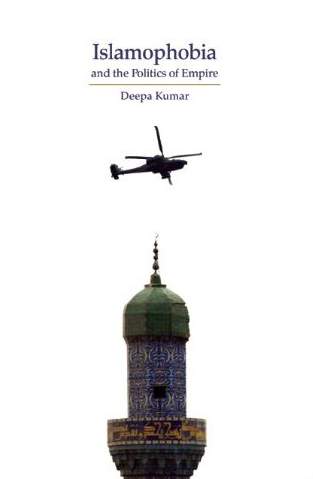
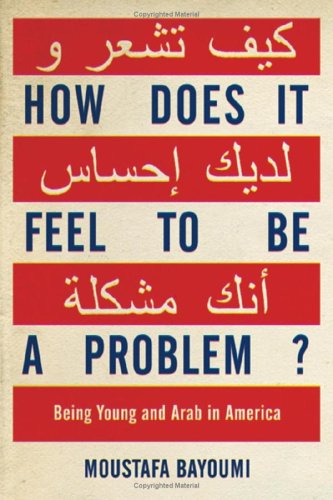

Islamophobia: Anatomy of an American Panic
In the last few weeks, 8 places of worship connected with South Asians or Middle Easterners have been targets in the United States. As many listeners know, six people were murdered at a Sikh temple in Oak Creek, Wisconsin but later that evening a mosque in Joplin Missouri was burned down. Other targets recently included mosques in Rhode Island, Southern California, Oklahoma City and Dearborn, Michigan. These tragic events mark another wave of existential Muslim threats inciting fear and violence against Middle Eastern people while helping to justify the ongoing war on terror.
According to the University of Maryland’s National Consortium for the Study of Terrorism and Response to Terrorism, since 9/11 to 2010 there have been 155 terror incidents in the U.S., and exactly two of them or 1.3 percent have been attributed to international Islamist terror groups. The majority of events involved individuals such as anti-abortionists, right-wing extremists, or extreme animal rights activists.
The Nation Magazine has highlighted the disproportional focus put on Muslim communities in a special issue titled “Islamophobia: Anatomy of an American Panic.” We talk with journalist Lizzy Ratner and authors Deepa Kumar and Moustafa Bayoumi who contributed articles to the Nation Magazine special.
Lizzy Ratner:
- The Nation did a special issue about Islamophobia. It came out in the beginning of July. You can still find the majority of the articles online. The real credit has to go to Abdeen Jabara whose idea this really was.
- The civil rights attorney came to me last year and said the anti-Arab, anti-Muslim has reached fever-pitch.
- So I began to do some research about what exactly was going on and very quickly compiled a massive roster of possible articles.
- For the most part, the Left and Progressives have been far too quiet.
- This bigotry that is flourishing right now has a real history, it’s not a just a product of 9/11 and the post 9/11 era.
- Some of the seeds of bigotry have to do with the role of the United States historically in the Middle East.
- Islamophobia served an agenda and a number of purposes.
Guest – New York City journalist Lizzy Ratner has written extensively for the Nation and Alternet on issues involving Islamophobia. Lizzy is also co-editor of The Goldstone Report: The Legacy of the Landmark Investigation of the Gaza Conflict.
——
Moustafa Bayoumi:
- I was happy to see that the Nation was happy to take on the question of Islamophobia for a double issue.
- There’s been a shift in the last ten years from paranoia around security to a paranoia about the basic facts of Muslim life in the United States.
- In a way you can say it’s a shift from security to culture.
- At any stage, anything that has to do with a daily concerns about living a life as a Muslim American, somehow now becomes charged with sedition. Part of the funding of the anti-Muslim movement in the United States is basic conservative politics and extreme conservative politics.
- And also due to the Israel-Palestine conflict. So people who want to come aboard Israel will make a very distorted picture of what Muslim life is like.
- The NYPD has now a decade long history of “othering” the Muslim-American community.
- The NYPD had been screening The New Jihad for its new recruits.
- It’s a crazy film saying that all of the American Muslims are here as a fifth column ready to pounce. It’s a training film for new recruits. That’s true for the Pentagon and the FBI.
- Muslim Americans are still seen as perpetual foreigners.
- That Muslim American rights are different than everyone else’s rights.
- You’re average American consumer of media does not relate to the victims of the Oak Creek massacre because they don’t see them as being part of the American family.
- They asked American’s in this poll, and 62 percent of the population has never met a Muslim.
- If you’ve never met a Muslim then it’s very easy to believe all these boogey man ideas. That’s why media plays an important role in this issue.
- The FBI (training manual) said that it was in the nature of Muslims to try to take over this country.
Guest – Author Moustafa Bayoumi wrote Fear and Loathing of Islam joins us, his book : Being Young and Arab in America, won an American Book Award and the Arab American Book Award for non-fiction. He is also a professor of English at Brooklyn College, City University of New York.
——
Deepa Kumar:
- As of late the anti-Muslim statements coming from Michelle Bachmann, Joe Walsh, all of whom are Republicans, there is a sense of which it is the Republicans who are responsible for Islamophobia, for the demonization of Muslims and so on.
- This brand of the war on terror gets hatched and part of that was language developed in the 1990s, called the Clash of Civilizations. It was a man named Bernard Lewis who first penned this term.
- It’s not so much we’re going to carry out revenge on Osama Bin Laden but that we’re going to rescue Afghan women. In the case of Iraq, we’re going to bring democracy when no weapons of mass destruction were found.
- This rhetoric has a long history it goes back to the 19th century.
- Both presidents need Islamophobia. They need to generate this fear and hatred of the “Muslim other.”
- Operation Boulder
- The Jonathan Institute holds this conference in Jerusalem . . Islamofacism, the roots are sown at that conference.
- The idea of this menacing Muslim enemy is not new. It was not something created after 9/11 but in fact it goes back a millennium.
- It’s about political goals but religious rhetoric gets used. Same thing with the re-conquest of Spain.
- The Islamophobic rhetoric is one that’s mobilized by the elite.
- I hold both Republicans and Democrats responsible. These rabid right wingers get their confidence from mainstream figures like Walsh, like Bachmann and others.
- The sad reality is that the Democrats have done nothing to counter this.
- The Democrats are not an ally in this fight.
- I take inspiration from 2 movements in the sixties, the civil rights movement and the anti-war movement. I think these 2 strategies need to come together in fighting Islamophobia.
- We have to take on both the far right and challenge the priorities of empire and bring together a multiracial coalition that can actually change a generation.
- It was President Clinton with Anti-Terrorism and Effective Death Penalty Act in 1996 which made it legal to actually deport people with secret evidence. We know this lays the basis for the Patriot Act. This has really been a bipartisan project in the interest of empire.
Guest – Deepa Kumar, an Associate Professor of Media Studies and Middle Eastern Studies at Rutgers University. Her work is driven by an active engagement with the key issues that characterize our era–neoliberalism and imperialism. Her first book, Outside the Box: Corporate Media, Globalization and the UPS Strike (University of Illinois Press, 2007), is about the power of collective struggle in effectively challenging the priorities of neoliberalism.
———————————————–