CIA Sponsored Terror, Civil Liberties, Criminalizing Dissent, Habeas Corpus, Human Rights, Prosecution of the Bush Administration, Surveillance, Targeting Muslims, Torture, Truth to Power
Podcast: Play in new window | Download
Updates:
——
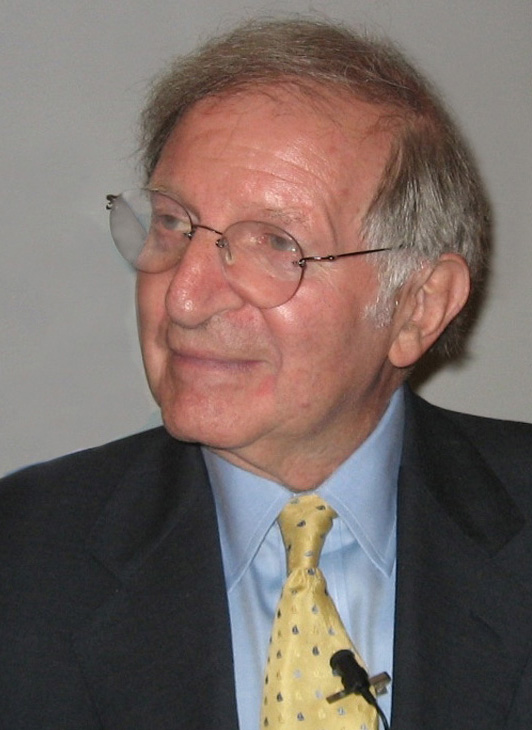
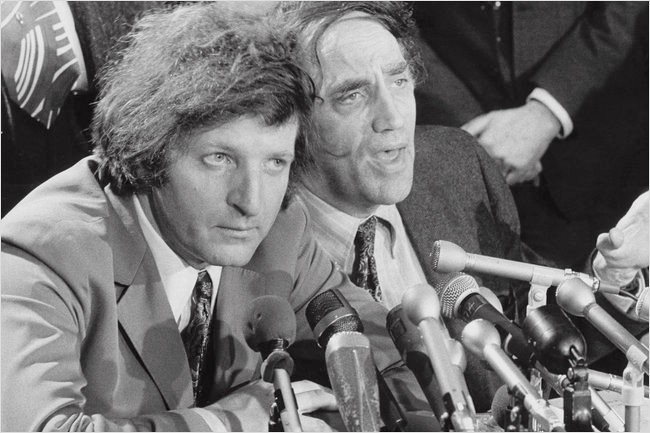
In Memory of Attorney Leonard Weinglass
Hosts remember one of the great civil rights attorneys, Leonard Weinglass from his early years as a lawyer in the Air Force to his big cases. Michael Smith shares a great anecdote. Len vigorously defended a black soldier and upset the Air Force brass. They sent him to Iceland for 2 years. Much later in the late fifties, he moved to Newark, NJ, set up a one man office and represented black people in police abuse cases.
The remarkable and heroic progressive lawyer Len Weinglass died on March 23. Among his cases were the Chicago 8, the Ellsberg case and the Cuban 5. He was our close comrade and will be missed by his friends and all those seeking a better world. – Michael Ratner.
——–
A Poem for Len Weinglass by Linda Backiel
Almost Ready
“I have everything almost ready for the spring,”
you said. Brush cut, brambles cleared, new trees
planted. A lop-sided smile flit across your silver
stubble beard, a late winter field momentarily lit
by a break in a fleet of migrating clouds.
click for more
——–
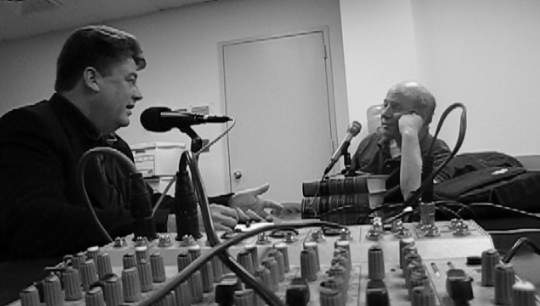
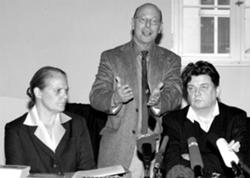
Universal Jurisdiction: Attorney Wolfgang Kaleck
Co-host Michael Ratner interviews attorney Wolfgang Kaleck, German civil rights attorney and General Secretary for the European Center for Constitutional and Human Rights. They discuss the effectiveness of Universal Jurisdiction cases. The cases that helped international human rights prosecutions. Specifically the cases in Argentina against corporations that profited from dictatorships and human rights abuses and how Argentina can be used as a model to bring cases against other powerful leaders or corporations. Optimism overcomes cynicism, Wolfgang says its not easy, it’s work bringing cases against the powerful of the world.
Attorney Wolfgang Kaleck:
- I have the privilege to work on behalf of Germans and Argentinian victims of the Dirty War between 1976 and 1983 in Argentina.
- The Argentinian cases and the Chilean cases were the most important phase in universal jurisdiction.
- We filed cases in Germany, Italy and France.
- The idea to file Argentinian and Chilean cases in European courts was not to try Argentinians and Chileans in Europe but to impose accountability in Chile and Argentina.
- That’s what people call the Pinochet Effect.
- In 2005 and 2006 when the amnesty laws were abolished. If you go to Buenos Aries now you will observe military junta tribes from Monday to Friday and you will police officers, military leaders, torturers, guards.
- At this point, special prosecutors and parts of the civil society are demanding an investigation and prosecution into crimes committed by corporations who aided and abetted the dictatorship, or who profited from the dictatorship.
- The history in Argentina, 30 thousand people disappeared, 100 thousand were tortured.
- The human rights movement in Argentina was so strong, that they maintained a certain presence, a certain public attention.
- For us, Argentina is like the blue print. They inspired the human rights movement not only in Europe
- I filed a case at Mercy Dispense because in Buenos Aires, 15 trade unionists were disappeared. We filed the criminal case in Germany against a German-Argentinian manager who had duel citizenship which allowed us to bring the case in Germany. Then we filed a case in the US, an alien tort claims which is still pending. We filed a case in Argentina which is still pending.
- One line is to blame the torturers and the torturer leaders, we want to talk about why these human rights violations have been committed. Why the Argentinian military took the decision to oppress their populations and our explanation is that they wanted to install a political and economic system which needed the extermination of the trade unionists.
- Actually to demand accountability and do these investigations is trauma work. Society that hasn’t dealt with its past has some problems in the present. Argentina is worth studying as an example.
- Universal Jurisdiction is showing its limits. So far it was very difficult to bring cases against the powerful of the world.
- The suspicion that the criminal justice system is just another tool of the powerful against the powerless,
- We have to try to bring cases against the powerful, Russian, China, the US, or Sri Lanka or Israel, who all undertake actions to avoid prosecution.
- We are very optimistic that some investigation will be carried out in Spain but some people are over-pessimistic, because even now, we achieved that several former US officials, or from the CIA or from the Army, or politicians can’t travel anymore, without running the risk to be arrested.
- We achieved something, I’m also not satisfied from it but still its more than we thought possible.
- President Bush wanted to go to Switzerland.
- It’s always an argument against those cynical people who say nothing is possible. Yes there is, something is possible. We do have to struggle to maintain this, the whole international criminal justice system is at stake.
Guest – Attorney Wolfgang Kaleck, a German civil rights attorney. He is also the General Secretary for the European Center for Constitutional and Human Rights. On November 14, 2006, Kaleck sought criminal prosecution charges in German court against a number of US officials and military personnel in connection with alleged human rights abuses at the prison facilities at Abu Gharib and Guantanamo Bay on behalf of eleven plaintiffs. Approximately 30 human rights activists and organizations participated as co-plaintiffs
Afghanistan War, CIA Sponsored Terror, Civil Liberties, Habeas Corpus, Human Rights, Iraq War, Surveillance, Targeting Muslims, Torture, Truth to Power
Podcast: Play in new window | Download
Updates:
—
“Operation Libya” and the Battle for Oil: Redrawing the Map of Africa
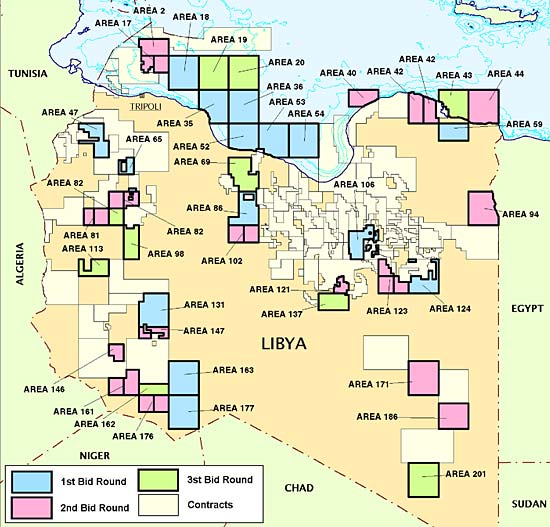
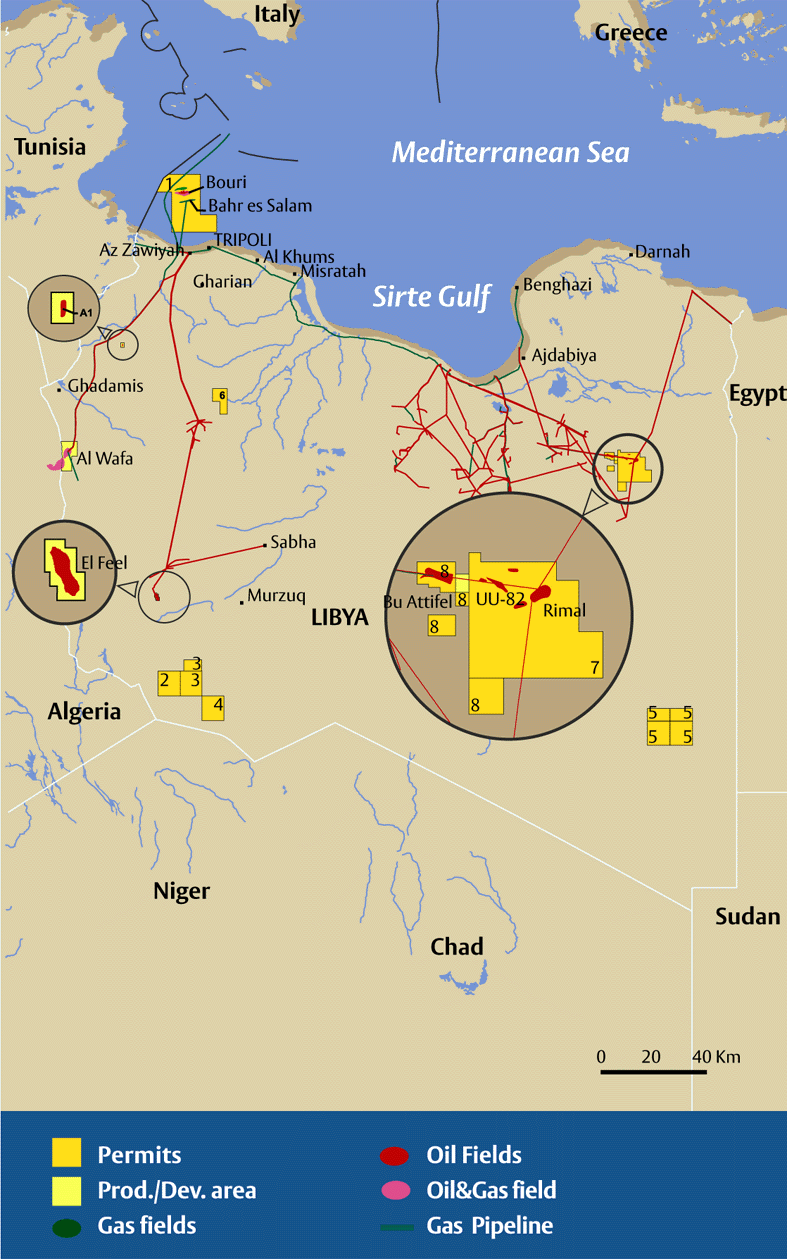
The US and allied air strikes on Libya will have far reaching geopolitical and economic implications. Libya is the among the world’s largest oil economies with near 3.5 percent of global oil reserves, twice that of the United States. What’s going here? As Professor Michel Chossudovsky writes in his article “Operation Libya” and the Battle for Oil: Redrawing the Map of Africa.” there is no such thing as a just war. This is part of US imperialism as drafted in the 2000 Report of the Project of the New American Century entitled “Rebuilding Americas’ Defenses.” One of the main components of this military agenda is: to “Fight and decisively win in multiple, simultaneous theater wars”. Libya counts as the fourth theater of war along with Palestine, Afghanistan, Iraq. In all of this the mainstream media has used a massive disinformation in justifying this military agenda.
Professor Michel Chossudovsky:
- This is not a humanitarian intervention. It is a carefully planned military operation. This was on the drawing board of the Pentagon, well before the protest movements in Egypt.
- It is a war theater, and should be viewed in the broader context of the war theater, namely Iraq, Afghanistan and Palestine. It opens up a new area of militarization in North Africa. It has devastating consequences and is part of a global war.
- The object of coming to the rescue of civilians by bombing with cruise missiles is an absurd proposition. They’re bombing civilian infrastructure. The same agenda as the previous war theaters, they have a list of targets and go ahead and bomb. This whole notion of responsibility to protect is nonsense.
- They’re getting away with it because the media is lying through their teeth.
- Clearly there are Al-Qaeda elements that are supported by the CIA. Two years ago, the Gaddafi government made a deal with the CIA. We know that Al-Qaeda is an intelligence asset. It can be used precisely to create these conditions of insurrection as occurred in Bosnia and in Kosovo. We have to investigate a little more, who is behind the insurgency. The insurgency is not there to win a civil war, the insurgency is there to create a pretext for an intervention.
- I suspect this opposition is heavily divided in any event. Obama has ordered drone attacks in Pakistan.
- The Chinese have sizable interests in Libya. This is also directed against France and Italy, its France and Belgium that are being shoved out of Central Africa.
- Libya borders on Niger, its the entry into central Africa. Niger is important because it has large reserves of Uranium, which is in the hands of a French conglomerate.
- The conquest of Libya is the battle for oil, the same logic as Iraq.
- I estimated that Muslim countries have about 65-75 percent of global oil reserves. That is why we’re demonizing Muslims, they happen to inhabit.
- Bahrain and Yemen peaceful protesters getting hit with nerve gas.
Guest – Professor Michel Chossudovsky, director of Global Research.ca , Center for Research on Globalization. An independent research and media organization based in Montreal, Quebec, Canada.
————-
Community Service Society Report: Black Youth Unemployment
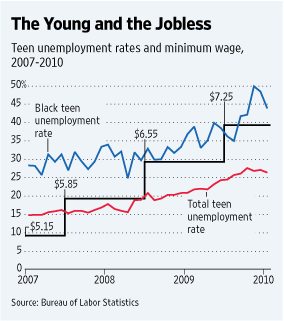
Unemployment in a jobless economic recovery has hit young African American men the hardest according to a recent report by the Community Service Society. PDF The highest unemployment rate in 2009 was among men 16-24 years of age—their overall unemployment rate hit 24.6 percent during the recession. Breaking it down by race, young black men had the highest unemployment rate in this group at 33.5 percent. While only one in four black men ages 16-24 have a job in the city, that figure drops to an astounding one in ten for young black men without a high school diploma.
“The recession has created a landscape of the unemployed and underemployed with particular catastrophic consequences for young African American men,” said David R. Jones, president and CEO of the Community Service Society of New York. “We have long known the struggles of the more than 200,000 youth in New York City who are out of work and out of school. Now young black men between 16 and 24 years have become the banner of hopelessness, particularly here in New York City.”
David R. Jones:
- Those who’ve never made the connection to work or those who’ve ceased trying. We’re talking hundreds of thousands of people involved here. African Americans constitute about a third of New Yorkers.
- I think people have to recognize we’re in something totally new.
- At least anecdotally, the Great Depression didn’t have this kind of impact on the black community that this recession is having on them.
- New York in the Great Depression was a segregated city, were working exclusively in black communities or trades that were circumscribed.
- You get pullman porters and restaurant work which were the reserves for African Americans before the civil rights movement hit. The homeless of New York were white on Bowery.
- While we’re seeing a better recovery, the number of long term unemployed is actually greater than New York than other municipalities.
- The trouble is you start to lose job skills, you lose hope, all sorts of with friends and employment start to disintegrate.
- We did a report on security guards and I went back to look at it. There are 63 thousand security guards in the city of New York and virtually none of them are unionized, their average wage was $10 an hour, no health insurance, no paid sick leave.
- New York has an usually high concentration of the working poor.
- We’ve been focusing all our efforts, in terms of how we deal with poverty on the issue of on this nexus between work and getting to a position where they can support themselves and their families.
- This is not limited to the South Bronx or Crown Heights, this is a national phenomenon.
- We know when we did our report on disconnected youth, we had 200 thousand disconnected youth in New York, there were nearly 5 million disconnected youth scattered across the country before the recession.
- We’re never going to go back, to the unemployment levels that we found unacceptable in New York of 5% again. That we’re going to back down from the 9.5 %.
- It was always the expectation, if you worked really hard, there’s was going to be a way, sort of a seat at the table here. New York has one of the highest recidivism rates, we’re doing a couple of things, we’re making it impossible to get work, once you’ve been incarcerated.
- We are going to get a group of young people who feel betrayed.
- I think this scapegoating that has taken on a really powerful voice, is partially because people want to blame someone for why they can’t get employment.
Guest – David Jones, President and Chief Executive Officer of the Community Service Society of New York , a nonpartisan, not-for-profit organization that promotes economic advancement and full civic participation for low-income New Yorkers.
Mr. Jones, an outspoken advocate for low-income New Yorkers, writes bi-weekly newspaper columns in the New York Amsterdam News and El Diario/La Prensa and a weekly blog on the Huffington Post website that serve to educate the public and government officials on issues of importance to minority and poor communities.
——————————-
CIA Sponsored Terror, Civil Liberties, Human Rights, Political Prisoner, Truth to Power, War Resister
Podcast: Play in new window | Download
Updates:
- Much like the Russian Revolutionaries who opened the books on the Czars’ secret diplomacy and like the Pentagon papers on the Vietnam War, Wikileaks has done a great public service.
- US citizens now have access to the truth, that’s the basis of democracy.
- Julian Assange denied bail.
- Documents show utter duplicity of US government: Hypocritical and lying about fundamentals of democracy.
- Amazon / Paypal / Mastercard quit Wikileaks.
- Isolating, labeling, calling terrorists, but there’s a huge groundswell of support for Wikileaks.
- Wikileaks have struck a real blow against an imperial government.
—–
US Congress to Increase Aggression against Venezuela, ALBA Countries
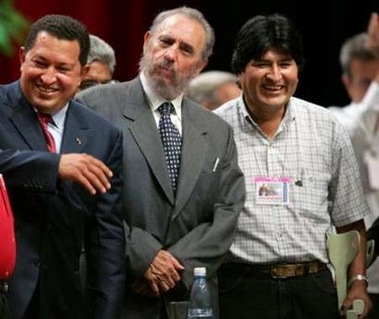
Last week, members of the extreme Latin American right wing held a meeting in Washington with high-level representatives of the US Congress. The event is evidence of an escalation in US aggression toward the region, writes Eva Golinger in her article US Congress to Increase Aggression against Venezuela, ALBA Countries.
The countries in the region include Venezuela, Cuba, Bolivia, Ecuador and Nicaragua – all members of the Bolivarian Alliance of the Peoples of Our America (ALBA) and they were the topic of debates in the meetings that centered around 3 main questions. – and included “debates” centered around three primary questions:
- Are democracy and human rights in danger under the “21st Century Socialism” of Venezuela, Ecuador, and Bolivia?
- Does the ALBA Alliance of Cuba, Venezuela, Bolivia, Ecuador and Nicaragua constitute a threat to US interests and inter-American security?
- Is current US policy toward the region equipped to respond to the erosion of democracy and the pernicious influence of such hostile actors as Iran, foreign and domestic terrorist groups, and narcotics traffickers?
US Congress members at the meeting include House Foreign Affairs Committees, including Elliot Engel, New York democrat and current chairman of the House Foreign Affairs Subcommittee on the Western Hemisphere; Connie Mack, Florida republican and incoming chairman of the same committee; Ileana Ros-Lehtinen, and many more who met with the extreme Latin American right wing responsible for coup d’état’s terrorism and destabilzation.
Eva concludes in her article that this event is proof following the November 2 elections, that Washington’s policies toward Latin America will be more aggressive in the near future.
Eva Golinger:
- The meeting took place in the US Capitol Visiting Center on November 17th 2010, and it was titled Danger in the Andes: Threats to Democracy, Human Rights and Inter-American Security.
- The meeting counted on the participation of several figures, personalities in Latin America from the extreme right.
- There were some people from Bolivia who attempted to overthrow the Morales administration.
- One member participating in the meeting at the US Congress in November was involved with directly in an attempt to assassinate the president of Bolivia. Louis Nunez
- In Latin America there’s been a shift toward more progressive governments and policies, regional integration but at the same time an increased assault on Latin American stability and democracy coming from forces that either held power in prior years or want to take power in the region.
- We’ve seen five coups in the past ten years. Venezuela in 2002, Haiti in 2004, Bolivia in 2008, Honduras in 2009, and Ecuador this year.
- Two of those were successful, Haiti and Honduras. All right wing coups backed by the United States.
- The decision that they (Latin American right wing) came to at the meeting is that the US isn’t doing enough.
- The policy toward Cuba is equated directly with Venezuela, and the policy of Venezuela is going to Ecuador and Bolivia because they all form part of this regional block called ALBA.
- If we have people like Connie Mack running the Subcommittee on Foreign Relations on Latin America who declared in that conference in the Congress last month that with the new Republican majority they need to take action and confront Hugo Chavez head on.
- There are right wing governments in Latin America, we’ve got Peru, Columbia and Chile, but they also rejected the coup attempts.
- Honduras Wikileak memo: The document was an internal memo sent from a US ambassador to the US Secretary of State. It said that the coup that took place June 2009 against President Manuel Zelaya was completely illegal, had no constitutional foundation. It is completely the contrary position the US assumed publicly. The US State Department never declared formally the events as a coup d’état.
- The basis of my work is to use the US Freedom of Information Act to try to declassify US documents, not obtained illegally. One piece of evidence that was demonstrated irrefutably is the increase in funding coming out using US tax payer dollars to fund organizations and political groups in Latin America that are trying to destabilize democratically elected governments.
Guest – Eva Golinger – winner of the International Award for Journalism in Mexico (2009), named “La Novia de Venezuela” by President Hugo Chávez, is an Attorney and Writer from New York, living in Caracas, Venezuela since 2005 and author of the best-selling books, “The Chávez Code: Cracking US Intervention in Venezuela” “Bush vs. Chávez: Washington’s War on Venezuela” ,“The Empire’s Web: Encyclopedia of Interventionism and Subversion.” Since 2003, Eva, a graduate of Sarah Lawrence College and CUNY Law School in New York, has been investigating, analyzing and writing about US intervention in Venezuela using the Freedom of Information Act (FOIA) to obtain information about the US Government’s efforts to destabilize progressive movements in Latin America.
—————————-
CIA Sponsored Terror, FBI Intrusion, Human Rights, Surveillance, Targeting Muslims, Torture, Truth to Power
Podcast: Play in new window | Download
Updates:
—
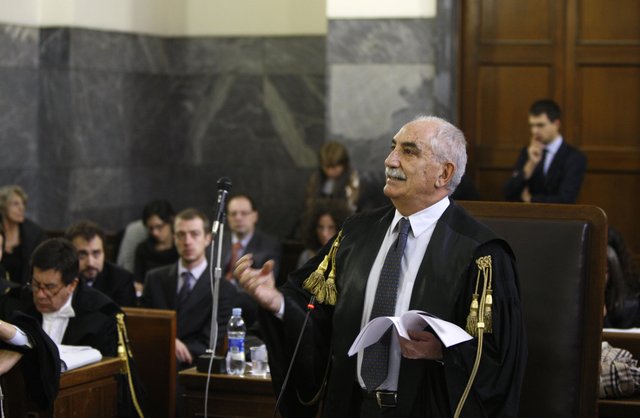
A Kidnapping In Milan: The CIA On Trial
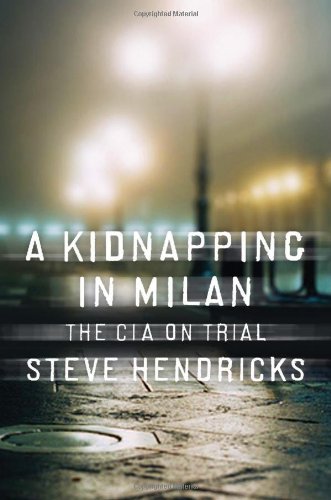
A Kidnapping In Milan: The CIA On Trial is the title of Steve Hendricks’ new book. It is a fast paced account of the realities of counter terrroism. Hendricks gives the reader a beginning to end view of international Islamist terrorist networks in Europre while examining the questions of justice and the rule of law. He writes in detail on the February 2003 disappearance of the radical imam Abu Omar and how under the leadership of prosecutor Armando Spataro, Omar was kidnapped, and sent to be tortured in Egypt. Hendricks traces Omar’s roots in the jihadist world of the Middle East and his travels to Pakistan, Albania and eventually the rundown fringes of Milan. Rivalries, mistrust and bad communication is chronicled amid the CIA, the FBI and the Italian counter terrorism agencies as operatives snatched Abu Omar from the streets of Italy.
Steve Hendricks:
- The Italian counterterror police had this imam, Abu Omar under tight surveillance, under suspicion of terrorism. He was one of the ring leaders of a terrorist cell. They were about a month away from arresting him. But one fine day in February 2003, he sets off for his mosque and disappears.
- The CIA had grabbed him off the street literally at high noon. They roughed him up, gagged him, drove him several hours across northern Italy –sent him to Cairo were for months and months he was savagely tortured.
- The Muslim Brotherhood, which really might thought of as the godfathers of radical Islam, got its start in Egypt and toehold in Alexandria. Islam is not going to be re-born simply on its goodness, we have to fight for it.
- The Egyptian authorities cracked down on the radicals and a great number of them fled all over the world, they scattered. Europe was tolerant of foreigners, Italy was one of those countries.
- Abu Omar was tortured for about a year and then they let him out and said don’t talk about it.
- Armando Spataro is this charismatic figure. He did his formative work as a magistrate prosecuting terrorists of the left.
- When the kidnapping in Milan (by the CIA) happened on his watch, he treated it like anything else. He put his foot down on the rule of law.
- SIM Card – Subscriber Identity Module. It’s not just reading the radio waves, it’s in constant contact with the cell tower back and forth. Most cell companies keep record of those interactions. What these kidnappers sloppily did is use their cellphones like teenagers.
- The Italian prosecutors were able to find these kidnappers, they were able to track their movements everywhere they went. Armando Spataro eventually brought charges against 25 CIA agents and one US Air Force Colonel that coordinated the arrival of agents at Aviano Air Base.
- 23 of the 26 of the accused were convicted of kidnapping. They recieved five to eight years depending upon their degree of involvment. What moved me to write this book, over everything was outrage over our inhumanity.
- America has been conducting renditions for about a century.
Guest – Steve Hendricks, a freelance writer living in Knoxville, Tennessee, and Helena, Montana. He is the author, most recently, of A Kidnapping in Milan: The CIA on Trial. His previous book, The Unquiet Grave: The FBI and the Struggle for the Soul of Indian Country, made several best-of-the-year lists in 2006.
—
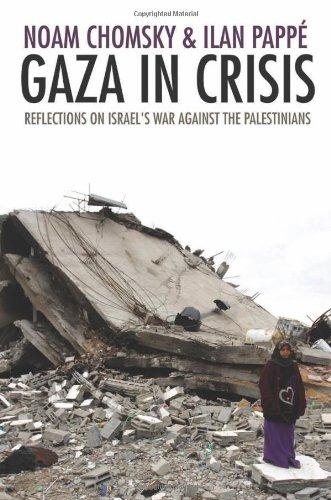
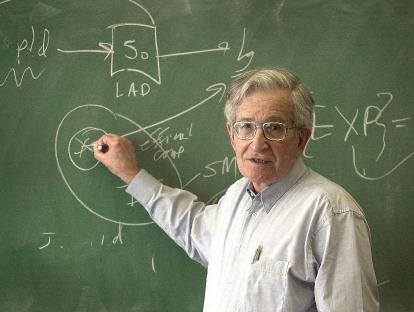
Noam Chomsky – Gaza in Crisis: Reflections on Israel’s War Against the Palestinians
Here on Law and Disorder we’ve chronicled the events of Israeli forces in Gaza and the West Bank. Today we’re delighted to have with us Noam Chomsky, one of the world’s foremost social critics, institute professor emeritus in the MIT Department of Linguistics and Philosophy and author of many books including Failed States and Hegemony or Survival, but we talk with him today about his latest book Gaza in Crisis: Reflections on Israel’s War Against the Palestinians. Noam Chomsky wrote Gaza In Crisis with Ilan Pappé, professor of history at the University of Exeter in the UK. This book surveys Israel’s recent attacks on Gaza from Operation Cast Lead to the Gaza Freedom Flotilla in a very sobering analysis.
Noam Chomsky:
- Let’s start with wikileaks. One of the interesting cables from the Tel Aviv embassy and it was to Clinton.
- It was giving her talking points, about the attack on Gaza, and it tells her Israel had to attack on December 2008 in self defense because Hamas had violated the truce.
- In December 2008 Hamas called for a renewal of the truce that Israel had broken. Israel considered it and rejected it. I should say US/Israel because these are joint activities.
- The fact that this can pass without comment, tells you quite a lot.
- In the whole wikileaks episode, in my opinion is the remarkable fact is the absolute contempt of democracy that’s revealed by the embassies.
- The most critical issue is did Israel have any right to use force in the first place? Any right?
- Why have a border cutting Galilee in half?
- The only way I know how to proceed is to get the United States to join the rest of the world and stop its rejectionist opposition to the overwhelming international consensus, agree to a two state settlement.
- The strongest support for Israeli crimes is coming from the business world.
- The most rabid supporter of Israel in the media is the Wall Street Journal. They’re not part of AIPAC, that’s the business world.
- US military intelligence are tightly integrated with Israel. Israel destroyed secular Arab nationalism, that’s when US / Israeli relations took off in their current form.
- It’s about expansion of settlements. Israel already controls 42 percent of the West Bank.
- The issue is the settlements, they are all illegal.
- It designed so that there will be no Palestinian self determination.
Guest – Noam Chomsky, n American linguist, philosopher, cognitive scientist, and political activist. He is an Institute Professor and professor emeritus of linguistics at the Massachusetts Institute of Technology. Chomsky is well known in the academic and scientific community as one of the fathers of modern linguistics, and a major figure of analytic philosophy. Since the 1960s, he has become known more widely as a political dissident and an anarchist, referring to himself as a libertarian socialist. Chomsky is the author of more than 150 books and has received worldwide attention for his views, despite being typically absent from the mainstream media.
————-
CIA Sponsored Terror, Civil Liberties, Death Penalty, Human Rights, Political Prisoner, Targeting Muslims, Truth to Power
Podcast: Play in new window | Download
Updates:
—
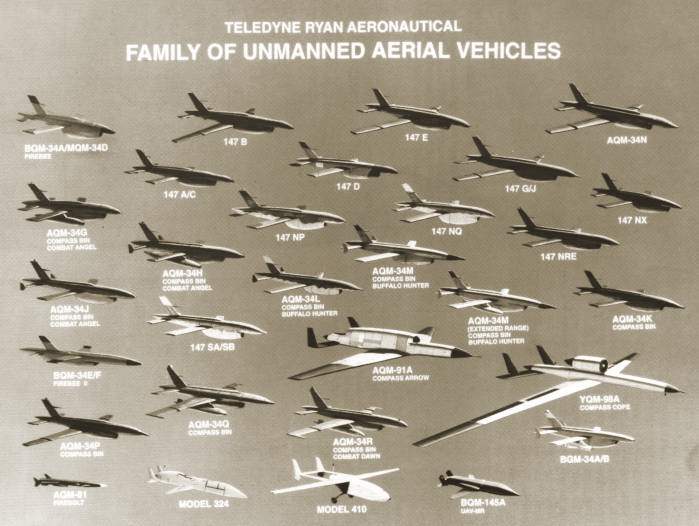
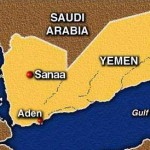
Drone Based Targeted Killings of U.S. citizens. Anwar Al-Aulaqi
Can the Obama Administration or any future administration use lethal force against US citizens who the executive office unilaterally determines as a threat to the nation? Not yet, but in recent government arguments, in the Anwar Al-Aulaqi case, the executive branch would have unreviewable authority to carry out targeted killings of Americans deemed to be enemies of the state. The ACLU and the Center for Constitutional Rights filed a lawsuit in the U.S. District Court for the District of Columbia on August 30, and the government filed its reply brief on September 25.
The ACLU and CCR were retained by Nasser Al-Aulaqi to bring a lawsuit in connection with the government’s decision to authorize the targeted killing of his son, U.S. citizen Anwar Al-Aulaqi, whom the CIA and Defense Department have targeted for death.
Pardiss Kebriaei:
- This will be our first chance to defend our motion for a preliminary injunction and respond to the government’s arguments. The sum and substance of the government’s arguments is that there should be no rule for the court at all in the question we presented. Whether the government has authority to execute one of its citizens without any kind of due process.
- There should be absolutely no judicial review at all. They have not got into the merits of why they believe they should have this authority. They assert the US is involved in a global war against Al-Qaeda, by virtue of the war the US has the ability to target any suspect of Al-Qaeda.
- Outside of Iraq and Afghanistan, the question of whether armed conflict exists, is a factual objective question. It’s not a matter of which the president declares and that the level of hostilities and the organization of groups in Yemen are just not such that they to the level of war.
- Anwar Al-Alwaqi is not Al-Qaeda, he is associated with Al-Qaeda.
- The US is not only claiming broad authority geographically but global authority in terms of any and all groups they deem somehow linked to Al-Qaeda.
- They’re claiming AUMF but they’re also claiming a very vague principle of self defense which is tricky. They are claiming self defense under article 51 of the UN charter.
- They’re going around criminal law and claiming un-reviewable authority to carry out global assassination. This is an escalation of what we saw under the Bush Administration with global detention authority, this is global killing authority.
- The authority could reach any citizen they deem a threat to national security. It could reach someone in the United States, the full contours of the government’s arguments would be that the decision to kill is for the executive to determine and that should be an un-reviewable decision.
- The mechanized disconnected nature of the killing is alarming, both by an accountability point of view and a moral point of view.
- The drone project is operated by the CIA and by a covert unit in the Department of Defense called the Joint Special Operations Command.
- Documenting them is incredibly hard, but yet you have the expansion of the war and killings, in this shadow war way. You have this parallel secret war being conducted by the CIA and JSOC largely through the use of unmanned drones. What we have here is the pre-determination of the ability to kill.
- There’s been a steady increase of rhetoric about Yemen and an escalation in the language of war.
Guest – Pardiss Kebriaei, she joined the Center Constitutional Rights in July 2007. Since then, her work has focused on representing men detained at Guantánamo Bay in their habeas corpus challenges, before international human rights tribunals, in diplomatic advocacy with foreign governments to secure resettlement for men who cannot return home, and in post-release reintegration efforts. Her clients have included men from Yemen, Syria, Algeria, and Afghanistan. Her work includes seeking accountability for torture and arbitrary detention at Guantánamo.
———————————-
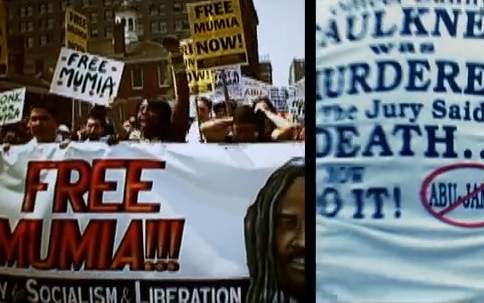
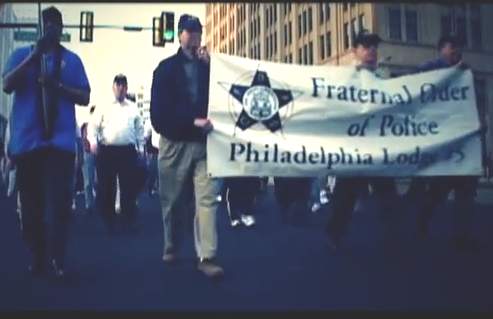
Justice On Trial: Documentary on Mumia Abu-Jamal
We’re pleased to have with us today the director Kouross Esmaeli of the new documentary Justice On Trial. The film focuses on the case of Mumia Abu-Jamal, one of the most scrutinized and contested legal cases in American history. Justice on Trial examines the facts of the case, the judicial bias, racial discrimination in jury selection, prosecutorial misconduct and tampering with evidence to obtain a conviction. The injustices and problems in Mumia’s case as many listeners know, are common within the criminal justice system in the United States.
Kouross Esmaeli:
- I tried to get an interview with the wife of the police officer who was killed on the night of December 9, 1981
- I thought it was important to show what drives that side I came to realize that Tigre Hill was making a film (about Mumia, titled Barrel of A Gun) that was propaganda for the other side.
- We had to make sure that film doesn’t become the voice of the nation.
- (Film includes photos 12 minutes after shooting occurred)
- The photos were discovered by an activist and scholar in Germany. He found them online, Michael met the photographer in the US, and realized there were 22 photographs from that night.
- They were offered to the prosecution, they refused.
- What the photographs show is incredible, they show a roving police hat.
- Officer Faulkner’s hat is placed in different spots on the crime scene.
- They show police handling the gun that was supposedly used in this crime. Handling it without gloves.
- There’s this push to kill Mumia and silence him physically. I’m interested to know what drives these people.
- For a screening in your area contact – – Kouross by email – – Kouross@bignoisefilms.org
Guest – Kouross Esmaeli, independent filmmaker and journalist.
—-
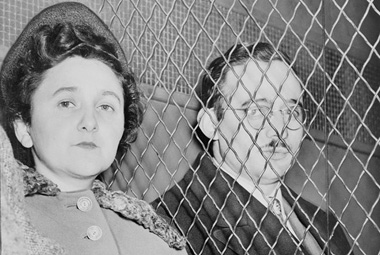
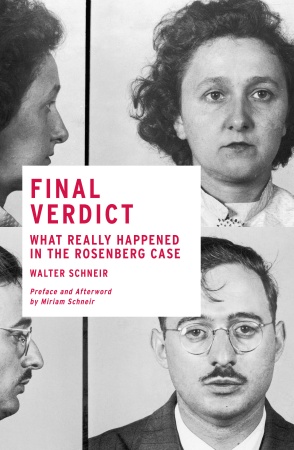
Final Verdict : What Really Happened in the Rosenberg Case.
In 1965, Walter and Miriam Schneir published Invitation to an Inquest, it was among the first critical accounts of the Julius and Ethel Rosenberg case. They were executed in 1953 for passing atom bomb secrets to Soviet Russia. In that book the Schneirs presented exhaustive evidence that key witnesses in the trial had changed their story after prompting from prosecutors. Their conclusion was, the Rosenbergs were innocent. Now after 30 years, Walter Schneir returned to the case with new evidence. Schneir had found that Julius Rosenber was marginally involved in the atom bomb spy ring and Ethel wasn’t involved at all. However they both lied about not knowing about espionage because of their earlier activities in World War II. All of this unravels in the Final Verdict : What Really Happened in the Rosenberg Case.
Miriam Schneir:
- The case began in 1950, 60 years ago. American cities were vulnerable to nuclear attacks. In that climate the Rosenbergs were arrested. The legal charge was conspiracy to commit espionage. During the trial, they were charged with stealing the secrets of the atomic bomb.
- The principle witnesses were Ethel Rosenberg’s brother, David Greenglass and his wife Ruth.
- David was in the Army and serendipitously was sent to Los Alamos, where the atomic bomb was being constructed.
- Julius was a spy during the wartime years. Ethel did nothing, she was not a spy.
- In a report by the Atomic Energy Commission, Greenglass was ranked as the least effective atomic spies back then. There was a lot of effort on the part of the Department of Justice to convict these people.
- This case is relevant today in a larger frame work.
- We can see that the Rosenberg case is like the Dreyfus case or the Sacco and Vanzetti case.
- It’s essential that leftists of each generation should keep that history alive.
- Now it’s Islam fundamentalism. That’s not to say there was no danger.
- You see the government use the courts to advance policies.
- On a personal level, Walter and I learned from the Freedom of Information documents we recieved, on the basis of the Meeropol suit, that while we were researching an Invitation to an Inquest, the FBI had been track our activities.
- We were just two writers who were trying to research a book, they were tapping our phones, and finally they placed us as well as thousands of others on an index of people who would be detained in the event of a national emergency.
- After the book was published, an FBI memo, directed that the book should be smothered and forced out of the public eye.
Guest – Miriam Schneir, editor of Feminism in Our Time: The Essential Writings, World War II to the Present and Feminism: The Essential Historical Writings. In addition to Invitation to an Inquest, she is also the co-author of “Remember the Ladies”: Women in America, 1750–1815.
Walter Schneir, a freelance writer on law, politics, and science. He is the co-author, with his wife Miriam Schneir, of Invitation to an Inquest, long considered the definitive book on the Rosenberg case. He is also the editor of Telling it Like it was: The Chicago Riots, an early account of the 1968 Democratic Convention. He died in April 2009 soon after completing this work.
——————————————————————————————
CIA Sponsored Terror, Civil Liberties, Criminalizing Dissent, FBI Intrusion, Gaza, Green Scare, Human Rights, Prison Industry, Surveillance, Truth to Power, Uncategorized
Podcast: Play in new window | Download
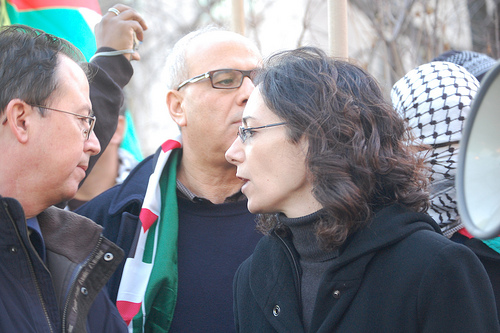
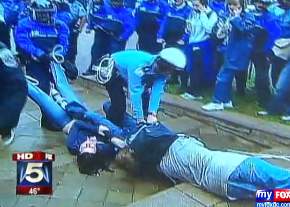
Lawyers You’ll Like Series: Mara Verheyden Hilliard Part II
Today we’re joined by attorney Mara Verheyden Hilliard co-founder of The Partnership for Civil Justice Legal Defense & Education Fund in the second part of our Lawyers You’ll Like series. Mara and her partner Carl Messineo have worked to defend and advance fundamental civil, constitutional and human rights secured by the U.S. Constitution and under law. We talk about her work, and criminalizing dissent, surveillance, data mining, and FBI harassment. A lot of Mara’s work is at the intersection of first and fourth amendment rights, such as the assault on free speech, assembly and misuse of datamining tools. The Partnership for Civil Justice has many victories, and recently a settlement was reached in a class action lawsuit about the illegality of the arrests of approximately 700 protesters and other persons on Saturday, April 15, 2000 in Washington, D.C.
Attorney Mara Verheyden-Hilliard:
- I co-founded the Partnership for Civil Justice in 1994 with Carl Messenio. We decided we wanted to do this work specifically, Constitutional rights, civic justice, public interest litigation.
- We began this work right after we left law school. We undertook some of the longest running protest cases that we had, in particular, the recently settled class action from the April 2000 mass arrests.
- I grew up in Washington DC and I spent my childhood going to civil rights demonstrations, anti-war demonstrations, having our house filled demonstrators. Both of my parents are deeply political people who care very much about civil rights, liberation struggles and womens’ rights.
- The core of the work we do we recognize as the underlying social justice movement.
- The municipalities, the governments, they want these cases to go on as long as possible, they want to fight a war of attrition, because they want plaintiffs to feel they have to take toothless settlements.
- The fact is the law has changed in DC, we’ve changed the way police operate. They can’t use these tactics, these tactics we took apart piece by piece have been removed from the arsenal of the police department in DC.
- The DC police can’t use the trap and detain tactic, they can’t hold people, they have to release them within 4 hours now. They can’t use the wrist to ankle handcuff mechanism against people anymore.
- Police need to have their badges plainly available and visible, they can’t come out in riot gear to first amendment assemblies. Now we’re seeing this effort (FBI) against solidarity activists with the raids and subpoenas. I think it is outrageous, and baseless for the government to be coming in and targeting people for solidarity work.
- It’s also reflective of the huge security apparatus that was put in place under Bush and is being accelerated under Obama. Those beliefs, that hope, that thought, that you can change the direction of the country that you live in, is absolutely true.
- All you gotta do is look at the past history of the United States, all 150 years.
- Recognize that it’s no fault to hope and to think that an elected official is going to do it, but historically the elected official has never been the one to do it.
Guest – Constitutional Rights Attorney Mara Verheyden Hilliard co-founder of The Partnership for Civil Justice Legal Defense & Education Fund. Mara Verheyden-Hilliard is an activist, Constitutional Rights attorney, and the cofounder of the Partnership for Civil Justice. She is also co-chair of the National Lawyers Guild Mass Defense Committee.
——
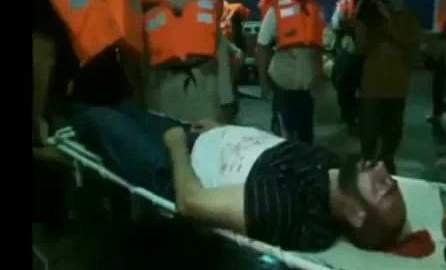
United States Plays Down UN Report on the Gaza Flotilla Attack
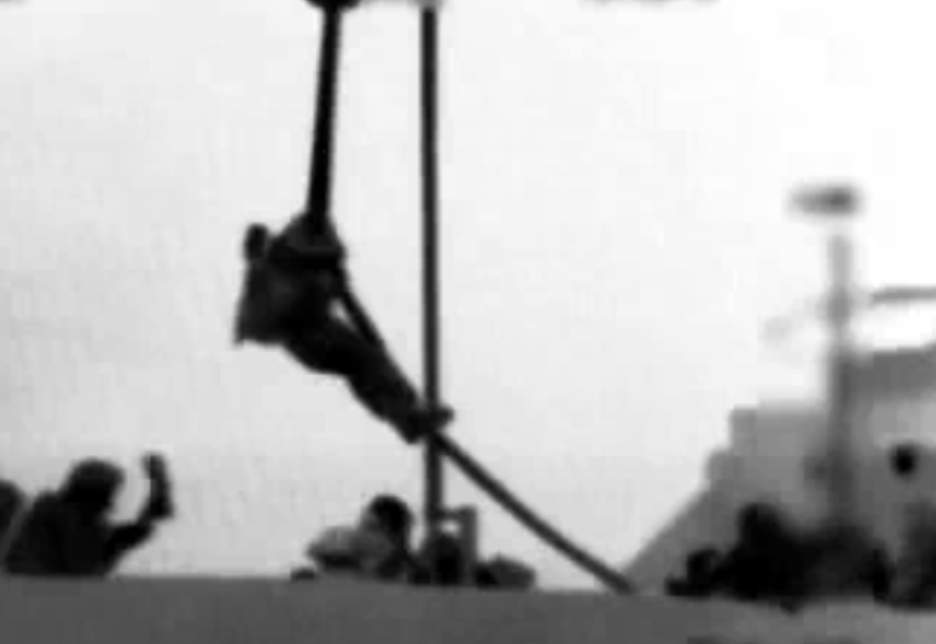
A United Nations fact finding mission into the May 31, 2010 Israeli lethal attacks of ships traveling to Gaza, has reported that Israeli forces violated international law, “including international humanitarian and human rights law.” Eight Turkish activists and one Turkish-American were killed in the raid on board the ships attempting to break the Gaza blockade. The UN Human Rights Council’s investigation judged Israel’s naval blockade of the Palestinian territory to be “unlawful” because there was a humanitarian crisis in Gaza at the time. However, the United States criticized what it termed as the report’s “unbalanced language, tone and conclusions.”
The Center for Constitutional Rights, the Free Gaza Movement and the National Lawyers Guild responded to the report and the comments made by the United States at the Council
“Unfortunately, the United States used the opportunity of the Human Right Council’s discussion on the flotilla fact-finding mission’s report to promote its political agenda instead of engaging on the issue of legal accountability for Israel’s illegal blockade of Gaza and the unlawful attack on the Gaza flotilla,” said CCR attorney Katherine Gallagher. “The U.S. must recognize that there can be no peace without justice, and that until it supports accountability for violations of international law–even when violations committed by Israel – instead of a culture of impunity, it lacks the legitimacy necessary to serve as a broker of peace.”
Attorney Katherine Gallagher:
- There were 6 civilian ships and their goal was to both bring humanitarian aid to Gaza which has been under a Naval blockade by Israel for the last 4 years as well as to challenge the legality.
- The United Nations back in June 2010 set up a fact finding mission. The 3 commissioners traveled to London, to Geneva, Istanbul and Jordan to interview passengers. They met with legal experts and others to analyze the evidence they heard.
- The UN fact finding report was submitted last week, 56 detailed pages of what precisely happened that night on those ships on the night of May 31. It was concluded that the blockade is illegal under international law. It found that the 6 ships traveling to Gaza to break the blockade presented no imminent threat to the Israelis.
- The 3 commissioners have experience in international law matters. One had been a judge on the international criminal court. Their conclusions are grounded in law and not political conclusions. They were peaceful protesters preparing for an attack on the ship.
- It’s hard to see what they find as unbalanced. I think the report is carefully written, it’s cautiously written beginning with an analysis of its own mandate. Turkey very much welcomed the report.
- The bulk of the passengers were detained in Israel, at detention sites that had already been established.
- Confiscated property consists of cameras, computer chips, video equipment. It contains electronic equipment that provides first hand evidence of the flotilla passengers activities and then the attack on the ship.
- In the past 4 months Israel has been in possession of that material.
Guest – Katherine Gallagher, Senior Staff Attorney at the Center for Constitutional Rights, where she focuses on holding individuals, including US and foreign government officials, and corporations, including private military contractors, accountable for serious human rights violations. Among the cases she is working on are Arar v. Ashcroft, Matar v. Dichter, Saleh v. Titan and Estate of Atban v. Blackwater.
———
Post Coup Honduran Human Rights Crisis
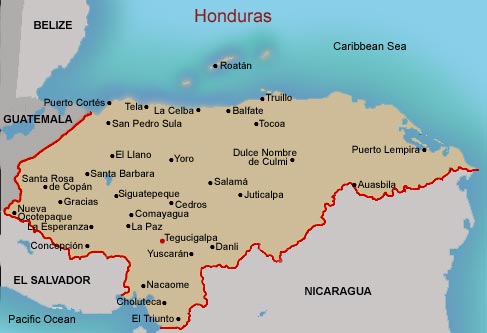
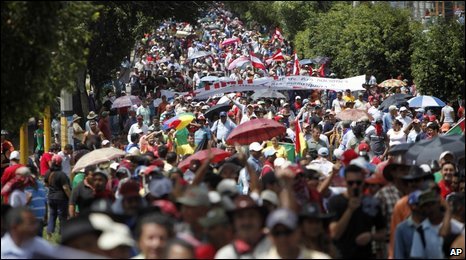
A human rights crisis continues to get worse in Honduras, more than a year after the June 28, 2009 military coup. People on the front lines that oppose the regime installed after the coup are beaten and illegally detained by the state. Nectali Rodezno, Co-Coordinator of National Front of Lawyers in Resistance Against the Coup in Honduras is among the lawyers dircectly involved in defending those are being abused and whose lives are on the line everyday. To inform people about the ongoing crisis in Honduras, there will be a speaking tour this fall called JUSTICE IN HONDURAS: Witness for Peace Mid-Atlantic Fall Speakers Tour will be November 1 – 22.
Attorney Pam Spees:
- From that moment on you began to see alot of repressive tactics immediately after the coup.
- Immediately, leaders of that resistance were being targeted. There were several key people who were killed in aftermath of the coup. Walter Trochez was a key LGBT activist who was targeted and killed in a very brutal way. You also saw the targeting of labor leaders. The killing continue even in this new de facto administration.
- In March you saw the targeting of journalists. In that month alone, 8 journalists were killed.
- The Honduran judiciary were taking certain steps before the coup to help undermine Zelaya and what he was doing. We’re still learning about how much of this was driven by official US policy.
- Before the coup we had the financial crisis in the US that was effecting food security which was making it difficult everywhere. Zelaya was trying to buffer the Hondurans against this. One of the things he did was raise the minimum wage. He raised it and tied it to the food index.
- The Bolivarian Alliance for the Peoples of Our America
- On June 28, the Honduran resistance has set up its own truth commission, The Alternative Truth Commission. The International Criminal Court is an actor and could investigate and potentially prosecute some of these acts.
- In the US we have the Alien Tort Statute. It’s a very old law that allows non-citizens to bring suit in US courts for violations of international law.
- The courage show by all sectors of this resistance is just incredible. www.resistenciahonduras.net
Guest – Pam Spees, senior staff attorney in the international human rights program at the Center for Constitutional Rights. She has a background in international criminal and human rights law with a gender focus, as well as criminal trial practice.
———————————————————————-