Civil Rights, Targeting Muslims, U.S. Militarism, Violations of U.S. and International Law, War Resister
Podcast: Play in new window | Download

U.S. Aids Israel’s Brutal Geopolitical Positioning
We are living in a time of great peril to humanity. Two nuclear-armed countries, the United States of America and Israel, commenced a war of aggression against Iran, on February 28th. This war threatens to spread uncontrollably. It has already quickly become a regional war. A full world war could be triggered, creating the danger that the United States or Israel might use their atomic weapons. The radioactive fallout would bring about a nuclear winter.
The current war of illegal aggression reminds us that on September 1, 1939, Hitler sent his troops east to invade Poland. Six years later, the resulting world war ended with the United States using atomic weapons, for the first time, on Japan. Sixty million people died in World War II.
Israel seeks to make Iran into a failed state to achieve what it has always wanted, to become the region’s hegemon and only nuclear power. Getting the United States involved in a war against Iran has been the project of Benjamin Netanyahu for 30 years. American presidents and the military have long resisted this. But not Trump.
There are already 50,000 American soldiers in the region. 3000 Marines are headed towards Iran. The 101st airborne division has deployed paratroopers, just as they did in the illegal invasion of Iraq 23 years ago. At that time, President George Bush falsely claimed that Iraq had weapons of mass destruction. The lie this time is that Iran will soon develop nuclear weapons and long-range missiles and the capability to deliver them.
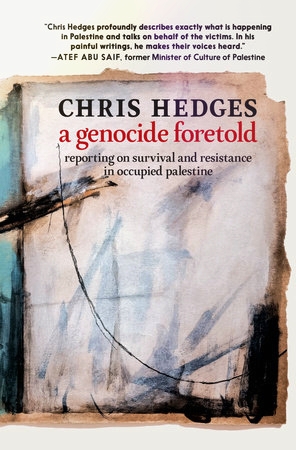
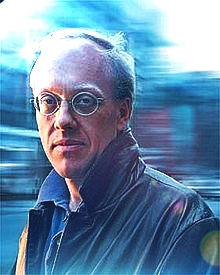
Guest – Chris Hedges is a Pulitzer Prize winning journalist and author, and the former Middle East correspondent for the New York Times. Among his more than a dozen books are American Fascism: The Christian Right and the War on America; The Greatest Evil Is War; and A Genocide Foretold: Reporting on Survival and Resistance in Occupied Palestine. Chris Hedges is also one of the contributors to the book titled From the Flag to the Cross: Fascism American Style, a book composed of summaries of interviews with guests here on the Law and Disorder radio show, and available for purchase at O/R Books.

———————
Civil Liberties, Civil Rights
Podcast: Play in new window | Download

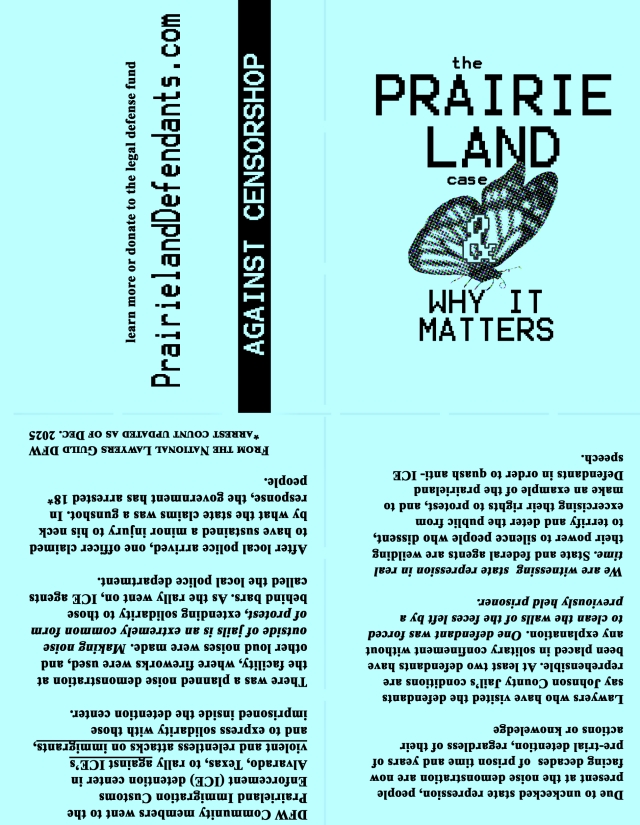
Prairieland Immigration Detention Center Protest Case Update
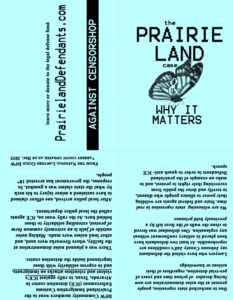
In a case we’ve been closely following, a federal jury in Texas has delivered a verdict in what may become one of the most consequential protest-related decisions in recent memory. Nine activists connected to a 2025 demonstration outside the Prairieland immigration detention center were convicted on charges ranging from rioting to providing material support for terrorism. At the center of the government’s case was the claim: “antifa” is a coordinated, violent enterprise—one rising to the level of domestic terrorism. Prosecutors leaned on expert testimony and political declarations to argue that common protest tactics—black clothing, encrypted messaging, even reading certain literature—were evidence of a broader criminal conspiracy.
But reporting by investigative journalist Adam Federman, based on FBI records he obtained through a Freedom of Information Act request, tell a very different story. The documents show that, as recently as 2018, the Bureau itself concluded that “Antifa DFW,” or Dallas-Fort Worth posed no threat to national security and warranted no further investigation. But those records were not disclosed at trial—raising serious constitutional questions about withheld evidence and the integrity of the prosecution.
Guest – Xavier de Janon is a criminal defense lawyer and the Mass Defense Director with the National Lawyers Guild where he provides protest defense and support for the right to dissent. Based in North Carolina, Xavier also represents individuals in politically-motivated cases across the South.
—-

The Trump Administration’s Policy Impacts On Civil Rights And The Black Middle Class
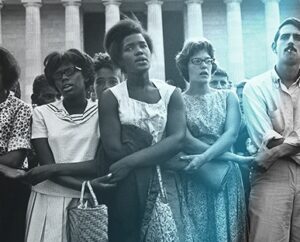
According to the New York Times, within hours of taking office, President Donald Trump immediately began to target the Black community. On his first day, he ordered the dismantling of diversity, equity and inclusion programs and the firing of the predominantly Black employees who staffed them. He branded Black history as unpatriotic and “divisive.” He equated diversity with incompetence and removed high-ranking Black officials in the government. He moved to weaken longstanding civil rights guardrails to restore what he called “merit” and fairness.
By the end of his first year, Trump had slashed the federal work force by nearly 300,000 people. His biggest cuts targeted agencies that had employed a disproportionate number of Black employees, a measure that economists and experts say poses the biggest threat to the Black middle class in modern history. Infamously, Trump recently posted a racist video clip on his social media feed portraying President Barack Obama and Michelle Obama as apes. Trump deleted the video but refused to apologize for it.
Guest – Professor Kim Hester Williams is a Professor of English and Black Studies and Ethnic Studies at Sonoma State University. She is co-editor of the award winning collection, Racial Ecologies, published with the University of Washington Press in 2018. Currently, she serves as co-editor of the journal, Legacy: A Journal of American Women Writers and previously served as guest editor for the special issue of Gothic Nature V: Decolonising the EcoGothic. She also published a co-authored essay, “Familial and Communal Histories as Environmental Care Work,” in the academic journal, Environmental Communication. Additionally, Prof. Kim writes poetry grounded in the eco-feminist, Black Womanist tradition of Poetics. Last year, she published her poem, “I Saw a Butterfly” in Voices Unbound: An Anthology of International Poetry. I recently had the pleasure of interviewing Prof Kim following a screen of the movie Origin, based on the book Caste by Isabell Wilkerson. It was so illuminating that I wanted to continue the conversation.
—————————-
Civil Liberties, Civil Rights, Freedom Of Speech, Racist Police Violence
Podcast: Play in new window | Download

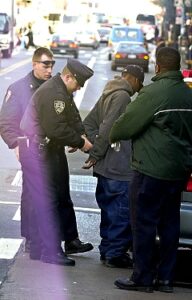
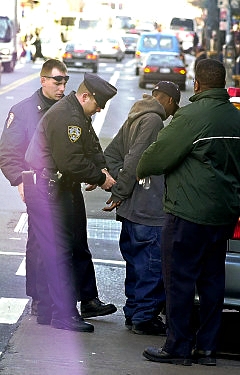
Stop and Frisk Policing Considered Despite Federal Court Ruling It Unconstitutional
In the years after the September 11 attacks, New York City became the epicenter of one of the most controversial policing practices in modern U.S. history: stop-and-frisk. Under the policy, police stopped millions of people on the street, questioning and searching them without warrants. The overwhelming majority of those stopped were Black and Latino New Yorkers, and most were never charged with any crime.
After years of litigation and community organizing, a federal court in 2013 ruled that the NYPD’s stop-and-frisk program was unconstitutional and ordered sweeping reforms. The decision marked one of the most significant victories for police accountability in the country and led to a sharp decline in stops. Now, more than a decade later, the city’s new police commissioner, Jessica Tisch, has signaled a renewed emphasis on aggressive street policing.
Guest – Jonathan Moore is a civil rights attorney and a partner at the law firm Beldock Levine & Hoffman and one of New York’s leading litigators challenging unconstitutional policing. Jonathan served as co-lead trial counsel in Floyd v. City of New York, the landmark stop-and-frisk case. He has also represented four of the five men wrongfully convicted, and then exonerated, in the Central Park jogger attack, helping expose one of the most notorious miscarriages of justice in modern New York history.
—-
The Future of Free Speech: Reversing the Global Decline of Democracy’s Most Essential Freedom
Today, anyone who cares about freedom of expression needs to face a stark truth: the right to speak freely is under siege. Once celebrated as a cornerstone of democratic societies, free expression is now met with growing suspicion and retaliation across the globe. Over the last century, speech rights expanded dramatically?including postwar democratic revolutions and the sweeping protections of the First Amendment in the United States?only to find those rights unraveling in the face of new political, technological, and cultural pressures in the US and around the world.
Today, liberal democracies are imposing speech controls, authoritarian regimes are cloaking censorship in democratic language, and digital platforms wield unprecedented power over global discourse. There is a concerted backlash against free speech from all sides: governments criminalizing dissent in the name of national security; lawmakers and activists demanding tighter controls on misinformation, hate speech, and offensive content; and AI systems removing speech at a scale and speed that dwarfs historical forms of censorship. At the same time, faith in free speech itself is waning, even in the very societies that once championed it.
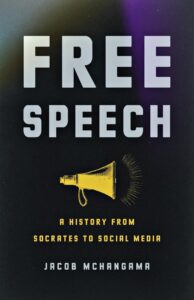
In their new book which will be published next month, The Future of Free Speech: Reversing the Global Decline of Democracy’s Most Essential Freedom, Jacob Mchangama and Jeff Kosseff present a panoramic view of how we arrived at this pivotal moment and how free speech can meet modern challenges without abandoning its foundational role in sustaining democracy, human rights, and shared understanding.
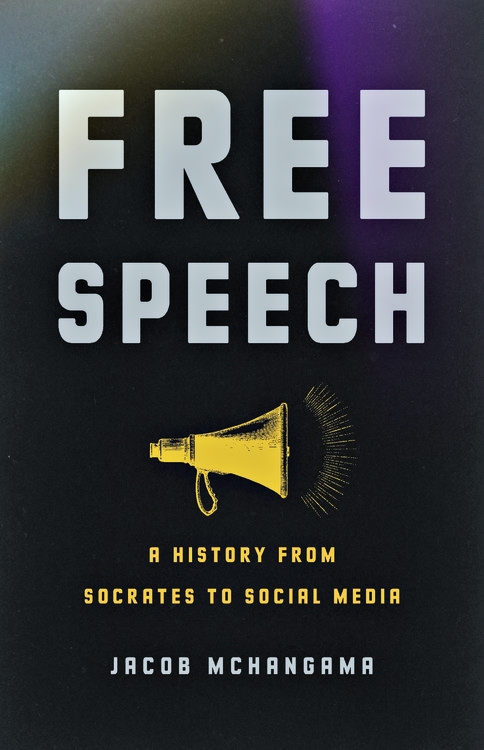
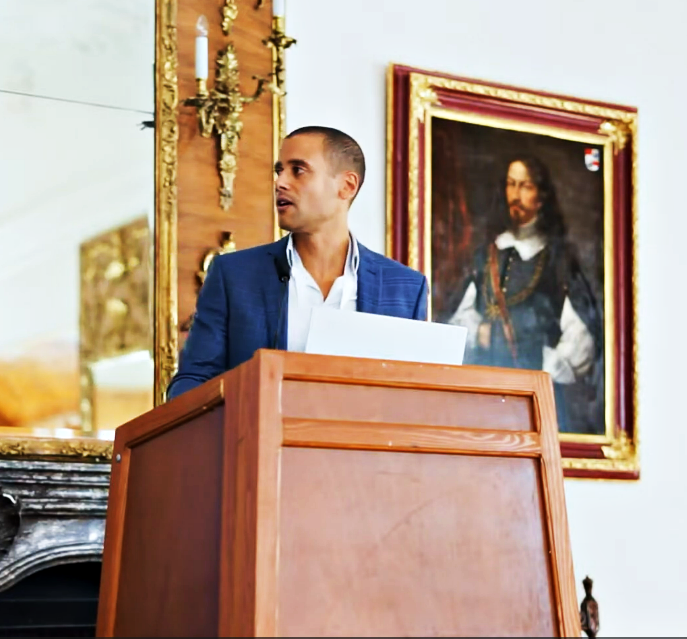
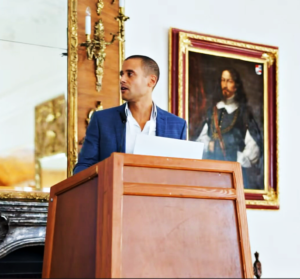
Guest – Jacob Mchangama, is one of the co-authors of The Future of Free Speech, founder and Executive Director of the non-profit organization, The Future of Free Speech. He is a research professor at Vanderbilt University and a Senior Fellow at The Foundation for Individual Rights and Expression (FIRE). In 2018, he was a visiting scholar at Columbia’s Global Freedom of Expression Center. Jacob has commented extensively on free speech and human rights in outlets including the Washington Post, the Wall Street Journal, The Economist, Foreign Affairs, and Foreign Policy. Jacob has published in academic and peer-reviewed journals, including Human Rights Quarterly, Policy Review, and Amnesty International’s Strategic Studies. He is the producer and narrator of the podcast Clear and Present Danger: A History of Free Speech. He is also the author of the critically acclaimed book Free Speech: A History From Socrates to Social Media, published by Basic Books in 2022, which I had the pleasure of reviewing – quite favorably I might add – for Los Angeles Review of Books.
—————————————–
Civil Liberties, Civil Rights, Freedom Of Speech, genocide, Human Rights, Violations of U.S. and International Law
Podcast: Play in new window | Download

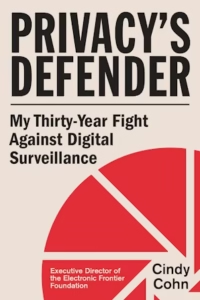
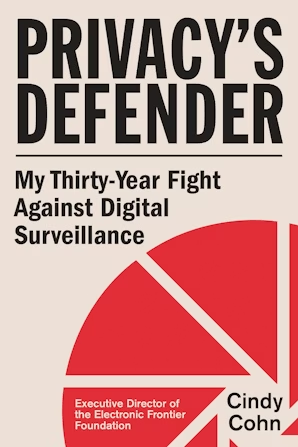
Privacy’s Defender: My Thirty-Year Fight Against Digital Surveillance
Civil liberties attorney Cindy Cohn is widely recognized as one of the leading voices on digital freedom in the United States. As she prepares to step down as executive director of the Electronic Frontier Foundation, or EFF, she leaves behind a 25-year legacy at the forefront of the fight for online rights. Over the years, she has helped shape some of the most important debates around encryption, government surveillance, and freedom on the internet.
Cohn first rose to national prominence in the 1990s as lead counsel for the EFF and PhD student Daniel Bernstein in Bernstein v. Department of Justice. That was the landmark case establishing that computer code is protected speech under the First Amendment. During the height of the so-called “crypto wars,” that decision helped free encryption from government control and shaped the security of the modern internet.
As legal director, and then as executive director, at EFF, Cindy has led major legal challenges to NSA mass surveillance. She as defended independent security researchers, fought government overreach justified in the name of national security, and pushed back against expanding corporate data collection. A central voice at the intersection of law and technology she has shaped debates over encryption, privacy, online speech, and civil liberties in the digital age. Her new book, Privacy’s Defender, published by MIT Press, reflects on those battles and what comes next.
—-
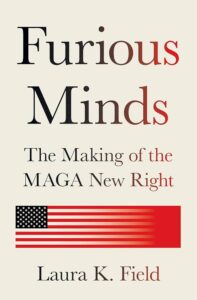
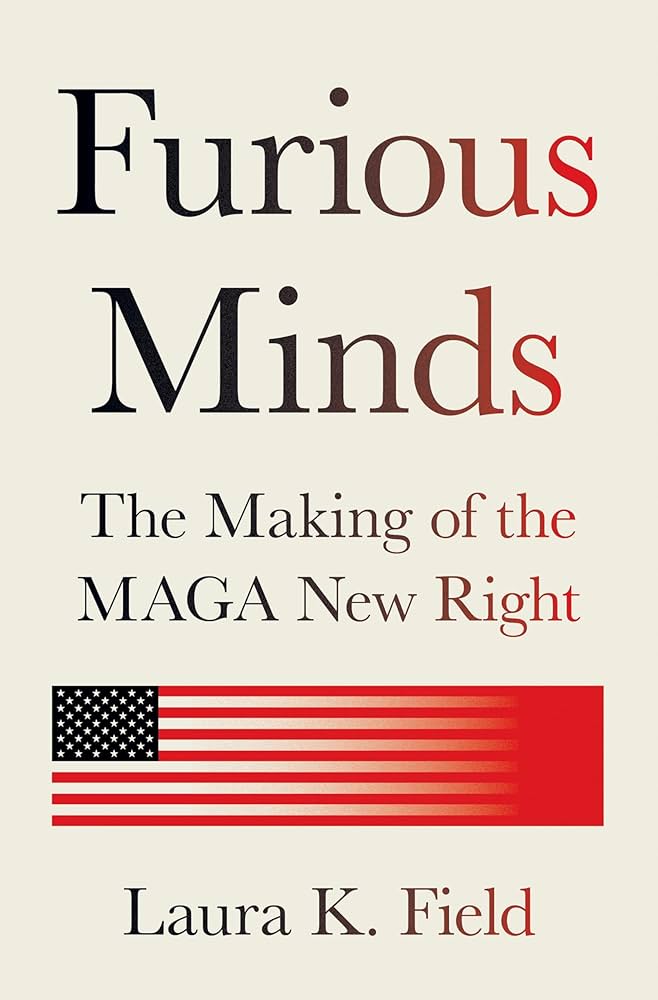
Furious Minds: The Making of the MAGA New Right
By all that is right and just, we will be rid of Donald J. Trump as President of the United States on January 20, 2029. But we will not be rid of the tremendous damage he is causing to our country. And we will not be rid of the cruel, populist, racist, White Christian, patriarchal, and nationalist MAGA New Right ideology that now dominates the Republican Party. Even after Trump decamps to Mar-a-Largo, MAGA will continue to pose an existential threat to our constitutional democracy.
We need to fully understand that there is an extensive, well-financed ideological structure made up of think tanks, publications, university institutes, and PhDs, that provide an intellectual patina to this dangerous movement. Unless the pro-democracy resistance exposes and dismantles the MAGA New Right, it will find replacements for Trump and will continue to wreck havoc, destroying the lives of people in the United States and around the world.
Guest – Laura K. Field is the author of the revealing new book Furious Minds: The Making of the MAGA New Right. Field holds a PhD in government from the University of Texas at Austin, and has written for The New Republic, Politico, and The Bulwark. Field’s exposure of the ideological foundations of the MAGA New Right is based on copious research and her own experiences while she was embedded in that movement. She says she is grateful she “extracted” herself from that world as she saw how untethered the mostly privileged male purveyors of MAGA’s dangerous tenets are from the everyday struggles of real people. She realized how dedicated they are to eliminating the hard-fought advances our pluralistic society has won based on the values of equality, compassion, and justice.
—————-
Civil Liberties, Civil Rights, Gaza, genocide, Human Rights, U.S. Militarism, Violations of U.S. and International Law, War Resister
Podcast: Play in new window | Download
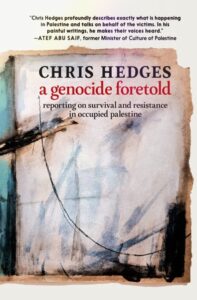

Chris Hedges: Assessing The Political Landscape In 2026
What we are going to do in this segment of today’s Law and Disorder is learn the thinking of our guest on the following questions. Is there a meaningful ceasefire in Gaza? When will the Palestinians have their own sovereign nation? Is it reasonable to still designate America as a democracy? Is President Trump an authoritarian and would-be dictator? Is it quite possible that the 2026 mid-term elections will be cancelled or so demeaned as to be totally unrepresentative of the true will of the American people?
Guest – Chris Hedges is a Pulitzer Prize winning journalist and author, and the former Middle East correspondent for the New York Times. Among his more than a dozen books are American Fascism: The Christian Right and the War on America; The Greatest Evil Is War; and A Genocide Foretold: Reporting on Survival and Resistance in Occupied Palestine. Chris Hedges is also one of the contributors to the book titled From the Flag to the Cross: Fascism American Style, a book composed of summaries of interviews with guests here on the Law and Disorder radio show, and available for purchase at O/R Books.
—-
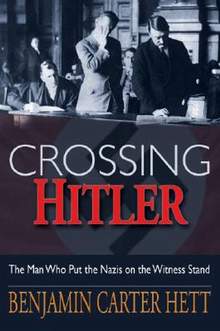
Crossing Hitler: The Man Who Put the Nazis on the Witness Stand
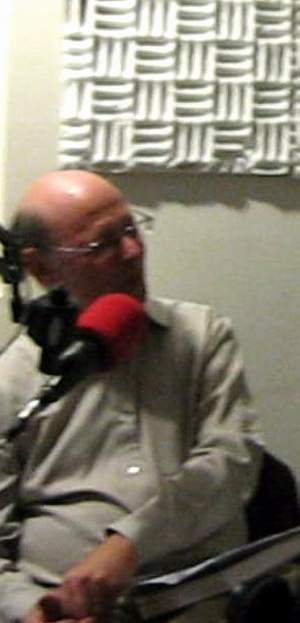
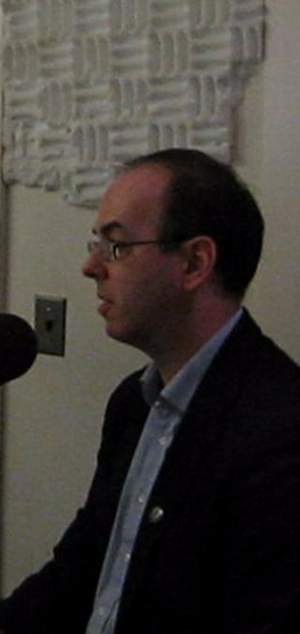
Hitler’s fascist organization came to power in Germany. It employed the violence of Hitler’s storm troopers. There is a parallel today with President Trump’s administration and the MAGA people employing the violence of ICE to terrorize people in our large cities. Hitler tried unsuccessfully to distance himself from the violence of the storm troopers. He was not successful because of the brilliant cross examination by German attorney Hans Litten, who put Hitler on the stand and subjected him to a devastating three hour cross examination. Today we re-broadcast Law and Disorder founding cohost attorney, Michael Ratner’s interview with Benjamin Carter Hett, the history professor who wrote the book Crossing Hitler: The Man Who Put the Nazis on the Witness Stand.
Author Benjamin Hett outlines the fascinating and tragic story of a young lawyer Hans Litten in his recent book Crossing Hitler: The Man Who Put the Nazis on the Witness Stand. Before the Nazis rose to power in the early 1930s, they incited calculated violence among the working class in German taverns. Four Nazi stormtroopers were charged with firing randomly into a dance hall where a communist hiking club were holding a party. Three young men were wounded. Hans Litton was the advocate for the 3 men.
Hans Litten called Hitler to the witness stand to show that the Nazi party was a violent party, and by cross examining Hitler he tried to prove that. Litten forced Hitler to contradict himself, reducing him to humiliating rage that revealed his true intention. At that time, Hitler wanted to be a legal party in Germany and of course you couldn’t be a party that was extra-constitutional and legal but at the same time he didn’t want to disappoint the base of his party which was this violent working class aspect. Two years later, the Nazi Party rose to power.
What came after the Reichstag Fire was the arrest of about 5 thousand people across Germany who the Nazis have identified as opponents or potential opponents. Hans Litten was among them and sent to a concentration camp. Author Benjamin Hett describes a powerful narrative of Hans facing torture yet still telling stories and teaching art to other prisoners. Hans Litten was born in 1903 in Halle in Central Germany, his father was a law professor and Jewish but converted to German evangelical (Lutheran).
Guest – Benjamin Hett, author of Crossing Hitler: The Man Who Put the Nazis on the Witness Stand. Hett is a former trial lawyer, and now Associate Professor of History at Hunter College.
——————————–
Civil Liberties, Civil Rights, Gaza, genocide, Human Rights, Surveillance, Targeting Muslims, War Resister
Podcast: Play in new window | Download
On Friday, following the taping of this show, the UK High Court ruled that the ban on Palestine Action, which we examine, was unlawful.
Our guest Fahad Ansari released this statement: “With jurors repeatedly refusing to convict individuals for smashing up Israeli weapons factories and now the High Court quashing the government’s proscription of a group dedicated to that goal, it is evident that the British public overwhelmingly opposes Britain’s support for Israeli genocide.”

British Movement Lawyer Exposes Being Targeted By Senior Politicians and Cointel Police
When repressive governments around the world attack their own people and liberal democracies fight back, some of the first responders are movement lawyers. Unlike cowardly law firms that capitulate in advance, as we have seen here in the United States, movement lawyers work hand-in-hand with activists not merely challenging what the government is doing but putting the government itself on trial.
The roots of movement lawyering in the United States can be traced back to the civil rights movements of the 1960s and 1970s, where lawyers challenged laws that upheld segregation and other forms of discrimination. These lawyers used the legal system not just as a passive tool but as an active agent of change. They helped litigate landmark cases that desegregated schools, secured voting rights, dismantled discriminatory laws, challenged draft laws and questioned the legality of the Vietnam War.
The founders of this program Law and Disorder, Michael Ratner, Michael Smith, Jim Lafferty, and Heidi Boghosian are all prominent movement lawyers. But movement lawyers are not confined to the United States.
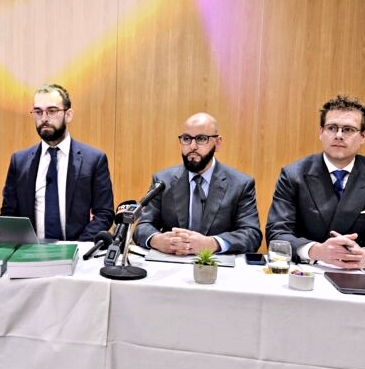
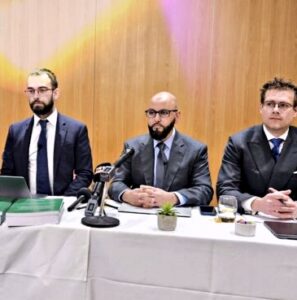
Guest- Fahad Ansari, is a senior civil liberties solicitor based in London. As a movement lawyer, he developed a niche in representing individuals and communities affected by counter-terrorism legislation, state surveillance, and discriminatory policing. His career has been defined by taking on some of Britain’s most sensitive cases including representing those stripped of their citizenship on grounds of national security and representing Hamas in its 2025 application to be removed from the British government’s list of proscribed terrorist organizations.
The Hamas case resulted in Ansari being smeared by senior politicians and targeted by British counter-terrorism police and the government agency that regulates the practice of law in the UK.
On August 6, 2025, Ansari was stopped by officers at the port of Holyhead as he returned from a family holiday in Ireland with his wife and four children. Ansari said the bulk of the questioning was about Palestine Action, a group recently proscribed under the Terrorism Act. He was also asked about Hamas but refused to answer, citing client confidentiality. Ansari said he was held by police for three hours, fingerprinted, photographed and swabbed for DNA and told to remove his face ID and pin from his phone or face arrest. The following day, the contents of his phone were copied by the police.
Ansari said that “In the decade that I have been involved in national security cases, I have never heard of lawyers in England being targeted to this extent because of their clients. Some have complained that representing Hamas brings the profession into disrepute. Yet, what really undermines the integrity of the profession is when unpopular clients are unable to secure legal representation because of fear of public opprobrium and state intimidation.”
—-

Michigan Movement Lawyer Mark Fancher
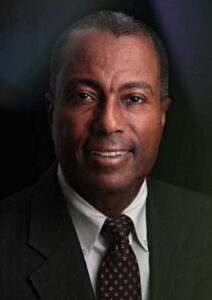
As we celebrate Black History Month, conversations often drift toward a comfortable, sanitized narrative of progress. But our guest today, Mark Fancher, has spent his career in the uncomfortable spaces where the struggle for racial justice remains ongoing, contested, and— for far too many communities—urgent.
Mark recently retired as Senior Staff Attorney with the Racial Justice Project of the ACLU of Michigan. But his commitment to justice did not begin there. A longtime leader in the National Conference of Black Lawyers and an active member of the National Lawyers Guild, he has devoted decades to challenging the systems that produce inequality—not merely documenting them.
In Michigan, those systems are stark, and those injustices are often enforced by the badge. Black residents comprise roughly 14 percent of the state’s population, yet account for nearly half of those incarcerated. That disparity is not incidental. It reflects policies, practices, and policing strategies entrenched over generations. Mark has litigated the human consequences behind those numbers—from confronting a culture of brutality in the City of Taylor, which he described as functioning like an “occupying army,” to defending Black officers such as Johnny Strickland, who faced retaliation within their own departments for speaking out.
Mark is no stranger to the friction that truth-telling provokes. More than a decade ago, at a “Unity Breakfast” in Muskegon, his remarks about white privilege and police misconduct prompted audience members to walk out. He was labeled “divisive.” But as Mark reminded them then—and reminds us now—Dr. King did not preach comfort. He taught the oppressed to confront injustice without fear and without retreat.
———————