Civil Liberties, Human Rights, Prison Industry, Truth to Power
Podcast: Play in new window | Download
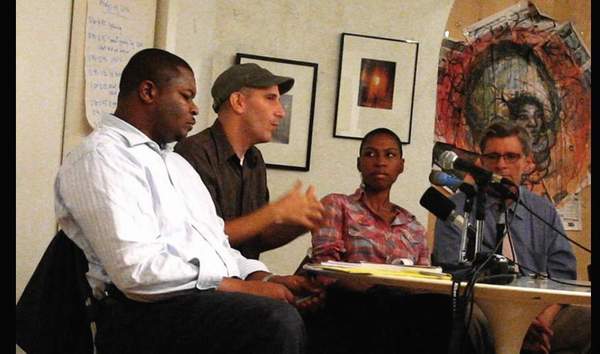

Community and Resistance on the Gulf Coast: Five Years After Hurricane Katrina, Four Months After the BP Drilling Disaster. Speakers: Rosa Clemente, Jordan Flaherty, Damon Hewitt, and Shantrelle Lewis. Moderated by attorney Eric Poulos. This week we hear from Jordan Flaherty and Rosa Clemente.
Jordan Flaherty. Jordan is the author of the book Floodlines. He’s a journalist and community organizer based in New Orleans. He was the first journalist with a national audience to write about the Jena Six case, and played an important role in bringing the story to worldwide attention. His post-Katrina writing in ColorLines Magazine shared a journalism award from New America Media for best Katrina-related coverage in the Ethnic press, his reporting has been featured in the New York Times, and audiences around the world have seen the news segments he’s produced for Al-Jazeera, TeleSur, GritTV, and Democracy Now. Safe Streets
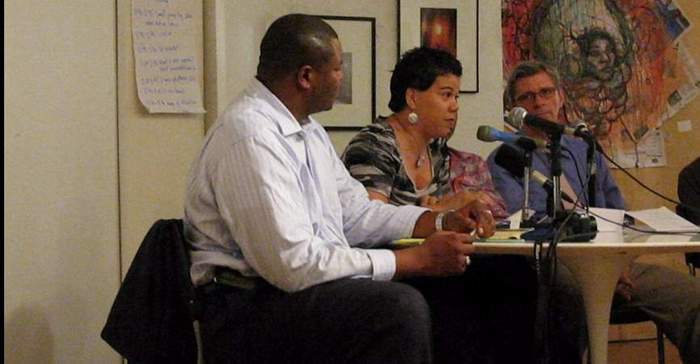

Rosa Clemente, community organizer, independent journalist and hip-hop activist. She was the vice presidential running mate of 2008 Green Party Presidential candidate Cynthia McKinney in the 2008 U.S. Presidential election. Clemente was born and raised in South Bronx, New York. She is a graduate of the University of Albany and Cornell University. Clemente has been delivering workshops, presentations and commentary for over ten years.
Clemente’s academic work has focused on research of national liberation struggles within the United States, with a specific focus on the Young Lords Party and the Black Liberation Army. While a student at SUNY Albany, she was President of the Albany State University Black Alliance (ASUBA) and Director of Multicultural Affairs for the Student Association. At Cornell she was a founding member of La Voz Boriken, a social/political organization dedicated to supporting Puerto Rican political prisoners and the independence of Puerto Rico.
—
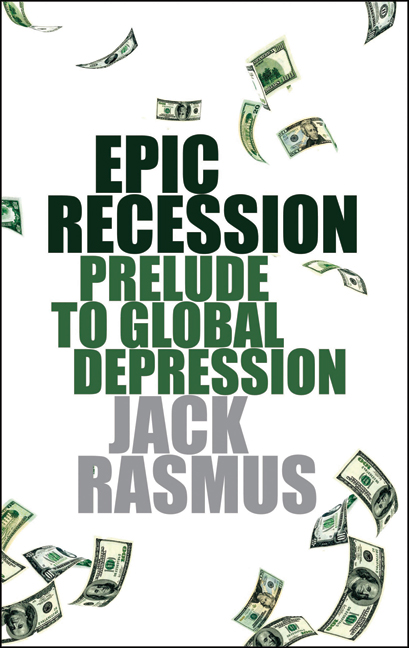
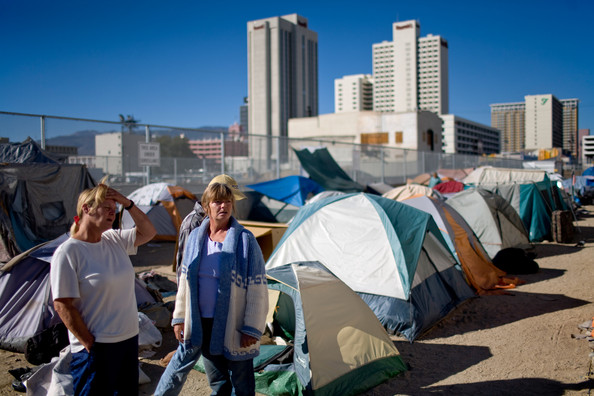
Author, professor Jack Rasmus joins hosts during fund raising in an interview about his recent book, Epic Recession: Prelude to Global Depression. Rasmus says another bank failure in the world could plunge economies into a depression. Who are the banks lending to? Rasmus says banks haven’t lent to small, medium businesses in the US, they lending collapse has gone on for 15 months. The banks have lent to hedge funds, private equity firms and speculators who have invested in foreign markets, Chinese commodities, oil and gold. Meanwhile, private investors and non-bank businesses continue to invest trillions into derivatives and speculative markets away from solid investments and production. Review
Jack Rasmus:
- I think its necessary to explain what’s really going on. How we got here, how it’s different. Why is it so difficult to extracate from it? The first 3 chapters are theoretical, the next few are historical.
- 1907-1914 – You bail out the banks, and there’s no fiscal stimulus and what you get is an extended period of stagnation. It didn’t end until the massive fiscal spending of WWI.
- A type II Epic Recession, the banks aren’t bailed out, and there isn’t sufficient fiscal stimulus. We had two banking crisis, then followed by another one in 1932 and 1933.
- Jump forward, there’s a possibility of another banking crisis somewhere in the world, if so, then a global depression. Banks have been engaged in this speculative shift, where they built up this huge level of debt.
- There are about 25 million without jobs. The government number is 14 million, the U3 unemployment.
- 7 million homes foreclosed. 3 million over 90 days delinquent.
- The first thing you got to do is create a massive 10 million job program. You got to finance 10 million jobs and that will cost a trillion dollars.
- The banks are sitting on a trillion dollar cash horde. Private businesses, non bank businesses are sitting on a 1.84 trillion dollar cash horde.
- That’s not counting the 750 billion. The money is there, it’s not being spent after they’ve been bailed out.
- Obama was only trying to put a floor on the consumption collapse. Unemployment benefits, give some states money, retirees, but that’s played out.
- What we need in this country is what I call utility banking. Create a 401K pool that the government matches by individual contributions and invest in alternative energies.
- The Global Money Parade: There is 10 to 20 trillion dollars of speculative banking sloshing around the world now causing all these bubbles. In the hands of shadow banking institutions, wealthy investors who are tied into the major commercial banks. They’re creating financial fragility as more and more non bank businesses participate in derivatives trading.
Guest – Author and Professor, Jack Rasmus teaches in the Department of Economics and Politics at St. Mary’s College, Moraga, California.
Solutions list from our March 2009 interview with Professor Jack Rasmus.
Solutions:
- No way out of housing crisis without nationalizing housing market.
- Create a new government agency and properly fund it, – 900 billion dollars – it would create a small residential and business loan agency. Go in there and reduce long term principle and interest to long term averages that existed before 2002’s run up of huge speculation.
- That would be for all loans, not just the ones in foreclosure. Which would stimulate consumption not just shore up housing industry. Similar to the Homeowners Loan Corporation of the 1930s.
- Auto Companies – You can’t just have 3 US Auto Companies surviving. They have to be nationalized if they’re going to put that much government money into them. We don’t give them a penny unless they stop their investment and expansions overseas.
- Ford is building big plants in Petersburg Russia. GM is building big plants in Shang Hai, China. Immediately they should be required to build cars with proper mileage. Bring back 2 trillion of the 6 trillion that’s been stuff away in offshore tax havens in the last 20 years.
————————————————————————-
Civil Liberties, Criminalizing Dissent, Cuba, Human Rights, Iraq War, Targeting Muslims, Truth to Power
Podcast: Play in new window | Download
Updates:
——–

Climate Ground Zero – Update with Jimmy Tobias
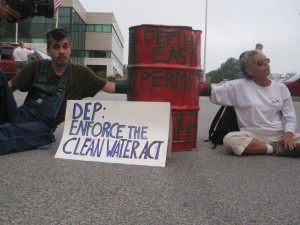
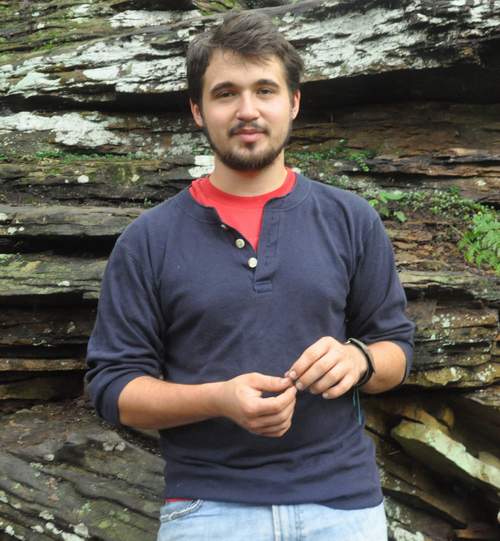
We get an update from Mountaintop Removal activist Jimmy Tobias. Jimmy was arrested this summer with others for using direct action to shut down a coal mining mountaintop removal effort in Virginia. He was held on a 3500.00 bail and later released. A New York Times editorial states that movement to slow down and stop the mountaintop removal mining in that area is gaining traction and the Obama Administration is restricting permits for mountaintop removal mining. Recent Action.
Jimmy Tobias:
- I’m in Rockcreek, West Virginia where the campaign houses are located. The campaign houses have a big role, but there a million other things people work on.
- At the moment we’re gearing up for a mass mobilization in Washington, that will take place between the 25 and the 27 of September. Appalachia Rising. We’re focused on bringing national attention to the issue.
- I’ve been loathe to put my faith in the EPA to solve these problems. Their actions have been really ambiguous. They go back and forth and its really hard to get a sense of the ultimate outcome of their actions (EPA)
- My passion is for the local organizing, because that will make it or break it basically. We have four campaign houses, a big outdoor kitchen, everyone eats together, organizes together, works on different aspects of the campaign. The civil dis-obediance campaign is called Climate Ground Zero.
- Coal River Mountain Watch, Sludge Safety Project, Mountain Justice.
Guest – Jimmy Tobias, activist and direct action protester against Mountaintop Removal.
———–

Blackwater Reaches Deal on U.S. Export Violations
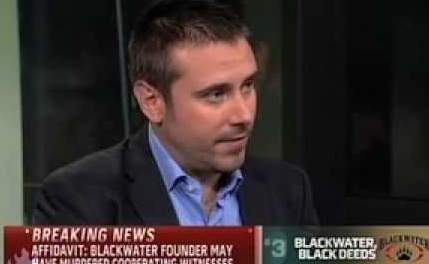
The private security company formerly called Blackwater Worldwide has reached an agreement with the State Department for hundreds of violations of US export control regulations. The company now called US Training Services will pay the US government 42 million dollars in fines to avoid criminal charges on export violations. Violations include shipping weapons to Iraq hidden inside containers of dog food. There are other legal troubles facing Blackwater officials, but the company continues to obtain government contracts. Last June, Blackwater was awarded a 120 million dollar contract to provide security at a State Department regional office in Afghanistan and the CIA renewed the firm’s 100 million dollar security contract in Kabul.
Jeremy Scahill:
- This is a company that has been repeatedly involved with criminal activity, with murder and has gotten off scott-free. It has been shielded by its handlers at the State Department or at the DOD.
- The idea that this company can pay what amounts to 146 thousand dollars per violation is outrageous.
- The real meat of it is the murder they’re involved with, the human rights violations.
- What would it take for this company to be completely knocked off the US Government payroll?
- US operations in Afghanistan now, have become so dependent on Blackwater, both in the CIA and State Department. Eric Prince, the owner of Blackwater who has since fled to the United Arabs Emirates, which has no extradition with the United States. He moved there after five of his top deputies were indicted on conspiracy and weapons charges. This is a man who knows where the bodies are buried, he was working for the CIA, for the Joint Special Operations Command. They (Blackwater) could reveal details of action that would horrify the average American if they knew this was being done in their name.
- After 9/11, Eric Prince cut a deal with the number 3 man at the CIA, Alvin Buzzy Krongard. Find Fix and Finish Operation.
- There are also cases of I’ve heard of Blackwater working inside of Syria.
- Two former Blackwater employees, a man and a woman, the man worked in war zones, the woman worked on the financial side. They have filed a whistleblower case against Blackwater, alleging extrajudicial killings and bilking US taxpayers. Susan Burke recently deposed Eric Prince.
- Blackwater is involved with secret assassination programs in countries around the world, where we aren’t at war, where we aren’t informing those countries.
- The only serious challenges to Blackwater, aka Xe, aka US Training Services are people like Michael Ratner and Susan Burke. Bill: Stop Outsourcing Security Act.
Guest – Jeremy Scahill is the author of the international best-seller Blackwater: The Rise of the World’s Most Powerful Mercenary Army. He is a frequent contributor to The Nation magazine and a correspondent for the national radio and TV program Democracy Now! He is currently a Puffin Foundation Writing Fellow at The Nation Institute. Scahill has won numerous awards for his reporting, including the prestigious George Polk Award, which he won twice. While a correspondent for Democracy Now!, Scahill reported extensively from Iraq through both the Clinton and Bush administrations.
——————–
Cuba Travel Ban
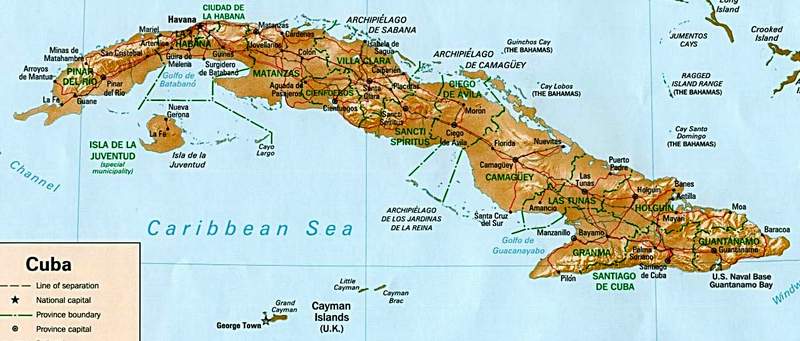
Will the Obama Administration come to a decision on how much to enable travel to Cuba. The Administration could simply reinstate President Clinton’s policy which is a costly case by case application or grant general licenses to the remaining 11 categories of travel to Cuba. General license would include schools, cultural institutions, Chambers of Commerce, religious bodies, World Affairs Councils, humanitarian organizations and more.
Sandra Levinson:
- The travel regs are not really travel regs. They are regulations set up by the US Treasury Department at the instigation of the US State Department. You can’t spend money in Cuba.
- President Carter lifted the travel ban, there were direct flights to Cuba during the brief time he was president.
- During the Clinton Administration, we were able to take a number of trips. Ban in effect for a number of rationales, we don’t wanna give money to Castro. It always surprised me that William F. Buckley was in support of ending the travel ban to Cuba.
- We can always do professional trips. I’m leading a trip for professional artists.
- Lawyers traveling to Cuba fall under the general license, it’s by assertion. You simply say as legal professionals you’re doing legal research.
- We’ve been to Cuba so much, our travel is not formal, it’s intimate.
- Although the food and medicine embargo was lifted several years ago, the regulations about payment are so tough on the Cubans, everyone else can buy on credit. The Cubans can’t, they have to buy up front, before a ship leaves US territory with the food, with the medicine.
- I fell in love with Cuba, I arrived on July 4, 1969. I was there for six weeks. Socialism with salsa.
- On the fifth day of my first trip, Fidel Castro taught me how to cut sugar cane. I think he is the one of the smartest leaders we’ve had in this hemisphere. I think he’s been in power that long, because we have not had relations with Cuba.
Guest – Sandra Levinson, Executive Director of the Center for Cuban Studies in New York City and Director of the Center’s Cuban Art Space. Facebook link
——————————————————
Civil Liberties, Criminalizing Dissent, Habeas Corpus, Human Rights, Military Tribunal, Political Prisoner, Prison Industry, Supreme Court, Targeting Muslims, Torture, Truth to Power
Podcast: Play in new window | Download
Updates:
—
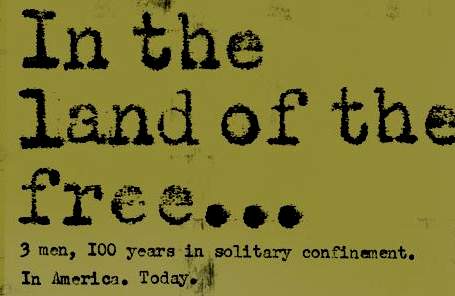
In the Land of the Free, a film by Vadim Jean
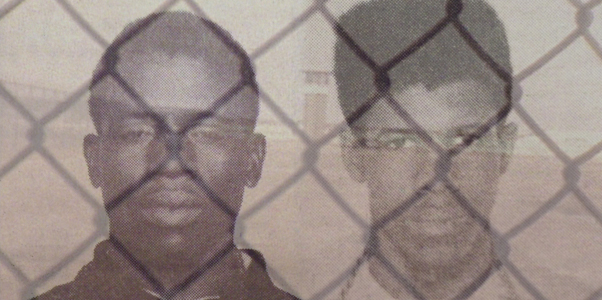
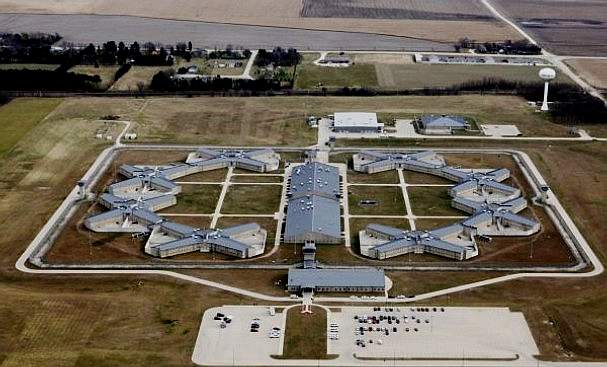
Director Vadim George joins us to discuss his recent documentary film “In the Land of the Free.” As many listeners may know, the Angola 3 are Robert King, Albert Woodfox and Herman Wallace. Each had arrived to the Louisiana State Penitentiary in the late 1960s. While in prison, and in contact with Black Panthers, the men helped build a prison chapter of the Black Panthers. They organized inmates to end systematic rape and violence and worked as jailhouse lawyers. The men have spent a combined century in solitary confinement in the Angola prison. Vadim’s powerful documentary explores the issues of accountability and examines the biases against the sentencing of African Americans compared to Whites and Latinos. The film is narrated by Samuel L. Jackson, and it’s noted toward the end, that there is a pending civil suit ‘Wilkerson, Wallace and Woodfox’ vs the State of Louisiana, ruled by the US Supreme Court and to go to trial based that their 30+ years in solitary confinement is “inhumane and unconstitutional”. This case could stop long-term solitary confinement in US prisons.
Vadim Jean:
- I was friends with Anita Roddick, she knew Robert King, and when she passed away in 2007, Robert King was one of the speakers at her memorial. They wouldn’t let me film in the prison.
- The Angola 3 came together in the New Orleans parrish prison in the 1970s.
- The criminals were put in with the Black Panthers and the Black Panthers educated the criminals.
- In the 1970s Angola was the bloodiest prison in America.
- Robert King was told why he was kept in solitary confinement after 25 years in CCR (solitary confinement)
- Because he was being investigated for the murder of Brent Miller, which happened when he wasn’t even in the prison. They’re incredible human beings. They’re strong men. They’re self educated, in prison.
- I think they have their side, the fact that they know they’re innocent, and that makes you strong, that’s made them incredibly strong. They refused to be beaten.
- Robert is free. His conviction was overturned in 2001. People have reacted strongly to the film.
- I’ve tended to make drama comedies. I made a completely mad film called Jiminy Glick in Lalawood with Martin Short.
- I made this film for Anita. (Anita Roddick) The Roddick Foundation.
Guest – Vadim Jean, began his career directing commercials for products such as Blockbuster Video, Woolworths, The Observer and Mercury 121 Mobile Phones. He then moved on to music videos for Elton John and Oasis before co-directing his first feature film, Leon the Pig Farmer (1992). For his work he won an Evening Standard British Film Award for Most Promising Newcomer, a Chaplin Award for Best First Feature at the Edinburgh International Film Festival.
——–
Law and Disorder Barack Obama Series – CCR Staff Attorney Shane Kadidal
We’re joined by Center for Constitutional Rights staff attorney Shane Kadidal to give us an overview on several critical topics we’ve been following over the years here on Law and Disorder. We look at what is happening in Guantanamo right now, the Obama policy of preventive detentions and the state of Habeas Corpus in the United States. In January of 2009 Barack Obama issued orders to close Guantanamo Bay prison. There was talk of transferring prisoners to a supermax prison in the United States. Military tribunals move forward for Guantanamo prisoners.
Shane Kadidal:
- What we won is the right to get into court and challenge the legality of your detention. CCR won that in 2008
- Obama gets into office and says he’s going to close Guantanamo Bay Prison in a year.
- Obama to set up expert agency to decide what to do with people in Guantanamo prison
- About 50 cases have gone forward and we (CCR) won 72 percent of the cases
- About 180 left in Guantanamo. Obama has improved physical conditions for detainees in Guantanamo, but they’re still stuck there. Nothing much has changed, we see stasis, there isn’t much political movement.
- About a month into the administration, the Obama Department of Justice says our position is the same as the Bush administrations on Bagram AFB prison
- We’re taking the same legal position about executive power as the previous administration – state’s secrets about rendition
- Six hundred people in Bagram right now. Bagram is an active war zone, can’t have courts interferring
- About 30 of the remaining 180 in Guantanamo will be charged. Most of the people brought there were innocent. The victim of profiling policies.
- General Stone says 400 of the 600 hundred in Bagram Prison have done nothing and should be released immediately. Task Force report on Guantanamo prisoners. 10 percent leaders of Al-Qaeda, 20 percent had a logistics role, others are low level soldiers. This is false.
- There are innocent people in Guantanamo, who have been there for 8 years.
- We still have a military commissions, an indefinite detention system. Lieberman proposing to strip citizenship from terrorism suspects so they can be interrogated without Miranda warnings.
- Moving Guantanamo Prison to Thomson Prison in Illinois.
- Obama as committed to removing checks on executive power
Guest – Shane Kadidal senior managing attorney of the Guantánamo Global Justice Initiative at the Center for Constitutional Rights in New York City. He is a graduate of the Yale Law School and a former law clerk to Judge Kermit Lipez of the United States Court of Appeals for the First Circuit.
Past shows with Shane Kadidal
Civil Liberties, Human Rights, Torture, Truth to Power
Podcast: Play in new window | Download

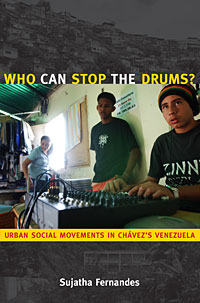
Who Can Stop the Drums?: Urban Social Movements in Chávez’s Venezuela
Who Can Stop the Drums?: Urban Social Movements in Chávez’s Venezuela is the title of Sujatha Fernandes’s new book. Sujatha is an author and assistant Professor of Sociology at Queens College and the Graduate Center, City University of New York. Her book looks at the transformations under way in Venezuela that are shaped by negotiations between the Chávez government and social movements using their own forms of historical memory and local organization. In her book, Sujatha shows everyday life and politics in the shantytowns of Caracas from the perspective of community-based radio, barrio assemblies, and the many interviews she conducted with activists and government officials. Most of the barrio activists in the book are Chávez supporters.
Sujatha Fernandes:
- There’s a real push back against neo-liberal reforms. Chavez who came into office in 1998, have been pursuing an anti-neoliberal agenda, trying to reverse the privatization and extend the social welfare net.
- The argument I make in the book is that Chavez has carved out a space within the global economy and Venezuela is a hybrid state containing both neo-liberal and anti-neoliberal elements.
- Who are these people, the large majority who live in the shanty towns, what do they think?
- The movements date back to before Chavez, the guerilla movements, cultural and community based groups. They trace their trajectory back to a long struggle in Venezuela. They’ve been reinvigorated by Chavez.
- The community based groups demand the very basics, running water, gas and electricity.
- Chavez in the middle between community groups and elite. Chavez has created institutions such as the missions, where some oil profits bypass the elite and toward community groups.
- I lived in a popular housing building, which are projects, (security problems, with gangs, violence and police)
- Bolivarian circles, Chavez’s first attempts to transfer power. 93 percent of Venezuelans are urbanized.
Guest – Sujatha Fernandes is Assistant Professor of Sociology at Queens College and the Graduate Center, City University of New York. She is the author of Cuba Represent! Cuban Arts, State Power, and the Making of New Revolutionary Cultures, also published by Duke University Press.
—-
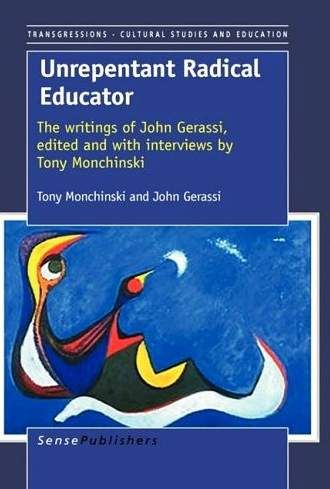
Unrepentant Radical Educator: The Writings of John Gerassi
We’re delighted to welcome back Professor John (Tito) Gerassi, once an editor at Time magazine, then at Newsweek. He obtained his PhD at the London School of Economics and Political Science. He is a long time civil rights and anti-war militant and author / editor of ten books plus scores of articles and pamphlets published on both sides of the Atlantic. He is currently Professor of Political Science at the City University of New York. We talk with Tito today about his recent book, Unrepentant Radical Educator: The writings of John Gerassi, edited and with interviews by Tony Monchinski (Transgressions: Cultural Studies and Education) Indypendent Book Review
The book joins personal narratives from Gerassi’s days of journalism and activism, featuring Che Guevara, Fidel Castro, Jerry Rubin, Eldridge Cleaver and others of the era, with essays on figures such as Sartre, Camus, and Julius and Ethel Rosenberg. One review writes, ( Especially fascinating are the tales of deliberate misreporting by the major media outlets for which he worked, epitomized by the words of owner Henry Luce when Gerassi was hired: “We here at Time believe that objectivity is neither feasible nor desirable.”)
John “Tito” Gerassi:
- Time Magazine: I hear you’re coming aboard Mr. Gerassi. In the long run, it was great that I got kicked out
- Met Che Guevara in Uruguay, as a journalist for the New York Times, there was a fight with anti-Castro students, the police were scared, one man fired his gun in the air, it ricocheted and hit and killed a USIS Cuban.
- Che told me I don’t talk to the imperialist press. At the hotel, they had reserved a large table where all the left-wing characters sat around with Che. Argentines say chez vous, that’s how Che got his nickname Che.
- The Great Fear in Latin America – John Gerassi
- Che Where Are You? Eventually there will be many Che’s.
Guest – Professor John Gerassi, once an editor at Time magazine, then at Newsweek, who obtained his PhD at LSE, is a long time civil rights and anti-war militant. He is the author or editor of ten books and scores of articles and pamphlets published on both sides of the Atlantic. He is currently Professor of Political Science at the City University of New York.
———————————————–
CIA Sponsored Terror, Civil Liberties, Criminalizing Dissent, Habeas Corpus, Human Rights, Surveillance, Torture, Truth to Power
Podcast: Play in new window | Download
Updates:
—-
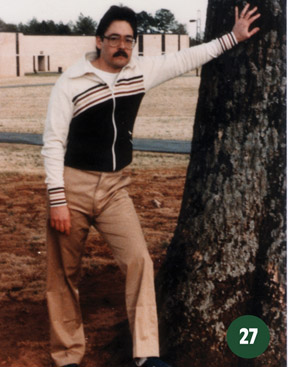

Puerto Rican Political Prisoner Released Today After 30 Years
Last week Puerto Rican community activist Carlos Alberto Torres was released from a federal prison in Pekin, Ill after serving 30 years as a political prisoner. Torres was convicted of seditious conspiracy – conspiring to use force against the lawful authority of the United States over Puerto Rico. Torres was punished for being a member of an armed clandestine organization called the FALN – Fuerzas Armadas de Liberación Nacional (English: “Armed Forces of National Liberation) which had claimed responsibility for bombings in Chicago that resulted in no deaths. He wasn’t accused of the bombings only of being a member of FALN.
In 1898 Puerto Rico was ceded to the US by Spain as war bounty in the treaty that ended the Spanish-American War. Still, the US has occupied it since. Torres was sentenced to 78 years in prison but used international law in his defense. Torres argued that the courts of the colonizing country may not criminalize captured anti-colonial combatants, but must turn them over to an impartial international tributnal to have their status adjudicated.
There was an outpouring of support to free Carlos. His attorney, National Lawyers Guild member Jan Susler of Chicago, notes, “Carlos is being released from prison due to the unflagging support of the Puerto Rican independence movement and others who work for human rights. The more than 10,000 letters of support from the U.S., Puerto Rico, Mexico and other countries sent a strong message to the Parole Commission.”
Jan Susler:
- Carlos got a disproportionate sentence, a punishment for who he was politically. He did 30 years, standing tall and maintaining his political integrity.
- People stop him on the street, and embrace him.
- The bombing in which he was accused of was only property damage. If he had killed or injured someone and convicted as a social prisoner, he would gotten a less sentence and served far less time.
- He was always treated more harshly than the other prisoners.
- Right after 9/11, the US rounded up political prisoners and put them in the hole for months.
- You’re always watched, you’re always monitored. Every prisoner has access to email, Carlos did not.
Carlos Torres:
Guest – Attorney Jan Susler joined People’s Law Office in 1982 after a six year stint as Clinical Law Professor at Prison Legal Aid, the legal clinic at Southern Illinois University’s School of Law. Her long history of work on behalf of political prisoners and prisoners’ rights includes litigation, advocacy and educational work around USP Marion and the Women’s High Security Unit at Lexington, KY. Her practice at PLO focuses on police misconduct civil rights litigation, which has lately included wrongful conviction litigation on behalf of people exonerated after serving many years in prison, innocent. Her work with the Puerto Rican Independence Movement and with progressive movements challenging U.S. foreign and domestic policies has been a constant throughout her 30 years as a lawyer.
Guest – Carlos Alberto Torres member of Puerto Rico’s independence movement and the longest-serving Puerto Rican political prisoner. He was convicted and sentenced to 78 years in a U.S. federal prison for seditious conspiracy – conspiring to use force against the lawful authority of the United States over Puerto Rico. He served 30 years, being released on July 26, 2010.
—-
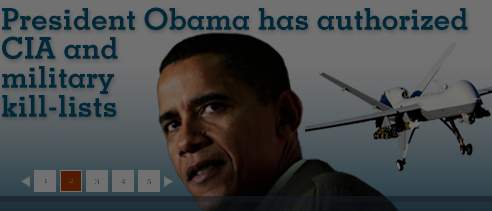
CCR and ACLU Sue Obama Over Limits On Lawyers Seeking To Represent Suspect on Administration “Kill List”
The Center for Constutional Rights and the ACLU have filed a lawsuit challenging the Obama administration’s authority to use the military and the CIA to kill the radical Muslim cleric Anwar al-Awlaki. He’s an American citizen, accused of terrorism but hasn’t recieved a trial. He is believed to be hiding in Yemen. Because it would be against the law to challenge the government’s attempt to kill al-Awlaki, the lawsuit was filed against the Treasury department, that challenged a regulation that would require the Center and the ACLU to obtain its permission in order to provide uncompensated legal services for Mr al-Awlaki.
Vince Warren, the executive director of the Center for Constitutional Rights, argued that international law did not permit a government to kill people far from combat zones, and in the case of a US citizen, Vince said that such a policy also violates the Constitution’s Fifth Amendment — and is a dangerous precedent.
CCR Attorney Pardiss Kebriaei:
- The case that we filed last week was a challenge to a regulatory scheme under the Department of Treasury and OFAC which prohibits transactions with anyone designated as a terrorist by the government. That includes pro-bono legal services.
- Al-Awlaki is the subject of an assassination order by the president, ordering and authorizing the CIA and Special Forces to target and kill him.
- OFAC powers go back to the 1970s IEEPA, the International Emergency Economic Powers Act.
- All we have against this guy are allegations.
- The CIA, which is one of the agencies that carries out these killings has primarily used drones. We think that drones would be the primary way that this killing would be carried out.
Guest – CCR staff attorney Pardiss Kebriaei joined the Guantánamo Global Justice Initiative at the Center for Constitutional Rights (CCR) in July 2007. She provides direct representation to several of CCR’s clients at Guantánamo and helps coordinate CCR’s network of hundreds of pro bono counsel representing other prisoners. She also focuses on using international human rights mechanisms to bring international pressure to bear on the U.S. government and hold other governments accountable for their role in the violations at Guantánamo.
———-


CCR Attorney Legal Observer Arrested in Arizona Immigration Protests
Legal observers from the National Lawyers Guild and the Center for Constitutional Rights were arrested last week during mass demonstrations of protesters who opposed Federal law 287G, Arizona law SB 1070. What happened? CCR Legal Director Bill Quigley told the media, Arizona is starting to act like Mississippi in the civil rights days. Among those arrested were National Lawyers Guild officer Roxana Orrell and CCR staff attorney Sunita Patel.
Sunita Patel:
- It was my first time in Maricopa County. Sheriff Joe Arpaio is known for branding the most horrible incarnation of 287G and ICE police collaboration.
- 287G is the statute by which this program is authorized by Congress. He also has what’s called a secure communities program which allows for the identification of anyone who is a non-citizen through a finger printing system. 287G allows for local agencies to implement immigration law through a memorandum of understanding with the federal government.
- At the same time he implements what’s called “crime suppression sweeps” Where he takes his units and regular citizens to sweep through neighborhoods.
- I spent the night in jail, I hadn’t planned on it. It was really an honor to be in solidarity with the rest of the protesters. I was charged with obstruction of a highway and public thoroughfare and failure to obey a police officer. People in Arizona call it a war zone when it comes to immigration enforcement.
- Arizona has also become the site for a spark of incredible activism and the growth of an incredible human rights movement.
Guest – CCR Staff Attorney Sunita Patel with racial profiling, immigrant rights and other human rights litigation. Prior to her position at CCR, she held a Soros Justice Fellowship at The Legal Aid Society, Immigration Law Unit in New York where she represented immigrant detainees in removal proceedings and worked with criminal justice and human rights groups to create independent community oversight for detention operations through public accountability boards. Sunita is a former law clerk for the Honorable Judge Ivan L. R. Lemelle in the Eastern District of Louisiana.
————————————————————————————————
Civil Liberties, Gaza, Habeas Corpus, Human Rights, Targeting Muslims, Truth to Power
Podcast: Play in new window | Download

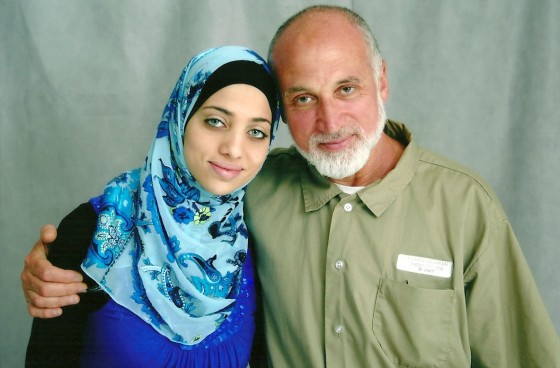
Holy Land Foundation Case Update
Hosts talk with Noor Elashi, Noor is the daughter of Holy Land Foundation prisoner Ghassan Elashi. Ghassan is currently being held in the Communications Management Unit in Marion, Illinois and has now had his visitations canceled. Noor says visitations have been cruelly obstructed by a Texas prison guard while at the prison in Seagoville Texas in October 2009. Noor’s brother Omar is 9 and has Down’s syndrome, during a visitation, Omar ran up to his father to give him a hug and the guard says “What Mr. Elashi, you think you’re an exception?” After the visit, the guard filed a complaint against Ghassan for not following instructions. The same prison guard during Thanksgiving that year, prevented his sons from entering the room during a visit. Ghassan called the guard evil and compared him to a guard at Abu Ghraib. The guard filed another complaint. After an internal investigation, Ghassan’s visitations were banned for 6 months. The visitation doesn’t usually apply when an inmate transfers to another prison, but when Ghassan was transferred to the CMU in Marion, the visitation ban was upheld. www.Freedomtogive.com
As many listeners may know, Holy Land Foundation was the largest Muslim charity in the United States, the Bush administration shut it down after the September 11th attacks, and arrested five people from the charity. During the trial, the prosecution used unrelated video of suicide bombers to emotionally sway the jury.
Noor Elashi:
- Book in progress: Eyes Like My Father, A Daughters Narrative of Displacement
- Father was sentenced to 65 years in prison for giving material support in the form of humanitarian aid to Zakat committees – Palestinian charities in the West Bank and Gaza, that prosecutors were alleging were fronts for Hamas.
- These are the very same Zakat committees that USAID, the Red Cross and UN NGOs were giving money to.
- The Holy Land Foundation, co-founded by Ghassan Elashi, was the largest charity in the US until the Bush Administration with an executive order shut it down 3 months after 9/11.
- The material support law is a very flawed law and singles out Muslim charities and with the recent upholding of the material support law by the Supreme Court, I feel that Americans are at risk.
- There were 2 trials (for Ghassan Elashi) the first in 2007 which looked at the Zakat committees. Jury deadlocked on most counts against the HLF. The prosecution showed the jury scenes of terrorism, buses being blown up expecting the jury to be prejudiced by seeing this and convict Ghassan Elashi, and they didn’t.
- In the second trial, the prosecutors were more aggressive, the defense attorneys, families and civil libertarians around the world were flabbergasted, when the jury delivered all guilty verdicts after 9 days of deliberation.
- Trials took place in Dallas, Texas. Ghassan Elashi, Noor’s father and the CEO of the Holy Land Foundation recieved a 65 year sentence. Other fund raiser reps were sentenced between 15 and 20 years.
- Ghassan Elashi currently in a CMU – Communications Management Unit in Marion, Ilinois – termed “little Guantanamos.”
- As far as visitations go, those in and of themselves are cruel and unusual punishment because you travel all that way and you can’t touch, there is a plexi-glass between you and its monitored live in Washington DC.
- Four of the defendants are being held in CMUs, 2 in Marion, Illinois and 2 in Terra Haute, Indiana.
- My father is hopeful and optimistic, he does yoga and pilates, reads the Quran.
- It was New York Senator Chuck Schumer who co-authored the anti-terrorism law in 1996 that strengthened the material support provision.
- I’m the eldest of 3 boys and 3 girls. It’s a double tragedy, these convictions that were made possible by “fear” in the courtroom and the 65 year sentence. Appeal: they have until August 3 to file briefs.
- Humanitarian Law Project Supreme Court Case upheld the material support provision.
- During both trials, the prosecutors brought in an anonymous Israeli intelligence officer who testified under a fake name. He said could smell Hamas.
- During the testimony, the court benches were cleared except for the family.
- Michael Ratner: After 9/11 they made it extremely dangerous to give money to Muslims anywhere in the world.
- Everybody is at risk at this point, even Jimmy Carter
Guest – Noor Elashi, the daughter of Holy Land Foundation prisoner Ghassan Elashi. She is a writer based in Dallas, Texas. After receiving a Bachelor’s degree in journalism from the University of North Texas, she worked for the Fort Worth Star-Telegram. In July 2008, she won the 3rd place Mayborn Literary Nonfiction Award for her manuscript titled “Displaced,” which she plans to expand into a memoir about the displacement of three generations of Palestinians: her grandmother, father, and herself. She can be reached at noorelashi@gmail.com.
——


Austerity: Why and for Whom? – Rick Wolff
We are very pleased to have with us Professor Rick Wolff to update us on where we’re in this ongoing global capitalist crisis. Austerity has appeared in the titles of many recent articles on the global capitalist crisis. What is it? Rick Wolff writes in his article titled Austerity: Why and for Whom? the efforts to broaden the recovery beyond one year have failed and that failure has cost Washington trillions in borrowed funds from lenders. Those lenders now demand guarantees that those loans will be repaid to them with interest. The guaranteed demanded by lenders is “austerity.” To collect this austerity, the banks (lenders) want governments to raise taxes or cut government spending or both. Economic Recovery for the Very Few by Rick Wolff. An extreme burden imposed on the global economy. Rick asks, Why not collect austerity from tax exempt multinational corporations, churches and private institutions?
Professor Rick Wolff:
- Governments around the world borrowed enormous amounts of money, never seen before surge of borrowing. The urgency of the second impending crisis of capitalism, the second major collapse of capitalism in 75 years was so intense, the terror in the ranks of business was so complete, that nobody stopped to worry, just lend us lots of money, take toxic assets off our books and so on.
- Suddenly, the creditors who are lending to the governments are beginning to get nervous. They’ve been going to the governments and saying we don’t want to be stuck with a debt that your people might not pay back.
- Lenders: You either have to raise taxes on your people, save it and put it into a special account which will only be used to pay us interest on the principle or you cut your programs, your public services and put that into the same account.
- The name of the government’s response to the demand of its creditors is “austerity.” Imposing on society a severe regimen of rising taxes, or cut government spending to please and satisfy creditors.
- Yale, a multi-billion dollar corporation with billions of annual income, pays no taxes. Rather than increase the taxes of individual persons, why don’t we do what should have done long ago.
- Take a look at California, they’re laying thousands and thousands of state employees.
- No Economic Crisis: Annual world wealth report, the income of the top wealthiest people 2009 rose 17 percent.
- Banks are the buyers of government debt. The bankers produce a crisis, the government bails them out. The government borrows from the banks to bail them out. The bankers know there is popular opposition.
- French action against austerity: trade unions organizing general strike which will close everything in September in France. Will the pressure rise within US politicians to re-negotiate this debt?
- The state of Oregon, the democratic party controls both houses of legislature. To pay for the 700 million dollar gap over a 2 year period they raised taxes on business and wealthy people.
Guest – Richard D. Wolff is Professor of Economics Emeritus, University of Massachusetts, Amherst where he taught economics from 1973 to 2008. He is currently a Visiting Professor in the Graduate Program in International Affairs of the New School University, New York City. He also teaches classes regularly at the Brecht Forum in Manhattan.