Civil Liberties, Extraordinary Rendition, Habeas Corpus, Human Rights, Supreme Court, Targeting Muslims, Torture, Truth to Power
Podcast: Play in new window | Download
Updates – News:
—-
 =
=
Debrief: Vermont Attorney General Candidate Charlotte Dennett
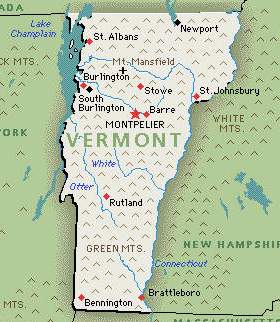
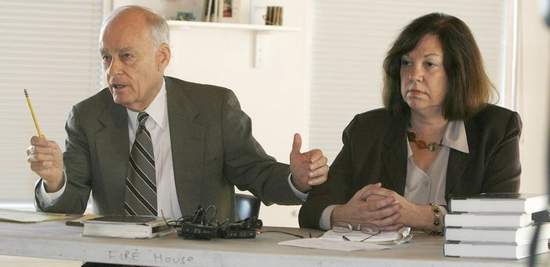
Attorney Charlotte Dennett of Vermont ran for the state attorney general on the platform that if elected she would immediately undertake the prosecution of George W. Bush for the unnecessary deaths of Vermont soldiers in Iraq. Vermont has paid the highest price in deaths per capita in the nation. This strategy is based and outlined in the book, The Prosecution of George W. Bush for Murder, written by Vincent Bugliosi, former prosecutor and bestselling author. The strategy is to establish jurisdiction in the cases for Attorneys General in each state and also the approximately 900 district attorneys in the counties of those states.
Charlotte Dennett:
- We weren’t trying Bush on war crimes. What we were proposing was to prosecute Bush under state murder statutes, criminal statutes.
- William Sorrell, current Vermont Attorney General, in his campaign, claimed that it (prosecution) couldn’t happen in Vermont, if you want to prosecute war crimes you have to do it in the Hague.
- Sorrell repeated this message constantly, making it (prosecution) seem impossible to do in Vermont.
- Sorrell would not acknowledge that, if he did acknowledge then we could establish jurisdiction and moved forward.
- Because he refused to acknowledge it made it look hopeless and ridiculous. I’m afraid a lot of Vermonters got that message.
- A friend of mine told me that when asked if the Obama administration will prosecute Bush, our own senator Patrick Leahy, head of the senate judiciary committee said No it can’t be done. Dont’ roll over on thisIf we keep letting this happen then what kind of society are we going to encourage.
Guest – Charlotte Dennett, attorney, and former investigative reporter for 30 years and has been practicing law in Vermont for 11 years. She helped sue one of the worst polluters of the country, including Du Pont.
——-
On War Crimes and Torture: Should High Government Officials Be Investigated and Prosecuted?
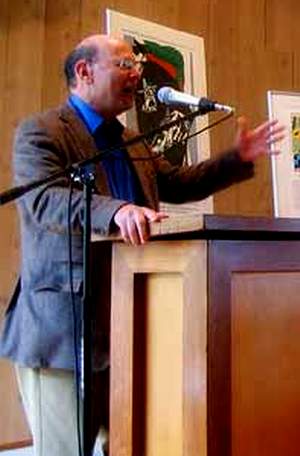
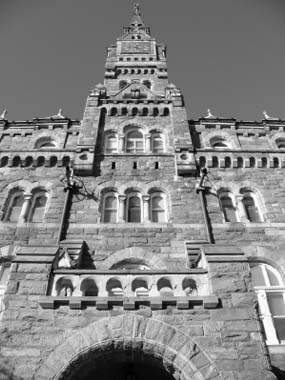
We hear an excerpt from a debate between our own Michael Ratner and Stuart Taylor at Georgetown University, moderated by David Vladeck, Professor, Georgetown University Law Center. Stuart Taylor is a senior fellow in Governance Studies at the Brookings Institute, he’s a columnist for the National Jornal and contributing editor for Newsweek magazine. The event was titled On War Crimes and Torture: Should High Government Officials Be Investigated and Prosecuted? These issues are moving to the forefront in some media as the Bush Administration comes to a close.
Internet Message Forum On The Debate
—
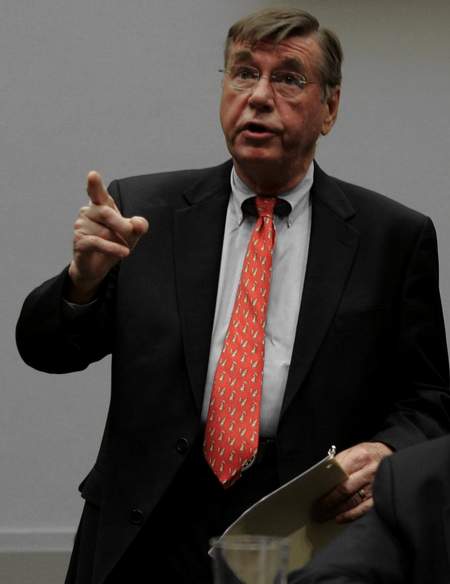
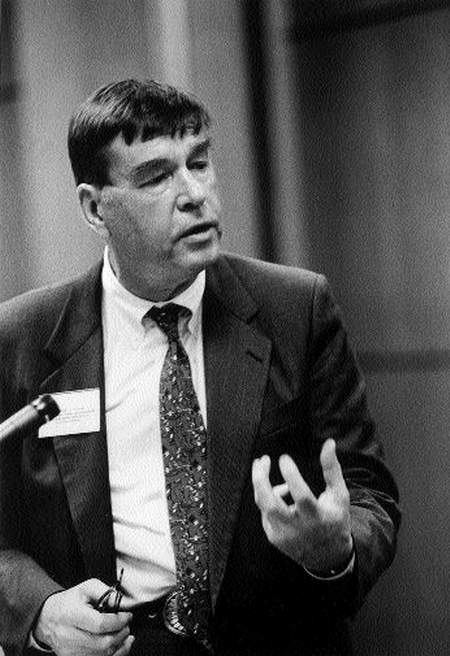
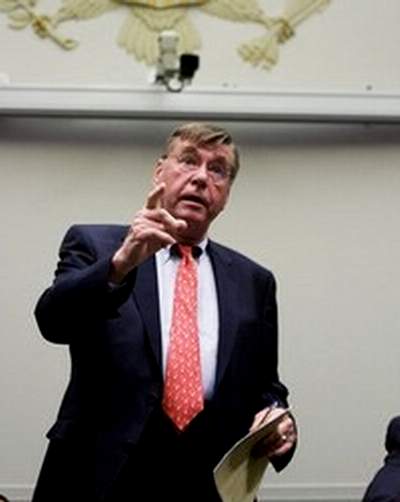
Research Professor of Law, Michael Tigar
Michael Tigar is an expert in Constitutional Law and the Supreme Court. He has represented Terry Nichols of the Oklahoma City Bombing, Angela Davis, and Lynne Stewart. Tigar outlines several steps the Obama Administration must do to turn back the major breaches in U.S. civil liberties.
Michael Tigar:
- There is now a systematic breaking down of all barriers against government intrusion into the private lives of people.
- Alien Enemy Combatants: A creation of a new class of people who are thought to be utterly right-less, both as to whether they can be detained, the conditions of their detention, and the manner in which they can be held and interrogated.
- Meanwhile, we have legal fictions such as the Vice President saying he’s neither a member of the executive or legislative branch, and therefore being subject to the rules of both is subject to the rules of neither.
- We have justice system staffed with people whose only qualification is their asserted ideological purity.
- We have two aggressive wars, all done to the tune of the most massive federal debts in history.
- This, accompanied by the largest transfer of wealth from the poor, and working class to the already wealthy, coupled with the dismantling of regulatory barriers of how greed and avarice operate.
- It is the lack of any significant organized resistance from legislators, and with some few bright exceptions, judges and lawyers that define for us the task that lies ahead.
- Eric Holder, a good lawyer, was among the group of people in the Clinton administration that even though they had all the evidence, that they would not prosecute Pinochet.
- National State Secrets: the case of journalist Quentin Reynolds who took a ride on an Air Force jet and it crashed, his widow sued under the federal tort claims act saying that she thought there was negligence. The United States convinced the Supreme Court that to disclose the reasons why that plane crashed might involve state secrets, and that she should not be able to sue.
- Sixty years later the maintenance file on that plane was on unsealed. It turned out that it was a routine maintenance error that caused the crash. Behind the curtain of states secrets is illegality and mendacity.
- How many years did it take to get Pinochet for any kind of proposed criminal accountability, almost 20, because of states secrets.
- The tort system, that is the way we enforce rules about safe products, it’s the way that we enforce the rules about the toxic substances that poison people, it’s the way that we deal with the kleptocracy that rules wall street.
- It’s so well tested – Marbury v Madison 1803 – Chief Justice Marshall said that he could decide a case was unconstitutional.
Guest – Michael Tigar, a criminal defense attorney who has represented some of the country’s most controversial clients. He is also a member of the Duke University Law School faculty.
————————————————————–
Afghanistan War, CIA Sponsored Terror, Civil Liberties, Criminalizing Dissent, Habeas Corpus, Human Rights, Impeachment, Supreme Court, Targeting Muslims, Torture, Truth to Power
Podcast: Play in new window | Download
Host Updates:
Michael Ratner and Michael Steven Smith update on the media discussions of whether to prosecute the “torture conspirators”, the details of Attorney General Michael Mukasey’s collapse, and a preventive detention scheme that could replace Guantanamo prison.
- No truth commission. Insist on criminal investigations and prosecutions of torture conspirators.
- Power concedes nothing without demand, it never did and it never will.
- Mukasey gives speech about not prosecuting people during Federalist Society speech, then collapses on the stage.
- A Seattle state court judge in the federalist society audience started yelling, Tyrant! Tyrant! Tyrant!
- This was about law itself, unless you have prosecutions going forward it will happen again.
- How will Guantanamo be closed? CCR general position: Repatriate 95 percent, try the rest in federal court.
Related Articles:
—
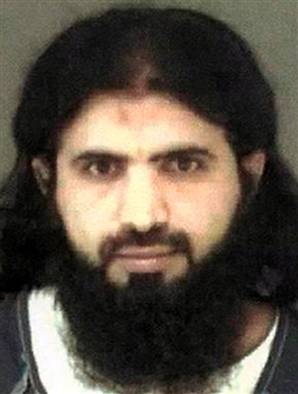
Ali Al-Marri Case Update: Key Police State Building Block At Stake
In June of this year, an en banc Federal Appeals Court in Virginia ruled 5-4 that the Bush Administration could subject Ali Al-Marri to indefinite detention even though he was a resident of the United States. The court in the fourth circuit ruled that US residents could be locked up indefinitely as enemy combatants even though they were never charged with a crime. Al-Marri is the only enemy combatant currently in detention and without charges in the United States.
Jonathan Hafetz:
- Can the president declare legal residents including American citizens, enemy combatants, deprive them a right to a trial and hold them indefinitely.
- This, based on the idea that there is a global and never ending war on terror.
- Though on sovereign soil, no right to habeas corpus. He was declared an enemy combatant, the case was lost in an embank in the fourth circuit
- Why is this case so critical to liberty in the United States . . . ?
- The five judges who ruled against the case, said essentially that there must be this power to effectively detain people in the United States to prevent terrorist attacks.
- Ruling: the president can label legal residents including American citizens an enemy combatant in the United States, without a trial, no habeas, hold them indefinitely.
- It’s the idea of the president to use the military to seize people including citizens from their home or places of work.
- A very dangerous power to allow any president to have, it corrupts the justice system, it can be used as a weapon,
- Seven years of these cases of assertion of executive power, and the courts have not answered this fundamental basic question, who can be detained by the military, who is a soldier and who is a civilian?
- All that is stated is that if someone picks up a weapon on the battlefield, that person can be a soldier, but in the most extreme cases in the war on terror – – such as being picked up in the United States as a soldier in the extended geographic concept of the war on terror – – the courts have not grappled with whether there is habeas in those cases.
- Even the judges who ruled against us did say that it included American citizens.
Guest – Jonathan Hafetz, Staff Attorney at the American Civil Liberties Union, National Security Project.
—-
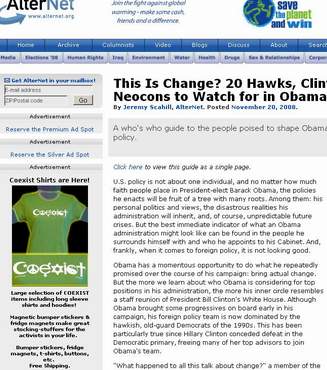
Jeremy Scahill: This Is Change? 20 Hawks, Clintonites and Neocons to Watch for in Obama’s White House
As President-elect Barack Obama starts building his administration, many are watching who he selects and how these choices will be consistent with the rhetoric of change. Hosts talk with investigative journalist and author Jeremy Scahill about his recent article calling to question the list of recent appointees to the Obama team. Some have a history of supporting torture, despite Obama calling for the shutting down of Guantanamo, and others have associations with the neo-conservative Project For The New American Century.
Jeremy Scahill:
- Clinton’s policies laid the groundwork for some of the most repressive and violent policies of the Bush era, on Iraq, civil liberties, on economic policy.
- He (Clinton) rained missles down on Iraq, bombed Yugoslavia in 1999 without UN authorization. He pushed through NAFTA and GAT, he launched airstrikes against Sudan and Afghanistan, he militarized the war on drugs, particularly the counterinsurgency war in Latin America. CIA renditions began.
- Obama is taking these same individuals who were part of that bi-partisan war machine and putting them back in prominent positions.
- Obama’s defense secretary – Robert Gates, George HW Bush’s former director of the CIA.
- What message does that send not only to the anti-war people who were a large part of Obama’s base but to those which heard Obama say we’re going to change the way Washington’s foreign policy is run?
- Henry Kissenger says it’s (Obama administration) outstanding.
- The fact that these people are praising Obama, gives us a sense of what to expect from the economic team.
- The message is clear that corporate interests are going to reign supreme, over the interests of ordinary working folks in this country.
- A total contradiction in Obama’s campaign pledge to speak up for the middle class. The reality is is that he is putting together a team with the people who are part of the problem.
- Naomi Klein: Obama represents the status quo, which is not good for people who roll up their sleeves everyday and go to work, or suffering poor
- Eric Holder, attorney general, though better than any AG the Bush Administration has appointed, Holder has worked the Chiquita Banana Co., the most vicious violators of human rights in Latin America.
- I think its incredibly important that we put tremendous pressure on the Justice Department, on the Obama Administration to actually seek out justice.
- Obama Adminstration may not prosecute “torture conspirators.” because they open themselves up to Democratic complicity. Complicity such as voting for the Patriot Act, supporting the illegal, unlawful prison in Guantanamo.
- Former Chief Assistant of the CIA, Brennen steps down from CIA director nomination, a passionate supporter of torture techniques.
- The idea that Obama even keeps him on board as one of the people who is going to decide who runs the intelligence apparatus in this country is shameful.
- It’s Orwellian, you vote for change, and you get torture and skewed intelligence.
- The reality is that Obama is not going to end the occupation in Iraq, he is going to escalate the war in Afghanistan.
- He’s not going to be great at all in holding the Bush officials accountable.
- We need to start building a movement in this country that is independent of electoral politics.
- Ultimately the premier issue of our time – Radical Privatization.
- Yes, its good that John McCain and Sarah Palin are not in power in this country but Obama is not a saint, he is a center democrat, closely tied to the democratic policy elite.
Guest – Jeremy Scahill, investigative journalist and author of Blackwater: The Rise of the World’s Most Powerful Mercenary Army. He is also a Puffin Foundation Writing Fellow at The Nation Institute and a frequent contributor to The Nation. Scahill and colleague Amy Goodman were co-recipients of the 1998 Polk Award for their radio documentary “Drilling and Killing: Chevron and Nigeria’s Oil Dictatorship”, which investigated the Chevron Corporation‘s role in the killing of two Nigerian environmental activists.
—————————————————————————————————————
Censorship, Civil Liberties, Criminalizing Dissent, Guantanamo, Habeas Corpus, Human Rights, Supreme Court, Surveillance, Truth to Power
Podcast: Play in new window | Download
Host Updates:
Watch: Michael Ratner – Should High Gov’t Officials Be Investigated and Prosecuted? – Quicktime
Related New:
—
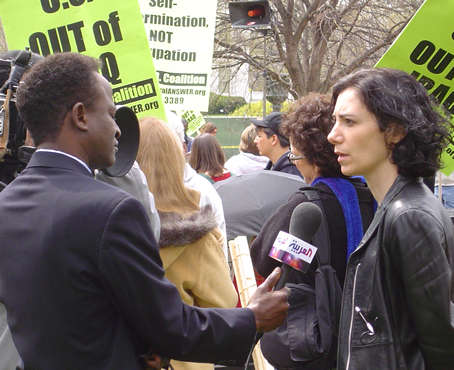

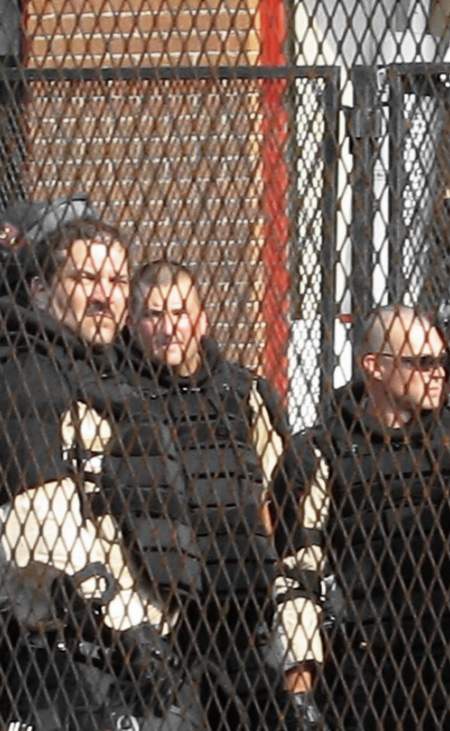
Mara Verheyden Hilliard: Inauguration 2009 and the Partnership For Civil Justice
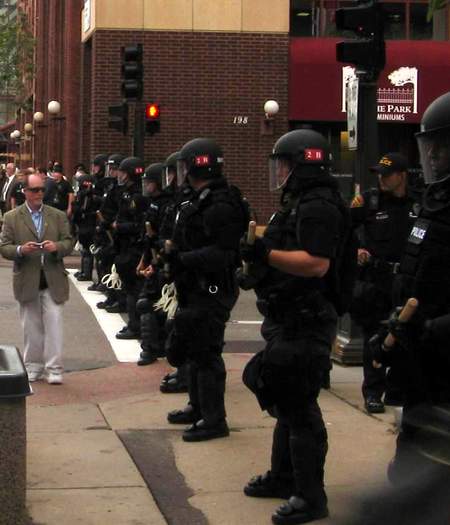
Hosts talk with Mara about criminalizing dissent, surveillance, data mining, fusion centers and the ability to exercise first amendment rights. A recent example were the violations of free speech during the mass arrests of protesters at the 2008 Republican National Convention. The demonizing of protesters and their message in the media will usually allow for the use of military force by police. That combined with intelligence gathering and targeting of lead organizers squelched the voice of dissent in all age groups.
Mara Verheyden Hilliard:
- A lot of our work is at the intersection of first and fourth amendment rights.
- PCJ has a class action suit pending from the world bank IMF protest – 8 year drag out tactic.
- “What they want to do is stage-manage democracy.”
- Victory: After years of litigation the government has to lift regulations on number of people at the Great Lawn
- Is it important to say that we don’t want to go back to Jan 19, 2001 just the day before Bush took office- or is there more that we have to do?
- We think there has to be an audit of every agency’s databases to determine exactly what the databases are.
- Identify what has been collected, where it has been put, who has access to that information,
- Then to tell people in the United States individually, what has been collected on them and then to expunge it.
- For people in their United States, their government collecting information, maintaining information, in these massive database files, that can be used by law enforcement, pulled up in a moment’s notice is really a very dangerous practice.
- What they’ve done is misuse existing databases and data tools.
Guest – Attorney Mara Verheyden Hilliard co-founder of The Partnership for Civil Justice Legal Defense & Education Fund.
—-
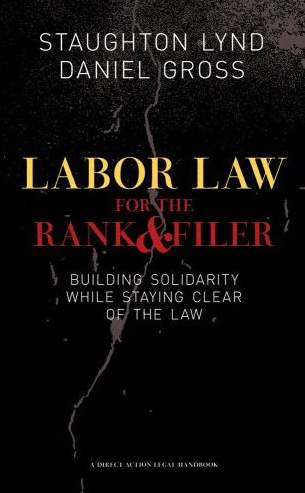


Labor Law for the Rank and Filer: Building Solidarity While Staying Clear of the Law
Law and Disorder hosts welcome back attorney, author and union activist Daniel Gross who has co-written with author, lawyer and historian Staughton Lynd the recently published, Labor Law for the Rank and Filer: Building Solidarity While Staying Clear of the Law.
Daniel Gross:
- Led movement to unionize baristas at Starbucks
- Subtitle of the book –“building solidarity while staying clear of the law”
- We try to show in the book how the law represses and co-ops solidarity amongst rank and file workers.
- It is the rank and file that transform both work and society.
- A union is a group of workers standing together to take direct action.
- We shouldn’t let the government or employer define whether we are a labor union or not.
- Book chapter – No One Is Illegal – practicing solidarity unionism.
- The risks are so high for immigrants to come to this country, often you’ll see a tremendous willingness to fight back.
- In the current economic crisis, I think there’s a lot of opportunity for rank and file upsurges.
- We will also see repression at this time to avoid a fundamental transformation of society
- Organize for transformational demands – demands that spark more collective activity and also question the fundamental role of corporations in our lives.
- In the union solidarity model, workers themselves operate and control there own campaigns.
- A handful of shop workers on the floor who are challenging the boss, speaking out publically and a resource that other co-workers can go to. That’s a real power on the shop floor.
Guest – Daniel Gross, attorney, author and union activist. Daniel works with Brandworkers International, a New York-based not-for-profit organization powered by a global network of committed individuals, advocates, lawyers, and organizers who believe in holding corporations accountable to workers and communities.
——————————————————————–
Civil Liberties, Guantanamo, Human Rights, Targeting Muslims, Truth to Power
Podcast: Play in new window | Download
Host Updates
Related News Stories
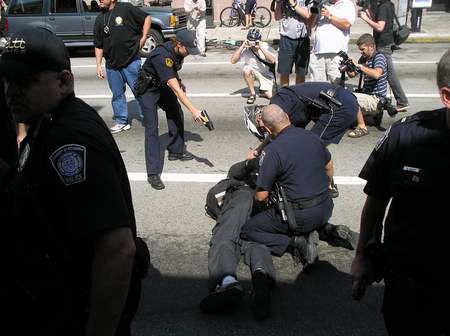
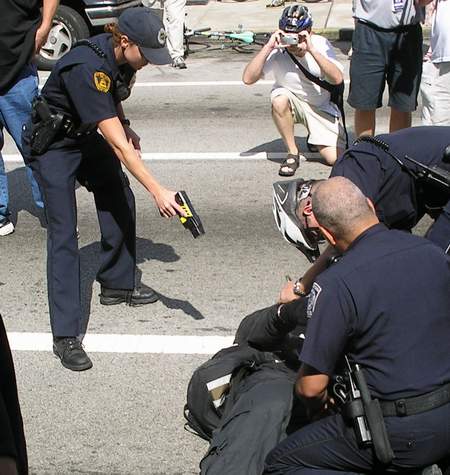
Pittsburgh Taser Case: Two Women Bring Lawsuit
Here on Law and Disorder we’ve given periodic updates on key situations regarding tasers. We’ve covered cases in California and Florida, and on Amnesty International’s position. We bring another case where Mike Healey an attorney in Pittsburgh is cooperating with the Center For Constitutional Rights. Taser Shockwave: Taser’s Latest in Taming Dissent – Posted By Dalia Hashad
The case was brought by two people who were tasered multiple times even after they were arrested and put in police custody. Watch Video: Unneccessary Taser Use At Anti-War Demo Warning: Strong language/ Note also, use of canine intimidation.
Past Law and Disorder Taser Segments
Guest – Mike Healey, Pittsburgh attorney cooperating with the Center For Constitutional Rights.
—-
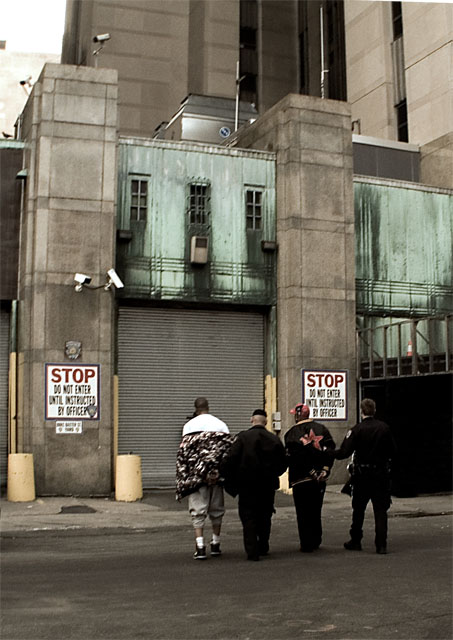
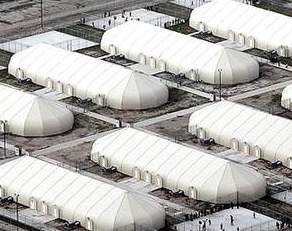
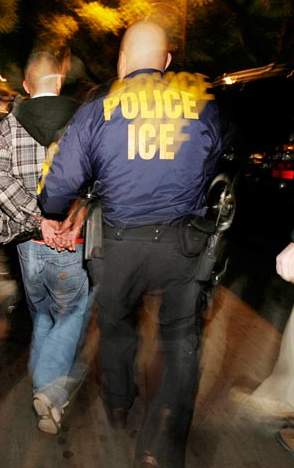
Mass Transfer Of Detainees From New York City To Texas
Today we’re joined by National Lawyers Guild attorney Maunica Sthanki to discuss the transfer of thousands of prisoners from detention centers in New York City to South Texas. Maunica works in a detention center in South Texas and says that unlike criminal cases, in detention cases there is no right to free court appointed counsel. The detainees are faced with navigating through a complex unfamiliar system. Detainees with mental illness were not always represented by a lawyer.
Maunica is working at Probar, a Texas based legal aid group. She explains the differences of between immigration law and criminal law to detainees. “When New Yorkers (detainees) come down to Texas, they’re used to the legal aid and Santuary for Families and all these non-profit service providers and then they find out I’m the only one to help out.”
Guest – Immigration attorney, Maunica Sthanki, she also describes the severity of the problems that detainess with mental health problems face while in detention centers.
————————————————————————–
Afghanistan War, Civil Liberties, Human Rights, Supreme Court, Truth to Power
Podcast: Play in new window | Download
Host Updates:
Related News Stories:
—
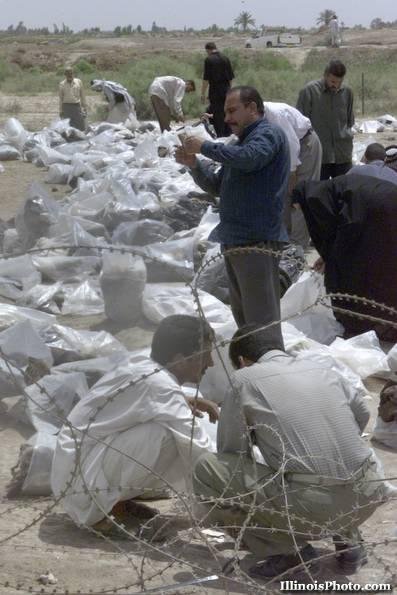
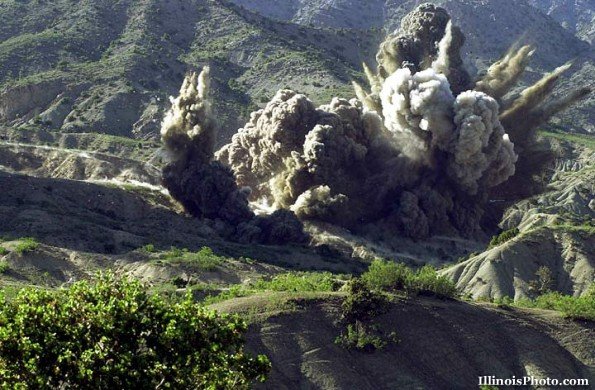
Stephen Kinzer: The Reality of War in Afghanistan
In his recent article The Reality of War in Afghanistan, author and veteran New York Times correspondent Stephen Kinzer describes how the current war strategy in Afghanistan is not really based in reality. Kinzer points to how history has shown that victory over the Taliban is near impossible and adds that peace through skillful negotiation among Taliban clan leaders could be the best approach instead of deploying more soldiers. He adds that Afghanistan civilians are collateral damage amid US bombings, helping to recruit new Taliban soldiers.
Stephen Kinzer:
“There is still an overwhelming feeling in the U.S. that we still need to take revenge for the crimes on September 11 and who are we going to take revenge against? Well, its the Taliban and Al-Quaeda is the answer that the people in Washington would give you. The Taliban and Al-Quaeda are very different forces. To negotiate with Al-Quada is morally repugnant but the Taliban is something different. They have a broad base inside Afghanistan.”
- Its not a surrender, its a cold calculated way to achieve an end outside of the military means.
- We need to put aside our emotions and look at this real politique.
- The war in Afghanistan is antiseptic – to compromise with a force that was our enemy is unpopular.
- The poppy crop in Afghanistan is almost the source of all the world’s heroin.
- To wipe out the poppy crop is not achievable.
- You can’t continue to spray and burn the crop and hope that’s going to end the problem.
“The yearly value of the Afghan poppy crop is about 4 billion dollars.” Kinzer’s idea is to not wipe it all out and impoverish Afghanistan communities. Instead, he says that NATO should purchase crop. “Because when people buy heroin on the street that money goes right to the coffers of terrorists to buy weapons. Kinzer says cut them all off, turn a portion into morphine and destroy the rest.”
Guest – Stephen Kinzer, a veteran New York Times correspondent who has reported from more than fifty countries on five continents. He was the New York Times bureau chief in Istanbul. Stephen currently teaches journalism and United States foreign policy at Northwestern University.
——
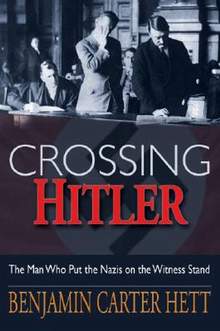
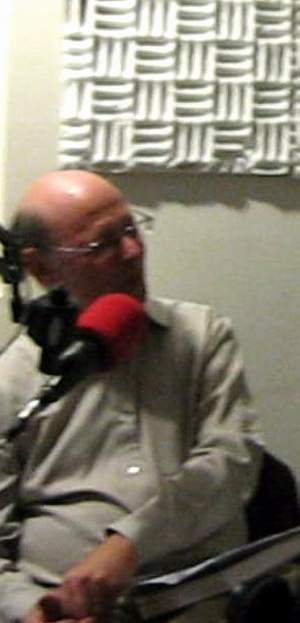

Crossing Hitler: The Man Who Put the Nazis on the Witness Stand
Author Benjamin Hett outlines the fascinating and tragic story of a young lawyer Hans Litten in his recent book Crossing Hitler: The Man Who Put the Nazis on the Witness Stand. Before the Nazis rose to power in the early 1930s, they incited calculated violence among the working class in German taverns. Four Nazi stormtroopers were charged with firing randomly into a dance hall where a communist hiking club were holding a party. Three young men were wounded. Hans Litton was the advocate for the 3 men.
Hans Litten called Hitler to the witness stand to show that the Nazi party was a violent party, and by cross examining Hitler he tried to prove that. Litten forced Hitler to contradict himself, reducing him to humiliating rage that revealed his true intention. At that time, Hitler wanted to be a legal party in Germany and of course you couldn’t be a party that was extra-constitutional and legal but at the same time he didn’t want to disappoint the base of his party which was this violent working class aspect. Two years later, the Nazi Party rose to power.
What came after the Reichstag Fire was the arrest of about 5 thousand people across Germany who the Nazis have identified as opponents or potential opponents. Hans Litten was among them and sent to a concentration camp. Author Benjamin Hett describes a powerful narrative of Hans facing torture yet still telling stories and teaching art to other prisoners.
Hans Litten was born in 1903 in Halle in Central Germany, his father was a law professor and Jewish but converted to German evangelical (Lutheran).
Guest – Benjamin Hett, author of Crossing Hitler: The Man Who Put the Nazis on the Witness Stand. He’s a former trial lawyer, and now Associate Professor of History at Hunter College.
——————————————————————————————–
Civil Liberties, Habeas Corpus, Human Rights, Iraq Veterans, Iraq War, Military Tribunal, Supreme Court, Surveillance, Targeting Muslims, Truth to Power
Podcast: Play in new window | Download
Updates:
—

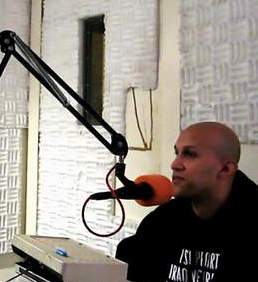

Iraq Veterans Against The War: Jose Vasquez
The group Iraq Veterans Against The War or IVAW has emerged as the leading antiwar group in the United States. Recently, thousands of IVAW members held rallies and marches at the RNC and nearly 10 thousand marched at the DNC in Denver. The demonstrations urged presidential candidates to endorse ending the Iraq war and paying reparations to the people of Iraq.
The IVAW also calls for the immediate withdrawal of all occupying forces in Iraq, stopping the corporate pillaging of Iraq, and full benefits, adequate healthcare for returning servicemen and women. IVAW chapters are in 48 states, Canada and DC, members include recent veterans and active duty servicemen and women from all branches of military service, National Guard members, and reservists who have served in the United States military since September 11, 2001.
Guest – Jose Vasquez, a 14 year US Army veteran and conscientious objector. He is an active member of Iraq Veterans Against the War (IVAW) serving as the New York City chapter president. Jose was also a key organizer of Winter Soldier: Iraq and Afghanistan.
—

Iraq War – Status of Forces Agreement: Anthony Arnove
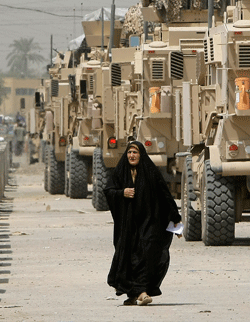
Nearly 4,200 US soldiers and 1 million Iraqi civilians have been killed in the US occupation of Iraq since 2003. .Right now there are 75 major US bases in Iraq, 140 thousand US troops and 180 thousand private contractors operating in Iraq. The cost of the Iraq War so far is 3 trillion and this year the monthly average expense is 12 billion dollars.
A pact recently negotiated in secret by the US government intends to extend the US occupation 3 more years in Iraq despite public and Congressional opposition. Tens of thousands of Iraqis have demonstrated against the pact that calls for full US withdrawal by 2012, but the agreement also leaves open the possible later date of withdrawal.
Anthony Arnove:
- Status of Forces Agreement; Orwellian slieght of hand – Combat troop withdrawal only.
- US is currently responsible for the detention of thousands of Iraqis who are being held without trial.
- 14 permanent US bases in Iraq: Areas to project power from in the future.
- Iraq: World’s second largest oil reserves, and world’s most strategic shipping routes.
- In the SOFA agreements, the US is making a condition to pass a national oil law.
- Iraq’s oil is distributed unevenly, leading to regional tensions between Kurdish and Shia regions.
- Obama rhetoric: Blaming the Iraqi people – the Iraqis haven’t spent money or achieved political reconciliation, or passed a national oil law
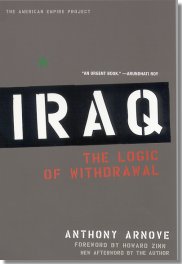
Guest – Editor and writer, Anthony Arnove, author of Iraq: The Logic Of Withdrawal.
Anthony Arnove Wikipedia Entry:
Arnove is best known for his books on Iraq and the Iraq War. Arnove is the author of the book Iraq: The Logic of Withdrawal, published in hardcover by the New Press and in paperback by Haymarket Books. Arnove toured the country promoting the book in spring 2006 as part of the New Press’ “End the War Tour”.
Arnove is also the editor of Iraq Under Siege, published by South End Press, the co-editor with Howard Zinn of Voices of a People’s History of the United States, published by Seven Stories Press, and the editor of The Essential Noam Chomsky, published by the New Press. He writes frequently for left-wing publications; he is a featured author at ZNet, a columnist for Socialist Worker, and on the editorial board of the International Socialist Review. He has also written for The Nation, In These Times, Le Nouvel Observateur, L’Humanité, and The Financial Times.
————————————————————————————————-