Afghanistan War, CIA Sponsored Terror, Civil Liberties, Criminalizing Dissent, Human Rights, Prison Industry, RFID, Surveillance, War Resister
Podcast: Play in new window | Download
Updates:
—–

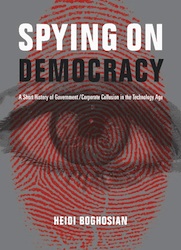
Spying on Democracy: Government Surveillance, Corporate Power, and Public Resistance Part II
This is part 2 of our interview with our own Heidi Boghosian who wrote the newly published book is titled Spying On Democracy: Government Surveillance, Corporate Power, and Public Resistance and it reveals in detail how the government acquires your information from sources such as telecommunications companies to compile a data base on “persons of interest.” Since ex-CIA staffer Edward Snowden’s release of top secret documents to the Guardian and Washington Post many are now aware of the frequency and scope to which they are being monitored. What this book has unveiled is how your personal consumer data is being gathered, bundled and sold. The spying, the collecting of phone records, accessing your online activity, all of it is unconstitutional says Heidi Boghosian, co-host of Law and Disorder and the National Lawyers Guild’s Executive Director.
Attorney Heidi Boghosian:
- They create dossiers of our spending habits, of our communication habits.
- The corporations benefit from this which makes them create more equipment for surveillance and almost makes it impossible for the government to perform traditional government functions because they’re so reliant on corporate partners.
- There’s also a revolving door among CEOs of these big companies and high level positions within government intelligence.
- The National Lawyers Guild was spied on by the FBI. More than 1000 agents were assigned to us for nearly 3 decades. They rummaged through our members garbage. We had an infiltrator in Washington DC serving as a staff person.
- They tried to label us (and failed) as a subversive organization.
- The People’s Law Office had also been monitored for years. Apparently across the street from the office an apartment was taken by the FBI who spied on them for their work representing politically active individuals.
- With all of this spying, the chilling effect of knowing that you may be spied on, you conversations may be listened to, changes the way you do business.
- I’ve always been interested in cooperation between municipal public police and private security organizations.
- We’re seeing an entire industry giving birth to Stratfor and other intelligence organizations that exist just to conduct intelligence be it on activists or critics of corporate or government policies, as well as defense contractors beefing up and creating a whole sector of intelligence.
- They are in big contracts with the US government.
- One of the problems constitutionally is they’re not held as private businesses to the same strictures as the US Constitution as we saw recently with the Hemisphere program revelations. We have our government paying AT&T staff to sit next to drug enforcement officers and go through AT&T’s files that go back 26 years. They’re not overseen by a judge.
- My question is how many more agencies of the government are doing this?
- They are getting access to this information through what’s called administrative subpoenas.
- Many mannequins have small cameras embedded in the eyeballs.
- When you’re spying on the fourth estate as its called which is intended to be a watch dog on government you really get to the heart of what democracy is about.
- Without a free press, we don’t have any chance of preserving those fundamental freedoms of First Amendment association and the ability to bring our grievances to the government for redress.
- A student group working with the Coalition of Immokalee Workers got suspicious because a new member on their listserve started asking questions and they did some research and found she owned her own private security company, in fact she was spying on them for Burger King.
- Congress is calling for an investigation for these large data aggragators. Once again, there’s no oversight, there’s no accountability, they go to a variety of sources to gather personal information on us. Some in the public domain, others not.
- They have vast troves, electronic dossiers on each of us.
Guest – Heidi Boghosian, executive director of the National Lawyers Guild. She is the co-host of the weekly civil liberties radio show Law and Disorder on Pacifica’s WBAI in New York and over 40 national affiliates. She received her JD from Temple Law School where she was the editor-in-chief of the Temple Political & Civil Rights Law Review. She also holds an MS from Boston University and a BA from Brown University.
—–
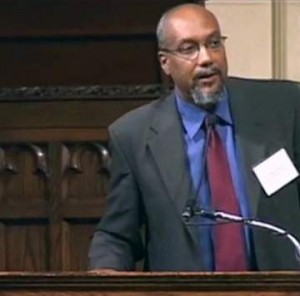

Syria: U.S. Humanitarian Intervention
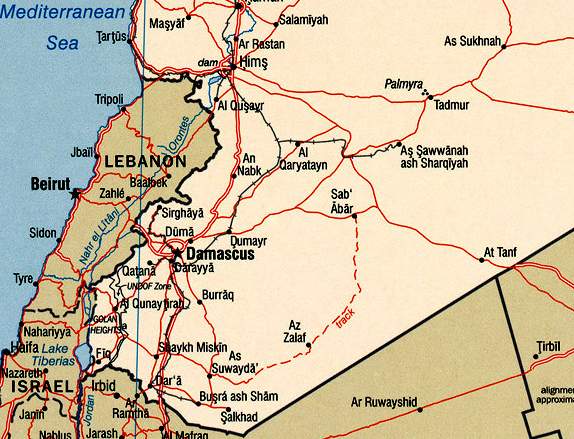
What is the difference between an illegal war and humanitarian intervention? At the 2005 United Nations World Summit, government leaders agreed unanimously that “each individual State has the responsibility to protect its populations from genocide, war crimes, ethnic cleansing and crimes against humanity.” If a state fails to protect its own citizens from such atrocity as its known, the agreement implies a collective responsibility of humanitarian intervention upon other agencies. President Obama has threatened to use military force against Syria and recently commented during a speech that “we cannot and must not turn a blind eye to what happened in Damascus” The US, however has in the past, turned a so called blind eye to other alleged chemical weapons attacks in other countries. Why would President Obama now want to go forward with a Navy missile strike in Syria and try to do so without UN Security Council approval?
Ajamu Baracka:
- There’s no basis in international law that allows the US or any sovereign state to take that kind of unilateral action.
- This notion of humanitarian intervention and this responsibility to protect, is a particular type of creation that’s been cooked up in the west that has provided some kind of moral justification to engage in unilateral action on behalf of the world community.
- To circumvent the United Nations and impose their own vision and understanding of international order on any nation they see fit.
- This is no more than a dressed up, rearticulation of the white man’s burden.
- This notion that the US and the European, ex-colonial nations, have a right and a responsibility to impose their particular interests and world views on the rest of humanity is a notion that needs to be rejected but its something that many people in the west have embraced.
- It was the foundation for the NATO intervention of Libya. It has been the justification for intervention in Kosovo.
- It’s been very skillfully implanted into the minds of many people in this country as a justification for unilateral actions on the part of the US or in conjunction again with European allies.
- What about the images we were bombarded with, the rows of piled up bodies in Egypt? Why are those lives less important than those who died in Syria?
- Is it the mode in which they were murdered, gas as opposed to US supplied weapons?
- I think the US objective is the dismemberment of the Syrian state. They are in almost a win-win situation. Either they affect regime change and allow this motley crew of oppositional forces much aligned with jihadist movements, come to power or they force the state to become a non-functional state.
- The long term objective is to further isolate Iran, to diminish the power of Russia.
- Right at the moment when it was clear that the Assad government had turned the tide militarily on the ground, the US decided it was going to intervene to effect the equalization of forces in Syria.
- The US found itself in a very unique isolated position. Kerry has been given an opportunity to pull back from this ill-advised strike.
- I think the Obama Administration is one of the most effective weapons ever deployed against the progressive and radical movement here in this country, perhaps in the whole post-war period.
- He had been the answer to Ronald Reagan, but even a more effective communicator.
- A more effective demobilzer if you will. (Obama Administration) has demobilized the anti-war movement, it has disarmed radicals, confused traditional liberals.
- I think we use this last incident to intensify the conversations around exposing the interests of this administration.
Guest – Ajamu Baraka, Longtime activist, veteran of Black Liberation Movement, Human Rights defender, Former founding director of US Human Rights Network, currently Public Intervenon for Human Rights with Green Shadow Cabinet, member of Coordinating Committee of Black Left Unity Network and Associate Fellow at IPS.
———————————————————————–
Afghanistan War, CIA Sponsored Terror, Civil Liberties, Criminalizing Dissent, Guantanamo, Habeas Corpus, Human Rights, Political Prisoner, Surveillance, War Resister
Podcast: Play in new window | Download
Updates:
—-
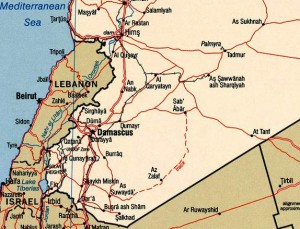
United States Moves To Intervene In Syria Civil War
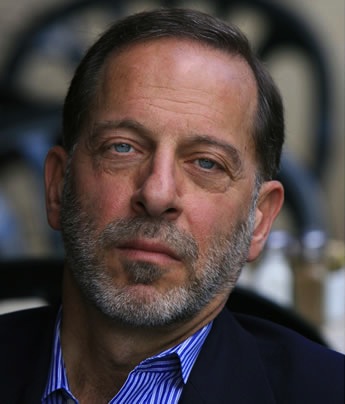
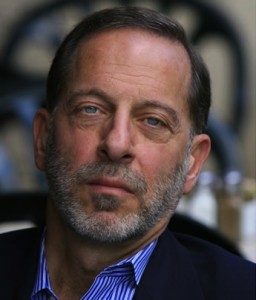
According to the United Nations, nearly 2 million refugees have fled the civil war and unrest in Syria. Why is the United States moving to intervene? Professor Rashid Khalidi, an historian on the Middle East and the Edward Said Professor of Modern Arab Studies at Columbia University, and director of the Middle East Institute of Columbia’s School of International and Public Affairs joins hosts to discuss the history of the conflict and who stands to gain if the US intervenes.
Professor Rashid Khalidi:
- This is another case where the United States seems to me at least edging sideways blindly without understanding or thinking, frankly into another regional civil war which has the potential for developing into a regional conflict.
- We got involved in an Iraqi civil war, we helped create an Iraqi civil war after the occupation of Iraq. We created al-Qaeda and other horrible manifestations as part of the war against the Soviets and then got involved in what is in effect an Afghan civil war.
- The United States is about to and I hope I’m wrong, put its into a meat grinder and blindly, heedlessly push the button.
- This is a horrific conflict, with no good guys on either side. You have a horrific regime which very likely used these horrible weapons against the rebels and its own population.
- You have on the other side people who are not white knights, in fact they just as soon be killing Americans as butchering Shia or cutting the heads off people. Those are the forces that dominate. Not the opposition to the regime, but the fighting forces.
- These are people who don’t wish any of us well.
- The United States is going to war for reasons of imperial overreach, for reasons that have to do with domestic politics.
- For Iran, the Syrian regime is its most important regional ally. The Iranians see this as a make or break conflict for their regional influence.
- At the same time the new Iranian government is clearly interested in cutting a deal with the United States.
- I think a deal is within reach on nuclear issues and other issues.
- Israel would probably like to see the Syrian side bleed themselves endlessly.
- What they’re probably doing is through their supporters in this country, is quietly pushing this president toward an American intervention which is not in the American national interest but in some ways.
- I was there when he said, ‘I’m not against all wars, I’m against stupid wars.’ This is quintessentially a stupid war.
- It’s the fifth or the eighth move on each side that has the potential for escalation.
- There is a consensus of idiocy among the so-called experts.
- I have to say this, the Israelis encouraged this.
- It’s a civil war with a lot of bad guys on both sides. That is what we’re about to get directly involved with.
- Why the United States should be against the Assad regime, its a bad regime, is unclear to me, while its clear to me Israel would like a bunch of tiny, weak, divided, sectarian states such that it could lord over the region completely.
- Most people in the Arab world have a profound suspicion of the United States, because its joined at the hip with Israel, always, everywhere since time immemorial.
- On the other hand you have authoritarian regimes, petro-monarchies, Saudi Arabia, the Emirates, Kuwait, Qatar which are hell bent on imposing their regime on Syria.
- There are a lot of interests tied up in the United States lording it over everybody and acting as if it has the right and the power to decide everything everywhere. We don’t.
Guest – Professor Rashid Khalidi, is the Edward Said Professor of Arab Studies at Columbia University. He received his B.A. from Yale University in 1970, and his D.Phil. from Oxford in 1974. He is editor of the Journal of Palestine Studies, and was President of the Middle East Studies Association, and an advisor to the Palestinian delegation to the Madrid and Washington Arab-Israeli peace negotiations from October 1991 until June 1993.
—–
Spying on Democracy: Government Surveillance, Corporate Power, and Public Resistance
Our own Heidi Boghosian has written a powerful book on the history of spying, privacy and how public dissent without surveillance is needed in order for a democracy to thrive. The newly published book is titled Spying On Democracy: Government Surveillance, Corporate Power, and Public Resistance and it reveals in detail how the government acquires your information from sources such as telecommunications companies to compile a data base on “persons of interest.” Since ex-CIA staffer Edward Snowden’s release of top secret documents to the Guardian and Washington Post many are now aware of the frequency and scope to which they are being monitored. What this book has unveiled is how your personal consumer data is being gathered, bundled and sold. The spying, the collecting of phone records, accessing your online activity, all of it is unconstitutional says Heidi Boghosian, co-host of Law and Disorder and the National Lawyers Guild’s Executive Director.
Attorney Heidi Boghosian:
- They create dossiers of our spending habits, of our communication habits.
- The corporations benefit from this which makes them create more equipment for surveillance and almost makes it impossible for the government to perform traditional government functions because they’re so reliant on corporate partners.
- There’s also a revolving door among CEOs of these big companies and high level positions within government intelligence.
- The National Lawyers Guild was spied on by the FBI. More than 1000 agents were assigned to us for nearly 3 decades. They rummaged through our members garbage. We had an infiltrator in Washington DC serving as a staff person.
- They tried to label us (and failed) as a subversive organization.
- The People’s Law Office had also been monitored for years. Apparently across the street from the office an apartment was taken by the FBI who spied on them for their work representing politically active individuals.
- With all of this spying, the chilling effect of knowing that you may be spied on, you conversations may be listened to, changes the way you do business.
- I’ve always been interested in cooperation between municipal public police and private security organizations.
- We’re seeing an entire industry giving birth to Stratfor and other intelligence organizations that exist just to conduct intelligence be it on activists or critics of corporate or government policies, as well as defense contractors beefing up and creating a whole sector of intelligence.
- They are in big contracts with the US government.
- One of the problems constitutionally is they’re not held as private businesses to the same strictures as the US Constitution as we saw recently with the Hemisphere program revelations. We have our government paying AT&T staff to sit next to drug enforcement officers and go through AT&T’s files that go back 26 years. They’re not overseen by a judge.
- My question is how many more agencies of the government are doing this?
- They are getting access to this information through what’s called administrative subpoenas.
- Many mannequins have small cameras embedded in the eyeballs.
- When you’re spying on the fourth estate as its called which is intended to be a watch dog on government you really get to the heart of what democracy is about.
- Without a free press, we don’t have any chance of preserving those fundamental freedoms of First Amendment association and the ability to bring our grievances to the government for redress.
- A student group working with the Coalition of Immokalee Workers got suspicious because a new member on their listserve started asking questions and they did some research and found she owned her own private security company, in fact she was spying on them for Burger King.
- Congress is calling for an investigation for these large data aggragators. Once again, there’s no oversight, there’s no accountability, they go to a variety of sources to gather personal information on us. Some in the public domain, others not.
- They have vast troves, electronic dossiers on each of us.
Guest – Heidi Boghosian, executive director of the National Lawyers Guild. She is the co-host of the weekly civil liberties radio show Law and Disorder on Pacifica’s WBAI in New York and over 40 national affiliates. She received her JD from Temple Law School where she was the editor-in-chief of the Temple Political & Civil Rights Law Review. She also holds an MS from Boston University and a BA from Brown University.
——————————————————-
Civil Liberties, Criminalizing Dissent, Human Rights, Iran, Military Tribunal, Targeting Muslims, Truth to Power, War Resister
Podcast: Play in new window | Download
Updates:
—-
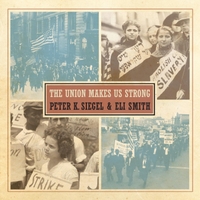
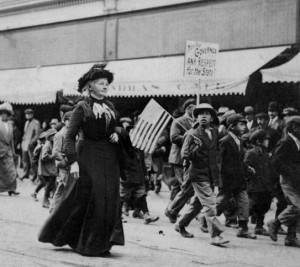
There Is Power In A Union: Labor Songs
Songs of the American labor movement called for fair wages, dignity and voiced grievances. Classic labor songs such as “Which Side Are You On” or “There Is Power In A Union” affirmed the value of the worker to society and expressed hope in their lyrics. Woody Gutherie, Pete Seeger and Joe Hill were leaders of the movement, and sang songs with a passion and love for their fellow workers.
Peter Siegel:
- I’ve been singing these songs all my life. My parents sang these songs. I got a guitar when I was about 13 years old. One of the first songs I learned was Talking Union, along with Bird Dog and Don’t Take Your Guns to Town.
- In recent years, when the state started cracking down on unions. The reporting that was coming through the media about these things, didn’t really explain what a union was and why there unions in the first place, and what the issues were.
- I think these songs do a very clear and direct job of explaining that.
- Many of the issues are still the same as they were when these songs were written. Eli and I talked about and got together and decided to make this album.
- Martin Luther King Jr., talk about the hottest places in hell being reserved for those in times of crisis do nothing.
- The Death of Mother Jones: I don’t think Gene Autry had a particular connection to that song, he apparently got the song from OK Records, which was his label.
- Eli plays the steel guitar on our record and sings it beautifully.
Eli Smith:
- One over-arching aspect of the songs is they give you a feeling of what its like to have a labor movement.
- And also now to give people a feeling of what it was like in the past because I think America is an amnesiac society.
- Most of the songs on our album are from 80 to 100 years ago.
- Which Side Are You On? It’s a song written by Florence Reece, in a traditional style from the heart of Appalachia, in the coal mining region and we rendered in a way that’s as authentic as we can be to that style.
Guest – Peter Siegel is a musician, a record producer and performance artist who has worked with Doc Watson, Hazel Dickens and Roy Buchanan. He’s produced a number of great albums for Nonesuch, Folkways and Rounder Records in the last 50 years.
Guest – Eli Smith is a banjo player, writer and promoter of folk music, living in New York City. Eli is a Smithsonian Folkways recording artist and produces two folk festivals every year.
—-
Brandworkers – Focus On The Food Chain
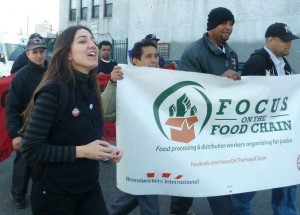
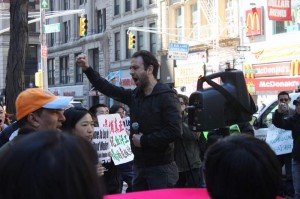
Nearly 35 thousand workers are employed to run New York City’s massive food processing and distribution. The vast majority are immigrant workers from all over the world, Latin America, the Caribbean, China and Nepal. They depend on this work for their livelihood yet they’re often exploited through wage theft, reckless disregard of health and safety, plus egregious discrimination. We welcome back attorney Daniel Gross, executive director of Brandworkers, a non-profit organization protecting and advancing the rights of retail and food employees. They’ve had numerous victories including recovering unpaid wages and forcing companies such as Flaum Appetizing into full compliance of workplace protections. The efforts to achieve these victories are based on the labor movement of the late 19th century using direct action and everyday solidarity.
Attorney Daniel Gross:
- That approach worked for several decades. Labor identified itself with having a seat at the table with government and business and frankly lost its sense of being a fighting movement.
- As many predicted, that arrangement among labor, capital and government wouldn’t hold.
- Capital and government understood that it was a temporary sessation of hostility to worker’s right to organize.
- What we see now is the NLRB system come undone.
- It’s very easy for an employer with the right union-busting attorney to quite effectively undermine the worker’s right to go through the traditional processes we’ve understood for a while to form a union.
- This multi-billion dollar global union busting industry which is led by law firms.
- These folks wake up every day in the morning and seek to undermine working people coming together to do better at work for their families.
- 93 out of 100 workers today are not in a labor union traditionally and have very little prospect getting in.
- Starbucks when I realized the traditional model was ineffective.
- Our members work as bakers, they process seafood, they drive trucks that deliver all kinds of food and beverages to the grocery stores and restaurants, where we all get our food.
- Our motto is empowering workers to build and lead their own campaigns for justice at work and in the food system.
- Most recently, we announced a campaign at the Tom Cat bakery.
- Workers marched and made declaration of dignity, demanding respect from management and an end to an under-payment scheme and hands off the benefits they’ve accrued.
Jose Romero:
- Flaum Appetizing was a kosher factory, we were working very long hours without being paid overtime, there were no benefits including no vacations.
- We decided to unite and came together one day during our break, we all met on the patio and decided we were going to confront the boss altogether.
- This manager would attack us, and yell, call us cockroaches, would hurry us and call us stupid.
Guest – Attorney Daniel Gross, Executive Director of Brandworkers, a non-profit organization protecting and advancing the rights of retail and food employees.
Guest – Juan Romero from Flaum Appetizing who works as a cook on the West side of Manhattan.
—-

Farm Workers: Coalition of Immokalee Workers
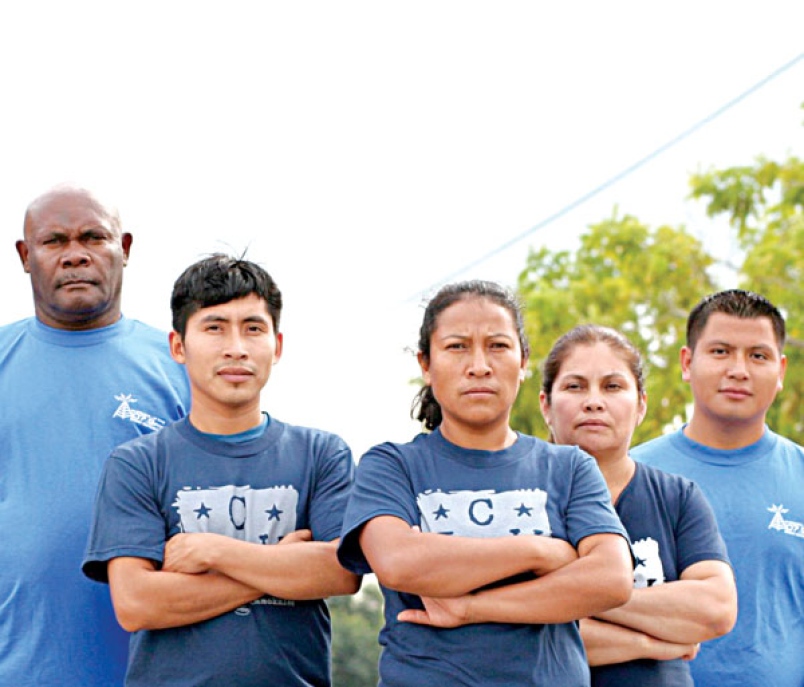
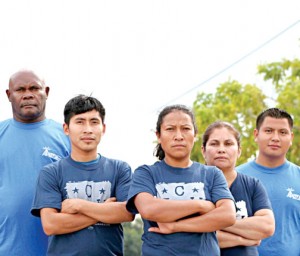
This year’s Labor Day, farmworkers with the Coalition of Immokalee Workers travel across Florida calling on Publix Supermarkets to join the Fair Food Program. Who are the Coalition of Immokalee workers? They’re a Florida based community organization of mainly immigrants from Latin America and the Caribbean including Mayan Indian and Haitian immigrants who have been working low wage jobs throughout Florida. The farm workers routinely face a number of different kinds of exploitation, poverty, wage theft, physical and verbal abuse as well as sexual harassment of many women working in the fields. Their campaigns focus on the big corporate buyers of the produce that they pick in an effort to improve wages and working conditions in the fields. They started with Taco Bell and from there launched campaigns with McDonald’s, Burger King, since then 11 other companies are cooperating to improving wages and working conditions in their supply chains. Last year Trader Joe’s and the Coalition of Immokalee Workers signed an agreement that formalized the ways in which the supermarket chain will support the CIW’s Fair Food Program. Their efforts continue to urge Publix and Wendy’s fast food to join up.
Silvia Perez:
- My experience as a woman working in the fields, its been very difficult for me, we often do the same work that men do in the industry.
- We face heat exposure and having to work long hours, under the Florida Sun, and also to over fill our buckets to keep extra tomatoes on top for which we were not paid.
- For many years before the CIW began its Fair Food Program, farm workers were paid an average of 45 cents per 32 lb bucket.
- That’s been the same wage that farm workers received in Florida for more than 30 years.
- There was no guaranteed wage that we would receive in the field, we were paid the bucket rate.
- While there should be a minimum wage and we should get that guarantee to get paid that minimum wage, often times we didn’t receive it.
- With our campaign for Fair Food, which brought on board 11 major corporations we developed the Fair Food Program, an initiative which is a partnership between farmers, farmworkers and the major retailers and because of that program things are changing.
- Our organization is not a union, we are a worker and community based organization that was formed by farm workers themselves.
- In addition to Wendy’s we’ve asked Publix the largest Florida based corporation to come on board as 11 other companies have. Specifically we ask for 2 things, to pay 1 penny more a pound for the tomatoes that they’re buying to go directly to farm workers, and to respect our rights.
Guest – Silvia Perez with the Coalition Immokalee Workers and also CIW campaign organizer Jake Ratner who will translate.
Guest – Jake Ratner, translater and son of co-host Michael Ratner. Jake traveled and studied in Cuba and Bolivia, South America. He now works with the Coalition of the Immokalee Workers.
—————————————————————-
CIA Sponsored Terror, Civil Liberties, Criminalizing Dissent, Habeas Corpus, Human Rights, Military Tribunal, Political Prisoner, Prison Industry, Surveillance, Truth to Power, Uncategorized, War Resister
Podcast: Play in new window | Download
Army PFC Bradley Manning Sentenced To 35 Years
Our own Michael Ratner reports back from Fort Meade, Maryland on the day Army PFC Bradley Manning was sentenced to 35 years in prison for leaking classified information to Wikileaks. As reported by Michael Ratner, Manning faced a maximum of 90 years in prison after his conviction last month on charges of espionage, theft and fraud. Now, his sentence goes the Army Court of Criminal Appeals, where he may seek a reduction of his prison term.
Attorney Michael Ratner:
- 35 years is a completely off the wall sentence. First of all he shouldn’t have been prosecuted at all.
- That’s been the Center for Constitutional Rights position. That’s my position.
- He’s a whistle-blower, he exposed torture, criminality, killing of civilians.
- Then, they over prosecute him, charge him with espionage, make whistle-blowers into spies.
- They charge him with all these years, then people are relieved when gets 35 years.
- It’s a very long sentence for someone who actually gave us the truth about Iraq, about Iran, about the helicopter video that killed a Reuters journalist, about the diplomatic cables that gave us the secret war in Yemen, the revelations about the corrupt Ben Ali government in Tunisia that helped bring on the Arab Spring.
- He’s a hero. The people who committed the crime are sadly still in our government enjoying their lives, they’re the ones that ought to be prosecuted.
- We’re in a time where there is a sledgehammer taken to whistle-blowers.
- The demand now is that Obama pardon him or give him clemency. That’s from the Bradley Manning Support Committee.
- Because of Bradley Manning, people like Ed Snowden came forward. They understood that when they see criminality, they’re young people of conscience and they act on it, and we should be very proud of each of these people.
Law and Disorder Co-host Attorney Michael Ratner, President Emeritus of the Center for Constitutional Rights (CCR), a non-profit human rights litigation organization based in New York City and president of the European Center for Constitutional and Human Rights (ECCHR) based in Berlin. Ratner and CCR are currently the attorneys in the United States for publishers Julian Assange and Wikileaks. He was co-counsel in representing the Guantanamo Bay detainees in the United States Supreme Court, where, in June 2004, the court decided his clients have the right to test the legality of their detentions in court. Ratner is also a past president of the National Lawyers Guild and the author of numerous books and articles, including the books The Trial of Donald Rumsfeld: A Prosecution by Book, Against War with Iraq and Guantanamo: What the World Should Know, as well as a textbook on international human rights.
——-

Journalist Barrett Brown Faces 105 Years In Prison
Journalist Barrett Brown has spent more than 330 days in pre trial detention and faces charges that add up to a 105 year sentence. What Barrett Brown did was merely take a link from a chat room and copied that link then pasted it to a chat room for a wiki-based crowd source group called Project PM. The link was to the Stratfor hack information of 5 million emails. He needed help to sift through the data and posted the link that was already publicly out there to the attention of the editorial board of Project PM. There were unencrypted credit card numbers and validation codes within those emails and the government is claiming that Barrett Brown was engaged in credit card fraud. Why go after Barrett Brown? The backstory begins with the Bank of America being concerned that Wikileaks had specific information. They go to the Department of Justice who lead them to a big law firm in Washington DC, then to a private intelligence firm. Meanwhile, a defense fund for Barrett Brown continues to raise money for his case.
Kevin Gallagher:
- Barrett Brown is an investigative journalist and freelance writer who has had a career writing for the Huffington Post, the Guardian and many other places.
- Through his observing the media landscape over the last ten years in America, I think he grew very dissatisfied with things so when this phenomenon called anonymous popped up in 2010, making major news headlines, he attached himself to it.
- All he was doing was looking at this information leaked by Jeremy Hammond out of Stratfor as part of his journalistic inquiry into the world of private intelligence firms.
- The fact that they can indict someone on identity theft and credit card fraud just for sharing a link of information. . there’s no allegation that he sought to profit from it.
- Project PM over its lifespan was a number of different things but that’s what it eventually evolved into.
- A crowd sourced project with a wiki that was devoted to investigating soley, the state corporate alliance on surveillance. This was known as Team Themis, a consortium of these firms.
- This all started when Wikileaks said it had information from the Bank of America.
- Barrett was investigating. There are other journalists who do very good work on this. He was one of the most vocal who was involved in investigating all these relationships between the private intel firms and the DOJ. He was using leaked emails to do so.
- I think they were very upset to see these things revealed.
- Barrett recognized that this was a threat and he was looking into it.
- Before the court right now is a motion for a media gag order which was presented by the prosecution which would silence Barrett and his attorneys from making statements to the media.
Guest – Kevin Gallagher, writer, musician and systems administrator based in western Massachusetts. He graduated with a B.A. in English from the University of Massachusetts, Amherst. He’s currently pursuing activism on issues related to digital rights: freedom of information, privacy, and copyright; while also taking an interest in information security. He is the director and founder of Free Barrett Brown, a support network, nonprofit advocacy organization and legal defense fund formed for the purpose of assisting the prominent internet activist and journalist, Barrett Brown, who is the founder of Project PM.
——
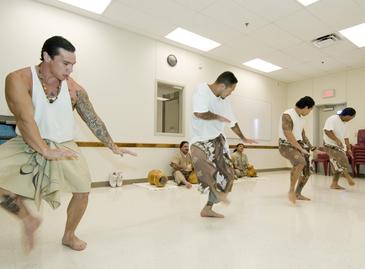
Native Hawaiian Prisoner Transfer to Arizona Private Prison
Hawaii is know for sending more prisoners across state lines than any other state. According to the Native Hawaiian Legal Corporation, a disproportionate number of those prisoners are Native Hawaiian inmates. Because of over crowding, Native Hawaiian inmates are transferred from a Hawaii state prison to a for-profit Corrections Corporation of America prison in Arizona. This particular CCA private prison however was built specifically for Native Hawaiian inmates, yet they’re denied cultural and religious rites. Additional transfer impacts include difficult reentry back into Hawaii, away from family and homeland, and no opportunity for proper atonement.
Attorney Sharla Manley:
- We’ve been involved in a lawsuit for 2 years concerning the impact of Hawaii’s policy of transferring inmates to the mainland. Native Hawaiians.
- Native Hawaiians are the indigenous people of the state of Hawaii. They have a similar experience to American Indians on the continent.
- Our firm focuses on Native Hawaiian rights and the focus on what self determination remains despite the history.
- Native Hawaiians are disproportionately incarcerated. They are transferred more often than any other racial group.
- The state of Hawaii creates a menu of prisoners, for private prisons to select.
- Our focus on the transfer is very narrow, the Native Hawaiian prisoners who still want to adhere to native traditions and practices.
- In Arizona you don’t have access to cultural teachers and spiritual advisers who could provide the kind of guidance or counseling, really the kind of instruction of passing on a tradition.
- The Native Hawaiian women were being transferred for a period of time, but there were so many sexual assaults, the state finally brought them back.
- You’re taking away the men, breaking the cultural transmission because many of these men are fathers, grandfathers. Yes they would be in prison here, but there is a difference when your family can see you on the weekends.
- In effect, it’s a form of cultural genocide.
- I’m beside myself as to why this hasn’t been rectified at this point. There’s not even a plan really.
- This is an issue that is personal for me. I am Native Hawaiian, and know what its like to have someone in your community, in your family to be effected by the criminal justice system.
Guest – Attorney Sharla Manley, with the Native Hawaiian Legal Corporation. Sharla Manley joined NHLC as a staff attorney in 2010. Before joining NHLC, Sharla was an associate at an international law firm in Los Angeles in its global litigation department for over three years. In addition to handling commercial litigation matters, she also took pro bono cases, involving voting rights, asylum, and California’s Unruh Civil Rights Act. Also, Sharla was an associate at a plaintiff-side class action firm where she primarily handled appeals of wage and hour cases before state appellate courts and the Ninth Circuit. Before law school, Sharla was a policy analyst on Native Hawaiian rights at the Office of Hawaiian Affairs. She focused on water rights and the impact of military activities on cultural resources in Makua Valley.
—–
Solidarity Sing A Long: Wisconsin Labor Protests Continue
The noontime sing-along has protested Gov. Scott Walker’s policies daily at Wisconsin’s Capitol since March 11, 2011. However, a new round of arrests began two weeks ago and more than 100 citations have been issued to protesters by Capitol Police. But this is in addition to nearly 200 citations already since July 2012 when the Department of Administration began enforcing new permitting requirements for gatherings in state facilities. What is the noontime solidarity sing-along protest?
Attorney Jonathan Rosenblum:
- When you have a new governor who within weeks in office describes his legislation as a bomb, which was to end collective bargaining for public sector workers.
- This led to more than a hundred thousand people, multiple times on the square where I’m sitting right now here on Wisconsin Avenue.
- Beyond the anti-union agenda, this governor has come in with a pedigree from ALEC, the American Legislative Exchange Council. He as a legislator in the same building was a member of ALEC, was a proponent of its agenda.
- His agenda as it moved along, was to remove vast numbers of children from medicaid, of claiming a jobs agenda would bring Wisconsin to the top in the United States, instead it plunged to the bottom.
- He eliminated funding for high speed trains, instead the trains for Wisconsin are now sitting in Oregon.
- The main point about this governor is about closing the doors of this government to the public.
- Even the union legislation that led to the crowds was passed in violation of a Public Meetings Act.
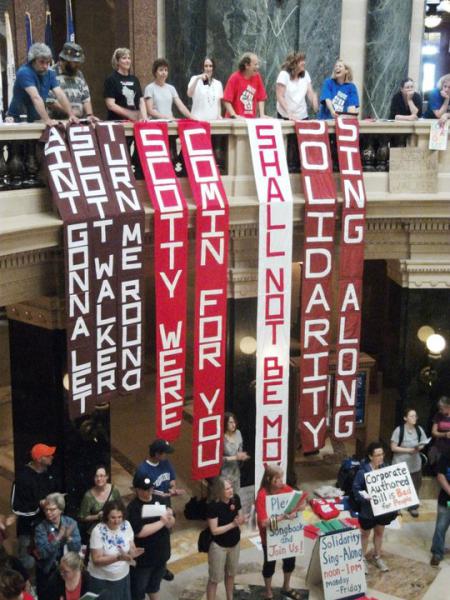
- Let me take you to March 11, 2011 when it all started. I was standing there with my friend Steve Burns, folks had slept in the capitol for weeks, the anti-union legislation was passed and signed that day and Steve had printed up a few copies of a songbook that had the dome of the capitol opening up with musical notes on the cover of it and 10 tunes, the classics of the civil rights movement.
- Several of them modified in the great Wobbly tradition.
- This sing-along has preceded from that day March 11, 2011 without skipping a beat, every single week day since that date. More than 650 consecutive sing-alongs.
- The sing-along is a joyful conglomeration. It’s reached about 300-400 daily as the crack down has actually caused a surge of concerned citizens to join us.
- We Don’t Want Your Millions, Mister.
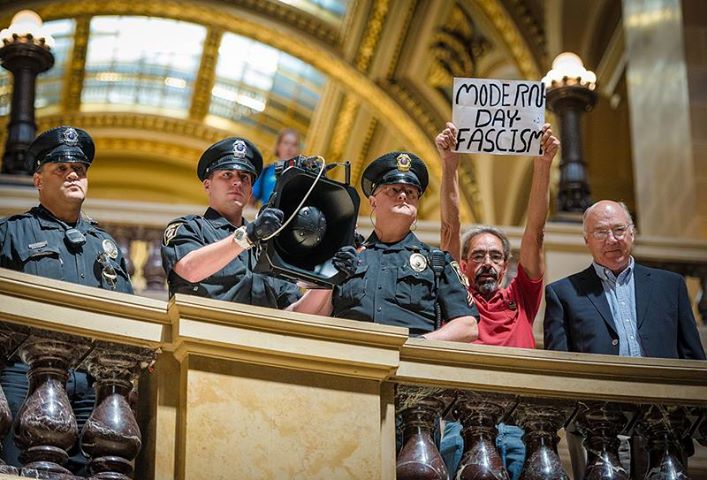
- A Long Range Acoustic Device is being used. The police have started to use the recordings of Chief Irwin’s declaration of unlawful assembly to blast into the rotunda so nobody misses it.
- They use the siren that ramps up to 150 db to disable people. They haven’t put it to that level yet.
- The State Capitol Police are in a bind. They have their orders, most are executing them with a little more zeal than they should. Some of them seem to be maintaining friendships that they had before with the singers.
Guest – Jonathan Rosenblum, PRWatch.org contributor, an author, award-winning journalist, and practicing lawyer. His book, Copper Crucible: How the Arizona Miners’ Strike of 1983 Recast Labor-Management Relations in America (Cornell University Press, 1995; Second Edition, 1998) was named as one of Princeton University Library’s “Ten Noteworthy Books in Industrial Relations and Labor Economics” in 1996.
——————————————————————————–
CIA Sponsored Terror, Civil Liberties, Criminalizing Dissent, FBI Intrusion, Habeas Corpus, Human Rights, Political Prisoner, Prison Industry, Supreme Court, Surveillance, Torture, War Resister
Podcast: Play in new window | Download
Updates:
—-

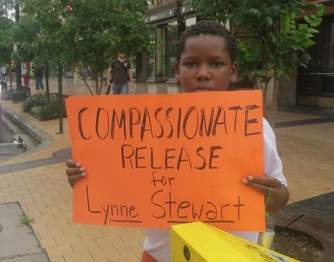
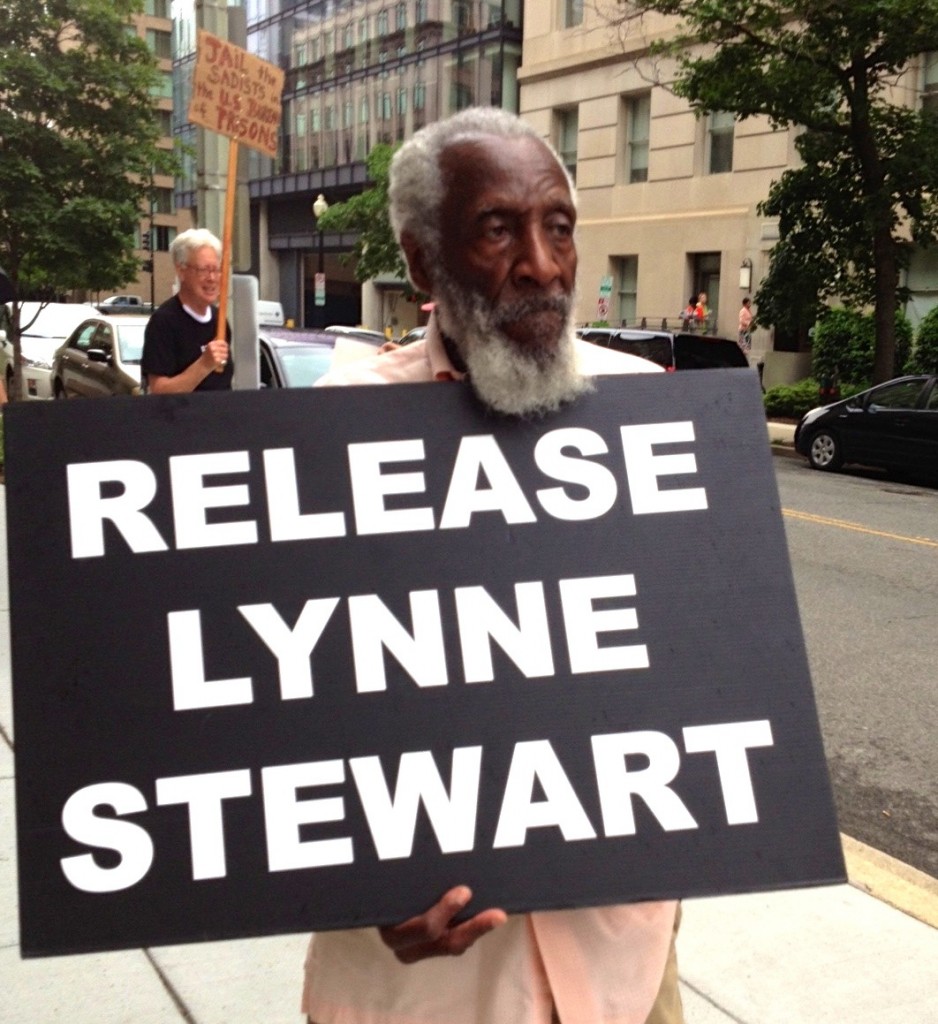
Lynne Stewart: Compassionate Release Decision
Last week Federal District Court Judge Koetl in New York stated he couldn’t consider Lynne Stewart’s request for compassionate release because by law the request needs to come from the Federal Bureau of Prisons. Judge Koetl also pointed out that the Bureau of Prisons didn’t properly consider Lynne’s medical evidence by saying her condition was improving. Meanwhile, Lynne’s doctors have given her a prognosis of 24 to 18 months to live.
Attorney Jill Shellow Levine:
- One of the things his opinion makes clear (Judge Koetl) is that the Bureau of Prisons under the statute makes a motion, he will swiftly and compassionately view the motion.
- Our application would have required him to think outside the box. I think he’s reluctant to do that at least now.
- You can continue your letter writing campaign to the director of the Bureau of Prisons in Washington DC. You can contact your Congress people both on the Senate side and the House side and urge them to get involved and to make known to the director that this is important to them.
- Those are probably the things that count the most.
- Please call to push for Lynne’s release from prison.
- U.S. Bureau of Prisons Director Charles E. Samuels – 202-307-3198 Ext. 3
- U.S. Attorney General Eric Holder – 202-514-2001
- President Barack Obama – 202-456-1111
- Please Write to: Charles E Samuels Jr. / Federal Bureau of Prisons / 320 1st Street Northwest / Washington DC 20534
Guest – Attorney Jill Shellow-Levine, Lynne’s attorney and National Lawyers Guild member.
—–
One Nation Under Surveillance Campaign: Partnership For Civil Justice Fund
In the wake of leaks about the National Security Agency’s massive surveillance program, many ask what legal steps to stem the pervasive breach of civil liberties. We’ll talk with attorney Carl Messineo from the Partnership for Civil Justice Fund about their campaign One Nation Under Surveillance. Years before 9/11 the Partnership was engaged in litigation and advocacy about the ways in which the government and corporations spy on individuals.
The FOIA request reads in part: “The people of the United States have an urgent need for disclosure of the requested information regarding what appears to be the largest covert surveillance program directed against them in U.S. history. The U.S. government and its agencies that are carrying out these unprecedented surveillance programs are not entitled to hide these programs from the public.”
Attorney Carl Messineo:
- One Nation Under Surveillance campaign is a composite of multiple programs that the PCJF has undertaken to challenge and to fight against the surveillance state.
- The program includes public records demands, FOIA requests, lawsuits, litigation as well as campaign and advocacy.
- We’ve been looking at the issue of anti-terror authorities and surveillance authorities being misused to target law abiding people in the United States and in particular those engaged in political activity, well before even 9/11.
- These anti-terror and surveillance authorities, while they were pumped up dramatically after 9/11 were actually being utilized to disrupt, to monitor, surveil, peaceful, political activists even before that catastrophic event occurred.
- The monitoring is done at the behest of private corporations and that’s revealed most clearly in the public records disclosure that we have secured as related to the Occupy Movement.
- Those documents reveal corporations working hand in glove with law enforcement to surveil, to counter, to disrupt the political messaging that this grassroots peaceful movement had.
- This is a movement that came about because of tremendous economic insecurity. People are one pay check away from not being able to meet their basic needs.
- The Wall Street corporations sit in the command centers of law enforcement, so that they have free access to the same flow of information.
- What Manning and Snowden have revealed to us is really a clarion call to action.
- What the NSA does intercept comprehensively, gmail communications, telephone logs of all of our communications.
- Who is that targeting? It’s targeting the law abiding person in the United States. Think about it for a second. What competent terrorist is going to be relying on gmail or google in order to conspire or plan?
- The “undernet” is not being captured. The virtual private networks.
- It completely eliminates the concept of privacy. The privacy implications are staggering. It’s all been done secretly, with secret courts in the United States.
- Senators who had knowledge of this information, and critical of the programs did not possess the First Amendment right to bring or focus attention to these details by citing specifics because they were under gag orders.
- We certainly know the surveillance complex is massive. Edward Snowden didn’t access the top secret documents that he did by working at the NSA. He had to work as a private contractor at Booz Allen.There’s a huge profit incentive. The use of permanent war. There must be a declaration of war in order for emergency powers that are ancillary to those powers to come into effect.
- There needs to be public debate before there is war. But a new concept was developed under the Bush Administration and is perpetuated under the current.
- The notion that there is a permanent state of undeclared war.
- Anti-crime and anti-terror authorities have been used by the government as tools.
- This is a predominant threat of having these tools of social and political control out there and systematically deployed so that the government and the corporations with who they work hand and hand, can anticipate, can know and can suppress and disrupt, democratic action. The lifeblood of a democracy.
- The government governs only by consent and that’s part of the violation here of all of this secrecy.
- A new debate is starting across this county of how do we seize control over these technologies.
- What we’re doing at the Partnership for Civil Justice Fund is a combination of activism and litigation.
- The government has operated in secret because it fears the public’s reaction.
- We have filed public records demands with the NSA, the FBI, the CIA, with other defense and military entities because that’s who is doing this. It’s coming out of the military.
- Our requests demand disclosure to the public, what are the record keeping systems, what are the safeguards, what are the rules, what are the authorities?
Guest – Attorney Carl Messineo, legal director and co-founder of the Partnership for Civil Justice Fund.
———


The Struggle Continues: Seeking Compensation for Vietnamese Agent Orange Victims, 52 Years On
The long term damage left by Agent Orange upon millions of Vietnamese, and the many thousands of U.S. soldiers has yet to be properly accounted and compensated for. Agent Orange’s long term damage set upon the ecosystems of Vietnam 52 years later include long term poisoning of soil and ground water, and near permanent destruction of mangrove forests. Chemical companies such as Monsanto and Dow have profited from defoliant chemical and has paid very little to settle veteran’s lawsuits for Agent Orange related illnesses. Meanwhile, second and third generation of Vietnamese civilians are seriously effected by Agent Orange exposure.
Attorney Marjorie Cohn:
- Studies show that between 2 million 4 hundred thousand and 4 million 8 hundred thousand Vietnamese and tens of thousands of Americans were exposed to Agent Orange during the spraying of Vietnam from 1961 to 1971.
- The Department of Veterans Affairs recognizes certain illnesses and diseases as being associated with the use of Agent Orange. Lists diseases. . .
- During the Nixon Administration there was a promise, in 1973 as part of the Peace Accords that were signed in Paris. The Nixon Administration promised to contribute 3 billion dollars toward reconstruction and healing the wounds of war and that money has not been forthcoming.
- The chemical companies, Dow and Monsanto paid a pittance to settle a lawsuit to compensate unintended victims for Agent Orange related illnesses.
- The intended victims, the Vietnamese sued the chemical companies in U.S. Federal Court and were unsuccessful. But the lawsuit spawned to hold the United States accountable for using these dangerous chemicals.
- HR 2519, The Victims of Agent Orange Relief Act of 2013. It would provide medical and rehabilitative compensation to Vietnamese victims of Agent Orange and medical services for children of U.S. Vietnam veterans and Vietnamese Americans who have been born with these same diseases and birth defects.
- It would also remediate or clean up hot spots which have been contaminated by dioxin.
- Dioxin is the culprit in Agent Orange. Dioxin the most toxic chemical known to science.
- The US government and the chemical companies did know about it (harmful effects) and they covered up a report and it wasn’t until the late sixties that they stopped spraying Agent Orange because of the negative publicity.
- Now it falls to the Peace Accords in 1973.
- Vietnam Agent Orange Relief and Responsibility Campaign. I would urge everyone to make sure your Congress person is a co-sponsor of HR 2519. The Victims of Agent Orange Relief Act of 2013.
- Obama who was 14 at the time of the Vietnam War, has come out with a campaign to which looks to rewrite the history of the Vietnam War in a way that actually lies about what the U.S. did in Vietnam.
Guest – Attorney Marjorie Cohn, professor at Thomas Jefferson School of Law and on the board of the Vietnam Agent Orange Relief and Responsibility Campaign. Her latest article The Struggle Continues: Seeking Compensation for Vietnamese Agent Orange Victims, 52 Years On, details a strategy for compensating victims of the Agent Orange chemical.
—————————————————————-
CIA Sponsored Terror, Civil Liberties, Criminalizing Dissent, Human Rights, Military Tribunal, Political Prisoner, Prison Industry, Surveillance, Torture, Truth to Power
Podcast: Play in new window | Download
Updates:
—–
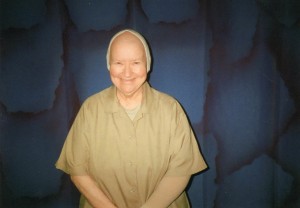
Lynne Stewart: Continued Support For Compassionate Release From Prison
As many listeners know, political prisoner, attorney, activist and friend attorney Lynne Stewart was denied compassionate release on the grounds that her health is improving. Not only is that untrue, it’s cynical. Cancer has spread to her lungs as Lynne is held in isolation. Her white blood cell count is so low that she is at risk of generalized infection. Lynne was convicted on charges related to materially aiding terrorism, related to her representation of Omar Abdel Rahman. Her original 2 year sentence was increased to 10 years after the government pressured the trial judge to reconsider his sentencing decision.
Please call to push for Lynne’s release from prison.
- U.S. Bureau of Prisons Director Charles E. Samuels – 202-307-3198 Ext. 3
- U.S. Attorney General Eric Holder – 202-514-2001
- President Barack Obama – 202-456-1111
Guest – Ralph Poynter, Lynne’s husband and an activist.
——–
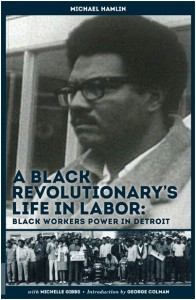
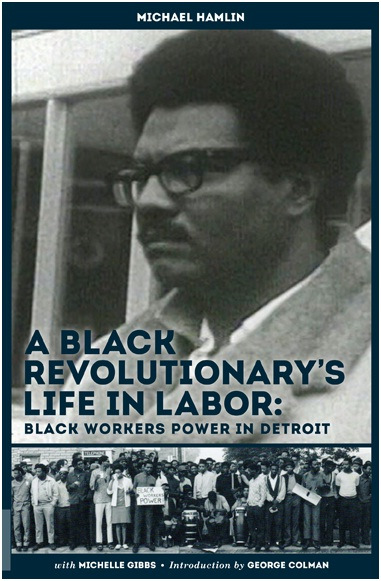
Michael Hamlin: Black Workers In Detroit
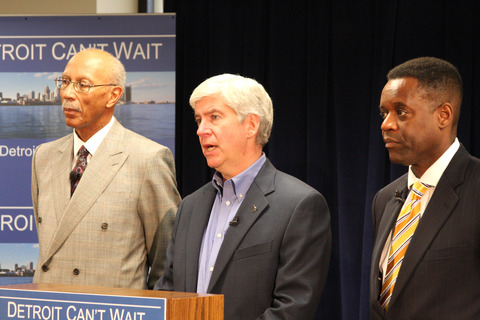
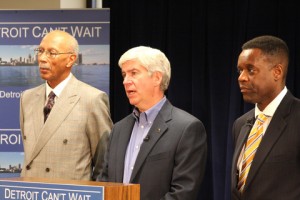
Last month, our guest, retired auto worker and activist Dianne Feeley discussed the plans of emergency manager of Detroit, Kevyn Orr that would wipe out the pensions and health benefits of all current and retired city workers. Nine billion in worker benefits are in the cross hairs of this plan that would impoverish 20 thousand retirees on fixed incomes. There are only 10 thousand city employees left in Detroit who’ve had their pay cut by 10 percent, and now their medical care. This has since made international news. Today we look at the history of workers in Detroit from the perspective of black workers and how what’s happening now can fit into the broader pattern of oppression.
Mike Hamlin:
- Well, I came here from sharecropping country in Mississippi. We landed in a suburb of Detroit that was segregated.
- My father was run out of Mississippi, just ahead of the sheriff. His sister lived out here. We lived in a project, 2 bedroom apartment. There were 8 of us in this 2 bedroom apartment. The people looked out and cared for each other. My mother was only 15 years older than me, so we grew up together.
- It was a peaceful community, sometimes interrupted by weekend drinking, arguing and spouse abuse.
- At that time we were so completely repressed and segregated. Those of us in the south were prepared for that because in the south you had to learn to keep your place.
- We’d submit and we played the game. Go to school or go to the factory.
- Most of my friends quit school and went into the factory. My father advised me to do the same but I wouldn’t.
- The factories at that time were hiring and he eventually got into Ford.
- Most of the workers there either worked at Ford or Great Lakes Steel.
- The typical pattern was they moved to the north got a job in the plant, bought a new car, I’m sure that created a lot -of angst.
- He used to be quite a cotton picker. The Ford job was like play to him. He worked a lot of overtime-kinda typical.
- The situation with the bankruptcy is kind of a culmination.
- If you know black history. . . there’s a history of destroying black communities that are prosperous.
- You look at Tulsa, Rosewood.
- There has always been bitter hatred in Michigan throughout on part of blacks toward whites.
- The racial aspect of this bankruptcy should not underplayed or underestimated.
- People outside of Detroit have been tearing it down since the 50s.
- There’s joy in Mudville now that Detroit is bankrupt.
- Quicken Loans gives his employees incentives to move into downtown lofts and apartment complexes.
- Detroit is going to prosper again.
- The population is changing. It was 85 percent black. It hasn’t been counted recently.
Guest – Mike Hamlin, co-founder of the Dodge Revolutionary Union Movement and the League of Revolutionary Black Workers. For 35 years, Hamlin worked as a social worker and addiction therapist. He is currently a professor of Africana Studies at Wayne State University.
——


Remembering Journalist and Author, Henri Alleg
In November of 2007, we were fortunate to interview French-Algerian journalist Henri Alleg. Henri passed away last week. He was 91. We talked with him about his book, The Question, a moving account of his arrest and torture at the hands of French paratroopers during the Algerian War of Independence. The book became a bestseller and created major public debate in France. Jean-Paul Sartre wrote the preface that remains a relevant commentary on the moral and political effects of torture on the both the victim and perpetrator. The book was eventually banned by the authorities.
Professor Marnia Lazreg:
- I had worked on the issue of torture during the Algerian War 1954-62.
- I read Henri Alleg’s The Question. It really struck a chord with me.
- There were times in my research and writing where I lost complete faith in humanity or the notion of humanism.
- I lived in the Arab area in the city where I was going to high school and in the mornings I would see hundreds of men in line at the unemployment office.
- I read The Question and I realized he was speaking to me.
- He was tortured mercilessly, and he didn’t talk, he didn’t crack.
- He was the also the first French intellectual who blew the whistle on the hypocrisy of the colonial military establishment which was spreading this news that they were in Algeria to save this country.
- What Alleg wanted to do was show in a very powerful manner that France had not changed from the Middle Ages.
- In fact, France was engaging in the same practices 9 years after it fought fascism, Nazism in Europe.
- He was writing about what happened to him while it was still fresh in his mind. Memories become jumbled, the suffering is so intense.
- He was writing on cigarette paper and he had it smuggled out of the prison. It showed something about Alleg’s personality. He was not going to be muzzled, or silenced. He was going to continue to resist.
- What he said couldn’t be denied because he bore the signs of torture in his own flesh.
- Sarte asked how could such young men exhibit the same kind of hatred toward the Algerians and those that supported the Algerians.
- Alleg asked me to have dinner at his home. We had a marvelous dinner. With him I did not have to explain the premises of my views or my opinion.
- We never met before but I could talk to him and he could understand what I was talking about.
- We live in an age where humanism is a bad word. Anti-humanism is very well established in academic institutions.
- To me, Alleg represented perhaps one of the last figures of the humanist era. It was an era also when you had people who fought for what is human. What is worth dying for . . preserving that basic fundamental human dignity which characterizes all human beings regardless of their race, nationality.
Guest – Marnia Lazreg is professor of sociology at Hunter College and the Graduate Center of the City University of New York. Her books include Torture and the Twilight of Empire; From Algiers to Baghdad and The Eloquence of Silence: Algerian Women in Question.
Past Law and Disorder Interview with Henri Alleg
Past Law and Disorder Interview with Marnia Lazreg
———————————————————