Civil Liberties, Criminalizing Dissent, Crony Capitalism, Human Rights, Prison Industry, Torture, Truth to Power
Podcast: Play in new window | Download
Updates:
—

Workers Win Large Settlement at Supplier to Chinese Restaurants After Hard Fought Campaign
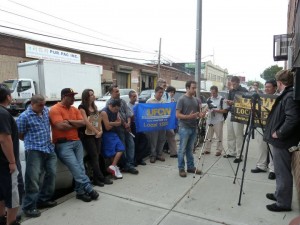
A bitterly contested campaign against Pur Pac, a food distribution warehouse giant reached a settlement of 470 thousand dollars for workers who had their wages illegally withheld and more. The workers organized with Focus on the Food chain, Brandworkers and International Workers of the World to challenge sweatshop conditions, wage theft, retaliation and discrimination in the sprawling industrial corridor of food processing and distribution that service New York City markets and restaurants. Daniel Gross, the executive director of Brandworkers said – quote – The conditions in the sector are deplorable and systemic but, as the Pur Pac workers have shown, positive workplace change can and will be won.”
Attorney Daniel Gross:
- Pur Pac is typical of an industrial corridor of food processing and distribution warehouses that service a tremendous amount of food to restaurants and supermarkets in New York. Much of what we eat in restaurants is processed in sweatshops.
- Pur Pac is a distributor of restaurant and food supplies to Chinese Restaurants, cafes and bakeries. They distribute huge quanitities of rice, cooking oil, chopsticks.
- Sweatshop, tremendous amount of wage theft, hundreds of thousands of dollars. Vicious retaliation for workers who stand up for their rights, exhausting long shifts, very heavy work.
- We facilitate worker led, comprehensive campaigns. The company used several tactics to avoid accountability here, the main approach that they used is they engaged in sham sales.
- They would fraudulently transfer assets, rebrand the company. The company was originally called Easy Supply. Easy Supply escaped accountability by purporting to go out of business, now same factory, same trucks, same products was called Sunrise Plus. We caught up with Sunrise Plus and they engaged in another sham sale and that created Pur Pac.
- We were also able to win a binding code of conduct, which creates very powerful protective mechanisms for collective activity, going forward.
- We were able to win recognition for the IWW, as exclusive bargaining agent for Pur Pac workers. It was really the biggest victory for Focus On The Food Chain.
- I was a low wage worker mostly in retail and fast food. I was working at Borders Books and Music and really felt the sting of a multi-national employer which at the time was highly profitable. It didn’t pay a fair wage, offered an insecure and unpredictable schedule.
- It employed a management force that really showed tremendous disrespect for rank and file workers.
- We had 44 Starbucks stores that were infested with rats and insects. We did worker-citizen journalism and we got photos and video of these rats and roaches, we inflated a huge, inflatable rat in front of the stores and shared our video and photographic evidence.
- Starbucks is still engaged in really a scorched Earth effort, complete disrespect for the right to organize and free association.
- The National Labor Relations Board (NLRB) is the administrative agency charged under federal with administering union management affairs. They have jurisdiction over cases under the National Labor Relations Act.
- Mezonos Maven Bakery is a food production sweatshop. Mezonos Maven was cheating workers out of their wages, disrespecting workers, and the workers came together, they didn’t join a union but they came together with community groups, etc. Mezonos Maven, started illegally firing workers.
- When the workers stood up to the most basic worker’s rights, they were subjected to fierce immediate retaliation.
Guest – Attorney Daniel Gross, Executive Director of Brandworkers, a non-profit organization protecting and advancing the rights of retail and food employees.
—–
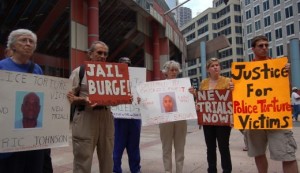
Federal Judge Rules Former Mayor Daley Can Be Sued For Alleged Torture Cover Up
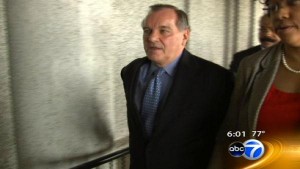
We continue to bring updates on the ongoing police torture and abuse scandal revolving around former Chicago police commander Jon Burge. Recently, a federal judge has now ruled that former Chicago Mayor Richard Daley can be allowed to be kept in the lawsuit where he is charged with conspiracy to cover up police abuse and torture. As many listeners may know, Burge has been sentenced to 4 and a half years in prison for obstruction of justice and lying about torturing prisoners to obtain coerced confessions. The People’s Law Office brought the case in 2005 and the city of Chicago refused to settle while pumping hundreds of thousands of dollars into the case.
In the beginning of September, attorney Flint Taylor will depose former mayor Richard Daley which will force him to answer questions about the abuse of African Americans under Burge’s command. This case has already cost Chicago taxpayers more than 43 million dollars in settlements and legal fees. Past shows with Attorney Flint Taylor
Attorney Flint Taylor:
- Daley was the state’s attorney for Cook County for eight years in the 80s during that time he was specifically informed of police torture.
- Instead of doing anything about it and dealing with the torturers, Jon Burge and company, he continued to encourage it by prosecuting men who had been falsely arrested and charged based on tortured confessions sending as many of them to death row.
- When he became mayor, he continued to have an active role in the cover up of the torture practice.
- He had at various times as chief of law enforcement and chief executive of the city of Chicago, the power and obligation to act and if he did, we wouldn’t have had all these men on death row, and in the penitentiary and we wouldn’t have had all these men tortured.
- We brought it several times in lawsuits starting in 2003. Judges had consistently turned their backs on that claim.
- The new Chicago mayor Rahm Emmanuel who has successfully tip toed past this both in his campaign and now as the first 100 days of being mayor had to respond to it.
- They’ve paid over 13 million dollars to defend these civil cases that we’re in. We take the mayor at his word, and we hope this leads to settlements and compensation for the men who’ve been tortured.
- There are six men who have lawsuits in court. Unfortunately because of statute of limitations most torture survivors don’t have lawsuits.
- There are still 15 men behind bars in Illinois, based on tortured confessions that Jon Burge and the Area 2 torturers coerced from them. We’re fighting to have them all get new hearings.
- I don’t know if a Daley denial in some of the actions in this case would tantamount to perjury that Fitzgerald would be interested in.
- There is a major memoranda that was sent from the police superintendent at that time to Daley, a kind of CYA saying “I’ve been giving this powerful evidence of torture from a doctor over at the county hospital.
Guest – Attorney Flint Taylor, a graduate of Brown University and Northwestern University School of Law and a founding partner of the Peoples Law Office. More bio
———————————————-
Civil Liberties, Criminalizing Dissent, FBI Intrusion, Human Rights, Surveillance, Truth to Power, War Resister
Podcast: Play in new window | Download

The Truth About the Situation in Libya Cutting Through the Government Propaganda and Media Lies
Libya, a country of 6 million people possesses the largest of Africa’s oil reserves. It’s oil is of a particular high quality. Since March 19 2011 the Air Force of Britain, France and the United States have conducted nearly 7500 bombing attacks. Meanwhile, ground forces made up of special operations and commando units are NATO led and direct the military operations of the so called rebel forces. In his recent article titled The Truth About the Situation in Libya Cutting Through the Government Propaganda and Media Lies, Answer Coalition National Coordinator Brian Becker lays out the history and facts about the ongoing Libya invasion. See Partial Interview Transcript
Brian Becker:
- Unfortunately there’s a large number of people who have accommodated themselves to a full scale demonization to the targeted government, the government in this case Qaddafi and Libya.
- Targeted comprehensively by the corporate sponsored media in the United States, in Britain and France. The United States, Britain and France the former colonizers and slave traders of Africa, always assigned their bombing missions, invasions a noble cause.
- They characterized the targeted government as having threatened a full scale massacre in Benghazi. There was no proof offered of that. The propaganda campaign is always part of the overall war effort.
- Qaddafi came to power in 1969, he immediately evicted the (US)Air Force base and the two British bases that were the dominant powers inside of Libya.
- The National Transition Council, the group that is fighting Qaddafi, and is sponsored by NATO, their first act when they formed a government coming into being was to invite those same powers to begin bombing the country.
- In 2004 after the invasion of Iraq, George W Bush and the European powers there ended the sanctions on Libya.
- Libya attempted to accommodate itself to the western powers.
- He was a player, they don’t want players, they want puppets.
- He let the companies come in but he kept irritating and annoying them.
- In the recent months we’ve seen demonstrations of hundreds and thousands of Libyans, maybe as many as a million gathering in Green Square against the bombing of Tripoli.
- Not all of them were with Qaddafi, some of them were but they nonetheless were against the bombing of their city by a foreign power.
- In the last days, there’s been a psychological war to over throw the government in Tripoli.
- What we don’t see is NATO carried out 7,500 bombing missions many of them against military formations of the Qaddafi government, many against civilian and communication centers.
- Why don’t they start bombing Saudi Arabia? There’s no elections in Saudi Arabia, women can’t drive cars in Saudi Arabia, the punishment for women committing adultery is stoning to death. There’s no protest in Saudi Arabia because they’re met with torture, imprisonment and execution.
- Why because the Saudi government functions a proxy, puppet client regime of the United States.
- If you watch TV or read US media you’d think there was 40 years of dark grim dictatorship with nothing good, the nightmare is finally ending.
- There was mass illiteracy in 1969, today 92 percent of the people are literate. Life expectancy of Libyans today is 77 years old. The entire operation is a NATO operation.
- The slogan of self determination has no credibility except in that struggle against imperialism.
- In World War I when that war was about to end, there was a secret treaty called the The Sykes–Picot Treaty. What that treaty showed was despite the utterances of self determination at that time by Woodrow Wilson and the other western leaders, that these powers were secretly dividing the spoils of war.
- If this operation in Libya succeeds, the use of foreign military forces and intelligence forces, and drone aircraft and military operations, the same tactics will be applied to countries deemed to independent of the dictates in Washington.
- Because its Obama and not the Republicans, too many progressive anti-war normally active people are sitting on the sidelines, watching, wondering rather than building the kind of militant anti-war movement in the United States that says to the people of the world
Guest – Brian Becker, National Coordinator for the Answer Coalition, he’s also been a central organizer of the mass anti-war demonstrations that have taken place in Washington, D.C. over the past decade.
—-
Better This World: Katie Galloway
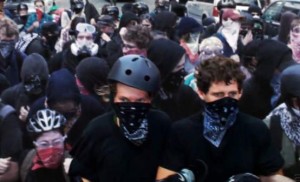
In recent shows we’ve talked about the cases involving the FBI’s targeting of protesters, over-zealous prosecutors, and their collective impact on domestic dissent. These topics are just part of a riveting story in the documentary titled Better This World, directed and produced by Katie Galloway and Kelly Duane dela Vega, produced also by Mike Nicholson.
It’s a story of two boyhood friends from Texas who travel to the 2008 Republican National Convention in Minnesota and find themselves embroiled in an FBI case involving multiple domestic terrorism counts. Better This World gets right to the heart of the so called War on Terror, its impact on civil liberties and protest activities. One review described the film as “Riveting. Structured like a taut thriller, it delivers a chilling depiction of loyalty, naivete, political zealotry and the post-9/11 security state — and it features one doozy of a kicker in the “where are they are now” category.”-
Katie Galloway:
- It was early 2009 and we saw a headline in the New York Times about the arrest of two young activists at the Republican National Convention. I didn’t hear about the story until David McKay was going to trial.
- His co-defendant had taken a plea, that’s what most people do in the federal system for sure.
- David had decided to roll the dice and he was going to federal trial. He was alleging that he had been entrapped.
- David and Brad went to an informational meeting in Austin, Texas about protesting at the Republican National Convention. Anarchist collective.
- While there they were approached by a well known activist Brandon Darby, who had gained some measure of fame after Hurricane Katrina and co-founded an organization called Common Ground.
- Two years leading up to the convention, multiple law enforcement and federal agencies had been involved in pro-active investigations into activist groups who might be coming to the RNC.
- David and Brad by coming to this meeting raised the suspicion of the government.
- There’s a lot of love in both families for these two guys.
- It’s a story about friendship and loyalty against the back drop of the post-9/11 domestic security apparatus with the full weight of the state on these guys trying to turn them against each other.
- What I learned is that the “war on terror” is really an extension, a continuation of the “war on drugs.” The rampant yet increased use of informants in the “war on terror.”
- David who built Molotov cocktails but didn’t use them was facing 30 years. Our sentences are 5 to 12 times longer than other countries. We get a strong sense of collateral damage of federal prosecutions, what it puts the families through. The tendency is to absolutely demonize the defense.
- We’re trying to make sure this film becomes part of the national dialogue about life after 9/11, about the legal system, the tension between civil liberty and security.
- When we got to Minneapolis we thought we would follow the legal cases as they unfolded. Our normal style is verite, letting things play out before the camera. We quickly realized that the heart of the story is what led to the six months leading up to the convention.
Guest – Katie Galloway, director producer of the Better This World. Katie has directed and produced numerous award winning films and series for PBS Frontline and POV, among others. Her feature documentary Prison Town, USA (POV 2007) called “documentary making at its best” by The San Francisco Chronicle and “intriguing” by The New York Times, was developed as a fiction series by IFC, for which she co-wrote the first 3 episodes. Her critically acclaimed film Better This World (POV 2011) has won 3 top doc awards on this year’s festival circuit. Galloway taught documentary production at the Columbia Journalism School and now teaches Media Studies at U.C. Berkeley.
——————–
Civil Liberties, Criminalizing Dissent, Death Penalty, Guantanamo, Habeas Corpus, Human Rights, Political Prisoner, Torture, Truth to Power
Podcast: Play in new window | Download
Updates:
—
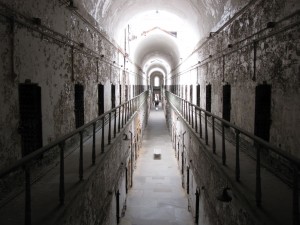

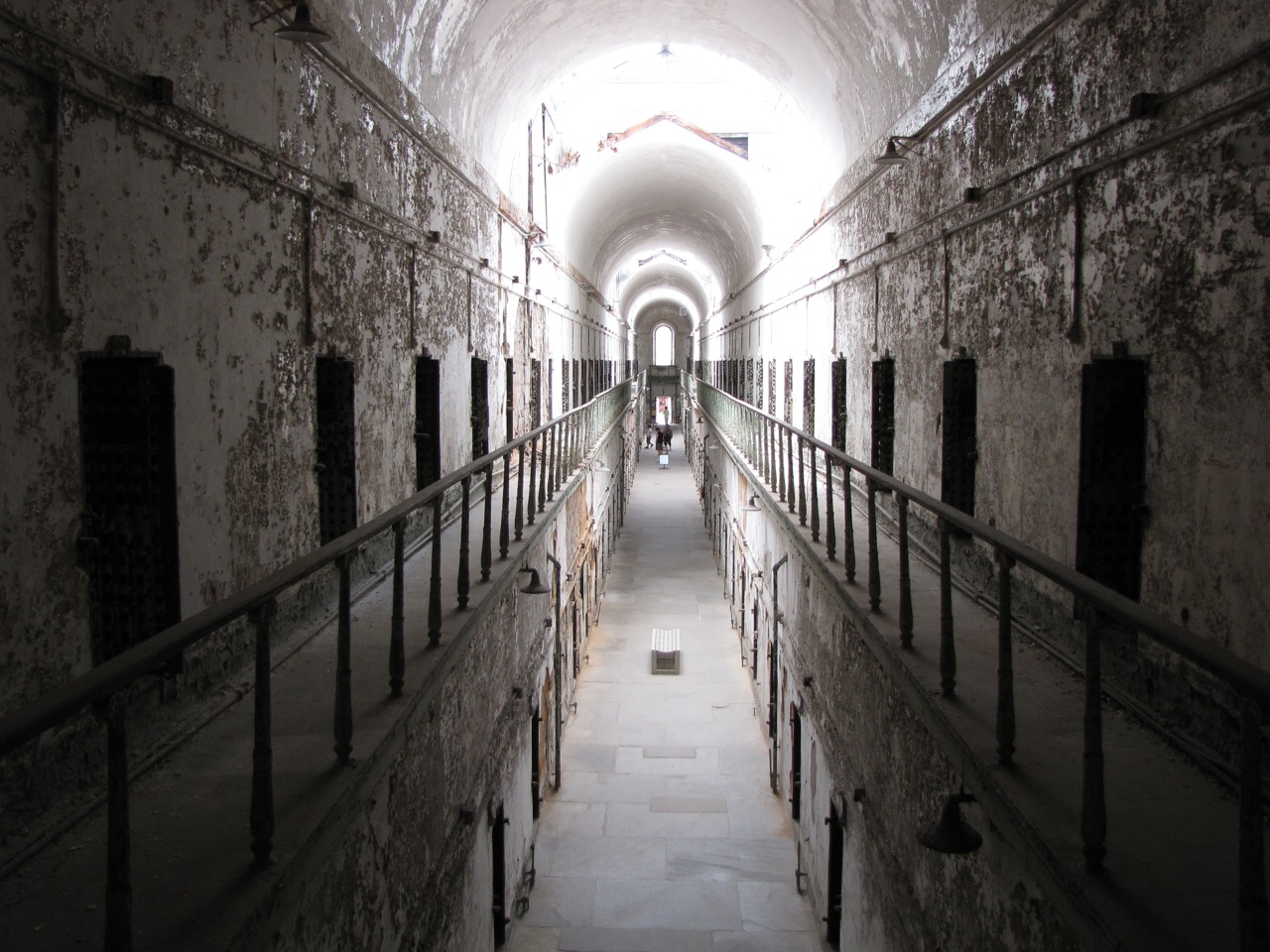
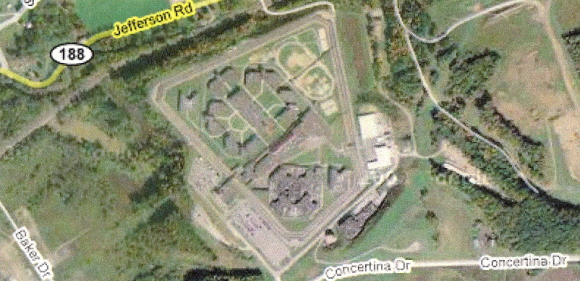
Cruel Solitary Confinement In Pennsylvania Prisons
Earlier this year the National Lawyers Guild called on Superintendent Louis Folino to support the Program Review Board’s recommendation to release Russell Maroon Shoatz into the general prison population at SCI Greene in Waynesburg, Pennsylvania.
Jerome Coffey, a political prisoner currently being held in Pennsylvania’s SCI Forrest. Jerome’s social work while in prison include sending clothes to villages in Uganda and to women prisoners in the Philippines. That work has labeled him an instigator and he’s been placed in solitary confinement for more than 5 and a half years.
Bret Grote:
- The Human Rights Coalition was founded by state prisoners at the State Correctional Institution in Greene, Pennsylvania in 2000. The Pittsburgh chapter where I work was founded in 2006-2007.
- The main mission of the Human Rights Coalition was to bring the voices of the most excluded from criminal, legal, criminal justice discussions, namely those of prisoners, their family members and effected communities.
- We base our work in building relationships with prisoners and to bring support and advocacy to those most impacted by the prison system and that has led us straight into solitary confinements where people’s lives are being micro-managed down to the most minute details.
- The justifications for solitary confinement shift from to another, it used to be based on escapes. Now that Russell Maroon Shoatz is approaching his 70th birthday, they’re claiming its because of his past efforts of organizing hunger strikes, and they cite an incident where he was forced to defend himself against another prisoner.
- In Maroon’s case he met with a prisoner mental health staff person because there was some movement towards releasing him from solitary confinement that ended up being blocked.
- This staff person told him there was an allegation that he tried to organize an armed prison uprising in the 80’s. This has been following him around for over 25 years in his file, but he has not been able to challenge this because he was not informed of this at all.
- He is not represented by legal counsel. He is ripe for representation under the 8th amendment clause of cruel and unusual punishment.
- The prison authorities typical treatment for somebody who is the restrictive housing unit is a cursory interview at the cell, maybe once every 30 days with a staff worker, which is to say they’re not really giving them effective mental health treatment.
- You spend 23 hours in the cell, maybe 24 if the guards don’t take you to yard or shower.
- The things that one may witness on the whole are constant screaming, banging, and yelling and crying and cursing and talking to one’s self by prisoners who are psychologically disturbed. According to the figures up to 2500 or 3000 prisoners can be in solitary confinement on any given day in Pennsylvania. The total prisoner population in Pennsylvania is 52 thousand.
- We are constantly looking for serious and committed civil and human rights lawyers to work with us. We have a massive body of evidence. The solitary confinement system is an invisible system inside of a larger invisible system of the prisons.
Guest – Bret Grote, law student and volunteer with the Human Rights Coalition, an organization bringing the voices of the most excluded from criminal, legal, criminal justice discussions, namely those of prisoners, their family members and effected communities. The HRC works to build relationships with prisoners and bring support and advocacy to those most impacted by the prison system.
——

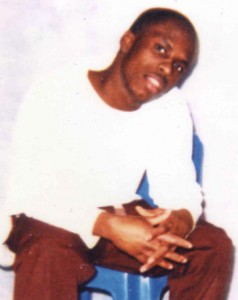
Andre Jacobs
Andre Jacobs is another Pennsylvania state prisoner in solitary confinement. Andre, a 27 year-old jailhouse lawyer, has been held in retaliatory solitary confinement for more than 8 years. In 2009, Andre was awarded 185 thousand dollars in a case against the Pennsylvania Department of Corrections, an action that has resulted in his being singled him out for abuse within the prison system. In January of this year, he was physically abused, issued death threats and denied medical treatment.
Liz Springer:
- It’s been rough, there had been days where I thought he wasn’t going to make it. I thought I was going to get a call saying he was dead. I send him inspiration cards, and support him, send him some Bible verses to keep him strong.
- There have been times he said to me, I can’t do it no longer, I can’t do it.
- They were beatin’ him in the court room. They said he had an attitude and when he was leaving the court room, I witnessed them beating him, and I said, “I love you Andre.” He turned around and said “I love you too.”
- They started beating him because they said he wasn’t supposed to speak to me.
- He lost that case because the guards got on the stand and said he hurt one of the guard’s wrist.
- He ended up with 18 years because of that. Lately he has a little hope.
- He was strapped to a chair for 12 hours not being able to move anything but his head. Didn’t eat, had to go the bathroom and he just went.
Guest – Liz Springer, activist and the grandmother of Andre Jacobs.
———

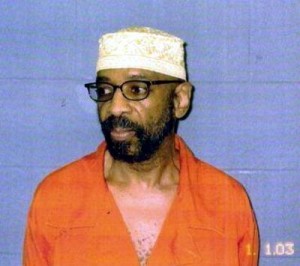
Russell Maroon Shoatz
As many listeners may know, former Black Panther Russell Shoatz has been in prison since 1972, and the past 21 of those years has been spent in solitary confinement. He’s 67, his spirit unbroken and in addition to his record of good conduct, members of the Pennsylvania Prison Society who visit Mr. Shoatz regularly attest to his peaceful disposition. Earlier this year the National Lawyers Guild called on Superintendent Louis Folino to support the Program Review Board’s recommendation to release Russell Maroon Shoatz into the general prison population at SCI Greene in Waynesburg, Pennsylvania. His daughter Theresa Shoatz joins us talk more about his advocacy work and life as a political prisoner.
Theresa Shoatz:
- The solitary confinement has had the worst effect on us. Within the 39 years we was able to have contact visits.
- The unit he’s in now, there’s no contact, you’re behind a glass when you visit.
- He’s had grandchildren since that time, and he hasn’t touched the grandchildren either. Our family is dedicated to visiting him, every 3 months.
- Russell Shoatz being known throughout the country. I notice now, his conversations are laid back, he’s not as upbeat as he used to be.
- He keeps stressing almost on our weekly calls, you gotta get me outta here.
- They told me Daddy’s a leader, I said no, he’s a grandfather. The Panthers didn’t say we want to battle the police. They said, we want to educate our youth, we want to feed them, we want to take control of our community. When it became war, and the Panthers were under attack, they said we got to protect ourselves.
- That’s what happened, and of course, Daddy’s a political prisoner. He took a stand and stood on the front line for his people and his community.
- I had a little attitude with him, I said why would you leave us, this was some years ago. He said, (I did it for my people. How could I allow you to be raised in that type of system?) It hit me like a ton of bricks.
- The guards, they called themselves the “wolfpack” when you’d see them comin, they would roll one pants leg all the up to the knee.
- I went to Governor’s office, the Governor of Pennsylvania. I was on trains, back and forth.
- It’s the same thing, when our people get in the streets and march, you really can’t do one march.
- At SCI Greene, over 20 young men in their 20’s hung themselves there (lynching) within a short time of solitary confinement.
- Daddy was constantly yelling to the guys, what to do. They come in strollin. Strollin down the solitary unit.
- This prison bubble is going to burst. There are people fighting on all levels, this prison bubble is going to burst.
- It’s going to end, we’re going to make sure of that.
Guest – Theresa Shoatz, daughter of political prisoner Russell Shoatz and activist with the Human Rights Coalition.
————————————————————
Civil Liberties, Criminalizing Dissent, Habeas Corpus, Human Rights, Iraq War, Supreme Court, Truth to Power, War Resister
Podcast: Play in new window | Download
Updates:
——–
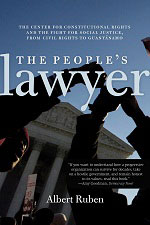
The People’s Lawyer: The Center for Constitutional Rights and the Fight for Social Justice, From Civil Rights to Guantánamo
The People’s Lawyer by author and Guild writer Albert Ruben, is the first comprehensive history on the Center For Constitutional Rights and tells the Center’s story from the civil rights era to today’s legal battles on habeas corpus, torture and Guantanamo Bay Prison. The book highlights critical legal fights taken on by CCR revealing innovative tactics that have evolved within the radical organization. Albert Ruben points how the Center for Constitutional Rights continues to fight with the same spirit, audacity and courage it was founded with. As many listeners may know, CCR has been an important corner stone to this radio show because our own Michael Ratner has been with the Center for 4 decades.
Albert Ruben:
- The founders (of CCR) were 4 in number. They were Arthur Kinoy, Morton Stavis, Bill Kunstler and Ben Smith. Smith was a Southerner, he had an office in New Orleans, and Stavis, William Kunstler, and Arthur Kinoy were northerners who were working for civil rights in the South.
- They were all working their separate beats, they all knew each other and were in communication about the work they were doing. They decided that they needed something, primarily financially, to keep their work going.
- So they got in touch with a lawyer they all knew with financial means named Robert Boem. They incorporated it in New Jersey, and it became ultimately the Center for Constitutional Rights.
- They had a very small office at the beginning with one lawyer in Newark.
- The anti-war movement, the McShirley Case. It threw the Center into the government misconduct orbit. It was in the course of litigating that the Center became aware that the Federal Government was not going to be on the side of the angels.
- (From Wikipedia) Dombrowski alleged that members of his organization, the Southern Conference Educational Fund, were subjected to continuous harassment, including arrests without intent to prosecute, and seizures of necessary internal documents. Furthermore, the State was threatening to use anti-subversion statutes to prosecute the organization, which was a group of Southern liberals dedicated to fighting for civil rights for Blacks in the South.
- The Dombrowski case, allowed the Center and a lot of lawyers to use that decision to challenge cases that brought against civil rights attorneys and a lot of people who were working in the South and caught up in state laws, that were using anti-red laws to take them out of state courts and bring them into federal courts.
- So, the Center lawyers were very acutely aware that they had on their side the federal courts. What happened with McShurley, was that it overturned that faith in the federal court system. The case led the Center to realize that government misconduct was an area that would be of interest. They could no longer count on federal court to be their allies.
- There were women on the staff of the Center who were both Center lawyers as their occupation but they were also women, and as women they were caught up in the womens movement. They brought the two together.
- It was the early days of the womens movement. The Center didn’t see itself as a place that would take on criminal law, it was more of a movement organization. The politics of the founders were central to their beings. They made their politics guide them in whether a case was something that they should adopt.
- Part of the Center for Constitutional Right’s mission was educational, that’s not understood I think.
Guest – Albert Ruben, screen and television writer and has served as an officer of the Writers Guild of America East.
—
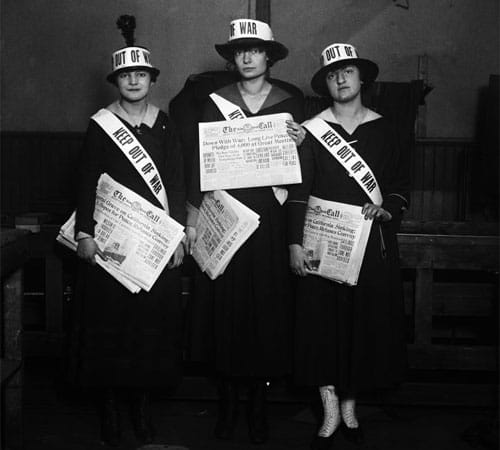
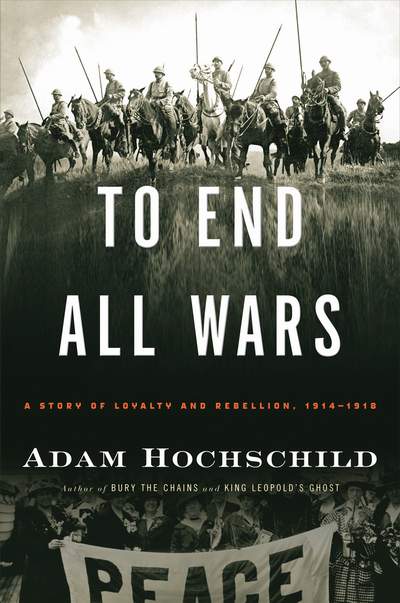
TO END ALL WARS: A Story of Loyalty and Rebellion 1914-1918
We welcome returning guest Adam Hochschild, historian and author of the new book TO END ALL WARS: A Story of Loyalty and Rebellion 1914-1918. In the book, Hochschild has focused on the antiwar movement in Great Britain. Near the beginning of World War I, 20 thousand British men refused the military draft on principle, others were conscientious objectors and nearly 6 thousand of the men were sent to prison. Hochschild relied on personal letters, diaries and memoirs to assemble this unique historic report on Britain’s powerful anti-war movement. The book also unearths how anti-war activists were monitored constantly by civilian and military intelligence as agent provocateurs bragged about their accomplishments. To End All Wars is a compelling account of the heroic anti-war struggle while top writers in that period such as Rudyard Kipling and H.G. Wells, contributed rhetoric to support the war propaganda.
Adam Hochschild:
- I always like to think we can learn things from history. I think you learn to be inspired by people who stuck to their ideals, even in very difficult times,
- I thought it would be a challenge to write a book centering around people who I admire tremendously although they lost, the cause that they were struggling for. I’ve always been fascinated by the first World War, which remade the world for the worst in every conceivable way and killed around 20 million people in the process.
- I’ve been particularly struck by those resisted that war on both sides, who said this war is not worth these millions of lives and we’re not going to fight.
- I wanted to talk about 2 different people in this war, the generals who fought this terrible war filled with illusions, that the next battle would bring a great victory, and then I was also fascinated by these pacifists and war resistors.
- 20 thousand men of military age, refused to go into the British Army. The largest outright refusals in any of the warring countries. Of that number many of them accepted alternative service under conscientious objector. Driving ambulances, or work in war industry factory.
- Many men refused that and more than six thousand went to prison.
- Aggression among Germany and Austria-Hungary did really ignite the war. You can’t really say its a war between good guys and bad guys, because the allies at first were Britain and France allied with Russia. The absolute last remaining monarchy in Europe.
- Wonderful trilogy of novels by Pat Barker, The Eye In the Doors. Had I been alive in that time in 1917, I would like so many people did at that time, who greeted the Russian Revolution with enormous hope.
- I guess I’m thinking more than anything else, of the way the first world war, made the second world war almost certain. There was something about the way the war ended that gave rise to bitterness and the Nazis in Germany.
- Right up to the very last minute, the German people were fed a diet of totally triumphant propaganda.
- Eugene Debbs got up of his sick bed to do a speaking tour against the war. The Wilson administration charged him with subversion, he was still in prison when got nearly a million votes for president of a Socialist party ticket.
- Illusion that the war is going to solve more problems than it causes. Another illusion is that it will be over quickly, you remember George Bush on the aircraft carrier.
Guest – Adam Hochschild, award-winning author and journalist who has written for The New Yorker, Harper’s, The New York Review of Books, and The New York Times Magazine. His books, King Leopold’s Ghost: A Story of Greed, Terror, and Heroism in Colonial Africa (1998) and Bury the Chains (2005) were finalists for the National Book Award and have won numerous other prizes. Hochschild teaches narrative writing at the Graduate School of Journalism at the University of California at Berkeley.
—————————————————-
Afghanistan War, Civil Liberties, Criminalizing Dissent, FBI Intrusion, Habeas Corpus, Human Rights, Surveillance, Targeting Muslims, Torture, Truth to Power
Podcast: Play in new window | Download
Updates:
—————
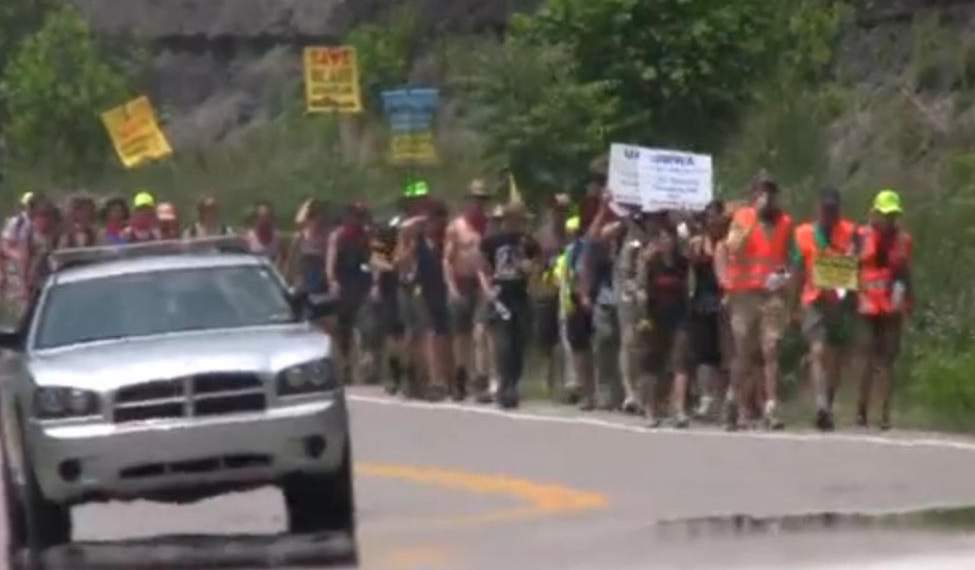

Blair Mountain March
In protest to stop mountain top removal mining, hundreds of activists finished a five day fifty mile march earlier this month from Marmet, West Virginia to Blair Mountain in West Virginia. The massive under publicized march also marked the historic Battle of Blair Mountain, the largest armed conflict in US labor history. In 1921, thousands of miners near the area marched to organize non-union coal mines. This demonstration ended in a rally of speakers, musicians, celebrities, union workers and picketing at the top of Blair mountain. The demonstration drew attention to the demand of sustainable job creation in all Appalachian communities, abolish mountaintop removal, strengthen labor rights and preserve Blair Mountain. As many listeners know, mountain top removal is a highly destructive extraction coal mining process with usually no environmental remediation.
Attorney Dan Gregor:
- It is not an exaggeration to say that big coal owns southern Virginia.
- Logan and Boone Counties where we walked through, big coal has more or less owned the politics, the citizenry, the economy for a century.
- The Congressional Delegation is very sympathetic to what they perceive as coal jobs.
- During the marches we had 200-250 people at any given time.
- Putting myself in the best way that I can do legal support, and one of the core logistics organizer of the event, best do organizing support, it put myself in a position where I was knowingly arrestable.
- It was alternately exciting and freeing and terrifying. It’s a very activist lawyer, resistance approach.
- There are locals who don’t understand this doesn’t mean more jobs or it means a fraction of unionized jobs for organized coal workers.
- The Boone County Sheriff department was somewhat less then helpful. For the most part, the West Virginia State Police were professional and did their jobs carefully. We didn’t see police misconduct, or police brutality as you would see in most mass protest situations.
- The broader strategy is calling for an end to mountain top removal coal mining, transitioning to a cleaner economy with wind and solar.
- One of the reasons you don’t see mountain tops blown up in Tennessee for example, is that the Congressional Delegation there, has been resistant to it, in West Virginia, historically it hasn’t.
- Mountain top removal coal mining produces very high quality, pure Anthracite Coal, this is part of Obama’s “Clean Coal” strategy.
- A great deal of my practice is resistance law, and is assisting resisting communities.
- I’ve been able to make this a significant focus of my life as an attorney.
- Ilovemountains.org / allianceforapplachia.org
- We can always use more people, more attorneys. It took six months to organize this March on Blair Mountain, no ordinary task for volunteers.
Guest – Dan Gregor, activist attorney whose practice includes protest defense, criminal defense, immigration, and human and civil rights law. This has included assisting and representing activists involved with the annual School of the Americas Watch vigil, the Immigrant Workers Freedom Ride, people being harassed by Green Scare grand juries, and many other activist causes. Dan is a graduate of Northeastern University School of Law and Hampshire College. He is an active member of the National Lawyers Guild, and former National Vice President of the Guild.
——————
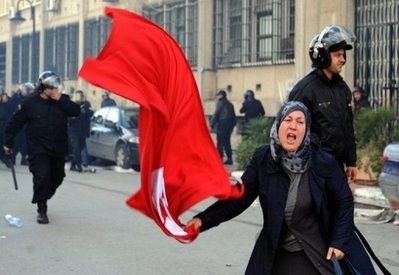
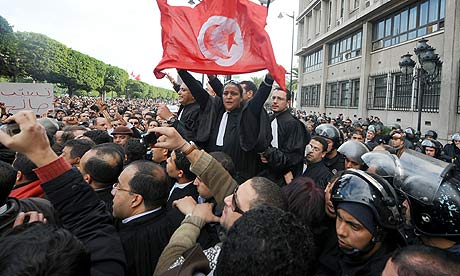
National Lawyers Guild Report: Human Rights In Tunisia
A wave civil resistance continues throughout the country of Tunisia, Africa sparked from high unemployment, food inflation, corruption, and lack of freedom of speech. During the country’s civil unrest, President Zine El Abidine Ben Ali was ousted as president, fleeing to Saudi Arabia after 23 years in power. Now, human rights violations are being investigated. A group of lawyers from the U.S., U.K. and Turkey have been investigating U.S. and European complicity in human rights abuses committed by the Ben Ali regime. The group has recently issued a warning that the U.S. and other Western governments must respect Tunisian sovereignty and not interfere in that country’s path to democracy. Atlanta attorney and National Lawyers Guild Executive Vice President Azadeh Shahshahani, was a member of the delegation and is on a speaking tour.
Azadeh Shahshahani:
- The Tunisian government passed this law, the 2003 anti-terror act. US State Department very supportive.
- If you go back to look at the US State Department Human Rights report on this, you can see the human rights violations are documented in the reports.
- It’s not like the US government didn’t know what was happening in those jails. Particularly the Islamists, after the legislation went into effect, a lot of people were picked up, for being a Muslim, for being a devout, perhaps engaging in religious discussions with your friends,
- A lot of youth were arrested and subjected to torture. Torture seemed to be really systematic, you’re arrested, detained, then tortured and confession is obtained.
- One family of a young man arrested, the father asked authorities why his son was arrested, he hasn’t done anything? They said, well, he does pray, doesn’t he?
- That was the sole basis of having been picked up. Arrests: one per day under the auspices of the Tunisian 2003 anti-terror act.
- Revolution in Saudi Arabia? Michael Ratner: That could the greatest thing that could happen.
- This “war on terror” provided the Ben Ali regime, was an enabling mechanism and justification to continue his repressive tactics.
Guest – Azadeh Shahshahhani, the Director of the National Security/Immigrants’ Rights Project at the ACLU of Georgia. The project is aimed at bringing Georgia and its localities into compliance with international human rights and constitutional standards in treatment of refugee and immigrant communities, including immigrant detainees. To that end, a variety of strategies are employed, including the development of impact litigation, legislative advocacy, providing training to attorneys, human rights documentation and the publishing of reports, public education, and coalition and movement building. The current focus areas of the project include: immigration detention, racial profiling and local enforcement of immigration laws, governmental surveillance, discrimination faced by Muslim, Middle Eastern, and South Asian communities, immigrant access to higher education, and language access in the court setting.
——————————————————
Civil Liberties, Criminalizing Dissent, FBI Intrusion, Habeas Corpus, Human Rights, Political Prisoner, Surveillance, Targeting Muslims, Torture, Truth to Power, War Resister
Podcast: Play in new window | Download
Updates:
——–
FBI to Expand Domestic Surveillance Powers
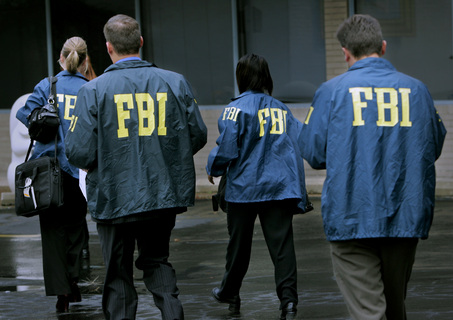
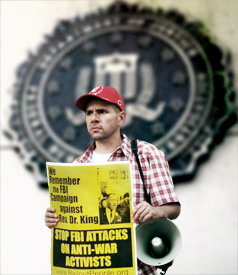
On many of our shows, we’ve discussed the broad over reaching powers and underhanded tactics the FBI use when targeting environmental or pro-Palestine activists, Mosques and Muslim-Americans. Now, new expanded FBI guidelines would allow agents easier access to search commercial or law enforcement databases, conduct lie detector tests, search people’s trash and conduct physical surveillance. Read: Anything Goes: The New FBI Guidelines
Though the guidelines are still under review, they would allow agents further access into people’s lives without suspicion of wrongdoing. The guidelines will be part of a new edition of the FBI manual, the Domestic Investigations and Operations Guide. Civil libertarians criticize the guidelines in light of recent cases such as the Fort Dix Five, the Newburgh Four and Yassin Aref in Albany, where the FBI is accused of entrapping people by infiltrating poor or specific ethnic and religious communities. Michael Ratner’s Forthcoming Book: Hell No, Your Right To Dissent
Attorney Mike German:
- The government is saying they have unfettered authority to look into your private life without any justification, and they’re claiming they don’t need any factual basis to suspect you of wrongdoing.
- National Security Letters were initially a tool to go after KGB spies, it was expanded to international terrorists. What the Patriot Act did is expand it to anyone who’s relevant to an investigation of spies or terrorists.
- The fact that the government had no reason to suspect you was no longer relevant if they could use this tool.
- That was originally set to sunset in 2005. Inspector General audit on the FBI’s use of this tool. There were five IG reports, that found the FBI were using these tools against people two or three times removed from the person of the investigation.
- Phone records, bank records, credit history and they gag the bank or place from telling you.
- IG audit found between 2003 and 2006 there were over 200 thousand National Security Letters.
- Its the FBI manual, the Domestic Investigations and Operations Guide, the FBI’s internal policy. Their internal authority created by the Department of Justice.
- These were initially designed to curb the abuse. As an FBI agent for 16 years, I found it useful to focus on the people doing bad things, not straying from that and focusing on people saying things I didn’t like, or doing things I didn’t think were right but wasn’t illegal.
- The outgoing administration in 2008 had radically altered the guidelines. People who are completely innocent and not suspected of doing anything wrong can come under suspicion and investigation under these assessments.
- The 2008 guidelines allowed the FBI to map communities based on race and ethnicity and track racial and ethnic behavior and facilities.
- Under these new guidelines 2011, an FBI agent would be allowed to search private databases, data aggregaters, that pull together all sorts of information based on marketing, state and local law enforcement information – includes if you’ve also been a victim of crime or witness to a criminal act. No factual predicate required.
- It doesn’t require attorney general approval to open an assessment. There’s no necessity to identify what federal crime they think you’re violating.
- The tools include physical surveillance, they can stand outside your house, follow you around 24/7. They can get an informant to start engaging you in a false pretense, and your friends or neighbors.
- They can interview your neighbors, they can interview your employer.
- When you become a subject of investigation you get on the terrorist watch list.
- The scary thing the Inspector General revealed, is that these (abuses) were all under the 2002 guidelines. He said where he found violations, under the 2008, this would all be perfectly legitimate.
- We at the ACLU are not just seeing the abuse with the FBI but within state and local law enforcement. You can visit www.aclu.org/spyfiles we’ve documented spying and obstruction of first amendment activity in 31 states and the District of Columbia.
- It was predictable because these laws were put in place to prevent exactly that, because that’s what the state and local police and the FBI were doing in the absence of rules.
- It’s not surprising when you take those rules away, they go into political spying mode.
- It’s very frustrating, because so much of what’s happening is happening is secret.
- Scott Crow: He found under a FOIA request, the FBI had gone to the IRS to find some small tax violation that they could put him in jail for. Because they suspected him of something, yet they had years of investigation and found no wrong doing.
- Mike German’s book – Thinking Like A Terrorist, it’s a look at what terrorists are trying to accomplish, that is to coerce the government into taking measures that actually take away the government’s legitimacy.
- Past Law and Disorder interview with Attorney Mike German.
Guest – ACLU attorney and former FBI agent, Mike German, German develops policy positions and proactive strategies on pending legislation and executive branch actions concerning domestic surveillance, data mining, freedom to travel, medical and financial privacy, national ID cards, whistleblower protection, military commissions and law enforcement conduct. German currently serves as an adjunct professor for Law Enforcement and Terrorism at the National Defense University and is a Senior Fellow with GlobalSecurity.org. German graduated from the Northwestern University Law School , and graduated cum laude from Wake Forest University with a B.A. in Philosophy. A sixteen-year veteran of federal law enforcement, German served as a special agent with the Federal Bureau of Investigation, where he specialized in domestic terrorism and covert operations. As an undercover agent, German twice infiltrated extremist groups using constitutionally sound law enforcement techniques. These operations successfully prevented terrorist attacks by winning criminal convictions against terrorists.
——————————————————————–