Civil Liberties, Criminalizing Dissent, Guantanamo, Habeas Corpus, Human Rights
Podcast: Play in new window | Download
Updates:
——-
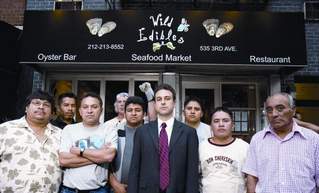
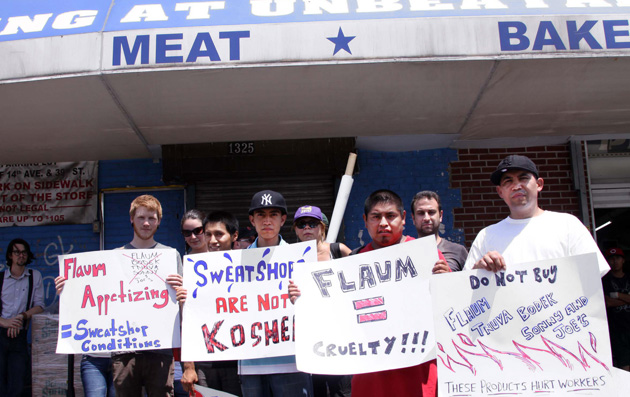
Brandworkers Defeats Anti-Speech Legal Action from the Flaum Appetizing Corp.
Workers of the Campaign for Justice at Flaum Appetizing Corporation stand up. Immigrants for Mexico and Ecuador challenged sweatshop conditions at a New York City processor and distributor of kosher foods. The workers used innovative legal advocacy and organizing tools to win justice at the company. The company Flaum Appetizing illegally withheld hundreds of thousands of dollars in compensation owed to the workers and used anti-immigrant retailiation when workers stood up for their rights.
Attorney Daniel Gross:
- Brandworkers work on a joint campaign called Focus on the Food Chain.
- Much of the food that we consume at markets and restaurants is distributed by a corridor of sweatshops that line southern Queens and northern Brooklyn.
- Overtime is hardly ever paid, no retirement benefits, no health care, extreme discrimination, extremely heavy work without appropriate health and safety standards.
- The company owes them 260 thousand in this labor board case after a full trial.
- The employer had the chance to make their case, call their witnesses, they lost. That order has been enforced, but Flaum is still resisting. They’re resisting for one reason. Immigration.
- We’ve had members there at Flaum, no question where they’re from, say no to abuse, say no to conditions where Latino workers are called cockroaches.
- It’s despicable, we need to put all our energy and all our heart into opposing this type of discrimination.
- Brandworkers: We’re very pleased to report we stared down their Taft-Hartley charges at the board.
- December 8th, 2010 at the Labor Board of Brooklyn / 2 Metro Tech Center / Brooklyn, NY /
- Focus On The Food Chain / Facebook
Guest – Daniel Gross, attorney, co-founder and executive director of Brandworkers International, a non-profit organization protecting and advancing the rights of retail and food employees.
—
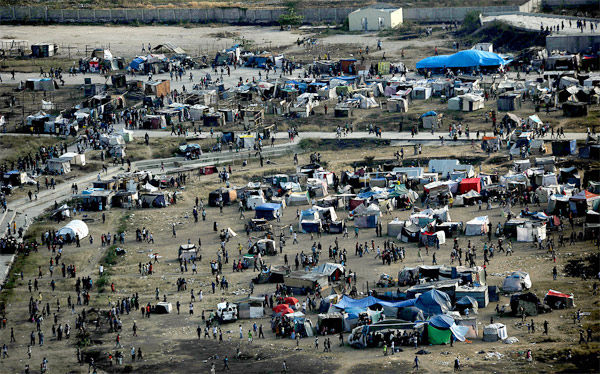
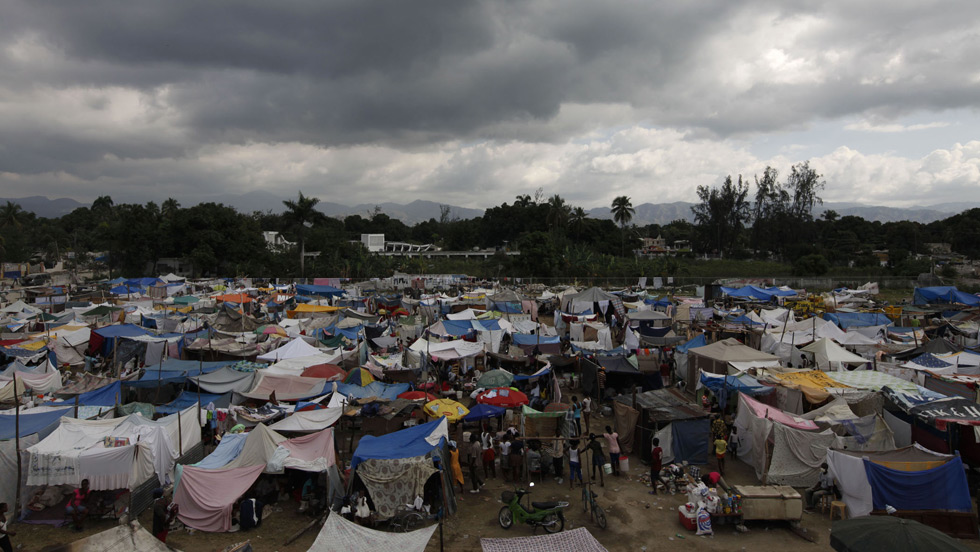
Human Rights Groups File Legal Petition on Sexual Violence Against Women and Girls in Camps for Displaced in Haiti
It’s been almost a year since Haiti’s catastrophic earthquake took the lives of nearly 200 thousand people and left 1.5 million homeless. Now, women and girls living in the camps have lived in fear of the constant threat of rape and violence.
Groups of attorneys and advocates for displaced women in Haiti are calling for urgent action to confront an epidemic of sexual violence in the camps. On-the-ground investigations have revealed a shocking pattern of rape, beatings and threats against the lives of Haitan women and girls. A petition submitted by the groups to the the Inter-American Commission on Human Rights calls for the IACHR to require the Haitian government to take action such as installing lighting in the camps and provide housing.
Bill Quigley, Legal Director of the Center for Constitutional Rights, said “The ultimate solution here is permanent, safe housing for Haitians. Unfortunately, the international community has reneged on its commitment to provide essential funds for rebuilding and the U.S., in particular, has not delivered even one cent of the reconstruction funding it pledged. Women are being forced to live in extremely unsafe conditions for the foreseeable future and it is a deplorable failure on the part of those who made such a show about standing with the Haitian people in their greatest hour of need.”
Attorney Bill Quigley:
- I was in Haiti, and visited a number of the camps with some grass roots womens’ organizations.
- I really was shocked by how terrible things were there. Still over a million people who are homeless. They’re really not camps. Every park, every school yard, every backyard, every churchyard has people living in it. Over 1300 hundred of these camps.
- None of these camps have running water or electricity or proper sanitation or food availability.
- Women and children are much more vulnerable when chaos hits.
- In one community, tens of thousands line up in the morning and afternoon just to get water. If you go to the bathroom at night, you run a real risk of being assaulted or raped.
- The Institute for Justice and Democracy in Haiti.
- They don’t want the UN to be the security down there, by and large they’re considered occupiers by the people of Haiti.
- They’re preserving order but the order is that 90 percent of the people are disenfranchised.
- Somebody with a gun or machete is empowered when all you have for protection is a plastic sheet.
- A few people can terrorize thousands and thousands of folks. Every single day is a survival day.
- Only 2 percent of the rubble has been removed.
- You can’t depend only on volunteers. Volunteers can’t build hospitals.
- The legal action filed is asking to hold the United Nations and the international community in the way the aid is being spent that is not prioritizing the safety of women and girls.
- We included in that dozens of reports of kidnapping, starving and women having to sell themselves to survive.
- I’m not sure I could live that way for a month, less than a month. Toilet facilities used by thousands of people that’s far away to get to. Mario Joseph, Haitian human rights lawyer.
- Three sources of power in Haiti, the Haitian government, the US-UN and the NGO community.
- Five cents out of every dollar actually goes to the Haitian government. Bill Clinton has more power than anybody else in Haiti.
Guest – Bill Quigley, Legal Director for the Center for Constitutional Rights, a national legal and educational organization dedicated to advancing and defending the rights guaranteed by the United States Constitution and the Universal Declaration of Human Rights. Bill joined CCR on sabbatical from his position as law professor and Director of the Law Clinic and the Gillis Long Poverty Law Center at Loyola University New Orleans. He has been an active public interest lawyer since 1977.
———————————————————————————–
——
Civil Liberties, Criminalizing Dissent, FBI Intrusion, Human Rights, Surveillance, Targeting Muslims, Truth to Power
Podcast: Play in new window | Download
Updates:
Oklahoma:Voters Approve Sharia Law Ban
—
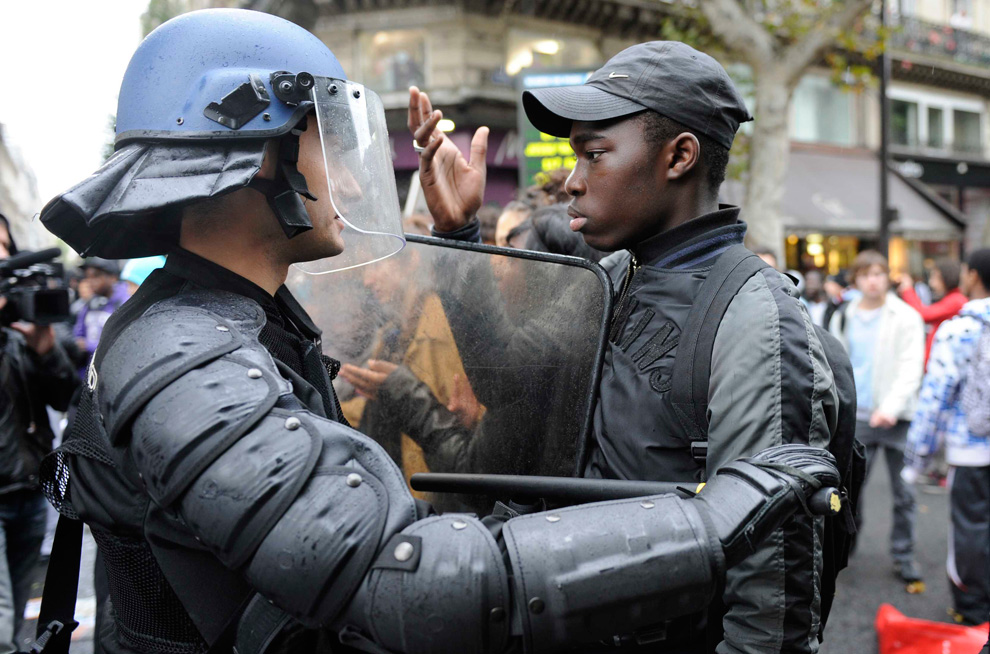
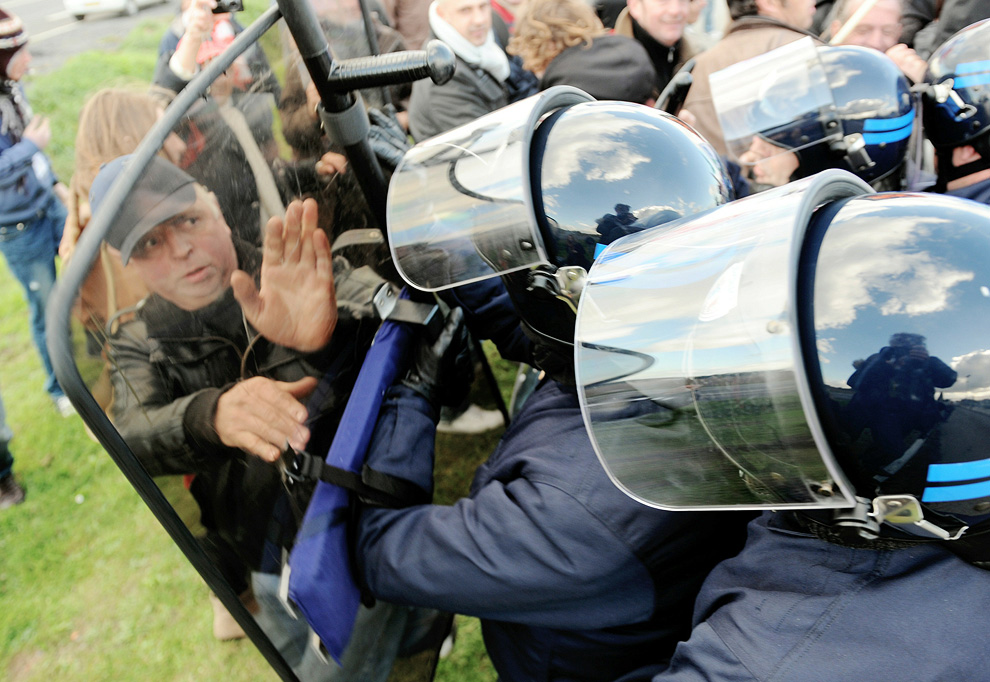
French Labor Activism, US Labor Passivism
In the United States, unemployment rose from its level in 2008 (5.8 %) to its level in the second quarter of 2010 (9.7 %). These are numbers never seen before. However, by comparison, French unemployment rose from 7.4 % in 2008 to 9.2 % in the second quarter of 2010. This data from the Bureau of Labor Statistics show unemployment had risen further and faster in the US than in France across in the last 3 years. This is found in Economics Professor Rick Wolff’s article French Labor Activism, US Labor Passivism.
Yet French workers are in the streets by the millions demonstration against anti-worker “austerity policies.” Government policies that could cut workers payroll or the services that are provided to the public. Meanwhile US workers are taking it sitting down, there’s no resistance. In California, there’s now a 22 percent unemployment and it takes the average unemployed American about 35 weeks to find a job. US states and towns cut payrolls and public services and as President Obama’s special commission gets ready to reduce social security benefits to the American people. Consider that in September 2010, according to the BLS, while the total US private sector added 64,000 jobs, state and local governments fired 77,000 people.
Rick Wolff:
- This is a tsunami of a political movement. All the six different organizations of trade unions have unified in organizing and moving these demonstrations. They haven’t unified on anything for a long time. They’ve drawn in students.
- Sarkozy almost in a way provoked the students to join the demonstrations in huge numbers.
- The students quickly understood that if the older workers stayed in their jobs an extra 2 years, those are jobs they’re not going to get. 70 percent of the French people support demonstrations. What we see now is a minority government, isolated, entrenched.
- If you want to see a movement that is doing something, mobilizing mass opinion, you got it.
- If you read what the French are saying, it’s this. We’ve already paid for the crisis, with unemployment, lost homes, insecure jobs.
- We’ve done our part, we’ve accepted that. We’ve drawn our line in the sand. We’re not gonna pay for fixing this mess from which have suffered. Why is this relevant? It is exactly like the United States.
- The atrophy of left here is much more palpable, then what happened there. We’ve had a much worse decline of our trade union movement then they did.
- We have to create anew the organizations that could bring people together into an effective coalition. The last thing we need is 800 single issued groups, cultivating its own garden and not talking to the other.
Guest-Richard D. Wolff, Professor of Economics Emeritus, University of Massachusetts, Amherst where he taught economics from 1973 to 2008. He is currently a Visiting Professor in the Graduate Program in International Affairs of the New School University, New York City. He also teaches classes regularly at the Brecht Forum in Manhattan.
—
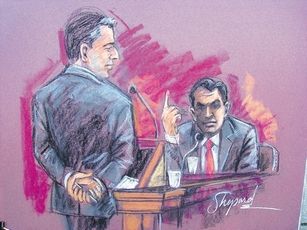
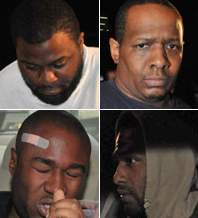
Entrapment and Conviction of the Newburgh Four
Last week, the four men accused of planting bombs outside synagogues in the Bronx and plotting to fire missiles at military planes were convicted in a case that was the test of the entrapment defense. The jury of the Newburgh 4 trial convicted James Cromitie, David Williams, Onta Williams and Laguerre Payen of plotting to bomb synagogues and shoot military planes. Cromitie and David Williams were also convicted of conspiring to kill officers and employees of the government. Sentencing is scheduled for March. The four face life sentences.
It wasn’t difficult for Shahed Hussain, a government agent provocateur who was facing incarceration, to offer food, money, marijuana, cars and vacations to the four men and ultimately coercing them to collaborate on so-called “terror plots.”
According to a press release by Project Salam (Support And Legal Advocacy for Muslims) The defendants had absolutely no intention to commit any terrorist crimes until the FBI agent provocateur, Shahed Hussain, promised them each $5,000––and in one case $250,000––if they did his bidding. He posed as a rich man who could give the defendants everything they’d ever wanted. He chose the targets, he told them how it would all work, and the FBI paid for everything. The four defendants were petty criminals, none of whom had a car or even a driver’s license. When the so-called leader, James Cromitie, decided to back away from Hussain’s scheme and refused to answer his calls for about a month, Hussain said, “Brother, I told you you could have $250,000, but you don’t want it.” Cromitie’s response: “OK, I’m in.”
Attorney Steve Downs:
- We were really surprised, we thought the edge had been reached here. They (Newburgh Four) were convicted of participating in this plot that had been cooked up, manufactured by the FBI
- These are four individuals who had no way to undertake any kind of terrorist plot. They had no automobile, no driver’s license, no money, no training, they had nothing. The FBI simply provided everything, including driving them to a spot where all they had to do is deliver a package, outside of building to complete this crime which the FBI concocted. There’s no other way to look at it.
- There is the pre-disposition idea and that comes from the ready-response argument. That has simply been misused.
- Example: Would like a loan of 5 thousand dollars, or a gift of 5 thousand dollars? Then only afterward you find out this “gift” has to do with money laundering.
- In the meantime, the person is being asked to make a ready-response. In the Newburgh case, Shahed Hussien, the informant, suggested an illegal plot. The main person he was working on James Crominic, essentially backed out of it.
- There’s a six week period that James didn’t correspond with the government at all. Then finally, Shahed called and said look you’ve got 250 thousand dollars here if you go through with this.
- These people had been somewhat exposed to Islam in prison, but didn’t know much about the religion.
- One of them had a crack-cocaine problem, another had mental problems, very serious mental problems.
- You could’ve gone to any place in upstate New York and found somebody who would grab at a deal like this.
- It was a lot of money for potentially very little activity.
- The building that was going to blow up would be unoccupied, the plane was on the ground without people in it.
- They were paid to make a political statement and not to kill anybody.
- These things are very very cleverly crafted by the FBI.
- Because people don’t know much about Islam, the government is free to play upon stereotypes and fears that people have.
Guest – Attorney Steve Downs, retired chief attorney with the New York Commission on Judicial Conduct, is a founder of Project SALAM (Support and Legal Advocacy for Muslims).
———————————————
Afghanistan War, Civil Liberties, Criminalizing Dissent, Habeas Corpus, Human Rights, Surveillance, Targeting Muslims, Torture, Truth to Power
Podcast: Play in new window | Download
Updates:
——

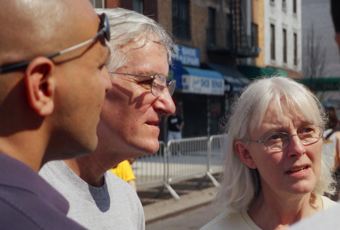
Rachel Corrie Lawsuit In Israel
Rachel Corrie, an American student activist and human rights defender from Olympia, Washington, was crushed to death on March 16, 2003, by a Caterpillar D9R bulldozer while nonviolently protesting Palestinian home demolitions with fellow members of the International Solidarity Movement.
The first phase of the trail began in March 2010, when the Corrie family presented its witnesses, including several of Rachel’s colleagues from ISM who witnessed her killing. During the second phase of the trial, which began last month, the government presented several witnesses, including the Israeli military police investigator who headed the investigation into Rachel’s death, and the bulldozer operators who struck and killed her.
The lawsuit charges that Rachel’s killing was intentional. It also charges that the Israeli government was negligent for allowing Israeli soldiers and military commanders to act recklessly using an armored military bulldozer without regard to the presence of unarmed, nonviolent civilians in Rafah, Gaza Strip. Lastly the lawsuit alleges that the Israeli military failed to take appropriate and necessary measures to protect Rachel’s life, in violation of obligations under Israeli and international law.
Katherine Gallagher:
- Rachel had been serving as a peace activist with the Palestinian International Solidarity Movement.
- The case is unfortunately taking quite a while, it was filed back in 2005, then the evidentiary phase opened in 2010. At that point the Corrie’s were able to call their own witnesses. They also called an expert who could speak about how to conduct a proper investigation.
- The investigator testimony revealed huge errors in the way the investigation was carried out.
- Errors include: The bulldozer was removed from the scene of the killing. There were investigators in the case who never went to the scene of the crime.
- On October 7, right before testimony, it was permitted that soldiers involved in the incident be allowed to testify behind a screen.
- This is an extraordinary step, the family if unable to see those soldiers who are able to provide some answers even through their body language as they testify.
- For the Corries who have waited 7 and a half years for some answers, that they won’t be able to assess the credibility by his body language is a significant blow.
- When you say the name Rachel Corrie in Israel, people know who she is.
- CCR Lawsuit: Caterpillar had aided and abetted war crimes and other serious violations of international law.
- It struck how Jerusalem has changed. There’s been a massive amount of construction in the old city and particularly around East Jerusalem.
Guest – Katherine Gallagher, Senior Staff Attorney at the Center for Constitutional Rights, where she focuses on holding individuals, including US and foreign government officials, and corporations, including private military contractors, accountable for serious human rights violations. Among the cases she is working on are Arar v. Ashcroft, Matar v. Dichter, Saleh v. Titan and Estate of Atban v. Blackwater.
——
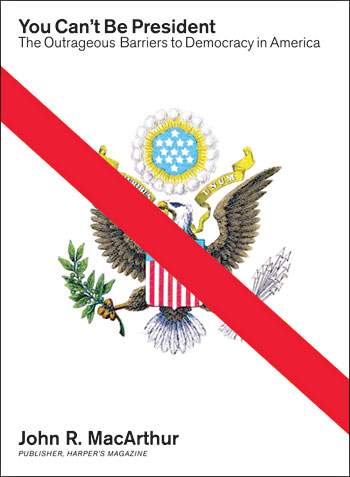
You Can’t Be President: The Outrageous Barriers to Democracy in America
John Rick MacArthur is the president and publisher of Harper’s Magazine. He’s an award winning journalist and author. We want to talk with Rick about his third book titled You Can’t Be President: The Outrageous Barriers to Democracy in America and explore the topic of who finances the Republican and Democratic parties. A recent book review states, that it (quote) advances a familiar argument: that moneyed and privileged interests, rather than the needs and opinions of ordinary citizens, dominate contemporary American politics. MacArthur, begins by lamenting the lack of basic comprehension of the Constitution and American government on the part of the political and media elite. The book also criticizes Barack Obama and Hillary Clinton.
Rick MacArthur:
- There are two balance sheets, there’s one with regard to the people of the United States and the other which I talk about in You Can’t Be President is the internal party structure.
- The balance sheet for the people is bad, we are now enmeshed even more in a self destructive war if possible than Iraq was. Afghanistan is a disaster and you don’t have to ask a peacenik.
- You have a fake health care reform which really reinforced the power of the insurance companies.
- You have a very feeble reform of Wall Street. You have a continuation of anti-labor,orthodox “free trade” policies. You have the continued corruption of the lobby system in Washington.
- Coming from Chicago, if Obama attacked the lobby system it would be like committing political suicide.
- Obama broke every record in corporate fund raising, PAC fund raising. He raised money from Jack Abramoff’s old law firm.
- In sum, he’s (Obama) has been an anti-reformer, anti-progressive.
- On civil liberties, if you criticize Bush it’s great, if you criticize Obama, you can hear a pin drop.
- I met someone who did a tour of the new prison in Baghram, Afghanistan. He said it was terrifying.
- You have to understand that the Chicago machine, is the most powerful local machine in the country.
- Almost every important job in the county is held by a Democrat. The mayor of Chicago is very much like the dictator of Chicago. Obama came out of the most intolerant, the most monopolistic, one sided political machine in the country.
- Murdoch’s bundled campaign contributions were 50/50 between Clinton and Obama.
- I don’t see why we can’t organize around an opposition candidate, raise some money.
- I think what you’re seeing is disillusionment among the party leadership with Obama, because he hasn’t delivered the goods.
- They wanted Obama to deliver the 2016 Olympics to Chicago.
- Obama is a tremendously prudent and cautious politician, there’s no audacity at all.
Guest – John Rick MacArthur, an American journalist and author of books about US politics. He is the president of Harper’s Magazine. MacArthur has been a reporter for The Wall Street Journal (1977), the Washington Star (1978), The Bergen Record (1978–1979), Chicago Sun-Times (1979–1982), and an assistant foreign editor at United Press International (1982).
Civil Liberties, Criminalizing Dissent, Extraordinary Rendition, FBI Intrusion, Habeas Corpus, Human Rights, Military Tribunal, Supreme Court, Surveillance, Targeting Muslims, Torture
Podcast: Play in new window | Download
Updates:
- Anwar Al-Aulaqi Case – Drones Targeting US Citizens – Obama Wants To Dismiss CCR/ACLU Case
- CCR Guantanamo So Called Suicide Cases
- Supreme Court Will Not Review Case On Feds Wiretapping Guantanamo Lawyers
- Bombing of the USS Cole – Could Prosecutors Use The Fruit From the Poisonous Tree?
—-
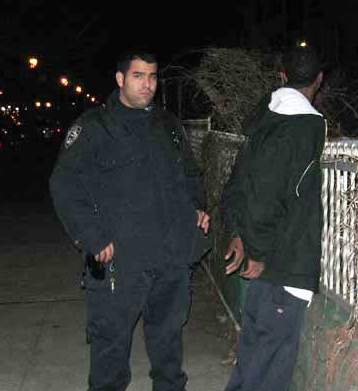
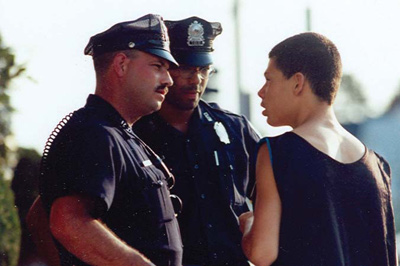
NYC NLG Street Law and Racial Profiling Program
Today we’re joined by Paula Segal and Gabriela Lopez with the New York City Lawyers Guild Street Law Clinic Program. The project sends groups of attorneys to conduct “Street Law” workshops with a range of students in high school. We’re also joined by students from the Aarturo A. Schomburg Satellite Academy High School who were part of the street law classes.
Street Law Students:
- In my neighborhood it’s really common for the Police to bother you for no reason. I don’t think they had the right to go into my pockets unless they had reasonable suspicion. This happens at least 3 times a week.
- One time they took me into the precinct, took my picture, ran my fingerprints.
- I was getting off the train and these two big police men were getting off the train and they stopped me. They said we have her on the walkie-talkie. This women said take off your sneakers. She kept asking, where is it? Where is it? That’s when she started to get physical and she lifted up my shirt. “If you don’t f-in’ tell me where it’s at, I’m going to strip search you. It happened on Elder Avenue, next to the 6 train.
- They say no, we’re not going to touch you, then he throws me on the car.
- You guys are unfolding my socks right now, and I don’t like this. There’s a certain way that I fold my socks.
- After they find nothing, they say you should change your attitude. I said, you should change your attitude.
- A lot of cops judge character, when I see cops, you have to give them an expression. Hey look I’m out here, I’m not tryin to get in that car.
- I’m thinking about the cops catching the real villans. If you’re really guilty you’re going to get hassled, if you’re not guilty,then you can be free. The advice I get from the street law project is not consenting to the search.
- From my knowledge, the cops need a certain amount of arrests at the end of the month, so they’ll pick on anybody. They curse a lot. Undercover cops, they’ll probably have on a hoodie, try to fit in with everybody else, it just don’t work.
- Law Student Paula Segal: We focus on giving people tools to walk away, to avoid arrest.
- Law Student, Street Law Coordinator Gabriella Lopez: Last year we went to more than sixty different sites. Sixty to Seventy different trainings that occured last year.
- Email the Street Law Team – streetlawteam@gmail.com
Guests – Paula Segal and Gabriela Lopez with the New York City Lawyers Guild Street Law Clinic Program. Aarturo A. Schomburg Satellite Academy High School Students: Charisma Whaley / Joseph Campbell / Kiara Avila / Stephanie Colon / Jonathan Jeffries.
—-
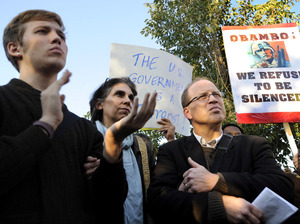
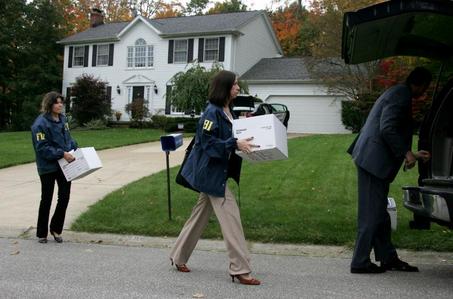
Grand Juries Historically and the Minneapolis / Chicago FBI Raids
A total of 12 people were served with subpoenas during last months FBI raids in Minneapolis and Chicago. The FBI targeted anti-war peace activists and key organizers of demonstrations and marches who have been asked to appear before a grand jury. What is a grand jury? Historically, a grand jury was supposed to be citizens coming together to determine if charges should be filed criminally against someone. Today, it’s very different. It’s mostly a rubber stamp for what the prosecutors want. If you refuse to testify at a grand jury, you can be taken to a judge to answer questions. If you refuse to answer those questions you could be put in jail.
Margaret Ratner-Kunstler:
- If you were subpoenaed before a grand jury in 1968 and you asserted your grand jury right, then that really was the end of your participation in the grand jury.
- You asserted immunity and if you we’re given immunity, you couldn’t be indicted.
- Immunity: Nothing you say could be used against you, but anything you testified about could not be the subject of a criminal indictment against you. Your words could not be held against you, or the fruits of those words. But it’s so easy to get around that, by a prosecutor saying, this didn’t come from this.
- If you then refused to testify given this minor immunity, you could be subject to imprisonment.
- If you refuse to testify you’re brought back before the judge and the judge then holds you in “civil contempt.”
- The grand jury is usually about 18 months. The grand jury in Chicago is a special grand jury which means it’s twice as long.
- That’s important because if you’re held in civil contempt, the keys to the jail are in your pocket. You’re in jail for as long as you refuse to testify.
- If you say something you could wave your fifth amendment right by already saying something.
- The recent FBI raids represents the tremendous see-change we have in terms of the ability for people to actively oppose this government’s policy.
- In 1983, there were many groups in this country who were joining forces with progressive groups in Central America. You had the Committee in Solidarity With the People Of El Salvador.
- Each of the 11 individual persons subpeoned wrote letters to the Attorney General saying that they would assert their fifth amendment right and that they would not testify.
- If they can’t get you on a federal charge it’s often that they’re looking for a mistake you made in conversation, even an informal conversation with a federal official.
Guest – Magaret Ratner-Kunstler, an attorney in private practice. As education director at the Center for Constitutional Rights, she originated the Movement Support Network and authored “If an Agent Knocks.” Kunstler is the President of the William Moses Kunstler Fund for Racial Justice, a foundation established in 1995 in the memory of her late husband to combat racism in the criminal justice system.
———————
CIA Sponsored Terror, Civil Liberties, Criminalizing Dissent, FBI Intrusion, Gaza, Green Scare, Human Rights, Prison Industry, Surveillance, Truth to Power, Uncategorized
Podcast: Play in new window | Download
Lawyers You’ll Like Series: Mara Verheyden Hilliard Part II
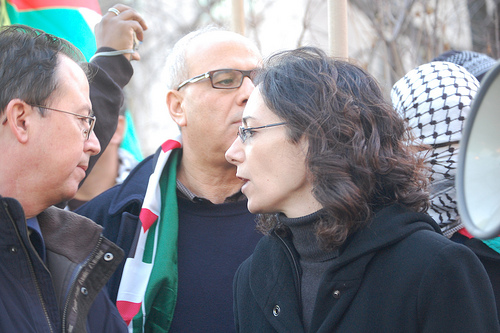
Today we’re joined by attorney Mara Verheyden Hilliard co-founder of The Partnership for Civil Justice Legal Defense & Education Fund in the second part of our Lawyers You’ll Like series. Mara and her partner Carl Messineo have worked to defend and advance fundamental civil, constitutional and human rights secured by the U.S. Constitution and under law. We talk about her work, and criminalizing dissent, surveillance, data mining, and FBI harassment. A lot of Mara’s work is at the intersection of first and fourth amendment rights, such as the assault on free speech, assembly and misuse of datamining tools. The Partnership for Civil Justice has many victories, and recently a settlement was reached in a class action lawsuit about the illegality of the arrests of approximately 700 protesters and other persons on Saturday, April 15, 2000 in Washington, D.C.
Attorney Mara Verheyden-Hilliard:
- I co-founded the Partnership for Civil Justice in 1994 with Carl Messenio. We decided we wanted to do this work specifically, Constitutional rights, civic justice, public interest litigation.
- We began this work right after we left law school. We undertook some of the longest running protest cases that we had, in particular, the recently settled class action from the April 2000 mass arrests.
- I grew up in Washington DC and I spent my childhood going to civil rights demonstrations, anti-war demonstrations, having our house filled demonstrators. Both of my parents are deeply political people who care very much about civil rights, liberation struggles and womens’ rights.
- The core of the work we do we recognize as the underlying social justice movement.
- The municipalities, the governments, they want these cases to go on as long as possible, they want to fight a war of attrition, because they want plaintiffs to feel they have to take toothless settlements.
- The fact is the law has changed in DC, we’ve changed the way police operate. They can’t use these tactics, these tactics we took apart piece by piece have been removed from the arsenal of the police department in DC.
- The DC police can’t use the trap and detain tactic, they can’t hold people, they have to release them within 4 hours now. They can’t use the wrist to ankle handcuff mechanism against people anymore.
- Police need to have their badges plainly available and visible, they can’t come out in riot gear to first amendment assemblies. Now we’re seeing this effort (FBI) against solidarity activists with the raids and subpoenas. I think it is outrageous, and baseless for the government to be coming in and targeting people for solidarity work.
- It’s also reflective of the huge security apparatus that was put in place under Bush and is being accelerated under Obama. Those beliefs, that hope, that thought, that you can change the direction of the country that you live in, is absolutely true.
- All you gotta do is look at the past history of the United States, all 150 years.
- Recognize that it’s no fault to hope and to think that an elected official is going to do it, but historically the elected official has never been the one to do it.
Guest – Constitutional Rights Attorney Mara Verheyden Hilliard co-founder of The Partnership for Civil Justice Legal Defense & Education Fund. Mara Verheyden-Hilliard is an activist, Constitutional Rights attorney, and the cofounder of the Partnership for Civil Justice. She is also co-chair of the National Lawyers Guild Mass Defense Committee.
——


United States Plays Down UN Report on the Gaza Flotilla Attack
A United Nations fact finding mission into the May 31, 2010 Israeli lethal attacks of ships traveling to Gaza, has reported that Israeli forces violated international law, “including international humanitarian and human rights law.” Eight Turkish activists and one Turkish-American were killed in the raid on board the ships attempting to break the Gaza blockade. The UN Human Rights Council’s investigation judged Israel’s naval blockade of the Palestinian territory to be “unlawful” because there was a humanitarian crisis in Gaza at the time. However, the United States criticized what it termed as the report’s “unbalanced language, tone and conclusions.”
The Center for Constitutional Rights, the Free Gaza Movement and the National Lawyers Guild responded to the report and the comments made by the United States at the Council
“Unfortunately, the United States used the opportunity of the Human Right Council’s discussion on the flotilla fact-finding mission’s report to promote its political agenda instead of engaging on the issue of legal accountability for Israel’s illegal blockade of Gaza and the unlawful attack on the Gaza flotilla,” said CCR attorney Katherine Gallagher. “The U.S. must recognize that there can be no peace without justice, and that until it supports accountability for violations of international law–even when violations committed by Israel – instead of a culture of impunity, it lacks the legitimacy necessary to serve as a broker of peace.”
Attorney Katherine Gallagher:
- There were 6 civilian ships and their goal was to both bring humanitarian aid to Gaza which has been under a Naval blockade by Israel for the last 4 years as well as to challenge the legality.
- The United Nations back in June 2010 set up a fact finding mission. The 3 commissioners traveled to London, to Geneva, Istanbul and Jordan to interview passengers. They met with legal experts and others to analyze the evidence they heard.
- The UN fact finding report was submitted last week, 56 detailed pages of what precisely happened that night on those ships on the night of May 31. It was concluded that the blockade is illegal under international law. It found that the 6 ships traveling to Gaza to break the blockade presented no imminent threat to the Israelis.
- The 3 commissioners have experience in international law matters. One had been a judge on the international criminal court. Their conclusions are grounded in law and not political conclusions. They were peaceful protesters preparing for an attack on the ship.
- It’s hard to see what they find as unbalanced. I think the report is carefully written, it’s cautiously written beginning with an analysis of its own mandate. Turkey very much welcomed the report.
- The bulk of the passengers were detained in Israel, at detention sites that had already been established.
- Confiscated property consists of cameras, computer chips, video equipment. It contains electronic equipment that provides first hand evidence of the flotilla passengers activities and then the attack on the ship.
- In the past 4 months Israel has been in possession of that material.
Guest – Katherine Gallagher, Senior Staff Attorney at the Center for Constitutional Rights, where she focuses on holding individuals, including US and foreign government officials, and corporations, including private military contractors, accountable for serious human rights violations. Among the cases she is working on are Arar v. Ashcroft, Matar v. Dichter, Saleh v. Titan and Estate of Atban v. Blackwater.
———
Post Coup Honduran Human Rights Crisis
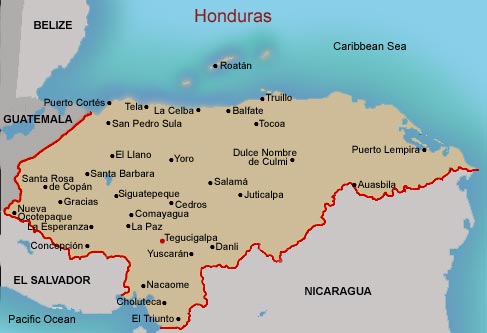
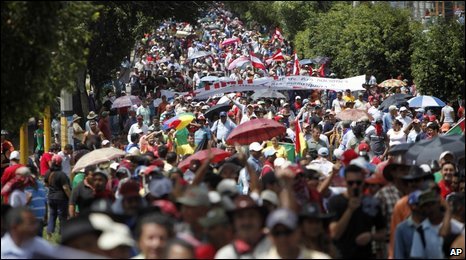
A human rights crisis continues to get worse in Honduras, more than a year after the June 28, 2009 military coup. People on the front lines that oppose the regime installed after the coup are beaten and illegally detained by the state. Nectali Rodezno, Co-Coordinator of National Front of Lawyers in Resistance Against the Coup in Honduras is among the lawyers dircectly involved in defending those are being abused and whose lives are on the line everyday. To inform people about the ongoing crisis in Honduras, there will be a speaking tour this fall called JUSTICE IN HONDURAS: Witness for Peace Mid-Atlantic Fall Speakers Tour will be November 1 – 22.
Attorney Pam Spees:
- From that moment on you began to see alot of repressive tactics immediately after the coup.
- Immediately, leaders of that resistance were being targeted. There were several key people who were killed in aftermath of the coup. Walter Trochez was a key LGBT activist who was targeted and killed in a very brutal way. You also saw the targeting of labor leaders. The killing continue even in this new de facto administration.
- In March you saw the targeting of journalists. In that month alone, 8 journalists were killed.
- The Honduran judiciary were taking certain steps before the coup to help undermine Zelaya and what he was doing. We’re still learning about how much of this was driven by official US policy.
- Before the coup we had the financial crisis in the US that was effecting food security which was making it difficult everywhere. Zelaya was trying to buffer the Hondurans against this. One of the things he did was raise the minimum wage. He raised it and tied it to the food index.
- The Bolivarian Alliance for the Peoples of Our America
- On June 28, the Honduran resistance has set up its own truth commission, The Alternative Truth Commission. The International Criminal Court is an actor and could investigate and potentially prosecute some of these acts.
- In the US we have the Alien Tort Statute. It’s a very old law that allows non-citizens to bring suit in US courts for violations of international law.
- The courage show by all sectors of this resistance is just incredible. www.resistenciahonduras.net
Guest – Pam Spees, senior staff attorney in the international human rights program at the Center for Constitutional Rights. She has a background in international criminal and human rights law with a gender focus, as well as criminal trial practice.
———————————————————————-
Criminalizing Dissent, Death Penalty, FBI Intrusion, Green Scare, Human Rights, Prison Industry, Supreme Court, Surveillance, Truth to Power
Podcast: Play in new window | Download
Updates:
———-

Nationally Coordinated FBI Raids Minnesota/Chicago
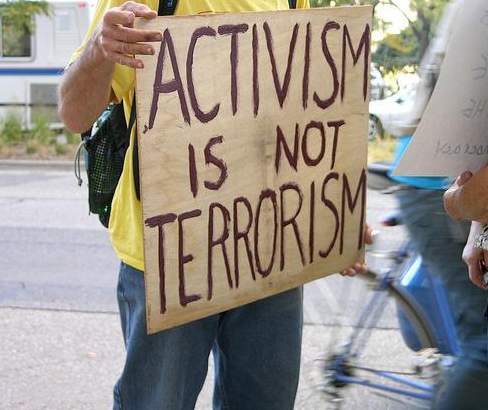
Last week the FBI raided six homes in Minneapolis and two in Chicago allegedly searching for links to terrorism. The Minneapolis raids targeted anti-war activists among them, Jessica Sundin, and Mick Kelly. They were key organizers of the big march on the first day of the RNC in 2008. In one Minneapolis home, FBI agents arrived with warrants, searched every room, attic and basement, looking through CDs DVDs, books, and photos. Passports, travel and phone records were among items seized from the homes. The FBI issued subpoenas for the peace activists to appear before a Grand Jury in Chicago on October 12. FBI’s search warrants indicate agents were looking for connections between local antiwar activists and groups in Colombia and the Middle East. NLG HOTLINE – 888-654-3265
Jim Fennerty:
- We’re putting a group of lawyers together from the National Lawyers Guild. We’re speaking to our clients right now about what a grand jury is, how it functions, and they have a right to refuse to testify at a grand jury or not. A total of 12 people were served with subpoenas.
- Humanitarian Law Project decision emboldens the government to push the envelope and see what they can get away with. I have not been told that anyone is a target, and we’re concerned about what that means.
- Technically the Attorney General’s office is not suppose to issue a subpoena to a target unless they get a higher authority to do that. Historically a grand jury was supposed to be citizens coming together to determine if charges should be filed criminally against somebody.
- Now it’s pretty much a rubber stamp for what the prosecutors want. People should be very concerned about going there, because what you say can be twisted around.
- Most cases, people can say they don’t want to testify at a grand jury, they’re going to exercise their fifth amendment rights against incrimination. However, if they offer you immunity and you refuse to testify, you can be taken to a judge, they’ll read the questions to the judge, and ask you to answer them.
- If you refuse to answer them then a judge can hold you in civil contempt and you can be incarcerated for the length of the remaining time of the grand jury. The government is not showing us all their cards, we don’t know where they’re going with this.
- Regarding activism: I’ve seen some unity here I’ve never seen before in my life, where groups that don’t get along, are now rallying around them.
- Do not speak to federal agent, do not lie to a federal agent. National Lawyers Guild Issues New Report on Policing of Protests
Guest – Attorney Jim Fennerty, attorney, activist and National Lawyers Guild member. Jim has been handling activist cases for 38 years.
——-

Death Penalty Cases -Virginia / Georgia / California
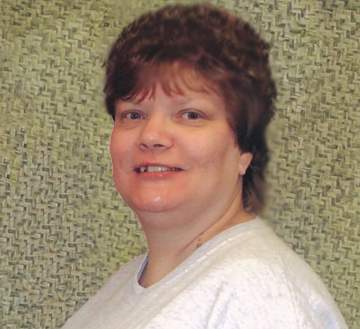
In late 2009, The American Law Institute which created the intellectual structure for the current capital justice system for nearly 50 years, essentially announced that its project has failed. The New York Times, in one article wrote the institute’s move represents a tectonic shift in legal theory. The article also points out that capital punishment was plagued by problems including racial disparities. We continue to see these types of problems in 3 recent death penalty cases in Virginia, Georgia and California. In Virginia, Teresa Lewis, a grandmother was the first woman to be executed in that state in nearly 100 years. Last week Teresa Lewis was given a lethal injection at 9PM in Greensville prison. Teresa was convicted of hiring two gunmen to shoot her husband and stepson to collect on their life insurance policy. Both gunmen were sentenced to life without parole. Attorneys argued that the court consider a key piece of evidence on Teresa’s behalf. That evidence was a letter from one of the gunmen who killed himself in jail in 2006, in which he claimed full responsibility for the murder plot and suggests he pushed Lewis into it. Lewis also had an IQ of 70.
Last week in a Georgia death penalty case, Brandon Joseph Rhode was found in his cell with his arms and neck slashed days before his scheduled execution by lethal injection. According to reports, his lawyers have pleaded clemency, arguing he suffered brain injury from alcoholism and because his mother took drugs during pregnancy. If executed, he will be the 25th person put to death by the state, the last one was in June. Rhode and an accomplice were sentenced to death for murdering an 11-year-old boy, his 15-year-old sister and their father during a botched robbery in 1998.
In California, a federal and state court judge refused death row inmate Albert Greenwood Brown’s request to block his scheduled execution. Brown and another death row inmate have filed a lawsuit challenging the state’s new lethal injection regulations,saying the procedures were improperly adopted. State procedures have since been revised after a federal judge halted the death penalty in California amid concern that it’s method lethal injection amounted to cruel and unusual punishment.
David Michaels:
- These are two horrible executions. Teresa Lewis had an IQ of 72. She was executed after Governor MacDonald refuse her clemency requests. The judge said she was the head of the serpent in this particular case and he decided horribly to have her executed.
- There’s no deterrent for people with the IQ of 72 or for someone with an IQ of 150. This murder happened in 1992, this execution happens in 2010.
- There are about 3 dozen states that have capital punishment laws. In California, one of the drugs they use for lethal injection has expired and they can’t get anymore.
- LINKS – NCADP / Death Penalty Information Service
Guest – Attorney David Seth Michaels. David has represented clients for 30 years, clients such as prison inmates in Mississippi and Tennessee. He’s worked with Brooklyn Legal Services B and with the Federal Defenders Service Appeals. He is also a novelist, has his own practice in New York. David Michaels’ Blog
—-


Circuit Court of Appeals Throws Out Nigerian Claims Against Shell Oil
It is now up to the Supreme Court to decide if corporations could be held liable in U.S. courts for violations of international human rights law. Recently, a U.S. Appeals Court dismissed a case against Royal Dutch Shell in which the oil company was accused of helping Nigerian authorities violently suppress protests against oil exploration in the 1990s. One judge on the three-member appeals court panel wrote a strong dissent of the majority opinion, calling it “a substantial blow to international law.” In a past interview with attorney Peter Weiss, Peter explained how a 1789 U.S. statute Alien Tort Claim was used to hold multinational corporations accountable for human rights crimes. The case was brought by families of seven Nigerians who were executed by a former military government for protesting Shell’s exploration and development.
Maria LaHood:
- This was a class action brought by the Ogoni people against Shell parent companies and Nigerian subsidiaries.
- They brought the case because Shell had been complicit with the military dictatorship in the nineties.
- They were detaining, torturing and killing people to oppress the grassroots opposition movement to Shell’s environmental degradation. Shell Oil is the US company.
- Basically, two judges went out of their way to find that corporations can’t be held liable for international human rights violations. The result is that corporations can profit from killing and torturing and can’t be required to compensate the victims.
- Hopefully this decision won’t stand. This is the first Circuit to rule like this.
- Unfortunately I think corporations are going to be submitting this decision in their own cases around the country. Hopefully, that won’t be successful. As it stands the decision applies to the Second Circuit, New York, Connecticut and Vermont.
- Even if this decision stands, the court left open and confirmed you can sue individuals. Even here we can sue CEOs and directors of corporations.
Guest – Attorney Maria LaHood has worked on the case Wiwa v. Royal Dutch/Shell, for the torture, detention and execution of Ken Saro-Wiwa and other human rights activists and protesters in Nigeria. Maria LaHood joined the Center for Constitutional Rights (CCR) in 2004. She specializes in international human rights litigation, seeking to hold government officials and corporations accountable for torture, extrajudicial killings, and war crimes abroad.
————————————————————————————————-