CIA Sponsored Terror, Civil Liberties, Gaza, Habeas Corpus, Human Rights, NSA Spying, Surveillance, Targeting Muslims, Truth to Power
Podcast: Play in new window | Download


A Good American
Weeks before the September 11 attacks, newly-arrived NSA director General Michael Hayden nixed a highly-effective computer surveillance program called ThinThread. Hayden instead elected to award a $280 million contract to the private Science Applications International Corporation to develop Trailblazer, a program that ultimately cost billions of dollars and that was deemed by anonymous NSA sources as a “wasteful failure” before it was finally abandoned.
A new film by Austrian director Freidrich Moser, “A Good American,” tells the story of the mathematician many consider the best code-breaker the US ever had and how he and a small team within the NSA created ThinThread. It could pick up any electronic signal on Earth, filter for terrorist activity, and render results in real-time, avoiding data overload which has been an life-threatening impediment to national intelligence agencies. ThinThread protected American’s privacy by using an anonymizer so that identities were only revealed after obtaining a court warrant. In a secret test-run in early 2002 of the ThinThread against the pre-9/11-NSA database, the program quickly detected the terrorists’ plans.
Guest – Freidrich Moser, Friedrich holds a university degree (MA) in history and german studies from the University of Salzburg Austria. Friedrich started his professional career as a TV journalist and editor in Bolzano-Bozen Italy. In 2001 he founded blue+green communication. He has made over 20 documentaries most of them as producer director DoP. In 2008 he attended successfully the Documentary Campus, the European Masterschool for non-fiction filmmaking.
—–
Academic Freedom Case Victory Bittersweet: University of Illinois To Pay $875,000 Settlement To Professor Steven Salaita
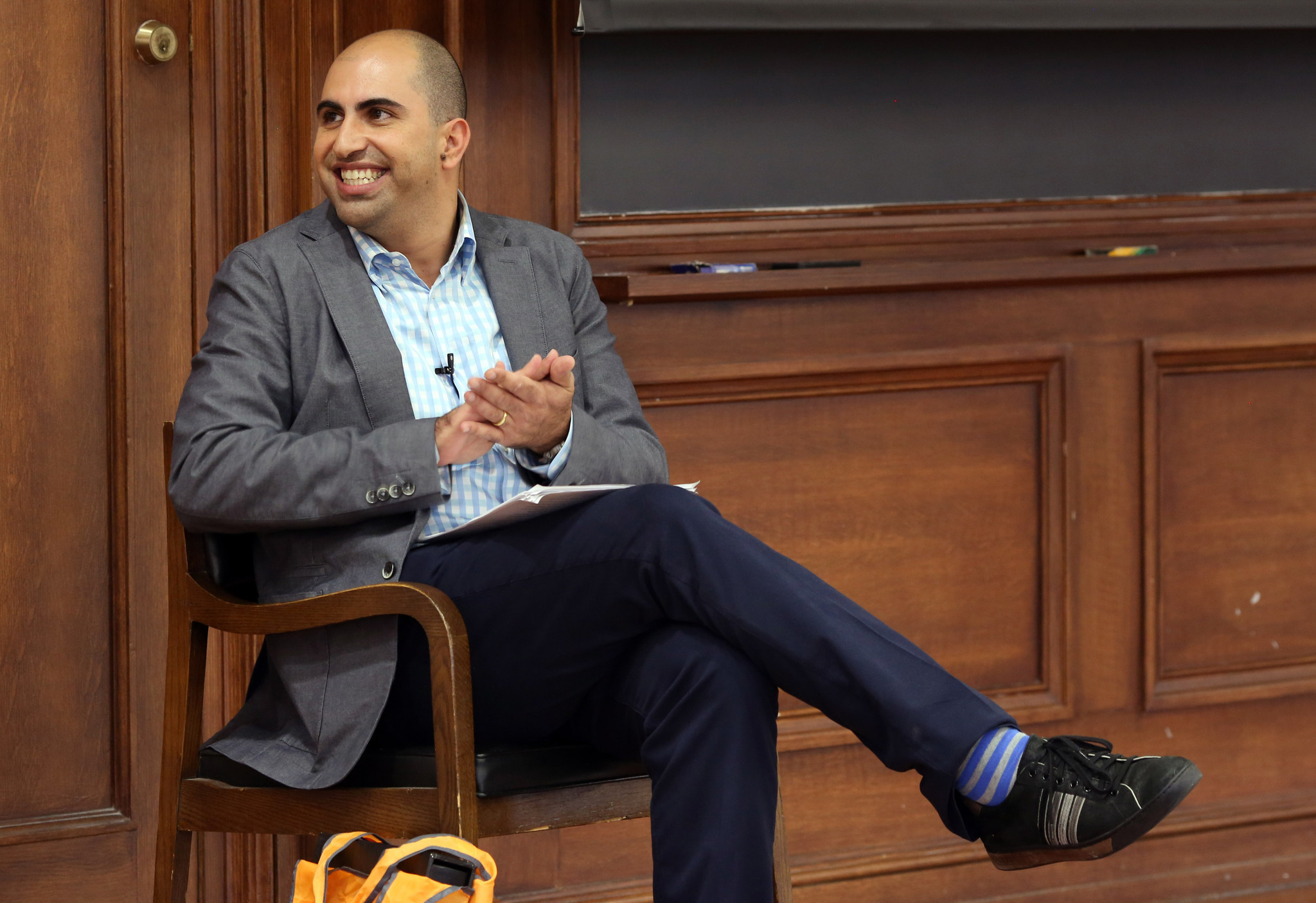
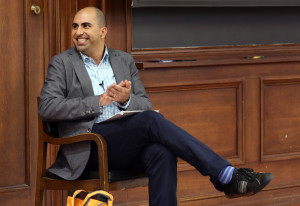
University of Illinois trustees have voted to agree to a $875,000 financial settlement with Steven Salaita. Last year, his job offer for a tenured position at the University of Illinois at Urbana-Champaign was withdrawn after he posted tweets harshly critical of the 2014 Israeli assault on Gaza. Under the terms of the settlement, Salaita will not get his job back but will receive $600,000. The rest of the money will go to his legal team. “This settlement is a vindication for me, but more importantly, it is a victory for academic freedom and the First Amendment,” Salaita said in a statement. “The petitions, demonstrations, and investigations, as well as the legal case, have reinvigorated American higher education as a place of critical thinking and rigorous debate, and I am deeply grateful to all who have spoken out.” .
Guest – Maria LaHood – Deputy Legal Director at the Center for Constitutional Rights with expertise in constitutional rights and international human rights. She works to defend the constitutional rights of Palestinian human rights advocates in the United States in cases such as Davis v. Cox, defending Olympia Food Co-op board members for boycotting Israeli goods; Salaita v. Kennedy,representing Steven Salaita, who was terminated from a tenured position for tweets critical of Israel; and CCR v. DOD, seeking U.S. government records under the Freedom of Information Act (FOIA) regarding Israel’s 2010 attack on the flotilla to Gaza. She works closely with Palestine Legal to support students and others whose speech is being suppressed for their Palestine advocacy around the country. She also works on the Right to Heal initiative with Iraqi civil society and Iraq Veterans seeking accountability for the lasting health effects of the Iraq war.
Guest – Anan Swaminathan– joined Loevy & Loevy in 2010. Anand has worked on a broad range of constitutional and civil rights cases, and has worked extensively on False Claims Act litigation, where he has represented whistleblowers alleging defense/military and other government contractor fraud, bid-rigging, Medicare and Medicaid fraud, construction/contractor (MBE/DBE) fraud, and tax fraud. Anand has also represented whistleblowers in financial fraud cases under the Dodd-Frank financial reform bill, and in complex fraud cases under other federal and state statutes.
—-
CIW Farmworkers Protest Wendy’s Board Chairman Nelson Peltz
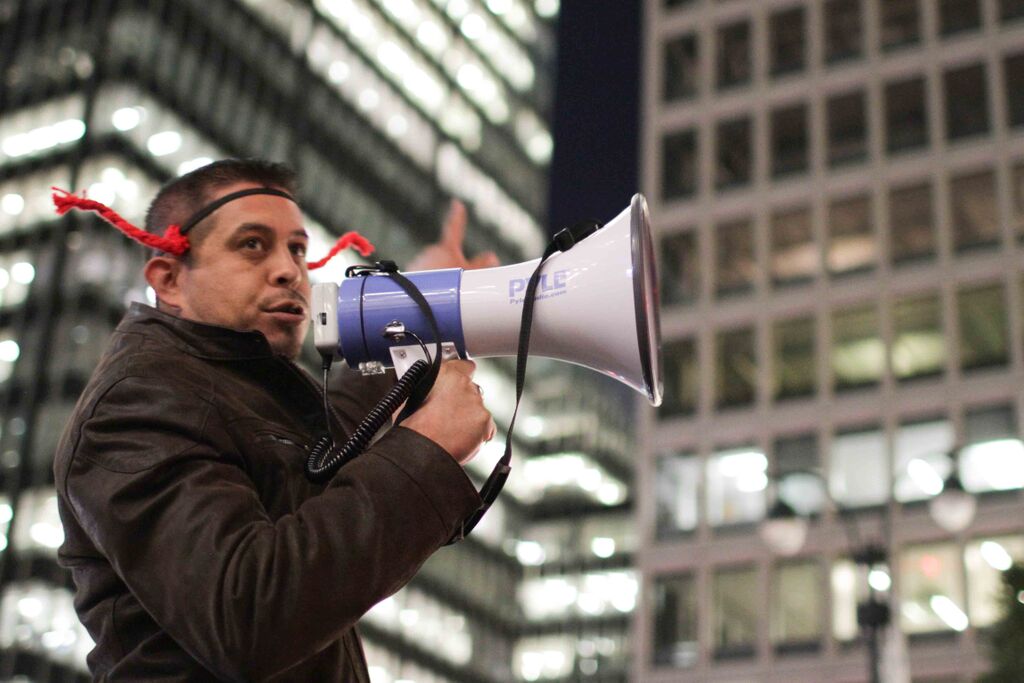
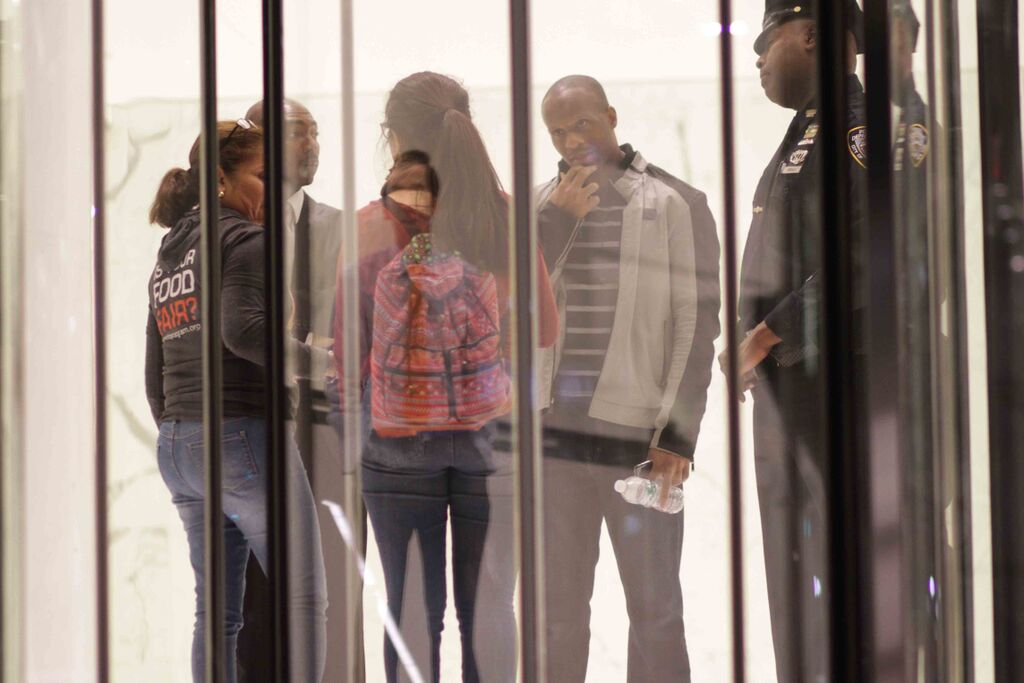
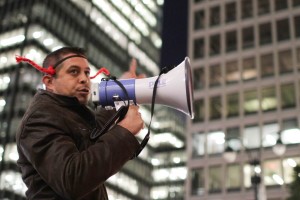
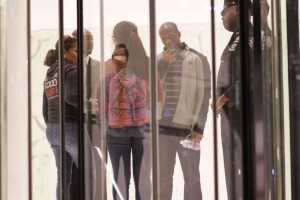
We caught up with the Coalition of Immokalee Workers protest in front of the Wendy’s fast food restaurant in midtown Manhattan and spoke with Gerardo Reyes Chávez. Gerardo has worked in the fields since age 11, first as a peasant farmer in Zacatecas, Mexico, and then in the fields of Florida picking oranges, tomatoes, and watermelons. He joined the Coalition of Immokalee Workers, a Florida-based human rights organization, shortly after his arrival in the United States in 2000, when his fellow farm worker roommates, who had previously escaped a violent slavery operation hidden in the swamp south of Immokalee, Florida, invited him to come to the CIW’s Wednesday evening community meetings.
We also spoke with a Rabbi Raphael Kohntraster with T’ruah, a major Jewish ally of the Coalition of Immokalee Workers, inspiring Jewish communities around the country to join and support the human rights of farmworkers and call on grocery stores and restaurant chains to sign onto the Fair Food Program.
(photo credit: Jake Ratner)
————————————————————-
CIA Sponsored Terror, Civil Liberties, Criminalizing Dissent, FBI Intrusion, Habeas Corpus, Human Rights, Targeting Muslims, Torture
Podcast: Play in new window | Download
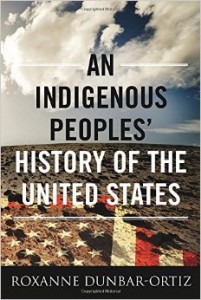
An Indigenous Peoples’ History of the United States
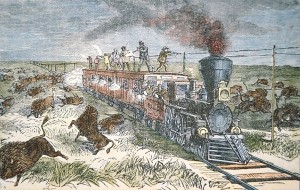
In the United States today, there are more than 500 federally recognized indigenous communities and nations comprising nearly three million people. These are the descendants of the 15 million people who once inhabited this land and are the subject of the latest book by Roxanne Dunbar-Ortiz. In An Indigenous Peoples’ History of the United States, Dunbar-Ortiz challenges the founding myth of the United States and shows how policy against the indigenous peoples was genocidal and imperialist—designed to crush the original inhabitants. Spanning more than 300 years, this classic bottom-up history significantly reframes how we view our past. Told from the viewpoint of the indigenous, it reveals how Native Americans, for centuries, actively resisted expansion of the U.S. empire.
Roxanne Dunbar-Ortiz:
- It’s absolutely necessary to know this history of settler colonialism and how it effects consciousness today of U.S. people and in the world because everyone is convinced of this myth of the United States and somehow its always going off the path of this destiny that has never been true in the first place.
- It’s like a fairy tale except its extremely deadly and dangerous.
- Other countries have romantic myths as their form of nationalism but they don’t control the world with this ideology.
- The myth is that it was a birth of settler democracy but we know from apartheid South Africa, we know from colonialism, particularly settler colonialism such as Israel.
- There are so many parallels with Israel because the Puritans and this became embedded in all settlers, had this idea of the new Jerusalem of Zion. They used that terminology.
- That God had given them this land to settle, it wasn’t just a right it was a responsibility to destiny, to the world.
- This made the native farmer and fisherman, ordinary people like other people in the world into savages and monsters, sort of like the Israelis to do the Palestinians today.
- Throughout the book I have a theme of the militarism and the counterinsurgency that attacks civilians and a food fight they call it, burns the food, supplies, the crops, burns the houses of the people in their towns, creates refugees. This then becomes the pattern.
- Every generation there is this Indian war. Vietnam looked like an Indian war, even the language they use – Indian country for enemy territory, all of the weapons they name after native people.
- This is not how we think of the United States, supposedly a civilian country, the military is always under control of civilians but that civilian president is commander and chief of the armed forces.
- There’s also a theory, the Bering Strait the one entrance to the whole continent, which is absurd because all of the people on the coast were great seafaring people.
- A part of European imperialism say as the beginning of everything that it connected people up. Actually what it did was separate people each other and their tradition.
- My specialization is the southwest and central Mexico, Central America. I knew there were complex trade routes and roads all over the place, irrigation canals, how they developed agriculture.
- The first chapter, Follow the Corn, I did just that. I followed out of Mexico, the dispersion of corn agriculture all the way to Tierra Del Fuego to the sub Arctic and coast to coast.
- What you find in the Americas is when they get to the point of abusing the environment and become dictatorial, there tends to be revolts to overthrow, that was happening when Cortez came to Mexico.
- The Quetzalcoatl cult that took over the Aztec government became abusive and was doing slave raiding. Had done a wonderful job of dispersing trade routes. Cortez simply allied with the rebels and overthrew the central government.
- Course they couldn’t know his intentions of simply wiping out their civilization.
- When British colonialism came to North America with these peculiar characteristics of the puritan ideology settling in. With 2 centuries of settler colonialism they developed this idea of ownership.
- It went from owning human beings to the idea of owning the land.
- George Washington was a surveyor and you have to ask why was such a super wealthy – a lowly surveyor?
- Surveyors got to choose the best land, and got to mark it up. They had already developed this idea of a Platte, creating territories that would then become states once they had a majority settler population.
- That’s why it took so long for Oklahoma, Oklahoma was the 47th state, New Mexico, Arizona, these places that had a majority native population.
- It was rough being native in the United States, it still is. I grew up in Canadian county Oklahoma, my dad sharecropped, and was a tenant farmer throughout that area until the depression wiped it out.
- The people went to California as refugees.
- I’m cautious about the identity because native nationalism Cherokee or Onondaga or Shawnee or Creek Muskogee
- There was an instance in 1917, I think its one of the most important moments in US history and hardly anyone knows about it. Jack Womack and I had written about it Monthly Review, it was called the Green Corn Rebellion.
- That is the main demand, land base, nationhood, the ability to prosper and exist as people, not just as individuals being assimilated out, that’s another form of genocide.
Guest – Roxanne Dunbar-Ortiz, grew up in rural Oklahoma, the daughter of a farmer and half-Indian mother. She has been active in the American Indian Movement for more than four decades and is known for her lifelong commitment to national and international social justice issues. After receiving her PhD in history at the University of California at Los Angeles, she taught in the newly established Native American Studies Program at California State University and helped found the departments of Ethnic Studies and Women’s Studies. Her 1977 book The Great Sioux Nation was the fundamental document at the first international conference on Indians in the Americas, held at the United Nations’ headquarters in Geneva. She is the author or editor of seven books.
—-
NYPD Muslim Surveillance Case Reinstated
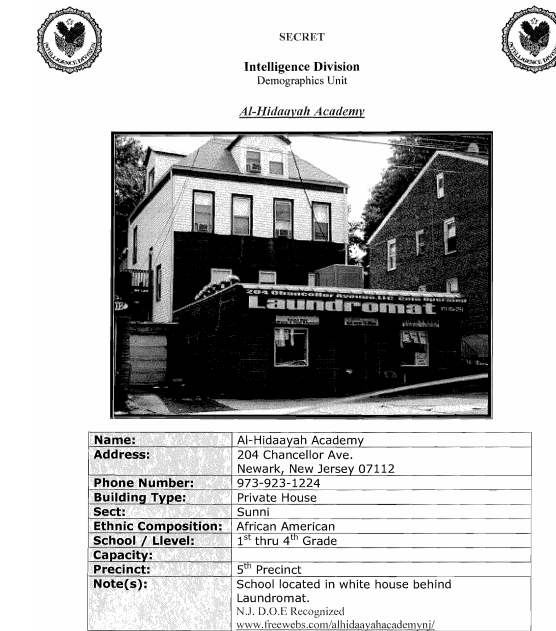
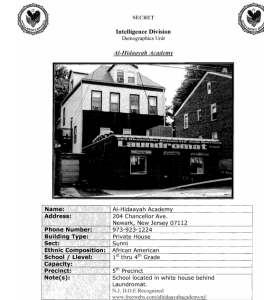
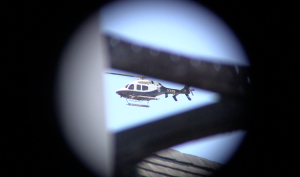
After the 9/11 attacks, the New York City Police Department created a vast and covert suspicion-less surveillance program targeting Muslim American communities in New York, New Jersey, and beyond. The federal lawsuit Hassan v. City of New York challenges the constitutionality of this program. The original complaint was filed by Muslim Advocates in the District Court of New Jersey and later joined by the Center for Constitutional Rights. The lawsuit seeks an end to the program and destruction of any records gathered. Our client Zaimah Abdur-Rahim was spied on by the NYPD because she operates a grade-school for Muslim girls. NYPD officers recorded details about the school, such as the fact that it was run from Abdur-Rahim’s home and that its students were predominantly African-American. As the Associated Press reported in an award-winning series, the NYPD monitored and/or infiltrated almost every aspect of Muslim life, from mosques and student associations, to halal butcher shops, restaurants, and private citizens. Internal NYPD documents confirm that the program produced zero leads to terrorist activity after more than a decade in operation.
Guest – Ghita Schwarz, a senior staff attorney at the Center for Constitutional Rights. She works on racial justice, immigrants’ rights and government misconduct cases. Her current cases include the Freedom of Information Act cases Detention Watch Network v. ICE and Immigrant Defense Project v. ICE, seeking government transparency about controversial immigration detention and enforcement practices; Hassan v. City of New York, challenging the NYPD’s discriminatory program of surveilling Muslims; and United States and Vulcan Society v. City of New York, challenging long-term employment discrimination by the New York City Fire Department. Ghita’s past work includes Aguilar v. ICE, fighting ICE’s practice of warrantless home raids, and NDLON v. ICE, challenging government secrecy regarding DHS’ Secure Communities program. Prior to coming to the Center for Constitutional Rights, she worked at LatinoJustice PRLDEF, the Door Legal Services Center, and Legal Services for New York City. Ghita graduated from Harvard College and Columbia Law School. Ghita’s recent writing includes “Why New York is Still the Capital of Immigrant America,” published in The Nation.
—-
CIA Sponsored Terror, Civil Liberties, Criminalizing Dissent, Habeas Corpus, Human Rights, Iraq War, Political Prisoner, Surveillance, Targeting Muslims, Torture, Truth to Power, War Resister
Podcast: Play in new window | Download

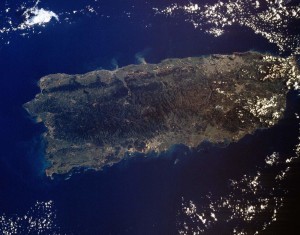
Puerto Rico: The Crisis Is About Colonialism, Not Debt
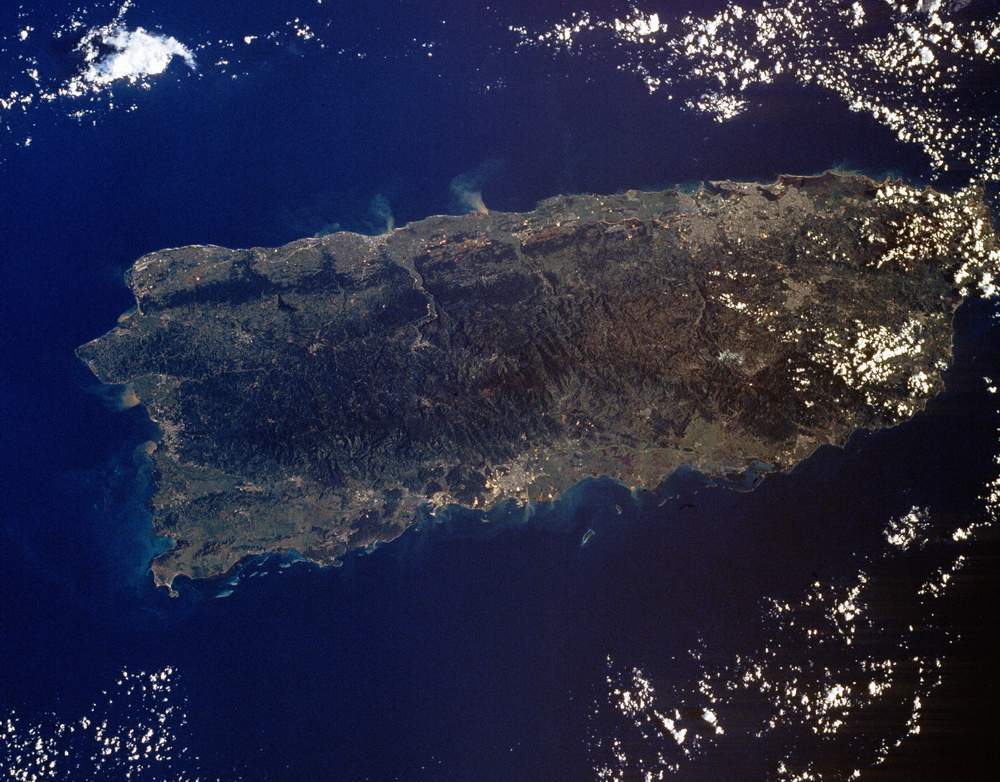
The commonwealth of Puerto Rico is in a social and financial crisis owing some 73 billion dollars to U.S. banks, hedge funds and vulture funds. The people of Puerto Rico are extraordinarily impoverished particularly the children. Last August the government of Puerto Rico failed to make a 58 million dollar debt payment on what they call a moral obligation bond held by U.S. banks and corporations. The crisis reflects centuries long colonialism and in particular the last centuries of American policies toward Puerto Rico which favored American investments which were then taken out of the island.
Guest – Attorney Linda Backiel, a criminal defense attorney and poet living and practicing law in San Juan, Puerto Rico. Here is Linda Backiel’s transcript from the talk she gave at the celebration of the 50th anniversary of the Criminal Justice Act.
—-
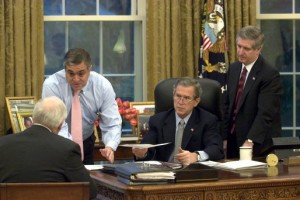
US Intel Vets Decry CIA’s Use of Torture
Former CIA leaders responsible for allowing torture to become part of the 21st Century landscape are seeking to rehabilitate their sullied reputations with the release of the book, Rebuttal: The CIA Responds to the Senate Intelligence Committee’s Study of Its Detention and Interrogation Program. They claim that the primary allegations against them stem from a partisan report issued by Democrats from the Senate Intelligence Committee. In fact, the Senate Intelligence report on torture enjoyed bipartisan support. But if the public doesn’t carefully read the extensively footnoted Senate Intelligence Committee report it may be easy for many to believe that the CIA officers are victims of a political witch hunt. As well, these officers seem to rely on the erroneous fact that a segment of the population continue to believe that the practice of torture is effective is gleaning information important to national security.
Guest – Raymond L. McGovern, retired CIA officer turned political activist. McGovern was a Federal employee under seven U.S. presidents in the past 27 years. Ray’s opinion pieces have appeared in many leading newspapers here and abroad. His website writings are posted first on consortiumnews.com, and are usually carried on other websites as well. He has debated at the Oxford Forum and appeared on Charlie Rose, The Newshour, CNN, and numerous other TV & radio programs and documentaries. Ray has lectured to a wide variety of audiences here and abroad. Ray studied theology and philosophy (as well as his major, Russian) at Fordham University, from which he holds two degrees. He also holds a Certificate in Theological Studies from Georgetown University.
————————————————
Civil Liberties, FBI Intrusion, Habeas Corpus, Human Rights, Political Prisoner, Prison Industry, Surveillance, Targeting Muslims, Truth to Power, War Resister
Podcast: Play in new window | Download
Updates:
- Hosts Remember People’s Lawyer Liz Fink
—-
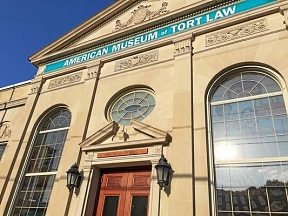
The American Museum of Tort Law
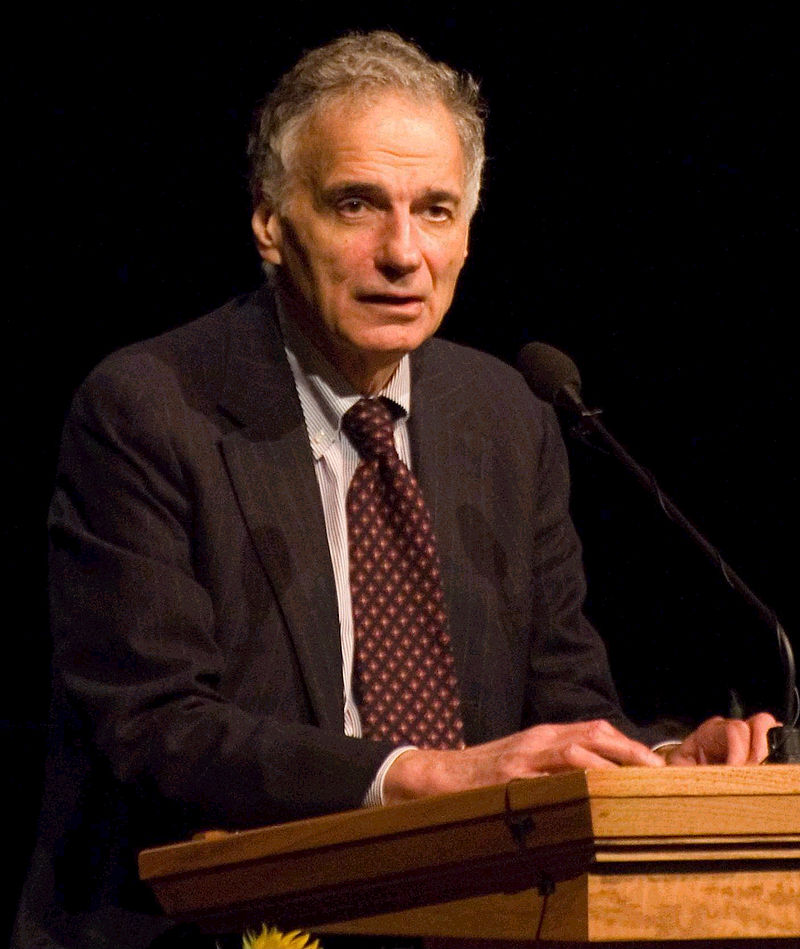
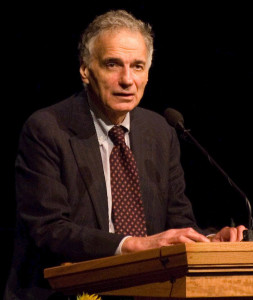
After trial lawyers told him they had no place to display exhibits they had used in court, Ralph Nadar realized that there isn’t a single museum devoted to the law in the United States. That’s about to change. The consumer advocate is opening the American Museum of Tort Law in his hometown of Winsted, Connecticut to celebrate victories of the law over corporate power. The museum will span the history of tort law – civil law that seeks relief for people injured by wrongful acts of others – and host exhibits on significant cases such as the 1998 national settlement with tobacco companies. Nader said it may also host artifacts including a Chevrolet Corvair – the car featured in his 1965 book “Unsafe at Any Speed,” which made him a household name.
Guest – Ralph Nader, attorney, political activist, consumer advocate, presidential candidate and author who among many accomplishments is responsible for 8 major federal consumer protection laws and helped established the PIRGS – Public Interest Research Groups.
—-
The Library Freedom Project Protects Library From DHS Surveillance
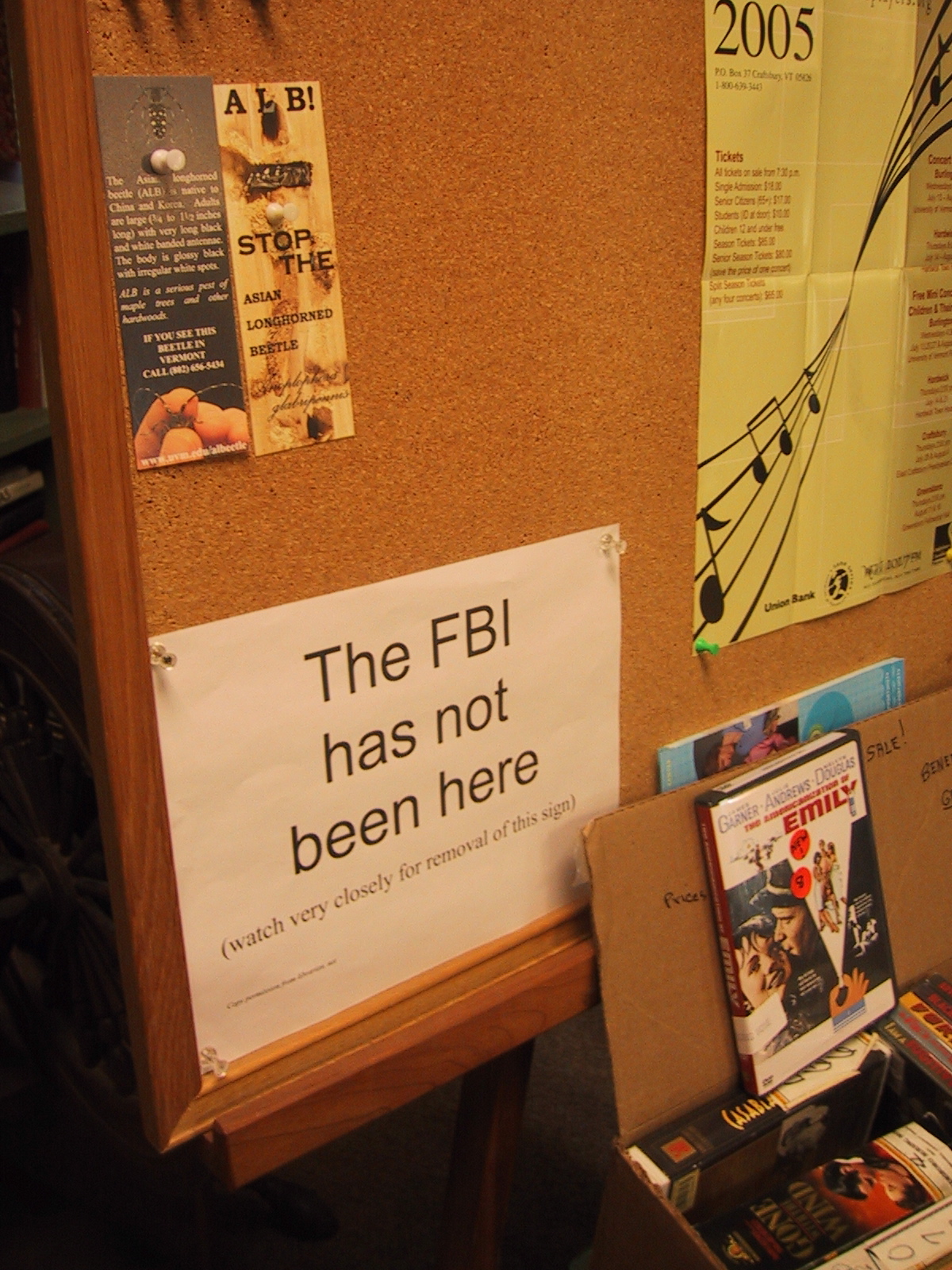
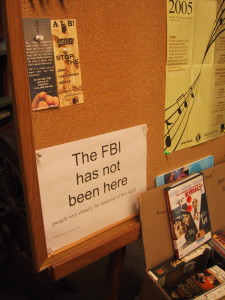
With a population just above13,000 people, the quaint town of Lebanon, New Hampshire is nestled not far from the Connecticut river in the northwest corner of the state – a few miles from Dartmouth College. In July, the local library set up a system to protect the privacy of patrons using its computers by installing Tor, the platform that routes users’ Internet traffic through various relay points, making warrantless surveillance of browsing habits and traffic more difficult. The Kilton Library’s Tor relay node attracted the attention of the Department of Homeland Security, which contacted local officials and law enforcement, warning that Tor could aid criminal behavior. In response, the library intially took down the relay, but later changed its mind and reinstalled it.
Guest – Alison Macrina is a librarian, privacy rights activist, and the founder and director of the Library Freedom Project, an initiative which aims to make real the promise of intellectual freedom in libraries by teaching librarians and their local communities about surveillance threats, privacy rights and law, and privacy-protecting technology tools to help safeguard digital freedoms.
——————————————-
CIA Sponsored Terror, Civil Liberties, Criminalizing Dissent, Habeas Corpus, Human Rights, Political Prisoner, Prison Industry, Surveillance, Targeting Muslims, Torture, Truth to Power
Podcast: Play in new window | Download

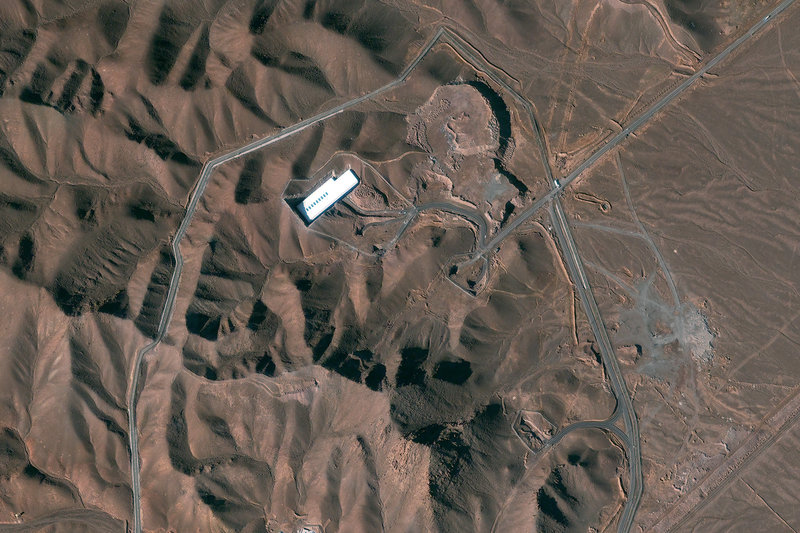
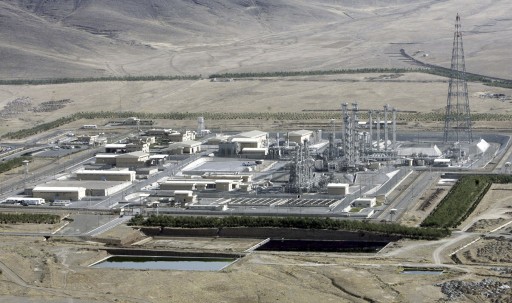
Securing The Iran Nuclear Deal
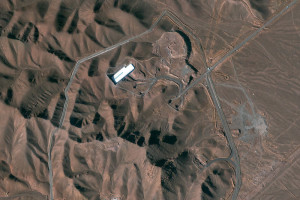
Phyllis Bennis joins us today to talk about the Iran Nuclear Deal. We get her perspective on this topic in the context of a broader geopolitical front including ongoing wars, the increased US funding of Israel and challenges to Iran from Saudi Arabia.
Guest – Phyllis Bennis, directs the New Internationalism Project at IPS. She is also a fellow of the Transnational Institute in Amsterdam. She has been a writer, analyst, and activist on Middle East and UN issues for many years. In 2001 she helped found and remains on the steering committee of the U.S. Campaign to End Israeli Occupation. She works closely with the United for Peace and Justice anti-war coalition, co-chairs the UN-based International Coordinating Network on Palestine, and since 2002 has played an active role in the growing global peace movement. She continues to serve as an adviser to several top UN officials on Middle East and UN democratization issues.
—-
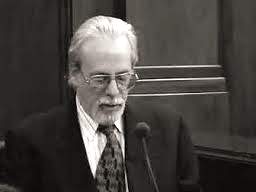
Lawyers You’ll Like: Attorney Bill Schapp
Attorney William Schaap graduated from the University of Chicago Law School in 1964 and has been a practicing lawyer since. Bill specialized in military law and practiced in Asia and Europe. He later became the editor in chief of the Military Law Reporter in Washington for a number of years. In the 70’s and 80’s he was a staff counsel of the Center for Constitutional Rights in New York City. In the late 80s, he was an adjunct professor at John J. College of Criminal Justice of the City University of New York where he taught courses on propaganda and disinformation.
Attorney William Schapp:
- One of first cases at this big Wall Street firm, they had some outside counsel working on it, one of whom was David Lubel, and Dave Lubel who had I think been a recruiter for the Communist Party in his youth, was always good at spotting somebody who was always worth recruiting and he started to tell me there was this convention of this lawyers group.
- It was this 1967 Lawyers Guild Convention in New York. He dragged me to one event, I met Bill Kunstler, I met Arthur Kinoy, I met Victor Rabbinowitz. I’d been on Wall Street for a year or two, I said I didn’t know there were lawyers like this.
- I joined the same day and met Bernadine Dorhn and a few weeks she called me and said we need your help.
- She said you gotta defend a bunch of Columbia students. The next thing I knew the riot started at Columbia and she said you have to go down there and defend them.
- I signed up to be staff counsel on the National Lawyers Guild Military Law Project in Okinawa, Japan.
- When you work overseas in that kind of a climate with the military you learn a lot fast about American imperialism.
- Once you learn that, you learn about the CIA.
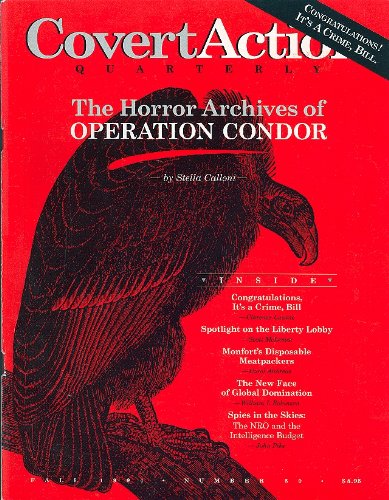
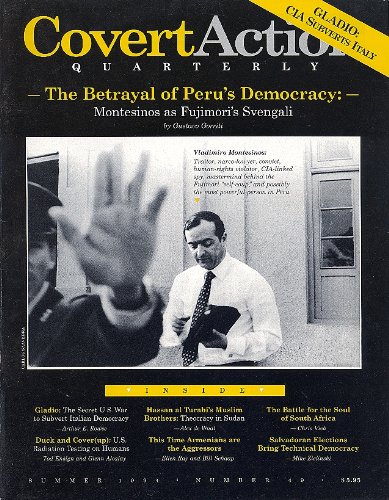
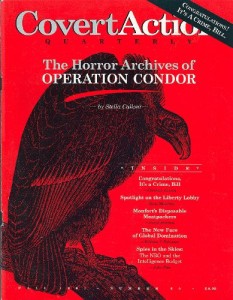
- That led us to originally working on Counter Spy magazine and then on Covert Action Magazine.
- The original purpose was to expose the CIA. We worked with Lou Wolf who is an expert in uncovering CIA agents in US embassies, not through any classified documents but because if you knew how to read the paperwork and State Department things, you could tell who are the “ringers.”
- We were so successful that Congress passed a law against us.
- Our goal was to make these people ineffective because the only way most CIA could work, particularly the ones that were assigned to an embassy was to have to pretend to be something else.
- They were all third assistant political secretaries and those were all phony things. Their job was to finagle their way into various community organizations in whatever foreign capital they were posted to recruit people to turn against their own countries and become traitors to their own countries, to become spies for the U.S.
- We thought if we identified these people, it might make their job a little bit harder, which it did.
- Of course, the problem with that is the government said we were trying to get them killed which we weren’t trying to do and nobody we did expose ever did get killed.
- He (Philip Agee) had been an adviser to Counter Spy. Counter Spy folded when Welch got killed, cause the pressure was too much and started Covert Action Quarterly.
- He was not the person discovering who the under cover people were, Lou Wolf was doing that.
- Phil wrote articles for us in every issue and we worked very closely with him.
- Once you start exposing these things, they really don’t have any defense.
- They tried to catch us in something phony. We would get tips that would turn out to be CIA trying to get us to print some story that wasn’t true so they could then discredit us.
- We had more interference from the government when we were doing military law work, before Covert Action Quarterly.
- They would plant bugs in our attic in Okinawa, things like that.
- The Intelligence Identity Protection Act has 2 parts. One makes it a crime for someone in the government who has classified information to reveal someone’s identity. The second part makes it a crime to reveal the identity of someone you did not learn from classified information or you position. (But if you were in the business of exposing these people . . .)
- Regarding his newsletter The Lies of Our Times – It was in the 90s, from 1990 to 1995 I think. To a certain extent, the abuses we were crying about got a little bit less over time because that’s sometimes the helpful result of that kind of exposure.
- We were just tired of people thinking that if it was in the New York Times it must be true.
- The fact is that those people lie all the time.
- I think we’ve gotten to a point where people recognize that the government lies to them and that there’s an awful lot that goes on that they don’t know.
Guest – Attorney William Schapp graduated from the University of Chicago Law School in 1964 and has been a practicing lawyer since. Bill specialized in military law and practiced in Asia and Europe. He later became the editor in chief of the Military Law Reporter in Washington for a number of years. In the 70’s and 80’s he was a staff counsel of the Center for Constitutional Rights in New York City. In the late 80s, he was an adjunct professor at John J. College of Criminal Justice of the City University of New York where he taught courses on propaganda and disinformation.
In addition to being a practicing lawyer, Bill was a journalist, publisher and a writer specializing in intelligence as it relates to media. He was the co-publisher of a magazine called the Covert Action Quarterly for more than 20 years. He also published a magazine on propaganda and disinformation titled Lies Of Our Times. Attorney Bill Schapp has written numerous articles and edited many books on the topic of media and intelligence.
———————————————————-
CIA Sponsored Terror, Civil Liberties, Criminalizing Dissent, FBI Intrusion, Guantanamo, Habeas Corpus, Human Rights, NSA Spying, Political Prisoner, Prison Industry, Supreme Court, Surveillance, Torture, Truth to Power, War Resister
Podcast: Play in new window | Download
Update:
- Remembering Julian Bond, Social Activist, Civil Rights Leader, Politician, Professor and Author.
—-
Heidi Boghosian: Prevent Police Killings Before They Happen
America has awakened in the past year to the epidemic of police killings of unarmed civilians, many of whom are African-American. The list of names grows longer by the week — Eric Garner, Michael Brown, Tamir Rice, Freddie Gray, Rekia Boyd, John Crawford and Sandra Bland to name several recently. Each time one of these criminal acts is committed, a cry goes up to prosecute the police officer responsible and bring justice to the victim. Read More.
Attorney Heidi Boghosian is the executive director of the A.J. Muste Memorial Institute, a nonprofit charitable foundation providing support to the nonviolent movement for social change. Before that she was executive director of the National Lawyers Guild. She is author of the book “Spying on Democracy: Government Surveillance, Corporate Power, and Public Resistance” (City Lights, 2013).
—-
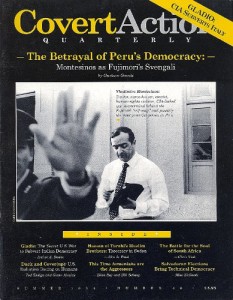
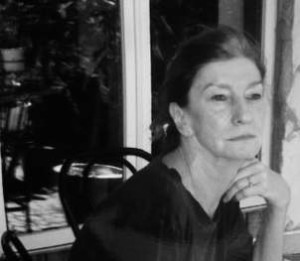
Ellen Ray: Co-Publisher of Covert Action Information Bulletin
Last week family and friends gathered at St Marks In The Bowery Church to remember documentary filmmaker, publisher, journalist and activist Ellen Ray. Ellen Ray was co-publisher of the magazine Covert Action Information Bulletin, which exposed CIA covert actions around the world, publishing the names of hundreds of CIA agents. As a result, the law changed (The Intelligence Identities Protection Act of 1982) making it illegal. As head of Sheridan Square Press, Ellen Ray published the memoir of New Orleans District Attorney Jim Garrison, which became the basis of Oliver Stone’s film, “JFK.” Ray is survived by her husband, attorney Bill Schaap, she was 75. Text of the speech by Michael Smith. Here is the video produced Joe Friendly.
—-
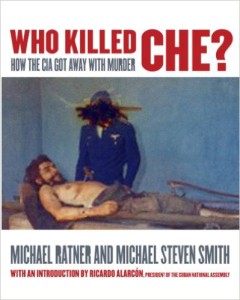
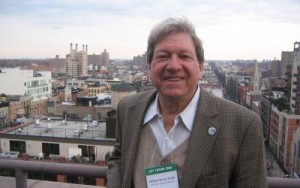
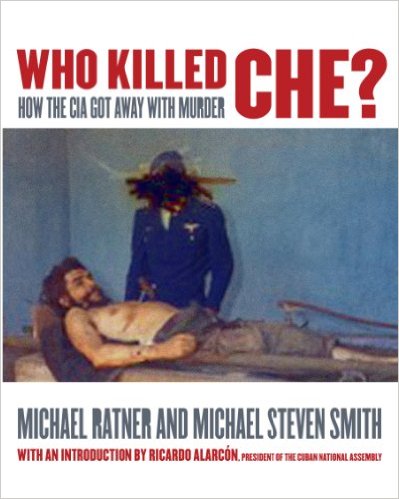
Different Ways to Skin a Cat: From the US Assassination of Che to Obama’s Recognition of Cuba
We hear a speech delivered by our own Michael Smith at Socialism Conference in Chicago titled Different Ways to Skin a Cat: From the US Assassination of Che to Obama’s Recognition of Cuba. The highpoint of U.S. counter-revolutionary policy towards Latin America came with its murder of Che Guevara, in Bolivia and the overthrow of governments including Allende’s in Chile, thus isolating Cuba throughout Latin America. Now the U.S. is isolated and the American government has had to change its tactics. The strategy of overthrowing the gains of the Cuban revolution and capitalist restoration remain.
—————————————————