Afghanistan War, CIA Sponsored Terror, Civil Liberties, Criminalizing Dissent, Guantanamo, Habeas Corpus, Human Rights, Political Prisoner, Surveillance, War Resister
Podcast: Play in new window | Download
Updates:
—-
United States Moves To Intervene In Syria Civil War
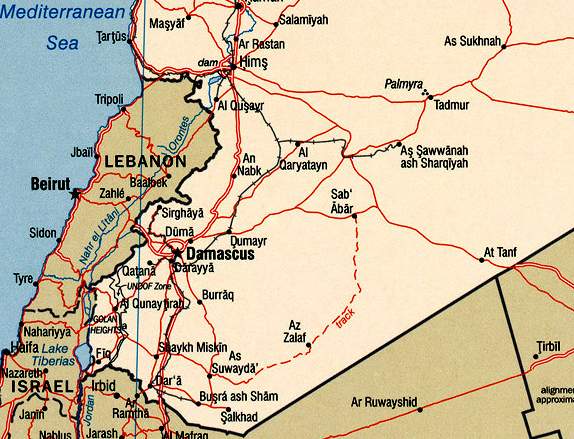
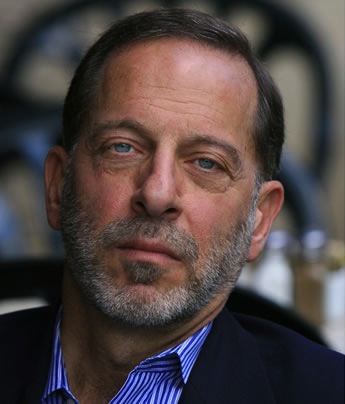
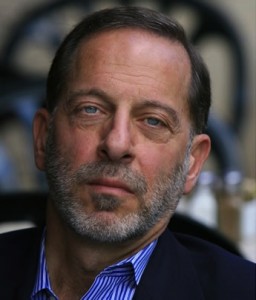
According to the United Nations, nearly 2 million refugees have fled the civil war and unrest in Syria. Why is the United States moving to intervene? Professor Rashid Khalidi, an historian on the Middle East and the Edward Said Professor of Modern Arab Studies at Columbia University, and director of the Middle East Institute of Columbia’s School of International and Public Affairs joins hosts to discuss the history of the conflict and who stands to gain if the US intervenes.
Professor Rashid Khalidi:
- This is another case where the United States seems to me at least edging sideways blindly without understanding or thinking, frankly into another regional civil war which has the potential for developing into a regional conflict.
- We got involved in an Iraqi civil war, we helped create an Iraqi civil war after the occupation of Iraq. We created al-Qaeda and other horrible manifestations as part of the war against the Soviets and then got involved in what is in effect an Afghan civil war.
- The United States is about to and I hope I’m wrong, put its into a meat grinder and blindly, heedlessly push the button.
- This is a horrific conflict, with no good guys on either side. You have a horrific regime which very likely used these horrible weapons against the rebels and its own population.
- You have on the other side people who are not white knights, in fact they just as soon be killing Americans as butchering Shia or cutting the heads off people. Those are the forces that dominate. Not the opposition to the regime, but the fighting forces.
- These are people who don’t wish any of us well.
- The United States is going to war for reasons of imperial overreach, for reasons that have to do with domestic politics.
- For Iran, the Syrian regime is its most important regional ally. The Iranians see this as a make or break conflict for their regional influence.
- At the same time the new Iranian government is clearly interested in cutting a deal with the United States.
- I think a deal is within reach on nuclear issues and other issues.
- Israel would probably like to see the Syrian side bleed themselves endlessly.
- What they’re probably doing is through their supporters in this country, is quietly pushing this president toward an American intervention which is not in the American national interest but in some ways.
- I was there when he said, ‘I’m not against all wars, I’m against stupid wars.’ This is quintessentially a stupid war.
- It’s the fifth or the eighth move on each side that has the potential for escalation.
- There is a consensus of idiocy among the so-called experts.
- I have to say this, the Israelis encouraged this.
- It’s a civil war with a lot of bad guys on both sides. That is what we’re about to get directly involved with.
- Why the United States should be against the Assad regime, its a bad regime, is unclear to me, while its clear to me Israel would like a bunch of tiny, weak, divided, sectarian states such that it could lord over the region completely.
- Most people in the Arab world have a profound suspicion of the United States, because its joined at the hip with Israel, always, everywhere since time immemorial.
- On the other hand you have authoritarian regimes, petro-monarchies, Saudi Arabia, the Emirates, Kuwait, Qatar which are hell bent on imposing their regime on Syria.
- There are a lot of interests tied up in the United States lording it over everybody and acting as if it has the right and the power to decide everything everywhere. We don’t.
Guest – Professor Rashid Khalidi, is the Edward Said Professor of Arab Studies at Columbia University. He received his B.A. from Yale University in 1970, and his D.Phil. from Oxford in 1974. He is editor of the Journal of Palestine Studies, and was President of the Middle East Studies Association, and an advisor to the Palestinian delegation to the Madrid and Washington Arab-Israeli peace negotiations from October 1991 until June 1993.
—–

Spying on Democracy: Government Surveillance, Corporate Power, and Public Resistance
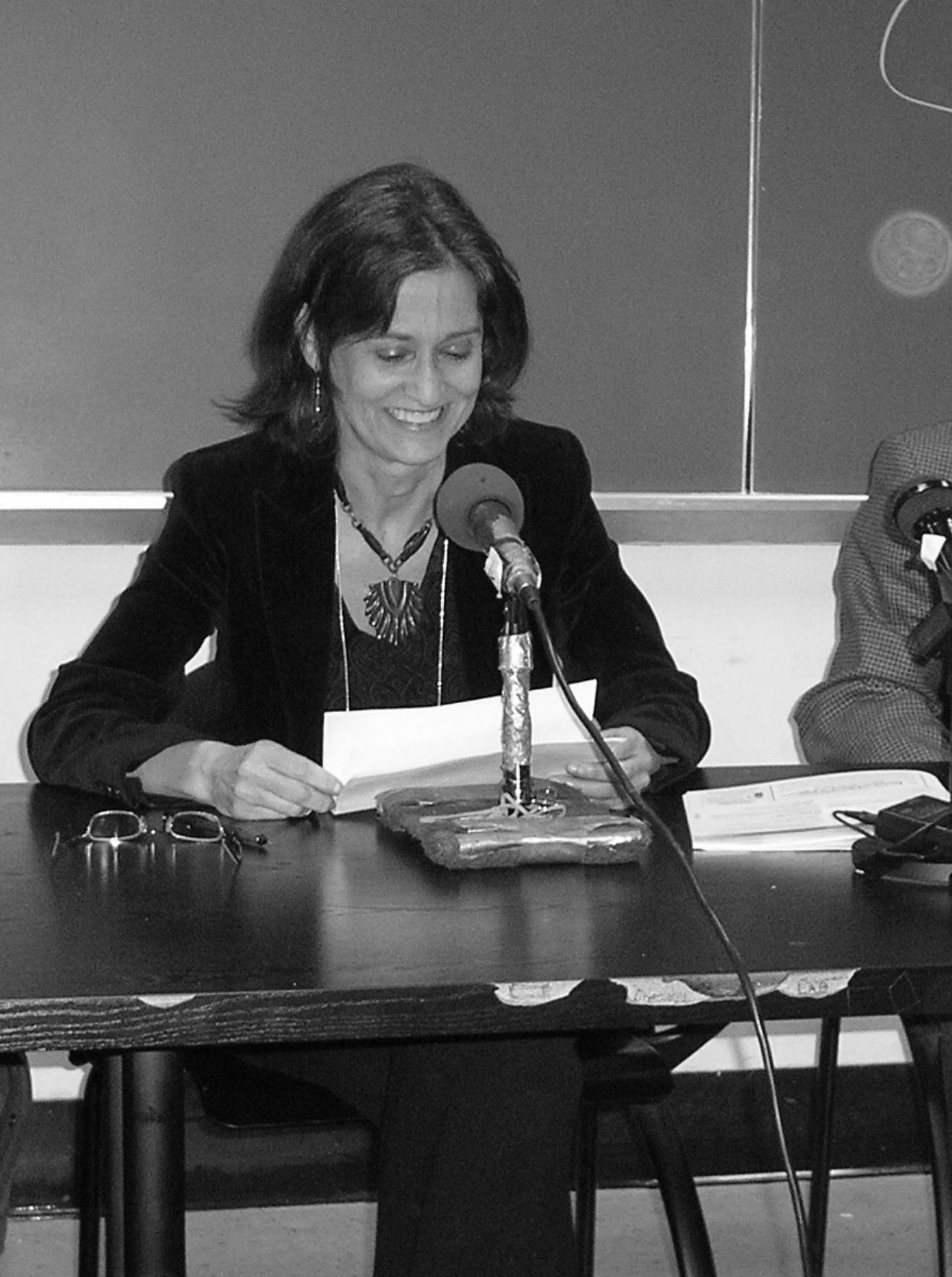
Our own Heidi Boghosian has written a powerful book on the history of spying, privacy and how public dissent without surveillance is needed in order for a democracy to thrive. The newly published book is titled Spying On Democracy: Government Surveillance, Corporate Power, and Public Resistance and it reveals in detail how the government acquires your information from sources such as telecommunications companies to compile a data base on “persons of interest.” Since ex-CIA staffer Edward Snowden’s release of top secret documents to the Guardian and Washington Post many are now aware of the frequency and scope to which they are being monitored. What this book has unveiled is how your personal consumer data is being gathered, bundled and sold. The spying, the collecting of phone records, accessing your online activity, all of it is unconstitutional says Heidi Boghosian, co-host of Law and Disorder and the National Lawyers Guild’s Executive Director.
Attorney Heidi Boghosian:
- They create dossiers of our spending habits, of our communication habits.
- The corporations benefit from this which makes them create more equipment for surveillance and almost makes it impossible for the government to perform traditional government functions because they’re so reliant on corporate partners.
- There’s also a revolving door among CEOs of these big companies and high level positions within government intelligence.
- The National Lawyers Guild was spied on by the FBI. More than 1000 agents were assigned to us for nearly 3 decades. They rummaged through our members garbage. We had an infiltrator in Washington DC serving as a staff person.
- They tried to label us (and failed) as a subversive organization.
- The People’s Law Office had also been monitored for years. Apparently across the street from the office an apartment was taken by the FBI who spied on them for their work representing politically active individuals.
- With all of this spying, the chilling effect of knowing that you may be spied on, you conversations may be listened to, changes the way you do business.
- I’ve always been interested in cooperation between municipal public police and private security organizations.
- We’re seeing an entire industry giving birth to Stratfor and other intelligence organizations that exist just to conduct intelligence be it on activists or critics of corporate or government policies, as well as defense contractors beefing up and creating a whole sector of intelligence.
- They are in big contracts with the US government.
- One of the problems constitutionally is they’re not held as private businesses to the same strictures as the US Constitution as we saw recently with the Hemisphere program revelations. We have our government paying AT&T staff to sit next to drug enforcement officers and go through AT&T’s files that go back 26 years. They’re not overseen by a judge.
- My question is how many more agencies of the government are doing this?
- They are getting access to this information through what’s called administrative subpoenas.
- Many mannequins have small cameras embedded in the eyeballs.
- When you’re spying on the fourth estate as its called which is intended to be a watch dog on government you really get to the heart of what democracy is about.
- Without a free press, we don’t have any chance of preserving those fundamental freedoms of First Amendment association and the ability to bring our grievances to the government for redress.
- A student group working with the Coalition of Immokalee Workers got suspicious because a new member on their listserve started asking questions and they did some research and found she owned her own private security company, in fact she was spying on them for Burger King.
- Congress is calling for an investigation for these large data aggragators. Once again, there’s no oversight, there’s no accountability, they go to a variety of sources to gather personal information on us. Some in the public domain, others not.
- They have vast troves, electronic dossiers on each of us.
Guest – Heidi Boghosian, executive director of the National Lawyers Guild. She is the co-host of the weekly civil liberties radio show Law and Disorder on Pacifica’s WBAI in New York and over 40 national affiliates. She received her JD from Temple Law School where she was the editor-in-chief of the Temple Political & Civil Rights Law Review. She also holds an MS from Boston University and a BA from Brown University.
——————————————————-
CIA Sponsored Terror, Civil Liberties, Criminalizing Dissent, Habeas Corpus, Human Rights, Military Tribunal, Political Prisoner, Prison Industry, Surveillance, Truth to Power, Uncategorized, War Resister
Podcast: Play in new window | Download
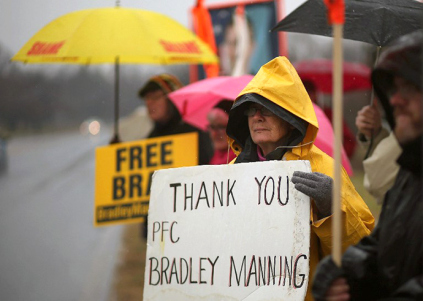
Army PFC Bradley Manning Sentenced To 35 Years
Our own Michael Ratner reports back from Fort Meade, Maryland on the day Army PFC Bradley Manning was sentenced to 35 years in prison for leaking classified information to Wikileaks. As reported by Michael Ratner, Manning faced a maximum of 90 years in prison after his conviction last month on charges of espionage, theft and fraud. Now, his sentence goes the Army Court of Criminal Appeals, where he may seek a reduction of his prison term.
Attorney Michael Ratner:
- 35 years is a completely off the wall sentence. First of all he shouldn’t have been prosecuted at all.
- That’s been the Center for Constitutional Rights position. That’s my position.
- He’s a whistle-blower, he exposed torture, criminality, killing of civilians.
- Then, they over prosecute him, charge him with espionage, make whistle-blowers into spies.
- They charge him with all these years, then people are relieved when gets 35 years.
- It’s a very long sentence for someone who actually gave us the truth about Iraq, about Iran, about the helicopter video that killed a Reuters journalist, about the diplomatic cables that gave us the secret war in Yemen, the revelations about the corrupt Ben Ali government in Tunisia that helped bring on the Arab Spring.
- He’s a hero. The people who committed the crime are sadly still in our government enjoying their lives, they’re the ones that ought to be prosecuted.
- We’re in a time where there is a sledgehammer taken to whistle-blowers.
- The demand now is that Obama pardon him or give him clemency. That’s from the Bradley Manning Support Committee.
- Because of Bradley Manning, people like Ed Snowden came forward. They understood that when they see criminality, they’re young people of conscience and they act on it, and we should be very proud of each of these people.
Law and Disorder Co-host Attorney Michael Ratner, President Emeritus of the Center for Constitutional Rights (CCR), a non-profit human rights litigation organization based in New York City and president of the European Center for Constitutional and Human Rights (ECCHR) based in Berlin. Ratner and CCR are currently the attorneys in the United States for publishers Julian Assange and Wikileaks. He was co-counsel in representing the Guantanamo Bay detainees in the United States Supreme Court, where, in June 2004, the court decided his clients have the right to test the legality of their detentions in court. Ratner is also a past president of the National Lawyers Guild and the author of numerous books and articles, including the books The Trial of Donald Rumsfeld: A Prosecution by Book, Against War with Iraq and Guantanamo: What the World Should Know, as well as a textbook on international human rights.
——-

Journalist Barrett Brown Faces 105 Years In Prison
Journalist Barrett Brown has spent more than 330 days in pre trial detention and faces charges that add up to a 105 year sentence. What Barrett Brown did was merely take a link from a chat room and copied that link then pasted it to a chat room for a wiki-based crowd source group called Project PM. The link was to the Stratfor hack information of 5 million emails. He needed help to sift through the data and posted the link that was already publicly out there to the attention of the editorial board of Project PM. There were unencrypted credit card numbers and validation codes within those emails and the government is claiming that Barrett Brown was engaged in credit card fraud. Why go after Barrett Brown? The backstory begins with the Bank of America being concerned that Wikileaks had specific information. They go to the Department of Justice who lead them to a big law firm in Washington DC, then to a private intelligence firm. Meanwhile, a defense fund for Barrett Brown continues to raise money for his case.
Kevin Gallagher:
- Barrett Brown is an investigative journalist and freelance writer who has had a career writing for the Huffington Post, the Guardian and many other places.
- Through his observing the media landscape over the last ten years in America, I think he grew very dissatisfied with things so when this phenomenon called anonymous popped up in 2010, making major news headlines, he attached himself to it.
- All he was doing was looking at this information leaked by Jeremy Hammond out of Stratfor as part of his journalistic inquiry into the world of private intelligence firms.
- The fact that they can indict someone on identity theft and credit card fraud just for sharing a link of information. . there’s no allegation that he sought to profit from it.
- Project PM over its lifespan was a number of different things but that’s what it eventually evolved into.
- A crowd sourced project with a wiki that was devoted to investigating soley, the state corporate alliance on surveillance. This was known as Team Themis, a consortium of these firms.
- This all started when Wikileaks said it had information from the Bank of America.
- Barrett was investigating. There are other journalists who do very good work on this. He was one of the most vocal who was involved in investigating all these relationships between the private intel firms and the DOJ. He was using leaked emails to do so.
- I think they were very upset to see these things revealed.
- Barrett recognized that this was a threat and he was looking into it.
- Before the court right now is a motion for a media gag order which was presented by the prosecution which would silence Barrett and his attorneys from making statements to the media.
Guest – Kevin Gallagher, writer, musician and systems administrator based in western Massachusetts. He graduated with a B.A. in English from the University of Massachusetts, Amherst. He’s currently pursuing activism on issues related to digital rights: freedom of information, privacy, and copyright; while also taking an interest in information security. He is the director and founder of Free Barrett Brown, a support network, nonprofit advocacy organization and legal defense fund formed for the purpose of assisting the prominent internet activist and journalist, Barrett Brown, who is the founder of Project PM.
——
Native Hawaiian Prisoner Transfer to Arizona Private Prison
Hawaii is know for sending more prisoners across state lines than any other state. According to the Native Hawaiian Legal Corporation, a disproportionate number of those prisoners are Native Hawaiian inmates. Because of over crowding, Native Hawaiian inmates are transferred from a Hawaii state prison to a for-profit Corrections Corporation of America prison in Arizona. This particular CCA private prison however was built specifically for Native Hawaiian inmates, yet they’re denied cultural and religious rites. Additional transfer impacts include difficult reentry back into Hawaii, away from family and homeland, and no opportunity for proper atonement.
Attorney Sharla Manley:
- We’ve been involved in a lawsuit for 2 years concerning the impact of Hawaii’s policy of transferring inmates to the mainland. Native Hawaiians.
- Native Hawaiians are the indigenous people of the state of Hawaii. They have a similar experience to American Indians on the continent.
- Our firm focuses on Native Hawaiian rights and the focus on what self determination remains despite the history.
- Native Hawaiians are disproportionately incarcerated. They are transferred more often than any other racial group.
- The state of Hawaii creates a menu of prisoners, for private prisons to select.
- Our focus on the transfer is very narrow, the Native Hawaiian prisoners who still want to adhere to native traditions and practices.
- In Arizona you don’t have access to cultural teachers and spiritual advisers who could provide the kind of guidance or counseling, really the kind of instruction of passing on a tradition.
- The Native Hawaiian women were being transferred for a period of time, but there were so many sexual assaults, the state finally brought them back.
- You’re taking away the men, breaking the cultural transmission because many of these men are fathers, grandfathers. Yes they would be in prison here, but there is a difference when your family can see you on the weekends.
- In effect, it’s a form of cultural genocide.
- I’m beside myself as to why this hasn’t been rectified at this point. There’s not even a plan really.
- This is an issue that is personal for me. I am Native Hawaiian, and know what its like to have someone in your community, in your family to be effected by the criminal justice system.
Guest – Attorney Sharla Manley, with the Native Hawaiian Legal Corporation. Sharla Manley joined NHLC as a staff attorney in 2010. Before joining NHLC, Sharla was an associate at an international law firm in Los Angeles in its global litigation department for over three years. In addition to handling commercial litigation matters, she also took pro bono cases, involving voting rights, asylum, and California’s Unruh Civil Rights Act. Also, Sharla was an associate at a plaintiff-side class action firm where she primarily handled appeals of wage and hour cases before state appellate courts and the Ninth Circuit. Before law school, Sharla was a policy analyst on Native Hawaiian rights at the Office of Hawaiian Affairs. She focused on water rights and the impact of military activities on cultural resources in Makua Valley.
—–
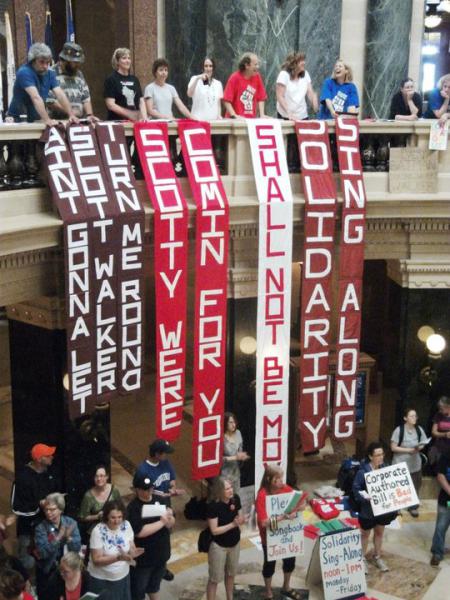
Solidarity Sing A Long: Wisconsin Labor Protests Continue
The noontime sing-along has protested Gov. Scott Walker’s policies daily at Wisconsin’s Capitol since March 11, 2011. However, a new round of arrests began two weeks ago and more than 100 citations have been issued to protesters by Capitol Police. But this is in addition to nearly 200 citations already since July 2012 when the Department of Administration began enforcing new permitting requirements for gatherings in state facilities. What is the noontime solidarity sing-along protest?
Attorney Jonathan Rosenblum:
- When you have a new governor who within weeks in office describes his legislation as a bomb, which was to end collective bargaining for public sector workers.
- This led to more than a hundred thousand people, multiple times on the square where I’m sitting right now here on Wisconsin Avenue.
- Beyond the anti-union agenda, this governor has come in with a pedigree from ALEC, the American Legislative Exchange Council. He as a legislator in the same building was a member of ALEC, was a proponent of its agenda.
- His agenda as it moved along, was to remove vast numbers of children from medicaid, of claiming a jobs agenda would bring Wisconsin to the top in the United States, instead it plunged to the bottom.
- He eliminated funding for high speed trains, instead the trains for Wisconsin are now sitting in Oregon.
- The main point about this governor is about closing the doors of this government to the public.
- Even the union legislation that led to the crowds was passed in violation of a Public Meetings Act.
- Let me take you to March 11, 2011 when it all started. I was standing there with my friend Steve Burns, folks had slept in the capitol for weeks, the anti-union legislation was passed and signed that day and Steve had printed up a few copies of a songbook that had the dome of the capitol opening up with musical notes on the cover of it and 10 tunes, the classics of the civil rights movement.
- Several of them modified in the great Wobbly tradition.
- This sing-along has preceded from that day March 11, 2011 without skipping a beat, every single week day since that date. More than 650 consecutive sing-alongs.
- The sing-along is a joyful conglomeration. It’s reached about 300-400 daily as the crack down has actually caused a surge of concerned citizens to join us.
- We Don’t Want Your Millions, Mister.
- A Long Range Acoustic Device is being used. The police have started to use the recordings of Chief Irwin’s declaration of unlawful assembly to blast into the rotunda so nobody misses it.
- They use the siren that ramps up to 150 db to disable people. They haven’t put it to that level yet.
- The State Capitol Police are in a bind. They have their orders, most are executing them with a little more zeal than they should. Some of them seem to be maintaining friendships that they had before with the singers.
Guest – Jonathan Rosenblum, PRWatch.org contributor, an author, award-winning journalist, and practicing lawyer. His book, Copper Crucible: How the Arizona Miners’ Strike of 1983 Recast Labor-Management Relations in America (Cornell University Press, 1995; Second Edition, 1998) was named as one of Princeton University Library’s “Ten Noteworthy Books in Industrial Relations and Labor Economics” in 1996.
——————————————————————————–
CIA Sponsored Terror, Civil Liberties, Criminalizing Dissent, FBI Intrusion, Habeas Corpus, Human Rights, Political Prisoner, Prison Industry, Supreme Court, Surveillance, Torture, War Resister
Podcast: Play in new window | Download
Updates:
—-

Lynne Stewart: Compassionate Release Decision
Last week Federal District Court Judge Koetl in New York stated he couldn’t consider Lynne Stewart’s request for compassionate release because by law the request needs to come from the Federal Bureau of Prisons. Judge Koetl also pointed out that the Bureau of Prisons didn’t properly consider Lynne’s medical evidence by saying her condition was improving. Meanwhile, Lynne’s doctors have given her a prognosis of 24 to 18 months to live.
Attorney Jill Shellow Levine:
- One of the things his opinion makes clear (Judge Koetl) is that the Bureau of Prisons under the statute makes a motion, he will swiftly and compassionately view the motion.
- Our application would have required him to think outside the box. I think he’s reluctant to do that at least now.
- You can continue your letter writing campaign to the director of the Bureau of Prisons in Washington DC. You can contact your Congress people both on the Senate side and the House side and urge them to get involved and to make known to the director that this is important to them.
- Those are probably the things that count the most.
- Please call to push for Lynne’s release from prison.
- U.S. Bureau of Prisons Director Charles E. Samuels – 202-307-3198 Ext. 3
- U.S. Attorney General Eric Holder – 202-514-2001
- President Barack Obama – 202-456-1111
- Please Write to: Charles E Samuels Jr. / Federal Bureau of Prisons / 320 1st Street Northwest / Washington DC 20534
Guest – Attorney Jill Shellow-Levine, Lynne’s attorney and National Lawyers Guild member.
—–
One Nation Under Surveillance Campaign: Partnership For Civil Justice Fund
In the wake of leaks about the National Security Agency’s massive surveillance program, many ask what legal steps to stem the pervasive breach of civil liberties. We’ll talk with attorney Carl Messineo from the Partnership for Civil Justice Fund about their campaign One Nation Under Surveillance. Years before 9/11 the Partnership was engaged in litigation and advocacy about the ways in which the government and corporations spy on individuals.
The FOIA request reads in part: “The people of the United States have an urgent need for disclosure of the requested information regarding what appears to be the largest covert surveillance program directed against them in U.S. history. The U.S. government and its agencies that are carrying out these unprecedented surveillance programs are not entitled to hide these programs from the public.”
Attorney Carl Messineo:
- One Nation Under Surveillance campaign is a composite of multiple programs that the PCJF has undertaken to challenge and to fight against the surveillance state.
- The program includes public records demands, FOIA requests, lawsuits, litigation as well as campaign and advocacy.
- We’ve been looking at the issue of anti-terror authorities and surveillance authorities being misused to target law abiding people in the United States and in particular those engaged in political activity, well before even 9/11.
- These anti-terror and surveillance authorities, while they were pumped up dramatically after 9/11 were actually being utilized to disrupt, to monitor, surveil, peaceful, political activists even before that catastrophic event occurred.
- The monitoring is done at the behest of private corporations and that’s revealed most clearly in the public records disclosure that we have secured as related to the Occupy Movement.
- Those documents reveal corporations working hand in glove with law enforcement to surveil, to counter, to disrupt the political messaging that this grassroots peaceful movement had.
- This is a movement that came about because of tremendous economic insecurity. People are one pay check away from not being able to meet their basic needs.
- The Wall Street corporations sit in the command centers of law enforcement, so that they have free access to the same flow of information.
- What Manning and Snowden have revealed to us is really a clarion call to action.
- What the NSA does intercept comprehensively, gmail communications, telephone logs of all of our communications.
- Who is that targeting? It’s targeting the law abiding person in the United States. Think about it for a second. What competent terrorist is going to be relying on gmail or google in order to conspire or plan?
- The “undernet” is not being captured. The virtual private networks.
- It completely eliminates the concept of privacy. The privacy implications are staggering. It’s all been done secretly, with secret courts in the United States.
- Senators who had knowledge of this information, and critical of the programs did not possess the First Amendment right to bring or focus attention to these details by citing specifics because they were under gag orders.
- We certainly know the surveillance complex is massive. Edward Snowden didn’t access the top secret documents that he did by working at the NSA. He had to work as a private contractor at Booz Allen.There’s a huge profit incentive. The use of permanent war. There must be a declaration of war in order for emergency powers that are ancillary to those powers to come into effect.
- There needs to be public debate before there is war. But a new concept was developed under the Bush Administration and is perpetuated under the current.
- The notion that there is a permanent state of undeclared war.
- Anti-crime and anti-terror authorities have been used by the government as tools.
- This is a predominant threat of having these tools of social and political control out there and systematically deployed so that the government and the corporations with who they work hand and hand, can anticipate, can know and can suppress and disrupt, democratic action. The lifeblood of a democracy.
- The government governs only by consent and that’s part of the violation here of all of this secrecy.
- A new debate is starting across this county of how do we seize control over these technologies.
- What we’re doing at the Partnership for Civil Justice Fund is a combination of activism and litigation.
- The government has operated in secret because it fears the public’s reaction.
- We have filed public records demands with the NSA, the FBI, the CIA, with other defense and military entities because that’s who is doing this. It’s coming out of the military.
- Our requests demand disclosure to the public, what are the record keeping systems, what are the safeguards, what are the rules, what are the authorities?
Guest – Attorney Carl Messineo, legal director and co-founder of the Partnership for Civil Justice Fund.
———


The Struggle Continues: Seeking Compensation for Vietnamese Agent Orange Victims, 52 Years On
The long term damage left by Agent Orange upon millions of Vietnamese, and the many thousands of U.S. soldiers has yet to be properly accounted and compensated for. Agent Orange’s long term damage set upon the ecosystems of Vietnam 52 years later include long term poisoning of soil and ground water, and near permanent destruction of mangrove forests. Chemical companies such as Monsanto and Dow have profited from defoliant chemical and has paid very little to settle veteran’s lawsuits for Agent Orange related illnesses. Meanwhile, second and third generation of Vietnamese civilians are seriously effected by Agent Orange exposure.
Attorney Marjorie Cohn:
- Studies show that between 2 million 4 hundred thousand and 4 million 8 hundred thousand Vietnamese and tens of thousands of Americans were exposed to Agent Orange during the spraying of Vietnam from 1961 to 1971.
- The Department of Veterans Affairs recognizes certain illnesses and diseases as being associated with the use of Agent Orange. Lists diseases. . .
- During the Nixon Administration there was a promise, in 1973 as part of the Peace Accords that were signed in Paris. The Nixon Administration promised to contribute 3 billion dollars toward reconstruction and healing the wounds of war and that money has not been forthcoming.
- The chemical companies, Dow and Monsanto paid a pittance to settle a lawsuit to compensate unintended victims for Agent Orange related illnesses.
- The intended victims, the Vietnamese sued the chemical companies in U.S. Federal Court and were unsuccessful. But the lawsuit spawned to hold the United States accountable for using these dangerous chemicals.
- HR 2519, The Victims of Agent Orange Relief Act of 2013. It would provide medical and rehabilitative compensation to Vietnamese victims of Agent Orange and medical services for children of U.S. Vietnam veterans and Vietnamese Americans who have been born with these same diseases and birth defects.
- It would also remediate or clean up hot spots which have been contaminated by dioxin.
- Dioxin is the culprit in Agent Orange. Dioxin the most toxic chemical known to science.
- The US government and the chemical companies did know about it (harmful effects) and they covered up a report and it wasn’t until the late sixties that they stopped spraying Agent Orange because of the negative publicity.
- Now it falls to the Peace Accords in 1973.
- Vietnam Agent Orange Relief and Responsibility Campaign. I would urge everyone to make sure your Congress person is a co-sponsor of HR 2519. The Victims of Agent Orange Relief Act of 2013.
- Obama who was 14 at the time of the Vietnam War, has come out with a campaign to which looks to rewrite the history of the Vietnam War in a way that actually lies about what the U.S. did in Vietnam.
Guest – Attorney Marjorie Cohn, professor at Thomas Jefferson School of Law and on the board of the Vietnam Agent Orange Relief and Responsibility Campaign. Her latest article The Struggle Continues: Seeking Compensation for Vietnamese Agent Orange Victims, 52 Years On, details a strategy for compensating victims of the Agent Orange chemical.
—————————————————————-
Afghanistan War, Civil Liberties, Habeas Corpus, Human Rights, Iran, Iraq Veterans, Iraq War, Prosecution of the Bush Administration, Surveillance, Torture, Truth to Power
Podcast: Play in new window | Download
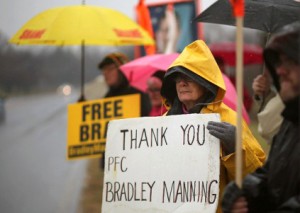
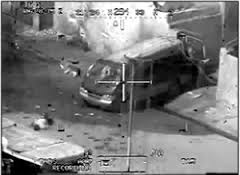
Michael Ratner: Bradley Manning Verdict Update
- I’ve been doing a lot of media on this lately, doing a lot of debates. I take a firm position. He should never have been tried in the first place.
- He’s a hero, he’s a whistle-blower. He publicly exposed the truths about the nature of this country particularly its human rights violations, its criminality and its corruption.
- That constitutes whistle-blowing and whistle-blowing is a legal defense to whatever kinds of crimes the United States wanted to try him. He shouldn’t have prosecuted at all.
- First we’ve all seen the collateral murder video. The killing of 2 Reuters journalists and I believe 10 civilians shot with a gung-ho blood lust.
- Those crimes were never really investigated, no one was prosecuted for them and yet it was cold-blooded murder taking place from an Apache helicopter on the streets of Baghdad.
- Think about what the Iraq war logs revealed. 20 thousand more civilians killed in Iraq then the U.S. said were killed.
- That fact alone caused the government of Iraq to not sign another Status of Forces agreement with the United States, because it would have given immunity to U.S. troops. Because there was no immunity for U.S. troops, the U.S. said we’re not staying in Iraq. Think about how important that is.
- Then there was a story last year taken from Wikileaks and Iraq war logs of torture centers run in Iraq in 2003-2004.
- The only reason we knew about that was because of Bradley Manning.
- That is a little example of what Bradley Manning has revealed to all of us of the criminality of our own country and information we ought to know and debate.
- The only reason we consider anything to be positive in this verdict is because Bradley Manning was so overcharged to begin with a ridiculous charge of aiding the enemy that was sustained by a judge with a motion to dismiss and let go til the end until she finally acquitted him of it – that we’re relieved that he wasn’t convicted of it.
- He was convicted of 20 charges. Six of them were espionage charges each of them carrying 10 years.
- Six of them were theft of government documents, each of them carrying 10 years.
- This is the first ever conviction of anyone in the United States who is a whistle-blower, who is a quote leaker for espionage. There is great fear being sown by Obama, Holder and others both in regard to whistle-blowers and to journalists.
Law and Disorder Co-host Attorney Michael Ratner, President Emeritus of the Center for Constitutional Rights (CCR), a non-profit human rights litigation organization based in New York City and president of the European Center for Constitutional and Human Rights (ECCHR) based in Berlin. Ratner and CCR are currently the attorneys in the United States for publishers Julian Assange and Wikileaks. He was co-counsel in representing the Guantanamo Bay detainees in the United States Supreme Court, where, in June 2004, the court decided his clients have the right to test the legality of their detentions in court. Ratner is also a past president of the National Lawyers Guild and the author of numerous books and articles, including the books The Trial of Donald Rumsfeld: A Prosecution by Book, Against War with Iraq and Guantanamo: What the World Should Know, as well as a textbook on international human rights.
———
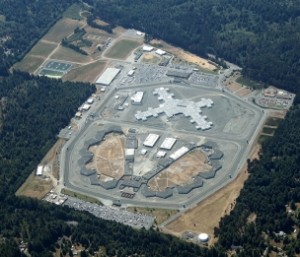
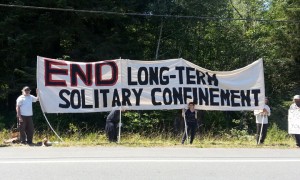
Pelican Bay Prison Hunger Strike
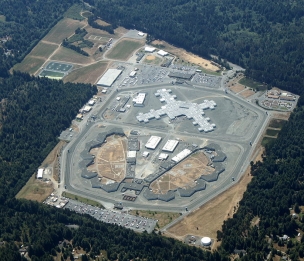
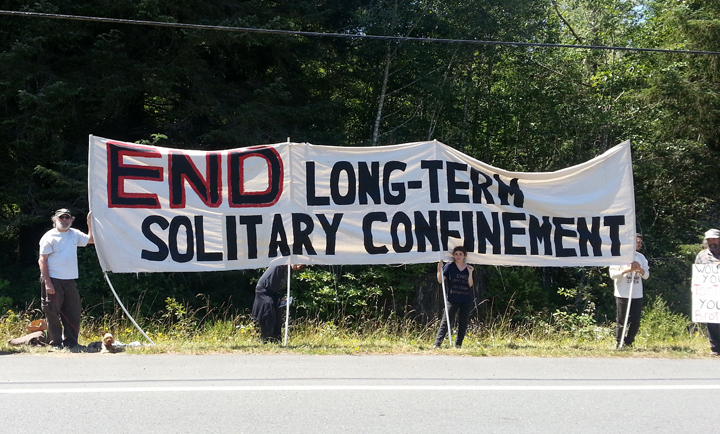
Last month, prisoners at Pelican Bay Prison went on another hunger strike to protest solitary confinement and security unit conditions. What does solitary confinement mean at Pelican Bay Prison? Well, prisoners spend 22 to 24 hours a day in a cramped, concrete windowless cell. The food is often rotten. Temperatures are extremely hot or cold. Within 15 days, these conditions can cause psychological damage.
Jules Lobel, who represents the prisoners at Pelican Bay in a lawsuit challenging long-term solitary confinement in California prisons says prisoners land in solitary confinement not for crimes they were convicted of, not for any rule violation or violent act while in prison, but based on the slimmest pretext of “affiliation” with a gang.
Attorney Jules Lobel:
- At any one time around the country there are about 80 thousand people that are in some form of solitary confinement.
- In California alone there are 4000. What makes California somewhat unusual is there are a large number of prisoners who’ve been in solitary confinement for over a decade and many over 20 years.
- In Pelican Bay Prison there are over 400 hundred who have been in solitary confinement for over ten years and about 80 for two decades.
- The conditions they’re place under are draconian.
- The cells my clients are in, there are no windows. People spend 20 years without seeing trees, birds, the grass.
- That’s unusual to have a whole prison without any windows.
- They put in thousands of people in solitary simply for gang affiliation. You don’t have to have committed any crime (disclipinary infraction) in prison.
- You get a birthday card from a member of a gang.
- There are things society will look back on, and say how could this have been done in a civilized society. We look back at slavery and segregation now and say that.
- They say that they will force feed only when the prisoner loses consciousness.
- These folks are on a no solid food hunger strike and they’ve been willing to take salt tablets, vitamins.
- We looked at the situation in California as I described and we also knew that 2 years ago hundreds of thousands of prisoners went on hunger strikes in California protesting this and were promised reforms that were never delivered.
- We decided that the time was right for a class action lawsuit.
- We brought the lawsuit in May 2012.
- We claim 2 things. To keep people in these conditions for over a decade is cruel and unusual punishment. It’s a violation of the Eighth Amendment.
- To keep someone in these conditions because they think they’re gang affiliated is disproportionate.
- The case only deals with one, and that’s the most notorious, and that’s Pelican Bay Prison.
- There are a thousand prisoners in solitary confinement at Pelican Bay.
- They deliberately place this prison where its 7 hours from any nearest major metropolitan area by car.
- It’s like a gulag there in that they don’t want any media exposure or attention being placed on them.
- It’s way more costly to put someone in solitary confinement. It’s a waste of tax payer resources.
Guest – Attorney Jules Lobel, has litigated important issues regarding the application of international law in the U.S. courts. In the late 1980’s, he advised the Nicaraguan government on the development of its first democratic constitution, and has also advised the Burundi government on constitutional law issues. Professor Lobel is editor of a text on civil rights litigation and of a collection of essays on the U.S. Constitution, A Less Than Perfect Union (Monthly Review Press, 1988). He is author of numerous articles on international law, foreign affairs, and the U.S. Constitution in publications including Yale Law Journal, Harvard International Law Journal, Cornell Law Review, and Virginia Law Review. He is a member of the American Society of International Law
—–
Who Will Bell The Cat? . . . Working People : Michael Zweig
2013 Left Forum Presentation by Michael Zweig is Professor of Economics at Stony Brook University and director of the Center for Study of Working Class Life. His most recent books are What’s Class Got to Do with It: American Society in the Twenty-first Century (Cornell University Press, 2004), and The Working Class Majority: America’s Best Kept Secret (Cornell University Press, 2000 – 2nd edition due December, 2011). In 2005-2006, he served as executive producer of Meeting Face to Face: the Iraq – U.S. Labor Solidarity Tour. He wrote, produced, and directed the DVD Why Are We in Afghanistan? in 2009.
————————————————————————–
Afghanistan War, CIA Sponsored Terror, Civil Liberties, Criminalizing Dissent, Extraordinary Rendition, FBI Intrusion, Habeas Corpus, Human Rights, Military Tribunal, Political Prisoner, Prison Industry, Surveillance, Targeting Muslims, Torture, Truth to Power, War Resister
Podcast: Play in new window | Download
Updates:
- Michael Ratner: Bradley Manning’s Defense Makes Case To Dismiss Aiding The Enemy Charge
- Freedom of the Press Foundation For Transcripts
- Update: Judge Upholds Aiding The Enemy Charge in Bradley Manning Trial
—
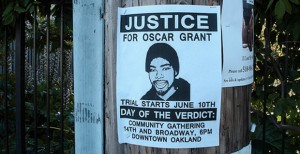
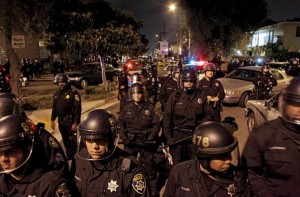
NLG Obtains $1.17M, OPD Reforms for Occupy Oakland Protesters and Journalists
In recent weeks, attorneys from the National Lawyers Guild achieved two significant victories for the rights of protesters faced with police brutality and unlawful repression. The first came when the city of Oakland settled a class action lawsuit for more than 1 million dollars. The second victory occurred in early July when Oakland City Council approved a settlement for 1.17 million in another lawsuit arising from police actions at protests. As part of these settlements, the Oakland Police Department is now legally obligated to follow a crowd control policy. This policy which already existed but lacked enforcement outlines limits on police department officer’s use of force and the ability to make mass arrests in protest situations.
Attorney Rachel Lederman:
- The first case has to do with the demonstration that had occurred on the day Johannes Mesterly was sentenced for the death of Oscar Grant. That’s the BART officer who shot Oscar Grant in the back as he was restrained facedown on the subway platform.
- There’s a movie out about the last day in the life of Oscar Grant called Fruitvale Station that I would highly recommend seeing it’s playing all over the country now.
- The death of Oscar Grant sparked a large number of demonstrations. November 5, 2010 was the date that Mesterly was sentenced and he was given a very minimal sentence of involuntary man slaughter of 2 years, 11 months with time served.
- There was a demonstration planned for that evening it was actually a very small demonstration. OPD had planned to not allow a march after dark.
- There was a rally that was permitted in downtown Oakland and then about 200 people started marching in the direction of Fruitvale Bart where the shooting had occurred. As soon as the march started the police began to set up for mass arrest.
- When a police line would be erected in front of the march people would naturally turn another direction. This went on for a while, where the march was re-routed.
- Eventually the OPD herded people to a residential area where they didn’t intend to go. The police announced it was a crime scene and began arresting everyone.
- The Oakland City Police have been under consent decree since January 2003 mandating reform process.
- We’ve had this crowd control policy in place but basically every single provision of the crowd control policy was violated in the Occupy Oakland incident and the Oscar Grant incident.
- We brought those cases to try to enforce the crowd control policy. A lot has changed in the last six months.
- There’s also been a new shake up of command (OCP) there’s a new acting chief.
Guest – Rachel Lederman, a California based National Lawyers Guild attorney who worked on both cases. Rachel first got involved in police misconduct civil rights cases as a result of her criminal defense work with political demonstrators. In 1989, Dennis Cunningham and Rachel Lederman successfully sued the San Francisco Police to obtain justice for AIDS activists who had been brutalized and unlawfully detained in what became known as the “Castro Sweep”.
—–

Surveillance Blowback: The Making of the U.S. Surveillance State, 1898-2020
What is the history and context of surveillance in the United States? Last week Scott Horton explained how the Foreign Intelligence Surveillance Act court devolved into a panel of judges making decisions in secret that influence federal law. Returning guest Alfred McCoy traces the US surveillance apparatus back to the late 1800s and brings us up to understanding the context of leaked NSA documents by whistle-blower Ed Snowden. In his latest article titled Surveillance Blowback: the Making of the U.S. Surveillance State 1898-2020, Al McCoy, Professor of History at the University of Wisconsin-Madison details the surveillance timeline beginning with the US occupation of the Philipines and makes the connection to US imperialism abroad and apathy at home.
Professor Alfred McCoy:
- Four years ago I published a book called Policing America’s Empire which started in the Philipines and started the history of US domestic surveillance through what I call surveillance blowback.
- It’s the trajectory of history that allows you to see this.
- In the late 19th century America had what I call our first information regime which was really a brilliant synergy of discoveries.
- Thomas Edison’s quadruplex telegraph, Remington’s typewriter allowed the transmission around the world, across the nation, absolutely accurately at 40 words a minute.
- The Gamewell Corporation for a half century during the 19th century was the world leader in the development of police telegraph and telephone communication – those police boxes that used to be on the streets of every American city.
- The Gamewell Corporation had 900 of these boxes in operation and collectively they sent 41 million messages in the year 1900.
- When we intervened in the Philippines we were suddenly faced with this massive insurgency, this guerrilla underground. We smashed the regular military formations but we couldn’t break the insurgency.
- The US military in order to pacify that country created the first field intelligence unit in its 100 year history.
- They appointed an obscure medical doctor Captain Ralph Van Deman to be the head of the division of military information.
- He decided he would map the entire Filipino political elite.
- William Howard Taft passed very draconian sedition and libel legislation and created a powerful colonial secret police called the Philipines constabulary. It took about 10 years to accomplish. 1898-1907
- We had to track down the politicians (Philipines) we had to manipulate them.
- 10 years after that process, the US joined WWI. April 1917.
- The United States was the only army on either side of the battlefield that didn’t have an intelligence service with any description.
- We turn now to Colonel Van Deman who applied his Philippines experience to developing a very elaborate counter-intelligence apparatus inside the United States.
- Mr and Mrs Van Deman ran a private intelligence service that had Army file clerks and regular FBI liason officers dropping by.
- And from their home they compiled files on 250 thousand suspected subversives.
- They divided the world. Basically, North America, Latin America became the purview of the FBI for counter-intelligence the rest of the world became purview of US military intelligence and of course the CIA and then NSA.
- That division of the word remain in effect until December 2011.
- 3 million Afghani iris scans and fingerprints are housed in a main frame computer in West Virginia.
- So, we developed then, this very efficient system of surveillance and digital monitoring overseas.
- During the war on terror we now know the Bush Administration beginning October 2001 authorized the NSA to start massive capping of all digital communications.
- In March of this year, it was 97 billion emails that were tapped by the NSA.
- This began migrating home very very quickly.
- When Obama came even though he criticized this illegal wiretapping, when he came in, instead of cutting it back like the Republicans did in the 1920s, he decided to build upon it.
- What he’s building upon it for is to build an architecture for the exercise of global power through a significant edge or advantage for information control and information warfare.
- Obama wants to cut back on the appropriations for the big behemoths, the heavy tanks, the big ships and he wants to shift us into an agile form of information warfare and global information control.
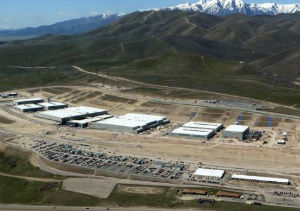
- The NSA is spending 1. 6 Billion dollars for the world’s biggest data farm in Bluffdale, Utah.
- The National Geo-spatial Intelligence Agency has a nearly 2 billion dollar headquarters with 16 thousand employees in DC.
- The Obama Administration has launched a new generation of light low cost, very agile satellites that can be remotely controlled from the ground, serving ground force commanders.
- The Obama Administration is also building an armada of 99 Global Hawk drones with 24 hour flight capacity. These are surveillance drones with a 100 mile ambit for sucking audio communications.
- With the combination of drones sucking up the local two way radio – cell phone communication with the tapping of the fiber optic cables within the US by the NSA, and internationally by the Five Eyes Coalition, Canad Australia, New Zealand and Britain, means that the NSA will have a total global surveillance system for the first time in human history.
Guest – Alfred McCoy, Professor of History at the University of Wisconsin-Madison. His recent book, Policing America’s Empire: The United States, the Philippines, and the Rise of the Surveillance State (2009), draws together these two strands in his research–covert operations and Philippine political history–to explore the role of police, information, and scandal in the shaping both the modern Philippine state and the U.S. internal security apparatus. In 2011, the Association for Asian Studies awarded Policing America’s Empire the George McT. Kahin Prize, describing the work as “a passionate, elegantly written book.” He’s also the author of “Torture and Impunity: The U.S. Doctrine of Coercive Interrogation.” Al is also the author of “A Question of Torture: CIA Interrogation, From the Cold War to the War on Terror” and “The Politics of Heroin: CIA Complicity in the Global Drug Trade. The first edition of his book, published in 1972 as The Politics of Heroin in Southeast Asia, sparked controversy, but is now regarded as the “classic work” about Asian drug trafficking.
—————————————————
CIA Sponsored Terror, Civil Liberties, Crony Capitalism, Guantanamo, Habeas Corpus, Human Rights, Military Tribunal, Political Prisoner, Prison Industry, Prosecution of the Bush Administration, Supreme Court, Surveillance, Targeting Muslims, Torture
Podcast: Play in new window | Download
Updates:
- Prisoner’s Hunger Strike: Pelican Bay Prison, Guantanamo Bay Prison, Palestinians In Israeli Prisons
- CCR Lawsuit – Pelican Bay Prisoner Class Action
- 20 Plus Palestinians On Hunger Strike In Israeli Prisons Demand Better Conditions For Pelican Bay Prisoners
- Federal Judge Gladys Kessler Says the President Is The One To Stop Force Feeding and Release Cleared Guantanamo Bay Detainees
- Bradley Manning Trial: Important Proceedings During Defense Case At Ft Meade, Maryland
—-
Secret Federal FISA Court Advocate of National Security State
Here on Law and Disorder we’ve discussed the process of the US government expanding its power to get wiretapping permission from the Foreign Intelligence Surveillance Court or FISA court. This is under a provision called section 215 of the Patriot Act which if listeners might recall was set to expire in 2009. It did not. We discussed how the FISA court will be accessed by what’s called Lone Wolf Authority or National Security Letter Authority whereby the FBI can write a letter to the court without suspicion of terrorism and get bank, telephone and internet records.
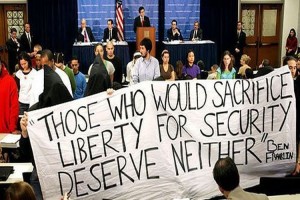
The 11-member FISA Court has been central to allowing a massive surveillance state to exist by granting US agencies such as the NSA access to private telecommunication data. Today, the FISA court essentially operates as an advocate for the national security state. It’s judicial oversight now parallels the Supreme Court. But more troubling, these FISA Court Justices operate in complete secrecy and base their decisions from hearing only one side the argument, the US government’s.
Attorney Scott Horton:
- The Nixon Administration attempted to use “intelligence gathering” as a justification. Congress reacted to that by saying we’re not going to agree that the government has the right to wiretap people in the United States on the grounds of intelligence gathering. We’re going to require this judicial check, so Congress created this special court the FISA court.
- The court has been around for a long time, but its become a far more significant entity doing much more work after 9/11.
- It has 11 judges. The judges are selected by the Chief Justice of the Supreme Court, John Roberts.
- The judges are picked from courts all around the country.
- It’s not a secret court in that we know that it exists. It IS a secret court in that it operates in secret.
- Literally, the public doesn’t know what papers are filed with it and doesn’t know about its decision.
- That’s a highly controversial matter because decisions by federal courts constitute law.
- This means that this court is manufacturing secret law that the people don’t know about.
- We don’t know the jurisprudence of this court, we don’t know its decisions, we don’t know the full rationale for all its decisions because most of them have been secret.
- It is very aggressively expanding the power and authority of the NSA in surveillance areas.
- This is a court picked by Roberts who share his attitude. Out of 11 judges we have 10 Republican appointees. It’s very well known that Roberts in making appointments here looks very closely to select only judges who reflect his attitudes about the national security state.
- It is a cherry picked court. A movement conservative perspective which is quite hostile to civil liberties.
- The court has become an advocate for national intelligence services.
- It really puts the whole institution of the court under a cloud right now.
- If you want to disperse that cloud you would make sure those judges are representatives of the country.
- The legal reasoning and interpretation of statutes that should be there for people to see and know and understand and criticize.
- Telecoms: Here they are service providers dealing with consumers, lying to their clients and allowing the government free access to all this information.
- That is a criminal act under various statutes of states including New Jersey and Maine. That have rules that say they may not allow governments, investigators access to this information other than pursuant to a government subpoena or court order.
- This court is sweeping away core rights and making a joke out of the 4th Amendment.
- Whistle-blower damage control strategy: A program to deflect attention from the disclosures themselves.
- There is a move afoot to take this out on the American service providers who cooperate with the NSA, Verizon, AT&T. . .Google and so forth.
Guest – Scott Horton, human rights lawyer and contributing editor to Harper’s Magazine. Scott’s column – No Comment. He graduated Texas Law School in Austin with a JD and was a partner in a large New York law firm, Patterson Belknap Webb & Tyler.
—-


Left Forum 2013: Ron Reosti
Capitalists are not necessary to run firms, nor to run macro-economies and investment says Ron Reosti in his presentation at the Left Forum Panel titled Imagine Living In A Socialist USA, Part 2: Making The American Socialist Revolution.
Speaker – Ron Reosti, his Italian parents imparted to him a working-class identity, a sense of social justice, a belief in the possibility of social change, a commitment to democracy, and a hatred of the undemocratic ruling class. He embraced socialism in his early teens, during the McCarthy era, and has remained committed to that vision. He practices law and is part of the radical community in Detroit.
———————————————-