CIA Sponsored Terror, Civil Liberties, Habeas Corpus, Human Rights, Political Prisoner, Targeting Muslims, Truth to Power, War Resister
Podcast: Play in new window | Download
Updates:
—-

White-washing Human Rights Abuses and Suppressing a Popular Revolution
Two years since the Arab-Spring demonstrations erupted in Bahrain, human rights abuses continue to this day. In 2011, an independent report exposes these abuses that compelled the Kingdom of Bahrain to hire former NYPD police chief John Timoney to white was acts of political repression. Who is John Timoney and why was he outsourced to Bahrain? We ask legal worker and journalist Kris Hermes who recently penned the article John Timoney and Kingdom of Bahrain: White-washing Human Rights Abuses and Suppressing a Popular Revolution.
Kris Hermes:
- Shortly after the Arab Spring began in 2011, Bahrain followed in the footsteps of Tunisia and Egypt by demonstrating against the ruling monarchy that’s been in power for more than 200 years.
- Those protests were met with intense repression by King Hamad.
- The protests made of the Shiite population who argue they’ve been systematically discriminated against in employment, housing, education.
- The ministry of interior hired John Timoney as well as John Yates who is from the UK.from Britains metropolitan police department.
- John Timoney started with a long career in the New York City Police Department, he was probably most well known for his handling of the Tomkins Square Park riots in 1988.
- Regardless of what he did to clean up the Philadelphia Police Department, his handling of the Republican National Convention protests were abysmal. He came down very hard on protesters in 2000, essentially establishing a new form of policing in the United States that for the most part was intolerant of political demonstrations.
- He became the police chief of Miami in 2002 and oversaw one of the most violent police reactions in modern history. He not only used what he learned in Philadelphia, conducting preemptive raids, using infiltration and heavy surveillance, brutalizing protesters on the street, and wrongfully arresting hundreds of people.
- In Miami he used a whole panaply of weapons against protesters, including tear gas, pepper spray, rubber and wooden bullets, bean bag rounds, tasers and electric shields.
- He gained a reputation both in Philly and Miami.
- He’s been in Bahrain for a year and a half now and has a two year contract and its just about up.
- That’s the reason why the article was done, an assessment on how Timoney has done in Bahrain in terms of his crown control measures.
- Andrews International: Part of a security apparatus that is increasingly private in terms of policing and security personnel that are deployed around the world.
- It allows the US to expand its militia around the world as well.
- The death toll of political demonstrators has only increased since Timoney arrived on the scene. One of his favorite tools to suppress demonstrations in the United States is tear gas.
- Things are pretty dire for political dissidents in Bahrain.
Guest – Kris Hermes, activist who provides legal support work on cases involving political dissidents.
—-

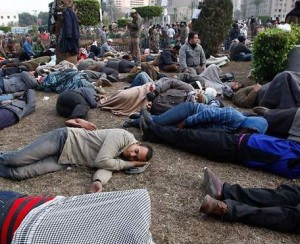
Egyptian President Mohamed Morsi Ousted Following Days of Massive Largest Anti-Government Protest
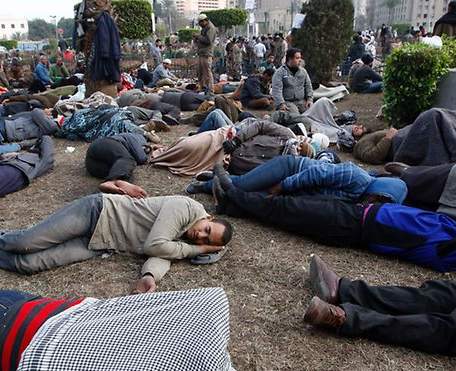
Last week, democratically elected President Mohamed Morsi was ousted following historic demonstrations by Egyptian protesters. Morsi and his advisors have been held under house arrest in the Egyptian Republican Guard Club, the highest Brotherhood leader, Mohammed Badie, and some associates of his have been arrested. Protesters accused Morsi of supporting Obama’s anti-Syrian agenda, ignoring critical economic problems and betraying his support for Palestinians. However, what are the some of the economic issues involved that led up to these massive protests?
Omar el-Shafei:
- We’re going through a real historic process. At least you had 20 million people in the streets expressing their anger in different Egyptian cities.
- This is a continuation of the process that started in January 2011, not just Egyptian but an Arab phenomenon.
- I think its a complete anger, bitterness and disillusionment of the rule of the Muslim Brotherhood.
- We have to remember that the Muslim Brotherhood has been the largest opposition force during the last decade of the Mubarack dictatorship.
- After one year in power they managed to alienate everybody. They were essentially ruling as a continuation of the old regime, and pro-imperialist foreign policy.
- The dominant image of the Arab Spring is purely political, middle class, youthful mobilization aiming at democratizing despotic regimes.
- The Mubarack dictatorship for years and sometimes decades have applied neoliberal economic policy that tremendously increased class divide, so the social element of this revolution was vital.
- In the case of Egypt, the revolution in 2011 came after five years of the biggest wave of workers struggle in the history of the country, since the 1940s.
- The continuation of the revolution is in large part of the worker mobilization. After the revolution we didn’t have independent trade unions, they incorporated by the state.
- More like the agent of the state against the liberal movement.
- Since then we’ve witnessed an emergence of thousands of trade unions and they are playing an important part in the revolution in social demands.
- The message from below even when it is apparently limited demands it has the potential of raising people’s confidence and enhance a process of self radicalization that can link these demands to a wider vision of transformation in society.
- What happened in Turkey a few weeks ago and Brazil more recently has very much has inspired the Egyptian struggle.
- What we are witnessing is a huge mobilization against the Muslim Brotherhood. The military prefer to remain in the background.
- We are in a prolonged revolutionary process and I think that the people are learning from their own experience.
Guest – Omar el-Shafei, political activist, and independent researcher currently living in NYC. He is a doctoral candidate of International Law at Paris VII University in France. Omar is a founding member of the “Committee of Solidarity with the Struggle of the Egyptian People” in Paris, France, and author of “Workers, Trade Unions, and the State in Egypt, 1984-1989,” Cairo Papers in Social Science, American University in Cairo Press (Volume 18, Monograph 2, Summer 1995).
———————————————————————
Civil Liberties, Criminalizing Dissent, Habeas Corpus, Human Rights, Prison Industry, Surveillance, Targeting Muslims, Torture, Truth to Power, War Resister
Podcast: Play in new window | Download
US State Department’s Office of Guantanamo Closure
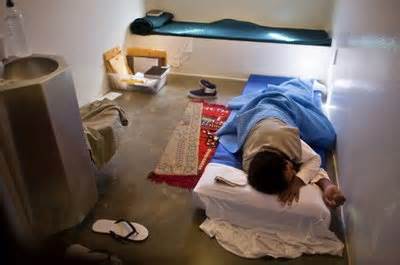
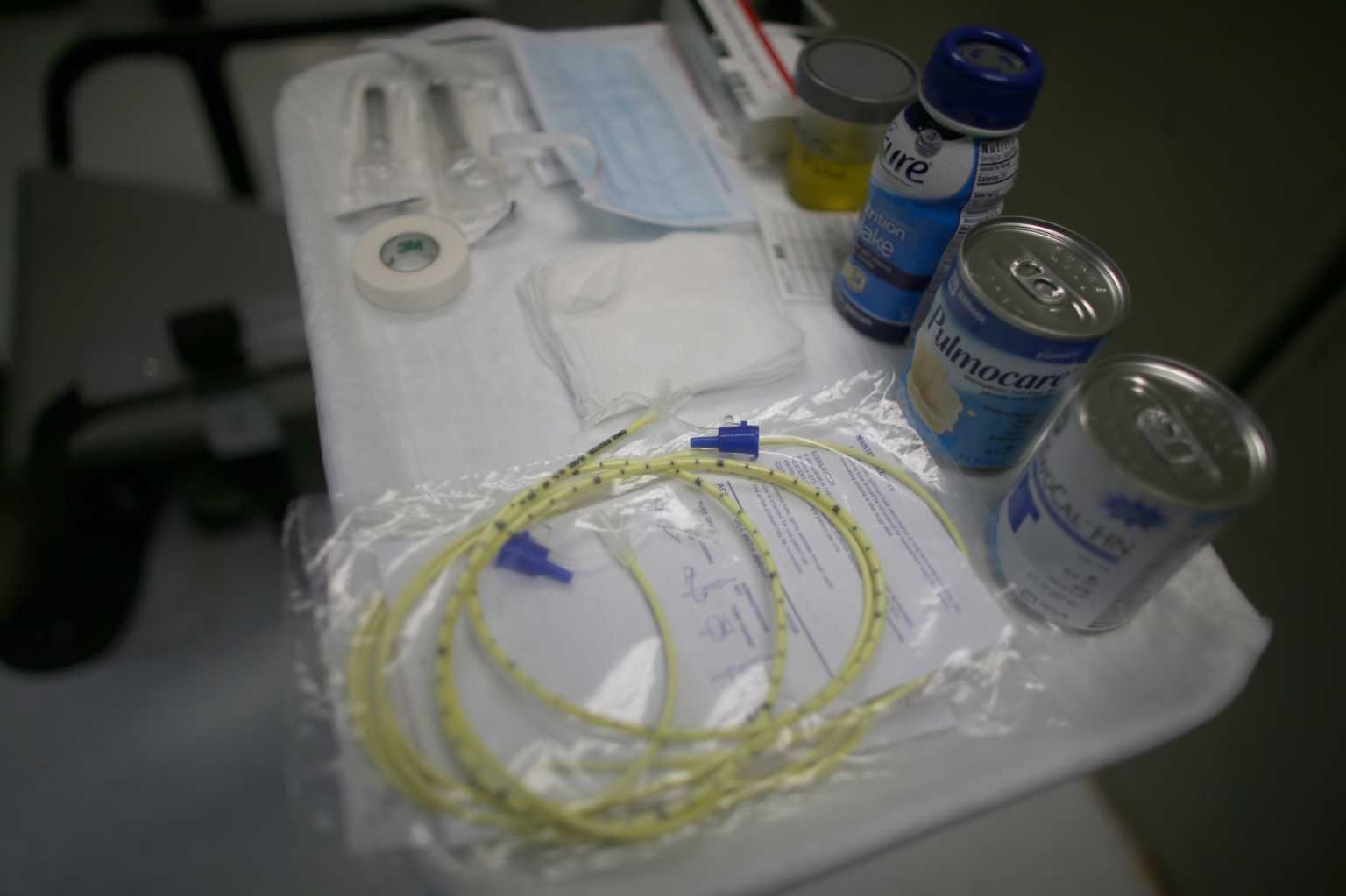
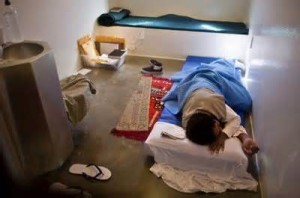
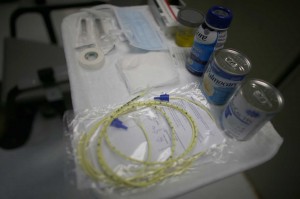
The US State Department’s Office of Guantanamo Closure was shut down in January and is now in the process of reopening. President Obama recently appointed Clifford Sloan, a Washington lawyer to run the special envoy. Meanwhile attorney Pardiss Kebriaei has recently returned from the military-run prison in Guantanamo Bay Cuba, and joins us to discuss the conditions there, including the hunger strike. Attorney Pardiss Kebriaei has represented men detained at Guantanamo in habaes corpus challenges.
Attorney Pardiss Kebriaei:
- CCR represents 8 men still detained at the base right now. We’ve represented dozens, we’ve coordinated the representation of dozens. Some men who’ve been cleared by the Obama Administration, who were cleared in 2009, and 2010, they include men who’ve never been charged, that’s the group we represent.
- There are 166 people who remain, more than half of them 86 have been told by President Obama and his people that they don’t need to be there.
- I met with 3 men, all Yemeni. 2 have been cleared. All of them are on hunger strike.
- It’s shocking to think of how much things have regressed since the strike has progressed.
- In 2008 when I started going down to the base, most people were held in solitary confinement. That is what conditions are again now in 2013. Right now in Camp 6 there are at least 76 men who are sitting in 22 hour a day isolation.
- Recreation time is 2 hours in a cage outside.
- There is also an access to council issue right now. Searches are humiliating, equivalent to being sexually assaulted when they’re moved out of their cells.
- The practice of force feeding is unequivocally a violation of international medical, ethical standards.
- The United States is alone in thinking this in its position that this is a humane and acceptable practice.
- Out of 800 held at Guantanamo, fewer than 2 dozen charged. The rest have all been held without charge.
- Obama pointed the finger at Congress and said Congress determined it would not allow me to close Guantanamo.
- Congress did pass the NDAA in 2011 that would make transfers more difficult but it didn’t take power away from the president.
- It specifically provided a national security waiver provision. Yet Obama has been saying for years because of the NDAA he has been effectively prohibited from transferring anyone and that’s is just not true.
Guest – Attorney Pardiss Kebriaei, she joined the Center Constitutional Rights in July 2007. Since then, her work has focused on representing men detained at Guantánamo Bay in their habeas corpus challenges, before international human rights tribunals, in diplomatic advocacy with foreign governments to secure resettlement for men who cannot return home, and in post-release reintegration efforts. Her clients have included men from Yemen, Syria, Algeria, and Afghanistan. Her work includes seeking accountability for torture and arbitrary detention at Guantánamo.
Past Law and Disorder Interview With Pardiss Kebriaei.
—-
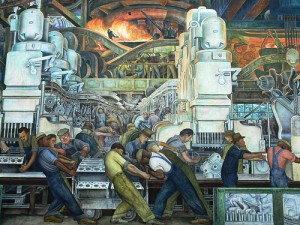
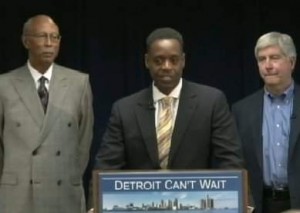
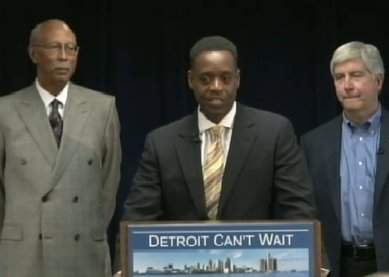
Why Does The City of Detroit Plan To Cut 9 Billion In Retiree Pensions and Healthcare?
The emergency manager of Detroit Kevyn Orr recently announced a plan that would wipe out the pensions and health benefits of all current and retired city workers. The plan eliminates 9 billion dollars in worker benefits, effectively condeming nearly 20 thousand retirees to poverty. Orr is a wealthy Wall Street lawyer who played a key role in restructuring the auto industry carried out by the Obama Administration. Many see this plan as part of the worldwide assault on working class people. How are workers responding to these aggressive cuts? We also listen to Dianne’s presentation at the Left Forum 2013 in New York City.
Dianne Feeley:
- He is attempting shock therapy. Basically he wants to take all of the resources that can be used in Detroit and outsource them and do away with them as in the case of the pensions and health care benefits.
- He suggested to make the city owned art work from the Detroit Institute of Arts available to also be used for this debt which grows by the day. They were talking about 15 billion dollars, now they’re talking about 20 billion.
- The neo-liberals plan is a 3 part plan. First to develop a cheaper and more flexible work force. Meaning reducing pensions, reducing the power of unions.
- The second is transferring public resources into private hands. The third is to appropriate profitable resources. For example we have a lighting department, which has been under funded for 40 years because DTE Energy has tried to prevent development of infrastructure. Now it’s in very bad shape.
- In many of these countries Greece, Portugal, Brazil, there’s a technocrat put in charge in our case its an Emergency Manager.
- More than 50 percent of the African Americans in Michigan have lost their vote through the imposition of Emergency Managers in our cities.
- It’s important to understand we only have 10 thousand city employees left. They’ve already had their pay cut 10 percent.
- Now what they’re trying to do is get rid of the medical care for the retirees.
Guest – Dianne Feeley, retired auto worker who currently serves as an editor of Against the Current, a socialist magazine. She is an advocate for auto workers and has written recently about the U.S. auto industry, arguing that the government should buy Chrysler and General Motors and turn them into a public trust.
——————————————————————–
CIA Sponsored Terror, Civil Liberties, Criminalizing Dissent, FBI Intrusion, Habeas Corpus, Human Rights, Prison Industry, RFID, Supreme Court, Surveillance, Targeting Muslims, Truth to Power, War Resister
Podcast: Play in new window | Download
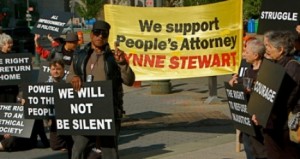
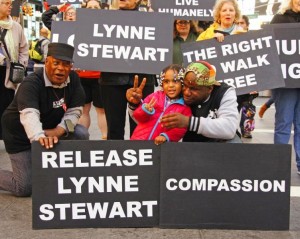
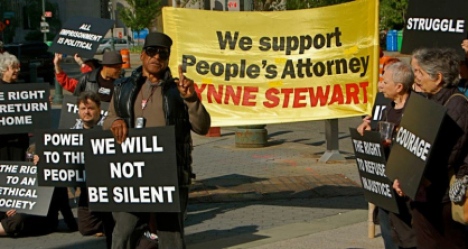
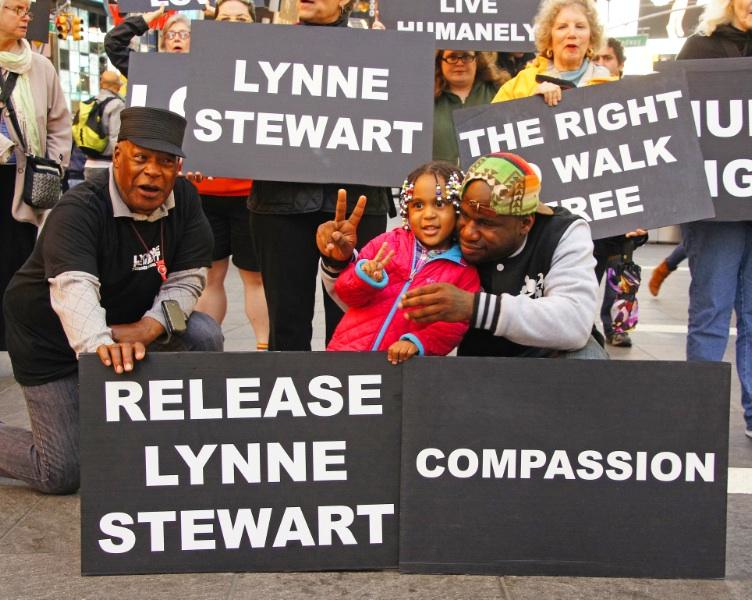
Historic Vigil And Compassionate Release For Lynne Stewart
It’s been seven weeks since Warden Jody Upton of FMC Carswell approved Compassionate Release for Lynne Stewart. This decision was based on the medical findings of Stage 4 cancer that spread Lynne’s scapula, lymph nodes and lungs. A massive vigil was held last week for Lynne at Federal Bureau of Prisons Headquarters in Washington DC. We’re joined today by former Attorney General of the United States Ramsey Clark who is helping to get Lynne Stewart released from prison.
Attorney Ramsey Clark:
- The matter is now on the desk of the director of the Federal Bureau of Prisons, it’s been there for about five or six weeks which is intolerably long because everyday counts.
- Lynne is in physical desperate condition, her cancer is spreading. She has appointments at Sloan Kettering when she gets out that may extend her life.
- It’s slipping away while the director of the Federal Bureau of Prisons who seems to be opposed of Compassionate Release or any broad application of it, sits on her application.
- Charles Samuels, seemed to have isolated himself from this issue. Any letters to Director Samuels would be helpful and important.
- He’s being bombarded but for some reason, he’s holding out because he wants an interpretation of the compassionate release statute that would enable the release of only those who are going to die in the very near future, have no hope of living longer.
- Right now we have an urgent human matter, a very wonderful human being, mother and grandmother is dying in prison.
- Please Write to: Charles E Samuels Jr. / Federal Bureau of Prisons / 320 1st Street Northwest / Washington DC 20534
Guest – Attorney Ramsey Clark was the former Attorney General of the United States, under President Lyndon B. Johnson. He was the first Attorney General at the Justice Department to call for the elimination of the death penalty and all electronic surveillance. After he left the Johnson administration, he became a important critic of the Vietnam War and continued defending the rights of people worldwide, from Palestinians to Iraqis, to anyone who found themselves at the repressive end of government action.
—-
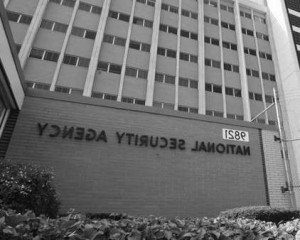
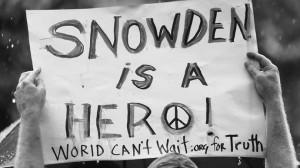
Whistleblower Cases Update
Attorney Michael Ratner:
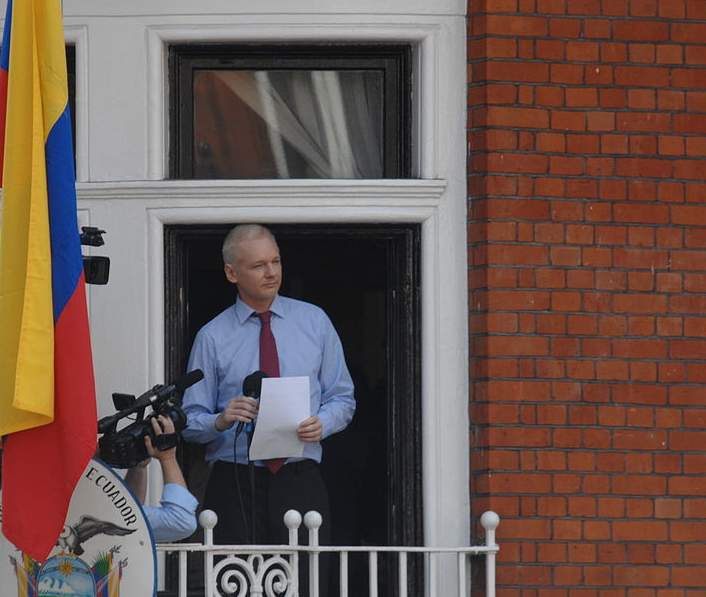
- June 19th Anniversaries: Execution of the Rosenbergs. Julian Assange 1 year at the Ecuadorian embassy.
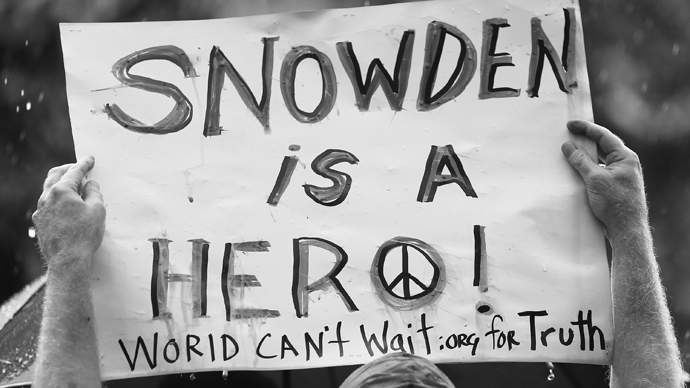
- Snowden, we don’t know where he is, massive revelations.
- The question you should be asking, is Dick Cheney a traitor? Is George Bush a traitor? Aren’t those the real traitors, the real people to be held accountable.
- We should look at what they told us. Ed Snowden told about a massive domestic surveillance operation.
- Their job is to tell the American people what they’re doing so we can debate it and discuss it and not put forward basically false stories of who they’ve purportedly stopped.
- This is about knowing where everyone of us is all the time.
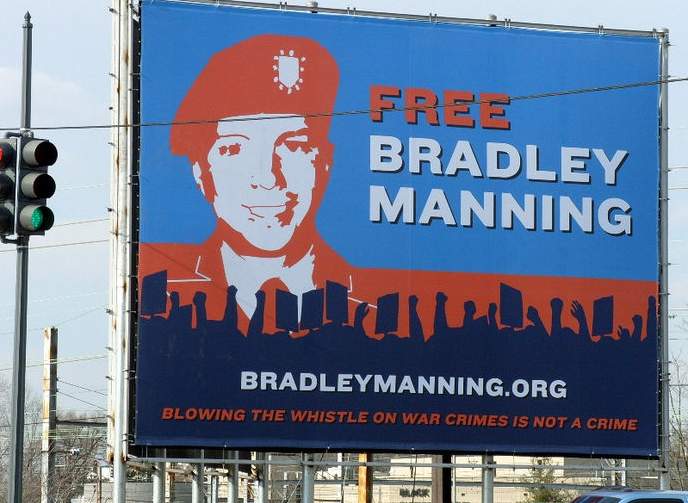
- Freedom of the Press Foundation – Bradley Manning
- This is really a war on whistle-blowers and really a war on the United States trying to keep control on all of the information it can and control the internet from the top down.
Richard Falk, U.N. Rapporteur on Palestinian Rights, Calls for Close of UN Watch
——
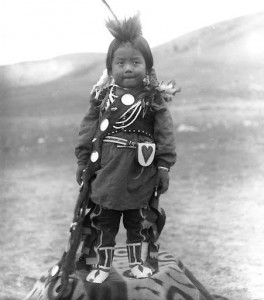

Lakota Indians To File UN Genocide Charges Against US, South Dakota
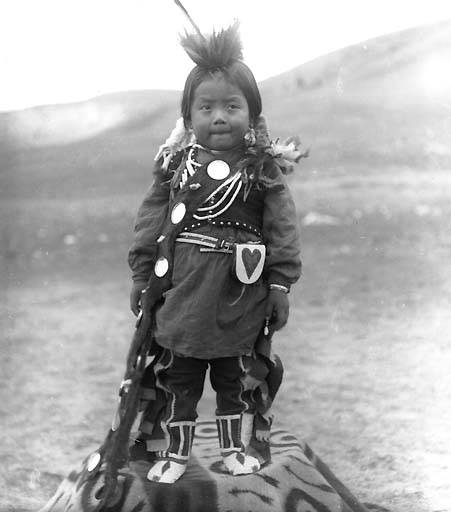
There was a time in the mid 1800s when the territory of Lakota Indians reached 90 million acres, now they’re separated into tribal councils and relegated to reservations. Their children are seized and put into foster homes of white families. During Republican administrations, more than 700 Lakota children are taken annually by a private corporation called the South Dakota Children’s Home Services. In April, a grassroots movement led by Lakota grandmothers touring the country built support for a formal UN complaint of genocide against the United States government and constituent states.
Attorney Daniel Sheehan:
- There’s basically a decade involved here during which the state of South Dakota engaged in a systematic program of the removal of Lakota children from their parents, from their extended families and from their entire tribe.
- Some 740 Lakota children a year during that period were taken from their families and tribes.
- Over half of them were never returned. 80-90 percent of those children were placed in white foster care.
- This is clear violation of the Indian Child Welfare Act which was the piece of legislation that mandated that if an Indian child were taken from the child’s parents they were required to be placed with Native American people.
- This is has been absolutely openly defied by the state of South Dakota.
- There has been an official notice of intent to file the complaint with the United Nations.
- We need to understand that there has been a longstanding policy in the Republican Party. When the Republican Party comes into power in Washington DC where they engage in this process to try and assimilate the native tribes.
- They’re constantly trying to eliminate the ownership of land and integrate them into society, basically to eliminate their culture.
- That was why the US Congress back in 1978 made the move to establish the American Indian Policy Review Commission and the Indian Child Welfare Act to stop the states from engaging in that type of activity of assimilation.
- What we’ve seen by William Janklow, a former South Dakota congressman, governor, and attorney general, is the process to attempt to take as many of the children away as they could possibly do and place them in huge group homes such as South Dakota Children Homes Services Inc.
- There is a subtext to this issue. We’ve discovered that during the Bush Administration from 2001 to 2009 there was systematic program of funneling federal funds into South Dakota to finance the seizure of these children and a substantial portion of that money from the Federal Government was transferred to the pharmaceutical corporations, who were in fact administering involuntarily to these children, pharmaceutical drugs Zoloft, and other psychoactive drugs to control their moods and attitudes.
- They refuse to give information about who the children are, where they’ve been taken, where they’ve been placed, some of them have been taken out of the state, we traced a number of them to Utah.
Guest – Daniel Sheehan is the lead attorney and general counsel for the Lakota People’s Law Project (LPLP). Currently, LPLP is working in South Dakota to stop violations of the Indian Child Welfare Act (ICWA) and rescue Lakota children from an abusive state care system. Award-winning journalist Laura Sullivan has just completed a hard-hitting investigative series on the situation in Lakota Country airing now on NPR. To learn more about Daniel Sheehan’s work with Lakota Indians, visit the Lakota People’s Law Project website. Sheehan traced the institutionalization of state kidnapping of Native children back to the late William Janklow, a former South Dakota congressman, governor, and attorney general notorious for his role in what the the Lakota refer to as the “Reign of Terror” on the Pine Ridge Reservation in the years following the American Indian Movement-led occupation of Wounded Knee in 1973. According to Sheehan, members of the George W. Bush administration tipped off Janklow on a Texas strategy to grab millions of dollars in federal subsidies by administering a psychological test devised by the Eli Lilly pharmaceutical corporation to children taken into protective custody. Replicating the strategy, South Dakota developed a mental health test failed by 98% of Native children, who then become “special needs” cases under federal law, with the state receiving up to $79,000 for each Indian child and the child being placed involuntarily on psychoactive drugs.
——————————————————————–
Afghanistan War, CIA Sponsored Terror, Civil Liberties, Criminalizing Dissent, Cuba, Extraordinary Rendition, FBI Intrusion, Guantanamo, Habeas Corpus, Human Rights, Political Prisoner, Surveillance, Targeting Muslims, Torture, War Resister
Podcast: Play in new window | Download
Updates:
- A Phone Call To Save Lynne Stewart’s Life:
- Attorney General Eric Holder – 1 202 514 2001
- White House President Obama – 1 202 456 1414
- Federal Bureau of Prisons – Director Charles Samuels – 1 202 307 3198 ext 3
—-
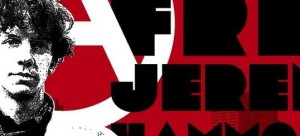
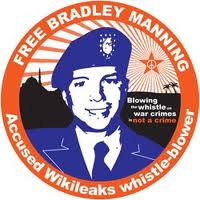
Jeremy Hammond, Bradley Manning and Julian Assange: Michael Ratner
Michael Ratner discusses attending Jeremy Hammond guilty plea in open court last month, Bradley Manning’s trial that starts June 3, 2013 at Fort Meade and how a Fox News reporter feels the same chilling effect of free speech by having his investigative work under suspicion as co-conspirator or aiding and abetting.
Jeremy Hammond: “Now that I have pleaded guilty it is a relief to be able to say that I did work with Anonymous to hack Stratfor, among other websites,” according to a statement released by Hammond on Tuesday. “Those others included military and police equipment suppliers, private intelligence and information security firms, and law enforcement agencies. I did this because I believe people have a right to know what governments and corporations are doing behind closed doors. I did what I believe is right.”
- Jeremy Hammond pleaded guilty to one count of conspiracy to access a protected computer.
- It’s under the Computer Fraud and Abuse Act.
- Jeremy Hammond was facing 32 years to life. He could be sentenced to up to 10 years.
- Interestingly, Wikileaks doesn’t appear in what he pleaded to. He or the group uploaded some 5 million emails.
- One of the emails is about a sealed indictment on my client and CCRs client Julian Assange.
- Julian Assange: Jeremy is a political activist and whistle-blowing is one of the means he uses for political activism.
- Bradley Manning pleaded guilty to 20 years in prison already. The key crime they’re trying to get Bradley for is aiding the enemy.
- The government is sledge hammering any criticism from a military person.
- Petition for Jeremy Hammond
Law and Disorder Co-host Attorney Michael Ratner, President Emeritus of the Center for Constitutional Rights (CCR), a non-profit human rights litigation organization based in New York City and president of the European Center for Constitutional and Human Rights (ECCHR) based in Berlin. Ratner and CCR are currently the attorneys in the United States for publishers Julian Assange and Wikileaks. He was co-counsel in representing the Guantanamo Bay detainees in the United States Supreme Court, where, in June 2004, the court decided his clients have the right to test the legality of their detentions in court. Ratner is also a past president of the National Lawyers Guild and the author of numerous books and articles, including the books The Trial of Donald Rumsfeld: A Prosecution by Book, Against War with Iraq and Guantanamo: What the World Should Know, as well as a textbook on international human rights.
—–
Stop and Frisk Lawsuit Closing Arguments
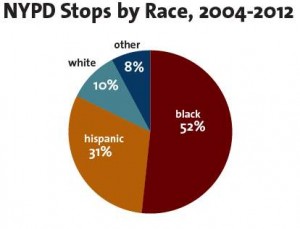
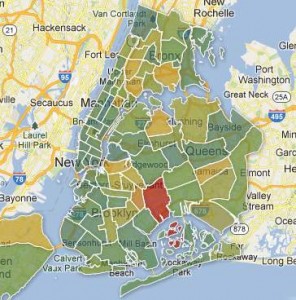
Closing arguments were heard on both sides last week on the Stop and Frisk case known as Floyd v. City of New York. This is a class-action lawsuit challenging the NYPD’s unconstitutional stop-and-frisk policy. The case charges the NYPD with a policy and practice of unreasonable, suspicion-less and racially discriminatory stops in violation of the Fourth Amendment’s prohibition against unreasonable searches and seizures and the Fourteenth Amendment’s Equal Protection Clause barring racial discrimination.
Stop and Frisk has increased over 600 percent in New York City. In 2009 New York City, a record 576,394 people were stopped, 84 percent of whom were Black and Latino residents — although they comprise only about 26 percent and 27 percent of New York City’s total population respectively. Ten years of raw data obtained by court order from the New York City Police Department (NYPD) showed that stop-and-frisks result in a minimal yield of weapons and contraband.
CCR Senior Staff Attorney Darius Charney:
- The closing was really interesting because the judge asked a lot of questions of both sides.
- It was more like an oral argument as you would do in an Appeals Court.
- This was a bench trial, there was a judge but no jury.
- Because of that the judge herself took the role of asking a lot of questions of witnesses.
- I think the police departments’ at least public position on this is really a problem created by a bunch of left wing lawyers and the media.
- In our class action (8 years) there have been over 4.5 million recorded stops by the police department but the actual number of stops are probably higher. About 90 percent of that 4.5 million there is no discovery of criminal activity – 90 percent are released and not given a ticket.
- The police department claims the focus of this program is to get illegal guns off the street about .13 percent results in the recovery of a gun.
- You actually find a gun one or two times out of a thousand.
- Reasonable, articulatable suspicion which the Supreme Court set out about 45 years ago – Terry v Ohio.
- (NYPD) they were very frank about it and sincere when they said – Look most reported crime is black or latino suspect
- If you’re talking about individualized suspicion just because someone happens to be the same race as crime suspect doesn’t make them suspicious.
- The two most common reasons these police officers are checking off on the forms for why they stop people is furtive movements and high crime area.
- They’ll try to muddy the waters by trying to mischaracterize what it is we’re actually complaining about. How can you criticize us for sending more police officers to high crime neighborhoods.
- What we’re complaining about is how officers behave there and how they treat the people who live there.
- Opening statements: It’s difficult to try to synthesize that much evidence into an hour and a half.
- This fight really goes back 14-15 years to the late 90s and what happened after the murder of Amadu Diallo.
- The first lawsuit that they did, the Daniels Case came about because of the work of grassroots organizations.
- Communities United For Police Reform
- We anticipate by July we will know what she (the judge) will decide.
- We learn the lesson if you leave it up to the police department and this mayoral administration to change things on their own, they’re not going to do it because they think what they’re doing is right.
Guest – Attorney Darius Charney, senior staff attorney in the Racial Justice/Government Misconduct Docket. He is currently the lead counsel on Floyd v. City of New York, a federal civil rights class action lawsuit challenging the New York Police Department’s unconstitutional and racially discriminatory stop-and-frisk practices, and Vulcan Society Inc. v. the City of New York, a Title VII class action lawsuit on behalf of African-American applicants to the New York City Fire Department which challenges the racially discriminatory hiring practices of the FDNY.
—
Doubting Obama’s Resolve To Do Right: Ray McGovern
We continue our discussion on killing people using drone warfare with returning guest Ray McGovern. When President Obama delivered a major speech on counter-terrorism, he announced a shift in his administration’s use of drones. The Obama Administration has conducted hundreds of drone strikes in several countries, killing civilians and so far reported, four US citizens. Critics point out that as the Obama Administration assassinates its’ suspects, it also avoids the legal complications of detention. London based bureau for investigative journalism estimates that about 830 civilians including women and children may have been killed by drone attacks in Pakistan. 138 in Yemen, and 57 in Somalia.
Former CIA analyst Ray McGovern:
- It was a masterpiece of oratory and rhetoric, but it was deceptive through and through.
- Those of us who had been watching this know he lied through his teeth on many occasions.
- He has the power as we all know to release 86 prisoners (Guantanamo) in the next hour.
- Why would he do all that? Why would he be afraid to take the drones away from the CIA?
- Well, I’ve come to the conclusion that he’s afraid. He’s afraid of what happened Martin Luther King Jr.
- At a small dinner with progressive supporters – after these progressive supporters were banging on Obama before the election . . . Why don’t you do the things we thought you stood for? Obama turned sharply and said Don’t you remember what happened to Martin Luther King Jr.?
- I’m convinced the President of the United States is afraid of the CIA.
- Does he have any reason to fear the CIA? Well he sure as heck does. For those of your listeners who have not read James Douglas’ JFK and the Unspeakable, you need to read that, because it’s coming up on 50 years.
- John Kennedy signed 2 executive orders just a month or so before he was killed. One of them said we’re pulling out a 1000 troops from South Vietnam. The other said we’re pulling out the bulk of the troops by 1965, we’re finished in Vietnam.
- I think he’s just afraid and he shouldn’t have run for president if he was going to be this much of a wuss.
- My father was professor of law at Fordham University for about 35 years. My daughter, my brother, their all lawyers. I have this notion that when someone comes in after building a record against torture and kidnapping, and black sites, and they come in and say we think this is bad but nobody should be prosecuted for it. .
- It’s not a dichotomy here, it’s deliberate duplicity with a rhetorical flourish.
Guest – Raymond L. McGovern, retired CIA officer turned political activist. McGovern was a Federal employee under seven U.S. presidents in the past 27 years. Ray’s opinion pieces have appeared in many leading newspapers here and abroad. His website writings are posted first on consortiumnews.com, and are usually carried on other websites as well. He has debated at the Oxford Forum and appeared on Charlie Rose, The Newshour, CNN, and numerous other TV & radio programs and documentaries. Ray has lectured to a wide variety of audiences here and abroad. Ray studied theology and philosophy (as well as his major, Russian) at Fordham University, from which he holds two degrees. He also holds a Certificate in Theological Studies from Georgetown University.
————–
Law and Disorder March 3, 2010
JFK and the Unspeakable: Why He Died and Why It Matters by Jim Douglass
Jim Douglass:
- John F. Kennedy’s experience in WWII: He was in the South Pacific, he volunteered. He was on that PT boat.
- What happened on that PT boat, is that it got split into two by a Japanese destroyer. He lost brothers and friends at that time. An extraordinary experience being adrift on the ocean warning other PT boats. The experience create a distrust in military authority.
- He said that he wanted to splinter the CIA into a thousand pieces and scatter to the winds.
- As Kennedy said to his friends, “they figured me all wrong.”
- The Unspeakable: the kind of evil and deceit that seems to go beyond the capacity of words to describe. The midst of war and nuclear arms race, the assassinations of Kennedy, Martin Luther King and Malcom X that the term was used.
- JFK’s vision is articulated in the address June 10, 1963, arising from the turnaround of the missile crisis and Bay of Pigs.
- He wanted to move step by step into a disarmed world. Nikita Khrushchev put that speech all over the Soviet Union. The Cuban Missile Crisis is a deeply misunderstood part of our history, because it’s usually portrayed as Kennedy going to war with Nikita Khrushchev and beating him.
- The truth was that Kennedy and Nikita Khrushchev were in over their heads, the US generals wanted nuclear war, because they had more warheads than the Soviets.
- Nikita Khrushchev: We now have a common enemy from those pushing us toward war.
- At that point the Cold War turned upside down because Kennedy and Khruschev became closer to each other than either was toward their own military power system.
- Vietnam: Kennedy’s military people would not give him an exit policy. He signed the withdrawal order from Vietnam before he was assassinated.
- His friends said that he had an obsession with death. It was not an obsession but a real assessment that he was going to die. If you try to turn around a national security state that is dominating the world,
- and you do so as president of the United States, of course you’re going to die. Kennedy knew that.
- The book is a story on the deliberate destruction of hope, the vision of change, a turning of this country all of which was happening and had to be stopped. US Agencies killed Dr. Martin Luther King – 1999 Verdict
- We’re in the same scene right now with Petraeus and McChrystal setting up Obama. They were dictating terms to Obama, unlike Kennedy, he did not face them down.
- We need to get out ahead of Obama so that he can do something.
Guest – James W. Douglass, author and longtime peace activist.
————————————————————
Afghanistan War, Civil Liberties, Criminalizing Dissent, Death Penalty, Extraordinary Rendition, Guantanamo, Habeas Corpus, Human Rights, Military Tribunal, Political Prisoner, Prison Industry, Targeting Muslims, Torture, Truth to Power, War Resister
Podcast: Play in new window | Download
Updates:
- FDNY Lawsuit Update
- Guatemalan Genocide Verdict Overturned
——
We Steal Secrets: The Story of Wikileaks – Michael Ratner
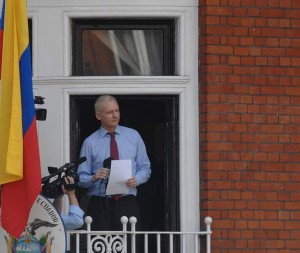
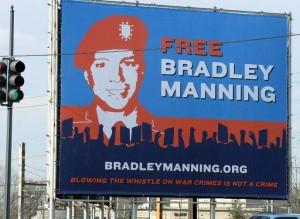
Our own Michael Ratner delivers a critical review of the film documentary “We Steal Secrets: The Story of Wikileaks” by director Alex Gibney. The annotated transcript, reveals errors, rank speculation and a focus on personality that detracts from the important revelations by Manning and published by WikiLeaks. Bradley Manning’s 12-week trial commences on Monday (3 June) and the film may have been released to take advantage of that date. Manning may face life in prison and could potentially face the death penalty. Julian Assange remains in the Ecuadorian embassy legitimately fearful that extradition to Sweden is a one way ticket to the US and potential for life in prison.
Attorney Michael Ratner, attorney in the US for Julian Assange and Wikileaks:
- (The film) does a great disservice to Bradley Manning and Julian Assange.
- I think it trivializes the incredible courage that both of them had as well as what was revealed by the documents.
- Julian Assange declined an interview by Alex Gibney and no one currently associated with Wikileaks participated in the film. This may explain in part Gibney’s poor treatment of Julian Assange.
- What grabs you immediately is the title, “We Steal Secrets: The Story of Wikileaks.” Wikileaks is a publisher. Yet the title implies that the story of Wikileaks is the story of it stealing secrets.
- That implication plays into the government’s theory that somehow Wikileaks and Julian Assange are co-conspirators with Bradley Manning in taking secrets. The film does so in other places as well.
- A second criticism is that part of the film focuses on Bradley Manning’s psychological problems and implies that those are the basis for Manning’s revelation of documents.
- Gibney has said as much in interviews given after the film: “I think it raises big issues about who whistleblowers are, because they are alienated people who don’t get along with people around them, which motivates them to do what they do.”
- In fact, Manning gave an incredibly moving political explanation for each leak of documents; an explanation not covered in any detail in the film.
- Third, Gibney claims Wikileaks is dead. Nothing could be more of fable.
- Since December 2011 Wikileaks has released the SpyFiles, the Stratfor emails dubbed the GIFiles, the Syria Files and in April 2013 both Cablegate and 1.7 million Kissinger Cables in an easily searchable Plus Public Library of US Diplomacy.
- Fourth, somehow, Gibney claims there are no charges filed against Julian Assange. How does he know that? It’s a secret Grand Jury, and if there’s an indictment, it’s going to be a sealed indictment because an indictment is not made public when a person is not in custody. In fact, there is significant, irrefutable evidence of an on going investigation and its likely there is a sealed indictment.
- Gibney diminishes the risk to Julian Assange if he were sent to the United States because he wants to claim that Assange is in the embassy to avoid going to Sweden to answer questions about sexual misconduct allegations. But it does not work. Were Sweden to guarantee Assange would not be sent to US he would go there to answer questions.
- Assange has also offered to answer those questions in the embassy–Sweden has refused. In the end, the problem is the United States–Gibney, in his effort to demean Assange, needs to play down the huge risk he faces in the US.
Law and Disorder Co-host Attorney Michael Ratner, President Emeritus of the Center for Constitutional Rights (CCR), a non-profit human rights litigation organization based in New York City and president of the European Center for Constitutional and Human Rights (ECCHR) based in Berlin. Ratner and CCR are currently the attorneys in the United States for publishers Julian Assange and Wikileaks. He was co-counsel in representing the Guantanamo Bay detainees in the United States Supreme Court, where, in June 2004, the court decided his clients have the right to test the legality of their detentions in court. Ratner is also a past president of the National Lawyers Guild and the author of numerous books and articles, including the books The Trial of Donald Rumsfeld: A Prosecution by Book, Against War with Iraq and Guantanamo: What the World Should Know, as well as a textbook on international human rights.
——-
Palestinian Prisoners Legal Support: Addameer
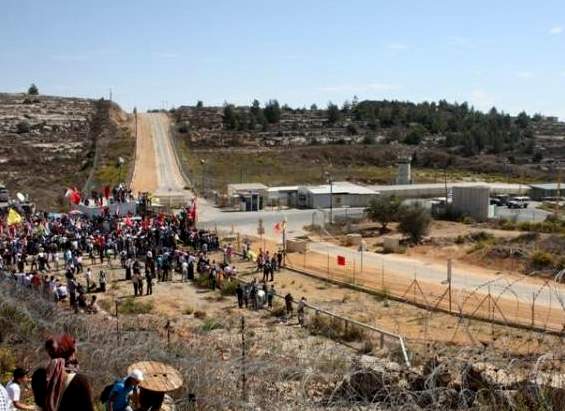
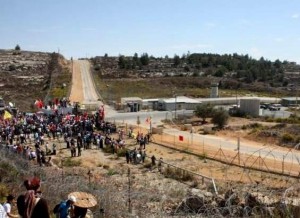
On the 17th of April, hundreds of Palestinians filled the streets in the West Bank in protest to mark Palestinian Prisoners Day. Right now there nearly 5000 Palestinian security prisoners in Israeli jails, 14 of them are women. More than half have been convicted, 33 percent have not been sentenced and 3 percent are being held in administrative detention. 235 of Palestinian prisoners are minors ranging in age from 14 to 18. As many listeners may know, Palestinian activists are often targeted and detained. In prison, tactics are used such as solitary confinement and forbidding family contact.
Attorney Sahar Francis:
- Currently there are still 4900 Palestinians inside Israeli prisons. Most of them are adults. There are 236 minors under age 18. 14 women and 14 Parliamentarians.
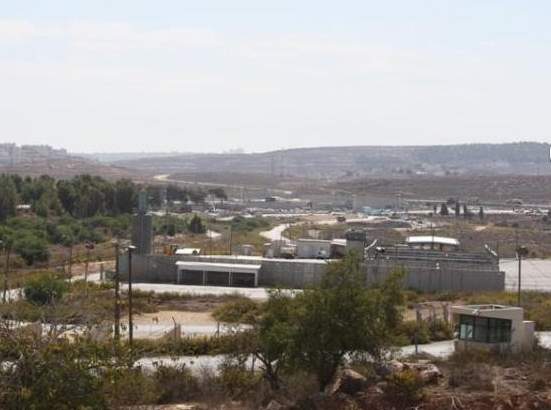
- The majority of them I would say were arrested because of political activism and being involved in the peaceful struggle, and resistance especially in the last couple of years against the wall, the checkpoints, the settlements, land confiscation, house demolition all these practices of the occupation.
- Including Jerusalem residents, they would be arrested inside Israel but they could be subjected to 2 different legal systems. The Israeli legal system or the military system that applies just to the Occupied Territories.
- Settlers are not subjected to the military court system that is imposed on the Palestinians in the Occupied Territories.
- It’s violation of International Law to move them to prisons inside Israel. This is what Israel was doing since 1995.
- They moved the prisoners from prisons inside the Occupied Territories to prisons inside Israel and this is a violation for the 4th Geneva Convention Act actually.
- The number of Palestinian prisoners decreased compared to previous years, 2005, 2006.
- Since 1967 til today more than 750 thousand Palestinians were arrested. It’s almost hitting every Palestinian house. It’s estimated to be about 40 percent of the Palestinian men population that were at least once incarcerated in their life.
- In the 7 years of Oslo, Israel kept 1500 political prisoners.
- Now I can say that the majority of the prisoners would be sentenced for periods less than 10 years.
- There’s around 430 of them sentenced for life.
- We still have cases of families where they have 4 sons or 5 sons in the same time in prison.
- In some cases they (the sons) would be distributed in all prisons, in north, south of Israel and the mother would be traveling all the way trying to visit them.
- The women prisoners number was much higher we used to have 120 female prisoners.
- Most of them involved in political activism, mainly supporting their brothers or husbands in their political activism or in stop cases involved in trying to stop soldiers.
- Addamer was established in 1991 by ex Palestinian political prisoners and lawyers who were aiming to give legal support for free to Palestinian prisoners in military court system.
- Our focus is on political arrests. We have 8 members in Addamer. We are members of the Israeli Bar Association and members of the Palestinian Bar Association.
- Most of the cases in military court would end in plea bargain without exhausting the system because neither the system or the lawyers don’t have much trust in the system.
- You could end up being interrogated in the detention centers inside Israel and they will decide whether to transfer the case for the civil prosecution or the military prosecution.
- You can have a person 90 days before charging them (military system) Civil system it’s 35 days.
- Law In These Parts – Film Documentary.
- Regarding torture and terms such as enhanced interrogation techniques : In our place its called moderate physical pressure.
- We can’t sue them because the prosecutors claim out of necessity we used the torture.
- Seeing the photos of Abu-Ghraib with this sack on the detainee’s heads, this was used in the Palestinians case since the early years of the occupation.
- This is the method that was used to prevent them from breathing, from sleeping, and they were tied to these kindergarten small chairs with the sack on their head, with playing music 24 hours a day. Then after in this position for 2 weeks, the interrogator shake you.
- We’re promoting Boycott Divest and Sanction.
Guest – Sahar Francis, human rights lawyer and director of the Palestinian NGO Addamer. (Arabic for conscience) Prisoners Support and Human Rights Association is a Palestinian non-governmental, civil institution which focuses on human rights issues. Established in 1992 by a group of activists interested in human rights, the center offers support to Palestinian prisoners, advocates the rights of political prisoners, and works to end torture through monitoring, legal procedures and solidarity campaigns.It’s an organization offering legal services to political prisoners under Israeli occupation and represents prisoners in Israeli military and civil courts.
————————————————————–
Afghanistan War, CIA Sponsored Terror, Civil Liberties, Criminalizing Dissent, FBI Intrusion, Guantanamo, Habeas Corpus, Human Rights, Political Prisoner, Prison Industry, Surveillance, Targeting Muslims, Torture, Truth to Power, War Resister
Podcast: Play in new window | Download
Updates:
——-
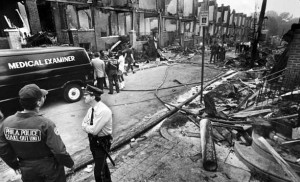
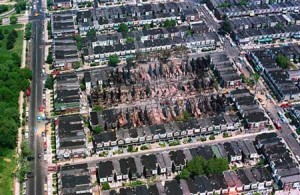
MOVE Bombing: 28th Anniversary
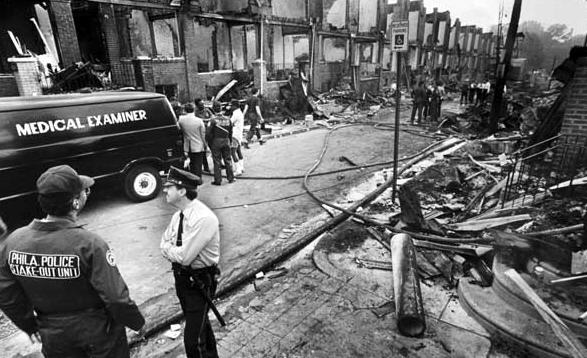
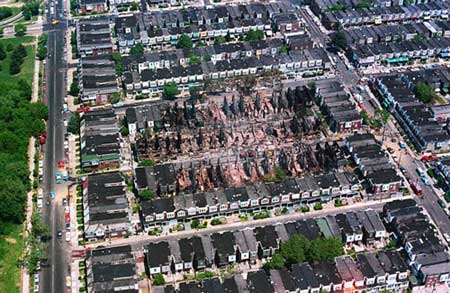
This week marks the 28th anniversary of an armed police mission in Philadelphia that ended in a helicopter bombing of the headquarters of the group known as MOVE. The fire commissioner in that city allowed a fire to rage unabated at 6221 Osage Avenue in West Philadelphia, killing six adults and five children, destroying 65 homes and leaving more than 200 people homeless. Despite two Grand Jury investigations, and a commission finding that top officials were grossly negligent, no one from city government was ever criminally charged. A recent film called Let the Fire Burn, chronicles the events leading up to the conflagration.
Ramona Africa:
- The government, through the media had mislead people to believe that what happened in May of 1985 was because of complaints from neighbors which is absolutely not true.
- What happened on May 13, 1985 happened because of our unrelenting fight for the release of our innocent sisters and brothers known as the MOVE 9 who were arrested in August 1978.
- After years of abuse, physical abuse, judicial abuse by this system, MOVE babies being killed through miscarriage and a 3 week old baby being trampled to death by police, after countless unprovoked beatings of MOVE men and women, children, even pregnant women, MOVE people took a stand and said listen, we are uncompromisingly opposed to violence, we’re a peaceful people. We’re not stupid and we’re not masochistic or suicidal.
- We do believe in self defense which is the law, the law of life. There is not a species on this Earth that doesn’t defend itself, when threatened, when attacked.
- When MOVE took that stand, the government became enraged.
- They alleged housing code violations, and they wanted MOVE to move out of the home based on housing code violations.
- MOVE people wouldn’t go along with that. A judge gave MOVE people til August 1 to get out.
- On August 2, 1985, a judge issued warrants on any MOVE people he knew of including people he knew were not in the house.
- After the warrants were issued, hundreds and hundreds of cops were sent out to our home.
- They shot thousands of bullets into that house. The fire department used deluge hoses to flood our home.
- The officer that was killed was standing on street level while everybody including the police acknowledged that all MOVE people were in the basement of our home.
- This policeman was shot from a bullet traveling on a downward angle.
- Hours after I was arrested on August 17, the city sent a demolition team out and completely demolished MOVE’s home which was the scene of the crime.
- The MOVE 9 trial was a bench trial, not a jury trial.
- They did it to silence our righteous protest and our unrelenting fight for the release of our family the MOVE 9.
- They came out to our home on Mother’s Day, May 12 1985, with warrants they obtained on May 11.
- The Fire Department as in 1978 was their first mode of attack.
- They came out there to kill, that’s the bottom line.
- When their ten thousand rounds of bullets didn’t kill us, the water hoses, the tear gas didn’t do the job, they concocted a bomb made from powerful military explosives, C4.
- They got the C4 from the federal government, from the FBI.
- The state police helicopter flew over our home without any warning, and two Philadelphia Police bomb squad police officers dropped that bomb on the roof our home. It ignited a fire. They made a conscious decision not to put the fire out.
Guest – Ramona Africa, the sole adult survivor of the 1985 police bombing of the home occupied by members of the MOVE organization. Email Ramona – onamovelleja (at) gmail.com
——–


Assata Shakur Placed On FBI Terror List
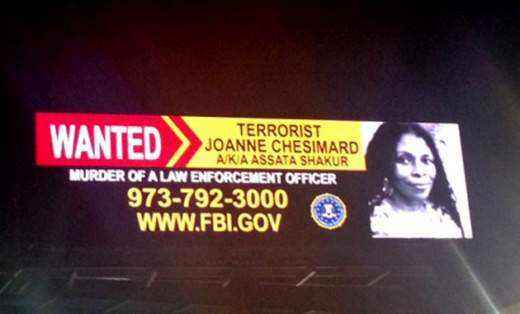
Last week, the FBI placed Assata Shakur on its Most Wanted Terrorists list, while the state of New Jersey raised the bounty on her head to 2 million dollars. These actions fall on the 40th anniversary of the 1973 shoot out in in which police allege Shakur killed a police officer during a traffic stop on the New Jersey turnpike. Assata also known as JoAnne Deborah Byron is an African American activist was a member of the Black Panther Party and the Black Liberation Army. Assata Shakur: Understanding the politics behind the FBI’s new attack.
Eugene Puryear:
- I think why a 65 year old grandmother has been put on the FBI terrorist list is a reflection of the United States government’s fear of that which opposes it.
- Assata Shakur was part of the 60s movements . . . a movement that the Nixon administration attempted to criminalize, to say that political dissent and political opposition to the US government and its imperial moves around the world.
- She does fit the profile of what the US government has been trying to perpetuate for the last 30 years, in a sense an extension of COINTELPRO.
- One person’s terrorist is another person’s freedom fighter.
- Assata Shakur, her actions and beliefs is certainly not something that is beyond the pale but the US government view her as a terrorist.
- By placing her on this terrorist list, it’s a way of criminalizing dissent.
- Assata’s trial was moved several times, it was placed in counties that were mostly wealthy, mostly white where pre-trial publicity around the case had biased people in a major way against Assata Shakur.
- When the government wants to put someone away and they know they don’t have the evidence they want to do everything possible to both manipulate the venue and also bring in people whose predisposition will make them more likely to believe the government’s version of events.
- Assata was in a position to be put in prison for the rest of her life in these human-breaking conditions.
- The day before this happened, the US government refused to remove Cuba from the state sponsors of terrorism list. This is used in part for keeping Cuba on that list.
- Also to give a chilling effect to progressive movements in the United States.
- The US seems to be redefining what are terrorist actions and what its responses are.
- The lock down of Boston, the reclassification of Assata Shakur, the issuing of the drone memo of what eminence actually means.
- The US is attempting to create enough ambiguity in the statutes.
Guest – Eugene Puryear, Eugene is a writer and on the editorial board of the Liberation, Newspaper of the Party for Socialism and Liberations.
—–
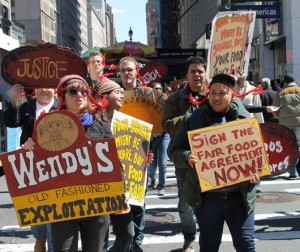
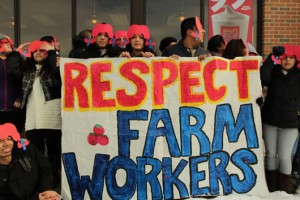
CIW – Fair Food Program: Wendy’s
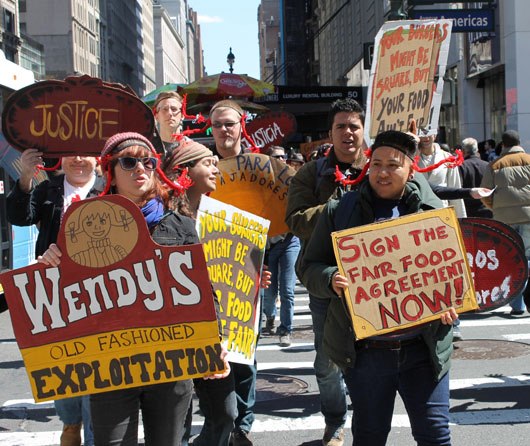
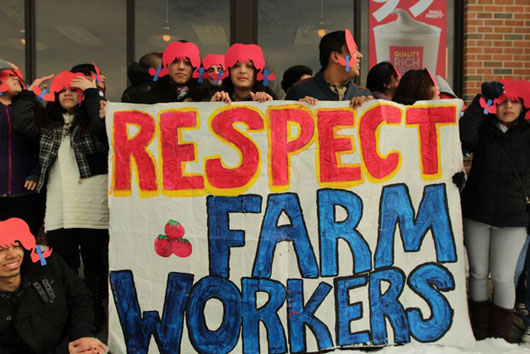
Last year Trader Joe’s and the Coalition of Immokalee Workers signed an agreement that formalized the ways in which Trader Joe’s support the CIW’s Fair Food Program, a hard won victory.. Since then efforts have turned to companies such as Publix supermarkets in Florida and the Wendy’s fast food chain. Recently, Fair Food activists across the country visited their local Wendy’s to deliver a message: It’s time to join the rest of the fast-food industry and support the Fair Food Program.
Emilio Faustino:
Translator Joe Parker:
- We’re farm workers who come from the town Immokalee, Florida that’s based in the Southwestern part of the state. Our community is a farm worker community and for many years we faced a number of different kinds of exploitation, poverty, wage theft, physical and verbal abuse as well as sexual harassment of many women working in the fields.
- We began our campaign focused on the big corporate buyers of the produce that we pick back in 2001 in an effort to improve wages and working conditions in the fields, we began with Taco Bell and from there had campaigns with McDonald’s, Burger King, until as you said 11 other companies came to the table to dialogue with farm workers and work to improving those wages and working conditions in their supply chains.
- We’re here in New York focused on Wendy’s fast food chain. For a number of years the coalition has been sending letters to the fast food chain asking them to join the Fair Food program. We launched a public campaign with them earlier this year but thus far they have ignored us.
- We want Wendy’s to do what most of these corporations have done, that’s pay one penny more for each tomato that they buy.
- We’re here for the Wendy’s shareholder action, and we’re going to be organizing an protest on Saturday, May 18, at 2PM at Union Square to send a message to company’s investors that this is something that farmworkers in Wendy’s supply chain really deserve. There will also be a number of actions taking place that day all over the country in a number of communities standing together with the CIW.
- Contact: www.ciw-online.org, email: workers@ciw-online.org, 239-657-8311
Guest – Emelio Faustino, farm worker, CIW activist living in Florida. He is among other workers picking tomatoes by hand for 10-12 hours per day, while getting paid 50 cents per bin, or about 200 to 283 dollars per week.
Guest – Joe Parker, CIW spokesman and translator.
—————————————————–