Afghanistan War, Civil Liberties, Criminalizing Dissent, FBI Intrusion, Habeas Corpus, Human Rights, Iraq Veterans, Iraq War, Surveillance, Torture, War Resister
Podcast: Play in new window | Download
Updates:
————————–
Truth and Consequences: The U.S. vs. Bradley Manning
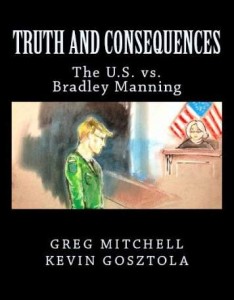
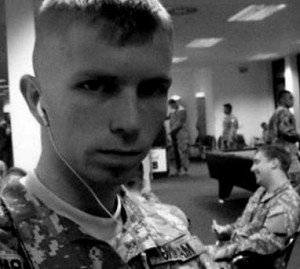
In the past year, we’ve covered Wikileaks and specifically the Bradley Manning case in our updates. We talk today with Greg Mitchell co-author of the new published book, Truth and Consequences: The U.S. vs. Bradley Manning. In the first part of the book titled Solitary Man, Greg Mitchell gives readers a detailed look into the character of Bradley Manning. The second part of the book details the Bradley Manning trials written by co-author Kevin Gosztola. Hard journalism let the voices of friends and family document the important details in Manning’s life leading up to Wikileaks and then the book dives into the complexities of the trial. In the preface Greg writes “Ultimate truths, in this case, may lead to ultimate consequences for one who would not be silent.
Greg Mitchell:
- The second half of the book is really the only thing out there that covers in depth what has happened to him in the last few months.
- Namely his court martial proceedings after he was imprisoned for a year and a half. His first hearing was last December. He is awaiting what is expected to come out as a formal court martial in August. If it does start in August, it will be well over 2 years since he was arrested.
- A lot of the charges are related to passing along to Wikileaks, this classified secret information. Course the most dynamite charge is that he gave aid to the enemy.
- Who is the enemy? The government was forced to say that it was Al-Qaeda. That charge potentially carries the death sentence.
- They’re interested in punishing Manning, the big fish they’re after is Julian Assange.
- Last year there was global outrage when he was kept in solitary confinement, being forced to sleep naked, and stand at attention naked.
- All the top media outlets had a falling out with Wikileaks, and I think there’s a spill over from that.
- There hasn’t been any media coverage that really probes into what’s going on here.
- Over and over he (Bradley Manning) cited his outrage at what he was seeing in those cables and in Iraq, and things he was asked to participate in.
- The court martial will be extremely embarrassing to the military because they gave him access to these documents.
- He was a kid who grew up in Oklahoma, his parents eventually got divorced. He was a computer nerd, growing up. He realized in his teens, he was gay.
- He wasn’t a longtime peacenik or things like that, he always had some social conscience, and when he got to Iraq, he saw things that upset him.
- It may have never come out, that he would be arrested, except that he had these online chats with Adrien Lamo, who is a convicted hacker. Lamo decided Manning was talking too much about what he did and went to the authorities.
- The Manning case shows this incredible legacy of our wars in Iraq and Afghanistan, which have gone on for a decade, its never ending and yet the American public has never been brought face to face with what the US has done in those countries, civilian casualties.
Guest – Greg Mitchell writes daily for The Nation magazine’s web site. He is the author of more than a dozen books, including The Campaign of the Century (winner of the Goldsmith Book Prize), So Wrong for So Long: How the Press, the Pundits and the President Failed on Iraq, Why Obama Won, Tricky Dick and the Pink Lady, The Age of WikiLeaks, and with Robert Jay Lifton, Hiroshima in America and Who Owns Death? His most recent books are Atomic Cover-up and Journeys With Beethoven. He was the editor of Editor & Publisher from 2002 to 2009. He also served as longtime editor of Nuclear Times magazine, and before that was senior editor at the legendary Crawdaddy. Hundreds of his articles have appeared in leading publications and he has served as chief adviser for two award-winning documentaries.
—-

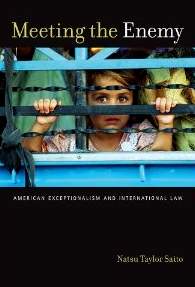
Lawyers You’ll Like – Attorney Natsu Saito
For our Lawyers You’ll Like series, we welcome back attorney and professor Natsu Saito. In our last interview, Professor Saito mentioned how the current system of international law evolved from the a broader agreement between the European colonial powers based on how they were not going to destroy each other in the process of taking over the rest of the world. It is this duality that Natsu writes about in her book Meeting the Enemy: American Exceptionalism and International Law. Professor Saito joined the College of Law faculty in 1994 and teaches international law, human rights, race and the law, immigration, criminal procedure, and professional responsibility. Her scholarship focuses on the legal history of race in the United States, the plenary power doctrine as applied to immigrants, American Indians, and U.S. territorial possessions, and the human rights implications of U.S. governmental policies, particularly with regard to the suppression of political dissent.
Professor Natsu Saito:
- The duality that the US does exempt itself (from international law) very consistently and very frequently and yet promotes international law very strongly and relies upon it.
- It has relied upon certain premises that are fundamental to the whole outlook and paradigm of colonialism – which is that there is a higher good, a more civilized approach the US embodies.
- The law doesn’t apply because we have a higher aim of civilization and that justifies not playing by the rules.
- The United States making others comply with human rights standards while exempting itself
- Moving humanity toward this higher goal is so critical because if you strip that away and you look at the realities on the ground, you see what has been termed Western civilization has been incredibly barbaric.
- In order to get around that analysis, you have to say it was for a higher good.
- I think the “left” tends to accept the general framework, and to make particular criticisms of policies and practices that are obviously problematic. The US government engaging in torture for example, but each instant is accepted as anomalous instead of the larger picture.
- It is too frightening even for the people on the left to deal with the reality that this is a country that sits on occupied land, illegally occupied by its own rules. People on the left want to make it a kinder, gentler colonialism.
- I started out thinking I was writing a book about the failure of the United States failure to comply with international law, as I got into it, the more interesting questions were the push / pull dynamics between reliance on international law
- The current system of international law evolved from the international law which was the agreement between the European colonial powers of how they were not going to destroy each other in the process of taking over the rest of the world.
Guest – Professor Natsu Saito, Department of Ethnic Studies, University of Colorado. Co-Sponsors: UCI Department of Asian American Studies; UCI Department of Planning, Policy, and Design; UCI Department of Criminology, Law and Society; The Center for Unconventional Security Affairs; The Center for Research on Latinos in a Global Society. Legal scholar Dr. Natsu Saito delivered a lecture on homeland security. Her lecture examined the implications of the USA Patriot Act on Civil liberties for immigrant groups and for the rest of the population
——————————————-
Civil Liberties, Habeas Corpus, Human Rights, Military Tribunal, Political Prisoner, Surveillance, Torture, War Resister
Podcast: Play in new window | Download
Updates:
- Bradley Manning Update: Michael Ratner – We Have A Secret Trial Going On Right Now
- Park Slope Food Co-op Vote
- Len Weinglass Remembrance
—-

Leonard Weinglass TV Interview: Cuba 2004
We hear excerpts of an interview with attorney Leonard Weinglass and Miguel Alvarez, adviser on international and political affairs to Ricardo Alarcon, president of Cuba’s National Assembly. In this interview Len Weinglass discusses his early career representing the first African-American mayor of Newark, New Jersey, Daniel Ellsberg and the Pentagon Paper, plus crucial turning points that shaped his life story as a people’s lawyer.
———
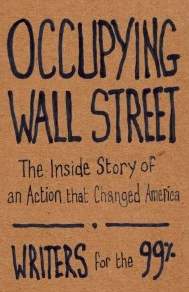
Occupying Wall Street: The Inside Story Of An Action That Changed America – Writers For The 99%
A collective of writers for the 99 percent have created a very interesting new book for OR Books, distributed by Haymarket Books. They’ve employed a unique writing method to chronicle the many details within the movement of Occupying Wall Street. A team of nearly 60 writers with rotating membership, collaborated on the describing the intricate structures and daily life of the movement such as running the general assembly, how the security and medical center operate and then the stories of the activists involved.
Colin Robinson:
- We were supportive of what was going on down in Zuccotti and I thought we should do a book about this too.
- Beginning of October I went down to the trash cans outside my apartment and pulled an old Budweiser carton out of the trash and cut it into the shape of a book cover and wrote on it with a Sharpie, “Occupying Wall Street, By Writers With the 99%.
- I photographed it with my iPhone at home, and sent it out with a press release, and New York Magazine picked it up saying Occupy Wall Street has a book and it then went everywhere.
- The journalists were calling me up saying, who are the writers for the 99 percent?
- So then I had to get some volunteers. We went down to Zuccotti and talked to some of the facilitators down there. They said you should just come to a General Assembly and we’ll put it on the agenda.
- Tell the GA about the book, get some volunteers and you’ll be fine.
- So we went down on a Wednesday night, in early October. I was not feeling comfortable about this.
- I was a little nervous about speaking at the GA to try and get permission to publish the book.
- They suggested to go to and Education and Empowerment Meeting Committee at 60 Wall Street and take it up there and ask for volunteers there.
- The following week we went the meeting and the response at that point was not very encouraging.
- People were suspicious of who we were. Whether this book was going to be seen as the official book of Occupy Wall Street, which we were saying it wasn’t but they thought it would be. And that it was going to develop an analysis that they didn’t agree with.
- No, we were saying its going to be descriptive, it’s not analytical. A lot of the twinkling was out flat, some of it was down. In the end, some guy stood up in the back and said I don’t think we should support this.
- We got blocked, he crossed his arms in front of chest. If this goes through, I’m walking out. We felt really wounded by it.
- But afterward some people from the committee came up and said we feel badly about the way you were treated, we’ll volunteer to help. We started meeting weekly at 60 Wall Street and the meetings got bigger and bigger.
- We came up with a structure, chapter by chapter. There were 2 themes in the book, one was a chronological account of the action. The day the occupation started on September 17.
- The drilling down of the daily detail for what life is like in the square. We’ve got sections in the book of how the kitchen worked, how the library worked, how the general assembly worked.
- I thought at first, what I would do would be to interview the people who are volunteering to write, pick the ones who could write well, and as kindly as possible tell the ones who couldn’t write they couldn’t be part of it.
- I soon realized that was not is the spirit of Occupy Wall Street.
- We were trying to reproduce the book in a way that reflected the values of Occupy Wall Street that meant it was produced in a very democratic, horizontal fashion. Anyone who wanted to participate could.
- We came up with a chapter structure, we sent people out into the square and we did about 200 interviews in the square. We allocated the interviews to each chapter and we tried to find 3 or 4 people to write each chapter.
- The whole book was written by 60 people in 2 weeks. This book absorbed the ethos of Occupy Wall Street.
- If you repress a little bit of it, its going to spring up somewhere else.
Guest – Colin Robinson, former Publisher, Verso Press and The New Press, and Scribner senior editor; John Oakes, former Grove Press Editor and founder of 4 Walls, 8 Windows and ORBooks. He’s written for magazines and newspapers including the New York Times and the London Guardian.
——————————————————
Civil Liberties, Habeas Corpus, Human Rights, Surveillance, Targeting Muslims, Torture, Truth to Power
Podcast: Play in new window | Download
Updates:
——

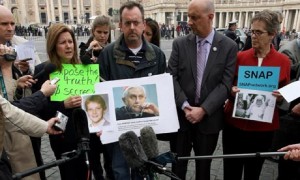
Church Puts Legal Pressure on Abuse Victims’ Group
Earlier last year, we reported on the Vatican revising its laws making it easier to discipline sex abuser priests. This month, lawyers for the Roman Catholic Church and priests accused of sexual abuse and pedophilia have used the courts to force the group SNAP Survivors Network of those Abused by Priests to disclose more than two decades of e-mails that could include correspondence with victims, lawyers, whistle-blowers, witnesses, the police, prosecutors and journalists. A Kansas City judge decided SNAP must comply with lawyers because it had relevant information regarding 2 cases in Missouri.
Attorney Barbara Blaine:
- As you know we are a not for profit, self help support group run by and for people who have been victims of clergy sexual abuse. We have been providing support information to each other since 1988.
- The church officials have taken an unprecedented move and they have subpoenaed records from our SNAP leaders.
- We are an international group, we have groups forming in other countries as well.
- Here in the United States, we have support groups meeting in about 70 cities. In these support groups people share their feelings and tidbits of information on how to cope with the repercussions of sexual violence.
- There are subpoenas from 2 different cities, 2 different cases, both from the state of Missouri.
- In Kansas City, what’s happen in the past year, is a lot of sex abuse by priests has been uncovered, exposed and brought to light. In the process, the Bishop himself was indicted for failure to protect children.
- In one particular civil case, the church attorneys have subpoenaed the records of our national director and they are looking for very extreme information.
- These subpoenas are not tailored to be helpful to get information for the case, SNAP is not a party to either of these cases. They ask for records with no date, from the very beginning of SNAP, from 1988.
- They’re asking for all the information in our emails, in our files, and they’re looking for any information that names any priest from the diocese of Kansas City, St Joseph.
- We do believe that the victims who have spoken out in Kansas City, have had an impact. I think its empowered other victims to come forward. I think they’re trying to shut down SNAP in Kansas City.
- The biggest concern we have now is the fear that this is spreading. In many ways, the intended effect has already taken place.
- I started SNAP, I did so, after I was raped and sexually violated by a priest in my parish growing up.
- Stop The Legal Bullying Petition.
Guest – Attorney Barbara Blaine, founder of SNAP the nation’s oldest and largest self-help organization for victims of clergy sexual abuse 10 thousand survivors.
——–
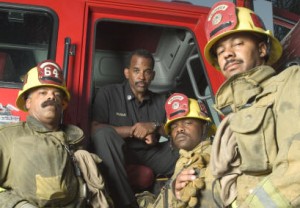
Court Rules FDNY Liable for Up to $128 Million in Back Pay to Black and Latino Applicants
Last week, a US District judge awarded plaintiffs back pay in a class action lawsuit that found the New York Fire Department to have racially discriminatory hiring practices. US District Judge Nicholas Garaufis also ruled that the City of New York is liable for nearly 129 million in lost wages. This amount will be distributed to Black and Latino applicants, 82 and 42 million dollars respectively. The judge also ordered the FDNY to hire 186 Black firefighters and 107 Latino firefighters.
Attorney Darius Charney:
- The Vulcan Society which is the Black fraternal organization for New York City brought a lawsuit in the early 1970s challenging the hiring practices of the department as violative of the equal protection clause of the Constitution, saying that they racially discriminated.
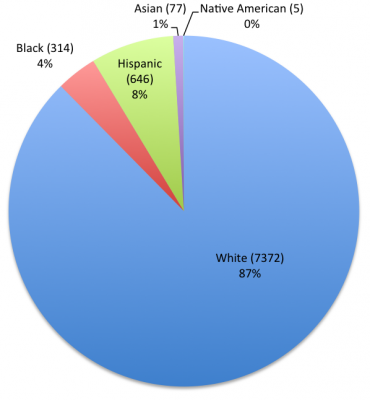
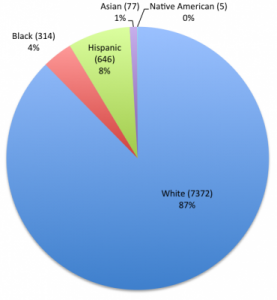
- Blacks and Latinos, its over half of the city’s population today. If you look at the fire department today, its roughly if you combine Blacks and Latinos about 10 percent.
- A federal judge in New York found that the hiring practices were discriminatory and violated the 14th amendment, the 2nd Circuit Court of Appeals upheld that decision and the Fire Dept was ordered to make some changes in 1970s.
- As of 2002 when we actually formerly brought this case, the department was 3 percent Black, 5 percent Latino, which is not much different than it was in 1970. The city was asked to work out a settlement, the city refused for 2 years.
- So, the EEOC referred the case to the Department of Justice, Civil Rights Division. This was during the Bush Administration and as you know the Civil Rights Division didn’t do much.
- We’ve proven discrimination about 3 times over now to the judge. Last year we had a big federal trial in Brooklyn on what relief the court should order because of the discrimination that was found.
- If you try to obstruct a federal court order, that could lead to some serious penalties.
- Our clients, the Vulcans first met with Mayor Bloomberg when first came to office in 2002 about this problem.
- We felt it was a purposeful and intentional effort by the city to exclude people of color.
- There have been incidence, we think retaliatory incidence we think against Vulcan members for there efforts in this case.
- The FDNY has really dropped the ball in responding to these acts of discrimination.
- The court has to oversee a lot of different aspects to this case. There’s a new test being developed, they’re going to start administering this week. There’s now the piece about the compensation for the plaintiffs.
- Federal judges can’t closely supervise the case so they appoint these monitors to simply act in the role of the judge and oversee each of these aspects of the case.
- We hope that the city will at some point stop fighting because all the things the judge has ordered for changing, I think benefits the fire department.
- A group of women sued in the early 1980s alleging sex discrimination and again they pointed to the test and other aspects of the hiring process.
- They were victorious and the court ordered them to hire 50 women, which they did do.
Guest – Attorney Darius Charney, senior staff attorney in the Racial Justice/Government Misconduct Docket. He is currently lead counsel on Floyd v. City of New York, a federal civil rights class action lawsuit challenging the New York Police Department’s unconstitutional and racially discriminatory stop-and-frisk practices, and Vulcan Society Inc. v. the City of New York, a Title VII class action lawsuit on behalf of African-American applicants to the New York City Fire Department which challenges the racially discriminatory hiring practices of the FDNY.
—————————-
Civil Liberties, Habeas Corpus, Human Rights, Supreme Court, Surveillance, Targeting Muslims, Truth to Power
Podcast: Play in new window | Download
Updates:
——–
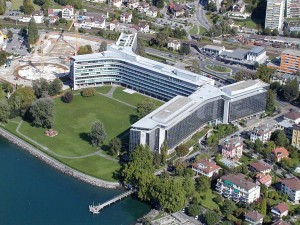
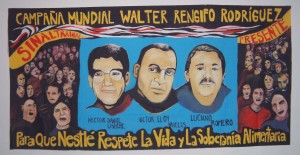
Nestlé Test Case: Charges filed on murder of Colombian Trade Unionist
In a previous show we discussed the lawsuit Kiobel v. Royal Dutch Petroleum, a case pushing to hold corporations accountable for human rights violations. We talk today about a similar case. Recently a Columbian Trade Union filed charges against the Swiss company Nestle and members of its senior management. They are accused of failing to take precautionary measures for the 2005 murder of Luciano Romero. Romero was murdered by paramilitaries in Valledupar, a north eastern part of Columbia. His body was found with 50 stab wounds. Romero worked for a the Columbian Nestle subsidiary company Cicolac. Cicolac is accused of being negligent in failing to prevent this crime.
Attorney Wolfgang Kaleck:
- We are presenting cases against European Transnationals who are involved in human rights violations.
- One of our targets is Nestle’s, Switzerland whom we try to hold accountable for an assassination of a Columbian Trade Unionist Luciano Romero in 2005.
- The Nestle subsidiary was very close to the paramilitary.
- Columbia has a record of killing over 2000 trade unionists over the last 20 years.
- The solidarity movement here in Switzerland was very active of the defense of the threatened trade unionists. They were threatened over years, some of them had to go into exile, some of them moved within Columbia.
- What we accused them of is negligent killing through omission.
- If you go into a conflict region and if you link with one of the conflict parties, you can be held accountable.
- The companies have the duty of due diligence. You have the task to take a human rights risk assessment. Then you have as a mother company, you have a role to play for your subsidiaries.
- That’s why we presented the case here in Switzerland, we’re not only talking about the murder in 2005, we’re also talking about future responsibilities of transnational companies.
- That’s why the whole complaint here, got huge media coverage.
- The managers who we are suing live in Switzerland, and are Swiss citizens.
- We want the prosecutor in Switzerland to undertake an investigation.
- In Columbia there is no real possibility to sue a transnational company, but this is why the Swiss judges and prosecutors have to act right now.
- The spectacle in the German and Swiss media helped us put the problems on the table.
- Havard Professor was appointed by the UN to elaborate principles to regulate the behavior of transnational companies and human rights. The principles are very general.
- The prosecutor got quite a difficult criminal complaint. He has to decide in the next weeks or months to open this criminal procedure.
- Nestle did the other way around, because they didn’t like the trade unionists. They were an obstacle.
Guest – Attorney Wolfgang Kaleck, General Secretary and co-founder of ECCHR, specializing in criminal law, he has established an international reputation as an advocate for human rights. He made a name for himself when he filed suit against the U.S. Defense Minister Donald Rumsfeld for war crimes and torture committed at Abu Ghraib and Guantanamo Bay.
———
Exposed: NYPD Surveillance of Muslims Spill Over Into Other States, Africa and Europe
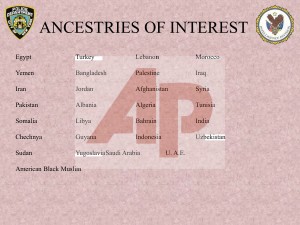
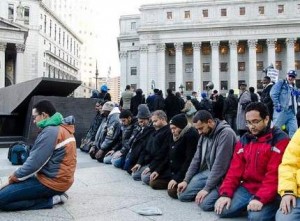
We’ve covered a wide range of stories involving the FBI spying on Muslim students and using undercover agents at mosques. Last month, news of this spying had broke into the mainstream news. The New York Police Department’s ongoing surveillance operations of Muslims across the Northeast has exposed a broad spectrum of civil rights violations. Documents recently obtained by the Associated Press reveal the NYPD built databases showing where Muslims live, buy food, and where they watch sports. The NYPD municipal spy operations spilled out of New York City and reached into New Jersey, Long Island and to colleges across the Northeast.
Cyrus McGoldrick:
- This program amounts to a comprehensive and warrant-less and invasive surveillance program of all Muslim life.
- Not just here in New York City but now we have reports of cops going down to UPenn in Philadelphia.
- Up to Yale in New Haven, Albany and Buffalo. It’s even worse than that. NYPD officers out in North Africa and Europe.
- This is one of the worse things I’ve seen is people being scared out of their public activities. I think there’s a fear of speaking publicly about things.
- We’re hearing reports of a network of up to 15 thousand informants feeding information to the NYPD.
- One of the earliest documents that came out was a powerpoint presentation from the NYPD called the demographics unit. The third or fourth slide in this document is titled “ancestries of interest.”
- Anyone who is trying to make the argument, “they’re trying to protect us” they need to see this slide.
- It’s human mapping, community mapping, modeled off of how Israelis operate in the West Bank.
- It’s essentially Muslim until proven innocent.
- The documents are there, they’re online, we’ve seen them for ourselves. I would love to put Mayor Bloomberg in front of the power point presentation of the demographics unit and let him justify that.
- They’ll trot out pictures of terrorists and say this is what we’re keeping you safe from .
- You’re really in danger of honey bees than from a terrorist attack
- And don’t let the NYPD tell you that that’s because they’re spying on Muslim students from Philadelphia to New Haven because that’s not the case.
- There’s maybe two cases where the FBI was not the primary planner of that attack.
- Within 200 miles of New York City, the NYPD are sending people just a shocking number of informants and sometimes undercover officers culling political speech, political activity, hearing what people are talking about.
- So they’re watching everything they can, and anyone who is expressing some anger.
- Watching for raising a dissenting voice, that’s what the rakers were.
- Mosque crawlers played a similar role.
- Rakers is a more general term for the invasion, infiltration.
- We’re lucky that this got discovered.
- The involvement of the CIA is very interesting. David Cohen from the CIA who came to the NYPD after 9/11. Sometimes they refer to him as a former CIA agent. I’m not sure that’s a type of club you can leave.
- There are other CIA agents that were on CIA payroll but were posted in the NYPD.
- Later, the CIA actually removed the officers that were in the NYPD because of a lack of supervision, they called it.
- When you see these people lining up to defend this, you have to wonder why.
- They’re using the fear of us to get to your rights.
- It’s really amazing the assumptions of power that the government has justified with the war on terror.
Guest – Cyrus McGoldrick, Civil Rights Manager with the Council on American-Islamic Relations-New York
—————————–
Civil Liberties, Criminalizing Dissent, Habeas Corpus, Human Rights, Political Prisoner, Torture, Truth to Power, War Resister
Podcast: Play in new window | Download
Updates:
——-
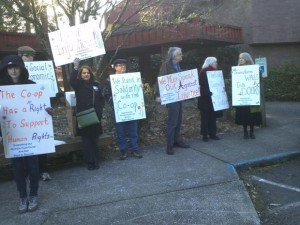

Judge Dismisses Lawsuit Filed Over Boycott of Israeli Goods
Last month, a judge in Olympia, Washington dismissed a lawsuit tailored to force the Olympia Food Co-op to rescind its boycott of Israeli goods. The judge ruled that the lawsuit brought by opponents of the boycott violated a Washington State law designed to prevent abusive lawsuits which are aimed at suppressing lawful public participation. Interestingly, an investigation by ElectronicIntifada had unearthed that the lawsuit against individuals with the Olympia Food Co-op Board was also planned in collusion with a national anti-Palestinian organization called StandWithUs that was working with the Israeli government. Lawyers with the Center for Constitutional Rights argued that the lawsuit qualified as a SLAPP, that stands for – – Strategic Litigation Against Public Participation. SLAPPs are lawsuits that target the constitutional rights of free speech and petition in connection with an issue of public concern.
Attorney Maria LaHood:
- The Olympia Food Co-op is a non-profit in Olympia Washington, that not only makes good food accessible to people, but also encourages economic and social justice in other ways.
- So it has a long history of doing social justice work, including adopting boycotts.
- The board decided to boycott Israeli goods in 2010 by consensus. A few months after that there was a co-op election. Three of the five plaintiffs who ended up bringing the lawsuit, members of the co-op, the co-op has about 22 thousand members. They ran for the election opposing the boycott and they lost.
- They ran for the board on an anti-boycott agenda and not voted in by the members.
- The board decided to boycott Israeli goods and divest from any Israel investment.
- One Israeli product: Gluten free ice cream cones,
- Obviously it had symbolic significance so that the five plaintiffs decided to send a letter to the board promising litigation that would be complicated, burdensome and expensive if the board didn’t end the boycott.
- CCR got involved and CCR cooperating council to represent the board members and decided to file an anti-SLAP motion as well as a motion to dismiss.
- Plaintiffs were also seeking discovery which of course they had promised. They started out serving 200 pages of discovery on all 16 defendants and trying to depose all 16 defendants. After we file the anti-SLAPP motion which actually stays discovery, they sought to depose three of the defendants as well as additional document requests.
- We challenged that discovery request.
- Olympia, Washington, is where Evergreen College and that’s also where Rachel Corrie is from.
- Stand With Us is basically an anti-BDS organization.
- The lawsuit against the co-op board members was actually identified by Stand With Us as one of its projects months before the case was even filed.
- Stand With Us also produced and posted online an anti-BDS video with four of the five plaintiffs in the case.
- They described themselves as an international organization ensuring Israel’s side of the story is told.
- They also have apparently connections as well to the Israeli government.
- The hearing was last Thursday, there was a great turn out, they had to move us to a bigger court room.
- The judge ruled that this lawsuit did challenge public participation so it did fall under the anti-SLAPP statute.
- Boycotts are constitutionally protected under the first amendment.
- This kind of suit is exactly what this statute was meant to address.
- We argued that the board under the bylaws has the authority to adopt any policy essentially it wants, that promotes the co-opts mission.
- He (the judge) did say that it was a nationally recognized movement.
- The victory here sends a message that you cannot sue to chill free speech issues.
Guest – Senior staff attorney Maria LaHood, who specializes in international human rights litigation, seeking to hold government officials and corporations accountable for torture, extrajudicial killings, and war crimes abroad. Her cases have included Arar v. Ashcroft, against U.S. officials for sending Canadian citizen Maher Arar to Syria where he was tortured and detained for a year; Al-Aulaqi v. Obama, to prevent the “targeted killing” of a U.S. citizen in violation of constitutional and international law; Matar v. Dichter, against an Israeli official responsible for a “targeted killing” that killed 15 Palestinians; Belhas v. Ya’alon, against a former Israeli official responsible for the 1996 shelling of a United Nations compound in Qana, Lebanon, that killed over 100 civilians; Corrie v. Caterpillar, on behalf of Palestinians killed and injured in home demolitions, and Rachel Corrie, a U.S. human rights defender who was killed trying to protect a home from being demolished; and Wiwa v. Royal Dutch/Shell, for the torture, detention and execution of Ken Saro-Wiwa and other human rights activists and protestors in Nigeria. After graduating from the University of Michigan Law School in 1995, Maria advocated on behalf of affordable housing and civil rights in the San Francisco Bay Area.
—————————————————————————–
Civil Liberties, Criminalizing Dissent, Guantanamo, Habeas Corpus, Human Rights, Surveillance, Targeting Muslims, War Resister
Podcast: Play in new window | Download
Updates:
——-
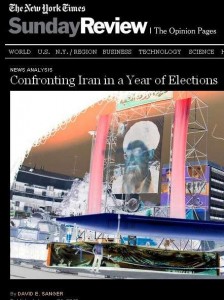

Weapons of Mass Destruction Part 2: Iran
Similar to accusing the Iraqi government for stockpiling weapons of mass destruction as a pretext for a military invasion, Israeli and US intelligence assert that Iran is bent on becoming a nuclear weapons state by enriching uranium. This narrative as many listeners know has been going for many years In the New York Times article titled Confronting Iran In A Year of Elections, New York Time’s chief Washington correspondent David Sanger platforms his article on the assumption there is evidence Iran is making nuclear weapons. We talk today with Professor Bill Beeman author of The “Great Satan” vs. the “Mad Mullahs”: How the United States and Iran Demonize Each Other. Beeman has criticized the New York Times and other media for falsely claiming there is evidence Iran is developing nuclear weapons. He also points out that Iran has a right to enrich uranium for peaceful purposes and that their facilities are monitored by the International Atomic Energy Agency.
Professor William Beeman:
- First of all its very important to understand there is no evidence anywhere that Iran has a nuclear weapons program. Every report from the IAEA has reaffirmed that Iran has not diverted any nuclear material for military purposes, including the last report in November 2011.
- The news media, especially the New York Times, I must tell you has distorted the IAEA report in order to make it seem as if Iran is building nuclear weapons.
- We have no evidence to the contrary.
- The New York Times article written by an Israeli journalist not only has actually attracted hundreds and hundreds of objections. Because of its war mongering tone and because it contains a lot of inaccuracies.
- Clapper claims Iran is most likely to attack the United States based on the incident that took place a few months ago.
- There are some countries like Japan that have said outright that they intend to develop the capacity to construct nuclear weapons. Iran has said it doesn’t intend to do this.
- The United States is not coming after Japan. . or Brazil which has issued a similar statement or any of the 20 countries that don’t have weapons but are now enriching uranium.
- When Colin Powell went before the United Nations saying Iraq had weapons of mass destruction I wrote a column saying its simply not true.
- That got me on the Bill O’Reilly show where I had a big arguement with him about this.
- I said simply show us the actual proof.
- My feeling at the time was that Colin Powell had been badly misused by the Bush administration in order to sell a false picture of what was actually going on in Iraq.
- Iran was given uranium many years ago during the time of the Shah to use in a medical reactor to develop isotopes for the treatment of cancer.
- Every scrap of uranium that they’ve been working with is under inspection.
- The IAEA is watching the process as it goes on every day.
- They say if Iran wants to wipe Israel off the map they’re probably going to use nuclear weapons.
- The joke is of course we knew Iran was enriching uranium, because we started the enriching program 40 years ago.
- The idea that it was carried out in secret, quite frankly revealed the extraordinary ignorance of the Bush Administration.
- They have a continual drum beat to attack Iran. The aim is not to stop Iran’s nuclear program because Iran’s nuclear program is anemic. The aim is regime change.
Guest – Professor William O. Beeman, Professor and Chair of Anthropology and specialist in Middle East Studies at the University of Minnesota, Minneapolis-St. Paul Minnesota, formerly of Brown University. It includes current publications on Middle Eastern affairs, especially Iran, Iraq, Afghanistan and the Persian Gulf region; anthropology; linguistics; performance; opera; things Japanese and Central Asian.
———————————————–