Law and Disorder RNC Street Coverage: Audio Document
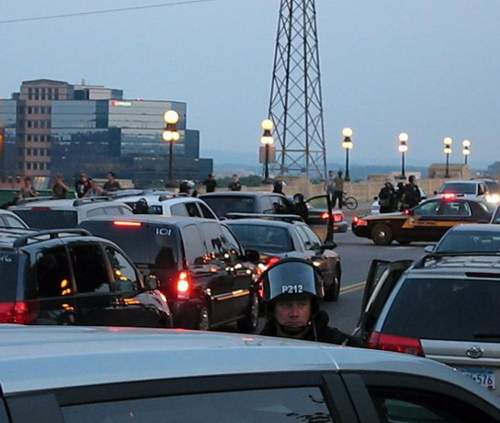
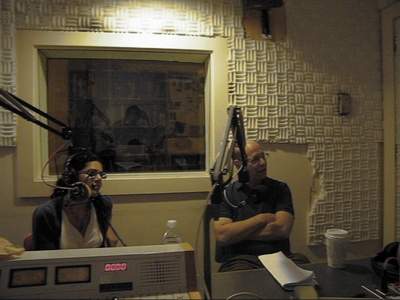
Heidi Boghosian, Law and Disorder co-host and Executive Director of the National Lawyers Guild took to the streets of St. Paul Minnesota with producer Geoff Brady during the Republican National Convention. We bring you the voices and sounds of protesters, demonstrations, and interviews with legal observers, lead activists and lawyers. We begin this audio document with attorney Bruce Nestor, president of the Minnesota Chapter of the National Lawyers Guild. Amid this heavily militarized area of St. Paul, Bruce Nestor describes how riot police use minivans as quick, efficient transport and the trapping of protesters on a bridge.
Just blocks from the Xcel Center, Heidi catches up with local activists and independent journalists who describe first hand accounts of police confrontations. A local journalist named Nick tells of the launching of paint and flash-bang grenades, the arrests and detainment of journalists and unwarranted use of pepper spray and tasers. On 4pm on Tuesday, marchers rally at Mears Park for the scheduled Poor Peoples March. There we spoke with a New York videographer named Dan, he described the pre-convention raids on I-Witness Video and more accounts of excessive police force. Below is a photo of the pre-convention raids from their website.
National Lawyers Guild attorney Bruce Nestor provides a chronology of events beginning with legal details involving the pre-convention raids on convergence centers. He also analyzes the overall impact of free speech when various factors come together. 1) Demonizing protesters and their message. 2) This allows use of military force by police. 3) Intelligence gathering and targeting lead organizers of alternative press. Combined, these tactics squelch the voice of dissent in all age groups and keep people from exercising their first amendment rights.
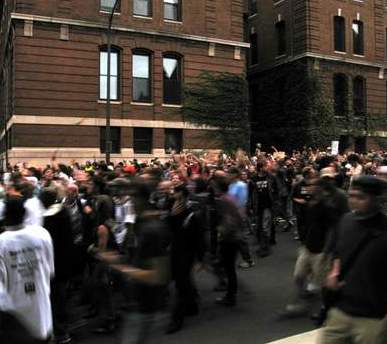
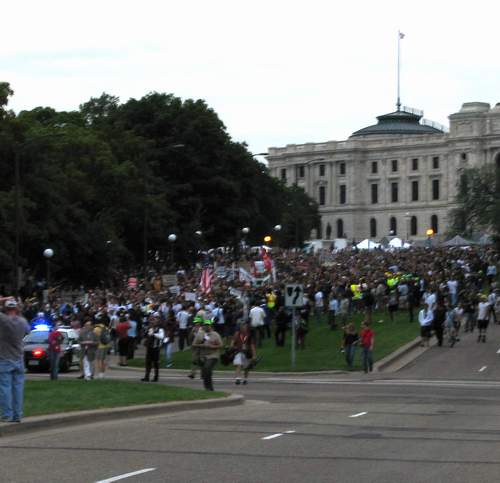
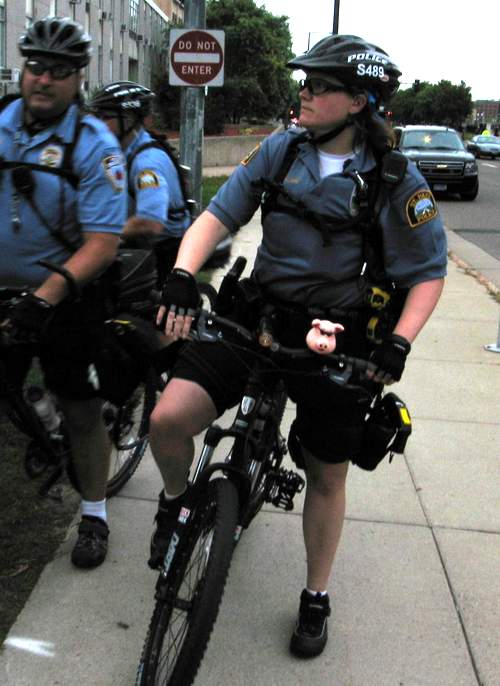
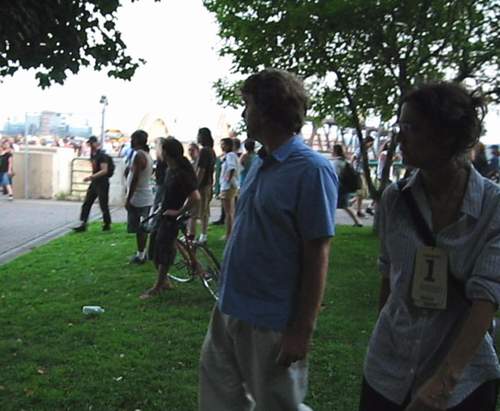
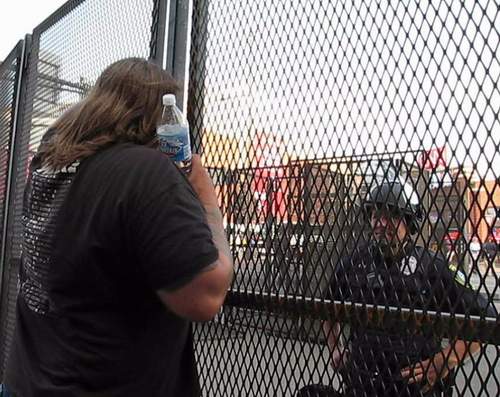
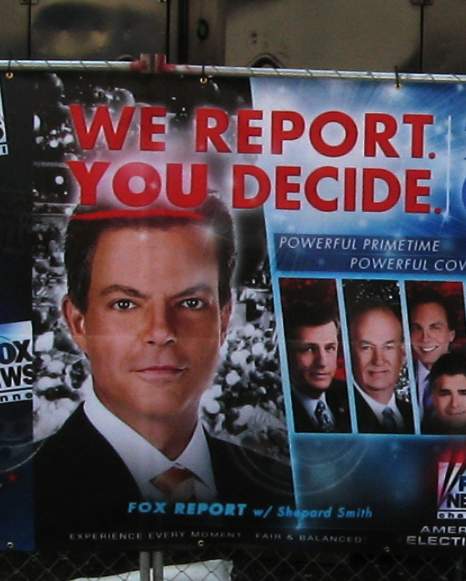
Below: Scenes gathered from the streets of St. Paul during the Republican National Convention 2008
“This is not intended to be a mere discussion of violations of law that have occurred,” says convener Lawrence Velvel, dean and cofounder of the school. “It is, rather, intended to be a planning conference at which plans will be laid and necessary organizational structures set up, to pursue the guilty as long as necessary and, if need be, to the ends of the Earth.†related article
Velvel Interview Notes:
Conference will be held in undisclosed location for the time being.
Until people have the fear they will be brought to book if they violate the law in a very serious ways that cause tens of thousands of deaths, what will stop them from doing it in the future?
Unless there is something to look back on, like the Germans and the Japanese apparently know, don’t do it again because people swung.
Who’s to say it won’t happen 20 or 30 years in the future again.
Guest – Lawrence R. Velvel, Dean of Massachusetts School of Law and a professor of law. Mr. Velvel is a 1960 graduate of the University of Michigan and a 1963 graduate of the University of Michigan Law School, where he served on the law review and was elected to the Order of the Coif. He was a law professor from 1966-1978, first at the University of Kansas and then at Catholic University. He has been a partner in major law firms in Washington, D.C., and was the first chief counsel of an organization established to write United States Supreme Court briefs in support of state and local governments. read more.
A Justice Department proposal which could be made public in a month, has given the government even broader license to open terrorism investigations, without any evidence of wrongdoing, relying instead on racial or ethnic profiling. Currently, FBI agents need specific reasons, such as evidence or allegations that a law probably has been violated, to investigate US citizens and legal residents. Last month, The Council on American Islamic Relations decried the forthcoming plan as “unconstitutional and un-American.â€
This proposal is among other aggressive plans the Bush administration has put in place such as new wiretapping regulations and authorizing greater sharing of intelligence information with the local police. The Director of National Intelligence has set up – Information Sharing Environment – where certain police authorities will have access to information produced by the FBI, by the intelligence community and also by police departments around the country.
It is “one stop shopping” for all these different police agencies and even private companies to have access to this highly speculative, accusatory, fragmented and often erroneous information.
Intelligence Fusion Centers – which I think is a real problem, particularly since there’s very little oversight of these centers
there’s no way to correct these watch files, – a main problem with the closed system, where no one has an opportunity to go in and say you got this piece wrong.
Giving the FBI more authority to collect more information isn’t helping the FBI be more effective.
Gathering information about innocent people won’t help find guilty people.
There is no terrorism profile, people are drawn to terrorism for all sorts of reasons.
Terrorism watch list : 1 million individual records – clearly nobody believes there’s a million terrorists out there.
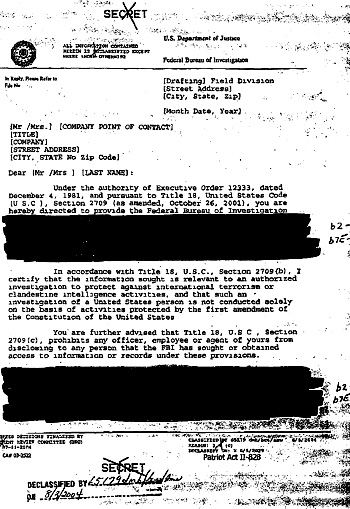
The FBI don’t know to this day, how many national security letters they’ve issued.
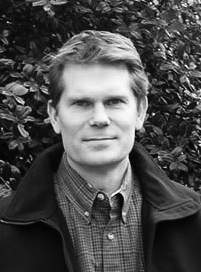
Guest – Mike German, attorney with the ACLU and former FBI agent. Mike German is a recognized expert in terrorist group behavior, counter-terrorist operations, and right-wing extremism. He has appeared on Dateline NBC, Paula Zahn Now, CNN, and MSNBC and his commentary has been published in the National Law Journal and the Washington Post. Mike served for sixteen years as a Special Agent with the Federal Bureau of Investigation and is one of the few agents credited with actually having prevented acts of terrorism before it became the FBI’s number one priority.
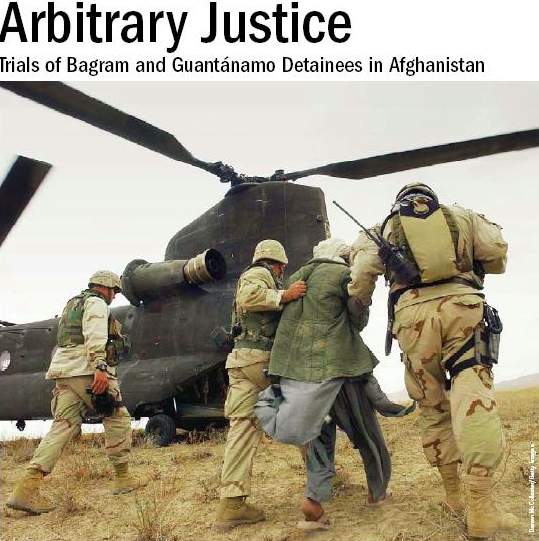
Human Rights First and Sahr MuhammedAlly have come out with a powerful report detailing the transfer of Guantanamo and Bagram prisoners to be prosecuted at the Afghan National Detention Facility in Kabul known as Block D. The report is titled Arbitrary Justice: Trials of Bagram and Guantanamo in Afghanistan. Among the details, the report describes that more than 250 former Guantánamo and Bagram detainees have been transferred to Block D, a facility built by the US government to hold and prosecute former Guantanamo and Bagram prisoners.
More than 160 have been referred for prosecution. The detainees are being charged under Afghan law for crimes ranging from treason and destruction of government property to threatening the security of Afghanistan. Defendants have been sentenced to terms of imprisonment ranging from 3 to 20 years, their trials last from 30 minutes to an hour.
We want to bring listeners up to date with the case of Mohammed Jawad. He was captured by Afghan police on December 17, 2002, and handed over to US forces the same day. According to his military defense lawyer, Jawad was briefly held at Bagram Air Base and transported to Guantanamo in January 2003. The same time period as portrayed in Taxi To The Dark Side.
Military commissions by executive order: illegal by the Supreme Court decision in Hamdan v Rumsfeld.
In response to Hamdan v Rumsfeld, Congress passed the Military Commissions Act in 2006
MCA 2006: Allows for secret trials / secret parts of trials /denying the accused the right to be tried by an impartial court /allows coerced testimony to be used; usually information gathered from being tortured.
Emi Maclean – “If you think the system is deeply, deeply flawed, look again, when the Dept of Defense couldn’t get what they wanted, they fired a judge. In the case of Omar Katr, the judge had ordered the government to produce information about the conditions of his detention and the conditions of which Omar’s statements were made. Even in a situation where the system is in favor of the government, the judge was replaced when that judge ruled against the government.”
Michael Ratner – “Even if Jawad is acquitted by this show trial, the (Bush) administration still says they can hold people indefinitely.”
Guest – Emi MacLean, staff attorney at the Center For Constitutional Rightsand with the Guantánamo Global Justice Initiative (GGJI) since June 2006. She works on issues related to Guantánamo and other forms of executive detention, including secret prisons and transfers-to-torture. She helps coordinate the pro bono attorneys representing the hundreds of men still detained at Guantánamo and supports CCR’s direct representation of a number of current detainees.
Vincent Warren, Executive Director of the Center for Constitutional Rights talks with hosts about the CCR campaign titled the First 100 Days. Warren says there is a clear opportunity for the next president to steer things in a new direction, to repudiate the executive orders that have been put in place by George W. Bush, and by the sidestepping of the Justice Department. A lot of the reversal can be done without Congress because they are executive orders. The First 100 Days campaign will put this information(PDF) in the hands of the people to make the next administration accountable. Law and Disorder will have more programming on the First 100 Days.
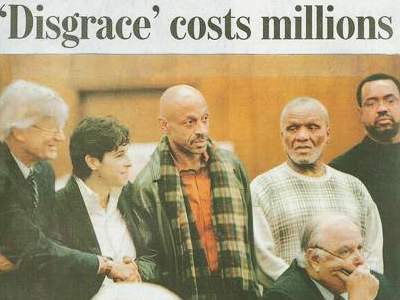
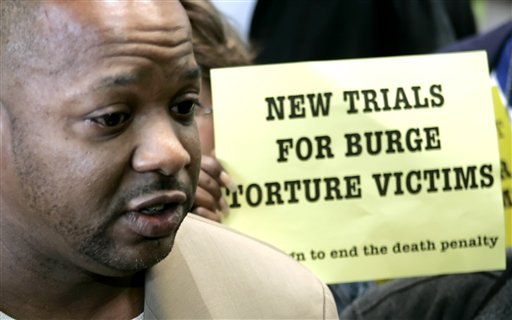
According to the People’s Law Office in Chicago, at least 24 African American men are still serving sentences for crimes they say they confessed to after being tortured by Chicago Police officers. The happened when the Chicago police precinct was under Commander Jon Burge in the early 70’s to the 1992. Jon Burge is a Vietnam Vet who is said to have brought back torture to Chicago. People’s Law Office Attorney Flint Taylor says Burge shot through the ranks all the way to commander, primarily by leading a band of torturers. They used methods such as electric shock, dry submarino, (suffocating with bags)
Flint Taylor on the Daryl Cannon Torture Case:
Flint Taylor represents torture victim Daryl Cannon who the city has admitted they tortured and settled for 3 thousand dollars twenty years ago before any evidence of the systemic torture came out.
Under Seventh Circuit law if there’s a conspiracy to cover up the evidence in a civil case to show fraud then you can bring the case again. The PLO brought the case in 2005 and the city of Chicago still refuses to settle the case and they’re pumping hundreds of thousands of dollars in that case.
They’re over the 10 million dollar mark and pumping more in to the defense of Commander Jon Burge. We’ve calculated the pensions that have been paid to Burge and the 25 other implicated torturers; its over 25 million because statute of limitations have no remedy.
The Peoples Law Office attorneys are also battling to get the remaining men off of death row and to get them hearings. They’re also battling to get the states attorney and DA to Richard Daily former Chicago mayor and Richard Devine to the carpet because they had evidence to prosecute Burge criminally, thus allowing torture ring to continue.
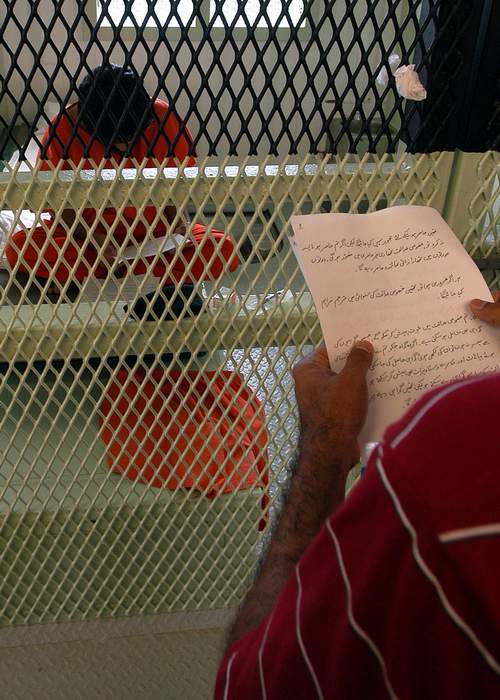
We hear from Pardiss Kebriaei, Staff Attorney, Guantánamo Global Justice Initiative, at the Center For Constitutional Rights who spoke at the event titled, Beyond Guantanamo.
Now that key rulings issued by the Supreme Court affirm the constitutional rights of Guantánamo detainees to challenge their detention in the federal courts, what does the future hold for Guantanamo detainees and the rule of law? In the cases of Boumediene v. Bush and Al Odah v. United States, the June 2008 Supreme Court ruling has undone the attempts of the Bush administration and Congress to suspend the fundamental right of habeas corpus. Closing Guantanamo is on top of the list of actions in the First 100 Days for the next U.S. President’s Administration.
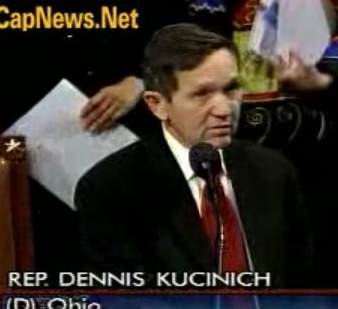
For nearly eight years, President Bush and Vice President Cheney have manipulated and lied to the U.S., and not without the help of Congress and the mainstream media. Here on Law and Disorder we’ve been with listeners during 4 of those 8 years, chronicling the injustices of the “global war on terror.” Now, in this late stage of the Bush/Cheney administration, Ohio Congressman Dennis Kucinich is pushing for impeachment. Last week the house voted 238 to 180 to send a single article of impeachment to the Judiciary Committee. The same committee that stopped Kucinich’s impeachment effort is allowing a hearing on Bush’s reasoning for taking the country to war in Iraq. In Kucinich’s words it is quote “deceiving Congress with fabricated threats of Iraq WMDs to fraudulently obtain support for an authorization of the use of military force against Iraq.” Kucinich: citizen petition.
If this article of impeachment is tabled, Kucinich says he would then begin to propose other articles. There are 35 articles of impeachment, among them are:
Misleading Congress and the American People About Threats from Iran, and Supporting Terrorist Organizations Within Iran, With the Goal of Overthrowing the Iranian Government
Falsifying Accounts of US Troop Deaths and Injuries for Political Purposes,
Illegal Detention: Detaining Indefinitely And Without Charge Persons Both U.S. Citizens and Foreign Captives, 4. Violation of the Posse Comitatus Act,
Rendition: Kidnapping People and Taking Them Against Their Will to “Black Sites” Located in Other Nations, Including Nations Known to Practice Torture
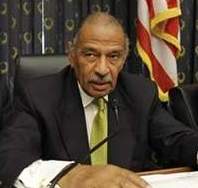
House Judiciary Chairman John Conyers Jr. told Congressional Quarterly, “We’re not doing impeachment, but he can talk about it.†Kucinich says holding George W. Bush and Dick Cheney accountable now, could prevent an attack on Iran.
Members of the Bush administration may soon be questioning if they will be prosecuted for war crimes. George W. Bush and other senior officials have enjoyed years of immunity from criminal lawsuits but, once out of office, they can be held accountable.
Bugliosi: Will U.S. State Attorney Generals and District Attorneys do the right thing?
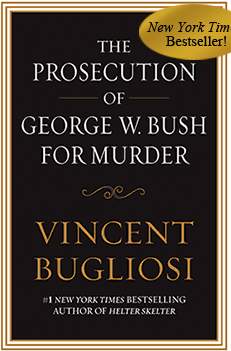
In his latest book, The Prosecution of George W. Bush for Murder, Vincent Bugliosi lays out the legal framework of a meticulously researched case that puts George W. Bush on trial in an American courtroom for the murder of nearly 4,000 American soldiers fighting the war in Iraq.
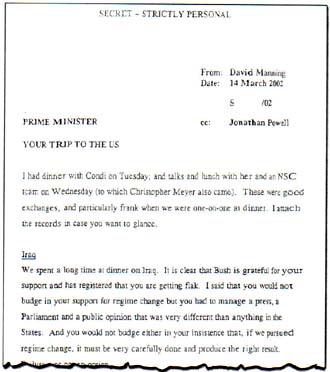
One strategy in The Prosecution of George W. Bush for Murder is to establish jurisdiction in the cases for Attorney Generals in each state and also the approximately 900 district attorneys in the counties of those states. Bugliosi says it’s not unreasonable to believe that at least one prosecutor will be courageous enough to step up. Bugliois says, one of the key pieces of evidence to prosecute George W. Bush is the Manning Memo from January 31, 2003.
Manning Memo: In March 2003, Bush said that if Saddam Hussein did not give up his weapons of mass destruction, Iraq would face war. But earlier, in a January 31 closed-door meeting, Bush told his British buddy Tony Blair that the attack would take place even if no WMDs were found. Indeed, George and Tony candidly conceded that the discovery of such weapons was unlikely. This deliberate deception is revealed in a confidential five-page memo written by David Manning, Blair’s top foreign-policy advisor, who was at the meeting. Manning records that both Bush and Blair were uptight that the WMDs were not going to be found, so George W offered another fabrication to give them an excuse to attack. He suggested that the U.S. would paint one of our own surveillance planes in the colors of the United Nations and fly it over Iraq, hoping that Saddam would be provoked into shooting it down. Then the U.S. and Brits could invade, claiming that they were retaliating for Saddam’s attack on the UN.
Bugliosi: Points To Consider
While young soldiers age 18, 19, who never had a chance to live out their dreams, were getting blown to pieces in Iraq. Bush was having a lot of fun and enjoying life to the very fullest.
Juxtaposing Hussein with 9/11 – then saying later Hussein was involved in a terrorist relationship with Al-Qaeda. Al Qaeda was trained in Iraq in making bombs and poison.
The white paper that congress saw never had the intelligences of the 16 US agencies, that Hussein was not an imminent threat. Opinons were changed into facts while dissenting opinions deleted.
Last month, in the Maher Arar case, the Federal Court of Appeals ruled a 2-1 majority refusing to hold US authorities accountable for complicity in torture abroad. As Law and Disorder listeners may remember, Maher Arar, a Canadian citizen, traveling back to Canada, was picked up at JFK airport in 2002, detained in solitary confinement for 2 weeks by the US government then deported to Syria where he was interrogated and tortured. Cases involving diplomatic assurances in North America.
Last year, a Canadian commission of inquiry cleared Arar of any links to terrorism and he was given a 10.5 million dollar settlement. Since then, the United States refused to clear his name and now this majority decision rules that his constitutional claims can not be heard in federal court for two reasons. The first reason was based on national security, the second because Mr. Arar, a dual citizen of Canada and Syria, does not have constitutional, due process rights.
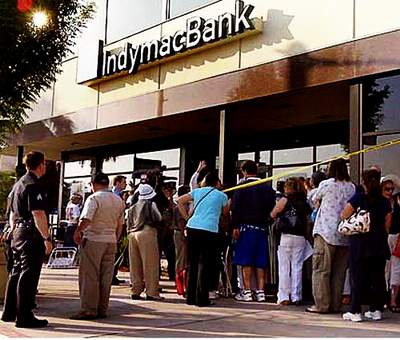
To many, the recent economic downturn could be a rough patch to a full collapse as a financial crisis hits the nation’s markets; add in that the United States is nine months into a significant acceleration in expected energy and food price increases. The distressful interaction is known as a “scissors crisis” among economists. We’ll also discuss the economic sub-genres, such as Military Keynesianism, GWOT spending, and housing markets. This, while Californians made a run on IndymacBank, the biggest bank crisis since 1984. Indymac was started by three former high level people from Countrywide.
Quote: “Even though Iraq is a bad idea, the value of the US military to this country is rising not falling.”
Max Fraad Wolff , freelance researcher, strategist, and writer in the areas of international finance and macroeconomics. Max’s work can be seen at the Huffington Post, The AsiaTimes, Prudent Bear, SeekingAlpha and many other outlets.