CIA Sponsored Terror, Civil Liberties, Habeas Corpus, Human Rights, Political Prisoner, Prison Industry, Supreme Court, Surveillance, Targeting Muslims
Podcast: Play in new window | Download
Updates:
—-
Lawyers You’ll Like: Attorney Brigitt Keller
On our Lawyers You’ll Like series we’re joined today by Attorney Brigitt Keller. She’s the Executive Director of the National Police Accountability Project (NPAP). Brigitt holds a law degree from Fribourg University Law School in her native Switzerland and an LLM in American Law from Boston University. She is admitted to practice law in New York. Prior to attending law school, Brigitt counseled victims of domestic violence and was instrumental in founding the Swiss National Council of Women’s Shelters. In addition to her engagement for NPAP, Brigitt is a fellow at the International Center for Conciliation and occasionally teaches conflict resolution workshops.
Attorney Brigitt Keller:
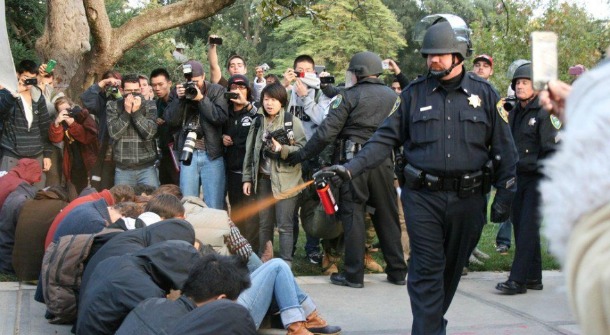
- NPAP’s mission is to hold law enforcement officers including prison personnel accountable for civil rights violations and police misconduct and brutality.
- As an organization we provide training and support for civil rights attorneys, legal workers and community activists.
- We also work with other organizations with similar efforts to change policy and practices and provide relevant information to the public.
- We see increasing disproportionate measures taken by police.
- The police (NYPD) no longer stop people when there is suspicious activity. They preventively sweep up hundreds of thousands of young men of color.
- When tasers were initially brought on the market, they were really sold to the public with the argument that they would be used instead of firearms.
- What we observe today and this counts for all over the country is that tasers are used in cases where there would never ever be a justification for the use of a firearm.
- When you think about why should we have police, its really to protect the people of this country,
- Young people of color have a very good sense of when policing is legitimate and when its not legitimate.
- These strategies make the community very unsafe. People will not call the police if the police behaves like an occupying army.
- I find the involvement of community activists and families of victims incredibly important.
- There is a different awareness today about police misconduct.
- I want to make clear that damage has been done already – that the fact that the judge was recused from the case with in my opinion, no valid reason. Secondly, the police are allowed to violate the rights of New Yorkers until the stay will be lifted.
- My interest in the law started initially by working for 7 years in a shelter for domestic violence victims.
- Police violence is something truly international. Even in a country like Switzerland where crime numbers are pretty low, there is police violence.
- I find it important that there is no abuse of power and police violence is abuse of power.
- www.nlg-npap.org
Guest – Attorney Brigett Keller – Executive Director of the National Police Accountability Project (NPAP). Brigitt holds a law degree from Fribourg University Law School in her native Switzerland and an LLM in American Law from Boston University. She is admitted to practice law in New York. Prior to attending law school, Brigitt counseled victims of domestic violence and was instrumental in founding the Swiss National Council of Women’s Shelters. In addition to her engagement for NPAP, Brigitt is a fellow at the International Center for Conciliation and occasionally teaches conflict resolution workshops.
—–
A Panel Discussion: Militarizing, Domestic Spying, and the Boycott of Israel
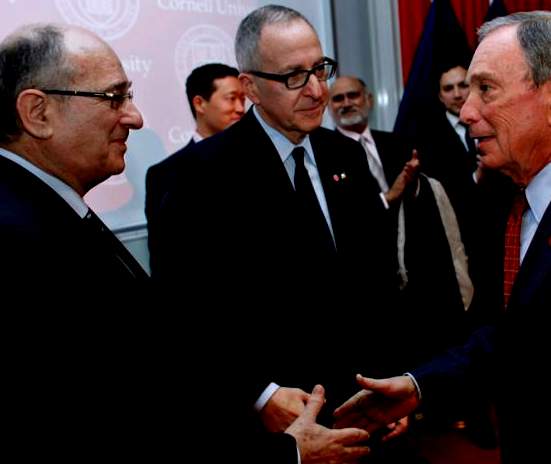
We hear a presentation by Anna Calcutt (New Yorkers Against the Cornell-Technion Partnership – NYACT), NYC-based BDS activist, will supply background on the conception and planning of the Cornell-Technion campus in NYC, along with reasons to oppose The Technion–including its deep-rooted ties with the Israeli weapons industry and military, the growth of the anti-Technion campaign, and what needs to be done next.
Recorded by Deep Dish TV
—————————————————————————————————-
CIA Sponsored Terror, Civil Liberties, Criminalizing Dissent, Habeas Corpus, Human Rights, Military Tribunal, Supreme Court, Surveillance, Targeting Muslims, Torture, War Resister
Podcast: Play in new window | Download
Updates:
——
Pan African Solidarity Hague Campaign to Delegitimize the ICC
In the month June last year, the Pan-African Solidarity Hague Committee delivered a petition to the International Criminal Court at the Hague, Netherlands demanding they prosecute the United States, Great Britain, France, Italy, Canada, and NATO for war crimes and crimes against humanity in Libya, Cote d’lvoire, Haiti and the US. This campaign began in May of 2011 when thousands gathered to protest the US/NATO bombing of Libya, attacks on Zimbabwe and the racist assault against African-Americans in the United States. 16 months after delivering the petition and sending follow up letters, the Pan African Solidarity Hague Committee haven’t received a response. The organization is now reaching out to National Lawyers Guild members and law students to help expose the International Criminal Court.
Attorney Roger Wareham:
- The International Criminal Court was established in 2001-2002, supposedly to replace the different ad-hoc international tribunals that had been set up to deal with war crimes and crimes against humanity.
- It’s supposed to be even handed, no double standard – everyone is held to the same level of accountability.
- The membership, you have to sign on to be a part of it. The United States was closely involved in the process of setting up the ICC.
- The U.S. insisted that it would not be subject to prosecution by the ICC, although under the Security Council of the United Nations could recommend cases for the ICC.
- Given the plethora of human rights violations and war crimes that have been committed around the world, the only people that the ICC is presently prosecuting are Africans.
- The only prosecutions have been of Africans.
- Our involvement in taking it to the ICC was in particular to expose its nature that its really not an international tribunal that would look at the question of war crimes across the board and that its really another instrument in the West’s arsenal of the exploitation of Africa.
- Ostensibly, dealing with human rights violations, the ICC has zeroed in on Africa.
- There’s been a response and rebellion among several of the African countries around this clear bias.
- Three of the five permanent members are not on the ICC, Russia, United States and China.
- I think what we want to do is we want a single standard or no ICC.
- Email: D12M@aol.com
- www.PASHC2012.blogspot.com
Guest – Attorney Roger Wareham, a member of the December 12th Movement, an organization of African people which organizes in the Black and Latino community around human rights violations, particularly police terror. Wareham is also the International Secretary-General of the International Association Against Torture (AICT), a non-governmental organization that has consultative status before the United Nations.
—–
Lawyers You’ll Like – Attorney Mel Wulf
We’re joined today by Attorney Mel Wulf, former legal director with the American Civil Liberties Union for 15 years. He was a law partner with former US Attorney General Ramsey Clark during the Kennedy Administration and much more. Wulf was part of some of the greatest contributions to the civil rights movement. He’s now retired after practicing law for 54 years. As part of our Lawyers You’ll Like series, we talk with Wulf about his work with the ACLU during the early 60s, and also about the forming of the Lawyers Constitutional Defense Committee.
Attorney Mel Wulf:
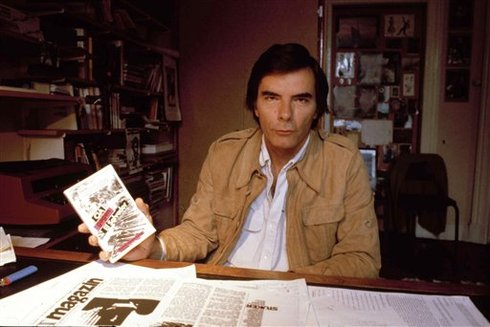
- Phil Agee was a dissident CIA agent who spent decades working against the CIA, published a couple of books.
- He lost his passport because when the dissidents took over the embassy in Tehran in 1979, the New York Post carried a story accusing Phil of helping the students who’d invaded the embassy to put together all of that written material that had been shredded.
- It was another New York Post bald faced lie.
- The State Department, based upon that story revoked his passport.
- I had represented Phil Agee, I was his principle lawyer for 30 years.
- Agee was very widely disliked in Washington because he was well known to be a CIA dissident who disclosed the names of many CIA agents.
- If Snowden went the same route today, he would do even worse in this Supreme Court than I did. That’s why Snowden won’t get his passport, thanks to me.
- I was for the workers and not for the bosses and I’ve always been for the workers and not for the bosses, which I think is the distinguishing political factor in our world. Which side are you on?
- I got my Bachelors Degree in ’52 and I had a Navy Commission which I had gotten from the New York State Maritime Academy earlier on.
- The draft board sent me a 1A notice, I applied to Columbia and when I finished Columbia they sent me another 1A notice because the draft was still on. I spent 2 years in the Navy as a Liuetenant Junior Grade Officer in Southern California.
- I went to work at the ACLU in 1958 as the assistant legal director, in 1962 I was given the job of the legal director of the ACLU.
- I had actually been going down to Mississippi from 1961 to 1962, working with then one of the two black lawyers who were practicing in Mississippi.
- We tried a couple of capitol cases in Mississippi. I continued to argue the systematic exclusion of blacks from the jury.
- I finally got a case up to the Supreme Court on that issue.
- Lawyers Constitutional Defense Committee: We had several hundred lawyers who went down to Mississippi for periods of a week or two. They were representing people being arrested during the Mississippi summer.
- Most of the judges allowed these lawyers to make some sort of presentation.
Guest – Attorney Mel Wulf, former legal director with the American Civil Liberties Union for 15 years. He was a law partner with former US Attorney General Ramsey Clark during the Kennedy Administration and much more. Wulf was part of some of the greatest contributions to the civil rights movement. He’s now retired after practicing law for 54 years.
——————————————————–
CIA Sponsored Terror, Civil Liberties, Criminalizing Dissent, FBI Intrusion, Habeas Corpus, Human Rights, Political Prisoner, Prison Industry, Supreme Court, Surveillance, Truth to Power, War Resister
Podcast: Play in new window | Download
Updates:
- Wikileaks Film titled The Fifth Estate Is A Propaganda Piece Against the Disclosures of Wikileaks
- Wikileaks Film titled MediaStan Is Produced By Julian Assange
—-
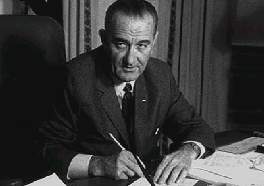
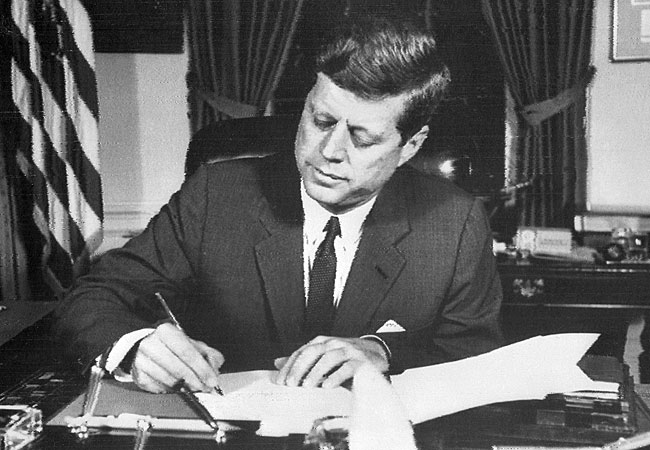
50th Anniversary of the Kennedy Assassination – Zachary Sklar, Screenwriter of the Film: JFK
November 22, 2013 will mark the 50th anniversary of the assassination of President John F. Kennedy. More than 600 books have been written on this national tragedy and yet the implausible explanations the Warren Commission report put forward remain as the official story. We’re joined today by Zachary Sklar to discuss some of those challenges and his work investigating those involved in the planning and covering up of assassinations.
Zach Sklar:
- The Warren Commission was a creature appointed by Lyndon Johnson.
- He persuaded Earl Warren to head this commission against his wishes. He was Chief Justice of the Supreme Court at the time.
- To bolster him on the commission, the one who did most of the work and guided the findings was Alan Dulles, former CIA directory. A man who’d been fired by John Kennedy after the Bay of Pigs invasion.
- The other one who was on it was Gerald Ford of course.
- So, there was a dissenting group of southern Congress people who really didn’t have much power. Ultimately, the power was with Alan Dulles.
- The CIA had overthrown Mossadegh in Iran, Arbenz in Guatemala, not only overthrowing governments but assassinating leaders.
- The commission report – that conclusion was decided upon and then they had to come up with some reasons to support it.
- The reasons were designed by Arlen Specter. He was a staff lawyer at the time and later a Senator from Pennsylvania. He came up with the Magic Bullet Theory.
- Because the Zapruder film came out with the time frame of 5.62 seconds and there were 3 bullets during that time frame, all the wounds in John Kennedy and John Connelly.
- Lee Oswald was given a paraffin test the day of his arrest. It was negative. It had proven he’d not fired a rifle that day.
- According to the Marines, Oswald was a mediocre marksman at best.
- The rifle that he was supposed to have used. . . if you ask any rifle dealer what the worst rifle, the least accurate rifle you could ever come up with they would tell you its the Mannlicher-Carcano. It’s called the humanitarian rifle by the Italians.
- All this should’ve been put to rest in 1979 when the House Select Committee on Assassinations investigated and came up with acoustical evidence from a police dictabelt recording and found that there was a 4th shot.
- If there was a 4th shot, there had to have been a second shooter. If there was a second shooter, there had to have been a conspiracy.
- Kennedy was well aware that the anti-Communist ideology of the cold warriors was fundamentally flawed. The whole domino theory is fundamentally flawed.
- After he was killed, very quickly, his (Kennedy’s) policies were reversed by Lyndon Johnson.
- The fact is that 4 days after he was killed Lyndon Johnson issued National Security Action Memorandum 273 which reversed Kennedy’s order and actually ok’s US military operations in Vietnam.
- On the very day he was assassinated Kennedy had sent a liaison to Cuba, to negotiate with Fidel Castro.
- At the top of the list are the leaders of the CIA.
- You have to understand that the Cold War had gone on for a long time, and people made careers, peoples’ livelihoods depended on the Cold War continuing. Big defense contracts depended on it.
- A lot of people had the motivation to kill Kennedy.
Guest – Zachary Sklar, Oscar-nominated co-screenwriter of Oliver Stone’s film JFK, and author of the book JFK: The Book of the Film. He’s a journalist, and a professor at the Columbia School of Journalism. He was also a contributor to The Lies of Our Times, a monthly journal dedicated to exposing the truth behind the mainstream media. Zach collaborated with director Oliver Stone on the screenplay of the movie “JFK” and was editor of Jim Garrison’s book “On the Trail of the Assassins.”
—–
Lawyers You’ll Like: Attorney Bill Schapp
Attorney William Schaap graduated from the University of Chicago Law School in 1964 and has been a practicing lawyer since. Bill specialized in military law and practiced in Asia and Europe. He later became the editor in chief of the Military Law Reporter in Washington for a number of years. In the 70’s and 80’s he was a staff counsel of the Center for Constitutional Rights in New York City. In the late 80s, he was an adjunct professor at John J. College of Criminal Justice of the City University of New York where he taught courses on propaganda and disinformation.
Attorney William Schapp:
- One of first cases at this big Wall Street firm, they had some outside counsel working on it, one of whom was David Lubel, and Dave Lubel who had I think been a recruiter for the Communist Party in his youth, was always good at spotting somebody who was always worth recruiting and he started to tell me there was this convention of this lawyers group.
- It was this 1967 Lawyers Guild Convention in New York. He dragged me to one event, I met Bill Kunstler, I met Arthur Kinoy, I met Victor Rabbinowitz. I’d been on Wall Street for a year or two, I said I didn’t know there were lawyers like this.
- I joined the same day and met Bernadine Dorhn and a few weeks she called me and said we need your help.
- She said you gotta defend a bunch of Columbia students. The next thing I knew the riot started at Columbia and she said you have to go down there and defend them.
- I signed up to be staff counsel on the National Lawyers Guild Military Law Project in Okinawa, Japan.
- When you work overseas in that kind of a climate with the military you learn a lot fast about American imperialism.
- Once you learn that, you learn about the CIA.
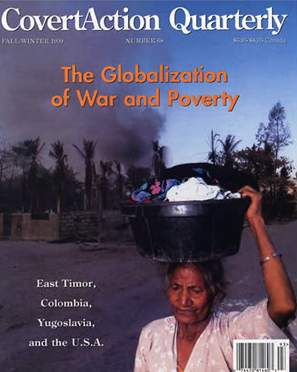
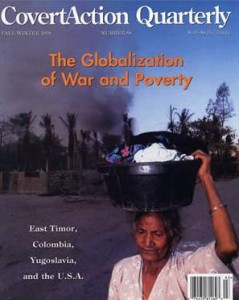
- That led us to originally working on Counter Spy magazine and then on Covert Action Magazine.
- The original purpose was to expose the CIA. We worked with Lou Wolf who is an expert in uncovering CIA agents in US embassies, not through any classified documents but because if you knew how to read the paperwork and State Department things, you could tell who are the “ringers.”
- We were so successful that Congress passed a law against us.
- Our goal was to make these people ineffective because the only way most CIA could work, particularly the ones that were assigned to an embassy was to have to pretend to be something else.
- They were all third assistant political secretaries and those were all phony things. Their job was to finagle their way into various community organizations in whatever foreign capital they were posted to recruit people to turn against their own countries and become traitors to their own countries, to become spies for the U.S.
- We thought if we identified these people, it might make their job a little bit harder, which it did.
- Of course, the problem with that is the government said we were trying to get them killed which we weren’t trying to do and nobody we did expose ever did get killed.
- He (Philip Agee) had been an adviser to Counter Spy. Counter Spy folded when Welch got killed, cause the pressure was too much and started Covert Action Quarterly.
- He was not the person discovering who the under cover people were, Lou Wolf was doing that.
- Phil wrote articles for us in every issue and we worked very closely with him.
- Once you start exposing these things, they really don’t have any defense.
- They tried to catch us in something phony. We would get tips that would turn out to be CIA trying to get us to print some story that wasn’t true so they could then discredit us.
- We had more interference from the government when we were doing military law work, before Covert Action Quarterly.
- They would plant bugs in our attic in Okinawa, things like that.
- The Intelligence Identity Protection Act has 2 parts. One makes it a crime for someone in the government who has classified information to reveal someone’s identity. The second part makes it a crime to reveal the identity of someone you did not learn from classified information or you position. (But if you were in the business of exposing these people . . .)
- Regarding his newsletter The Lies of Our Times – It was in the 90s, from 1990 to 1995 I think. To a certain extent, the abuses we were crying about got a little bit less over time because that’s sometimes the helpful result of that kind of exposure.
- We were just tired of people thinking that if it was in the New York Times it must be true.
- The fact is that those people lie all the time.
- I think we’ve gotten to a point where people recognize that the government lies to them and that there’s an awful lot that goes on that they don’t know.
Guest – Attorney William Schapp graduated from the University of Chicago Law School in 1964 and has been a practicing lawyer since. Bill specialized in military law and practiced in Asia and Europe. He later became the editor in chief of the Military Law Reporter in Washington for a number of years. In the 70’s and 80’s he was a staff counsel of the Center for Constitutional Rights in New York City. In the late 80s, he was an adjunct professor at John J. College of Criminal Justice of the City University of New York where he taught courses on propaganda and disinformation.
In addition to being a practicing lawyer, Bill was a journalist, publisher and a writer specializing in intelligence as it relates to media. He was the co-publisher of a magazine called the Covert Action Quarterly for more than 20 years. He also published a magazine on propaganda and disinformation titled Lies Of Our Times. Attorney Bill Schapp has written numerous articles and edited many books on the topic of media and intelligence.
——————————————————————
CIA Sponsored Terror, Civil Liberties, Criminalizing Dissent, Habeas Corpus, Human Rights, Prison Industry, Surveillance, Torture, War Resister
Podcast: Play in new window | Download
Updates:
- Abu Anas al-Libi Kidapping Update
- Glenn Greenwald Leaves The Guardian
—–
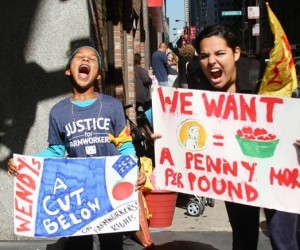

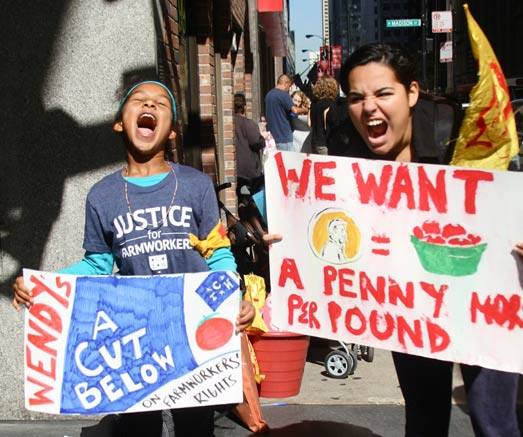
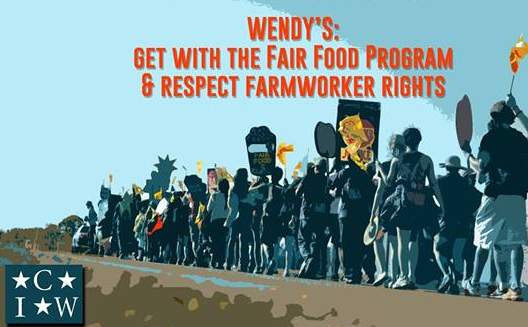
The Coalition of Immokalee Workers March On Union Square For Wendy’s Fair Food Campaign
We hear the voices of marchers involved in supporting the Coalition of Immokalee workers to urge Wendy’s to join its four fast food competitors in the award-winning social responsibility program that’s putting an end to decades of abuse in the fields. Burger King, Taco Bell, McDonald’s and others have come to the table to dialogue with farm workers to improve wages and working conditions in their supply chains. This demonstration was held on the eve of the CIW winning the Roosevelt Institute’s Freedom from Want Medal.
—-
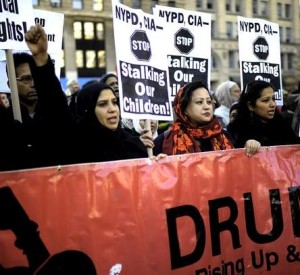
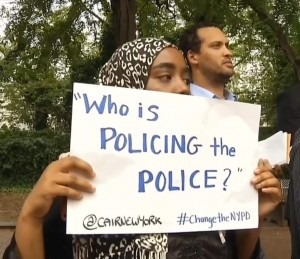
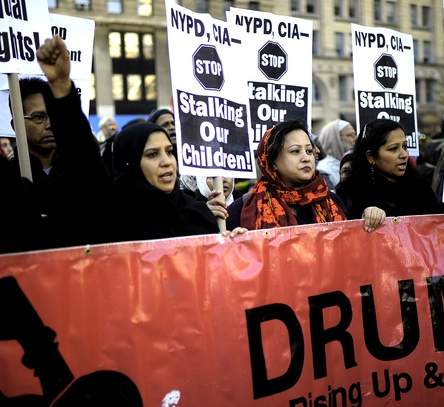
Handschu Hearing on NYPD Muslim Surveillance
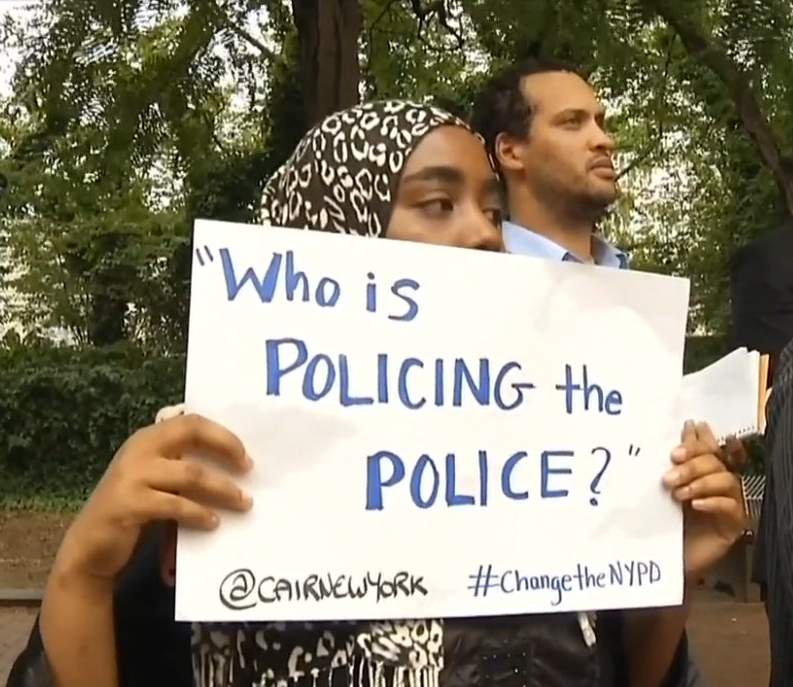
Earlier this month, the federal district court in Manhattan required the New York City Police Department to defend its Muslim spying program. The hearing lasted several hours and revealed what many listeners to this show may already know, and that is how the NYPD Muslim spying program has been found by the Associated Press to target innocent Muslims based on nothing more than their faith. The fallout from these spying programs are revealed in the stories related by today’s guest .
Fahd Ahmed:
- DRUM stands for Desis Rising Up and Moving. It’s a community organization of low income South Asians, organizing for worker rights, immigrant rights, racial justice.
- We’re a membership based organization of about 2000 low income South Asians. So they’re directly effected by these issues.
- About 2 years ago the Associated Press started releasing a series of articles that essentially confirmed what people in our communities had been feeling for years.
- That the NYPD has an extensive spying network on the New York City Muslim community.
- From their houses of worship to their work sites, to their social networks. The way that they accomplish this is through the use of under cover officers.
- Through the use of informants, many of whom are paid money for their services, and also through the use of surveillance equipment.
- We have members in our organization that have been directly targeted by the NYPD over the last 8-9 years.
- Even if you’re not doing anything wrong, this program is very bad for you.
- On the day the first AP report came out, we had launched a survey project to collect data.
- An Arab cab driver who cooperated with the police, he was eye witness to the person who conducted the robbery.
- He testified in court, the person was convicted. The NYPD then approached him several months later and said we’d like to talk with you about that case.
- They tell him we want you to become an informant for us. When he declines, for the next two weeks he ends up being followed in dark unmarked cars.
- We do believe its about a few 100 hundred in the police department in terms of intelligence.
Guest – Fahd Ahmed, Fahd came to the United States as an undocumented immigrant from Pakistan in 1991, and went on to attend Vanderbilt University, and CUNY School of Law. Fahd joined DRUM in 2000 when he had family members facing deportations. Within DRUM, Fahd led the work with Muslim, Arab, and South Asian immigrant detainees before, and immediately after 9/11, by coordinating the detainee visitation program. Fahd was a recipient of the Haywood Burns Fellowship from the National Lawyers Guild, served as an Ella Baker intern at the Center for Constitutional Rights, as a legal consultant with the Juvenile Justice Project of Louisiana, and as a lecturer and researcher on Islamophobia, National Security, and social movements at the Arab and Muslim Ethnicities and Diasporas Initiative at the College of Ethnic Studies at San Francisco State University
—-
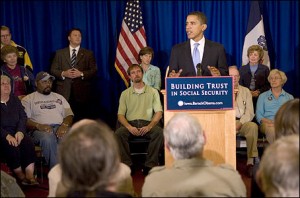

Two And A Half Party System Debt Ceiling Crisis
Today we’ll examine in depth how the United States reached the recent crisis with regard to debt ceiling. If you think its just the Tea Party that wants to cut current government benefits such as Social Security and Medicare you’d be wrong. It’s also the Obama Administration
Professor Jack Rasmus:
- The Republicans strategic focus since 2011 has been to cut the deficit at the expense of discretionary spending and in particular to target social security and medicare and medicaid.
- In the fiscal cliff deal of last year, they succeeded in pushing through most of the Bush tax cuts. 4 trillion in tax cuts.
- The Republicans in the last 2 years have cut 2.2 trillion dollars in government spending.
- They’re going to use the debt ceiling in order to extract more spending cuts, this time, social security and medicare, and probably more tax cuts.
- Obama has already called for 630 billion dollars in social security and medicare cuts. That’s a starting point, a beginning of negotiating.
- What’s happened is that the tea party have injected themselves into this thing. We’ve got 2 and a half parties in Congress now. The Tea Party is a faction of the Republican Party and its terrorizing the Republican Party even though its a minority in the House.
- The Tea Partiers are grandstanding for elections. This is all about mid-term elections next year.
- As far as the shutdown is concerned, that is a Tea Party problem.
- They have Republicans terrorized that they’re going to lose primaries.
- There’s another group within the Tea Party that are opportunists, they’re riding the crest.
- The people behind the Tea Party, out there in the grassroots, you know, the billionaires are funding it and the Heritage Action Groups. I think there are opportunists and confused ideologues.
- What you’re going to see is Obama blocking with corporate pressure on the leadership of the Republicans, and all 3 of them then giving the Tea Party a choice.
- Last year, unions lost 500 thousand members, even as a million and a half new jobs were created.
- Something real dangerous is going on with the labor movement.
- There is a nation wide formation called the Emergency Labor Network.
- Obama has been in favor of cutting Social Security for quite some time. He’s also been in favor of cutting the corporate tax rate from 35 to 28 percent. That doesn’t sound like the Democratic Party of years past.
Guest – Professor Jack Rasmus, Ph.D Political Economy, teaches economics and politics at St. Mary’s College in California. He is the author and producer of the various nonfiction and fictional workers, including the books ‘Obama’s Economy: Recovery for the Few‘, Pluto Press, 2012, ‘Epic Recession: Prelude to Global Depression‘, Pluto Press, 2010, and ‘The War at Home: The Corporate Offensive from Ronald Reagan to George W. Bush‘, Kyklosproductions, 2006
——————————————————
Afghanistan War, CIA Sponsored Terror, Civil Liberties, Criminalizing Dissent, FBI Intrusion, Habeas Corpus, Human Rights, Political Prisoner, Prison Industry, Surveillance, Targeting Muslims, Torture, War Resister
Podcast: Play in new window | Download
Updates:
- Lynne Stewart Turns 74
- Phone Campaign For Lynne Stewart To Be Let Out Of Prison Under Compassionate Release
- Director of Federal Bureau of Prisons – 202-307-3250
- U.S. Attorney General Eric Holder – 202-353-1555
- U.S. President Barack Obama – 202-456-1111
- Che Guevara Anniversary
- Shocking Statistics On Americans Under 30
—–
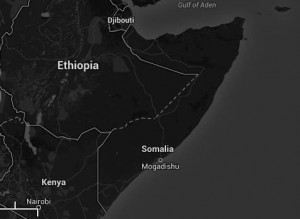
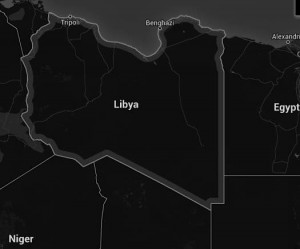
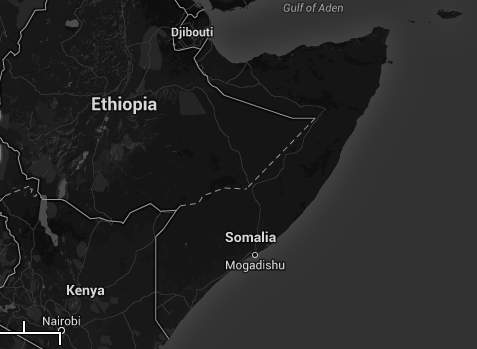
The United States Military Kidnapping In Libya And Failed Kill or?Capture In Somalia
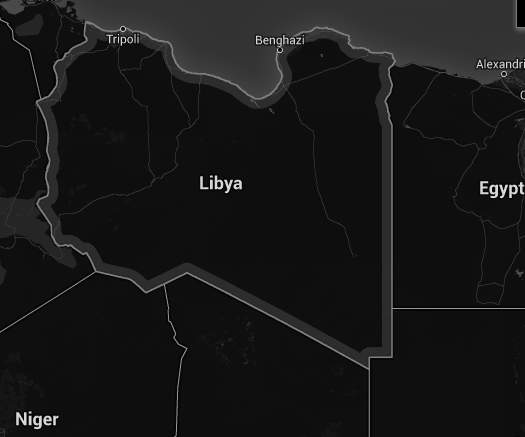
The United States military had gone into 2 parts of Africa. In one case they went into Libya and brazenly seized a man who they claim to be a leader of Al-Qaeda, his name is Abu Anas al-Libi. He was seized out of Tripoli, Libya. The U.S. also went into Somalia and attacked a house or a compound in apparently an effort to grab or kill an alleged senior leader of the Somali group al-Shabab. Michael Ratner reports in this update.
Attorney Michael Ratner:
- It was shocking news to see that the United States think it can go into sovereign countries and kidnap, kill whoever they want. Did the US have the right to go into Libya at all?
- Article 24 of the UN Charter says that the territorial integrity of the a country is complete, except of the case of self-defense or authorized by the UN.
- There was no authority by the UN or international law to go into Libya.
- Then the question came up – Did Libya consent to it?
- He’s on some U.S. ship. It’s called the San Antonio.
- They’re keeping him floating on this ship while they’re going to interrogate him.
- Its true, Obama when he took office 5 years ago, he banned torture and he said all interrogations had to be done according to the Army Field Manual.
- Annex M allows 3 kinds of techniques that I think constitute cruel and inhuman, degrading treatment and taken together would constitute torture.
Law and Disorder Co-host Attorney Michael Ratner, President Emeritus of the Center for Constitutional Rights (CCR), a non-profit human rights litigation organization based in New York City and president of the European Center for Constitutional and Human Rights (ECCHR) based in Berlin. Ratner and CCR are currently the attorneys in the United States for publishers Julian Assange and Wikileaks. He was co-counsel in representing the Guantanamo Bay detainees in the United States Supreme Court, where, in June 2004, the court decided his clients have the right to test the legality of their detentions in court. Ratner is also a past president of the National Lawyers Guild and the author of numerous books and articles, including the books The Trial of Donald Rumsfeld: A Prosecution by Book, Against War with Iraq and Guantanamo: What the World Should Know, as well as a textbook on international human rights.
—-
The United States, Iraq, Afghanistan, Iran, Syria and Israel Part 2
October 7th of 2013 marked the 12th anniversary since the United States invaded Afghanistan as the war drags into its 13th year. The Afghanistan war and the Iraq war have been estimated to cost tax payers up to 6 trillion dollars. This year marks the 10th anniversary of the Iraq War – an illegal war launched despite the global protest in the streets.
Phyllis Bennis:
- On the one hand it was a huge victory for the U.S. and the anti-war mobilization effort, that we managed to prevent what was a very imminent US strike. The British also had their missiles ready to go. They were very close.
- In combination with the British Parliament decision to say no, led to a huge shift in what the Obama Administration was prepared to do.
- It turns out they were prepared to go to war without UN permission. They were ready to do without the UN, without NATO, without the Arab League, but not without the Brits.
- This was a political decision, this wasn’t rooted in concerns about international law or any kind of strategic or military necessity.
- When it was turned over to Congress, a lot of organizations mobilized and said you know what, we’re not going to let this happen.
- Members of Congress were reporting that their emails were running 500 to 1, 800 to 1, 1000 to 1 against US military intervention.
- What we found is that people were not willing to sign on to another war after so many failed wars in the region.
- You can call it war fatigue but it’s really about learning a lesson, that war is not an answer to these problems.
- Given that there have been 100 thousand victims in this war (Syria) about a third of them civilians, about 43 percent regime soldiers and militia, about 18 percent rebel soldiers. The rest were civilians.
- To claim this was all about the humanitarian consequences, simply, that’s not the case.
- The voices that have been marginalized the most are the original political opposition in Syria, who were incredibly brave and courageous, still out there fighting.
- The regime in Syria was forced to sign on to the chemical weapons treaty. That’s huge, there are only 7 countries in the world that had not signed that treaty.
- Israel of course being another one.
- The number of people killed with chemical weapons in Syria is tiny compared to the number of people killed with conventional weapons.
- The five wars in Syria, the regional power struggle, the sectarian war, the US-Russian war, the US-Israel vs. Iran war, those are still underway in Syria.
- President Rouhani, the new president of Iran, was on a major charm offensive.
- Rouhani has said ” I have the backing of the Supreme Leader in a new approach to our nuclear negotiations.”
- There are enormous pressures in the U.S from the arms industry, from AIPAC, from hawks in Congress of all sorts.
- The Palestinians are the ones that will pay the price if there is an agreement between the US and Iran because the US will be determined to give Israel something.
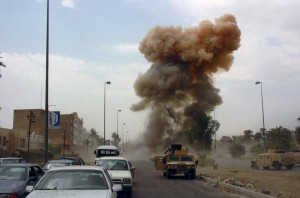
- Iraq has become as violent as it was in the height of the sectarian wars of 2006 and 2007.
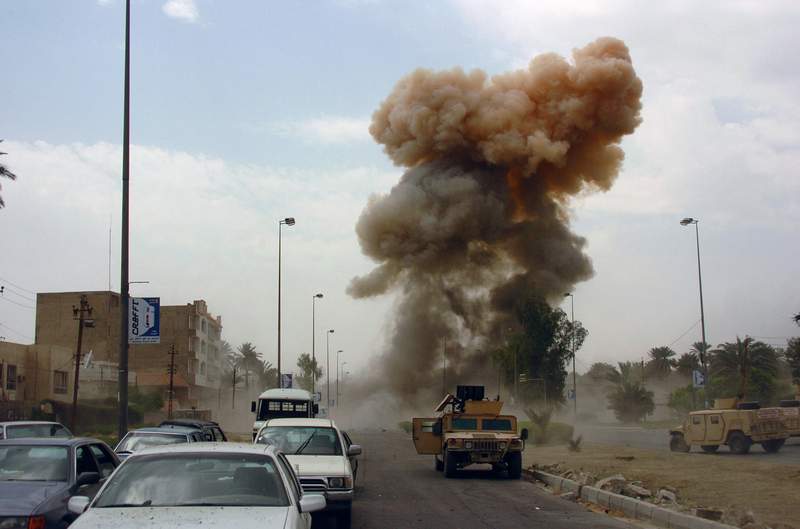
- Hundreds of people are being killed on a daily basis. It’s a disaster. Much of that is the result of the exploding war in Syria. Syria and Iraq share a long border. It’s a very porous border.
- The division of Libya into 2 or 3 regions is a very likely possibility.
- Saul Landau was a giant in our movement, he made one of the first films about Fidel. It was called Fidel it was made in 1960 a year after the revolution.
- He died about a month ago after a 2 year battle with a very virulent cancer.
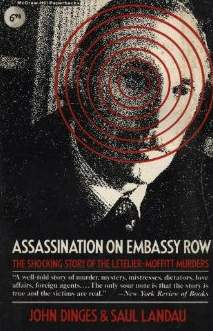
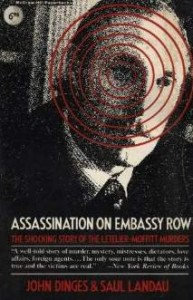
- Saul had been at IPS almost at the beginning. He wrote the book Assassination on Embassy Row that documented with such precision on how Operation Condor had gone forward.
Guest – Phyllis Bennis, directs the New Internationalism Project at IPS. She is also a fellow of the Transnational Institute in Amsterdam. She has been a writer, analyst, and activist on Middle East and UN issues for many years. In 2001 she helped found and remains on the steering committee of the U.S. Campaign to End Israeli Occupation. She works closely with the United for Peace and Justice anti-war coalition, co-chairs the UN-based International Coordinating Network on Palestine, and since 2002 has played an active role in the growing global peace movement. She continues to serve as an adviser to several top UN officials on Middle East and UN democratization issues.
—————————————————————-
Civil Liberties, Criminalizing Dissent, FBI Intrusion, Habeas Corpus, Human Rights, Surveillance, Targeting Muslims, Torture, War Resister
Podcast: Play in new window | Download
Updates:
—–
The United States, Iraq, Afghanistan, Iran, Syria and Israel
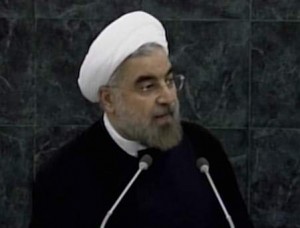
President Barack Obama addressed the 68th session of the United Nations General Assembly last week, near the end of September. His speech reflected some of the shift in global politics in the Middle East, especially in Syria. He also spoke about Iran, and mentioned the usual, “we are determined to prevent Iran from developing a nuclear weapon.” Obama said “we are not seeking regime change we respect the right of the Iranian people to access peaceful nuclear energy.” However Iran has signed on to the Non-Proliferation Treaty which recognizes the right to develop, research, produce and use nuclear energy for peaceful purposes without discrimination.
William Blum:
- One must accept the basic premise that the United States wants to dominate the world.
- In that context it becomes clear that the main problem we have with other countries is one of disobedience.
- Our closest ally in the Arab world is Saudi Arabia, if that’s not the most oppressive government in the world then damn close to it.
- We’ve overthrown the 3 leading secular governments of the Middle East. First Iraq, and then Libya, and now we’re in the process to attempt to overthrow the Syrian government.
- In ’79, the Shah of Iran was overthrown by various forces, but the ones that came to power were the Islamics.
- It’s a myth that the U.S. was totally opposed to Islam coming to power in Iran then.
- What Washington feared is the Left coming to power in Iran.
- The Left, all over the world, are the least likely to be obedient to Washington, to become a client state.
- So the Left is the first target of U.S foreign policy.
- Israel fears Iran, in the same way it fears Iraq and Libya. Any country in the Middle East that had some military power and not falling in line as an obedient friend or follower of Israel, that was a target of Israel, which means target of the U.S.
- The 3 main targets have all been attacked by Washington and that’s where we are today.
- Cuba then and now has represented what Washington fears greatly, a good alternative to capitalist system.
- They have inspired people and countries all over the world, especially in Latin America.
- It’s not very well known that throughout the 70s and into the 80s, Afghanistan had a fairly progressive government. Women had full rights. I’ve seen photos of that time, of women walking around in mini-skirts.
- What happened to that society and government? Our dear government overthrew it.
- It’s amazing when we hear people say we have to stay in Afghanistan to help the women there.
- Saddam Hussein, as much of a dictator as he was, he still ran a welfare state.
- The people in their daily life were much better off than they are today and there was peace and order
- Syria is not going to make a good client state to the United States and Israel. Syria is a bit too friendly with Russia.
- It’s amazing how sensitive we are to those who will not embrace the American empire.
- Almost all the leading people in Israel except for Netanyahu, they know Iran is not a threat. It’s all hype.
- Netanyahu needs this hype and the U.S. needs it.
- There’s a very growing trend now to be turned off by all of this war. The vote in Congress which if it were held would have been against invading Syria.
- The American public is very tired of these wars.
- Sign up for the monthly Anti-Empire Report.
Guest – William Blum, has been a freelance journalist in the United States, Europe and South America. His stay in Chile in 1972-3, writing about the Allende government’s “socialist experiment” and its tragic overthrow in a CIA-designed coup, instilled in him a personal involvement and an even more heightened interest in what his government was doing in various parts of the world. In the mid-1970’s, he worked in London with former CIA officer Philip Agee and his associates on their project of exposing CIA personnel and their misdeeds. His book on U.S. foreign policy, Killing Hope: U.S. Military and CIA Interventions Since World War II, first published in 1995 and updated since, has received international acclaim.
—–
EFF Fights Back Against NSA Spying
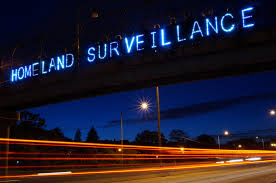
A few shows ago we asked Attorney Carl Messineo with the Partnership for Civil Justice Fund what legal steps are they taking to stem the pervasive breach of civil liberties from the National Security Agency’s massive surveillance program. Our own Heidi Boghosian, author of the book Spying On Democracy: Government Surveillance, Corporate Power and Public Resistance has discussed in detail the public fight back from a legal standpoint. David Greene, a senior staff attorney with the Electronic Frontier Foundation brings us up to date about ongoing litigation, lawsuits and FOIA requests to continue the fight back against government and corporate spying.
Attorney David Greene:
- There’s a lot we still don’t know about how much they know about us.
- We do know that they have several programs to collect communications, data. They have a program called UPSTREAM that collects all internet communications.
- This actually happens at the fiber level. – where the switching facilities are at the splitter, split the transmissions to where the communications company wants it to go and one that actually goes toward the government.
- We at EFF have known about that and had a lawsuit pending for 7 years now.
- Our lawsuit was originally against AT&T and then Congress granted telecoms immunity, so.
- One of the other things we’ve learned about is a program that also collects internet records called PRISM. PRISM seems to be focused on collecting email correspondence between foreign targets and the United States.
- They’re basically collecting the call data of every telephone call made in the United States. Right now they’re saying they’re not collecting the content of the calls but only the metadata.
- They’re also collecting social media data as well and doing things such as social mapping.
- There are several provisions of the Fourth Amendment and some of the issues here is the prohibition against unreasonable searches and seizures.
- Basically people’s information is being searched, being seized without a probable cause. A probable cause to believe these people actually did anything wrong.
- The Electronic Frontier Foundation is an organization that fights for civil liberties in the digital world.
- Whenever you go up against the government, you’re going to be out resourced.
- There are many parts about being a free person that requires a person to operate with some degree of privacy from there government.
Guest – Attorney David Greene, Senior Staff Attorney, has significant experience litigating First Amendment issues in state and federal trial and appellate courts and is one of the country’s leading advocates for and commentators on freedom of expression in the arts. David was a founding member, with David Sobel and Shari Steele, of the Internet Free Expression Alliance, and currently serves on the Northern California Society for Professional Journalists Freedom of Information Committee, the steering committee of the Free Expression Network, the governing committee of the ABA Forum on Communications Law, and on advisory boards for several arts and free speech organizations across the country.
—–
Left Forum 2013: Dr. Harriet Fraad Part 2
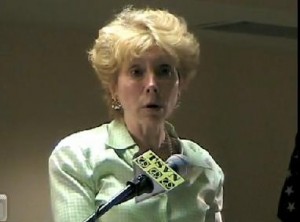
We hear part 2 of a presentation from Harriet Fraad, a hypnotherapist & psychotherapist in Manhattan. She writes regularly for Truthout, Tikkun and The Journal of Psychohistory. Her blog with Richard D. Wolff, Economy and Psychology appears at HarrietFraad.com and RDWolff.com. Her latest book is Bringing It All Back Home ed. Graham Cussano. Her article on Emotional and Sexual Life in a Socialist America written with Tess Fraad Wolff will appear in the book Imagine A Socialist America- (Harper Collins 2013). This panel explores what Socialism could look like in the United States.
———————————————————————————–