Civil Liberties, Criminalizing Dissent, Death Penalty, Guantanamo, Habeas Corpus, Human Rights, Political Prisoner, Torture, Truth to Power
Podcast: Play in new window | Download
Updates:
—

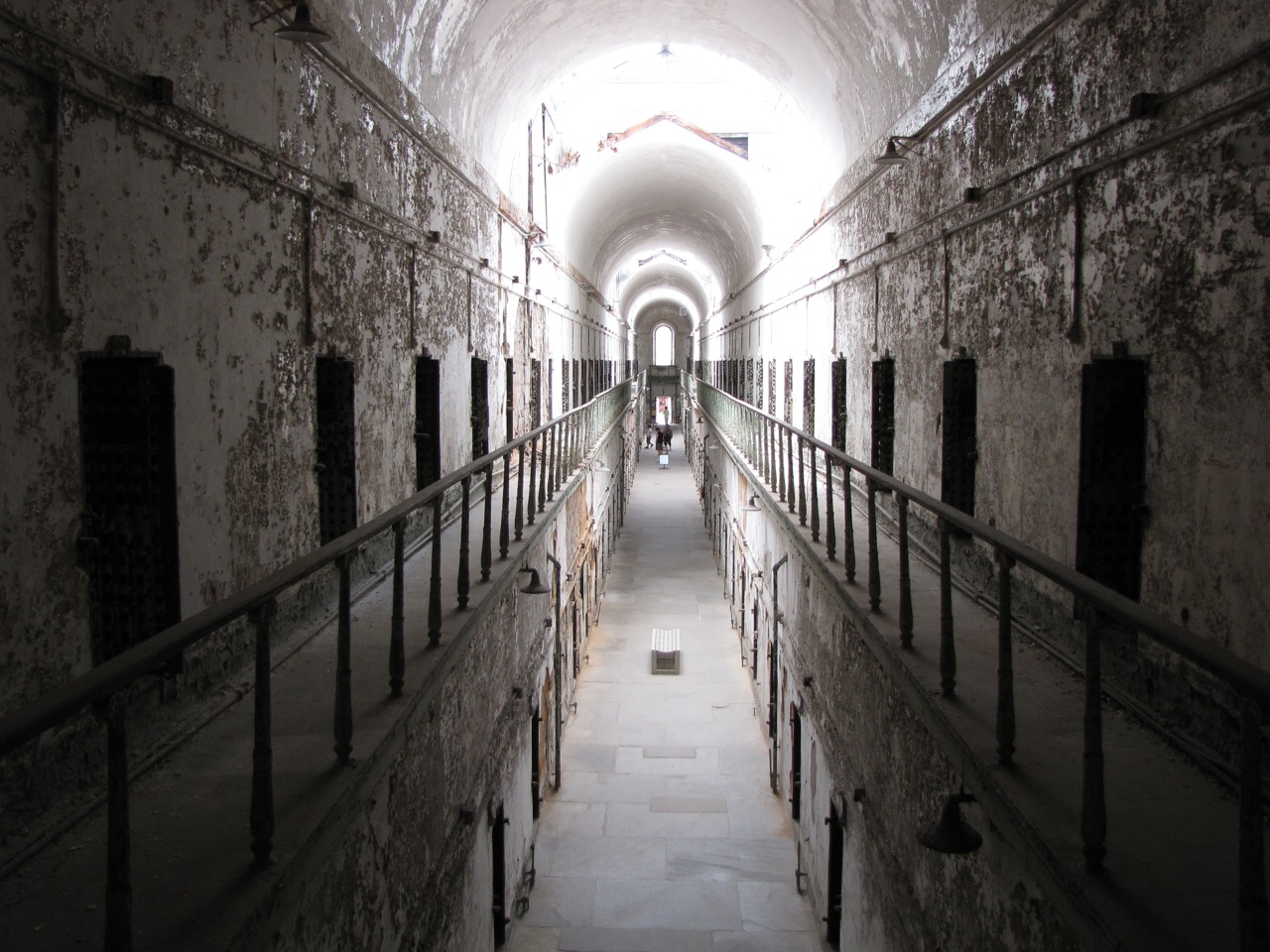
Cruel Solitary Confinement In Pennsylvania Prisons
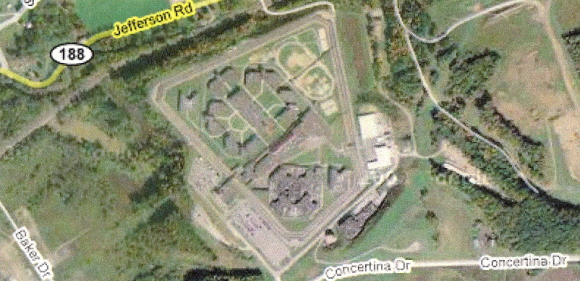
Earlier this year the National Lawyers Guild called on Superintendent Louis Folino to support the Program Review Board’s recommendation to release Russell Maroon Shoatz into the general prison population at SCI Greene in Waynesburg, Pennsylvania.
Jerome Coffey, a political prisoner currently being held in Pennsylvania’s SCI Forrest. Jerome’s social work while in prison include sending clothes to villages in Uganda and to women prisoners in the Philippines. That work has labeled him an instigator and he’s been placed in solitary confinement for more than 5 and a half years.
Bret Grote:
- The Human Rights Coalition was founded by state prisoners at the State Correctional Institution in Greene, Pennsylvania in 2000. The Pittsburgh chapter where I work was founded in 2006-2007.
- The main mission of the Human Rights Coalition was to bring the voices of the most excluded from criminal, legal, criminal justice discussions, namely those of prisoners, their family members and effected communities.
- We base our work in building relationships with prisoners and to bring support and advocacy to those most impacted by the prison system and that has led us straight into solitary confinements where people’s lives are being micro-managed down to the most minute details.
- The justifications for solitary confinement shift from to another, it used to be based on escapes. Now that Russell Maroon Shoatz is approaching his 70th birthday, they’re claiming its because of his past efforts of organizing hunger strikes, and they cite an incident where he was forced to defend himself against another prisoner.
- In Maroon’s case he met with a prisoner mental health staff person because there was some movement towards releasing him from solitary confinement that ended up being blocked.
- This staff person told him there was an allegation that he tried to organize an armed prison uprising in the 80’s. This has been following him around for over 25 years in his file, but he has not been able to challenge this because he was not informed of this at all.
- He is not represented by legal counsel. He is ripe for representation under the 8th amendment clause of cruel and unusual punishment.
- The prison authorities typical treatment for somebody who is the restrictive housing unit is a cursory interview at the cell, maybe once every 30 days with a staff worker, which is to say they’re not really giving them effective mental health treatment.
- You spend 23 hours in the cell, maybe 24 if the guards don’t take you to yard or shower.
- The things that one may witness on the whole are constant screaming, banging, and yelling and crying and cursing and talking to one’s self by prisoners who are psychologically disturbed. According to the figures up to 2500 or 3000 prisoners can be in solitary confinement on any given day in Pennsylvania. The total prisoner population in Pennsylvania is 52 thousand.
- We are constantly looking for serious and committed civil and human rights lawyers to work with us. We have a massive body of evidence. The solitary confinement system is an invisible system inside of a larger invisible system of the prisons.
Guest – Bret Grote, law student and volunteer with the Human Rights Coalition, an organization bringing the voices of the most excluded from criminal, legal, criminal justice discussions, namely those of prisoners, their family members and effected communities. The HRC works to build relationships with prisoners and bring support and advocacy to those most impacted by the prison system.
——

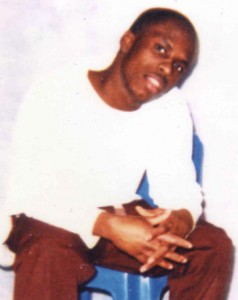
Andre Jacobs
Andre Jacobs is another Pennsylvania state prisoner in solitary confinement. Andre, a 27 year-old jailhouse lawyer, has been held in retaliatory solitary confinement for more than 8 years. In 2009, Andre was awarded 185 thousand dollars in a case against the Pennsylvania Department of Corrections, an action that has resulted in his being singled him out for abuse within the prison system. In January of this year, he was physically abused, issued death threats and denied medical treatment.
Liz Springer:
- It’s been rough, there had been days where I thought he wasn’t going to make it. I thought I was going to get a call saying he was dead. I send him inspiration cards, and support him, send him some Bible verses to keep him strong.
- There have been times he said to me, I can’t do it no longer, I can’t do it.
- They were beatin’ him in the court room. They said he had an attitude and when he was leaving the court room, I witnessed them beating him, and I said, “I love you Andre.” He turned around and said “I love you too.”
- They started beating him because they said he wasn’t supposed to speak to me.
- He lost that case because the guards got on the stand and said he hurt one of the guard’s wrist.
- He ended up with 18 years because of that. Lately he has a little hope.
- He was strapped to a chair for 12 hours not being able to move anything but his head. Didn’t eat, had to go the bathroom and he just went.
Guest – Liz Springer, activist and the grandmother of Andre Jacobs.
———
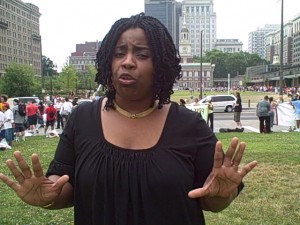
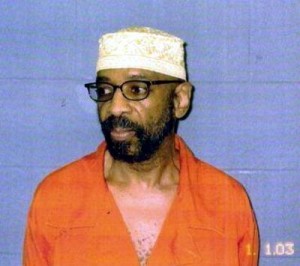
Russell Maroon Shoatz
As many listeners may know, former Black Panther Russell Shoatz has been in prison since 1972, and the past 21 of those years has been spent in solitary confinement. He’s 67, his spirit unbroken and in addition to his record of good conduct, members of the Pennsylvania Prison Society who visit Mr. Shoatz regularly attest to his peaceful disposition. Earlier this year the National Lawyers Guild called on Superintendent Louis Folino to support the Program Review Board’s recommendation to release Russell Maroon Shoatz into the general prison population at SCI Greene in Waynesburg, Pennsylvania. His daughter Theresa Shoatz joins us talk more about his advocacy work and life as a political prisoner.
Theresa Shoatz:
- The solitary confinement has had the worst effect on us. Within the 39 years we was able to have contact visits.
- The unit he’s in now, there’s no contact, you’re behind a glass when you visit.
- He’s had grandchildren since that time, and he hasn’t touched the grandchildren either. Our family is dedicated to visiting him, every 3 months.
- Russell Shoatz being known throughout the country. I notice now, his conversations are laid back, he’s not as upbeat as he used to be.
- He keeps stressing almost on our weekly calls, you gotta get me outta here.
- They told me Daddy’s a leader, I said no, he’s a grandfather. The Panthers didn’t say we want to battle the police. They said, we want to educate our youth, we want to feed them, we want to take control of our community. When it became war, and the Panthers were under attack, they said we got to protect ourselves.
- That’s what happened, and of course, Daddy’s a political prisoner. He took a stand and stood on the front line for his people and his community.
- I had a little attitude with him, I said why would you leave us, this was some years ago. He said, (I did it for my people. How could I allow you to be raised in that type of system?) It hit me like a ton of bricks.
- The guards, they called themselves the “wolfpack” when you’d see them comin, they would roll one pants leg all the up to the knee.
- I went to Governor’s office, the Governor of Pennsylvania. I was on trains, back and forth.
- It’s the same thing, when our people get in the streets and march, you really can’t do one march.
- At SCI Greene, over 20 young men in their 20’s hung themselves there (lynching) within a short time of solitary confinement.
- Daddy was constantly yelling to the guys, what to do. They come in strollin. Strollin down the solitary unit.
- This prison bubble is going to burst. There are people fighting on all levels, this prison bubble is going to burst.
- It’s going to end, we’re going to make sure of that.
Guest – Theresa Shoatz, daughter of political prisoner Russell Shoatz and activist with the Human Rights Coalition.
————————————————————
Civil Liberties, FBI Intrusion, Human Rights, Targeting Muslims, Truth to Power
Podcast: Play in new window | Download
Updates:
—
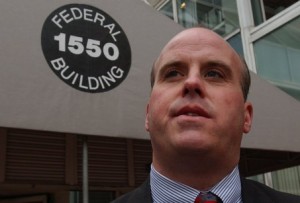
A Setback For Obama’s War On Whistleblowers
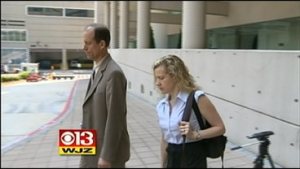
The Department of Justice’s campaign to stigmatize whistle blowers and force reporters to open up their notebooks under the Espionage Act is failing. Recently, Judge Leonie M. Brinkema in an opinion released a couple weeks ago, said prosecutors could not force author and New York Times reporter to testify about how he learned certain classified information for a book on the Central Intelligence Agency. In another example, a former senior NSA official was charged under the Espionage Act and accused of leaking classified information to a newspaper. He recently walked out of court a free man, sentenced to a year’s probation and community service, after hearing the judge excoriate the government for its handling of the case.
Attorney Scott Horton:
- Obama criticized the oppression of whistle blowers on the campaign trail.
- He talked about how early in his career he had represented whistle blowers, and they play a part in our society and they need our protection. When confronted now, he shoots back I was talking about whistle blowers in areas other than national security.
- There have dozens of whistle blowers in the national security area, but I would say the pattern that unfolds, is there’s an internal investigation, the person is stripped of their security classification, they usually lose their job.
- These prosecutions don’t lead to long prison terms.
- I think what we see is a turn to the Espionage Act in order to justify far more serious terms and have a 10 or 20 year sentence.
- The Espionage Act can be used to justify going after reporters. Access to their internet accounts, phone records, and compelling reporters to give evidence against their sources.
- The Drake case and the Sterling case are two most important ones right now. The NSA took the position that Drake was disclosing secrets by revealing all of this.
- At least half a dozen senior figures in the Obama Whitehouse provided extremely sensitive and classified information to Bob Woodward for that book. No investigation, no prosecution.
- You can open the New York Times and the Washington Post everyday and find some national secret that’s been leaked by a member of the administration to help score a point for the administration. There’s never any investigation.
- Nothing is more clear that only political motivations drive these cases. The cases that are most embarrassing are the cases that are most rigorously prosecuted.
- The person prosecuted Thomas Drake was a selfless civil servant, spent his entire life serving the government, served in the Air Force, the Navy, the NSA and had sacrificed through his life to advance the interest of government.
- He was being prosecuted because of his concern for taxpayers. He saw fraud and waste in contractor management he tried to stop. He went through every proper channel and then when he went to the press, he’s prosecuted for doing that.
- The prosecutor William H Welch is the man known for having bungled the prosecution of Alaska Senator Ted Stevens. The Washingtonian did a whole career profile on William Welch.
- The Obama Administration came in, it made certain promises. You see inside the DOJ, they’ve assigned people to change the policy guidelines. And they have, if you go back and look at the policy guidelines for state secrets invocations and the policy guidelines, they’re there for these whistle blower cases and the guidelines have been changed.
- What I hear from lawyers there (DOJ) is that the attitude they have now toward the CIA and the NSA are that these two agencies are their clients. They do the bidding of these agencies, they never question their characterizations or assessments.
- I think that’s what we see in the prosecution decisions here. We see senior officials at the CIA and NSA who have been embarrassed by these disclosures and they want to get even with the people who have embarrassed them and the Justice Department is perfectly happy to go out there and do their bidding.
Guest – New York attorney Scott Horton, known for his work in human rights law and the law of armed conflict. Scott is also the contributing editor to Harper’s Magazine.
——-


BDS Movement Ignites Amid U.S. Food Co-ops
An emerging BDS movement is making waves at a Food Coop in Brooklyn, similar to the successful Boycott Divestment Sanction effort last summer in Olympia, Washington. The Olympia movement was pioneered by Nobel Prize winner Archbishop Desmond Tutu in the home city of the Corrie family. The Brooklyn BDS protest is causing backlash amid the Jewish community. Some Jewish leaders opposed to the movement say it reveals antisemitism and that the assumption of Israel’s right to exist isn’t shared.
The boycott, in this case urges people around the world to stop buying products that support Israeli infrastructure such as Loreal, Motorola, Caterpillar, and many more. Sanctions, would target those companies exporting to Israel and applying tariffs or trade barriers. Divest or disinvestment, is the call to divest from companies, institutions and universities that support Israel’s occupation and lobby power.
Attorney Dennis James:
- I’m a co-op member and the co-op has been around since the seventies. It’s the oldest and largest food co-op in the United States, it’s got 16 thousand members and a waiting list.
- In the past 2 or 3 years, there has been a running dispute reflected in the editors of the Linewaiters Gazette of counter charges and charges regarding the issue of handling Israeli produced goods.
- There has developed a movement to try to resolve this. To do it in a democratic way that’s provided for by the procedures of the co-op which was founded in a political sense. It’s had about 11 boycotts.
- The proposal made by the proponents of the boycott is that it should be by referendum of all 16 thousand members rather than at a general membership meeting in which 3 or 4 hundred people attend.
- Where we are now, slogging our way through the procedures of the co-op is that there has been a meeting specified in the process is a pure discussion of whether or not there should be a referendum.
- There’s the Hava products and people are doing research on what particular products there are.
- There are certain fresh foods that come in off season. Two principle objectives come up, why Israel? – meaning while there’s this misery around the planet of the Chinese imposing on the Tibetans, Turks imposing on the Kurds and the other one is – it will destroy the co-op.
- The elephant in the room that nobody wants to talk about and that is US support for everything Israel does, which is not characteristic of almost any other conflict as bad as it might be of majorities vs minorities throughout the world.
- We support this, we finance this. We back it up with a guaranteed veto in the U.N. whenever Israel wants it.
- There is 81 Congressmen in Israel right now on vacation. Paid for by AIPAC. They give Netanyahu 29 standing ovations, no president gets that. They’re shaking in their boots, whether AIPAC is going to come to their district.
- The anti-boycott people (co-op) are saying we’re going to walk out, we’re going to destroy. (the very people who want to prevent the vote – referendum)
- They don’t want to debate you, they want to destroy you. They want to shut you down to shut you up.
- In Israel: People can lose their tax exempt status if they are of an organization like an NGO that has advocated boycotts of say settlement produced goods as do a number of Israeli NGOs.
- They can be fined. There is a number of particular civil sanctions that are available to those who advocate a boycott.
————-
Attorney Barbara Harvey:
- The BDS movement really took off after calls went out for a global BDS in 2005 from Palestinian Civil Society.
176 of the major civil society Palestinian organizations issued a joint call for a global BDS. They asked for non-violent economic resistance to occupation.
- The U.S. Zion organizations, AIPAC, the Jewish Federation, the JCRC and other Jewish organizations in this country would not have jointly created a six million dollar fund dedicated to defeating the BDS movement in the United States.
- Something we should not allow ourselves to be distracted by in my opinion. It is an effort to revive, reenact anti-boycott provisions of an old export administration act. These anti-boycott provisions expired a decade ago, but they were continued by presidential emergency orders including one signed by President Obama.
- They intend to prohibit collaboration by U.S. people that includes corporations, with the Arab League Boycott Against Israel. If intended to prevent exporters from cooperating with and supporting the Arab League Boycott. It is not directed against human rights campaigns such as BDSs.
- The Olympia Food Co-op is actually an important story. Olympia, Washington is the hometown of Rachel Corrie who was the young Evergreen College student who was bulldozed to her death by the Caterpillar D9 weaponized bulldozer.
- (The Olympia Food Co-op) adopted a boycott on the purchase for re-sale all goods from Israel, in accordance with the goals of the BDS movement a year ago. It has been successful, it has been under the gun ever since. The fact is, it hasn’t hurt business and it hasn’t backed off.
- This highlights the hysteria fomented by the opponents of the BDS that they’d like us to lose sight of. The majority of American Jews in this country, genuinely want a fair and peaceful resolution of the conflict.
- The whole Netanyahu Administration has been a real trauma for American Jews.
- TIAA-CREF is a retirement behemoth. It has more than 400 billion dollars assets. The goal is to persuade TIAA-CREF to divest its portfolios from the occupation.
- WeDivest.org / WhoProfits.org / BDSMovement.net / Al-Shabaka.org
Guest – National Lawyers Guild attorney Dennis James. Dennis has been active in anti-war, civil rights, and social justice issues. He recently traveled to Gaza with a UN delegation in 2009.
Guest – Attorney Barbara Harvey in Detroit who has worked with BDS activists and a former JVP Board Member
——————————
Afghanistan War, Civil Liberties, Human Rights, Iraq War, Targeting Muslims, Torture, Truth to Power, War Resister
Podcast: Play in new window | Download


A People’s History of the Egyptian Revolution
Egypt’s revolution didn’t suddenly happen overnight, there was long important history. Beginning with Egypt and Israel signing the Camp David Accords in 1979 Egypt was rewarded with billions in US military aid that paved the way for neo-liberal style policies under Hosni Mubarak. By 2000, the first signs of widespread opposition started in solidarity with the Palestinian Intifada. The protests centered around poverty, corruption and need for democracy. A second wave of mass opposition ignited in 2003 in response to the US invasion of Iraq and Egypt’s support for the war. Then the April 6 movement rose in 2008, protesting against rising food costs and low wages. By 2010 social media and blogs were outlets for organizing and dissent.
Guest – Co-writer of the article and founder of Left Turn Magazine Rami El-Amine.
Guest – Activist Mostafa Henaway who also contributed to the article A People’s History of the Egyptian Revolution.
—-


Former U.S. Attorney General Ramsey Clark on War of Aggression in Libya
As many listeners know, the military operation in Libya is not a humanitarian intervention, it is part of the global war and effort to militarize North Africa. The Chinese have sizable interests in Libya in the battle for oil. Meanwhile, the Gaddafi leadership has continued to function despite the NATO bombing campaign in the last four months and the loss of significant parts of the the country. Congresswoman Cynthia McKinney had recently returned from a fact finding mission in Tripoli during a time of intense bombing. She has organized speakers to discuss how billions are spent in this military operation while we’re being told there are no funds available for jobs, health care and education. Former US Attorney General Ramsey Clark was among the speakers, he’s been following the US and NATO involvement in brutal attempts to overthrow the Gaddafi government.
Attorney Ramsey Clark:
- The reality is that its a war of aggression, which the Nuremberg charter and judgement defined as a supreme international crime.
- What we’ve done is used the appearance of a civil war, people rising up against their own government, to wage a massive assault. – really unrelated to their activities, the first place we hit was Tripoli, they were no where near Tripoli and we bombed the daylights out of it.
- The bombing is spreading away from the compound, its hitting areas outside of the city. Interesting to note, people are still fleeing from Iraq to Syria. It’s safer in Syria, we read in our newspapers it’s violent in Syria.
- If you go back to Rwanda, and remember how everybody was outraged afterward but nobody intervened.
- A clearer illustration is what’s happening in the Democratic Republic of Congo, where hundreds of thousands of people have died and are dying by armed troops. Nobody bothers to intervene.
- What you do is, you want to go in anyway, you use humanitarian intervention as justification.
- The poor Congress is defaulting on its responsibility. The military budget exceeds all of the civilian budget. They can gloss over it but until we address the issue of US military expenditures, our country will be a threat to peace in the world.
- We spend more on the military then the rest of the world combined. It’s almost impossible to think that the United States will curtail its foreign aggressions, while the military expenditures are at what they are.
- We’ve got in the Pacific Ocean today, 8 Trident nuclear submarines, the cost is enormous each one carries 140-145 nuclear warheads, anyone of which can destroy the biggest city in the country and go beyond it, their largest warhead will leave a crater with a 25 mile diameter.
- Hard to sleep in Tripoli and other places that are under direct attack by us.
- We tolerated him for 40 years while he created the highest standard of living in all of Africa. Highest per capita income, highest levels of education. Health care and more public housing then they can use for their own citizens. – almost enough for their foreign labor. He doesn’t submit to the will of the United States.
- Sub-Sahara Africa primarily, all the places on Earth are dying. It’s not just the conditions of weather in East Africa, but everyplace you go, structure’s crumbling. The chaos seems to be spreading and we seem to prefer it.
- Rebel Forces: It’s a group that doesn’t always know each other and doesn’t always like each other.
- We took out all of Gaddafi’s planes which was easy to do. It’s easy to hit his armor.
- They’ve held their own against the might of West Europe and the United States for months and months.
- We (U.S.Government) agreed to pay without admitting liability 300 million dollars for the people killed in 1986 by our bombing.
- People have to organize and rise up. I don’t think we’re going to get anything accomplished as far as peace and reduction of US militarization except by an enormous demand by the people.
- We can cut 90 percent of the military spending in my opinion and be safer, and not be engages in all these interventions – which we can’t handle anymore.
Guest – Attorney Ramsey Clark was the former Attorney General of the United States, under President Lyndon B. Johnson. He was the first Attorney General at the Justice Department to call for the elimination of the death penalty and all electronic surveillance. After he left the Johnson administration, he became a important critic of the Vietnam War and continued defending the rights of people worldwide, from Palestinians to Iraqis, to anyone who found themselves at the repressive end of government action.
—

National Lawyers Guild Lawyers Victorious in Internet Free Speech Case
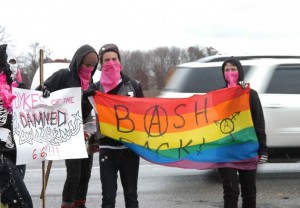
At a 2008, Sunday Service at the Mount Hope Baptist Church in Lansing, Michigan, members of the queer rights group Bash Back! disrupted the service to protest anti-gay policies. Months later, the church and the Alliance Defense Fund, a reactionary Christian nonprofit organization, sued Bash Back! and 15 named activists under the Freedom of Access to Clinic Entrances Act. The church and Defense Fund subpoenaed identifying information in an attempt to find out the protesters’ identities; Risup.net, a provider of online communication tools for individuals and groups working for social change, was the only email provider to challenge the subpoenas. Federal judge Richard A. Jones ruled that Riseup.net did not have to turn over the records, finding that “the Users’ First Amendment right to speak anonymously online outweighs Mount Hope’s right to discovery.” National Lawyers Guild members Larry Hildes of Bellingham, Washington, Devin Theriot-Orr of Seattle, and Mark Sniderman of Indiana successfully defended several activists who received subpoenas from Mt. Hope Baptist Church demanding they turn over their internet account records. Once again, this shows how readily corporations share private personal data on activists with the government or other private entities.
Attorney Larry Hildes:
- This church is particularly virulent with their ministry aimed at turning gay people straight.
- The group picketed outside and tried to pass out leaflets inside. Two women ran to the front of the sanctuary and kissed each other at the alter.
- Mount Hope Baptist Church called the police. The police showed up and said there’s no criminal activity here.
- The Alliance Defense Fund, a huge fundamentalist law firm and fund raising empire in Scottsdale, Arizona contacted the church and said we’ll take on your case.
- They sued the Bash Back folks under the “Faith Act” – Freedom To Access To Clinics Act. They sued them and settled for 2500.00 and a consent decree that they would never disrupt a religious service in the United States again.
- In the meantime they went to look for anyone connected with Bash Back in any way. They went to Yahoo and subpoenaed records from list-serves and Yahoo without telling anybody gave them what they wanted.
- Then they went after RiseUp and RiseUp prides themselves on two things, the internet voice of the left and privacy for their subscribers.
- Riseup attorney Devin Theriot-Orr outlined the internet case law, there is some good law.
- In order to engage in free speech you need to have some degree of security and safety that your privacy is going to be protected otherwise, it chills the climate so that very few people are going to be able to take that risk.
- The victory is that there is a first amendment right to be on a list-serve of a group, even a group whose actions can be seen as civil disobedience or illegal. Your information is still protected and private and the Freedom of Association Privilege goes to that.
- We were awarded by the court 28 thousand dollars in fees.
—————
Attorney Devin Theriot-Orr:
- I’m the pro-bono lawyer for RiseUp.net. The identity information of subscribers is protected by a longstanding precedent going back to 2001.
- Obviously the first amendment has its limits, you can’t speak anonymously about threatening to kill people.
- One of the caveats of the first amendment is that if you have a bona fide law suit and you’re trying to uncover the identity of the defendants there’s a whole balancing test to go through before you should be able to identify the defendants.
- They also provided identical subpoenas to Yahoo and Google, and even though these companies are located in silicon valley with very good federal benches, and they’re in the ninth circuit, its kind of amazing to me that other companies don’t take a stronger stance to protect their users privacy.
- We’re hoping this is a warning to overly zealous attorneys who are abusing discovery process.
Guest – Attorney Larry Hildes, National Lawyers Guild attorney in the case, Bellingham Washington.
Guest – Attorney Devin Theriot-Orr, National Lawyers Guild attorney in Seattle and pro-bono attorney for RiseUp.net.
——————————————-
Civil Liberties, Crony Capitalism, Guantanamo, Habeas Corpus, Human Rights, Surveillance, Truth to Power
Podcast: Play in new window | Download
Updates:
- Tim DeChristopher Sentencing – Bidder # 70
- Aaron Schwartz, Anonymous Activists and Paypal
- Australian Government Seize Profits from David Hicks’ new book – Guantanamo, My Journey
—-
From Economic to Social Crisis: Deficits, Debt and a Little Class History
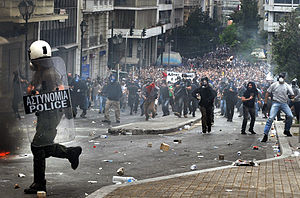
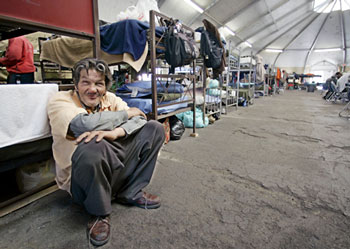
We welcome returning guest Rick Wolff, Professor of Economics. We talk with him about his latest article, From Economic to Social Crisis: Deficits, Debt and a Little Class History. Earlier this year Rick pointed out how the Democrats and Republicans debate over spending cuts at around 40 to 60 billion. Rick says the debate is inconsequential, when the federal budget’s projected deficit of $1.5 trillion will carry an annual interest cost of $40-60 billion. Now, as both parties are committed to a broken, corrupt system, Rick points out that historically transitioning to another economic system is not in the public discussion. He says, the tools used to recover from the 1930s economic collapse can’t be used today mainly because of the last 75 years of rising national debt and budget deficit.
Professor Rick Wolff:
- This is mostly theater, the people I talked to in the business of finance and government are quite clear that the United States will work this out.
- It is a sign of the political dysfunction that they can’t do it in a reasonable way.
- It is a normal procedure to periodically ask for the debt ceiling to be raised, so that they can borrow the amount of money stipulated by the budgets they have passed. The sitting president asks for the debt ceiling to be raised, Bush did it eight times. It’s normal.
- The only thing the Democrats have left, to not look defeated, is to make a big deal out of the cuts they’re willing to accept are smaller than the “draconian” version that the Republicans want.
- The Republicans don’t know, the Democrats don’t know (what will happen). They fundamentally don’t care, because they have long ago decided that their political needs and strategies are unhooked from the underlying economic situation.
- We’re spending 3.5 trillion dollars this year as a Federal Government. We’re raising 2 trillion. That means 1.5 trillion has to be borrowed otherwise its not going to happen.
- That’s money that will be used to help old people’s needs, help fight wars in Iraq, Afghanistan, Libya, Pakistan, to help cities and states that need support, etc.
- The actual creditors in the immediate situation have nothing to fear.
- For the rest of the world you have a double whammy, which is what we should be thinking about.
- We have the driver of the world’s economy collapse in 2007/2008 and having been unable to recover since.
- The bottom line is this economy isn’t working well and isn’t solving its crisis. This is now a deeper, longer crisis than any since the Great Depression.
- That means every other player in the world, from a Chinese official, to a Spanish bank to an investor in Brazil has to rethink what he or she thought.
- A thousand small decisions are going to be made a little differently from now on.
- There is no proposal working its way through Congress to provide employment to the tens of millions of people who have no work.
- The president’s statement (is a bipartisan commitment to ignore the problem of unemployment.)
- The most extreme proposal is to cut 4 trillion dollars in the next ten years. This year alone the US deficit will run one thousand five hundred billion. 1.5 trillion.
- The debtors know that at a certain point there’s going to be trouble.
- You can’t continue to cut the masses’ standard of living to make money for big bankers, that’s not a political sustainable program. Not here, not in Greece, not anywhere else.
- The silence of the press here is stunning. There have been multiple general strikes across Europe.
- The greed of the corporations, they’ve had their way for 30 years. Republicans and Democrats alike, have basically gone in the direction they want. Corporate taxes have been cut, regulations relieved, money is everything, wealth is everything, consumption is where you are.
- The smaller business (corporations, etc) are late to party. They still want to get theirs. Those who already got theirs don’t want them to mess up the game. I believe you will see big splits emerging among the Right in America because these are different attitudes.
- They want a stable United States so that they can grow in the rest of the world, because that’s where they think growth is coming.
- They don’t need to maintain the roads like they did, they don’t need to maintain the education in this country.
- You can appeal to them, you need these workers, you need these consumers. No we don’t. We don’t need them as workers, and we don’t expect them to be much in the way of consumers, because they would have to borrow and we’re not going to lend to them.
- They would have to have higher wages, and we’re not going to give that to them. We have no reason to, we have cheaper better workers elsewhere.
- You are subjecting your working class to a major sustained attack on its standard of living. To believe this is all going to happen and they’re quietly going to sink some resignation with no consequence is nutty.
- The attempt to isolate, to freeze, to inoculate the population so they don’t fear what’s coming. It’s falling apart in Europe, but it will fall apart here too.
Guest – Richard D. Wolff is Professor of Economics Emeritus, University of Massachusetts, Amherst where he taught economics from 1973 to 2008. He is currently a Visiting Professor in the Graduate Program in International Affairs of the New School University, New York City. He also teaches classes regularly at the Brecht Forum in Manhattan.
Afghanistan War, Civil Liberties, Extraordinary Rendition, FBI Intrusion, Guantanamo, Habeas Corpus, Human Rights, Surveillance, Targeting Muslims, Torture, Truth to Power, War Resister
Podcast: Play in new window | Download
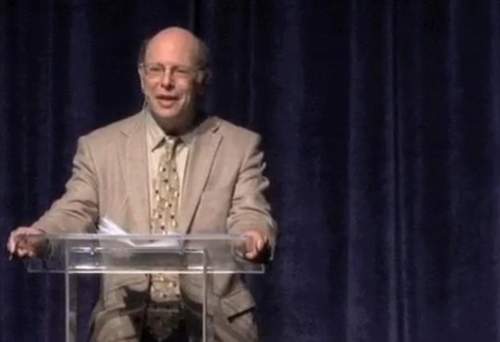
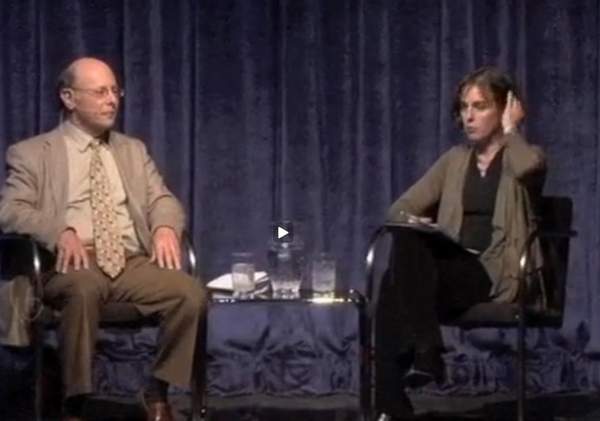
Ten Years after 9/11: War, Operation American Condor (Guantanamo) , Civil Liberties and Hope
We hear a talk from our own Michael Ratner who spoke at the James A Little Theater in Santa Fe, New Mexico. He was also in conversation with radio host Mary Charlotte Domandi. The event was titled – Ten Years after 9/11: War, Operation American Condor (Guantanamo) , Civil Liberties and Hope.” Michael is introduced by Mary-Charlotte Domandi producer and host of the Santa Fe Radio Cafe on KSFR 101.1 FM (Santa Fe, NM, Public Radio)
Michael Ratner is President of the Center for Constitutional Rights (CCR) in New York and the European Center for Constitutional and Human Rights (ECCHR) in Berlin. Both are non-profit human rights litigation organizations. He was part of the small group of lawyers that first took on representation of the Guantánamo detainees in January 2001, a case that resulted in a victory in the Supreme Court in 2004. CCR established a network of over 600 pro-bono lawyers to represent Guantánamo detainees and continues that work.
He has filed criminal complaints in the courts of Germany, France and Spain against former US officials including Secretary of Defense Rumsfeld seeking the initiation of criminal prosecutions against them for the Abu Ghraib abuse and torture as well as for their actions at Guantánamo. Recently, CCR and ECCHR prepared papers to file in Switzerland against George W. Bush for torture. As a result Bush canceled his trip. A major area of Mr. Ratner’s litigation and writing is the enforcement of the prohibition on torture and murder against various dictators and generals who travel to the United States. He has sued on behalf of victims in Guatemala, East Timor, Haiti, Argentina, among other countries. He has also litigated numerous suits to prevent or stop illegal US wars ranging from Central America to Iraq. A constant in his work has been litigation against government spying and surveillance of activists.
Michael Ratner’s books, authored or coauthored, include the soon to be published, Hell No: Your Right to Dissent in 21st-Century America (2011) and Killing Che: How the CIA Got Away with Murder (2011). Other books include International Human Rights Litigation in U.S. Courts, Second Edition (2008); Against War with Iraq (2003); Guantánamo: What the World Should Know (2004); and The Trial of Donald Rumsfeld: A Prosecution by Book (2008). Ratner has taught human rights litigation at Yale and Columbia Law Schools. A past president of the National Lawyers Guild, Ratner has received many awards including Trial Lawyer of the Year, the Columbia Law School Medal of Honor (2005), the North Star Community Frederick Douglass Award, Honorary Fellow at the University of Pennsylvania Law School (2005), and The Nation Institute/Puffin Foundation Prize for Creative Citizenship (2007). In 2006, the National Law Journal named Ratner one of the 100 most influential lawyers in the United States.
—-

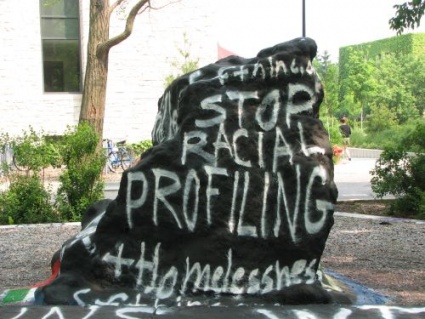
Right-Wing Firms Train Public Servants on Terror Threats
There is a sprawling hidden world of counter-terrorism organizations growing beyond control in the United States. Twenty-four of them were created by the end of 2001, including the Office of Homeland Security and the Foreign Terrorist Asset Tracking Task Force. The next year, 37 more were created to track weapons of mass destruction and collect threat tips. By 2009, nearly 260 organizations were created as 854 thousand civil servants, military personnel and private contractors with top-secret security clearances monitor national security concerns. However, according to a report from the Public Research Associates, those same concerns have bolstered a class of self-proclaimed terrorism experts who decry Islam as an evil religion of terrorists and routinely brand Muslims as primitive, vengeful, duplicitous, and belligerent people who oppress women and gays, and have values irreconcilable with “western Judeo-Christian civilization.”
In fact, when PRA discovered earlier this year that the Massachusetts Bay Transportation Authority (MBTA) had contracted with Security Solutions International to conduct a training on radical Islam, they notified the Muslim American Society, ACLU, and our other advocacy partners, who used PRA’s research to compel the MBTA to cancel the agency’s training.
Chip Berlet :
- As part of the Homeland Security Initiatives and working with the FBI in other aspects of the national security apparatus, there was a need to train thousands as part of a local state and federal counter-terrorism “experts.”
- Some of these trainings are quite good. The problem is that there are a handful of groups that train hundreds and hundreds of local, state and federal counter-terrorism experts, with rhetoric that is basically Islamophobic.
- In the late 1970s there was an attempt to restrain this illegal surveillance. I’d have to say right now it’s worse.
- What used to be done illegally and covertly is now done ostensibly legally and openly and in fact proudly by both Democrats and Republicans who should be ashamed.
- The whole strategic suspicious reporting initiative which basically is a pipeline for unverified rumor and innuendo through local police departments up through a chain of information agencies to the federal government. We know in Europe this kind of reporting is unconstitutional and bad for society.
- Now, everyone that was considered illegal and unconstitutional for which there were Congressional hearings and reforms under Jimmy Carter, now we do it.
- In proper training that is actually looking for criminal activity, not people of color who wear garb that we’re scared of. What’s going on here is untrained, badly trained officers are reporting the names of people up into a huge infrastructure of information data storage, based on bias they’ve not been trained to resist or confront within themselves.
- We described this whole process as a platform for prejudice in a report by Tom Cincotta
- Tom has on his wall a wall chart of all the agencies of this information reporting system and it has 150 dots so inter-connected, no one can control this.
- I’m urging people to form broad coalitions across the political spectrum.
Guest – Chip Berlet, (senior analyst) is a veteran freelance writer and photographer who specializes in investigating right-wing social movements, apocalyptic scapegoating and conspiracism, and authoritarianism. A PRA staffer since 1982, he has written, edited and co-authored numerous articles on right-wing activity and government repression for publications as varied as the Boston Globe, the New York Times, The Progressive, The Nation, The Humanist, and the St. Louis Journalism Review.
Civil Liberties, Criminalizing Dissent, Habeas Corpus, Human Rights, Iraq War, Supreme Court, Truth to Power, War Resister
Podcast: Play in new window | Download
Updates:
——–
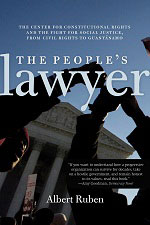
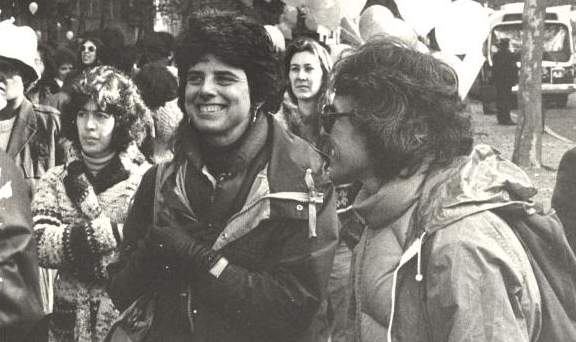
The People’s Lawyer: The Center for Constitutional Rights and the Fight for Social Justice, From Civil Rights to Guantánamo
The People’s Lawyer by author and Guild writer Albert Ruben, is the first comprehensive history on the Center For Constitutional Rights and tells the Center’s story from the civil rights era to today’s legal battles on habeas corpus, torture and Guantanamo Bay Prison. The book highlights critical legal fights taken on by CCR revealing innovative tactics that have evolved within the radical organization. Albert Ruben points how the Center for Constitutional Rights continues to fight with the same spirit, audacity and courage it was founded with. As many listeners may know, CCR has been an important corner stone to this radio show because our own Michael Ratner has been with the Center for 4 decades.
Albert Ruben:
- The founders (of CCR) were 4 in number. They were Arthur Kinoy, Morton Stavis, Bill Kunstler and Ben Smith. Smith was a Southerner, he had an office in New Orleans, and Stavis, William Kunstler, and Arthur Kinoy were northerners who were working for civil rights in the South.
- They were all working their separate beats, they all knew each other and were in communication about the work they were doing. They decided that they needed something, primarily financially, to keep their work going.
- So they got in touch with a lawyer they all knew with financial means named Robert Boem. They incorporated it in New Jersey, and it became ultimately the Center for Constitutional Rights.
- They had a very small office at the beginning with one lawyer in Newark.
- The anti-war movement, the McShirley Case. It threw the Center into the government misconduct orbit. It was in the course of litigating that the Center became aware that the Federal Government was not going to be on the side of the angels.
- (From Wikipedia) Dombrowski alleged that members of his organization, the Southern Conference Educational Fund, were subjected to continuous harassment, including arrests without intent to prosecute, and seizures of necessary internal documents. Furthermore, the State was threatening to use anti-subversion statutes to prosecute the organization, which was a group of Southern liberals dedicated to fighting for civil rights for Blacks in the South.
- The Dombrowski case, allowed the Center and a lot of lawyers to use that decision to challenge cases that brought against civil rights attorneys and a lot of people who were working in the South and caught up in state laws, that were using anti-red laws to take them out of state courts and bring them into federal courts.
- So, the Center lawyers were very acutely aware that they had on their side the federal courts. What happened with McShurley, was that it overturned that faith in the federal court system. The case led the Center to realize that government misconduct was an area that would be of interest. They could no longer count on federal court to be their allies.
- There were women on the staff of the Center who were both Center lawyers as their occupation but they were also women, and as women they were caught up in the womens movement. They brought the two together.
- It was the early days of the womens movement. The Center didn’t see itself as a place that would take on criminal law, it was more of a movement organization. The politics of the founders were central to their beings. They made their politics guide them in whether a case was something that they should adopt.
- Part of the Center for Constitutional Right’s mission was educational, that’s not understood I think.
Guest – Albert Ruben, screen and television writer and has served as an officer of the Writers Guild of America East.
—
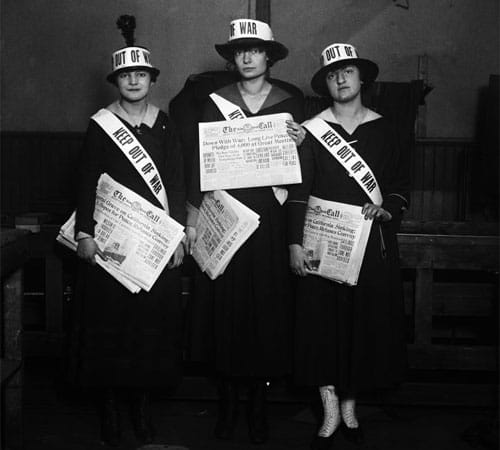

TO END ALL WARS: A Story of Loyalty and Rebellion 1914-1918
We welcome returning guest Adam Hochschild, historian and author of the new book TO END ALL WARS: A Story of Loyalty and Rebellion 1914-1918. In the book, Hochschild has focused on the antiwar movement in Great Britain. Near the beginning of World War I, 20 thousand British men refused the military draft on principle, others were conscientious objectors and nearly 6 thousand of the men were sent to prison. Hochschild relied on personal letters, diaries and memoirs to assemble this unique historic report on Britain’s powerful anti-war movement. The book also unearths how anti-war activists were monitored constantly by civilian and military intelligence as agent provocateurs bragged about their accomplishments. To End All Wars is a compelling account of the heroic anti-war struggle while top writers in that period such as Rudyard Kipling and H.G. Wells, contributed rhetoric to support the war propaganda.
Adam Hochschild:
- I always like to think we can learn things from history. I think you learn to be inspired by people who stuck to their ideals, even in very difficult times,
- I thought it would be a challenge to write a book centering around people who I admire tremendously although they lost, the cause that they were struggling for. I’ve always been fascinated by the first World War, which remade the world for the worst in every conceivable way and killed around 20 million people in the process.
- I’ve been particularly struck by those resisted that war on both sides, who said this war is not worth these millions of lives and we’re not going to fight.
- I wanted to talk about 2 different people in this war, the generals who fought this terrible war filled with illusions, that the next battle would bring a great victory, and then I was also fascinated by these pacifists and war resistors.
- 20 thousand men of military age, refused to go into the British Army. The largest outright refusals in any of the warring countries. Of that number many of them accepted alternative service under conscientious objector. Driving ambulances, or work in war industry factory.
- Many men refused that and more than six thousand went to prison.
- Aggression among Germany and Austria-Hungary did really ignite the war. You can’t really say its a war between good guys and bad guys, because the allies at first were Britain and France allied with Russia. The absolute last remaining monarchy in Europe.
- Wonderful trilogy of novels by Pat Barker, The Eye In the Doors. Had I been alive in that time in 1917, I would like so many people did at that time, who greeted the Russian Revolution with enormous hope.
- I guess I’m thinking more than anything else, of the way the first world war, made the second world war almost certain. There was something about the way the war ended that gave rise to bitterness and the Nazis in Germany.
- Right up to the very last minute, the German people were fed a diet of totally triumphant propaganda.
- Eugene Debbs got up of his sick bed to do a speaking tour against the war. The Wilson administration charged him with subversion, he was still in prison when got nearly a million votes for president of a Socialist party ticket.
- Illusion that the war is going to solve more problems than it causes. Another illusion is that it will be over quickly, you remember George Bush on the aircraft carrier.
Guest – Adam Hochschild, award-winning author and journalist who has written for The New Yorker, Harper’s, The New York Review of Books, and The New York Times Magazine. His books, King Leopold’s Ghost: A Story of Greed, Terror, and Heroism in Colonial Africa (1998) and Bury the Chains (2005) were finalists for the National Book Award and have won numerous other prizes. Hochschild teaches narrative writing at the Graduate School of Journalism at the University of California at Berkeley.
—————————————————-