Civil Liberties, Gaza, Human Rights, Targeting Muslims, Torture, Truth to Power, War Resister
Podcast: Play in new window | Download
Updates
—
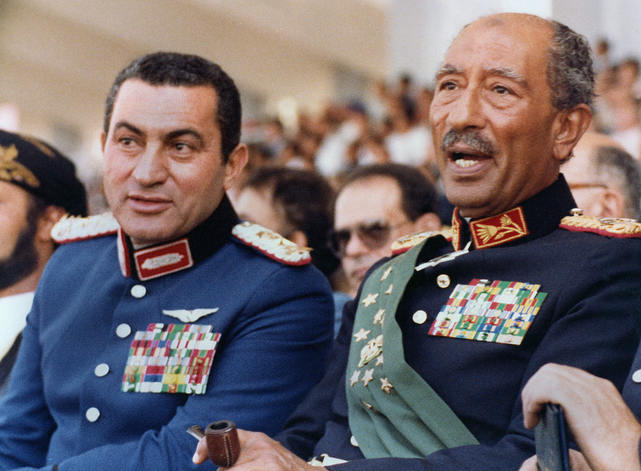
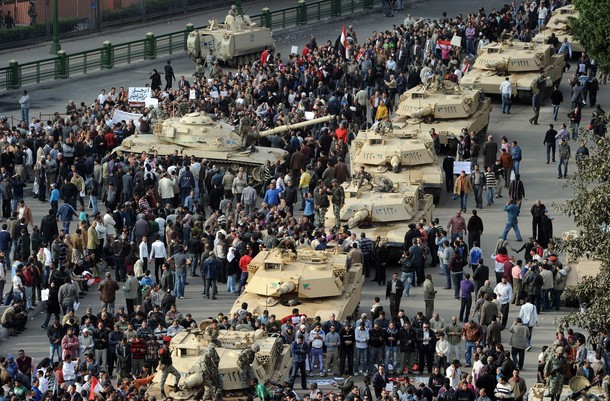
Egypt’s Aftermath and Continued Arab Protests
Civil rights lawyer and former president of the American-Arab Anti-Discrimination Committee, Abdeen Jabara joins co-host Michael Smith in the studio. Jabara gives an update and analysis on the current political and economic shifts in Egypt. Meanwhile Israel recently celebrated the day it declared independence on May 14, 1948, the Nakba. More than 60 years later, Palestinian descendants remain the central issue within the Israeli Palestinian conflict. Last week a wave of coordinated Arab protests hit Israel on 4 of its borders. Protesters were shot and killed when they clashed with Israeli forces at the Lebanon, Syrian, West Bank and Gaza borders.
Abdeen Jabara:
- There’s been a break down of law and order in Egypt, there’s been a rise in the crime rate.
- There’s been a huge drop in income from lack of tourism. There have been various strikes, and even the police went on strike demanding higher wages. People have broken out of various prisons. The situation is very much in flux.
- Two sections of an Egyptian elite maintain control over popular forces.
- There were those that were the nouveau riche, that were being promoted by Gamal Mubarak.
- Many of them have been arrested and are in jail for ill-gotten gains.
- One of the most serious problems in Egypt have been, this neo-liberal development where they were trying to sell off state owned business.
- Open Door Policy, wanting Egypt to become part of the Western camp.
- Will there only be change in a cosmetic fashion where there is no change in the basic relationship with the people. That is the real issue.
- I think a lot depends upon the Army. Egypt is a very poor country and its main sources of income other tourism is the Suez Canal, finished clothes and canned goods.
- Under the Mubarak leadership in order to go on strike you had to get permission from the executive council of the trade union movement. Since the fall of Mubarak, you’ve seen much more labor activism.
- We will be seeing Europe and the United States pouring money into the various formations in the country.
- Israel and Palestine: I think we’re going to see something new now, with all this turmoil.
- We have to understand that the Europeans have been developing some distance on the Middle East issue. The United States and Israel are becoming more isolated in the world. The United States has never been an honest broker in this situation.
- Flotilla will leave in latter part of June, will have ten boats from different European and North American countries. Wednesday May 25, Flotilla Fund Raiser – UStoGaza.org
Guest – Abdeen Jabara, civil rights lawyer and former president of the American-Arab Anti-Discrimination Committee.
——

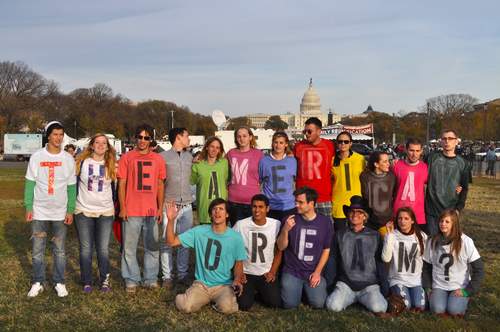
The American Dream As We Know It Is Obsolete
Will the Wisconsin and other state union protests be a catalyst for a general strike? Right now, the Wisconsin demonstrations are aimed at restoring collective bargaining rights for public servants, the goal to a middle class. Reject the opiate of the middle class idealism says our next guest. The revolution must be carefully thought out and be modeled on the ground breaking uprisings in the Middle East and North Africa. How could unions prepare their strategy to include a broader support base? Unions could build alliances with single mothers, the poor, immigrants, the elderly and a wide range of groups.
Arun Gupta:
- It bugged me as all these progressives defended the middle class. I’ve been studying the Tea Party lately. Is the middle class really under attack? The core of the Tea Party is middle class, very entrepreneurial, than more management supervisory.
- There’s a duel movement going on with the Republican attack. Social welfare and public sector jobs.
- In Wisconsin, a population of 5 million, there are 200 thousand public sector jobs
- We should expand our notion of who are defending and what are we fighting for?
- I think Krugman is the most egregious, he says the 1950s was era without great extremes of wealth and poverty.
- Really? There were no Rockefellers and sharecroppers in Mississippi?
- How do we understand the 1950s? We have to go back to the term corporatism. Corporatism doesn’t mean corporation, its derived from corpus meaning body. The government is a mediator between significant sectors of society.
- American capitalism had needed the domestic market. Corporations don’t need internal consumption anymore.
- Capitalism has unmoored itself from geography. For high speed rail in the US, who will build it? The companies that are the most advanced are in China, Germany and South Korea.
- If Obama wanted to spend billions on high speed rail, the US doesn’t have the base, the human intellectual base to compete with Germany and South Korea. We’d have to put tariffs on their goods then you raise the scenario of a trade war.
- Then we’re back in the 1930s which brought on the war. People are not really thinking about the hidden ideologies of green jobs and defending the middle class.
- I’ve seen hopeful potential, these movements pop up and recede so quickly. The immigrants rights movements.
- During revolutions, it is something wonderful, people want to become better people.
- What we don’t hear much about are the little Mubaraks in Egypt, in factories, the workplace, dictators all over the place, and they’re being ousted.
- The Right likes mass movements like the tea party, the Democrats hate mass movements.
Guest – Arun Gupta, Founding editor of the The Indypendent. He recently wrote The American Dream As We Know It Is Obsolete: Why progressives need to think beyond the mantra of creating a “middle class America.”
——————————————————————————
Civil Liberties, Criminalizing Dissent, Gaza, Human Rights, Targeting Muslims, Truth to Power, War Resister
Podcast: Play in new window | Download
The Irvine 11 Case
In what appears to be a growing government trend of prosecuting outspoken supporters of Palestine, 11 Muslim students were arrested for disrupting a speech–in this case that of the ambassador to the United States, Michael Oren. The incident took place last year on the campus of the University of California at Irvine. The local District Attorney claims that the students had no right to disrupt the event, charging them with conspiracy to shut down the ambassador’s speech, even though he was able to complete the speech. Supporters claim that the Muslim students’ actions are protected by the first Amendment, and that are being charged for being vocal critics of Israel.
Defense attorneys claim that the District Attorney has acted irregularly, first by using an investigative grand jury to look into felony charges, even though the students were charged with two misdemeanors. Second, in the course of the investigation prosecutors obtained vast personal electronic records from Google and Hotmail; they then released some of these documents to the media in what appears to be an attempt to influence public opinion against the 11 students.
Attorney Daniel Mayfield:
- As far as disruptions go it was about the most peaceful you could imagine. Michael Oren is invited to speak on campus, it is a hybrid event. Partially sponsored by off campus organizations and off campus organizations.
- When Mr Oren begins to speak say for a minute or two, the first of the 11 defendants stands up to interrupt him to make a statement about Gaza.
- That person then walks to the edge of the auditorium and submits to an arrest and is removed from the auditorium.
- There are roughly five law enforcement groups present. Campus police, Irvine police, county sherrifs, secret service agents, Israeli agents.
- There’s a lot jeering and clapping on both sides. This happens 11 times.
- After the 11th student stands up, all of the students that are opposed to Mr Oren stand up, start a chant and they leave. Mr Oren then finishes his speech.
- The students are disciplined, the Muslim Student Association at Irvine is ordered off campus for 6 months. By June 2010, everyone thinks the case is over.
- In December of 2010, the District Attorney of Orange County, they convene a Grand Jury.
- Under California law you can only convene a Grand Jury when investigating a felony. They claim they’re investigating a felony. In the affidavits to the judge they swear under penalty of perjury that they’re investigating a felony.
- They call witnesses to this Grand Jury, when they’re challenged, they tell the judge they’re investigating a felony. Then the Grand Jury doesn’t issue an indictment.
- An investigative Grand Jury, not that different from what’s happened in Chicago.
- So the DA has amassed, all of this material, they’ve gotten phone records and email messages.
- They asked Google, Hotmail, Gmail, all of those to turn over the emails and they do. Thousands and thousands of emails, 10 CDs.
- I don’t believe the District Attorney is going to drop these charges. They’ve dumped roughly half a million dollars into this case.
- At this point they’ve assigned 3 deputy attorneys, including 2 of their primary homicide DAs. Pulled off of homicide to work on 2 misdemeanors.
- Our goal is to win this case on motions. Because that meeting was political because poltiical meetings are excluding from the penal code section that we’re interested in here.
- We believe that we can win this case, by arguing on the law before the judge, that they don’t have the right to proceed. The speech by Michael Oren was thought of as a response to the organizing around the Boycott, Divestment, Sanctions work.
Guest – Attorney Daniel Mayfield, one of the attorneys on the legal defense team and co-author of the motion and a National Lawyers Guild member.
———–
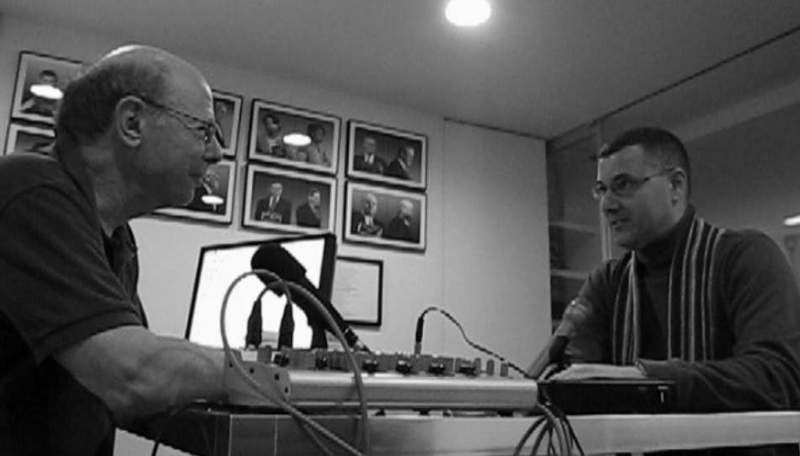
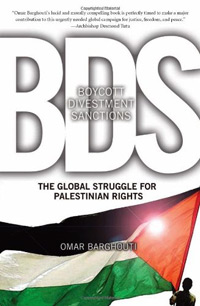
Boycott, Divestment, Sanctions – The Global Struggle for Palestinian Rights by Omar Barghouti
The boycott, divest, sanction movement was launched in 2005. It calls upon conscientious citizens of the world to shoulder the load of responsibility of holding Israel accountable to international law and principles of human rights. The BDS movement urges those citizens to support 3 basic rights. UN sanctioned rights of the Palestinian people, ending the 1967 occupation, and ending the system of racial discrimination in Israel, the right of return of refugees in accordance with UN resolution 194.
In boycotting, corporations and countries around the world are urges to stop buying products that support Israeli infrastructure such as Loreal, Motorola, Caterpillar, and many more. Sanctions, would target those companies exporting to Israel and applying tariffs or trade barriers. Divest or disinvestment, a call to divest from companies, institutions and universities that support Israel’s occupation and lobby power. Co-host Michael Ratner interviewed independent Palestinian commentator and human rights activist Omar Barghouti in the middle of his book tour.
Omar Barghouti:
- The BDS movement was launched in 2005 which calls upon conscientious citizens of the world to shoulder the load of responsibility of holding Israel accountable to international law and principles of human rights.
- The BDS call urges to support 3 basic rights. UN sanctioned rights of the Palestinian people, ending the 1967 occupation, ending the system of racial discrimination in Israel, the right of return of refugees in accordance with UN resolution 194.
- 80 percent of Gazans are refugees. According to International law, they have the right to go back home.
- We look around and look at how International law is being applied in other situations.
- Jewish communities are reclaiming properties stolen by the Nazis or by their collaborators all over Europe.
- Only when it comes to Palestinian refugee rights does it become a demographic threat to Israel.
- There’s some divine right given to Israel to maintain an ethno-centric state, at the expense of applying International law.
- Palestinians of Israel are not considered nationals of Israel. Israel is the only country on Earth that has this two tiered system of nationality. You’re only a national if you’re Jewish.
- Any Jewish person from New York can go tomorrow and can become a national immediately.
- Palestinians in Israel, citizens of Israel, can’t buy, rent or live on about 93 percent of the land.
- Israel’s discrimination acts like a set of sieves, that have finer and finer holes as you move up towards college, filtering out more Palestinians so you have a very small percentage on top.
- Because Palestinians can vote becomes a form of tokenism, when you discrimination in land, jobs, everything.
- Israel is losing the veneer of sophistication and nuance. It’s becoming a brute form of apartheid.
- Loyalty Oath.
- Israel has lost the battle for hearts and minds and its resorting to bigger sticks.
- BDS, in less than six years we’ve achieved more than our comrades in South Africa that lasted 20 years.
- In a study of Israeli academics who had stood up against the occupation: hundreds of academics in a community of 9 thousand have done anything public against the occupation. BDS is not a political party, its not an ideology.
- Those who think they can decide for the Palestinians what our basic rights are, ignoring International law and basic principles of human rights, are racist. BDS is a living movement that is growing tremendously.
Guest – Omar Barghouti, the founding member of the Palestinian Campaign for the Academic and Cultural Boycott of Israel and the Palestinian Civil Society Boycott, Divestment and Sanctions (BDS) campaign.
—–
————–
Civil Liberties, Criminalizing Dissent, FBI Intrusion, Green Scare, Guantanamo, Habeas Corpus, Human Rights, Iraq War, Military Tribunal, Political Prisoner, Prison Industry, Targeting Muslims, Torture, Truth to Power
Podcast: Play in new window | Download
Updates:
—-


Guantánamo Leaks Must Be Met By Release of Obama Task Force Assessments
The 759 Guantanamo files that were classified “secret” cover nearly every inmate since the camp opened in 2002. The documents obtained by the New York Times and the Guardian last month, reveal how children, the elderly and mentally ill were wrongfully held. The documents also reveal that many prisoners were sent to Guantanamo for nearly nothing or to be interrogated. What did these documents reveal?
Attorney Shane Kadidal:
- These stories started on Monday morning, because administration officials gave out a briefing saying that the nickname of Osama’s couriers was given out by one of the detainees.
- Assuming information taken from Khalid Sheikh Mohammed
- We do know it took eight months from the time they identified this compound to the point they decided to strike at it. I think its clear, they relied on a whole slew of information from a variety of sources.
- We already know the true name of the courier, which is more important than a nickname came from agents on the ground and electronic surveillance.
- 172 detainees, 90 cleared from release, 2/3 of those from Yemen have been indefinitely suspended for repatriation because of the “underwear bomber.”
- The problem is so much of (media) attention is focused on the ones that will never be released.
- WikiLeaks – 2400 pages of documents almost all risk assessments of about 740 detainees who’ve been to Guantanamo
- They represent the Defense Departments best case for detaining someone.
- You have these long analysis of very shady facts, not detailing where allegations are coming from.
- If you look at the documents as a whole, it shows that most of the detainees were held on flimsy, unreliable information.
- The documents show that people were interrogated in GTMO about nothing to do with terrorist attacks in the United States. You had Samuel Hodge interrogated about the inner workings of Al-Jazzera
- Everyone ended up with the categorization of high or medium risk
- When you see a leak of this magnitude, the only corrective is to release more information and that’s what we’ve called for at CCR.
- The government quickly emailed us – They said consistent with the security clearances you signed on for, you have to treat this information as classified (leaked documents) even though its been scattered to the winds on every newspaper on Earth.
Guest – Attorney Shane Kadidal, senior managing attorney of the Guantánamo Global Justice Initiative at the Center for Constitutional Rights in New York City. He is a graduate of the Yale Law School and a former law clerk to Judge Kermit Lipez of the United States Court of Appeals for the First Circuit. In his eight years at the Center, he has worked on a number of significant cases in the wake of 9/11, including the Center’s challenges to the detention of prisoners at Guantánamo Bay (among them torture victim Mohammed al Qahtani and former CIA ghost detainee Majid Khan), which have twice reached the Supreme Court, and several cases arising out of the post-9/11 domestic immigration sweeps.
——-
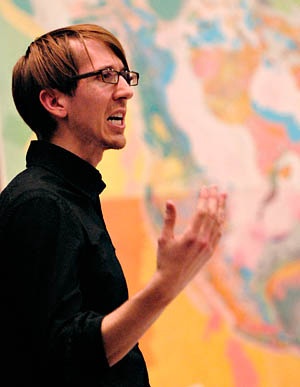
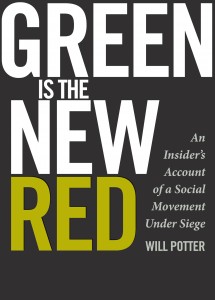

Green Is The New Red: An Insiders Account of A Social Movement Under Siege
We welcome Will Potter award-winning independent journalist and now the leading authority on “eco-terrorism.” He’s the author of the new book ,Green Is the New Red: An Insider’s Account of a Social Movement Under Siege, and it reveals a complex environmental movement emerging amid police state pressure. As we’ve reported here on Law and Disorder, environmental activism have been labeled terrorism under certain interpretation of the Patriot Act, essentially criminalizing dissent and chilling free speech in this country at a critical time. Our guest was an FBI target for merely leafleting against animal testing, and he was threatened to be put on the domestic terrorist watch list if didn’t comply with FBI demands. We talk more about that, the environmentalist movements and his new book.
Will Potter:
- My background is in mainstream newspapers. As I was working as a reporter at the Chicago Tribune, about 9 months after 9/11. I was covering breaking news, blood and guts.
- I decided to go out leafleting on a campaign I became aware of against a controversial animal testing company.
- Couple weeks later the FBI knocks on my door telling me I need to become a government informant and help infiltrate animal rights and environmental groups and if I didn’t they’d put me on the domestic terrorist list.
- It scared the tar out of me. I wish I could say it didn’t.
- Afterward it really lit a fire under me to figure out what was going on.
- One of the reasons I started the website was because of this new law being considered called the Animal Enterprise Terrorism Act.
- What I decided to do with the book is tell the personal stories of the people involved.
- I followed Daniel McGowan a few days before his sentence to how he ended up in this facility, his own journey as an activist. Daniel was convicted of serious crimes, two arsonists that didn’t harm anyone and he was labeled a terrorist.
- The book looks at the wide range of activity being labeled “eco-terrorism”
- The FBI has labeled the environmental and animal rights movement the number one domestic terrorism threat.
- These corporate campaigns were pushed for so long through the courts, politicians, and the press that over time they began to dovetail with government policy.
- The Animal Enterprise Terrorism Act is so broad it can even wrap up non-violent civil disobedience as terrorism, only if its directed at what is called animal enterprises.
- The real power of this is fear.
- The activists who are really effective and pushing the boundary are the ones being labeled eco-terrorists.
- I recently wrote about 3 bills that are under consideration for the Huffington Post. What Is Big Ag Trying To Hide.
Guest – Will Potter, award-winning independent journalist based in Washington, D.C., who focuses on “eco-terrorism,” the animal rights and environmental movements, and civil liberties post-9/11. Will’s work has appeared in publications including the Chicago Tribune, the Huffington Post, and the Vermont Law Review, and he has testified before the U.S. Congress about his reporting. He is the author of Green Is The New Red: An insider’s account of a social movement under siege forthcoming from City Lights Books.
Civil Liberties, Criminalizing Dissent, Crony Capitalism, Death Penalty, Human Rights, Military Tribunal, Political Prisoner, Prison Industry, Targeting Muslims, Torture
Podcast: Play in new window | Download
Updates:
—-

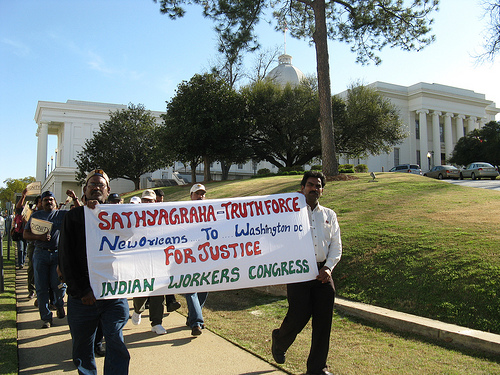
Largest Human Trafficking Case In The US? Workers Lured To U.S. After Hurricane Katrina And Subjected To Abusive Conditions Seek Class Certification
In what may be the largest human trafficking case in US history, Indian guest workers are suing Signal International for human trafficking ad racketeering. Several law firms filed the lawsuit on behalf of seven plaintiffs representing 500 formers guest workers lured into the US after Hurricane Katrina. The guest workers were subjected to racial discrimination, forced labor and other abuse.
Signal is a multi million dollar marine fabrication company with shipyards in Mississippi, Texas and Alabama. They repair and build oil rigs and ships and subcontract with the Dept of Defense and multinational companies. After Hurricane Katrina, Signal’s workforce scattered and they used the government’s guest worker program to import employees as welders and pipe fitters. Between 2004 and 2006 hundreds of Indian men were paid up to 20 thousand dollars each for travel, visa and other fees after being told it would lead to good jobs and permanent US residency.
When the men arrived at Signal they discovered they would not receive green cards, but instead were given 10-month guest worker visas. Signal forced the men to pay $1,050 a month to live in overcrowded, unsanitary and racially segregated labor camps with no visitors allowed. To talk more about this case, we’re joined by Chandra Bhatnagar is a Staff Attorney with the Human Rights Program and Sabulal Vijayan, a former guest worker involved in the lawsuit.
Chandra Bhatnagar:
- Signal used the opportunity of the storm to seek out new labor pools. Signal in partnership with an American labor broker, an American Immigration lawyer and an Indian recruiter, conspired to bring in a group of 500 men from India as H2B guest workers.
- The workers were promised green cards, permanent residency, and the opportunity for long term jobs.
- Sabulal Vijayan: I was working in the middle east, the United Arab Emirates, I saw the ad by Signal that said we would get permanent residency in America. I paid about 18 thousand dollars, I cut my wrists in fear, I tried to kill myself because I spent a bunch of dollars. I was in the hospital for 3 days. I couldn’t go back to my family in India with bare hands, because I spent all the money on this job. Not only me but 500 workers, sold all their land and houses for this job.
- The EEOC, brought a separate lawsuit against Signal, alleging racial and national origin discrimination and hostile work environment.
- Because Sabulal was one of the workers seeking his rights under the law, he was particularly targeted by Signal and rounded up in an early morning raid. The camp was built on a lead contaminated waste site.
- It’s not OSCHA compliant to have 24 guys jammed together in a temporary trailer.
- These are in the United States and in debt. The average income in India is 3000 dollars a year for a ship worker. To pay 20 thousand dollars, you have to sell your property, borrow money from loan sharks. You have to mortgage your whole life for the opportunity to come here. Signal also said if you file a lawsuit, we’ll send all of you back.
- Signal is a marine fabrication company, a multi-million dollar company. They repair and build oil rigs and ships. They have yards in Mississippi, Alabama and Texas. They provide services to the Department of Defense and major corporations.
- It was a conspiracy between the Immigration lawyer, the Indian recruiter, the labor broker and Signal.
- Signal got this vulnerable pool of workers who they could throw away whenever they wanted to.
- You don’t have freedom of contract as a guest worker, you’re the disposable property of the employer.
Guest – Chandra Bhatnagar, ACLU Staff Attorney with the Human Rights Program. He leads the domestic and international advocacy around racial profiling, affirmative action, and juvenile justice issues, and is engaged in federal court litigation and litigation in international tribunals involving the rights of low-wage immigrant workers, undocumented workers, and guest-workers.
Guest – Sabulal Vijayan, guest worker from India, who is involved in the case. Sabulal, a pipefitter, paid nearly 20 thousand dollars to work in the United States as a guest worker. He worked with others in slave labor-like conditions for Signal International.
———–
Professor John Ehrenberg: Class Warfare Update and Analysis
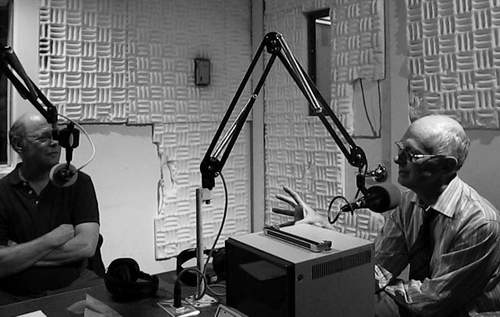
Returning guest, professor and author John Ehrenberg joins us in the discussion of where the last 3 years the Obama Administration has led the country. The United States is pouring trillions into multiple war theaters, unemployment continues to rise, CEOs of banks and corporations have been rewarded with taxpayer bonuses and bailouts, and a massive unequal distribution of wealth has polarize the country. Meanwhile, the very rights that protect organized labor and the benefits of workers are attacked and disassembled during one of the worst economic downturns to hit the United States. Corporations and the far right wing of the Republican Party are behind some of the union busting yet even President Obama turned his back on supporting union labor demonstrations. Most recent show with John Ehrenberg
Professor John Ehrenberg:
- The elephant in the room that nobody talks about is the role of the state and the role of the government.
- Winner-Take-All Politics: How Washington Made the Rich Richer–and Turned Its Back on the Middle Class
- What you had since the 1980s is a policy pushed by the Republicans and acquiesced by the Democrats of undoing the Great Society. We’ve seen this in the union busting and refusing to tax the rich. It’s been happening because the Republican party is getting more radical.
- The villan in the room is governmental and fiscal policy.
- The top 1 percent of the population received more than a third of all the wealth created in the country from 1979 to the beginning of the recession. The top 1/10 of one percent, that’s one out of every thousand households, received over 20 percent of all the after tax gains between 1979 and 2005.
- It was a conscious policy. It began in the late 70s by business. If you look at the neo-conservatives of that period, their target is the Great Society.
- Basically in the late 60s and the early 70s, the traditional stimulus programs of the Democrats failed.
- Along comes Reagan and he takes on a radical restructuring of the economy.
- Which began this process of shoveling huge amounts of wealth to the rich, hoping that it would trickle down and you’d have sustained growth.
- Consider that Obama is going to raise a billion dollars for his reelection campaign. Where is he going to get it from?
- Look, anybody at this stage of the game who continues to trust the Democratic party to lead the country out of this mess, is a fool.
- The Democratic Party by itself is incapable of democratic initiative and progressive change unless forced to respond from pressure from outside.
- When do they have enough? The answer in 1100 pages of Capital: A Critique of Political Economy is it’s never enough. That the logic of capital is to reduce everybody to starvation and take everything they have.
- This is the motor of the system, this has nothing to do with the Koch Brothers.
- Hopefully people are tired of being pushed around. American exceptionalism, meant that Americans were more tolerant of inequality, than were people from a stronger labor tradition.
- That American’s didn’t care so much if other people got rich as long as they got rich too.
- If you have a situation where Americans are misinformed about the distribution of wealth and are open to appeals to redistribute wealth in the name of fairness and equity, then this is the time for a redistributus Democratic party to step forward.
- If the Democratic Party is even a modicum of sanity in America, it’s because its going to have be pushed again. Pushed and pushed and pushed from outside.
- 55 percent of Republicans want higher taxes on the rich.
- There are local manifestations of outrage and rebellion, in Wisconsin, Indiana, Ft Lauderdale, around different aspects of the mal-distribution of wealth. – but nothing has been coordinated on the national level.
- There are as yet, no forces talking about the system as a whole, as a state.
- There are a lot of indications across the board that people have had enough.
- Go out there and join something and get involved.
- UNICEF publication. The Children Left Behind. Indices: Health, Education, Material Well Being. The United States is last of the 24 countries.
- If you look at the fall of any of the world’s empires, it was a combination of the over reach and the refusal of the rich to pay their share of taxes.
Guest – John Ehrenberg, author of Servants of Wealth, The Rights Assault on Economic Justice, he’s also professor of political science at Long Island University.
————————————————————————-
Civil Liberties, Criminalizing Dissent, Crony Capitalism, Green Scare, Habeas Corpus, Human Rights, Political Prisoner, Prison Industry, Targeting Muslims, Torture, Truth to Power
Podcast: Play in new window | Download
Updates:
—–
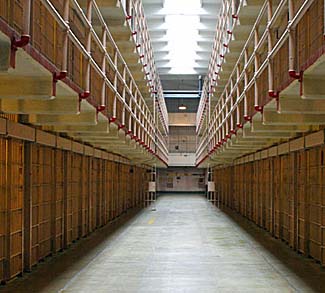
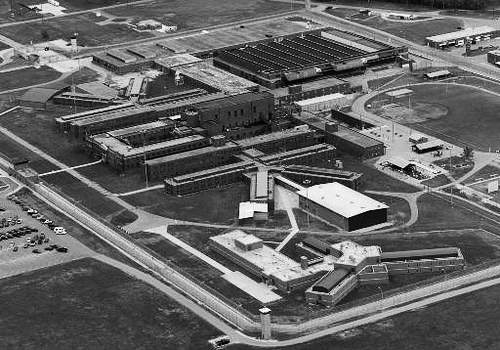
Court Vindicates Prisoners in Right to Challenge Federal Experimental Isolation Units Restricting Communication
Last month, the Center for Constitutional Rights won the right for prisoners to challenge a violation of their constitutional rights. Prisoners in 2 experimental federal prison units called “Communications Management Units” or CMUs, will have their claims heard in court. About 70 percent of CMU prisoners are Muslim men. Judge Urbina agreed that the prisoners raised serious constitutional questions about CMUs. The Center for Constitutional Rights filed Aref v. Holder in the D.C. District Court on behalf of current and former prisoners of the units in Terre Haute, IN and Marion, IL; two other plaintiffs are the spouses of those prisoners.
As many listeners may know, these CMUs were secretly opened under the Bush administration in 2006 and 2007. They were designed to monitor and control the communications of certain prisoners and to isolate them from other prisoners and the outside world. The five plaintiffs in Aref were designated to the two CMUs despite having relatively or totally clean disciplinary histories, and none of the plaintiffs have received any communications-related disciplinary infractions in the last decade.
In addition to heavily restricted telephone and visitation access, CMU prisoners are categorically denied any physical contact with family members and are forbidden from hugging, touching or embracing their children or spouses during visits.
Attorney Alexis Agathocleous:
- We’re very troubled about policies and conditions at these units. A number of the restrictions imposed at the CMUs are severe. They are truly cutting people off from their loved ones, they’re community and the outside world
- Blanket ban on physical contact, unparalleled to any other single unit anywhere, including Supermax.
- We feel this needlessly impinges on their right to family integrity and their need to maintain these ties to the outside world.
- What we’re challenging is that there is no due process attached to designation to these (CMU) units.
- Without a disclosure of factual allegations that were used to designate them, without a demonstration of past abuse of communication devices, without a hearing, without an appeal. Once you’re there, no one is told how to earn their transfer to get out. Our clients have benign or in some cases perfectly clean histories.
- What is happening is that Muslim prisoners are being designated there, based on the discriminatory belief that as Muslims they inherently pose a great danger to institutional security, than do other prisoners.
- We’re very concerned also about a pattern of designation of political prisoners and specifically includes environmental and animal rights activists.
- We do believe these are acts of retaliation for protected First Amendment activity, such as speaking out on social justice issues.
- What we’ve asked for in the case is a thorough review of polices and practices in the CMUs.
- What’s next is we’re going into discovery, which is our opportunity to learn a lot more about the CMUs, about their inception, who was involved in designing them and why and about how designations are made.
- CMUs were opened quietly.
Guest – Alexis Agathocleous, staff Attorney at the Center for Constitutional Rights and works on CCR’s Government Misconduct and Racial Justice docket. He is lead counsel in Aref v. Holder, challenging policies and conditions at the federal Bureau of Prisons’ Communications Management Units, and Doe v. Jindal, challenging a Louisiana law that requires individuals convicted of Crime Against Nature to register as sex offenders.
—–


Financial Regulators Failed: Crooks Go Unpunished
Last week, the Securities and Exchange Commission Friday charged Goldman Sachs & Co. and one of its executives with fraud in a risky offshore deal backed by subprime mortgages that cost investors more than $1 billion. The SEC also contends that Goldman allowed a client, Wall Street hedge fund Paulson & Co., to help select the securities to be sold. Paulson in turn bought insurance against the deal and when the securities sank, losing nearly all value, Paulson then made a $1 billion profit.
While these are not criminal charges, the recently released 650-page report of the Senate Permanent Subcommittee on Investigations, Wall Street and the Financial Crisis (PDF) had exposed the deceptive and risky practices within major financial institutions, that deceived clients and the public. New Economics Perspective Blog
Professor William K. Black:
- Many people still call it the subprime crisis, it would be far better to call it, the liar’s loan crisis.
- Roughly half of all subprime loans by 2006.
- Somewhere between a quarter and 49 percent of new home loans, were in the form of liar’s loans.
- The incidence of fraud when there have been independent studies has ranged from 90 to 100 percent.
- A liar’s loan is when there is no underwriting, no verification of what’s put into the loan application.
- Overwhelmingly, it was the lenders who put the lie is liar’s loans.
- You can sell these loans in the secondary market if they appeared to have 2 characteristics that finance has told us you can’t have simultaneously.
- A premium interest rate and low risk. You could have the best of both worlds. The way to do that was to gimmick two ratios. Debt to income ratio and loan to value ratio.
- Inflating the value of homes, covered up by industry. An honest secure lender would never inflate value.
- It makes perfect sense for a fraudulent company to inflate the value of the house so they can sell the loan on the secondary market for a higher profit.
- Then Attorney General Cuomo, now governor found this as a common practice at Washington Mutual, the biggest bank failure. WAMU had a blacklist of appraisers, you were blacklisted if you refused to inflate value of property. None of these people are being prosecuted.
- In 2004, the FBI testified there was an epidemic of mortgage fraud and predicted that it would cause a financial crisis.
- The Savings and Loans debacle cost 150 billion, the current crisis is costing over 10 trillion.
- The Office of Thrift Supervision, Chainsaw James Gilleran
- Instead of being embarrassed that they were working hand in glove with the lobbyists, they were proud of this and put this in their annual report.
- Geithner and Cuomo urged there not be investigations much less prosecutions of the elite financial frauds because he thought the financial system was too fragile.
- The Justice Department ruined an FBI initiative to try and investigate the elite frauds.
- If you are powerful enough, if you have enough ties, after citizens united, and make enough political contributions, you will not be prosecuted.
- You can’t have crony-capitalism and democracy either.
- Big finance is only supposed to be a middle man, it’s supposed to help the real economy, by simply allocating most efficiently capital to the most productive uses.
- Like any middle man you want absolutely minimal profits going to the middle man.
- Under some measures, finance has 40 percent of the total profits of all American businesses.
- This is the worst group of people you can possibly imagine having power.
- We’ve turned too many of our schools into fraud factories, where we train people how to gimmick accounting.
- Citizen’s United is a fragile case, it doesn’t make much sense in terms of the law.
- What these people are, engines for destroying wealth
- They only get 10 billion, they destroy 10 trillion dollars in wealth. They cost 10 million Americans their jobs.
Guest – William K. Black, a professor of law at University of Missouri, Kansas City who has criticized the absence of any criminal referrals or national task force to effectively punish the elite fraudsters. Professor Black teaches White-Collar Crime, Public Finance, Antitrust, Law & Economics.
——————————————————-
Civil Liberties, Criminalizing Dissent, Habeas Corpus, Human Rights, Targeting Muslims, Truth to Power, War Resister
Podcast: Play in new window | Download
Updates:
—
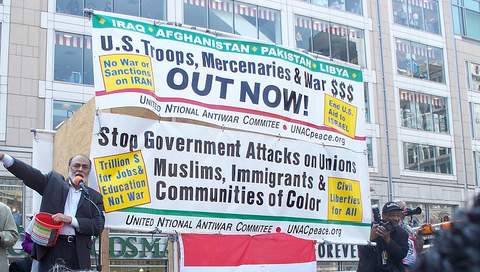
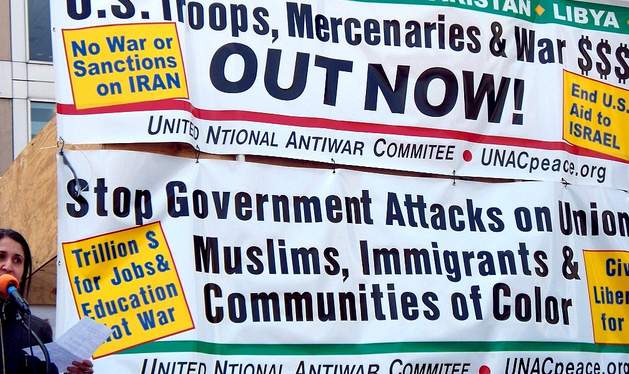
The Muslim Peace Coalition and the United National Antiwar Coalition
Last week, activists took to the streets in a mass anti-war demonstration in the streets of New York and around the country. We talk with one of the organizers. Imam Abdul Malik Mujahid, founder of the Muslim Peace Coalition who joins us to discuss his work as executive producer of Chicago’s Radio Islam. He’s among the most well-known Muslim activists in the country and has recently completed a 3 state tour having addressed dozens of mosques demanding an end to the ongoing attacks and spying on Muslim communities.
Malik Mujahid:
- 700 thousand Muslims have been interviewed by the FBI. Most of the mosques have been checked out for atomic bombs. What they think is a Muslim could be a brown skinned guy, who is Hindu, or could be Latino.
- Once you start doing injustice in one group, it doesn’t stay in one group. At this moment there’s quite a bit of inhumanity toward undocumented workers which are in larger numbers.
- The personal cost is very high. A Yale University research, says that 50 percent of Arab Americans have clinical signs of depression. Muslims are last to hired and first to be fired.
- People can get out of this when they realize there’s a criminalization in the inner city.
- Latinos the largest minority in this country lives in a state of fear, becaust they may be mistaken for undocumented and green card holder.
- 75 Pecent of Latinos stopped or arrested for suspect of documentation actually are quite legal citizens from several generations.
- The whole thing is based on a myth that Muslims were responsible for 911 and the continued terrorist attacks.
- War and terrorism are connected through occupation. We say that the hate in the country is rising, we’re becoming an unwelcoming nation. I visited the 1199 in New York and I was surprised how welcoming they were.
- 2.5 million Americans became new gun owners last year.
Guest – Imam Abdul Malik Mujahid is founding Chairman of Sound Vision Foundation, the leading producer of educational content on Islam and Muslims. He is also executive producer of the daily Radio Islam talk show on WCEV 1450 AM in Chicago. Imam Mujahid serves as Chair of the Council for a Parliament of the World’s Religions, the premiere interfaith organization in the world. He is former Chairperson of the Council of Islamic Organizations of Greater Chicago.
—–
Queer (In)Justice: The Criminalization of LGBT People in the United States
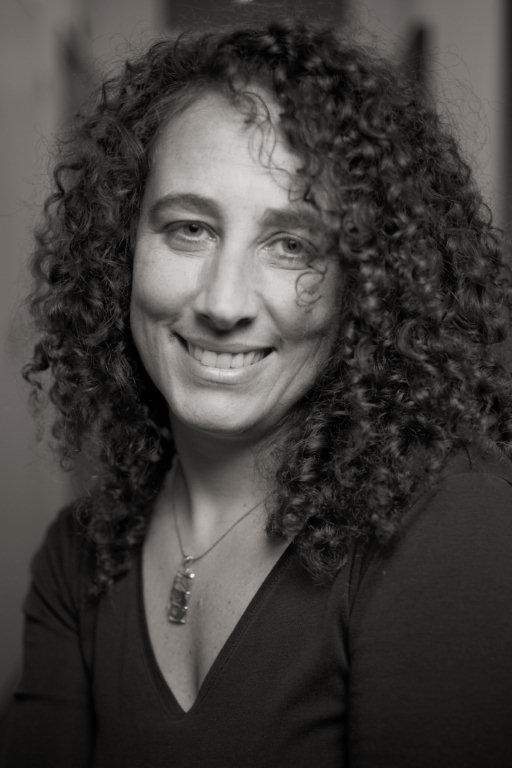
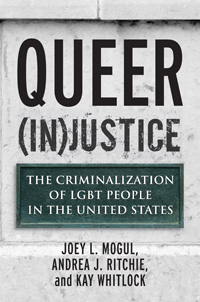
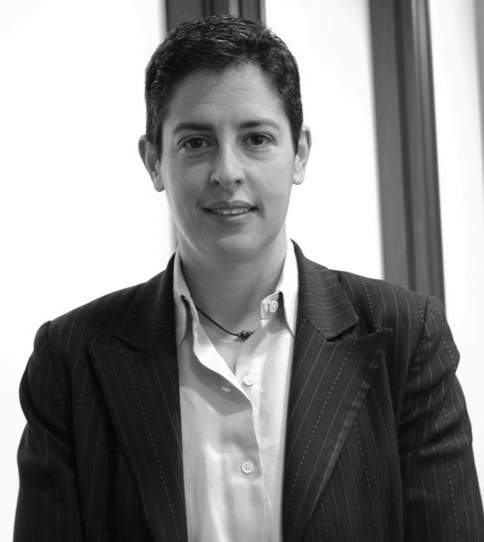
We’re joined today by two of the three authors of book titled Queer (In)Justice: The Criminalization of LGBT People in the United States. Joey Mogul, director of the DePaul Civil Rights Clinic and partner with the People’s Law Office, and Andrea Ritchie, a Police Misconduct Attorney. The criminalization of LGBT people is explained in the book with acute detail and historical research. The book reveals that continual targeting of queers by law enforcement is not an accident but part of a larger systemic issue. The cases covered in this searing book show how the legal system routinely discriminates against those identified as queers. But there’s more to it than that, other factors such as poverty, race and class also make them a target. We learn more about the book and how this discrimination is viewed within the mainstream gay community.
Attorneys Joey Mogul / Andrea Ritchie:
- The term trans-gender is an umbrella term, that is inclusive of gender identities. It encompasses people who are born with a particular genitalia, but whose gender expression or identity is different from their anatomy.
- We use the term criminal legal system because the system has produced anything but justice for people who fall under the umbrella of LGB or T.
- Sometimes its a cop writing you a ticket for disorderly conduct, because they perceive your expression in a public space to be disorderly.
- Once they get to the police precinct and they don’t know which box to check, that can result in being searched. Not for any lawful purpose as contraband, weapons but to determine what your anatomy is because they feel like that’s relevant in which box to check for you.
- What we’re seeing nationwide is police officers unsure of someone’s identity, police stations nationwide have no guidelines in determining someones gender. What we’re seeing is these genital checks.
- There have been transgender women who’ve been searched in San Francisco, who’ve not only experienced these humiliating strip searches but then have been forced to dance or masterbate, in front of these officers.
- They want to humiliate and punish based on their gender identity.
- Really things are getting better for a small minority of LGTB and the vast majority end up facing these patterns of criminalization. In the court systems, we’re seeing individuals whose sexual orientations or gender identity is being used against them.
- Archetype of queers as a security threat. We talk about prisons as queer spaces in that, we see prisons being used as a tool to say that gay people are the predators.
- My home is the People’s Law Office. The work I do is police and government misconduct cases and I do death penalty cases. But I’m queer. I do hold myself out to the queer community and I do get these cases.
- Walking While Trans. One encounter with a cop can change your whole life.
- It’s really important for us to reach out to Guild Members, this is state sponsored homophobia and trans-phobia.
Guest – Attorney Andrea Ritchie, is a police misconduct attorney and organizer in New York City.
Guest – Attorney Joey Mogul, a partner at the People’s Law Office in Chicago and director of the Civil Rights Clinic at DePaul University’s College of Law. She focuses on civil rights cases involving police misconduct, criminal cases brought against individuals engaged in street demonstrations and other forms of First Amendment expression, and capital defense cases.
—————————————————-