Civil Liberties, Criminalizing Dissent, Gaza, Human Rights, Truth to Power
Podcast: Play in new window | Download
Updates:
————–
Critical: Attorney Peter Erlinder Arrested in Rwanda
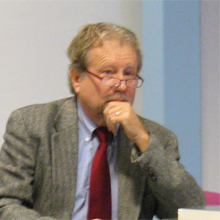
Former National Lawyers Guild president, Professor Peter Erlinder was arrested last week by Rwandan Police for allegedly denying the country’s 1994 genocide. He had traveled to Rwanda from Brussels on Sunday May 23, to join the defense team of Rwandan presidential candidate Victoire Ingabire Umuhoza. He had recently attended a defense conference that they’d organized for the people working with the International Criminal Tribunal for Rwanda. He arrived in Rwanda with the intention of defending aspiring presidential candidate Victoire Ingabire and joining her legal team. Ingabire is the opposition candidate who was recently arrested and accused of denying the Rwanda genocide. Prosecutors say Erlinder made statements in publication that there was no genocide in Rwanda. Under a 2003 law, persons condemned for denying or grossly minimizing genocide, attempting to justify genocide or destroy evidence related to it are liable to a minimum of 10 years and a maximum of 20 in prison. Facebook Group – Free Professor Erlinder Now
Professor Erlinder is 62 a Chicago native and professor of law at the William Mitchell College of Law. He is a frequent litigator and consultant, often pro bono, in cases involving the death penalty, civil rights, claims of government and police misconduct, and criminal defense of political activists. He is also a frequent news commentator. Erlinder was president of the National Lawyers Guild from 1993-1997, and is a current board member of the NLG Foundation. He has been a defense attorney at the UN International Criminal Tribunal for Rwanda since 2003. National Lawyers Guild Page Updates
Gena Berglund:
- He’s accused of revisionism, revising history. Peter Erlinder years before found mountains of documentation at the UN about Rwanda’s history. He read them and discovered that the history of Rwanda is the history that’s told in the documents.
- He actually found that there was a civil war going on there for 4 years preceding the last 3 months when the alleged genocide took place.
- The civil war was the causation of the genocide. By doing this work, he encountered the wrath of the Rwandan government.
- He was trying to help the defense of an opposition presidential candidate Victoire Ingabire Umuhoza, who was arrested for “denying the genocide” and when Peter Erlinder arrived in Rwanda, he was arrested on the same charge.
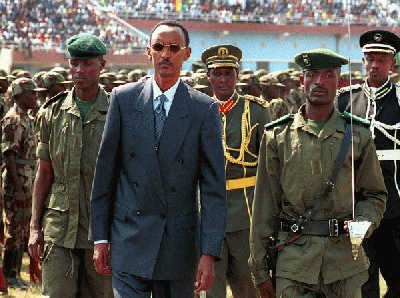
- Rwanda President Paul Kagame has discredited presidential candidate Victoire Ingabire Umuhoza.
- We don’t know in the US, what’s really going on in Rwanda. The US is supporting Kagame’s war in the East Congo, the war is being fought over minerals and rights to minerals.
- Those minerals are used in cell phones.
- Help Peter Erlinder: Contact the US State Department and urge them to take an active role.
- Rwanda President Paul Kagame put 7 people on a list of those he would like to see assassinated, Peter Erlinder was on that list.
Sarah Erlinder:
- My Dad is back in the hospital, the Rwandan government is claiming that he attempted suicide.
- Gena Berglund said in the press conference that taking the pills was a “strategy’ for Peter to escape the poor conditions in the cell where he is being held with seven or eight other inmates and handcuffed each time he is taken out of the cell.
- No one has been able to talk with him since he was arrested. Peter is in a private hospital, a shared unit with 8 other patients. Facebook Group – Free Professor Erlinder Now
—
Guest – Attorney Gena Berglund with the Minnesota Chapter of the National Lawyers Guild and International Humanitarian Law Institute of Minnesota
Guest – Sarah Erlinder, Peter’s daughter, attorney and National Lawyers Guild member.
———-

Israel Attacks on Aid Ships
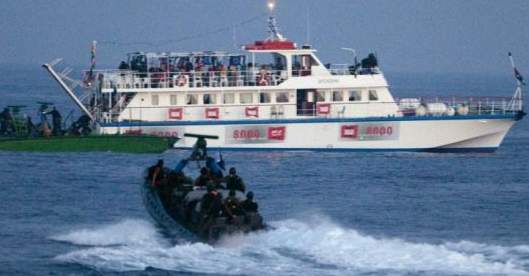
International waves of protest continue over the lethal Israeli attack of 6 ships carrying humanitarian aid to the Gaza strip. The shipd called the Freedom Flotilla, were carrying shipments of wheelchairs, prefabricated homes, crayons, raw construction supplies, dental surgery equipment and reams of paper in a relief effort to end the blockade in Gaza.
The Freedom Flotilla was an effort by a coalition of human rights and humanitarian organizations to nonviolently break through Israel’s illegal blockade, and deliver much needed humanitarian and developmental aid to the Palestinians of Gaza. Almost 700 passengers from 40 different countries joined the flotilla, including: human rights workers, humanitarian aid workers, Members of Parliament, doctors, nurses, teachers, community leaders, and international journalists.
The lead coalition partners included:
- Insani Yardim Vakfi (IHH), the largest coalition partner, contributing 2 Turkish-flagged cargo ships, the Turkish-flagged passenger ship “Mavi Marmara,” and 380 Turkish nationals to the effort. This was IHH’s first attempt to break the Gaza blockade.
- The European Campaign to End the Siege on Gaza, contributing the Greek-flagged passenger ship “Sfendoni.” This was the European Campaign’s second mission to Gaza.
- The Free Gaza Movement, contributing the U.S.-flagged passenger ship “Challenger I.” This was Free Gaza’s ninth mission to Gaza.
- A Ship to Gaza, Sweden, and A Ship to Gaza, Greece, contributing the Greek-flagged cargo ship “Eleftheri Mesogeios.” This was the first voyage of A Ship to Gaza, Sweden, and the fourth of a Ship to Gaza, Greece.
Israeli Commando To Get Valor Medal / Rep. Sherman: Prosecute US Citizens Involved With Gaza Flotilla
The world watched in horror as Israeli commandos rappelled onto the ships from helicopters and opened fire. According to latest reports 19 people were killed and 60 wounded in the attack 75 miles off the coast of Israel and Gaza. The raid set off the strongest international condemnation of Israel since the 22-day military assault Operation Cast Lead in the Gaza Strip 18 months ago.
Richard Falk:
- Legality of Israel continuing the blockage against Gaza: Israel disengaged from territorial occupation in 2005 but continues to control all the borders, airspace and sea entry.
- Israel completely controls what gets in and out of Gaza, including fuel and medicines so that it’s functionally occupied and legally considered to be occupied.
- Internationally, there are several provisions requiring you to protect the necessities of the civilians
- Hamas still considered terrorist government. A blockade is an act of war
- If Gaza is defined as occupied, it is collective punishement, if it not occupied it means this is an act of war
- The UN charter is clear that any use of force that is not legally justified as self defense against an armed attack is unlawful. The law is when you’re attacked on the high seas, you have a right to act in self defense.
- The Israeli attack was a violation of the freedom of the high seas and a criminal, unlawful use of force. As far as I know, these allegations about these terrorist ties and background are completely invented, completely contrived. The New York Times has given the Israeli disinfo campaign, credibility is doesn’t deserve.
- Under customary international law, you can’t do what Israel has been doing.
- It’s a vindictive treatment of the people, the family members weren’t told if their loved ones were alive.
- The Israelis can’t claim self defense. The Israeli use of force was excessive and disproportionate.
- Israel continues to enjoy US protection and impunity.
Guest – Richard Falk professor of international law emeritus, Princeton University and Special Rapporteur on Occupied Palestinian Territories for the United Nations Human Rights Council. His book, The Great Terror War (2003), considers the American response to September 11, including its relationship to the patriotic duties of American citizens. He published Costs of War in 2008.
———————————————————————–
Afghanistan War, Civil Liberties, Habeas Corpus, Human Rights, Surveillance, Targeting Muslims, Torture, Truth to Power
Podcast: Play in new window | Download

No End In Sight, Number One In War
What will you remember on Memorial Day? US law officially proclaims Memorial Day “as a day of prayer for permanent peace.” – However, the US is much closer to permanent war than permanent peace – writes Bill Quigley, legal director of the Center for Constitutional Rights in his recent article titled No End In Sight, Number One In War. The article outlines, the rising costs of war, the damage to country and who reaping massive profits. At what point do we begin to transition to permanent peace?
Bill Quigley:
- Yes, politicians are making hay from the permanent war, but there’s also a lot of people who are making an awful lot of money from the US military.
- We discount the role they’re playing, in keeping the US constantly fearful and preparing for and perpetrating war in every place across the globe.
- This is something that people are afraid to talk about.
- The “Axis of Evil” spends less than one percent of what the US spends. This coming year the US will spend 708 billion dollars on war and another $125 billion for Veterans Affairs.
- Al-Qaeda spends less than one percent of one percent of what the US spends.
- You have to ask yourself “why?” Why are people in the United States more afraid than anybody in the whole world? Fanning the flames of fear. Behind the scenes are huge corporations that are making billions of dollars.
- We talk about Blackwater, but there are a couple corporations that dwarf Blackwater.
- Lockheed Martin, a huge corporation that runs almost entirely on tax payer money. 140 thousand employees.
- A corporation totally reliant on the United States Congress. You spend 125 thousand lobbying Congress and Congress doesn’t get some benefit from that.
- The US is spending 10 times more on the military than China. Who is calling for accountability on this spending?
Guest – Bill Quigley. Bill is the Legal Director for the Center for Constitutional Rights, a national legal and educational organization dedicated to advancing and defending the rights guaranteed by the United States Constitution and the Universal Declaration of Human Rights. Bill joined CCR on sabbatical from his position as law professor and Director of the Law Clinic and the Gillis Long Poverty Law Center at Loyola University New Orleans. He has been an active public interest lawyer since 1977.
—

End The Korean War
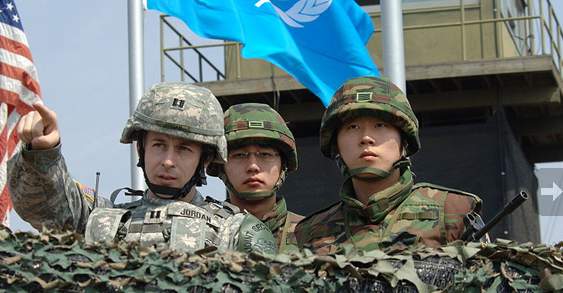
Hosts get an update on the uneasy tensions between North and South Korea. A multinational investigation concluded last week that a North Korean submarine had torpedoed the 1200 ton warship called the Cheonan back in March killing 45 people. North Korea denies involvement in the sinking, South Korean defense ministry denies that any of its ships had crossed “Northern Limit Line.” Meanwhile, the threat of sanctions against the already oppressed North Korean population escalate. South Korea and the Obama administration have agreed to initiate joint anti-submarine military exercises near North Korean border. Right now, there are almost 29,000 U.S. troops in South Korea.
Eric Sirotkin:
- When you look into the history of the conflict, and we are still technically at war, as an armistice doesn’t technically end a war only stops the shooting.
- These kind of incidences occur because you don’t have a peace regimen to fall back on.
- There is a very conservative South Korean government. Very hawkish toward the North
- The intitial report of them torpedoing the boat, there are a lot of questions, there are people who are writing about Tonkin Bay, and thinking about.
- You have a choice to march toward war or go toward peace.
- The United States at this point is ramping up the rhetoric.
- Before this situation with the South and the North, we had a lot more exchanges and things were going in a positive direction. If you think there’s no exit strategy after Iraq, look at Korea, sixty years later.
- We’re working with a campaign to end the Korean War.
Guest – Attorney Eric Sirotkin, is a member of the National Lawyers Guild and helped found Korean Peace Project. Eric Sirotkin, the founder and Director of Ubuntuworks, LLC mixes his experience as a human rights lawyer, film producer, author and peacemaker. Over the years his peacemaking activities have taken him around the world, including India, Peru, Cuba, South Africa, Japan, North and South Korea, France, Netherlands, Canada and China. He contributed to dialogue on the new Constitution in South Africa, was a UN sponsored election observer at President Mandela’s election and coordinated an international monitoring Project of the South African Truth and Reconciliation Commission.
——


Omar Khadr, First Military Commission Trial Under Obama
Last week the first military tribunal opened under the Obama administration. It is the case of Omar Khadr, the Canadian citizen, military prosecutors say that Omar Kadr threw a grenade that killed a US Special Forces medic in Afghanistan and helped build roadside bombs to use against American soldiers. We look at why the Obama Administration is putting a detainee on trial who was 15 when he was captured and whether the self – incriminating statements he has made can be used as evidence. Unless the Prime Minister acts to request repatriation, Khadr could face conviction by a jury of U.S. military officers based on evidence extracted by torture.
Attorney Jonathan Hafetz:
- International law is very clear on how you treat child soldiers. In 2001, military commissions were struck down by the Supreme Court, in 2006 in the Hamdan Case, Congress created them again.
- The hope was that Obama was going to close this chapter and end military commissions.
- Obama suspended military commissions for 4 months and brought it back.
- You have huge issues in Khadr’s case. He was a child soldier. He was accused of killing an American soldier in a fire fight. Number one, the US doesn’t seem to have any credible evidence not derived from torture or other abuse that Khadr actually killed the serviceman.
- Even if they had evidence that Khadr was responsible for the death of this serviceman, it’s not a war crime. It’s part of war but not a war crime. The US government’s theory of war is totally distorted.
- On the day of the first war crimes trial of a juvenile in US history, the day its starts and new rules are handed out, I don’t think they had enough copies to give to all the council.
Guest – Jonathan Hafetz, attorney with the ACLU’s National Security Project.
——————————————————
Civil Liberties, Extraordinary Rendition, Guantanamo, Habeas Corpus, Human Rights, Supreme Court, Torture, Truth to Power
Podcast: Play in new window | Download
Updates:
—
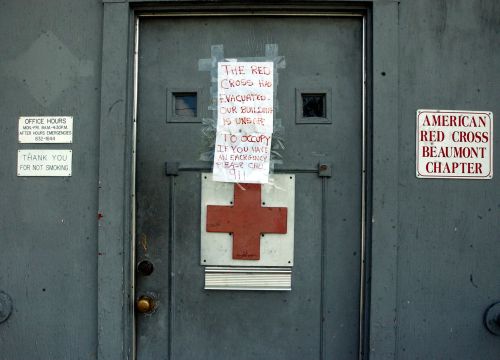

Labor Relations at the American Red Cross and It’s Impact on Employee and Donor Safety (PDF)
Hosts look at a suprising report detailing the cost cutting efforts within America’s premier disaster relief and blood donor organization, the American Red Cross. Award winning Washington based reporter Philip Dine has put together an investigative summary titled – (PDF)Labor Relations at the American Red Cross and It’s Impact on Employee and Donor Safety that enumerates the effects of cut backs that have led to bad labor relations, bungled disaster relief, mishandled blood supplies and federal fines. The investigation examines a far less publicized issue that involves the treatment of Red Cross employees and the impact this has on the organization’s work, with high turnover, younger employees and lower wages.
Philip Dine:
- Over the years, the Feds saw that the Red Cross was not living up to its promises.
- Red Cross labor relations: For years the Red Cross has been intent on degrading the training and expertise of the employees.
- At one point you needed doctors on site for blood drives, then it became registered nurses, then it became nurses on call, and then non-medically trained supervisors.
- It seems that the Red Cross wants to have more management control and lower pay and that basically means a disposable work force.
- Management mess: 10 Executive directors in 12 years.
- High turnover at the top, a budget deficit, despite the main money maker – the blood supply which they get for free. It accounts for 2/3 of revenue. Calling for an audit
- Workers increasingly hired from fast food outlets with no experience, workers see co-workers improperly inserting needles into people. More articles
- I’ve been covering labor for 25 years/ Please contact Philip Dine directly at – philipmdine@aol.com
Guest – Philip Dine author of “State of the Unions: How Labor Can Strengthen the Middle Class, Improve Our Economy, and Regain Political Influence.” Philip Dine is teaching a labor-management course at the George Washington University School of Business this fall. State of the Unions has won honorable mention for best book about labor or work of the past five years from the United Association for Labor Education.
———–
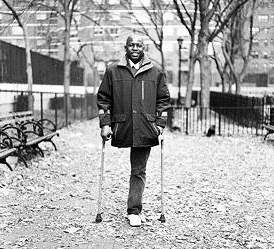

Medical Students Advocate Against Health Professional Participation in Torture
Last year it was confirmed that doctors and psychologists were directly involved in the supervision, design and execution of torture at U.S. military and intelligence facilities. This is a violation of state laws and professional ethics. These “health professionals” that were involved in the torture still hold their professional licenses to practice. Legislation introduced in New York by Assemblyman Richard Gottfried and Senator Tom Duane would reinforce existing ethical and legal responsibilities by prohibiting state-licensed doctors and other health professionals from participating in such practices. The law would also call for legal protection to resist and report any involvement in acts of torture and abuse. Last week, medical students and health professionals descended on Albany to meet with law makers to advocate the passage of this historic legislation. Physicians For Human Rights / When Healers Harm
Dr.Allen Keller:
- If you’re a health professional that participated in torture, you can lose your license.
- Health professionals were front and center and complicit in this policy of torture.
- Medical professionals provided sanitizing and rationalization for those infamous torture memos.
- During water-boarding there would be a doctor there. This is clearly a breach of medical and professional ethics.
- Licenses issued by the state. Torturers relied heavily on medical opinion.
- The state chapter of the New York Psychological Association has endorsed this bill.
- What I believe is that the interrogator looks at the health professional and says, well, if it gets out of hand, the medical professional will stop me.
- Suvivorsoftorture.org – The Bellevue/NYU Program for Survivors of Torture provides comprehensive medical and mental health care, as well as social and legal services to survivors of torture and war traumas and their family members. In the past year alone we provided these multidisciplinary services to more than 600 people from 70 countries.
Guest – Dr. Allen Keller, founder and director of the Bellevue/NYU Program for Survivors of Torture. In addition to serving as a primary care physician for many patients in the Program (Dr. Keller speaks French and Spanish). Dr. Keller oversees and coordinates the provision of medical services for Program patients, working with other primary care physicians and medical specialists affiliated with the program.
———————————————–
Civil Liberties, Criminalizing Dissent, Habeas Corpus, Human Rights, Military Tribunal, Supreme Court, Torture, Truth to Power
Podcast: Play in new window | Download
Updates:
——
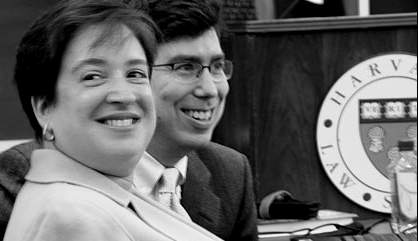
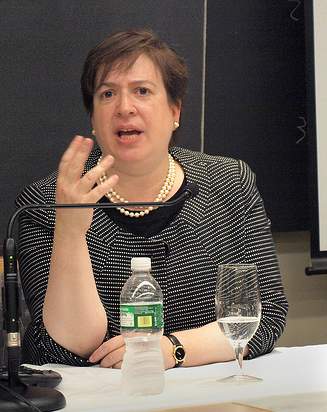
Kagan “Loves” the Federalist Society
Hosts discuss Elena Kagan’s background with Francis Boyle, Professor of law at the University of Illinois. Boyle is author of “Tackling America’s Toughest Questions.” In his article titled – – Supreme Court Pick: Kagan “Loves” the Federalist Society, – – Boyle notes Kagan explicitly endorsed the Bush administration’s bogus category of ‘enemy combatant,’ whose implementation has been a war crime in its own right. He also writes that “Kagan has actually said ‘I love the Federalist Society.’ Almost all of the Bush administration lawyers responsible for its war and torture memos are members of the Federalist Society. Read – Dean Elena Kagan: Harvard’s Gitmo Kangaroo Law School — The School for Torturers
Law Professor, Francis Boyle:
- She has fully defended the hideous Bush atrocities, civil rights, human rights, civil liberties.
- No retreat or abandonment of the Bush positions.
- She (Kagan) did write this tome in the Harvard Law Review, equivalent to the Federalist Society, unitary executive power theory of the presidency.
- She’d be a total disaster on the cases that really count for the future of the US Constitution and the Bill of Rights.
- She’s a neo-conservative and has no qualifications to speak of.
- (She) hired Jack Goldsmith, author of torture memos and helped set up kangaroo court system in Guantanamo. We are still fighting Kagan supporting the Bush war on terrorism.
- Kagan stated on National Public Radio on December 22, 2009, “I Love The Federalist Society”
- Obama and his people know that Kagan will be the spear carrier for presidential powers on the Supreme Court
- This is a very dangerous time for the future of our republic and Constitution. The statement that she cares for the common people. . . she’s an elitist snob.
- There she is promoting globalization at Harvard Law School?? Hiring people to teach “globaloney” just to lick the boots of Larry Summers? While dean at Harvard Law School, she was moonlighting at Goldman Sachs payroll.
- This is all incredibly incestuous. Unlike Bush who wasn’t a lawyer, Obama taught Constitutional Law at the University of Chicago Law School, he should know better.
Guest – Professor Francis Boyle, A scholar in the areas of international law and human rights, Professor Boyle received a J.D. degree magna cum laude and A.M. and Ph.D. degrees in political science from Harvard University. Prior to joining the faculty at the College of Law, he was a teaching fellow at Harvard and an associate at its Center for International Affairs. He also practiced tax and international tax with Bingham, Dana & Gould in Boston.
He has written and lectured extensively in the United States and abroad on the relationship between international law and politics. His eleventh book, Breaking All the Rules: Palestine, Iraq, Iran and the Case for Impeachment was recently published by Clarity Press. His Protesting Power: War, Resistance and Law has been used successfully in anti-war protest trials.
——-


In Memory of Attorney Rhonda Copelon
Hosts talk with Cathy Albisa, executive director of the National Economic and Social Rights Initiative. about the human rights legacy of Rhonda Copelon. Rhonda had a huge influence on changing international law for human rights. She founded the International Women’s Human Rights Law Clinic.
Lawyers You’ll Like series with Rhonda Copelon. Part 1 / Part 2.
Attorney Cathy Albisa:
- I worked with Rhonda at CUNY, we both co-counseled with CCR on a couple of cases.
- I met Rhonda on a car ride, a 25 hour car ride. We spent 25 hours talking about human rights in the United States. Rhonda had a huge influence on NESRI
- Rhonda never stopped lamenting Harris v McRae, she was still furious and outraged.
- The assumption embedded in that case is the court is saying, we’re not responsible as a society, the poverty of this woman. Copeland Fund For Gender Justice. Rhonda thought it was critical that a progressive gender perspective be embedded into some body of work that really looked at these gender issues in a cross cutting way, that understood the relevance of poverty, the relevance of race, the relevance of sexual minorities.
- Rhonda was not a wealthy woman, she was a law professor and saved her money. She gave 1 million dollars for this fund and that was everything. The case that she says always saved my life was Filártiga v. Peña-Irala.
- She founded the International Women’s Human Rights Law Clinic. What she did with that clinic is challenge the traditional model of human rights law coming out of the United States.
- She made no claims of being objective, she was on the side of victims, of people with similar politics to her own.
- This changed international law. Rhonda: Don’t disregard the banal, the ordinary things that actually represent deep violations.
- The way Rhonda went about things, she merged intellectual capital with a strategic ferocity and personal good will and relationship building.
- She thought it was very important that people understand they’re part of a broad social justice and human rights movement.Cathy Albisa joins us today to talk about her work with the National Economic and Social Rights Initiative and Rhonda’s work as legal adviser to the Women’s Caucus for Gender Justice.
Guest- Cathy Albisa, is a constitutional and human rights lawyer with a background on the right to health. Ms. Albisa also has significant experience working in partnership with community organizers in the use of human rights standards to strengthen advocacy in the United States. She co-founded NESRI along with Sharda Sekaran and Liz Sullivan in order to build legitimacy for human rights in general, and economic and social rights in particular, in the United States.
——————————————–
Civil Liberties, Habeas Corpus, Human Rights, Prosecution of the Bush Administration, Surveillance, Targeting Muslims, Truth to Power
Podcast: Play in new window | Download
Updates:
—-

Update on BP Oil Disaster in the Gulf of Mexico
There are reports that nearly 200 thousand gallons of crude oil is spilling into the Gulf of Mexico each day as engineers work to cap the well head. Meanwhile an oil dispersant is deployed on the water surface to break up the oil slick before it reaches sensitive estuaries and shoreline. On the edge of what human engineering can accomplish, BP says it would use a giant, 100-ton dome-like device placed over the wellhead that might collect oil gushing out of the well.
Jackie Savitz:
- 200 thousand gallons per day, possibly 10 times more than that. It’s been gushing for almost 2 weeks.
- May take another week to stop, not guaranteed. Back up plan could take months.
- Gulf of Mexico: rich area biologically, a lot of our shellfish come from there. Many of the species that make their home in the Gulf are endangered, such as sea turtles, North Atlantic Right Whale, Bluefin Tuna, Snapper, Grouper
- In many cases, these animals are using the Gulf as a nursery. We may never fully know the impacts on populations of these animals. Fishing ban.
- Why do they let companies like BP drill in these dangerous circumstances that can pose these types of impacts without a plan? The public was convinced on offshore drilling by 3 myths. 1. Lower the price of gas at pump. 2 Energy Independence. 3. Drilling was safe.
- Why would we let these companies gamble with our lifestyle with no actual return.
- We’re looking at a potential reset moment. Politicians respond to public sentiment.
- We’re working toward a ban on exploratory drilling. This was an exploratory well.
Guest – Jackie Savitz, Senior Campaign Director for Oceana’s Pollution Campaigns. Savitz has shaped and led campaigns and projects dealing with global warming pollution from ships, mercury contamination of fish, and cruise ship pollution among other issues. Savitz has a background in marine biology and environmental toxicology combined with more than fifteen years of policy analysis experience through which she has developed expertise on a variety of pollution issues involving toxic contamination, water pollution and air pollution
————

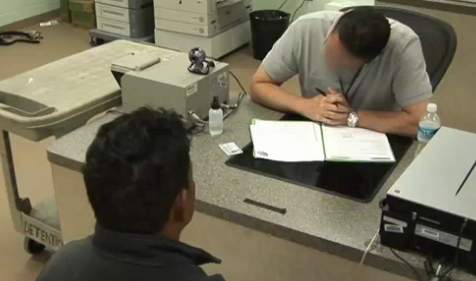
ICE Media Spin / Immigration Law Movement
Center for Constitutional Rights staff attorney, Sunita Patel joins us today to give an update on the recent six-page internal memo from United States Immigration and Customs Enforcement (ICE) that was leaked to the press. The memo was a response to civil rights groups Uncovering the Truth on ICE and Police Collaboration, but specifically aiming at their campaign of week long rallies in 14 cities. The week of advocacy was launched on Tuesday in conjunction with a FOIA lawsuit filed in the Southern District of New York by the National Day Laborer Organizing Network, the Center for Constitutional Rights and the Immigration Justice Clinic of Benjamin Cardozo School of Law to demand records relating to the Secure Communities program.
Sunita Patel:
- ICE launches media offensive against community organizations. Exposed: DHS plans to publish Op Eds by the head of ICE.
- DHS interface with local law enforcement – incentives to racial profile to determine status that could lead to: Non citizens to stay in jail even if there is police misconduct or unlawful arrest
- We want more information so communities can make reasonable decisions.
- FOIA lawsuit requests information on “Secure Communities” Program, a finger printing system operating inside jails. To be deployed to all jails in US by 2013.
- We want to stop these collaborations with local law enforcements, they make the community less safe and less secure.
Guest – Sunita Patel, Center for Constitutional Rights Staff Attorney, she is involved with racial profiling, immigrant rights and other human rights litigation. Prior to her position at CCR, she held a Soros Justice Fellowship at The Legal Aid Society, Immigration Law Unit in New York where she represented immigrant detainees in removal proceedings and worked with criminal justice and human rights groups to create independent community oversight for detention operations through public accountability boards
———————

Omaha Two / Black Panthers
We talk today with Claus Walischewski, a representative of Amnesty International in Germany. Claus has been working with Amnesty International following and investigating the case of 2 former Black Panthers Ed Poindexter and Mondo we Langa (David Rice). The case is known as the Omaha 2. Amnesty International has found that the two men were unjustly convicted of murder and have been in prison since the 1970s. Amnesty has called for a retrial or release for these men.
Claus Walischewski:
- We don’t call them political prisoners because in the US you can have a fair trial.
- They were both Black Panthers in Omaha in the 1970s.
- The police answered a 9/11 call and went to a vacant building, there was a bomb in a suitcase, the police picked it up, it detonated, and the policeman was killed. The police thought it was the Black Panthers.
- Information that the FBI were working COINTELPRO in Omaha during this time.
- An individual named Dwayne Peak was arrested for the crime, and named the two Black Panthers.
- When he saw the 2 men and was asked if they were involved, he said “no.”
- The 9/11 call was not Dwayne Peak’s voice, it’s the voice of a much older man, not a 15 year old.
- Analysis has shown it’s not the same voice, still no re-trial. Caught and arrested in 1970, Poindexter 62, Mondo 67. I’ve visted them 10 years ago, they’re both very educated, no threat to anybody.
Guest – Claus Walischewski, a representative of Amnesty International
—————————————————
Civil Liberties, Human Rights, Prison Industry, Surveillance, Truth to Power
Podcast: Play in new window | Download
Updates:
—-
SB-1070 v. Human Rights
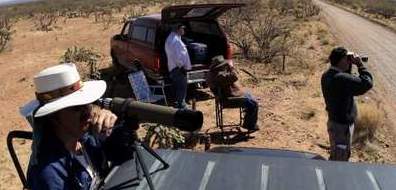
Today we get a perspective from the Arizona border on how the state’s new immigrant law will impact human rights. Many have expressed outrage at the state law that would force police to determine the immigration status of someone suspected of being an undocumented immigrant. Jennifer Allen, Executive Director of Border Action Network joins co-host Heidi Boghosian. Border Action Network was formed in 1999 and members work with immigrants and border communities in Southern Arizona to ensure human rights are respected, and human dignity upheld.
Jennifer Allen – Border Action Network:
- SB 1070 is a broad stroke, back door approach of enforcement of federal immigration laws.
- Other components of the legislation, include criminalizing day laborers and those who seek to hire them.
- Other provisions in the bill would require local cities, towns, agencies to save information about people’s immigration / citizenship status and then share that information with other agencies.
- Law enforcement being required, with lawsuits threatened against them, to ask people about their immigration status, based on their appearance. Indeed we do need a sensible immigration policy. We need borders that are safe, secure, orderly.
- If SB 1070 is not stopped in Arizona, it will surely spread throughout the country.
- SB 1070 fiscal analysis for 1 county in Arizona: would cost 10s of millions of dollars for trying to implement law.
- We’ve been calling on the Obama Administration to oppose this legislation.
- This law is a combination of six or seven pieces of legislation that the bill’s sponsor, Senator Russel Pierce has been trying to get through the Arizona legislature, the last 5 years.
- Targets of attrition, wearing people out so they leave Arizona.
- It’s not motivated by public safety and increasing security, it’s much more about pushing families out of the state of Arizona.
- A strong presence of white nationalists groups in Arizona. Minutemen style, state sponsored vigilante group – Border Security Commission Bill.
Guest – Jennifer Allen – Executive Director of Border Action Network
———

William Kunstler: Disturbing the Universe on DVD
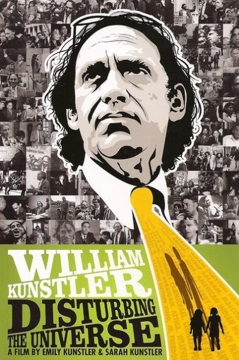
We are excited to welcome back Sarah Kunstler, daughter of the late radical civil rights lawyer William Kunstler, and co-director of a biographical documentary about her father, titled William Kunstler: Disturbing the Universe. The movie is now available on DVD, with extras. In our last interview, Emily told us that it was frightening for us to share the film with the world. She says the first 10 times watching with the audience, she clenched fists, couldn’t even look. The movie is the work of 4 years, but really 30 years says Sarah. Since they were children, she and her sister have been collecting footage and material for the film.
The movie has been described as a sensitive, truthful and insightful film about a man who stood at the center of a confrontational movement and became the public spokesperson for communities standing up to injustice. The story of this radical attorney is told by his daughters in an intimate narrative, from the Chicago 7 to the Attica trials, then the American Indian Movement’s occupation of Wounded Knee.
Sarah Kunstler:
- We had a theatrical run in about 25 cities.
- Chicago 8, DVD Extra: What you hear is someone unafraid of being held in contempt, someone outraged by the treatment of his clients the court room is an intimidating place. He didn’t let the austere surroundings get to him.
- What I’ve learned since making the film, is my relationship with my father continues.
- When Emily and I started making this film, we thought it would be something we would be getting over.
- This film was written in pieces, it was a struggle, I didn’t know how to write around something or Emily and I would fight in how to say something.
- He seems that he was painfully aware that he was being followed from state to state. The FBI had been listening to his speeches and trying to indict him with trying to incite a riot.
- He makes a differentiation between picayune violence and real demonstration.
Guest – Sarah Kunstler, co-producer and attorney. Sarah Kunstler graduated from Yale University with a BA in Photography in 1998 and from Columbia Law School with a JD in 2004. She is currently a criminal defense attorney practicing in the Eastern and Southern Districts of New York. Emily, her sister is a film major and former video producer for Democracy Now. They recently won the L’Oreal Women of Worth Vision Award at the 2009 Sundance Film Festival and the Special Jury Prize for Best New Filmmakers at the Traverse City Film Festival.
————————————————————————————————