CIA Sponsored Terror, Civil Liberties, Criminalizing Dissent, Habeas Corpus, Human Rights, NSA Spying, Political Prisoner, Surveillance, Targeting Muslims, Truth to Power
Podcast: Play in new window | Download
This is Not Populism : John Bellamy Foster
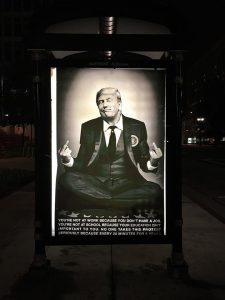
Is Trump a neofascist? Thoughtful analysts on the left like Cornell West, Noam Chomsky, and Judith Butler think he is. But mainstream liberal commentators refuse to associate the Trump phenomena with fascism. They call him a right wing populist. What is neofascism? Right wing Populism? Does it really matter what Trump is called? The great German playwright and political thinker who lived in Germany during Hitler’s reign, Berthold Brecht, asked in 1935: “How can anyone tell the truth about fascism, unless he’s willing to speak out against capitalism, which brings it fourth?” We speak today with John Bellamy Foster, the editor of the venerable magazine “Monthly Review”. He wrote the lead article in the current June 2017 issue titled “This Is Not Populism.”
Guest – John Bellamy Foster is editor of Monthly Review and professor of sociology at the University of Oregon. He has written widely on political economy and has established a reputation as a major environmental sociologist. He is the author of Marx’s Ecology: Materialism and Nature (2000), The Great Financial Crisis: Causes and Consequences (with Fred Magdoff, 2009), The Ecological Rift: Capitalism’s War on the Earth (with Brett Clark and Richard York, 2010), and The Theory of Monopoly Capitalism: An Elaboration of Marxian Political Economy (New Edition, 2014), among many others.
—-
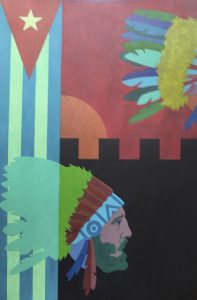
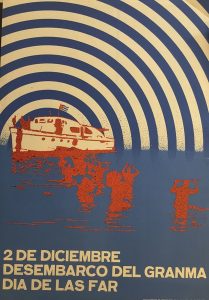
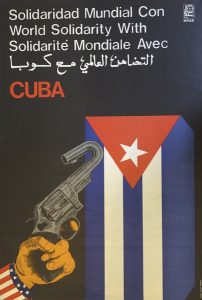
US Normalization of Relations With Cuba Reversed
On June 15th President Donald Trump traveled to Miami to condemn Cuba for gross human rights violations while he signed an executive order aimed at reversing the process of normalization of relations between Cuba and the United States that has been going on since December 2014.
Trump spoke to a dwindling base of hardened reactionaries in Miami. He accused Cuba of “spreading violence and instability “as justification to increase restrictions on the travel of Americans to Cuba and to double down on the blockade by eliminating any business dealings with Cuban state run enterprises administered by the Cuban military.
Now, for an American citizen to go to the small island 90 miles from Florida they must go in a group with a minder and report everywhere they travel and with whom they meet.
Since the success in 1959 of the Cuban revolution the United States government has been trying to reverse it and restore capitalist property relations on the island of 11 million people.
The Cuban revolution truly was a revolution and not in the Madison Avenue sense. It was not superficial but profoundly fundamental. The 99%; poor peasants, city workers, and intellectuals overthrew the 1%; the super rich, the large landowners, the owners of the utilities in mines, and their American partners – the United States and trained and supplied army and the police. The 99% took back their own country and the 1% largely move to Miami. 50,000 Cubans died in their struggle.
From then until now the policy and practice of the United States government has been to take Cuba back, change the regime, and re-introduce capitalist property relations by any means necessary.
At first, US backed terrorist torched sugar crops because land was taken from the rich and redistributed to the peasants. The US supported the assassination of teachers during the hugely successful literacy drive. The CIA introduced dengue fever and swine flu killing children and livestock awake. They supported a full-scale military invasion in 1962 known as the Bay of Pigs. It failed. The US initially succeeded and isolating Cuba politically, diplomatically, and economically.
Latin American and Caribbean governments were overthrown by the CIA if they didn’t go along with this policy. Only Mexico held out. But this tactic didn’t work. Cuba overcame the isolation. The US itself became isolated for its hostility. Then in 2014 the organization of American states told the United States that unless it allowed Cuba to re-join the United States itself was unwelcome.
So the USA, led by President Obama, changed tactics, but not its goal to restore capitalism to Cuba. In July 2015 Cuba was recognized. Embassies were opened in Havana in Washington. Trade and travel restrictions were eased.
Guest – Sandra Levinson, President and Executive Director of the Center for Cuban Studies. She was one of the Center’s founders in 1972. In 1991 Levinson spearheaded a lawsuit against the U.S. Treasury Department which resulted in legalizing the importation of original Cuban art. She is currently directing works at the Cuban Art Space, which she founded in 1999, to properly house and archive the thousands of posters, photographs and artworks which the Center has collected in the past 42 years.
Contact the Center for Cuban Studies at 212.242.0559.
———————————————————————————————
Academic Freedom, CIA Sponsored Terror, Civil Liberties, Climate Change, Criminalizing Dissent, Crony Capitalism, FBI Intrusion, Habeas Corpus, Human Rights, Iraq War, Military Tribunal, NSA Spying, Political Prisoner, Supreme Court, Surveillance, Truth to Power
Podcast: Play in new window | Download
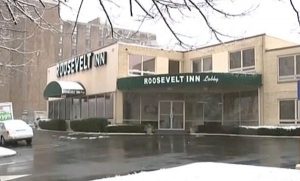
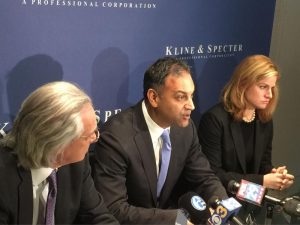
Sex Trafficking Lawsuit Against Philadelphia Motel
Prosecutors have dubbed a Northeast Philadelphia motel the city’s “epicenter of human trafficking.” Recently, a lawsuit was brought against the Roosevelt Motel for the pimping of a teenage girl in one of its rooms for a period of two years. It’s the first lawsuit under a 2014 state law permitting victims of sex traffickers to sue hotels and motels where abuse occurs. The suit was filed on behalf of a 17-year-old girl known as M.B., who was sold into sexual slavery at the Northeast Philadelphia motel at age 14. The lawsuit alleges that she was prohibited from leaving and was forced to commit sex acts with approximately 1,000 men. The hotel is known by the District Attorney as the site of most trafficking investigation. The National Human Trafficking Hotline says that 7.5 thousand human trafficking cases were reported in 2016, including 151 in Pennsylvania and 193 in New Jersey. Almost three-quarters of those involve sex trafficking and nearly a third of sex-trafficking cases occurred in hotels and motels.
Guest – Attorney Nadeem Bezar of the law firm Kline & Specter in Philadelphia. His practice concentrates on medical negligence, catastrophic personal injury, and cases involving child abuse and human trafficking, sexual assault and Title IX violations on college and university campuses.
—-

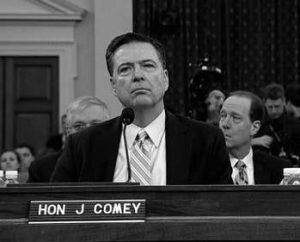
Whistle-blower Protections: FBI Director James Comey
Nearly 20 million television viewers tuned in to hear former FBI Director James Comey testify before Congress on June 8, and explain that he recorded his conversations with President Trump because he did not trust him. Despite the Trump administration’s assertions to the contrary, most legal experts say that former FBI Director James Comey’s sharing the memos about his interactions with Donald Trump is perfectly legal. Several whistleblower attorneys are among those asserting that Comey’s handing over memos to a friend to be leaked to the press violated no laws. The information, they say, was neither classified nor secret as a matter of a federal law. And Comey revealed a matter of public interest and had a right to expose these facts anonymously.
Guest – Louis Clark, Executive Director and Chief Executive Officer of the Government Accountability Project in Washington, DC. The G.A.P. is the nation’s leading whistleblower protection and advocacy organization. It litigates whistleblower cases, helps expose wrongdoing to the public, and promotes government and corporate accountability. For four decades, GAP has assisted more than 6,000 whistleblowers.
—-


Politics, Influence And Journalism: Attorney Dave Saldana
For many, the word Watergate is synonymous with political corruption. The scandal was revealed when five burglars were caught by Washington police in the Democratic National Committee’s office on Jun 17, 1972, and ended with the resignation of President Nixon in 1974. Richard Nixon was the first American president who felt compelled to resign because of the severity of the situation. The role of the press was critical in the episode, beginning with the Washington Post’s front page reporting. At first, the role of the television—with the notable exception of CBS, was scant.
The credit of responsible reporting goes largely to Washington Post editor Katherine Graham, and the Co-editor, Ben Bradlee as well as reporters Woodward and Bernstein. They covered the story at great threat to their lives and their families. The president and his staff in the White House made every possible effort to resist and downgrade the true news stories of the reporters. The Nixon staff had threatened the journalists with verbal attacks. It also created the Washington Star to counter the Washington Post and anti-government reporting. Nixon also sought the help of Federal Communication Commission to ban two TV channels in Florida. The presidential administration had devised such plans that the government officials began to avoid meeting Woodward and Bernstein.
Guest – Attorney Dave Saldana is an award-winning journalist and attorney, and longtime member of the National Lawyers Guild.
——————————————————-
CIA Sponsored Terror, Civil Liberties, Habeas Corpus, Human Rights, NSA Spying, Surveillance, Torture
Podcast: Play in new window | Download
FBI Director James Comey Termination Fall Out
President Donald Trump’s firing of FBI Director James Comey has many concerned about a possible impending threat to the independence of United States intelligence institutions. Trump’s action represents his most serious violation of political norms to-date. While the president does have the legal authority to fire the FBI director, who serves a 10-year term, it is usually only done under extraordinary circumstances. The administration has said publicly that Comey was fired because he mishandled the investigation into Hillary Clinton’s emails. But that stands in stark contrast with the fact that in January Trump asked Comey to remain in his post. Perhaps more germane is that the dismissal comes less than two months after Comey announced in March that he has been overseeing an investigation into whether the Trump campaign and Trump’s associates coordinated with Russia to influence the 2016 election.
A few days before Comey’s dismissal, Matthew Rosenberg and Matt Apuzzo of the NY Times reported that Comey: “asked the Justice Department for a significant increase in resources for the bureau’s investigation into Russia’s interference in the presidential election.” Trump will now be able to appoint a new FBI director who will run the Russia investigation — an investigation that the president has repeatedly complained about. This has drawn comparisons to Richard Nixon’s efforts to cut off Watergate investigations.
Guest – Attorney Mike German a former FBI agent and a fellow with the Brennan Center for Justice’s Liberty and National Security Program. His work focuses on law enforcement and intelligence oversight and reform. Prior to joining the Brennan Center, Mike served as the policy counsel for national security and privacy for the American Civil Liberties Union Washington Legislative Office. A sixteen-year veteran of federal law enforcement, Mr. German served as a special agent with the Federal Bureau of Investigation, where he specialized in domestic terrorism and covert operations.
—-
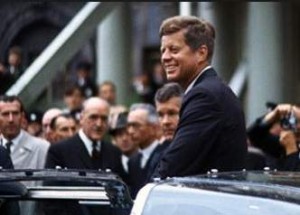
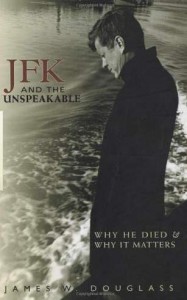
JFK and the Unspeakable: Why He Died and Why It Matters by Jim Douglass
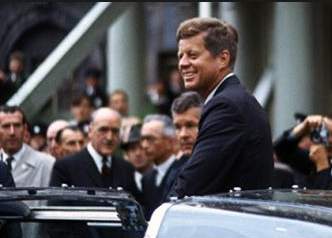
JFK and the Unspeakable is the first book of 3 on the assassinations of the 1960s. Orbis Books has commissioned author James W. Douglass to write about the murders of JFK, Malcolm X and Martin Luther King, and his the third will be on the assassination of Bobby Kennedy. The heart of JFK the Unthinkable, is not how Kennedy was killed or how Kennedy became a threat to the systemic war machine, but why DID Kennedy die? Author James Douglass says Kennedy knew that he would die and had the guts to stand up to the system and take the hit. This narrative was lost for decades, obscured by disinformation about Kennedy’s character and the conspiracy of his assassination. One review summarizes Douglass’s book in this way : JFK’s belated effort to turn America from an armed culture of victory to a member of an international peaceful world was shot down in Texas for a reason.
Jim Douglass:
- John F. Kennedy’s experience in WWII: He was in the South Pacific, he volunteered. He was on that PT boat.
- What happened on that PT boat, is that it got split into two by a Japanese destroyer. He lost brothers and friends at that time. An extraordinary experience being adrift on the ocean warning other PT boats. The experience create a distrust in military authority.
- He said that he wanted to splinter the CIA into a thousand pieces and scatter to the winds.
- As Kennedy said to his friends, “they figured me all wrong.”
- The Unspeakable: the kind of evil and deceit that seems to go beyond the capacity of words to describe. The midst of war and nuclear arms race, the assassinations of Kennedy, Martin Luther King and Malcom X that the term was used.
- JFK’s vision is articulated in the address June 10, 1963, arising from the turnaround of the missile crisis and Bay of Pigs. He wanted to move step by step into a disarmed world.
- Nikita Khrushchev put that speech all over the Soviet Union. The Cuban Missile Crisis is a deeply misunderstood part of our history, because it’s usually portrayed as Kennedy going to war with Nikita Khrushchev and beating him.
- The truth was that Kennedy and Nikita Khrushchev were in over their heads, the US generals wanted nuclear war, because they had more warheads than the Soviets.
- Nikita Khrushchev: We now have a common enemy from those pushing us toward war.
- At that point the Cold War turned upside down because Kennedy and Khrushchev became closer to each other than either was toward their own military power system.
- Vietnam: Kennedy’s military people would not give him an exit policy. He signed the withdrawal order from Vietnam before he was assassinated.
- His friends said that he had an obsession with death. It was not an obsession but a real assessment that he was going to die. If you try to turn around a national security state that is dominating the world,
- and you do so as president of the United States, of course you’re going to die. Kennedy knew that.
- The book is a story on the deliberate destruction of hope, the vision of change, a turning of this country all of which was happening and had to be stopped. US Agencies killed Dr. Martin Luther King – 1999 Verdict
- We’re in the same scene right now with Petraeus and McChrystal setting up Obama. They were dictating terms to Obama, unlike Kennedy, he did not face them down.
- We need to get out ahead of Obama so that he can do something.
Guest – James W. Douglass, author and a longtime peace activist and writer. James and his wife Shelley are co-founders of the Ground Zero Center for Nonviolent Action in Poulsbo, Washington, and Mary’s House, a Catholic Worker house of hospitality in Birmingham, Alabama.
CIA Sponsored Terror, Civil Liberties, Criminalizing Dissent, Gaza, Habeas Corpus, Human Rights, NSA Spying, Political Prisoner, Surveillance, Targeting Muslims, Truth to Power, War Resister
Podcast: Play in new window | Download
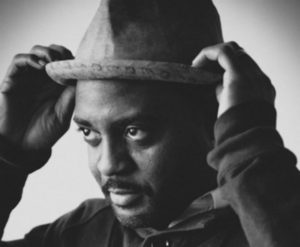
Reginald Dwayne Betts: Bastards of the Reagan Era
Toni Morrison said, “All of that art-for-art’s-sake stuff is BS. Are you really telling me that Shakespeare and Aeschylus weren’t writing about kings? All good art is political! There is none that isn’t. And the ones that try hard not to be political are political by saying, ‘We love the status quo.’ We’ve just dirtied the word ‘politics,’ made it sound like it’s unpatriotic or something.” “That all started in the period of state art, when you had the communists and fascists running around doing this poster stuff, and the reaction was ‘No, no, no; there’s only aesthetics.’ My point is that is has to be both: beautiful and political at the same time. I’m not interested in art that is not in the world. And it’s not just the narrative, it’s not just the story; it’s the language and the structure and what’s going on behind it. Anybody can make up a story.”
Guest – Reginald Dwayne Betts, an award-winning poet. An honors student and class treasurer in high school, at age 16 he and a friend carjacked a man who had fallen asleep in his car. Betts was charged as an adult and spent more than eight years in prison, where he completed high school and began reading and writing poetry. Betts’s first collection of poems, Shahid Reads His Own Palm won the Beatrice Hawley Award, and his memoir, A Question of Freedom: A Memoir of Learning, Survival, and Coming of Age in Prison, received the 2010 NAACP Image Award. He’s had a Soros Fellowship, a Radcliffe Fellowship and a Ruth Lilly Fellowship. In addition to attending Yale Law school, Betts was appointed by President Obama to the Coordinating Council of the Office of Juvenile Justice and Delinquency Prevention.
—
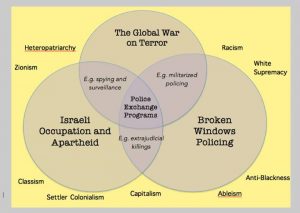
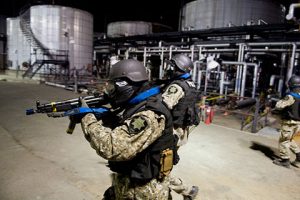
Jewish Voice For Peace: Deadly Exchange: Ending US–Israel Police Partnerships, Reclaiming Safety
Like the United States, where it’s colonists settled upon, displaced, and controlled the Native American population Israel is also a settler colonialism state. It drove 750,000 Palestinians out when it was just established in 1948 and seized control of the land on the West Bank of the Jordan River and Gaza in 1967 and has militarily occupied and controlled the Palestinian population of nearly 2,000,000 there since. Israel’s settler colonialism experience has provided it with valuable lessons and skills ripe for export to other state powers confronted with challenges of control. Despite the United Nations Security Council condemning Israel it has continued it’s illegal defiant and hostile commitment to expansion.
How does it get away with this? Jeff Halpern in his book “War Against the People” has written that “of the 157 countries with which Israel has diplomatic relations virtually all the agreements and protocols Israel has signed with them contain military and security components.” The government of the United States and Israel have exchange programs that bring together American police, including the New York City police, ICE, the Border Patrol, and the FBI on the US side and soldiers, police and border agents from Israel. We talk with Ari Wohlfeiler one of the leaders of Jewish Voice for Peace. JVP has recently launched a campaign called “Deadly Exchange: Ending US – Israel Police Partnerships, Reclaiming Safety.” JVP has over 200 online supporters and over 60 chapters.
Guest – Ari Wohlfeiler, Deputy Director of JVP. He’s from Oakland, CA and before coming to JVP, he was the Development Director at Critical Resistance, and has worked extensively with grassroots organizations fighting the prison industrial complex.
—————————————
CIA Sponsored Terror, Civil Liberties, Human Rights, NSA Spying, Political Prisoner, Surveillance, Truth to Power, War Resister
Podcast: Play in new window | Download

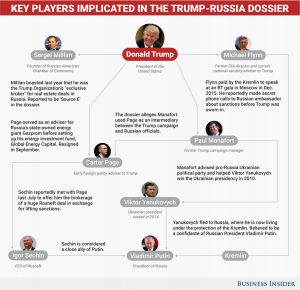
President Donald Trump, Foreign Investment And Russian Oligarchs
There has been a huge clamor about Donald Trump’s election campaign getting help from Russia. But so far, no concrete evidence of this has been unearthed and the claim is as yet unsubstantiated. Last week, former FBI director Mueller, was named to head an investigation of Trump’s ties to Russia. If this goes wide enough it will probably look into Donald Trump’s economic connections with billionaire Russians. In 2008, Donald Trump Jr said wealthy Russians were the most important investors in his fathers’ businesses. Our guest today, attorney James Henry, and economic investigative reporter, has written that after Donald Trump’s many bankruptcies, he was able to finance his businesses with funds from billionaire Russian oligarchs who had amassed great wealth by stealing Russian natural resources including gold, oil, natural gas and aluminum. When the Soviet Union broke up in 1991, publicly owned resources were granted by private owners. Some $ 1.3 trillion was taken out of the country and used by these oligarchs in foreign investments, including Trump’s properties. It is there for a possible that an investigation of Donald Trump will show that he violated US laws against racketeering, money laundering, and associated with organized crime figures?
Guest – Attorney James S. Henry, is a leading economist, attorney, consultant, and investigative journalist, who has written and spoken widely on the problems of tax justice and development finance. He can be found on Twitter at @submergingmkt. In the not-for-profit sector, Mr Henry has served as Senior Fellow, Columbia University Center for Sustainable Investment, where he has taught a graduate level workshop on Haiti and Banking for the Poor in the School for International and Public Affairs; Senior Advisor and global board member, Tax Justice Network; founder and steering committee member, TJN-USA; and Interim Chairman, Global Alliance for Tax Justice, a coalition of 81 NGOs in 37 countries.
—-
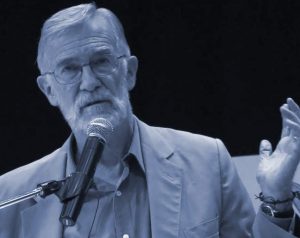
Ray McGovern: Leaked Not Hacked; US Deep State v.Trump
Former FBI director Robert Mueller has been appointed to investigate the allegation that Russia colluded with Donald trumps campaign in order to get him elected. While there is no concrete evidence of this, allegation is taken for good coin in the major media. Powerful elements within the state apparatus – the FBI, CIA, NSA, – have been pursuing what has been called a “soft coup” against Trump using tactics from former FBI director J Edgar Hoover’s playbook. These include links that put the White House on the defensive; providing the imagery of criminality (without proof) ; and getting the rest of the political establishment and the media to turn on the administration. Donald Trump ran for office putting forward his position that United States should reach a better understanding with Russia. This has been challenged by what has been referred to as the deep state, that is, the intelligence organizations in the military industrial complex. New York state Senator Charles Schumer said last month that if you mess with them, “the intelligence agencies have six ways from Sunday to get you.” Our guest, Ray McGovern, has written that “President Trump has entered into a high-stakes gamble in confronting the deep state and it’s media allies over the allegation of his colluding with Russia.”
Guest – Ray McGovern was a high-ranking CIA analyst for 27 years. His expertise was Russia and he had one on one briefings daily with President George Bush. He broke with the government under George W. Bush over the cooked intelligence used to rationalize America’s illegal war of aggression against Iraq and helped form the organization Veteran Intelligence Professionals for Sanity. His group issued a memorandum to President Obama which demonstrated that the Russians did not hack into the computers of the Democratic Party or Hillary Clinton and did not therefore influence the American election. http://raymcgovern.com/
CIA Sponsored Terror, Civil Liberties, Habeas Corpus, Human Rights, NSA Spying, Surveillance, Truth to Power, War Resister
Podcast: Play in new window | Download
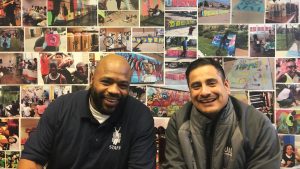

Chicago Gang Intervention Programs: BUILD
Attorney General Jeff Sessions recently vowed that the Justice Department has zero tolerance for gang violence. “If you are a gang member, he said, “we will find you,” “We will devastate your networks. We will starve your revenue sources, deplete your ranks, and seize your profits. We will not concede a single block or a street corner to your vicious tactics.” President Trump tweeted his approval of Sessions comments, saying “I promised to get tough and we are!” The administration’s efforts to crack down on gangs will mean more arrests and lengthy incarceration for young persons with little attention being paid to alternatives to detention and programs that will offer productive and meaningful choices.
In Chicago, where gang violence has received a great deal of media attention, one community-based organization has been working in some of the city’s toughest neighborhoods to stem violence before it interferes with young peoples’ potential. In 1969 BUILD began working with gang-affiliated teenagers and now serves nearly 3,000 youth each year offering targeted services designed to prevent kids from joining gangs and also working with gang-involved youth to develop alternatives to this lifestyle. BUILD also works with young persons who are in contact with the justice system to provide alternatives to detention and assist with successful re-entry.
Guest – Martin Anguiano, BUILD’s Manager of Intervention Services . Martin has worked at BUILD since 1994. He oversees BUILD services to young people involved in, or at risk for involvement in, gangs and the juvenile justice system. He is trained in trauma-informed practices and certified in peace circle keeping. Martin holds a B.A. in Psychology from the University of Illinois at Chicago.
—-
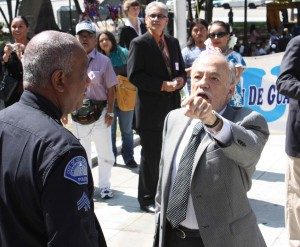
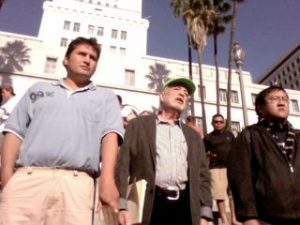
Attorney Jim Lafferty On Trump Administration
Donald Trump has been in office now for over 100 days. His cabinet and closest advisers constitute a group of generals, multimillionaires, and billionaires. It is the richest cabinet in American history. His closest advisers and members of his family, an organizational set up that more resembles the mafia than past executive office inhabitants. His predecessor, Barack Obama, was a disappointment to many people who supported him eight years ago. He presided over US wars in the Middle East. His government overthrew the government of Libya, the Ukraine, and Honduras. Domestically he failed to prosecute those guilty of torture, which is illegal under American and International law. He failed to close the offshore prison in Guantánamo, Cuba. He failed to prosecute the bankers who crashed the American economy in 2008. He deported more people than any other president in American history. Now, with Donald Trump in office, people are asking the question, is he qualitatively different than Obama. What is the continuity and what is the discontinuity between the Obama and Trump administrations?
Guest – Los Angeles National Lawyers Guild attorney Jim Lafferty. Jim participated as a lawyer during the civil rights movement in Mississippi. He is a former executive director of the National Lawyers Guild. He was a central leader in the movement against the war in Vietnam. For the last 30 years he was the head of theLos Angeles National Lawyers Guild, growing it into one of the most active an influential chapters in the United States.
—-
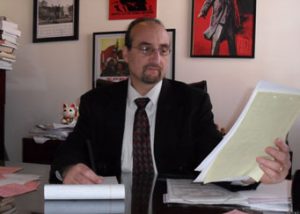
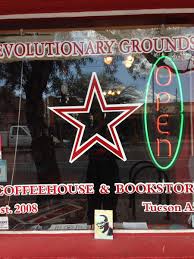
Lawyers You’ll Like: Paul Gattone
Arizona has long been Ground Zero for immigration controversies. It’s a state with one of the harshest immigration laws in the country, Senate Bill 1070. In the state capitol of Phoenix, immigrant rights groups have dedicated the past two decades to fighting the notorious Sheriff Joe Arpaio, known for racial profiling, late-night raids and a “tent city” outdoor prison. Arpaio was voted out of office in 2016. But the state still has its share of threats to civil rights.
Guest – Attorney Paul Gattone of Tucson, Arizona. A Chicago native, Paul has spent over two decades in Ariona as a criminal defense attorney at the People’s Law Center and now in private practice. A longtime member of the National Lawyers Guild, Paul’s focus is in advancing and defending civil rights. He and his wife Joy also run a radical bookstore called Revolutionary Grounds.
——————————————————-