Civil Liberties, Civil Rights, Freedom Of Speech, Human Rights, police accountability
Podcast: Play in new window | Download
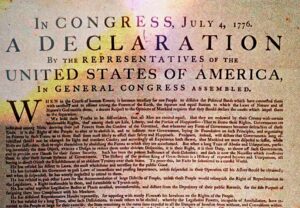
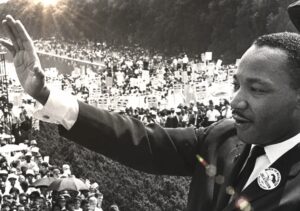
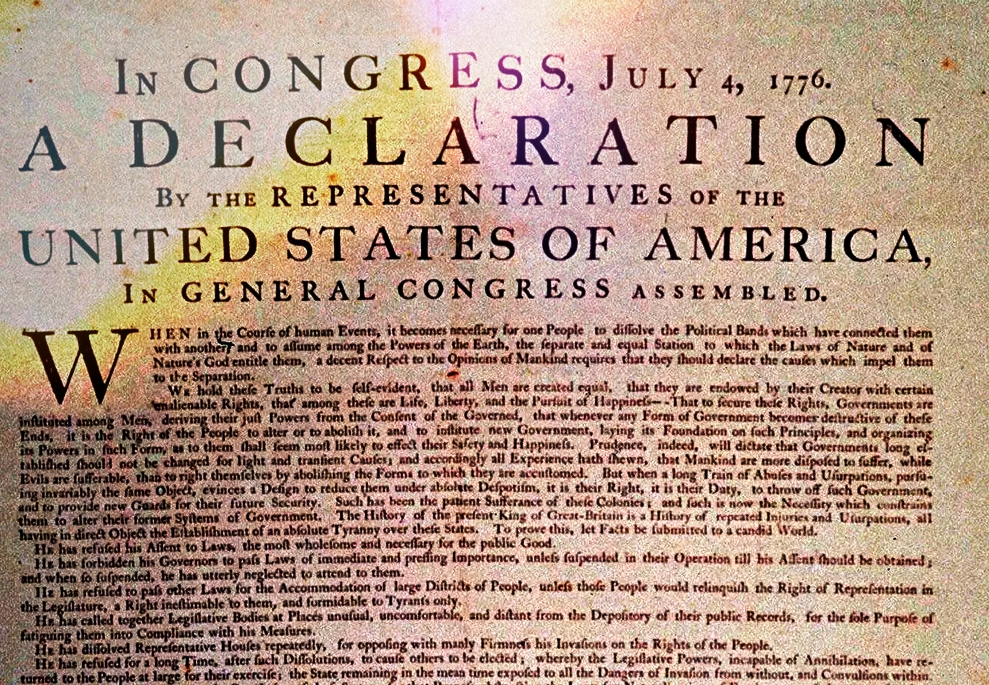
250th anniversary of the Declaration of Independence Signing
2026 is the 250th anniversary of signing of the Declaration of Independence and the founding of the United States of America. Festivities and events are being organized all over the country all year long. Here at Law and Disorder, we intend to invite guests throughout 2026 who can help us explore the Founding of our country in a way that is truthful, authentic, and comprehensive.
But like so much else in these dangerous times, President Donald Trump is ruining this rare opportunity to celebrate the enduring values of pluralism, justice, and equality on which this country was founded.
Instead, Trump is enlisting the entire federal government and billions of public and private dollars into converting this national anniversary into an opportunity to whitewash American history, pursuing his obsession to destroy diversity, equity and inclusion; crushing institutions like the Smithsonian Museums, that for 175 years have served as “a welcoming place of knowledge and discovery for all Americans;” and imposing his reactionary vision of White Christian nationalism.
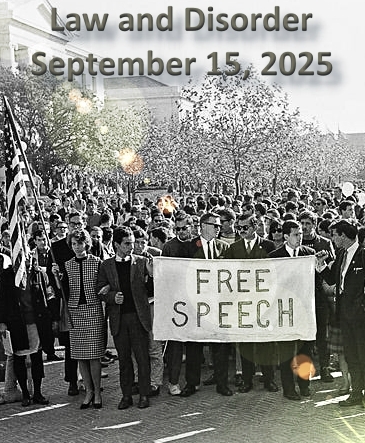
Seeing how Trump is already exploiting the 250th anniversary of the Founding by peddling his distorted version of American history, our very own co-host Steve Rohde has been investigating what Trump is doing and how the rest of us need to redouble our efforts to immerse ourselves and the American people in an accurate and comprehensive account of our history.
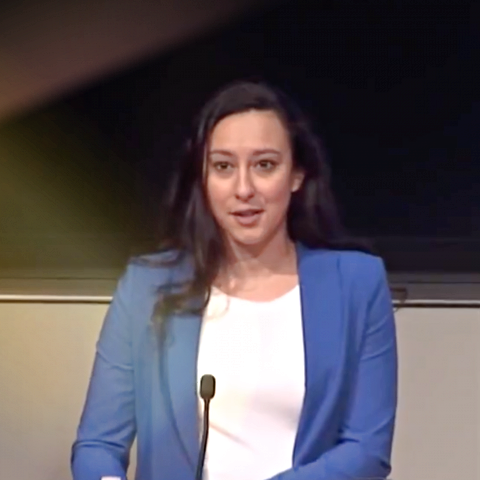
Guest – Stephen Rohde is a writer, lecturer and political activist. For almost 50 years, he practiced civil rights, civil liberties, and intellectual property law. He is a past chair of the ACLU Foundation of Southern California and past National Chair of Bend the Arc, a Jewish Partnership for Justice. He is a founder and current chair of Interfaith Communities United for Justice and Peace; member of the Board of Directors of Death Penalty Focus, and a member of the Black Jewish Justice Alliance. He is the Special Advisor on Free Speech and the First Amendment for the Muslim Public Affairs Council. Mr. Rohde is the author of the books American Words of Freedom: The Words That Define Our Nation and Freedom of Assembly and numerous articles and book reviews on civil liberties and constitutional history. He is a co-host of Law and Disorder Radio and Podcast. His new podcast Speaking Freely: Exploring the First Amendment with Stephen Rohde is available on Spotify. Rohde’s articles and book reviews can be found at Muck Rack | For journalists and public relations.
—-
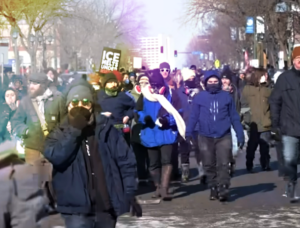
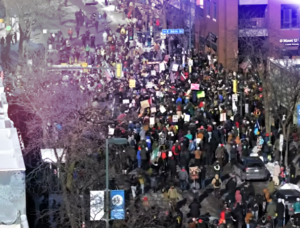
Protesters Converge in Minneapolis Amid Tragic Aftermath
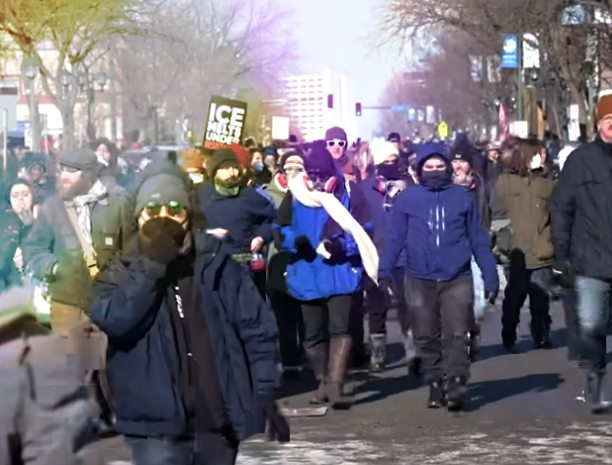
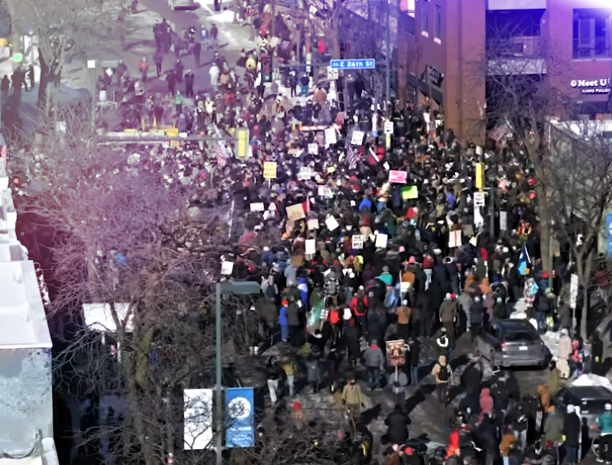
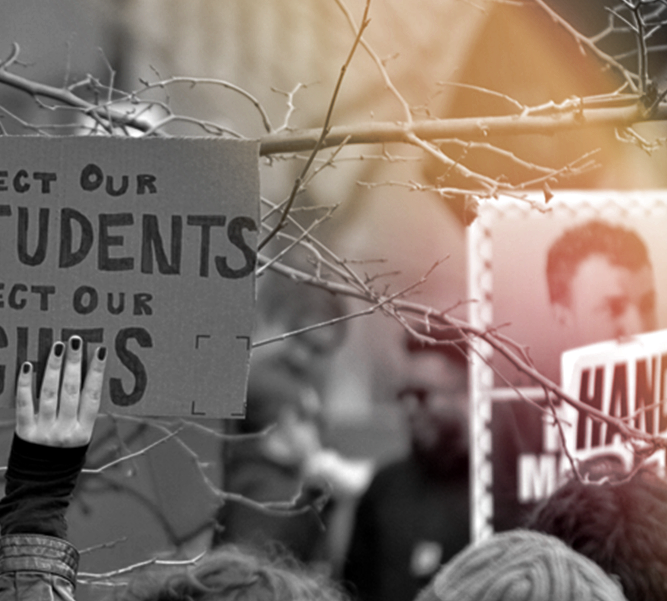
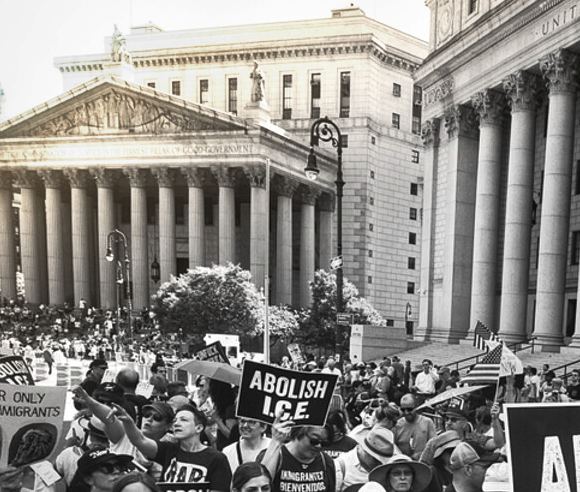
On a sub-zero afternoon on January 23, thousands gathered in Minneapolis to demand an end to ICE deportations and to confront the human cost of immigration enforcement. Many called openly for the abolition of ICE. Faculty, students, union members, and community organizers stood shoulder to shoulder in the freezing cold—bundled beyond recognition, passing out signs and hand warmers, chanting “ICE OUT” as Prince played over loudspeakers. It was a show of collective resolve: people braving the cold to insist on dignity, safety, and solidarity.
What made the day especially striking was how far people traveled to be there. Faculty drove hours across Minnesota; others flew in from across the country. Among them was Sandor John, a faculty leader from the Professional Staff Congress at CUNY, who came with students to stand alongside Minnesota educators and labor organizers. A small button reading “Education Not Deportation” captured the deeper message: this was not only about immigration policy, but about who belongs and whose labor is valued.
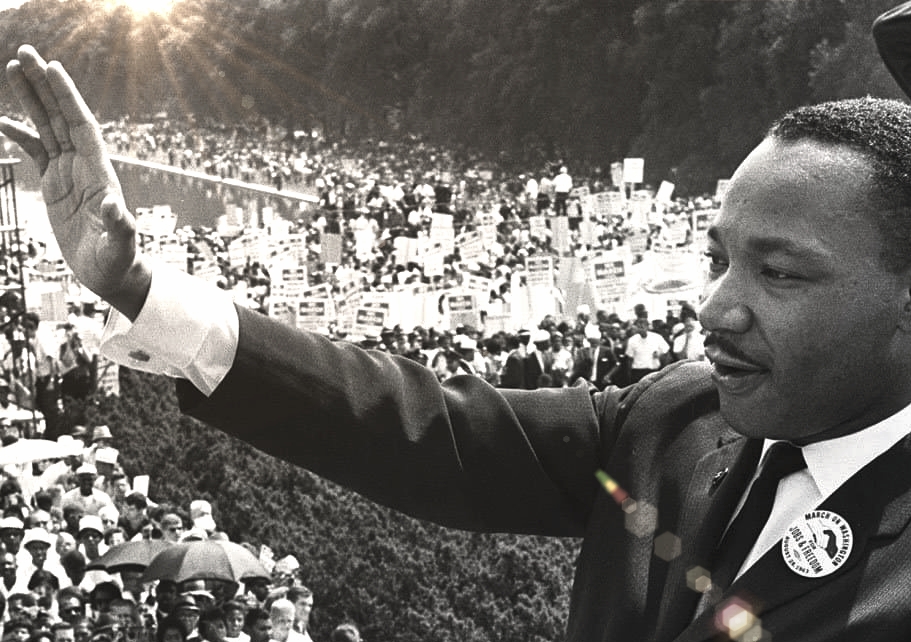
The conversation unfolded in the shadow of tragedy. The march occurred just one day before Minneapolis became the scene of another fatal encounter between federal immigration agents and a resident—37-year-old ICU nurse Alex Pretti, who was shot and killed by federal agents during an enforcement action. His death, and that of Renee Good, underscored that immigration enforcement is not an abstract policy debate. It’s a system with deadly consequences for people, including Black Americans, in the community.
Guest – Sandor John joins us today to describe what he saw on the ground in Minneapolis. Sandor is on the faculty at the City University of New York’s Hunter College. He’s a member of the Professional Staff Congress (PSC) faculty/staff union there and of the PSC’s Immigrant Solidarity Working Group.

——————-
Civil Liberties, Civil Rights, Criminalizing Dissent, Freedom Of Speech, Human Rights, police accountability, U.S. Militarism
Podcast: Play in new window | Download
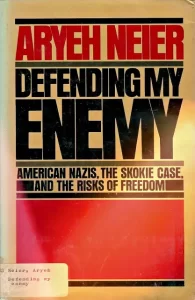
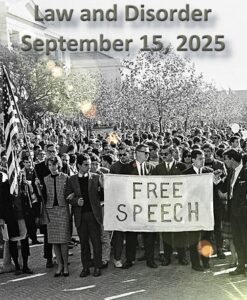
Defending My Enemy: Skokie and the Legacy of Free Speech in America
At the heart of Trump’s blizzard of chaotic, cruel, and corrupt attacks on our democracy is one of the most turbulent, disruptive, and consequential assaults on freedom of speech in American history. Trump and his obedient underlings have enlisted the full force of the federal government’s overwhelming criminal, civil, administrative, immigration, and national security apparatus to illegally crush protest, dissent, and free speech.
On an unprecedented scale, directly and indirectly, Trump is violating the First Amendment rights of every person in the United States to express and receive information and ideas free of government censorship. He is going after the Voice of America, the Smithsonian Museum, the Associated Press, NPR, PBS, ABC, CBS, the Library of Congress, local public libraries, foreign and domestic students, immigrants, colleges and universities, elected officials, law firms, and judges. And by silencing all of these voices, he is denying the constitutional right of every American to hear what those voices have to say.
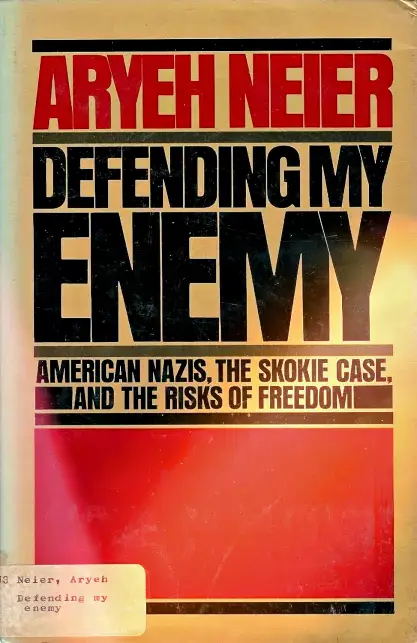
The United States is in a constitutional crisis. It is imperative that we vigorously defend our rights. The reissuance of the seminal book Defending My Enemy: Skokie and the Legacy of Free Speech in America by Aryeh Neier could not have come at a better time to remind us of the importance of defending the essential freedom upon which all others depend – freedom of speech.
Defending My Enemy was originally published in 1979. At that time Neier was the national executive director of the American Civil Liberties Union, which agreed to represent the Nazis in the Skokie controversy. Defending My Enemy was a brave book when it was originally published, and almost 50 years later it remains an indispensable guide to help us navigate today’s convulsive debates over free speech on American campuses and throughout our society.
This edition of Defending My Enemy is enhanced by a new foreword by Congresswoman Eleanor Holmes Norton, a new afterword by Nadine Strossen, president of the ACLU from 1991 to 2008, and an extensive new chapter by Neier himself offering his views on the contemporary challenges facing free speech in America. In addition to previously serving as Executive Director of the ACLU, Neier co-founded Human Rights Watch, and is President Emeritus of the Open Society Foundations, where he remains active in their work. He has written seven books and over three hundred articles and op-eds on civil and human rights.
—-
![]()
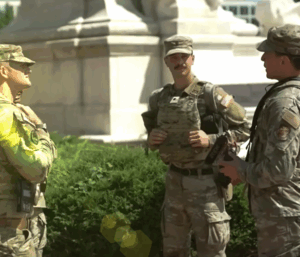
National Guard Occupy The Streets Of DC
Soldiers in uniform are still patrolling the streets of Washington, D.C. They’re not just on guard duty — they’ve been spotted picking up trash, spreading mulch, and even posing with tourists. And now their mission has been extended indefinitely. The Army has ordered nearly a thousand National Guard members to remain on active duty through November 30, 2025. Donald Trump could end it sooner, or push it even further, but for now the deployment is open-ended. Another 1,300 Guard troops from states like Louisiana and Ohio are also staying through December.
The official line is they are tackling “out of control” crime. But many residents and local officials see something else: a military force filling civic space, performing chores that look more like public relations than public safety. Ward 1 Commissioner Peter Wood called the outreach “uncomfortable and concerning,” stressing that soldiers patrolling civilian neighborhoods creates more fear than comfort.
This isn’t just about crime or clean-up crews — it’s about what kind of country we want to be when soldiers become part of daily civic life.
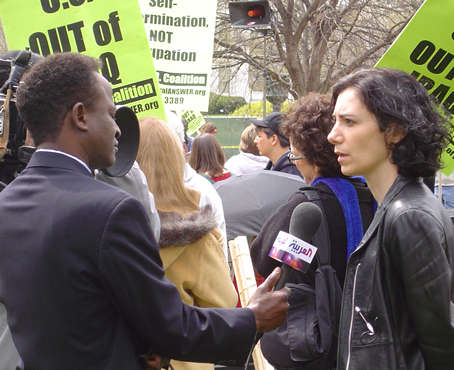
Guest – Attorney Mara Verheyden-Hilliard from the Partnership for Civil Justice Fund and the Center for Protest Law and Litigation in Washington, DC. Mara is one of the nation’s leading litigators defending protesters and winning numerous reforms in police practices at mass assemblies and demonstrations.
———————
Civil Liberties, Civil Rights, Economics, Human Rights, police accountability
Podcast: Play in new window | Download

AI Generated Police Reports
Police departments across the U.S. are beginning to use artificial intelligence tools like Axon’s “Draft One” to automate the writing of police reports based on body-worn camera audio. While the goal is to save time and reduce paperwork, digital rights advocates are raising serious concerns. The Electronic Frontier Foundation warns that Draft One lacks transparency, making it hard to tell whether errors or biases in reports come from the AI or the officer. They argue this could compromise accountability and justice. The ACLU has also flagged risks tied to AI’s potential for inaccuracy and bias.
Some agencies are moving forward with these tools, but others—like the King County prosecutor’s office in Washington—are banning them outright. As this technology spreads, it’s prompting critical questions: Should AI be trusted to shape official police narratives? And what safeguards are in place to protect the public?
Atlas Of Surveillance
Guest – Beryl Lipton is a Senior Investigative Researcher for the Electronic Frontier Foundation specializing in government transparency and surveillance technology. She leads large-scale public records campaigns and contributes to projects like the Atlas of Surveillance, a searchable database and map that documents the use of surveillance technologies by law enforcement agencies across the United States. Before joining EFF, Beryl worked at MuckRock focusing on prison privatization and public-private partnerships. She serves on the board of Spare Change News and contributes to Gannett New York, where she has helped expose police misconduct records across the state.
—-
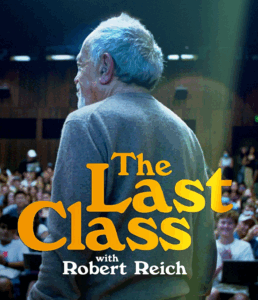

Documentary: The Last Class
We’re pleased to be joined by Heather Kinlaw Lofthouse, the Executive Director of Inequality Media Civic Action. She is the producer of the new documentary, The Last Class, a personal portrait of Robert Reich as he reflects on a period of immense transformation, personally and globally. Reich is of course the well-known political economist, professor, and author, who has worked for four presidents, including as Secretary of Labor for Bill Clinton. He is also the co-founder of Inequality Media Civic Action.
For 40 years, Reich has taught more than 40,000 students and has now retired. Drawing on his lifetime in politics, he has used his class, Wealth and Poverty to offer a deeper look at why inequalities of income and wealth have widened significantly since the late 1970s, and why this poses dangerous risks to our society and democracy itself.
Guest – Heather Kinlaw Lofthouse is the Executive Director of both Inequality Media and Inequality Media Civic Action, nonprofits founded by Robert Reich to make compelling digital content about inequality and threats to American democracy. She serves as Robert Reich’s co-host on the weekly Coffee Klatch podcast, and she produced The Last Class film as part of her new endeavor, CoffeeKlatch Productions.
——————–
Academic Freedom, Civil Liberties, Civil Rights, Human Rights, Immigration, police accountability
Podcast: Play in new window | Download
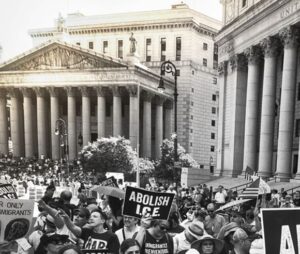
American Association of University Professors v. Rubio
Sadly, listeners to Law & Disorder are all too familiar with how the Trump administration has systematically created a climate of repression and fear on our university campuses. Federal agencies are attempting to deport multiple individuals for their pro-Palestinian advocacy, including Mahmoud Khalil, a leader of the pro-Palestinian protests at Columbia University. These actions have sent chills through the community of noncitizen students and faculty on campuses around the country, causing some to pull out of academic conferences, stay home from protests, and withdraw from other forms of public advocacy and engagement.
While Khalil and other students are actively pursuing their own lawsuits and habeas corpus petitions defending their own First Amendment rights, the Knight First Amendment Institute at Columbia University has filed an innovative lawsuit attacking the Trump administration from a different angle. On March 25, 2025, the Knight Institute filed a lawsuit on behalf of the American Association of University Professors (AAUP), AAUP’s Harvard, NYU, and Rutgers campus chapters, and the Middle East Studies Association, alleging that the Trump administration’s policy of arresting, detaining, and deporting noncitizen students and faculty who participate in pro-Palestinian activism, chills noncitizens from speaking and, by extension, robs these organizations and their U.S. citizen members of noncitizens’ perspectives on a matter of significant public debate. The suit seeks a court order declaring that the policy is unlawful and enjoining the federal government from enforcing it.
In the lawsuit, titled American Association of University Professors v. Rubio, US District Judge William G. Young in Mass. denied the government’s motion to dismiss and set a trial for July 7.
Guest – Xiangnong (George) Wang is a staff attorney at the Knight First Amendment Institute at Columbia University. He first joined the Institute as a legal fellow from 2020 to 2021 before serving as a law clerk to the Hon. William J. Kayatta, Jr. of the U.S. Court of Appeals for the First Circuit. Wang received a B.A. in public policy from Stanford University and a J.D. from Yale Law School.
—–

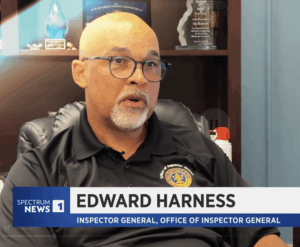
Police Accountability Enforcement In Louisville, KY
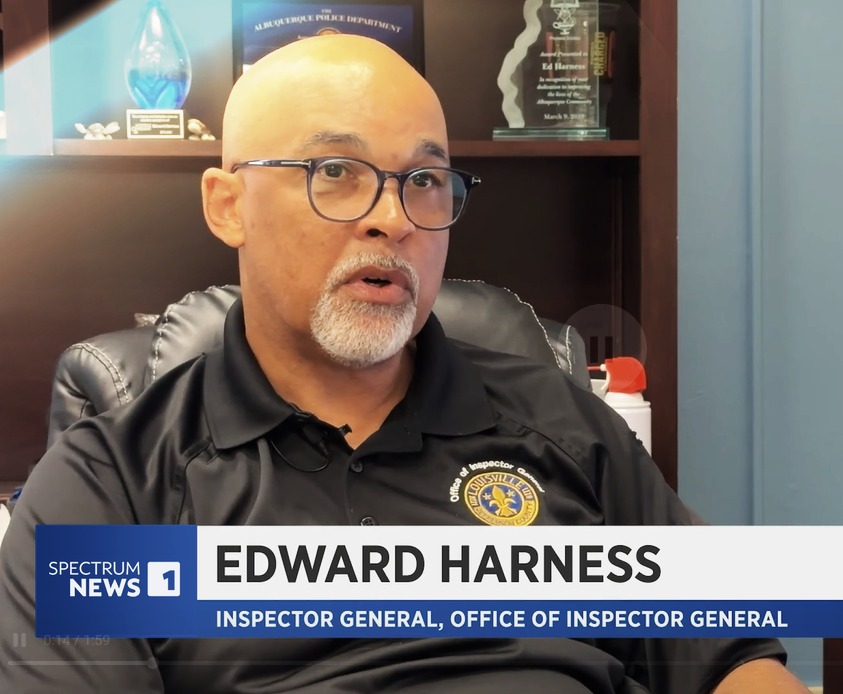
In the wake of Breonna Taylor’s 2020 murder, the city of Louisville created the Office of Inspector General to provide independent oversight of the Louisville Metro Police Department. In 2021, Ed Harness was appointed the city’s first Inspector General, tasked with investigating police misconduct and recommending policy reforms. His term ends this November, and community groups—including the Louisville NAACP—are calling for his reappointment.
But questions remain about how local reforms will be enforced, especially as the federal government steps back. A recent executive order gives the U.S. Attorney General authority to unilaterally end consent decrees, raising concerns about long-term accountability.
Guest – Ed Harness is a former U.S. Army Military Police officer and Milwaukee police officer, Ed previously served as Executive Director of the Civilian Police Oversight Agency in Albuquerque and led the Dispute Resolution Division of the Wisconsin Better Business Bureau. In addition to his duties in Louisville, he serves as a Board Member at Large for the National Association for Civilian Oversight of Law Enforcement (NACOLE).
—————-