Afghanistan War, Civil Liberties, Criminalizing Dissent, FBI Intrusion, Human Rights, Prison Industry, Supreme Court, Surveillance, Targeting Muslims
Podcast: Play in new window | Download
Updates:
——
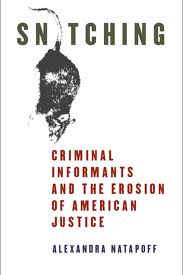

Snitching: Criminal Informants and the Erosion of American Justice
The FBI now spends more than 3 billion dollars a year on counter-terrorism, the bureau maintains a team of 15 thousand spies in a nationwide network of informants. Criminal informants or snitches are part of a criminal system most people know little about. Many of these informants are tasked with infiltrating Muslims communities in the United States. We’ve discussed in the past, the expanded FBI guidelines plus the broad over reaching powers and underhanded tactics the FBI use when targeting Mosques and Muslim Americans.
We talk today with Professor of Law and author Alexandra Natapoff, about her book Snitching: Criminal Informants and the Erosion of American Justice. Her book catalogues the downside in the use of snitches on social structure and democracy and suggests ways to make the use of informants acceptable within the criminal justice system.
Professor Alexandra Natapoff:
- Snitching is such a massive part of our criminal justice system even though the public rarely gets a good look at it.
- It’s an under the radar aspect of the way our criminal justice system handles investigations, the way it handles cases, the way it shapes our case law.
- It’s such a powerful deal, a deal that exerts a huge amount of influence and plea bargaining.
- The reality is that this is a deeply under-regulated arena. The handler is the law enforcement official who creates and uses an informant.
- It could be a police officer talking to a street corner addict cutting a deal right then and there.
- It could be an FBI agent who has an established documented supervised relationship with a long term criminal informant.
- Somebody may be suspected of a crime or even just of interest to the government. People who have mild brushes with the criminal system can end up through this mechanism of criminal informing entering into a world in which really anything can happen to them.
- Argument: Either you let us use informants in an unaccountable, invisible, secretive, undocumented way or we can’t run the criminal system at all.
- We permit the barter of crime under the radar, in a way that is unfair to other defendants and other suspects. We produce unreliable information through the use of informants without regulation.
- My contention is that we shouldn’t ban this practice, but run it as any other public policy with transparency and accountability and some rules.
- My favorite criminal informant of recent is Jack Abramoff.
- Usually we don’t learn when informants have been mistreated because often they have very little power.
- The courts have said, informants proceed at their own risk.
- This is a deal that they can enter if they want to risk their life.
- The law does not owe criminal informants much protection. Our criminal system is built on the principle that the defendant should not have to face the government unaided by council.
- That’s a principle that should be extended to criminal informants.
- The state of Florida passed a ground breaking law, called Rachel’s Law.
- What sort of deal should we permit the government to cut with informants?
- The use of criminal informants is a massive source of error in capitol cases.
- States across the country are starting to impose greater restrictions on the use of criminal informants, in particular jailhouse snitches as a way to improving reliability of the information.
- Confidential Informant Accountability Act – Federal Legislative Proposal
- One of the things the government doesn’t keep track of is how many crimes are committed by criminal informants in the pursuit of investigating new cases.
Guest – Alexandra Napatoff, professor of Law at Loyola Law School, Los Angeles, and a member of the American Law Institute. I have also been a federal public defender, a community organizer, and the recipient of an Open Society Institute Community Fellowship.
————–

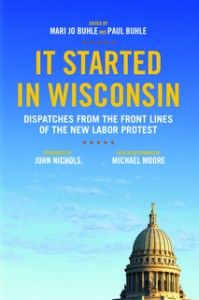
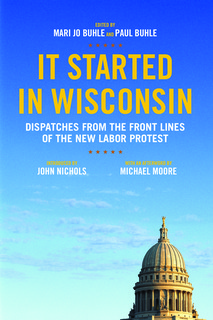
It Started in Wisconsin: Dispatches from the Front Lines of the New Labor Protest
Remember the multi-day occupation of the Wisconsin State Capitol by tens of thousands of people. Massive demonstrations erupted when the Republican controlled state government proposed to dismantle public employee bargaining rights as Wisconsin trade unions already conceded to wage and benefit cuts. These protests became the largest labor demonstrations in modern American history. Protesters from the Middle East sent pizzas and solidarity as thousands occupied Madison’s Capitol building.
We’re joined today by Paul Buhle, historian, and editor of the book It Started in Wisconsin: Dispatches from the Front Lines of the New Labor Protest. A powerful collecton of eyewitness reports and essays by striking teachers, students, and many others. This book exposes the corporate agenda that imposed anti-union legislation across the country and highlights the power of the people coming together in protest.
Paul Buhle:
- Brecht Forum, Friday night – April 27,2012
- The “it” is very large, perhaps vaporous and very promising. We were thinking of occupy in the sense that Madisonians, labor supporters from as far away as California, occupied the State Capitol, the rotunda in February of last year and remained there for some weeks.
- The “it” may mean occupy or the emergence of a new kind of movement.
- We should have seen it coming but we were deluded or Walker, when running for election never mentioned these promises or threats at all and made some statements about getting along with unions when he was a county executive.
- The response was just as stunning as the shock. A mass outpouring that really began with students in Stoten, an old Norwegian community about half an hour south of Madison – working up their own protests with facebook to support their teachers.
- And then, the following weeks, a massive outpouring of people around the Capitol and then occupying the Capitol.
- Things went on and on until there were crowds of 150 thousand in a town of Madison that has normally only 250 thousand residents.
- Pacifica has been in the business from the late 1940s in the Bay area, in providing the documentation that other commercial radio stations rarely provide.
- I would say these protests in Wisconsin are probably the most recorded mass movement of the Left in recent history.
- Among the most important developments, relative to the stories in the history of labor, the unions of public workers are substantially, if not overwhelmingly women.
- So, the shape of the movement, perhaps its cultural character, perhaps the infernal degree of politeness that outsiders frequently complained about, the chant – let us in, let us in please.
- What it demonstrated was that women in the labor movement were ferociously militant.
- My assessment was that the labor movement was in no way prepared to stage a general strike.
- Nor that a massive walk out of public workers mean that the wheels of industry would stop what few wheels are left.
- The sense that public workers wish to put pressure on the political system.
- Contrary to our expectations of the Democratic Party in general, assorted leaders, were quite wonderful in their constituencies and the things that they did, and how they related to the movements.
- As an editor and producer of radical comics, I’m always interested in new developments in the field, and its exciting there are young comic artists who are working in and around “occupy.”
Guest – Paul Buhle, senior lecturer at Brown University, a historian of American radicalism., a former member of Students for a Democratic Society and author of many books including images of American Radicalism. Also, Che, A Graphic Biography, and Isodore Duncan, a graphic biography by Sabrina Jones.
———–
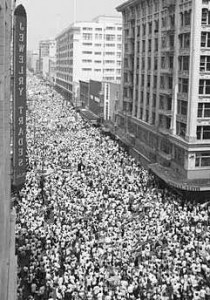

May Day: Workers’ Rights and Immigrant Communities
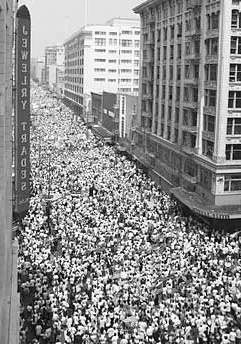
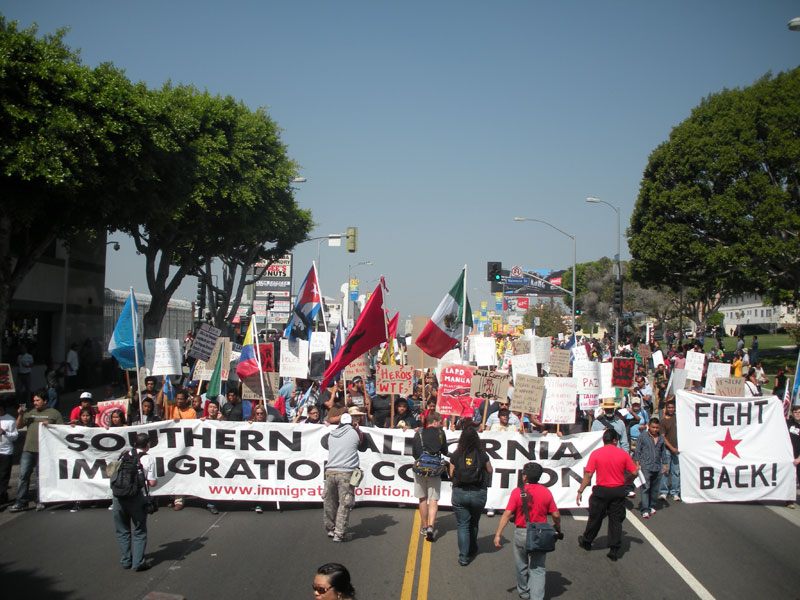
In the past year, public employees around the country have rallied to hold on to their collective bargaining, workers rights and pensions. May Day protests this year will emphasize these issues and will be especially significant for immigrant rights in California that directly effect certain communities. On May Day in 2006, hundreds of thousands took to the streets of San Jose marking one of the largest demonstrations in California history.
Guest – Celina Benitez, director of the Committee In Solidarity With the People of El Salvador, Celina is also with the Southern California Immigration Coalition and produces radio for Suplemento Comunitario on sister station KPFK in Los Angeles.
——————————————————-
Civil Liberties, Habeas Corpus, Human Rights, Prison Industry, Surveillance, Targeting Muslims, Torture, Truth to Power
Podcast: Play in new window | Download
Updates:
—-
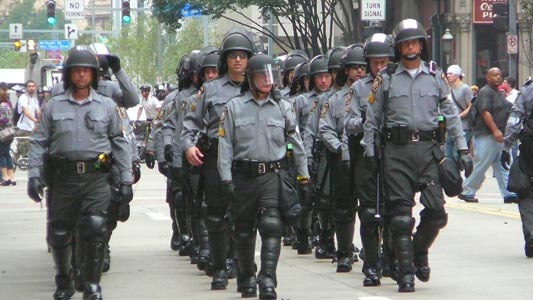

National Defense Authorization Act Update
Co-host Michael Ratner expounds on National Defense Authorization Act. The Act has passed both houses, despite Obama threatening to veto the Act. Obama thought that various provisions of the National Defense Authorization Act concerning detentions, might impinge on his authority as the executive. Obama was more concerned about Congress telling the President how to treat those captured or kidnapped in “war on terror.”
—-
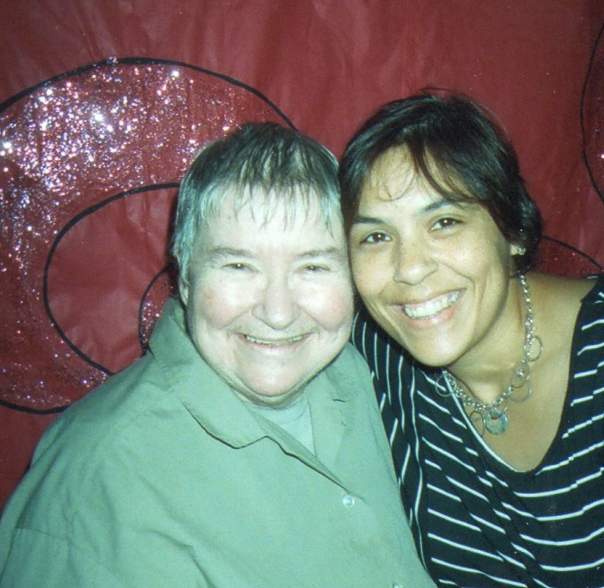
UPDATE: Political Prisoner Lynne Stewart
Political prisoner and good friend, Lynne Stewart continues to uplift people around her while serving a 10 year sentence at the Federal Medical Center in Fort Worth Texas. Lynne, as many listeners know, was prosecuted for representing her client the blind Egyptian Sheik, Omar Abdel Rahman. In trying to negotiate a return to Egypt out of solitary confinement, she made a press release public. She was tried and found guilty for materially aiding “terrorism.” She received a 2 and half year sentence, instead of 30 years that the government wanted. Then, the Second Circuit Court sent the case back to the Judge. Judge John G Koeltl sentenced defendant, Lynne Stewart: 120 months incarceration on five counts to be served concurrently. Lynne Stewart is now 72 years old, she’s a breast cancer survivor with other pending health issues. She’s called them the usual brush fires of aging, yet many are concerned. SAVE THE DATE FEBRUARY 28-29
Ralph Poynter:
- She is looking forward to her attorney Herald Price Fahringer to presenting to the court once again testing the law. We are planning a Occupy the Court Room and the park, the night before on February 28 through to the 29.
- The lawyer will be talking about the laws used to extend Lynne’s sentence. He said any lawyer that wouldn’t want this case, doesn’t understand law. He looked forward to doing it. He went for a one hour visit with Lynne at MCC and stayed all day.
- No matter what happens, Lynne will continue to fight for her license.
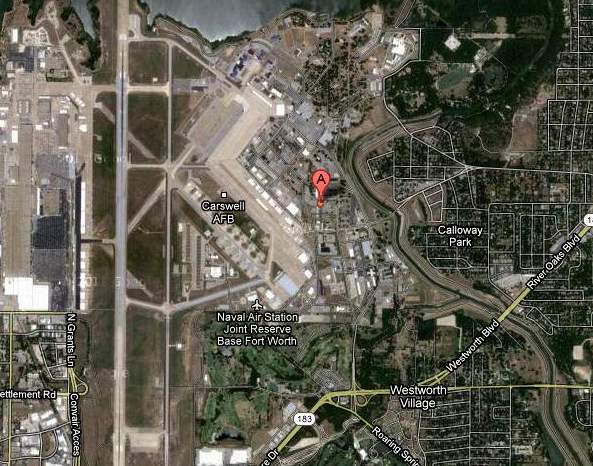
- She’s is Federal Medical Center in Fort Worth, Texas. Big airbase there. It’s an enormous prison, but she’s in the hospital ward.
- Even though I’d been on the list visiting her (in New York prison) I was not on the list (Texas prison)
- I just went down there, and she said, you’re not on the list but I’m going to go to floor supervisor and she says, you just come.
- That Saturday morning I was in front of the prison and they told me I was not eligible to go in. They said it was like an airbase, so I walked outside the gate and stood there. The guard came over and said what are doing here? I said, I’m waiting.
- Around 10:30 an official car came down and said you’re denied admission.
- I said, I understand, but I’m going to wait.
- Around Noon, the woman came back and she says, fill out an application.
- She said I knew if you fought from the outside I was going to fight from the inside and it only took 4 hours.
- You can’t imagine after sleeping on a 2 inch exercise mat on a steel platform for a year, and they showed me the hospital bed.
- She is Miss S, in the prison. Everybody brings her their papers.
- She heard noise outside her room at 5 o’clock in the morning, they were lined up some with papers stacked 3 feet high.
- There is an oxymoron – prison health care. There is no such thing.
- She’s lost about 45 pounds.
- She’s very sick, she can’t sit down. In the visiting room she has to sit sideways.
- Thanks again for all of the people sending bucks for me to go see Lynne.
- Write her a letter. The letters pick her up.
- They gave her medicine and she couldn’t get out of bed. We have a system now when they give her medicine she calls me up. I call my daughter the doctor and she tells me whether Lynne should take it or not take it.
Guest – Ralph Poynter, Lynne’s husband, father, activist. Please write to Lynne Stewart – LYNNE STEWART / 53504-054 FMC CARSWELL / FEDERAL MEDICAL CENTER / P.O. BOX 27137 / FORT WORTH, TX 76127
—–
Photo by flickr user G20Voice
Civil Liberties, Criminalizing Dissent, FBI Intrusion, Human Rights, Political Prisoner, Prison Industry, Surveillance, Targeting Muslims, Truth to Power
Podcast: Play in new window | Download
Updates:
—-
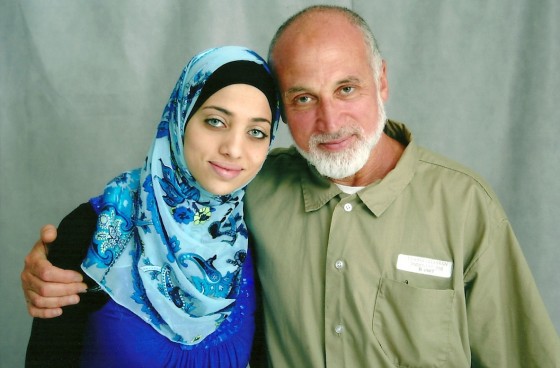
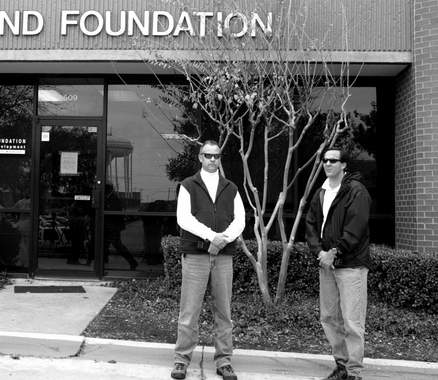
Appeal Denied In Holy Land Foundation Case
Last week, the Fifth Circuit dismissed the appeal for the Holy Land Foundation case. This decision affirmed the conviction of Ghassan Elashi, the co-founder of the Holy Land Foundation for Relief and Development. As many listeners may know, the Holy Land Foundation was considered the largest Muslim charity in the United States before the Bush administration shut it down after the September 11 attacks. In May 2009, a federal judge in Dallas handed down sentences ranging from 15 to 65 years in prison to five of the charity’s founders and former fundraisers. Over a year before, a federal jury returned guilty verdicts on all 108 counts against the Foundation and the five former officers on charges of providing material support to Hamas after the U.S. government designated it a foreign terrorist organization in 1995. During that trial, the prosecution used unrelated video of suicide bombers to emotionally sway the jury.
Ghassan Elashi was then sentenced to 65 years in prison for giving material support in the form of humanitarian aid to Zakat committees – Palestinian charities in the West Bank and Gaza, that prosecutors were alleging were fronts for Hamas. Ghassan is being held in the Communications Management Unit in Marion, Illinois.
Noor Elashi:
- One of the arguments the defense lawyers made is that USAID, which is a government agency sent money to the same exact Zakat Committees which are these distribution centers in Palestine that the Holy Land Foundation sent charity to.
- That was their main charge, they were charged with giving material support in the form of humanitarian aid to Zakat Committees which the prosecutors were claiming were fronts for Hamas.
- In their appeal, one of their main arguments is that these Zakat Committees received money from many NGOs including an American agency.
- Another argument in the appeal was for the first time in US history, an expert witness who was an Israeli intelligence officer who testified under a fake name was allowed to testify under a pseudonym.
- My father recently had a phone call ban, because he put his name on a yoga mat, and it was considered destruction of government property.
- Our defense attorneys are not going to quit. They will ask the entire panel of appellate judges to re-hear the case, if that is denied, they’ll take the case to the Supreme Court.
- The foreign policy and politics of this country have been very favorable to Israel.
- FreedomToGive.com
Guest – Noor Elashi – the daughter of Holy Land Foundation prisoner Ghassan Elashi. She is a writer based in Dallas, Texas. After receiving a Bachelor’s degree in journalism from the University of North Texas, she worked for the Fort Worth Star-Telegram. In July 2008, she won the 3rd place Mayborn Literary Nonfiction Award for her manuscript titled “Displaced,” which she plans to expand into a memoir about the displacement of three generations of Palestinians: her grandmother, father, and herself. She can be reached at noorelashi@gmail.com.
—–
Event In Philadelphia Marks 30 Years of Mumia Abu-Jamal’s Incarceration
On December 7, the Philadelphia District Attorney’s Office announced that it will not seek another death sentence for Mumia Abu-Jamal. Under Pennsylvania law, Mr. Abu-Jamal will now be sentenced to life imprisonment without the possibility of parole in the Philadelphia County Court of Common Pleas. The National Lawyers Guild commented that while there is overwhelming doubt about what the state claims to be the facts in this case, even those allegations never supported a capital charge. That it has taken three decades to remove death from the table is astonishing.
The Guild has long maintained that Mr. Abu-Jamal is entitled to a new and fair trial. Procedural irregularities plagued his case from the outset, including blatant constitutional violations, from the judge allowing the prosecution to admit evidence of his affiliation with the Black Panther Party, in violation of the Supreme Court case Dawson v. Delaware, to the use of a faulty sentencing form that misled jurors during the penalty phase, in violation of the Supreme Court case Mills v. Maryland.
A great deal of relevant evidence has never been reviewed by any court, much less presented to a jury. This evidence includes several photographs of the crime scene which impeach the testimony of a police officer who was a key eyewitness and proof that another individual was present, and fled, the scene of the shooting.
Mr. Abu-Jamal was charged at a time when, it was later revealed, there was extensive corruption within the Philadelphia Police Department. In 1995, then-District Attorney Lynne Abraham promised the city that she would dismiss any case in which there was evidence of police perjury or purposeful misreporting of facts. Given the history of police misconduct in Philadelphia when Abu-Jamal was arrested, and the specific instances of police perjury in his case, the National Lawyers Guild has urged current District Attorney Seth Williams to act on his predecessor’s unfulfilled pledge.
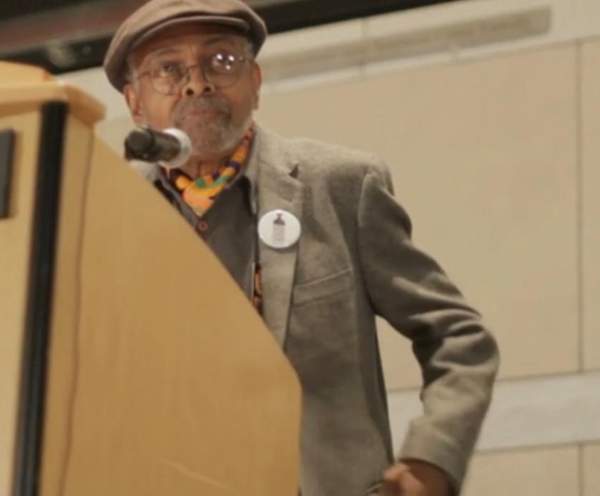
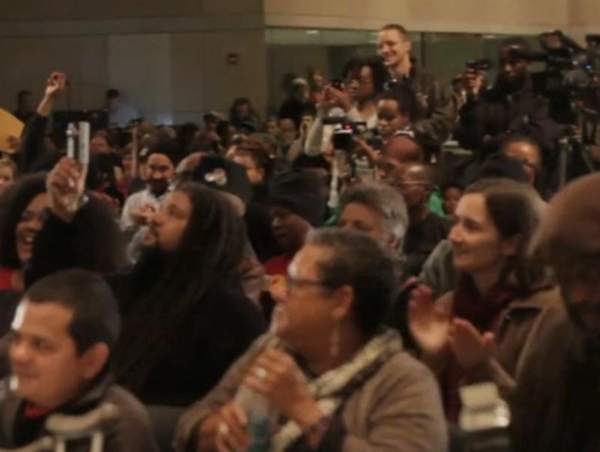
Two days after the DA’s announcement, and commemorating International Human Rights Day, a free forum was held at the National Constitution Center in Philadelphia to mark the 30th anniversary of Mumia Abu-Jamal’s incarceration, justice. Twelve-hundred Mumia supporters met to reinvigorate the movement for justice for Abu-Jamal and to say no to life in prison for the political prisoner. “Because for 30 years Abu-Jamal has been unconstitutionally imprisoned in death row torture, justice for Mumia will not be served by life imprisonment, but by freedom,” said Dr. Johanna Fernandez, professor of history at Baruch College of the City University of New York and a co-producer of the forum. Fernandez wrote and produced a documentary, which debuted at the Constitution Center in 2010 on Abu-Jamal’s case. “Justice on Trial: The Case of Mumia Abu-Jamal,” examines evidence pointing to Abu-Jamal’s innocence and exposes the inequities of the American justice system.
Speakers:
The December 9 forum was co-sponsored by Educators for Mumia Abu-Jamal, the National Lawyers Guild and International Family and Friends of Mumia Abu-Jamal.
———————————
Civil Liberties, Criminalizing Dissent, Crony Capitalism, Human Rights, Prison Industry, Torture, Truth to Power
Podcast: Play in new window | Download
Updates:
—

Workers Win Large Settlement at Supplier to Chinese Restaurants After Hard Fought Campaign
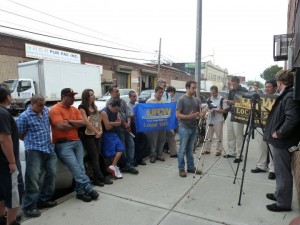
A bitterly contested campaign against Pur Pac, a food distribution warehouse giant reached a settlement of 470 thousand dollars for workers who had their wages illegally withheld and more. The workers organized with Focus on the Food chain, Brandworkers and International Workers of the World to challenge sweatshop conditions, wage theft, retaliation and discrimination in the sprawling industrial corridor of food processing and distribution that service New York City markets and restaurants. Daniel Gross, the executive director of Brandworkers said – quote – The conditions in the sector are deplorable and systemic but, as the Pur Pac workers have shown, positive workplace change can and will be won.”
Attorney Daniel Gross:
- Pur Pac is typical of an industrial corridor of food processing and distribution warehouses that service a tremendous amount of food to restaurants and supermarkets in New York. Much of what we eat in restaurants is processed in sweatshops.
- Pur Pac is a distributor of restaurant and food supplies to Chinese Restaurants, cafes and bakeries. They distribute huge quanitities of rice, cooking oil, chopsticks.
- Sweatshop, tremendous amount of wage theft, hundreds of thousands of dollars. Vicious retaliation for workers who stand up for their rights, exhausting long shifts, very heavy work.
- We facilitate worker led, comprehensive campaigns. The company used several tactics to avoid accountability here, the main approach that they used is they engaged in sham sales.
- They would fraudulently transfer assets, rebrand the company. The company was originally called Easy Supply. Easy Supply escaped accountability by purporting to go out of business, now same factory, same trucks, same products was called Sunrise Plus. We caught up with Sunrise Plus and they engaged in another sham sale and that created Pur Pac.
- We were also able to win a binding code of conduct, which creates very powerful protective mechanisms for collective activity, going forward.
- We were able to win recognition for the IWW, as exclusive bargaining agent for Pur Pac workers. It was really the biggest victory for Focus On The Food Chain.
- I was a low wage worker mostly in retail and fast food. I was working at Borders Books and Music and really felt the sting of a multi-national employer which at the time was highly profitable. It didn’t pay a fair wage, offered an insecure and unpredictable schedule.
- It employed a management force that really showed tremendous disrespect for rank and file workers.
- We had 44 Starbucks stores that were infested with rats and insects. We did worker-citizen journalism and we got photos and video of these rats and roaches, we inflated a huge, inflatable rat in front of the stores and shared our video and photographic evidence.
- Starbucks is still engaged in really a scorched Earth effort, complete disrespect for the right to organize and free association.
- The National Labor Relations Board (NLRB) is the administrative agency charged under federal with administering union management affairs. They have jurisdiction over cases under the National Labor Relations Act.
- Mezonos Maven Bakery is a food production sweatshop. Mezonos Maven was cheating workers out of their wages, disrespecting workers, and the workers came together, they didn’t join a union but they came together with community groups, etc. Mezonos Maven, started illegally firing workers.
- When the workers stood up to the most basic worker’s rights, they were subjected to fierce immediate retaliation.
Guest – Attorney Daniel Gross, Executive Director of Brandworkers, a non-profit organization protecting and advancing the rights of retail and food employees.
—–
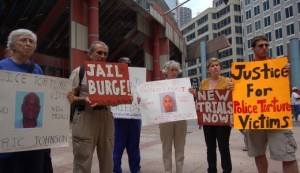
Federal Judge Rules Former Mayor Daley Can Be Sued For Alleged Torture Cover Up
We continue to bring updates on the ongoing police torture and abuse scandal revolving around former Chicago police commander Jon Burge. Recently, a federal judge has now ruled that former Chicago Mayor Richard Daley can be allowed to be kept in the lawsuit where he is charged with conspiracy to cover up police abuse and torture. As many listeners may know, Burge has been sentenced to 4 and a half years in prison for obstruction of justice and lying about torturing prisoners to obtain coerced confessions. The People’s Law Office brought the case in 2005 and the city of Chicago refused to settle while pumping hundreds of thousands of dollars into the case.
In the beginning of September, attorney Flint Taylor will depose former mayor Richard Daley which will force him to answer questions about the abuse of African Americans under Burge’s command. This case has already cost Chicago taxpayers more than 43 million dollars in settlements and legal fees. Past shows with Attorney Flint Taylor
Attorney Flint Taylor:
- Daley was the state’s attorney for Cook County for eight years in the 80s during that time he was specifically informed of police torture.
- Instead of doing anything about it and dealing with the torturers, Jon Burge and company, he continued to encourage it by prosecuting men who had been falsely arrested and charged based on tortured confessions sending as many of them to death row.
- When he became mayor, he continued to have an active role in the cover up of the torture practice.
- He had at various times as chief of law enforcement and chief executive of the city of Chicago, the power and obligation to act and if he did, we wouldn’t have had all these men on death row, and in the penitentiary and we wouldn’t have had all these men tortured.
- We brought it several times in lawsuits starting in 2003. Judges had consistently turned their backs on that claim.
- The new Chicago mayor Rahm Emmanuel who has successfully tip toed past this both in his campaign and now as the first 100 days of being mayor had to respond to it.
- They’ve paid over 13 million dollars to defend these civil cases that we’re in. We take the mayor at his word, and we hope this leads to settlements and compensation for the men who’ve been tortured.
- There are six men who have lawsuits in court. Unfortunately because of statute of limitations most torture survivors don’t have lawsuits.
- There are still 15 men behind bars in Illinois, based on tortured confessions that Jon Burge and the Area 2 torturers coerced from them. We’re fighting to have them all get new hearings.
- I don’t know if a Daley denial in some of the actions in this case would tantamount to perjury that Fitzgerald would be interested in.
- There is a major memoranda that was sent from the police superintendent at that time to Daley, a kind of CYA saying “I’ve been giving this powerful evidence of torture from a doctor over at the county hospital.
Guest – Attorney Flint Taylor, a graduate of Brown University and Northwestern University School of Law and a founding partner of the Peoples Law Office. More bio
———————————————-
Civil Liberties, Death Penalty, Guantanamo, Habeas Corpus, Human Rights, Military Tribunal, Prison Industry, Supreme Court, Targeting Muslims, Torture, Truth to Power
Podcast: Play in new window | Download
Updates:
—-
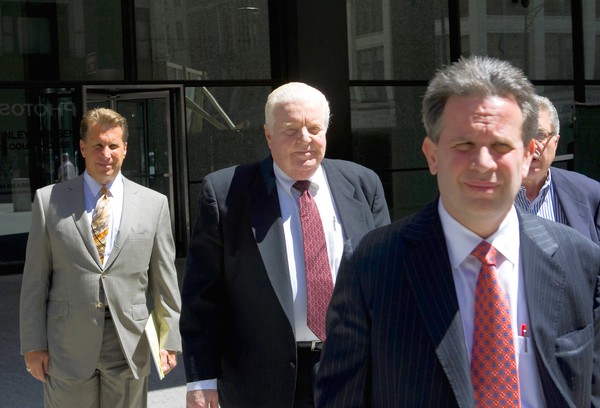
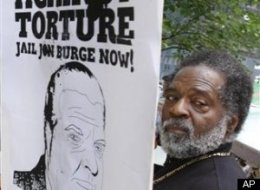
Chicago Torture Cases and Jon Burge’s Deposition
Torture has cast a long shadow over Chicago and its past administrations. Yet in the past year, with the conviction and sentencing of former Chicago Police Commander Jon Burge, Chicago has been a beacon of light in the fight against torture. Many are waiting to see how the city’s new administration will handle the ongoing torture cases of African American men that number in the hundreds. Former Chicago Police Commander Jon Burge was sentenced to 4 and a half years in prison for obstruction of justice and lying about torturing prisoners in the 1960s to obtain coerced confessions. Attorney Flint Taylor and the People’s Law Office in Chicago fought for decades to get prosecutions, and sentencing while the city poured millions of dollars to fund private lawyers for Burge’s defense.
Attorney Flint Taylor:
- We’ve been working on these cases since 1986. Deposing Jon Burge: We were reaffirming to the African American community that he was in prison and he is a prisoner.
- He was complaining about the lack of medical care and the kind of treatment he felt he should be getting.
- The struggle to put him behind bars has come to fruition. Pin stripe patronage, the city funding Burge’s defense. Rahm Emanuel needs to change course, he’s very close to Daly.
- Daly’s policy was not to settle these cases, not to apologize to the victims.
- There’s another issue about Burge getting his pension even though he’s in the joint.
- When you’re convicted you’re supposed to lose your pension.
- There’s eight people on the pension board, 4 of them are former cops.
- Several of the men who were responsible for Burge going to the penitentiary don’t have a claim civilly, never got a penny for the torture they suffered.
- There are about 20 men still in jail, still in the prisons, based on tortured confessions by Burge and his men.
- There is a demand to challenge these confessions, its been happening on a piece-meal basis.
- You most often find that torture does not lead to information that is useful. In the situation here it is to punish African American people.
- It’s a very racist type of torture in this city. There’s linkage here in what happened in Guantanamo, what happened in Abu Ghraib.
- The Fraternal Order of Police: They’re a very reactionary force when reforming the police department generally. In the early nineties when they fired Burge, the FOP stood up and paid for his defense.
- In case that has gotten him to prison now, the FOP paid a million dollars for 3 lawyers of his choice. Now, the same lawyers have switched hats, and the city is now paying them in the civil cases that we talked about.
- When it gets to a point where the city can’t pay for his defense, the FOP steps in.
- Burge deposition: I set up a series of questions for 3 hours where he consistently took the fifth amendment to all questions that would have implicated him if he answered truthfully.
Guest – Attorney Flint Taylor, a graduate of Brown University and Northwestern University School of Law and a founding partner of the Peoples Law Office. More bio
—–
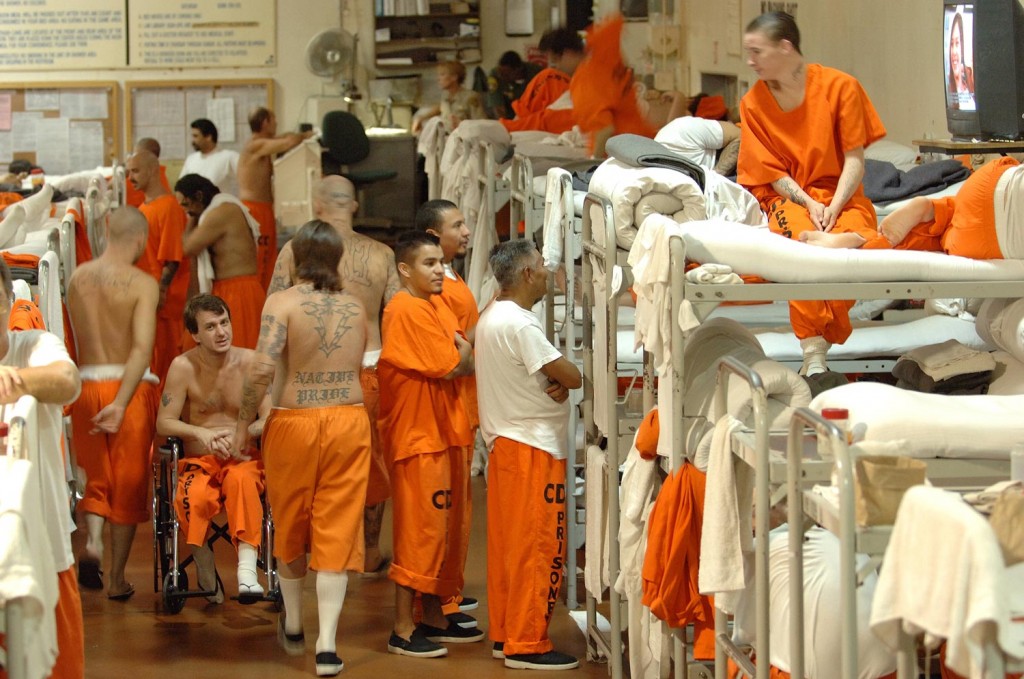
California Inmate Reductions
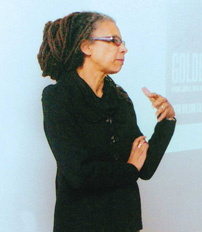
Last month, the U.S. Supreme Court ruling had ordered California to release 46,000 of its 143,435 inmates which has the state trying to figure out what happens next. The SCOTUS ruling affirmed a lower court order that required California to reduce its inmate population to 137% capacity. The state’s prisons are now at about 180% capacity and one cause of overcrowding problems is the state’s “three strikes law” which puts third time offenders in jail for life. Meanwhile, under Governor Brown’s current “re-alignment” program, the tens of thousands convicted of non violent, non-serious, non-sex crimes will serve sentences under county instead of state supervision. Our guest Professor Ruth Gilmore said to one media source, quote – “County jail expansion does not solve the underlying problems,” – -These are goals we can achieve now if we take this opportunity to shrink prisons and jails. Building bigger jails to ease prison numbers is the same as rearranging the deck-chairs on the Titanic: wasting the same dollars in different jurisdictions.
Professor Ruth Wilson Gilmore:
- California is out of line with the rest of country when it comes to parole policy. California sends twice the number of people back to prisons than other jurisdictions, when the person has committed a technical violation, late for a meeting, that kind of thing.
- For that reason, California prisons have been bulging.
- We see that numbers are kept up by this one category, parole violation return to custody. They have to start over and over and over again.
- The Supreme Court ordered the Department of Corrections to reduce the number of people in its custody in its current physical plant. In the 33 prisons, prison camps and dozens of facilities.
- One method to thin the prison population is shipping about 10 thousand prisoners out of the state of California, renting space in other jurisdictions. They’ve been shipping prisoners out of California for 2 and a half years.
- Cost does not seem to have an important effect on the kinds of political decisions, that have been made about prison expansion throughout the United States for the last 30 years.
- A year and a half ago the state presented a plan to the Ninth District court saying here are the changes that we will make to meet the 3 judges’ order that we reduce the number of people in the California State Authority Physical Plant.
- Then, the 3 judges agreed to let California delay in implementing the plan, while they appealed to the Supreme Court.
- California is the proving ground for a new relationship between the state and society. California is a place that started turning its back on public education.
- For some time, the union of California prison guards were a political force and continue to be quite powerful.
- There are many alternatives to locking somebody in a cage for part or all of their life. We should be cautious in thinking GPS tracking is the answer, because one of the huge barriers, that people convicted of a felony face in their lives, is the impossibility of them reintegrating into society.
- My colleague Michelle Alexander has put out a call in a campaign to end The New Jim Crow.
- Criticalresistance.org / Curbprisonspending.org
Guest – Professor Ruth Wilson Gilmore, author of Golden Gulag: Prisons, Surplus, Crisis, and Opposition in Globalizing California. Professor Gilmore has examined how political and economic forces produced California’s prison boom in Golden Gulag: Prisons, Surplus, Crisis, and Opposition in Globalizing California (University of California Press, 2007), which was recognized by ASA with its Lora Romero First Book Award. Gilmore’s wide-ranging research interests also include race and gender, labor and social movements, uneven development, and the African diaspora. She comes to the Graduate Center from the University of Southern California, where she taught courses in race and ethnicity, economic geography, and political geography, was the founding chair of the department of American studies and ethnicity, and won the USC-Mellon Award for Excellence in Graduate Student Mentoring. She also works regularly with community groups and grassroots organizations and is known for the broad accessibility of her research. She holds a Ph.D. in economic geography and social theory from Rutgers University.
————————————————
Civil Liberties, Criminalizing Dissent, FBI Intrusion, Green Scare, Guantanamo, Habeas Corpus, Human Rights, Iraq War, Military Tribunal, Political Prisoner, Prison Industry, Targeting Muslims, Torture, Truth to Power
Podcast: Play in new window | Download
Updates:
—-


Guantánamo Leaks Must Be Met By Release of Obama Task Force Assessments
The 759 Guantanamo files that were classified “secret” cover nearly every inmate since the camp opened in 2002. The documents obtained by the New York Times and the Guardian last month, reveal how children, the elderly and mentally ill were wrongfully held. The documents also reveal that many prisoners were sent to Guantanamo for nearly nothing or to be interrogated. What did these documents reveal?
Attorney Shane Kadidal:
- These stories started on Monday morning, because administration officials gave out a briefing saying that the nickname of Osama’s couriers was given out by one of the detainees.
- Assuming information taken from Khalid Sheikh Mohammed
- We do know it took eight months from the time they identified this compound to the point they decided to strike at it. I think its clear, they relied on a whole slew of information from a variety of sources.
- We already know the true name of the courier, which is more important than a nickname came from agents on the ground and electronic surveillance.
- 172 detainees, 90 cleared from release, 2/3 of those from Yemen have been indefinitely suspended for repatriation because of the “underwear bomber.”
- The problem is so much of (media) attention is focused on the ones that will never be released.
- WikiLeaks – 2400 pages of documents almost all risk assessments of about 740 detainees who’ve been to Guantanamo
- They represent the Defense Departments best case for detaining someone.
- You have these long analysis of very shady facts, not detailing where allegations are coming from.
- If you look at the documents as a whole, it shows that most of the detainees were held on flimsy, unreliable information.
- The documents show that people were interrogated in GTMO about nothing to do with terrorist attacks in the United States. You had Samuel Hodge interrogated about the inner workings of Al-Jazzera
- Everyone ended up with the categorization of high or medium risk
- When you see a leak of this magnitude, the only corrective is to release more information and that’s what we’ve called for at CCR.
- The government quickly emailed us – They said consistent with the security clearances you signed on for, you have to treat this information as classified (leaked documents) even though its been scattered to the winds on every newspaper on Earth.
Guest – Attorney Shane Kadidal, senior managing attorney of the Guantánamo Global Justice Initiative at the Center for Constitutional Rights in New York City. He is a graduate of the Yale Law School and a former law clerk to Judge Kermit Lipez of the United States Court of Appeals for the First Circuit. In his eight years at the Center, he has worked on a number of significant cases in the wake of 9/11, including the Center’s challenges to the detention of prisoners at Guantánamo Bay (among them torture victim Mohammed al Qahtani and former CIA ghost detainee Majid Khan), which have twice reached the Supreme Court, and several cases arising out of the post-9/11 domestic immigration sweeps.
——-

Green Is The New Red: An Insiders Account of A Social Movement Under Siege
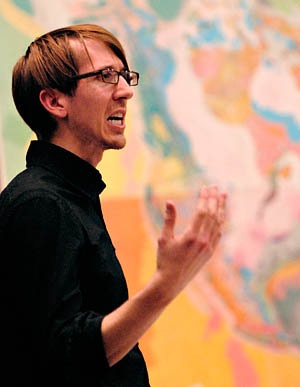
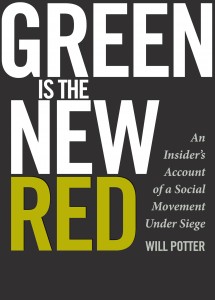
We welcome Will Potter award-winning independent journalist and now the leading authority on “eco-terrorism.” He’s the author of the new book ,Green Is the New Red: An Insider’s Account of a Social Movement Under Siege, and it reveals a complex environmental movement emerging amid police state pressure. As we’ve reported here on Law and Disorder, environmental activism have been labeled terrorism under certain interpretation of the Patriot Act, essentially criminalizing dissent and chilling free speech in this country at a critical time. Our guest was an FBI target for merely leafleting against animal testing, and he was threatened to be put on the domestic terrorist watch list if didn’t comply with FBI demands. We talk more about that, the environmentalist movements and his new book.
Will Potter:
- My background is in mainstream newspapers. As I was working as a reporter at the Chicago Tribune, about 9 months after 9/11. I was covering breaking news, blood and guts.
- I decided to go out leafleting on a campaign I became aware of against a controversial animal testing company.
- Couple weeks later the FBI knocks on my door telling me I need to become a government informant and help infiltrate animal rights and environmental groups and if I didn’t they’d put me on the domestic terrorist list.
- It scared the tar out of me. I wish I could say it didn’t.
- Afterward it really lit a fire under me to figure out what was going on.
- One of the reasons I started the website was because of this new law being considered called the Animal Enterprise Terrorism Act.
- What I decided to do with the book is tell the personal stories of the people involved.
- I followed Daniel McGowan a few days before his sentence to how he ended up in this facility, his own journey as an activist. Daniel was convicted of serious crimes, two arsonists that didn’t harm anyone and he was labeled a terrorist.
- The book looks at the wide range of activity being labeled “eco-terrorism”
- The FBI has labeled the environmental and animal rights movement the number one domestic terrorism threat.
- These corporate campaigns were pushed for so long through the courts, politicians, and the press that over time they began to dovetail with government policy.
- The Animal Enterprise Terrorism Act is so broad it can even wrap up non-violent civil disobedience as terrorism, only if its directed at what is called animal enterprises.
- The real power of this is fear.
- The activists who are really effective and pushing the boundary are the ones being labeled eco-terrorists.
- I recently wrote about 3 bills that are under consideration for the Huffington Post. What Is Big Ag Trying To Hide.
Guest – Will Potter, award-winning independent journalist based in Washington, D.C., who focuses on “eco-terrorism,” the animal rights and environmental movements, and civil liberties post-9/11. Will’s work has appeared in publications including the Chicago Tribune, the Huffington Post, and the Vermont Law Review, and he has testified before the U.S. Congress about his reporting. He is the author of Green Is The New Red: An insider’s account of a social movement under siege forthcoming from City Lights Books.