Afghanistan War, Civil Liberties, Gaza, Human Rights, Iraq War, Prison Industry, Targeting Muslims, Truth to Power
Podcast: Play in new window | Download
Updates:
—————-
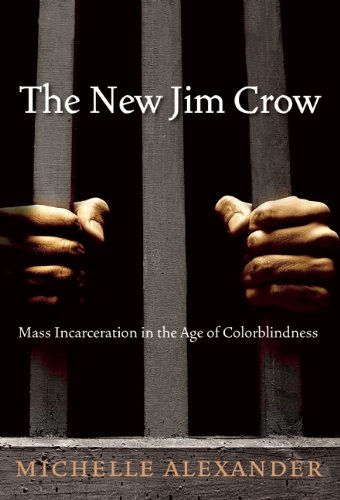
The New Jim Crow: Mass Incarceration in the Age of Colorblindness – Michelle Alexander
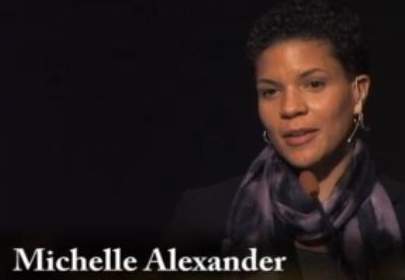
Michelle Alexander, author of the new book The New Jim Crow: Mass Incarceration in the Age of Colorblindness joins hosts. Michelle book has been called an incisive critique of racial caste system in America. As many celebrate the “triumph over race” with the election Barack Obama, the majority of young black men in the US are locked behind bars or permenantly labeled felons. Michelle Alexander, a former litigator who is a legal scholar, argues that the civil rights community—and all of us— are challenged to place mass incarceration at the forefront of a new movement for racial justice in America.
Michelle Alexander:
- I began in my own research to question the prevailing political media narrative about the reasons of people of color and ghetto communities cycle through the criminal justice system today, it is not as it appears.
- I argue that in a few decades after the collapse of Jim Crow, we as a nation, have managed to re-create as a racial caste in America, in some major American cities, the majority of African American men, are locked behind bars, labeled felons for life.
- Legally discriminated in employment, housing, access to education, and public benefits. We have not ended racial caste, we redesigned it.
- The Drug War was declared in relation to racial politics, not drug crime. About 30 million were arrested for drug offenses after the launch of the drug war. Most were for marijuana possession, now considered less harmful than alcohol or tobacco.
- Drug markets like American society generally are segregated by race and class
- The Supreme Court has made it virtually impossible for these cases to be brought.
- Baldus Study: McKleskey v Kemp
- Finding proof of conscious intentional discrimination is nearly impossible. Severe racial disparities are of no consequence, immunized not just the death penalty.
- I wrote this book, largely because I was deeply troubled by the failure of civil rights organizations and black leadership in this country to place mass incarceration and the war on drugs at the top of our racial justice agenda.
- Ten of millions of people in the United States are now regulated permanently to an under-caste, who are barred by law from seeking jobs or housing, public benefits, food stamps.
- Prisons have been holding many rural towns together as jobs have disappeared. The majority of people put behind bars are non-violent offenders. Every race suffers from this drug war, there are white people doing decades in prison for drug possession charges. The suffering of the drug crosses the color lines, and we got to be able to galvanize a level of public awareness and support.
- Something akin to a racial caste system is alive and well in the United States.
Guest – Professor Michelle Alexander, joined the OSU faculty in 2005. She holds a joint appointment with the Moritz College of Law and the Kirwan Institute for the Study of Race and Ethnicity. Prior to joining the OSU faculty, she was a member of the Stanford Law School faculty, where she served as Director of the Civil Rights Clinic.
Professor Alexander has significant experience in the field of civil rights advocacy and litigation. She has litigated civil rights cases in private practice as well as engaged in innovative litigation and advocacy efforts in the non-profit sector. For several years, Professor Alexander served as the Director of the Racial Justice Project for the ACLU of Northern California.
———
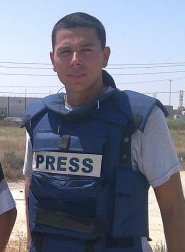


Ayman Mohyeldin, Al-Jazeera TV correspondent
Ayman joins hosts in the studio. He is an Al Jazeera TV correspondent and former CNN producer based in Baghdad. He was the only news producer allowed to observe and report on the US handover of Saddam Hussein to an Iraqi judge. Ayman has been stationed in the Gaza Strip since May 2008, where he has covered the Gaza siege. Ayman talks with hosts about his experience covering the destruction during Operation Cast Lead. Filmmakers and producers are working on a documentary film about Ayman’s war reporting in Palestine. Facebook link
Ayman Mohyeldin:
- Saturday December 27th, 2008, I had been based in Gaza. It had been quiet in Gaza up to November 4th.
- We started hearing the first wave of Israeli air-strikes that destroyed government buildings, police station within minutes. It kicked of a series of air strikes throughout the day. 200 hundred Palestinians were killed that day.
- We really saw everything, I can’t begin to describe the horrors of what we saw. On the first day we went to the main Gaza hospital.
- People of Gaza were trapped in a territory subjected to a very modern sophisticated, well trained and equipped Army.
- By Israel’s own admission rocket fire into Israel had dropped 98 percent 4 months ago (before Operation CastLead)
- What were the real reasons for the attack, the war was unnecessary given what was achieved in the 4 months prior.
- The siege on Gaza has allowed Hamas to tighten it’s grip on Gaza. The siege has not punished Hamas.
- Palestinians have recycled the rubber and steel from the destruction.
- I was standing on a rooftop and they were dropping hundreds of leaflets from planes, that read “your area is going to be attacked, if have any information about Hamas, please call this number.”
- Goldstone Report: Israel while bombing did not distinguish between military and civilian targets. Not a mistake.
- Targets include – Mosques, schools, ambulance drivers, government buildings, ministries, Palestinian Legislative Council Building.
- Gaza, historically was not an affluent place, it was a merchant trade route from Africa into Asia and Europe.
- Stunted growth is starting to appear among Palestinian children.
- Gaza: Desperate, frustrated, a sense of abandonment by the international community.
Guest- Ayman Mohyeldin, Arab American journalist based in the Middle East and is the Gaza Correspondent for the English language channel Al-Jazeera. Previously a producer with CNN and NBC, Ayman was one of the first western journalists allowed to enter and report on the handing over and trial of the deposed President of Iraq Saddam Hussein by the Iraqi Interim Government for crimes against humanity
———————-
Afghanistan War, Civil Liberties, FBI Intrusion, Habeas Corpus, Human Rights, Prison Industry, Surveillance, Targeting Muslims, Torture
Podcast: Play in new window | Download
Updates:
—–
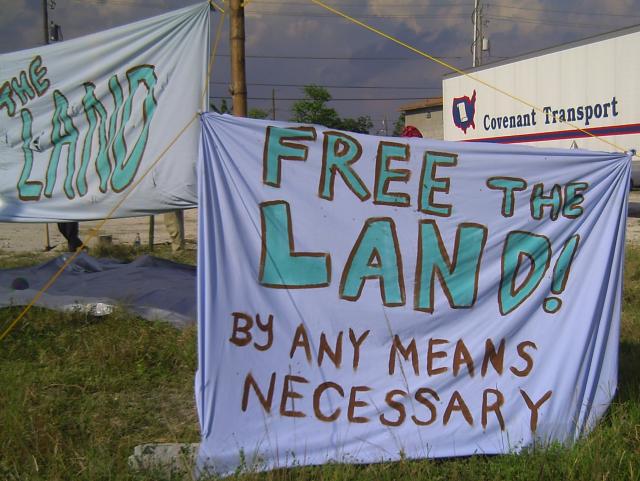
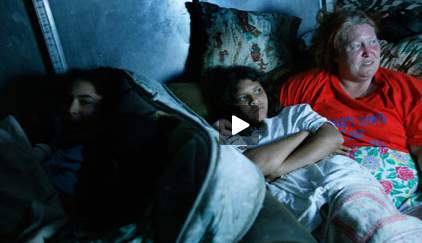
Take Back The Land and The Center For Constitutional Rights Delegation To South Africa
The national movement, Take Back the Land has demanded housing for the homeless in Miami, New York City and is in South Africa to engage in anti-eviction and land reform work. Lawyers with the Center for Constitutional Rights will also join Take Back the Land and provide legal support to the social justice movements. The two groups will be in Cape Town with the Anti-Eviction Campaign and 3 days in Durban with Abahlali bs Mjondolo or (ABM). Among the core beliefs of this project called the Center for Pan African Development are, land is an essential element of liberation, the black community must collectively control land in the black community and the path to liberation is pave through self-determination, not the accommodation of those in power.
Sunita Patel:
- The history of Apartheid is so connected to land and redistribution of land. We spent a few days in Cape Town with the Anti-Eviction Campaign. We traveled to Durban and visited with ABM there. Throughout the trip activists and community members had shared stories of displacement and mass evictions at the government’s hands, without any redress. We have a lot to learn from the movement in South Africa.
- In the United States, we can’t think beyond the private ownership of land.
- Housing is not a constitutionally protected right. Where we can gain from international human rights law, we need to infuse that into our work. The Universal Declaration of Human Rights, recognizes housing as a human right.
- South African Constitution states in articles 26 and 33 affording one house for one family.
Guest – CCR staff attorney, Sunita Patel is involved with racial profiling, immigrant rights and other human rights litigation. Prior to her position at CCR, she held a Soros Justice Fellowship at The Legal Aid Society, Immigration Law Unit in New York where she represented immigrant detainees in removal proceedings and worked with criminal justice and human rights groups to create independent community oversight for detention operations through public accountability boards.
————–
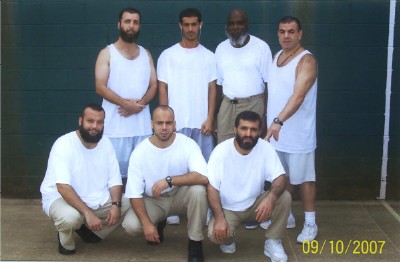

CCR Challenges Experimental Prison Units that Restrict Communication
The Center for Constitutional Rights filed a lawsuit challenging violations of fundamental constitutional rights, including the right to due process, at two experimental federal prison units called “Communications Management Units” (CMUs). The units are being used overwhelmingly to hold Muslim prisoners and prisoners with unpopular political beliefs.
CCR filed Aref v. Holder in the D.C. District Court on behalf of five current and former prisoners of the units in Terre Haute, IN and Marion, IL; two other plaintiffs are the spouses of prisoners. The CMUs were secretly opened under the Bush administration in 2006 and 2007 respectively and were designed to monitor and control the communications of certain prisoners and to isolate them from other prisoners and the outside world. More about Aref
Rachel Meeropol:
- It’s the first time we’ve seen units like this in the federal system. The Bureau of Prisons secretly created these prisons in 2006 and 2007 under the Bush Administration.
- The bureau of prisons initially offered a public comment period and were flooded with comments of what a bad idea this is. They withdrew the public comment and continued to build the prison in secret.
- There’s no meaningful process at all as to who should be put in this unit.
- The Bureau of Prisons has published very broad criteria about the types of individuals, it thinks belongs there.
- The criteria is so broad it could encompass tens of thousands of prisoners.
- When we look at who is being sent the unit, it’s mostly Middle Eastern Muslims, African Americans who have converted to Islam in prison, and also a lot of people with unpopular political views.
- One of our clients Daniel McGowan, is an environmental activist who is serving a term in prison. He never violated a prison rule, he was a low security prison for the first part of his sentence, and then without any reason, he is moved to this highly restricted unit.
- The CMU is an experiment in social isolation. Very few opportunities for visits. Uniquely cruel for individuals who have to undergo it.
- Bad public policy, these individuals are going to be released at some point.
- We are seeking to challenge the extreme limitations on their phone calls and visits.
- Most inmates get 300 minutes a month of phone calls, my clients for years had only one 15 minute call a week.
- For prisoners with large families, this is incredibly difficult. It seems to me this is truly about silencing advocacy from inside the prison.
- Some of our clients including Mr Aref were convicted on terrorism related charges, in his case material support.
- When prisons move prisoners into the CMU of extremely restricted confinement without any process or explanation, of course leads to putting prisoners in the CMU for discriminatory or retaliatory reasons.
Guest – Rachel Meeropol has worked at the Center for Constitutional Rights (CCR) since 2002. She is the co-editor and primary author of the Jailhouse Lawyers Handbook, a widely-requested resource for prisoners, and the editor of America’s Disappeared: Secret Imprisonment, Detainees, and the “War on Terror,” (Seven Stories Press, 2005).
—————–
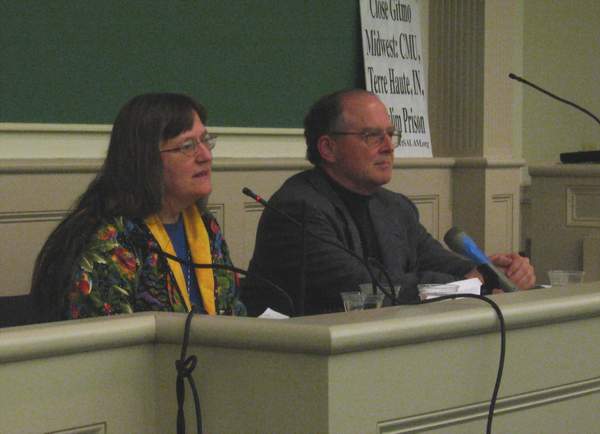
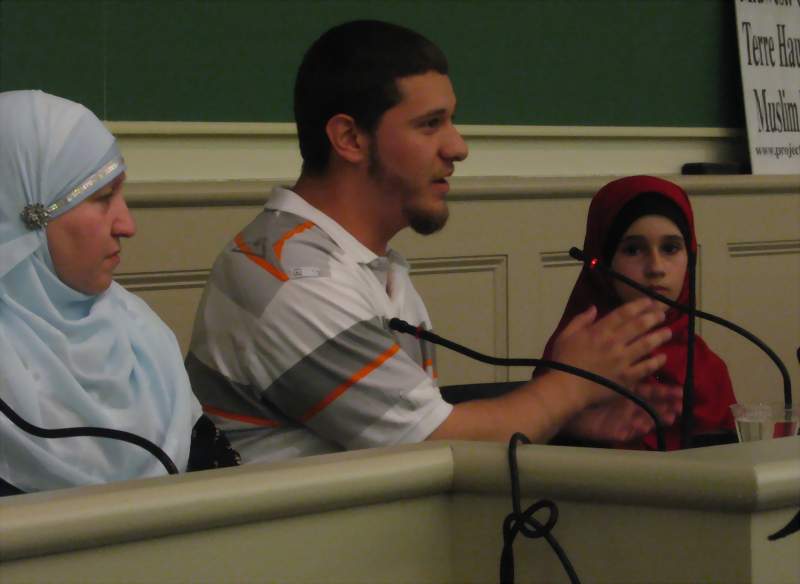
FBI Entrapment: Personal Stories of Preemptive Prosecution
We go now to hear segments from the event titled FBI Entrapment: Personal Stories of Preemptive Prosecution sponsored by the National Lawyers Guild, Middle Eastern Law Students Association (MELSA), Islamic Law Students Association (ILSA) and Law Students for Human Rights.
Families and community members gathered in a room at NYU to discuss their cases, and how their family members were entrapped by FBI informants and agent provocateur tactics. As we have reported in the past years, the FBI have used these tactics to target Muslims and others by offering money and assets within impoverished communities. Some FBI groups target mosques and incite violent action. Most informants are felons, that have made plea-deals with the FBI. As we have seen, these stories make headlines across the country on Memorial Day or the 4th of July, meanwhile, these men implicated in the FBI stings are serving long sentences. We get an inside perspective from their families. We hear from Lynne Jackson and Attorney Stephen Downs from Project Salam. We also hear from 12 year old Lejla Duka, and her cousin, family members with the Fort Dix Five case.
Lynne Jackson / Attorney Stephen Downs
- CCR filed Aref v. Holder in the D.C. District Court
- Aref/Hossain have left behind 2 families, 10 children, ranging in ages 4-16 years old.
- What is going on with our country?
- We formed Project Salam, we need to look at all these case together, there are hundreds of cases.
- We’ve had no response at all from President Obama or Attorney General Holder
- The Cheney one percent doctrine. If there is one percent chance that a Muslim will commit a terrorist act down the road you have to take them out.
- One of the worst things you can do as Muslim is be generous. The government made good use of the material support for terrorism statute.
- Certainly from my point of view, as a lawyer I assume every conversation I have is being monitored. I think all of you should to.
- Check out prisoner database at CMU’s (PDF)
Lynne Jackson, volunteer and co-founder of Project Salam, Attorney Stephen Downs, a retired New York State attorney and a volunteer attorney for the Yassin Aref case. Listen to last year’s Law and Disorder interview.
————————————————————————–
Civil Liberties, Criminalizing Dissent, FBI Intrusion, Gaza, Human Rights, Prison Industry, Truth to Power
Podcast: Play in new window | Download
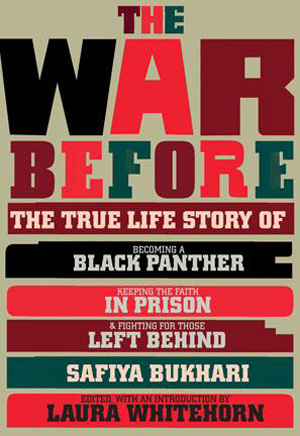
The War Before: The Story of Black Panther and Political Prisoner Safiya Bukhari – By Laura Whitehorn
We’re delighted to have political activist and former Weather Underground member Laura Whitehorn back with us to talk about her new book titled, The War Before. In the book about Laura introduces us to Safiya Bukhari, a member of the Black Panther Party in the late 1960s. The War Before traces Safiya’s life’s commitment of organizing around the rights of the oppressed. Through Safiya’s personal writings, we hear her unique perspective of what had happened to the Black Panther Party and her personal insights into the incarceration of outspoken radicals. Safiya, herself a longtime political prisoner and jailhouse activist, died in 2003. It was at the request of Safiya’s daughter Wonda Jones, that Laura assembled and edited the War Before.
Laura Whitehorn/Sundiata Sadiq:
- When I was first in prison there was no library. Nothing. Whoever we were as political prisoners, we would have met Safiya. When she got out of prison in 1983, she made it her business to go and fight for every political prisoner in this country, that she could get to who wanted to be part of a movement to free political prisoners.
- Safiya: The fight for the freedom of political prisoners can’t be separate from the fight against repression in general whomever that is effecting. If she were alive today, I’m sure she would have been at the rally for Fahad Hashmi and fighting for the rights of immigrant detainees.
- Safiya: Political prisoners will continue to arise if people oppose the government.
- This book began with Wonda Jones (Safiya’s daughter) Wonda in some ways has been working on this book for her entire life.
- Safiya was aware all the time that the “freedom and democracy” that this country promotes as its image only exists on the suffering of so many people. Her politics were a challenge to the government all along, her being was a challenge.
- Some of these are essays, some of these are speeches. Safiya was investigating, she was questioning, she was willing to look at herself, what each of us brings into a movement. There is a connection between her humility, her honesty and her commitment.
- Sundiata: I became close to Herman Ferguson and Safiya.
- Laura: I was in prison when Jericho was founded.
- Sundiata: I was asked to get Sofiya into the Sing Sing Prison to talk to the brothers.
- They had to remove her (Safiya) uterus because of fibroids.
- In the February issue of the Monthly Review we have an excerpt of Sofiya’s chapters. It’s about post traumatic stress symptoms in the Black Panther party. When I was putting this manuscript together and re-read it, I thought, I would like people to read this book from beginning to end.
Guest: Laura Whitehorn – revolutionary ex-political prisoner and native New Yorker Laura Whitehorn. Since the 1960s Laura was active in supporting groups such as the Black Panther Party, the Black Liberation Movement and was active with Students for a Democratic Society and the Weather Underground. Laura also worked to expose the FBI’s Counter Intelligence.
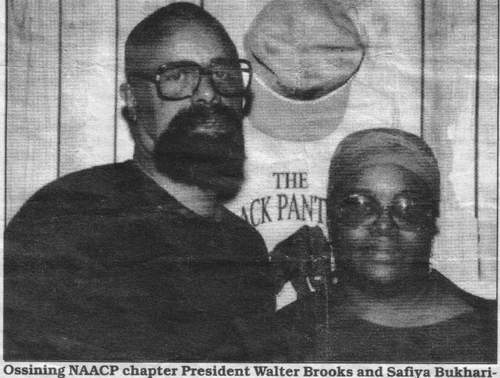
Guest – Sundiata Sadiq. (Walter Brooks) He is a leading member of the Free Mumia Abu-Jamal Coalition in New York City and was a close friend of Safiya Bukhari for many years. Sudiata has been politically active since the late sixties, and he was also the president of the Ossining, New York Chapter of the NAACP.
—-
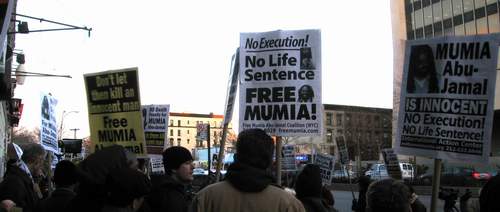
Educators for Mumia Abu-Jamal: Johanna Fernandez
The U.S. Supreme Court recently re-opened the possibility that Pennsylvania may execute award-winning journalist and world-renowned “Voice of the Voiceless” Mumia Abu-Jamal. The high Court referred his case back to the Third Circuit to reconsider its 2008 decision that Mumia could have a new penalty phase hearing in light of the Court’s ruling in the Ohio case of Smith v. Spisak. Spisak’s jury-imposed death sentence had been reversed when his attorneys, like Mumia’s, successfully invoked a critical 1988 Supreme Court decision in the Mills V. Maryland case. Mills rejected the idea that jurors had to be unanimous on the mitigating circumstances that existed in a case. Before Mills, juries had little or no alternative but to impose death if even one juror blocked consideration of a mitigating circumstance. The High Court’s recent decision in Mills will now make it easier to obtain death sentences in capital cases; Mumia’s attorneys will argue that his case is distinguishable from Spisak’s.
Mumia as many know, was convicted and sentenced to death for the 1981 murder of police officer Daniel Faulkner. A previous guest here on Law and Disorder, author/ journalist J. Patrick O’Connor who wrote The Framing of Mumia Abu Jamal, says the real shooter was Kenneth Freeman a business partner of Mumia’s brother. Freeman, was found dead in 1985, bound and cuffed in a Philadelphia parking lot.
Professor Johanna Fernandez:
- Educators for Mumia Abu-Jamal emerged in the 1990s to build a profile for Mumia on college campuses among educators and students.
- We’re also making the movement mainstream in pointing out what’s wrong with the criminal justice system.
- We’re getting a hip hop show for schools for spring break (Pennsylvania colleges)
- We want to educate young people and students in a nation that incarcerates 3 million people. That’s the size of San Francisco.
- I’ve known Mumia for about five years. I have used Mumia in the classroom live through phone conference. He speaks on issues such as the Vietnam War, the civil rights movement, the Black Panther Party and the criminal justice system today. These live conferences are incredibly powerful.
- Conversations with Mumia are intense, we talk about politics, Obama. We talk a lot about what life is like on death row. His cell is the size of a small bathroom. He’s only allowed 20 books at any given time. His cell is messy because he’s a researcher, a writer.
- Mumia: food is horrendous. They’re allowed to buy food, MRE style pre-packaged dry food. The servicing of inmates in this country is a billion dollar industry.
- What’s interesting about his situation is the state has tried to strip him of his intellectual vitality. Although they have failed, he’s written six books from death row, he’s got his radio journals.
- The first thing the movement is asking people to do is to arm themselves with the facts of the case. Then you can sign a petition. There’s another petition calling for Obama to make a statement on the case.
- If you’re a student or a university professor we are asking you to help us organize a large town hall meeting, for April 3, 2010 (likely in NYC) Mumia’s case should be taken up during Black History Month by colleges all over the city.
Guest – Educators for Mumia member Johanna Fernandez. Johanna Fernandez is a native New Yorker. She received a Ph.D. in History from Columbia University and a B.A. in Literature and American Civilization from Brown University.
——-
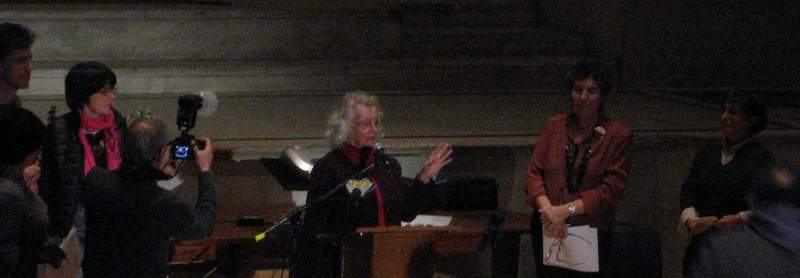
Gaza Freedom March Report Back Speeches
We hear another strong speech from Palestinian teacher and filmmaker Fida Qishta. Fida is from Rafah, Southern Gaza.
Gaza Freedom March Commitments Include:
- Palestinian Self-Determination
- Ending the Occupation
- Equal Rights for All within historic Palestine
- The full Right of Return for Palestinian refugees
From: Waging Nonviolence blog. The Egyptian government didn’t let most of the over 1,300 protesters from around the world into Gaza for the planned march, but those at Judson said that they witnessed a new stage in the emergence of a global movement, facilitated by the Internet, that may well be poised to end the international support that makes Israel’s policies possible. The lynchpin of the movement, the Cairo Declaration of the Gaza Freedom March, was drafted by would-be marchers while they waited in Egypt.
——————————————————————————————–
Afghanistan War, Civil Liberties, Criminalizing Dissent, Death Penalty, FBI Intrusion, Human Rights, Prison Industry, Supreme Court, Surveillance, Targeting Muslims, Torture, Truth to Power
Podcast: Play in new window | Download
Updates:
—
The Death Penalty Loses Support of The American Law Institute
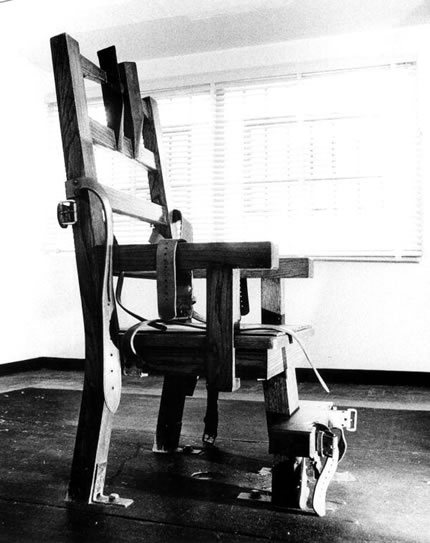
In late 2009, the American Law Institute, which created the intellectual structure for the current capital justice system for nearly 50 years, essentially announced that its project has failed. The American Law Institute or A.L.I. is made up of around 4 thousand judges, lawyers and law professors, streamlines law and model codes to provide coherence in a federal legal system that is usually taking a varied approach. In a 1962 Model Code, the best legal minds of the institute framed a way for the death penalty to be carried out fairly, it then was re-instated in 1976. Now, the same people disavow the structure saying there is no fair system of capital punishment. The New York Times, in one article wrote (quote) the institute’s move represents a tectonic shift in legal theory. The article also points out that capital punishment was plagued by problems including racial disparities.
David Seth Michaels:
- American Law Institute, the intellectual group that tries to cobble together federal law in the United States including capital punishment. The capital punishment rules that they invented fifty years ago, have been the groundwork on which everything has happened since.
- So, it comes as a bit of a shock that fifty years later, they say “oh, oh.” It doesn’t work. It won’t work, we can’t make it work, so we’re going to fold up our tents. We won’t have anything else to do with it.
- Unworkable elements in the system: They’re troubled by the racial disparity on who gets executed, there’s tremendous disparity that is regional across the U.S. The prospect of capital punishment is ridiculously expensive. There’s risk of executing innocent people and politics of appointed judges who wantonly convict.
- It’s one of these circumstances that it is irreparably falling apart, broken. Everywhere you turn you find horrendous errors, egregious discrimination.
- The murder rate is higher in places where they have the death penalty than places where they don’t have the death penalty. Public support for the death penalty has been slowly and gradually decreasing.
- In the early 70s I became concerned about conditions in the prisons and mental hospitals in Tennesee and Mississippi. This is after the restoration of the death penalty in 1976.
- I can’t wait for the day that capital punishment is abolished. This system can’t die soon enough. You got nobody supporting the death penalty on an intellectual basis.
- National Coalition Against the Death Penalty.
Guest – Attorney David Seth Michaels. David has represented clients for 30 years, clients such as prison inmates in Mississippi and Tennessee. He’s worked with Brooklyn Legal Services B and with the Federal Defenders Service Appeals. He is also a novelist, has his own practice in New York.
—————————-
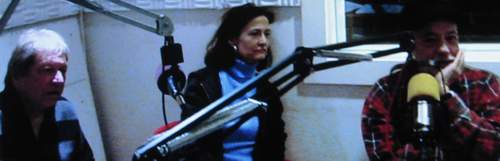
Lawyers You’ll Like: Jim Lafferty Part II
We’re delighted to have back with us attorney Jim Lafferty for the second half of our Lawyers You’ll Like series. He is the Executive Director of the National Lawyers Guild in Los Angeles and host of The Lawyers Guild Show, a weekly public affairs program on Pacifica radio sister station KPFK, 90.7 FM in L.A.
He has served as a chief officer of, and spokesperson for, various national anti-war coalitions, including the National Peace Action Coalition, the anti-Vietnam War coalition that organized the largest protests during that war; the National Coalition for Peace in the Middle East; and, the National Campaign to End U.S. Intervention in the Philippines. In the 60s and 70s, his law firm, Lafferty, Reosti, Jabara, Papakian & Smith, represented virtually all of the left political movements in and around Detroit, Michigan, during which time he became one of this nation’s leading experts on Selective Service law and military law.
In the early 80’s, Mr. Lafferty founded and chaired the largest A.C.L.U. Chapter in the State of Michigan. In New York City, in the late 80’s and early 90’s, he traveled the world organizing on behalf of the labor rights of merchant seafarers. During this time he also taught a course at the New School for Social Research, entitled, Vietnam: The War at Home and Abroad. More recently, Jim Lafferty was the Coordinator of the L.A. Coalition to Stop the Execution of Mumia Abu-Jamal, as well as a member of the national steering committee of the Campaign to Stop the Execution of Mumia Abu-Jamal.
Jim Lafferty:
- The man who was presented to me as my uncle, when I was sixteen he died, my mother acknowledged that he was my father. A friend of mine, she was a white nurse and she was married to a white school teacher and had a 3 year old daughter.
- She divorced that man and married a black surgeon. Her mother and former husband wanted custody feeling it was inappropriate for child to be raised in biracial home. George Crockett was one of the lawyers in the National Lawyers Guild in Michigan, took the case only if I clerked and read every opinion on domestic relations given down by the Michigan Supreme Court.
- We lost that case, and I continued working with that firm. They made a movie about that called “One Potato, Two Potato”
- The firm had been lawyers for UAW. I had gone down South to work with the lawyers guild in 1963, I was taking depositions for the Freedom Democratic Party. That’s where I met Mary Robinson.
- Bill Kunstler and Arthur Kinoy / Bill Kunstler’s book (1966) Deep In My Heart
- Michael Smith: Jeff Haas says Fred Hampton had Bill’s book, Deep In My Heart on his bed.
- When you finally take a stand, even though it leads to your incarceration and apparent lack of freedom, you’re finally free. Anti-war movements: Some friends of mine ran as peace candidates just to bring up the question of the war. We ran the entire campaign for 3300.00. Including 10 small billboards. Later we put together the Detroit Coalition to End the War in Vietnam Now.
- I wasn’t representing people anymore, but as the head of this coalition, you were doing public speaking, and getting an appreciation for what the power of people could do. To the credit of those lawyers who were winning those victories, even then they were saying to younger lawyers like me, but the real important thing is what goes on in the streets.
- Los Angeles Chapter of the National Lawyers Guild, – Labor Movement is vital. The anti-war movement is vibrant. You can’t blame the young activists for not knowing history, because nobody’s bothered to teach them. I’d like to see the movement coalesce around a meaningful left socialist third party.
- On the issue of the war, we’re worse off than we were with Bush.
- Healthcare plan: boondoggle for insurance companies, if you insure people who haven’t been insured, the profits of insurance companies aren’t gonna go down, you and I will pay more. Whereas the government should be paying more. NY Times article: putting aside the public option, you get past it by not dealing with it.
Guest – Attorney Jim Lafferty, Executive Director of the National Lawyers Guild in Los Angeles and host of The Lawyers Guild Show, a weekly public affairs program on Pacifica radio sister station KPFK, 90.7 FM in L.A.
————————————————————–
Censorship, Civil Liberties, Criminalizing Dissent, Gaza, Guantanamo, Habeas Corpus, Human Rights, Military Tribunal, Prison Industry, Targeting Muslims, Torture, Truth to Power
Podcast: Play in new window | Download
Updates:
—
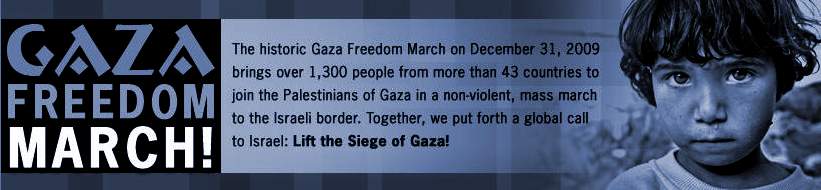
Historic International Support: Gaza Freedom March Debrief
Hundreds of activists with the Gaza Freedom Marchers have returned from Israel, Palestine and Egypt bringing home incredible stories from the largest international mobilization of people in solidarity. We hear first hand accounts from our own Michael Ratner who with his family were among the 13 hundred solidarity marchers. We are also joined by Felice Gelman who has also returned from the Gaza Freedom March. As many listeners may know, the Egyptian authorities refused to allow the 1,365 participants from 43 countries to enter the Gaza Strip, but later 100 people were let in to Gaza.
Felice Gelman / Michael Ratner:
- It was a remarkable event despite not getting into Gaza. 1400 people from 43 countries, Europe India, Australia, South Africa. Within 3 days the Egyptian government went from we need more info, we’re working with you to . . . you’re not coming.
- We were unable to get a meeting place at any time for any group of people. The Egyptians said that any gathering of more than six people would be illegal. One of the prerequisites in order to get into Gaza is you don’t engage with local opposition in Egypt. In a way it was a perfect demonstration of what the siege in Gaza is all about.
- Egypt is a police state. There are 2 million police for a population of 60 million.
- Egyptian police are very brutal with their people. They’re disappeared, they’re tortured. No room for democracy. No support for a civil society to express itself to protest.
- The thing that was incredible was the number of Egyptians that wanted to join us. There were a couple of instances where people were hurt. The secret police would try to single people out at a demonstration and punch or hit them.
- They would identify women who were Muslims. I don’t know if was that they were Egyptian and they (secret police) thought they could get away with it. They beat up a 12 year old girl and a 75 year old woman, they were not discriminating.
- Egyptians (opposition) joined in with GFM demonstrations in Cairo.
- We had a demonstration at the US Embassy in Cairo, the police surrounded them for five hours before they could get into Embassy. The US Embassy didn’t seem to think that this was bizarre until they were reminded of their legal obligation to help their citizens.
- the US Embassy informed the Egyptian police that they had no objection of us going to Gaza.
- There were some people who went to Al-Arish, and the Egyptian police were onto that. They surrounded a hotel in Al-Arish
- (Michael Ratner) I can’t imagine the logistics and the organizing nightmare it was for you guys
- I can’t think of a time since the Spanish Civil War, that there was a contingent of such size and national breadth that traveled to assist people in their distress from a brutal attack.
- I think this was an incredible demonstration of where the world stands on Gaza.
- My kids 19 and 21, seeing people with the courage to go to these demonstrations from all over the world. Out of that I think there will be a global organizing structure.
- The other thing is the drafting of the Cairo Declaration, drafted by the South African delegation. Calling on the ending of the occupations of Gaza and the West Bank, primarily with global BDS movements. (Palestinian unified call)
- When Gaza was getting attacked, it was the South African trade unionists that refused to load the weapons that were being sent to Israel.
- The potential for labor to move on this is enormous and powerful.
- The Gaza Freedom March website will be handed over to the committee working on the Cairo Declaration.
- New York Report Back – Judson Memorial Church January 21 / 55 Washington Square S.
Guest: Felice Gelman, member of the Wespac Middle East Committee and a member of the Steering Committee that organized The Gaza Freedom March. She has traveled to Gaza twice since the Israeli invasion last year.
—————–
The Response: Sig Libowitz – Combatant Status Review Tribunals
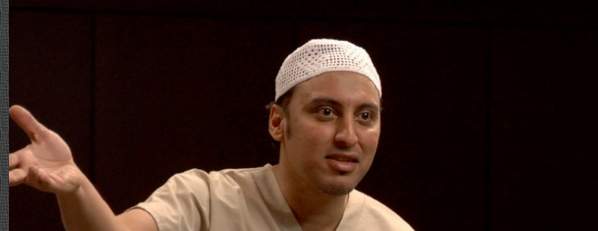
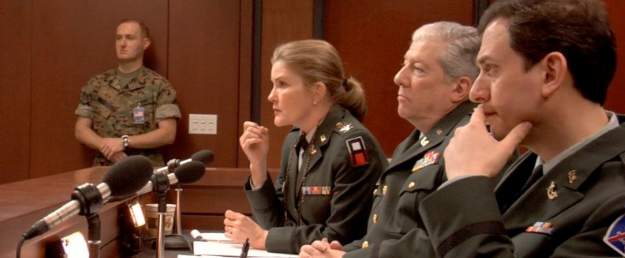
January 11, 2010 marked the 8th anniversary since the Bush administration turned the US Naval Base at Guantanamo Bay, Cuba into a “enemy combatant” detention facility. Essentially re-commissioning the base as a torture chamber and legal black hole, where prisoner suicides are considered acts of war. As we’ve reported on in the last few months, the Obama administration has held on to the power to allow for a preventive detention system that would indefinitely jail terror suspects in the United States without trial. Meanwhile, military tribunals are now mainstream news, the tribunals are called Combatant Status Review Tribunals, where military justices discern who is an enemy combatant. These trials are also the subject of a 30 minute film titled The Response. The film is written and produced by actor Sig Libowitz who is transitioning from being an actor playing an attorney on the TV series Law and Order, to becoming a real lawyer. While in law school, Libowitz was tranfixed by the tribunal process of no jury and no defense lawyer. The film is based on actual court transcripts and is shortlisted for The Academy Award. The Response is screening at Columbia University’s School of Law on January 20th at 6pm.
Sig Libowitz:
- Michael Ratner: First of all there was no real process for people in Guantanamo. Then we won the right to Habeas Corpus, to go into a federal court and challenge their detention. At that point the Bush Administration set up a special process in Guantanamo.
- As we depict in the film, this is a process where the detainees don’t have a lawyer, they are not provided with the evidence that’s against them. The real transcripts told the story of the detainees and the judges in these CSRTs. From that I saw an incredible movie, and incredible opportunity.
- Because, I thought I had an understanding of what Guantanamo was all about, then I read the transcripts (of a CSRT) It gives a human dimension to the detainee and the military judges.
- Screening at Columbia Law School, Wednesday January 20th 6PM All the cast will be there and Shane Kadidal and Matthew Waxman. We’ve screened the movie at the Pentagon.
Guest: Sig Libowitz, an American lawyer, actor, film executive and director. Libowitz is notable for producing, directing and starring in a film, The Response, he wrote after reading some transcripts from Guantanamo captives‘ Combatant Status Review Tribunals. Libowitz is an executive for the acquisitions department of Turner Classic movies. He had a recurring roles in The Sopranos and Law and Order.
——————

Free Fahad Hashmi
Fahad Hashmi a Pakistani born American student, has spent nearly 2 1/2 years in solitary confinement in a Manhattan detention facility. He has been isolated for one of the longest periods in America as a suspect before trial. Hosts reported on this case in March 2008, we spoke with Fahad Hashmi’s father Syed Anwar, and Fahad’s attorney Sean Mayer. Fahad is accused of storing waterproof socks, ponchos and raincoats. The US charges were based on allowing an acquaintance “Janaid Babar” to store this rain gear in the closet of his London flat. Janaid Babar was a paid government cooperator who has been used to testify against Muslims around the world. Nicknamed ‘Supergrass’ by the British media, Babar was used by the UK government to testify against Omar Khyam and several other Muslim men in the so-called Fertilizer Case. Meanwhile Fahad’s trial is expected in January 2010, the prosecution will use Junaid as a main witness. Hashmi has been held under the SAM’s Special Administrative Measures that include a 23 hour a day lockdown, constant video surveillance of his cell and limited visitation.
(Fahad’s Brother)Faisal Hashmi:
- I’m under SAMs as our family is. Our visits with him, we can’t talk about it, but I can say from open court, he looks frail, he looks jittery He’s been in solitary confinement for 2 and half years.
- He’s in the Metropolitan Correctional Center a few blocks from here. Within his own cell, he’s videotaped at all times. He’s not allowed to talk out loud. He has a microphone in his cell.
- This is about deconstructing a human being, depriving him of his humanity. He’s 29 years old.
- Charged with four counts of material support for terrorism. He stored ponchos and rain gear.
- In 2004, this acquaintance while working on his Master’s degree stayed with Fahad.
- This was January 2004, he went to the US in April 2004, was arrested, and became a cooperating witness for the US government. At this time about 8 people got arrested, some in Pakistan, London and Canada, all on Junaid Barbar’s witness cooperation.
- In June 2006, my brother gets arrested. They tell Fahad, that Junaid gave the ponchos and gloves to Al-Qaeda and you gave material support to terrorists. You let Junaid use your cell phone, and Juanaid borrowed 300.00 from Fahad, saying that his ailing daughter needed the money. Fahad’s trial starts January 6, 2010
- FreeFahad.com This case has nothing to do with ponchos and socks.
Jeanne Theoharis:
- This is a case we need to be concerned about for those who value the first amendment. I had Fahad as a student in Brooklyn College in 2002
- There’s no way to understand this case without understanding the way Fahad was being watched many years ago even as a college student. We’ve sent a letter to the attorney general addressing 3 main issues, the conditions of his confinement, the way his due process is being violated and then first amendment issues.
- The letter was signed by more than 550 scholars and writers. Organizing among the Muslim student community.
- Theaters Against War calling attention to Fahad’s case.
- Free Fahad Vigil January 18, 2010
Guests: Fahad’s brother Faisal Hashmi and Jeanne Theoharis, an associate professor of political science at Brooklyn College, City University of New York. She was one of Fahad’s professors and she has been following this case.
———————————————————————
Criminalizing Dissent, FBI Intrusion, Habeas Corpus, Human Rights, Prison Industry, Supreme Court, Surveillance, Truth to Power
Podcast: Play in new window | Download
Updates:
——-
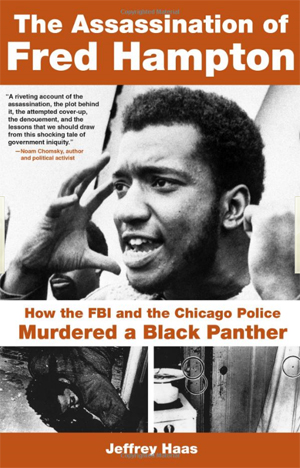
THE ASSASSINATION OF FRED HAMPTON: How the FBI and the Chicago Police Murdered a Black Panther
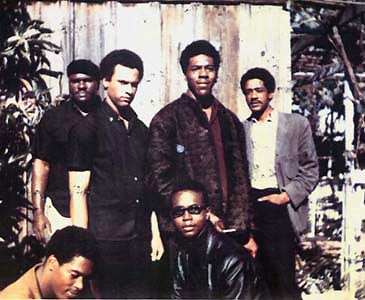
We are pleased to have with us author and National Lawyers Guild attorney Jeff Haas. His new book The Assassination of Fred Hampton: How the FBI and the Chicago Police Murdered a Black Panther, is a page turning true crime story chronicling the tragic murder of Fred Hampton, the young leader of the Chicago Black Panthers. On a dark December day, Chicago police unloaded 80 rounds into Fred Hampton’s bedroom, leaving his pregnant fiancee Deborah Johnson in shock having barely survived. The killing horrified the black community in Chicago. As Haas describes, it took 13 years of grueling litigation from the attorneys at the People’s Law Office collective to finally convict the FBI, the Cook County States Attorney Edward Hanrahan, and the Chicago police for their summary execution Fred Hampton. He was only 21. Today, 40 years later, the People’s Law Office still active in suing and scandalizing the Chicago police for torturing and extracting false confessions from over l00 black men in a south side police station. Jeff Haas Book Tour Dates NYC
Jeff Haas:
- Fred Hampton started in high school, he led a walk out because black girls weren’t considered for Homecoming Queen. He took on the issue of not having enough black teachers and black administrators. Wherever he saw injustice, he felt compelled to deal with it. At ten years old, he started his own breakfast for children program.
- He came from a warm family, in Louisiana, on farms where his grandparents had been slaves.
- I came from Atlanta, GA, a middle class Jewish family. I grew up as many were somewhat raised by blacks, there was a black man who worked at our farm who I idolized. He taught me how to plow with a mule, drive a tractor, things most kids don’t know how to do.
- At school in Chicago, my classmates consisted of John Ashcroft and Bernadine Dorhn. Ashcroft didn’t have much to say in those days. I was with Dr. King, when he marched in Chicago, the anti-war movement was at a peak, the black power movement was strong. There had been riots in the cities.
- Kennedy and King had been assassinated in 1968. It seem like things were headed for the falls, or the rapids.
- I met Fred Hampton because I was in Chicago. He was then head of the NAACP youth branch. A dynamic speaker. Fred could talk to welfare mothers, he could talk to law students, he could talk to gang kids.
- He said basically, if you’re not going to do any revolutionary act by the time you’re 20, you’re dead already.
- The Chicago panthers grew quickly from Nov. 1968, when they started, until his death in 1969.
- Forty years ago, my partner knocked on my door. I opened it and he said the chairman is dead, the pigs vamped on his crib this morning.
- It took me, how the police had killed him. I went and interviewed his fiancee. She told me they entered a room where Fred was semi-conscious.
- First we and with a lot of support from the National Lawyers Guild, the Center for Constitutional Rights filed a civil suit to find out what happened.
- Quickly we found out that the police raid was a shoot in, not a shoot-out. Ninety police shots to 1 shot from the Panthers. We also found out 3 years into the investigation that the FBI had provided a floor plan to the raiders, that showed the bed where Fred would be sleeping.
- And that bed was where the shots converged, so we pursued discovery.
- We found out that the FBI sent a letter to head of the Blackstone Rangers, a year before Fred was killed saying, dear brother, Fred has put a hit out on you. The FBI wanted someone else to do their dirty work.
- The FBI worked on creating conflict between the 2 groups. One of the objectives of the COINTELPRO program was to prevent the rise of a messiah who could unify and electrify the masses.
- Fred Hampton had a slogan, you can kill the revolutionary, but you can’t kill the revolution.
- You can still kill a freedom fighter, but you can’t kill freedom fighting. I think losing a black leader like Fred Hampton does set back the people’s struggle. His spirit, the non-compromising pursuit of justice lives on also.
Guest – Jeffrey Haas is an attorney and cofounder of the People’s Law Office, whose clients included the Black Panthers, Students for a Democratic Society, community activists, and a large number of those opposed to the Vietnam War. He has handled cases involving prisoners’ rights, Puerto Rican nationalists, protesters opposed to human rights violations in Central America, police torture, and the wrongfully accused.
—————————————————————————————————–
The Center For Constitutional Rights: Acorn Lawsuit
The Center for Constitutional Rights has filed a lawsuit on behalf of the community group ACORN. ACORN was recently barred funding by a Congressional Resolution. The lawsuit charges that Congress unfairly targeting the organization and is seeking a temporary restraining order to prevent the government from reallocation funds meant for ACORN. The Center for Constitutional Rights Legal Director Bill Quigley says it’s an outrage to see Congress violating the Constitution and politically grandstand. Bill continues – “With all the crimes and infractions committed by banks, pharmaceutical companies, and private government contractors, they have been rewarded with bailouts, tax credits, and billions of dollars in new contracts. Congress bowed to FOX News and joined in the scapegoating of an organization that helps average Americans going through hard times to get homes, pay their taxes, and vote. Shame on them.”
Bill Quigley:
- ACORN is an association of community organizations that has about 500 hundred thousand members across the United States. They’ve been in existence for some 35 years. They do voter registration, housing foreclosure work, issue organizing.
- In the last five years or so, they’ve registered nearly 2 million to vote. So, they’ve been the target of the right wing for some time. They do very aggressive outreach to get folks who haven’t been registered.
- Regarding sex scandal: The people in those offices, they’re low paid workers, but their goal is to help first time home buyers. So, these tricksters, they were into prostitution, the truth is the people at ACORN would try to help you whether you were a prostitute or not.
- ACORN tried to give advice and some of the people went too far concealing the nature of their work.
- Apart from the politics of punishing people for registering folks to vote, there is a specific part in the US Constitution that’s been in there since the beginning that prohibits what’s called a Bill of Attainder
- Constitution of the United States, Article I, Section 9, paragraph 3 provides that: “No Bill of Attainder or ex post facto Law will be passed.”
- We’re familiar with what happened in England, in Parliament, people in parliament would get all fired up about something and they would just have a specific bill naming a person or organization, and they were outlawed, they could receive the benefits of being a citizen. So the Congress outlawed that.
- So, what they did here, is without any hearings before Congress, without any investigation whatsoever, just based on the rumors and the FOX news sort of stuff. They said that ACORN and any of subsidiaries, or even allies, couldn’t receive any federal funds.
- A one sentence prohibition. It impacts millions of dollars of funds, not going to big salaries.
- It effects ACORN Housing organizations around the country. A lot of the housing works stopped.
- ACORN people have come to us and say we’ve been to law firms around this country but no one can help us now, because we are so stigmatized.
- The framers of the constitution didn’t want Congress to be the prosecutor, judge jury and executioner. We have a way to do this.
- If there’s more to this than just the rumor mongering that’s been done, then there are ways to do it. HUD, Department of Justice, IRS, can say, we suspect you’re misusing the funds and set up a hearing.
- The right wingers didn’t want to go this way, they did an end run and we’re hoping that the courts are going to set that aside.
Guest – CCR Legal Directory Bill Quigley. Bill has been an active public interest lawyer since 1977 and worked with a wide range of public interest organizations on an equally wide range of issues. He has litigated numerous cases with the NAACP Legal Defense and Educational Fund, Inc., the Advancement Project, and with the ACLU of Louisiana, for which he served as General Counsel for over 15 years.
———
Film Professor Sues University for Violating Right to Academic Free Speech
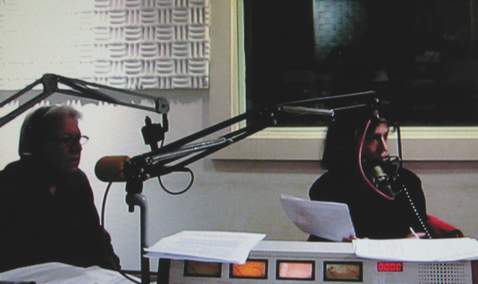
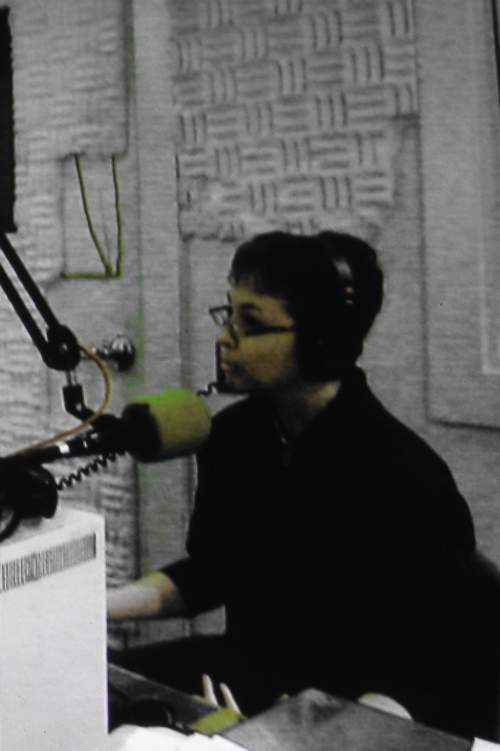
In the fall of 2007, Dr. Terri Ginsberg was hired to teach a film class at the North Carolina State University focusing on the media treatment of the Israeli-Palestinian conflict in 2008. She was also hired to help program a Middle Eastern film series. As Terri details in a grievance the director of the film studies program and the director of the Middle East studies program made a series of decisions that violated her academic freedom. Among the decisions was the limiting of Terri’s invovlement in the series that she had initially been hired to curate. Another was the criticism of an introduction she gave at the screening of the Palestinian film “Ticket to Jerusalem” as biased and overly political.
The grievance filed alleged violations of her First Amendment and equal opportunity rights under the University Code. Her grievance was dismissed on the grounds that it was filed too late and that she was no longer a university employee. Terri has now filed a lawsuit, one mention in the complaint states that in the views of several faculty, Jews who question and challenge the zionist colonial project are non-conforming Jews and therefore are outsiders and dangerous.
Terri Ginsburg / Attorney Rima Kapitan
- I was given strong indication the teaching professorship would convert into a permanent tenure track position.
- That I should apply for it and that I was a shoe in for that position. So I moved down from New York City, where I lived for many years to Raleigh, NC. Not long after I got there, a number of incidents occured that led me to believe the conversion was not going to take place.
- Key people in the faculty were very unhappy with my perspectives on the Israeli – Palestinian conflict and on Zionism. I am a Jewish Anti-Zionist, and I wanted to supply a genuinely balanced perspective on the issue of Zionism and the history as it has been depicted in cinema
- I showed Israeli films, I showed Palestinian films, I showed the array of cinema on this topic.
- This is a large campus upwards to 40 thousand students.
- I was asked to resign from a middle eastern series after I gave an introduction to a film that was pro-Palestinian.
- Attorney Rima Kapitan: Right now we’re alleging they violated her North Carolina Constitutional Rights. They breached her right to academic freedom and equal protection under the law.
- Terri covered every path in North Carolina, the only thing left is a constitutional claim in North Carolina.
- Under the equal protection claim, we’re saying Terri was treated differently because of her religion.
- Terri: The atmosphere is increasingly worse not only for Jews but anyone who speaks out on this issue, especially for non-tenured and temporary labor.
- I had minimal support from the AAUP, they failed until we put out a petition that received over 500 signatures.
- Most faculty on campus were afraid to communicate with me, over email, over telephone.
- I think the Israel-Palestine conflict is one of the core issues facing the United States.
- Film is a small field and gossip travels fast. I’m unemployed. When I did my research on the holocaust, I couldn’t ignore the structural relationship between the holocaust and the Nakba.
Guest- Dr. Terri Ginsberg joins us in the studio today she has a Ph.D. in Cinema Studies from New York University and previously taught in the Jewish Studies Program at Dartmouth College and the Cinema Studies Program at Rutgers University. CODZ
Guest – Attorney Rima Kapitan – staff Attorney at CAIR-Chicago. She is a graduate of DePaul University College of Law and Indiana University and a partner with Amal Law Group, LLC, a general practice law firm. Her main areas of interest and specialization are plaintiff-side employment discrimination, civil rights law, workers compensation and estate planning. She is active in the National Lawyers Guild Middle East Committee.
———————————————-