CIA Sponsored Terror, Civil Liberties, Criminalizing Dissent, FBI Intrusion, Guantanamo, Habeas Corpus, Human Rights, Iraq War, Political Prisoner, Prison Industry, RFID, Supreme Court, Surveillance, Targeting Muslims, Torture, War Resister
Podcast: Play in new window | Download
Updates:
——–
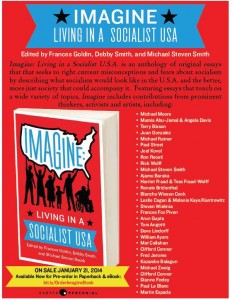
Imagine: Living in a Socialist USA-Frances Goldin, Michael and Debby Smith
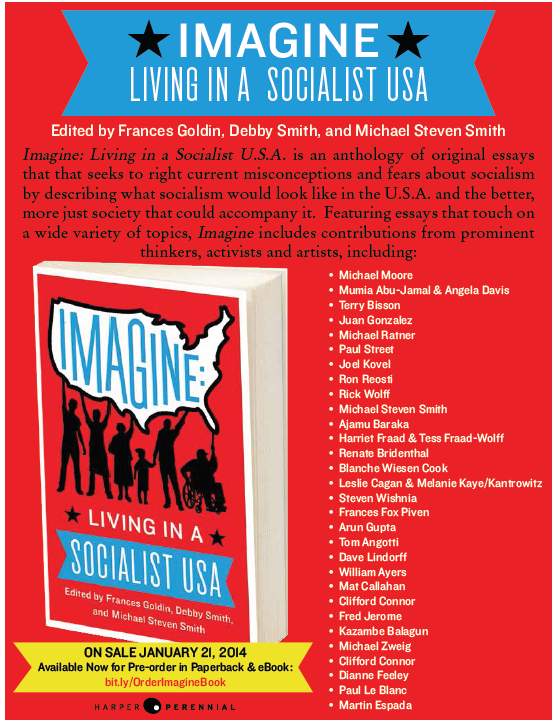
Our own co-host Michael Smith, his wife Debby and Frances Goldin have assembled and edited an anthology of powerful essays titled Imagine Living In A Socialist USA. Prominent thinkers, activists and artists have given their perspective of what the United States would look like through the lens of a socialist society. This new work is an important contribution to what we hope will be a broader movement. It includes an indictment of capitalism, an alternative U.S.A. and how to get there.
Frances Goldin:
- It was my brainchild because I wanted to accomplish 3 things before I joined by ancestors. One is everyone who lived in Cooper Square who had been fighting Robert Moses and saving their old tenements since 1959 its been a tremendous long struggle.
- This is the only community land trust in the Northeast. The only one.
- The next one is that I was really distressed at the direction our country was moving. Here I am 89 years old and all of a sudden North Carolina says that we’re going back to the old days where you had to bring in your right arm and read the Constitution without missing a word in order to vote. That plus spying on every American and continuing the wars.
- It was just breaking my heart. I was very distressed that everybody thought that socialism was a dirty word, it was an undemocratic terrible way of life and they just didn’t have a clue as to what it really meant.
- I thought it would be a great idea to pull together some of the greatest minds in the country and let them talk about health, education, welfare, homosexuality, every subject that effects American’s lives and explain how it would be different under socialism if it were democratically done, which is the only way it should be done.
- Within one year, 31 leading brains in the United States for no charge, they did it free, wrote their essays on each one of these subjects. The book is in my hand, its finished and its beautiful and it makes me so happy. That’s my second accomplishment.
- The third one is to see one of the leading intellectuals in the world free, forever free. Mumia Abu-Jamal.
- I couldn’t do it alone, it was a great plan and so I leaned on to dear friends, Debby and Michael Smith.
- I had to force Harper Collins into this, they really didn’t want to do it.
- We were very lucky to hire an incredibly good editor, whose livelihood was editing for magazines and newspapers. If a sentence was too long, he cut it into 2 or 3 sentences.
- Right now, the word socialism, people think of dictatorship, they think terrible things, they think undemocratic.
- This is a simple instruction about how it would effect us with regard to health, education, housing, welfare, all of those subjects which make it so difficult for all of us to live.
- It can’t be a dirty word, it happens to be the most democratic way of governing possible.
- Get the workers to run the company. It’s happening in Spain, with dozens of corporations that have become worker owned.
- It’s going to be the workers dividing the profits among themselves.
- It will only happen when the workers are angry enough and informed enough to know that they can run the show.
- Every penny of the royalties will go to free Mumia Abu-Jamal
- We are not earning one dime from this book. It was a labor of love. It was a labor of activism.
- It was a labor to change the world and make it a better place.
Guest – Frances Goldin is the President & Principal of Frances Goldin Literary Agency. Frances has worked in publishing for 63 years, as an agent and as editor-in-chief of a children’s publishing company; she founded the Frances Goldin Literary Agency and sold her first book in 1977. Authored by Black anthropologist Betty Lou Valentine and titled Hustling and Other Hard Work, the book continued to receive royalties for 32 years. One of the agency’s strengths is that many of its books continue to earn royalties long after publication. Reflecting Goldin’s radical politics, the Agency concentrates on literary fiction and serious, controversial, progressive non-fiction.
—–
Attorney Michael Smith:
- I don’t think its a dirty word, because people see what’s going on under capitalism and they don’t like it. The economic situation in this country ain’t gonna change, its only going to get worse.
- Frances is quite an influential literary agent in this country.
- What’s your definition of socialism? I said a democratic economy and political system, both where people from the bottom up control how we make a living, and how we live.
- We’re having a book launch on January 27. It’s at 126 Crosby Street in SOHO at the book store called Housing Works.
- In order to achieve the kind of socialism we’re talking about and that’s socialism from the bottom up you need a broad democratic movement of people.
- All the left wing parties, all the movement groups, we gotta get together around a common program.
- One of the chapters that I really like, and this isn’t to flatter you Michael Ratner, but you wrote a chapter on what I would do if I was US Attorney General.
- Paul LeBlanc writes his chapter about the 3rd American revolution. Diane Feeley writes about that in her chapter. She’s an auto worker retired from Detroit.
- Michael Zweig, the great sociologist, we reprint his speech from Occupy Wall Street where he talks about the 1 percent, the ruling class.
- He says actually its 1/10 of 1 percent. Those are the people who are the top of the economy and different organizations in this country. He said, you gotta be very careful, because these people will kill ya.
- In the second part of the book, we emphasize use your imagination. How do we organize the economy democratically?
- How do you organize a corporation democratically? Rick Wolff wrote that chapter.
- There are 31 chapters in the book. The last chapter suggests itself. How do we do it?
- We’re not against leadership, we’re against undemocratic leadership but you need people who’ve had some experience and who can draw the lessons of the past.
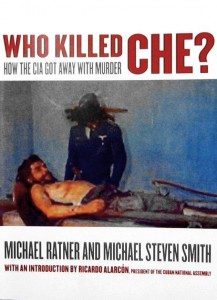
Guest – Attorney Michael Smith is co-host of Law and Disorder, and a New York City attorney and author. His most recent book, written with Michael Ratner , is Who Killed Che? How The CIA Got Away With Murder. He is on the boards of the Center for Constitutional Rights, and the Brecht Forum. He was educated at the University of Wisconsin in the 1960s, where he learned social history from the great teacher Harvey Goldberg. He has testified on Palestinian rights before committees of the US Congress and the United Nations.
Guest – Debby Smith is a long time socialist since going to college in Boston during the radical sixties. Debby worked full-time for the anti-Vietnam War movement, the Kent State Legal Defense Fund and in the feminist, union and socialist movements. She is also the wife of Michael Smith and participates in the anti-capitalist and pro-democracy movements that are growing rapidly in the United States and worldwide.
————————————————————————————————————
Civil Liberties, Criminalizing Dissent, FBI Intrusion, Habeas Corpus, Human Rights, Political Prisoner, Prison Industry, Supreme Court, Surveillance, Truth to Power
Podcast: Play in new window | Download
Lawyers You’ll Like: Professor Holly Maguigan
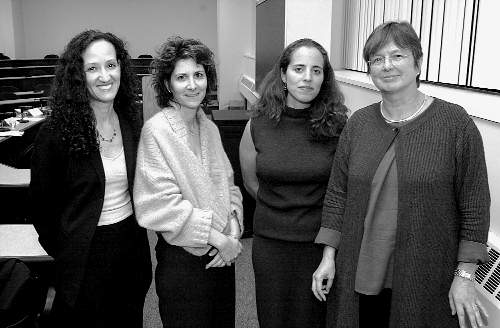
In our Lawyers You’ll Like series we’re joined by Professor Holly Maguigan, Professor of Clinical Law at the New York University School of Law, where she teaches Comparative Criminal Justice Clinic: Focus on Domestic Violence and Evidence. Professor Maguigan is an expert on the criminal trials of battered women. Her research and teaching is interdisciplinary. Professor Maguigan is a member of the Family Violence Prevention Fund’s National Advisory Committee on Cultural Considerations in Domestic Violence cases. She serves on the boards of directors of the National Clearinghouse for the Defense of Battered Women and the William Moses Kunstler Fund for Racial Justice. She is a past co-president of the Society of American Law Teachers, the largest membership organization of law professors in the U.S.
Professor Holly Maguigan:
- I was doing medieval history and I was at Berkeley. It was 1967 and Oakland stopped the draft.
- I got very interested in the anti-war politics.
- I hated lawyers. I really hated lawyers. They were boring. They talked about themselves all the time. They only had stories about their cases and how great they were and they would never post bail when people got arrested.
- The University of Pennsylvania in Philadelphia is where I stayed for 17 years.
- First I started out as a public defender. I loved being a public defender, it was the beginning and end of everything I hoped it would be.
- That’s where I met David Rudovsky and David Kairys. They were then defenders while I was a student.
- After they went out on their own, they kept inviting me to join them. I kept putting it off because I loved being a defender so much.
- In Philadelphia there was much more actual litigation, not just motion litigation there’s a lot of that here in New York City but actual trials.
- You had a sense, there was an analysis that people were doing life on the installment plan and you needed to do what you could to kick them loose any particular time.
- It was a community in its own odd way and I found it difficult to leave it.
- I was doing major felonies within a couple of years.
- David Kairys was very focused on constitutional litigation and government misconduct. He did the Camden 28 which was a big draft resistance case.
- My interest was more into criminal defense.
- Grand juries (all over the country) convened to investigate the alleged transportation of Patty Hearst by the SLA from California where she had been captured.
- He was a killer. (Frank Rizzo) There was no question. More people died in police actions before or since.
- I don’t mean to suggest that all the police started out as homocidal. This was a situation which from the top down came the message if you’re a good cop then you’re going to take people out however you think you need to.
- I knew about race and class bias in the court room as much as a white woman who was middle class could know.
- I was just blown away by what happens when you add hatred of women to hatred of black people and hatred of poor people.
- Judges would go by me in the hall and say Maguigan, ahem, you didn’t give me anything this Christmas, not even one lousy bottle, you’re not getting any assignments.
- Judges would do things, like open the drawer in their chambers, and there would be wads of bills, and they’d let you know.
- I developed a specialty on women who kill men.
- In the early eighties a group in Philadelphia called Women Against Abuse began working and they did advocacy for battered women accused of crime and meant a huge difference.
- The battered women cases I was working on were quite consuming because people then didn’t know very much in how to try these cases.
- The judges expected you to plead insanity or guilty. Reasonable doubt was a consideration at sentencing not at trial.
- There were cases that did require teams. There was no question.
- I wanted to be in court. I wanted to be in the presence of that conflict between the authorities and regular people.
- I went to NYU where I taught in the criminal defense clinic for many years.
- To see students react to the great stories their clients have is just amazing.
- SALT (Society of American Law Teachers) is about who gets into law school, what they learn and who teaches them. It’s about access to justice. It’s about relating to law school as a place where you train people to do social justice. SALT’s focus is on students and teaching.
- Holly Maguigan to be honored by Society of American Law Teachers.
Guest – Professor Holly Maguigan teaches a criminal defense clinic and one in comparative criminal justice as well as a seminar in global public service lawyering and a course in evidence. She is an expert on the criminal trials of battered women. Her research and teaching are interdisciplinary. Of particular importance in her litigation and scholarship are the obstacles to fair trials experienced by people accused of crimes who are not part of the dominant culture. Professor Maguigan is a member of the Family Violence Prevention Fund’s National Advisory Committee on Cultural Considerations in Domestic Violence cases. She serves on the boards of directors of the National Clearinghouse for the Defense of Battered Women and the William Moses Kunstler Fund for Racial Justice. She is a past co-president of the Society of American Law Teachers, the largest membership organization of law professors in the U.S.
——————————————————————————-
Books From Law and Disorder Hosts
Civil Liberties, Criminalizing Dissent, Extraordinary Rendition, FBI Intrusion, Guantanamo, Habeas Corpus, Human Rights, Political Prisoner, Prison Industry, Supreme Court, Surveillance, Targeting Muslims, Torture, Truth to Power, War Resister
Podcast: Play in new window | Download
Updates:
- Judge Leon Rules That NSA Meta Data Collection Is Likely Unconstitutional.
- Michael Ratner: It Could Be The Deathknell For This Kind Of MetaData Collection
- Ed Snowden’s Response To Judge Leon’s Decision
- Ed Snowden’s Open Letter To The People Of Brasil
- A Christmas Card From Chelsea Manning
- Guantánamo Five: Military Commissions – Their Torture Memories Are . . Classified.
- First Commander Lenhardt: Guantánamo Should Never Have Opened
- American Studies Association Supports Boycott Of Israeli Academic Institutions
——
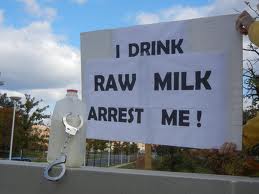
Over Policing of America: The Criminalization of Everyday Life
In his recent article titled Over Policing of America, attorney Chase Madar outlines a familiar narrative such as the militarization of police, stop and frisk, and how students get swept into the school to prison pipeline. The pattern is clear and who benefits is obvious in the list of over policing examples compiled by our returning guest, such as criminalizing immigration and how simple economic transactions are closely scrutinized by under-cover police.
Attorney Chase Madar:
- I’m hoping this new term will enter the national lingo; over-policing.
- What I wrote about is how the police paradigm has entered the DNA of social policy across the board in the United States in matters that a generation ago would not require police or prosecutors or criminal law, now suddenly do.
- That’s in education, in immigration, in family law, even how we regulate the economy.
- All of these spheres, domains of everyday life are increasingly regulated by police and prosecutors.
- A creeping police state. We need to take a very sobering look at how we’re governing ourselves and how criminal law is displacing and devouring all other kinds of social regulation.
- You see this more and more disciplinary matters in schools get outsourced to police departments.
- Police people are trained to respond to crimes, and to respond to everything as a crime. That’s the nature of police.
- When you send police into a school, the crime is going to sky rocket.
- Even the way we regulate our economy is suffering from an overdose of criminal law and police powers.
- What we have frequently is white collar work getting criminalized by a mare’s nest of criminal laws that are very complex, very difficult to understand.
- It’s not like we have a great financial system that was abused by a few bad apples. We have a really crappy system that’s legal because these people write the laws.
- Immigration law was mostly under the domain of administrative law with milder penalties, civil penalties.
- We’re kidding ourselves if we pretend that’s somehow aberrational.
- Although our political class seems incapable of doing anything constructive about it, they are very adept at channeling all fears about security in any sense into criminal law crack downs and ratcheting up the police state.
- Our incarceration rate is three times higher than the old East Germany.
- I think we need to switch very swiftly to alternative ways of social policy in holding our society together other than throwing cops and prosecutors at it.
Guest – Attorney Chase Madar , a TomDispatch regular and author of a new book, The Passion of Bradley Manning (OR Books). Madar tweets @ChMadar. He’s a contributor to the London Review of Books and Le Monde diplomatique and the author of a new book, The Passion of Bradley Manning (OR Books).
——————————————————-
Books From Law and Disorder Hosts
CIA Sponsored Terror, Civil Liberties, Criminalizing Dissent, FBI Intrusion, Habeas Corpus, Human Rights, Supreme Court, Surveillance, Truth to Power, War Resister
Podcast: Play in new window | Download
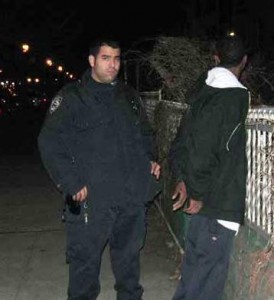
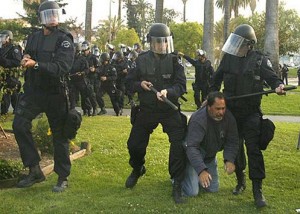
NYPD Chief Bill Bratton – Broken Windows – Stop and Frisk
New York City Mayor-elect Bill de Blasio announced Mr. Bratton’s appointment as the new commissioner of the New York Police Department this month. He lauded Mr. Bratton’s work in Los Angeles, saying he could police fairly while still bringing down crime. After a 7 years leading the Los Angeles Police Department there’s been an increase in police presence among the homeless in and around Skid Row, plus excessive stops of pedestrians especially in poorer communities.
Attorney Carol Sobel:
- Broken Windows is a program that Bratton began in New York with a sociologist that he worked with.
- It’s basically the theory that if you stop the petty issues, you prevent greater crime.
- I use that example because in Los Angeles that’s exactly what they started doing – arresting people on Skid Row for littering, and littering could be the ashes that fell off their cigarette.
- It didn’t reduce crime, it created a statistical reduction.
- Bratton used to do a radio show Ask The Chief on one of the radio stations (In Los Angeles)
- I sued him early and often on Skid Row in particular.
- They would stop every black man on the street, or someone they thought was homeless, cuff them, twist them. If they didn’t have a good ID they’d take em to the station.
- I do think that Bratton was good for the department at that time, and that he changed, from the time that he came til he left.
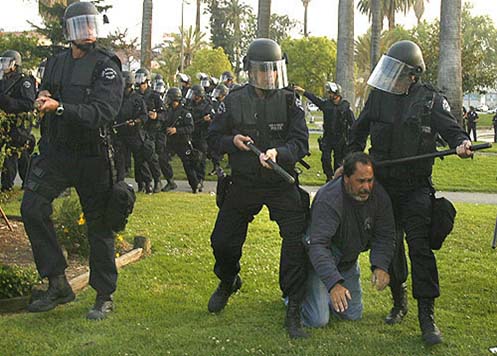
- We had one of the biggest police assaults on a peaceful crowd on May 1, 2006.
- The one thing I think is fair to say about Bratton is that he will take direction which is one thing he didn’t do before.
Guest – Attorney Carol Sobel, is a solo practitioner in Santa Monica, California. Prior to going into private practice, she spent 20 years working in various positions for the ACLU, including as Senior Staff Attorney for the last seven years she was at the ACLU. She has been involved in numerous significant cases in federal and state courts. Carol serves as local counsel for the Center for Constitutional Rights in Humanitarian Law Project v. Ashcroft and served on the Rampart Blue Ribbon Panel. Since 2002, she was named as one of Los Angeles’ Super Lawyers for Civil Rights. Attorney Carol Sobel is a graduate of the Peoples College of Law.
——
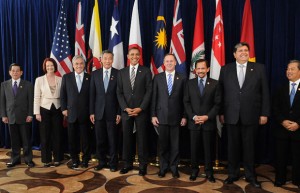
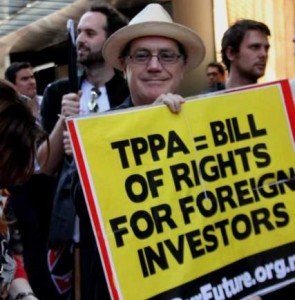
Wikileaks Reveals Quiet Plans and Secret Meetings Behind Trans-Pacific Partnership
Have you heard about the Trans Pacific Partnership? We mentioned it in an update a couple weeks ago. It’s described as an agreement to enhance trade and investments, promote innovation and economic growth among 12 trans-Pacific countries. Those countries include the US, Canada, Japan, Mexico, New Zealand, Australia, Brunei, Chile, Malaysia, Peru, Singapore and Vietnam. As negotiations and talks continue among the countries, much of it is done in secret including an international trade treaty that could have far reaching effects on internet services, copyright law and civil-liberties.
George Kohl:
- It masquerades as a trade deal but its really an economic integration agreement which represents 40 percent of the world’s economy and its a series of countries that circle the Pacific Ocean.
- Its secret negotiations. Unlike most negotiations where you would know what the objectives are of this trade deal. What are the objectives our country is seeking? None of that’s available.
- Congress can’t see what the text is and yet there are 600 corporate lobbyists who get to weigh in and make suggestions.
- It’s a major economic agreement that governs investment. It governs the rights of companies to sue corporations. It governs environmental regulations in our country.
- It governs health and safety regulations here. It will impact food labeling for example.
- We (CWA) were pushing a bill that said if you talk to a call center, you should know where that person works. You should be able to talk to somebody in the United States and that your information should be protected.
- A bill like that could be viewed as interfering with trade and the TPP and the trades that get negotiated would supplant the ability to implement language like that.
- They (TPP) sets up situations that already exist in which companies can sue a country for having environmental protections. Right now there are 14 billion dollars worth of suits where companies are saying my right to gain profit was obstructed by these environmental or other kind of regulations.
- Why is it and who set it up where we open up a trade agreement to Vietnam which pays 20 cents an hour as a minimum wage, which only drive down our wages.
- The objectives that we have in a trade agreement is how do we promote collective bargaining? How do we create growth that benefits working people and that’s not in this picture.
- We’ve got a government that is supposed to be acting of and by the people and instead our government is acting of and by international corporate interests.
- All of this is about creating a structure that lets companies maximize profit but really doesn’t deal with people in their daily lives.
- Where we are at right at this moment is telling Congress that NAFTA didn’t work. There was a promise of 200 thousand jobs, we lost 700 thousand jobs.
- Recently we had a Korea trade deal and promised 70 thousand jobs but we lost 40 thousand jobs.
- People need to reach out to their Congress person now and say be against the Trans-Pacific Partnership.
- You have to ask why is our government acting on behalf of this company (corporations) why isn’t it acting on our behalf?
Guest – George Kohl, Senior Director at the Communications Workers of America.
——
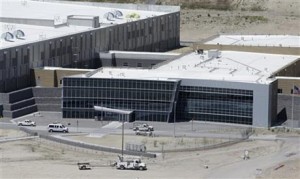
Reform Measures For MetaData Collection, the NSA and EPIC
We take a wide look on recent stories about data mining and privacy, data aggregate corporations, the legal fights to protect personal information and the NSA. Recently a Congressional inquiry revealed how local law enforcement made nearly 10 thousand requests last year for what are called “tower dumps.”
Attorney Alan Butler:
- I think that the core issues that were identified in the letter from the six companies are important issues. Especially the issue of ending bulk surveillance, of increasing transparency of the intelligence process and of improving oversight.
- There are reforms in a number of different areas. We’ve been pushing for transparency of NSA intelligence gathering in the context of criminal investigations for example.
- We’ve been pushing on the intelligence and judiciary committees of Congress and the government to provide public accountability for these programs so people can understand how they function.
- The bulk collection of meta data. . . that program needs to end.
- There’s a bill in Congress right now proposed by Senator Leahy and Rep Sensenbrenner that would end the bulk collection of telephone records if passed today.
- There’s a competing bill introduced by Senator Feinstein and other intelligence committee heads that would enshrine the current bulk collection of telephone records in law.
- Its great to have these companies on board for these reforms but at the same time we’ve been pushing for a number of years for these companies to do more themselves to protect their users.
- Housing this data alone, creates the opportunity for government surveillance in the first place.
- The answer has to be transparency and public oversight of the programs.
- The transparency reports that Google and Apple have published have been impressive documents. They’re putting forward the type of data that they collect on users and the type of data that’s turned over to law enforcement.
- Location data is uniquely sensitive in terms of telephone records because it reveals where a person is, where they go, their associations, their behaviors and can also reveal whether they’re in a private place like a home.
- EPIC is a public advocacy organization and we really seek to inform the public about current and important privacy issues.
- One area of our work is the open government field. We file FOIA requests seeking records on government programs, typically federal agencies. We’re looking at what DHS is doing, what the FBI is doing.
- I worked on a case where we were able to get thousands of records from the FBI on cell phone surveillance technology they use called the Stingray.
- It’s a technology that can be used to intercept cell phones or content.
- I believe that we can build a system where we have oversight mechanisms in place that we can all trust.
- Our organization was founded on strong encryption technology in 1990s where the NSA at the time was trying to establish the “Clipper Chip.”
Guest – Attorney Alan Butler, is the EPIC Appellate Advocacy Counsel. He manages the Appellate Docket at EPIC, including the Amicus Program, and authors briefs in significant privacy, civil liberties, and national security law cases. Recent cases include In re EPIC, United States v. Jones, Clapper v. Amnesty International USA, and Maryland v. King. Mr. Butler focuses on a range of privacy law subjects including the Foreign Intelligence Surveillance Act (FISA), the Electronic Communications Privacy Act (ECPA), location privacy, and other digital Fourth Amendment issues.
————————————————————-
Afghanistan War, CIA Sponsored Terror, Civil Liberties, Criminalizing Dissent, FBI Intrusion, Guantanamo, Habeas Corpus, Human Rights, Political Prisoner, Prison Industry, Supreme Court, Surveillance, Targeting Muslims, Torture, War Resister
Podcast: Play in new window | Download
Updates:
—–
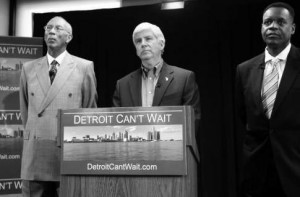
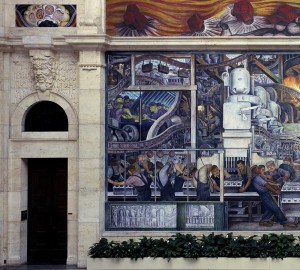
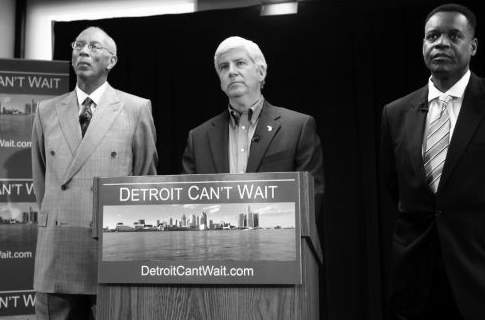
Judge Ruling Allows Detroit Bankruptcy To Move Forward
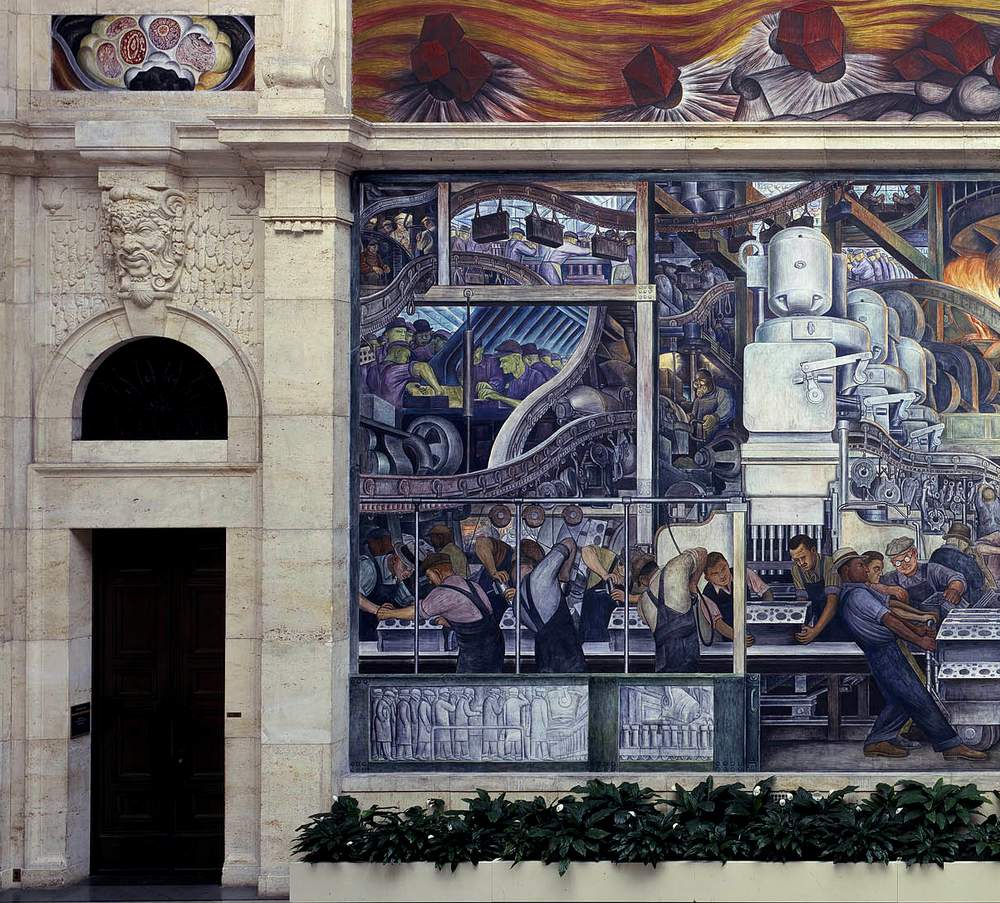
This summer we spoke with retired auto worker and activist Dianne Feeley about the plans to wipe out the pensions and health benefits of all current and retired city workers by emergency manager of Detroit, Kevyn Orr. We also looked at the history of workers in Detroit from the perspective of black workers and the broader pattern of oppression. Last week, a ruling by Judge Stevens W. Rhodes of the U.S. Bankruptcy Court allows the city of Detroit to move forward in the bankruptcy process. The cradle of the American auto industry will now be allowed to pay off debts and restore essential services.
Professor Laura Bartell:
- It is the first time that a bankruptcy judge that pension obligations constitute contractual obligations that are subject to diminution in bankruptcy.
- Although its rattled pensioners nationwide, its really not that extraordinary.
- The healthcare was never protected by the Michigan Constitution. Everyone has always known that healthcare was subject to modification by the city.
- The cuts in health care are going into effect I believe in February for city employees.
- When we’re talking about the pensions we’re talking about the retirees both the firefighters and policemen unions retirees.
- The city maintains that the plans are underfunded by 3.5 billion dollars.
- The union believes that number is vastly inflated based on projected returns that are too low. Whatever the number is its somewhere between 800 million and 3.5 billion.
- The policemen and firefighters don’t have the benefit of social security.
- You’re not talking about a lot of money going to any individual so if you cut the pension to any particular individual its obviously going to be a major cut for that individual.
- The major problem that Detroit has suffered was a vast decline in population.
- It used to be a much larger city. It’s footprint is still a very large city but the number of people living in that footprint is much smaller than it used to be.
- Among that small population there’s an even smaller number of people actually working and paying taxes.
- So the money coming in to meet the obligations of Detroit has been constantly shrinking.
- Detroit’s obligation to retirees in terms of pensions and healthcare is up at 38 percent and rising constantly. – and in addition we had severe mismanagement of city government including criminality. I’m sure everyone knows our former mayor is now in prison.
- My guess is the pensioners will be hit far less severely than the bond holders. Bond holders are making an investment and taking a risk.
- That’s what bankruptcy is about is all people who have done something to become creditors to the city and they’re not going to get what they deserve.
- That’s the problem, everybody is deserving, everybody should get paid.
- The problem is not that the governor has suddenly taken away the democratic rights of Detroit. We’ve had an emergency manager law for many years in the state of Michigan.
- Detroit is the latest and the biggest to have that happen.
- The next stage is a presentation of a plan of adjustment which he will present to creditors at the end of this month and file with the court at the beginning of January.
Guest – Professor Laura Bartell, after graduating from Harvard Law School, where she was an officer on the Harvard Law Review, she clerked for Judge Alvin B. Rubin of the U.S. Court of Appeals for the 5th Circuit in New Orleans. She then entered practice in New York where she became a partner in Shearman & Sterling, specializing in bank financing and bankruptcy work. She is a member of the American Law Institute and American Bankruptcy Institute and has published articles on bankruptcy topics, federal court-awarded attorneys’ fees and costs, and the attorney/client privilege and work-product doctrine. She teaches Property, Secured Transactions, Bankruptcy and Creditors’ Rights and Effective Oral Communication for Lawyers.
—–

Terrorist Watch Lists and No Fly Lists Cases
How do governments compile lists called no-fly lists of individuals often placed on terrorist watch lists? As we’ve seen, the predictions about individual behavior of Muslims, Communists or Japanese-Americans have often been wildly inaccurate and cause a great deal of harm to these communities. Today to discuss the no-fly list and a recent case proceeding through the courts is returning guest Shane Kadidal senior managing attorney of the Guantánamo Global Justice Initiative at the Center for Constitutional Rights in New York City.
Attorney Shane Kadidal:
- There are broad watch lists and there are lists that people are more familiar with in concept and that’s what being litigated out in California, somebody placed on the no-fly list.
- There are two kinds of no-fly lists, there’s the selectee list where some where on the order of tens of thousands of people are designated for additional security checks when they go through the TSA.
- Then there’s the smaller list which contains several thousand names that sometimes you hear referred to as the no transport list. That’s people who can’t board a flight under any circumstances.
- The US shares its list at times with other countries. We don’t know how much sharing exists.
- The case in California is super interesting because the person who got stopped doesn’t seem like the kind of person that would get stopped except for the fact that she wears a hijab.
- The Terrorism Screening Center is responsible for putting people on the list.
- The interesting thing about this case is that daughter that was put on the list was 14, eight or nine years ago and is now a lawyer in Malaysia and was supposed to testify and was told by Malaysian airlines you are on the no-fly list.
- She’s seeking damages because she couldn’t fly back. This is really the first case to get to trial basically.
- The ACLU has a challenge to which kind of a pure due process challenge case in a case called Lateef v Holder.
- You got put on a list and there’s no real process for challenging those facts.
- If its an accidental match, somebody has the same name as you, or close to you. You can go through this challenge procedure called TRIPP.
- If you win your challenge, they’ll give you a number that you can enter in when you buy your plane ticket.
- CCR along with the Clear Clinic at CUNY Law School filed a case at the beginning of October. The gist of it is that people will end up on the no-fly list and if you complaint about it the FBI will say, if you talk to us you can be taken off the list if you agree to work as an informant on the Muslim community.
- What’s interesting about the couple thousand names (no-fly list) which is much smaller than the number which are on these lists intended to intercept terrorism finance like the list the treasury department maintains like a 500 plus page phone book.
- You can imagine that there might be some logical rationale behind having a short list of people who get a little scrutiny and hope it has more due process than the selectee list has now.
- But the fact that there are some people who are not allowed to fly under any circumstances with any level of search scrutiny that doesn’t seem to make any sense and seems to fit very neatly into our complaint.
- I question if this list can make rational sense.
- Typically if you’re on the no-fly list you get turned away. Typically you don’t get arrested.
- OFAC list, is sort of a list of parties you’re not allowed to do business with. It combines not only sanctions directed at whole countries but also the variety of sanctions directed at terrorism finance.
- This is just like other cases where secrecy is at the core of the defense of the program.
Guest – Shane Kadidal, senior managing attorney of the Guantánamo Global Justice Initiative at the Center for Constitutional Rights in New York City. He is a graduate of the Yale Law School and a former law clerk to Judge Kermit Lipez of the United States Court of Appeals for the First Circuit. In his eight years at the Center, he has worked on a number of significant cases in the wake of 9/11, including the Center’s challenges to the detention of prisoners at Guantánamo Bay (among them torture victim Mohammed al Qahtani and former CIA ghost detainee Majid Khan), which have twice reached the Supreme Court, and several cases arising out of the post-9/11 domestic immigration sweeps. He is also counsel in CCR’s legal challenges to the “material support” statute (decided by the Supreme Court last term), to the low rates of black firefighter hiring in New York City, and to the NSA’s warrantless surveillance program.
——————————————————————————
Afghanistan War, CIA Sponsored Terror, Civil Liberties, Criminalizing Dissent, Habeas Corpus, Human Rights, Political Prisoner, Prison Industry, Supreme Court, Surveillance, Truth to Power, War Resister
Podcast: Play in new window | Download
Updates:
- Jeremy Hammond Sentenced to 10 Years With 3 Additional Years of Supervised Probation
- Jeremy Hammond and Barrett Brown Were Outspoken In Exposing Corporate Collusion With The Government In Conducting Intelligence
- Sarah Kunstler Argument On Behalf Of Jeremy Hammond
—-
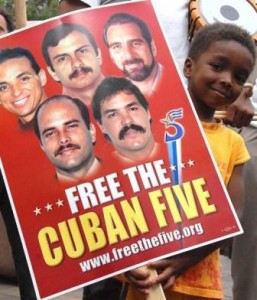
The Cuban Five Case Update: Attorney Martin Garbus
We’re joined today by prominent First Amendment attorney Martin Garbus to get an update on the Cuban Five case. Martin joined the case of the Cuban Five last year and had concentrated his efforts to expose how U.S. government paid journalists in Miami received hundreds of thousands of dollars from the office of Cuba broadcasting to slant the story against the Cuban Five. There’s a lot going on with the case lately such as a habeas corpus appeal, and a NSA / FISA related motion.
Attorney Martin Garbus:
- In 1996, 4 planes from Cuba shot down Brothers to the Rescue planes that’s a right wing group that operates in Miami and has over the years made intrusions to Cuban air space.
- After years of negotiations with the Cuban government and the American government where the American government said they would everything they could to stop these flights.
- Washington intended to do that but by the time it got down to Miami, the orders were ignored.
- So these planes went up in Feb 1996 and were shot down over Cuban air space.
- At the trial the jury concluded that the planes were shot down over international waters. They also concluded that the defendants in this case played some kind of role in the shoot down.
- Both administrations at the time (Bush / Clinton) wanted to be very hard on left wing Cubans or Cuba itself by pressing this prosecution.
- Although the shoot down was 1996, and the government had all the information it needed, it didn’t arrest these defendants until 2 and half years later.
- There was a conviction, at first the appellate court set aside the conviction. Lenny Weinglass argued that brilliantly in that a motion for change of venue should’ve been granted.
- Ultimately, that’s rejected, the Supreme Court denies cert, I get involved in the habaes corpus petition and that’s what we’re talking about now.
- We’re about to file other papers about NSA surveillance which has been revealed recently arising out of Snowden’s revelations.
- What I’m now telling you has not yet appeared anywhere else.
- The defense lawyers in the case, as they prepared the case itself, from the time they were appointed in 1998, to the time of the conviction, and now, Lenny Weinglass leading the defense, – these lawyers traveled back and forth to Cuba.
- We now understand and this applies to you, this applies to anyone who goes to Cuba.
- Anytime you go to Cuba, you’re picked up by NSA surveillance.
- The NSA listening post, the prime one was in Puerto Rico and it was made up largely of US Navy personnel, assigned to the Naval Security Group which is an NSA component.
- When I got back to the United States (from Cuba) they would continue to monitor me. If I were a defense lawyer, my communications with my client would gathered and sent to the FBI and Department of Justice.
- That’s the motion we’re about to file in the next 2 weeks.
- The Solicitor General, on October about 6 weeks ago, admitted there had been surveillance of cases where there had been convictions.
- Our case presents unique problems, Cuba at that time was designated a terrorist state.
- I’ve got the details in the way information was intercepted.
- A large part of the NSA budget last year I think was 52 billion dollars. 25 percent of it is for the CIA.
- What the CIA was doing under the umbrella of the NSA was exactly what the Church Committee said they couldn’t do.
- Journalists that worked for the Miami Herald or CBS, or local Spanish stations . . on the government payroll.
- The stations or newspapers that hired these journalists, didn’t know that they were also getting monies from the government. In 2006, the Miami Herald found out about it.
- One journalist got 286 thousand dollars.
- If you look at the Radio Marti stories, and you look at the Miami Herald stories, you have the same sentences, same paragraphs and its clear its coming out of a central cookie cutter.
- The Radio Marti budget was 15 million dollars a year.
Guest – Attorney Martin Garbus, one of the country’s leading trial lawyers. He has appeared before the United States Supreme Court and the highest state and federal courts in the nation. Time Magazine has named him “legendary . . . one of the best trial lawyers in the country.” He’s also known as the most prominent First Amendment lawyer.
—-
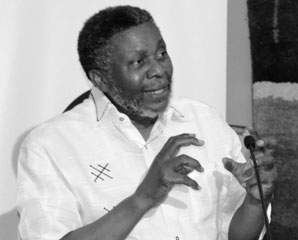

Global NATO and the Catastrophic Failure in Libya: Lessons for Africa in the Forging of African Unity
The course of events that led to NATO’s intervention in Libya is outlined in our guests Horace Campbell’s recently published book Global NATO and the Catastrophic Failure in Libya: Lessons for Africa in the Forging of African Unity. He traces the origin of the Libya conflict in the context of the Arab Spring uprisings and argues how NATO is used by the North American and European capitalist class to impose its political will on the rest of the world. It’s a new model, he explains, of bombing campaigns, militias, terrorist campaigns and private contractors. This NATO campaign caused many civilian deaths and destroyed Libya’s infrastructure. We talk about the broader attacks on the African continent and the investigations into the US embassy killings.
Professor Horace Campbell:
- The revolutionary upheavals that took place in Tunisia and Egypt have had great implication for all societies in this region.
- Libya which has been underdeveloped politically was a place where the western powers manipulated which was supposed to be an insipient uprising in Benghazi, militarized it and turned it into a base for the destabilization for all of North Africa.
- Today as we speak they continue to manipulate what is going on in the Libyan society.
- The book is called Global NATO because the governments of the North Atlantic region, namely the United States and its western European allies to internationalize the basis for military intervention by this NATO.
- NATO was created by this cold war instrument with a mandate to defend western Europe.
- NATO is in alliance with the most conservative countries in the Middle East called the Gulf Cooperation Council.
- We’ve had an attempt by the Wall Street elements to use NATO as an instrument for the United States military management of the international system.
- Why was NATO intervening? To control the resources of Libya, to destabilize North Africa, to stop the African Union project and to create confusion by supporting the same al-Qaeda elements that they’re supposed to be fighting in the “war on terror.”
- These are the reasons why the Left and the peace movement should have opposed the NATO intervention.
- Just like in Syria and Iran, there’s confusion among the Left and progressive forces about what’s going on.
- We need a resolution with responsibility to protect inside of Libya. To protect from the forces of NATO and to protect the Libyan people from the militias that have been unleashed by al-Qaeda, supported by the CIA and NATO.
- President Obama exercised intense pressure on the South African presidents and other presidents. I think he telephoned directly for them to vote for this resolution.
- The matter of Libya is not over.
- The same NATO that created the problem in Libya, the same United States, France and Britain is now seeking the support of Congress to go into Libya, into the same place that they created the problem.
- The U.S. designs on the continent of Africa is quite confused at the moment. It’s confused because of the assertiveness of the African Union and the African people.
- It turns out as we’ve seen in Libya, that it is the United States and the western forces that are supporting jihadists who are called terrorists. We’ve seen in a place like Somalia where the African people themselves through the African Union have been able to bring some stability to Somalia.
- There’s no military body that monitors the work of private military contractors.
- Now the peace movement should be calling for a reduction in the military budget.
- In the case of Libya, General Petraeus was using Benghazi as a base to recruit conservative Islamic fundamentalists from Libya to go to Syria to fight.
- Here’s a web of conspiracy of military, of Israel, Saudi Arabia and the CIA fomenting instability all across North Africa and the Middle East.
- There was no consulate in Benghazi, this was a CIA facility that was being used to support al-Qaeda elements.
- We have a situation in Libya where the country is in complete disarray. There’s no law, there’s no order. The people of Tripoli demonstrated two weeks ago against these militias and 40 people were killed.
Guest – Professor Horace Campbell is Professor of African American Studies and Political Science at Syracuse University. His recent book is Global NATO and the Catastrophic Failure in Libya. He is author of: Rasta and Resistance From Marcus Garvey to Walter Rodney; Reclaiming Zimbabwe: The Exhaustion of the Patriarchal Model of Liberation; Pan Africanism, Pan Africanists and African Liberation in the 21st Century; and Barack Obama and 21st Century Politics.
——————————————————————