Civil Liberties, Supreme Court, Surveillance, Truth to Power
Podcast: Play in new window | Download


Illusions of Security: Global Surveillance and Democracy in the Post-9/11 World
Here on Law and Disorder we’ve covered in depth the scope of surveillance bearing down on the lives of people in a post 9/11 society. From intrusive RFID technology to phone companies and airlines handing over private consumer data to the FBI.
Guest – Maureen Webb, Canadian human rights lawyer and author of “Illusions of Security: Global Surveillance and Democracy in the Post-9/11 World” Webb examines how governments worldwide follow the lead of the Bush administration in using quote terrorism as an excuse for public surveillance and information gathering.
“Webb focuses her criticism on the governments of Canada and the United States, but persuasively documents international cooperation on illegal, or at least immoral, high-tech information gathering. Webb devotes substantial space to the National Security Agency of the U.S and its monitoring of international telephone traffic despite apparent lawlessness and ethical violations. Webb also writes in detail about how governments, following the lead of the Bush administration, use “terrorism” as an excuse to “serve agendas that go far beyond security from terrorism–namely the suppression of dissent, harsh immigration and refugee policies, increased law enforcement power.”
—-

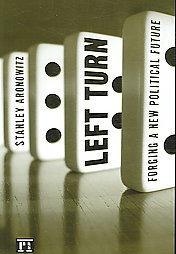
Left Turn: Forging a New Political Future. by Stanley Aronowitz
America is in the midst of a crisis of democracy as we literally descend into an authoritarian state. On Law and Disorder we’ve seen firsthand the casualties of this crisis, from the growing militarization that pervades our lives to a dominant fundamentalism that cuts short critical thinking. Renowned social critic Stanley Aronowitz presents an alternative platform for our future in his recent book, “Left Turn: Forging a New Political Future. As we start the New Year, we can borrow from the historical traditions of the European left, as well as the more recent trends in Latin America that are challenging, head on, the death of socialism.
Guest – Stanley Aronowitz is professor of sociology, cultural studies, and urban education at the CUNY Graduate Center. He is also a veteran political activist and cultural critic and a passionate champion of organized labor. In addition to authoring numerous books, he is a founding editor of Social Text, a journal that is subtitled “Theory, Culture, Ideology.”
Civil Liberties, Climate Change, Supreme Court, Truth to Power, Uncategorized
Podcast: Play in new window | Download


Global Warming Litigation – 3 Main Cases
Since 1947, the Doomsday clock has been used as a symbolic reference to measure the degree of nuclear threat. On January 27th of this year it was set to five minutes to midnight. It was advanced by two minutes on January 17, 2007 by experts assessing the dangers posed to civilization from catastrophic climate change.
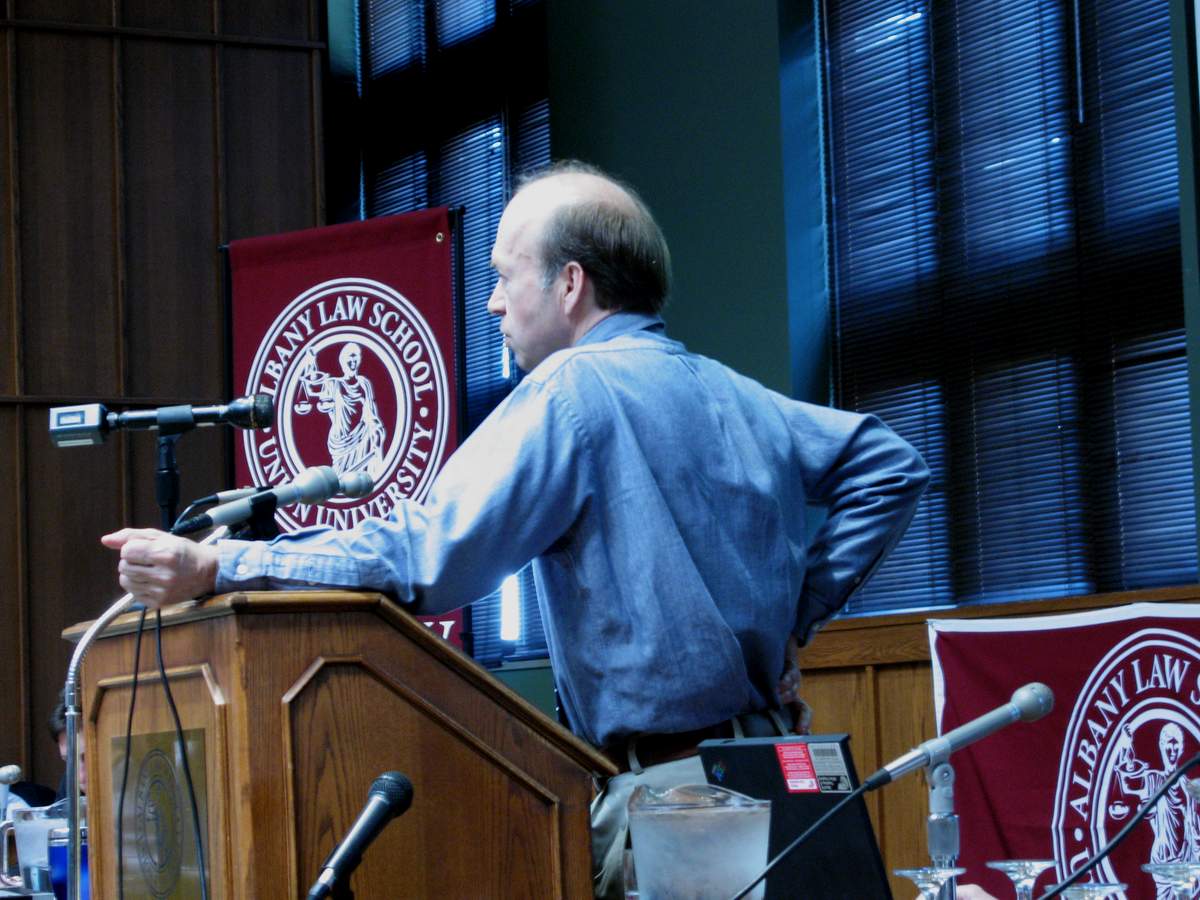
Meanwhile the Bush administration continues to play down the threats of extreme weather and dramatic shifts in climate. Last May Law and Disorder aired speeches from the Catastrophic Climate Change Forum at Albany Law School including speakers such as Dr. James Hansen, director of the NASA Goddard Institute for Space Studies . Hansen cited hard evidence – building the case that global climate change is at a tipping point and emissions from power plants and vehicles are mainly to blame.
Of the main contributors to this one percent tipping point of greenhouse gases are utility companies, automobile emissions and housing stock. This one percent of man made emissions that can be regulated say attorneys involved in 3 major climate change cases.
Guest – Eleanor Stein Adjunct Professor of Law Albany Law School at Union University
—-
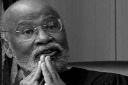
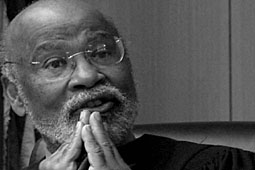
Soul of Justice: Thelton Henderson’s American Journey
A film documentary that chronicles one man’s influence on the American judicial system. The first black attorney in the Civil Rights Division of the Kennedy Justice Department, Thelton Anderson was later appointed by President Jimmy Carter as one of the first African American federal judges in the United States. His decisions have been informed by a profound sense of fairness, distinguished also by his tenacity in seeing that they are enforced even in the face of great political opposition. Soul of Justice includes rare archival footage, and interviews with lawyers and a Supreme Court justice.
—-

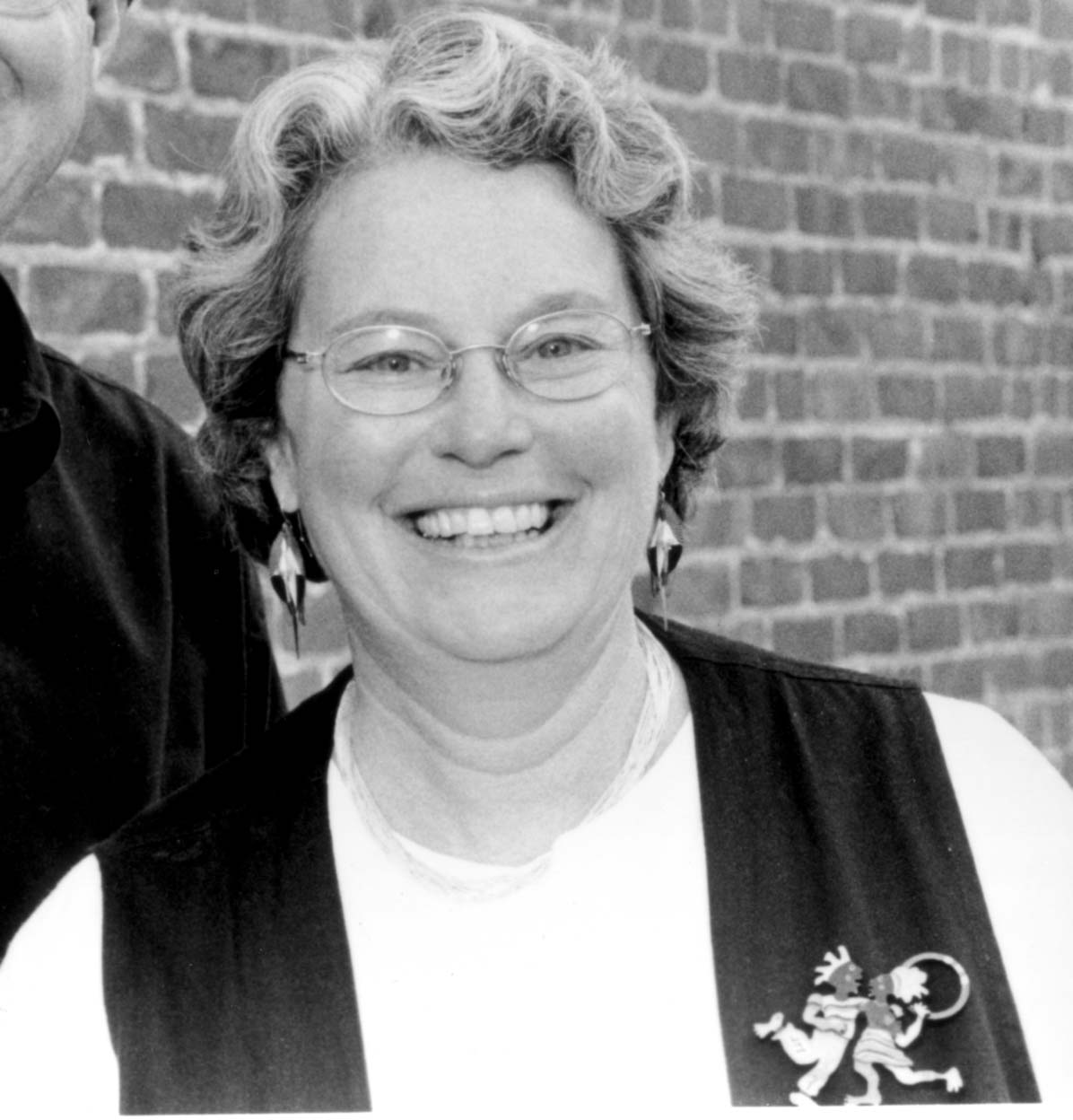
Guest – Abby Ginzberg, an award winning filmmaker producing films for the last 22 years. Her films focus on race, equality of opportunity and model programs for at-risk youth.
Soul of Justice – NYC screenings: Monday Feb 26, Columbia Law School 116th St. & Amsterdam Ave, 6pm, Rm 107
Tuesday Feb 27, NYU Law School, Tishman Auditorium in Vanderbilt Hall at 40 Washington Square. doors open at 5:30, film at 6pm


Law Students for Government Accountability
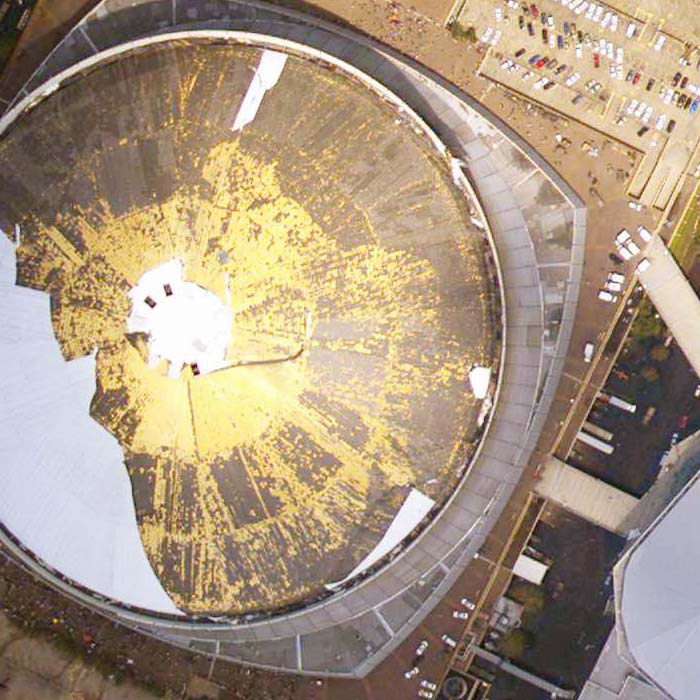
LSGA was created out of the Student Hurricane Network run by law students (with some assistance by various attorneys, experienced lobbyists, an international strategy consulting firm, and an international PR firm). Its purpose is 1) to continue to educate the public about the causes and costs of the hurricanes Katrina and Rita to the Gulf Coast region and the nation at large, 2) to obtain the support of the 110th Congress for a Statement of Principles to ensure that such a disaster never happens again on the Gulf Coast through providing its necessary rebuilding and renewal, or any American soil through a comprehensive federal catastrophe prevention and response plan, and 3) work in partnership and solidarity with the thousands of voices advocating for those directly harmed by this disaster to ensure that the legislation passed by Congress provides a clear and coherent plan to prevent this from ever happening again.
Right now, LSGA is working on recruiting 1000 law students to participate in a March 14 National Lobbying Day in DC, to get their representatives to sign the Statement of Principles, guaranteeing wetland restoration, Category 5 levee and flood prevention, improvement of the management of the Mississippi River that would facilitate the restoration of the land and ensure ecological and economic security, the full recovery of New Orleans and the Gulf Coast, and address the underlying issues of poverty and racism.
Guest – Andrew Doss – LSGA Board Member
Iraq War, Supreme Court, Truth to Power
Podcast: Play in new window | Download
WBAI Listeners Please Scroll Down For Program Rundown
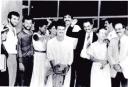
LA 8
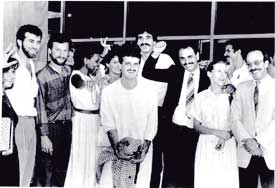
Days after the 20th anniversary of the arrest of the so-called Los Angeles Eight, on January 31, Immigration Judge Bruce Einhorn ordered an end to deportation proceedings against Khader Hamide and Michel Shehadeh, members of the LA8. The government has been seeking to deport Hamide and Shehadeh since January 1987 based on their alleged support for the Popular Liberation Front for Palestine (“PFLP”), a group within the Palestinian Liberation Organization. Judge Einhorn terminated the proceedings because the government’s refused to comply with his 2005 pre-trial order to turn over exculpatory evidence
regarding Hamide and Shehadh’s alleged support for the PFLP.
Guest – San Francisco attorney Marc Van Der Hout of the law firm of Van Der Hout, Brigagliano & Nightingale. Marc has been representing the LA8 on behalf of the National Lawyers Guild since the case began 20 years ago.


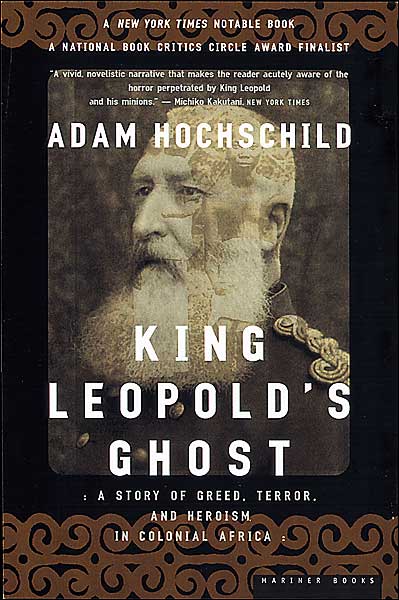
King Leopold’s Ghost – Adam Hochschild
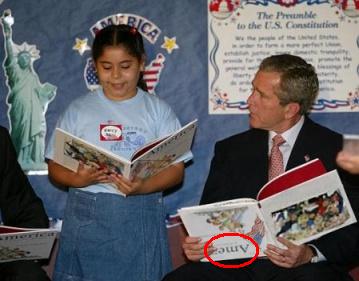
Hosts Michael Smith and Heidi Boghosian talk with author Adam Hochschild about the similarities between King Leopold’s disastrous invasion of Congo and the war in Iraq. In an interview George W Bush commented that he couldn’t understand why so many people think he doesn’t read books and toward the end of the interview he mentioned having just finished ‘King Leopold’s Ghost’.”
Guest – Author Adam Hochschild replies to the president in the LA Times. King Leopold’s Ghost is a riveting retelling of the Belgian genocide-for-rubber campaign in the Congo with incredible similarities to war profiteering of today. Read LA Times commentary by Adam Hochschild to the President.
—-


Michael Schwartz – Iraq, Sectarian Violence and Barack Obama
Anti-war activists and students crammed into a small fifth floor abandoned office to confront and discuss the recent escalation of troops and funding of Iraq War. Mostly standing, they listened to Michael Schwartz professor of Sociology at the State University of New York at Stony Brook. In his talk Schwartz says the United States is fomenting the sectarian violence in Iraq by fighting two sides. Schwartz also comments on a speech Barack Obama delivered regarding Iraq and the withdrawal of troops.
—-
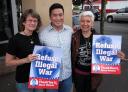

Margaret Prescod – Friends and Family of Lt Ehren Watada Tour
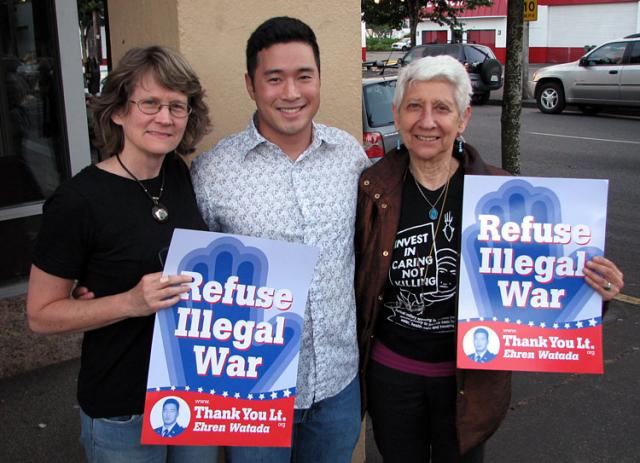
A military judge in Fort Lewis, Washington, declared a mistrial in the court-martial of Lieut. Ehren Watada, the first commissioned officer prosecuted for refusing to go to Iraq. A new trial is believed to be unlikely before summer, if at all. The mistrial represents a significant victory for Watada, for the rights of military resisters and for the movement of civil resistance to US war crimes in Iraq. We go now to hear a powerful speech by Margaret Prescod one, of the founders of Women of Color in the Global Women’s Strike, and campaign coordinator with Friends and Families of Lt. Watada. Law and Disorder caught up with tour in early December. Since then, the tour garnered incredible support from organizations, politicians, actors and luminaries around the world.
———————————————-
WBAI Broadcast February 21, 2007

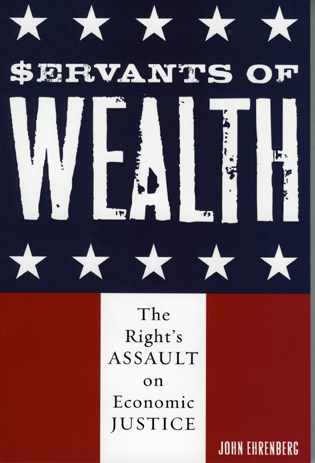
“Servants of Wealth: The Right’s Assault on Economic Justice
“Freedom and democracy” are two words we’ve been hearing from the right wing in this country for 25 years. In their quest to shore up support for the politics of wealth and privilege, the Right has organized patiently and consistently by focusing on a core ideology to amass a formidable base. The Right’s commentary on world affairs, morality, the state, and the economy, though, has had an overarching focus, namely to eliminate social equality as a legitimate public policy goal. Its success has resulted in one of the most dramatic, undemocratic, and insidious transfers of wealth and power in recent American history.

Guest – political scientist John Ehrenberg, author of the book “Servants of Wealth: The Right’s Assault on Economic Justice.” A professor of political science at Long Island University, in this, his third book, critically analyzes the rise of an ideologically coherent Right. He dissects their themes of military weakness, moral decay, racial anxiety, and hostility to social welfare to reveal their central organizing objective of protecting wealth and assaulting equality.
LA 8
Days after the 20th anniversary of the arrest of the so-called Los Angeles Eight, on January 31, Immigration Judge Bruce Einhorn ordered an end to deportation proceedings against Khader Hamide and Michel Shehadeh, members of the LA8. The government has been seeking to deport Hamide and Shehadeh since January 1987 based on their alleged support for the Popular Liberation Front for
Palestine (“PFLP”), a group within the Palestinian Liberation Organization. Judge Einhorn terminated the proceedings because the government’s refused to comply with his 2005 pre-trial order to turn over exculpatory evidence
regarding Hamide and Shehadh’s alleged support for the PFLP.
Guest – San Francisco attorney Marc Van Der Hout of the law firm of Van Der Hout, Brigagliano & Nightingale. Marc has been representing the LA8 on behalf of the National Lawyers Guild since the case began 20 years ago.
King Leopold’s Ghost – Adam Hochschild
Hosts Michael Smith and Heidi Boghosian talk with author Adam Hochschild about the similarities between King Leopold’s disastrous invasion of Congo and the war in Iraq. In an interview George W Bush commented that he couldn’t understand why so many people think he doesn’t read books and toward the end of the interview he mentioned having just finished ‘King Leopold’s Ghost’.”
Guest – Author Adam Hochschild replies to the president in the LA Times. King Leopold’s Ghost is a riveting retelling of the Belgian genocide-for-rubber campaign in the Congo with incredible similarities to war profiteering of today.
Read LA Times commentary by Adam Hochschild to the President.
Civil Liberties, Supreme Court, Surveillance, Torture, Truth to Power
Podcast: Play in new window | Download

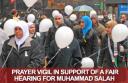
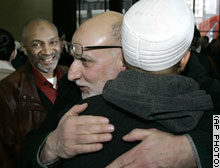
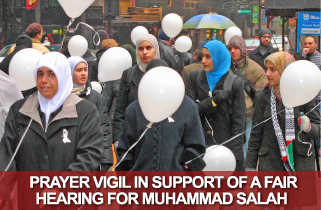
Muhammad Salah Cleared Of Federal Charges
For more than a year, Law and Disorder has followed the case of Muhammad Salah and co-defendant Abdelhaleem Ashqar. In a major victory both were recently acquitted on charges that they engaged in a “racketeering conspiracy” to provide support to the Palestinian organization Hamas in the early 90s. The two were convicted of several lesser charges unrelated to terrorism. Salah says his confession to Israeli Security agents was false and the end product of 53 days in custody, during which Salah’s lawyers say he was tortured. He was kept awake, beaten and forced to sit in excruciating positions for long periods of time.
Guest – Michael Deutsch from the People’s Law Office in Detroit. Mr. Deutsch says this verdict is a significant breakthrough in that the jurors were not swayed by government attempts to apply the terrorism label without adequate evidence.
Dear listeners to send letters of support – Please make them out to the Honorable Amy J. St. Eve Addressed to: Michael Deutsch People’s Law Office 1180 N. Milwaukee Chicago, IL 60622
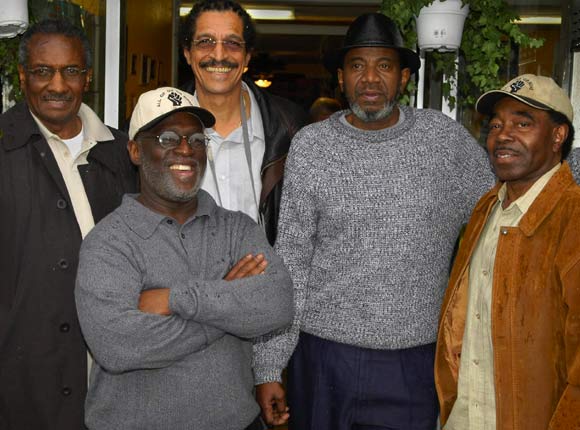
Coerced confessions based on torture are at the center of many cases discussed on this program. From French revolutionary Henri Alleg to the recent victory in the Muhammad Salah case in Chicago. Black Panthers were no exception, in the early seventies eight former Black Panthers were arrested in California, New York and Florida on charges related to the 1971 killing of a San Francisco police officer. Two men charged have been held as political prisoners for over 30 years ? Herman Bell and Jalil Muntaqim are both in New York State prisons. But a judge tossed out the charges, finding that Taylor and his two co-defendants made confessions after police in New Orleans tortured them for several days employing electric shock, cattle prods, beatings, sensory deprivation, plastic bags and hot, wet blankets for asphyxiation.
Guest – attorney Bob Bloom speaks on new developments in the case.
To hear the voices of Harold Taylor, John Bowman and Hank Jones describe how they were tortured visit the Listening Library and scroll down here the event from March 2006 at the Riverside Church sponsored by the Center for Constitutional Rights.



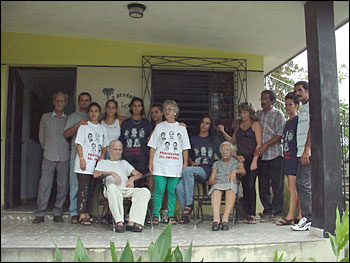
US Government Not Allowing Families of Cuban Five Prisoners Visitation
Amnesty International calls for temporary visas to be granted to two wives of the ‘Cuban Five’
In the past month several legal developments have occurred in the case of the Cuban Five. In January the defense argued four key issues in a supplement brief. Those issues are: first, the conspiracy to commit murder charge should be discharged; second, the conspiracy to espionage should be reversed for insufficiency of evidence; third, the sentencing on the espionage charges were grossly out of line with existing law; and forth, the prosecution committed misconduct. Finally application of the Classified Information Procedures Act provisions was wrong in this case. Here’s the situation: If the two judges can’t agree, the chief judge of the 11th Circuit appoints a third judge to join in the decision-making. You must have two judges in agreement in order to have a valid decision by the appellate court. If the two judges agree, however, that’s the end of it. For more information visit They Will Return.
Guest – Leonard Weinglass, lawyer for Antonio Guerrero, to talk about yet an additional aspect that has plagued the case since the five were incarcerated: the US government’s failure to allow families to visit the Five.
—-

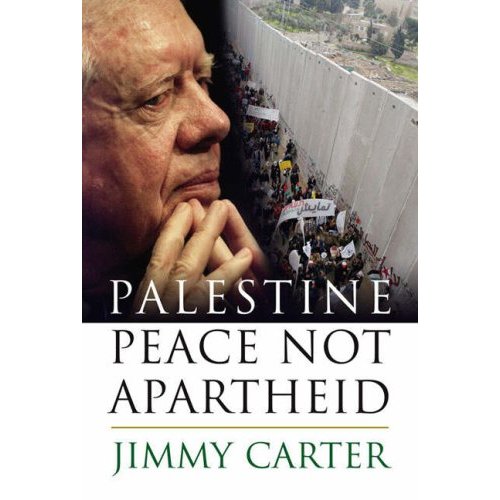
Jimmy Carter’s Recent Book – Palestine: Peace Not Apartheid – Drawing Criticism
With the release of former President Jimmy Carter’s new book, Palestine: Peace Not Apartheid, controversy has arisen about the use of the word “apartheid” to describe the occupied Palestinian territories. The contention is that Carter begins with the premise, “inside Israel there is equality while in the occupied Palestinian territories there is not.”
Guest – Jamil Dakwar, a former senior attorney with Adalah: The Legal Center for Arab Minority Rights in Israel.
Just as the US and Europe once opposed apartheid in South Africa, Israel’s discrimination against Palestinians must be similarly exposed and dismantled. – – Read Jamil Dakwar’s commentary It’s Simple Apartheid.
Civil Liberties, Extraordinary Rendition, Guantanamo, Supreme Court, Torture, Truth to Power
Podcast: Play in new window | Download
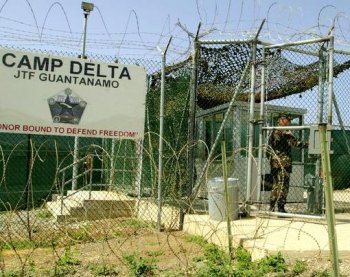
Guantanamo – Five Years

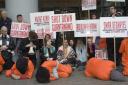
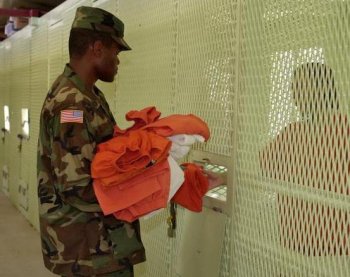
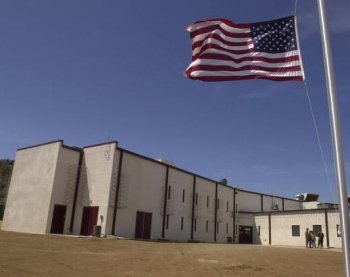
January 11th marks five years of detainment for the more than 400 people at Guantanamo. For the full hour, Law and Disorder co-host and President of the Center for Constitutional Rights, Michael Ratner takes listeners through the history and chronology of the US involvement at the Guantanamo Bay detainment camp. Michael Ratner begins with the US acquiring the 4500 square mile base near a harbor at the southeastern end of Cuba.
Guantanamo – A Law Free Zone – Haitian Camps – Read more

In the last quarter of the 20th century, the Guantanamo Bay Naval Base was used to house Cuban and Haitian refugees. In the early 1990s, it held refugees who fled Haiti after military forces overthrew democratically elected President Jean-Bertrand Aristide. These refugees were held in a detainment area called Camp Bulkeley until United States District Court

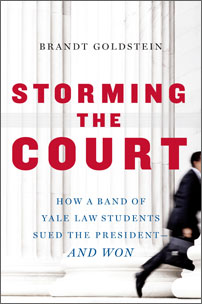
Storming The Court – We hear a clip from an interview with attorney and author Brandt Goldstein. Before Guantanamo Bay, Cuba became notorious for its human rights violations against Muslims, it was the holding center for thousands of HIV-positive Haitian refugees. More than ten years ago a team of Yale law students and activists took up this cause. They worked victoriously to stop the US government from detaining these refugees indefinitely at Guant?namo, without charges or access to counsel.


David Hicks – Australian prisoner held at Guant?namo Bay, Cuba. He’s been detained for more than five years as an “unlawful combatant” and thus, it was claimed, outside the normal protections of U.S. law and those provisions of the Geneva Conventions which are specific to soldiers of an official military organization. His trial before a U.S. military commission was due to begin in November 2005. However, proceedings were cancelled following the Supreme Court Hamdan v. Rumsfeld ruling invalidating the constitutionality of the commission process.
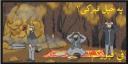
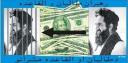
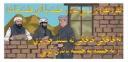
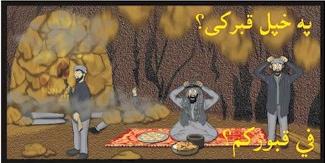
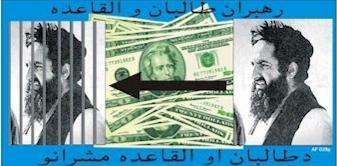
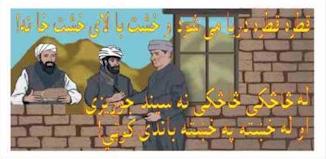
Bounty Hunter – U.S. PSYOPS distributed flyers and leaflets
How did prisoners get to Guantanamo?
Many Guantanamo prisoners were rounded up by bounty hunters and sold to the U.S. It’s unknown how many were victims of being in the wrong place at the wrong time. In the days during and following the Afghan invasion, the U.S. military blanketed parts of Afghanistan and Pakistan with flyers encouraging people to turn in suspects, in return for large sums of money. “Get wealth and power beyond your dreams,” read one flyer. “You can receive millions of dollars helping the anti-Taliban forces catch al-Qaeda and Taliban murderers.”
See more PSYOPS leaflets/flyers here

How other prisoners arrived at GTMO
Uiger Muslims Transferred From Guantanamo To Albania – Recently, the Uiger Muslims were quietly sent to Albania to a larger compound. It was explained to Law and Disorder that in Albania, the Uigers can move about freely within the compound and cannot leave. We play a clip from the January 2006 interview with attorney Sabin Willet.
We play a clip from a Law and Disorder interview with Tausif Paracha. His Uncle, Saifullah Paracha, 58 was “kidnapped” and is detained in Guantanamo and Tausif’s cousin Uzair Paracha, 24 is detained in one of New York’s worst prisons. You can read more about this case at www.freeparachas.org
Mark P. Denbeaux – Seton Hall Report – One of most comprehensive reports of who is at Guantanamo.


Describe Guantanamo Bay, Cuba
Gita Guitierezz – attorney with the Center for Constitutional Rights defending Guantanamo Bay detainees gives listeners a first hand description of the camp.
Torture
Co-host Michael Ratner describes his experience of first learning that the US military was involved with torturing detainees. Torture, including waterboarding and sleep deprivation.
Tipton Three is the name given to three young men from Tipton, United Kingdom, who were held in extrajudicial detention for 2 years in Guant?namo Bay detainment camps
Evidence of Torture – Gita Guitierezz – in an interview last November we listen to a clip where Gita describes how her client Mohamed Mani Ahmad al-Kahtani. was sleep deprived and tortured.
Torture and Waterboarding; ancient practice – Henri Alleg, Author of The Question – We listen to a clip of Henri Alleg describing waterboarding. He was revived then brought to the brink of death, then revived again. An similar brutality and sadism often described by prisoners in Guantanamo and Abu Ghraib. Hosts Michael Ratner and Michael Steven Smith interview Henri Alleg a French journalist living in Paris. He supported Algerian independence during the French Algerian War (1954-1962). He was arrested by French paratroppers during the Battle of Algiers in June 1957 and interrogated.

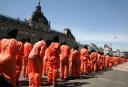
Fighting back in the Courts, Congress and in the Streets
The effort to get Guantanamo closed down and to get prisoners the rights they’re entitled under International Law and the Constitution. It’s a difficult fight explains co-host Michael Ratner but the opposition is growing.
We hear clips from a demonstration against the Guantanamo Prison Camp in Herald Square and also from Amnesty International’s anti-torture rally in Portland, Oregon, recorded from interviews by co-host Dalia Hashad. Amnesty International staff members and activists who gathered to speak out, listen and share their stories.
Take Action Now – Fight Back – Thursday January 11, 2007
Witness Against Torture – Fight Back – January 11, 2007 Thursday: The 5 year anniversary of the first prisoners being brought to Guant?namo. March, Press Conference and Nonviolent Direct Action in Washington, DC. Endorsed by Center for Constitutional Rights, CodePink, Network of Spiritual Progressives, Pax Christi USA, School of Americas Watch, United for Peace and Justice and other groups such as FIDH and Reprieve.
Civil Liberties, Guantanamo, Supreme Court, Truth to Power
Podcast: Play in new window | Download
Happy New Year from Law and Disorder – Co-host Michael Ratner delivers update on the state of the new US Congress, the Iraq War and Guantanamo.

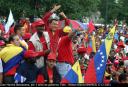
Venezuelan Election Observers
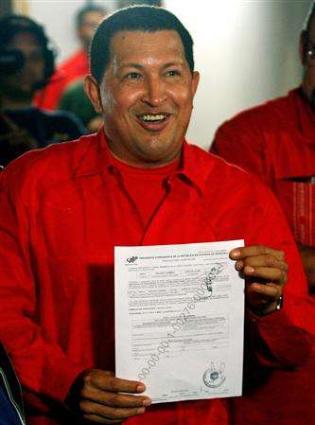
Ming Alterman, Ellen Meyers and Supreme Court Justice Gustin Reichbach have returned from Venezuela after observing December 3rd elections where voting machines actually print out a paper receipt. The last report from CNE, National Electoral Council from Venezuela at gave Venezuelan President Hugo Chavez Frias the victory with 61.35% of the total counted so far, 75.3%. His counterpart, Manuel Rosales have received 38.39%.Shortly after the partial results were given, Hugo Ch?vez showed up in the Balc?n del Pueblo (The People’s Balcony) in the presidential palace to celebrate his victory and address his followers.

Ming Alterman – Latin American Scholar
Supreme Court Justice Gustin Reichbach – Evaluated whether elections were free and fair; that is whether the election produced an outcome expressing the will of the Venezuelan people.

Ellen Meyers is a founder and senior vice president of Teachers Network, a non-profit organization–by teachers, for teachers–with a 25-year track record of success, dedicated to improving student learning in public schools nationally and internationally. Ellen has written numerous articles that have appeared in major media outlets and has presented at conferences across the country. She has been a newspaper columnist, film producer, political campaign manager, election monitor, community board member, and foundation and federal grants advisor. She has a weekly radio show on WHCR, Harlem Community Radio.


Spoken Word Performance – Katrina
Professor Louie and Fast Eddie deliver a powerful spoken word performance on the devastation of Katrina. These Brooklyn natives poets/musicians weave stream of consciousness style prose with conga. They performed live in the studio at WBAI. To order CDs by Professor Louie and Fast Eddie – call Free Brooklyn Now at 718-768-8728

Uneven Distribution of Wealth?
Michael Smith talks with Professor Rick Wolff, formerly the head of the Economics Department at the University of Massachusetts and currently the NASDAQ professor of Economics at the New School University and Catherine Albisa Executive Director of the National Economics and Social Rights Initiative – NESRI. Albisa is also an attorney specializing in the implementation of human rights standards in the United States. She is the former director of the Human Rights in the US program at the Center for Economic and Social Right and was the Associate Director of the Human Rights Institute at Columbia Law School.
Both guests discuss their reactions to and the implications of the recent 16.2 billion dollar bonus that the investment banking house of Goldman Sachs announced just before Christmas.
More than $50 million went to the Goldman Sachs Chairman alone. Pfizer, the drug company, paid a “severance package” of $200 million to its just-resigned chief executive. Many other large corporations acted similarly. All this is legal, given the laws and rules that corporations win from their political “allies.” Indeed, the latest ruling by the Securities and Exchange Commission (SEC) allows corporations to obscure what they pay top executives (the New York Times, December 27, 2006, page C1, called it “a victory for corporations”).
Read Story Here by Professor Rick Wolff. More stories – here and here.