CIA Sponsored Terror, Civil Liberties, Criminalizing Dissent, Death Penalty, FBI Intrusion, Habeas Corpus, Human Rights, Surveillance, Targeting Muslims, Torture, War Resister
Podcast: Play in new window | Download
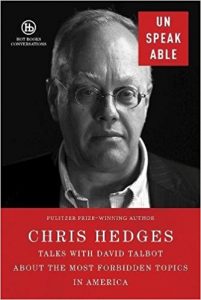
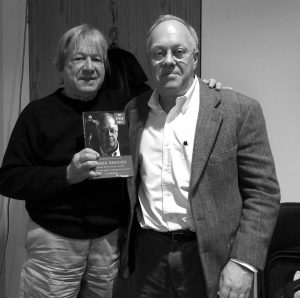
Chris Hedges – Unspeakable
The year 2017 has seen a qualitative acceleration and consolidation of power by the forces on the right which have been accurately described as a form of fascism. Three significant books were published this year addressing this phenomena, where it came from, and how to fight it. We have interviewed Nancy MacLean on her book Democracy in Chains about the origins and organization of the billionaire forces like the Koch brothers who have orchestrated the takeover of 25 state legislatures and who are attacking every institution of what is left of American democracy. We interviewed John Bellamy Foster on his book Trump in the White House about who supports the Trump agenda and why.
Guest – Chris Hedges, Pulitzer-Prize winning author and journalist. He was also a war correspondent, specializing in American and Middle Eastern politics and societies. His most recent book is ‘Death of the Liberal Class (2010). Hedges is also known as the best-selling author of War is a Force That Gives Us Meaning (2002), which was a finalist for the National Book Critics Circle Award for Nonfiction. The recent book Unspeakable consists of talks with David Talbot about the most forbidden topics in America. Chris Hedges teachers at two prisons in New Jersey. He was active in the Occupy movement, writes a weekly column for Truthdig and is also the author of American Facism: The Christian Right and the War on America.
—-
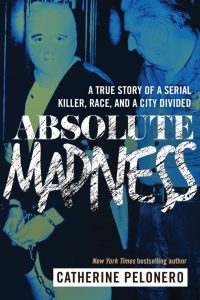
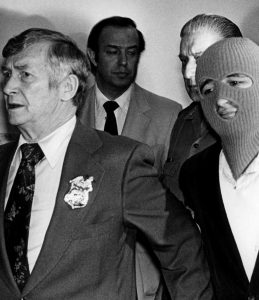
Absolute Madness by Catherine Pelonero
The new book Absolute Madness details the true story of a serial killer in New York whose targets were African American males. A young, white Joseph Christopher struck fear into the residents of Buffalo and New York City in the 1980s. This former Army private, who was dubbed both the .22-Caliber Killer and the Midtown Slasher, murdered at least 17 men in a four-month spree across the state.
Christopher, suffered from paranoid schizophrenia, had tried to admit himself to the Buffalo Psychiatric Center in September 1980, but was told he was not a danger to himself or others so could not be admitted. Two weeks later, the killings began.
Noted FBI profiler John Douglas assisted in the investigation that drew national attention and criticism from Jesse Jackson and other civil rights leaders. When the killer was finally found, he seemed on the surface to be an unlikely person to have held New York in such a grip of terror.
But Douglas’s capture would not be the end of the story. Racial discontent heightened during a series of prosecutions and judicial rulings that prompted cries of a double standard within the criminal justice system. Absolute Madness also chronicles one vulnerable man’s descent into madness and how the United States mental health system ignored his many pleas for help.
Guest – Catherine Pelonero, true crime author and commentator. Her book Kitty Genovese: A True Account of a Public Murder and Its Private Consequences was a New York Times bestseller. She is a contributing writer for Investigation Discovery’s CrimeFeed and has appeared on episodes of A Crime to Remember and Fox Files, among others. She lives in Los Angeles, California.
———————————–
Academic Freedom, CIA Sponsored Terror, Civil Liberties, Human Rights, Human Trafficking, NSA Spying, Political Prisoner, Surveillance, Targeting Muslims, Truth to Power
Podcast: Play in new window | Download
Law and Disorder Editorials:
- Jared Kushner Middle East Policy Advisor
—-


Free Press: New FCC Rules On Net Neutrality
The Federal Communications Commission recently released a plan to do away with landmark regulations ensuring equal access to the Internet. They pave the way for Internet service companies to charge the public higher rates to see certain content and to even deny access to some websites.
The proposal was made by the FCC chairman, Ajit Pai, an opponent to regulation in general. Pai is the former Associate General Counsel for Verizon Communications, Inc.
The proposal is expected to be approved in mid-December. In his first year Pai, who was appointed by Donald Trump, has already eliminated numerous regulations. The agency has stripped down rules governing TV broadcasters, newspapers and telecom companies designed to protect the public interest. In addition to the net neutrality rollback, the chairman announced a plan to eliminate a rule limiting any corporation from controlling broadcasts that can reach more than 39 percent of American homes.
In a broad brushstroke, the new proposal repeals rules put in place by the Obama administration that prohibit high-speed internet service providers, or I.S.P.s, from slowing down or even stopping the delivery of websites. The Obama rules prevent companies from charging customers extra fees for high-quality streaming and other services. These former rules were drafted to preserve the principle commonly known as “net neutrality” and to prevent practices that would created tiers of access to the Internet.
The plan to repeal existing rules that were passed in 2015 would reverse a hallmark decision by the agency to consider broadband a public utility, as essential to modern lives as phones and electricity. The earlier decision created the legal foundation for the current rules and underscored the importance of high-speed internet service.
Guest – Attorney Gaurav Laroia, Policy Counsel at Free Press. Before joining Free Press, he worked at the Government Accountability Project protecting the rights of national security whistleblowers.
—-

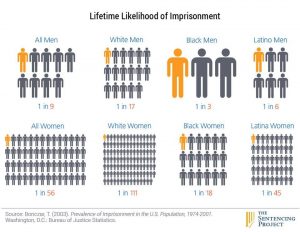
The Sentencing Project
The United States of America imprisons more of its citizens both in absolute numbers and as a percentage of the population than any other country in the world. Only China comes close. On any given day 2,300,000 Americans are in jail or prison, 70% of them are non-white.
Former Alabama senator Jefferson Beauregard Sessions wants these numbers to rise. He has instructed federal prosecutors to prosecute people for the most serious possible crime and to demand the longest possible sentence.
In the last 30 years the number of people in jail and in prison have skyrocketed by factor of five. Prosecutors are increasingly demanding life sentences without the possibility of parole. Judges have lost their discretion with the implementation of maximum minimum sentencing. The long-term impact of mass incarceration has been devastating, especially to black communities.
Attorney General Sessions has stated that there is “a dangerous permanent rise”
in violent crime, despite FBI data showing a sharp decline in the last 20 years. He has falsely charged that crime increases have been caused by immigrants and that prosecutorial policy under Obama caused crime to increase.
Guest – Marc Mauer, the Executive Director of the Sentencing Project and a central figure in the justice reform movement. The Sentencing Project is a Washington DC based research and advocacy group working to reduce the use of incarceration in the United States and to address racial disparities in the criminal justice system.
Follow Heidi Boghosian on Twitter – @HeidiBoghosian
Civil Liberties, Criminalizing Dissent, Human Rights, NSA Spying, Political Prisoner, Prison Industry, RFID, Supreme Court, Surveillance, Truth to Power
Podcast: Play in new window | Download
Law and Disorder Editorials:
- FDA Approves Digital Pill by Heidi Boghosian
—-
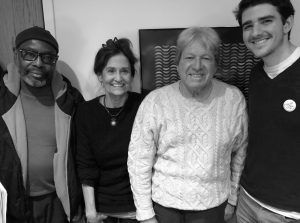

Release Aging People in Prison Campaign
The number of persons 50 years and older in New York State has risen more than 98% since 2000; it now exceeds 10,000—nearly 20% of the total incarcerated population. This reflects a national crisis in the prison system and the extension of a culture of revenge and punishment into all areas of our society.
The organization Release Aging People in Prison, or RAPP, works to end mass incarceration and promote racial justice by getting elderly and infirm people out of prison.
Led by Mujahid Farid, a 2013 Soros Justice Fellow who was incarcerated for 33 years in New York before his release in 2011, RAPP focuses on aging people in prison, many of whom are long-termers convicted of serious crimes. Many of these human beings have transformed their lives and developed skills and abilities they lacked before incarceration. They could be released from prison with little or no threat to public safety. Yet many are denied release, often for political reasons, and they needlessly remain imprisoned into old age. These elders could return to their communities if current mechanisms such as parole and compassionate release were correctly utilized. We also support legislation in New York to correct the parole system and increase the number of releases.
Guest – Mujahid Farid co-founded the Prisoners AIDS Counseling and Education program and helped design prison-based sociology and theology courses that allowed others to earn college-credited in prison. He also earned four college degrees and other certifications while incarcerated, including his paralegal certificate, NYS Department of Labor Certificate in Human Development Counseling, and NYC Department of Health Certificate in HIV/AIDS Counseling.
—-
Guest – David George, Associate Director of RAPP. In the last few years Dave has organized with and on behalf of currently and formerly incarcerated people, including at the Osborne Association and Correctional Association of New York.
—-
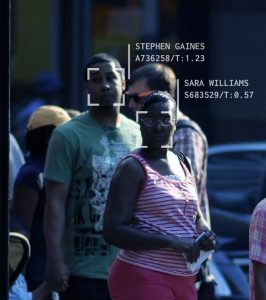

Perpetual Line Up: Unregulated Police Face Recognition In America
The presence of surveillance cameras across the United States has enabled targeted facial recognition surveillance at essentially any place and any time. Each day law enforcement puts in place more and more cameras, including CCTV cameras, police body cameras, and cameras on drones and other aircraft. The FBI’s Next Generation Biometric Identification Database and its facial recognition unit, FACE Services, can search for and identify nearly 64 million Americans, either from its own databases or through access to state DMV databases of driving license photos.
It’s likely that government agencies will soon be able to pinpoint your location and even with whom you’ve been, just by typing your name into a computer.
The release of Apple’s IPhone X has drawn scrutiny to this technology. Despite civil liberties and privacy concerns, there are few limits on facial recognition technology. In March 2017 Congress held a hearing to discuss the risks of facial recognition surveillance. There is concern that facial recognition can be used to get around existing legal protections against location tracking, opening the door to unprecedented government monitoring an logging of personal associations, including protected First Amendment-related activities. Knowledge of individual’s political, religious and associational activities could lead the way to bias, persecution and abuse.
As with many technological advances, there are benefits, too. Facial recognition can assist in locating missing persons or for other public safety purposes.
Guest – Clare Garvie, Clare is a Law Fellow at the Georgetown Law Center on Privacy and Technology. Her research with the Center is on face recognition use by law enforcement and the disparate impact of payday lending on vulnerable communities. She worked on the Center’s 2016 report on facial recognition technology.
CIA Sponsored Terror, Civil Liberties, Human Rights, NSA Spying, Surveillance, Targeting Muslims, War Resister
Podcast: Play in new window | Download
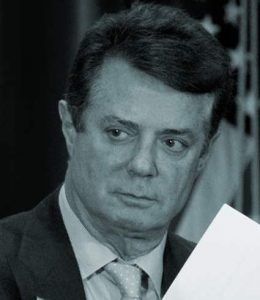
Special Prosecutor Mueller Indictments
Paul Manafort, who had been Donald Trump’s campaign manager, was indicted last week by special prosecutor Mueller for 12 counts of money laundering involving at least $18 million, setting up a secret overseas bank accounts through which $75 million flowed, lying to federal authorities and operating as an unregistered foreign agent for the president of the Ukraine, tax evasion, and conspiracy. Also indicted was his colleague Rick Gates.
Manafort was a Washington insider. He graduated from Georgetown Law School and went on to work for Gerald Ford and Ronald Reagan. He then became, by his own description, an influence peddler. He was a political adviser to the vicious dictatorships of Marcos in the Philippines and Mobuto in Zaire helping them avoid trouble with the United States. He made millions of dollars advising the elected head of the government of Ukraine before he was overthrown in a coup approved and supported by the United States, in particular Secretary of State Hillary Clinton who held that position under the Obama administration before she ran for president.
Along with the indictments, it was disclosed that George Papadopoulos, a former volunteer adviser to Trump during his campaign, had pled guilty to lying to the FBI about having ties with the Russians and was cooperating with the prosecution. He had urged Trump to meet with Russian officials.
Guest – Ray McGovern, an alumnus of Fordham and was a high-ranking CIA analyst for 27 years. His expertise was Russia and he had one on one briefings daily with President George Bush. He broke with the government under George W. Bush over the cooked intelligence used to rationalize America’s illegal war of aggression against Iraq and helped form the organization Veteran Intelligence Professionals for Sanity. His group issued a memorandum to President Obama which demonstrated that the Russians did not hack into the computers of the Democratic Party or Hillary Clinton and did not therefore influence the American election. http://raymcgovern.com/
—-
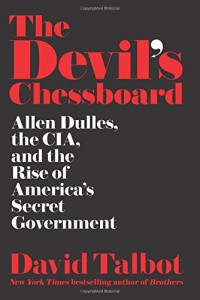
The Devil’s Chessboard: Allen Dulles, the CIA, and the Rise of America’s Secret Government
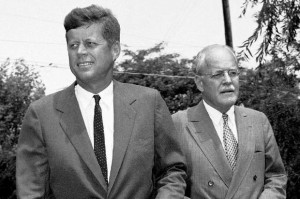
The assassination of President John Fitzgerald Kennedy on November 22, 1963, 54 years ago, was a turning point in American and world history. The official story has been put forward in the Warren Commission Report. It stated that Lee Harvey Oswald was the lone assassin and that there was no conspiracy. The official story has been widely debunked: it is not believed by some 60% of the American people.
Oliver Stone’s 1991 movie JFK led to the reopening of the investigation by a Committee of the US House of Representatives. The committee concluded that there was a conspiracy. They passed a law, signed in 1992 by President George HW Bush, which called for the release of all remaining intelligence files on the assassination by October 26, 2017. Last week some of the remaining documents were released. Those documents must be released within six months unless President Trump decides not to. The intelligence agencies have a say in what further documents will be released but it is President Trump’s decision. It is not believed that the release of the documents will contradict the official story that Lee Harvey Oswald was the loan assassin and there was no conspiracy.
James R. Douglas wrote the definitive book on the Kennedy assassination, demonstrating conclusively that was the work of the CIA. Why? Because the intelligence agency wanted to stop Kennedy from withdrawing American troops from the Vietnam war and he wanted and was working towards a peaceful resolution of the cold war with respect to American policy towards both the Soviet Union and Cuba.
Guest – David Talbot, the author of the New York Times bestseller Brothers: The Hidden History of the Kennedy Years and the acclaimed national bestseller Season of the Witch: Enchantment, Terror, and Deliverance in the City of Love. He is the founder and former editor in chief of Salon, and was a senior editor at Mother Jones and the features editor at the San Francisco Examiner. He has written for The New Yorker, Rolling Stone, Time, The Guardian, and other major publications. Talbot lives in San Francisco, California.
——————————————————-
Academic Freedom, CIA Sponsored Terror, Civil Liberties, Criminalizing Dissent, Human Rights, NSA Spying, Supreme Court, Surveillance, Truth to Power
Podcast: Play in new window | Download
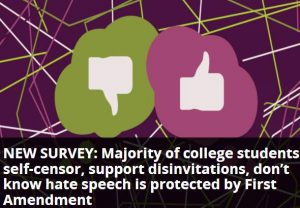
Free Speech on College Campuses
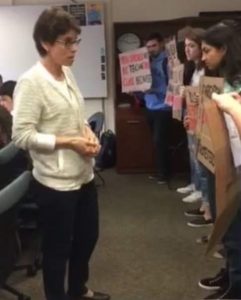
Last week an invited lawmaker was shut down form addressing Texas Southern University after protesters stormed the room calling him a racist. House Representative Briscoe Cain was asked to speak to the Thurgood Marshall School of Law by the Federalist Society about the recent legislative special session. But as he uttered a few words, he was shut down by students and then the University’s President claimed it was an unapproved event. It’s ironic that the school is named for the Supreme Court justice known for his exemplary record of protecting First Amendment rights.
Attorney General Jeff Sessions also recently spoke–uninterrupted–at Georgetown University about free speech on American college campuses. He said, “The right of free speech does not exist only to protect the ideas upon which most of us agree at a given moment in time,” and encouraged students to: “make your voices heard, [and] to defend the rights of others to do the same.” Sessions joins a bipartisan chorus of public officials expressing support for free speech in academic institutions.
This summer, Senators Bernie Sanders and Mitch McConnell condemned efforts to shut down different viewpoints at schools. And in 2015, Barack Obama more than once defended the importance of free speech on campus. “I don’t agree that you, when you become students at colleges, have to be coddled and protected from different points of view,” he said at a September 2015 town hall.
The recent Sessions talk comes amid an uptick (1) in efforts to dis-invite controversial speakers of all ideological persuasions, (2) use of bias response teams to monitor unpopular speech, and (3) in unprecedented violence aimed at silencing off-campus speakers.
These are some of the findings from a recent study produced by The Foundation for Individual Rights in Education. The comprehensive survey on students’ attitudes about free speech measured responses to questions about hate speech, guest speakers on campus, self-expression and reactions to expression of other students.
Guest –Will Creeley, Senior Vice President of Legal and Public Advocacy at the Foundation for Individual Rights in Education. FIRE is a nonpartisan, nonprofit organization dedicated to defending liberty, freedom of speech, due process, academic freedom, legal equality, and freedom of conscience on America’s college campuses.
—-
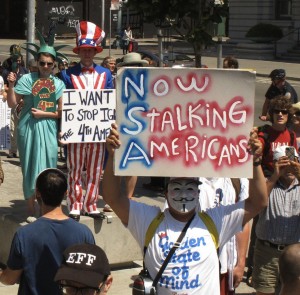

Tech Freedom on USA Liberty Act of 2017
Americans whose data is inadvertently swept up while the government monitors foreign intelligence, risk having their information used for non-national-security related purposes.
Two weeks ago draft legislation was introduced to address this, but a broad coalition of civil liberties organizations say it doesn’t go far enough. They are calling on the House to close the so-called “back-door search” loophole by requiring a warrant based on probable cause for any search of information about U.S. citizens and residents.
Similar to the USA Freedom Act of 2015, which ended the practice of bulk surveillance of American citizens under Section 215 of the 2001 PATRIOT Act, the current USA Liberty Act of 2017 would overhaul surveillance that is supposed to be limited to targets outside the U.S. but actually affects Americans. Section 702 expires at the end of December, which is why Congress is reassessing the program.
Currently, FISA surveillance is conducted under a warrant issued annually by the FISA court for a list of foreign intelligence targets. But law enforcement can access, and can use, Americans’ communications swept up in FISA surveillance with no warrant at all. This is even though U.S. persons’ communications require constitutional protections not afforded to foreigners.
The USA Liberty Act adds a warrant-like ‘probable cause’ requirement before law enforcement can search the database, but also includes a sweeping, vague exception for “foreign intelligence information” and does not stop law enforcement from using that information for criminal prosecutions. This is a glaring violation of the Fourth Amendment.
Guest – Austin Carson, Executive Director of TechFreedom joins us to talk about this legislation, and the state of surveillance generally. Tech Freedom is a non-profit, non-partisan technology think tank launched in 2011 that focuses on issues of Internet freedom and technological progress.
————————————————–
CIA Sponsored Terror, Civil Liberties, Habeas Corpus, Human Rights, Iran, Iraq War, Prison Industry, Surveillance, Targeting Muslims, Torture, War Resister
Podcast: Play in new window | Download
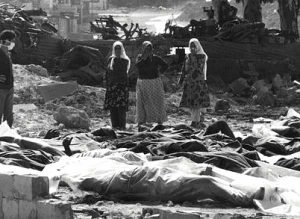
35th Anniversary of Palestinian Mass Slaughter in Lebanon Refugee Camps
This month marks the 35th anniversary of the mass slaughter of civilian Palestinians by Lebanese fascists in their Lebanon refugee camps of Sabra and Shatila. The Palestinians who lived in the camps had been driven out of their villages in the Galilee by Israel. They had lived there for hundreds of years until the Zionist colonialists expelled them in 1948. The Israeli Army aided in the 1982 slaughter. The 1982 Israeli invasion of Lebanon, which preceded the massacre, was given the greenlight by the United States. Up to 1982, the Palestine Liberation Organization, known as the PLO, had its headquarters in Beruit, Lebanon. This Israeli Army invaded Lebanon and succeeded in driving the PLO out. The United States gave written commitments to the PLO about protecting the civilian population in order to secure the PLO’s evacuation from Beruit the month before the slaughter at Sabra and Shatila camps.
Israeli Defense Minister Ariel Sharon falsely asserted that there were 2000 terrorists in the camps. US Envoy to Lebanon Morris Draper did not dispute this falsehood. Sharon told Draper that ” We will kill them. They will not be left there. You are not going to save them.” Sharon sent Lebonese fascists into the refugee camps. They silently killed hundreds of Palestinians and Lebanese, mostly women and children and old men, using knives and bayonets. The Israeli Army lit up the killing fields with flares. There was such a worldwide outcry that Israel was forced to set up a commission of inquiry. That commission found that Sharon bore “personal responsibility” for the massacre and recommended that he be dismissed from his post as Defense Minister.
The blowback from these events in Lebanon 35 years ago still echo today in the wars America is conducting in Syria and Iraq.
Guest – Rashid Khalidi, Edward Said Professor of Arab Studies at Columbia University. He is the author of “Under Siege: PLO Decision Making During the 1982 War”. and most recently “Brokers of Deceit: How the US Has Undermined Peace in the Middle East.” Professor Khalidi recently had an article on the Sabra and Shatila massacre in The Nation magazine.
—-
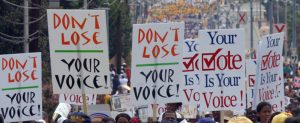
Community Votes
The Queensbridge House public housing project in Long Island City Queens is the largest such complex in the country. With more than 7,000 residents, it’s a community with little faith in civic engagement. Like other public housing communities, and low-income neighborhoods in general, poor people vote at considerably lower rates than wealthier ones. Many feel apathetic, that the system is rigged, and that their votes don’t matter.
One nonprofit in NYC is using innovative partnerships with community-based social service organizations to conduct nonpartisan voter mobilization so more underrepresented citizens participate in our democracy.
Community Votes is trying to change the culture and mindset of large nonprofit social service agencies so they integrate into their day-to-day operations civic engagement activities. These activities include promoting awareness of elections and issues and encouraging voting and other participation in federal, state, and city policy making. A few years ago Community Votes partnered with the Jacob Riis Neighborhood Settlement, a longtime provider of social services in the Queensbridge Houses, to engage in personalized messaging to mobilize voters. The results were a considerably higher rate of voter turnout in the 2014 midterm elections.
Guest – Louisa Hackett is the director of Community Votes. Louisa founded Community Votes in 2013. Through her work at Community Resource Exchange providing consulting services to New York City nonprofit organizations, she recognized the assets direct service organizations have to turn more citizens into voters.
—————————————————–