Afghanistan War, Civil Liberties, Criminalizing Dissent, FBI Intrusion, Gaza, Habeas Corpus, Human Rights, Iraq War, Political Prisoner, Prison Industry, Surveillance, Targeting Muslims, Torture, Truth to Power
Podcast: Play in new window | Download
Updates:
- Michael Ratner: Obama Could Allow “Torture Light” Interpretation of U.N. Treaty on Torture
- Michael Smith Returns From Argentina Book Tour, Describes How U.S Attempts To Destabilize Argentina Economy
——-
The Revictimization Relief Act (Muzzle Mumia)
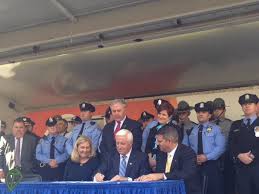
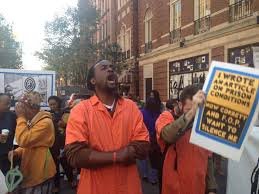
Last Thursday, the Pennsylvania State Senate in a bi-partisan 37-11 vote, approved The Revictimization Release Act. This last minute controversial law was ignited by Mumia Abu Jamal’s commencement address delivered at Goddard College in Vermont. The law would grant crime victims or prosecutors acting on their behalf to file a civil action against an offender to seek injunctive relief to stop offenders or former inmates from engaging in conduct that would cause “temporary or permanent state of mental anguish” to the victim.
Mumia Abu Jamal is 60 years old. He’s in the general population at Mahanoy State Correctional Institution in Frackville. He has also given speeches at Evergreen State College in Washington and Antioch College in Ohio.
Attorney Bret Grote:
- The Muzzle Mumia Law as it was called by the Harrisburg Patriot provides a cause of action for a victim of a personal injury crime to sue an offender in state court in Pennsylvania if that offender engages in conduct that “perpetuates” the effect of that crime on the victim. Later on in the statutes, that conduct is defined as including conduct that a temporary or permanent states of mental anguish.
- It also provides for the district attorney where the conviction was secured or the state’s attorney general to essentially act as the private attorney for the victim in order to bring this suit.
- It also does encompass not only speech about the crime whether its somebody like Mumia or Lorenzo Johnson or countless others who speak out about being framed up in Pennsylvania, but it doesn’t even make any exceptions for legal proceedings – and obviously people appealing criminal convictions can cause anguish to others.
- There are standards and no definitions for the conduct that is at issue except in relation to its impact on the victim and to provide some context as I’m sure your listeners know why it was written this way is they needed to write a statute that would sweep so broadly so as to encompass things like Mumia giving a commencement address at Goddard College, which was used as a pretext for whipping up this frenzy at the state legislature.
- It is a prior restraint on the freedom of speech but its written so broadly that Maureen Faulkner or the district attorney could conceivably go into court under this law.
- The House Judiciary committee in discussing this law when it was introduced in committee raised the issue of would this allow a court to enjoin what they called third party vessels.
- It could be Prison Radio, or it could be an individual who is authorized to speak to the media, or make a public statement.
- It was passed 197-0 in the House Legislature, and 37-11 in the Senate.
- It just shows you what takes precedence over any kind of adherence of the Constitution of the state or the United States, more than any law is allegiance to power amongst the political class, Pennsylvania politicians, attorney generals, district attorneys, are no strangers to Constitutional violations, its a normative practice for them.
- Right now, I’m representing Mumia in this and Prison Radio and Robert Holbrook who is a juvenile lifer and Human Rights Coalition member and activist and writer.
- Its unconstitutional under traditional over breadth analysis, it penalized lawful speech and its void for vagueness.
- There is probably nothing that would be more traumatizing for an actual victim of a crime then to have to go through this process that they’ve laid out in the Revictimization Release Act.
- They explicitly and exclusively focused on Mumia.
- This legislation was introduced by a former member of the Fraternal Order of Police, Mike Verib, who was a former Philadelphia police officer now a state legislator. In the context of Mumia’s case they have been leading a lynch mob literally in the streets to snuff out his voice.
- For decades the judge that presided over his trial was a Fraternal Order of Police member. They finance and vet the campaigns of every Supreme Court Justice in the state of Pennsylvania, the same with people running for office as governors.
- Mumia is being used in this context to reestablish the narrative, the Fraternal Order of Police, the police, their political counterparts are righteous protectors of public safety and that they’re beyond question and beyond reproach in trying to reset the propaganda line that has been dislodged in the wake of the rebellions in Ferguson, Illinois.
Guest – Pennsylvania attorney Brete Grote, a member of the Russell Maroon Shoatz legal team and cofounder and legal director of the Abolitionist Law Center. Bret has worked with the Human Rights Coalition since 2007 as an investigator, organizer, and researcher. He was the Isabel and Alger Hiss Racial Justice Fellow at the Center for Constitutional Rights in 2012. He graduated from the University of Pitt Law School in May 2013 and was recognized as the school’s Distinguished Public Interest Scholar.
——-

Richard Falk: The Palestinian Future After Gaza
We hear a presentation by Richard Falk titled The Palestinian Future After Gaza. Richard Falk was presenting at the Edward W. Said Memorial Lecture, co-sponsored by Columbia’s Heyman Center for the Humanities. It’s given once a year in honor of the public intellectual and literary critic, Edward W. Said, who taught in the English & Comparative Literature Department at Columbia from 1963 until 2003
Richard Falk is Albert G. Professor of International Law and Practice Emeritus at Princeton where he was a member of the faculty for 40 years. Since 2002 he has been associated with Global & International Studies at University of California, Santa Barbara as a research professor.
He was Special Rapporteur on Occupied Palestine for the UN Human Rights Council since 2008, and served on a panel of experts appointed by the President of the UN General Assembly, 2008-2009. He is Chair of the Board of Directors, Nuclear Age Peace Foundation, an NGO located in Santa Barbara.
He is also a member of the editorial board of several journals and magazines, including the American Journal of International Law, Third World Quarterly, Globalizations, The Nation, and The Progressive. Formerly, he was for many years North American Director of the World Order Models Project.
————————————————————————–
CIA Sponsored Terror, Civil Liberties, Criminalizing Dissent, Guantanamo, Habeas Corpus, Human Rights, Military Tribunal, Surveillance, Targeting Muslims, Torture, Truth to Power, War Resister
Podcast: Play in new window | Download
Updates:
- Heidi Boghosian Updates Listeners On The Revictimization Relief Act
——
Michael Smith Returns From Argentina Book Tour
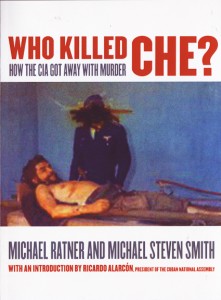
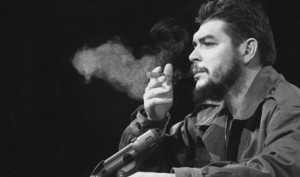
Early October marks the 47th anniversary of Ernesto Che Guevarra’s capture and assassination in Bolivia. Co-hosts Michael Ratner and Michael Smith have authored the book Who Killed Che? How The CIA Got Away With Murder. Michael Smith has recently returned from a trip to Buenos Aires to promote the Spanish language version of the book. Michael explains how Che was a threat to the United States by helping Cuba take over their own economy and why its important to set the story straight about Che’s death. Review of Who Killed Che?
—–
Weekend of Resistance: Ferguson, St. Louis Protests and the National Lawyers Guild
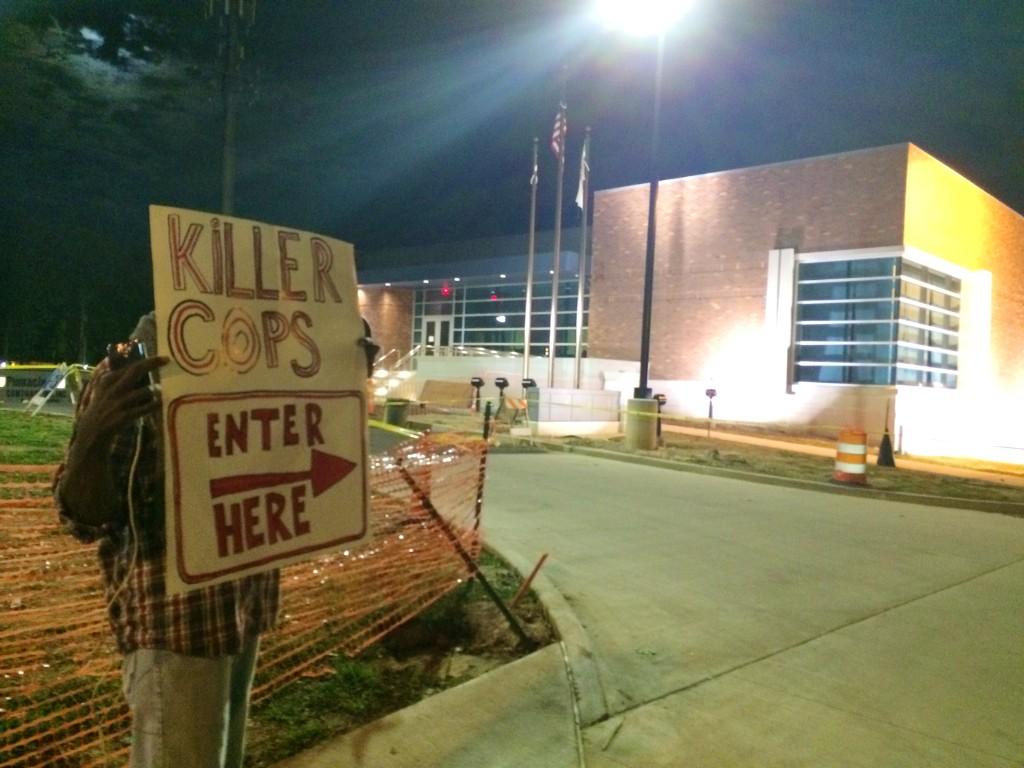
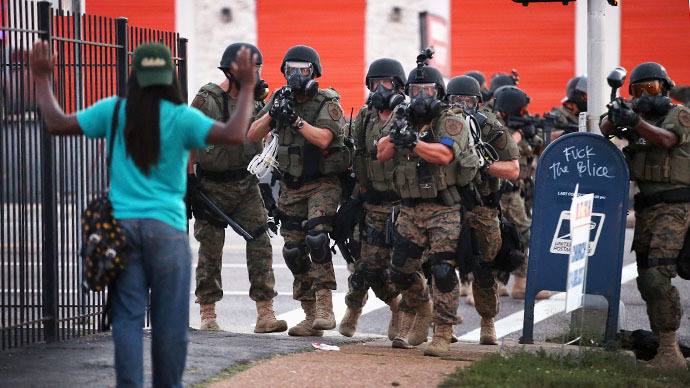
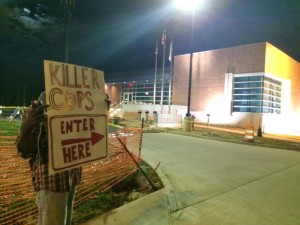
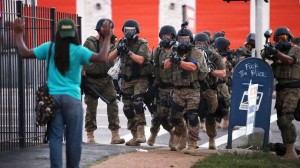
Last weekend, thousands of protesters in Ferguson, Missouri just outside of St. Louis demonstrated during a long planned Weekend of Resistance to the militarized suppression of peaceful demonstrations against the the killings of unarmed black teenagers including Michael Brown two months ago. Demonstrators traveled from cites across the country to participate in protests against police violence – including sit ins and vigil marches. Meanwhile, National Lawyers Guild members have been providing legal support, legal observation and felony representation for people arrested during the weekend. We catch up with St Louis Lawyers Guild member attorney Maggie Ellinger-Locke who has been working long hours representing arrested demonstrators. There are 90 municipalities in St. Louis and Maggie also explains the challenges in helping those arrested get processed through a unique court system.
Attorney Maggie Ellinger-Locke:
- People poured into the streets after the killing of Mike Brown and have pretty much been occupying various locations around the St. Louis area and protesting ever since.
- We at the National Lawyers Guild have mobilized close to 100 legal observers at this point to come down and do the observing and training people who are local.
- We’ve also been connecting people who are facing felony charges with representation as well as backing up the Arch City Defenders who are handling the bulk of the ordinance violations and charges.
- In August there were lots of chemical weapons used, tear gas every night. I was tear gassed multiple times. Other major mobilizations that I’ve been to, they last a couple of days, maybe the duration of a week, but this has been a continued onslaught of less than lethal weapons.
- There are a lot of difference agencies on the ground for law enforcement. There’s the Missouri Highway Patrol, St. Louis County Police Department, The Sheriff’s Department and of course we have 90 different municipalities in St. Louis County, each with its own police force.
- This is what it takes to fight back. People are out there every day on the streets.
- We’ve had NLG members pour in from all over which has really been fun getting to know all these people.
- Monsanto, which is based in Creve Coeur, Missouri, made a donation recently of a million dollars to various community groups doing work on the ground. On the other hand we’ll have a local pizza company board up and then the owner will train a gun on protesters to intimidate them.
- The demands have varied depending on the organizations. Indicting Darren Wilson, the officer who shot Michael Brown is at the top of everyone’s list. In order to achieve that you would have to have demand number 2 met which is that Don McCullough, the St. Louis County prosecuting attorney recuse himself from this case. People think that he’s conflicted in that his father was a white police officer who was shot by an African American man and killed.
- Another big demand is that the many many municipal charges that people are facing be dropped.
- In addition we desperately need reform of our municipal court system. The structure is insane.
- We’re hopeful that if we can demand jury trials for all of those arrested, we may in fact be able to crash the system.
- We have 40 people now who are facing felonies.
- The Organization For Black Struggle and Missourians Organizing for Reform and Empowerment.
Guest – Attorney Maggie Ellinger-Locke, National Lawyers Guild member and activist, and a partner with Ellinger & Assoc., P.C., a Law Firm in O’Fallon, Missouri.
——-
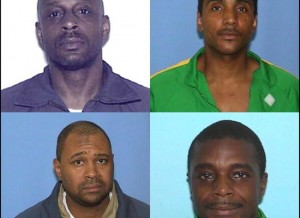
Jon Burge, Torturer of Over 100 Black Men, is Out of Prison After Less Than 4Years
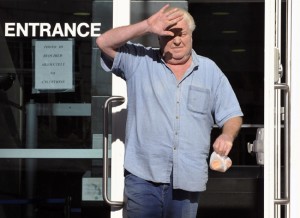
Last week former Chicago police commander Jon Burge who was convicted of lying about torturing more than 100 African-American men at Chicago police stations will be released from the Butner Correctional Institution and reporting to a halfway house in Tampa, Florida. This, as many listeners know is an ongoing story that we’ve been reporting on for many years with Attorney Flint Taylor with the People’s Law Office in Chicago who worked on the case representing some of the torture victims. We talk about why Jon Burge was released and his recent article titled Jon Burge, Torturer of Over 100 Black Men, is Out of Prison After Less Than Four Years. Flint reminds listeners that the total in financial damages to taxpayers from the torture of over 100 black men that Burge oversaw, and the ongoing pension payouts to his collaborating officers, exceeds $120,000,000.
Attorney Flint Taylor:
- Burge is a now notorious police torturer here in Chicago. He shot from detective up to commander of a police station based on torturing African-Americans suspects into giving confessions and sending many of them to death row and to life in prison.
- Ultimately, we were, along with community activists, expose this pattern and practice of 100 cases of police torture.
- This was by electric shock, by bagging people and other kinds of racist brutality.
- We exposed it and nothing happened for many years. Ultimately the Feds, indicted Burge, several years ago, not for torture because the statute of limitations had run on that, but rather for perjury and obstruction of justice.
- He was convicted by a predominantly white jury and ultimately sentenced to 41/2 years in the penitentiary.
- After 31/2 years, he was permitted to go to a halfway house for 6 months.
- What’s happening now? What’s happening with regard to the men who are still in the penitentiary, decades later, and there are almost 20 of them, based on tortured confessions.
- How about the men who testified against Burge, who were his victims?
- Those men, unlike Burge who gets a pension now, and the Illinois Supreme Court has upheld his right, even as a convicted felon to collect that money. These men get nothing, have nothing.
- There are as many as 90 of those men on the streets now, with no health care, with no treatment for psychological damage.
- The majority of city council members support at this point reparations for those men. The reparations for those men would be 20 million dollars.
- The same amount of the money the city spent to defend Burge in the cases of the exonerated men.
- We’re now at a sensitive stage, where the mayor, Emanuel has had to come out. He’s no friend to the anti-torture forces, and he’s been asked repeatedly on this.
- He has played both sides against the middle, its time right now where he’s going to have to fish or cut bait.
- We had the strong support of Karen Louis who was a wonderful challenger and she has now had to withdraw from the (mayoral) race because of “health issues.” She was a strong supporter of the reparations ordinance.
Guest – Attorney G. Flint Taylor, a graduate of Brown University and Northwestern Law School, is a founding partner of the People’s Law Office in Chicago, an office which has been dedicated to litigating civil rights, police violence, government misconduct, and death penalty cases for more than 40 years.
——————————————————————————

Please help support Law and Disorder, the show is now a sponsored project of Fractured Atlas, a non-profit arts service organization. Contributions for the charitable purposes of Law and Disorder must be made payable to Fractured Atlas only and are tax-deductible to the extent permitted by law.
Afghanistan War, CIA Sponsored Terror, Civil Liberties, Criminalizing Dissent, Gaza, Guantanamo, Habeas Corpus, Human Rights, Iraq War, NSA Spying, Political Prisoner, Prison Industry, Surveillance, Targeting Muslims, Torture, Truth to Power, War Resister
Podcast: Play in new window | Download
Updates:
- Mumia Spurs Bill To Block Publicity-Seeking Criminals (Son of Sam Law)
- Guantanamo Bay Prisoner Files Historic Lawsuit Against Obama Over Force-Feeding
——
Lawyers You’ll Like – Charlie Abourezk
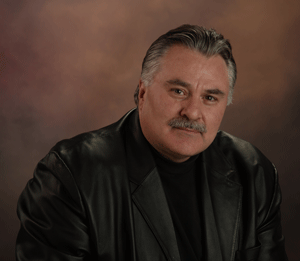
As part of our Lawyers You’ll Like series, we talk with attorney Charles Abourezk about his work with the Native American community in South Dakota. Charles is a trial attorney, author and film maker. His documentary A Tattoo On My Heart: The Warriors of Wounded Knee 1973 is a gripping documentation of those American Indian men and women involved in the siege. Charles is the Chief Justice of the Rosebud Sioux Tribe Supreme Court, he’s also member of South Dakota Advisory Committee to U.S. Commission on Civil Rights. He’s the son of James George Abourezk, former Democratic United States Representative and United States Senator where he was generally viewed as critical of US foreign policy in Israel and Palestinian.
Attorney Charlie Abourezk:
- The Rosebud Sioux Tribe is the second largest tribe in South Dakota. There are nine total tribal governments in the state. It’s where I grew up.
- I spent most of my adult life on the Pine Ridge Reservation which has been the poorest county in the United States.
- I went to law school, long after I worked for a number of Indian organizations including a Native American NGO that worked at the UN in Category 2 status.
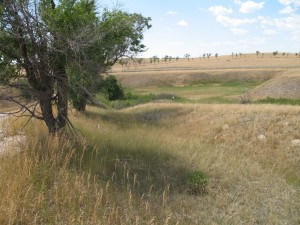
- The Pine Ridge Reservation is the second largest reservation in the United States, located in south western South Dakota. It’s a huge land mass, takes about an hour and a half to drive diagonally across the reservation. There’s very little economy. The geography is very poor, it lends itself to cattle grazing but not much in terms of raising crops.
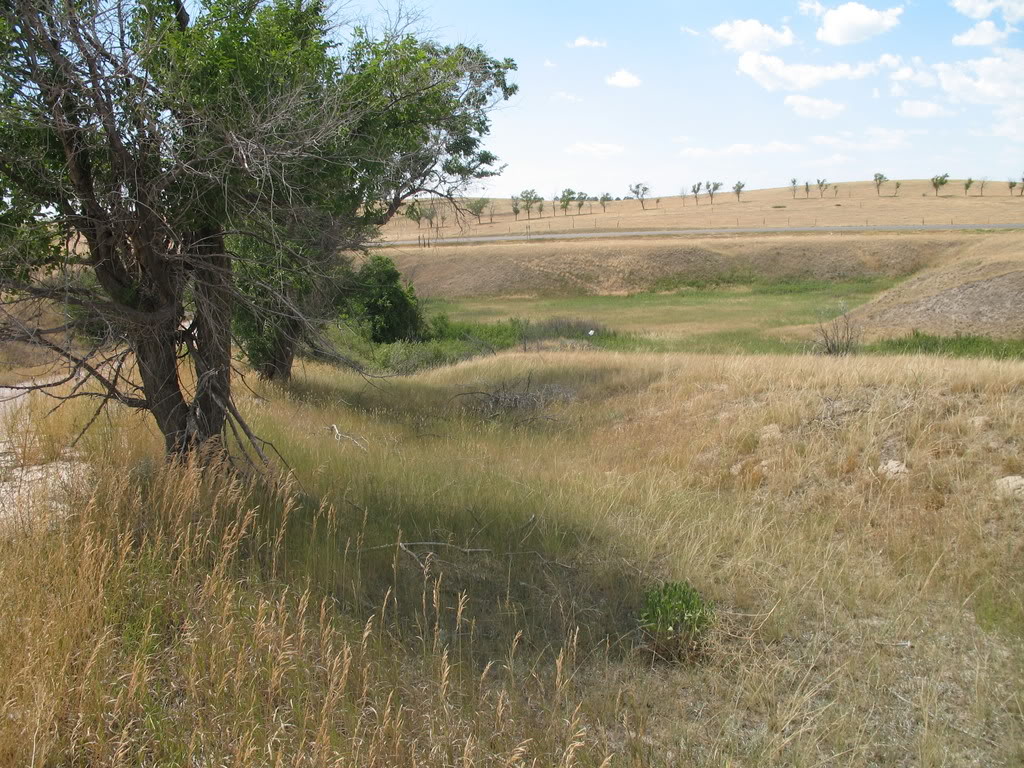
- Wounded Knee was the site of the 1890 massacre in which almost 300 American Indians from several different tribes were killed by the U.S. Army. They were surrounded and essentially murdered on that spot.
- So, in 1973, there had been a lot of racial discrimination and racially motivated killings of Indian people, the American Indian Movement returned and joined forces with the traditional people who had long been neglected on the reservation.
- As a result they decided to engage in a protest. They chose the site of the massacre at Wounded Knee, to stage that protest.
- They set up sort of a line there, with the government and US Marshalls, along with Dick Wilson’s followers who were armed and were called the goon squad and formed the other side of that line. The siege lasted 71 days.
- It finally dismantled and number of people were prosecuted as a result of that.
- At Wounded Knee, two Indian people killed and one Marshall wounded.
- We set up a recording studio right at the Wounded Knee school, and just took people’s stories. I did the interviews, they were really powerful. There were some stories that didn’t fit with the arc of the film but were incredible. I’m glad I documented it then, because I think of the people in the documentary, 7 or 8 have now passed away.
- I continue to be a strong advocate for tribal sovereignty, self determination and the rights of individuals especially within the dynamic of racial discrimination which at times in South Dakota have been as bad as the south is toward African Americans.
- I helped affirm and preserve the boundaries of the Yankton Sioux Reservation, that went up to the Supreme Court twice. I was the lead council when it finally concluded, we were able to win that one.
- I was a former Supreme Court Justice on the Pine Ridge Reservation for their Supreme Court and I retired from that position.
- Except for limited jurisdiction the Federal Government had on criminal matters, the civil jurisdiction for incidents which occur within the reservation lie with the tribal court as do criminal misdemeanors for tribal members and non tribal members meaning Indians from other tribes that happen to be living on the reservation.
- In the Native American view you can’t really have winners and losers, you have to try to restore the harmony or the balance within the tribe.
- The American government adopted the British style of colonialism as did the Israelis when they began to colonize parts of Palestine. It kind of goes in 4 steps.
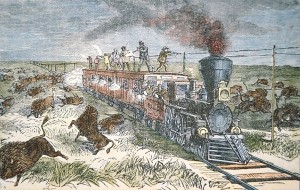
- A disruption of traditional agriculture and food gathering, which out here was done in two ways, killing off the buffalo and secondly constraining them from moving around in a wide arc for hunting and gathering – by putting them on the reservation they stopped that.
- Transfer commonly owned land into private ownership, to turn land into a commodity that can be bought and sold. They did that through what’s called the Daws Act or the Allotment Act in the late 1800s.
- Theodore Roosevelt called that act a “might pulverizing machine” with which to break up the tribal mass.
- The third step was to develop a native ruling elite. In this case they first developed “paper chiefs” then in the 1930s developed modern tribal government.
- Last step, develop an educated elite. Of course any colonizer anywhere, that’s the step that always back fires.
- The American Indian Movement was born from the children of the parents who were relocated into cities trained as workers.
- They were the ones who came back home and joined forces with the traditional people and stood up against racism and in favor of tribal sovereignty and tribal self determination.
- You see many parallels with that and what’s happening to the Palestinians in the West Bank and Gaza. Dr William Julius Wilson
Guest – Charlie Abourezk, from Rapid City, South Dakota and is a trial attorney, longtime activist and community organizer in the native American community in South Dakota. He is also a documentary film maker, his most recent is the feature length documentary “A Tattoo On My Heart: The Warriors of Wounded Knee 1973” which played on public television stations around the United States. He is the current Chief Justice of the Rosebud Sioux Tribe’s Supreme Court and a member of the South Dakota Advisory Committee to the US Commission on Civil Rights. His client base is made up largely of Native Americans, tribal schools and Indian tribal governments, but he also represents plaintiffs in civil rights litigation. He will have a book coming out this next year entitled “A Mighty Pulverizing Machine: The Continuing Colonization of American Indians.”
——-
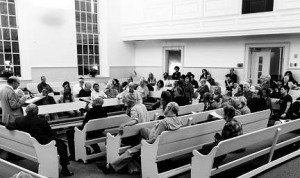
From Guantanamo to Wikileaks: Taking on the State In a Post 9/11 World.
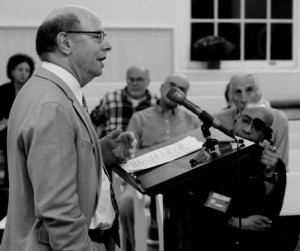
Our own Michael Ratner, President Emeritus, Center for Constitutional Rights (CCR), past president, National Lawyers Guild; Chair, European Center for Constitutional and Human Rights delivered a talk last week titled ‘From Guantanamo to Wikileaks: Taking on the State In a Post 9/11 World.’ Michael was honored with a PathMaker to Peace Award by the Brooklyn For Peace Organization for his consistent work in litigation against government spying and surveillance of activists including the targeting of Muslims particularly after 9/11.
Law and Disorder Co-host Attorney Michael Ratner, President Emeritus of the Center for Constitutional Rights (CCR), a non-profit human rights litigation organization based in New York City and president of the European Center for Constitutional and Human Rights (ECCHR) based in Berlin. Ratner and CCR are currently the attorneys in the United States for publishers Julian Assange and Wikileaks. He was co-counsel in representing the Guantanamo Bay detainees in the United States Supreme Court, where, in June 2004, the court decided his clients have the right to test the legality of their detentions in court. Ratner is also a past president of the National Lawyers Guild and the author of numerous books and articles, including the books Who Killed Che? How the CIA Got Away With Murder, The Trial of Donald Rumsfeld: A Prosecution by Book, Against War with Iraq and Guantanamo: What the World Should Know, as well as a textbook on international human rights.
———————————————————————————-
Please help support Law and Disorder, the show is now a sponsored project of Fractured Atlas, a non-profit arts service organization. Contributions for the charitable purposes of Law and Disorder must be made payable to Fractured Atlas only and are tax-deductible to the extent permitted by law.
CIA Sponsored Terror, Civil Liberties, Criminalizing Dissent, Gaza, Guantanamo, Habeas Corpus, Human Rights, Military Tribunal, NSA Spying, Political Prisoner, Prosecution of the Bush Administration, Supreme Court, Surveillance, Targeting Muslims, Torture, War Resister
Podcast: Play in new window | Download
Updates:
- Michael Ratner: Moazzam Begg Freed After Terrorism Charges Dropped
- Michael Ratner: 149 Inmates In Guantanamo Bay Prison – 79 Approved For Transfer
——-
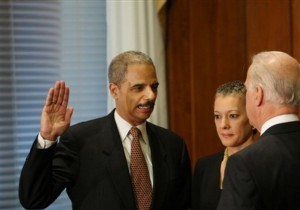

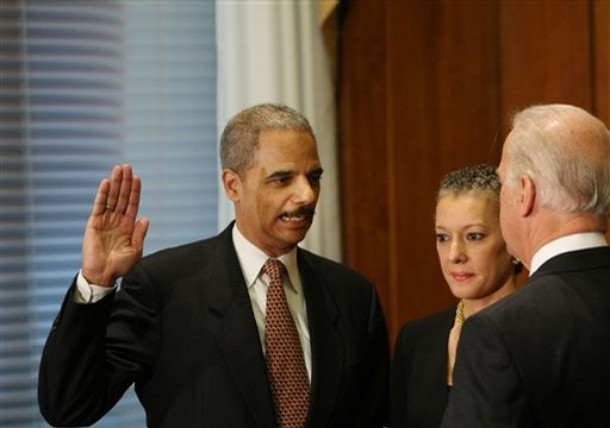
U.S. Attorney General Eric Holder Evaluation
Michael Ratner and Heidi Boghosian draw a balance sheet on the record of U.S. Attorney General Eric Holder.
- Holder approved drone killing of American citizen al-Awlaki without due process.
- Holder failed to prosecute any of the Bush Administration officials who were openly admitted torturers.
- Holder abrogated the responsibility in holding corporate criminals accountable. Wall Street.
- Holder settled with HSBC for 2 billion, the bank was caught laundering money for drug cartels yet no prosecution.
- With-Holder prosecuted whistleblowers, Chelsea Manning, Julian Assange, Edward Snowden, James Risen, Jeremy Hammond, Fox News Reporter,
Law and Disorder Co-host Attorney Heidi Boghosian, executive director of the A.J. Muste Memorial Institute, a nonprofit charitable foundation providing support to the nonviolent movement for social change. Before that she was executive director of the National Lawyers Guild. She is author of the book “Spying on Democracy: Government Surveillance, Corporate Power, and Public Resistance” (City Lights, 2013) as well as several reports on policing and the First Amendment.
Law and Disorder Co-host Attorney Michael Ratner, President Emeritus of the Center for Constitutional Rights (CCR), a non-profit human rights litigation organization based in New York City and president of the European Center for Constitutional and Human Rights (ECCHR) based in Berlin. Ratner and CCR are currently the attorneys in the United States for publishers Julian Assange and Wikileaks. He was co-counsel in representing the Guantanamo Bay detainees in the United States Supreme Court, where, in June 2004, the court decided his clients have the right to test the legality of their detentions in court. Ratner is also a past president of the National Lawyers Guild and the author of numerous books and articles, including the books Who Killed Che? How the CIA Got Away With Murder, The Trial of Donald Rumsfeld: A Prosecution by Book, Against War with Iraq and Guantanamo: What the World Should Know, as well as a textbook on international human rights.
——-
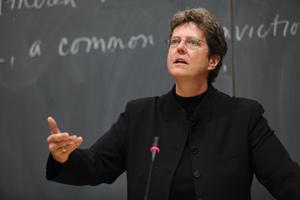
Academic Freedom & Political Dissent: A Conversation with Katherine Franke and the Community
We continue to report on Professor Steven Salaita’s case and the concerns regarding established principles of academic freedom. We hear a presentation by Katherine Franke, Professor of Law at Columbia University. Listeners may recall that Professor Salaita was unhired from the American Indian Studies program at the University of Illinois at Urbana-Champaign because of his statements on social media criticizing Israel’s conduct of military operations in Gaza. We reported last month on Law and Disorder that scholars from law schools around the country came out with a letter condemning the decision of the University of Illinois to unhire Professor Salaita. Katherine Franke discussed Salaita’s case at the University of Illinois at Urbana-Champaign late last month.
Speaker – Katherine Franke, Isidor and Seville Sulzbacher Professor of Law; Director, Center for Gender and Sexuality Law at Columbia University. She was awarded a 2011 Guggenheim Fellowship, and is among the nation’s leading scholars in the area of feminism, sexuality and race. In addition to her scholarly writing on sexual harassment, gender equality, sexual rights, and racial history, she writes regularly for a more popular audience in the Gender and Sexuality Law Blog. Franke is also on the Executive Committee for Columbia’s Institute for Research on Women and Gender, and the Center for Palestine Studies and teaches at a medium security women’s prison in Manhattan. Her legal career began as a civil rights lawyer, first specializing in HIV discrimination cases and then race and sex cases more generally. In the last 25 years she has authored briefs in cases addressing HIV discrimination, forced sterilization, same-sex sexual harassment, gender stereotyping, and transgender discrimination in the Supreme Court and other lower courts.
—————————————————————-
Please help support Law and Disorder, the show is now a sponsored project of Fractured Atlas, a non-profit arts service organization. Contributions for the charitable purposes of Law and Disorder must be made payable to Fractured Atlas only and are tax-deductible to the extent permitted by law.
Civil Liberties, Criminalizing Dissent, Gaza, Human Rights, Iraq War, Political Prisoner, Surveillance, Targeting Muslims, Torture
Podcast: Play in new window | Download
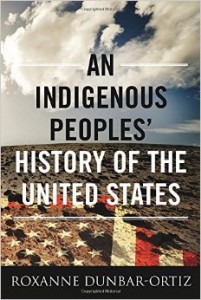
An Indigenous Peoples’ History of the United States
In the United States today, there are more than 500 federally recognized indigenous communities and nations comprising nearly three million people. These are the descendants of the 15 million people who once inhabited this land and are the subject of the latest book by Roxanne Dunbar-Ortiz. In An Indigenous Peoples’ History of the United States, Dunbar-Ortiz challenges the founding myth of the United States and shows how policy against the indigenous peoples was genocidal and imperialist—designed to crush the original inhabitants. Spanning more than 300 years, this classic bottom-up history significantly reframes how we view our past. Told from the viewpoint of the indigenous, it reveals how Native Americans, for centuries, actively resisted expansion of the U.S. empire.
Roxanne Dunbar-Ortiz:
- It’s absolutely necessary to know this history of settler colonialism and how it effects consciousness today of U.S. people and in the world because everyone is convinced of this myth of the United States and somehow its always going off the path of this destiny that has never been true in the first place.
- It’s like a fairy tale except its extremely deadly and dangerous.
- Other countries have romantic myths as their form of nationalism but they don’t control the world with this ideology.
- The myth is that it was a birth of settler democracy but we know from apartheid South Africa, we know from colonialism, particularly settler colonialism such as Israel.
- There are so many parallels with Israel because the Puritans and this became embedded in all settlers, had this idea of the new Jerusalem of Zion. They used that terminology.
- That God had given them this land to settle, it wasn’t just a right it was a responsibility to destiny, to the world.
- This made the native farmer and fisherman, ordinary people like other people in the world into savages and monsters, sort of like the Israelis to do the Palestinians today.
- Throughout the book I have a theme of the militarism and the counterinsurgency that attacks civilians and a food fight they call it, burns the food, supplies, the crops, burns the houses of the people in their towns, creates refugees. This then becomes the pattern.
- Every generation there is this Indian war. Vietnam looked like an Indian war, even the language they use – indian country for enemy territory, all of the weapons they name after native people.
- This is not how we think of the United States, supposedly a civilian country, the military is always under control of civilians but that civilian president is commander and chief of the armed forces.
- There’s also a theory, the Bering Strait the one entrance to the whole continent, which is absurd because all of the people on the coast were great seafaring people.
- A part of European imperialism say as the beginning of everything that it connected people up. Actually what it did was separate people each other and their tradition.
- My specialization is the southwest and central Mexico, Central America. I knew there were complex trade routes and roads all over the place, irrigation canals, how they developed agriculture.
- The first chapter, Follow the Corn, I did just that. I followed out of Mexico, the dispersion of corn agriculture all the way to Tierra Del Fuego to the sub Arctic and coast to coast.
- What you find in the Americas is when they get to the point of abusing the environment and become dictatorial, there tends to be revolts to overthrow, that was happening when Cortez came to Mexico.
- The Quetzalcoatl cult that took over the Aztec government became abusive and was doing slave raiding. Had done a wonderful job of dispersing trade routes. Cortez simply allied with the rebels and overthrew the central government.
- Course they couldn’t know his intentions of simply wiping out their civilization.
- When British colonialism came to North America with these peculiar characteristics of the puritan ideology settling in. With 2 centuries of settler colonialism they developed this idea of ownership.
- It went from owning human beings to the idea of owning the land.
- George Washington was a surveyor and you have to ask why was such a super wealthy – a lowly surveyor?
- Surveyors got to choose the best land, and got to mark it up. They had already developed this idea of a Platte, creating territories that would then become states once they had a majority settler population.
- That’s why it took so long for Oklahoma, Oklahoma was the 47th state, New Mexico, Arizona, these places that had a majority native population.
- It was rough being native in the United States, it still is. I grew up in Canadian county Oklahoma, my dad sharecropped, and was a tenant farmer throughout that area until the depression wiped it out.
- The people went to California as refugees.
- I’m cautious about the identity because native nationalism Cherokee or Onondaga or Shawnee or Creek Muskogee
- There was an instance in 1917, I think its one of the most important moments in US history and hardly anyone knows about it. Jack Womack and I had written about it Monthly Review, it was called the Green Corn Rebellion.
- That is the main demand, land base, nationhood, the ability to prosper and exist as people, not just as individuals being assimilated out, that’s another form of genocide.
Guest – Roxanne Dunbar-Ortiz, grew up in rural Oklahoma, the daughter of a farmer and half-Indian mother. She has been active in the American Indian Movement for more than four decades and is known for her lifelong commitment to national and international social justice issues. After receiving her PhD in history at the University of California at Los Angeles, she taught in the newly established Native American Studies Program at California State University and helped found the departments of Ethnic Studies and Women’s Studies. Her 1977 book The Great Sioux Nation was the fundamental document at the first international conference on Indians in the Americas, held at the United Nations’ headquarters in Geneva. She is the author or editor of seven books.
———
Academic Freedom Case: Professor Steven Salaita
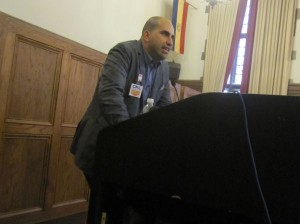
Last Thursday the University of Illinois at Urbana-Champaign Board of Trustees rejected Professor Steven Salaita’s candidacy for a tenured faculty appointment to the American Indian studies program. Initially we reported here on Law and Disorder that Professor Salaita was essentially dehired from the American Indian Studies program at the University of Illinois at Urbana-Champaign because of his statements on social media criticizing Israel’s conduct of military operations in Gaza. Emails within the University revealed under Freedom of Information Act Requests show that it was outside pressure from donors that influenced the University of Illinois Chancellor’s decision to dehire Salaita.
Professor Steven Salaita:
- I received the job offer at the end of September 2013, the first offer was for me to begin on June 2014 but because of my obligations to Virgina Tech and short time for moving we pushed it back to mid August.
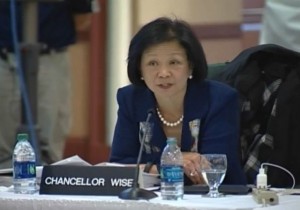
- Everything was good to go, we set up movers, my classes were ready to teach they had been assigned to me. I ordered my textbooks, on August 2, I received a letter from the chancellor Phyllis Wise, telling me the termination was going to be withdrawn, so it left me scrambling for what to do, because I already resigned my position at Virginia Tech.
- So all of a sudden I didn’t have a job, at Illinois or Virginia Tech.
- Publicly released documents indicate that donor pressure played a large role in it.
- There’s been some consternation about my tweets about Operation Protective Edge, that’s Israel’s recent invasion of the Gaza Strip and I think that had a lot to do with the donor pressure.
- I think the university is pressing this idea of incivility in social media.
- I think one of the saddest parts of the whole affair is that I hadn’t had the opportunity to join them and become their colleague and work with them (Professors at the American Indian Studies Department) and they’ve been terrific throughout this entire affair.
- Academic hiring happens at the level of faculty, it happens at the level of department and search committees within departments will choose the hire, sometimes the entire department has to sign off on it.
- Then it gets kicked up the dean, then it will get kicked up to the provost or chancellor for their approval, that’s what we call democratic governance on campus.
- It’s kind of an allegory of the position of American Indian nations in the United States and Canada. They’re seen as not being able to make their own autonomous decisions. They’re not allowed to articulate their own practices of sovereignty without the oversight of authorities above them.
- The discourse they used in firing me is remarkable. To describe somebody who has been hired by an American Indian Studies Department as uncivil draws on hundreds of years of colonial discourse that I find shocking.
- It’s an allegory of history and politics that exist in microcosmic form within the framework of the University of Illinois.
- In this case civility means acquiescence to power, and incivility equates to dissent.
- In lots of ways my case has become something of an avatar, a flashpoint for people’s grievances.
- I could really easily be identified with BDS and I think within the past year, 2 things have happened that have caused Zionists to step up their game around this issue. One is the string of boycott resolutions that have been ratified by scholarly organizations by labor unions, by civil rights groups, by churches.
- I think the response to it is not engage on the issues, not to have conversations or debates about the issues but to shut down our side altogether. They don’t want to have debates, they want a silence.
- They don’t want to engage in conversation they want the discussion to be unilateral.
- Support Steven Salaita
Guest – Professor Steven Salaita, former associate professor of English at Virginia Tech. He is the author of six books and writes frequently about Arab Americans, Palestine, Indigenous Peoples, and decolonization. His current book project is entitled Images of Arabs and Muslims in the Age of Obama.Steven grew up in Bluefield, Virginia, to a mother from Nicaragua (by way of Palestine) and a father from Madaba, Jordan. Books by Salaita
—————————————————————————————
Please help support Law and Disorder, the show is now a sponsored project of Fractured Atlas, a non-profit arts service organization. Contributions for the charitable purposes of Law and Disorder must be made payable to Fractured Atlas only and are tax-deductible to the extent permitted by law.
CIA Sponsored Terror, Civil Liberties, Criminalizing Dissent, Human Rights, Political Prisoner, Prison Industry, Surveillance, Targeting Muslims, Truth to Power, War Resister
Podcast: Play in new window | Download
Updates:
- Professor Salaita Press Conference Update
- Michael Ratner: 13th Anniversary of 9-11
- Michael Ratner: You Can’t Have Imperialism Abroad And Democracy At Home
- Michael Ratner: Basically . . .It’s Over. The Legal System Is Done For.
- Michael Ratner: September 11, 1973 Anniversary – Chilean Coup D’état
- Michael Ratner: September 7, 1971 Anniversary Attica Prison Rebellion
—–
50 Year Anniversary of the Free Speech Movement
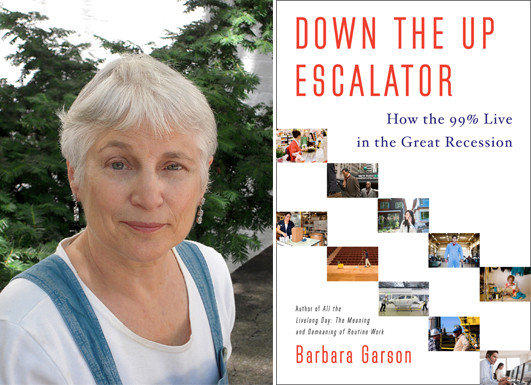
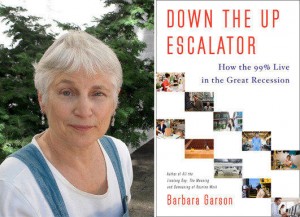
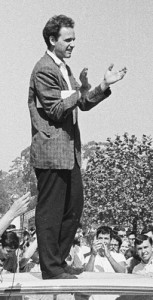
The Free Speech Movement began September 14, 1964, marking the 50 year annivesary this month. It began when the University of California at Berkeley announced that existing university regulations banning political activity on campus would be “strictly enforced.” The resulting protests, unprecedented in scope, were the harbinger of the student power, civil liberties, and antiwar demonstrations that convulsed college campuses throughout the country for the next decade. American playwright, social activist and author Barbara Garson joins us to talk about the Free Speech Movement and her most famous work MacBird.
Barbara Garson:
- I was at the University of California at Berkeley and when we got back to campus in 1964 some people from the Freedom Summer in Mississippi, myself working with the farm workers in California . . . we come on to campus and we discover that the area in front of the school that we (all the groups) traditionally used to hand out leaflets about their events and so on, suddenly you couldn’t hand out leaflets there.
- The reason we were given was trash. That is to say litter.
- Pretty soon all the groups, I mean all the groups, the Republicans, the Young Republicans, the Democrats and the Anarchists, we all went to the administration and . . . . they dropped that flimsy excuse.
- They said no, the only thing is you can’t pass out leaflets on campus that advocate action off campus.
- It was obvious not only to the radicals but all the students that some . . powerful people in Berkeley had become annoyed by the farmworkers boycott and the equal employment picket lines in Oakland and had put pressure on the president of the university.
- All the groups realized this wasn’t an issue about litter, it was an issue of free speech.
- Throughout that year of expulsions, arrests, all the groups stood together.
- They stuck together with a very simple demand, that we be able to exercise the freedoms guaranteed by the Constitution of the First and Fourteenth Amendments on the CAL campus.
- We won 100 percent.
- We created a counter force and we stayed with it. I don’t believe in the cult of a personality but Mario Savio really was special.
- The campus police called the Berkeley Police and the Berkeley Police who are very nice put Jack Weinberg in a police car. Suddenly everybody sat down around the police car. There are dozens of people who claim to be the first person to sit down around the police car.
- He (Jack) knew immediately not give his name to step up the action.
- People start getting on the police car to address the crowd. Try to remember back what kind of kids we were. When you look at the pictures we had short hair, we had bright glasses, just really nice kids. (They take off their shoes before getting on police car.)
- One of the people who gets on the police car is Mario Savio who’s been on a Freedom Summer, that summer. The gift that Mario gave us was his utter sincerity.
- He (Mario) created that sense, we’ve come here to do something worthwhile with our lives. We were talking lives, not lifestyle.
- We were very naive and we accept committees to look into the free speech regulations on campus.
- Over the course of six months it became clear to everyone that there was nothing we could do that we would be betrayed.
- Many of the students were most radicalized by being lied to.
- I’m an FSM alumni really, not a Berkeley alumni.
- It’s just natural, they really did agree with us, who doesn’t agree with the First and Fourteenth Amendments.
- We literally voted to dissolve the Free Speech Movement. That’s wrong. We saw the same thing happen with Occupy, from a good impulse, not be like them, we haven’t presented any power to fight them.
- One of the areas where we left no fight, the economic areas which have seen working people beaten down for the 40 years.
- Now when you go to the University of California Berkeley campus you don’t need regulations about speech when most of the students have mortgage sized debts.
- When I went to University of California Berkeley my tuition was free.
- The FSM, well, its in part in sorrow that we meet to figure out how things went this way.
- FSM.org – Reunion Event
Guest – Barbara Garson, an American playwright, author and social activist known for the play MacBird. She wrote a series of books describing American working lives at historical turning points, including All the Livelong Day (1975), The Electronic Sweatshop (1988) and Money Makes the World Go Around (2001). Her new book, just published, is Down the Up Escalator: How the 99% Live in the Great Recession
——-
Louis Tikas and the Ludlow Massacre
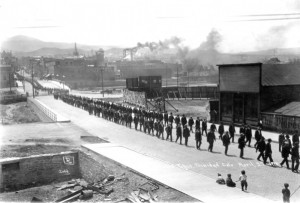
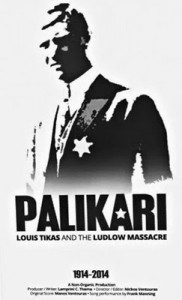
Louis Tikas and the Ludlow Massacre is the title of the new documentary film from Greece by Lamprini Thoma and Nickos Ventouras. April 20, 2014 marked the 100th anniversary of the historic attack on workers. In April 1914, the Colorado National Guard and Colorado Fuel and Iron Company Camp Guards began shooting into a tent colony of 1200 striking coal miners and their families in Ludlow Colorado. 39 people were killed including 2 women and 11 children. Among the murdered was Louis Tikas, a Greek immigrant who is remembered in this documentary for his work that helped launch the U.S. labor movement. The story is told through the voices of prominent historians, artists and the descendants of Ludlow miners in Colorado.
Lamprini Thoma:
- When the situation in Greece . . . we’re not a democracy anymore, you know. When we started losing our working rights, we started having problems with immigrants . . it all became obvious we were back there.
- Me and Nickos who’s my partner in life and in crime, we did the movie together.
- We thought that we didn’t have to say anything, that history could say everything, about people like immigrants, like Greeks and how they suffered, and how they fought for their rights.
- That’s how it became relevant to us now. Not something from history but something from your life, you have to put in your life and you have to say to the other, see this is what happened.
- We musn’t let it happen again.
- Palikari, young men in their prime. Louis Tikas his name is Elias Spantidakis. He left from Crete, late 19th century, went to New York and from there Colorado where he got involved with the unions and he started organizing the Greeks and he saw how hard things were especially for the miners.
- He was a man of peace and of justice I can say.
- He was murdered brutally by the man of the Rockefellers at the time of the Ludlow massacre.
- In this work of ours we’re trying to let the people meet him and see how wonderful a man can be.
- At the time John Rockefeller Sr was passing his power on to John Rockefeller Jr. it was 1914 that the thugs of the Colorado Fuel and Iron Company of the Rockefellers attacked the miners.
- It was the second day of the Greek Easter, a very important time for Greek immigrants. Louis Tikas was the first to be killed among the union men.
- It’s a history then that shows how things were and still are in my opinion for the working class.
- Women were the ones to keep the house, to keep the children fed. To take their place (the men) when they were arrested.
- When working rights move on, all rights start to move on. They’re connected in a way.
- Most people think that Rockefeller was the winner. He killed them when the strike was brought. But he was not, history is the judge there . . . and how it survived in memory.
- They never speak about class war in the United States. They use other phrases.
- Our premiere will be in the CUNY Grad Center in Manhattan September 19, 2014 and we’re expecting to see you there.
- Nonorganicproductions.com – Coal is organic.
Guest-Lamprini Thoma has been working as journalist, radio producer and script writer for the last 30 years. She has covered wars in the Balkans, the former Soviet Union and West Africa. She has worked in print, online and broadcast media, including the BBC’s now defunct Greek service. She created the first specialized newspaper column on the Internet in Greece, something which still makes her proud. Lamprini and Nikos have been working together for the last ten years.
————————————————————————-