CIA Sponsored Terror, Civil Liberties, Criminalizing Dissent, FBI Intrusion, Habeas Corpus, Human Rights, Military Tribunal, Political Prisoner, Prison Industry, Prosecution of the Bush Administration, Surveillance, Targeting Muslims, Torture, Truth to Power, War Resister
Podcast: Play in new window | Download
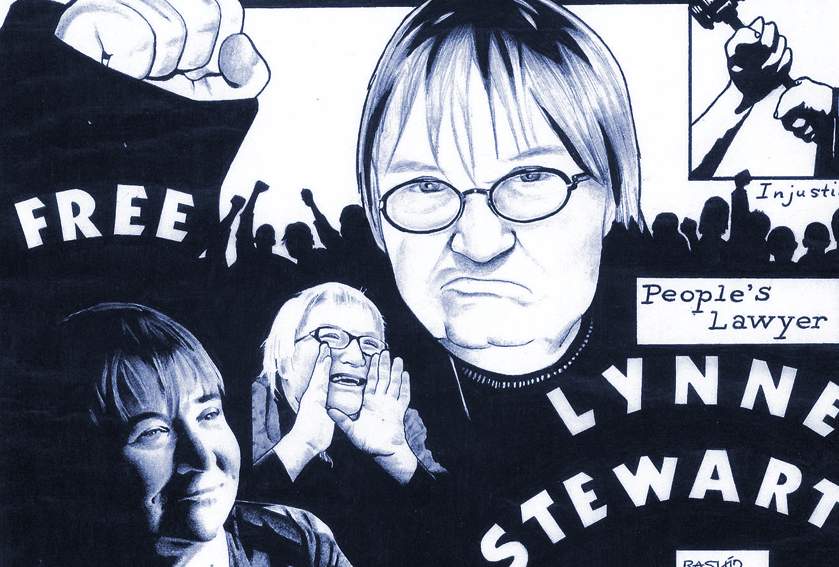
Please Sign Petition To Help Lynne Stewart
Long time literary agent Francis Goldin has for years visited inmates on death row. She’s recently returned from visiting Lynne Stewart in the Carswell Medical Facility in Texas. She joins hosts to talk about her visit.
Francis Goldin:
- We were there for 4 days and most of the time we were in the prison with her.
- If we kissed more than once, or hugged more than once she would be fined.
- That’s how they become correctional by denying kissing and hugging and loving.
- We were only there for about 70 hours, we didn’t have enough time to talk.
- The day we left, all the plans were changed, no more 4 day visits, only Saturday and Sunday. The inmates were heart broken.
- The breast cancer has moved to her lungs. The reason she has it in her lungs is because they didn’t treat her when they should have.
- It’s tremendously important to go to LynneStewart.org and sign on for this release.
- When you sign on, email every person on your list whether its 10 or 500.
- It’s really important that we send a million signatures.
- I visited Maroon for 27 years, every 3 months. I was there for 2 whole days.
- Lynne Stewart Compassionate Release Petition
- Please Also Write to: Charles E Samuels Jr. / Federal Bureau of Prisons /
- 320 1st Street Northwest / Washington DC 20534
Guest – Francis Goldin, has worked in publishing for 63 years, as an agent and as editor-in-chief of a children’s publishing company; she founded the Frances Goldin Literary Agency and sold her first book in 1977. Authored by Black anthropologist Betty Lou Valentine and titled Hustling and Other Hard Work, the book continued to receive royalties for 32 years. Among her clients are Barbara Kingsolver, who she has represented for all of her 14 books, Mumia Abu-Jamal, Dorothy Allison, Frances Fox Piven, Martin Duberman, iconic feminists including Charlotte Bunch and Esther Newton, more.
——–
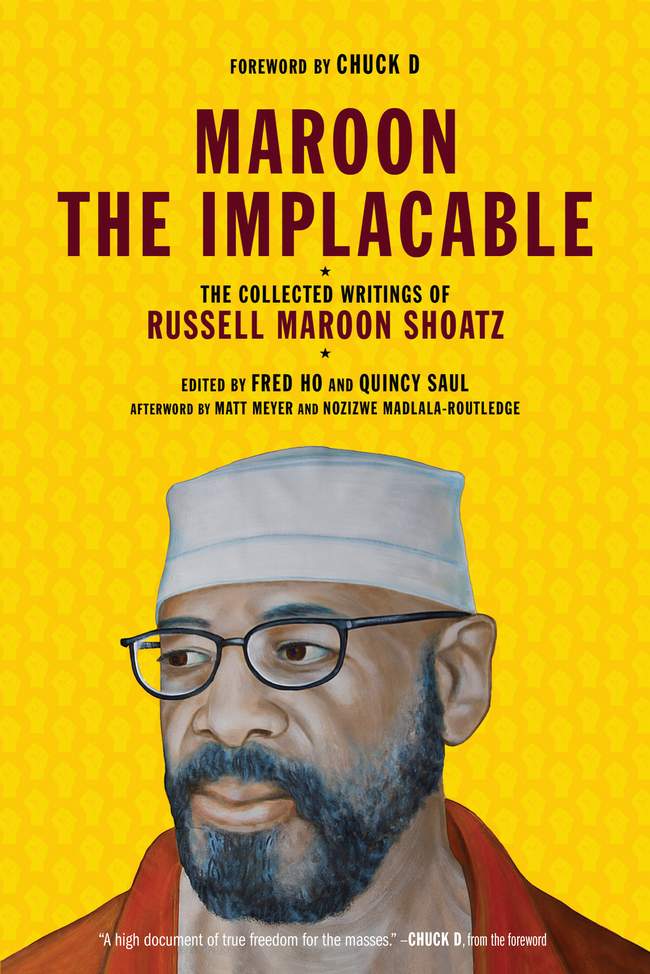
Maroon The Implacable
We welcome back Teresa Shoatz, daughter of political prisoner Russell Maroon Shoatz who has spent 39 years in the US prison system. As many listeners may know, Russell Shoatz has been held under intense lock down spending no more than one hour a day outside of his cell for the past 21 of those years. He was locked up in 1972 for his activity as a member of the Black Liberation Army.
Meanwhile, Theresa Shoatz is on book tour promoting her father’s book titled Maroon The Implacable. We catch up with her in Chicago while on tour. Maroon The Implacable is the first published collection of his accumulated written works analyzing the prison system, imperialism, the drug war. He also writes with great insight about the Maroon communities throughout America. Newer essays examine current political movements including eco-feminism and matriarchy
Theresa Shoatz:
- Maroon had been told that he would die at SCI Greene. For him to be free from prison in general, would be when I would say we have won.
- We’ve been fortunate to have Bret Grote, assistant to the legal team. Dan Kovalic and we just got a major commitment from a big law firm.
- Maroon has been writing since the eighties. In the nineties, some anarchists took his writings and put them in a zine, and took them throughout the United States and into Canada. They were used for education.
- So you get Maroon’s span from the eighties, to the present day.
- His view now on women is so incredible because he stressed how important women are to the movement throughout the sixties and the seventies.
- At that time he didn’t recognize how important the women were. The women, I would say are really the back bone of any community.
- On his second escape we was returned to prison an inmate said to him, they had a hell of a manhunt on you, you were chased down like a “Maroon.”
- He didn’t know anything about the Maroons. He dug in deep about their history and how they came about.
- The Maroons were slaves who had escaped from plantations, some went deep into the woods and joined with Native Americans and some poor whites who were totally against this slave thing.
- His digging into the history of the Maroons, he also involved me and my siblings. They were so awesome because they were fighting off attacks, also in the Caribbean areas, even into Mexico.
- Maroon has endured such torture, just outrageous treatment. Twenty plus years of no-contact visits. The impact of this really does control mindsets.
- Maroon doesn’t have computers nor has he seen one up close. He does everything long hand, and through snail-mail.
- Right now, I’m at the University of Texas. I’m presently with the dean and a professor in a writing class.
- If they haven’t heard of him, they want to know more.
- We have to step over what this government has thrown at us.
- They have more a hand on these youth than some these youths own parents.
- When you can punch right through that wall that’s candy coated reality system that our youth are mixed up in, its not only uplifting for me but for them.
Guest – Theresa Shoatz, a Philadelphia-based prison justice activist and the daughter of Russell “Maroon” Shoatz.
——-

Shadow Lives: How the War on Terror in England Became a War on Women and Children
It’s obvious and yet an unfortunate reality, war, prisoners of war and the prison industrial complex tear apart families. Very seldom are the voices of family members heard that were left behind by the tragedies of war. In the book Shadow Lives: How the War on Terror in England Became a War on Women and Children, author Victoria Brittain brings the reader close to these individuals who’s lives were capsized by war. They’re usually socially invisible and their civil liberties are often trampled by the state under the guise of the “war on terror.”
Victoria Brittain:
- I got involved way back when people began disappearing and they were described as the worst of the worst by Donald Rumsfeld and George Bush. Some of those people came from Britain and we didn’t know anything about them.
- A friend of mine had a project to do verbatim plays about the families, and he asked me to be the person to interview the families to try to find out who these people were and what had brought them together in Guantanamo Bay.
- I find complete confusion. Nobody in the families knew anything about why their son or their brother had ended up in Guantanamo Bay. In the course of that I got to know some of the families.
- I was particularly curious about one family that didn’ t want to cooperate in the play which was a Palestinian woman with five children, living alone and not speaking much English.
- I wrote to her about the play and told her how ashamed I was of my country from the research that I’ve done.
- We became close friends. Through her and her children, I met other women.
- Over these past ten years its been a rich experience, and sobering experience about injustice.
- I think she was suppressing the agony and loneliness and fear that she was in, course she was so desperate to have her children approach something of a normal life.
- It was only when other people began to come back to Britain from Guantanamo, that we began to get a picture the conditions in which people were.
- Her husband had gone off to west Africa with 3 or 4 other men to try and start a peanut business. This was his idea as a refugee Palestinian in Britain. He wanted to find a way of making a life for his family.
- When she found out he was taken from Afghanistan to Guantanamo, she was completely, . . there was no explanation.
- There was absolutely no recourse for her for a long time.
- It’s so sad, the Obama administration, he said he was going to close Guantanamo, here we are years down the road, these innocent people are still there and in the last 3 months, these people have become so desperate, because Congress is blocking them from getting out.
- Again and again, every legal victory from CCR has been overturned by a higher court.
- For these men, they really feel they’re at the end of the road.
- The horror of this has been so well laid out by so many lawyers. I find it astounding that there isn’t an uproar in Congress.
- Thank goodness Sami-Al-Arien is no longer in prison, but he’s under house arrest.
- Most of their friends turned away from them.
- He spent about five years in about a dozen maximum security prisons.
- FreeSamiAlArian
- The British and American intelligences work so closely together.
Guest – Victoria Brittain has lived and worked as a journalist in Washington, Nairobi, Saigon and London. She worked at the Guardian for 20 years and is the author of Death of Dignity: Angola’s Civil War, and Enemy Combatant.
———————————————————————————
CIA Sponsored Terror, Civil Liberties, Criminalizing Dissent, Habeas Corpus, Human Rights, Political Prisoner, Prison Industry, Surveillance, Torture, Truth to Power
Podcast: Play in new window | Download
Political Prisoner Russell Maroon Shoatz Update
We welcome back Bret Grote, a member of Russell Maroon Shoatz’s legal team. Political prisoner Russell Maroon Shoatz who has spent 39 years in the US prison system. As many listeners may know, Russell Shoatz has been held under intense lock down spending no more than one hour a day outside of his cell for the past 21 of those years. He was locked up in 1972 for his activity as a member of the Black Liberation Army. Bret gives us an update in recent developments of the case.
Bret Grote:
- Almost 2 weeks ago, I went to SCI Greene with a member of the legal team and Maroon’s son, Russell Shoatz III, and when we went into the visitor’s lobby we were informed that he was no longer there.
- After 18 years at SCI Greene which has the largest restrictive housing units which is the solitary confinement units, he had been transferred to SCI Mahanoy which is where Mumia Abu-Jamal is currently located in the general prison population.
- He was transferred there Thursday March 28, 2013, we put in calls the next day to inquire what was going on.
- We actually know this move is in response to the growing pressure campaign that is being waged. The growing support around the country and the legal team having increasing visits.
- The legal team is Dan Kovalic who represented Maroon in his due process based challenge in solitary confinement in the late 90s. There are also 2 attorneys from a large international litigation firm.
- There’s Dustin McDaniel, who along with myself has formed an organization called the Abolitionist Law Center and five students working on his case.
- There was a letter sent to Secretary Wetzel’s office stating that if he’s not released into the general prison population within 30 days a civil action will be filed.
- The major one is the 8th Amendment on prohibition of cruel and unusual punishment. The law on solitary confinement is not very good but its also emerging in response to the 30 year emergence of this type of supermax style long term lock down as an affirmative policy of prison management.
- The basic rule of law is that solitary confinement is not unconstitutional per say, but there needs to be a fact specific inquiry into conditions of confinement and also the degree of harm that is imposed upon the prisoner.
- The prison officials need to demonstrate indifference to the deprivation of basic human needs.
- There are some other grounds that are being put forward to challenge solitary confinement. One of these is happening in the state of New York right now, where the NYCLU has begun representing an individual who was bringing a case pro se.
- Duration is one of the considerations that’s supposed to be taken into account by the court.
- The Supreme Court has been clear that the duration of deprivation is very significant for constitutional purposes.
- Maroon escaped from prison twice. After solitary confinement he was released in the general prison population at the state correctional institution in Pittsburgh in 1982.
- At this point Maroon had made a political decision. He had become part of the Pennsylvania Association of Lifers. This was a group approved by the prison authorities. After Maroon became involved and other lifers became involved to take more active role in their interest, more than 100 people began attending meetings there.
- They put him in solitary confinement based on participation in unauthorized meetings even though all the meeting spaces had to be opened by staff.
- Since 1989 he’s had only one disciplinary infraction while in the prison.
- Covering the vent in his cell, it was blowing cold air – SCI Greene.
- Maroon was constantly engaging all the other prisoners in educational seminars, studying lessons on geography, on history on working with people to transform their criminal consciousness into community oriented activist consciousness.
Guest – Bret Grote, member of the Russell Maroon Shoatz legal team and member of the Abolitionist Law Center.
—–
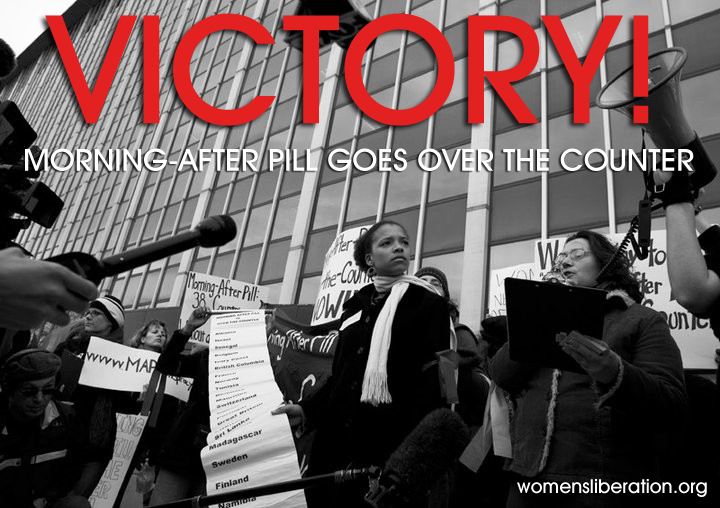
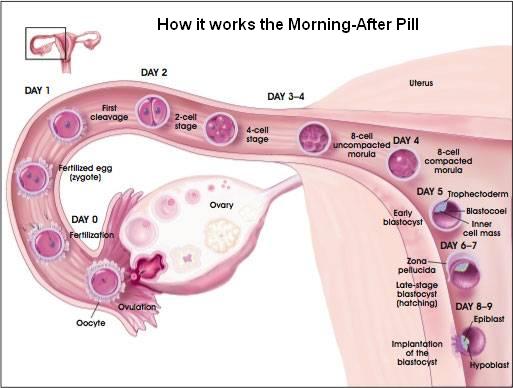
Court Orders FDA to Remove All Restrictions on the Morning-After Pill
After a multi-year grassroots campaign and an equally long lawsuit, the morning after pill will finally be available to females of all ages on the pharmacy shelf, without a prescription or point of sale or age restriction. This is thanks to a recent federal court reversal of decisions from the FDA and DHHS, under both the Bush and Obama Administrations. The US now joins at least 63 other countries including the UK, Denmark, France and Ghana in making the morning after pill available without a prescription.
Attorney Andrea Costello:
- The case was originally file in 2005 and this was after the FDA had really stalled out and delayed for years in its decision making in whether to put the morning after pill over the counter.
- Originally the morning after pill was prescription only and had to show identification in order to get it.
- In 2005, the government made a decision to make Plan B available for women over 18.
- Under President Bush, decisions were made by high level officials within the FDA to deny access to the morning after pill to women and girls. That was really an effort to appease the administration’s constituents.
- It was based on anti-birth control politics and not science.
- In 2011 for the first time in history, we saw Health and Human Services under the Obama Administration overruling a decision by the FDA when the FDA decided it wanted to put the morning after pill over the counter without an age restriction.
- The lawsuit has always asked for unrestricted access to the morning after pill and all forms of the morning after pill meaning emergency contraception for all women and girls in the United States regardless of age without any restriction on how its sold.
- In the history of our country no one has ever had to show their identification in order to get birth control.
- I think of this victory as building on the pioneering work of our feminist sisters in the National Lawyers Guild that I’ve had the opportunity and honor to work with.
- Catherine Roraback and Rhonda Copeland, Carol Sobel, Mara Verheyden-Hilliard
- We will be looking forward to seeing it in the grocery stores in 30 days.
Guest – Attorney Andrea Costello, Partnership for Civil Justice Fund Senior Staff Attorney representing the NWL Plaintiffs.
—
It Was Genocide: Armenian Survivor Stories
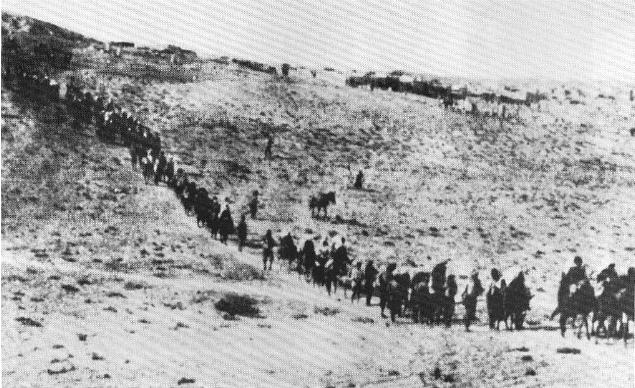
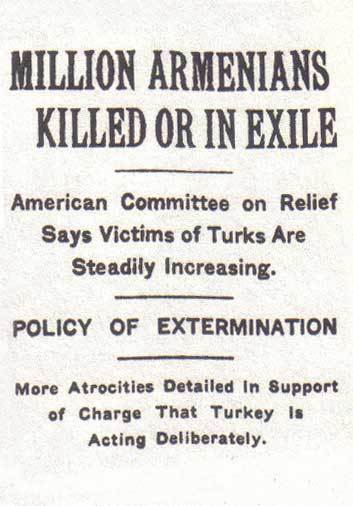
99 years ago this month marks the beginning of the systematic implementation of a plan to exterminate the Armenian race. Carried out by the Young Turk government of the Ottoman Empire, over half of the Armenians living in the Empire were killed.
To commemorate this, the first genocide of the 20th century, Law and Disorder co-host Heidi Boghosian and producer Geoff Brady present part of the 90-minute program titled, It Was Genocide: Armenian Survivor Stories.
We wish to thank WBAI for their commitment to recognizing the Armenian genocide, and are grateful to the following individuals for opening their hearts and sharing the difficult memories of the past: Jennie Garabedian, Harry Mazadorian, Roxy Garabedian, Lucy Simonian, Roxie Maljanian, Mary Abrahamian, John Maljanian, Agnes Karanian, Ruth Swisher, and Artie Shahverdian.
For stations that want to air full 90 minute documentary
————————————-
CIA Sponsored Terror, Civil Liberties, Criminalizing Dissent, Extraordinary Rendition, FBI Intrusion, Habeas Corpus, Human Rights, Iraq War, Military Tribunal, Political Prisoner, Surveillance, Targeting Muslims, Torture, Truth to Power, War Resister
Podcast: Play in new window | Download
Updates:
—

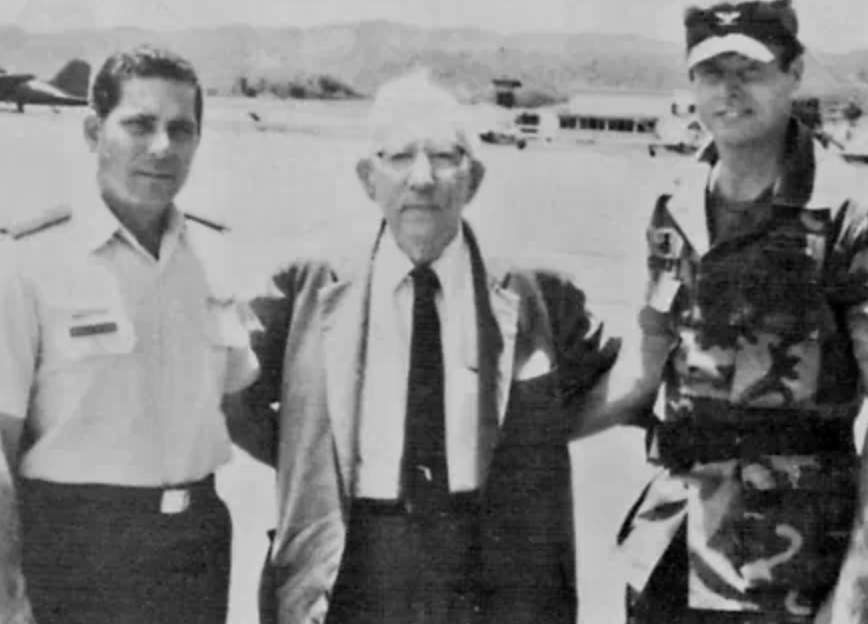
The Search for Colonel James Steele: US Special Forces Veterans Links General Petraeus With Torture In Iraq
A 15-month investigation and documentary film by the Guardian and BBC Arabic James Steele: America’s Mystery Man In Iraq has revealed how US colonel James Steele, a veteran of American proxy wars in El Salvador and Nicaragua, played a key role in training and overseeing US-funded special police commandos who ran a network of torture centers in Iraq. Steele and another special forces veteran retired Colonel James Coffman reported directly to General David Petraeus. Petraeus as listeners may know was tasked with organizing Iraqi security services.
Patrick Farrelly:
- The projections that they made about being welcome in Iraq were just not true.
- It looked like the insurgency at that point in 2004 was just getting off the ground.
- This is where they turned to General Petraeus, I know he’s seen in the think tanks in Washington as the scholar warrior.
- Rumsfeld called upon him to go back into Iraq and to organize a pretty massive police force in Iraq.
- He hooked up with 2 people there, Colonel James Coffman and Colonel James Steele.
- Mill Group is essentially a bunch of military advisers who are training the Salvadorian security forces to fight the guerrillas.
- Colonel James Steele was the guy in charge of the American advisers who were training these people and also directing these forces.
- Counter-insurgency force went from 400 to 17 thousand.
- What the United States needs really badly is intelligence, they need to know who the insurgence are and where they can get them.
- That’s Steele’s expertise, having these guys on the ground, they draw in thousands of people and basically torture them for information.
- It’s Steele’s job to collate that information so that they can then hand it over to the US military. The US can then go after the insurgence informed for the first time.
- Part of the Wikileaks discovery, in terms of the war-logs which was released by Bradley Manning to wikileaks, shows this entire pattern of US soldiers coming across these detention centers,
- – they’re giving consistent reports of seeing torture of seeing abuse.
- Frontline: The Gangs Of Iraq.
- It’s a production line. These young men come in, these people were hung up on ceilings, nails pulled out with pliers, it was water boarding.
- They turned the city library (in Iraq) into a torture center.
- It became this interrogation and torture mill, that no doubt produced a lot of information.
- For empire, people like James Steele are very very important.
- Empires tend to roam into other people’s countries, and you know.
- Where did the sectarian civil war come from? Who played a part in bringing this about?
- James Steele, lives in Texas, at one point he was Vice President of Enron.
- The public is not really aware of what’s being done in the name of US taxpayers in foreign lands.
- I think its clear that the Sunni community is completely disenfranchised. I think its still in a state of terror.
Guest – Patrick Farelly, a TV, radio and print journalist who has worked in the US and Ireland. Farrelly was producer of Michael Moore’s Emmy award-winning NBC/BBC2 series TV Nation and later Bravo/Channel 4 co-production Awful Truth. He was the founding editor of the New York based weekly newspaper Irish Voice and has also been features editor of the New York Post. He has also worked for HBO, Discovery, PBS and Irish broadcasters RTE and TG4.
————–
Civil Liberties, Criminalizing Dissent, FBI Intrusion, Habeas Corpus, Human Rights, Political Prisoner, Surveillance, Torture, Truth to Power
Podcast: Play in new window | Download
Updates:
—-
Sequester As A Form Of Austerity In The United States
We welcome Economics Professor and radio host Rick Wolff back on the show to discuss the current billion dollar cuts known as the sequester. The sequester is a massive reduction in US military and domestic spending of up to 85 billion dollars. This is a massive austerity policy that will send ripple effects throughout the US economy. Meanwhile, our guest Professor Rick Wolff points to corporations continuing to use cheap labor that is substituted for “costly” workers in the US and Europe. Professor Rick Wolff has exposed the flawed system of modern capitalism for many years, he joins us today to discuss the new austerity, called sequester as the inequalities of wealth continue to widen. Rick Wolff and Bill Moyers Interview.
Professor Rick Wolff:
- We’ve had basically the same story for most of the last five years. This crisis technically started in the last quarter of 2007.
- If you are an employer, at least a big one, and if you are an owner of shares of stock, you’ve now come back, its taken six years to do it, you’ve now recovered where you were.
- No one predicted a crisis of this depth.
- They are a tiny portion of the American people, those employers and those share holders.
- The unemployment rate before this began averaged under five percent.
- At the worst moment of this crisis in 2009, 2010, unemployment hit 10 percent. Where are we today? Barely under 8 percent.
- Every single family in the United States on average has a person in it, that is going through this process (unemployment) and is therefore becoming a burden to the rest of the family.
- This is a stock market that seems to believe that it doesn’t have to worry about where the mass of people are, doesn’t have to worry about their diminished purchasing power.
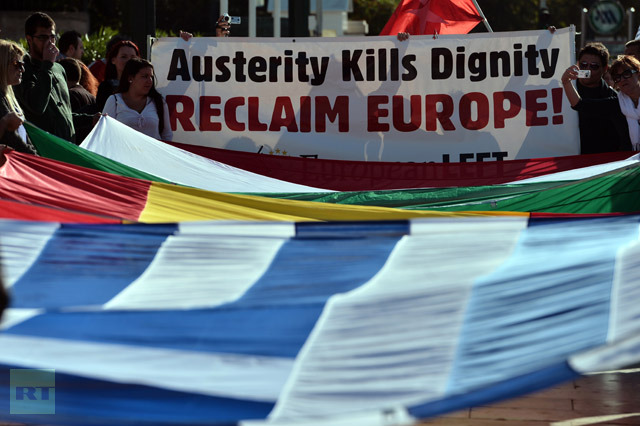
- The United States is pursuing an austerity policy.
- Austerity is a very simple idea, it has 2 parts. You raise taxes on average (income) people. Part 2 is you cut government spending throughout the economy.
- That’s what they’ve been doing in Greece for the last 3 years. That’s what they’ve been doing in England and France, and Portugal and Italy and on and on and on.
- . . and we’re doing it too.
- Austerity has been agreed to by Republicans and Democrats alike. There is no debate in this country at least as far as the 2 parties are concerned about austerity.
- The only disagreement Republicans and Democrats have is about what tax increases and cutbacks are going to be done.
- This crazy behavior in which people who can’t agree, punish themselves by not agreeing by agreeing to do something they couldn’t agree to do.
- Fiscal Cliff: All couples that earn more than 450 thousand dollars a year, that was the cut off. Anybody earning less than 450 thousand is 99 percent of our people, were not affected by this “tax the rich” only those above 450. Here’s what happened to them, instead of the 35 percent rate they paid in 2012 under the deal that was struck it was raised to 39.6 percent.
- No rich person in that category will do anything but laugh all the way to the bank, that this was called an attack on the rich.
- You’re not taxing the rich, not even close.
- Payroll tax increase to 6.2 percent. Social Security tax.
- Sequester: All it meant was if the government didn’t reach an agreement, the way they did it the last minute for taxes, these automatic cuts that were automatically written in 2011 when this whole thing was set up,
- would kick in. Well they failed to reach an agreement, and this sequester went into effect on March 1.
- You should be aware that at any time, Congress can make an agreement which supercedes all of this.
- The military does not want or need a good bit of the spending geared up to be given to it.
- It’s not the military that wants it, its the Congressional representation from the companies with the military contracts who want it. So we have this bizarre display, we’ve had it for years, in which the military gives testimony, we don’t need this program.
- The Congress men and women sit their and listen and vote it in anyway. They want the jobs and prospects of the defense contractors who are funding their political campaigns to be protected.
- If you raise payroll taxes which they did, you are damaging the economy in a straight forward, obvious way.
- With more people unemployed, they don’t earn and income, they don’t pay an income tax.
- This is the policy that was followed in Greece, they’ve been collapsing ever since.
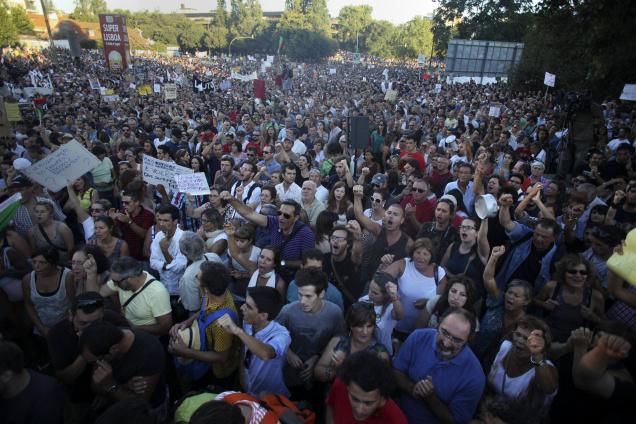
- Last weekend was the largest demonstrations in Lisbon, in the history of Portugal.
- Nobody on Wall Street knows what’s going to happen 3 months from now.
- We are not going to escape the turmoil, Occupy was the first sign of that.
Guest – Richard D. Wolff is Professor of Economics Emeritus, University of Massachusetts, Amherst where he taught economics from 1973 to 2008. He is currently a Visiting Professor in the Graduate Program in International Affairs of the New School University, New York City. He also teaches classes regularly at the Brecht Forum in Manhattan.
—————————————————————-
Civil Liberties, Criminalizing Dissent, Habeas Corpus, Human Rights, Prison Industry, Surveillance, Torture, Truth to Power
Podcast: Play in new window | Download
Updates:
- FISA Court Surveillance: Supreme Court Allows, You Have No Standing
- Hosts Discuss CIA Sponsored Cinema
——–
Zero Tolerance Policy: School to Prison Pipeline?
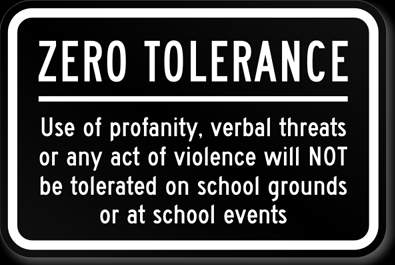
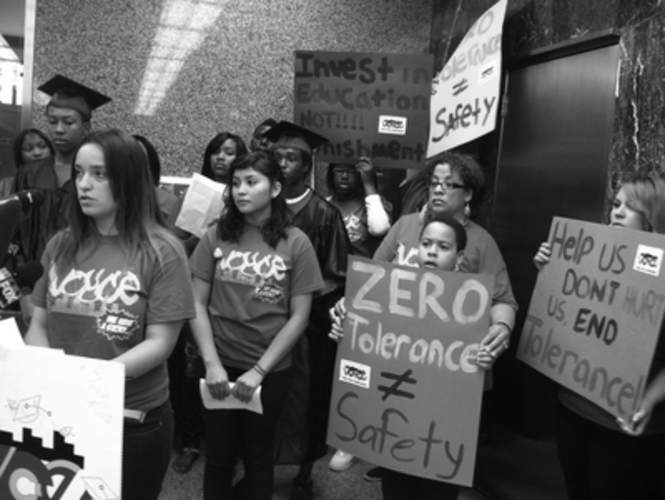
As many listeners may know, zero-tolerance school policies will punish any infraction of a rule regardless of whether it was an accident, a violation out of ignorance or extenuating circumstances. Schools normally forbid cell phones, profanity etc, but with a zero tolerance policy, breaking these rules often result in an inordinately harsh punishment such as suspension or expulsion. These policies are promoted to prevent violence and drug abuse in schools but for years critics have pointed out the subjective nature of these decisions on certain students with disciplinary problems. Some difficult students could become targets of the zero tolerance policy, become less educated by multiple suspensions and expulsion which often lead them into the criminal justice system.
Professor Russ Skiba:
- Zero tolerance grew out of a philosophy of school discipline that really came out of the 1980s, a period where we believed because youth violence was accelerating in our communities, that we were in real danger of being overwhelmed by violence in school settings.
- Interestingly enough data since then has shown us that was never really the case.
- Rates of disruption in schools have remained constant in a 30 or 40 year period.
- Out of that fear grew a response that said the only way we’re going to defend against that and keep our school safe and our students and teachers safe will be by punishing harder and frequently minor incidences we can send a message to kids that certain behavior won’t be acceptable and that will deter other kids.
- Zero Tolerance came out of Broken Windows Theory.
- The Reagan administration used a program in the San Diego harbor where even trace amount of drugs would lead to confiscation of ones boat and an appearance in federal court.
- When there’s a fear response, there does tend to be a belief that we don’t have time to look at the data we just need to do anything necessary to protect out kids.
- Its a dangerous way to make policy.
- The case in Georgia where a girl has a Tweety Bird wallet attached to her backpack with a two inch chain. That was considered a weapon. We all react in horror to those extensions.
- But the more central question is. . . is it effective?
- The APA put together a Zero Tolerance Task Force and they found after a year of studying hundreds of documents that there was no evidence that Zero Tolerance made any contribution to school safety or improvements to student behavior.
- It’s often referred to as the school to prison pipeline. In the last few years there has been a lot of data accumulating that yes in fact that’s the case.
- It’s not a direct line, but there are a lot of links there that kids that are expelled are more likely to be disengaged.
- It has a negative correlation with school achievements.
- We’ve known for a long time that African American students are disproportionately represented.
- Race is still a contributor to disproportionality. Poor black kids are more likely to be suspended than poor white kids but so are middle class. . .
- More African Americans in the school tends to lead to harsher punishment.
- More teachers of color seems to result in reduced rates of disparities.
- We (need) to put programs in place like “conflict resolution” or “positive behavior support” that make clear the expectations for all kids.
- Or mentoring, we know a lot of these situations come from kids who are alienated from school.
- APA Zero Tolerance Task Force / Equity Project – Indiana University / Civil Rights Project – UCLA
Guest – Professor Russ Skiba, professor in Counseling and Educational Psychology at Indiana University, and directs the school outreach practicum in the School Psychology Program. He was a member and the lead author of the American Psychological Association’s Task Force on Zero Tolerance
———
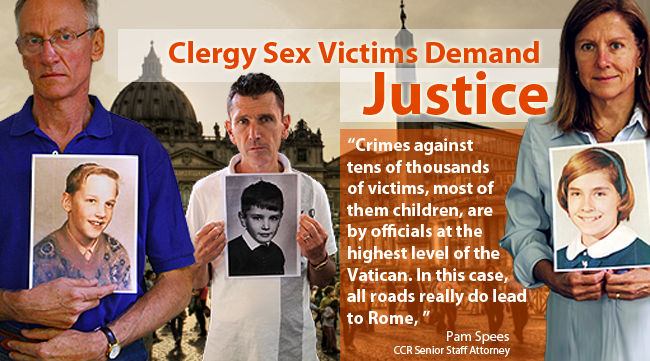

Pope’s Resignation May Make International Prosecution Easier
We continue to look at accountability within the church for widespread systematic sexual assault and violence against tens of thousands of victims, mainly children. As many listeners may know, the church’s main priority has been to protect itself and its power instead of insuring the protection of the children in the church and others vulnerable to abuse by priests. The pope is responsible for these criminal acts with direct involvement in covering them up. Now that Pope Benedict XVI is resigning, international prosecution will be easier for national systems of justice. The Center for Constitutional Rights has filed a case with the International Criminal Court on behalf of the organization Survivors Network of those Abused by Priests (SNAP) against the pope and other high-level Vatican officials for crimes against humanity in September 2011 and provided additional documentation in the case in April 2012. The prosecutor is currently reviewing the evidence
Mary Ward Caplan:
- SNAP is a network of survivors who try to help each other with the experience of being either raped, abused, or sodomized by authority figures.
- I think one of the wonderful things that have happened is there is more attention toward this.
- There was a time when print journalism wouldn’t touch the church. They were really able to act under secrecy.
- When I was abused it was the 60s and my father was dying and the priest suggested that if I did certain things a miracle might be wrought.
- After my father died and the miracle wasn’t wrought, I understood more of what was done and tried to go to pastor of the local church.
- There were no places I knew of to turn.
- Eventually I got therapy, I married, I got children.
- What happened in 2002 in Boston, was really the thing that made me become an activist.
- The court is looking at this very seriously, they met with us. This is a court that doesn’t have immunity.
- What I would like to see is accountability and some sort of change that this will not happen again.
Guest – Mary Ward Caplan, leader of Survivors Network of those Abused by Priests (SNAP) in New York City.
———-
Attorney Pam Spees:
- In September 2011, we filed a complaint with the prosecutor of the International Criminal Court, asking to investigate and prosecute 4 highest officials for their role in basically creating the policies and practices that church officials follow around the world, which serves to conceal the widespread sexual violence against children and vulnerable adults.
- Other than conceal, these policies and practices serve to perpetuate it.
- We filed these complaint along with 22 thousand pages of documentation and evidence that’s been gathered in different countries around the world – showing how the high level officials within the Vatican are involved. We’re asking for a criminal investigation and prosecution.
- His resignation does create more opportunity for holding him accountable, specifically in national levels where you have a sitting head of state could actually be a bar to a prosecution for a civil case.
- It’s important to understand we’re not talking about a few bad apples. It is the culture of sexual violence that has built up within the church.
- I think what we’re going to be seeing in the next months is more revelations.
- The committee has ordered the Holy See to report to it this year. This will be the first time an international body with any kind of oversight over the Holy See will be making the Holy See answer questions about the crisis of child sexual abuse in the Holy Church.
Guest – Pam Spees, senior staff attorney in the international human rights program at the Center for Constitutional Rights. She has a background in international criminal and human rights law with a gender focus, as well as criminal trial practice. She serves as lead counsel on several of CCR’s cases and initiatives including, Sexual Minorities Uganda v. Lively, a case brought against a U.S. based anti-gay extremist for his role in the persecution of LGBTI people in Uganda; Murillo v. Micheletti, a case brought by the parents of a youth killed by the coup regime in Honduras; and in the legal effort to hold Vatican officials criminally responsible for the crimes against humanity of rape and sexual violence within the church.
——————————————————————————-
Civil Liberties, Criminalizing Dissent, FBI Intrusion, Habeas Corpus, Human Rights, Political Prisoner, Prison Industry, Supreme Court, Surveillance, Torture
Podcast: Play in new window | Download
Updates:
—-
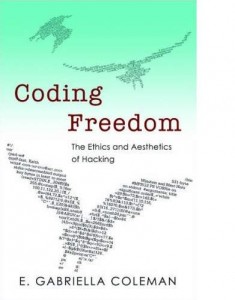
Coding Freedom: The Ethics and Aesthetics of Hacking
In the past 2 years, we’ve discussed in many interviews and updates, the attacks on whistle-blowers and hackers. The emerging movement of programmers, hackers, open source software, online communities has challenged and exposed corporate and government control and surveillance, making them targets of prosecution. As many may know, our own Michael Ratner has represented whistle-blower Julian Assange, computer activist Jeremy Hammond, and has been a legal adviser to many others including the late Aaron Swartz. Today we talk with author Gabriella Coleman about her recently published book Encoding Freedom: The Ethics and Aesthetics of Hacking. It’s a good place to start for those learning about the political significance of free software, intellectual property and the morality of computer hacking.
Gabriella Coleman:
- When you utter the word hacker, usually the image that pops into people’s minds is nefarious criminal. That can be the case but really hackers are composed of an extremely lively group of individuals who tend to be computer programmers and network administrators, who actually are committed to a range of civil liberties such as free speech and privacy. Especially in the last decade they’ve been involved in political activities as well.
- They’re quite a bit of diversity among hackers, technically.
- Hackers – are keenly aware of the issues such as censorship, which impact the present and the future of the internet. Some hackers are committed to insuring internet freedoms for their own productive autonomy.
- Beyond productive autonomy they’re really starting to care about the broader issues relating to internet freedoms and how they relate to democracy at large.
- In order for software to be made, it must be written in a programming language such as C++, Python and Pearl and its written in source code. These are the underlying directions of software.
- A very prominent group of hackers who are committed to always having access to source code have actually reinvented the law to make sure that that source code is eternally available. They’re very much against copyrights and patents and have created something called a copyleft to make sure the source code that powers software is always accessible to them.
- Proprietary software such as the Microsoft Operating System is behind lock and key. We don’t have access to the underlying directions.
- There’s a contingent within the hacker world who believe that access is not only good for the sake of improving technology but is the morally right thing to do.
- That its a collaborative process, that everyone should have access to it. There are other hackers that are a little less concerned about the ethics of access and they’re more concerned about the pragmatics.
- I originally thought that these free software developers who were part of these large projects such as Debion, were raging Leftists. The project itself had collected people from all political orientations.
- Anonymous is a digital phenomena somewhat composed of hackers but not exclusively so, who has engaged in an enormous amount of political activities. They are innovating in the realm of direct action related to digital protest.
- Some will engage in hacking to get information about corporate corruption to leak to the world at large. They also engage in distributed denial of service attacks where a website is so overloaded with requests it comes off line.
- Free software, in order for it to be free speech is also like free beer, you have to make the source code available. But that doesn’t stop people from charging money for support or services.
- In the case of SOPA being passed, there was massive outcry, and massive organization to do something about it to stop it in its tracks. It came from different quarters of society, it came from corporate giants such as google, it came from the Electronic Frontier Foundation, and there was a huge black out where people took down their websites. It had a massive effect and stopped it in its tracks.
- I’m currently working on a book on Anonymous. That should be definitely done by 2013.
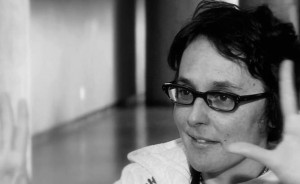
Guest – Gabriella Coleman, Wolfe Chair in Scientific and Technological Literacy in the Art History and Communication Studies Department at McGill University. Trained as an anthropologist, she researches, writes, and teaches on hackers and digital activism. Her first book on Free Software, “Coding Freedom: The Aesthetics and the Ethics of Hacking” has been published with Princeton University Press. It is available for purchase and you can download a copy on here.
—-
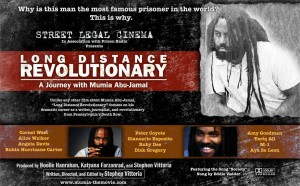
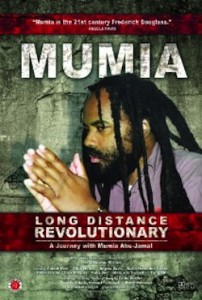
Long Distance Revolutionary: A Journey with Mumia Abu-Jamal
The new documentary, “Long Distance Revolutionary: A Journey with Mumia Abu-Jamal,” is premiering across the country. The film includes interviews from Cornel West, Alice Walker, Ruby Dee, Dick Gregory, Amy Goodman, Michael Parenti, writers Tariq Ali, and Michelle Alexander. This film beautifully captures the importance of Mumia Abu-Jamal’s life as an American journalist, and radical. He published seven books in prison including the best selling “Live From Death Row.”
In Chris Hedges’ review he points out what Cornel West says in the film: “The state is very clever in terms of keeping track, especially [of] the courageous and visionary ones, the ones that are long-distance runners. You can keep track of them, absorb ’em, dilute ’em, or outright kill ’em—you don’t have to worry about opposition to ’em.”
Steve Vittoria:
- The arc of Mumia’s life and the body of his work which is remarkable under harsh and draconian conditions is much more than December 9, 1981. I’ve always seen his life as more than one moment.
- I wanted to tap into what I found was clearly a unique story. Here’s a young man who early on realized he was a revolutionary by the time he was 15 years old.
- He’s writing remarkable work for the Black Panther Party and their newspaper. By 26, he’s a vibrant radio broadcaster and journalist in Philadelphia, reaches NPR and All Things Considered.
- After incarceration, he publishes 7 or 8 books.
- I did from a creative standpoint and a very practical standpoint.
- I wanted to tell a really good story. Any filmmaker, that’s job number one. Mumia, you just have to turn the camera on and you can tell a great story.
- If the film starts to win awards and get fawned over then something’s wrong.
- My favorite interview in the film is Mumia’s sister Lydia Barashango who unfortunately passed away a few months after we interviewed her from her bout with cancer. She went to great lengths to secure her baby brother’s legacy.
- Trying to find what it was like as a young African-American kid growing up in one of the great racist northern cities of Philadelphia, what it was like
- I didn’t realize how funny he could be. He’s kind of a science fiction nerd. He calls himself a nerd.
- Mumia has a very strict schedule for work.
Guest – Steve Vittoria, the writer, director, producer and editor of Long Distance Revolutionary: A Journey with Mumia Abu-Jamal. The film premiered in theaters in New York City earlier this month.
—————————————