Civil Liberties, Supreme Court, Surveillance, Torture, Truth to Power
Podcast: Play in new window | Download


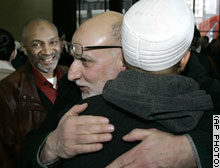
Muhammad Salah Cleared Of Federal Charges
For more than a year, Law and Disorder has followed the case of Muhammad Salah and co-defendant Abdelhaleem Ashqar. In a major victory both were recently acquitted on charges that they engaged in a “racketeering conspiracy” to provide support to the Palestinian organization Hamas in the early 90s. The two were convicted of several lesser charges unrelated to terrorism. Salah says his confession to Israeli Security agents was false and the end product of 53 days in custody, during which Salah’s lawyers say he was tortured. He was kept awake, beaten and forced to sit in excruciating positions for long periods of time.
Guest – Michael Deutsch from the People’s Law Office in Detroit. Mr. Deutsch says this verdict is a significant breakthrough in that the jurors were not swayed by government attempts to apply the terrorism label without adequate evidence.
Dear listeners to send letters of support – Please make them out to the Honorable Amy J. St. Eve Addressed to: Michael Deutsch People’s Law Office 1180 N. Milwaukee Chicago, IL 60622
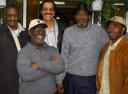
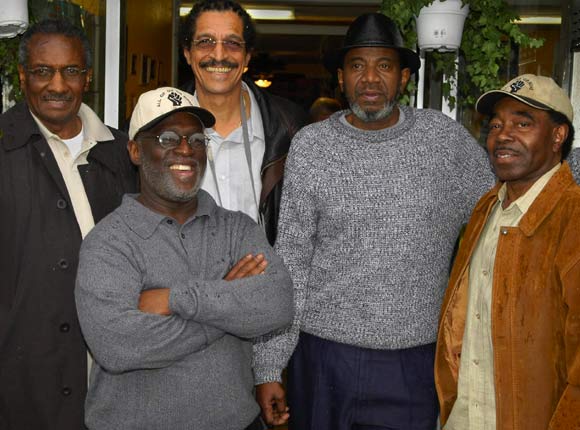
Coerced confessions based on torture are at the center of many cases discussed on this program. From French revolutionary Henri Alleg to the recent victory in the Muhammad Salah case in Chicago. Black Panthers were no exception, in the early seventies eight former Black Panthers were arrested in California, New York and Florida on charges related to the 1971 killing of a San Francisco police officer. Two men charged have been held as political prisoners for over 30 years ? Herman Bell and Jalil Muntaqim are both in New York State prisons. But a judge tossed out the charges, finding that Taylor and his two co-defendants made confessions after police in New Orleans tortured them for several days employing electric shock, cattle prods, beatings, sensory deprivation, plastic bags and hot, wet blankets for asphyxiation.
Guest – attorney Bob Bloom speaks on new developments in the case.
To hear the voices of Harold Taylor, John Bowman and Hank Jones describe how they were tortured visit the Listening Library and scroll down here the event from March 2006 at the Riverside Church sponsored by the Center for Constitutional Rights.



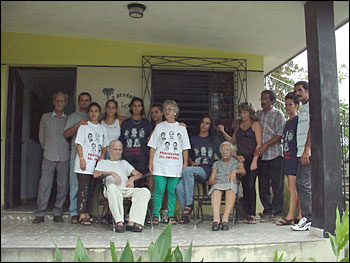
US Government Not Allowing Families of Cuban Five Prisoners Visitation
Amnesty International calls for temporary visas to be granted to two wives of the ‘Cuban Five’
In the past month several legal developments have occurred in the case of the Cuban Five. In January the defense argued four key issues in a supplement brief. Those issues are: first, the conspiracy to commit murder charge should be discharged; second, the conspiracy to espionage should be reversed for insufficiency of evidence; third, the sentencing on the espionage charges were grossly out of line with existing law; and forth, the prosecution committed misconduct. Finally application of the Classified Information Procedures Act provisions was wrong in this case. Here’s the situation: If the two judges can’t agree, the chief judge of the 11th Circuit appoints a third judge to join in the decision-making. You must have two judges in agreement in order to have a valid decision by the appellate court. If the two judges agree, however, that’s the end of it. For more information visit They Will Return.
Guest – Leonard Weinglass, lawyer for Antonio Guerrero, to talk about yet an additional aspect that has plagued the case since the five were incarcerated: the US government’s failure to allow families to visit the Five.
—-

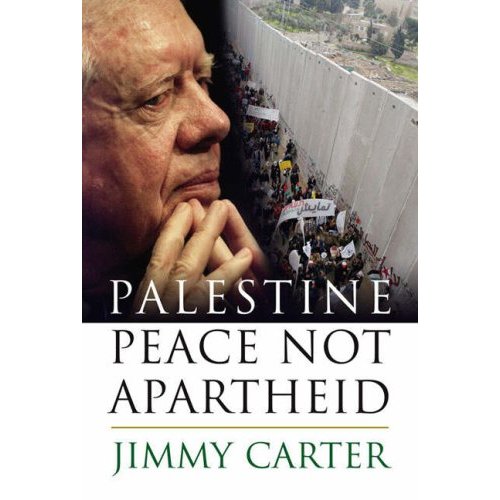
Jimmy Carter’s Recent Book – Palestine: Peace Not Apartheid – Drawing Criticism
With the release of former President Jimmy Carter’s new book, Palestine: Peace Not Apartheid, controversy has arisen about the use of the word “apartheid” to describe the occupied Palestinian territories. The contention is that Carter begins with the premise, “inside Israel there is equality while in the occupied Palestinian territories there is not.”
Guest – Jamil Dakwar, a former senior attorney with Adalah: The Legal Center for Arab Minority Rights in Israel.
Just as the US and Europe once opposed apartheid in South Africa, Israel’s discrimination against Palestinians must be similarly exposed and dismantled. – – Read Jamil Dakwar’s commentary It’s Simple Apartheid.
Civil Liberties, Guantanamo, Supreme Court, Surveillance, Torture, Truth to Power
Podcast: Play in new window | Download

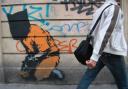
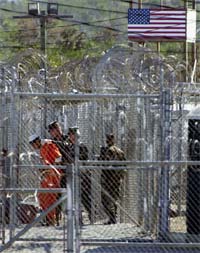
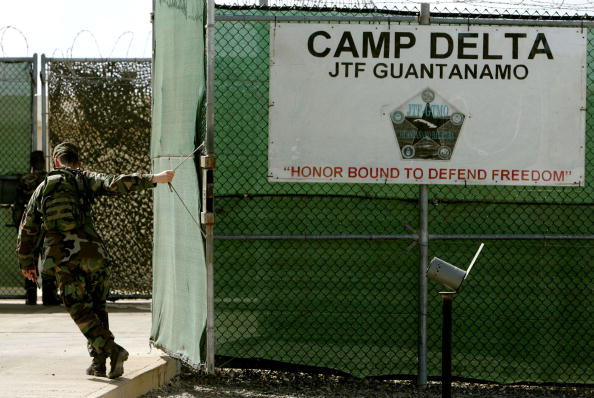
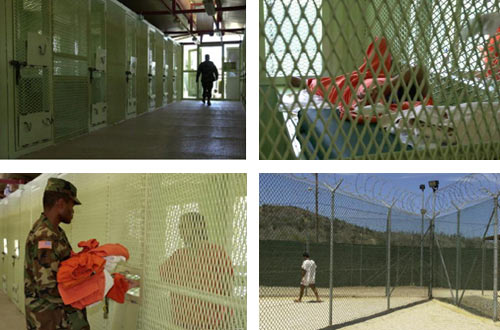
Hosts Michael Ratner and Heidi Boghosian list some positive developments in detentions and the US government’s racial profiling of Muslims. Guantanamo Bay detainees are nearing a fifth year of being kept in cages despite the Center for Constitutional Rights winning two Supreme Court cases. By January 11th, 2007, most of the 460 men in Guantanamo Bay detainment camp, Cuba will have been detained five years as the Bush administration insists in holding them without trial. Among the detainees held for five years – David Hicks – an Australian citizen.
From the Washington Post – “It is often said that ‘justice delayed is justice denied.’ Nothing could be closer to the truth with reference to the Guantanamo Bay cases,” U.S. District Judge Gladys Kessler of Washington D.C. wrote in a ruling Friday, spurning the Pentagon’s attempt to deny Bisher Al Rawi, another Afghan man held at Guantanamo, from representing his friend Al Razak. Read story here.

Gladys Kessler – “The Petitioner . . . identifies the legal, cultural, and psychological isolation in which the detainee exists which demonstrate his inability to challenge the legality of his detention. They are as follows: He is a resident of Afghanistan. He has had virtually no contact with the news media or any word from outside the closed Guantanamo prison system for over 3 years. He has had no contact with his friends or family members outside Guantanamo. He is unfamiliar with the United States Court System. He does not speak English.He likely does not know what the term Habeas Corpus means. He has no criminal charges against him.”
Brandon Mayfield update – wrongly arrested by FBI agents after the 2004 Madrid terrorist bombings, has settled his lawsuit against the U.S. government for $2 million. Read story here.


Eric Schlosser on the United States Prison System
We’ve covered in depth on Law and Disorder the US run prison industry abroad, from Guantanamo Bay prison, Cuba, Bagram prison in Afghanistan and Abu Ghraib in Iraq. These are the exports of one of the most highly profitable businesses in the United States. The prison industrial complex in this country has reached record breaking occupancy. Nearly 2.1 million Americans are behind bars, the majority of them nonviolent offenders, they’re usually poor, many have substance abuse problems and many have are mentally ill. This according to exhaustive research by Fast Food Nation author Eric Schlosser who spoke at Bluestockings Bookstore in New York about his compendium on the American Prison system.
Law and Disorder caught up with Eric during this talk and we listen to an excerpt of his one hour speech. In his talk he warns our society of the perils of a profit driven penal system and backs his research with well-documented facts and staggering statistics.


Radio Frequency Identification – Spychips
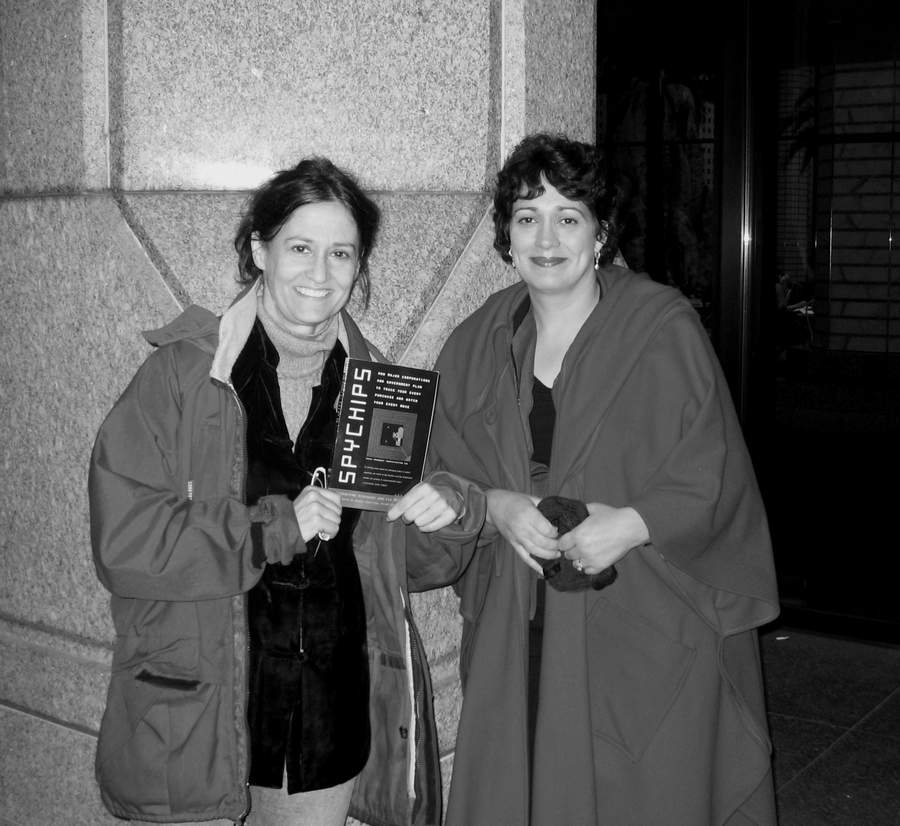
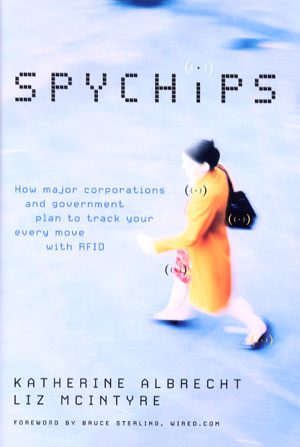
Here on Law and Disorder we’ve brought you stories about Radio Frequency Identification, a technology that uses tiny computer chips smaller than a grain of sand to track items at a distance. RFID “spy chips” have been hidden in the packaging of Gillette razor products and in other products you might buy at a local Wal-Mart, or Target – and they are already being used to spy on people. Some of the world’s largest product manufacturers have been working behind closed doors since 1999 to develop this technology. They plan to use these remote-readable chips to replace the bar code.
Each tiny chip is hooked up to an antenna that picks up electromagnetic energy beamed at it from a reader device. When it picks up the energy, the chip sends back its unique identification number to the reader device, (which can be located anywhere!) allowing the item to be remotely identified. Spy chips can beam back information anywhere from a couple of inches to up to 20 or 30 feet away.
Guest – Liz McIntyre, co-author of Spychips:How Major Corporations and Government Plan to Track Your Every Move with RFID

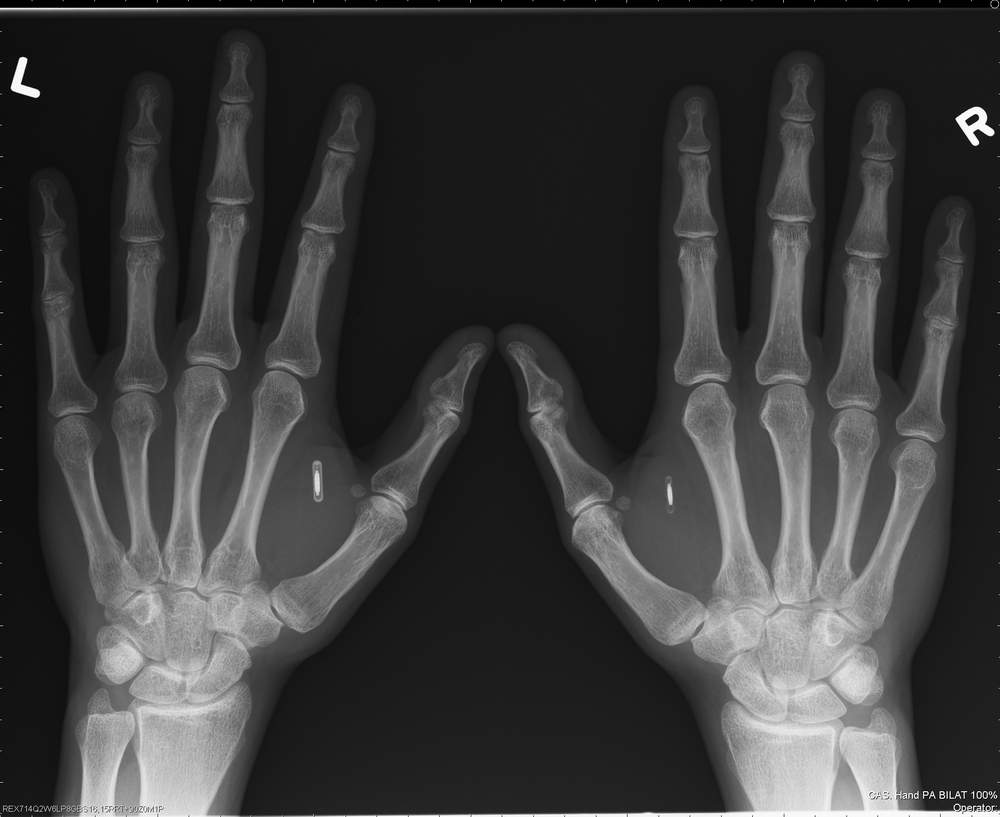
Photo from double RFID implantee Amal Graastra.
Recent Legislation – SENATE BANKING COMMITTEE MEMBER DENOUNCES “NO-SWIPE” CREDIT CARDS
A member of the Senate Banking Committee denounced RFID “no-swipe”credit cards at a press conference Sunday. Senator Charles Schumer (D-NY) said contracts for the cards should have warning boxes disclosing “the known weaknesses of the technology.” He cautioned cardholders about their vulnerability to identity thieves, commenting you “may as well put your credit card information on a big sign on your back.”
“No-swipe” or “contactless” credit cards contain RFID microchips that communicate account information silently and invisibly by radio waves. These microchips have earned the nickname “spychips” because the information they contain can be read without an individual’s knowledge or consent.
While Congress is just waking up to the dangers of RFID technology, privacy and civil liberties organizations have been sounding the alarm for years.
Civil Liberties, Supreme Court, Surveillance, Truth to Power
Podcast: Play in new window | Download
Laying the Foundation of a Police State – Part III Surveillance and Criminalizing Dissent
Since the summer of 2004, Law and Disorder has brought Pacifica listeners the voices of activists, authors and attorneys from the front lines.
Last week, and in the next three weeks, we examine in a four part series, the foundation for what many view as a police state in the United States. In this series we will talk with guests about the post 9/11 blueprint of this dictatorship/ police state and how the nefarious turn to war, the use of torture and the domestic propagation of fear unfolded.
We have examined at length topics such as torture, domestic surveillance, criminalizing dissent, racial profiling, indefinite detentions and the destruction of constitutional rights as vital information to bring an understanding to listeners as to how it happened and where we go from here.
In this third part of the series we look at several key issues in the crackdown of dissent in this country including how the government has set up a terrorist database to categorize and target domestic activists. As attorneys on the front lines we bring exclusive cases of domestic surveillance of protestors. In previous shows, Law and Disorder has covered the lawsuits involving NSA wiretapping of phone calls and emails by the Center for Constitutional Rights, EFF and the ACLU. We talk with the ACLU’s Michigan Legal Director about their NSA lawsuit and recent victory
Here on Law and Disorder we’ve covered, directly and indirectly, the resurgence of domestic surveillance since the events of September 11. We’ve seen how the government has loosened restrictions on spying on political activists, both locally and nationally. We’ve seen how this administration has exploited the term “terrorism” to justify a host of insidious and often unlawful practices, from engaging in mass arrests of peaceful protesters in order to collect information about their political affiliations, to categorizing and labeling individuals based on their ideologies, to assembling all this information into a comprehensive terrorism watch list called the Terrorist Screening database.

Co-host Michael Ratner, President of the Center for Constitutional Rights recently returned from Berlin after filing a 380 page complaint in German against former Secretary of Defense Donald Rumsfeld and other Bush Administration officials with war crimes. Read the CCR complaint – documents.
List of International Stories on Google News


NSA’s massive wiretapping program.
Hosts discuss recent Michigan ACLU lawsuit victory against NSA spying.
In the first federal challenge ever argued against the Bush administration’s NSA spying program, U.S. District Court Judge Anna Diggs Taylor rules that the program to monitor the phone calls and e-mails of millions of Americans without warrants is unconstitutional. Calling for a halt to this abuse of presidential power, Judge Taylor states that “there are no hereditary Kings in America and no powers not created by the Constitution,” so all the president’s “inherent powers” must derive from the Constitution.
Guest – Michael J. Steinberg has served as the legal director of the American Civil Liberties Union of Michigan since 1997 where he has worked on numerous high-profile impact cases on a wide range of civil liberties and civil rights issues. He has served as co-counsel on several post-9/11 cases including: the successful Detroit lawsuit challenging the National Security Agency’s warrantless domestic wiretapping; the challenge to Section 215 of the Patriot Act; and the successful challenge to John Ashcroft’s order closing certain immigration proceedings to the press and the public.

Brandon Mayfield Case
In May of 2004, the FBI arrested Mayfield as a material witness in connection with the Madrid bombing attacks and held him for over two weeks before releasing him. Mayfield was never charged, and an FBI internal review later acknowledged serious errors in their investigation.
Guest – Steven Wax, Federal Public Defender for Oregon. FBI apologizes to Oregon Lawyer


Tracked in America – Konstanty Hordynski
UC Santa Cruz Students Against War have turned up on a Pentagon database of protest groups, while a conference of Arab-American scholars at Stanford University was targeted by an FBI Task Force. Konstanty Hordynski, a member of the UC Santa Cruz group that was deemed a “credible threat” by the Pentagon remarked, “When I learned our constitutionally protected advocacy was included on a Pentagon list of monitored events, I was taken aback. I was saddened that the Constitution could be so easily ignored.”

Criminalizing Dissent – Law and Disorder Exclusive
National Lawyers Guild Attorney and Students Investigate Extensive Protestor Database
Today we’d like to connect some of the dots by talking about a companion database, the FBI’s Violent Gang and Terrorist Organization File, or VGTOF. The VGTOF is the Watchlist’s main source of domestic terrorist information. Among other information, the VGTOF includes names of individuals with no criminal history who are being investigated as being politically active or connected with politically active organizations. In 2002 the FBI memo stated that it will include “Anarchists, Animal Rights Extremists, Environmental Extremists, and domestic extremists. Official never have to justify the decision to place someone on the list, a list that can be accessed by virtually every law enforcement official with whom the person comes into contact.
Guests – Attorney Gideon Oliver and law students Grainne O’Neill and Mark Taylor.
Extraordinary Rendition, Supreme Court, Surveillance, Torture, Truth to Power, Uncategorized
Podcast: Play in new window | Download
Update – Donald Rumsfeld Resigns
Examining the Foundation of a Police State: Tracking the Disappeared
In this second part of this four-part series, we take a look through the eyes and experiences of our guest attorneys representing “enemy combatants” indefinitely detained in this country and abroad. You’ll hear their first hand accounts of deplorable conditions and torture techniques implemented under the umbrella of twisted legislation.
Rather than setting up a narrow intelligence-based effort to prosecute the perpetrators of a criminal action, the Bush administration exploited the tragic events of 9/11 as an excuse to cast a broad net used to justify the demonization of all Muslims. This, as the use of CIA torture techniques sent shock waves rippling through the conscience of all Americans. You will get the sense of how the US government has institutionalized racial profiling, detention prisons, and torture in its fervent effort to implement the so called war on terror.
In the third part of this series we’ll look at the crackdown of dissent in this country, including how the government has set up a “terrorist” database to categorize and target domestic activists. As attorneys on the front lines we bring you exclusive cases of domestic surveillance of protestors. Our final episode will be devoted to the unjust and illegal war in Iraq. We believe that taken together, the four-part series reveals how the plans for a police state and martial law are being cemented. Law and Disorder will call attention to this emergence by bringing you the voices of strength and opposition from activists, authors and attorneys who are well informed, not silent and standing up against the strangling of democracy.
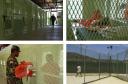

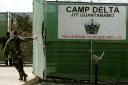
Since the attacks of September 11, 2001, the United States government has held hundreds of men at Guantanamo Bay as part of its ‘global war on terrorism.’ However, the secrecy and questions about the legality of the imprisonments have drawn concern from lawmakers, foreign governments and human rights groups. The indefinite detentions without trial are seen by many as violations of the Geneva Conventions, they inspire anti-Americanism, and infringe upon the very foundations of our civil rights.

Guest – Gita Guitierezz – attorney with the Center for Constitutional Rights defending Guantanamo Bay detainees. Gita has made more than 10 visits to Guantanamo Bay and has represented prisoners such as Mohamed Mani Ahmad al-Kahtani.

Jarallah Al-Marri
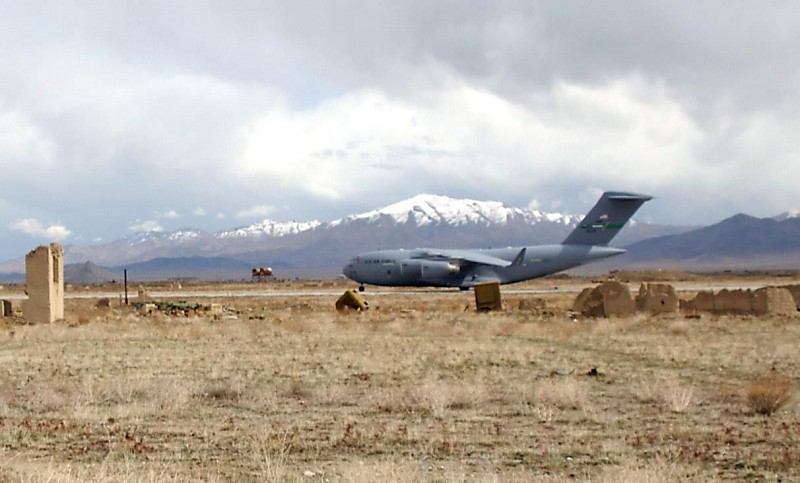
Al-Marri, a 32-year-old father of three, and Qatar citizen. He was taken into custody during an early morning raid in Pakistan in December of 2001, just months after the U.S. attack on Afghanistan. He then spent the next several weeks at the US Air Force Base in Bagram, Afghanistan. Al-Marri has since spent four years in Guantanamo Bay military prison mostly in solitary confinement. For nearly two years his only human contact has been with interrogators, prison guards and our guest Jonathan Hafetz.
Guest – Jonathan Hafetz, associate counsel at the Brennan Center for Justice at NYU School of Law. He is an expert on the history of habeas corpus. His articles and legal briefs on habeas corpus are widely cited by scholars and courts, including the U.S. Supreme Court. Mr. Hafetz’s legal practice focuses on the detention of enemy combatants and other issues of executive power.
Hafetz says Al-Marri interrogators slammed his head into a concrete wall, hit him with a 2-by-4 foot piece of wood, and forced him to remain in physically painful positions for long periods of time.

Jose Padilla
Jose Padilla was first detained in 2002 at Chicago’s O’Hare Airport after he returned from a trip to Pakistan. At the time Attorney General John Ashcroft warned the government had “disrupted an unfolding terrorist plot to attack the United States by exploding a radioactive “dirty bomb.” President Bush declared he was an enemy combatant who could be jailed in solitary confinement indefinitely without charges – even though he was a U.S. citizen. Only recently have the “dirty bomb” charges been dropped.
Guest – Andy Patel, one of the attorneys representing Jose Padilla.
Civil Liberties, Death Penalty, Extraordinary Rendition, Guantanamo, Supreme Court, Surveillance, Torture, Truth to Power
Podcast: Play in new window | Download
Laying the Foundation for a Police State – Part 1 – Building Blocks
Since July of 2004, Law and Disorder has brought Pacifica listeners the voices of activists, authors and attorneys from the front lines.
In the weeks to come, Law and Disorder hosts will examine in a four part series, the foundation for what many see as a police state in the United States. In this series they will talk with guests about the post 9/11 blueprint of this dictatorship/ police state and how the nefarious turn to war, the use of torture and the domestic propagation of fear unfolded.
Law and Disorder hosts have covered at length topics such as torture, domestic surveillance, criminalizing dissent, racial profiling, indefinite detentions and the destruction of constitutional rights as vital information to bring an understanding to listeners as to how it happened and where we go from here.
In this first series, the hosts begin with a look back at where they were on the day of September 11th, and how the Patriot Act was pushed through the Legislature immediately after the attacks on that day. They look at the racial profiling and roundup of Muslims and the rush to invade Afghanistan and Iraq using the Authorization for Use of Military Force.
Later in the second, third and fourth parts of the series – a discussion on the recent signing of the military commission act of 2006 and the abolishment of habeas corpus. This, as well the Insurrection Act and the buildup of detention prisons in the United States. The plans for a police state and martial law are slowly locking into place. Law and Disorder will bring attention to this emergence by bringing you the voices of strength and opposition from activists, authors and attorneys who are well informed, not silent and standing up against the strangling of democracy.
Co-host Dalia Hashad describes her experiences as an attorney formerly with the ACLU right after September 11th as thousands of Muslim-Americans were rounded up or corralled because of their ethnicity or political affiliation.
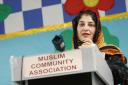
Tracked in America – Samina Sundas
Samina Sundas with American Muslim Voice helped her fellow Muslims and Pakistani-Americans integrate into mainstream American society, and her role intensified after 9/11. When the National Security Entry-Exit Registration System (NSEERS, also known as the Special Registration program) was instituted in September 2002, Muslims all over the United States contacted her confused and worried about how it would affect them. She couldn’t get clear answers from federal immigration officials despite several meetings. After that, she set up an ad hoc hotline that has since become part of an organization called American Muslim Voice.


Framework of Police State laws since 9/11
Co-host Michael Ratner leads the way through the timeline from setting up the legal basis for a global war on terror to justifying a secret system of prisons and interrogation techniques that evade historic safeguards in the Geneva Convention.

Guest – Scott Horton, Chair of International Law Committee at the New York City Bar Association and adjunct Professor of Law at Columbia University. He is also the author of over 200 articles and monographs on legal developments in nations in transition.
Civil Liberties, Guantanamo, Surveillance, Torture, Truth to Power
Podcast: Play in new window | Download

Law and Disorder hosts welcome back co-host Dalia Hashad. Dalia describes experiences while on a “Taser Tour” through the UK with Amnesty International, an effort to bring awareness among Scottish law enforcement about the use and physical hazards of Taser weapons.
Law and Disorder Taser series – Part 1, Part 2, Part 3

Tracked In America
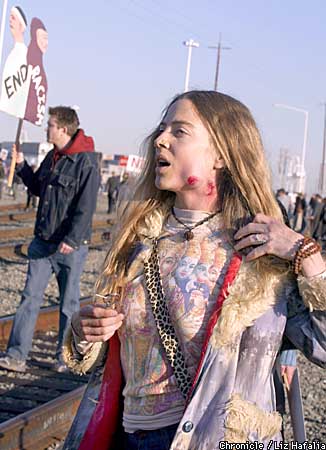
Here on Law and Disorder we will be showcasing the voices from a documentary project called Tracked in America. The project introduces the stories of 25 individuals who have been targeted by the US government. The stories span from World War I to the post-9/11 reality. This week, Law and Disorder hosts talk with Eric Shaw.
As covered extensively on Law and Disorder, the post-9/11 period has seen a dramatic expansion of government surveillance. Law enforcement has received extensive funding for this purpose. With little regulation and poor understanding of constitutional protections, the authorities have overstepped their bounds, especially in monitoring political activity. Eric Shaw is one of those citizens monitored by the US government.
Eric Shaw joined the U. S. Marines to foster those ideals at home and abroad and when he returned to civilian life years later, he lost respect for the U.S. government during the buildup to the 2003 U.S. invasion of Iraq.



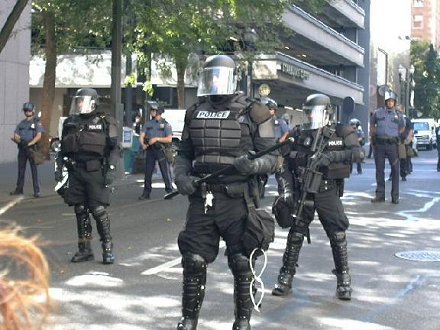
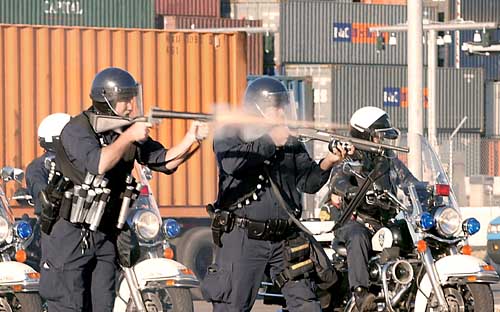
In this interview Eric describes how he organized anti-war demonstrations and the intimidating surveillance tactics. He was stunned when riot police shot at him and other peaceful protesters at a very well known demonstration in Oakland, California but Shaw refuses to be silenced.

Boston subway search policy – No Probable Cause?
The Massachusetts MBTA recently enacted a search policy whereby transit police can search any passenger on the public transit system for any kind of device or substance that could be used as a weapon. They can use canine units to sniff through your belongings, electronic scanners and perhaps most frightening, they can do so without probable cause.
In response to this new search policy, volunteers have formed the Safe-T Coalition to education commuter at selected subway stations about how this recent policy severely infringes our civil liberties. The “T” is what Bostonians call their transit system. The coalition is handing out informational fliers and buttons that read “I Do Not Consent to a Search.”
Guest – Jeff Feuer, co-chair of the Massachusetts Chapter of the National Lawyers Guild.

A Question of Torture – Al McCoy – Station Affiliates
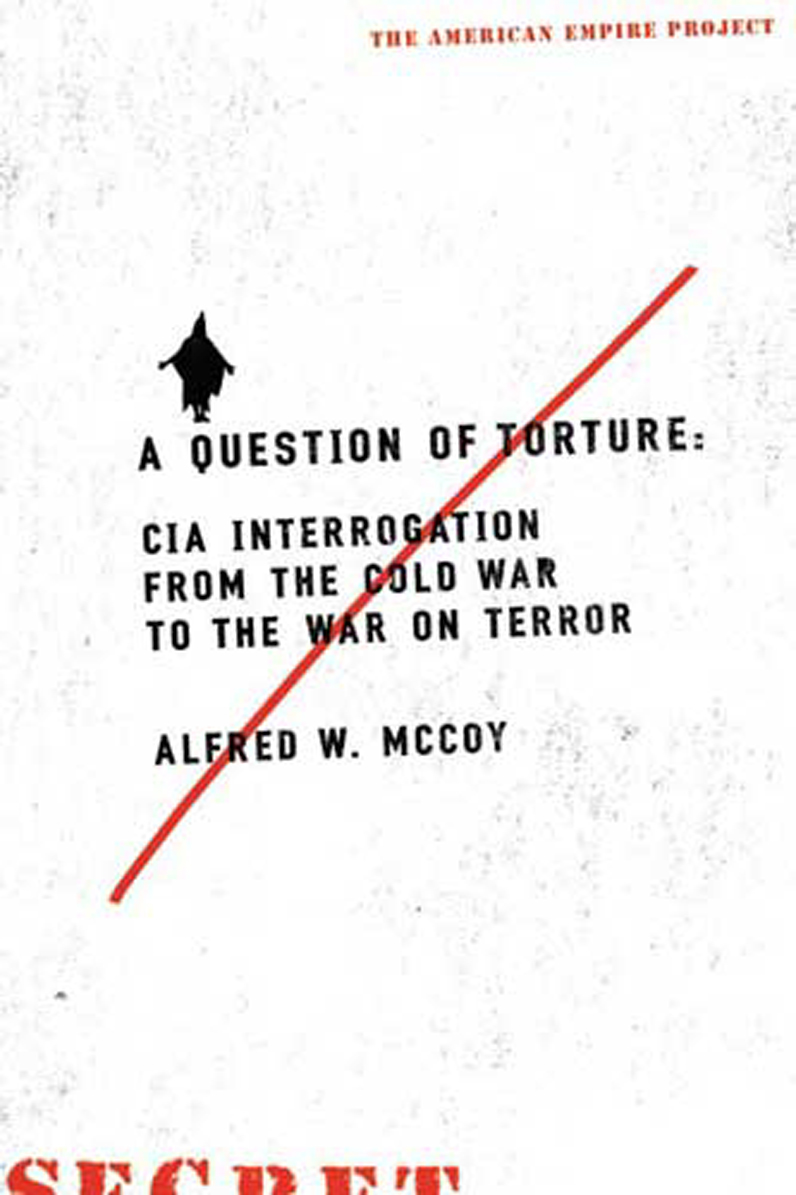
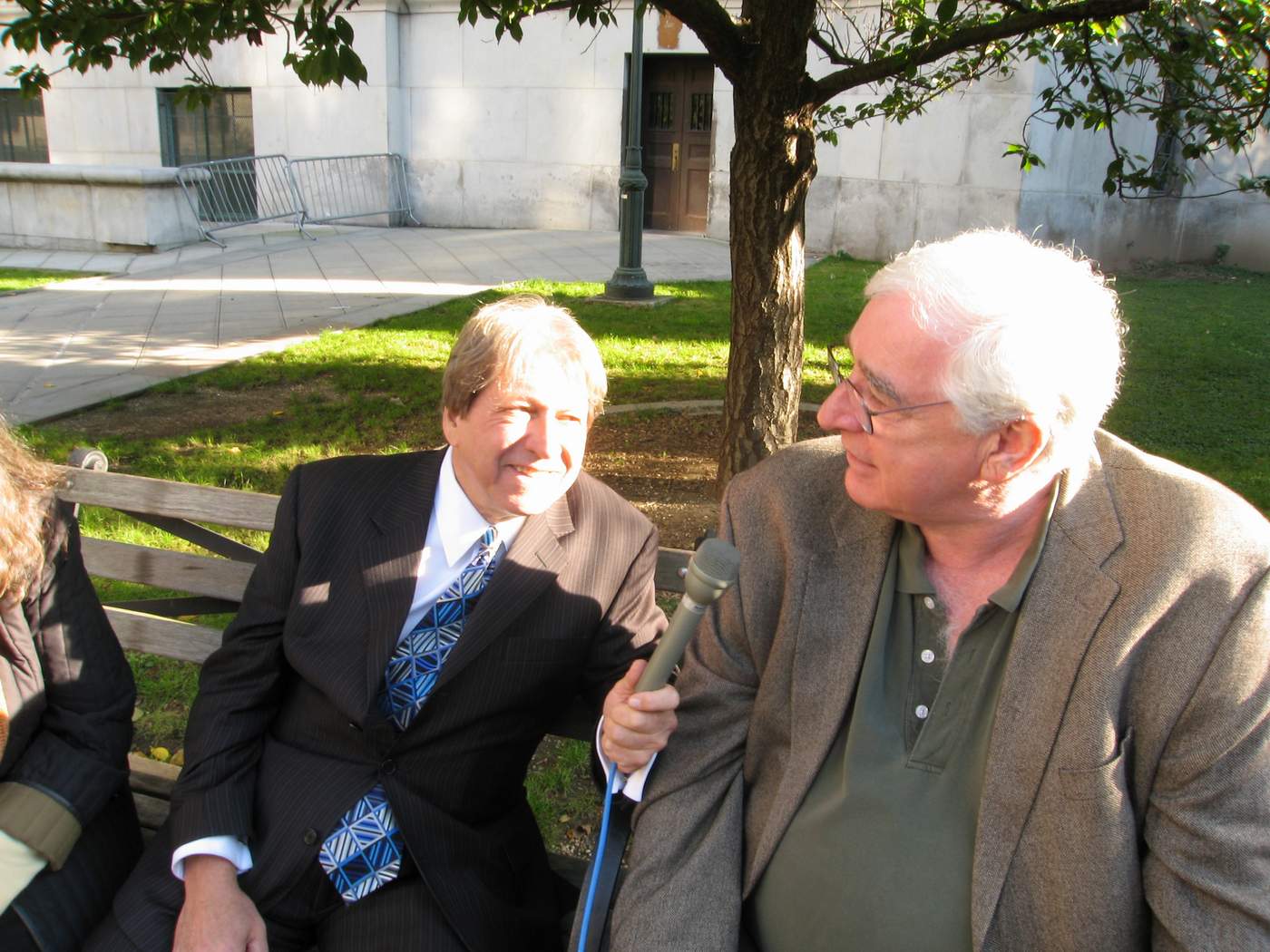
We hear an excerpt from the nearly one hour interview Law and Disorder co-hosts Michael Ratner and Michael Steven Smith conducted with author Al McCoy.A Question of Torture is a revelatory account of the CIA’s secret, fifty-year effort to develop new forms of torture, historian Alfred W. McCoy uncovers the deep, disturbing roots of recent scandals at Abu Ghraib and Guant?namo. Far from aberrations, as the White House has claimed, A Question of Torture shows that these abuses are the product of a long-standing covert program of interrogation.
Developed at the cost of billions of dollars, the CIA’s method combined “sensory deprivation” and “self-inflicted pain” to create a revolutionary psychological approach—the first innovation in torture in centuries. The simple techniques—involving isolation, hooding, hours of standing, extremes of hot and cold, and manipulation of time—constitute an all-out assault on the victim’s senses, destroying the basis of personal identity.

Lynn Stewart Sentencing – WBAI listeners
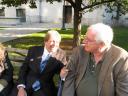
An afternoon in front of the Daniel Patrick Moynihan Courthouse awaiting Lynne Stewart’s sentencing
Law and Disorder brings you the voices, attorneys and Lynne Stewart’s first statements following her sentencing from the steps of the courthouse near Foley Square in downtown Manhattan, New York City. Hundreds of Lynne Stewart supporters were corralled into a pen on the sidewalk and you’ll hear police shouting at supporters. We begin with comments from demonstrator Irene Sadek, Lynne Stewart supporter – Law and Disorder co-hosts Michael Smith and Michael Ratner, excerpts from the Lynne Stewart press conference and conclude with amazing details from inside the courtroom in an exclusive Law and Disorder debriefing of attorney Jeff Mackler.