CIA Sponsored Terror, Civil Liberties, Criminalizing Dissent, Human Rights, Political Prisoner, Prison Industry, Surveillance, Targeting Muslims, Torture, Truth to Power
Podcast: Play in new window | Download
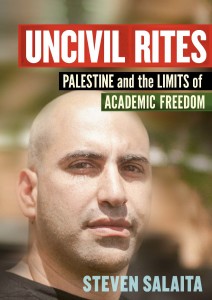
Uncivil Rites: Palestine and the Limits of Academic Freedom
Just before the start of the 2014 academic year, the board of trustees at the University of Illinois at Urbana-Champaign revoked a tenured professorship of renowned American Indian studies professor Steven Salaita. The abrupt termination of employment was in response to Salaita’s public tweets criticizing the Israeli government’s summer assault on Gaza. Enormous public outcry followed the scholar’s firing, with thousands petitioning for his reinstatement, and more than five thousand scholars pledging to boycott UIUC. The case raises significant questions about academic freedom, free speech on campus, and the growing movement for justice in Palestine. In his new book Uncivil Rites, Salaita brings personal reflection and political critique to bear on his high-profile and controversial termination. He deftly positions his case at the intersection of important issues affecting higher education and social justice activism.
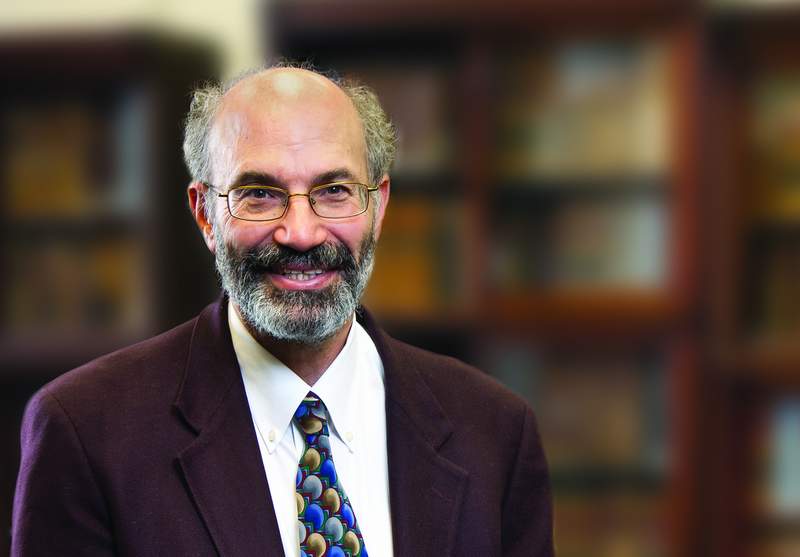
Guest – Steven Salaita holds the Edward W. Said Chair of American Studies at the American University of Beirut. The author of six other books, he is a columnist for Electronic Intifada and a member of the Organizing Committee of the US Campaign for the Academic and Cultural Boycott of Israel (USACBI).
—-
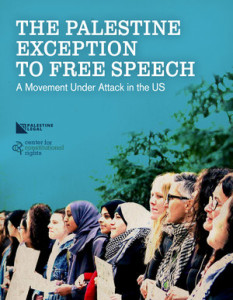
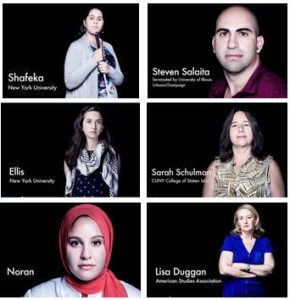
The Palestine Exception to Free Speech: A Movement Under Attack in the US
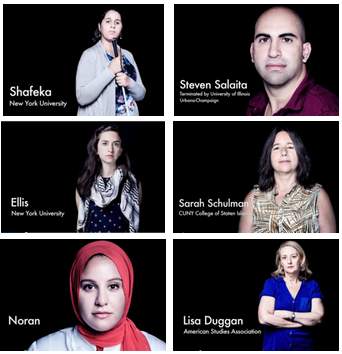
A new report, “The Palestine Exception to Free Speech: A Movement Under Attack in the US,” released by Palestine Legal and the Center for Constitutional Rights, documents for the first time the widespread and growing suppression of Palestinian human rights advocacy in the US. A companion video features students and scholars discussing the backlash they have experienced for engaging in Palestine advocacy.
Palestine Legal, a nonprofit organization dedicated to protecting the civil rights of people in the U.S., responded to nearly 300 incidents over an 18-month period. Eighty-five percent of the incidents—which included baseless legal complaints, administrative disciplinary actions, firings, harassment, and false accusations of terrorism and antisemitism—targeted students and scholars. Driven by a network of Israel advocacy organizations, these efforts target the movement for Palestinian rights in the U.S., which has grown significantly over the last decade.
The report includes case studies and testimony from advocates targeted for their speech. It outlines a notable increase in federal and state legislative efforts to condemn or restrict advocacy for Palestinian human rights, including legislation that conflates criticism of Israeli policy with antisemitism.
Guest – Dima Khalidi is the founder and Director of Palestine Legal and Cooperating Counsel with the Center for Constitutional Rights (CCR). Her work includes providing legal advice to activists, engaging in advocacy to protect their rights to speak out for Palestinian rights, and educating activists and the public about the repression of Palestine advocates. Dima has a JD from DePaul University College of Law with a concentration in International Law, an MA in Comparative Legal Studies from the University of London – School of Oriental and African Studies, and a BA in History and Near Eastern Studies from the University of Michigan.
———————————————
Civil Liberties, FBI Intrusion, Habeas Corpus, Human Rights, Political Prisoner, Prison Industry, Surveillance, Targeting Muslims, Truth to Power, War Resister
Podcast: Play in new window | Download
Updates:
- Hosts Remember People’s Lawyer Liz Fink
—-

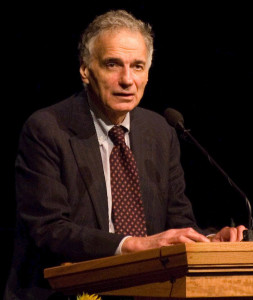
The American Museum of Tort Law
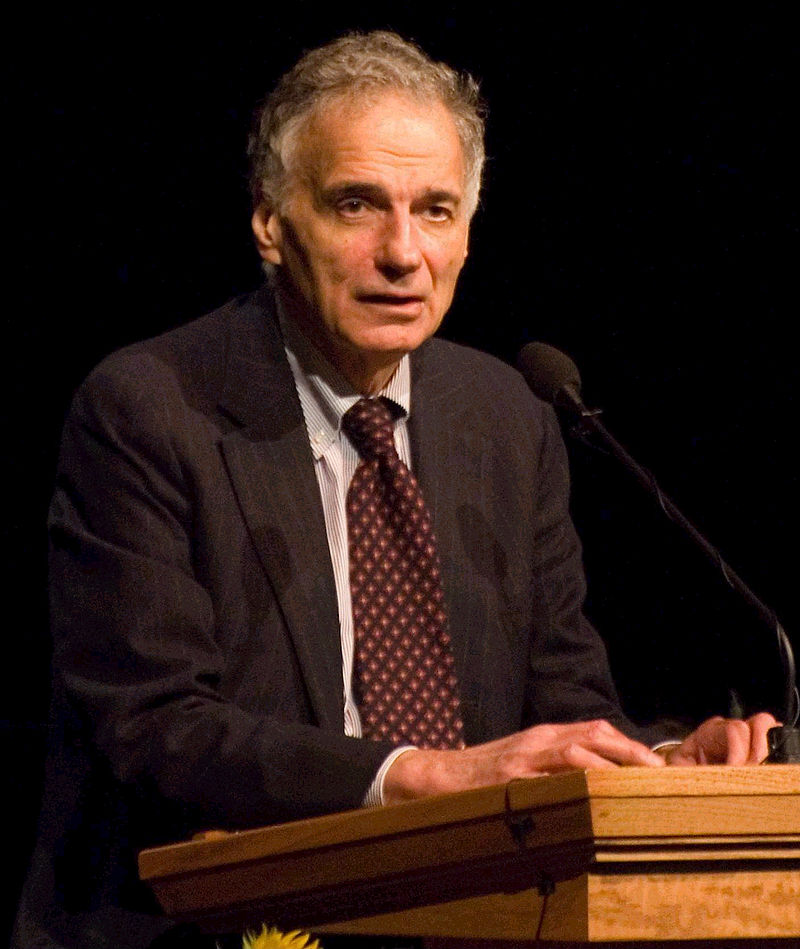
After trial lawyers told him they had no place to display exhibits they had used in court, Ralph Nadar realized that there isn’t a single museum devoted to the law in the United States. That’s about to change. The consumer advocate is opening the American Museum of Tort Law in his hometown of Winsted, Connecticut to celebrate victories of the law over corporate power. The museum will span the history of tort law – civil law that seeks relief for people injured by wrongful acts of others – and host exhibits on significant cases such as the 1998 national settlement with tobacco companies. Nader said it may also host artifacts including a Chevrolet Corvair – the car featured in his 1965 book “Unsafe at Any Speed,” which made him a household name.
Guest – Ralph Nader, attorney, political activist, consumer advocate, presidential candidate and author who among many accomplishments is responsible for 8 major federal consumer protection laws and helped established the PIRGS – Public Interest Research Groups.
—-
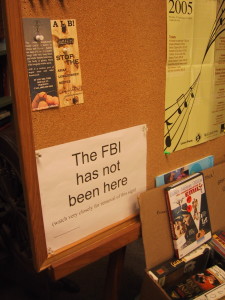
The Library Freedom Project Protects Library From DHS Surveillance
With a population just above13,000 people, the quaint town of Lebanon, New Hampshire is nestled not far from the Connecticut river in the northwest corner of the state – a few miles from Dartmouth College. In July, the local library set up a system to protect the privacy of patrons using its computers by installing Tor, the platform that routes users’ Internet traffic through various relay points, making warrantless surveillance of browsing habits and traffic more difficult. The Kilton Library’s Tor relay node attracted the attention of the Department of Homeland Security, which contacted local officials and law enforcement, warning that Tor could aid criminal behavior. In response, the library intially took down the relay, but later changed its mind and reinstalled it.
Guest – Alison Macrina is a librarian, privacy rights activist, and the founder and director of the Library Freedom Project, an initiative which aims to make real the promise of intellectual freedom in libraries by teaching librarians and their local communities about surveillance threats, privacy rights and law, and privacy-protecting technology tools to help safeguard digital freedoms.
——————————————-
Civil Liberties, Criminalizing Dissent, Human Rights, Political Prisoner, Surveillance, Targeting Muslims
Podcast: Play in new window | Download
Updates:
- Heidi Boghosian Reports Back On A Visit With Mumia Abu-Jamal
- ACTION: Please call Secretary of Pennsylvania Corrections John E. Wetzel 717-728-2573
- Also call John Kerestes Superintendent At SCI Mahanoy 570-773-2158
—-
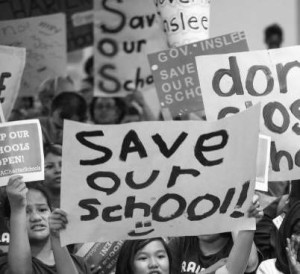

Recent Victory In Washington State Outlawing Charter Schools
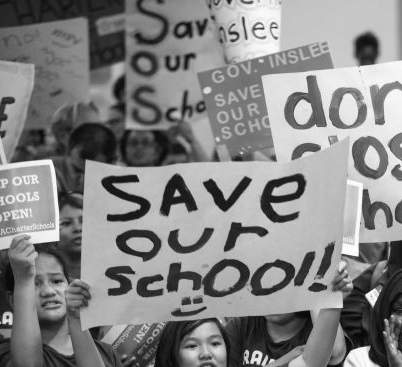
After nearly a year of deliberation, the Washington State Supreme Court recently ruled 6-3 that charter schools are unconstitutional. The ruling is believed to be one of the first of its kind in the country and overturns the law voters narrowly approved in 2012 allowing publicly funded, but privately operated, schools. The parties have 20 days to ask the court for reconsideration before the ruling becomes final. In the ruling, Chief Justice Barbara Madsen wrote that charter schools aren’t so-called “common schools” because they’re governed by appointed, rather than elected, boards. Therefore, she wrote: “money that is dedicated to common schools is unconstitutionally diverted to charter schools.” The ruling represents a victory for the coalition that filed the suit in July 2013, asking a judge to declare the law unconstitutional for what they described as improperly diverting public-school funds to private organizations that are not subject to local voter control. Lawyers from the Attorney General’s Office are reviewing the decision, as is the governor’s office.
Guest – Michelle Fein, author of “Charter Schools and the Corporate Makeover of Public Education: What’s at Stake?” Michelle Fein has a Master’s degree in Education with a specialty in interdisciplinary curriculum, social studies and science. She has taught for more than 15 years in private, charter and public schools and was the director of a local charter school for four years.
—-
Ending Long Term Solitary Confinement in California Prisons
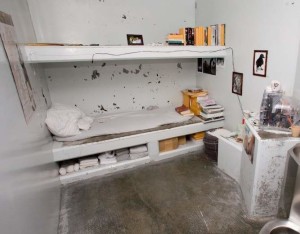
After years of litigation by the Center for Constitutional Rights, hunger strikes and protracted debate, the state of California has finally agreed to move thousands of prison inmates out of solitary confinement. Last week a legal settlement between the state and a group of inmates held in isolation for a decade or more at Pelican Bay State Prison will end the use of solitary confinement to control prison gangs. Jules Lobel, the lead attorney and president of CCR, calls this a dramatic step forward. Legal challenges to the states’ reliance on solitary confinement have been mounted since a panel of experts told the state corrections department that the high numbers of inmates in lengthy isolation did little to improve prison security. The state has agreed to create small, high-security units that house inmates deemed most dangerous in a group setting where they are entitled to many of the same privileges as other prisoners: contact visits, phone calls and educational and rehabilitation programs. Inmates found guilty of specified offenses — including murder, attempted murder, drug trafficking, arson, and extortion — are confined in security housing at Corcoran State Prison.
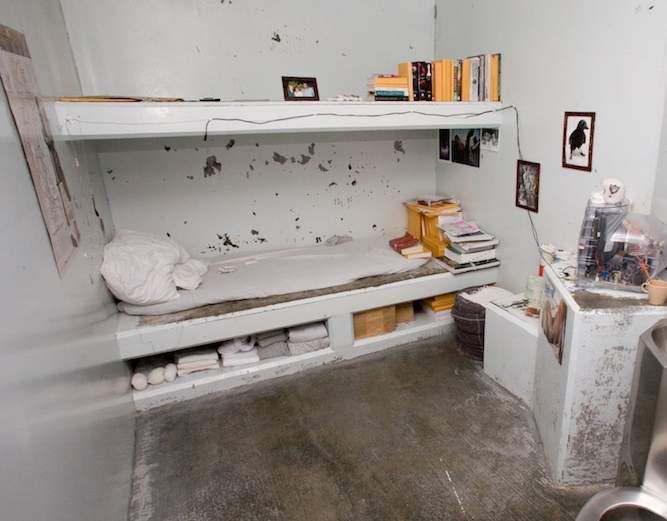
Large isolation units such as the one at Pelican Bay were built in the 1980s in response to high rates of inmates and officers being killed. California has moved over 1,000 prisoners from solitary into general population in the last two years, with little problem.The majority of the several thousand gang-associated prisoners who have been either kept in isolation a decade or more, or have gone at least two years without a major rule violation, will move back to general population. The state prison guard union, which tried unsuccessfully to intervene in the case, says the state may return to the 70s and 80s environment where inmates and staff were killed at high rates. California once led the nation in the use of solitary confinement but Texas is no #1. California has some 6,400 inmates in isolation units, a number that shrank for two years as the state changed its criteria for behavior considered gang activity and began removing prisoners. California has segregation units at several prisons, but the largest and most notorious is at Pelican Bay, near the Oregon border. Inmates spend nearly 23 hours a day in windowless cells that face a concrete wall. Forensic psychiatrists testified on behalf of the inmates that such conditions cause psychological damage. The UN has called it torture. Joining us to discuss this hard-won victory is Jules Lobel.
Guest – Attorney Jules Lobel, has litigated important issues regarding the application of international law in the U.S. courts. In the late 1980’s, he advised the Nicaraguan government on the development of its first democratic constitution, and has also advised the Burundi government on constitutional law issues. Professor Lobel is editor of a text on civil rights litigation and of a collection of essays on the U.S. Constitution, A Less Than Perfect Union (Monthly Review Press, 1988). He is author of numerous articles on international law, foreign affairs, and the U.S. Constitution in publications including Yale Law Journal, Harvard International Law Journal, Cornell Law Review, and Virginia Law Review. He is a member of the American Society of International Law.
——————————————————–
CIA Sponsored Terror, Civil Liberties, Criminalizing Dissent, Habeas Corpus, Human Rights, Political Prisoner, Prison Industry, Surveillance, Targeting Muslims, Torture, Truth to Power
Podcast: Play in new window | Download


Securing The Iran Nuclear Deal
Phyllis Bennis joins us today to talk about the Iran Nuclear Deal. We get her perspective on this topic in the context of a broader geopolitical front including ongoing wars, the increased US funding of Israel and challenges to Iran from Saudi Arabia.
Guest – Phyllis Bennis, directs the New Internationalism Project at IPS. She is also a fellow of the Transnational Institute in Amsterdam. She has been a writer, analyst, and activist on Middle East and UN issues for many years. In 2001 she helped found and remains on the steering committee of the U.S. Campaign to End Israeli Occupation. She works closely with the United for Peace and Justice anti-war coalition, co-chairs the UN-based International Coordinating Network on Palestine, and since 2002 has played an active role in the growing global peace movement. She continues to serve as an adviser to several top UN officials on Middle East and UN democratization issues.
—-
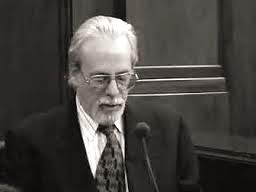
Lawyers You’ll Like: Attorney Bill Schapp
Attorney William Schaap graduated from the University of Chicago Law School in 1964 and has been a practicing lawyer since. Bill specialized in military law and practiced in Asia and Europe. He later became the editor in chief of the Military Law Reporter in Washington for a number of years. In the 70’s and 80’s he was a staff counsel of the Center for Constitutional Rights in New York City. In the late 80s, he was an adjunct professor at John J. College of Criminal Justice of the City University of New York where he taught courses on propaganda and disinformation.
Attorney William Schapp:
- One of first cases at this big Wall Street firm, they had some outside counsel working on it, one of whom was David Lubel, and Dave Lubel who had I think been a recruiter for the Communist Party in his youth, was always good at spotting somebody who was always worth recruiting and he started to tell me there was this convention of this lawyers group.
- It was this 1967 Lawyers Guild Convention in New York. He dragged me to one event, I met Bill Kunstler, I met Arthur Kinoy, I met Victor Rabbinowitz. I’d been on Wall Street for a year or two, I said I didn’t know there were lawyers like this.
- I joined the same day and met Bernadine Dorhn and a few weeks she called me and said we need your help.
- She said you gotta defend a bunch of Columbia students. The next thing I knew the riot started at Columbia and she said you have to go down there and defend them.
- I signed up to be staff counsel on the National Lawyers Guild Military Law Project in Okinawa, Japan.
- When you work overseas in that kind of a climate with the military you learn a lot fast about American imperialism.
- Once you learn that, you learn about the CIA.
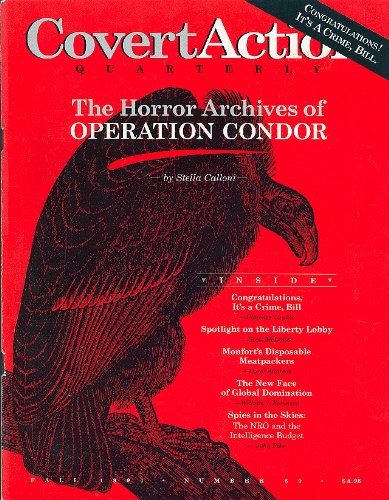
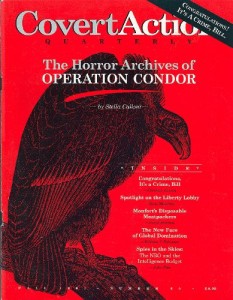
- That led us to originally working on Counter Spy magazine and then on Covert Action Magazine.
- The original purpose was to expose the CIA. We worked with Lou Wolf who is an expert in uncovering CIA agents in US embassies, not through any classified documents but because if you knew how to read the paperwork and State Department things, you could tell who are the “ringers.”
- We were so successful that Congress passed a law against us.
- Our goal was to make these people ineffective because the only way most CIA could work, particularly the ones that were assigned to an embassy was to have to pretend to be something else.
- They were all third assistant political secretaries and those were all phony things. Their job was to finagle their way into various community organizations in whatever foreign capital they were posted to recruit people to turn against their own countries and become traitors to their own countries, to become spies for the U.S.
- We thought if we identified these people, it might make their job a little bit harder, which it did.
- Of course, the problem with that is the government said we were trying to get them killed which we weren’t trying to do and nobody we did expose ever did get killed.
- He (Philip Agee) had been an adviser to Counter Spy. Counter Spy folded when Welch got killed, cause the pressure was too much and started Covert Action Quarterly.
- He was not the person discovering who the under cover people were, Lou Wolf was doing that.
- Phil wrote articles for us in every issue and we worked very closely with him.
- Once you start exposing these things, they really don’t have any defense.
- They tried to catch us in something phony. We would get tips that would turn out to be CIA trying to get us to print some story that wasn’t true so they could then discredit us.
- We had more interference from the government when we were doing military law work, before Covert Action Quarterly.
- They would plant bugs in our attic in Okinawa, things like that.
- The Intelligence Identity Protection Act has 2 parts. One makes it a crime for someone in the government who has classified information to reveal someone’s identity. The second part makes it a crime to reveal the identity of someone you did not learn from classified information or you position. (But if you were in the business of exposing these people . . .)
- Regarding his newsletter The Lies of Our Times – It was in the 90s, from 1990 to 1995 I think. To a certain extent, the abuses we were crying about got a little bit less over time because that’s sometimes the helpful result of that kind of exposure.
- We were just tired of people thinking that if it was in the New York Times it must be true.
- The fact is that those people lie all the time.
- I think we’ve gotten to a point where people recognize that the government lies to them and that there’s an awful lot that goes on that they don’t know.
Guest – Attorney William Schapp graduated from the University of Chicago Law School in 1964 and has been a practicing lawyer since. Bill specialized in military law and practiced in Asia and Europe. He later became the editor in chief of the Military Law Reporter in Washington for a number of years. In the 70’s and 80’s he was a staff counsel of the Center for Constitutional Rights in New York City. In the late 80s, he was an adjunct professor at John J. College of Criminal Justice of the City University of New York where he taught courses on propaganda and disinformation.
In addition to being a practicing lawyer, Bill was a journalist, publisher and a writer specializing in intelligence as it relates to media. He was the co-publisher of a magazine called the Covert Action Quarterly for more than 20 years. He also published a magazine on propaganda and disinformation titled Lies Of Our Times. Attorney Bill Schapp has written numerous articles and edited many books on the topic of media and intelligence.
———————————————————-
Civil Liberties, Criminalizing Dissent, Gaza, Human Rights, Surveillance, Targeting Muslims, War Resister
Podcast: Play in new window | Download

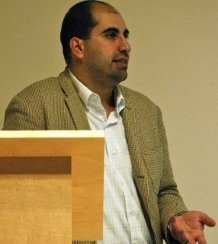
Professor Steven Salaita Case Moves Forward In Federal Court: First Amendment and Due Process Violations Upheld
There was a major federal court victory in Illinois on the Professor Steven Salaita case last week. Federal judge Harry Daniel Leinenweber ruled that the university had failed in its attempt to get Salaita thrown out of court. He upheld Salaita’s allegations that his First Amendment rights were violated. He upheld Salaita’s allegations that his due process rights were violated. He upheld his allegations that he had a contract and he said this case has to proceed to discovery and I’m not going to throw it out at this point. The judge took a very strong position with respect to both the contract and freedom of speech. It looks like the University of Illinois is on a losing path. The day after the decision came down, Chancellor Wise who was one of people responsible for firing Professor Steven Salaita, resigned from her job.
Guest – Maria LaHood, Deputy Legal Director at the Center for Constitutional Rights with expertise in constitutional rights and international human rights. She works to defend the constitutional rights of Palestinian human rights advocates in the United States in cases such as Davis v. Cox, defending Olympia Food Co-op board members for boycotting Israeli goods; Salaita v. Kennedy,representing Steven Salaita, who was terminated from a tenured position for tweets critical of Israel; and CCR v. DOD, seeking U.S. government records under the Freedom of Information Act (FOIA) regarding Israel’s 2010 attack on the flotilla to Gaza. She works closely with Palestine Legal to support students and others whose speech is being suppressed for their Palestine advocacy around the country.
—–
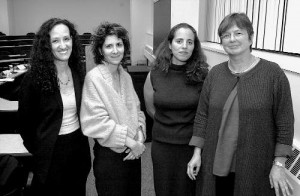
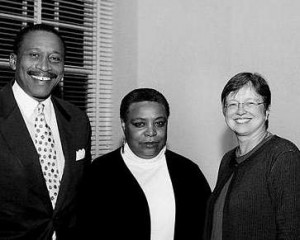
Lawyers You’ll Like: Professor Holly Maguigan
In our Lawyers You’ll Like series we’re joined by Professor Holly Maguigan, Professor of Clinical Law at the New York University School of Law, where she teaches Comparative Criminal Justice Clinic: Focus on Domestic Violence and Evidence. Professor Maguigan is an expert on the criminal trials of battered women. Her research and teaching is interdisciplinary. Professor Maguigan is a member of the Family Violence Prevention Fund’s National Advisory Committee on Cultural Considerations in Domestic Violence cases. She serves on the boards of directors of the National Clearinghouse for the Defense of Battered Women and the William Moses Kunstler Fund for Racial Justice. She is a past co-president of the Society of American Law Teachers, the largest membership organization of law professors in the U.S.
Professor Holly Maguigan:
- I was doing medieval history and I was at Berkeley. It was 1967 and Oakland stopped the draft.
- I got very interested in the anti-war politics.
- I hated lawyers. I really hated lawyers. They were boring. They talked about themselves all the time. They only had stories about their cases and how great they were and they would never post bail when people got arrested.
- The University of Pennsylvania in Philadelphia is where I stayed for 17 years.
- First I started out as a public defender. I loved being a public defender, it was the beginning and end of everything I hoped it would be.
- That’s where I met David Rudovsky and David Kairys. They were then defenders while I was a student.
- After they went out on their own, they kept inviting me to join them. I kept putting it off because I loved being a defender so much.
- In Philadelphia there was much more actual litigation, not just motion litigation there’s a lot of that here in New York City but actual trials.
- You had a sense, there was an analysis that people were doing life on the installment plan and you needed to do what you could to kick them loose any particular time.
- It was a community in its own odd way and I found it difficult to leave it.
- I was doing major felonies within a couple of years.
- David Kairys was very focused on constitutional litigation and government misconduct. He did the Camden 28 which was a big draft resistance case.
- My interest was more into criminal defense.
- Grand juries (all over the country) convened to investigate the alleged transportation of Patty Hearst by the SLA from California where she had been captured.
- He was a killer. (Frank Rizzo) There was no question. More people died in police actions before or since.
- I don’t mean to suggest that all the police started out as homocidal. This was a situation which from the top down came the message if you’re a good cop then you’re going to take people out however you think you need to.
- I knew about race and class bias in the court room as much as a white woman who was middle class could know.
- I was just blown away by what happens when you add hatred of women to hatred of black people and hatred of poor people.
- Judges would go by me in the hall and say Maguigan, ahem, you didn’t give me anything this Christmas, not even one lousy bottle, you’re not getting any assignments.
- Judges would do things, like open the drawer in their chambers, and there would be wads of bills, and they’d let you know.
- I developed a specialty on women who kill men.
- In the early eighties a group in Philadelphia called Women Against Abuse began working and they did advocacy for battered women accused of crime and meant a huge difference.
- The battered women cases I was working on were quite consuming because people then didn’t know very much in how to try these cases.
- The judges expected you to plead insanity or guilty. Reasonable doubt was a consideration at sentencing not at trial.
- There were cases that did require teams. There was no question.
- I wanted to be in court. I wanted to be in the presence of that conflict between the authorities and regular people.
- I went to NYU where I taught in the criminal defense clinic for many years.
- To see students react to the great stories their clients have is just amazing.
- SALT (Society of American Law Teachers) is about who gets into law school, what they learn and who teaches them. It’s about access to justice. It’s about relating to law school as a place where you train people to do social justice. SALT’s focus is on students and teaching.
- Holly Maguigan to be honored by Society of American Law Teachers.
Guest – Professor Holly Maguigan teaches a criminal defense clinic and one in comparative criminal justice as well as a seminar in global public service lawyering and a course in evidence. She is an expert on the criminal trials of battered women. Her research and teaching are interdisciplinary. Of particular importance in her litigation and scholarship are the obstacles to fair trials experienced by people accused of crimes who are not part of the dominant culture. Professor Maguigan is a member of the Family Violence Prevention Fund’s National Advisory Committee on Cultural Considerations in Domestic Violence cases. She serves on the boards of directors of the National Clearinghouse for the Defense of Battered Women and the William Moses Kunstler Fund for Racial Justice. She is a past co-president of the Society of American Law Teachers, the largest membership organization of law professors in the U.S.
————————————-
CIA Sponsored Terror, Civil Liberties, Human Rights, Iraq War, Targeting Muslims, Truth to Power, War Resister
Podcast: Play in new window | Download


Coalition of Immokalee Workers: A Big Victory For Farm Workers
Co-host attorney Michael Ratner discusses the landmark development for the Fair Food Program plus the work of Jake Ratner and Elena Stein. Ahold USA and the Coalition for Immokalee Workers announced that Ahold has agreed to join the award-winning social responsibility program, bringing worker-certified Fair Food tomatoes to over 50 million new customers a month in nearly 780 new stores in 14 states.
—
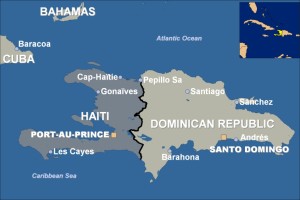
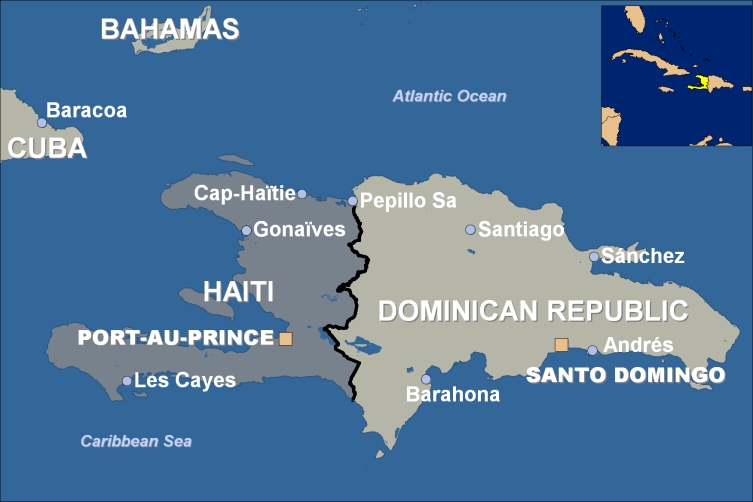
100th Anniversary of the United States Occupation of Haiti
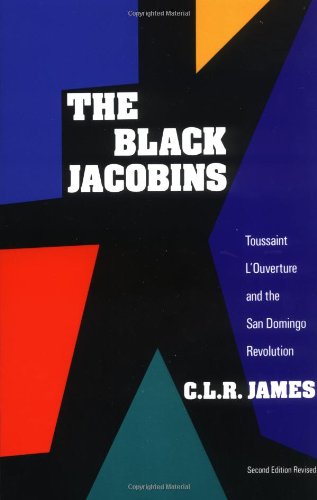
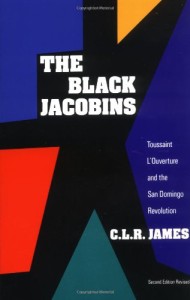
Co-host attorney Michael Ratner describes key politically historic events in the colonizing of Haiti as July 28, 2015 marks the 100th anniversary of the commencement of the U.S. occupation of Haiti. Suggested reading – The Black Jacobins: Toussaint L’Ouverture and the San Domingo Revolution
Law and Disorder Co-host Attorney Michael Ratner, President Emeritus of the Center for Constitutional Rights (CCR), a non-profit human rights litigation organization based in New York City and president of the European Center for Constitutional and Human Rights (ECCHR) based in Berlin. Ratner and CCR are currently the attorneys in the United States for publishers Julian Assange and Wikileaks. He was co-counsel in representing the Guantanamo Bay detainees in the United States Supreme Court, where, in June 2004, the court decided his clients have the right to test the legality of their detentions in court. Ratner is also a past president of the National Lawyers Guild and the author of numerous books and articles, including the books Who Killed Che? How the CIA Got Away With Murder, The Trial of Donald Rumsfeld: A Prosecution by Book, Against War with Iraq and Guantanamo: What the World Should Know, as well as a textbook on international human rights.
—-
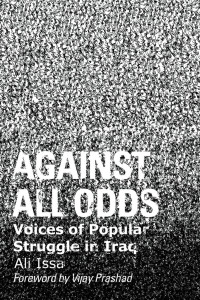
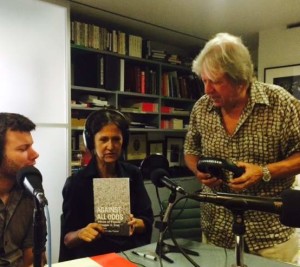
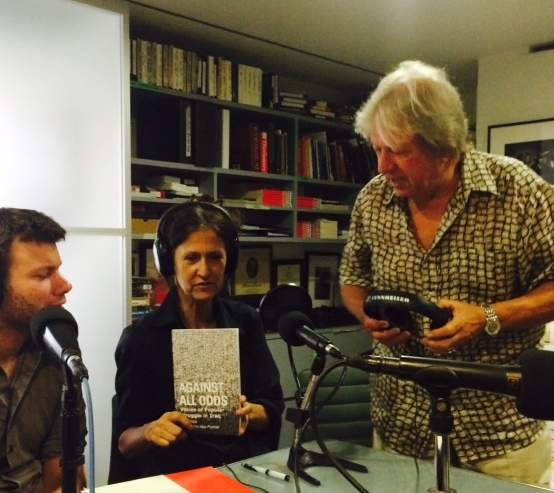
Against All Odds: Voices of Popular Struggle In Iraq
Long before the US imposed sanctions in Iraq, and long before the brutal and unlawful invasion, our government supported a dictatorship and attendant torture and extermination. Individuals engaging in acts of resistance in Iraq faced mass rapes, enslavement and massacres. Missing from our country’s media coverage and political narrative surrounding Iraq are the courageous stories of progressive Iraqi voices.
Activist Ali Issa’s recent book Against All Odds: Voices of Popular Struggle In Iraq goes a long way toward filling this void. An organizer with the War Resisters League, he has assembled a rich account of Iraqi organizers and revolutionaries–their analysis, their political works, their visions, their challenges. This important compendium provides much-needed insight to the committed and just-minded individuals who worked to rebuild society and social institutions amidst disappearances and assassinations.
Guest – Ali Issa is the National Field Organizer for the War Resisters League. He is author of the forthcoming book Against All Odds: Voices of Popular Struggle in Iraq. It’s published by Tadween Publishing and the War Resisters league.
——————————————————