CIA Sponsored Terror, Civil Liberties, Criminalizing Dissent, Crony Capitalism, Human Rights, Political Prisoner, Prison Industry, Surveillance, Targeting Muslims, Truth to Power
Podcast: Play in new window | Download


City and County of San Francisco v. Sheehan
In early December of 2014, the Supreme court agreed to hear the case City and County of San Francisco v. Sheehan. The case involves San Francisco police officers who reported to a group home to transport Teresa Sheehan, who was known to be mentally ill, to mental health facility. The situation ended with police firing six shots on Sheehan. She survived and filed a lawsuit arguing that officers had a responsibility under federal law to consider her mental disability. The case is not about police criminal liability, this one is about whether police are obligated to take special precautions in using deadly force, and also in entering an individual’s home without a warrant or permission. Read Michael Avery’s observation about details of case.
Attorney Michael Avery:
- Teresa Sheehan is a woman in her mid-fifties who was living in a group home in San Francisco, a home for people with mental disabilities.
- Officers came to the house and ended up shooting her five times at point blank range.
- The case raises some issues for the federal courts in which the lower courts are in disagreement, and the court (Supreme Court) took the case hoping to resolve those disagreements.
- The police came because the social worker had become concerned with Ms Sheehan, and wanted to send her to a hospital for 72 hours of evaluation and requested the assistance of the police in transporting her to the hospital.
- Ms. Sheehan on the other hand didn’t want to be taken to the hospital, didn’t want the social worker in her room, did not want the police in her room, she just wanted to be left alone.
- In the course of asserting her right to be left alone, she threatened the police and the social worker with a knife.
- The police then ended up breaking through her door. Forcing open her door and when she was standing there with the knife, they tried to pepper spray her. That didn’t seem to have much effect on her and so they shot her five times.
- Miraculously she survived but now she’s permanently disabled and disfigured. One of the bullets entered the left side of her temple, shattered her eye socket and then exited through her mouth causing serious injuries to her jaw.
- Officers encounter people with mental disabilities extremely frequently. In large cities and towns in the United States its estimated 1 out every 15 people that the police interact with has some form of mental illness.
- Officers are trained to try to diffuse the incident, not to threaten the person, to ask open ended questions, to listen to what the person has to say, try to establish some rapport with the person, respect the person’s space and not crowd the person, and at the same allow the incident to go on as long as it has to in order to have a peaceful resolution.
- Several years ago I wrote an article called Unreasonable Seizures of Unreasonable People making the point that officers ought to be held to standard that requires them to follow their own training.
- When I saw this case was in the courts, I volunteered to provide some assistance to the lawyers in connection with the brief they were writing.
- There are two claims in the case. One is a claim under the Fourth Amendment of the Bill of Rights, which is the part that says government cannot make unreasonable searches of our home or seizures of our person and the other is a claim under the Americans With Disabilities Act.
- In effect they discriminated against her on the basis of her disability by not following their training and not making the accommodations that they were trained to make for a mentally ill person.
- Secondly, the argument is, when they forced open the door to her apartment and entered and used deadly force against her, they were not behaving reasonably and that again is based on the same idea it would have been reasonable to follow their training. Frankly, they just threw their training out the window.
- Oral argument is scheduled for March 23, 2015.
Guest – Civil rights lawyer Michael Avery, professor at Suffolk University Law School and former president of the National Lawyers Guild from 2003 to 2006. He’s also worked with the National Police Accountability Project.
—-
Lawyers You’ll Like: David Kairys
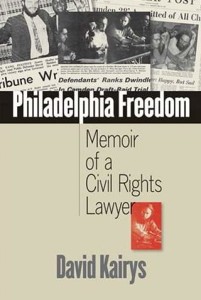
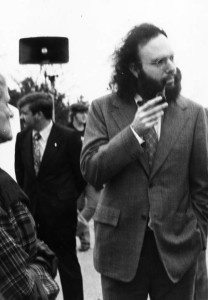
David Kairy began his career at the Philadelphia public defender’s office in the late 1960s. Since then, he’s been a leader in effort to fight discrimination and protect individual rights, now he’s regarded as one of the nation’s preeminent civil rights attorneys. David is a professor at the University of Temple Law School, where he teaches civil rights and constitutional law. He has written several books, including Philadelphia Freedom: Memoir of a Civil Rights Lawyer, which was published last year.
David Kairys:
- We were of a number of young firms dedicated to civil rights and representation of progressive groups.
- The Camden 28, caught in the act of breaking into a Camden, New Jersey draft board and destroying all of the files. This was a Catholic Left action.
- FBI had informant in the group, who the FBI was paying on an hourly rate. The informant supplied the means to make the action happen.
- One hundred FBI agents sat around and waited til they destroyed all the files in the office. Many of the 28 were priests. There were more than 300 draft board raids during Vietnam.
- Father Michael Doyle said when your government is napalming children, the place you should be is in jail.
- Father Doyle and I strategized a way to start talking to the FBI informant Bob Hardy and eventually got an affidavit saying that the FBI manufactured this crime.
- I filed the affidavit and it was on the front page of the New York Times.
Guest – David Kairys, Professor of Law, the first James E. Beasley Chair (2001-07), and one of the nation’s leading civil rights lawyers. He authored Philadelphia Freedom, Memoir of a Civil Rights Lawyer and With Liberty and Justice for Some and co-authored the bestselling progressive critique of the law, The Politics of Law, and authored With Liberty and Justice for Some and over 35 articles and book chapters. His columns have appeared in major periodicals, and he has been profiled in the Chronicle of Higher Education, Wall Street Journal, and Philadelphia Inquirer Sunday Magazine. Kairys’s Public Nuisance Theory.
——————————————————-

Please help support Law and Disorder by clicking on Fractured Atlas graphic. This radio show is now a sponsored project of Fractured Atlas, a non-profit arts service organization. Contributions for the charitable purposes of Law and Disorder must be made payable to Fractured Atlas only and are tax-deductible to the extent permitted by law. You can donate as little as 5.00 a month.
CIA Sponsored Terror, Civil Liberties, Criminalizing Dissent, FBI Intrusion, Guantanamo, Habeas Corpus, Human Rights, Political Prisoner, Prison Industry, Supreme Court, Surveillance, Targeting Muslims
Coming Up Next Week Police Shooting Reaches Supreme Court Exclusive Michael Avery Interview
Podcast: Play in new window | Download

1971
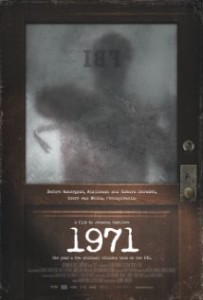
On March 8th 1971, a group of anonymous individuals calling themselves the Citizen’s Commission to Investigate the FBI, broke into an FBI field office in Media, Pennsylvania. They stole thousands of government documents. Among the documents was proof that the FBI under J. Edgar Hoover, was spying on law abiding citizens. The program is known as COINTELPRO and it was used to monitor, manipulate and disrupt social and political movements in the United States. The Citizens’ Commission to Investigate the FBI has been documented recently in a highly acclaimed film titled 1971, directed by Johanna Hamilton.
Johanna Hamilton:
- I consider myself to have the good fortune to have known Betty Medsger, the author of the Burglary, for many years.
- She and I had a personal relationship that long predated our professional collaboration.
- Over time she came to share the outlines of the story with me and it sounded completely remarkable.
- She introduced me to a few members of the Citizens Commission to Investigate the FBI. The 40th anniversary was approaching.
- They wanted the story, which was so little known, to have a larger life.
- To be clear, Betty worked many years on the book. She’s done remarkable and profound research and I joined much later and was the net beneficiary of so much of her research.
- There were four years where we worked in tandem.
- When I showed the film to the Citizens Commission, while the credits rolled, Keith (Keith Forsyth – the lock picker) especially, he got up and said, good job.
- It’s a period of history I’ve been fascinated with since I was a teenager. It was the story of these extraordinary ordinary individuals who had put everything on the line and taken such great personal risk to benefit democracy.
- They trained themselves for one night of crime. They steal all the documents in the office, leak them to the press. They send them to major newspapers, and to a couple politicians. In the end, the Washington Post is the only newspaper that decides to publish the first stories.
- Those first stories reveal with out question illegal government spying on citizens who are going about their daily lives and exercising their First Amendment rights.
- Betty wrote the first stories in the Washington Post and the story fades a little from the headlines. The Pentagon Papers explode 3 or 4 months later. Daniel Ellsberg is on the scene.
- Then our story picks up again.
- It seems inconceivable now but Hoover had been director for over 50 years, and that’s no longer possible.
- Some people who seen the film before say they were really moved by the Church Committee hearings.
- Attorney David Kairys is a huge figure in Philadelphia and yes back in the day he was contacted by two members of the Citizens Commission. He didn’t know what they had done, but if they got caught, they could call him day or night.
- We were reaching the tail end, or we thought we were reaching the tail end of the film when the Snowden revelations happened.
- The Snowden revelations were one thing, absolute bombshell, but prior to that we had a couple of other instances. Back in 2011, September, there were raids all across the country, animal rights activists, environmental groups. One night Brian Williams introduced the news and described these raids and said you know its reminiscent of Hoover back in the 1970s.
- We had whole scenes cut together with that footage and debated and deliberated on that. In the end erred on the side of excluding it.
- It’s opening here in New York City and will start rolling out across the country. If you check our website we update the cities that it will show at. It will be on PBS, Independent Lens at the end of May. 1971Film.com
Guest – Johanna Hamilton, director of the film 1971. She also co-produced Pray the Devil Back to Hell, which won Best Documentary at the Tribeca Film Festival in 2008 and was shortlisted for an Academy Award. Johanna has produced nonfiction programs for PBS, The History Channel, National Geographic, A&E, Discovery Channel, and The Washington Post/Newsweek Productions, including September’s Children, a documentary for PBS exploring how children around the world are affected by terrorism and war.
—–
Inspiring, and Awakening Political Activism in Youth
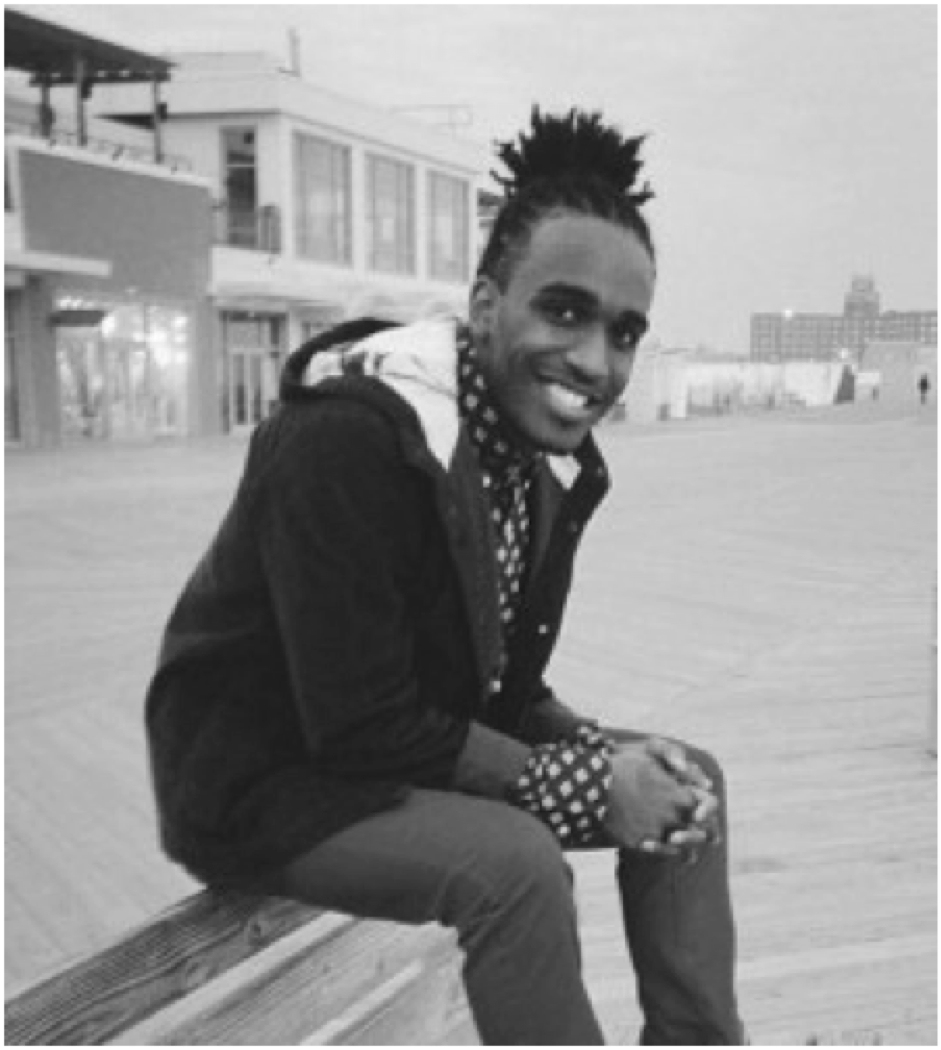
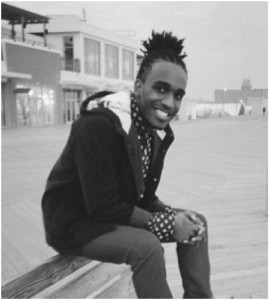
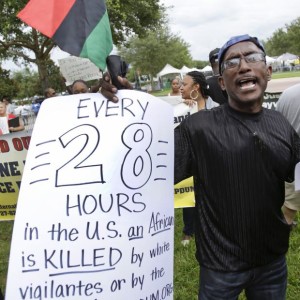
Young people across the nation have played a critical role in taking to the streets to protest social inequities, from Ferguson, Missouri to New York City. In a recent article in the journal Socialism and Democracy, “The Roots of Mass Incarceration: Locking Up Black Dissidents and Punishing the Poor,” writer, activist and youth pastor Nyle Fort describes how he became politically active and who inspired him. We talk with Nyle about the status of protest in this country, the forces of oppression, how young people are involved and how he helps inspire them.
Nyle Fort:
- I graduated from Morehouse College and ended up going to seminary. I was already a licensed and ordained preacher but I wasn’t politicized yet.
- I had already been involved in the community via the church doing speaking engagements with youth and things like that.
- It wasn’t until I got into Princeton Theological Seminary that I began to get politicized.
- The way that it happened was I was taking an introductory seminary class called Systematic Theology with a professor Mark Taylor. In that class he actually had Mumia Abu-Jamal call in live from death row.
- When I heard him speak, I stopped in my seat. This man who I knew nothing of was speaking to me that was moving, not only me but I could tell the entire classroom and doing so by a 6 foot, by 10 foot cell. A cell that he had been in for 30 years, longer than I had been alive.
- Two weeks later I found myself through Mark Taylor at my first rally December 9, 2011. Two days after Mumia had been released from death row.
- I read the New Jim Crow very quickly, then Angela Davis’ works. That was really the beginning for me.
- I entered activism through a prison abolitionist lens, through Mumia.
- The rally for me was an embodiment of the things Mumia was talking about.
- I preach. I was at First Baptist Church in Lincoln Gardens. It’s one of the largest black churches in New Jersey. My style of ministry was evolving as I was being radicalized and politicized.
- I tried to do a lot of social justice work. We were writing letters to our incarcerated brothers and sisters as forms of religious activism.
- I discovered a prophetic religious tradition that comes from a black liberation theological perspective.
- When I was on the bus ride back from Ferguson I was really mad. Mad as hell because I felt there was a relative silence from the church, particularly the black church.
- I believe in love not as a word but as a work.
- When I engage with youth, I try to practice a love that is material. I tell young people, I love you more than they hate you.
- We have to deal the trauma and the pain that we inherit as black people living in the western world and all around the world.
- Love for me is a critical, not a politic that we can talk about, but a practice we can embody and engage in everyday. That has material life.
- We’re going to take Cornell West’s worlds seriously that justice is what love looks like in public, then we have to have a love that’s expansive enough to be material and to be felt.
- Black Lives Matter particularly as a network has articulated a feminist politic, a black feminist politic, a queer politic that is forcing us to live out our intersectionality.
- What we’re not talking about enough is that’s messy, and its not romantic.
- I think of oppression as institutionalized lovelessness. Let’s love each other in ways that causes each other to act.
- Twitter – @nylefort
Guest – Nyle Fort – Nyle is a Master’s of Divinity candidate at Princeton Theological Seminary, a youth pastor, freelance writer, and grassroots community organizer based in Newark, New Jersey. He was very active during the protests in Ferguson, Missouri and New York City.
—————————————————————-
Please help support Law and Disorder by clicking on Fractured Atlas graphic. This radio show is now a sponsored project of Fractured Atlas, a non-profit arts service organization. Contributions for the charitable purposes of Law and Disorder must be made payable to Fractured Atlas only and are tax-deductible to the extent permitted by law. You can donate as little as 5.00 a month.
CIA Sponsored Terror, Civil Liberties, Criminalizing Dissent, Gaza, Human Rights, Political Prisoner, Prison Industry, Supreme Court, Surveillance, Targeting Muslims, Torture
Podcast: Play in new window | Download
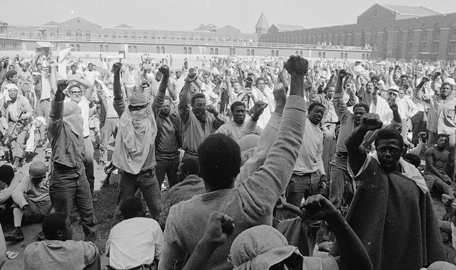
Special on Mass Incarceration : Socialism and Democracy – Lessons from Attica: From Prisoner Rebellion to Mass Incarceration and Back
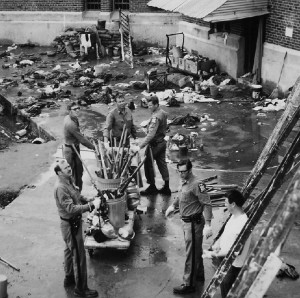
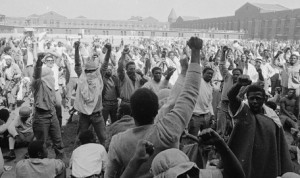
Fyodor Dostoevsky’s observed that “the degree of civilization in a society can be judged by entering its prisons.” Our guest Dr. Heather Ann Thompson reports in her recent article Lessons from Attica: From Prisoner Rebellion to Mass Incarceration and Back, that according to the Prison Policy Initiative, by 2011 the United States was confining “more than 2.4 million people in 1719 state prisons, 102 federal prisons, 2259 juvenile correctional facilities, 3283 local jails, and 79 Indian Country jails as well as in military prisons, immigration detention facilities, civil commitment centers, and prisons in the U.S. territories.
Dr. Heather Ann Thompson:
- Its important to really examine the broader history of prisons and criminal justice because trying to explain how we became the world’s outlier with so many incarcerated and such a hugely disproportionate number being persons of color, we have a lot to explain.
- Something very clearly happened after the 1960s to our criminal justice system, even more specifically after 1971. Clearly it had a lot to do with the rebellions of that period.
- Sorting all that out is what I’ve been doing for the last decade.
- Just like had happened after the civil war, sort of the first great moment of civil rights unrest in this country when we had 4 million newly freed African Americans demanding a real voice in our society, and meaningful equality.
- The response of that society, in that case, in the South, was to change all the laws. To all of a sudden criminalize black spaces in new ways and almost overnight southern prison institutions not only exploded in population but they went from being all white to all black.
- You fast forward to the 1960s and I think something similar happened.
- Many northern politicians begin to conflate urban protest and unrest, the slow pace of the equality and gains with crime, and began a war on crime in 1964 with Lyndon Johnson before there was immediately impressive rise in crime.
- We need to know much more about the people that were inside the prison walls.
- What happened in the American prison system that we see today, what seems to be the ultimate control, the ultimate punitive penal state.
- One of the long standing lawyers in this case Elizabeth Fink fought this battle on behalf of the Attica brothers for decades and decades. These are the people who are the real repository of that history.
- My role as a scholar, what I tried to do was rescue for the American public, some of those hidden histories. You had a 4 day congregating thousands, 1300 men inside of a penal institution that were willing to stand together and black, Puerto Rican, white and say to the state, we’re willing to negotiate with you logically and in good faith to try to improve the conditions under which we live.
- What made it so really remarkable was the world’s attention was focused on it. Everybody was watching Attica.
- But ultimately, New York state was unwilling to give in on the most important demand which was amnesty.
- Amnesty for which once they surrendered, they would not be charged for any riot-related crimes that the state would alleged they’d committed and an assurance that they would not have reprisals.
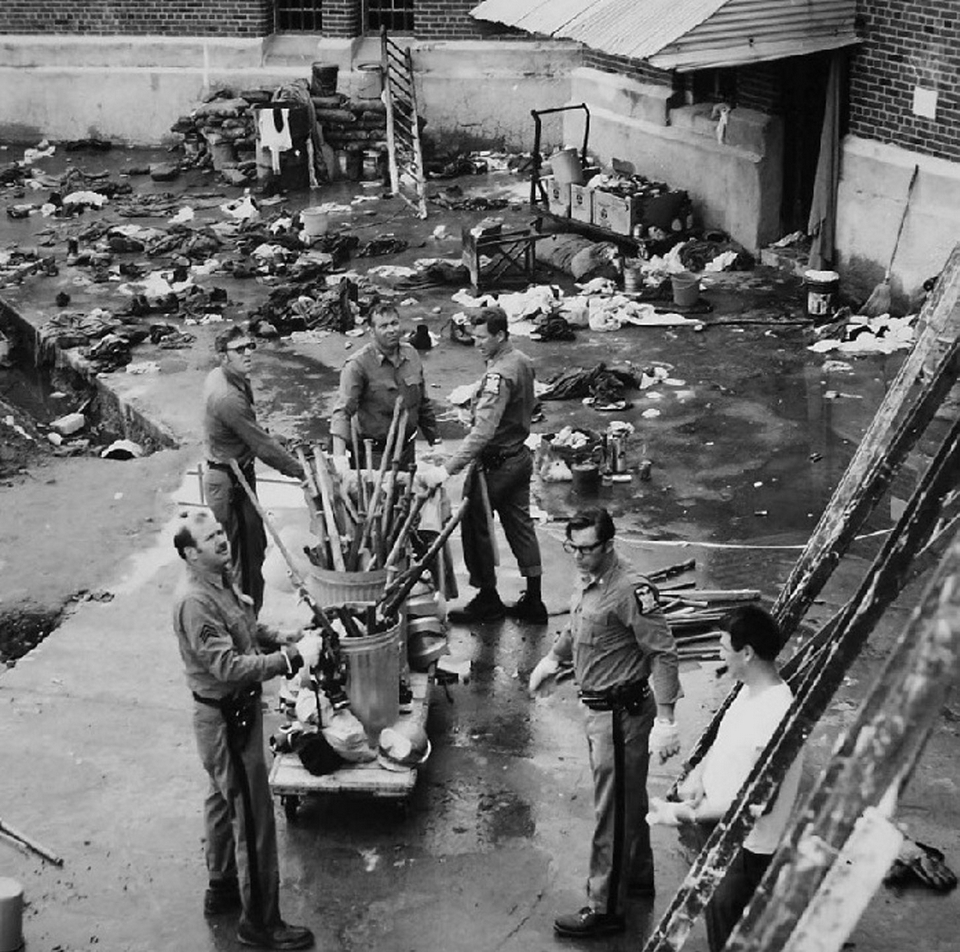
- They – state troopers- retook the prison in an utter brutal fashion. They mowed down people first with tear gas then guns, handguns, deer slugs, shot guns, killing scores of people, wounding scores of people.
- Then, realizing the blood bath, officials stood outside and told the world, that the prisoners are the ones that killed the hostages, and from then on tried to control the story, cover up what really happened, that began the 40 year saga of trying to tell the truth of what happened at Attica.
- Had I not met people like Elizabeth Fink who could help me understand this story and had I not spent ten years digging in every knook and cranny to try to uncover the story, this would have been a difficult story to tell because the state has gone to enormous lengths to keep a lid on it.
Guest – Dr. Heather Ann Thompson, is a native Detroiter currently on faculty in the Departments of African American Studies and History at Temple University. In 2015 she will be joining the faculty of the University of Michigan in Ann Arbor. Thompson has just completed the first comprehensive history of the Attica Prison Rebellion of 1971 and its legacy for Pantheon Books.
—–
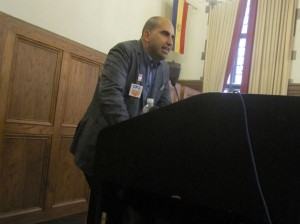
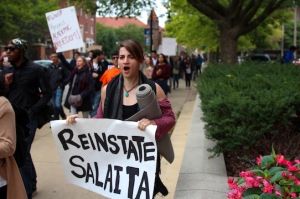
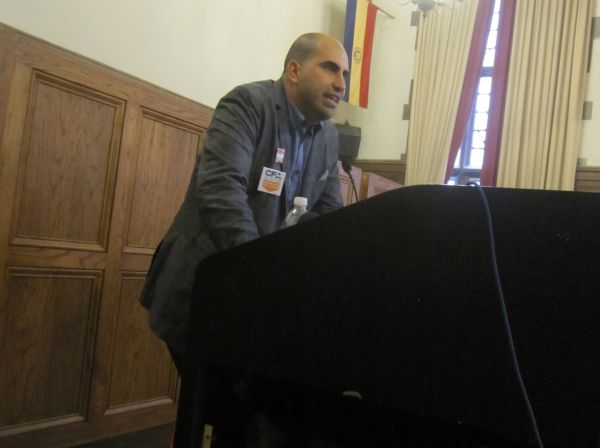
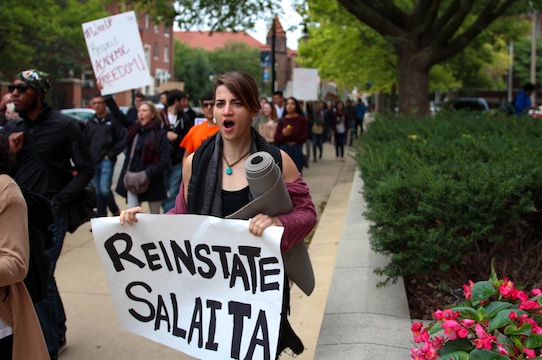
Professor Sues University of Illinois Over Firing for “Uncivil” Gaza Tweets
We bring you to a press conference held in New York City last week at the Center for Constitutional Rights. The Center is representing Professor Steven Salaita along with the Chicago civil rights law firm of Loevy & Loevy. Salaita was hired and then discharged before he could even start his job last summer at the University of Illinois. He was hired by the American Indian Studies program after a thorough vetting. After Israel attacked Gaza where some 2000 people were killed including 500 children. Salaita tweeted several what were termed “uncivil” messages on his twitter account. This was brought to the attention of Zionist donors to the University of Illinois who then pressured Chancellor Phyllis Wise to rescind the hiring. Professor Salaita’s case is probable the most important case in 50 years, not since the 60s when the Supreme Court overturned the non-communist loyalty oath has an issue of this importance arisen. Some 6000 professors have vowed to boycott the University of Illinois.
——-
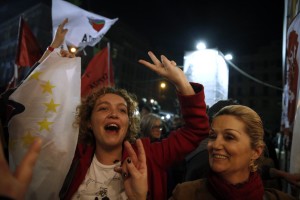

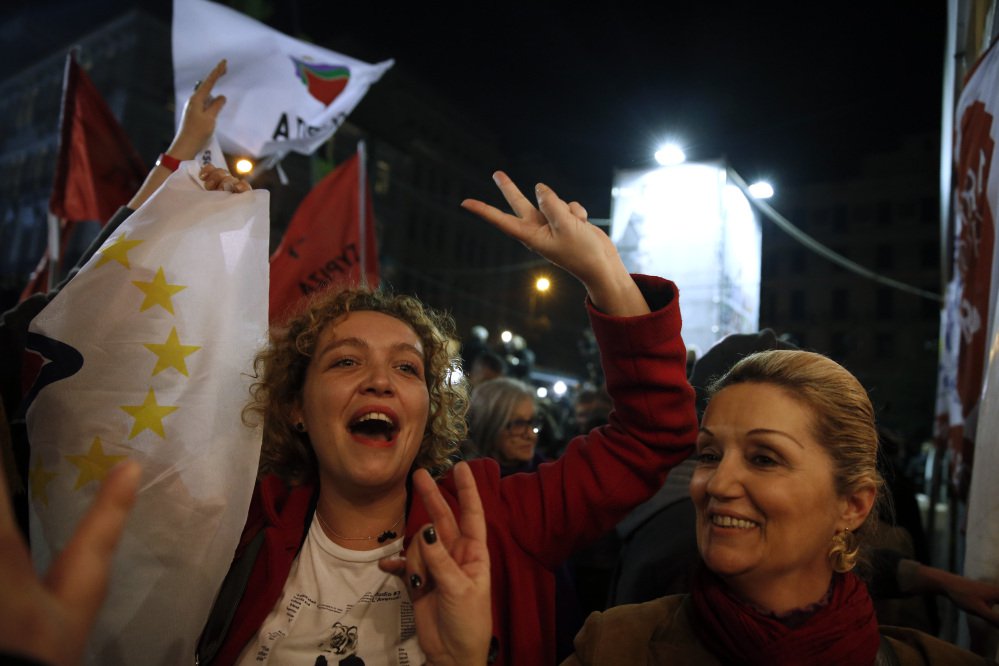
Greece’s Left-Wing Coalition Wins Majority
Last week in a historic election, the Greek people voted in the anti-austerity party of Syriza, led by Alexis Tsipiras winning a 149 seats of the 300 seat Parliament. In the previous 8 years, the Greek people have demonstrated massively, occupied government buildings and have gone on more than 30 general strikes. Now they’ve formed a party to take back power in government to effectuate a program that will call for cancellation of debt, nationalization of the banks, and expropriating closed factories. Will their attempt to alleviate much of the misery of the Greek population succeed? We’ll see.
Dan Georgakas:
- Austerity in Greece means 26 percent unemployment for at least 3 years, 60 percent unemployment for people under 30 which has caused 200 thousand college graduates to leave the country in the last 2 years.
- Greece had the lowest pensions in the EU.
- Wages which were the lowest in Europe were cut about a third.
- Prices in Greece are about the same in the EU elsewhere.
- 300 thousand businesses failed as of 2013.
- What austerity does, having taken away people’s money is raise the property tax and raise the gas and electric taxes.
- It’s a pretty desperate situation, food lines, there’s been a mass movement from the bottom.
- There are a lot of small left wing parties in Greece.
- What Syriza did was put together a coalition of left parties. That was very difficult to do because within the coalition there are Trotskyists, there are Euro-communists, environmentalists, anarcho-syndicalists and so getting to all those people into one room and agreeing on a program is not a very easy thing to do.
- But Syriza itself isn’t there for a traditional party. It is a coalition of parties that probably will transform in time perhaps into a coherent party.
- I would say that if anything characterizes the profile of Syriza its very anti-Stalinist. It wants to go from the base up and talks a lot about horizontalism.
- It’s quite a weak economy and say it will take decades to repair.
- In the minds of the leadership is capitalism and prosperity are incompatible.
- The steps they want to take are very modest, beginning with changing some of the cuts they made in the past, and beginning to deal with the corruption and tremendous waste of money.
- Same day he was inaugurated, he (Alexis Tsipras) went to Kaisariani where 300 Greeks were massacred by the Nazis as they were departing Athens. Most of the people massacred were communists or resistance fighters. Going there after being sworn as prime minister and laying a rose on the graves, he really served notice on the Germans that the days of us kowtowing and being bullied by you are really over and don’t you dare call us pigs anymore.
- People who contact me say that people are euphoric in Athens.
- We realize that the loans to Greece are really self serving. For instance, Goldman Sachs, arranged for Greece to enter the Eurozone in the first place by totally fraudulent cash arrangement.
- They loaned Greece money at a special rate so Greece could pay off its debt to look like it was solvent and then issued new bonds at even higher rates.
- pressproject.gr
Guest – Dan Georgakas, regular columnist for the National Herald, the leading Greek American weekly newspapero co-author of Detroit: I Do Mind Dying and coeditor of Solidarity Forever: An Oral History of the IWW. He was a frequent contributor to now defunct Journal of the Hellenic Diaspora and the Journal of Modern Hellenism. Dan has taught at NYU, CUNY, Van Arsdale Labor College, Columbia University and University of Oklahoma.
—————————————————————-
Please help support Law and Disorder by clicking on Fractured Atlas graphic. This radio show is now a sponsored project of Fractured Atlas, a non-profit arts service organization. Contributions for the charitable purposes of Law and Disorder must be made payable to Fractured Atlas only and are tax-deductible to the extent permitted by law. You can donate as little as 5.00 a month.
CIA Sponsored Terror, Civil Liberties, Climate Change, Criminalizing Dissent, Habeas Corpus, Human Rights, NSA Spying, Prison Industry, RFID, Surveillance, Targeting Muslims, Torture, War Resister
Podcast: Play in new window | Download
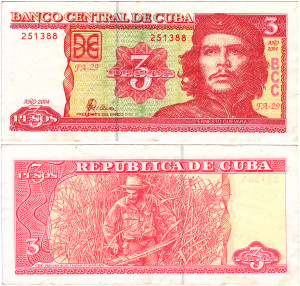
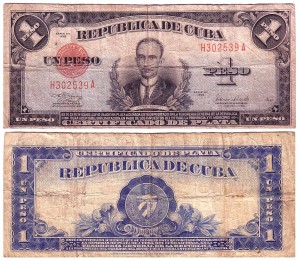
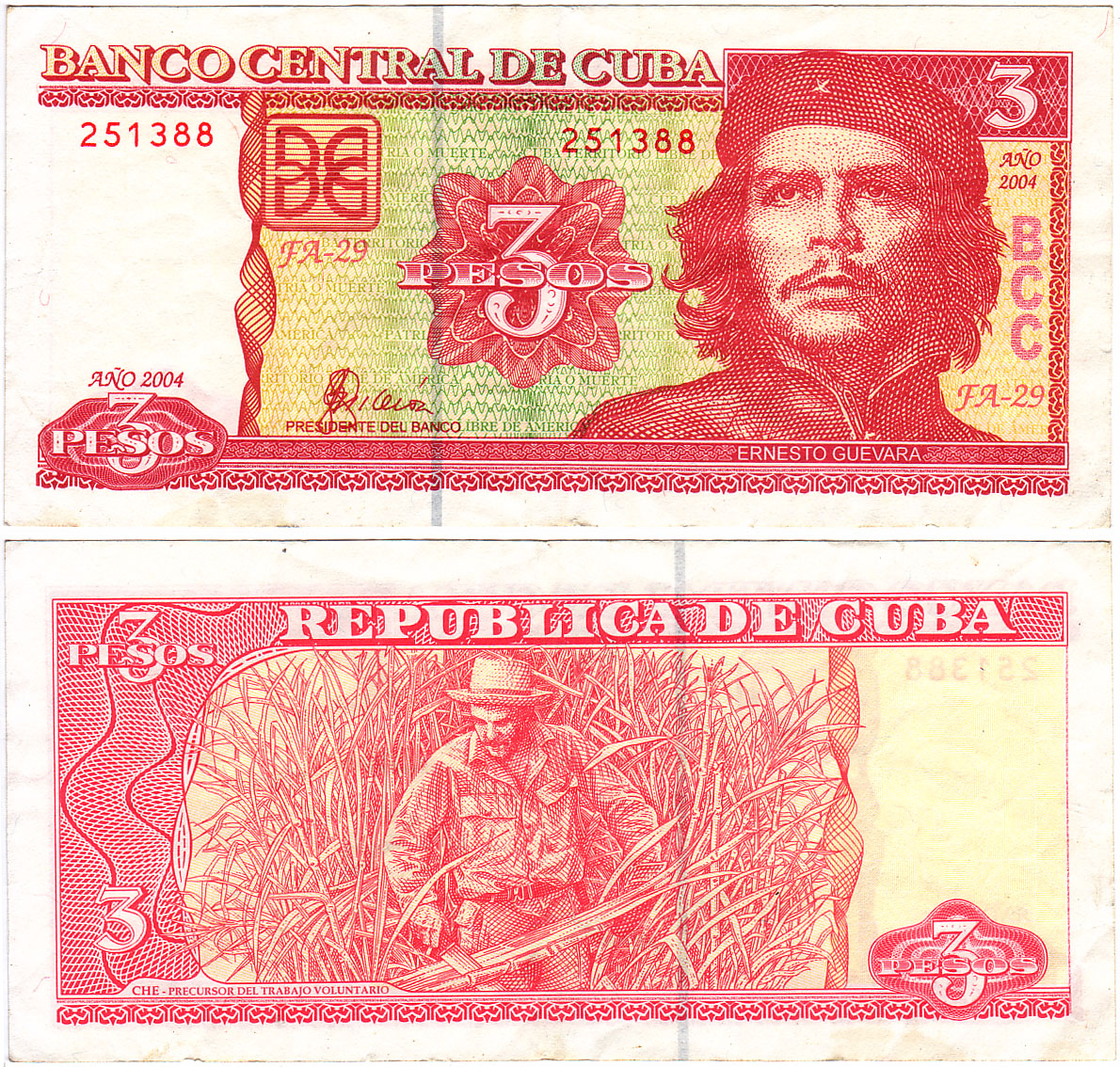
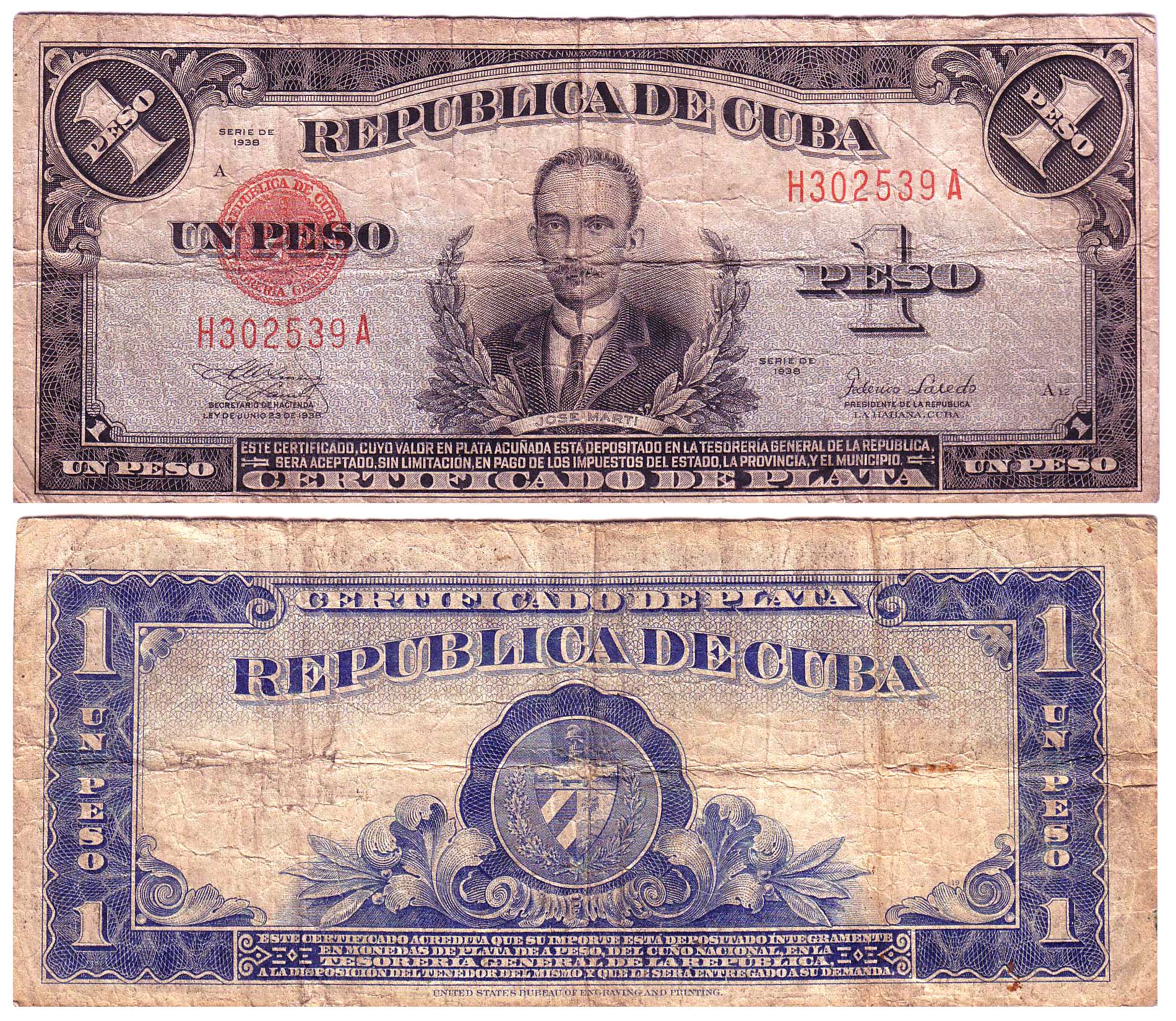
U.S. Cuban Foreign Policy Changes Strategy: Normalizing Relations
Last year, in a sudden reversal of policy, the United States released the remaining three of the Cuban Five who were imprisoned for arrested in the United States while investigating Cuban exile groups accused of terrorism. The release was part of a prisoner exchange announced on when President Barack Obama ordered the restoration of diplomatic relations with Cuba, that has been isolated by a trade embargo for 54 years.
Sandra Levinson:
- When you’ve lived through 10 or 11 presidents and you’ve seen how bad our policy can be, and also the disappointment that people like me felt, since Obama had been elected, that almost nothing had been done for improving travel for Cuban Americans.
- The point at which I cried was when he said he was going to open an embassy in Havana, because once you got over the fact, the 3 political prisoners were coming home, that was sheer joy to realize along with the Cubans, they were crying too. They said we’ve finally been recognized as a government.
- I think it will be great for the Cuban artists.
- By the second day the people were saying we have to make sure we keep our culture.
- We have to be sure we keep our country.
- Cuba needs help with its infrastructure, it doesn’t need McDonald’s
- We still have the Helms-Burton law. We still have the embargo. I think our next fight is to get rid of the Helms-Burton law because that has done so much to strengthen the embargo.
- I think the Cubans will attempt to slow the flow of people from the United States to what they can manage.
- As we all know the infrastructure for tourism is not sufficient to take care of everyone. I’m surprised they didn’t recognize sooner.
- Clearly its because of US interest that we are doing this. We are not doing this to finally be nice to the Cuban revolution.
- cubaupdate.org / cubanartspace.net
Guest – Sandra Levinson, President and Executive Director of the Center for Cuban Studies. She was one of the Center’s founders in 1972. In 1991 Levinson spearheaded a lawsuit against the U.S. Treasury Department which resulted in legalizing the importation of original Cuban art. She is currently directing works at the Cuban Art Space, which she founded in 1999, to properly house and archive the thousands of posters, photographs and artworks which the Center has collected in the past 42 years
——
Electronic Communications Surveillance
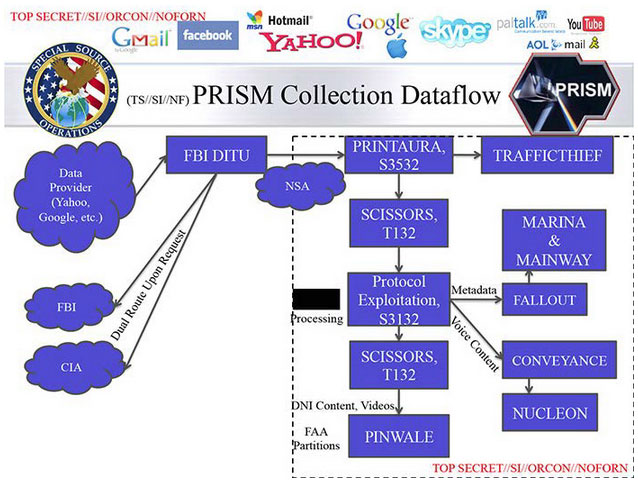
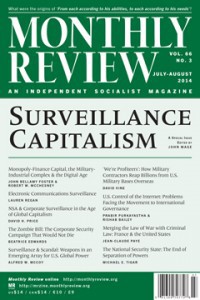
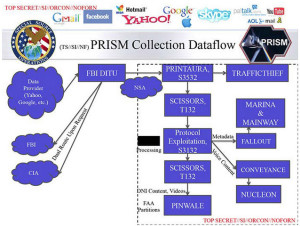
In the recent Monthly Review, there’s an article titled Electronics Communications Surveillance written by attorney Lauren Regan. The article enumerates the various laws, acts and court cases that have led up to collecting information on millions of citizens such as phone, internet, and email habits, credit card and bank records. Nearly all of our on line activity is subject to being surveilled by the state. Lauren breaks it down from Electronic Communications Privacy Act of 1986, an extension of the 1968 Federal Wiretap Act, the FISA Act and on to the USA Patriot Act in 2001. The article is grouped into 3 areas, wiretaps and “electronic eavesdropping,” stored messages, and pen registers and trap-and-trace devices.
Attorney Lauren Regan:
- The corporations that are engaged in gray intelligence use the term threat assessment.
- They look at activist communities even individuals and determine what level of threat they pose to the profit making components of their enterprise.
- I think its important that activists engage in their own threat assessment as well.
- In the documents (FOIA requests) we learned that the corporations themselves want to maintain clean hands. They don’t want to get caught spying on Mom and Pop holding a banner on a street corner.
- They devised this scheme where there is this security firm and public relations firm that kind of open up their own shop next door.
- They’re often former FBI agents for some of these big corporations and industries. They will collect the intelligence and its up to these PR firms to put it into these “terrorist bulletins.”
- For a long time we knew that corporations often hired by the government itself but also hired by big industry has been going through open source intelligence. So they’ve been monitoring our websites and social media and email lists and press releases and any other public documents they can get their hands on in their 8 hour paid day.
- They compile all this information into reports and then they sell it to police or other corporations or the government.
- They call them issue monitoring or trend analysis. In essence it is attempting to both legitimize and make profit of spying on political groups and political activists.
- In my experience its less important to focus on the name of the corporation because they’re so slippery and constantly changing their names.
- The animal rights movement has definitely been a significant target for this type of spying.
- We were working with a number of different organizations who were afraid. Who were thinking of stopping their campaigns, because they were concerned they were going to be put in prison, that they were going to be labeled terrorists.
- One of the campaigns out of Pennsylvania, consisted of teachers, doctors, people who were once a week going out on street corners and holding a banner opposing fracking and they found themselves in a terrorist bulletin.
- Especially when you’re talking about giant coal industries, and tar sands industries. These are gazillion dollar corporations. They’re multinational in scope. They’re working together within their industries which means they have more money and resources to put road blocks in front of regular public interest citizens.
- There are things that you can do to make life more difficult for those that wish to spy upon you.
- Thor and VPN are ways to use the internet with less ability to be tracked or surveyed.
- We represent activists for free and we coordinate legal teams around the country to insure that activists have high quality representation, when they choose to risk their liberty for a cause.
Guest – Lauren Regan, the founder and executive director of the Civil Liberties Defense Center (CLDC), where she serves as our staff attorney as well. Ms. Regan operates a public interest law firm, The Justice Law Group, specializing in constitutional law, civil rights, and criminal defense. She is a founding board member and past president of the Cascadia Wildlands. She also serves as a Lane County Teen Court judge, Oregon State Bar Leadership Fellow, National Lawyers Guild, Eugene co-chair, and volunteers hundreds of hours a year to various progressive causes.
—–
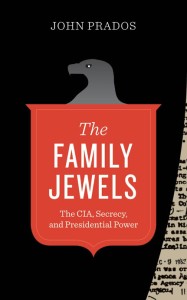
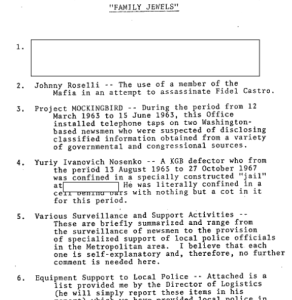
The Family Jewels: The CIA, Secrecy and Presidential Power
The surveillance and torture programs conducted by agents and contractors of the United States Central Intelligence Agency has a long sordid past. One of the first revelations of the CIA’s illegal activities released to the public was released in December 1974 by the New York Times. Details of surveillance, eavesdropping, detention and interrogation shocked readers. It was also became the foundation for deeper research by our next guest John Prados, a senior fellow of the National Security Archive in Washington, DC. He’s the author of the book The Family Jewels: The CIA, Secrecy and Presidential Power, where Prados recounts secret operations and how Vice President Richard Cheney played a leading role in intelligence abuses. He joins us today to talk about the Senate Select Committee on Intelligence Torture Report and the deeper connections based on his research.
John Prados:
- A semi-notorious document that was known as the family jewels – this was a record of CIA abuses of the 1950s, 60s, and 70s, when they were spying on American citizens. In fact the revelation was so explosive at that time it lead to multiple investigations of the CIA by the Church Committee, the Pike Committee.
- I think that the CIA has a preoccupation with image. The episode of the “family jewels” is typical because at the time the intelligence agency’s director was Michael Hayden. Hayden, simultaneous with the release of the document gave a speech taking credit for thinking of releasing the “family jewels” themselves.
- In my book The Family Jewels I have a couple of chapters that documents this kind of activity.
- We have been waiting 2 years for the appearance of this report.
- If you look at the website that’s maintained by former director Hayden, and former director Porter Goss and former director George Tenant, you will see that they posted on their website declassified CIA documents, much more lightly redacted that were released as long ago as last summer.
- These are the first documents I have seen containing direct Whitehouse action and activity on the torture issue.
- The best piece of this relates to early 2004, where there was the United Nations international day of support for victims of torture. Tenant sends a memo to Condi Rice and requests that the Whitehouse reconfirm Bush Administration support for the torture program.
- When that was not immediately forthcoming, they did this again.
- CIASavesLives.com
- These things were released as part of the argument that was made by former intelligence officials that torture was approved and legal.
- Not just damage control but the perpetrators, the agency officials responsible for this program,they know its not legal, they know its morally reprehensible. They’re operating under the fig leaf of this presidential authority and this mumbo jumbo Department of Justice legal memo network.
- If there’s a breath of questioning it all of a sudden, they’re not covered anymore. That’s the reason for the sensitivity and the reason why the CIA suddenly erupted in this effort to reconfirm these authorities.
- If you delete material from the documents in such a way that the public can’t tell that the material the CIA got was useful, or misleading everybody.
- The Senate report is so important because it shows on all of these cases, they took the ones twenty ones, the CIA most claims they got information for them. The report shows that in every one of those cases in fact they were getting information without resorting to the torture.
- I think we have a challenge. I think we need to work to make a wedge for accountability in this country. I do think Americans are shamed and embarrassed by this behavior. This is not what the United States is about.
Guest- John Prados is an author and analyst of national security based in Washington, DC. He is the author of more than twenty books and many articles on topics of current importance, presidential studies, international security; and diplomatic, intelligence, or military history. His current book is The Family Jewels: The CIA, Secrecy, and Presidential Power (University of Texas Press). Newly appearing in paperback are Islands of Destiny: The Solomons Campaign and the Eclipse of the Rising Sun. In addition Prados is author of titles on national security, the American presidency, and other subjects including Vietnam, the Soviet Union, and World War II. He is also a noted designer of boardgames on military strategy, intelligence, and diplomacy.
—————————————————————–
Please help support Law and Disorder by clicking on Fractured Atlas graphic (link is fixed). This radio show is now a sponsored project of Fractured Atlas, a non-profit arts service organization. Contributions for the charitable purposes of Law and Disorder must be made payable to Fractured Atlas only and are tax-deductible to the extent permitted by law. You can donate as little as 5.00 a month.
CIA Sponsored Terror, Civil Liberties, Criminalizing Dissent, Habeas Corpus, Human Rights, NSA Spying, Political Prisoner, Prison Industry, Surveillance, Targeting Muslims, Torture
Podcast: Play in new window | Download
Updates:
- Hosts Look Back At Several Legal Cases Of 2014
- Professor Steven Salaita Case Update
- Palestinians Join International Criminal Court After UN Rejection
- Michael Ratner: There Is An Immediate Jurisdiction In The ICC On The Occupied Territories
- Michael Ratner: Guantanamo Statistics 2015
- Michael Ratner: Afghanistan War Ends?
—–
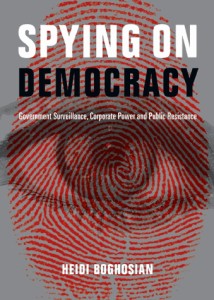
Dissent Under Surveillance: Heidi Boghosian
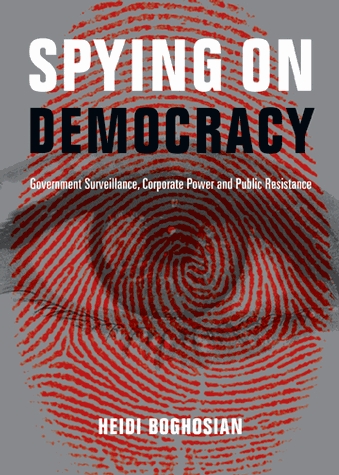
“Dissent Under Surveillance” was a panel held on November 7th at the Cooper Union in NY. It featured our own Heidi Boghosian, along with panelists Kevin Gosztola, Lisa Lynch, Ryan Shapiro and Carey Shenkman. Carey has been a guest on Law and Disorder. The panel was part of The Clandestine Reading Room, an exploration of leaked and declassified documents shedding light on government surveillance and secrecy in the US.
—-
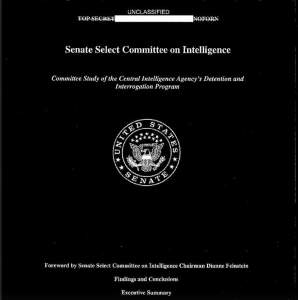
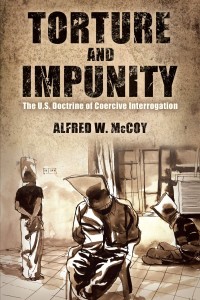
How To Read The Senate Report On CIA Torture
We welcome back author and professor of history at the University of Wisconsin, Al McCoy who recently published the article titled How to Read The Senate Report On CIA Torture. He calls it the single most important U.S. government document released to date in this still-young 21st century, yet its not without particular failings. McCoy distills the report into several potent areas. Among them, he points out how the report shows the “perpetrators as mendacious careerists willing to twist any truth to win a promotion or secure a lucrative contract.” Another is that the CIA has now been forced to admit that any link between torture and actionable intelligence is “unknowable.”
Professor Al McCoy:
- The report gives us a graphic record of just how brutal the CIA interrogations were.
- For years now we’ve been saying enhanced interrogation techniques or the acronym EIT’s or techniques which some consider to be torture, all kinds of twisted euphemisms. Well now, thanks to the senate report on the CIA on interrogation and incarceration everybody, citizen and senator alike, just say torture.
- Another aspect that emerges from the report is a graphic description inside the worst of the CIA managed prisons, the salt pit in Afghanistan. The cold and eternal darkness, the capricious brutality of the CIA interrogators. The absolute incompetence from the point of modern incarceration of the CIA junior prison managers who were sent out without training to run this prison.
- Through all of that the salt pit in Afghanistan can join that long lineage of state human cesspits of suffering.
- Another thing and I think the most important contribution of the senate report is to establish that all the CIA’s claims that brutal coercive interrogation somehow kept us safe, blocked terrorist plots, led us to Osama Bin Laden.
- No longer can the CIA claim the techniques work.
- There’s one little detail that doesn’t seem that important analytically that sticks out and becomes absolutely iconic.
- The iconic part of that report is the fact that the CIA paid 81 million dollars to 2 retired military psychologists who had no training, no language skills, no nothing. These 2 mediocrities are given 81 million dollars to run the CIA psychological and interrogation program.
- The Senate tells us there’s this female operative that was responsible for one of the biggest bungles of the war on terror. The seizure off the streets of a German national named el Mazri. He was rendered to the salt pit in Afghanistan and for 4 months he suffered the vicissitudes of that horrific prison, that iconic hell hole. Then the CIA figures out, oops. This is a complete mistake. This guy is not in any way a terrorist, and they literally dump him on a mountain top in Albania with a wad of cash and have a nice day.
- That operative then also claimed in testimony to the CIA inspector general in 2004 who was investigating the abuses inside the agency’s prisons that these techniques were working. The brutal interrogation, the water boarding of Khalid Sheik Mohammad the top al-Qaeda suspect had led the agency to another suspect named Majid Khan.
- It turned out that Majid Khan was already in CIA custody before the interrogation. Her statement was completely bogus. Who is this person?
- The CIA drew upon her primarily we believe to make her this fictional female CIA operative in Zero Dark Thirty this hero, whose almost obsessive pursuit of Osama Bin Laden and her participation in torture sessions led the Navy Seals to kill Osama Bin Laden in Pakistan.
- Her name is Alfreda Bikowski. She was the one who missed the signals on the 911 plot before it happened.
- She gave systematic false testimony as I described. She led the CIA on a false goose chase on a supposed terrorist cell in Montana and for all that she’s been promoted to the equivalent of a CIA rank as a one star general.
- In 2012, this civil servant had bought an 875 thousand dollar house in Virginia, a luxury residence.
- In short, instead of being reprimanded, demoted, punished for this cacophony of errors, the CIA operative had been rewarded.
- (the senate report) they don’t really explore the history, they don’t tell us where did this psychological torture come from.
- Where did this institutional reflex for torture come from? It comes from a 60 year history of the U.S. involvement of torture.
- The CIA was desperately afraid that the Soviets had somehow cracked the code of human consciousness.
- The sensory deprivation, the sensory disorientation leads to a very quick breakdown.
- Torture up to but not death was legal, and that’s what allowed the CIA to do all this.
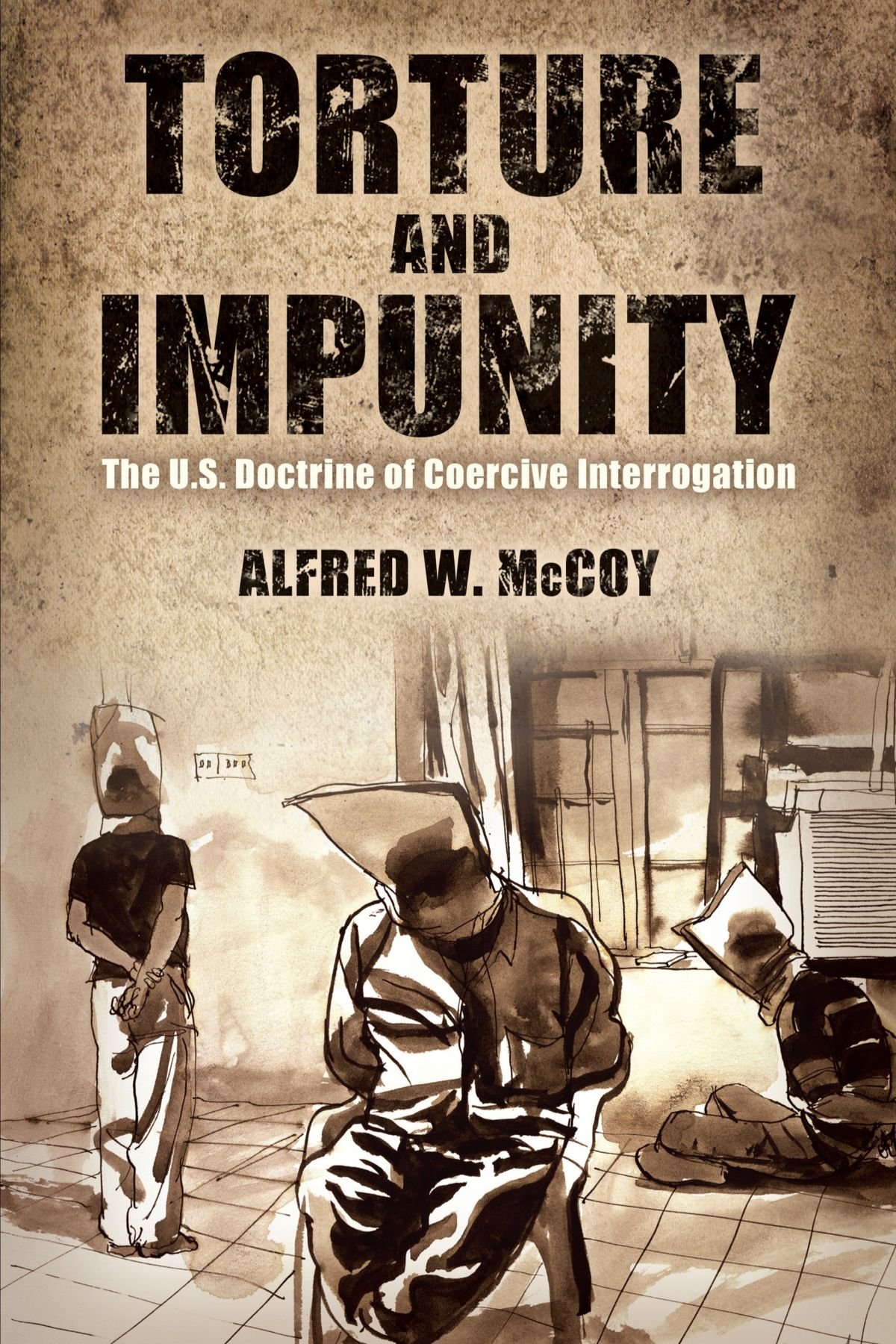
Guest – Professor Alfred McCoy is the author of two recent books on this subject—Torture and Impunity: The U.S. Doctrine of Coercive Interrogation (University of Wisconsin Press, 2012) and A Question of Torture: CIA Interrogation from the Cold War to the War on Terror. Welcome to Law and Disorder.
———————————————————-
Please help support Law and Disorder by clicking on Fractured Atlas graphic (link is fixed). This radio show is now a sponsored project of Fractured Atlas, a non-profit arts service organization. Contributions for the charitable purposes of Law and Disorder must be made payable to Fractured Atlas only and are tax-deductible to the extent permitted by law. You can donate as little as 5.00 a month.
CIA Sponsored Terror, Civil Liberties, Criminalizing Dissent, Habeas Corpus, Human Rights, Political Prisoner, Prison Industry, Surveillance, Targeting Muslims, Torture
Podcast: Play in new window | Download
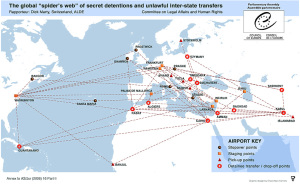
The Senate Intelligence Committee’s Report On CIA’s Detention & Interrogation
Attorney Michael Ratner:
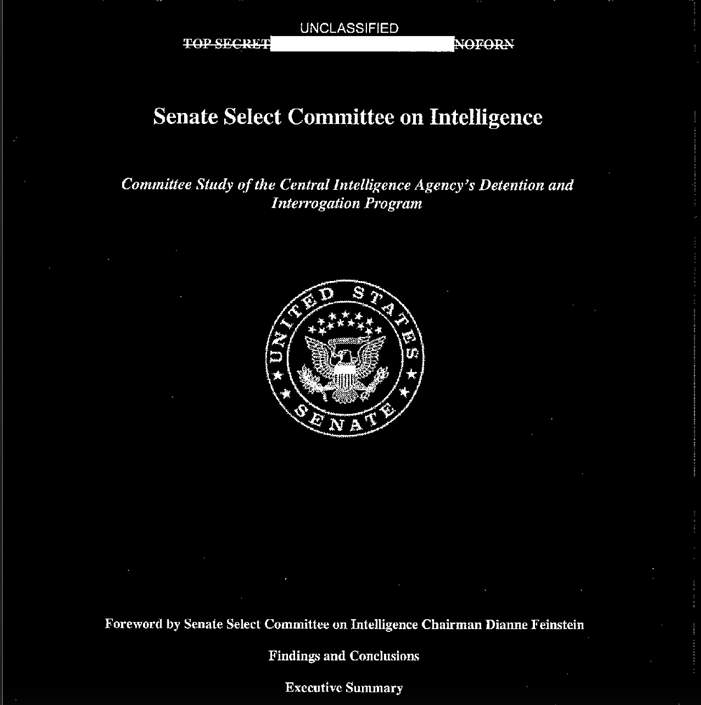
- The Senate Committee on Intelligence started the investigation in 2007 after 92 tapes of water-boarding were destroyed by the CIA.
- That’s where the investigation began. In 2009, the Senate Committee still controlled by the Democrats spent 4 years going through millions of documents at a high cost to try and come out with a report on the CIA’s role on what they called detention and interrogation program.
- After 4 years they came out with a 6,700 in 2012 and they decided only to release the executive summary.
- Obama himself actually supported having more and more redactions.
- The redactions are stupid. Everybody knows in my field knows that Cobalt refers to what’s called the salt pit in Afghanistan which is a CIA run detention facility north of Kabal, or torture facility.
- Even if lives were saved its flatly illegal. You can’t kill a millions civilians because you want to save some of your soldiers.
- In the report they said that the CIA said before 911 that torture doesn’t work, its not effective.
- What Marnia Lazreg said in her book about torture in Algeria – she said it wasn’t really about information and it was about a macho empire that was in decline.
- What are you saying here – except this is about torturing Muslims, its about empire, and its about telling the world – you fall into our hands, we’re going to torture you.
- What they did was on the highest levels of the CIA, they went to places like the New York Times and the Washington Post and they wanted to be identified as a high level official and they leaked the stories of what they were doing in a way that would give them credit for it.
- I’m not hopeless about prosecutions, maybe not here, but somewhere in the world these people will be held accountable.
- This is only talking about what the CIA did at 9 dark sites around the world. The point I want to make is that there was torture going on at other places.
- 700 people went through Guantanamo, that’s the Rumsfeld techniques. Torture at Abu Gharib, torture at other U.S. prisons.
- We’re talking about a very small subset of U.S. torture.
- CIA sited Israeli Supreme Court ruling to justify torture. The Israeli ruling is that you can’t use torture except where there’s no other available means to prevent harm to other people.
- There’s no such thing as a ticking time bomb scenario that allows you to use it (torture)
- Go to CCRJustice.org, sign the petition
Attorney Michael Smith:
- The lying was more than I thought. The brutality was more than I thought. The corruption was more than I thought.
- On the lying, the report says no lives were saved as consequence to this program. We knew about water boarding but we didn’t know about rectal feeding or rectal hydration, where they left one man with a prolapsed rectum which means its hanging out.
- We didn’t know about killing people by chaining them to the floor in a cold room and dousing them with water.
- This program was run by 2 amateur psychologists, who didn’t know anything about Arab culture, who didn’t know anything about interrogation.
- They set up a corporation and the government gave them 81 million of our dollars to run this thing from 2001 to 2007, if you do the numbers these guys probably made 5 million dollars a year, less expenses.
- This is the most violent country in the world. The CIA is the epitome of this. Torture is illegal under American law, under international law. People who do it should be prosecuted.
- People who authorize it should be prosecuted, and there’s no talk about that.
Attorney Heidi Boghosian:
- My number one take away is something we’ve been covering for years is that no actionable intelligence came out as a result of these heinous practices.
- What also offends me greatly is hearing George W. Bush’s response that anyone who buys into this report or gives in credence, is somehow unpatriotic which fits into the whole propaganda that we’ve been fed, that questioning anything the government does, is an offense or an affront.
- These companies are profiting from torture.
——–
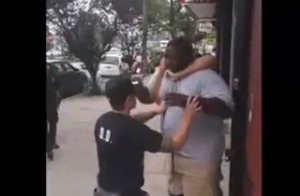
Eric Garner’s Public Defender Says Cops and Prosecutors “Are a Team in Every Case”
A recent Vanity Fair article titled Eric Garner’s Public Defender Says Cops and Prosecutors “Are a Team in Every Case” exposes the secrecy and conflicts of interest within investigations of police violence and how seven of the ten most-sued police officers of the 35,000-member New York Police Department happen to be in Staten Island. The article was written by attorneys Bina Ahmad, Joseph Doyle, and Michael Rooney public defenders in Staten Island with The Legal Aid Society. We also get a look inside grand jury proceedings and the often bias investigation from district attorney’s offices when looking into police wrongdoing. What steps are needed to structure fair court proceedings in these cases?
Attorney Bina Ahmad:
- Seven of the ten most-sued police officers of the 35,000-member New York Police Department happen to be in Staten Island.
- They still work there, they still testify in court, swear under oath, they’re telling the truth, they’re still violating our clients rights with impunity left and right, commit violent acts against them.
- The disparate treatment, of not only of the way our clients of color are treated, in a much more brutal way, but also in the way they’re charged and the plea offers that they’re given is very stark and very discriminatory in my mind.
- Many of us here at Legal Aid and other criminal defense attorneys around the city . . . we try to get the personnel records of officers who have been accused of brutality or violating people’s Constitutional rights, and (see) what they’ve been disciplined for within the NYPD.
- Abuses include – strip searching people on the street, full cavity search for people on routine stops, brutalizing people for not complying with a simple order.
- A few colleagues of mine had represented him (Eric Garner) in the past. Attorney Joseph Doyle was working to take a case to trial for him. A lot of people knew Eric Garner, and they called him the “gentle giant.” A large man, but known to be gentle and sweet, father of six.
- When the news came out that he was killed, it was incredibly difficult for us. Not only for us but for our clients.
- To task a local D.A’s office to prosecute one of their own, a local member of the local police department, particularly in such a small borough, you’re expecting them to prosecute a member of their own member of their team.
- Every judge knows they have to recuse themselves from a case if they have a relationship with any of the parties involved.
- With the D.A. they don’t have that obligation. They work on cases together. They prep them for testifying at trial to be a prosecution witness.
- Choke holds were banned as a practice a while ago as part of police protocol. The fact that a police used one was a violation of police protocol.
- We are not allowed in the grand jury room for any moment except for if your client chooses to testify. If our client chooses to testify, we can’t protect them at all.
- They take the stand, they’re cross examined by the D.A. Everything they say can and will be used against them later.
- The D.A. control everything, the narrative, what evidence is shown, what witness testifies, what questions the witness is asked.
- It would be up to the grand jury to feel empowered to ask more questions.
- Any eye witness that would come in as a prosecution witness, where they’re supposed to be getting an indictment on a cop. They’ll be testifying for the prosecution but what we’ve seen in these minutes is the way the district attorney these prosecution witnesses – they’re acting like they’re cross examining them.
- They’re actually trying to break down their testimony or poke holes in their testimony.
- They suddenly become a defense attorney when the cop is on the line.
Guest – Attorney Bina Ahmad, staff attorney in the criminal defense practice department of the Legal Aid Society and National Vice President of the National Lawyers Guild.
——–
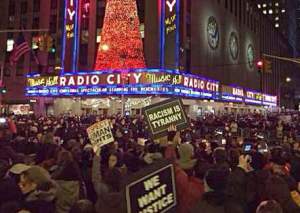
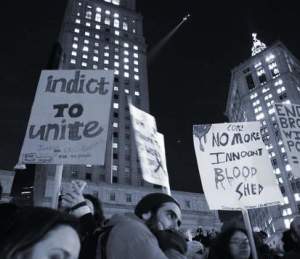
Foley Square Demonstration: Voices From The Protest
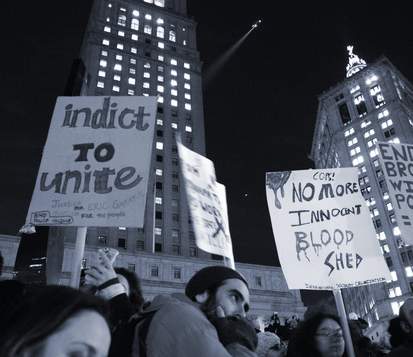
We hear some of the voices of demonstrators assembling at Foley Square during the first protest against the grand jury decision failing to indict those officers responsible for choking Eric Garner to death.
————————————————————————————————-
Please help support Law and Disorder by clicking on Fractured Atlas graphic (link is fixed). This radio show is now a sponsored project of Fractured Atlas, a non-profit arts service organization. Contributions for the charitable purposes of Law and Disorder must be made payable to Fractured Atlas only and are tax-deductible to the extent permitted by law. You can donate as little as 5.00 a month.