Civil Liberties, Criminalizing Dissent, FBI Intrusion, Guantanamo, Habeas Corpus, Human Rights, Political Prisoner, Surveillance, Targeting Muslims, Torture, Truth to Power
Podcast: Play in new window | Download
Updates:
————-
In Memory:
The remarkable and heroic progressive lawyer Len Weinglass died on March 23. Among his cases were the Chicago 8, the Ellsberg case and the Cuban 5. Listen to the 4 interviews Law and Disorder did with him over the last 4 years. He was our close comrade and will be missed by his friends and all those seeking a better world. – Michael Ratner.
————-
Death Penalty Abolished In Illinois
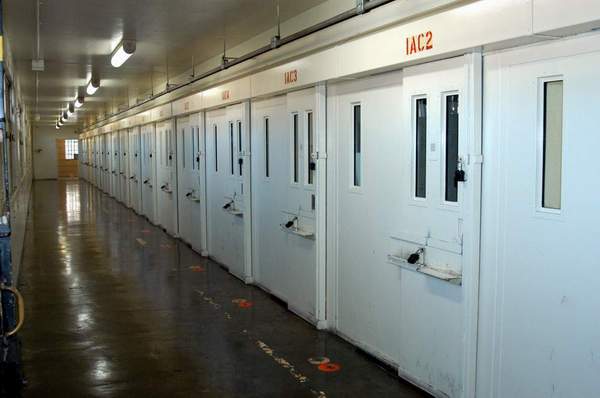
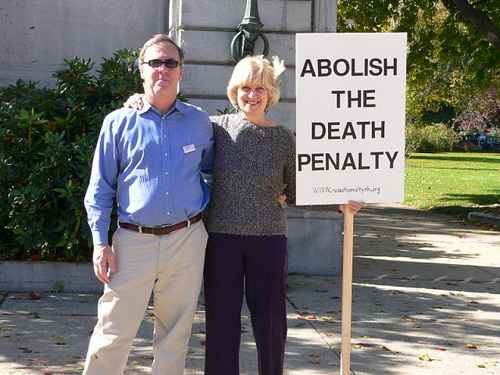
Last week, Governor Pat Quinn of Illinois signed into law SB3539, which repeals the death penalty in that state. This development is yet another in what appears to be signal a trend of moving away from capital punishment. Early last year we covered the American Law Institute’s declaration that the death penalty in this country has been a failure. Listeners may recall that the A.L.I. created the intellectual framework and justification for the current capital justice system. The movement away from this most final form of punishment seems to be due in large part to the public’s increased awareness about its inherent flaws such as great racial disparity on who gets executed and for what reason. Publicity around exonerations stemming from DNA evidence has also added to general awareness of procedural errors in the system.
Attorney Charles Hoffman:
- In 2003, Governor Ryan cleared out death row, he granted to the 167 men and women on death row and pardoned four.
- that prompted the legislature to pass a modicum of reform. The governor afterward assembled a commission that recommended 85 reforms.
- The legislature passed five or six. The legislature also created a death penalty reform study commission.
- One of the reforms was that all confessions in police custody had to be videotaped in murder cases.
- No matter what safeguards you implement, there’s no system that can prevent the conviction and condemning of an innocent person.
- Prosecutors around the state were asking for the death penalty in cases that weren’t death penalty prosecutions just so the state would bear the costs rather than the county.
- The legislature is cash-strapped and we were wasting millions and millions of dollars prosecuting capital cases when here in Illinois we have the very strict alternative of life without parole.
- Final Report: Death Penalty Legislative Study Committee. Illinois Death Penalty Reform Study Commission PDF
- After Governor Ryan cleared out death row in 2003, Illinois put 17 men on death row. 2 had committed suicide, which left 15 on death row when Governor Quinn signed the abolition bill and also granted sentence commutation to all 15. He commuted their death sentences to life without parole.
- As the problems with the death penalty have been exposed, the arbitrariness, the racism, as mistakes have gone into public consciousness, juries have been rejecting the death penalty.
- Illinois has become the 16th state to abolish the death penalty, following on the heels of New Mexico, New Jersey and New York. The federal government and the military do have it.
- The “deathbelt” in this country is in the South and Texas, and is just a legacy of slavery in this country.
- Most executions occur in former slave states. One obvious flaw of the death penalty, studies have shown the death penalty is most likely to be inflicted in a case when the victim is white and the odds go up even further if the defendant is black or Hispanic.
- Its very gratifying to get rid of this barbaric practice. I represented 35 men and women who were sentenced to death. I do the direct appeals. I’ve had one client executed, I’ve had one client go home.
- Some states have made illegal purchases of the drug. (lethal injection drug shortage)
- Some states are using just one drug, a massive overdose of a barbiturate.
- Life without parole is very draconian, it means there’s no prospect for rehabilitation.
Guest – Assistant Defender in the Supreme Court Unit at the Office of the State Appellate Defender, and member of the board of directors of the Illinois Coalition to Abolish the Death Penalty.
———

Communities Battle Against Gas Drilling To Protect Water, Way of Life
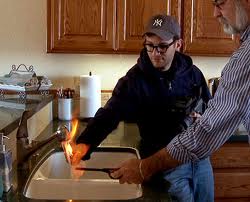
Environmental community groups from New York, New Jersey and Pennsylvania continue to band together and try to protect the Marcellus Shale watershed from natural gas drilling and hydraulic fracturing. The EPA has stated it will investigate how hydraulic fracturing impacts water supplies and water quality in New York State yet the drilling moratorium ends this June. The shale is believed to hold some of the world’s largest deposits of natural gas, and those that want to mine this resource say it will reduce dependence on foreign oil and boost the economy. However, many have shown this statement to be false as the natural gas from the United States is being sold to foreign countries such as Norway and France.
Ninety percent of the New York City’s drinking water comes from ground zero of where various oil companies want to drill into the Marcelle Shale for natural gas. Environmental and public health costs are enormous for each well. Every time a well is drilled, the companies use an estimate of 5 to 9 million gallons of water. Each time a well is fractured, it’s another 5-9 million gallons of water, a well can be fractured multiple times. Up to 275 different toxic chemicals are used in the process and after the well is drilled, there are millions of gallons of industrial waste, it’s essentially radioactive water. 40-70 percent of this water stays underground. The hydro-fracturing process has no federal regulating body. Some of the companies involved are Halliburton, Chesapeake Energy, Fortuna, and Talisman Hess.
Tracy Carluccio:
- My organization has been working on the issue for a few years to try to keep gas drilling from moving ahead.
- Right now there is a moratorium in place on the Delaware River Watershed. It took a year and a half to get that into place. Regulatory measures that are in place now for gas drilling are not doing their job.
- The bottom line is we’re facing an industry that wants to move ahead.
- The industry is very strong. There are international concerns.
- They’re backed by the government in many ways, they enjoy subsidies.
- This industry is going to move like heck to drill everyplace gas can be gotten.
- The Delaware River Watershed has its origins in the Catskill region of New York State.
- The east and west branches come together in Hancock, New York.
- 330 miles from Hancock to the Atlantic Ocean.
- The watershed is 13 thousand square miles and includes four states. It’s overseen by an agency that was born out of water wars.
- Back in the 1950s, all the states were suing each other about who would get water for development.
- In 1961, there was a Supreme Court decree and compact and President Kennedy signed a document that began the Delaware River Basin Commission. As a result of this compact, a large part of the Delaware River goes to New York City.
- There have been regulations federally (Represented by the Army Corp of Engineers) and regionally laid out by the Delaware River Basin Commission
- New York moratorium on gas drilling is tied to late June when there is supposed to be a new draft of the Draft Supplemental Generic Environmental Impact Statement on high volume hydraulic fracturing.
- In order to crack the rock to get at the gas is intrinsically polluting and there’s no way out of that.
- The question of how to stop it is tied to the scientific analysis free from bias.
- Without that bottom up movement, without that cry for government regulators, the industry would be moving ahead exactly as planned.
Guest – Tracy Carluccio, deputy director with Delaware Riverkeeper Network. Delaware Riverkeeper – a watershed wide advocacy program, Delaware Riverkeeper Network takes a strong stance on regional and local issues that threaten water quality and the ecosystems of the Delaware River and its watershed. In fact, Delaware Riverkeeper Network is the only advocacy organization working throughout the entire Delaware River Watershed.
—–
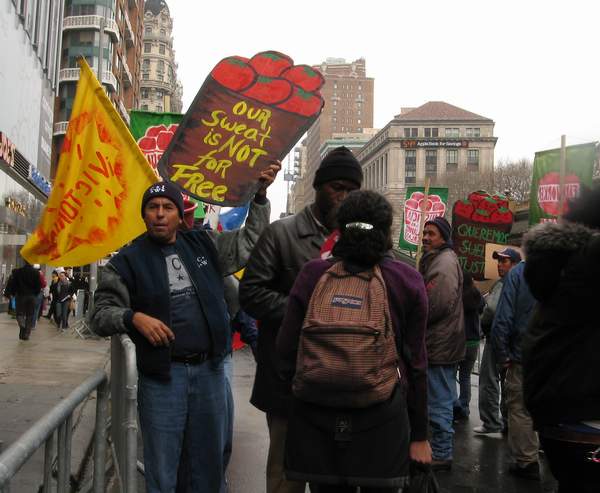
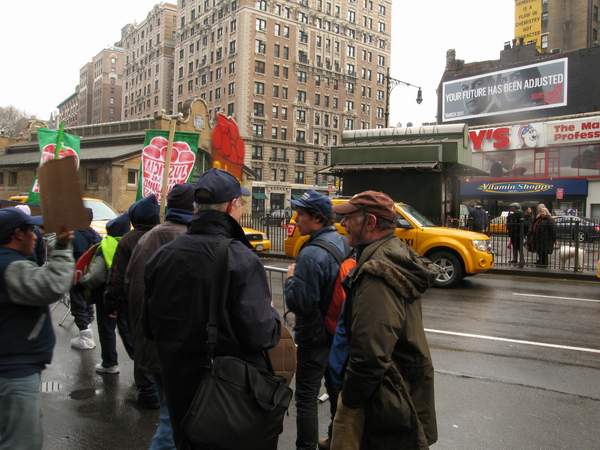
Farmworkers, Consumers Protest Trader Joe’s Demanding Fair Labor Standards for Farmworkers
Late last month, a busload of farm workers from Florida joined members of the NYC Community Farm worker Alliance at Trader Joe’s Upper West Side store. Men and women who pick tomatoes under very harsh conditions demand to be treated more humanely and with improved farm labor wages. Our own Michael Ratner was at the demonstration, we hear some of the interviews.
———————————————————————-
Civil Liberties, Criminalizing Dissent, FBI Intrusion, Guantanamo, Habeas Corpus, Human Rights, Prison Industry, Supreme Court, Targeting Muslims, Torture, Truth to Power
Podcast: Play in new window | Download
Updates:
—
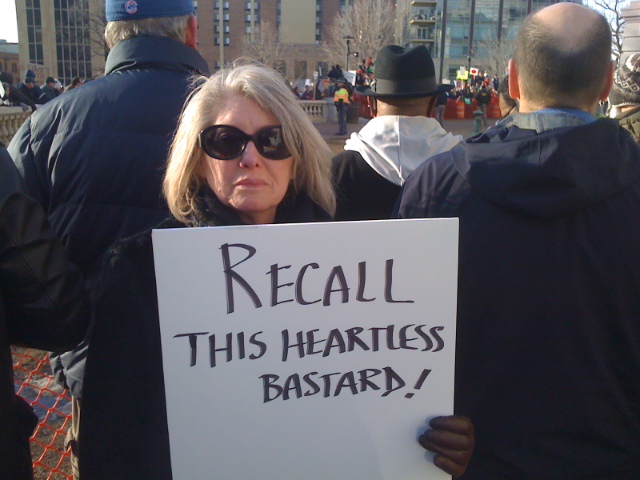

Wisconsin Labor Demonstrations Update
Organized labor is in the cross-hairs to be taken apart by the American elite. Last month, 10 thousand people continued a multi- day occupation of the Wisconsin State Capitol building while tens of thousands chanted outside. Meanwhile the country is gripped by the drama unfolding in Wisconsin and it has inspired unions in other states to move in solidarity. Among those states are Montana, Indiana, Ohio, Michigan, Pennsylvania and New Jersey. Listeners may remember that Wisconsin trade unions have already conceded to wage and benefit cuts. Now the state is voting to repeal Section 11170, the Public Employee Bargaining Chapter. Update: Wisconsin GOP Allows State To Fire Employees For Strikes, Walkouts
Attorney Lester Pines:
- Governor Walker is clearly a stocking horse for the far right wing of the Republican Party.
- I’m not surprised at his behavior, he behaved this way as a Milwaukee County executive.
- I told people he was going to try to repeal section 11170 which is the Public Employee Bargaining Chapter
- What’s at stake is an attempt by the governor and the legislature to strike at the heart of the Wisconsin tradition of organized labor.
- Public employee bargaining has been in Wisconsin for 50 years. This is an attempt to tear apart generations of how Wisconsin operated.
- On a federal level, this is an attempt to wipe away outside groups that democratic and progressive candidates.
- Wisconsin has a bi-annual budget. The legislation is part of budget repair bill. In that legislation is a bill to eliminate all collective bargaining for all municipal and school district employees as well as for state employees.
- There will be no bargaining if this bill passes. The only thing that can be bargained with is wages.
- The bill also imposes a cap on wages. These are designed to essentially make it impossible for public employee unions to function in any meaningful way.
- Scott Walker didn’t talk about what he would actually do.
- If we look at the mass demonstrations in Madison. These are the biggest demonstrations I’ve ever seen here.
- Impeachment is impossible because Republicans control the legislature and Senate, however he can be recalled.
- The Democrats can’t be arrested in a criminal sense,
- Governor Scott Walker has reignited the progressive movement in Wisconsin.
- Until you get these Republicans out of office they’re going to do a lot of damage. They’re nihilists. They care nothing for public services. They care only for what their corporate puppeteers want them to do.
- It looks like this whole anti-public union movement was actually planned out amongst all these new governors.
Guest – Labor attorney Lester Pines, in practice since 1975, he leads the Litigation area, concentrating in civil trials, criminal defense, labor & employment, and business. A Fellow in the American College of Trial Lawyers, Mr. Pines is a highly respected civil and criminal litigator who has appeared in courts throughout Wisconsin and litigated federal matters in Wisconsin, Illinois, Iowa, Ohio and New York.
————————–
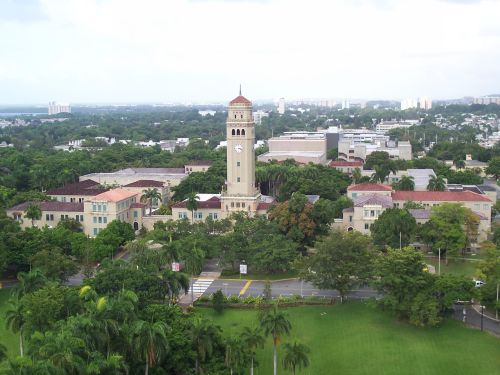
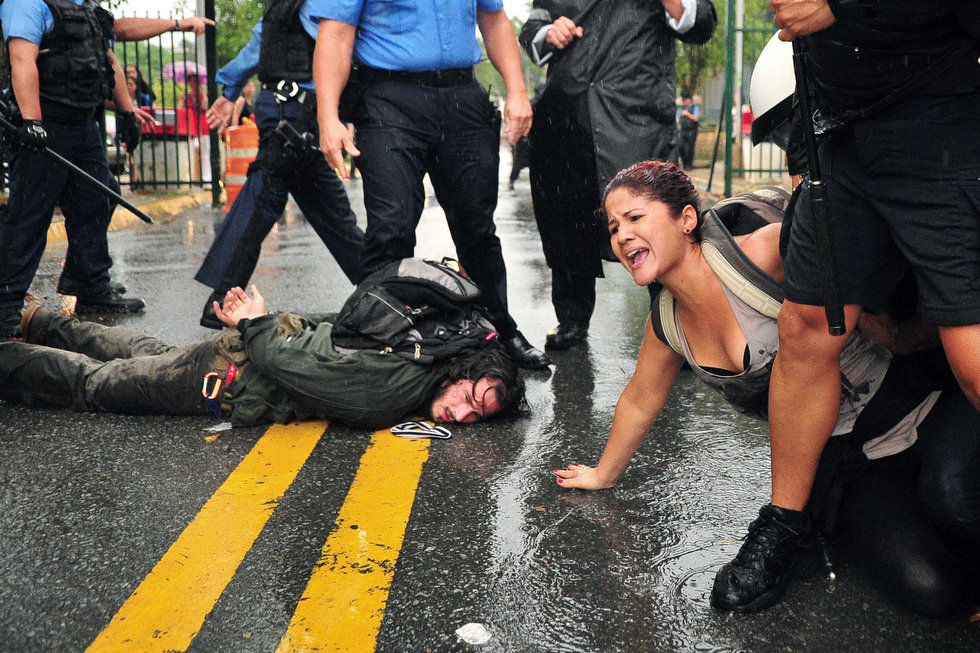
Human Rights Crisis Continues In Puerto Rico
More than a year ago nearly 100 thousand people took to the streets of San Juan, Puerto Rico to protest the lay off of about 17 thousand public employees. The demonstration shut down all state-owned enterprises including the island’s schools and colleges. Two days before that strike the governor passed a bill aimed at dismantling the Bar Association. Protesters were warned that if they stopped commerce, particularly the docks and airports, that action would be sanctionable to federal law. Now, as human rights violations continue, as students and faculty demonstrate against dismantling of progressive curriculum and tuition hikes. ACLU of Puerto Rico, “Human Rights Crisis in Puerto Rico: First Amendment Under Siege.” Law and Disorder Interview with Judy Berkan October 2009
Attorney Judy Berkan:
- Wholesale attack on institutions of Puerto Rican society where any dissent could be lodged.
- The Puerto Rican Bar Association, a real forum for those without a voice. Attacks have come to the Bar Association, elimination of mandatory Bar membership and imposed draconian restrictions upon the Bar Association. They took away a great deal of our funding.
- The president of the Puerto Rican Bar Association was jailed for speaking out against a lawsuit that could take away life insurance from poor lawyers.
- There’s a one month prohibition on leafleting and expression in the University of Puerto Rico.
- The closing of the legislative chambers. Right now there is a US Department of Justice investigation and talk of a trusteeship of the police department here.
- The use of the tactical operations of the police to repress dissent has been intensified.
- All of our public spaces are being closed off to legitimate dissent, while people engaged in peaceful dissent are being attacked.
- Austerity: Part of the remedy of the economic crisis there was an increase in tuition of 800.00. But much more at stake.
- More than that there is question of the vision the University of Puerto Rico will take in the future.
- The emphasis appears to be on privatization as it is throughout the government. We been suffering these programs since 2009.
- We were the guinea pigs. There’s more violence here, if we occupied the state house here, we would’ve been met with pepper spray, gas and beatings as we were when we attempted to demonstrate outside the state house last June.
- The economic programs are really the model that’s being used by Republican governors in the US
- The University situation is really wallowing in the wind without a real solution.
- The Bar Association and their presence is very crucial to public debate in Puerto Rico.
- I think people are getting tired, we do have 2 more years left of this administration.
- The police department is still in the hands of a former FBI agent who has openly encouraged violence against protesters. We have a raging crime rate.
- What’s distressing for all of us here who care about these matters is the media black out in the United States.
- Are we training people to be managers at McDonald’s or are we training people to think about the future of Puerto Rico?
Guest – Attorney Judith Berkan, is a partner in the San Juan law firm of Berkan/Mendez. She specializes in government misconduct litigation and employment discrimination cases. Berkan worked as an attorney in New Haven, Connecticut before going to Puerto Rico as the staff attorney for the Puerto Rico Legal Project of the National Lawyers Guild, now the Puerto Rico Civil Rights Institute. For twenty-seven years, she has been teaching, primarily in the Constitutional Law area, at the Inter American University Law School in San Juan, Puerto Rico.
A frequent speaker and author of many articles on civil rights issues, she was the President of the Human Rights Commission of the Puerto Rico Bar Association in the mid-1990?s and a member of the Commonwealth Supreme Court’s task force on gender discrimination.
————————–

Left Forum 2011
The 2011 Left Forum convenes this Spring, March the 18 to the 20th. This is the largest annual conference of a broad spectrum of left and progressive intellectuals, activists, academics, organizations and the interested public. Conference participants come together to engage a wide range of critical perspectives on the world, to discuss differences, commonalities, and alternatives to current predicaments, and to share ideas for understanding and transforming the world.
Guest – Stanley Aronowitz Distinguished Professor of Sociology at CUNY Graduate Center, where he is Director of The Center for the Study of Culture, Technology and Work. He has taught at Staten Island Community College, University of California-Irvine, University of Paris, Columbia University, and University of Wisconsin.
——————————————————————————————–
Civil Liberties, Criminalizing Dissent, FBI Intrusion, Gaza, Human Rights, Surveillance, Targeting Muslims
Podcast: Play in new window | Download
Updates:
—-
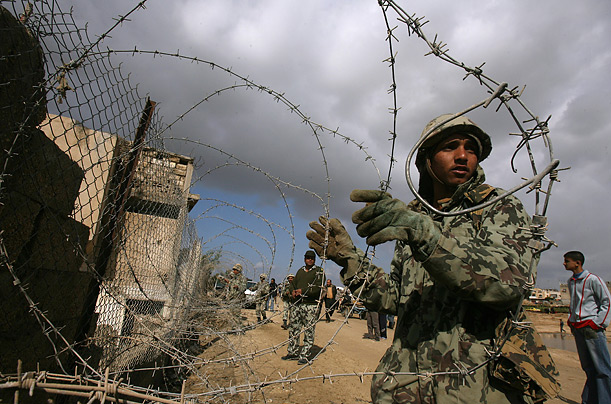
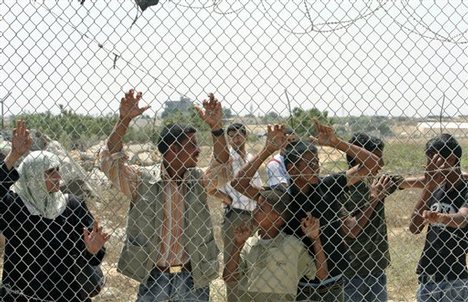
Middle East Protests – Israel / Palestine
Uprisings have continued to sweep through the middle east from Tunisia, Egypt, Libya, Bahrain, Yemen, Iran, Iraq and China. Economic hardships and desperate living conditions are partly the cause for some of the mass protests. In one article describing the Wisconsin protests, the journalist wrote, there were many voices this last month that raised the cry, “We are all Egyptians!”
Governments are said to be scrambling to squelch popular dissent. How will these protests begin to reshape countries in the middle east and and what government structures are standing by to replace decadent tyrannies and corrupt monarchies? How are Palestinians in Gaza and the West Bank responding to the massive dissent in nearby Arab countries?
Ali Abunimah:
- The events over the past weeks have been historic and we still don’t know how they’re all going to play out.
- The aspirations of Tunisians, Egyptians, Libyans, Jordanians, Palestinians are very clear.
- What remains to be seen is if they succeed in completing the revolutions. There is a strong counter-revolutionary push, not just from old regime elements but also from the United States.
- The mass uprising was sudden, but its important to know that there were Egyptian activists risking their lives for many many years to lay the ground for the uprising.
- The upper echelons of the Army are fully implicated in the old regime.
- You have a parade of Americans going to Egypt trying to minimize any shift in the region away from the Israeli-American axis and more into an independent orbit.
- The only guarantee is the continued mobilization of Egyptian people, of Egyptian workers.
- One of the myths in the American media is that this uprising is entirely about internal domestic issues.
- The Rafah crossing into Palestine needs to be open permanently, the situation at the border normalized.
- Egypt’s revolution and Israel: “Bad for the Jews” Ilan Pappe, The Electronic Intifada, 14 February 2011
- The view from Israel is that if they indeed succeed, the Tunisian and Egyptian revolutions are very bad. They make the Israeli occupation and apartheid policies in Palestine look like the acts of a typical “Arab” regime.
- The war in Gaza probably could not have been carried out without Egyptian complicity.
- In Palestine, the complete death of the peace process. The Palestine Papers – revealed by Al Jazeera.
- You can’t have functioning democracy and normal politics under Israel’s occupation.
- Your rights are not given to you from above, you have to fight for them.
Guest – Ali Abunimah, a Palestinian American journalist and author of One Country, A Bold Proposal to End the Israeli-Palestinian Impasse and a co-founder of The Electronic Intifada, a not-for-profit, independent online publication about the Israeli-Palestinian Conflict. Born in Washington D.C., he spent his early years in the United Kingdom and Belgium before returning to the United States to attend college.
—–
Cracks In The Neo-Liberal Empire
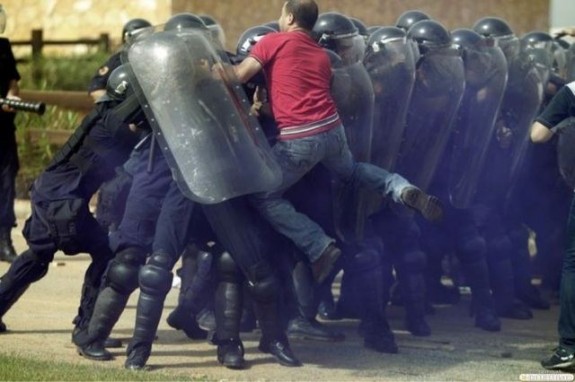
Political unrest in North Africa continue to ripple through the Middle East with some of the biggest anti-government demonstration yet in Bahrain. Meanwhile, the protests in Libya have turned deadly as the regime’s military has killed hundreds of demonstrators. New York Professor of Middle Eastern and Islamic Studies and History Zachary Lockman joins us with an analysis on the mass protests. In Egypt, Lockman says the old political parties in Egypt have no credibility.
Professor Zachary Lockman:
- Egypt: There were huge labor strikes going back to 2008. One of the groups that launched on January 25, called itself the April 6 youth movement – called itself that because there was supposed to be a big general strike of textile workers in 2008.
- The tremendous demand from Egyptians which help fuel the uprising, for some kind of change to the neo-liberal economic policies that Mubarak regime implemented 20 years ago.
- Egypt back in the 50s and 60s under the Nassir government carried through a series of social reforms.
- The largest estates held by the largest land owners were broken up, and millions of landless peasants even if they didn’t get land, they could farm some land and have reasonable security.
- Those kinds of things were rolled back in the 1990s under pressure from the IMF and the World Bank and with the approval of US government.
- Which means these farmers were kicked off the land in large number and ended up having to move to the cities in search of work for meager wages.
- Much of the public sector was privatized at fire sale prices to cronies of Mubarak.
- This is an opportunity when millions of Egyptian workers see an opportunity to create their own independent trade union movement. One doesn’t want to downplay the heroism of the young people who took to the streets on January 25.
- Mubarak was told to go by the generals who were told to preserve as much of the regime as possible in the face of this popular uprising. The generals now running Egypt are products of the Mubarak regime. The danger is that we’ll have the Mubarak regime without Mubarak.
- There is a new independent federation trade union being established in different industries. (Egypt)
- If there is something that approaches a more representative, democratic government, that government will be less likely to take orders from Washington in the way that Mubarak was very happy to.
- We’ve been waiting for something like this for decades, and in Egypt’s case for 30 years.
- It opens up dramatic new possibilities on a world scale. That boogieman of Islamic threat used to justify autocratic regimes which has been used across the region, is still there but as we’ve seen in Egypt and elsewhere, it’s time to put it aside.
- Since the 1970s, Saudi Arabia which has been on the defensive of more nationalist Pan Arab forces asserted it’s influence to buy friends and intimidate enemies and has been the bulwark of this conservative autocratic origin in the region.
Guest – Professor Zachary Lockman, New York Professor of Middle Eastern and Islamic Studies and History. He is the author of many books including Contending Visions of the Middle East: The History and Politics of Orientalism and “Explorations in the Field: Lost Voices and Emerging Practices in Egypt, 1882-1914.”Background: My main research and teaching field is the socioeconomic, cultural and political history of the modern Middle East, particularly the Mashriq. Under the influence of the “new social history” and “history from below” movements of the 1960s and 1970s, I did my doctoral dissertation on the emergence and evolution of a working class and labor movement in Egypt from the late nineteenth century until the Second World War; it was published in 1987 in a book co-authored with Joel Beinin. Harvard University, Ph. D., 1983.
———————————————————
Civil Liberties, Human Rights, Targeting Muslims, Truth to Power, War Resister
Podcast: Play in new window | Download
Mexico’s Revolution Then and Now
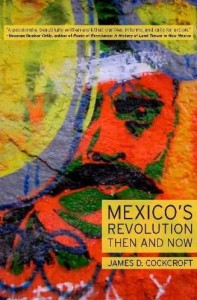
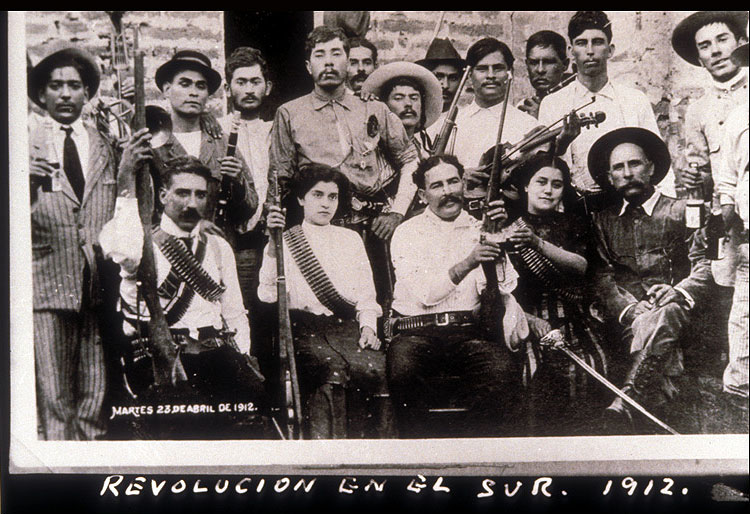
Mexico’s Revolution Then and Now is the title of Jim Cockcroft’s new book. It’s described as the perfect introductory text to the subject, providing readers the historic context within which the Mexican revolution occurred, how the process played out in the past ten decades and where it is today among Mexico’s workers. Jim examines the tensions between the rulers and the ruled inside the country while also exploring tensions with the United States. The prospect of Mexico’s disenfranchised rising up is kept alive and we discuss those possibilities with the author today. A historian and activist, Jim has written 45 books on Latin America. He’s a professor at the State University of New York and is a member of the International Committee for the Freedom of the Cuban Five.
Dr James D Cockcroft:
- You should understand Michael, that Mexico has had a long history of the US meddling in its internal affairs.
- Direct military intervention, direct military conquest of half the country.
- There’s a record of the US sponsoring torture and training torturers that goes all the back to the US torturers that goes all the way back to the US-Mexico War of 1846-48.
- What’s really involved is oil, water, natural resources, and cheap labor power.
- What does the US do about it? It first of all gets rid of the old government, the longest ruling single party in the history of human kind, the PRI in 2000 by supporting the more conservative option to that government.
- the PAN, the Party of National Action which has governed Mexico from 2000 to the present.
- A government by, of and for big business. US imperialism has a very direct goal to annex Mexico economically which is partially done already and if need be militarily occupy it.
- Propaganda: Mexico is a failed state and that there are these narco gangs cutting off people’s heads and killing civilians.
- It’s a state of failed law. It’s a very successful state as a puppet of US goals.
- The Narco gangs, some of them are actually integrated in the Mexican government.
- The vast majority of the 34 thousand killed, civilians mostly, in four years of this current illegitimate government. Feminicide and youthicide, to be female or young in Mexico is to be criminal.
- It’s a fake war (war on drugs) always has been for about 30 or 40 years.
- Follow the dollar. Where does the laundered money end up? In the hands of the 6th largest banks in America.
- The bailout of the banks is chicken feed compared to what’s really saving the banks, drug money.
- Obama was wrong in his State of the Union speech, the United States is only number one militarily.
- That’s why you have a return to dirty wars, militarization, military coups in Latin America.
- Mexican 1917 Constitution establishes that oil and other natural resources belong to the nation, not the private corporations. We have to take the banks out of the hands of the bankers, and take the factories out of the hands of the industrialists and let the people run them.
- The Mexico state is a fascist state in the broad sense of the word. The first thing a fascist does is crush labor.
- But labor is resisting and that’s what is so dynamic about Mexico today. The movement’s alive but it’s being repressed.
- I’m a member of 2 civil society international tribunals. Trade Union Freedom, the Conscience of the Movement of People.
- Mexico is the key to the future of Latin America.
Guest – Dr. James D. Cockcroft – A bilingual award-winning author of 45 books on Latin America, US hidden history, culture, migration, and human rights, (Ph.D., Stanford University) is Internet professor for the State University of New York. A bilingual poet, three-time Fulbright Scholar, and Honorary Editor of Latin American Perspectives, he serves on the Coordinadora Internacional de Redes en Defensa de la Humanidad, the International Committee for the Freedom of the Cuban Five, and civil society’s Benito Juárez Tribunal (vice-president, 2005) that judged U.S. terrorism against Cuba and International Tribunal of Trade Union Freedom (2009-10) that judged Mexico for its violations of labor and human rights. A Canadian immigrant, he is a member of the UNESCO-sponsored World Council of the José Martí World Solidarity Project, la Table de Concertation de Solidarité Québec-Cuba, la Société Bolivarienne du Québec, la Base de Paix Montréal, le Comité Fabio Di Celmo pour les 5, and the Canada-Cuba Literary Alliance.
—

Gaza In Crisis: Reflections on Israel’s War Against the Palestinians, by Ilan Pappé
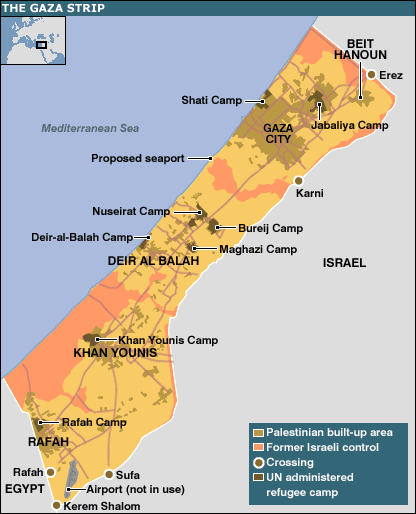
We listen to excerpts from a speech plus question and answers from acclaimed Israeli New Historian Ilan Pappe. Ilan Pappé surveys the fallout from Israel’s conduct in Gaza and places it in the context of Israel’s longstanding occupation of Palestine. Israel’s Operation Cast Lead thrust the humanitarian crisis in the Gaza Strip into the center of the debate about the Israel/Palestine conflict.
Speaker – Ilan Pappé is professor of history at the University of Exeter in the UK, where he is also co-director of the Exeter Center for Ethno-Political studies, and director of the Palestine Studies Centre. He is author of the bestselling The Ethnic Cleansing of Palestine (Oneworld), A History of Modern Palestine (Cambridge), The Israel/Palestine Question (Routledge). Ilan is also a long-time political activist.
——————————–
Civil Liberties, Criminalizing Dissent, Human Rights, Targeting Muslims, Truth to Power
Podcast: Play in new window | Download
Updates:
—

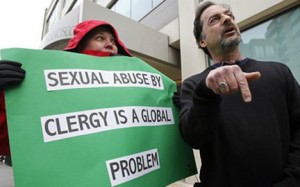
New Vatican Rules On Handling Priest Sexual Abuse Cases
Earlier this year, the Vatican had revised its laws making it easier to discipline sex abuser priests. The new internal of the Vatican will use faster judicial procedures instead of full ecclesiastical trials. Critics of the revisions, say the Vatican merely tweaked the process and the new rules don’t hold bishops accountable for abuse by priests on their watch or require that they report the sexual abuse to the authorities. In the same report was the inclusion that attempting to ordain women as priests was comparable to heresy, apostasy and pedophilia. To many it was a comparison meant to resist any suggestion that pedophilia can be addressed by ending the requirement of celibacy.
Barbara Blaine:
- SNAP is now a worldwide movement of survivors. We invite supporters join us, we have approximately 10 thousand survivors. Some are spouses and family members but most are survivors; survivors of sexual abuse by priests or other clergy members. Sometimes by religious brothers, by nuns, deacons even bishops.
- We grew in 2002 and 2003 as the headlines were exploding of abuse by priests.
- We have support group meetings in the United States in about 65 different cities. We were extremely naive, not to mention wounded trying to figure out how to make it from day to day. Its empowering for us if we can protect someone who is 12 or 13 from being abused.
- Some documents was released in 2009 in Ireland. Those were the result of government investigations into the allegations of priests and other religious figures sexually abusing children. Victims across Europe, in Germany and Belgium, Austria, Netherlands, England began speaking out and reporting their abuse. In Ireland at the end of 2009, four bishops were resigning their positions.
- From our perspective, what comes out of the Vatican is a lot of lofty words and empty promises. If you look for concrete action, you’ll see very little if any. We as victims are devout Catholics and its really incredible for us to comprehend that someone in the position of authority in the church would not want us to be protected.
- It was heartbreaking and devastating to learn the policy of the church officials is to protect the predators and their assets and their reputations, not the children.
- They’re accountable to no one and its okay for them to continue and commit these crimes.
- The vast majority of victims still do not report. More than 5 thousand priests have been identified are sexual offenders who have abused children between 1950 and 2008.
- 5 percent of priests abusing children. When someone rapes a child they get fired, in the church they get promoted. SNAPnetwork.org / bishopaccountability.org
—
Attorney Pam Spees:
- We joined a conversation with SNAP looking for ways to insure accountability for what’s going on.
- Is there a legal framework that gets at the widespread nature of this. There’s one book out that discusses the 2000 year old paper trail of sexual abuse in the church.
- You’ll hear things like a cardinal or a pope attempt to make an apology. They’re sorry for what happened to these folks. It didn’t just happen.
- It shows the lack of attention and lack of awareness of the gravity of what’s going on and a prioritization of the church protecting itself and its power, rather than insuring the protection of the kids in the church and others who are vulnerable to abuse by priests.
- It also looks like an attempt to decentralize the responsibility. There are key legal experts who have discussed this as crimes against humanity.
- These are acts that are committed as a widespread or systematic assault or attack on the civilian population.
- When you’re talking about the massive sustained harm that is being caused here and the lack of awareness and acknowledgment. . it’s really astonishing.
- The International Criminal Court is a possible venue that has jurisdiction on crimes against humanity.
- The Church can’t be trusted to police itself.
Guest – Pam Spees, senior staff attorney in the international human rights program at the Center for Constitutional Rights. She has a background in international criminal and human rights law with a gender focus, as well as criminal trial practice
Guest – Barbara Blaine, founder of SNAP, Survivors Network of those Abused by Priests, the nation’s oldest and largest self-help organization for victims of clergy sexual abuse.
——
38 years since Roe v. Wade
The politics of abortion continue to divide the country as nearly 38 years have passed since the Roe v Wade decision. January 22, marks the landmark decision by the United States Supreme Court to legalize abortion. Tens of thousands of women have been saved from death and serious injury since abortion became legal in 1973.
Will legal abortions be attacked by the new Congress? Representative John Boehner and 50 supporters seek to codify the Hyde Amendment with The No Taxpayer Funding for Abortion Act. Listeners may remember our interview with Rhonda Copelon who filed a nationwide class action lawsuit that stopped Hyde from taking effect in 1976 which would prohibit Medicaid funded abortions for poor women.
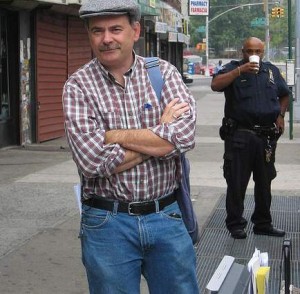
Both sides of this controversial issue will be heard during this anniversary, meanwhile the longstanding clash between anti-choice people and abortion clinics continue. In a Bronx abortion clinic for example, police and National Lawyers Guild legal observers monitor the threats against escorts or anyone interfering with those going into the clinic.
Betty Maloney:
- It’s been over five years that the clinic has been attacked by the right wing.
- The groups that are out there are funded by Chris Slattery, he runs about 26 crisis pregnancy centers, false clinics throughout the different boroughs and also by the Catholic Church.
- There are religious rightists out there, praying, harassing, yelling at women as they enter the clinic, and also yelling at their partners as they enter the clinic.
- They yell, “you’re not a real man.” “We have alternatives.”
- They particularly target the Bronx. It’s a poor neighborhood. It’s the outer boroughs.
- New York Coalition for Abortion Clinic Defense
- There is a clinic access law and they’re supposed to stay behind barricades, 15 feet away.
- Dr Emily’s Clinic there have been situations where they (protestors) have changed womens’ minds.
- We have vests on that indicate we’re escorts. We also act as a guard by putting ourselves between them (the right wing) and the women. We try really not to engage them.
- Franciscan Monks will say you’re out here because you’re angry and never been loved by a real man. Radical Women – 212-222-0633
- We’re out there every Saturday from 8AM to NOON.
- Congress failed by only one vote to sterilize all Japanese women that were interned.
Cristina Lee:
- I’ve been doing legal observing at the clinic for 6 months. The police are very hands off.
- We’ve also seen officers who’ve been very very chummy with the anti-choice activists.
- It doesn’t take much for them to say, you need to be 15 feet back, and they won’t even do that.
- We have legal observers go to clinic to observe how the police are enforcing the laws, are they enforcing the laws. Franciscan Monks go not just to object but are very abusive verbally.
- It’s not something that’s happening in the mid West.
- If you want to get involved as an escort you can go the New City Chapter of the National Lawyers Guild.
Guest – Cristina Lee, law student and National Lawyers Guild legal observer.
Guest – Elizabeth Maloney, member of Radical Women and led a delegation of Radical Women members to Jackson Mississippi to defend the last abortion clinic. In 1984, the group had helped to get the first conviction of a fire bomber.
——————————————-
Civil Liberties, Criminalizing Dissent, Gaza, Human Rights, Targeting Muslims, Torture, Truth to Power, War Resister
Podcast: Play in new window | Download
Updates:
—
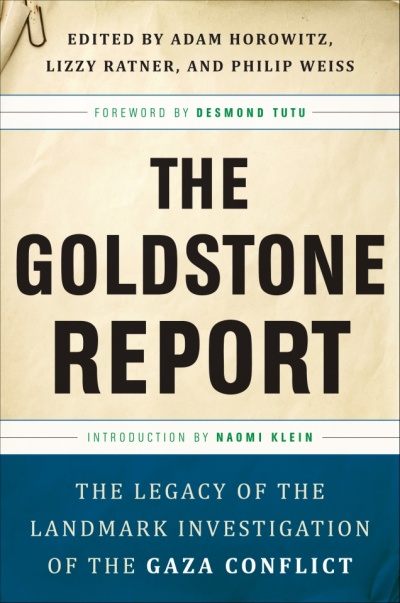
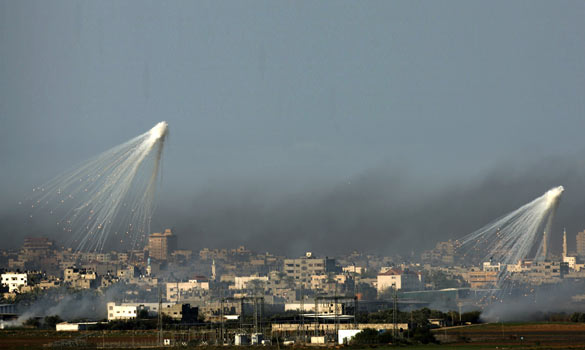
The Goldstone Report: The Legacy of the Landmark Investigation of the Gaza Conflict.
It’s been more than 2 years since Israel’s Operation Cast Lead, a massive surprise air strike against the Gaza Strip. In its aftermath, researchers began to unearth and document evidence of war crimes, human rights violations. Among those investigations was the Goldstone Report officially titled the Report of the United Nations Fact-Finding Mission on the Gaza. The report is based on a course of investigations that include 188 interviews, the review of 10 thousand pages of documents and the inspection of 1200 photographs. While most war crimes reports fade into the night, The Goldstone Report is kept alive in a recent book titled The Goldstone Report: The Legacy of the Landmark Investigation of the Gaza Conflict.
The authors Lizzy Ratner, Adam Horowitz and Philip Weiss have reprinted the central findings of the report and include 11 essays chronicling the report’s ongoing impact. The introduction is written by author Naomi Klein with a forward by Archbishop Desmond Tutu.
The Goldstone Report:
- LR: Operation Cast Lead: I remember thinking, can this just happen? Is there some kind of law that says this can’t happen? Judge Goldstone is South African, he was a member of the Constitutional Court in South Africa. He is seen as someone who really advanced international law.
- He’s a big Zionist. He’s a committed Zionist. In Israel, they loved him before this report.
- He was fast friends with the head of the Supreme Court in Israel.
- He goes to Gaza in 2009. It’s interesting he remark that thought that he would be kidnapped by Hamas. I think what happened, he went and he saw what life was like in Gaza, and had a bit of a conversion.
- This is not somebody you would expect to come out and issue a report like this.
- Our mission was there’s this report out there, it’s controversial, thunderous, it’s convulsive. Not many people have read it. Once we read it, it became clear, it’s contents were extraordinary.
- It lays out the events of Gaza in minute and devastating detail. We wanted to abridge the report and that really forms the core of the book.
- We have a series of 11 different essays. Each take for the Goldstone Report with a different perspective.
- PW: The first and last essays are from Gazans.
- It’s explained in very vivid terms what it’s like to be under assault, to see white phosphorous raining down on this strip, which is tiny, it’s the size of Martha’s Vineyard and Nantucket put together. 1.5 million people.
- Rogi’s thesis just itemizing this assault on Palestinian dignity, saying this is a basic human right, to live in dignity.
- Goldstone: Lack of discrimination between civilians and combatants. A deliberate attack on the civilian infrastructure on the means of life. Israel had several recourses before it launched an all out assault on civilian infrastructure.
- The Goldstone Report contradicts what Israel tends to say. One of things the report makes clear is there had been a cease fire for 6 months before the attack.
- United States – We’re not going to stop you Israel when you inflict collective punishment on 1.5 million people.
- This book really helps give a window into the current perception of the Israel, Palestinian conflict as a whole and how that perception is changing.
- AH: The anti-Goldstone report speeches were very uninformed. They treated him like a witch and ex-communicated him from the Jewish community. Goldstonereportbook.com
- The criminality, the complete selfishness, the utter indifference to other peoples lives.
- I realize how much I was made to hate Arab people and Palestinian people and to think that they were lesser.
- Everything you’ve heard was wrong about them.
- At the heart of it, the Goldstone Report tells the story of people who had to live through a horribly traumatic event. You won’t be able to dismiss 1300 people being killed as people that should have died.
- LR: Stop it Jewish people, you’re doing the wrong thing, you’re behaving in an immoral, unethical way and its wrong. Any human should be offended from what happens in Gaza and what still happens there.
Guests – Lizzy Ratner, Adam Horowitz and Philip Weiss
Lizzy Ratner a journalist here in New York City, her articles appear in many publications including The Nation and Alternet.
Adam Horowitz is an editor and journalist covering American foreign policy in the Middle East, he co-edits the blog Mondoweiss and is a founding member of Jews Against the Occupation.
Phil Weiss, founder of the blog Mondoweiss, is a longtime journalist and regular contributor to the Nation and a fellow at the Nation Institute He’s the author of two books a political novel, Cock-A-Doodle-Doo, and American Taboo, an investigative account of a 1976 murder in the Peace Corps in the Kingdom of Tonga.
———————————————————————-