Civil Liberties, Criminalizing Dissent, FBI Intrusion, Human Rights, Surveillance, Targeting Muslims, Truth to Power
Podcast: Play in new window | Download
Updates:
Oklahoma:Voters Approve Sharia Law Ban
—
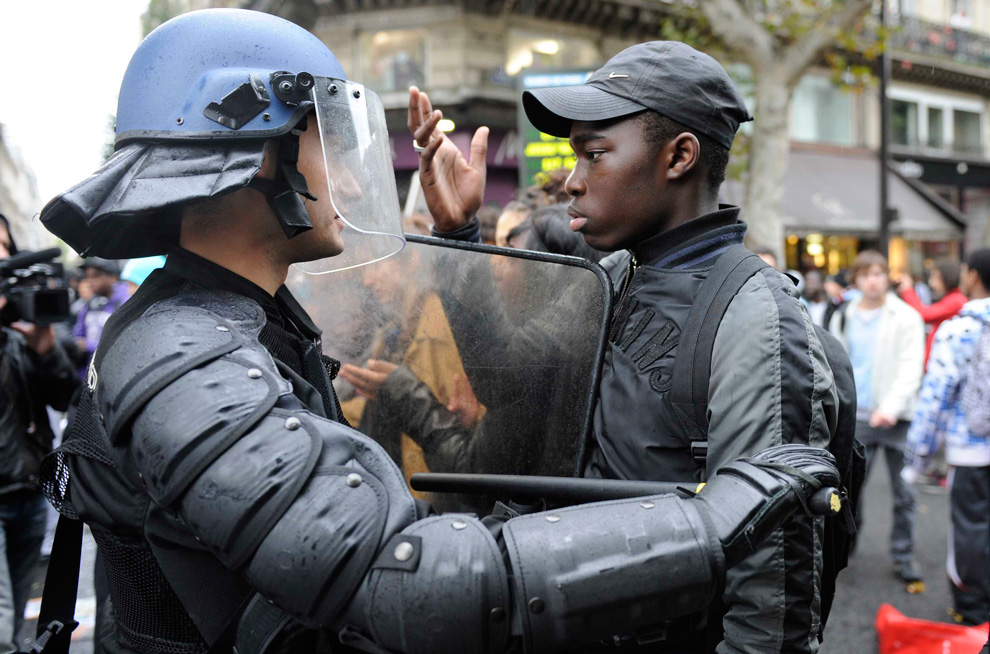
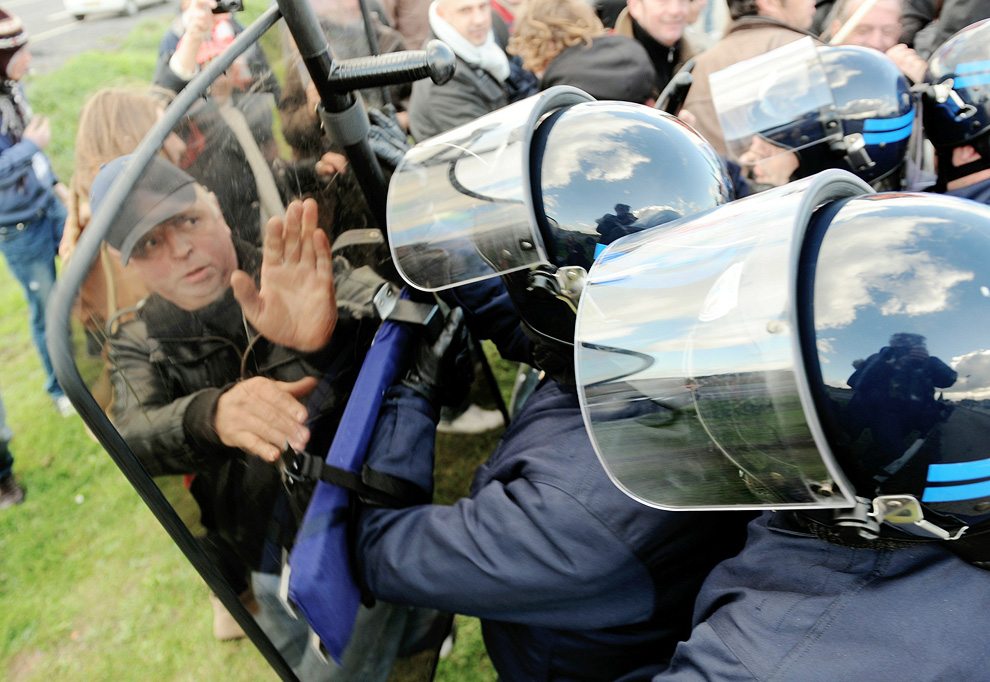
French Labor Activism, US Labor Passivism
In the United States, unemployment rose from its level in 2008 (5.8 %) to its level in the second quarter of 2010 (9.7 %). These are numbers never seen before. However, by comparison, French unemployment rose from 7.4 % in 2008 to 9.2 % in the second quarter of 2010. This data from the Bureau of Labor Statistics show unemployment had risen further and faster in the US than in France across in the last 3 years. This is found in Economics Professor Rick Wolff’s article French Labor Activism, US Labor Passivism.
Yet French workers are in the streets by the millions demonstration against anti-worker “austerity policies.” Government policies that could cut workers payroll or the services that are provided to the public. Meanwhile US workers are taking it sitting down, there’s no resistance. In California, there’s now a 22 percent unemployment and it takes the average unemployed American about 35 weeks to find a job. US states and towns cut payrolls and public services and as President Obama’s special commission gets ready to reduce social security benefits to the American people. Consider that in September 2010, according to the BLS, while the total US private sector added 64,000 jobs, state and local governments fired 77,000 people.
Rick Wolff:
- This is a tsunami of a political movement. All the six different organizations of trade unions have unified in organizing and moving these demonstrations. They haven’t unified on anything for a long time. They’ve drawn in students.
- Sarkozy almost in a way provoked the students to join the demonstrations in huge numbers.
- The students quickly understood that if the older workers stayed in their jobs an extra 2 years, those are jobs they’re not going to get. 70 percent of the French people support demonstrations. What we see now is a minority government, isolated, entrenched.
- If you want to see a movement that is doing something, mobilizing mass opinion, you got it.
- If you read what the French are saying, it’s this. We’ve already paid for the crisis, with unemployment, lost homes, insecure jobs.
- We’ve done our part, we’ve accepted that. We’ve drawn our line in the sand. We’re not gonna pay for fixing this mess from which have suffered. Why is this relevant? It is exactly like the United States.
- The atrophy of left here is much more palpable, then what happened there. We’ve had a much worse decline of our trade union movement then they did.
- We have to create anew the organizations that could bring people together into an effective coalition. The last thing we need is 800 single issued groups, cultivating its own garden and not talking to the other.
Guest-Richard D. Wolff, Professor of Economics Emeritus, University of Massachusetts, Amherst where he taught economics from 1973 to 2008. He is currently a Visiting Professor in the Graduate Program in International Affairs of the New School University, New York City. He also teaches classes regularly at the Brecht Forum in Manhattan.
—
Entrapment and Conviction of the Newburgh Four
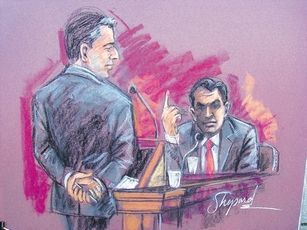
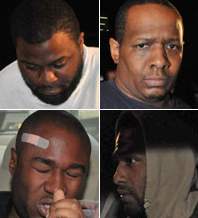
Last week, the four men accused of planting bombs outside synagogues in the Bronx and plotting to fire missiles at military planes were convicted in a case that was the test of the entrapment defense. The jury of the Newburgh 4 trial convicted James Cromitie, David Williams, Onta Williams and Laguerre Payen of plotting to bomb synagogues and shoot military planes. Cromitie and David Williams were also convicted of conspiring to kill officers and employees of the government. Sentencing is scheduled for March. The four face life sentences.
It wasn’t difficult for Shahed Hussain, a government agent provocateur who was facing incarceration, to offer food, money, marijuana, cars and vacations to the four men and ultimately coercing them to collaborate on so-called “terror plots.”
According to a press release by Project Salam (Support And Legal Advocacy for Muslims) The defendants had absolutely no intention to commit any terrorist crimes until the FBI agent provocateur, Shahed Hussain, promised them each $5,000––and in one case $250,000––if they did his bidding. He posed as a rich man who could give the defendants everything they’d ever wanted. He chose the targets, he told them how it would all work, and the FBI paid for everything. The four defendants were petty criminals, none of whom had a car or even a driver’s license. When the so-called leader, James Cromitie, decided to back away from Hussain’s scheme and refused to answer his calls for about a month, Hussain said, “Brother, I told you you could have $250,000, but you don’t want it.” Cromitie’s response: “OK, I’m in.”
Attorney Steve Downs:
- We were really surprised, we thought the edge had been reached here. They (Newburgh Four) were convicted of participating in this plot that had been cooked up, manufactured by the FBI
- These are four individuals who had no way to undertake any kind of terrorist plot. They had no automobile, no driver’s license, no money, no training, they had nothing. The FBI simply provided everything, including driving them to a spot where all they had to do is deliver a package, outside of building to complete this crime which the FBI concocted. There’s no other way to look at it.
- There is the pre-disposition idea and that comes from the ready-response argument. That has simply been misused.
- Example: Would like a loan of 5 thousand dollars, or a gift of 5 thousand dollars? Then only afterward you find out this “gift” has to do with money laundering.
- In the meantime, the person is being asked to make a ready-response. In the Newburgh case, Shahed Hussien, the informant, suggested an illegal plot. The main person he was working on James Crominic, essentially backed out of it.
- There’s a six week period that James didn’t correspond with the government at all. Then finally, Shahed called and said look you’ve got 250 thousand dollars here if you go through with this.
- These people had been somewhat exposed to Islam in prison, but didn’t know much about the religion.
- One of them had a crack-cocaine problem, another had mental problems, very serious mental problems.
- You could’ve gone to any place in upstate New York and found somebody who would grab at a deal like this.
- It was a lot of money for potentially very little activity.
- The building that was going to blow up would be unoccupied, the plane was on the ground without people in it.
- They were paid to make a political statement and not to kill anybody.
- These things are very very cleverly crafted by the FBI.
- Because people don’t know much about Islam, the government is free to play upon stereotypes and fears that people have.
Guest – Attorney Steve Downs, retired chief attorney with the New York Commission on Judicial Conduct, is a founder of Project SALAM (Support and Legal Advocacy for Muslims).
———————————————
Afghanistan War, Civil Liberties, Criminalizing Dissent, Habeas Corpus, Human Rights, Surveillance, Targeting Muslims, Torture, Truth to Power
Podcast: Play in new window | Download
Updates:
——

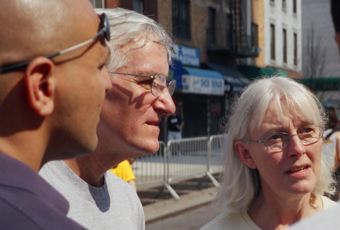
Rachel Corrie Lawsuit In Israel
Rachel Corrie, an American student activist and human rights defender from Olympia, Washington, was crushed to death on March 16, 2003, by a Caterpillar D9R bulldozer while nonviolently protesting Palestinian home demolitions with fellow members of the International Solidarity Movement.
The first phase of the trail began in March 2010, when the Corrie family presented its witnesses, including several of Rachel’s colleagues from ISM who witnessed her killing. During the second phase of the trial, which began last month, the government presented several witnesses, including the Israeli military police investigator who headed the investigation into Rachel’s death, and the bulldozer operators who struck and killed her.
The lawsuit charges that Rachel’s killing was intentional. It also charges that the Israeli government was negligent for allowing Israeli soldiers and military commanders to act recklessly using an armored military bulldozer without regard to the presence of unarmed, nonviolent civilians in Rafah, Gaza Strip. Lastly the lawsuit alleges that the Israeli military failed to take appropriate and necessary measures to protect Rachel’s life, in violation of obligations under Israeli and international law.
Katherine Gallagher:
- Rachel had been serving as a peace activist with the Palestinian International Solidarity Movement.
- The case is unfortunately taking quite a while, it was filed back in 2005, then the evidentiary phase opened in 2010. At that point the Corrie’s were able to call their own witnesses. They also called an expert who could speak about how to conduct a proper investigation.
- The investigator testimony revealed huge errors in the way the investigation was carried out.
- Errors include: The bulldozer was removed from the scene of the killing. There were investigators in the case who never went to the scene of the crime.
- On October 7, right before testimony, it was permitted that soldiers involved in the incident be allowed to testify behind a screen.
- This is an extraordinary step, the family if unable to see those soldiers who are able to provide some answers even through their body language as they testify.
- For the Corries who have waited 7 and a half years for some answers, that they won’t be able to assess the credibility by his body language is a significant blow.
- When you say the name Rachel Corrie in Israel, people know who she is.
- CCR Lawsuit: Caterpillar had aided and abetted war crimes and other serious violations of international law.
- It struck how Jerusalem has changed. There’s been a massive amount of construction in the old city and particularly around East Jerusalem.
Guest – Katherine Gallagher, Senior Staff Attorney at the Center for Constitutional Rights, where she focuses on holding individuals, including US and foreign government officials, and corporations, including private military contractors, accountable for serious human rights violations. Among the cases she is working on are Arar v. Ashcroft, Matar v. Dichter, Saleh v. Titan and Estate of Atban v. Blackwater.
——
You Can’t Be President: The Outrageous Barriers to Democracy in America
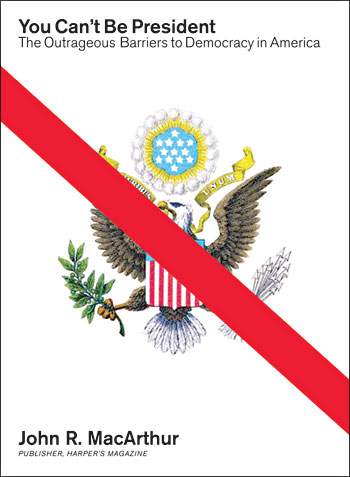
John Rick MacArthur is the president and publisher of Harper’s Magazine. He’s an award winning journalist and author. We want to talk with Rick about his third book titled You Can’t Be President: The Outrageous Barriers to Democracy in America and explore the topic of who finances the Republican and Democratic parties. A recent book review states, that it (quote) advances a familiar argument: that moneyed and privileged interests, rather than the needs and opinions of ordinary citizens, dominate contemporary American politics. MacArthur, begins by lamenting the lack of basic comprehension of the Constitution and American government on the part of the political and media elite. The book also criticizes Barack Obama and Hillary Clinton.
Rick MacArthur:
- There are two balance sheets, there’s one with regard to the people of the United States and the other which I talk about in You Can’t Be President is the internal party structure.
- The balance sheet for the people is bad, we are now enmeshed even more in a self destructive war if possible than Iraq was. Afghanistan is a disaster and you don’t have to ask a peacenik.
- You have a fake health care reform which really reinforced the power of the insurance companies.
- You have a very feeble reform of Wall Street. You have a continuation of anti-labor,orthodox “free trade” policies. You have the continued corruption of the lobby system in Washington.
- Coming from Chicago, if Obama attacked the lobby system it would be like committing political suicide.
- Obama broke every record in corporate fund raising, PAC fund raising. He raised money from Jack Abramoff’s old law firm.
- In sum, he’s (Obama) has been an anti-reformer, anti-progressive.
- On civil liberties, if you criticize Bush it’s great, if you criticize Obama, you can hear a pin drop.
- I met someone who did a tour of the new prison in Baghram, Afghanistan. He said it was terrifying.
- You have to understand that the Chicago machine, is the most powerful local machine in the country.
- Almost every important job in the county is held by a Democrat. The mayor of Chicago is very much like the dictator of Chicago. Obama came out of the most intolerant, the most monopolistic, one sided political machine in the country.
- Murdoch’s bundled campaign contributions were 50/50 between Clinton and Obama.
- I don’t see why we can’t organize around an opposition candidate, raise some money.
- I think what you’re seeing is disillusionment among the party leadership with Obama, because he hasn’t delivered the goods.
- They wanted Obama to deliver the 2016 Olympics to Chicago.
- Obama is a tremendously prudent and cautious politician, there’s no audacity at all.
Guest – John Rick MacArthur, an American journalist and author of books about US politics. He is the president of Harper’s Magazine. MacArthur has been a reporter for The Wall Street Journal (1977), the Washington Star (1978), The Bergen Record (1978–1979), Chicago Sun-Times (1979–1982), and an assistant foreign editor at United Press International (1982).
Civil Liberties, Criminalizing Dissent, Extraordinary Rendition, FBI Intrusion, Habeas Corpus, Human Rights, Military Tribunal, Supreme Court, Surveillance, Targeting Muslims, Torture
Podcast: Play in new window | Download
Updates:
- Anwar Al-Aulaqi Case – Drones Targeting US Citizens – Obama Wants To Dismiss CCR/ACLU Case
- CCR Guantanamo So Called Suicide Cases
- Supreme Court Will Not Review Case On Feds Wiretapping Guantanamo Lawyers
- Bombing of the USS Cole – Could Prosecutors Use The Fruit From the Poisonous Tree?
—-
NYC NLG Street Law and Racial Profiling Program
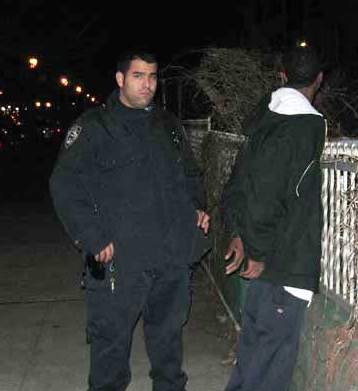
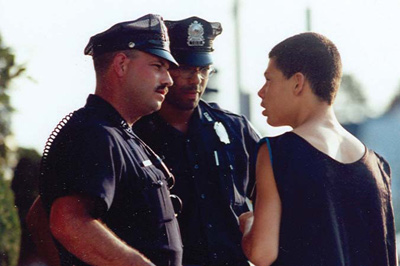
Today we’re joined by Paula Segal and Gabriela Lopez with the New York City Lawyers Guild Street Law Clinic Program. The project sends groups of attorneys to conduct “Street Law” workshops with a range of students in high school. We’re also joined by students from the Aarturo A. Schomburg Satellite Academy High School who were part of the street law classes.
Street Law Students:
- In my neighborhood it’s really common for the Police to bother you for no reason. I don’t think they had the right to go into my pockets unless they had reasonable suspicion. This happens at least 3 times a week.
- One time they took me into the precinct, took my picture, ran my fingerprints.
- I was getting off the train and these two big police men were getting off the train and they stopped me. They said we have her on the walkie-talkie. This women said take off your sneakers. She kept asking, where is it? Where is it? That’s when she started to get physical and she lifted up my shirt. “If you don’t f-in’ tell me where it’s at, I’m going to strip search you. It happened on Elder Avenue, next to the 6 train.
- They say no, we’re not going to touch you, then he throws me on the car.
- You guys are unfolding my socks right now, and I don’t like this. There’s a certain way that I fold my socks.
- After they find nothing, they say you should change your attitude. I said, you should change your attitude.
- A lot of cops judge character, when I see cops, you have to give them an expression. Hey look I’m out here, I’m not tryin to get in that car.
- I’m thinking about the cops catching the real villans. If you’re really guilty you’re going to get hassled, if you’re not guilty,then you can be free. The advice I get from the street law project is not consenting to the search.
- From my knowledge, the cops need a certain amount of arrests at the end of the month, so they’ll pick on anybody. They curse a lot. Undercover cops, they’ll probably have on a hoodie, try to fit in with everybody else, it just don’t work.
- Law Student Paula Segal: We focus on giving people tools to walk away, to avoid arrest.
- Law Student, Street Law Coordinator Gabriella Lopez: Last year we went to more than sixty different sites. Sixty to Seventy different trainings that occured last year.
- Email the Street Law Team – streetlawteam@gmail.com
Guests – Paula Segal and Gabriela Lopez with the New York City Lawyers Guild Street Law Clinic Program. Aarturo A. Schomburg Satellite Academy High School Students: Charisma Whaley / Joseph Campbell / Kiara Avila / Stephanie Colon / Jonathan Jeffries.
—-
Grand Juries Historically and the Minneapolis / Chicago FBI Raids
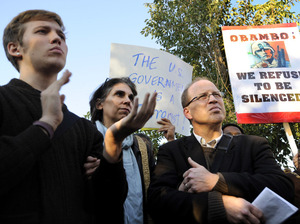
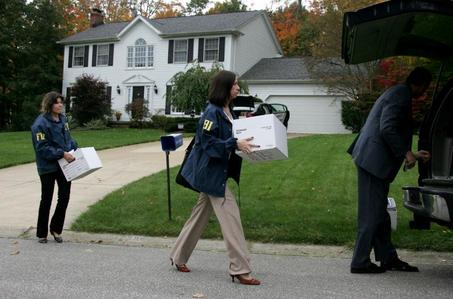
A total of 12 people were served with subpoenas during last months FBI raids in Minneapolis and Chicago. The FBI targeted anti-war peace activists and key organizers of demonstrations and marches who have been asked to appear before a grand jury. What is a grand jury? Historically, a grand jury was supposed to be citizens coming together to determine if charges should be filed criminally against someone. Today, it’s very different. It’s mostly a rubber stamp for what the prosecutors want. If you refuse to testify at a grand jury, you can be taken to a judge to answer questions. If you refuse to answer those questions you could be put in jail.
Margaret Ratner-Kunstler:
- If you were subpoenaed before a grand jury in 1968 and you asserted your grand jury right, then that really was the end of your participation in the grand jury.
- You asserted immunity and if you we’re given immunity, you couldn’t be indicted.
- Immunity: Nothing you say could be used against you, but anything you testified about could not be the subject of a criminal indictment against you. Your words could not be held against you, or the fruits of those words. But it’s so easy to get around that, by a prosecutor saying, this didn’t come from this.
- If you then refused to testify given this minor immunity, you could be subject to imprisonment.
- If you refuse to testify you’re brought back before the judge and the judge then holds you in “civil contempt.”
- The grand jury is usually about 18 months. The grand jury in Chicago is a special grand jury which means it’s twice as long.
- That’s important because if you’re held in civil contempt, the keys to the jail are in your pocket. You’re in jail for as long as you refuse to testify.
- If you say something you could wave your fifth amendment right by already saying something.
- The recent FBI raids represents the tremendous see-change we have in terms of the ability for people to actively oppose this government’s policy.
- In 1983, there were many groups in this country who were joining forces with progressive groups in Central America. You had the Committee in Solidarity With the People Of El Salvador.
- Each of the 11 individual persons subpeoned wrote letters to the Attorney General saying that they would assert their fifth amendment right and that they would not testify.
- If they can’t get you on a federal charge it’s often that they’re looking for a mistake you made in conversation, even an informal conversation with a federal official.
Guest – Magaret Ratner-Kunstler, an attorney in private practice. As education director at the Center for Constitutional Rights, she originated the Movement Support Network and authored “If an Agent Knocks.” Kunstler is the President of the William Moses Kunstler Fund for Racial Justice, a foundation established in 1995 in the memory of her late husband to combat racism in the criminal justice system.
———————
Afghanistan War, CIA Sponsored Terror, Criminalizing Dissent, Human Rights, Iraq Veterans, Iraq War, Targeting Muslims, Torture, Truth to Power, War Resister
Podcast: Play in new window | Download
WBAI Listeners Please Click Here For This Week’s Rundown

The United States and Yemen: Destroying Lives in the Name of National Security
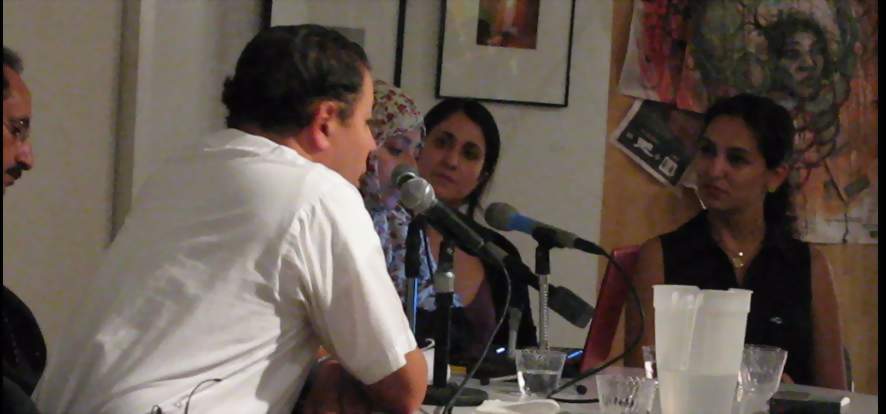
We hear the voices of leading Yemeni activists and a Center For Constitutional Rights attorney speak on state violence, targeted killings, and human rights abuses enabled by the so-called “War on Terror” from the Brecht Forum event titled The United States and Yemen: Destroying Lives in the Name of National Security. The event was co-sponsored by the International Federation for Human Rights and the Brecht Forum. We hear first from Pardiss Kebriaei staff attorney at the Center for Constitutional Rights. Pardiss is working on a lawsuit to challenge a U.S. government kill-list and the targeting of a U.S. citizen now in Yemen and far from any armed conflict with the United States.
We hear from Tawakkol Karman chairwoman of the Yemeni non-government organization Women Journalists Without Chains, which campaigns for freedom of the press in Yemen and against human rights violations. She is a very prominent young activist, and Reporters Without Borders chose her in 2009 as one of the top seven women who have led change in the world. Karman is among the activists who in 2007 launched the “Phase of Protests and Sit-ins” in Yemen, holding regular sit-ins in the capital’s Freedom Square to demand democratic reforms and an end to human rights violations—including the harassment and imprisonment of journalists and dissidents, closure of critical newspapers, and censorship of news articles. A special thanks to Leili Kashani Education and Outreach Associate for the Guantánamo Global Justice Initiative at the Center for Constitutional Rights.
Also on the panel, to be heard soon, Ezz-Adeen Al-Asbahi, president of Human Rights Information & Training Center (HRITC), a non-governmental organization which seeks to enhance human rights in Yemen and the Arab World, focusing on the Gulf States in particular. HRITC has consultative status with the United Nations, offers training courses and forums on human rights, publishes a quarterly human rights magazine called Our Rights, and has published 30 books on law and human rights. Al-Asbahi is also the coordinator of a large regional network of human rights activists in the Gulf States and the Peninsula, and the president of a Yemeni network of human rights organizations which includes six Yemeni NGOs. A journalist and researcher, he has published eight books on literature and human rights. He is also the head of the civil society sector of the Supreme National Authority to Combat Corruption.
—-

Troops out of Iraq, Permanent Bases and Privatizing the Occupation.
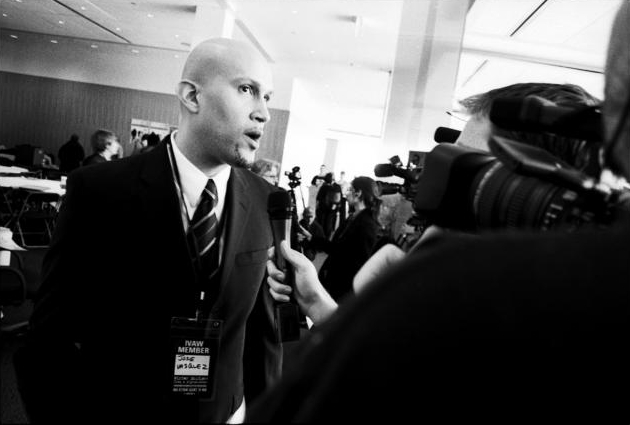
While many reports claim most US troops are leaving Iraq, there will still be 50 thousand troops remaining, 4 thousand will be replaced by 7 thousand security contractors. These are armed private contractors, former military with specialized skills in weaponry, radar and explosives. They will have less accountability in war zones. Meanwhile, massive permanent US bases remain including the world’s largest US Embassy in Bagdhad, Iraq. As the occupation in Iraq is privatized, veterans return back to the US. We’re joined today by conscientious objecter and Executive Director of Iraq Veterans Against the War, Jose Vasquez. Jose joined IVAW in June 2005 and co-founded the NYC chapter serving as the president. He also served on the interim board of directors and was elected to the first official board in 2006. He helped organize numerous actions and events including the Veterans’ and Survivors’ March to New Orleans, Operation First Casualty in NYC, and Winter Soldier: Iraq and Afghanistan.
Jose Vasquez:
- IVAW is a membership based organization, we are all folks who’ve served since September 11th.
- We call for the immediate withdrawal of all occupying forces from Iraq. We also have the same resolution for Afghanistan. We also want reparations for the Iraqis and full benefits for returning service members.
- I signed up right out of high school, graduated in ’92. I went straight in to active duty, I served 4 years as a Calvary Scout. Got out went to school and the Army Reserves as a medic.
- I had been in the military for a while before September 11th. I had a pretty good understanding of what our relationship was to Iraq. It was confusing to me, I was facing deployment. I stumbled across Democracy Now and I just started listening to that show religiously.
- By 2004, I was so upset about the Iraq War, I didn’t care what happened, I was not going to this.
- I started researching conscientious objection, six months later I filed for CO status. It took 27 months to get an answer.
- The Obama Administration has a finger on the pulse in terms of marketing hope. What they’re skimming over is how contractors are on the ground (in Iraq)
- From the perspective of an Iraqi, Americans running around with guns has not diminished that much.
- I think we owe the people of Iraq a lot. This mostly has to do with the US positioning itself to access the resources that they have.
- Stop the deployment of PTSD troops
Guest – Jose Vasquez, Jose was born in Bronx, NY and grew up in Southern California from the age of nine. After graduating high school in 1992, he enlisted in the U.S. Army serving over four years of active duty as a cavalry scout assigned to the 2nd Battalion, 69th Armor Regiment, 24th Infantry Division at Fort Benning, GA, and the 3rd Squadron, 4th Cavalry Regiment, 25th Infantry Division at Schofield Barracks, HI. He was honorably discharged in December 1996 at the rank of specialist (E-4).
Civil Liberties, Criminalizing Dissent, Cuba, Human Rights, Iraq War, Targeting Muslims, Truth to Power
Podcast: Play in new window | Download
Updates:
——–

Climate Ground Zero – Update with Jimmy Tobias
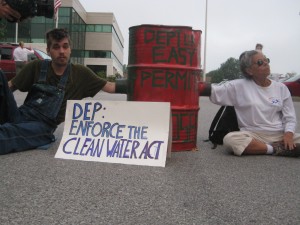
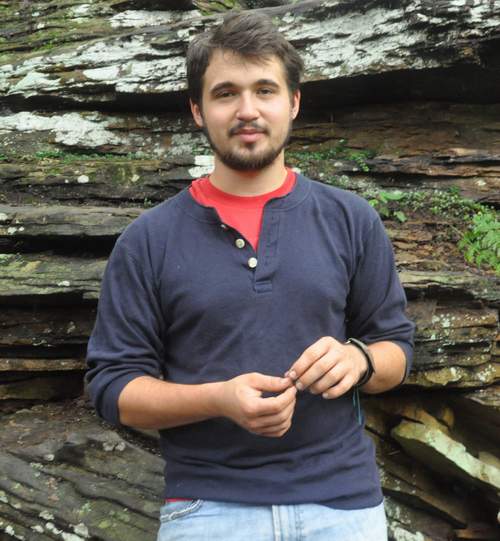
We get an update from Mountaintop Removal activist Jimmy Tobias. Jimmy was arrested this summer with others for using direct action to shut down a coal mining mountaintop removal effort in Virginia. He was held on a 3500.00 bail and later released. A New York Times editorial states that movement to slow down and stop the mountaintop removal mining in that area is gaining traction and the Obama Administration is restricting permits for mountaintop removal mining. Recent Action.
Jimmy Tobias:
- I’m in Rockcreek, West Virginia where the campaign houses are located. The campaign houses have a big role, but there a million other things people work on.
- At the moment we’re gearing up for a mass mobilization in Washington, that will take place between the 25 and the 27 of September. Appalachia Rising. We’re focused on bringing national attention to the issue.
- I’ve been loathe to put my faith in the EPA to solve these problems. Their actions have been really ambiguous. They go back and forth and its really hard to get a sense of the ultimate outcome of their actions (EPA)
- My passion is for the local organizing, because that will make it or break it basically. We have four campaign houses, a big outdoor kitchen, everyone eats together, organizes together, works on different aspects of the campaign. The civil dis-obediance campaign is called Climate Ground Zero.
- Coal River Mountain Watch, Sludge Safety Project, Mountain Justice.
Guest – Jimmy Tobias, activist and direct action protester against Mountaintop Removal.
———–

Blackwater Reaches Deal on U.S. Export Violations
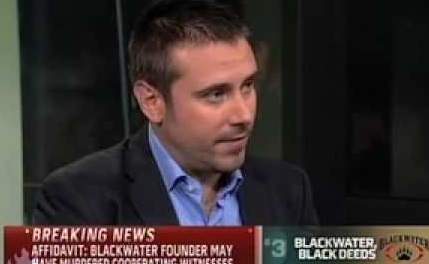
The private security company formerly called Blackwater Worldwide has reached an agreement with the State Department for hundreds of violations of US export control regulations. The company now called US Training Services will pay the US government 42 million dollars in fines to avoid criminal charges on export violations. Violations include shipping weapons to Iraq hidden inside containers of dog food. There are other legal troubles facing Blackwater officials, but the company continues to obtain government contracts. Last June, Blackwater was awarded a 120 million dollar contract to provide security at a State Department regional office in Afghanistan and the CIA renewed the firm’s 100 million dollar security contract in Kabul.
Jeremy Scahill:
- This is a company that has been repeatedly involved with criminal activity, with murder and has gotten off scott-free. It has been shielded by its handlers at the State Department or at the DOD.
- The idea that this company can pay what amounts to 146 thousand dollars per violation is outrageous.
- The real meat of it is the murder they’re involved with, the human rights violations.
- What would it take for this company to be completely knocked off the US Government payroll?
- US operations in Afghanistan now, have become so dependent on Blackwater, both in the CIA and State Department. Eric Prince, the owner of Blackwater who has since fled to the United Arabs Emirates, which has no extradition with the United States. He moved there after five of his top deputies were indicted on conspiracy and weapons charges. This is a man who knows where the bodies are buried, he was working for the CIA, for the Joint Special Operations Command. They (Blackwater) could reveal details of action that would horrify the average American if they knew this was being done in their name.
- After 9/11, Eric Prince cut a deal with the number 3 man at the CIA, Alvin Buzzy Krongard. Find Fix and Finish Operation.
- There are also cases of I’ve heard of Blackwater working inside of Syria.
- Two former Blackwater employees, a man and a woman, the man worked in war zones, the woman worked on the financial side. They have filed a whistleblower case against Blackwater, alleging extrajudicial killings and bilking US taxpayers. Susan Burke recently deposed Eric Prince.
- Blackwater is involved with secret assassination programs in countries around the world, where we aren’t at war, where we aren’t informing those countries.
- The only serious challenges to Blackwater, aka Xe, aka US Training Services are people like Michael Ratner and Susan Burke. Bill: Stop Outsourcing Security Act.
Guest – Jeremy Scahill is the author of the international best-seller Blackwater: The Rise of the World’s Most Powerful Mercenary Army. He is a frequent contributor to The Nation magazine and a correspondent for the national radio and TV program Democracy Now! He is currently a Puffin Foundation Writing Fellow at The Nation Institute. Scahill has won numerous awards for his reporting, including the prestigious George Polk Award, which he won twice. While a correspondent for Democracy Now!, Scahill reported extensively from Iraq through both the Clinton and Bush administrations.
——————–
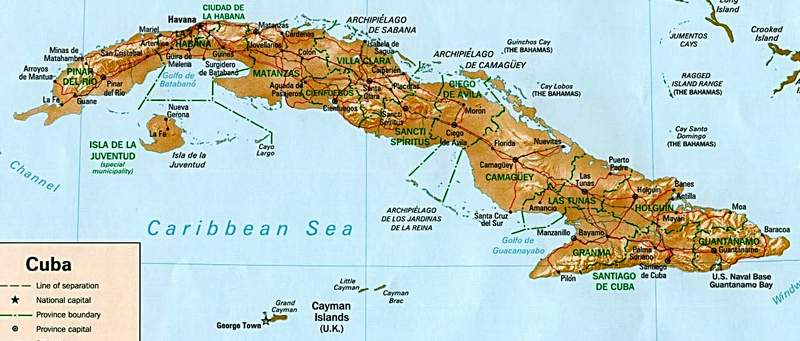
Cuba Travel Ban
Will the Obama Administration come to a decision on how much to enable travel to Cuba. The Administration could simply reinstate President Clinton’s policy which is a costly case by case application or grant general licenses to the remaining 11 categories of travel to Cuba. General license would include schools, cultural institutions, Chambers of Commerce, religious bodies, World Affairs Councils, humanitarian organizations and more.
Sandra Levinson:
- The travel regs are not really travel regs. They are regulations set up by the US Treasury Department at the instigation of the US State Department. You can’t spend money in Cuba.
- President Carter lifted the travel ban, there were direct flights to Cuba during the brief time he was president.
- During the Clinton Administration, we were able to take a number of trips. Ban in effect for a number of rationales, we don’t wanna give money to Castro. It always surprised me that William F. Buckley was in support of ending the travel ban to Cuba.
- We can always do professional trips. I’m leading a trip for professional artists.
- Lawyers traveling to Cuba fall under the general license, it’s by assertion. You simply say as legal professionals you’re doing legal research.
- We’ve been to Cuba so much, our travel is not formal, it’s intimate.
- Although the food and medicine embargo was lifted several years ago, the regulations about payment are so tough on the Cubans, everyone else can buy on credit. The Cubans can’t, they have to buy up front, before a ship leaves US territory with the food, with the medicine.
- I fell in love with Cuba, I arrived on July 4, 1969. I was there for six weeks. Socialism with salsa.
- On the fifth day of my first trip, Fidel Castro taught me how to cut sugar cane. I think he is the one of the smartest leaders we’ve had in this hemisphere. I think he’s been in power that long, because we have not had relations with Cuba.
Guest – Sandra Levinson, Executive Director of the Center for Cuban Studies in New York City and Director of the Center’s Cuban Art Space. Facebook link
——————————————————
Civil Liberties, Criminalizing Dissent, Habeas Corpus, Human Rights, Military Tribunal, Political Prisoner, Prison Industry, Supreme Court, Targeting Muslims, Torture, Truth to Power
Podcast: Play in new window | Download
Updates:
—
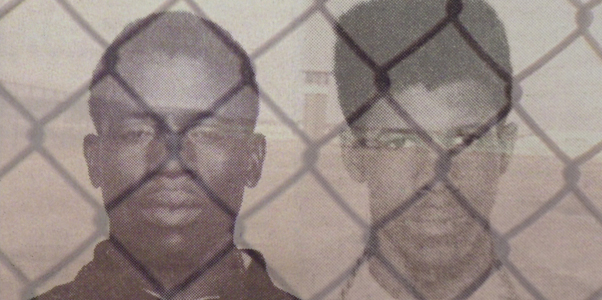
In the Land of the Free, a film by Vadim Jean
Director Vadim George joins us to discuss his recent documentary film “In the Land of the Free.” As many listeners may know, the Angola 3 are Robert King, Albert Woodfox and Herman Wallace. Each had arrived to the Louisiana State Penitentiary in the late 1960s. While in prison, and in contact with Black Panthers, the men helped build a prison chapter of the Black Panthers. They organized inmates to end systematic rape and violence and worked as jailhouse lawyers. The men have spent a combined century in solitary confinement in the Angola prison. Vadim’s powerful documentary explores the issues of accountability and examines the biases against the sentencing of African Americans compared to Whites and Latinos. The film is narrated by Samuel L. Jackson, and it’s noted toward the end, that there is a pending civil suit ‘Wilkerson, Wallace and Woodfox’ vs the State of Louisiana, ruled by the US Supreme Court and to go to trial based that their 30+ years in solitary confinement is “inhumane and unconstitutional”. This case could stop long-term solitary confinement in US prisons.
Vadim Jean:
- I was friends with Anita Roddick, she knew Robert King, and when she passed away in 2007, Robert King was one of the speakers at her memorial. They wouldn’t let me film in the prison.
- The Angola 3 came together in the New Orleans parrish prison in the 1970s.
- The criminals were put in with the Black Panthers and the Black Panthers educated the criminals.
- In the 1970s Angola was the bloodiest prison in America.
- Robert King was told why he was kept in solitary confinement after 25 years in CCR (solitary confinement)
- Because he was being investigated for the murder of Brent Miller, which happened when he wasn’t even in the prison. They’re incredible human beings. They’re strong men. They’re self educated, in prison.
- I think they have their side, the fact that they know they’re innocent, and that makes you strong, that’s made them incredibly strong. They refused to be beaten.
- Robert is free. His conviction was overturned in 2001. People have reacted strongly to the film.
- I’ve tended to make drama comedies. I made a completely mad film called Jiminy Glick in Lalawood with Martin Short.
- I made this film for Anita. (Anita Roddick) The Roddick Foundation.
Guest – Vadim Jean, began his career directing commercials for products such as Blockbuster Video, Woolworths, The Observer and Mercury 121 Mobile Phones. He then moved on to music videos for Elton John and Oasis before co-directing his first feature film, Leon the Pig Farmer (1992). For his work he won an Evening Standard British Film Award for Most Promising Newcomer, a Chaplin Award for Best First Feature at the Edinburgh International Film Festival.
——–
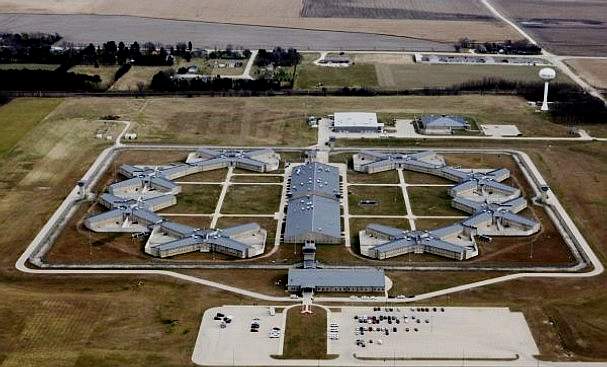
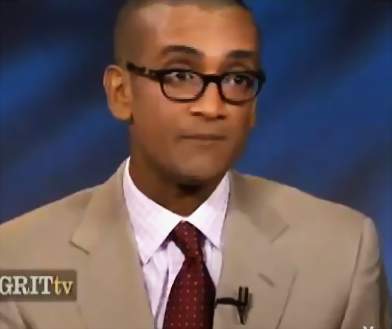
Law and Disorder Barack Obama Series – CCR Staff Attorney Shane Kadidal
We’re joined by Center for Constitutional Rights staff attorney Shane Kadidal to give us an overview on several critical topics we’ve been following over the years here on Law and Disorder. We look at what is happening in Guantanamo right now, the Obama policy of preventive detentions and the state of Habeas Corpus in the United States. In January of 2009 Barack Obama issued orders to close Guantanamo Bay prison. There was talk of transferring prisoners to a supermax prison in the United States. Military tribunals move forward for Guantanamo prisoners.
Shane Kadidal:
- What we won is the right to get into court and challenge the legality of your detention. CCR won that in 2008
- Obama gets into office and says he’s going to close Guantanamo Bay Prison in a year.
- Obama to set up expert agency to decide what to do with people in Guantanamo prison
- About 50 cases have gone forward and we (CCR) won 72 percent of the cases
- About 180 left in Guantanamo. Obama has improved physical conditions for detainees in Guantanamo, but they’re still stuck there. Nothing much has changed, we see stasis, there isn’t much political movement.
- About a month into the administration, the Obama Department of Justice says our position is the same as the Bush administrations on Bagram AFB prison
- We’re taking the same legal position about executive power as the previous administration – state’s secrets about rendition
- Six hundred people in Bagram right now. Bagram is an active war zone, can’t have courts interferring
- About 30 of the remaining 180 in Guantanamo will be charged. Most of the people brought there were innocent. The victim of profiling policies.
- General Stone says 400 of the 600 hundred in Bagram Prison have done nothing and should be released immediately. Task Force report on Guantanamo prisoners. 10 percent leaders of Al-Qaeda, 20 percent had a logistics role, others are low level soldiers. This is false.
- There are innocent people in Guantanamo, who have been there for 8 years.
- We still have a military commissions, an indefinite detention system. Lieberman proposing to strip citizenship from terrorism suspects so they can be interrogated without Miranda warnings.
- Moving Guantanamo Prison to Thomson Prison in Illinois.
- Obama as committed to removing checks on executive power
Guest – Shane Kadidal senior managing attorney of the Guantánamo Global Justice Initiative at the Center for Constitutional Rights in New York City. He is a graduate of the Yale Law School and a former law clerk to Judge Kermit Lipez of the United States Court of Appeals for the First Circuit.
Past shows with Shane Kadidal