Criminalizing Dissent, FBI Intrusion, Surveillance, Targeting Muslims, Truth to Power
Podcast: Play in new window | Download
Updates:
—-
Holder Calls Terrorism Sting Operations ‘Essential’
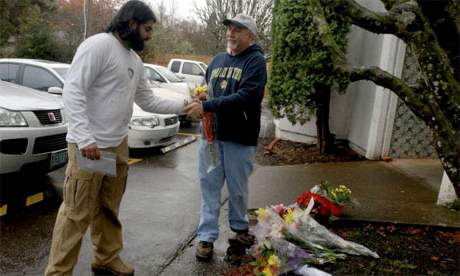
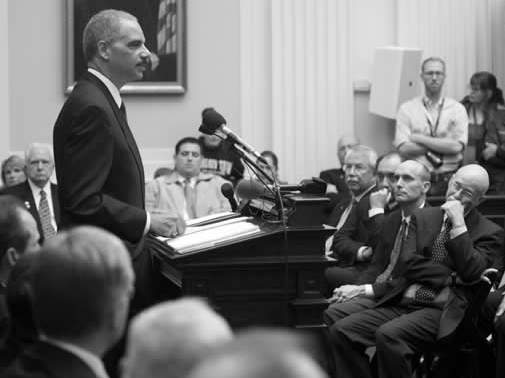
US Attorney General Eric Holder delivered a 20 minute speech last week at the annual dinner of Muslim Advocates a national legal advocacy and civil rights organization. While speaking to a room of nearly 300 Muslim community leaders, Holder defended the sting operation in the Oregon bombing case and called it a “successful undercover operation.” The room fell silent. Holder continued by saying if you think its entrapment, you simply don’t have the facts straight.
Farhana Khera president of Muslim Advocates and a previous guest on Law and Disorder, criticized Holder’s comments saying the FBI is getting people involved with terrorism who wouldn’t have otherwise and resources are being diverted that could be used for actual threats. Holder continued to justify the counter terrorism techniques including sending informers into mosques to find a would-be terrorists and creating elaborate sting operations.
We’ve looked into some of the “undercover operations” and in those cases informants were used, often immigrants offered large sums of money, or plea deals for whatever crime they committed if they agree to work with the FBI. Those cases include the Newburgh Four, the Fort Dix Five and Yassir Aref in Albany. The sting operations create fear among Muslim communities and help prop up the wars raging in Afghanistan, Pakistan, Yemen and Iraq.
Dalia Hashad:
- There are 3 things that need to happen for someone to be entrapped by law enforcement.
- The idea of committing the crime had to come from government agents, not from the person accused of committing the crime. The government agent persuaded the person into committing the crime.
- The person wasn’t willing to commit the crime before the government agents spoke to them.
- These cases look the same because the FBI go after the same type of guy.
- I don’t like to get into the details of these cases because the narrative is controlled by the FBI.
- Eric Holder had no business being invited and headlining the event.
- Eric Holder Entraps at Muslim Advocates Dinner
- The FBI has more than 100 Joint Terrorism Task Forces, which includes more than 10 thousand FBI agents.
- They partner with other agents, even IRS agents.
- We basically have law enforcement agents out there spying on people who’ve done nothing wrong.
Zaher Billoo:
- I went to this dinner thinking, what are people going to be talking about, are people going to be afraid of hate crimes? People were more worried about the FBI’s tactics than anything.
- The concern is, instead of getting them the help that they need, and preventing an incident and hopefully bettering the community for that, what we’re seeing is the FBI converting them into operational terrorists
- One of the troubles of the war on terror is that we can’t prove whether its successful or not but we want to continue to spend money on it.
- This type of incident justifies that type of offense. The counterproductive measure here is that it puts the community on guard.
- Instead of building relationships with the community they’re trying to work with, they’re burning bridges. This conversation about informants, not knowing who you can trust or who you can candidly speak with, is reminiscent of some of the regimes that people were escaping.
- It’s nothing new. We continue to fall into these patterns.
- An important thing for us as activists and advocates for the community is to insure we’re making these parallels and building coalitions based on that.
- In this last year, people have started to say that it feels as though it’s as bad here as it was a year ago.
- The anti-Muslim sentiment is stronger now in 2010 than it was in 2001.
Guest – former Law and Disorder co-host, Dalia Hashad, attorney and independent consultant specializing in human rights and civil rights. She has run programs at Amnesty International and the ACLU, and she has served as a human rights legal adviser in the Occupied Palestinian Territories. At Amnesty International, Ms. Hashad was the Director of the USA Program, focusing on racial profiling, criminal justice and national security. She also served as AIUSA’s policy specialist in global identity discrimination, addressing issues of race, sexual orientation, religion and gender.
Guest- Attorney Zahra Billoo, executive director of CAIR San Francisco Bay Area CAIR ( the Council on American-Islamic Relations.) Zahra started as an intern for a local chapter of the California Faculty Association, a labor union for California State University (CSU) faculty members. Zahra has also worked as Field Organizer for the Service Employees International Union, and was awarded Peggy Browning Fund Fellowship to work with the National Employment Law Project. Zahra graduated Cum Laude from California State University, Long Beach with a B.S. in Human Resources Management and B.A. in Political Science. She completed her law degree at the University of California, Hastings College of Law.
———-
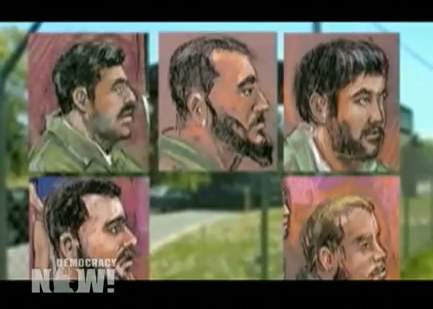
Entrapped, a documentary film exposing the FBI
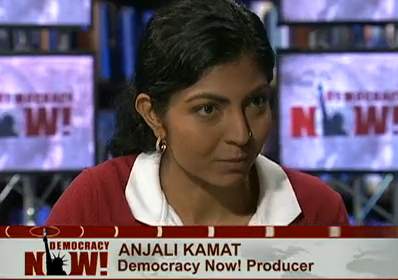
We’ve discussed the many cases of FBI entrapment here on the show and we are delighted to have with us Big Noise film maker and producer for Democracy Now, Anjali Kamat. Anjali had recently finished the film titled, Entrapped, a documentary examing the role of the FBI and government agencies funding and entrapping people by infiltrating specific ethnic and religious communities. She had traveled through Muslim communities in New York and New Jersey interviewing families of those Muslim men arrested on terrorism charges. Recent cases such as the Fort Dix Five, the Newburgh Four and Yassin Aref in Albany are highlighted in the film.
Anjali Kamat:
- I did the film as a piece of investigating reporting for Democracy Now along with from Big Noise Films. It’s available at Big Noise Films and Democracy Now DVD
- We had a screening at a restaurant off of Coney Island Avenue, hosted by the Coney Island Avenue Project.
- When these cases come about, they’re often talked about as sting operations. The FBI has been doing undercover work and they discovered this terrorist plot.
- They’re on the evening news, talking about how much safer we all are now as a result of the FBI’s excellent work.
- When you dig a little deeper you realize it’s not really a sting, in most cases. It can be called entrapment.
- Informants: In the cases I looked at, there was a Pakistani immigrant and an Egyptian immigrant, they are offered large sums of money, offered at times a plea deal for whatever crime they committed if they agree to work for the FBI.
- There are 3 cases I looked at, 3 out of dozens of cases. The first case took place in Albany in 2004 that involves a Bangladeshi pizza owner and a Kurdish Imam. They were both convicted and their prison time was reduced from 30 years to 15 years, because the case was very thin and there was an outpouring of community support.
- The second case is the Ft Dix Case, which took place in Pennsylvania. All five of the men were convicted. They are serving life sentences. Four out of the five men were ethnic Albanians from Macedonia. They were construction workers, their father had a roofing business. The fourth was a Palestinian American. Informant encouraged Palestinian American to download more and more jihadi videos.
- These videos are key because they are what was shown at the trial to the jury. The third case, the sentencing hasn’t happened yet. The Newburgh four.
- On the domestic front it allows the government to show its being tough on terror at a time when there is no evidence of where Osama Bin Laden is. At a time when the democrats seem very weak on a number of fronts.
- Another use of this is to create fear among Muslim communities. Now there’s a great sense of doubt whenever someone new comes into the community. Could this person be a government informant?
- It helps justify the wars that are continuing abroad.
Guest – Anjali Kamat, independent radio and print journalist from south India. She has lived in Egypt and Jordan and reported on movements for justice across the Middle East and South Asia. Her work has appeared in Corpwatch, Left Turn, and Samar magazine, and national newspapers in India and Egypt (The Hindu, Frontline, Outlook, and Al-Ahram Weekly). In addition to producing Democracy Now!, she co-hosts and co-produces a weekly radio show on WBAI called Global Movements Urban Struggles.
——————————————————–
CIA Sponsored Terror, FBI Intrusion, Human Rights, Surveillance, Targeting Muslims, Torture, Truth to Power
Podcast: Play in new window | Download
Updates:
—
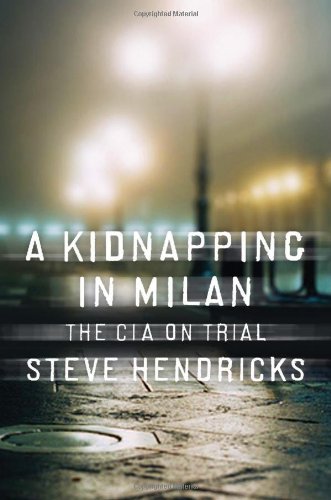
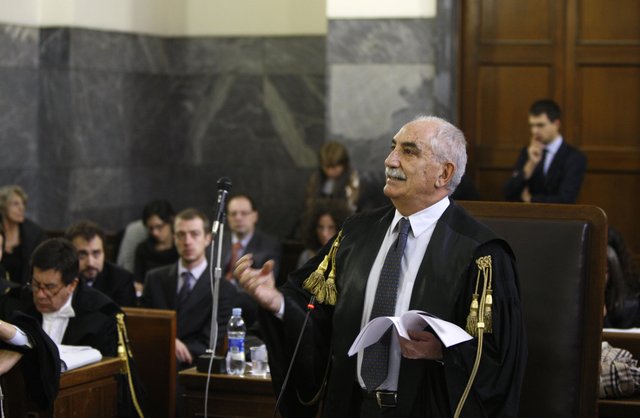
A Kidnapping In Milan: The CIA On Trial
A Kidnapping In Milan: The CIA On Trial is the title of Steve Hendricks’ new book. It is a fast paced account of the realities of counter terrroism. Hendricks gives the reader a beginning to end view of international Islamist terrorist networks in Europre while examining the questions of justice and the rule of law. He writes in detail on the February 2003 disappearance of the radical imam Abu Omar and how under the leadership of prosecutor Armando Spataro, Omar was kidnapped, and sent to be tortured in Egypt. Hendricks traces Omar’s roots in the jihadist world of the Middle East and his travels to Pakistan, Albania and eventually the rundown fringes of Milan. Rivalries, mistrust and bad communication is chronicled amid the CIA, the FBI and the Italian counter terrorism agencies as operatives snatched Abu Omar from the streets of Italy.
Steve Hendricks:
- The Italian counterterror police had this imam, Abu Omar under tight surveillance, under suspicion of terrorism. He was one of the ring leaders of a terrorist cell. They were about a month away from arresting him. But one fine day in February 2003, he sets off for his mosque and disappears.
- The CIA had grabbed him off the street literally at high noon. They roughed him up, gagged him, drove him several hours across northern Italy –sent him to Cairo were for months and months he was savagely tortured.
- The Muslim Brotherhood, which really might thought of as the godfathers of radical Islam, got its start in Egypt and toehold in Alexandria. Islam is not going to be re-born simply on its goodness, we have to fight for it.
- The Egyptian authorities cracked down on the radicals and a great number of them fled all over the world, they scattered. Europe was tolerant of foreigners, Italy was one of those countries.
- Abu Omar was tortured for about a year and then they let him out and said don’t talk about it.
- Armando Spataro is this charismatic figure. He did his formative work as a magistrate prosecuting terrorists of the left.
- When the kidnapping in Milan (by the CIA) happened on his watch, he treated it like anything else. He put his foot down on the rule of law.
- SIM Card – Subscriber Identity Module. It’s not just reading the radio waves, it’s in constant contact with the cell tower back and forth. Most cell companies keep record of those interactions. What these kidnappers sloppily did is use their cellphones like teenagers.
- The Italian prosecutors were able to find these kidnappers, they were able to track their movements everywhere they went. Armando Spataro eventually brought charges against 25 CIA agents and one US Air Force Colonel that coordinated the arrival of agents at Aviano Air Base.
- 23 of the 26 of the accused were convicted of kidnapping. They recieved five to eight years depending upon their degree of involvment. What moved me to write this book, over everything was outrage over our inhumanity.
- America has been conducting renditions for about a century.
Guest – Steve Hendricks, a freelance writer living in Knoxville, Tennessee, and Helena, Montana. He is the author, most recently, of A Kidnapping in Milan: The CIA on Trial. His previous book, The Unquiet Grave: The FBI and the Struggle for the Soul of Indian Country, made several best-of-the-year lists in 2006.
—
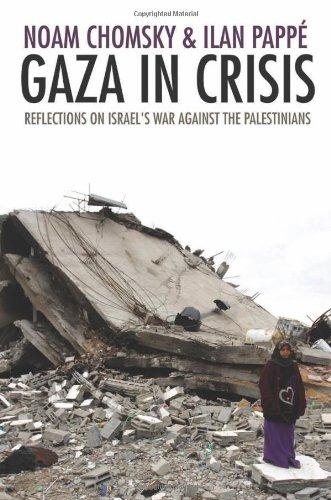
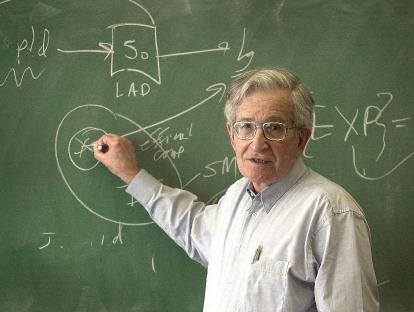
Noam Chomsky – Gaza in Crisis: Reflections on Israel’s War Against the Palestinians
Here on Law and Disorder we’ve chronicled the events of Israeli forces in Gaza and the West Bank. Today we’re delighted to have with us Noam Chomsky, one of the world’s foremost social critics, institute professor emeritus in the MIT Department of Linguistics and Philosophy and author of many books including Failed States and Hegemony or Survival, but we talk with him today about his latest book Gaza in Crisis: Reflections on Israel’s War Against the Palestinians. Noam Chomsky wrote Gaza In Crisis with Ilan Pappé, professor of history at the University of Exeter in the UK. This book surveys Israel’s recent attacks on Gaza from Operation Cast Lead to the Gaza Freedom Flotilla in a very sobering analysis.
Noam Chomsky:
- Let’s start with wikileaks. One of the interesting cables from the Tel Aviv embassy and it was to Clinton.
- It was giving her talking points, about the attack on Gaza, and it tells her Israel had to attack on December 2008 in self defense because Hamas had violated the truce.
- In December 2008 Hamas called for a renewal of the truce that Israel had broken. Israel considered it and rejected it. I should say US/Israel because these are joint activities.
- The fact that this can pass without comment, tells you quite a lot.
- In the whole wikileaks episode, in my opinion is the remarkable fact is the absolute contempt of democracy that’s revealed by the embassies.
- The most critical issue is did Israel have any right to use force in the first place? Any right?
- Why have a border cutting Galilee in half?
- The only way I know how to proceed is to get the United States to join the rest of the world and stop its rejectionist opposition to the overwhelming international consensus, agree to a two state settlement.
- The strongest support for Israeli crimes is coming from the business world.
- The most rabid supporter of Israel in the media is the Wall Street Journal. They’re not part of AIPAC, that’s the business world.
- US military intelligence are tightly integrated with Israel. Israel destroyed secular Arab nationalism, that’s when US / Israeli relations took off in their current form.
- It’s about expansion of settlements. Israel already controls 42 percent of the West Bank.
- The issue is the settlements, they are all illegal.
- It designed so that there will be no Palestinian self determination.
Guest – Noam Chomsky, n American linguist, philosopher, cognitive scientist, and political activist. He is an Institute Professor and professor emeritus of linguistics at the Massachusetts Institute of Technology. Chomsky is well known in the academic and scientific community as one of the fathers of modern linguistics, and a major figure of analytic philosophy. Since the 1960s, he has become known more widely as a political dissident and an anarchist, referring to himself as a libertarian socialist. Chomsky is the author of more than 150 books and has received worldwide attention for his views, despite being typically absent from the mainstream media.
————-
Afghanistan War, Civil Liberties, Criminalizing Dissent, Human Rights, Targeting Muslims, Torture, War Resister
Podcast: Play in new window | Download
Updates:
—
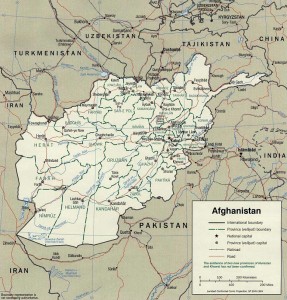
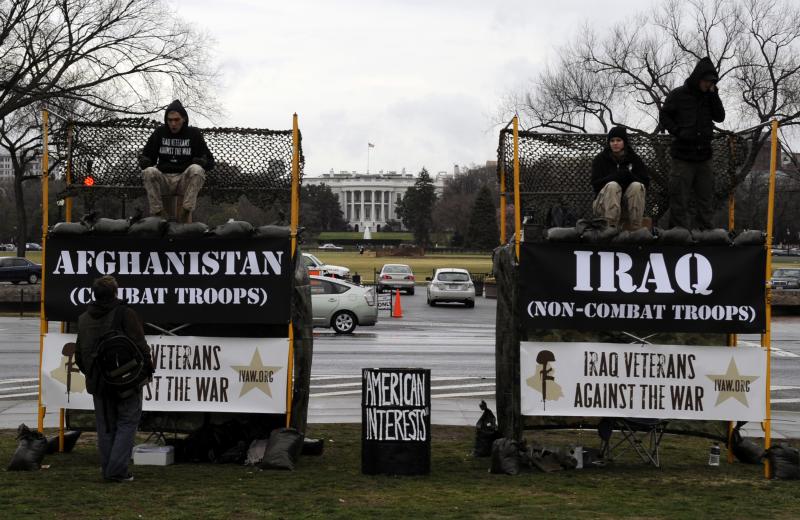
Afghanistan Invasion/Occupation To End Beyond 2014
Thousands took to the streets of London last week to protest against the war in Afghanistan and Iraq, as Nato leaders agreed a strategy to withdraw their troops from the country. US President Barack Obama was expected to announce an exit strategy from Afghanistan at the NATO summit in Lisbon, instead he postponed troop withdrawal beyond 2014. Vice President Joe Biden told one media source “Daddy is going to start to take the training wheels off in October — I mean in next July, so you’d better practice riding.”
Jerry Gordon:
- End date 2014, there’s nothing firm about it. “2014 is a goal not a guarantee.”
- Everything is tentative, nothing is concrete. They are pursuing what has been called an “endless war.”
- what is less known is the US Government supported the Taliban, because their priority was a stable government in Kabul, that would permit the construction of a pipeline.
- They needed a pipeline to transfer these giant hydro-carbon reserves, we’re talking about 206 trillion cubic feet of natural gas and 60 to 200 billion gallons of oil reserves.
- This was all before 2001, it was planned. There’s plenty of evidence. There’s a long speech in the Congressional Record in 1998 about the critical importance of building a new pipeline in Afghanistan.
- This is all geo-political and economic, it’s empire building.
- It became converted into a war on terror, after 9/11.
- At the same time there’s no money to pay unemployment compensation and all the urgent social needs at home to put people back to work
- The anti-war movement needs to reiterate the origins of the war and the rationale.
- There’s no draft, only a small percent of the population has placed Afghanistan at the top of the priority list.
- Past anti-war movements: We had a mass base among the students. We need to tie the war to the economic crisis, bring the war dollars home.
- Rethink Afghanistan: Destroys Failed Logic of War by Jeremy Scahill
- When they kill leaders, they get replaced, and it generates recruiting among the insurgents.
- US Law Labor Against the War was able to get the AFL-CIO to take a position of rapid withdrawal from Iraq.
- Our biggest problem in terms of constituencies, we do not have a mass base. It’s the students the labor movement and the religious community. Everything is imploding in this country.
- Contact Jerry Gordon – natassembly(at)aol.com
Guest – Jerry Gordon, the main organizer of the well attended anti-war conference in Albany last summer. He was the leader in the anti-Vietnam movement and recently retired from the SEIU.
—–
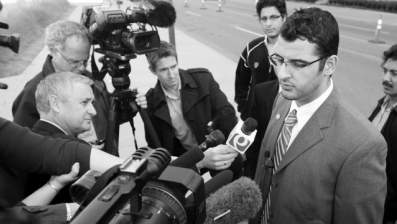

CAIR Files Suit Against Oklahoma Vote Opposing Sharia Law
In November, 70 percent of Oklahoma approved ballot initiative “Question 755? — or the “Save Our State” constitutional amendment — which bans Sharia from being considered in Oklahoma courts. The ballot states that Oklahoma courts must “rely on federal and state law when deciding cases” and forbids them from “considering or using international law” and “from considering or using Sharia Law.”
Recently, Muneer Awad, executive director of CAIR-OKC filed a lawsuit challenging the constitutionality of State Question 755, and an Oklahoma City judge extended a temporary ban on implementation of a constitutional amendment. U.S. District Judge Vicki Miles-LaGrange said she will rule after weighing the issues. Muneer Awad, who is Muslim says the amendment demonizes his faith.
Muneer Awad:
- Labeling Islam as a unique threat to Oklahoma courts. It was a clear message that Islam is a threat to Oklahoma.
- I think what happened is a handful of politicians realized that Islamophobia is politically popular.
- I can count on one hand how many politicians didn’t vote to put this on the ballot.
- Those politicians were attacked during the campaign as being people that wanted to bring Sharia to Oklahoma so terrorists can use Islamic law in our courts
- If we don’t act now our state will be in peril. There are politicians that deliberately misinform people, that deliberately lie to people in order to gain political popularity in the polls.
- There are a number of non-Muslim Oklahomans that are concerned by State Question 755 and the perception and effect it has on Oklahoma.
- We’re trying to remind people that this isn’t a reasonable conclusion people made after a lot of thought and reasonable research. These were people that were misled by politicians that have lied to us.
Guest – Muneer Awad, executive director of CAIR-OKC
—–
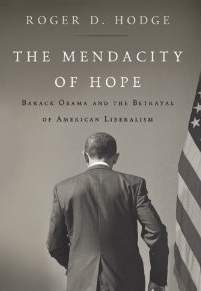
The Mendacity of Hope: Barack Obama and the Betrayal of American Liberalism.
In a scathing attack from the left, former editor in chief of Harper’s magazine, Roger Hodge offers a powerful critique of President Barack Obama in his new book, The Mendacity of Hope: Barack Obama and the Betrayal of American Liberalism. Hodge articulates what many of listeners may already know. President Obama has served the corporate masters. Hodge draws a list of examples, such as cheerleading globalization, designing a health care plan where insurance companies make a killing, extrajudicial assassination of American citizens, boundless state secrecy, and unlimited corporate bailouts, to name a few.
In explaining the book, Hodge told Harper’s magazine in an interview, he used 18th century reflections to James Madison, whose philosophy aligned with republicans such as Machiavelli and James Harrington in the argument that a moderate balance of wealth must be maintained, that too great a distinction between the rich and poor would naturally lead to the decay of republican governance.
Roger Hodge:
- Obama’s most enthusiastic supporters have really been lying to themselves.
- Part of the book is an argument against this tendency for people to deny what’s going on right in front of them.
- We ran a piece in Harper’s by Ken Silverstein, a great investigative reporter who argued, this guy is a conventional machine Democrat.
- He set up shop. Come to me corporate America with your problems and I will try to solve them.
- You listen to this inspiring rhetoric, if you look at it on paper, there wasn’t a lot of content there.
- When it comes to an Obama / McCain-Palin – there’s an arguement to be made constitutionally we might be better off with the Republicans.
- Corporate backers: FIRE sector. Finance/Insurance/Real Estate.
- The number one corporate backer was Goldman Sachs. Goldman Sachs collectively gave Obama, almost 1 million dollars but invested only 230 thousand dollars for McCain.
- Obama’s backers also included, Morgan Stanley, Citi-Group is up there with 750 thousand, JP Morgan Chase . . they don’t do this out of the goodness of their hearts.
- They expect to get something, and as we saw in the rolling bailouts, the financial sector got tremendous return on investments.
- Democratic think tanks set the stage for the financial crisis that we’re still living through, by deregulating finance, by breaking down the New Deal protection, repealing the Glass-Steagal Act, and deregulating derivatives with the Commodities Futures Modernization Act.
- The old idea, that unfortunately is still with us, that the democrats are the liberal party, the party of the common man who are fighting the big business bad guys in the Republican party is really a myth, and it’s a pernicious myth.
- Health Care was a bailout for the insurance companies, Obama and his team always saw that as a bargaining chip, they never really planned on pushing that through. Having health insurance does not guarantee health care.
- Rahm Emanuel, this is a guy without principles, he’s all about winning and raising money.
- You can say, at least he’s tough, but he didn’t fight for anything worth fighting for.
- A president surrounds himself with people who are ill-liberal, who are completely compromised by their connections with Wall Street.
- We have to gain some leverage over our representatives. It’s a real double bind. People don’t want to reckon with the sheer awfulness of the our political culture.
Guest – Roger Hodge, former editor of Harper’s Magazine from March 2006 through January 2010. Hodge attended the University of the South, where he majored in comparative literature. He began graduate work at the New School for Social Research and completed a master’s degree in philosophy, but joined Harper’s before finishing his dissertation. Hodge first came to Harper’s as an intern in 1996 and was subsequently hired as a fact checker. Hodge edited the Harper’s Reading section from 1999 until 2003.
———————————————————————–
CIA Sponsored Terror, Civil Liberties, Death Penalty, Human Rights, Political Prisoner, Targeting Muslims, Truth to Power
Podcast: Play in new window | Download
Updates:
—

Drone Based Targeted Killings of U.S. citizens. Anwar Al-Aulaqi
Can the Obama Administration or any future administration use lethal force against US citizens who the executive office unilaterally determines as a threat to the nation? Not yet, but in recent government arguments, in the Anwar Al-Aulaqi case, the executive branch would have unreviewable authority to carry out targeted killings of Americans deemed to be enemies of the state. The ACLU and the Center for Constitutional Rights filed a lawsuit in the U.S. District Court for the District of Columbia on August 30, and the government filed its reply brief on September 25.
The ACLU and CCR were retained by Nasser Al-Aulaqi to bring a lawsuit in connection with the government’s decision to authorize the targeted killing of his son, U.S. citizen Anwar Al-Aulaqi, whom the CIA and Defense Department have targeted for death.
Pardiss Kebriaei:
- This will be our first chance to defend our motion for a preliminary injunction and respond to the government’s arguments. The sum and substance of the government’s arguments is that there should be no rule for the court at all in the question we presented. Whether the government has authority to execute one of its citizens without any kind of due process.
- There should be absolutely no judicial review at all. They have not got into the merits of why they believe they should have this authority. They assert the US is involved in a global war against Al-Qaeda, by virtue of the war the US has the ability to target any suspect of Al-Qaeda.
- Outside of Iraq and Afghanistan, the question of whether armed conflict exists, is a factual objective question. It’s not a matter of which the president declares and that the level of hostilities and the organization of groups in Yemen are just not such that they to the level of war.
- Anwar Al-Alwaqi is not Al-Qaeda, he is associated with Al-Qaeda.
- The US is not only claiming broad authority geographically but global authority in terms of any and all groups they deem somehow linked to Al-Qaeda.
- They’re claiming AUMF but they’re also claiming a very vague principle of self defense which is tricky. They are claiming self defense under article 51 of the UN charter.
- They’re going around criminal law and claiming un-reviewable authority to carry out global assassination. This is an escalation of what we saw under the Bush Administration with global detention authority, this is global killing authority.
- The authority could reach any citizen they deem a threat to national security. It could reach someone in the United States, the full contours of the government’s arguments would be that the decision to kill is for the executive to determine and that should be an un-reviewable decision.
- The mechanized disconnected nature of the killing is alarming, both by an accountability point of view and a moral point of view.
- The drone project is operated by the CIA and by a covert unit in the Department of Defense called the Joint Special Operations Command.
- Documenting them is incredibly hard, but yet you have the expansion of the war and killings, in this shadow war way. You have this parallel secret war being conducted by the CIA and JSOC largely through the use of unmanned drones. What we have here is the pre-determination of the ability to kill.
- There’s been a steady increase of rhetoric about Yemen and an escalation in the language of war.
Guest – Pardiss Kebriaei, she joined the Center Constitutional Rights in July 2007. Since then, her work has focused on representing men detained at Guantánamo Bay in their habeas corpus challenges, before international human rights tribunals, in diplomatic advocacy with foreign governments to secure resettlement for men who cannot return home, and in post-release reintegration efforts. Her clients have included men from Yemen, Syria, Algeria, and Afghanistan. Her work includes seeking accountability for torture and arbitrary detention at Guantánamo.
———————————-
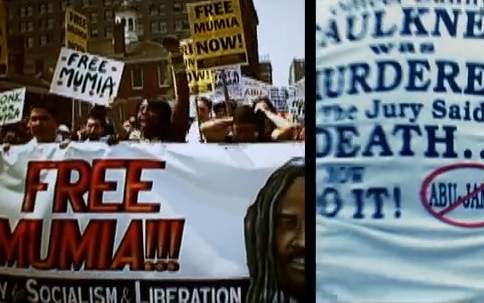
Justice On Trial: Documentary on Mumia Abu-Jamal
We’re pleased to have with us today the director Kouross Esmaeli of the new documentary Justice On Trial. The film focuses on the case of Mumia Abu-Jamal, one of the most scrutinized and contested legal cases in American history. Justice on Trial examines the facts of the case, the judicial bias, racial discrimination in jury selection, prosecutorial misconduct and tampering with evidence to obtain a conviction. The injustices and problems in Mumia’s case as many listeners know, are common within the criminal justice system in the United States.
Kouross Esmaeli:
- I tried to get an interview with the wife of the police officer who was killed on the night of December 9, 1981
- I thought it was important to show what drives that side I came to realize that Tigre Hill was making a film (about Mumia, titled Barrel of A Gun) that was propaganda for the other side.
- We had to make sure that film doesn’t become the voice of the nation.
- (Film includes photos 12 minutes after shooting occurred)
- The photos were discovered by an activist and scholar in Germany. He found them online, Michael met the photographer in the US, and realized there were 22 photographs from that night.
- They were offered to the prosecution, they refused.
- What the photographs show is incredible, they show a roving police hat.
- Officer Faulkner’s hat is placed in different spots on the crime scene.
- They show police handling the gun that was supposedly used in this crime. Handling it without gloves.
- There’s this push to kill Mumia and silence him physically. I’m interested to know what drives these people.
- For a screening in your area contact – – Kouross by email – – Kouross@bignoisefilms.org
Guest – Kouross Esmaeli, independent filmmaker and journalist.
—-
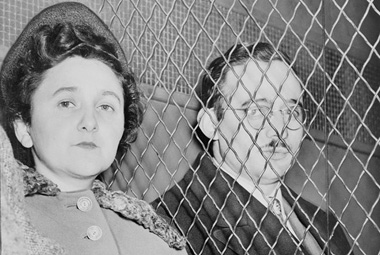

Final Verdict : What Really Happened in the Rosenberg Case.
In 1965, Walter and Miriam Schneir published Invitation to an Inquest, it was among the first critical accounts of the Julius and Ethel Rosenberg case. They were executed in 1953 for passing atom bomb secrets to Soviet Russia. In that book the Schneirs presented exhaustive evidence that key witnesses in the trial had changed their story after prompting from prosecutors. Their conclusion was, the Rosenbergs were innocent. Now after 30 years, Walter Schneir returned to the case with new evidence. Schneir had found that Julius Rosenber was marginally involved in the atom bomb spy ring and Ethel wasn’t involved at all. However they both lied about not knowing about espionage because of their earlier activities in World War II. All of this unravels in the Final Verdict : What Really Happened in the Rosenberg Case.
Miriam Schneir:
- The case began in 1950, 60 years ago. American cities were vulnerable to nuclear attacks. In that climate the Rosenbergs were arrested. The legal charge was conspiracy to commit espionage. During the trial, they were charged with stealing the secrets of the atomic bomb.
- The principle witnesses were Ethel Rosenberg’s brother, David Greenglass and his wife Ruth.
- David was in the Army and serendipitously was sent to Los Alamos, where the atomic bomb was being constructed.
- Julius was a spy during the wartime years. Ethel did nothing, she was not a spy.
- In a report by the Atomic Energy Commission, Greenglass was ranked as the least effective atomic spies back then. There was a lot of effort on the part of the Department of Justice to convict these people.
- This case is relevant today in a larger frame work.
- We can see that the Rosenberg case is like the Dreyfus case or the Sacco and Vanzetti case.
- It’s essential that leftists of each generation should keep that history alive.
- Now it’s Islam fundamentalism. That’s not to say there was no danger.
- You see the government use the courts to advance policies.
- On a personal level, Walter and I learned from the Freedom of Information documents we recieved, on the basis of the Meeropol suit, that while we were researching an Invitation to an Inquest, the FBI had been track our activities.
- We were just two writers who were trying to research a book, they were tapping our phones, and finally they placed us as well as thousands of others on an index of people who would be detained in the event of a national emergency.
- After the book was published, an FBI memo, directed that the book should be smothered and forced out of the public eye.
Guest – Miriam Schneir, editor of Feminism in Our Time: The Essential Writings, World War II to the Present and Feminism: The Essential Historical Writings. In addition to Invitation to an Inquest, she is also the co-author of “Remember the Ladies”: Women in America, 1750–1815.
Walter Schneir, a freelance writer on law, politics, and science. He is the co-author, with his wife Miriam Schneir, of Invitation to an Inquest, long considered the definitive book on the Rosenberg case. He is also the editor of Telling it Like it was: The Chicago Riots, an early account of the 1968 Democratic Convention. He died in April 2009 soon after completing this work.
——————————————————————————————
Civil Liberties, Criminalizing Dissent, FBI Intrusion, Human Rights, Surveillance, Targeting Muslims, Truth to Power
Podcast: Play in new window | Download
Updates:
Oklahoma:Voters Approve Sharia Law Ban
—
French Labor Activism, US Labor Passivism
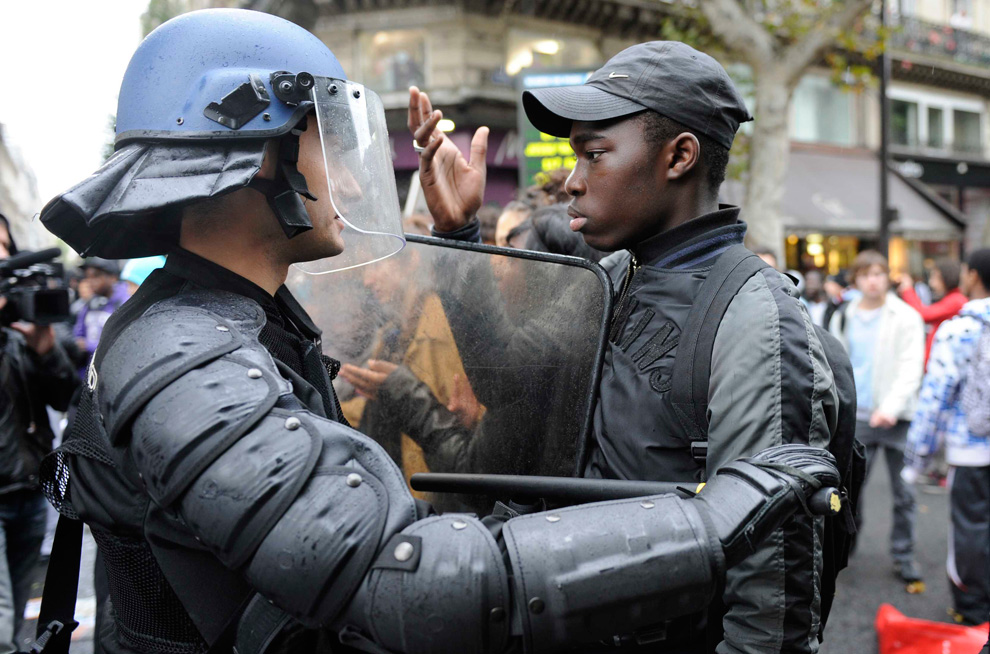
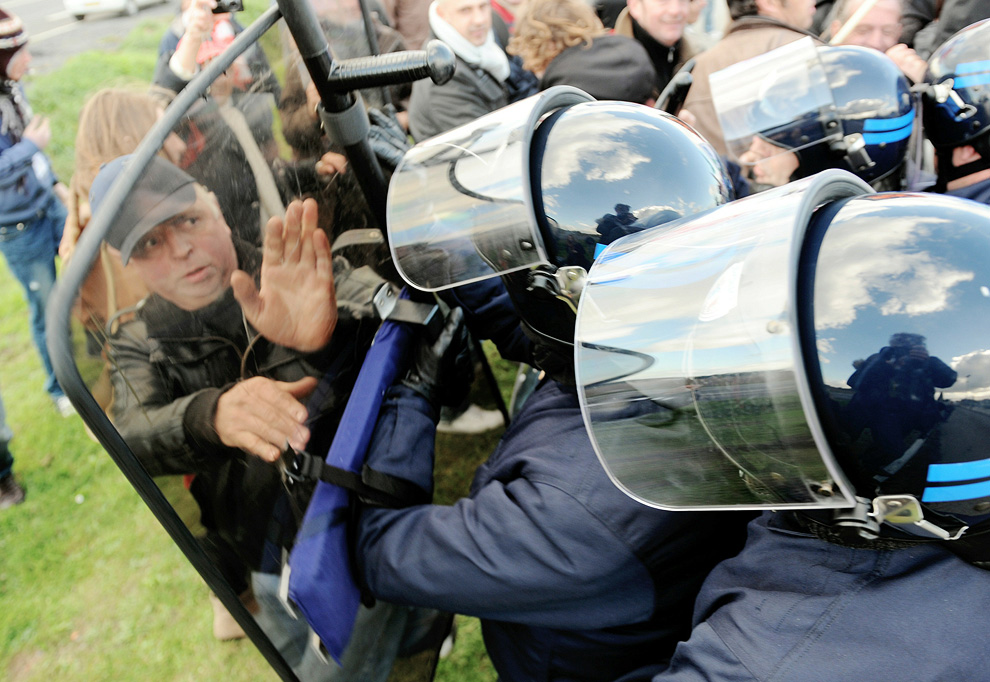
In the United States, unemployment rose from its level in 2008 (5.8 %) to its level in the second quarter of 2010 (9.7 %). These are numbers never seen before. However, by comparison, French unemployment rose from 7.4 % in 2008 to 9.2 % in the second quarter of 2010. This data from the Bureau of Labor Statistics show unemployment had risen further and faster in the US than in France across in the last 3 years. This is found in Economics Professor Rick Wolff’s article French Labor Activism, US Labor Passivism.
Yet French workers are in the streets by the millions demonstration against anti-worker “austerity policies.” Government policies that could cut workers payroll or the services that are provided to the public. Meanwhile US workers are taking it sitting down, there’s no resistance. In California, there’s now a 22 percent unemployment and it takes the average unemployed American about 35 weeks to find a job. US states and towns cut payrolls and public services and as President Obama’s special commission gets ready to reduce social security benefits to the American people. Consider that in September 2010, according to the BLS, while the total US private sector added 64,000 jobs, state and local governments fired 77,000 people.
Rick Wolff:
- This is a tsunami of a political movement. All the six different organizations of trade unions have unified in organizing and moving these demonstrations. They haven’t unified on anything for a long time. They’ve drawn in students.
- Sarkozy almost in a way provoked the students to join the demonstrations in huge numbers.
- The students quickly understood that if the older workers stayed in their jobs an extra 2 years, those are jobs they’re not going to get. 70 percent of the French people support demonstrations. What we see now is a minority government, isolated, entrenched.
- If you want to see a movement that is doing something, mobilizing mass opinion, you got it.
- If you read what the French are saying, it’s this. We’ve already paid for the crisis, with unemployment, lost homes, insecure jobs.
- We’ve done our part, we’ve accepted that. We’ve drawn our line in the sand. We’re not gonna pay for fixing this mess from which have suffered. Why is this relevant? It is exactly like the United States.
- The atrophy of left here is much more palpable, then what happened there. We’ve had a much worse decline of our trade union movement then they did.
- We have to create anew the organizations that could bring people together into an effective coalition. The last thing we need is 800 single issued groups, cultivating its own garden and not talking to the other.
Guest-Richard D. Wolff, Professor of Economics Emeritus, University of Massachusetts, Amherst where he taught economics from 1973 to 2008. He is currently a Visiting Professor in the Graduate Program in International Affairs of the New School University, New York City. He also teaches classes regularly at the Brecht Forum in Manhattan.
—
Entrapment and Conviction of the Newburgh Four
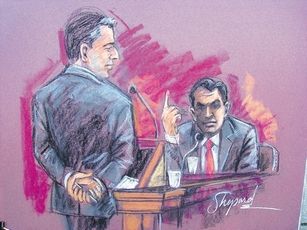
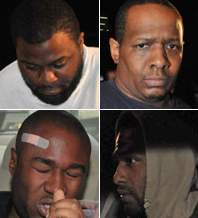
Last week, the four men accused of planting bombs outside synagogues in the Bronx and plotting to fire missiles at military planes were convicted in a case that was the test of the entrapment defense. The jury of the Newburgh 4 trial convicted James Cromitie, David Williams, Onta Williams and Laguerre Payen of plotting to bomb synagogues and shoot military planes. Cromitie and David Williams were also convicted of conspiring to kill officers and employees of the government. Sentencing is scheduled for March. The four face life sentences.
It wasn’t difficult for Shahed Hussain, a government agent provocateur who was facing incarceration, to offer food, money, marijuana, cars and vacations to the four men and ultimately coercing them to collaborate on so-called “terror plots.”
According to a press release by Project Salam (Support And Legal Advocacy for Muslims) The defendants had absolutely no intention to commit any terrorist crimes until the FBI agent provocateur, Shahed Hussain, promised them each $5,000––and in one case $250,000––if they did his bidding. He posed as a rich man who could give the defendants everything they’d ever wanted. He chose the targets, he told them how it would all work, and the FBI paid for everything. The four defendants were petty criminals, none of whom had a car or even a driver’s license. When the so-called leader, James Cromitie, decided to back away from Hussain’s scheme and refused to answer his calls for about a month, Hussain said, “Brother, I told you you could have $250,000, but you don’t want it.” Cromitie’s response: “OK, I’m in.”
Attorney Steve Downs:
- We were really surprised, we thought the edge had been reached here. They (Newburgh Four) were convicted of participating in this plot that had been cooked up, manufactured by the FBI
- These are four individuals who had no way to undertake any kind of terrorist plot. They had no automobile, no driver’s license, no money, no training, they had nothing. The FBI simply provided everything, including driving them to a spot where all they had to do is deliver a package, outside of building to complete this crime which the FBI concocted. There’s no other way to look at it.
- There is the pre-disposition idea and that comes from the ready-response argument. That has simply been misused.
- Example: Would like a loan of 5 thousand dollars, or a gift of 5 thousand dollars? Then only afterward you find out this “gift” has to do with money laundering.
- In the meantime, the person is being asked to make a ready-response. In the Newburgh case, Shahed Hussien, the informant, suggested an illegal plot. The main person he was working on James Crominic, essentially backed out of it.
- There’s a six week period that James didn’t correspond with the government at all. Then finally, Shahed called and said look you’ve got 250 thousand dollars here if you go through with this.
- These people had been somewhat exposed to Islam in prison, but didn’t know much about the religion.
- One of them had a crack-cocaine problem, another had mental problems, very serious mental problems.
- You could’ve gone to any place in upstate New York and found somebody who would grab at a deal like this.
- It was a lot of money for potentially very little activity.
- The building that was going to blow up would be unoccupied, the plane was on the ground without people in it.
- They were paid to make a political statement and not to kill anybody.
- These things are very very cleverly crafted by the FBI.
- Because people don’t know much about Islam, the government is free to play upon stereotypes and fears that people have.
Guest – Attorney Steve Downs, retired chief attorney with the New York Commission on Judicial Conduct, is a founder of Project SALAM (Support and Legal Advocacy for Muslims).
———————————————
Afghanistan War, Civil Liberties, Criminalizing Dissent, Habeas Corpus, Human Rights, Surveillance, Targeting Muslims, Torture, Truth to Power
Podcast: Play in new window | Download
Updates:
——

Rachel Corrie Lawsuit In Israel
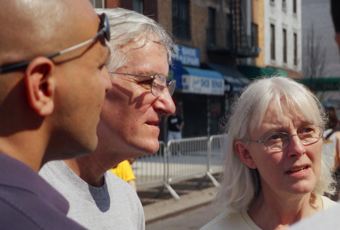
Rachel Corrie, an American student activist and human rights defender from Olympia, Washington, was crushed to death on March 16, 2003, by a Caterpillar D9R bulldozer while nonviolently protesting Palestinian home demolitions with fellow members of the International Solidarity Movement.
The first phase of the trail began in March 2010, when the Corrie family presented its witnesses, including several of Rachel’s colleagues from ISM who witnessed her killing. During the second phase of the trial, which began last month, the government presented several witnesses, including the Israeli military police investigator who headed the investigation into Rachel’s death, and the bulldozer operators who struck and killed her.
The lawsuit charges that Rachel’s killing was intentional. It also charges that the Israeli government was negligent for allowing Israeli soldiers and military commanders to act recklessly using an armored military bulldozer without regard to the presence of unarmed, nonviolent civilians in Rafah, Gaza Strip. Lastly the lawsuit alleges that the Israeli military failed to take appropriate and necessary measures to protect Rachel’s life, in violation of obligations under Israeli and international law.
Katherine Gallagher:
- Rachel had been serving as a peace activist with the Palestinian International Solidarity Movement.
- The case is unfortunately taking quite a while, it was filed back in 2005, then the evidentiary phase opened in 2010. At that point the Corrie’s were able to call their own witnesses. They also called an expert who could speak about how to conduct a proper investigation.
- The investigator testimony revealed huge errors in the way the investigation was carried out.
- Errors include: The bulldozer was removed from the scene of the killing. There were investigators in the case who never went to the scene of the crime.
- On October 7, right before testimony, it was permitted that soldiers involved in the incident be allowed to testify behind a screen.
- This is an extraordinary step, the family if unable to see those soldiers who are able to provide some answers even through their body language as they testify.
- For the Corries who have waited 7 and a half years for some answers, that they won’t be able to assess the credibility by his body language is a significant blow.
- When you say the name Rachel Corrie in Israel, people know who she is.
- CCR Lawsuit: Caterpillar had aided and abetted war crimes and other serious violations of international law.
- It struck how Jerusalem has changed. There’s been a massive amount of construction in the old city and particularly around East Jerusalem.
Guest – Katherine Gallagher, Senior Staff Attorney at the Center for Constitutional Rights, where she focuses on holding individuals, including US and foreign government officials, and corporations, including private military contractors, accountable for serious human rights violations. Among the cases she is working on are Arar v. Ashcroft, Matar v. Dichter, Saleh v. Titan and Estate of Atban v. Blackwater.
——

You Can’t Be President: The Outrageous Barriers to Democracy in America
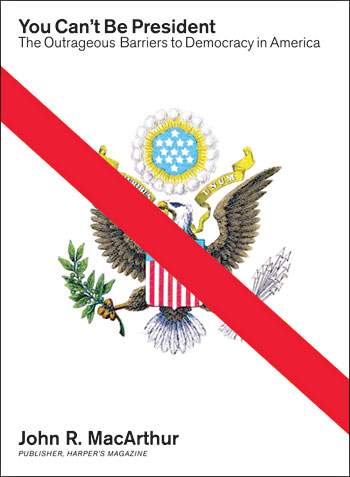
John Rick MacArthur is the president and publisher of Harper’s Magazine. He’s an award winning journalist and author. We want to talk with Rick about his third book titled You Can’t Be President: The Outrageous Barriers to Democracy in America and explore the topic of who finances the Republican and Democratic parties. A recent book review states, that it (quote) advances a familiar argument: that moneyed and privileged interests, rather than the needs and opinions of ordinary citizens, dominate contemporary American politics. MacArthur, begins by lamenting the lack of basic comprehension of the Constitution and American government on the part of the political and media elite. The book also criticizes Barack Obama and Hillary Clinton.
Rick MacArthur:
- There are two balance sheets, there’s one with regard to the people of the United States and the other which I talk about in You Can’t Be President is the internal party structure.
- The balance sheet for the people is bad, we are now enmeshed even more in a self destructive war if possible than Iraq was. Afghanistan is a disaster and you don’t have to ask a peacenik.
- You have a fake health care reform which really reinforced the power of the insurance companies.
- You have a very feeble reform of Wall Street. You have a continuation of anti-labor,orthodox “free trade” policies. You have the continued corruption of the lobby system in Washington.
- Coming from Chicago, if Obama attacked the lobby system it would be like committing political suicide.
- Obama broke every record in corporate fund raising, PAC fund raising. He raised money from Jack Abramoff’s old law firm.
- In sum, he’s (Obama) has been an anti-reformer, anti-progressive.
- On civil liberties, if you criticize Bush it’s great, if you criticize Obama, you can hear a pin drop.
- I met someone who did a tour of the new prison in Baghram, Afghanistan. He said it was terrifying.
- You have to understand that the Chicago machine, is the most powerful local machine in the country.
- Almost every important job in the county is held by a Democrat. The mayor of Chicago is very much like the dictator of Chicago. Obama came out of the most intolerant, the most monopolistic, one sided political machine in the country.
- Murdoch’s bundled campaign contributions were 50/50 between Clinton and Obama.
- I don’t see why we can’t organize around an opposition candidate, raise some money.
- I think what you’re seeing is disillusionment among the party leadership with Obama, because he hasn’t delivered the goods.
- They wanted Obama to deliver the 2016 Olympics to Chicago.
- Obama is a tremendously prudent and cautious politician, there’s no audacity at all.
Guest – John Rick MacArthur, an American journalist and author of books about US politics. He is the president of Harper’s Magazine. MacArthur has been a reporter for The Wall Street Journal (1977), the Washington Star (1978), The Bergen Record (1978–1979), Chicago Sun-Times (1979–1982), and an assistant foreign editor at United Press International (1982).