Civil Liberties, Criminalizing Dissent, Guantanamo, Habeas Corpus, Human Rights, Surveillance, Targeting Muslims, Truth to Power
Podcast: Play in new window | Download
Updates:
WBAI Listeners Click Here For Rundown on Tito Gerassi
———–

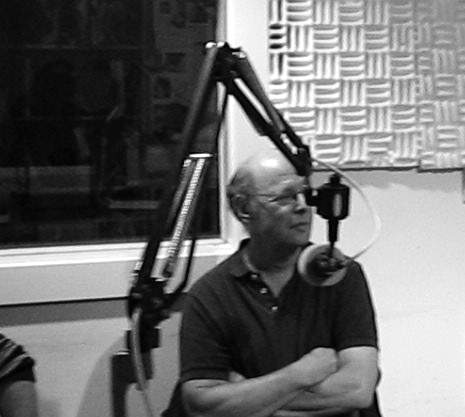
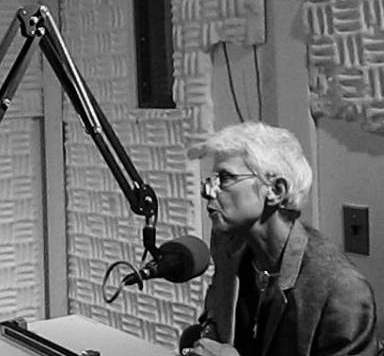
Lawyer’s You’ll Like: Rhonda Copelon Part II
This is the second part of our Lawyers You’ll Like interview with attorney Rhonda Copelon. She is a professor at the Law School of the City University of New York and director of the school’s International Human Rights Law Clinic. Rhonda is also the Legal Advisor to the Women’s Caucus for Gender Justice. Rhonda shares with us, her history of fighting for the constitutionality of the abortion cases in New York City and its effect on poor women in a pre-Roe v Wade climate. She also discuss the Harlem 6 case. Let’s have a listen.
From Article on New International Criminal Court: “The breadth and specificity of gender crimes in the court’s enabling statutes are directly attributable to a global caucus of women that formed in 1997 in the face of apathy and active resistance to prosecuting gender-based crimes. “Women made a huge difference,” said Rhonda Copeland, a professor at the Law School of the City University of New York and director of the school’s International Human Rights Law Clinic.
“They made it impossible to ignore that women have been left out of justice and that we have to be in it,” Copeland said. “If there were nobody there saying ‘this is violence,’ I don’t know how it would have happened.”Rhonda shares with listeners, her history of fighting for the constitutionality of the abortion cases in New York City and its effect on poor women in a pre-Roe v Wade climate. She also discuss the Harlem 6 case.
Rhonda Copelon:
- Harris v McRae – Rhonda Copelon argued. The case tried to get the federal government to pay for poor women’s abortions. We didn’t go to court to get medicaid for women, we went to court to save it.
- McRae has become a 2 line footnote in text books today and there’s a certain way that people have accepted that medicaid doesn’t have to pay for abortions
- 30 years is enough campaign.
- The more these terrible precedents come down, the more we absorb them as culture instead of viewing them as needing to be reversed.
- Historically, based on race and class, women have been treated differently in terms of their reproductive rights.
- When the original anti-abortion laws started to come in to the United States, it was primarily wanting to be sure that the white population of the US would not be out reproduced by the immigrant population and the way to do that was to cut back on abortion.
- The anti-abortion law, the original purposes was to increase reproduction among the elite and also to get rid of those women lay-healers.
- The original abortion laws were class based. In 20th century, class based eugenics laws, sterilization laws. Buck v Bell / you sterilize those who are socially inappropriate.
- Puerto Rican sterilization program. Before Roe v Wade, you couldn’t get a legal sterilization without the rule of 120.
- Religion twisted this around. The Catholic church in the mid 70s – a pastoral plan for pro-life activities.
- The goal was a human right amendment, which was a complete prohibition on abortion. Affecting poor women dependent on tax payer money.
- There’s a lot of evidence that the church went along with family planning in poor neighborhoods in the 60s because it had a population reduction role.
- When you get to abortion, they put the political / religious ahead of the population goals, and what you get is this mobilization to stop medicaid funding for poor women.
- In 1978, you had a historic coming together of the Catholic church and the Protestant evangelicals on the issue of abortion.
- It’s very important to look at the role of extremist religion in this country. When you look at the mega-churches, the power they’ve had to undo the first amendment, in terms of establishment of religion.
- Hyde amendment: the cutoff of medicaid.
Guest – Attorney Rhonda Copelon, professor at the Law School of the City University of New York and director of the school’s International Human Rights Law Clinic. Rhonda is also the legal adviser to the Women’s Caucus for Gender Justice.
———
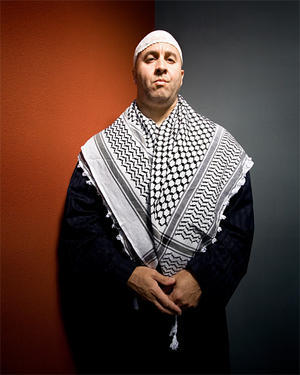
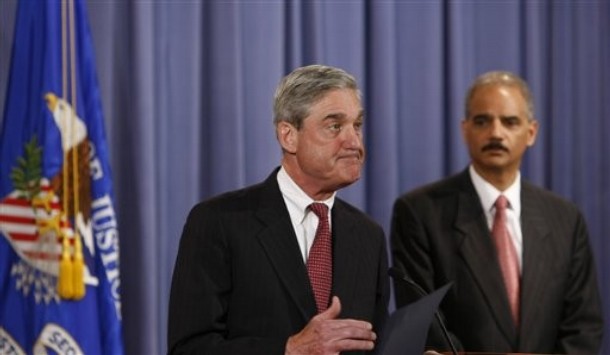
(Encore Interview:) FBI Defends Use of Informants To Spy On Mosques
FBI Director Robert Mueller defended the practice of using informants to monitor mosques in the United States, despite being heavily criticized by attorneys, and Muslim American leaders. Last month a judge ordered the FBI to submit 100 documents detailing the bureau’s surveillance of Muslim leaders in California, which revealed the FBI paid informants to be provocateurs. These cases fit into patterns where paid informants (often a former felon) entice innocent people into a crime, not unlike the Liberty 7 case, the Fort Dix case and the Memorial Day weekend terror plot in upstate New York. In the New York case, Mike German, a former FBI agent of 16 years and now an attorney with the ACLU told Law and Disorder, they “could have wrapped up without making it seem like they’re saving New York City from this terrible destruction.” The media then reports the story which will often prop up the ongoing “War on Terror.”
Shakeel Syed:
- Council of Islamic Organizations sent a letter to Attny Gen. Eric Holder complaining about the FBI infiltration and harassment
- We are baffled at this time, there is a great deal of surplus of rhetoric by the current administration and a deficit at the policy level.
- When Mueller says the FBI will escalate surveillance of mosques and the Obama Administration is silent, that disturbs me.
- This is legal religious bigotry, Mueller is lying in regard to they’re not surveilling the mosques but only the suspected individuals.
- I have stopped using the word provocateur, I shuffle between using the word provocateur and predator.
- Those targeted have pending immigration and naturalization files or converting from H1 visa to resident visa.
- When our community was doing outreach with public officers, I was in the FBI offices during 2003-2005, and I realized then I was being tailgated.
- My phone was tapped on. A few times the phone automatically dialed the local police.
- My hope as a Muslim American is that good American people will stand up in these challenging times.
Guest – Shakeel Syed, Executive Director of the Islamic Shura Council of Southern California.
———————————————————–
Afghanistan War, Civil Liberties, Criminalizing Dissent, Guantanamo, Human Rights, Supreme Court, Surveillance, Targeting Muslims, Truth to Power
Podcast: Play in new window | Download
Updates:
—–
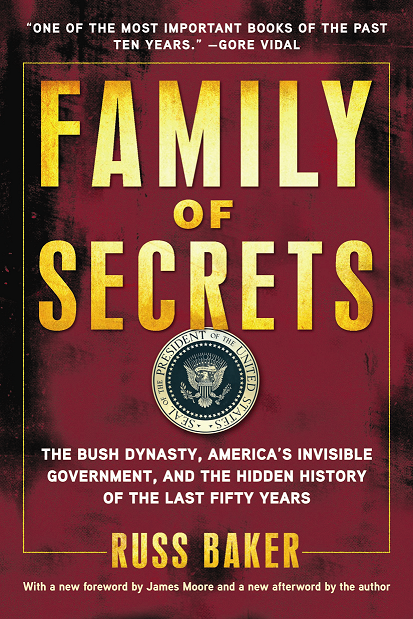

Family of Secrets: The Bush Dynasty, the Powerful Forces That Put It in the White House, and What Their Influence Means for America
From the Kennedy assassination to Watergate to Prescott Bush’s ties to Nazi Germany, the book Family of Secrets: The Bush Dynasty, the Powerful Forces That Put It in the White House, and What Their Influence Means for America, digs into the hidden history of the Bush family. Author Russ Baker takes on the Bush legacy with powerful investigative journalism. One review states that the chapter on George W Bush’s private life is worth the price of the book alone. Baker also reveals George H Walker Bush’s connections with the CIA began in 1953, not when he publicly joined the agency in 1976. Bush’s oil companies were used as fronts for the intelligence agencies around the world with an agenda controlled by power brokers. Award winning investigative reporter Russ Baker also tells us why this insight into the Bush family is important to know now during the Obama administration.
Russ Baker:
- I was training investigative journalists in Yugoslavia 2002, and when I traveled Europe people were asking me what has happened to your country. I knew superficially what happened, but I didn’t know why it happened.
- From the son, I looked into the father,because had the father not been president, the son wouldn’t be president.
- George HW Bush had a secret past more than 20 years, preceding his appointment to the CIA in 1976
- George HW Bush, starts up offshore drilling companies that make no sense, very few customers, very few rigs, but he’s traveling all over the world. It’s perfect intelligence cover.
- They even put a rig in Cuba before the Bay of Pigs, they had Cuban exiles working there
- Ok, he’s working in intelligence, I assume that’s what he’s doing while he was a Congressman, an oil man, an ambassador to the UN. This is fascinating and also deeply troubling.
- I think what we’re looking at is a permanent construct of power.
- Journalists: I don’t think they’ll say so publicly but privately they’ll tell you how scared they are, whether for their personal safety or they don’t want to lose their job.
- The Bush dynasty was the ultimate triumph of the military industrial complex that Dwight Eisenhower, a formal general had warned us about.
- Harry Truman speech on the CIA: I signed the Act that created the CIA, but they never told me the kinda things that they got in to.
- The Bush Family: You see them as the ultimate operatives on behalf of the coalition of powerful Wall St. interests, military contractors, resource extraction mining interests, going all over the world to bring back the plunder essentially.
- They (Bush family) are the representatives, they are not the bosses.
- Obama: It’s very difficult to go against these interests. Our economy runs on war, it’s very difficult to undo that.
- I, myself was naive, and I covered politics for more than 20 years, and I never understood the extent at which democracy is subverted.
- Power in America resides in pool of people about whom we’ve never even heard, the only way you find out is if you look at these Fortune 1000 lists. This is not a conspiracy, it’s just the way things work.
- Michael Smith: When I was starting out and learning how this country works, I was reading C.Wright Mills, Ferdinand Lunberg.
- Guest host Jim Lafferty: This is a matter of commonality of interests that run this country
- Whowhatwhy.com – specialized in doing deep politics investigation – historic epics that haven’t been properly explored.
- Everybody hated Kennedy except the people.
Guest – Russ Baker is an award-winning investigative reporter with a track record for making sense of complex and little understood matters. He has written for the New Yorker, Vanity Fair, the Nation, the New York Times, the Washington Post, the Village Voice and Esquire. He has also served as a contributing editor to the Columbia Journalism Review. Baker received a 2005 Deadline Club award for his exclusive reporting on George W. Bush’s military record. He is the founder of WhoWhatWhy/the Real News Project, a nonpartisan, nonprofit investigative news organization, operating at whowhatwhy.com.
——————–

MondoWeiss: The War of Ideas In the Middle East
Did the recent bombing of Gaza and killing of 1400 Palestinians create a breakdown in the traditional Jewish American support for Israel? In the first of its kind, last month’s J Street Conference brought together 1500 people to the meeting aimed at ending the Arab-Israeli and Israeli-Palestinian conflicts peacefully and diplomatically. The conference is a political arm of the pro-Israel pro peace movement that also lobbied more than 100 members of Congress to press forward with the peace process and two state solution.
Meanwhile the Boycott Divest and Sanction movement gains momentum and Code Pink activists continue to protest, demonstrate in and around Gaza. As many listeners may know living conditions in the Gaza Strip has deteriorated. Salt water has contaminated a large percentage of drinking water and is damaging the kidneys of Palestinian children.
Philip Weiss:
- J Street is the alternative Israel lobby or alternative Jewish lobby because they identify themselves as a Jewish organization.
- They are taking on AIPAC, which has traditionally taken on the role to shape the US response to Israel.
- It was landmark moment in changing the original purpose of the Israel lobby to speak with one voice
- Here’s a lobby that says. . guess what? Jews are not going to speak with one voice, we’re going to have a lot of different voices that contend on this issue.
- Finally there’s a little bit of fragmenting of this reactionary force of AIPAC and the Israel lobby.
- 160 Congressmen were at the J Street Conference in Washington DC. You saw lefty-Jews with a spring in their step. The conference disappointed me in a number of ways, it only had Zionists, progressive Zionists. It condemned the Goldstone Report
- There were some bright lights at this conference. It’s not that different from AIPAC in a number of ways.
- There was a strong sense if you were to speak there (J Street Conf.) you had to be a Zionist.
- Zionist: I think it is support for a Jewish state. We need a Jewish state because we could be persecuted again and we need to go somewhere.
- Generally the rank and file of these people are old Jewish leftys. J Street represents a break in the heresy. The heresy is that we speak with one voice. This process of colonization continues in the West Bank, unabated basically.
- One state with an apartheid system and that’s going to be the struggle. I think if you scratch any Jew in this country he has some connection to Israel. For me it was the 9/11 thing. As they say.
- My brother said, I demonstrated against the Vietnam War, as I did, but my Jewish newspaper says the Iraq War could be good for Israel.
- I couldn’t avoid the issue anymore then when I confronted the issue I became this Palestinian Solidarity person.
- The desperation is heightened by the fact there’s so little recognition of that in the United States.
- Goldstone, a Jewish Jurist from South Africa who fought apartheid and Bosnian war crimes, that he could say. . look this is persecution . . and that can be so ignored, defied and stomped on in the United States. .it’s a horror.
- Our country can affect the situation ( In Gaza / West Bank)
Guest – Peter Weiss, longtime journalist and regular contributor to the Nation and a fellow at the Nation Institute Philip is the author of two books a political novel, Cock-A-Doodle-Doo, and American Taboo, an investigative account of a 1976 murder in the Peace Corps in the Kingdom of Tonga. His website is called Mondoweiss, it explores Middle East policy and Israel/Palestine issues. Philip attended the J Street Conference 2 months ago.
————————————————————–
Afghanistan War, Censorship, Civil Liberties, Climate Change, Criminalizing Dissent, FBI Intrusion, Habeas Corpus, Human Rights, Surveillance, Targeting Muslims, Torture, Truth to Power
Podcast: Play in new window | Download
Updates:
—————————–
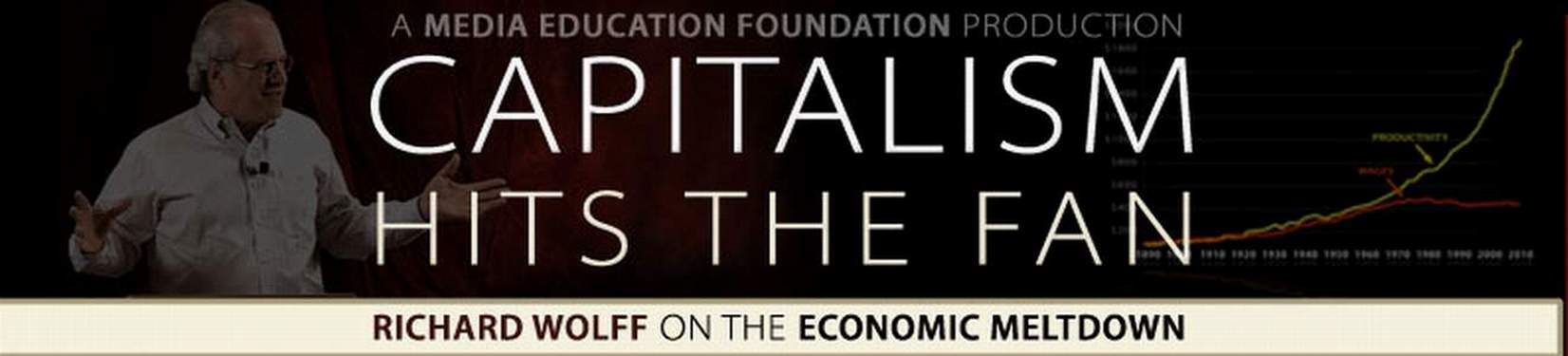
Capitalism Hits the Fan: The Global Economic Meltdown and What to Do About It (THE BOOK)
Today we welcome back Rick Wolff, Professor of Economics at the University of Massachusetts to discuss his new book titled Capitalism Hits the Fan: The Global Economic Meltdown and What to Do About It. In his book, Rick takes the reader back to 2005 and step by step reveals how policies, economic structures and wage-to-profit systems led to a global economic collapse.
Rick Wolff will give us an update on why the media claims the recession is over, he also tells us if there be another leg down as predicted in the September 21st interview. Another leg down meaning, will the economy continue to drop? This was mentioned because of the way people were investing, investing in a way that expected the market to drop.
Rick Wolff:
- The origin of the economic crisis goes deep into history. It’s one of the key things that people don’t understand or want to face. Roots of a System’s Crisis
- We were a country founded by foreigners coming here, they got rid of the indigenous population. They established a mix system. Capitalism on one hand, with employers and employees, and then self employed farmers and small crafts people, and in the Southern US, slavery.
- When the dust cleared, capitalism came through, it destroyed slavery and suboridinated the self employed to be small and on the margins.
- For 150 years – 1820-1970 the growth of capital was outrunning the available labor supply. Laborers had options, could go West.
- For 150 years, the goods and services a person could buy from an hour of their wages kept going up. It produced a strange and unusual notion that you were blessed, if you worked hard you would make more money.
- That Americans could have a dream like that. . their children could have a better life and deliver on the promise.
- It drew millions of immigrants from all over the world etc.
- Then after the 1970s capitalism reminded us that it is not a guarantee that if you work hard you will be rewarded.
- In the last 30 years wages have not anymore gone up. It’s a sea change in our culture’s history.
- Wages stayed the same for these reasons:
- The arrival of the computer that substituted people for machines on a mammoth scale
- The movement of corporations to other parts of the world to take advantage of cheaper labor.
- Women and immigrants moving into the paid labor force. This plunged the US economy into a disaster zone.
- The end of rising wages. Americans today work 20 percent more hours a week, than their counterparts in France, Germany or Italy. They are exhausted physically. The families are in disarray.
- Then to consume more, live the American dream, they borrowed on credit, the likes of which no working class in the history of the world has ever done.
- The average debt of US family in the 1920s equaled about 1/3 of its annual income. In 2007, the level of debt equaled 125 percent of annual income. At the same time, the last 30 years have been greatest boom of profitability of American corporations.
- Where did the money come from to lend unprecedented amounts? The money came from the boom in profits made possible by there no longer being a rise in wages. You not only get the profitability of a flat wage situation but you get the added income from the interest that comes from lending.
- The reforms and regulations we’ve seen, don’t work. The only thing that got Americans working again after a 10 year depression – 1929-1939, was not economic reform and regulation, it was something called WWII.
- Corporations used their profits to weaken reform laws, buy politicians, create army of Lobbyists.
- The American people MUST demand different responses to this crisis than what there was in the past.
- Handing corporations the citizen’s tax money as bail out is folly.
- We have 15 million adults looking for work, 10 million more are discouraged and have given up.
- The first thing this government should do is provide work for the unemployed.
- Not bailing out the banks. The private sector has failed in the United States.
- The government should support enterprises that workers run them, form them as their own enterprises in a collective way that is different from capitalist corporations
- Let workers choose if they want to work for an enterprise run by workers or capitalists. Let us as consumers choose from good and services produced in a non-capitalist way alongside the capitalist.
Guest – Rick Wolff, Professor of Economics at University of Massachusetts at Amherst. In his new book Capitalism Hits the Fan: The Global Economic Meltdown and What to Do About, Rick takes the reader back to 2005 and step by step reveals how policies, economic structures and wage to profit systems led to a global economic collapse.
—–
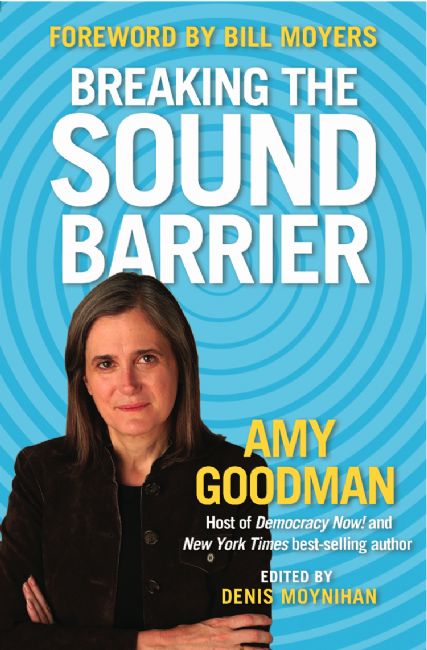
Amy Goodman: Breaking the Sound Barrier.
Today, we’re very pleased to talk with award-winning investigative journalist and syndicated columnist, author and the host/executive producer of Democracy Now! Amy Goodman. Her new book titled Breaking the Sound Barrier is a collection of wide-ranging articles reminding the reader of what true independent journalism can do. Amy’s style of journalism breaks through the corporate media noise with stories from community organizers in New Orleans to the brave soldiers resisting war in Iraq and Afghanistan. Truthout
Author and journalist Chris Hedges writes : “Amy Goodman is one of the most important voices in America. She defies the noise and clamor of celebrity gossip. She challenges the manipulation of information and dissemination of lies by the power elite. She refuses to pander to a culture where news is seen as another form of entertainment designed to bolster corporate profits. She holds steadfast to the core values of our trade. Her integrity and honesty remind us that a culture that cannot distinguish between illusion and reality dies.”
Amy Goodman:
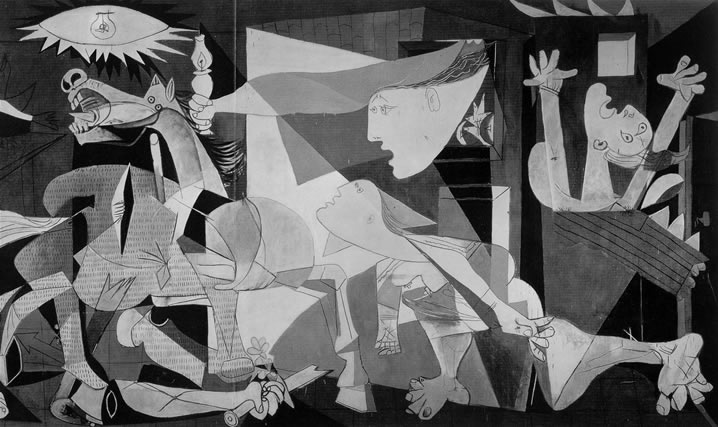
- Picasso’s famous anti-war painting Guernica in front of the UN Security Council. When Colin Powell went to the UN and they had a press conference, this painting was the backdrop and so they shrouded it in a blue curtain. We have to rip that shroud every which way, we have to tear it, because that’s what journalism is all about.
- Most of the voices in these columns are the people we interview on Democracy Now. The media is ahistoric, it whites out history. How are young people supposed to figure out what to do when they have no sense of what came before? What are the models, what works, what doesn’t work?
- Look at the money shifting from those who least have it to those who most have it, whether we’re talking about the economic meltdown. Obama surrounding himself by the Goldman Sachs folks.
- The model of community organizing has to be adopted by people all over the country.
- It’s not going to happen because there’s one person in the white house.
- The people with money and power walking the halls of the west wing, whispering in the commander in chief’s ear, and he says, if I do that, they will storm the Bastille.
- If there’s no one out there that he’s pointing at, we’re all in very big trouble.
- Breaking the Sound Barrier is the name of the column I do every week and the column appears in more than a hundred newspapers around the country. I think it is very important for people who consider themselves activists in this country hold their leaders accountable.
- It’s the right for people to conduct their lives in this country without being spied on or infiltrated.
Guest – Amy Goodman, host and executive producer of Democracy Now!, a national, daily, independent, award-winning news program airing on over 800 TV and radio stations in North America. Time Magazine named Democracy Now! its “Pick of the Podcasts,” along with NBC’s Meet the Press.
Goodman is the first journalist to receive the Right Livelihood Award, widely known as the ‘Alternative Nobel Prize’ for “developing an innovative model of truly independent grassroots political journalism that brings to millions of people the alternative voices that are often excluded by the mainstream media.” She is also one of the the first recipients, along with Salon.com blogger Glenn Greenwald, of the Park Center for Independent Media’s Izzy Award, named for the great muckraking journalist I.F. Stone.
—————————————————————-
Afghanistan War, Civil Liberties, Criminalizing Dissent, FBI Intrusion, Habeas Corpus, Human Rights, Surveillance, Targeting Muslims, Torture, Truth to Power
Podcast: Play in new window | Download
Listen to Law and Disorder live Monday November 9 at 9:00AM EST WBAI 99.5 FM: At 9:30 AM Michael Ratner Interviews Democracy Now’s Amy Goodman on her new book Breaking the Sound Barrier – Based on her columns for King Features Syndicate, this wide-ranging new collection of articles breaks through the corporate media’s lies, sound-bites, and silence. In place of the usual suspects— the “experts” who, in Goodman’s words, “know so little about so much, explain the world to us, and get it so wrong”
Updates:
Michael Ratner Update: Congress Should Not Reject Goldstone Report
—–

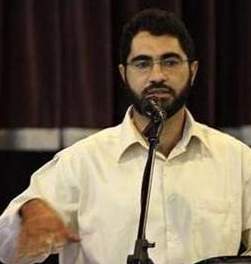
FBI Threaten Deportation To Muslim Man Refusing To Be Secret Informant
It was in 2004, that the FBI began to apply intense pressure on Foad Farahi to become a secret informant and spy on members of his mosque. Farahi, an Imam in Miami Florida refused. As many listeners may know, an imam is among the designated leaders in a community or mosque who leads prayers during gatherings and helps others understand the teachings of Islam. The FBI saw Farahi to be in a unique position to know local Muslim men. Farahi had met several South Floridians who allegedly had links to terrorism, including Jose Padilla.
Farahi refused to become a secret informant and the FBI knew he was in a vulnerable position. His student visa expired and he had applied for political asylum that could allow him to stay in the U.S. indefinitely. More than 2 years had past and in 2007, two agents showed up again asking Farahi to become an informant, he refused. In late 2007 Farahi was at a routine hearing for his political asylum case when he was told by his attorney that the ICE has a file with evidence that he is involved with a terrorist case. He was later presented with an ultimatum to drop the asylum case and leave the United States voluntarily, or be charged as a terrorist. Farahi agreed to voluntarily leave the US, but his passport expired, that gave him a little more time, and he later realized the government was bluffing and then hired attorney Ira Kurzban, a well-known advocate for immigrants’ rights.
(Law and Disorder archive Targeting Muslims Page 1 / Page 2)
Kurzban asked the Board of Immigration Appeals to throw out Farahi’s voluntary departure order, they refused. The legal battle has put Farahi’s immigration status in limbo. Kurzban told the Miami Times quote I think the real issue is, does the government have the right to pressure people… to make them informants?” —- “It’s clearly modus operandi of the FBI to recruit people who are going to be informants and to use whatever leverage they can.”
Ira Kurzban:
- Foad as an Imam, did not want to spy on others, but said to the FBI he would help them anyway he could.
- He was then put into removal (deportation) proceedings.
- The guilt by association method that the FBI has been using as an intimidation tactic is very reminiscent of the McCarthy period.
- The judge who originally denied Foad’s hearing was dismissed.
- We are now at the 11th Circuit of Appeals and an oral argument has been set.
- Immigrantslist.org – Political Action Committee
- This case represents a much broader pattern by the FBI and the government in trying to intimidate people into working as informants.
- They’re desperate to get informants but they’re using upstanding citizens to do bad things.
- The tragedy is that they’re turning people who are friendly to the United States into enemies.
Guest – Attorney Ira Kurzban, an adjunct faculty member in Immigration and Nationality Law at the University of Miami School of Law and Nova Southeastern University School of Law and has lectured and published extensively in the field of immigration law, including articles in the Harvard Law Review, San Diego Law Review and other publications.
——–
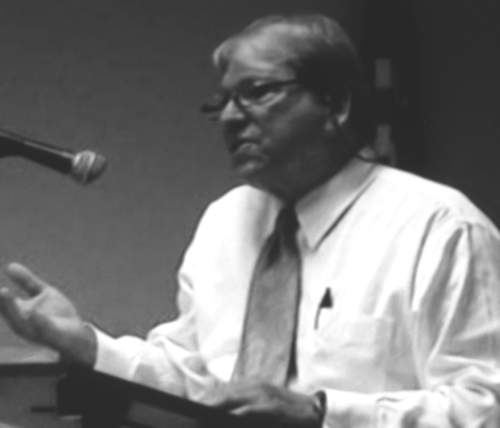
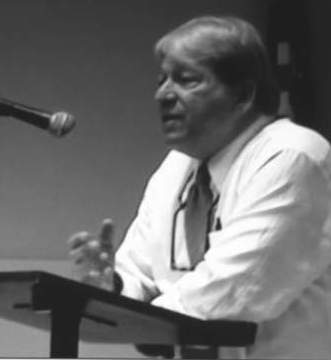
Michael Steven Smith – In Memory of Bob Boehm, Center for Constitutional Rights Vice President
On the recent eighth anniversary of the events of September 11th, our own Michael Steven Smith, draws a balance sheet on the state of democratic rights in America. He spoke to a captive audience on the long standing Five Towns Forum on Long Island in honor of recently deceased Center for Constitutional Rights Vice President Bob Boehm.
——-
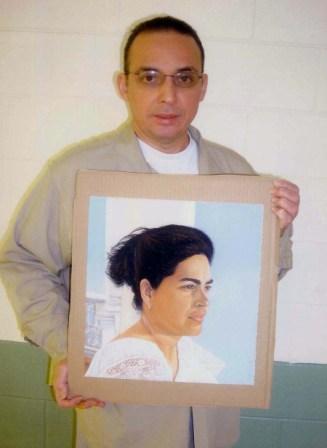
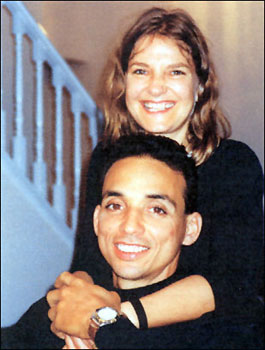
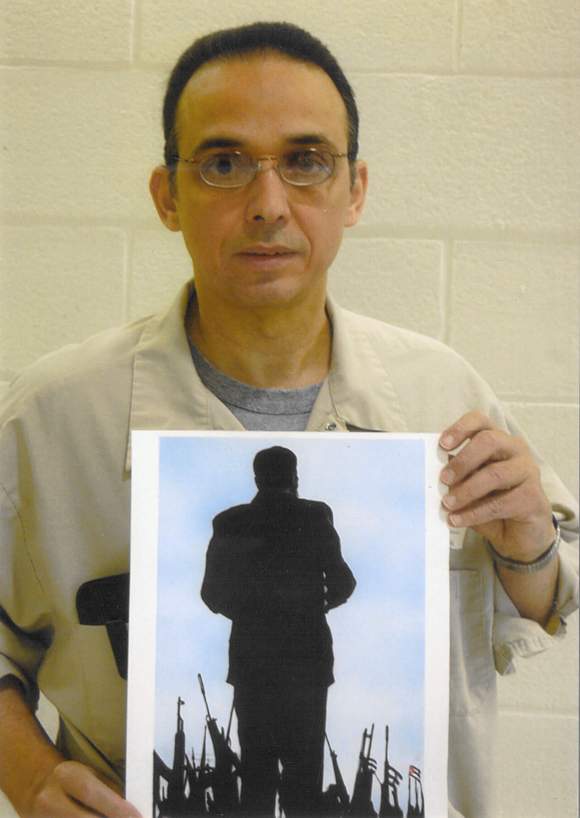
Cuban Five Update: The Re-sentencing of Antonio Guerrero
Earlier this month, Federal Judge Joan A Lenardo replaced the life sentence for Antonio Guerrero, one of the Cuban Five. Mr. Guerrero, a United States citizen, was convicted of spying for Cuba while working at the Naval Air Station in Key West. His sentence was reduced to almost 22 years, which means he could be out of prison in nearly seven years. Mr Guerrero’s attorneys had asked for the sentence to be reduced to 240 months, but Judge Lenardo set it at 262 months.
Mr. Guerrero’s lawyer, Len Weinglass told the New York Times, it was an odd decision, he said “You have a man who was on a military base but who didn’t take a single classified document and no one testified that he injured U.S. national security, but the judge still rejects the prosecutors’ request to lighten the sentence.” Transcript of Hearing
Len Weinglass:
- Antonio Guerrero who I represent, was originally sentenced to life in prison.
- The appellate courts reduced the life sentence for the conspiracy to commit espionage against 3 of the Cuban Five
- The decision only remanded life sentences for ultimately 2 of the Cuban Five including Antonio Guerrero
- We returned to Miami for the re-sentencing on October 13. Prior to the re-sentencing, we negotiated with the government on the issue of re-sentencing alone, making it clear there was no admission of guilt on the underlying charge, which we are still contesting on a later collateral attack.
- We agreed that it should come down from a life sentence to a period of 20 years.
- In Miami, the judge took the very unusual step of setting the agreement aside, and set the term to 21 years and 10 months.
- You can’t give a life sentence ( in this case) on what they intended to get, you can only give a life sentence on top secret information they did get. So, the original life sentence was wrong.
- When we got into the re-sentencing hearing, she got back to her original position as if the appellate court hadn’t ruled.
- I got very upset, the courtroom was packed. Packed with the same old crowd. The crowd in Miami that backs these para-miltary forces, they put the widows up front.
- I got upset at what I sought to be a climate that was being generated in that hearing and so I reminded the judge very forcibly that she was sentencing an individual not a country.
- I had given the court government documents from the Bureau of Prisons, all of them saying that Antonio Guerrero who was serving a faulty life sentence, and sent to a maxium security prison, which he shouldn’t have been sent, because the sentence was wrong.
- But the warden, his counselor and the supervisor of the unit, all extolled his behavior and most significantly pointed out that he had helped save a number of inmates all of whom were doing life sentences, from an encouragable future, by training them in English and Math and overseeing them getting their GED.
- At that time, she was about to pronounce sentence, then she stopped, walked off the bench.
- When the judge came back, the first thing she did is recite a Supreme Court decision, all federal judges must sentence an individual according to his character.
- Antonio was 39 when he was arrested and he will be nearly 60 when he is released. That’s the heart of a lifetime.
- There was no acknowledgment of context here. That this was provoked by a pattern of violence by the US directed at Cuba. Where more than 3000 people have died in the past 40 years from violence coming from Southern Florida.
- The Cuban Five performed their task, nobody was harmed, no property damaged and they end up with life sentences for that operation.
- It came to light that the federal government was paying members of the press in Miami as part of their anti-Castro campaign to write articles about this case that were highly prejudicial. People who were reporters but were on the federal payroll.
- Can the government be responsible for creating a prejudicial atmosphere?
- He was at the most hard-nosed prison and after seven years the warden of that prison wrote the Regional Bureau of Prisons, asking that Antonio be released from that prison. He doesn’t belong, there, he is a lovely sensitive man.
Guest – Attorney Len Weinglass, who represented the Cuban Five, as William Kunstler’s younger partner, Len Weinglass was considered the work horse of the defense team. He’s worked on a number of political cases including the Pentagon Papers trial and the Angela Davis case. He’s a Yale Law School graduate and former U.S. Air Force Captain.
—————————————————————————————————————-
Afghanistan War, CIA Sponsored Terror, Civil Liberties, FBI Intrusion, Guantanamo, Habeas Corpus, Human Rights, Surveillance, Targeting Muslims, Torture, Truth to Power
Podcast: Play in new window | Download
Updates:
———


Historic Strike – Privatizing Puerto Rico; Bar Association Dismantled.
Public services grinded to a halt on October 15 in Puerto Rico as a massive one day general strike brought more than 100 thousand people to protest the lay off of about 17 thousand of Puerto Rico’s public employees. The demonstration shut down all state-owned enterprises including the island’s schools and colleges. The airport remained opened, while tens of thousands were reported to converge on San Juan’s Plaza Las Americas.
Main labor organizations, the General Workers Union and the All Puerto Rico for Puerto Rico Coaltion supported the general strike. In May of this year, the Puerto Rican government laid off nearly 8 thousand employees and then hired about 3 thousand temporary teachers and assistants. Union leaders claim that Governor Luis Fortuno is planning to privatize government services. Outrage to the proposed layoffs have rippled into New York City, amid second largest community of Puerto Rican people.
Attorney Judith Berkan:
- Public worker dismissals at almost 25 thousand.
- Any agencies who deal in service to the poor or working class in Puerto Rico
- Two days before the strike, the governor signed and passed a bill aimed at dismantling the Bar Association
- After the massive first strike there have been daily strikes
- They want to return us to the days of the Oligarchy, concentrating wealth into the hands of a few while the remainders pick up the crumbs
- Protesters: Students from every university, every sector of the labor movement, the religious sector, cultural organizations, 700 school principals.
- There were 2000 janitors in the schools, right now there are no janitors in the schools of Puerto Rico and that’s going to be privatized.
- Two thousand school janitors were fired in the middle of the swine flu scare. The government plans to put these jobs out to bid for private companies.
- The atitude is . . . we’re doing this and the rest of you be damned.
- Puerto Rican government: Marcus Rodriguez Ema brought in again whose forte has always been privatization. He said on a radio station that if there was any blockage of commerce that it could be brought under the Patriot Act. He said that they are terrorists and they’re trying to block commerce.
- The way they framed it, if you stop commerce, particularly, the docks and the airports, that would be sanctionable under federal law.
- There have been a number of very offensive comments by the people in charge. Calling community leaders leeches, lowlifes, openly.
- The legislation has cut off funding for the Bar Association in Puerto Rico.
- I think the militancy will continue, we have not seen the last of general strikes here.
Guest – Attorney Judith Berkan, is a partner in the San Juan law firm of Berkan/Mendez. She specializes in government misconduct litigation and employment discrimination cases. Berkan worked as an attorney in New Haven, Connecticut before going to Puerto Rico as the staff attorney for the Puerto Rico Legal Project of the National Lawyers Guild, now the Puerto Rico Civil Rights Institute. For twenty-seven years, she has been teaching, primarily in the Constitutional Law area, at the Inter American University Law School in San Juan, Puerto Rico.
A frequent speaker and author of many articles on civil rights issues, she was the President of the Human Rights Commission of the Puerto Rico Bar Association in the mid-1990’s and a member of the Commonwealth Supreme Court’s task force on gender discrimination.
——–
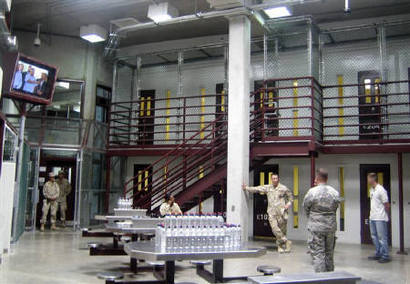
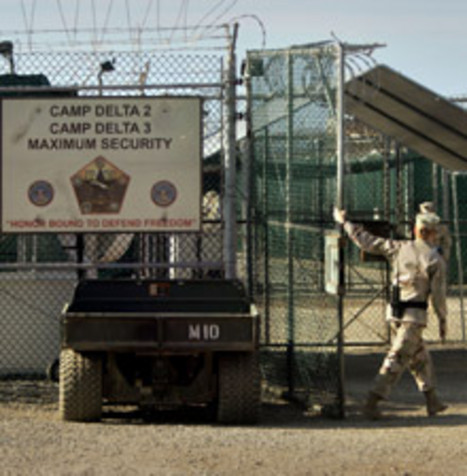
Guantanamo Update: 223 people left in Guantanamo, 97 are Yemeni.
Alla Ali Bin Ahmed was among the 98 remaining Yemeni prisoners let go from Guantanamo Bay prison. In May of this year, a judge reviewed the government’s classified evidence again Ahmed, and ruled that his incarceration had never been justified. Never been justified? Yet, he remained like many Yemenis in Guantanamo Prison. Earlier this year, the Center for Constitutional Rights called for all Yemeni detainees to be released and repatriated. In a media statement, CCR attorney Pardiss Kabriaei, said ” More than one-third of the prisoners at Guantanamo right now are from Yemen. Most have been detained without any charge and in brutal conditions for over six years. It is unacceptable that the Yemeni and U.S. governments have not come to an agreement to bring these men home. There is absolutely nothing which should prevent their return to Yemen.” Law and Disorder March 2009 Interview with Pardiss
Attorney Pardiss Kebriaei:
- This is the part of Guantanamo that is about accountability.
- A case filed in 2008 on behalf of 2 men that died in Guantanamo on June 2006
- We brought this case against 20 officials, including Rumsfeld and Michael Leonard, Jeffrey Miller, people who were in charge of and approved torture techniques.
- U.S. Army General Bantz John Craddock who introduced a policy of force feeding in Guantanamo whereby detainees are literally strapped into chairs that are called restraint chairs, strapped in at five points, while a tube is forced up their nose and down their stomachs and formula is pumped into them for about an hour
- also named are physicans who knew by virtue of reports from the Red Cross.
- Center for Constitutional Rights – When Healers Harm – A focus on the accountability of medical personnel in Guantanamo who have a professional duty and oath to protect the health and well-being of men.
- It took 2 years for the military to conduct its investigation of these suicides.
- We filed Monday Oct 6, a motion to dismiss, they want to get rid of the case essentially, under the point that reporting claims of abuse are barred under the Military Commissions Act of 2006
- There is a provision in it Section 7, we’re challenging the constitutionality of that provision, the provision in the Military Commissions Act of 2006, that prevents detainees to bring lawsuits against the United States, the first time this MCA, has been asserted, now under the Obama Administration.
- Mohammed al Qahtani video tapes documents the torture he was experiencing, forced nudity, prolonged solitary confinement, using dogs and sexual abuse. Those are the methods that were approved by Donald Rumsfeld in 2002
- January deadline to close Guantanamo is not going to be met, according to US Attorney Gen. Holder
- 223 people left in Guantanamo, 97 are Yemeni.
- Federal judges have ruled on some 30 cases, that there is no lawful basis to hold them, yet of 30, 19 remain in Guantanamo. (Kuwaitis / Yemenis)
- Not the worst of the worst left in Guantanamo, it is nationality.
- There are innocent people who have been in prison for 8 years, it’s not a solution to sit back any longer.
- Guantanamo may stay open a few months past January and then transfer prisoners to the US.
Guest – Pardiss Kebriaei, Staff Attorney with the Guantanamo Global Justice Initiative, at the Center For Constitutional Rights.
—————————————————————————
CIA Sponsored Terror, Civil Liberties, Guantanamo, Habeas Corpus, Human Rights, Prosecution of the Bush Administration, Supreme Court, Surveillance, Targeting Muslims, Torture, Truth to Power
Podcast: Play in new window | Download
Host Updates:

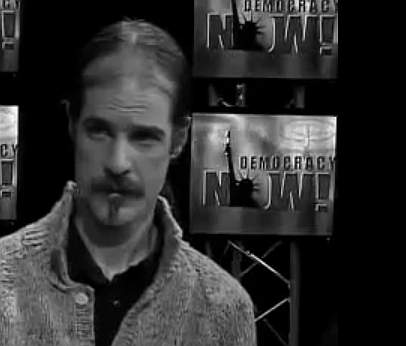
Elliot Madison: Activist Arrested for Using Twitter To Communicate With G20 Protesters.
Elliot Madison, a social worker and activist was arrested in Pittsburgh last month during the G20 Summit and was charged with hindering apprehension or prosecution, criminal use of a communication facility and possession of instruments of crime. The Pennsylvania State Police say he was found in a hotel room with police scanners and computers while using the social networking site Twitter to communicate police movements to protesters. Madison recently said “They arrested me for doing the same thing everybody else was doing, which was perfectly legal,” he said. “It was crucial for people to have the information we were sending.” Madison’s laywer Martin Stolar told the New York Times “He and a friend were part of a communications network among people protesting the G-20,” Mr. Madison’s lawyer, Martin Stolar, said. “There’s absolutely nothing that he’s done that should subject him to any criminal liability.”
Attorney Martin Stolar:
- It seems it would be helping out the police in a way. They’re saying disperse, don’t go here, don’t go there.
- They selected him for some reason amid all the various people posting things on twitter boards
- They got a search warrant for his hotel room, rousted he and a colleague who was there, arrested Elliot and he was held on a 30 thousand dollar bail.
- Unfortunately, agents of the FBI, and the Joint Terrorism Task Force, showed up at his home in Queens, with a search warrant issued by a Federal Court in Brooklyn, seeking evidence of violating the federal anti-rioting laws. (H.Rap Brown Act) Think about the Chicago 8.
- They spent 16 hours searching his home, grabbing everything in sight, it was terribly unclear what would violate this law. So they took pictures of Lenin, his writings, computers, material from producing a documentary film.
- The warrants seemed properly issued, until I can see the affidavits that underlie the warrant.
- I whipped up some legal papers to show cause and a motion under Federal rules of criminal procedure 41G. A motion for the return of property illegally seized.
- He is accused of posting stuff that is publicly available, that is a police scanner that is posted on the internet, such as a police order to disperse.
- That information is passed on through the Twitter board and that constitutes the crime that he is charged with.
- Law enforcement is targeting those who provide support for lawful demonstrations.
- This case is a first in Pennsylvania and a real stretch in criminal law to penalize what is essentially speech
- In New York, there is potentially a separate investigation in which Elliot is a target
- The so-called Green Revolution in Iran, the demonstrators were using Twitter, in exactly the same way the folks in the G20 used it. When the oppressive government came down on the Iranian students using Twitter, the US State Dept said, wait a minute there are free speech issues here.
Guest – Attorney Martin Stolar, president of the New York chapter of the National Lawyers Guild.
———
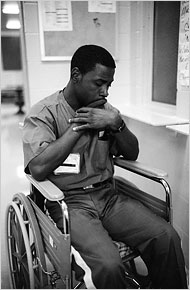
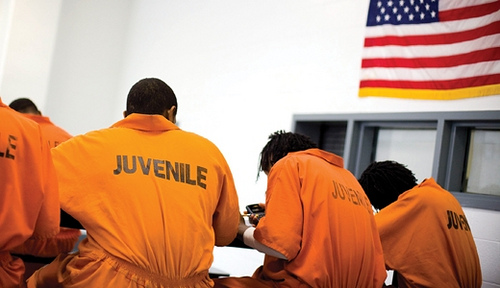
Supreme Court To Argue Life Without Parole Cases For Children
The Supreme Court will address whether it’s constitutional to sentence a child to be imprisoned for life without parole for an offense committed during adolescence. There will be two main cases the Supreme Court will argue. One is the case involving Joe Sullivan. Joe, at the time, was a mentally disabled 13 year old child living in a home where he was physically and sexually abused. He was convinced to participate in a burglary of a home. The elderly home owner was sexually abused, though she didn’t see her attacker. Joe was tried in an adult court, found guilty and sentenced to life in prison without the possibility of parole. He was fourteen when he was sent to an adult prison, there he was abused and later diagnosed with MS. That is a summary of one of the cases.
Professor Stephen Harper:
- 2400 Kids in jail serving life sentences without parole in the US. 120 of those kids didn’t commit homicides.
- The United States is the only country in the world that sentences children to life, without the possibility of parole
- Part of this sentencing of kids was an accident, they were getting tougher on adults in the early 80s and 90s.
- There should be an opportunity, Sullivan’s lawyer argued that at some point they could be granted parole
- Florida is the number one state that puts children in prison for life without the possibility of parole
Guest – Stephen Harper, Adjunct professor of Juvenile Justice University of Miami school of Law.
———————–
National Lawyers Guild Observes Improper Use of Force by Law Enforcement at the G-20
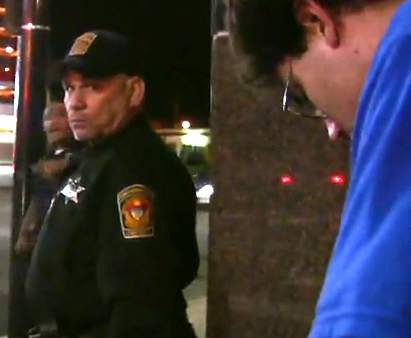
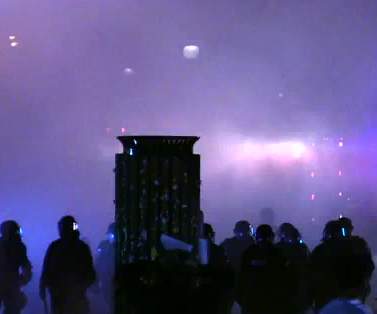
Many listeners have probably seen the videos of the G20 protesters going up against hundreds of riot police. Some of the most compelling footage were of reckless use of LRAD, the sonic weapons, and the surge of riot police onto the University of Pittsburgh campus. Many students who were not protesting were rounded up, knocked down, tear gassed and beaten by police. We reported last month on the blatant violations of first amendment rights as local police engaged in patterns of harassment on activists such as the group Seeds for Peace. Today we hear first hand accounts of police abuse from our own Heidi Boghosian who was at the marches and demonstrations as a legal observer and we’ll be joined by attorney Joel Kupferman, who was also at the also a legal observer with National Lawyers Guild at the G20 Summit. Read Heidi’s G20 Blog Entry Here
Heidi Boghosian / Joel Kupferman
- LRAD Sonic Weapons combined with order to disperse. You had to cover your ears, some stayed still, paralyzed. We think it’s illegal, it’s and invasion, it’s a weapon.
- One of the legal angles, we’re looking into is the fifth amendment, where we charged Christine Todd Whitman after 9/11 for violating our fifth amendment rights of bodily integrity and in this case, that sound pierced that bodily integrity.
- The manufacturer of the device (LRAD) filed in their SEC filings of Sept 2008 that the device is capable of sufficient acoustic output to cause damage to human hearing or human health, expressing concern that the misuse could lead to lawsuits.
- Private security police forces were employed. They went up the hill, onto the campus and students were just coming out of their dorms, hearing this noise, the helicopters, they didn’t know whether they should stay in their buildings. They started to arrest people who didn’t know what was going on.
- This is the highest police per protester ratio I’ve ever seen, definitely a radicalizing experience for these students, definitely no cause for arrests. Wantonly arresting people in a violent fashion.
- When we spoke to shop owners downtown, there was a hatred, I’ve never seen before. The sympathy came from the neighborhoods of color, it was a climate of fear, they were basically saying, you can’t assemble.
- It almost seemed like it was a police convention. The Pittsburgh Police Department wore military fatigues. I saw more Canine Units there then any other demonstration.
Guest – Attorney Joel Kupferman, National Lawyers Guild Legal Observer /New York Environmental Law and Justice Project
————————————————